A TRAVEL ESSAY
Aridagawa, Wakayama
Autumn Flavors of Wakayama, Part 1
Sushi, Cosmos and Ramen
A day of eating my way through autumn in Wakayama.
Read the journey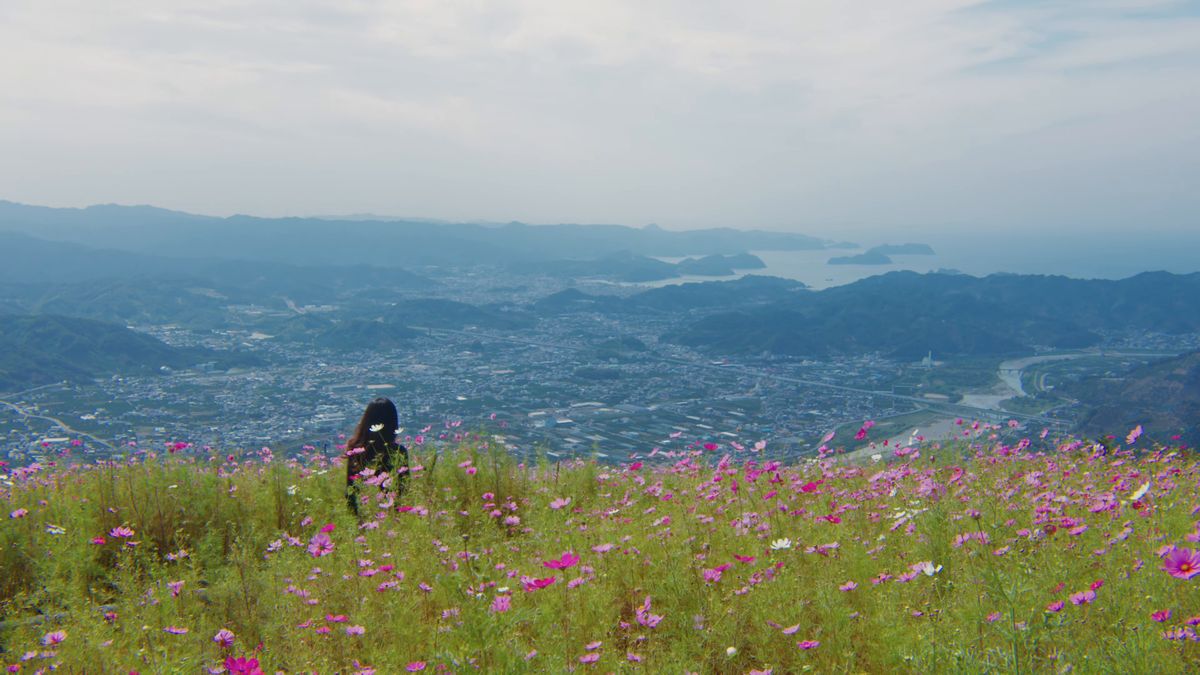
ABOUT THIS JOURNEY
I woke up in a thatched-roof farmhouse built in the early Meiji era. I wrapped rice balls in pickled takana leaves to make mehari-zushi, and ate breakfast looking down on the terraced fields of Aragijima. Then I drove over the mandarin hills to a cosmos field up in the sky, and on the way back stopped at a ramen shop where pressed sushi waits on every table. A day of eating my way through autumn in Wakayama.
A little more about the food and the land01TRAVEL JOURNAL
Morning in a thatched-roof house
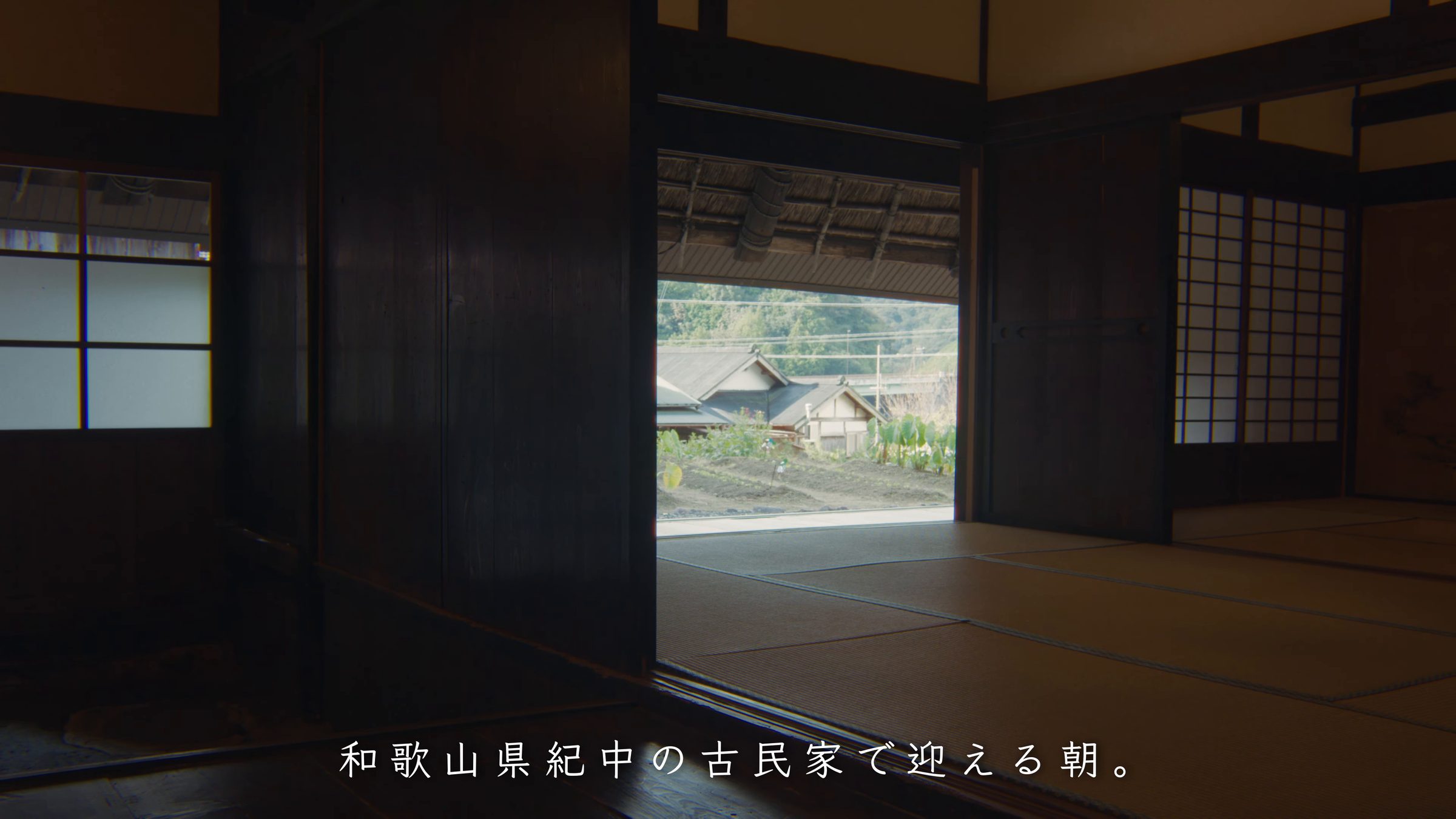
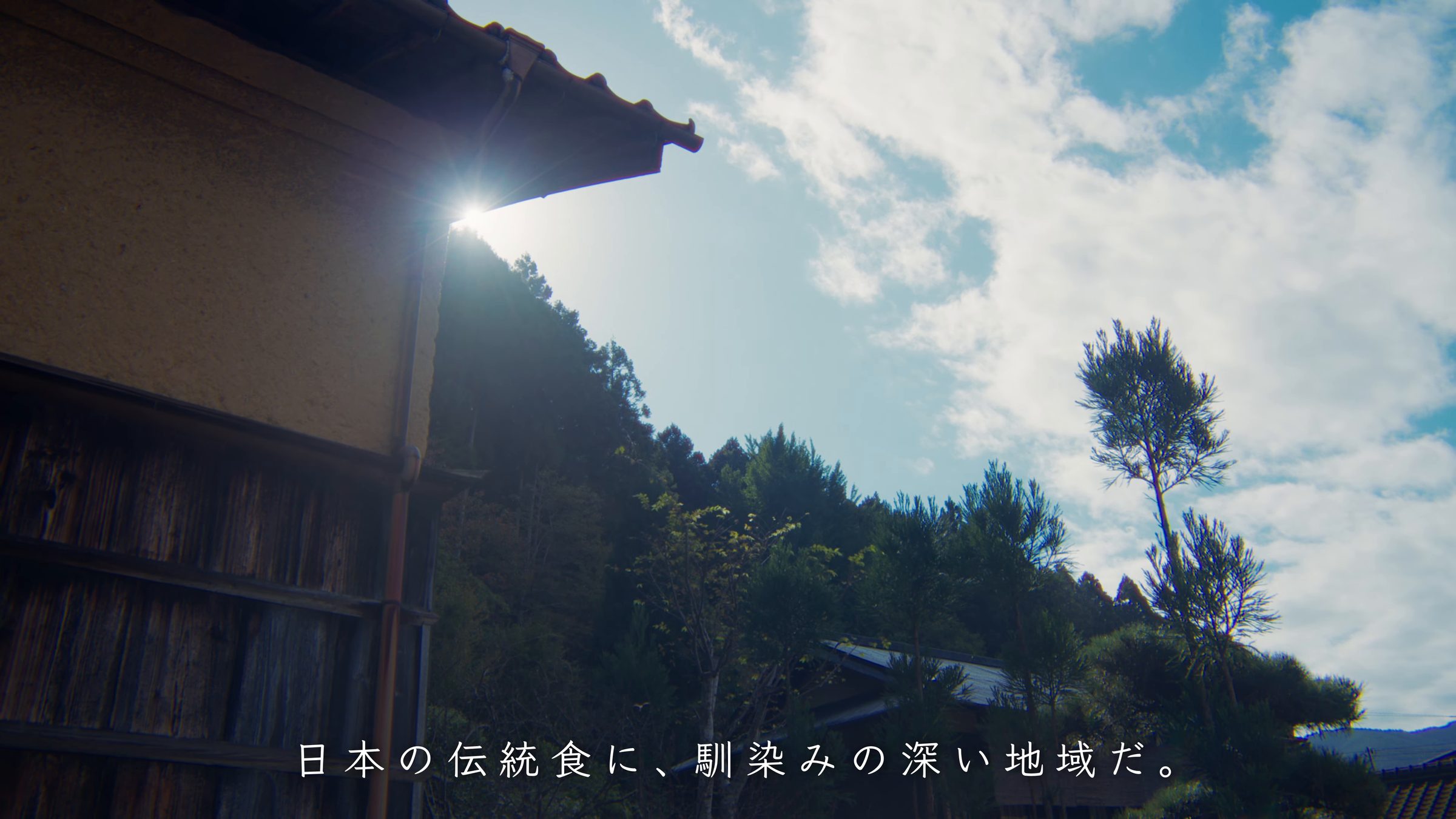
I woke up in an old farmhouse tucked into the hills of Aridagawa, in central Wakayama. The house, I was told, dates back to the early Meiji era. Its thatched roof sits against a thick green grove of bamboo.
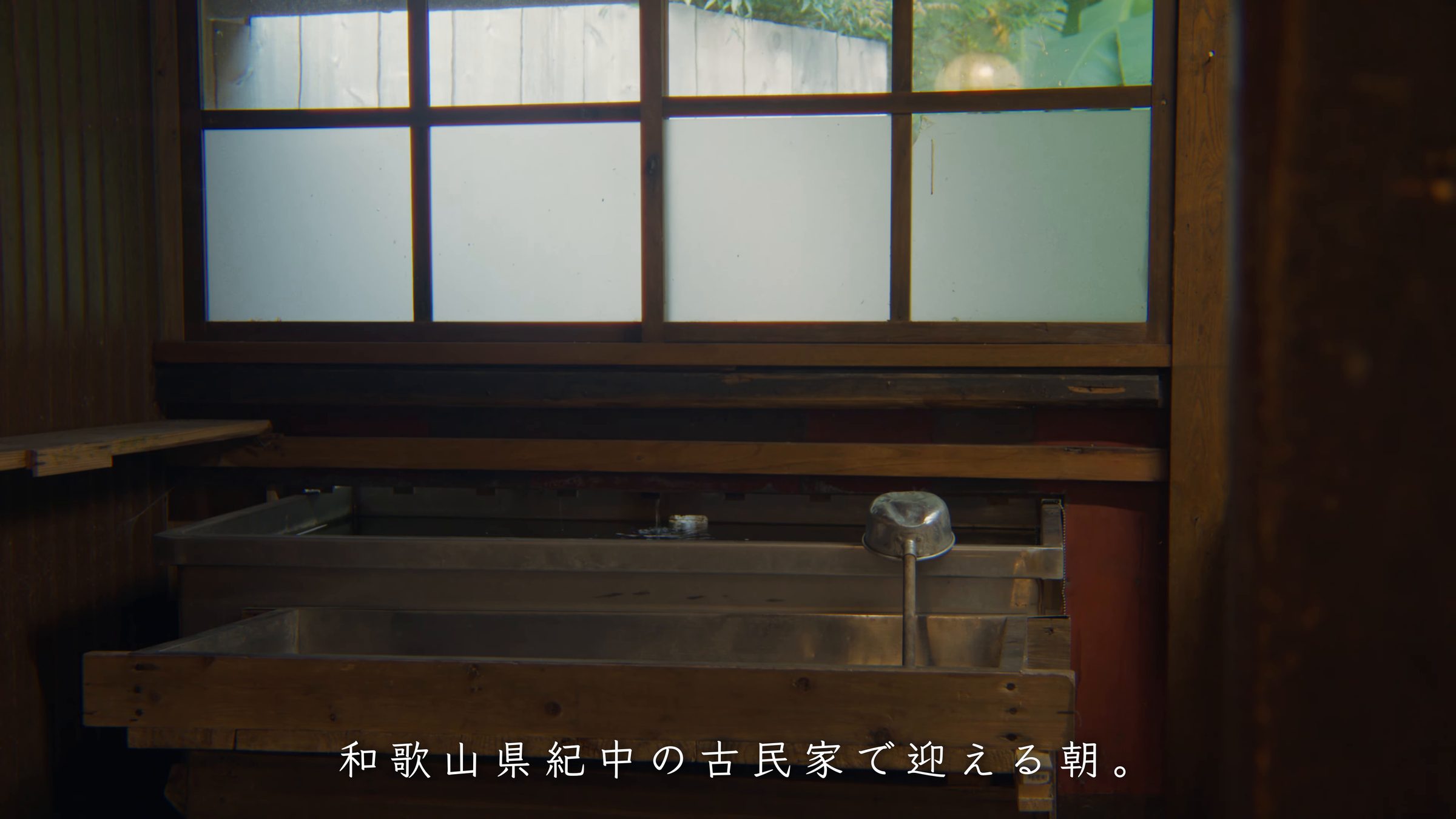
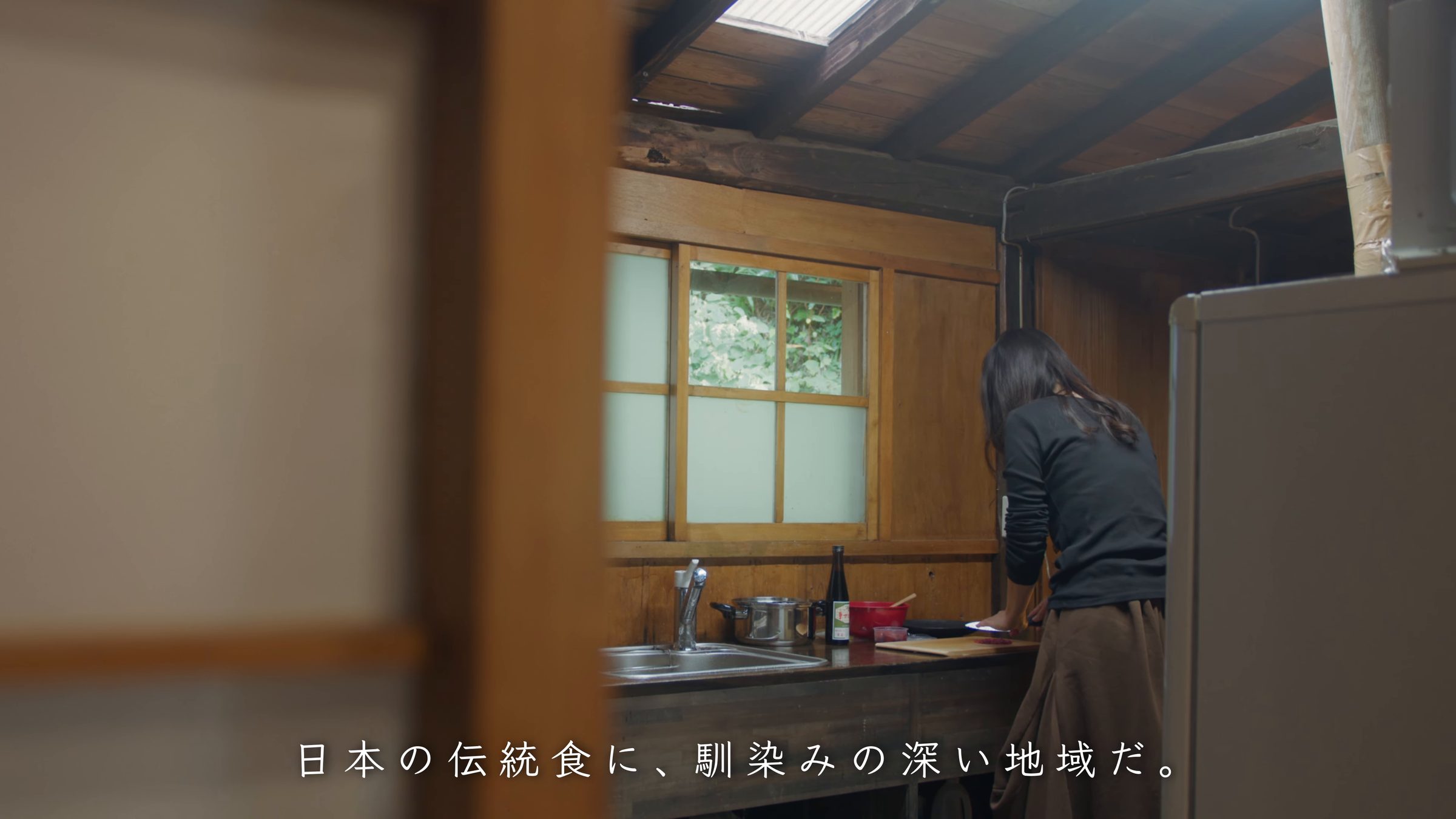
The water in the garden still held the blue of the night. Beneath a window stood a well-worn wooden sink, and through the open doors I could see the village just beginning to stir.
Watch this scene on YouTube0:21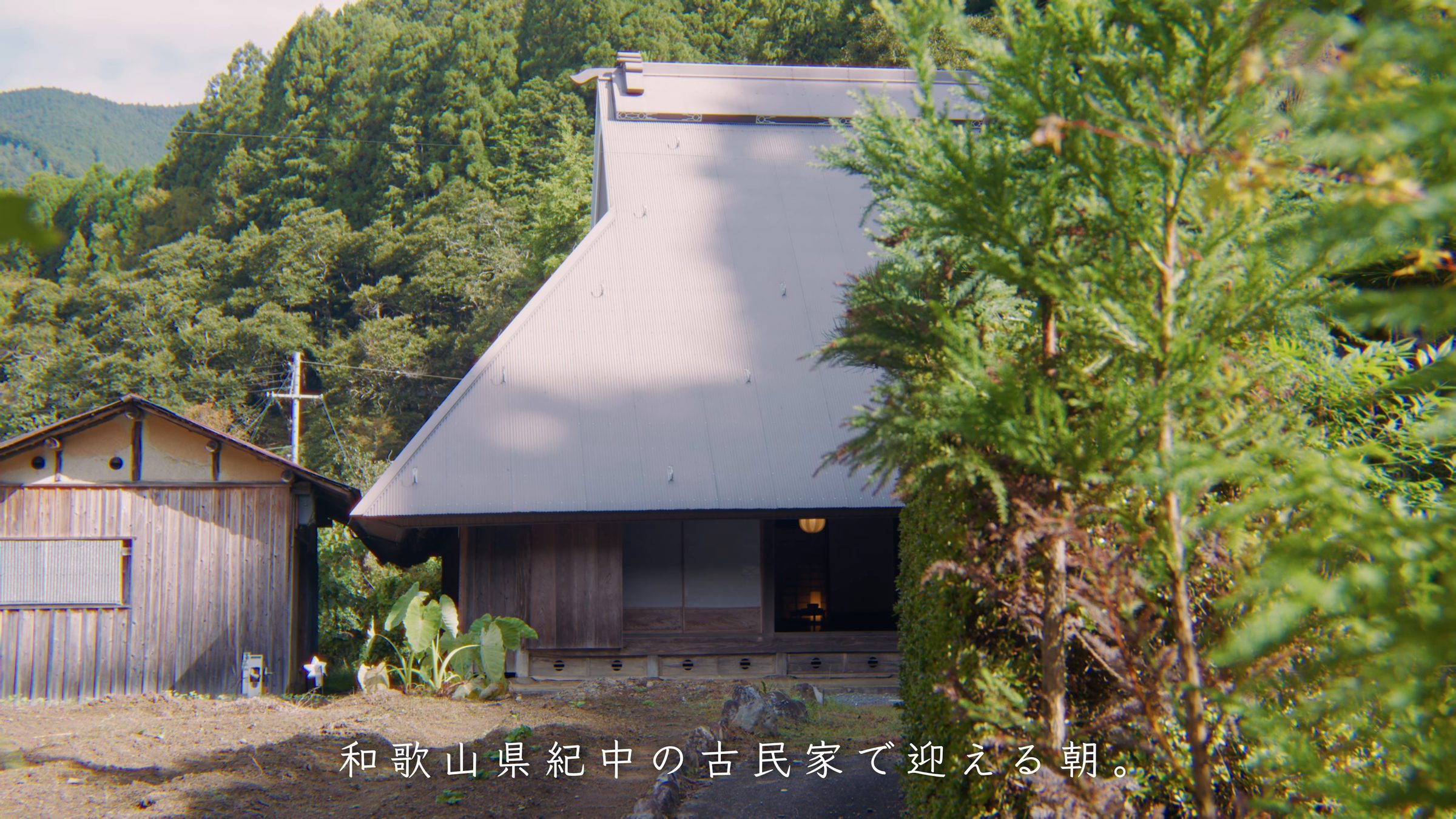
02TRAVEL JOURNAL
Breakfast from Wakayama's pantry
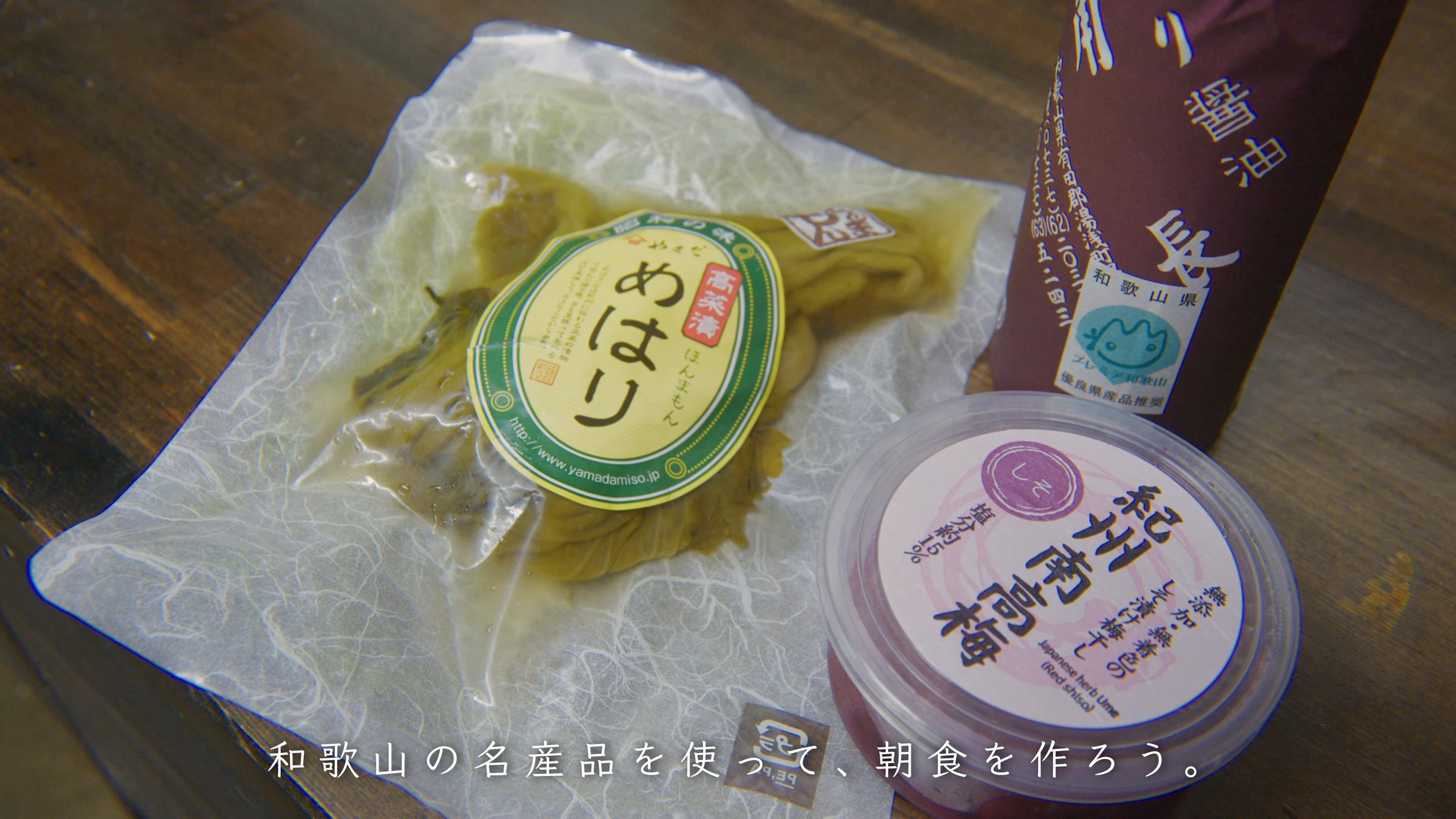
An old tiled kamado stove still stood on the earthen floor. This morning, breakfast would be made from Wakayama's own specialties: takana pickles for mehari-zushi, Kishu umeboshi plums, red shiso, and soy sauce from neighboring Yuasa.
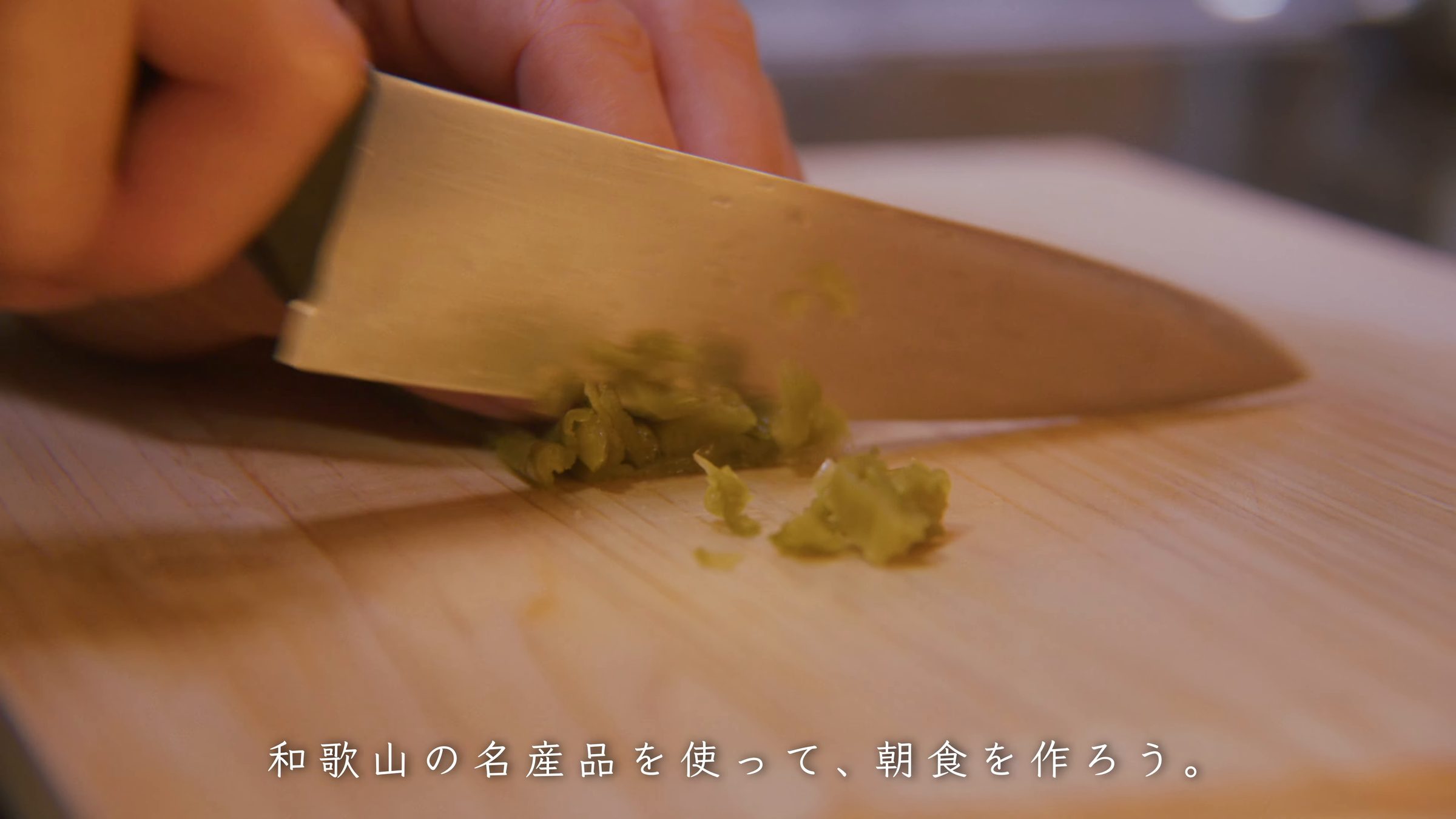
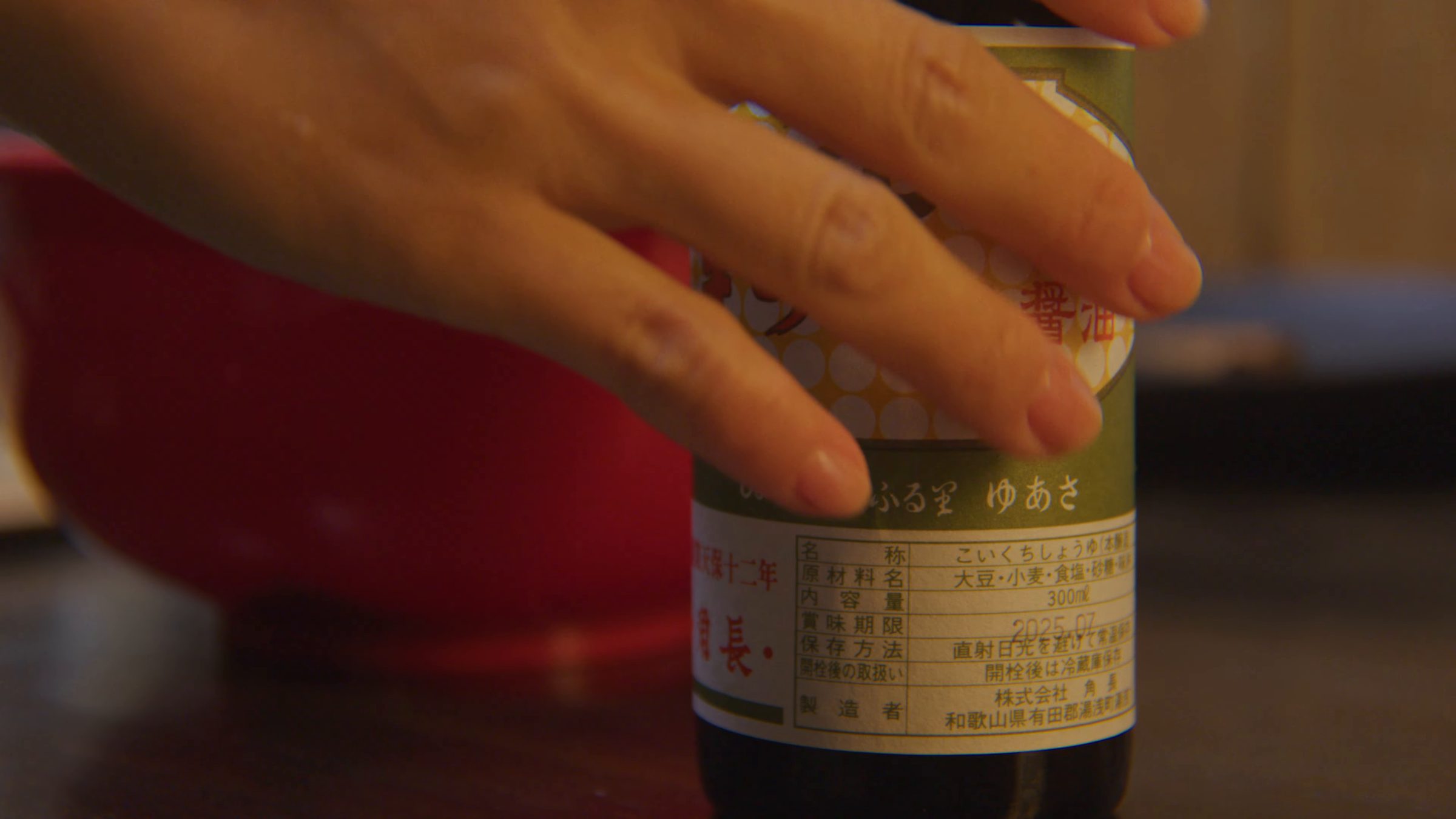
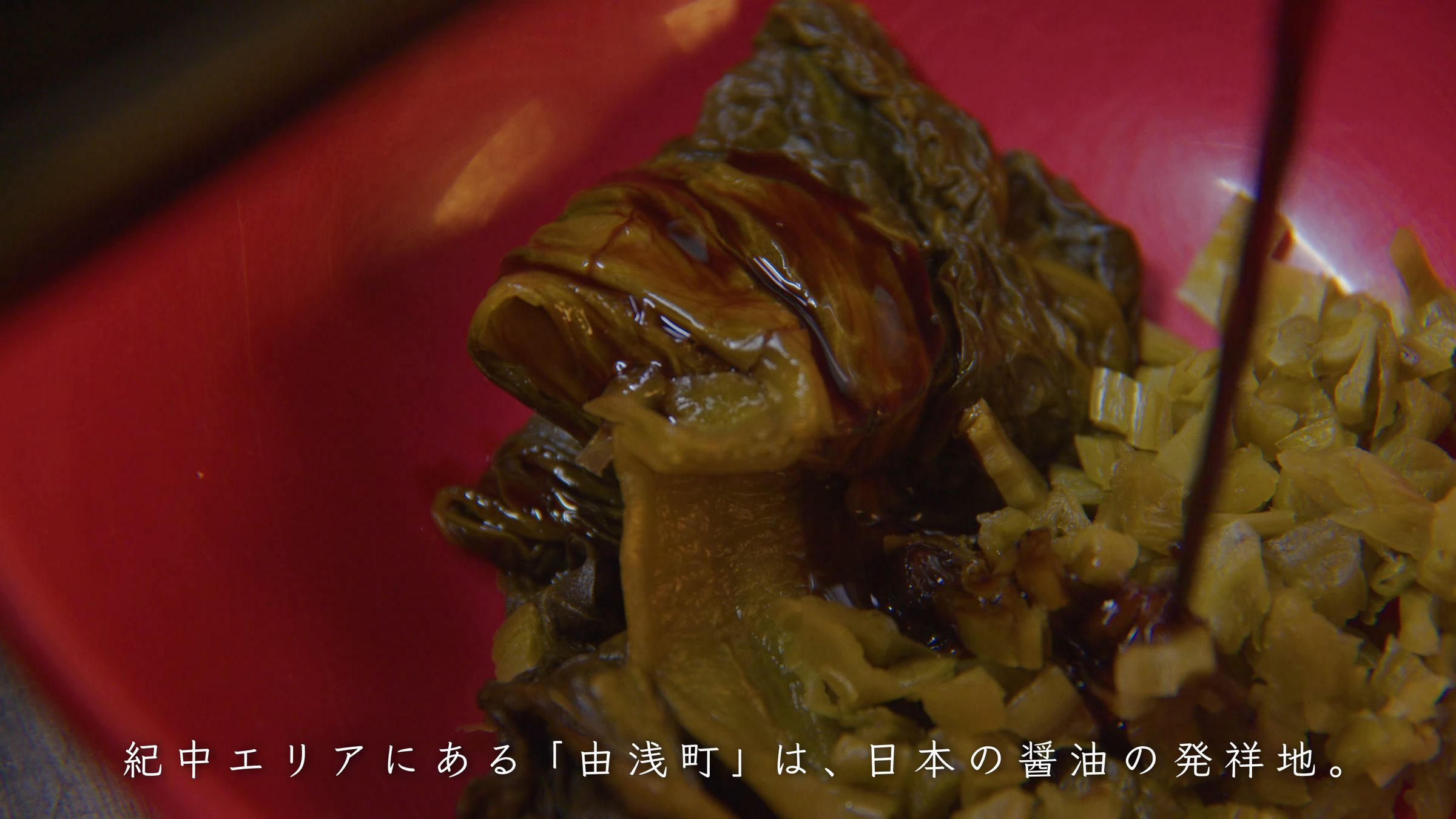
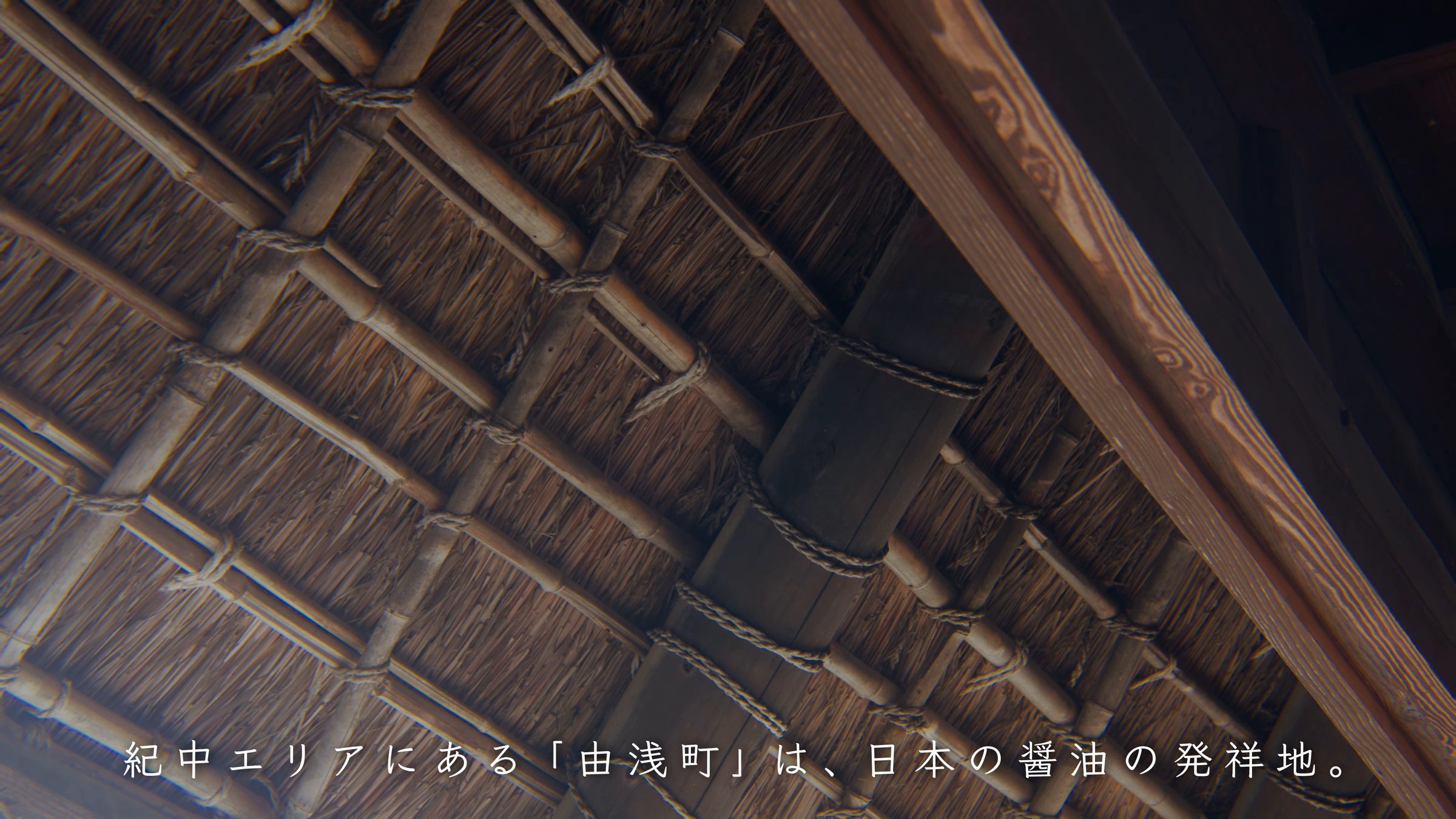
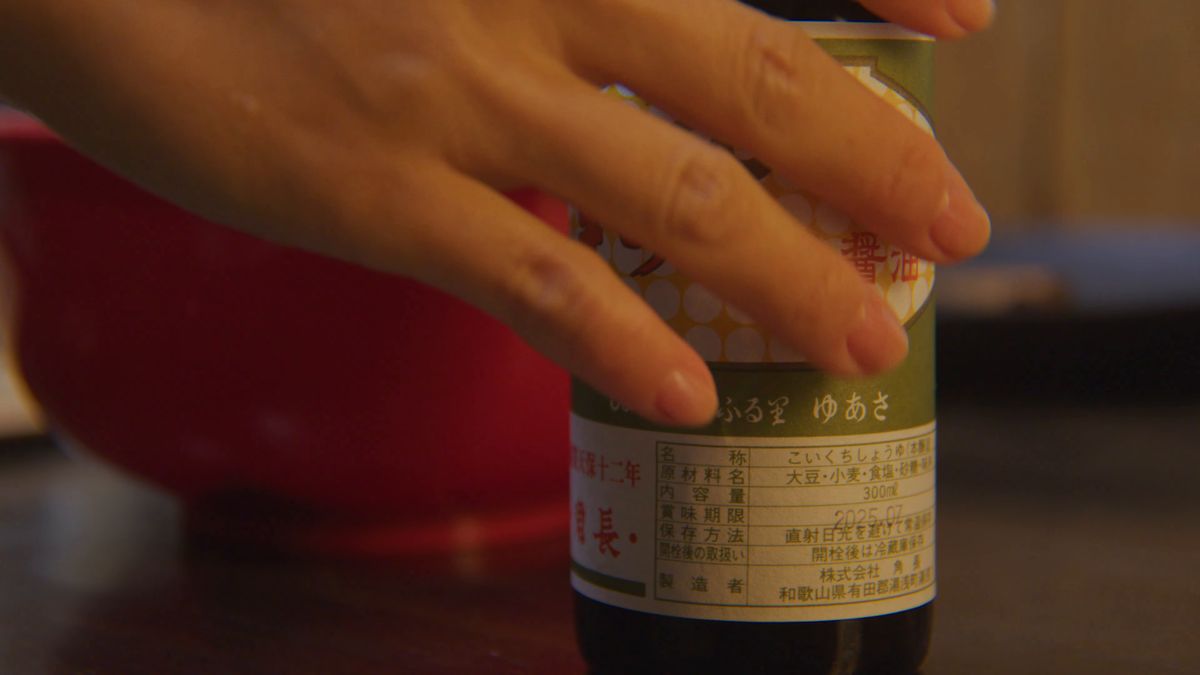
Yuasa is said to be the birthplace of Japanese soy sauce. I mixed a little of it into the chopped takana. Looking up, I noticed the bamboo framework under the eaves, holding up the heavy thatch.
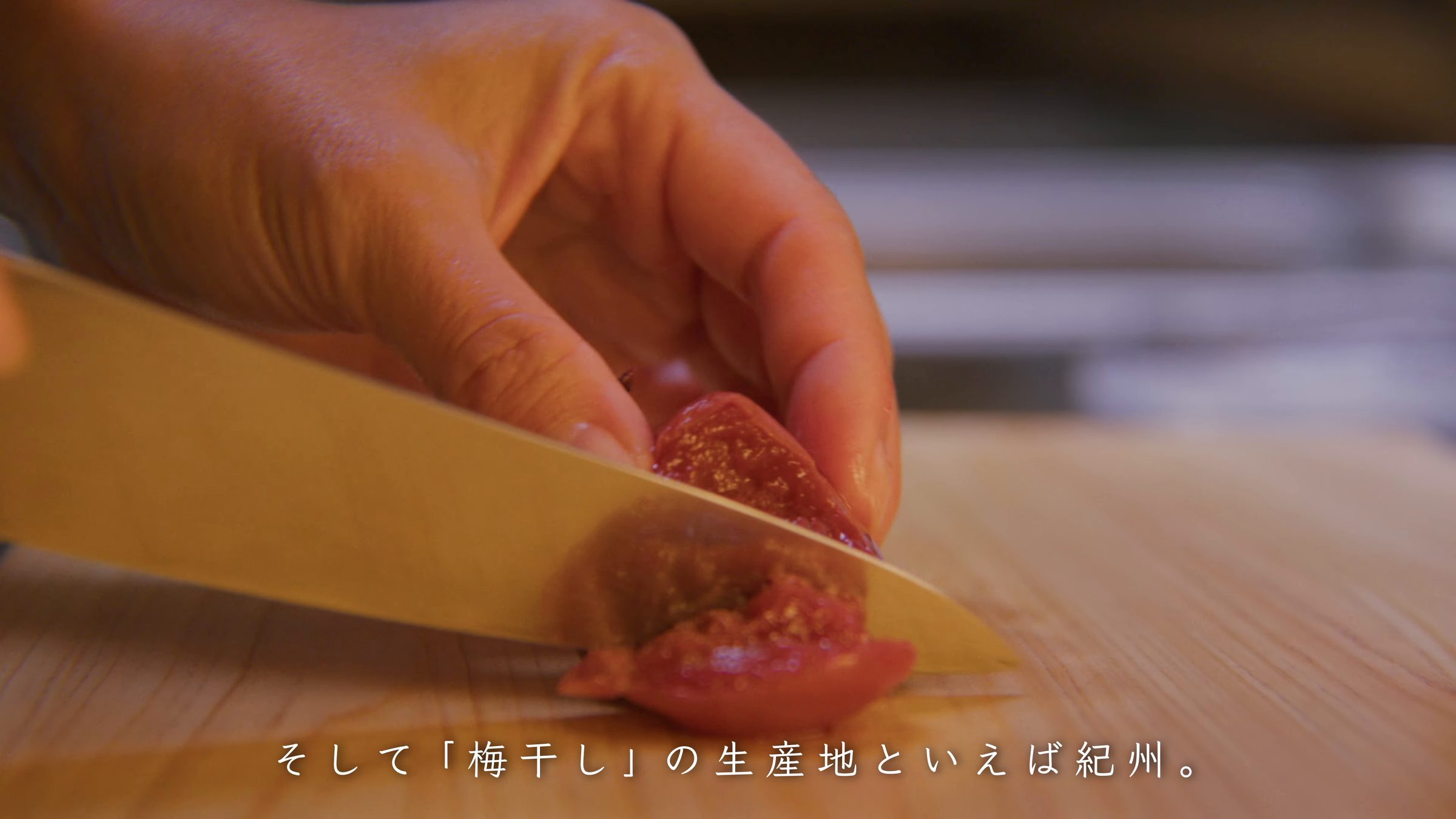
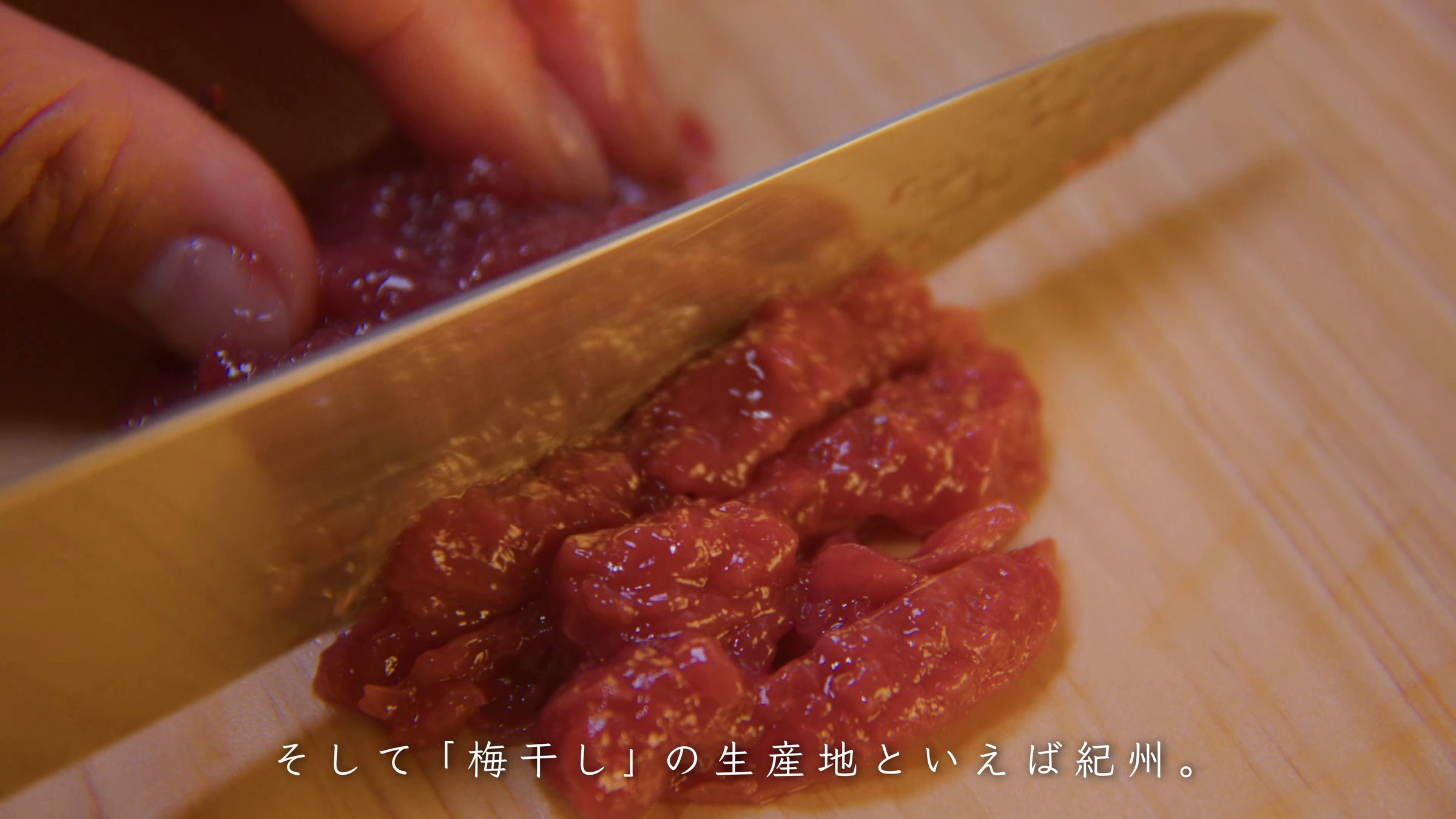
And when it comes to umeboshi, Kishu is the place. I took the flesh off the pits and chopped it finely while soft morning light came in through the kitchen window. Soy sauce, pickled plums, pickled greens: this is a region deeply tied to Japan's traditional food.
Watch this scene on YouTube0:34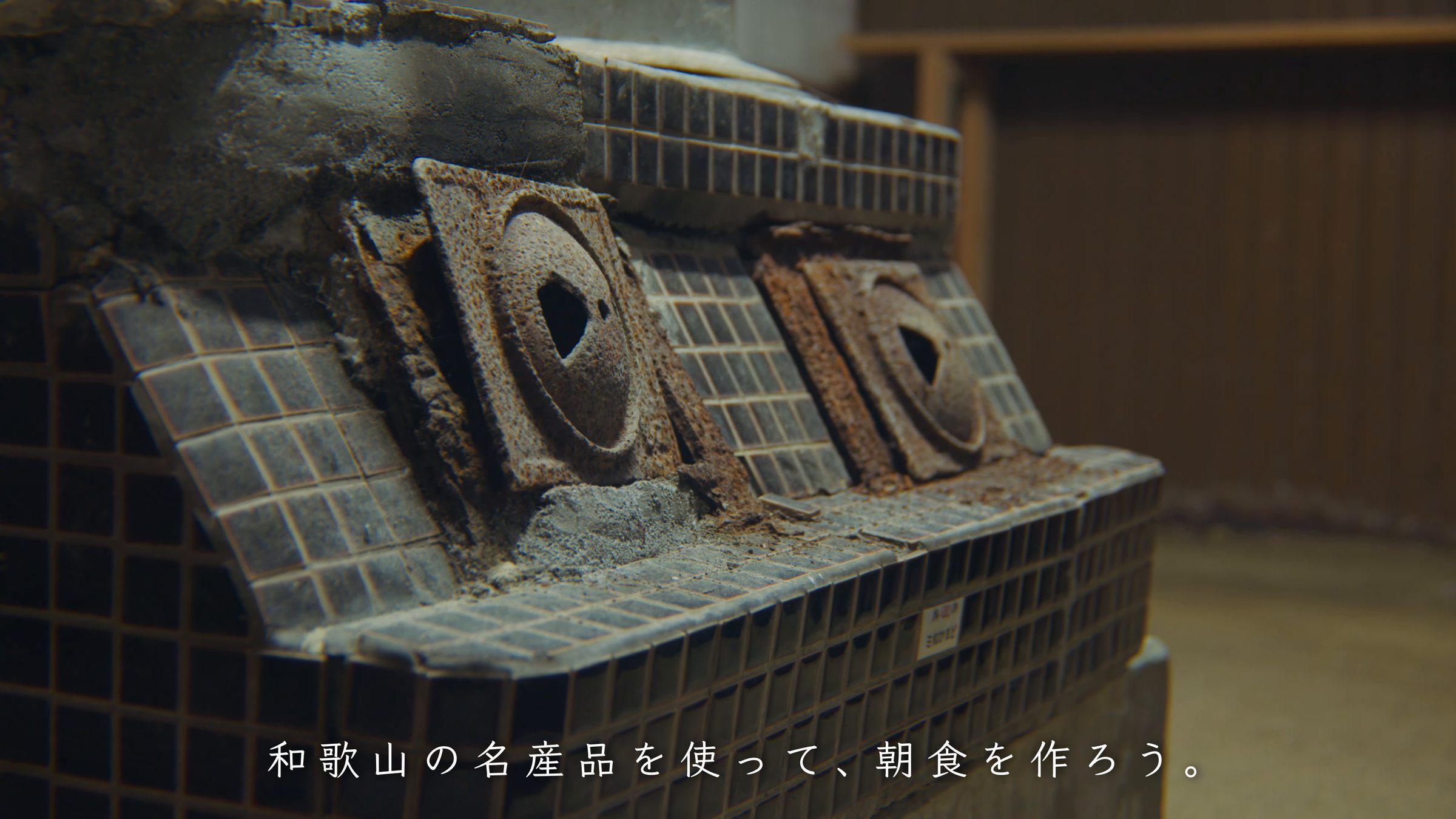
03TRAVEL JOURNAL
Mehari-zushi, wrapped in takana
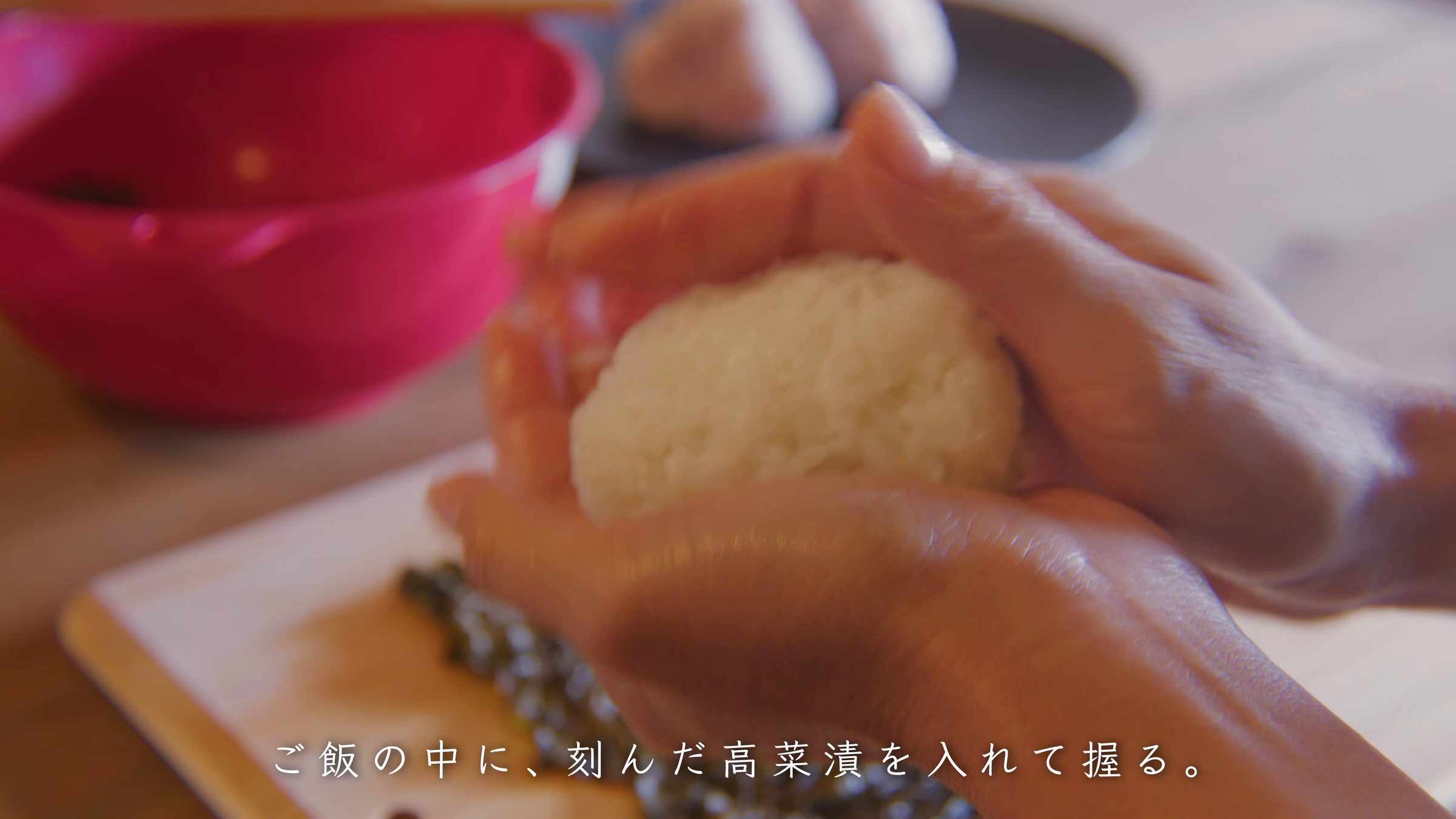
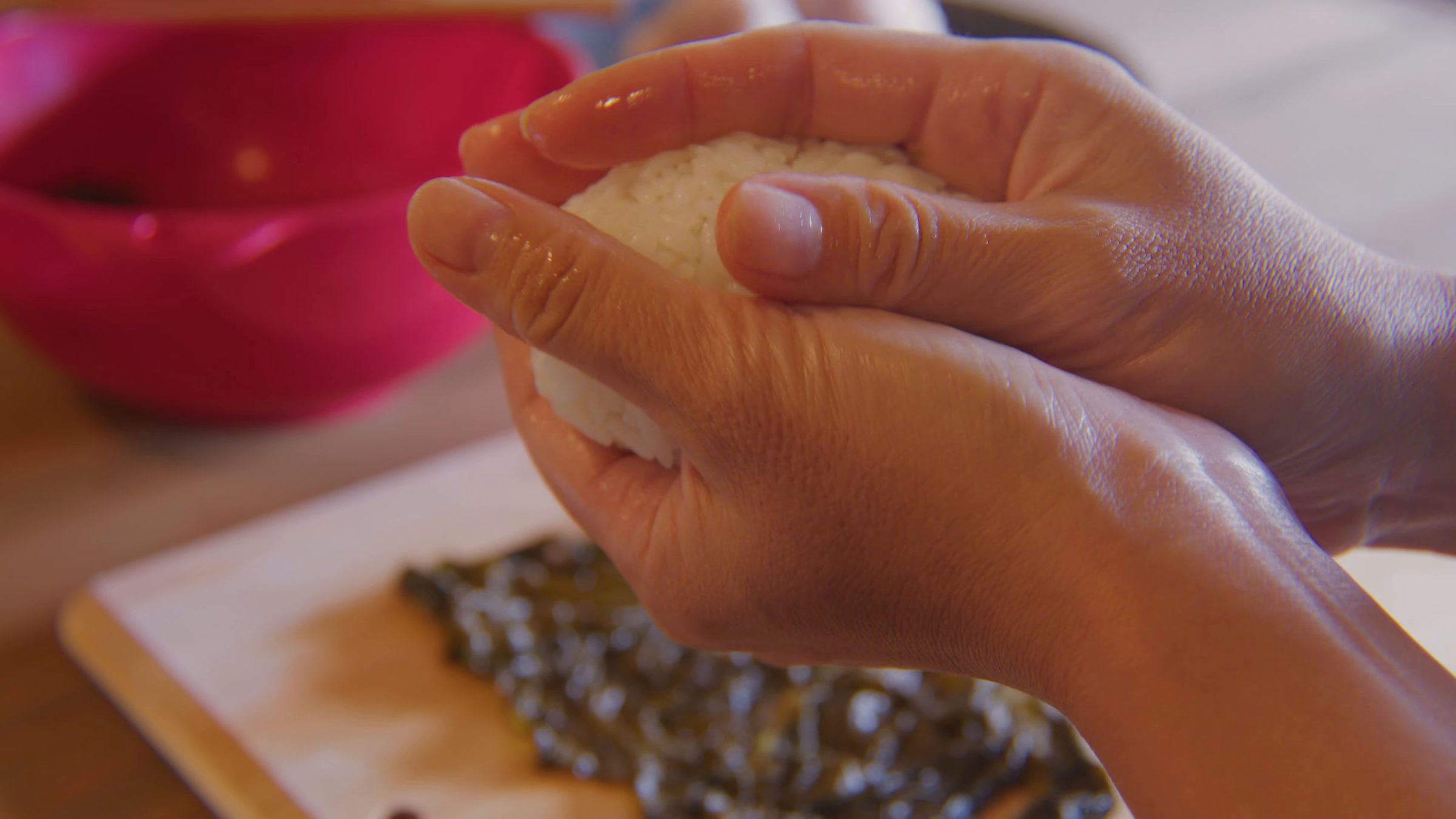
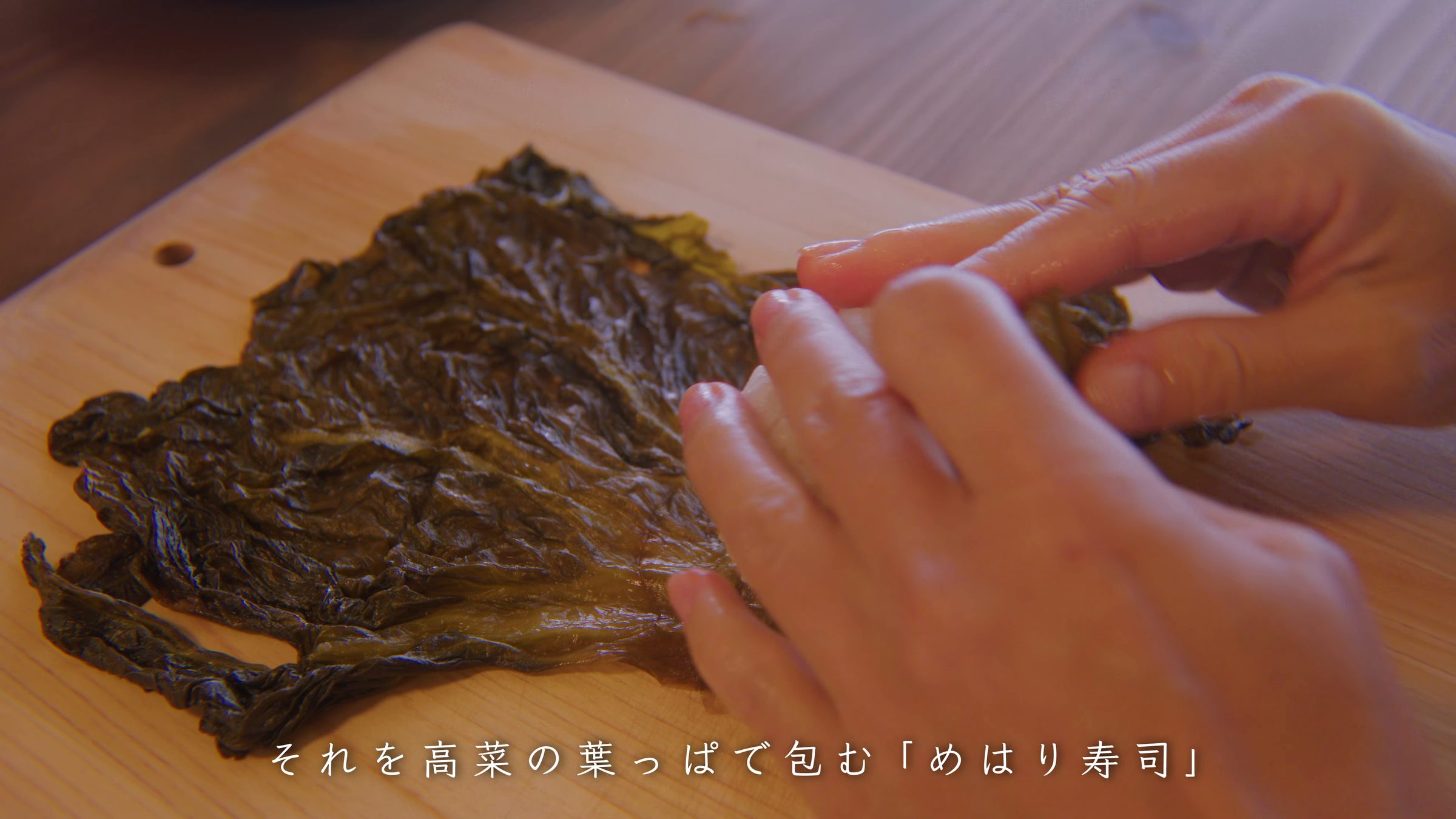
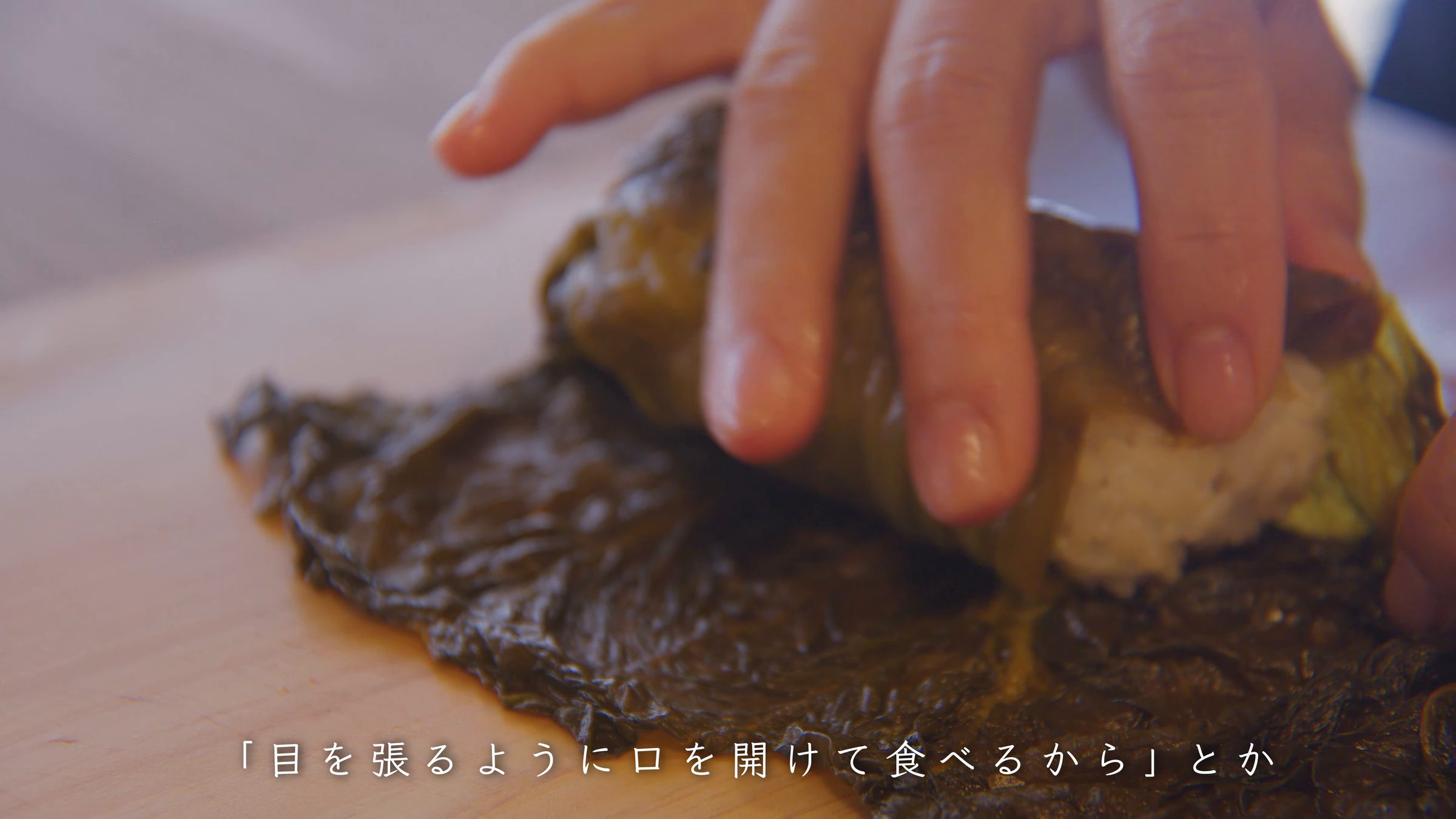
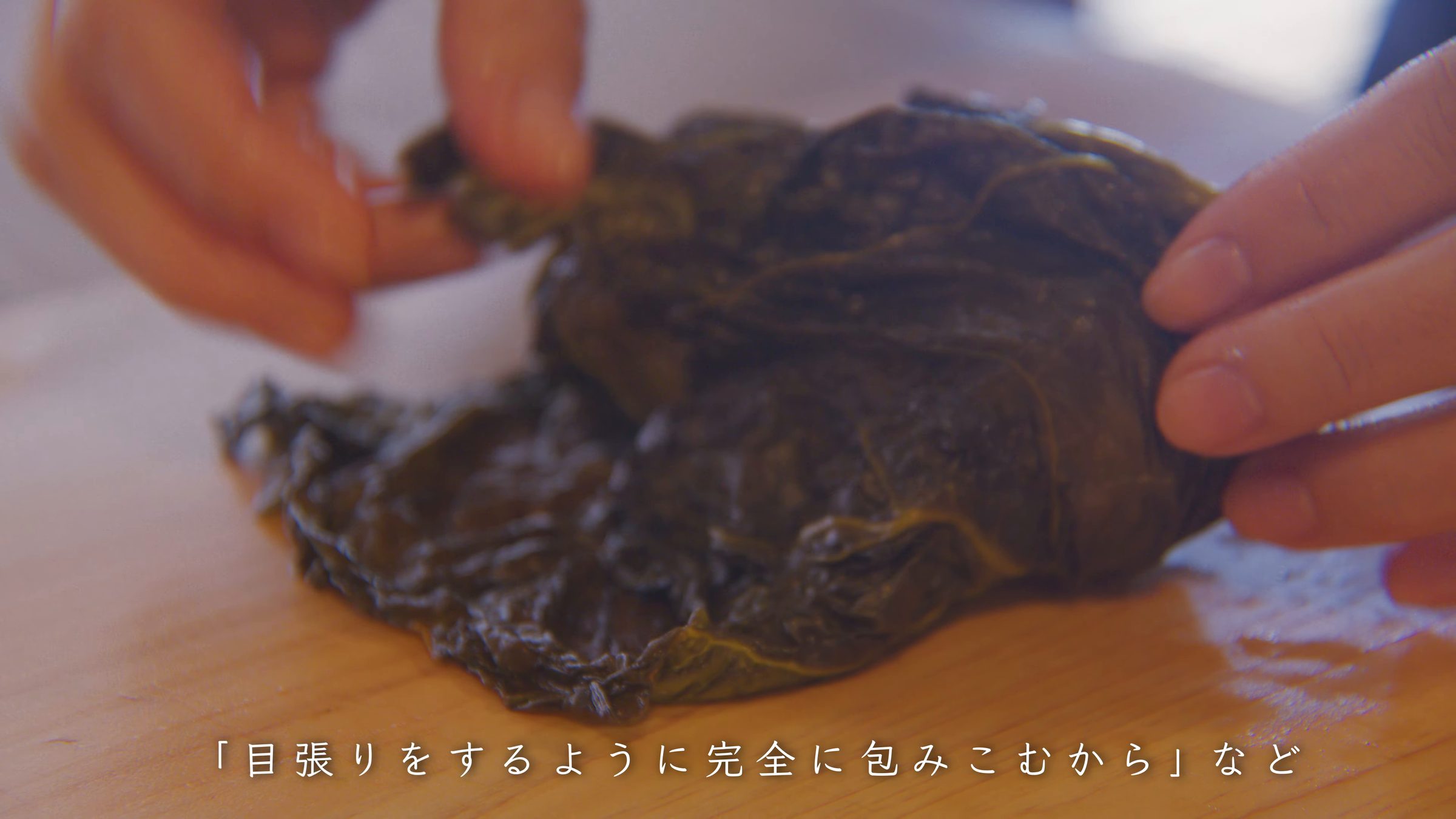
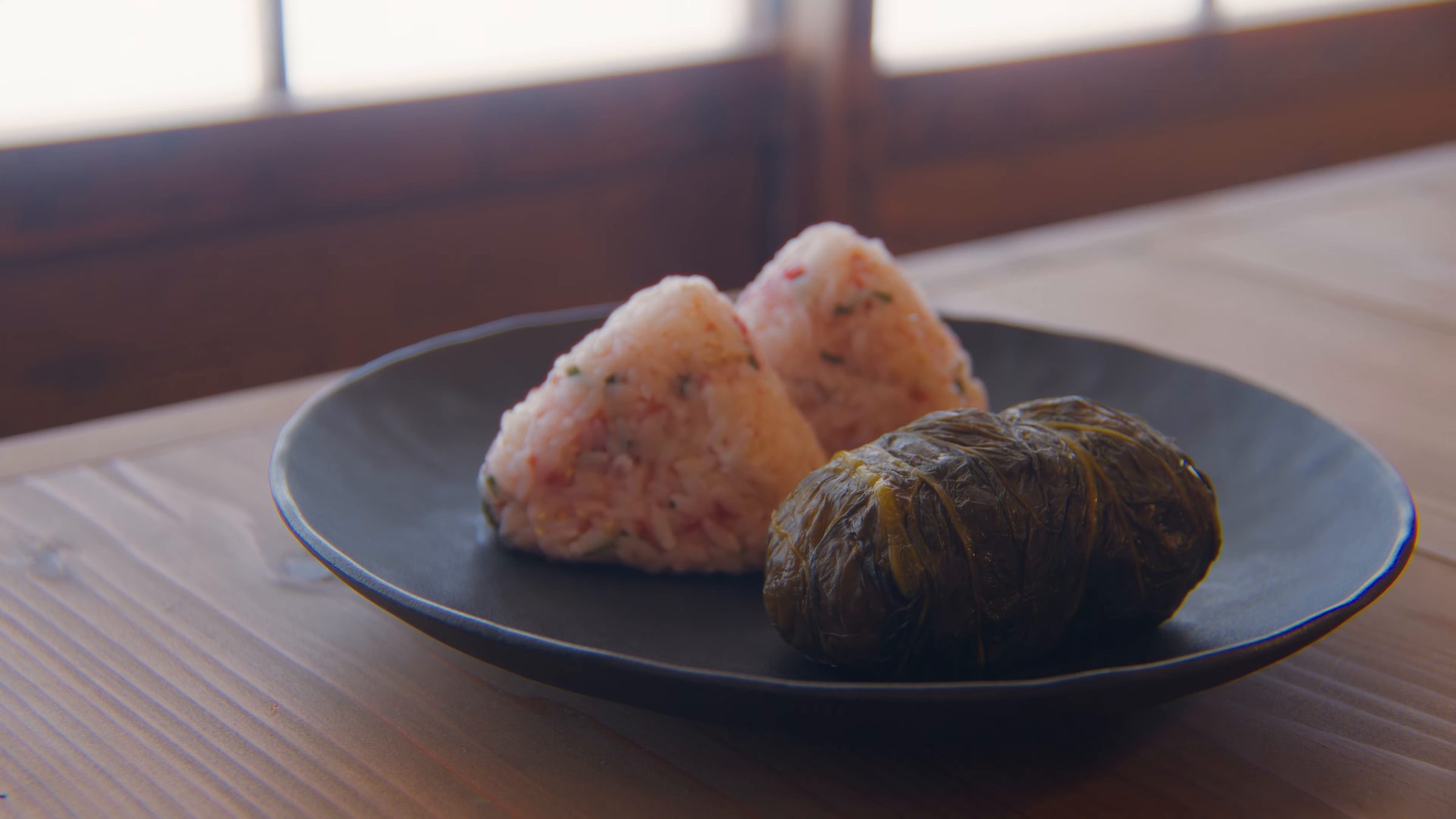
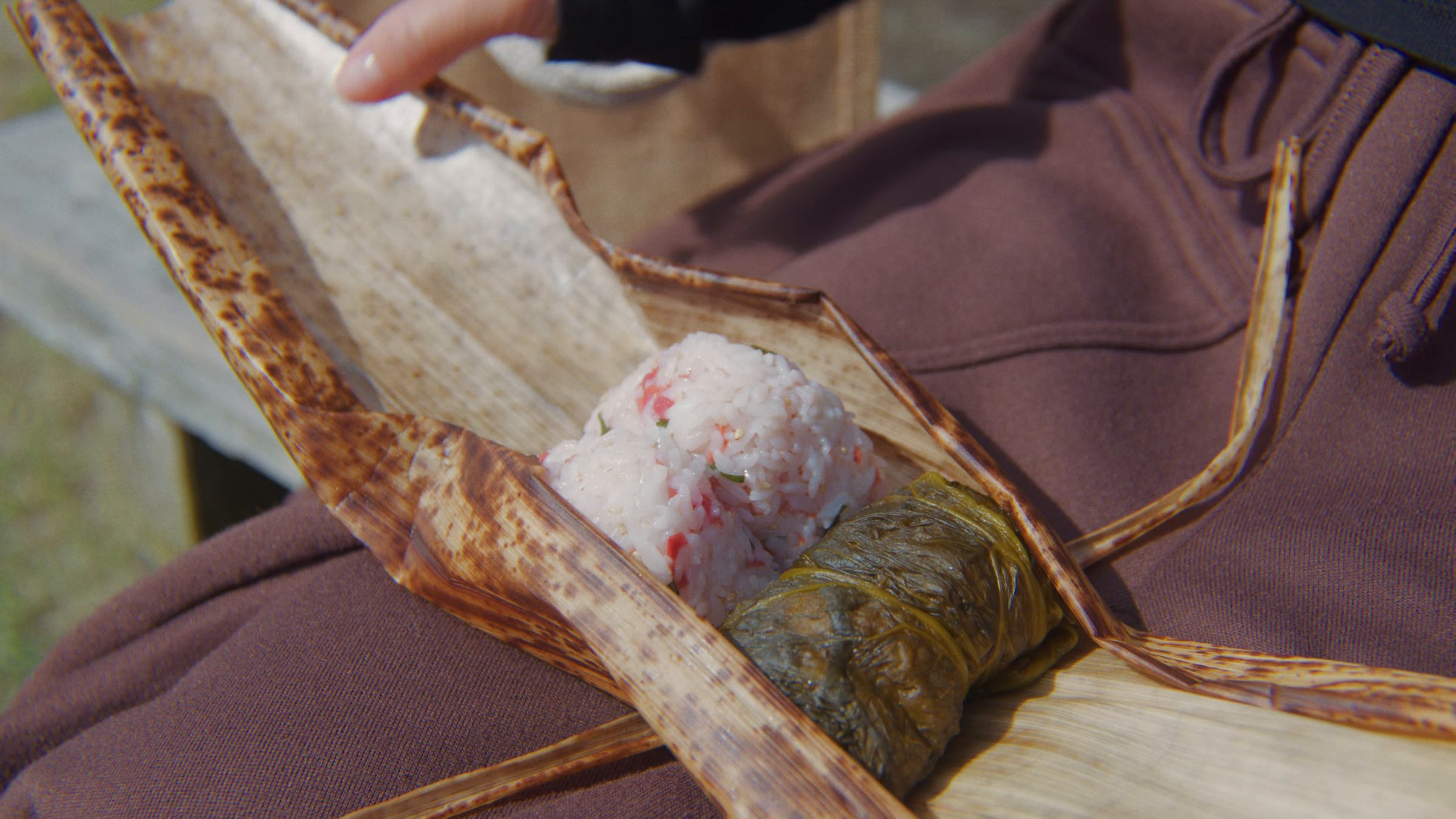
I folded the chopped takana into the rice and pressed it firmly into a ball, then wrapped it in a whole takana leaf. This is mehari-zushi, a traditional dish of Wakayama.
There are several stories behind the name. One says you open your mouth so wide to eat it that your eyes open wide too (me o haru). Another says the leaf seals the rice completely, like taping up a window (meba-ri). Folding in the edges of the leaf, I found myself agreeing with both.
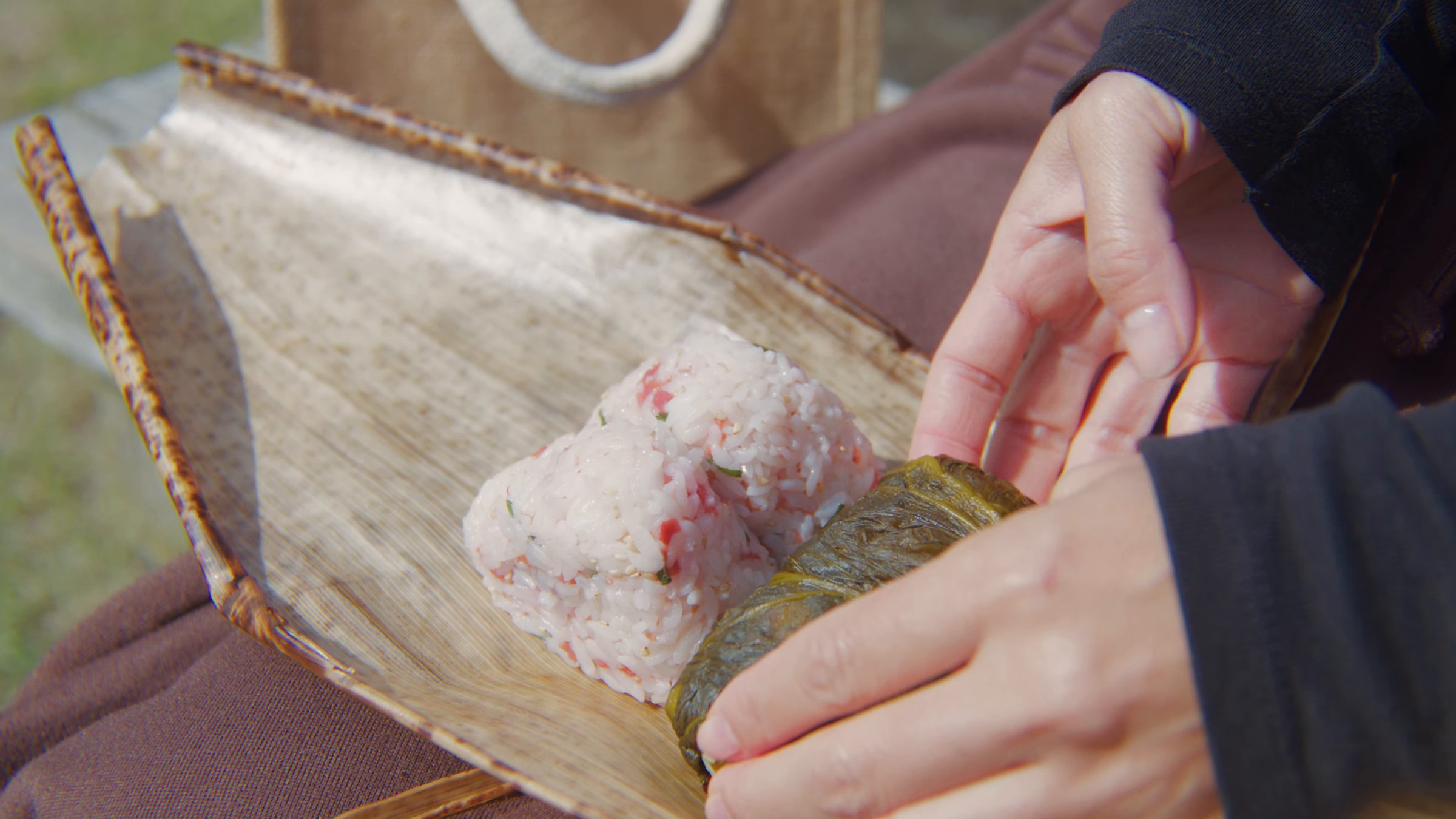
It is said to have spread as a quick lunch for fishermen and foresters to eat between jobs. I also made rice balls mixed with umeboshi and red shiso, and set them out on a black plate.
Watch this scene on YouTube1:08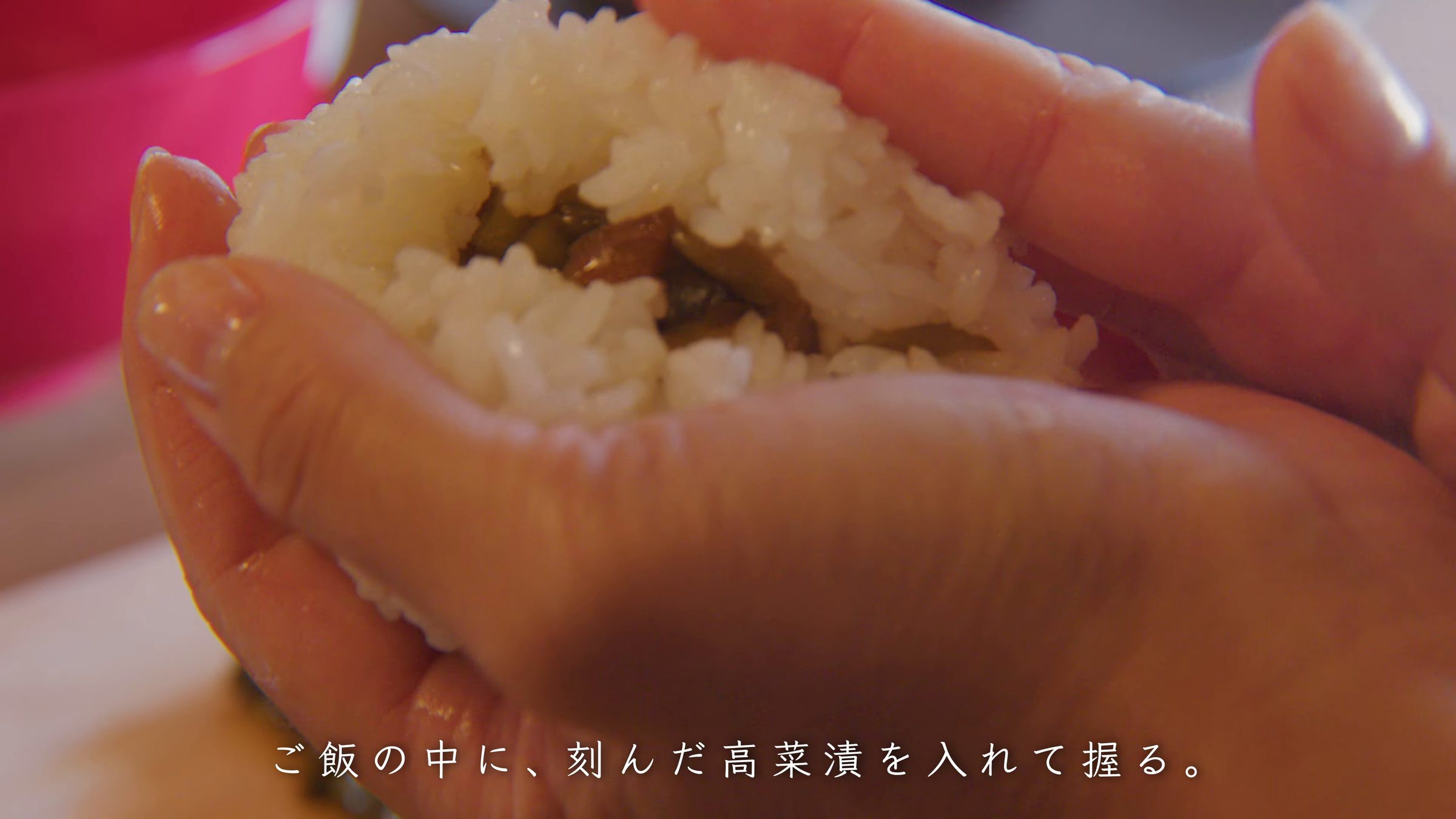
04TRAVEL JOURNAL
Looking down on Aragijima
I wrapped the rice balls in a bamboo sheath and set out. The thatched main house and the storehouse stood side by side in the morning sun.
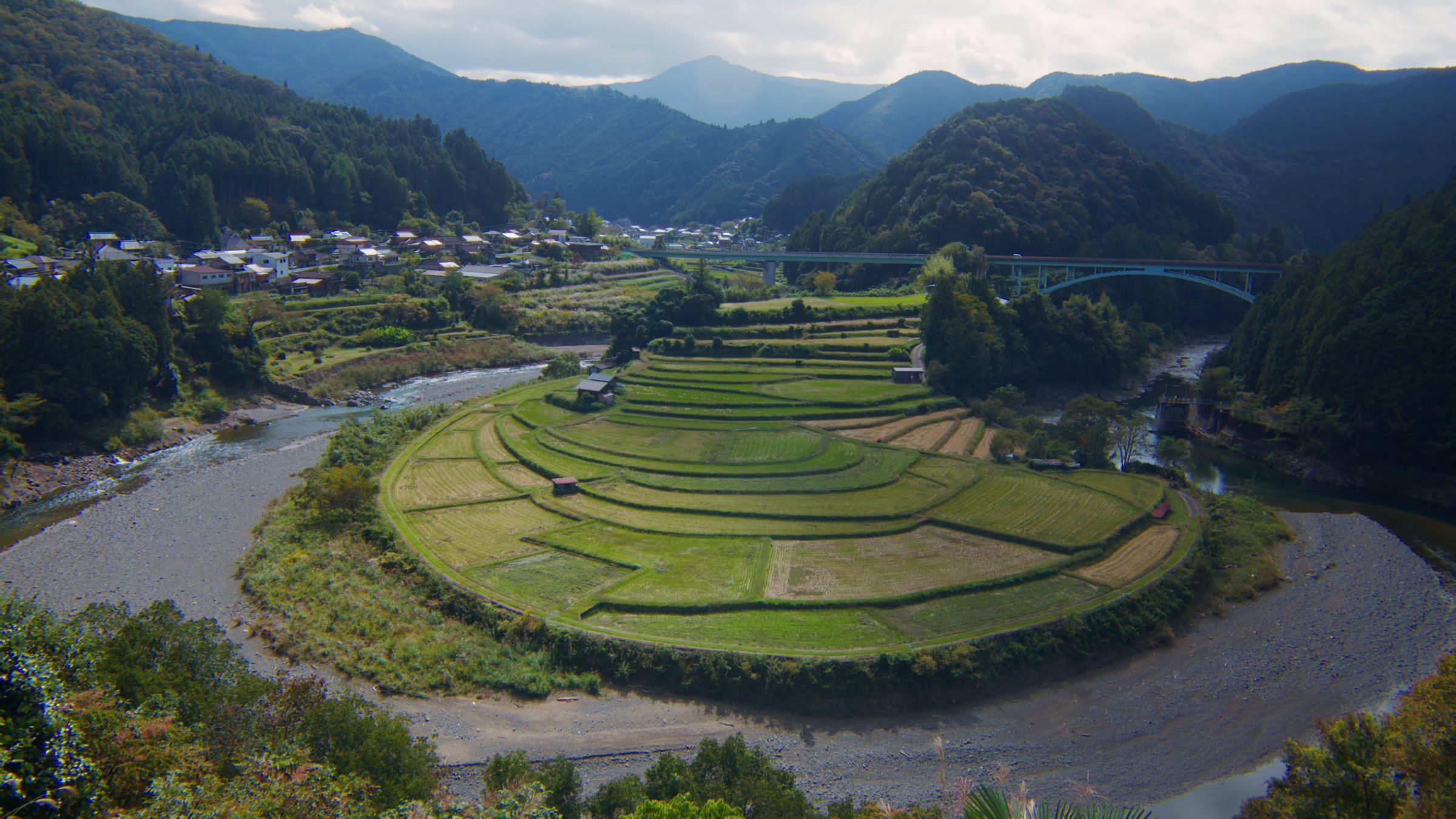
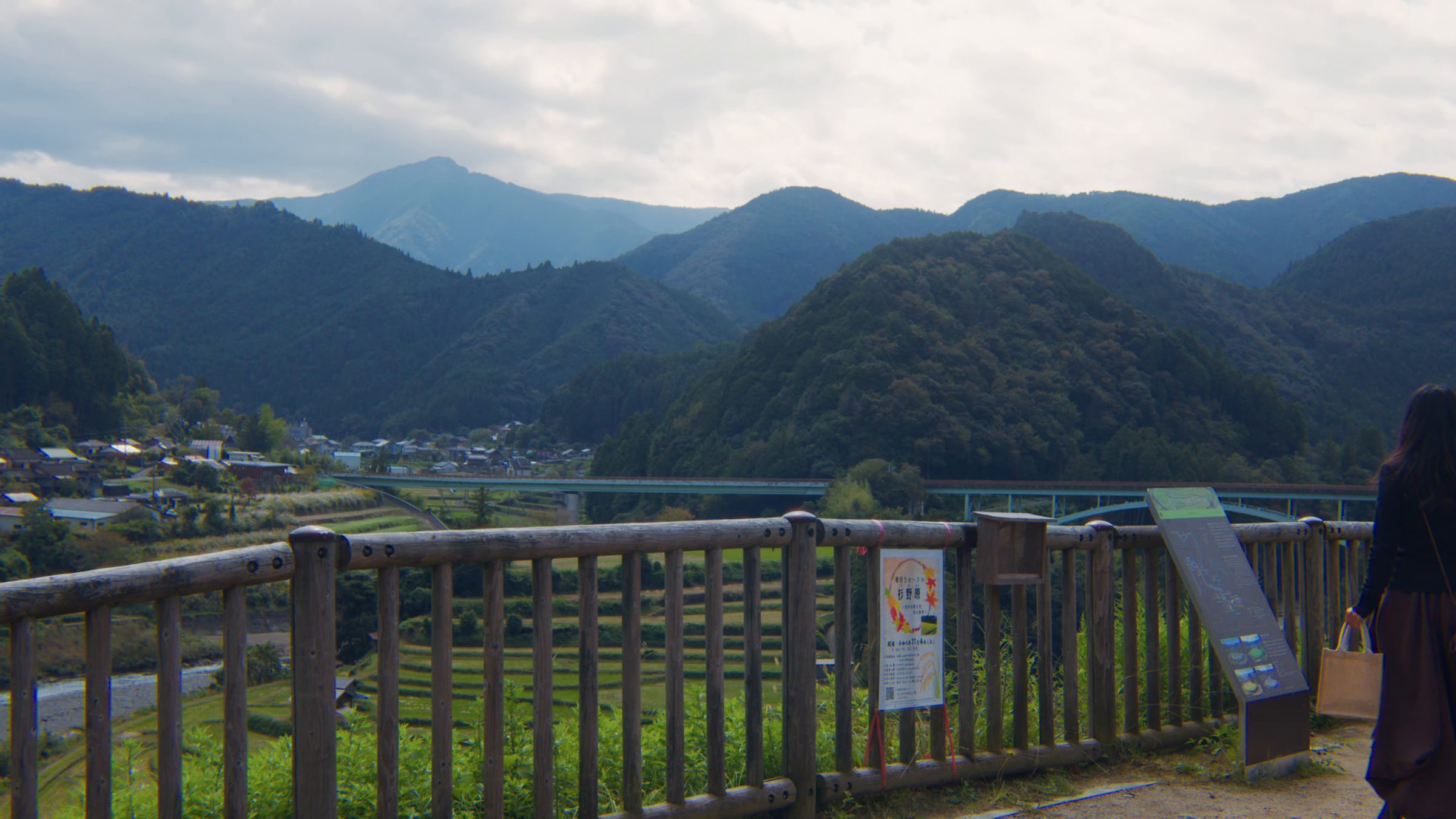
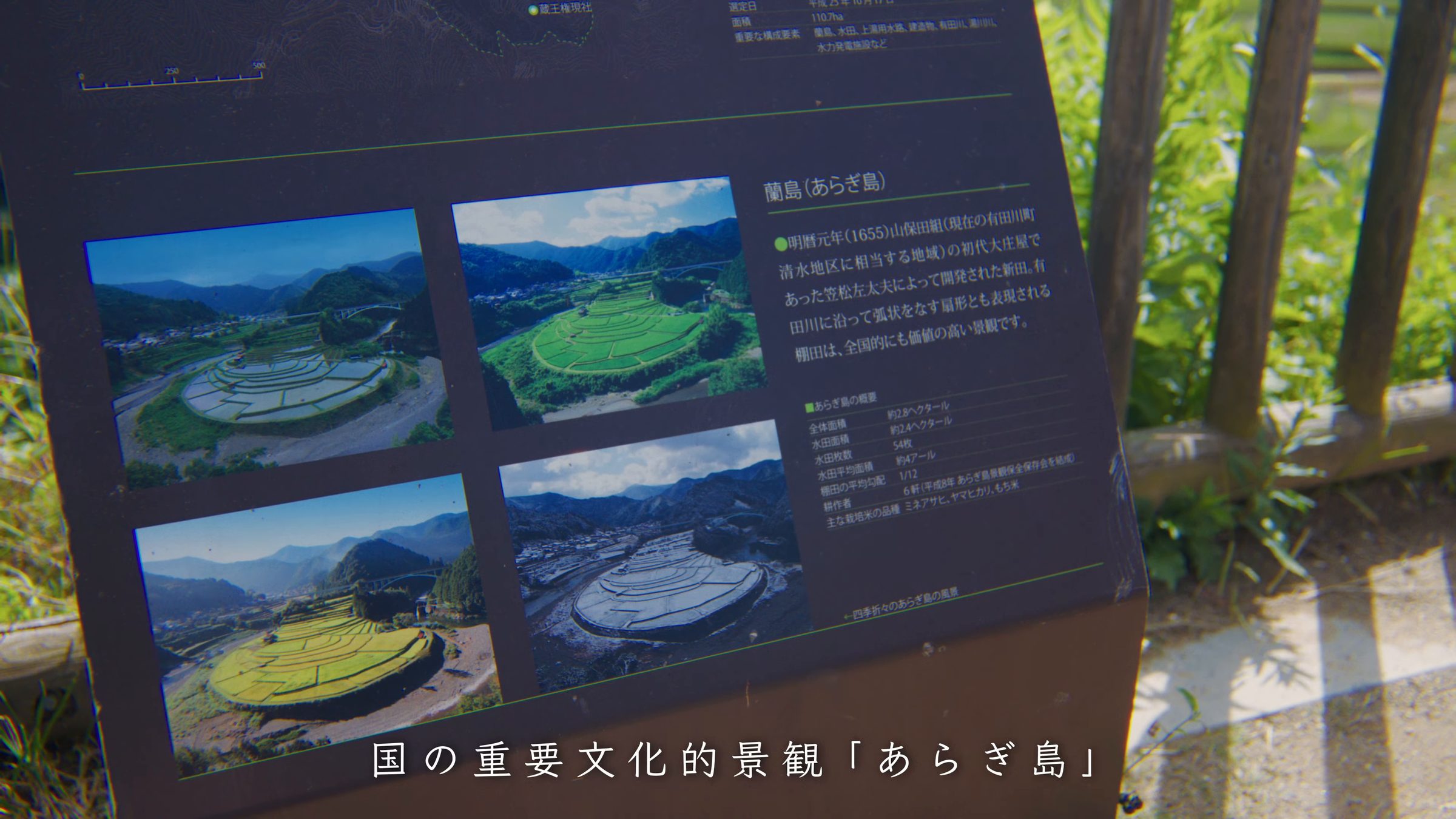
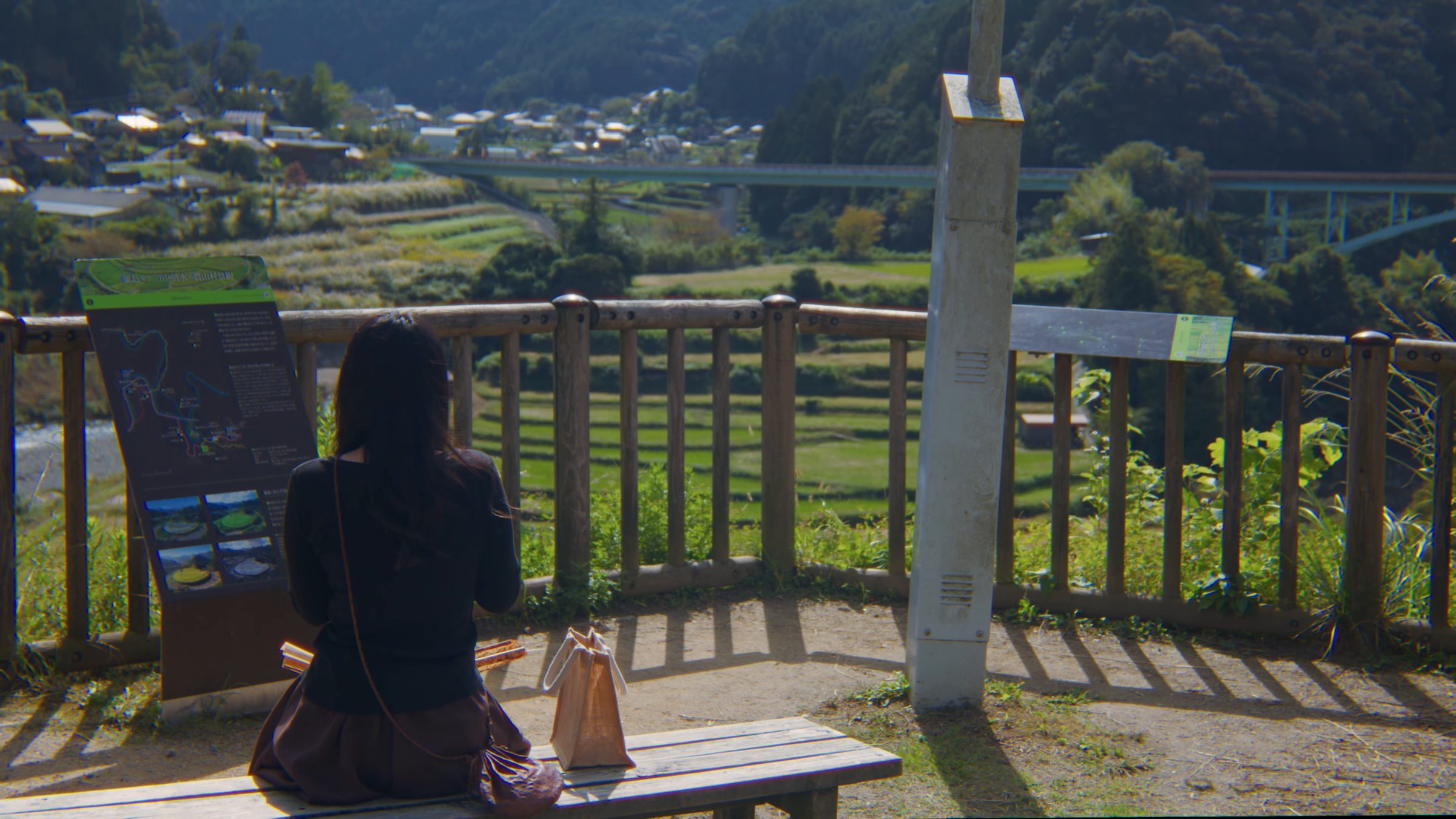
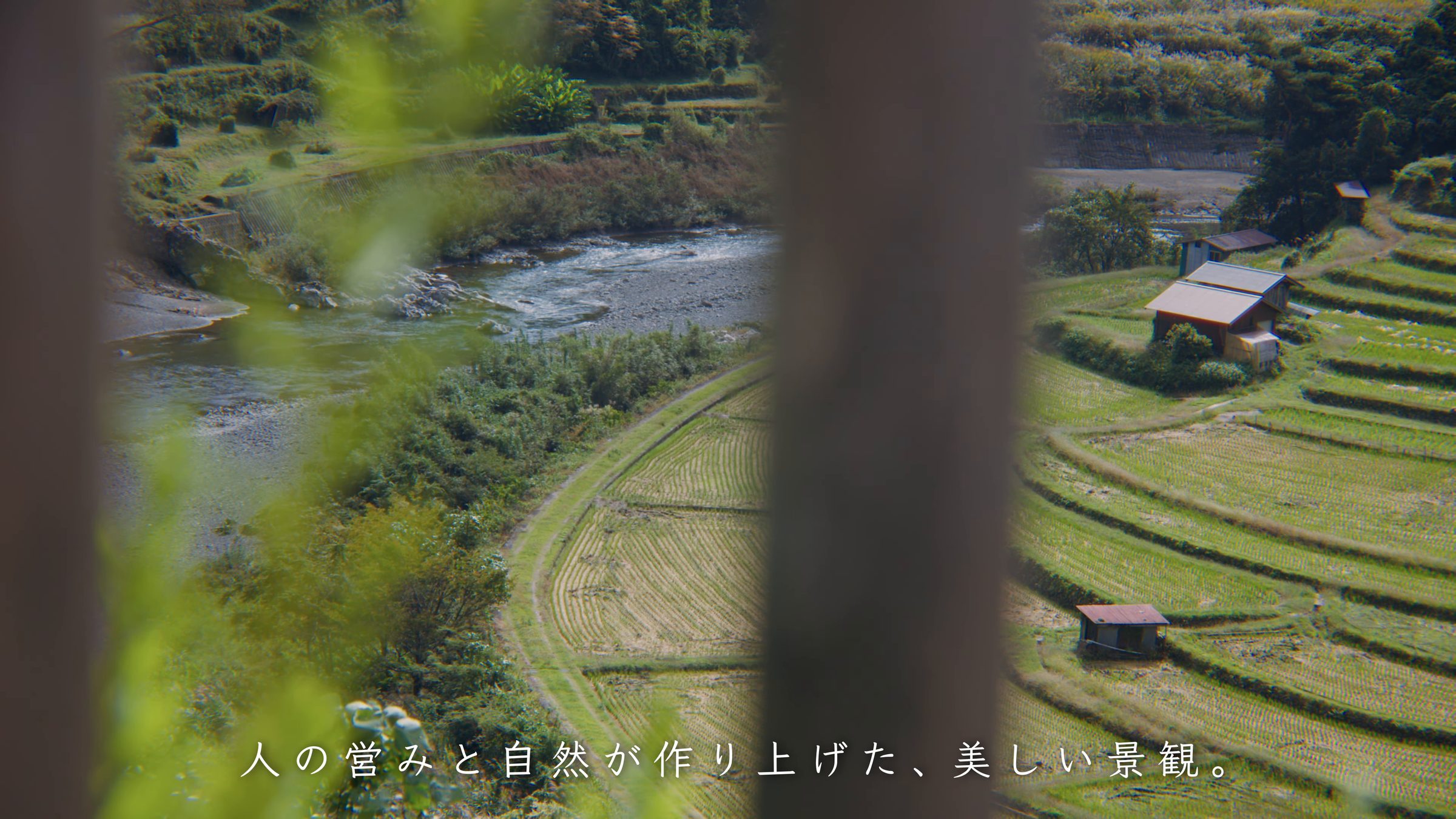
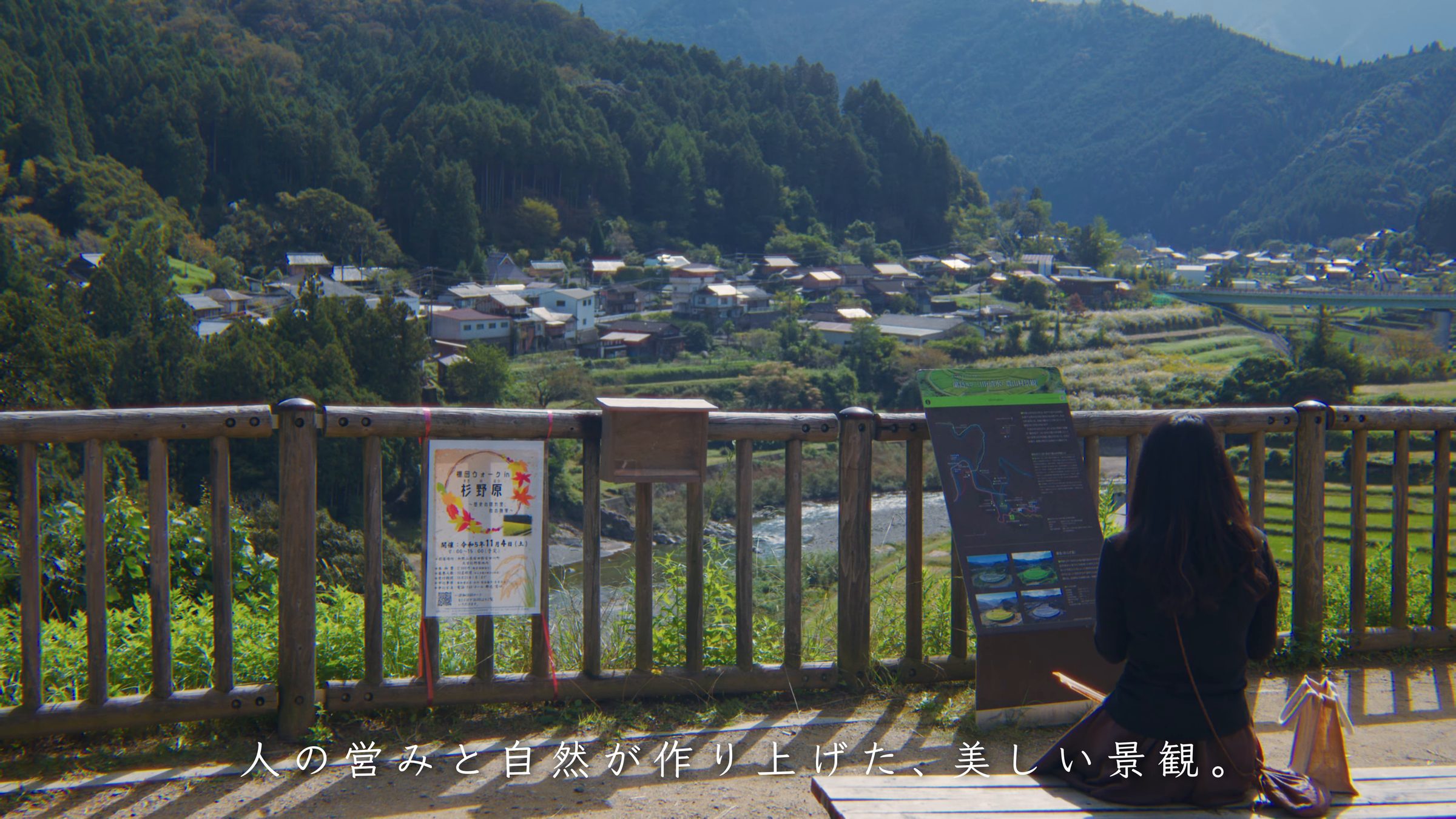
My destination was Aragijima, designated a nationally Important Cultural Landscape. The Arida River bends in a wide arc, and inside it lies a fan of terraced rice paddies. According to the sign at the viewpoint, an irrigation channel was dug here in 1655, early in the Edo period, making it possible to grow rice.
I sat on a bench and opened the bamboo sheath on my lap. Biting into mehari-zushi and umeboshi rice balls, I gazed over the terraces and the village: a landscape made over centuries by people and nature together. It was a perfectly happy breakfast.
Watch this scene on YouTube1:34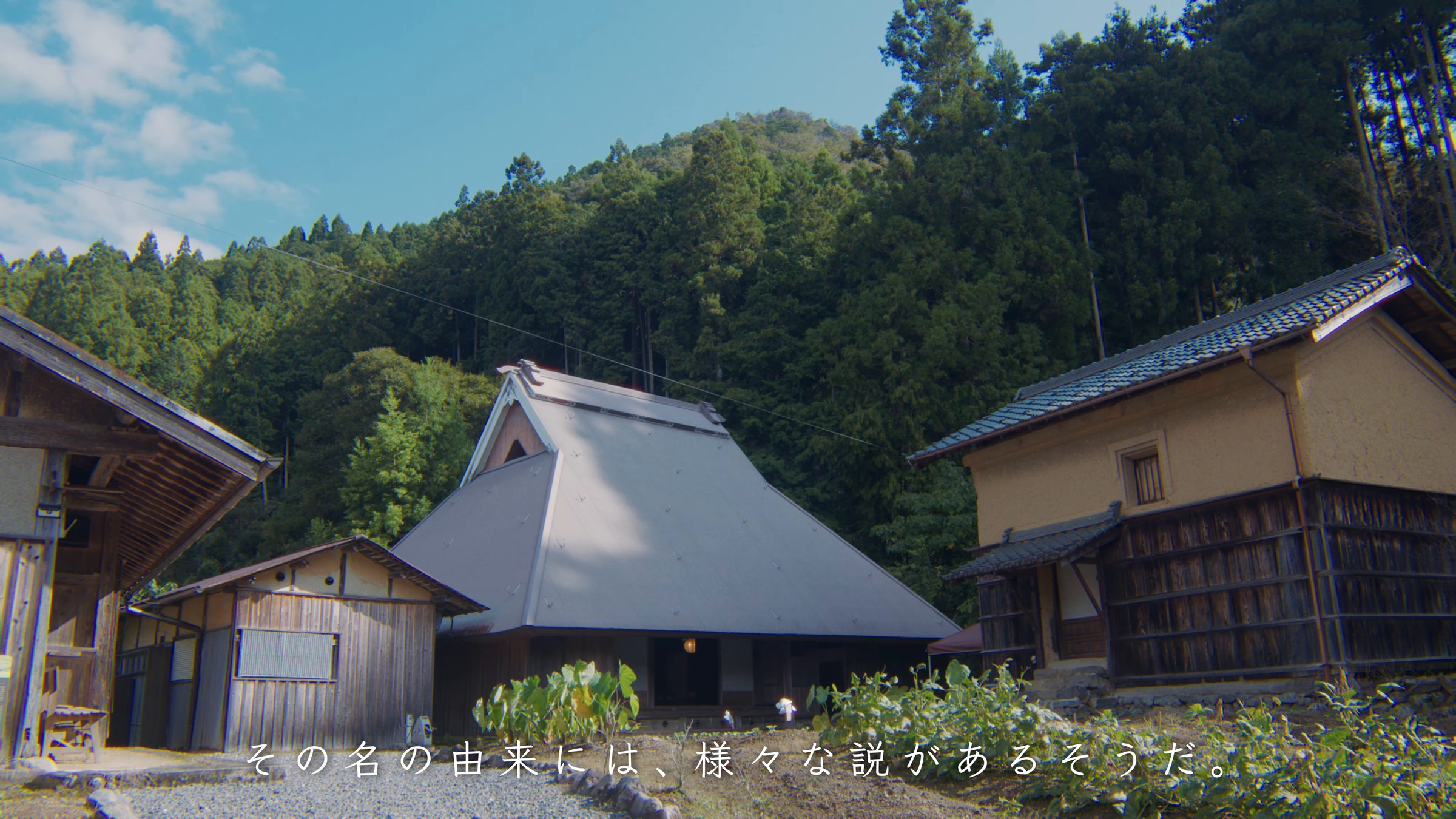
05TRAVEL JOURNAL
Home again
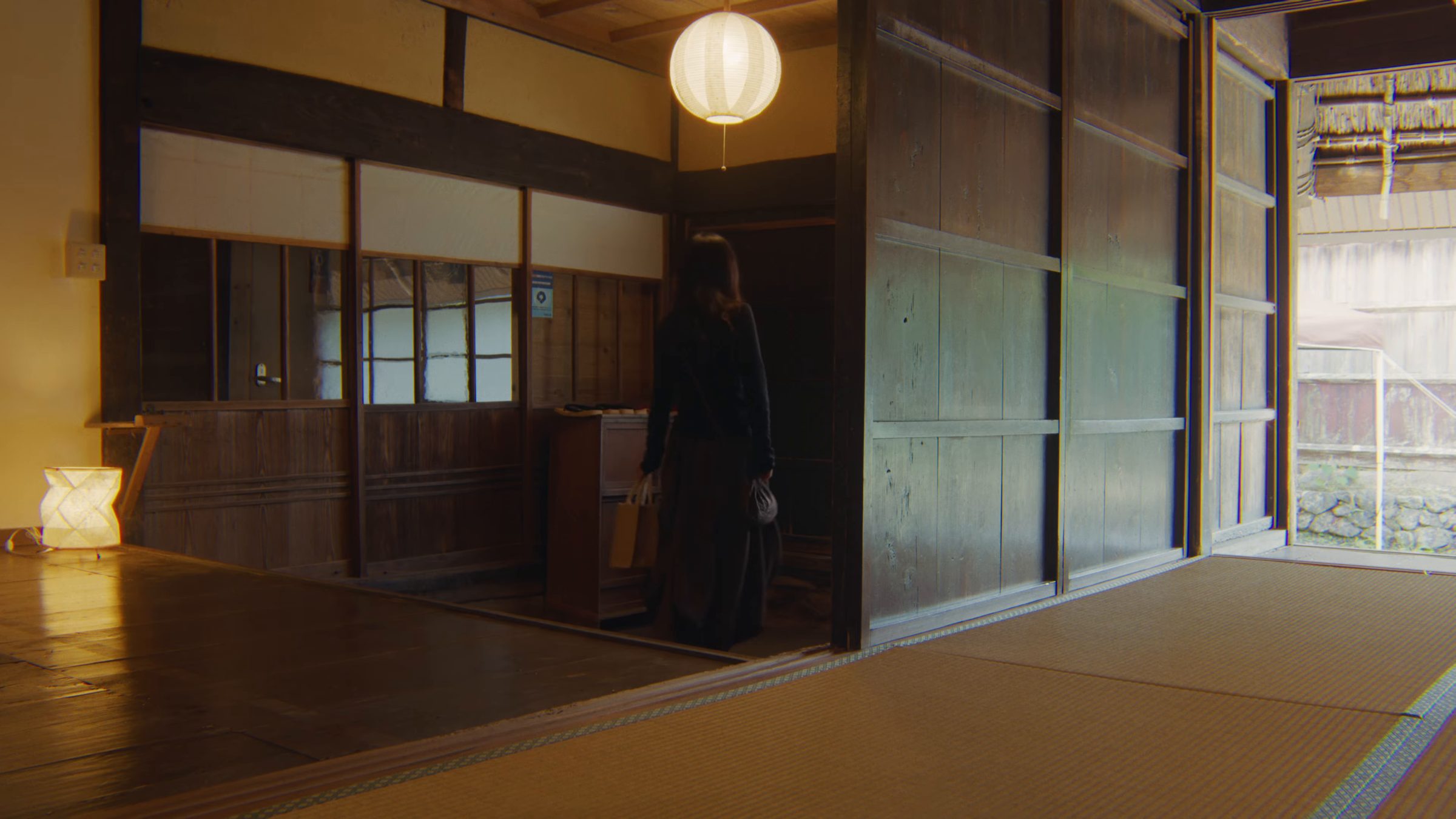
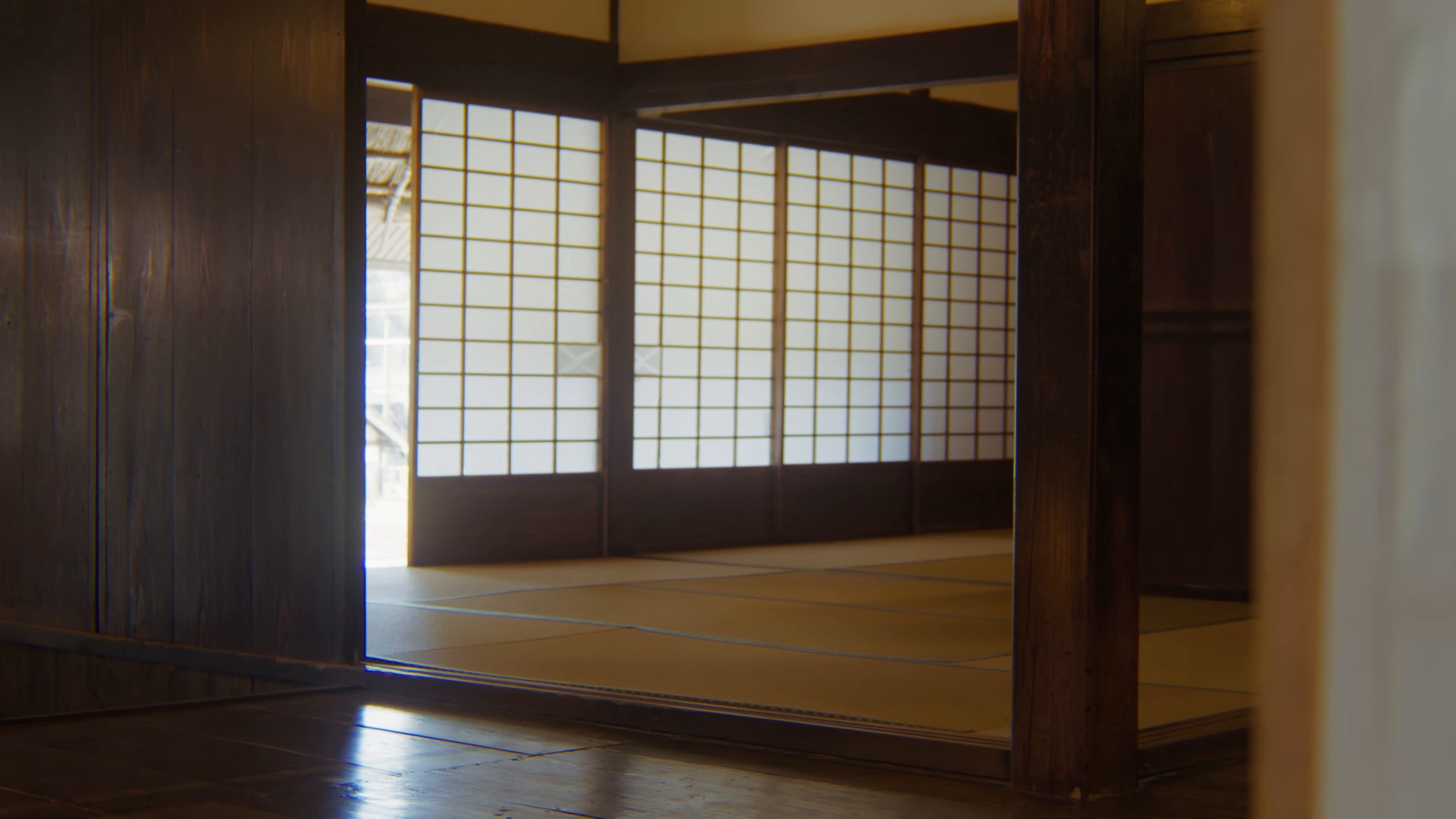
Back at the farmhouse: I'm home. Light filtered through the shoji screens and quietly filled the tatami room.
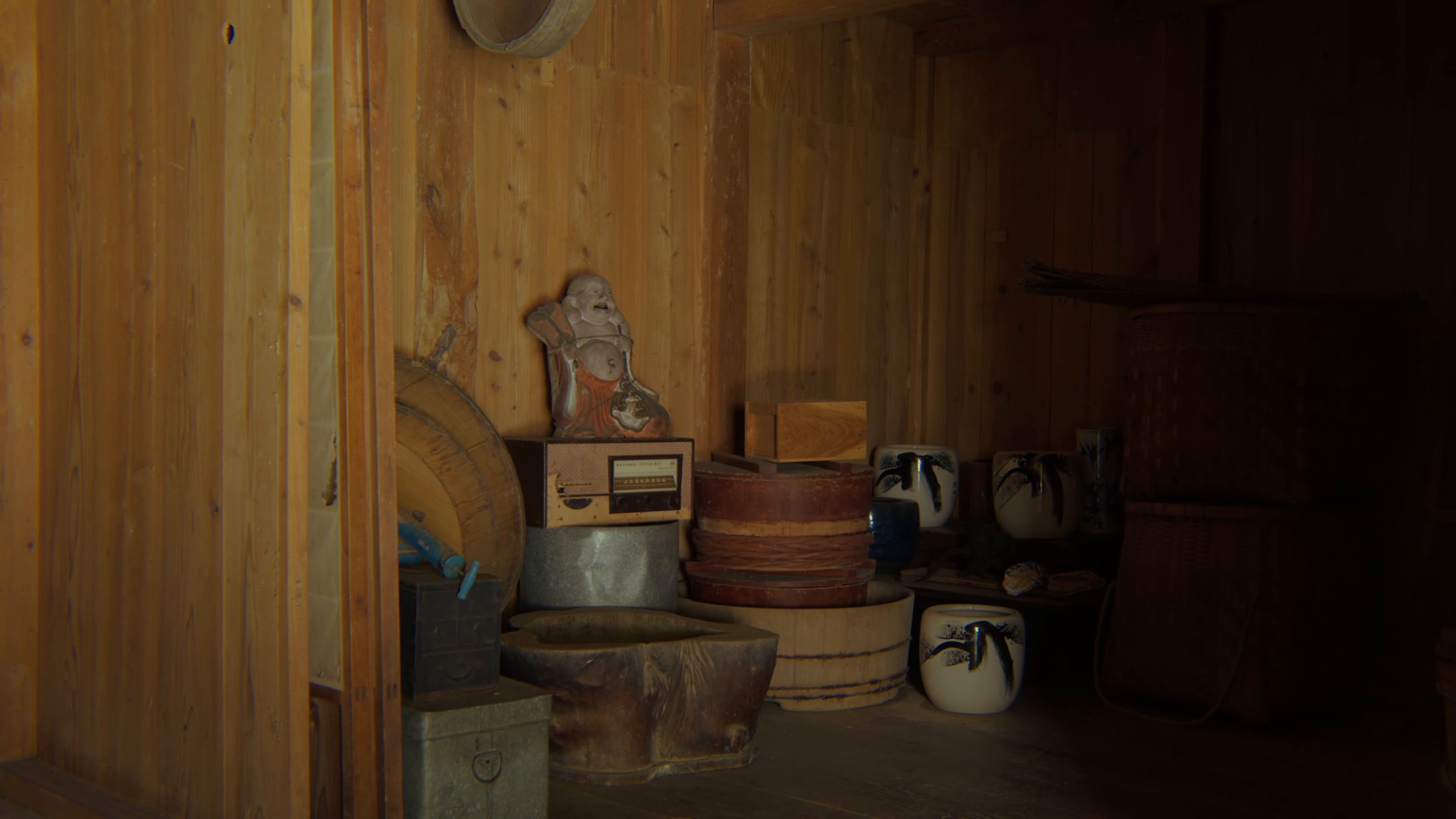
In the storeroom, old wooden tubs and a mortar had been left just as they were, tools from the life this house has lived.
Watch this scene on YouTube2:38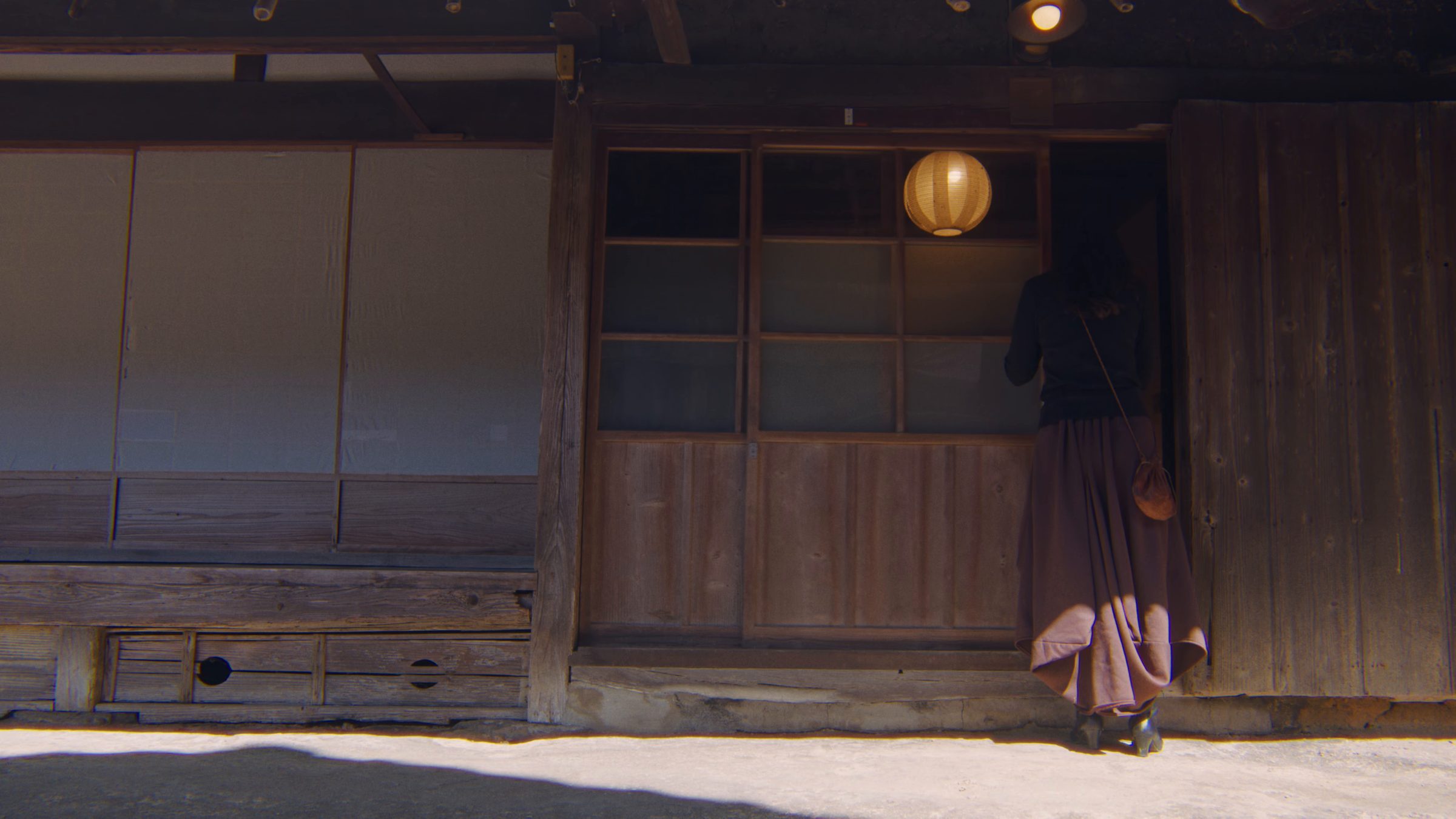
06TRAVEL JOURNAL
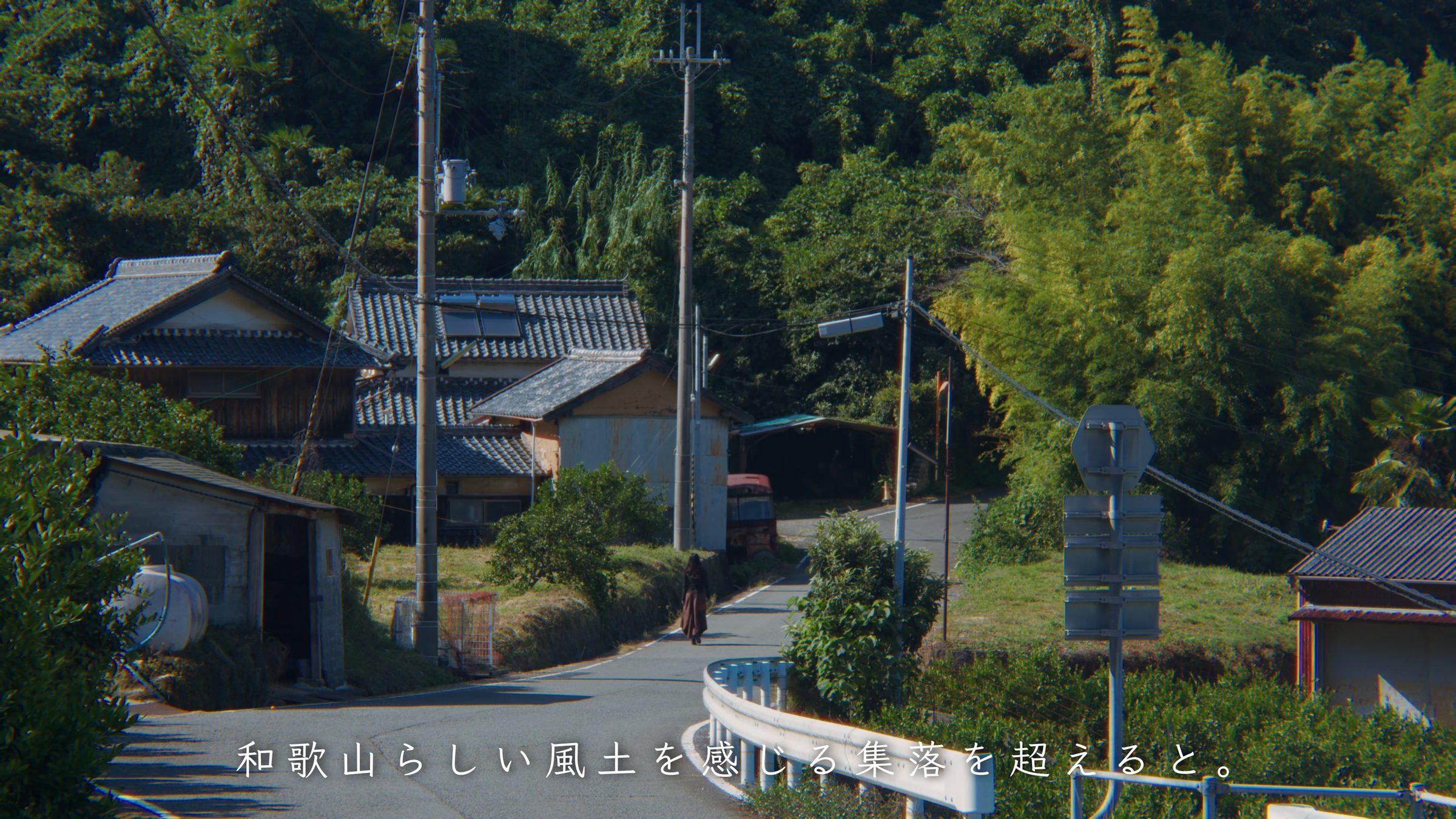
Over the mandarin hills
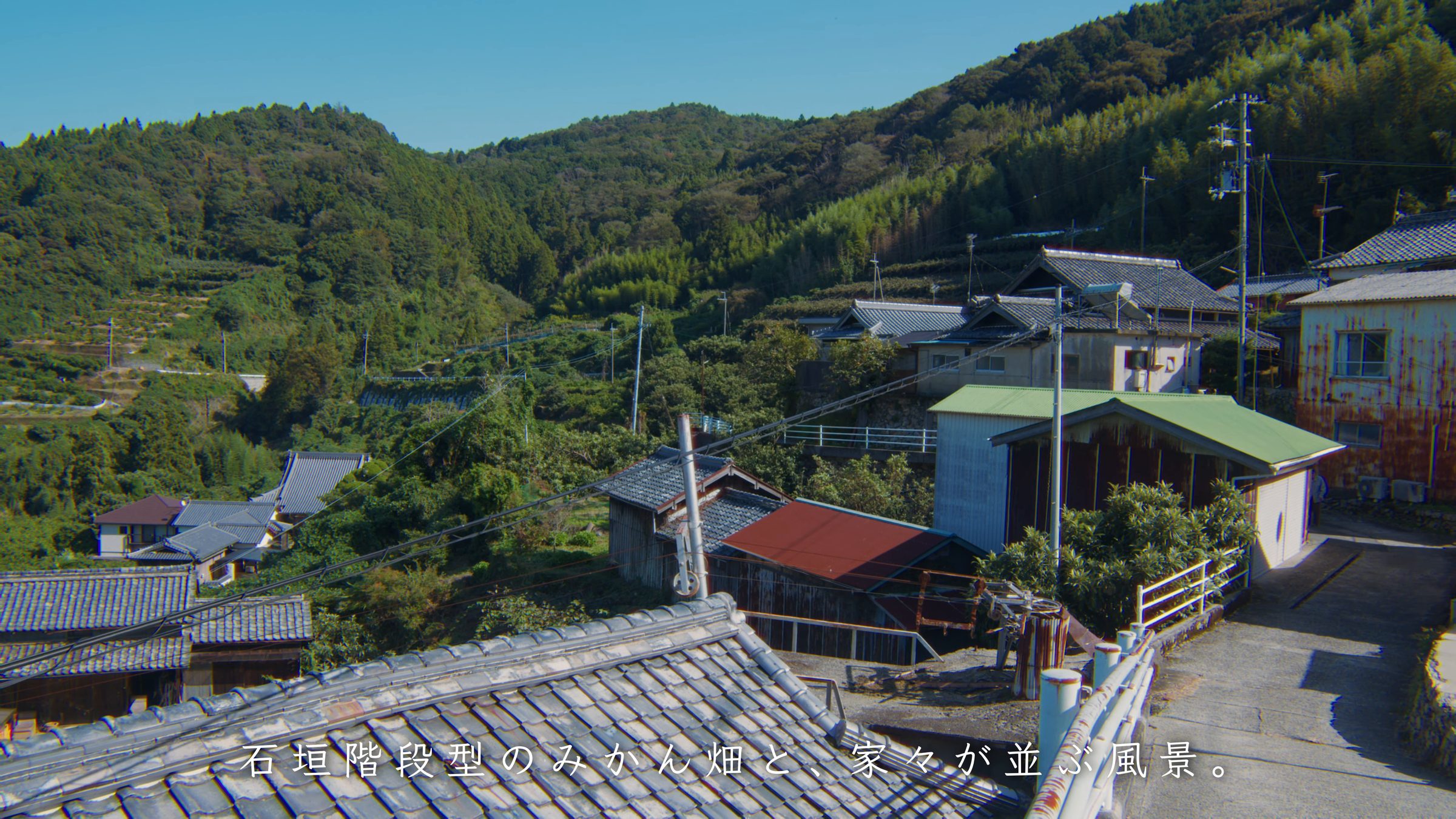
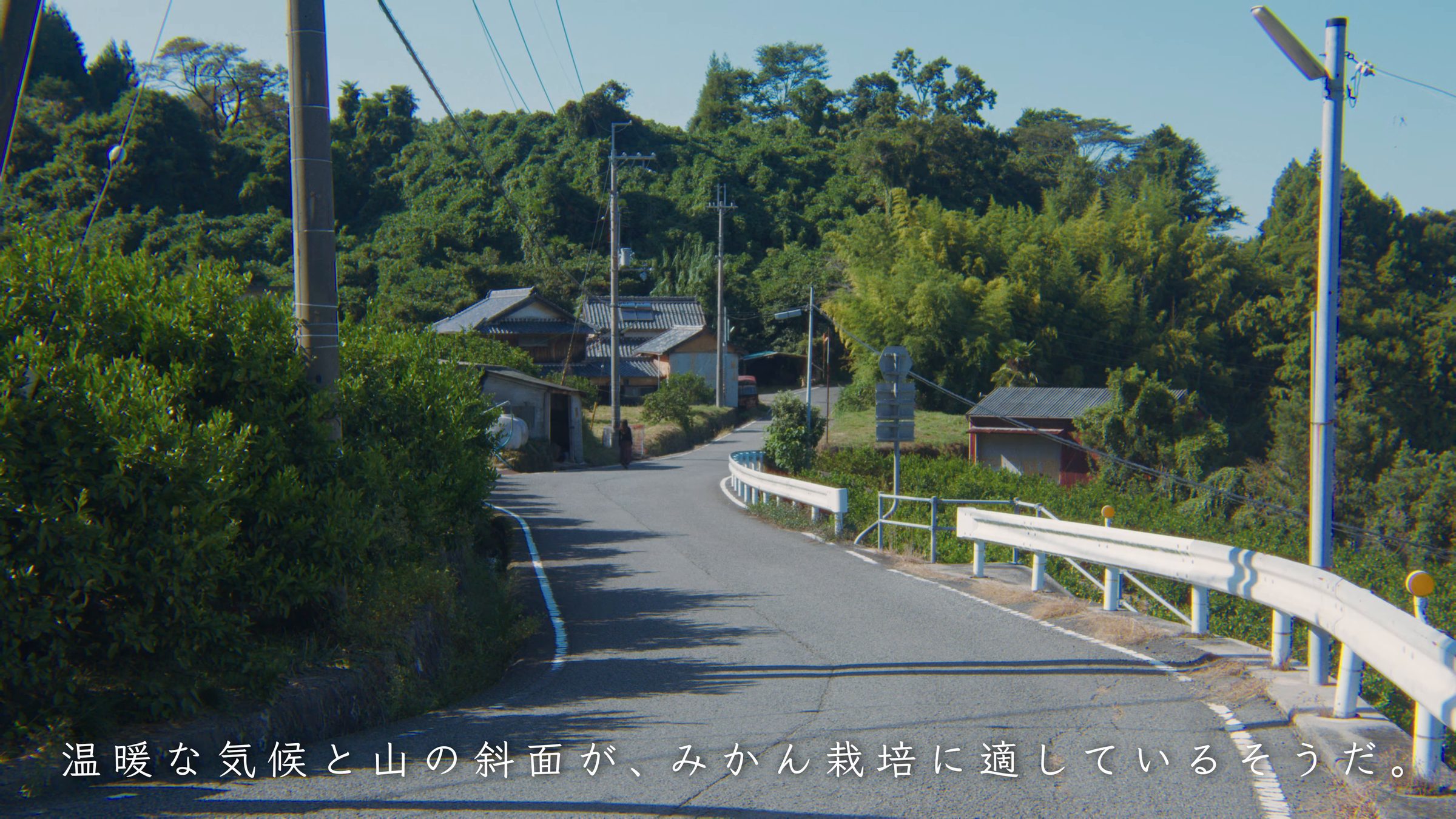
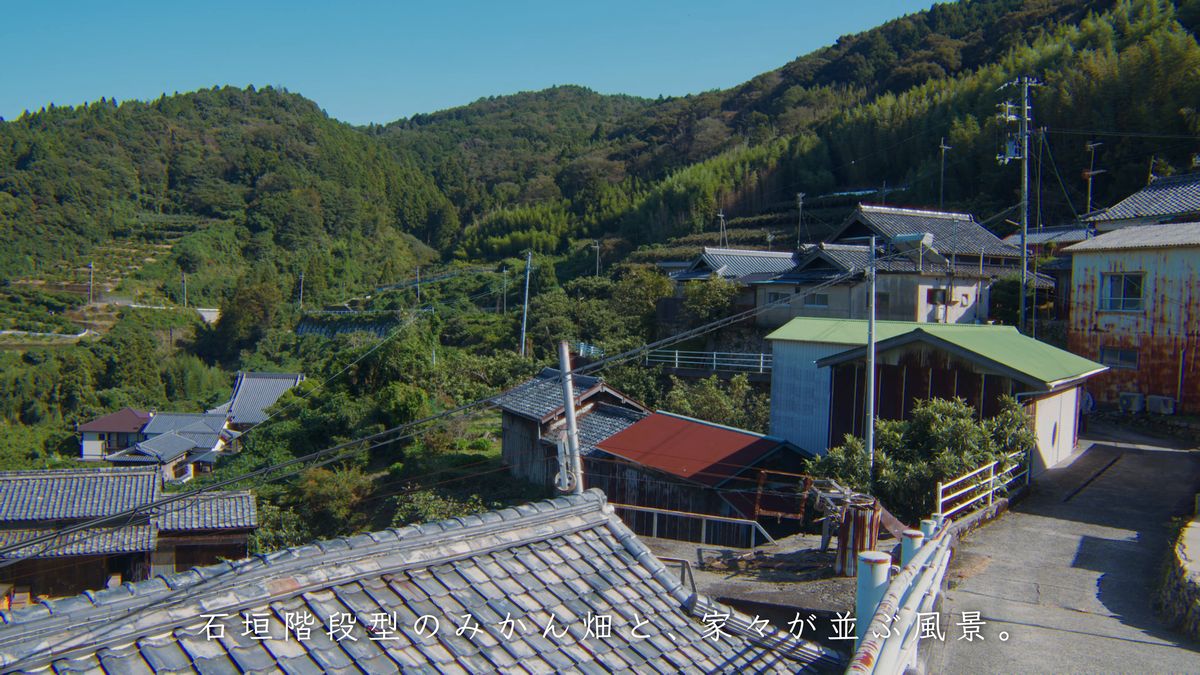
In the afternoon I headed for the hilltops. Along the way, terraced mandarin groves built on stone walls appeared, with houses lined up along the slope.
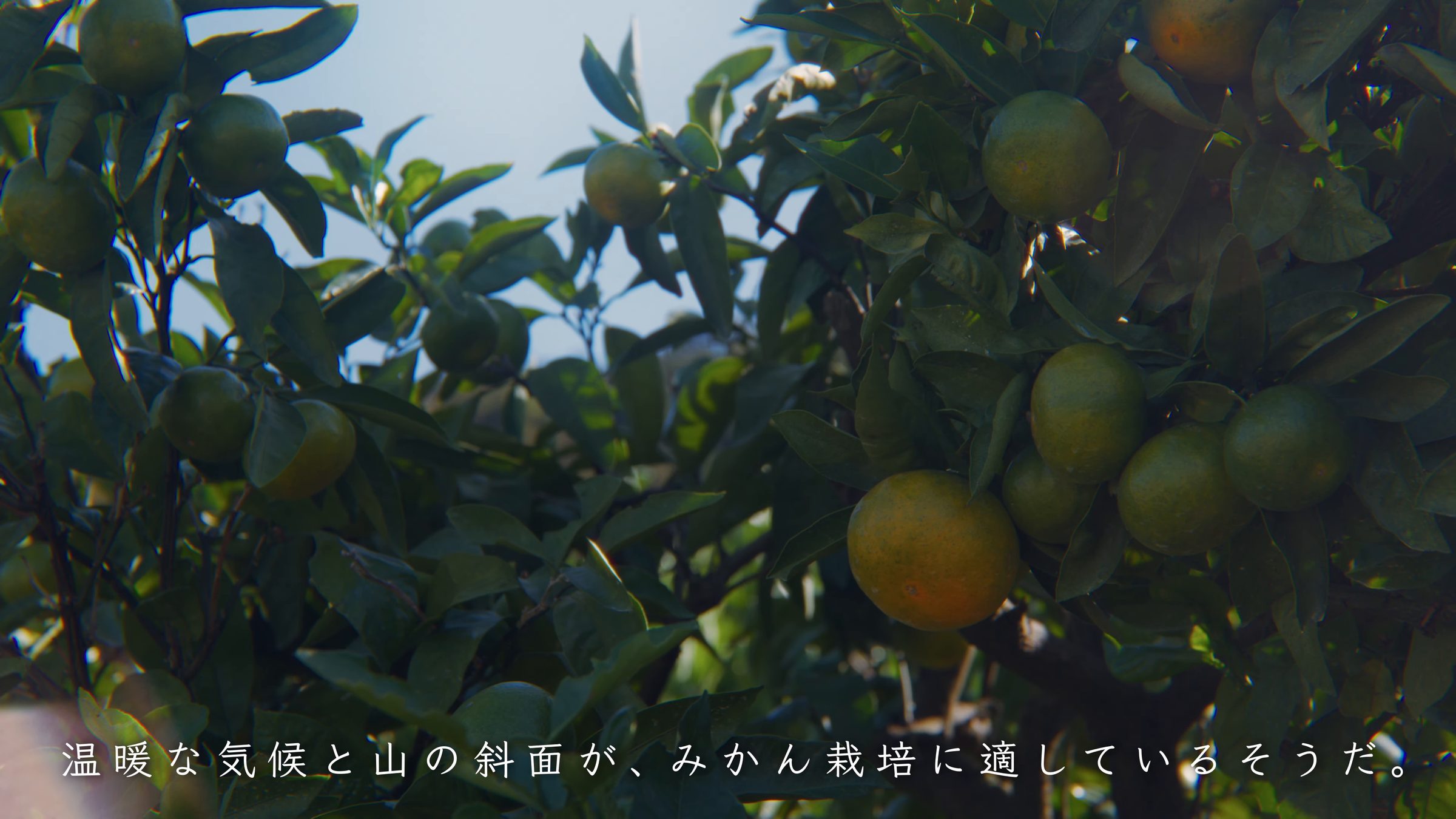
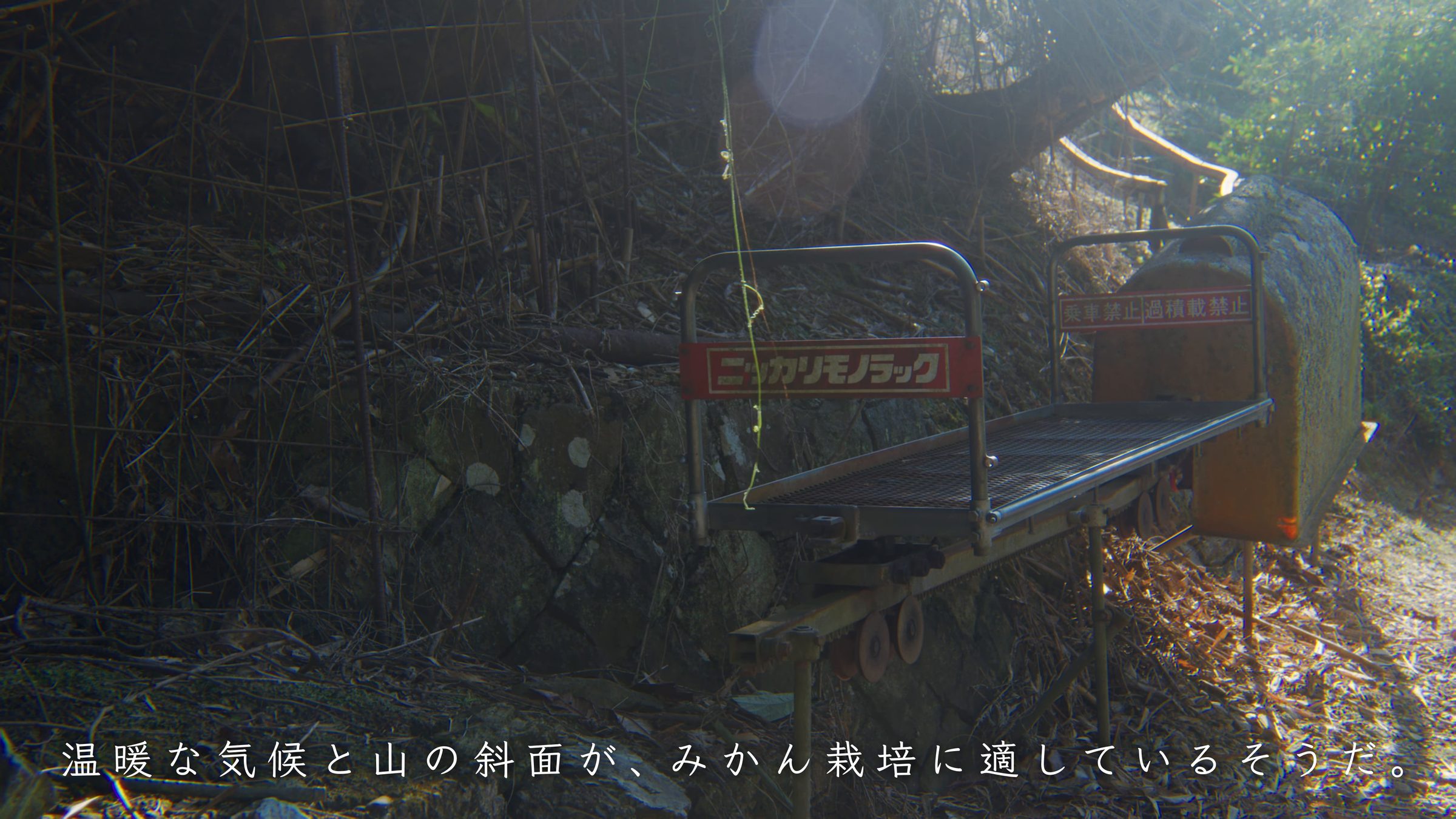
The mild climate and the steep slopes, I learned, are ideal for growing mandarins. The fruit was just beginning to turn orange, and a small monorail for hauling the harvest ran between the trees. Past villages that felt unmistakably Wakayama, I kept climbing.
Watch this scene on YouTube3:01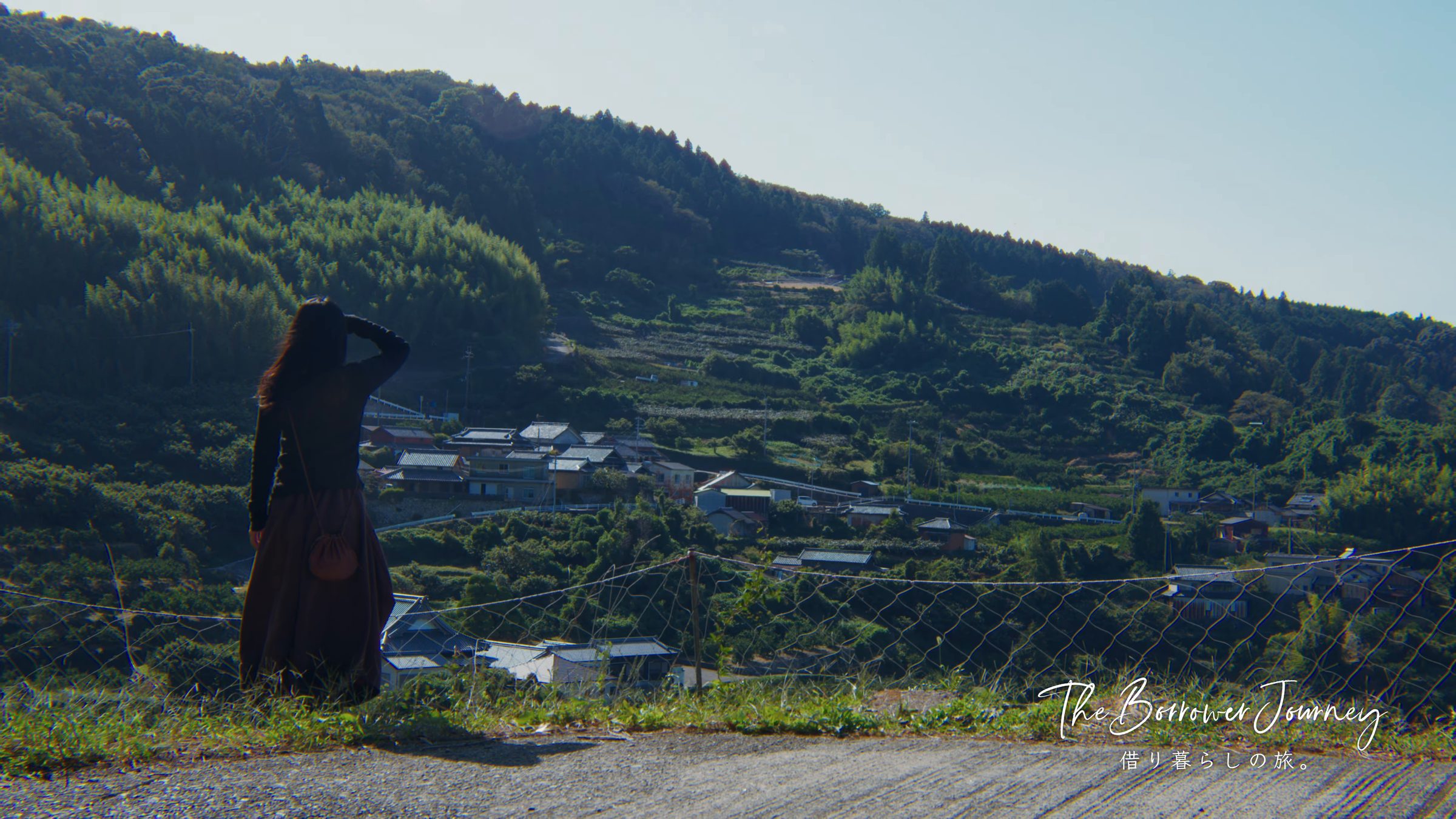
07TRAVEL JOURNAL
Cosmos in the sky
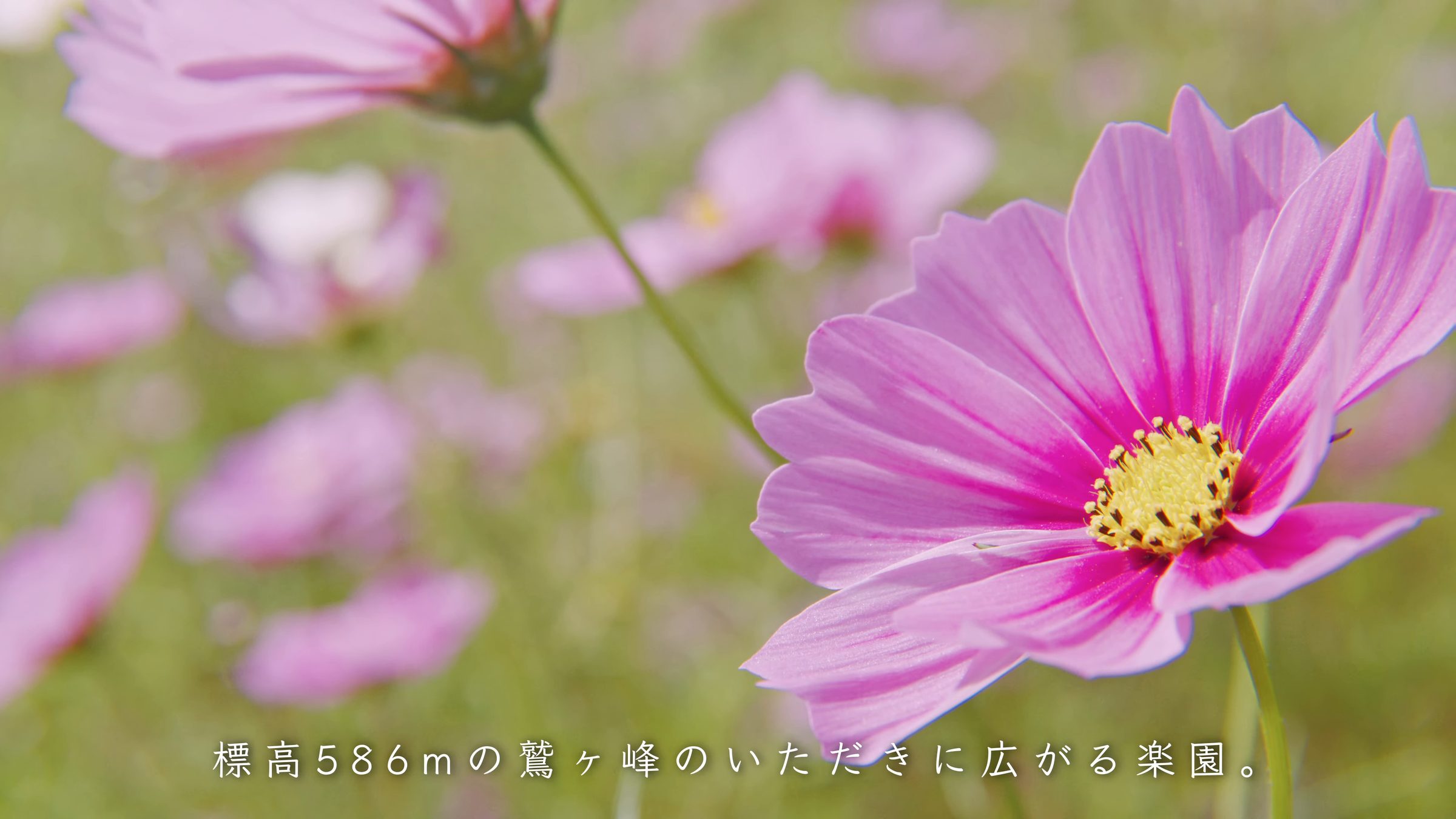
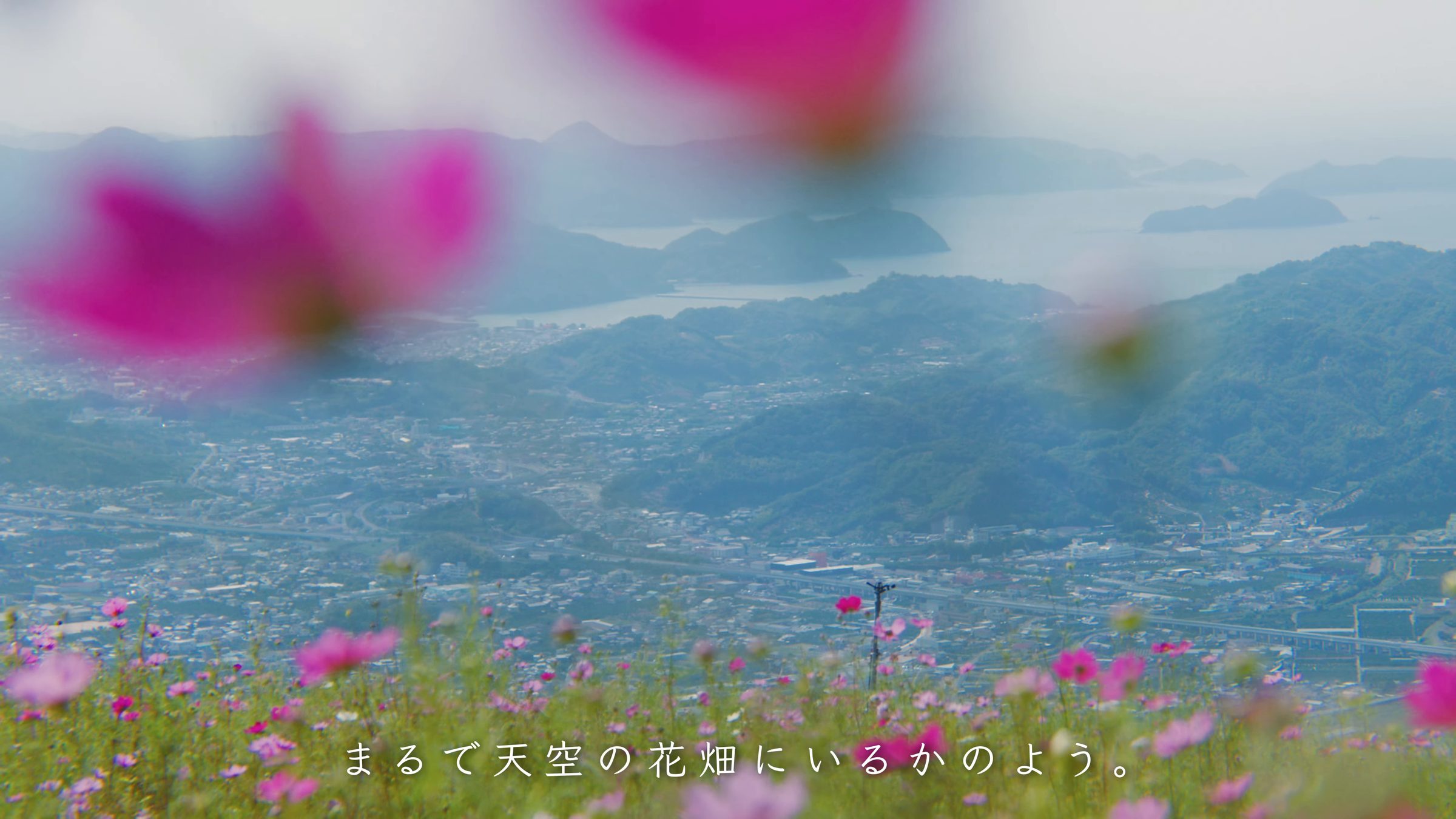
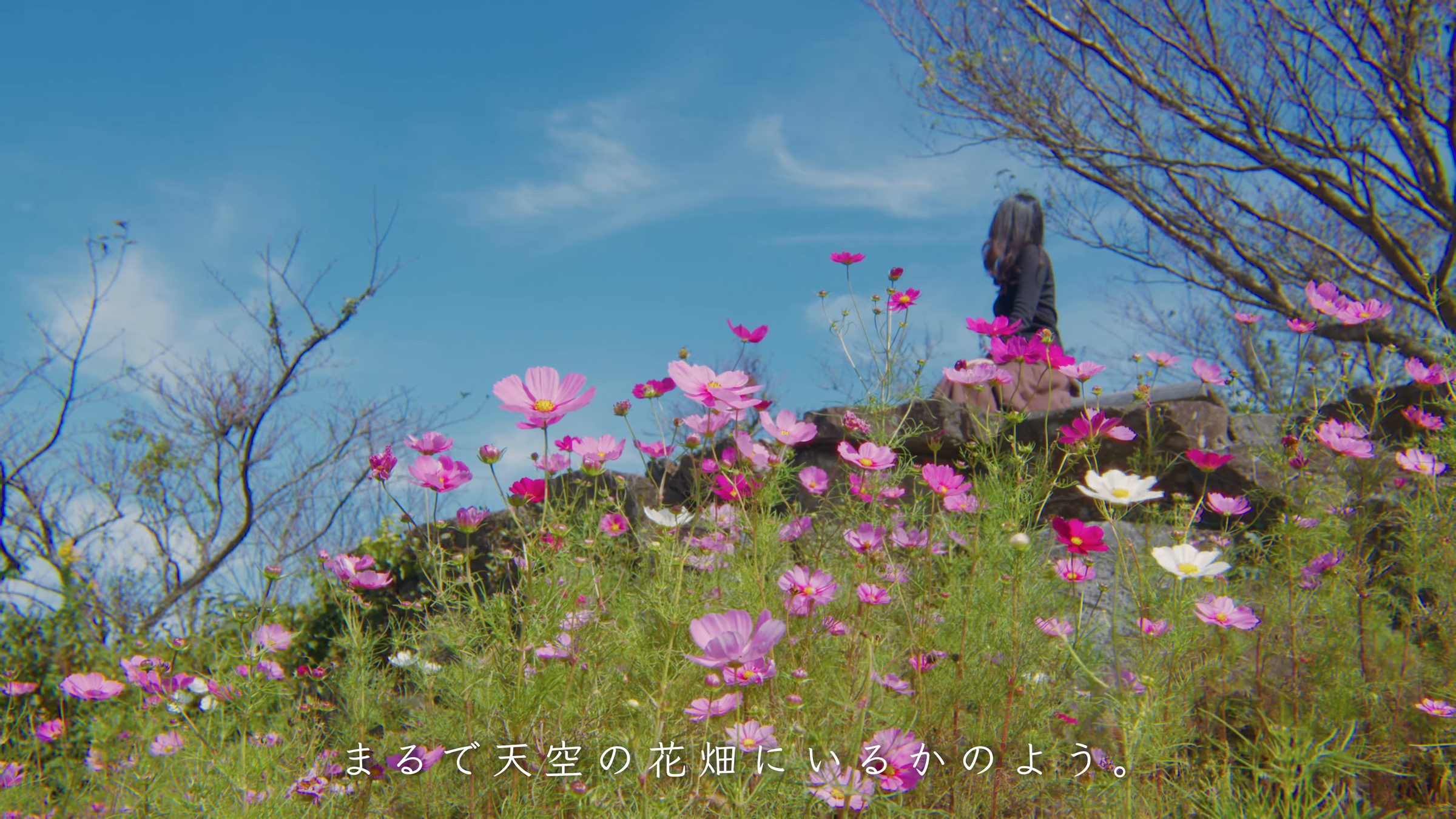
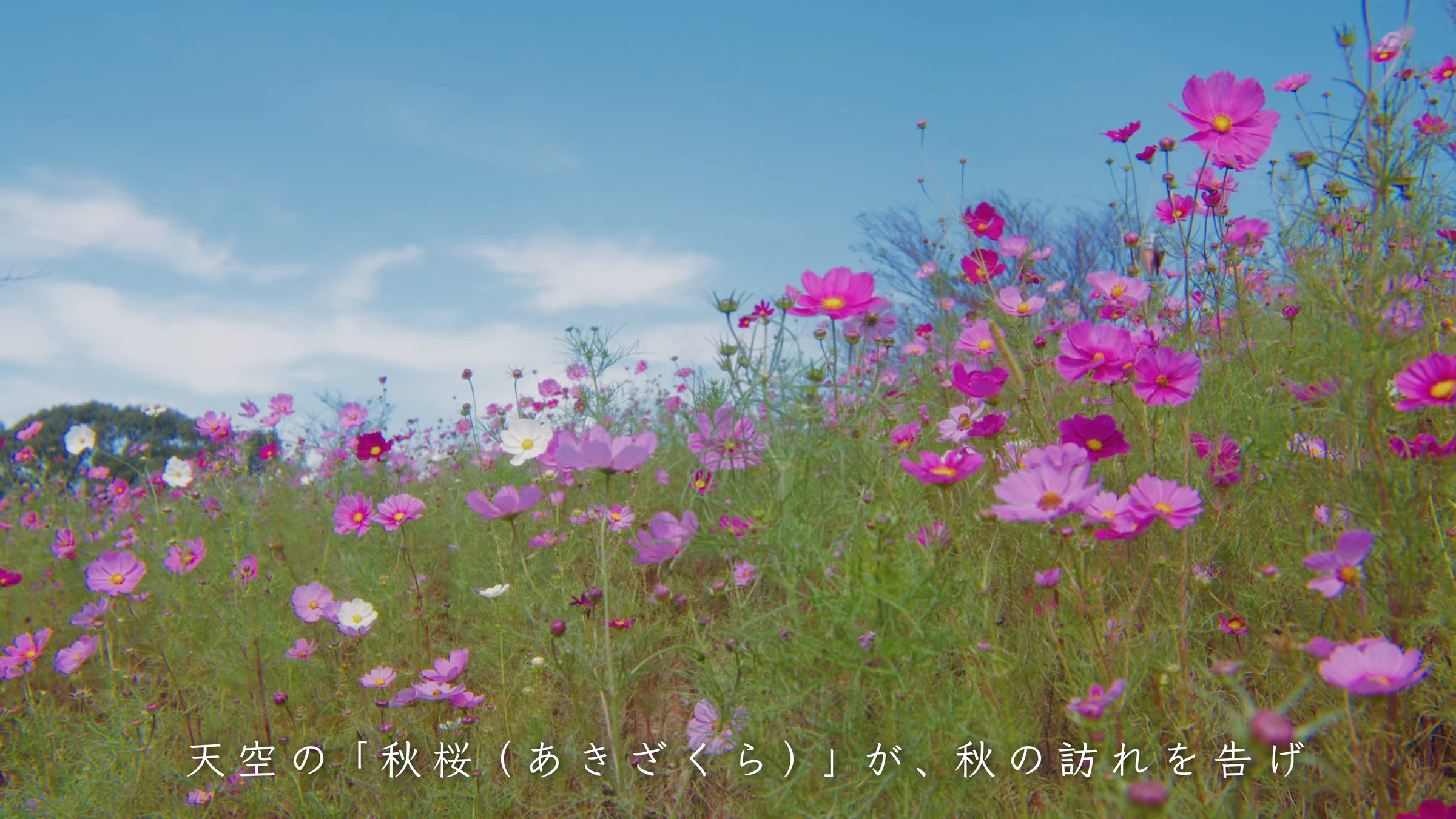
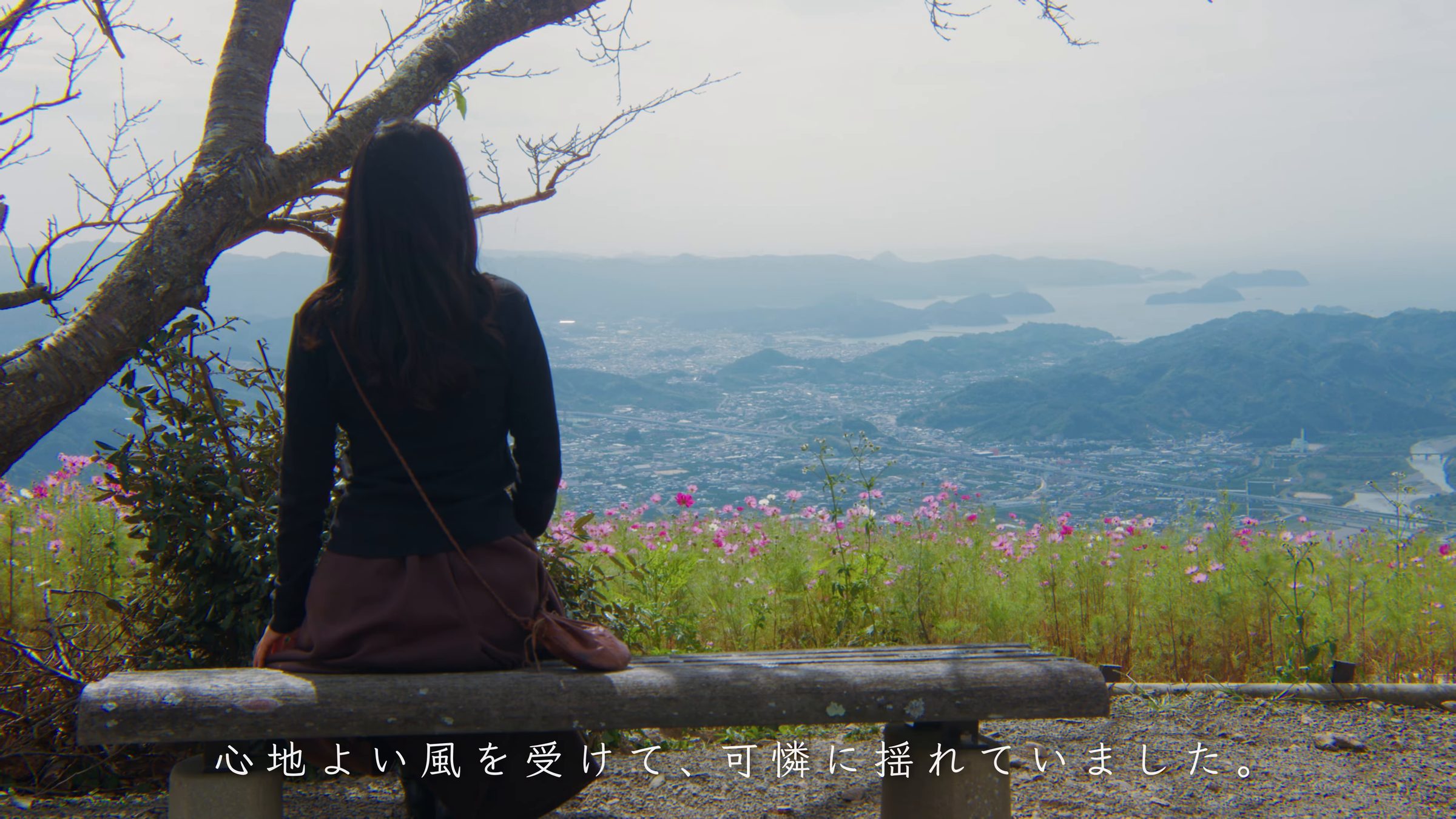
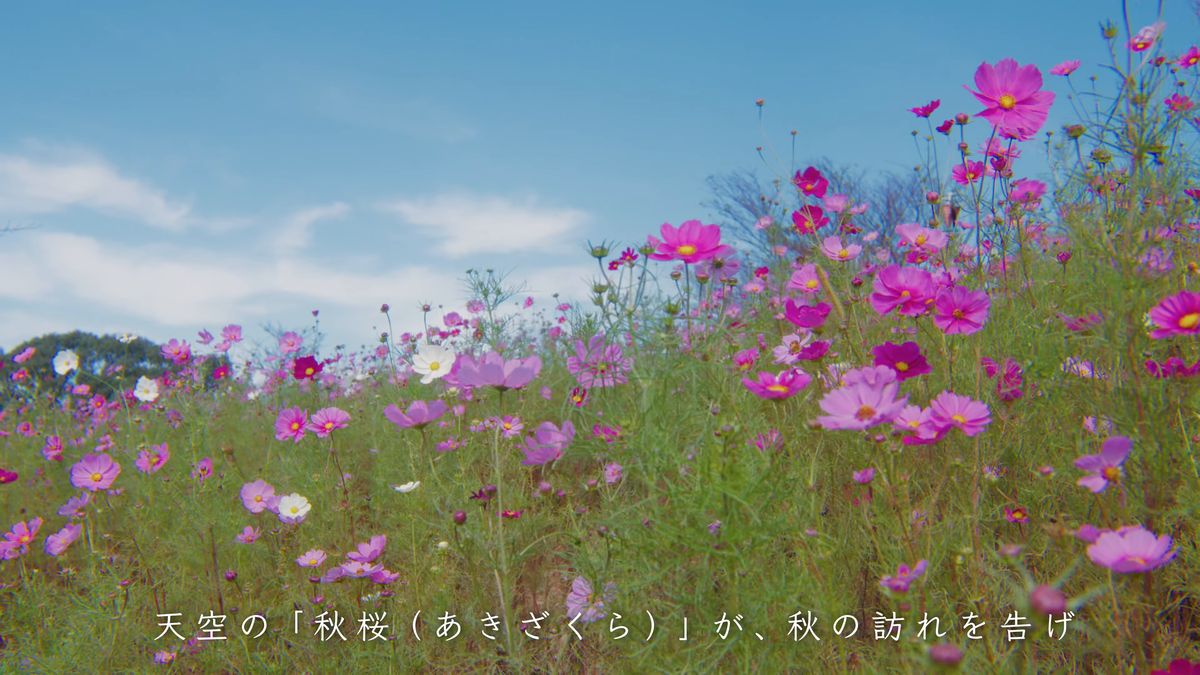
At the summit of Mt. Washigamine, 586 meters up, the Cosmos Park spreads across the peak, with about a million cosmos in bloom.
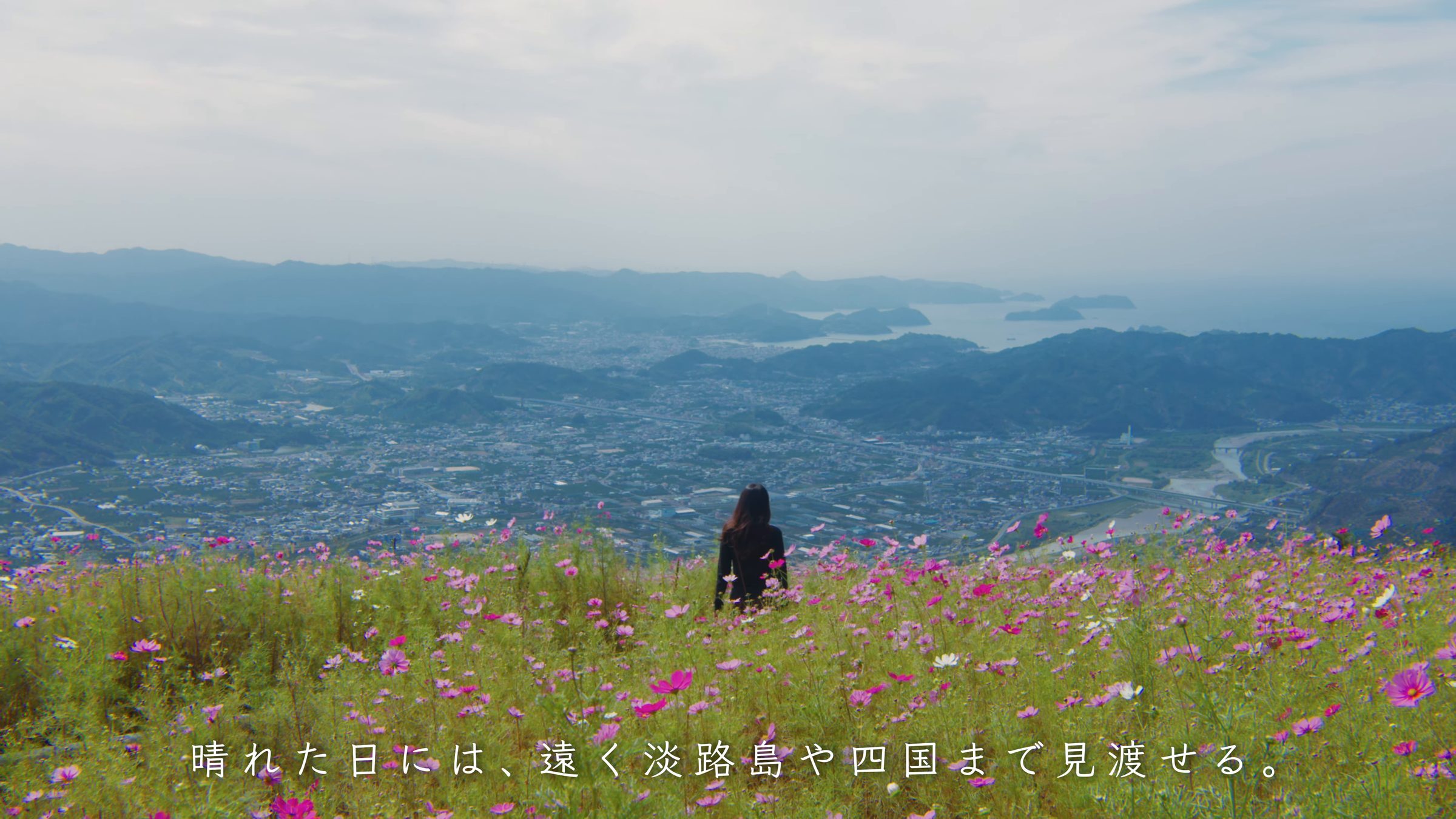
On a clear day you can see as far as Awaji Island and Shikoku. With the town and the sea hazy beyond the flowers, it felt like standing in a flower garden in the sky.
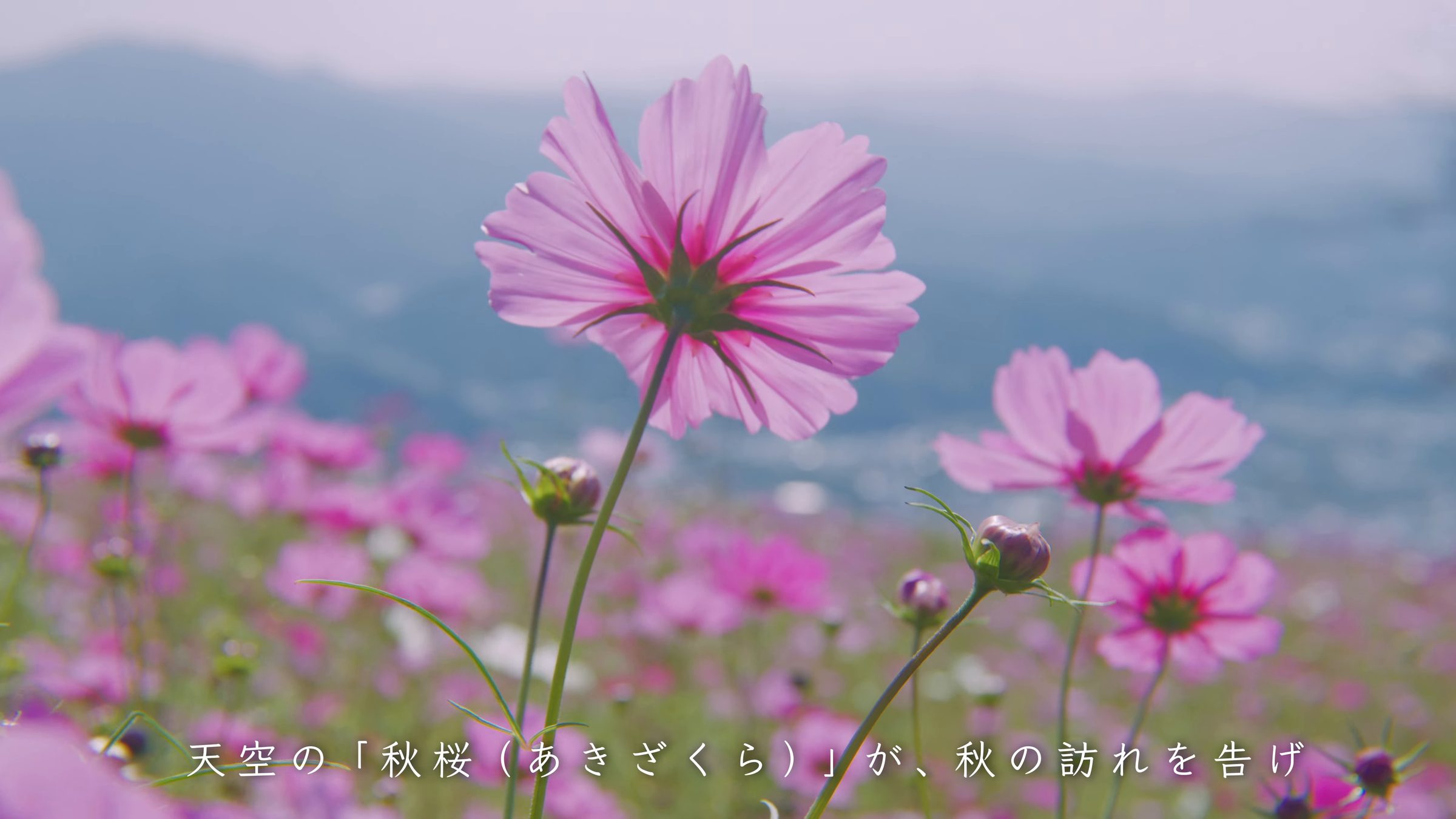
In Japanese, cosmos can also be written as akizakura, "autumn cherry blossom": a flower that announces the arrival of autumn. Up here, close to the sky, they swayed gracefully in the pleasant breeze. I sat on a bench and let the wind blow over me for a while.
Watch this scene on YouTube3:21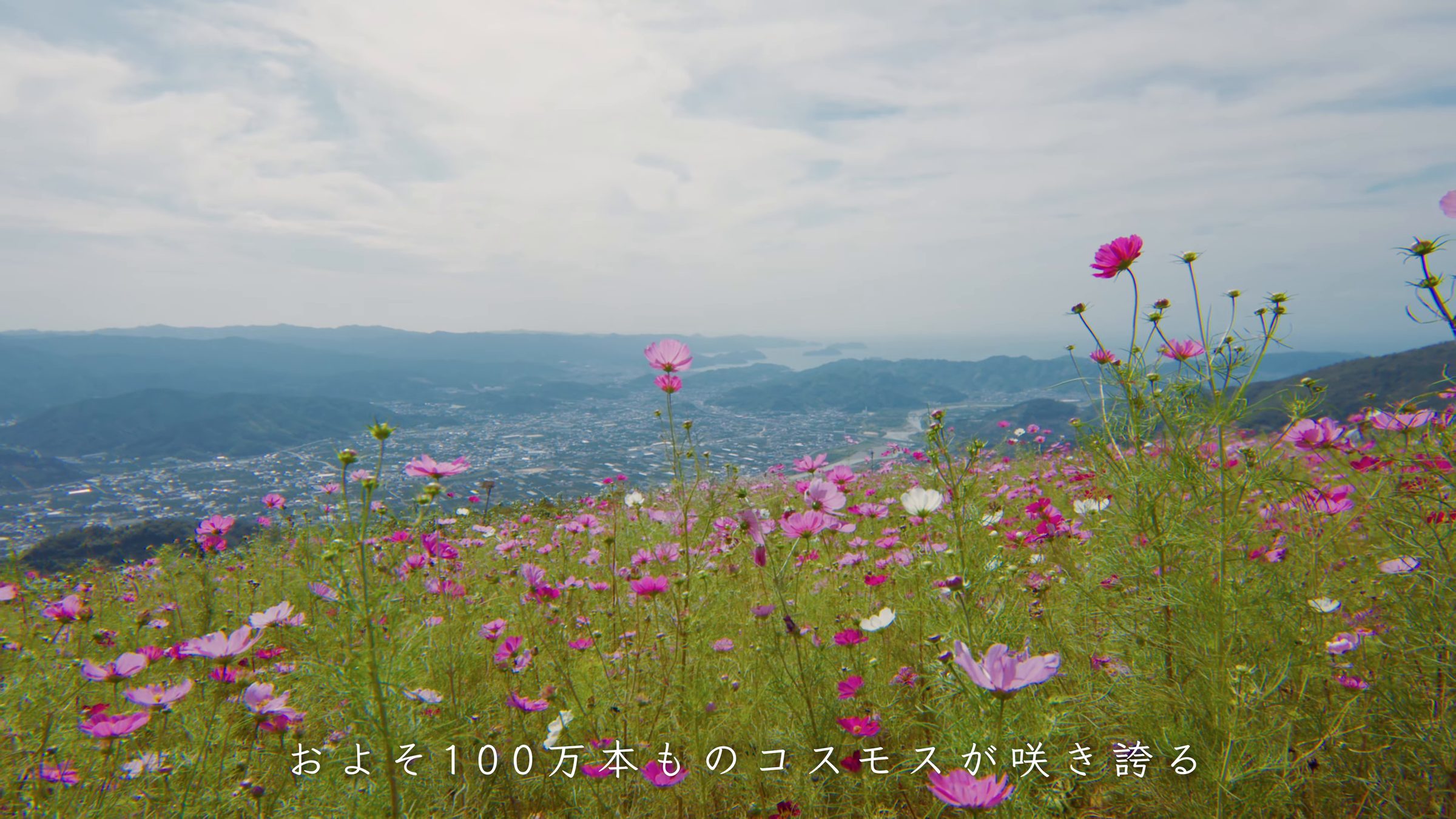
08TRAVEL JOURNAL
Sushi on the table, Wakayama ramen
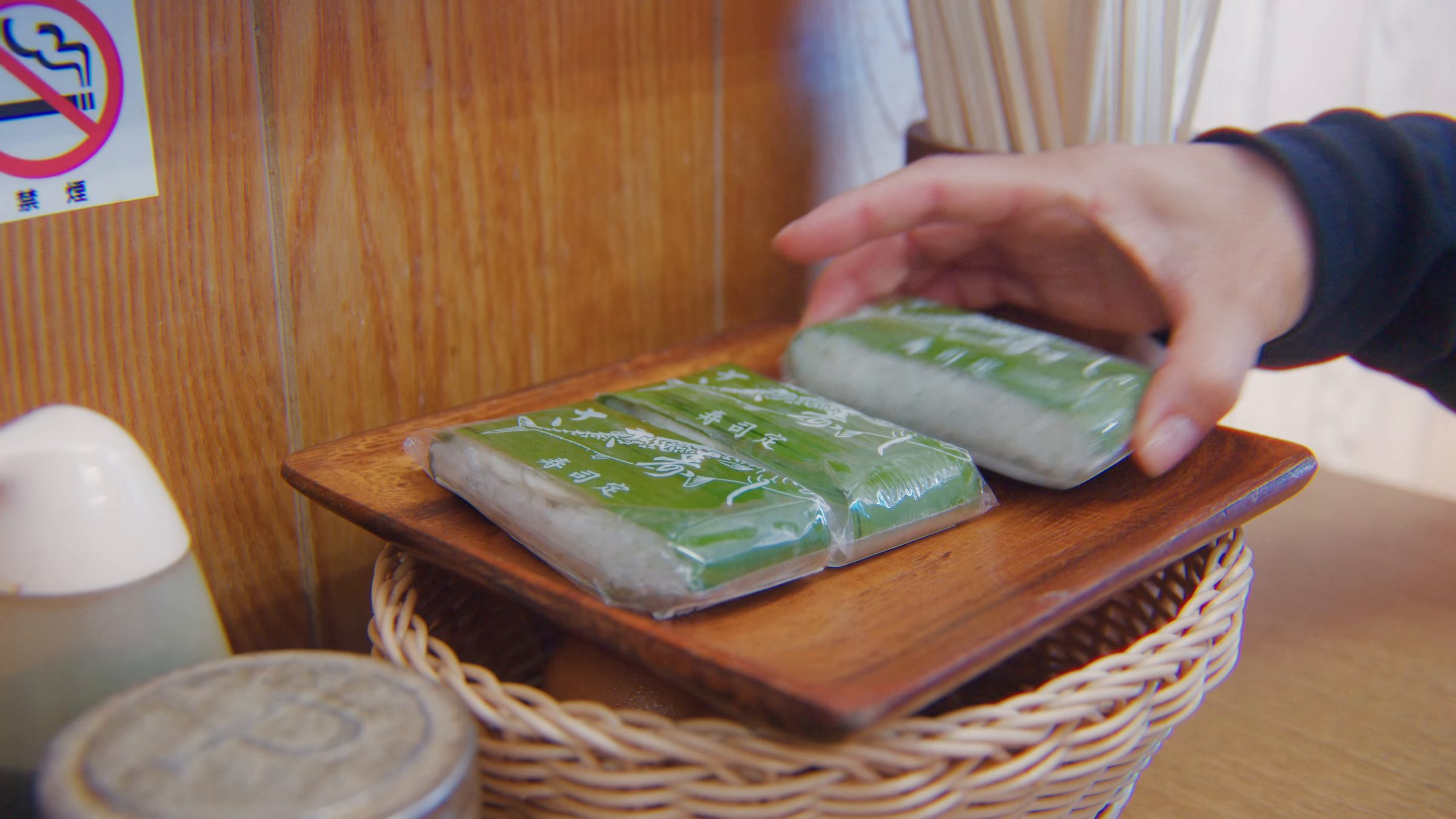
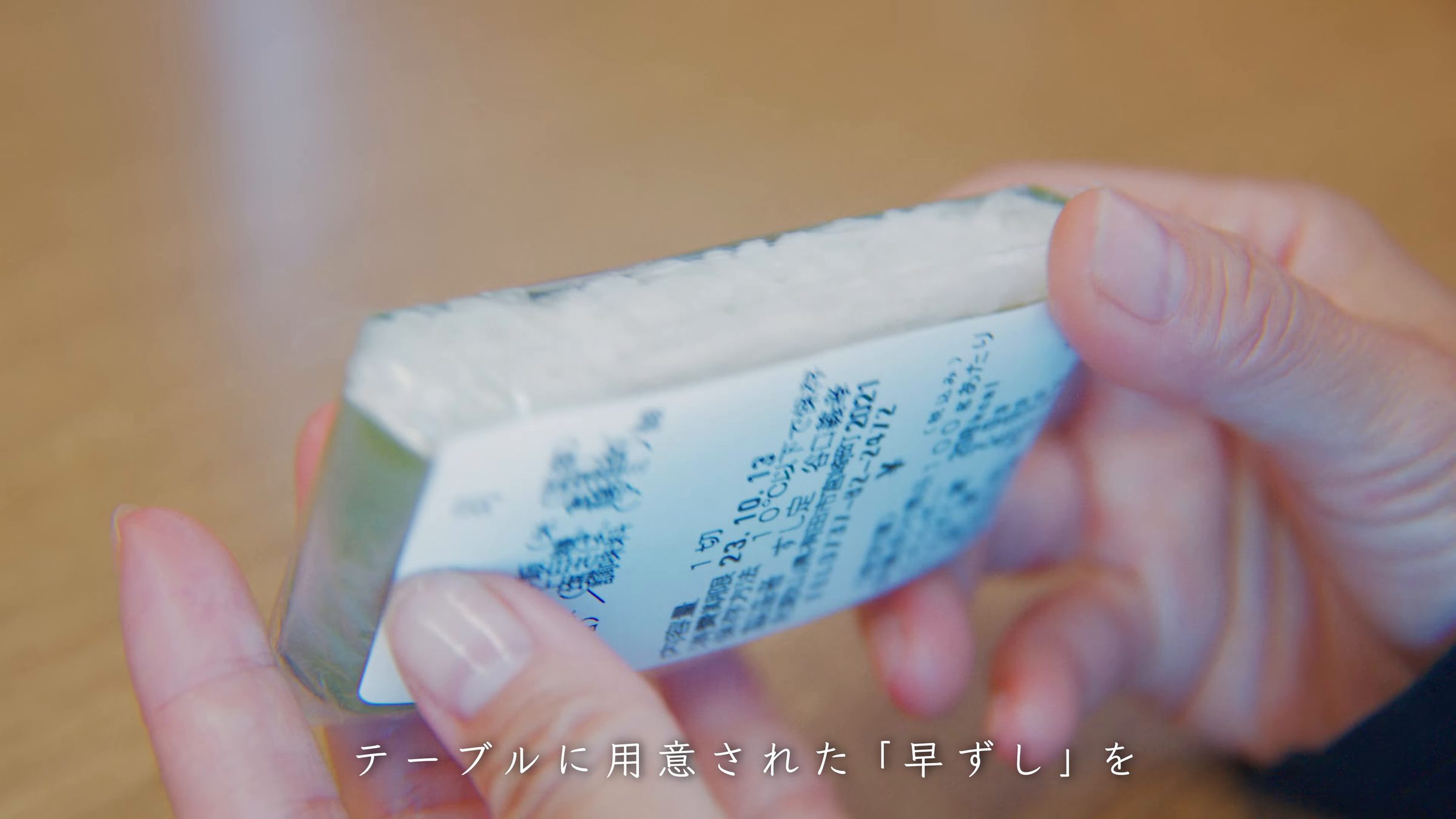
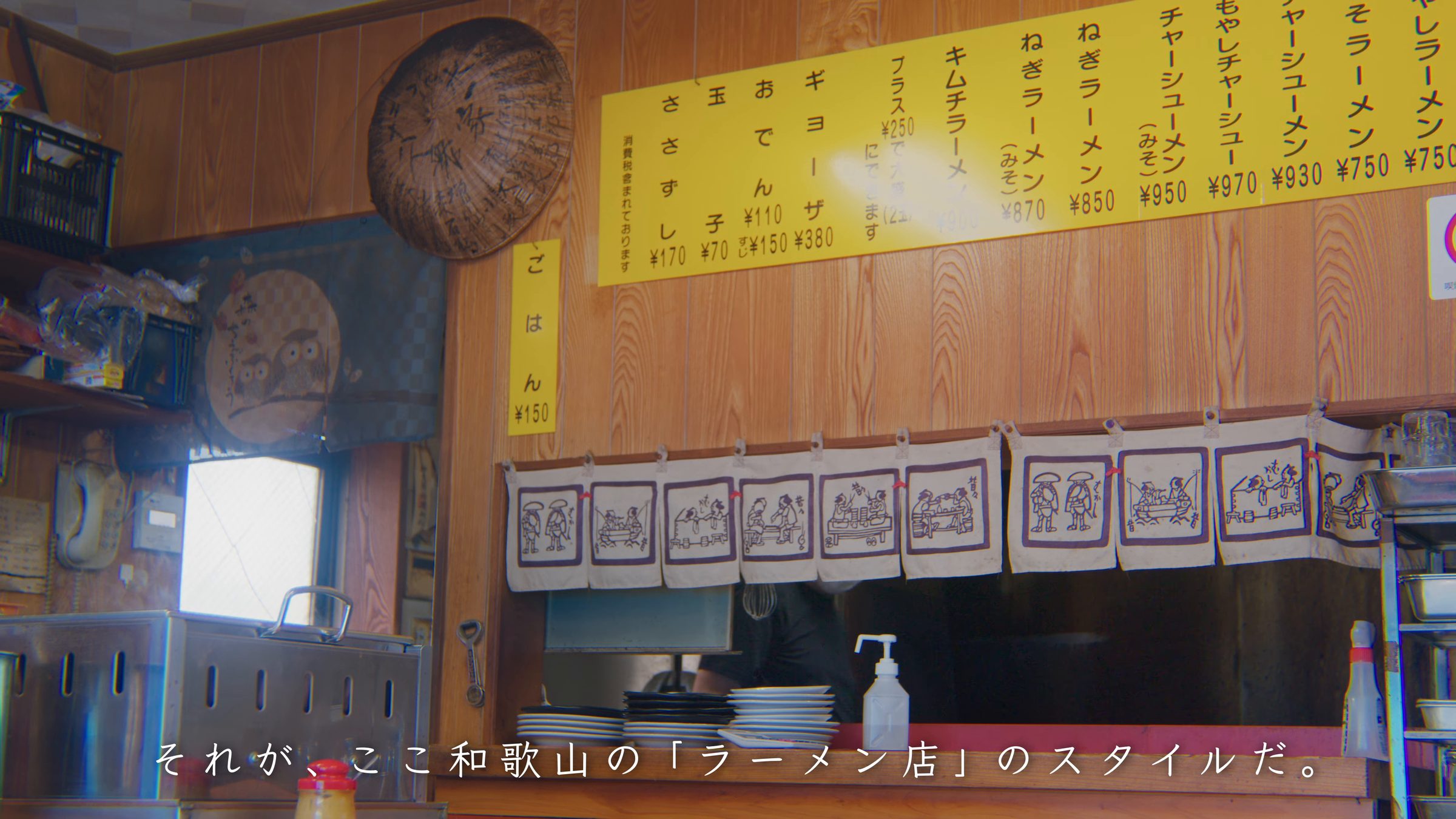
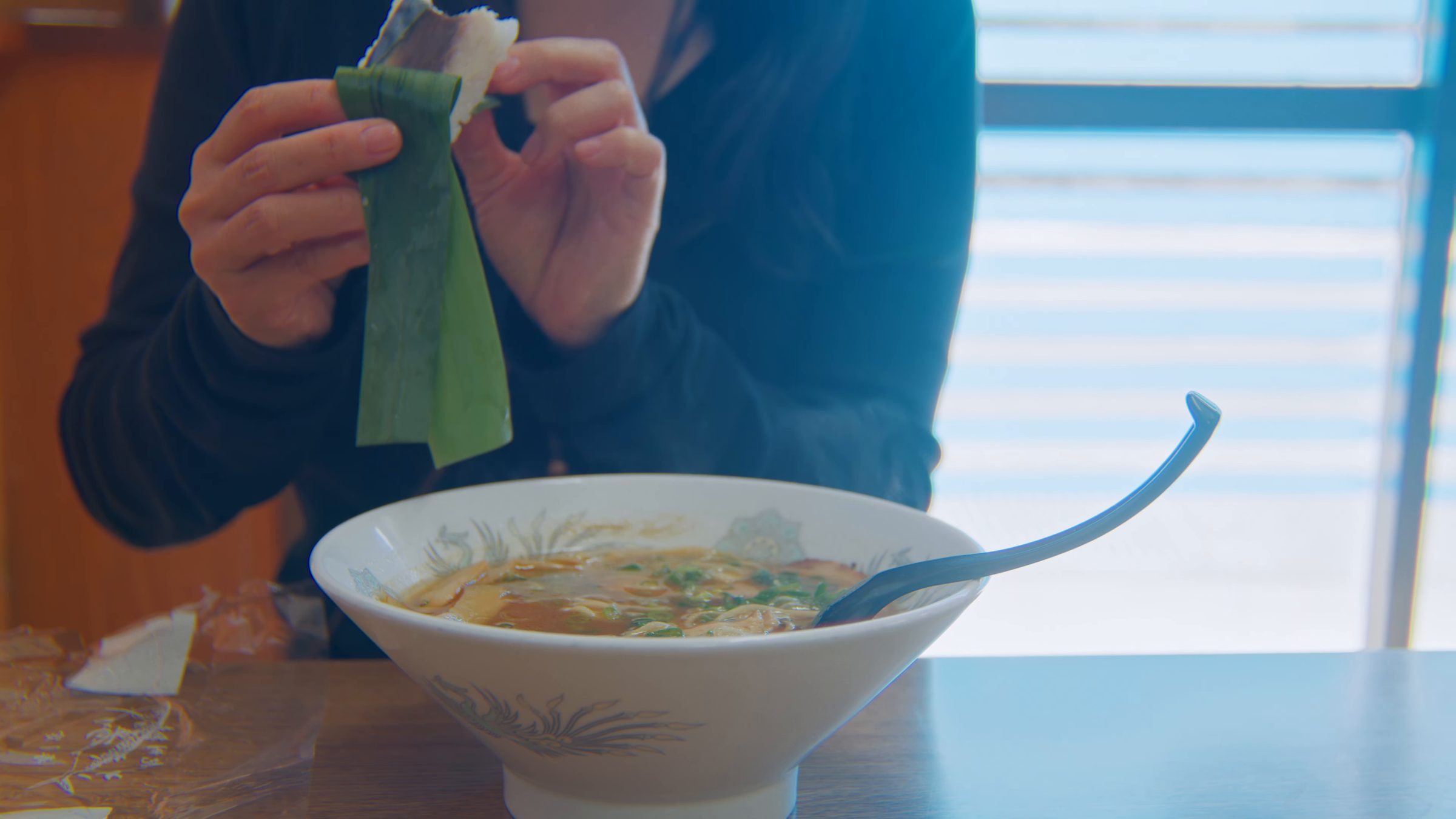
Back down the mountain, I stepped into a ramen shop. Boxes from a noodle maker were stacked by the kitchen, and on each table sat a basket of hayazushi, pressed sushi wrapped in leaves.
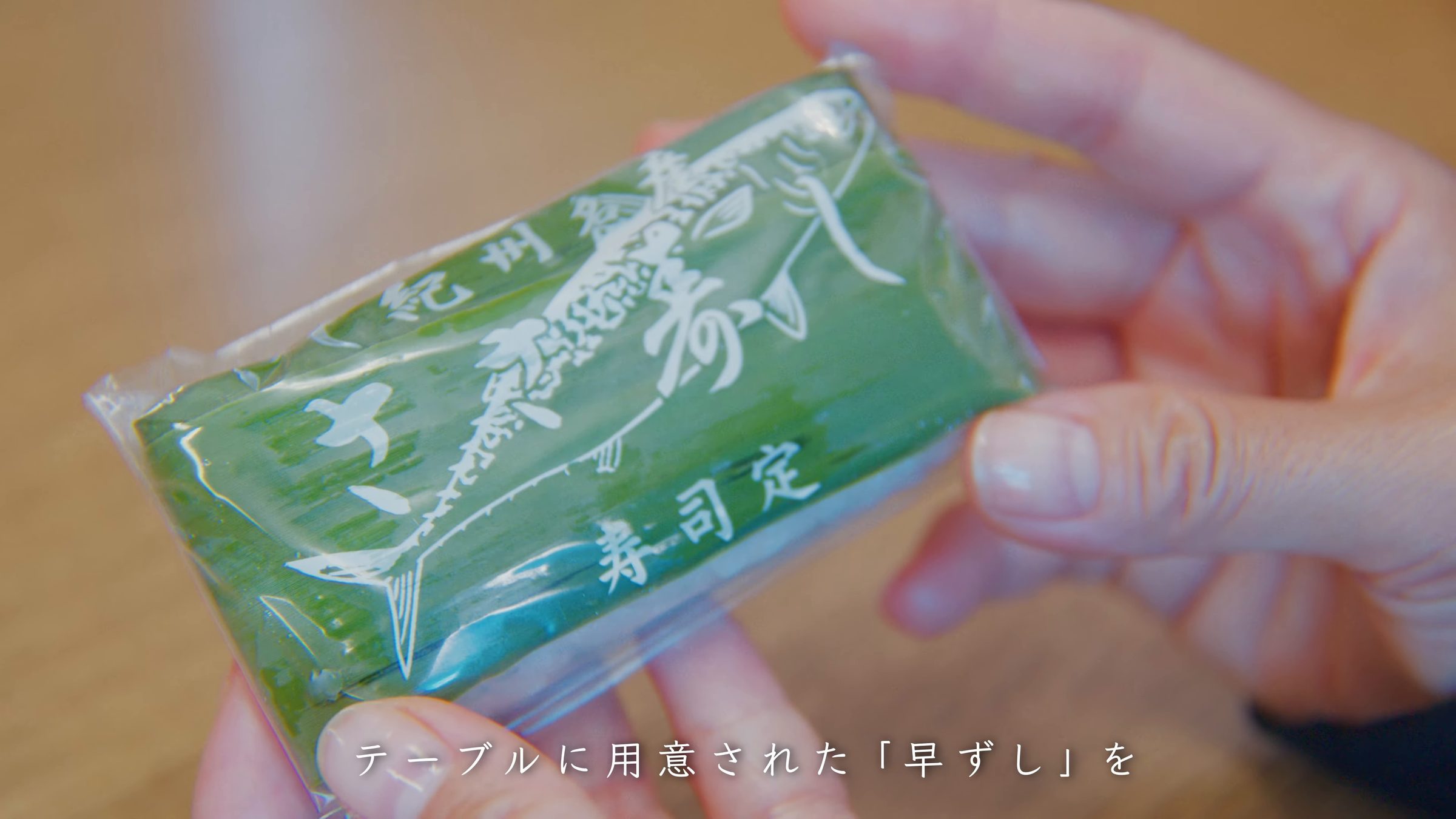
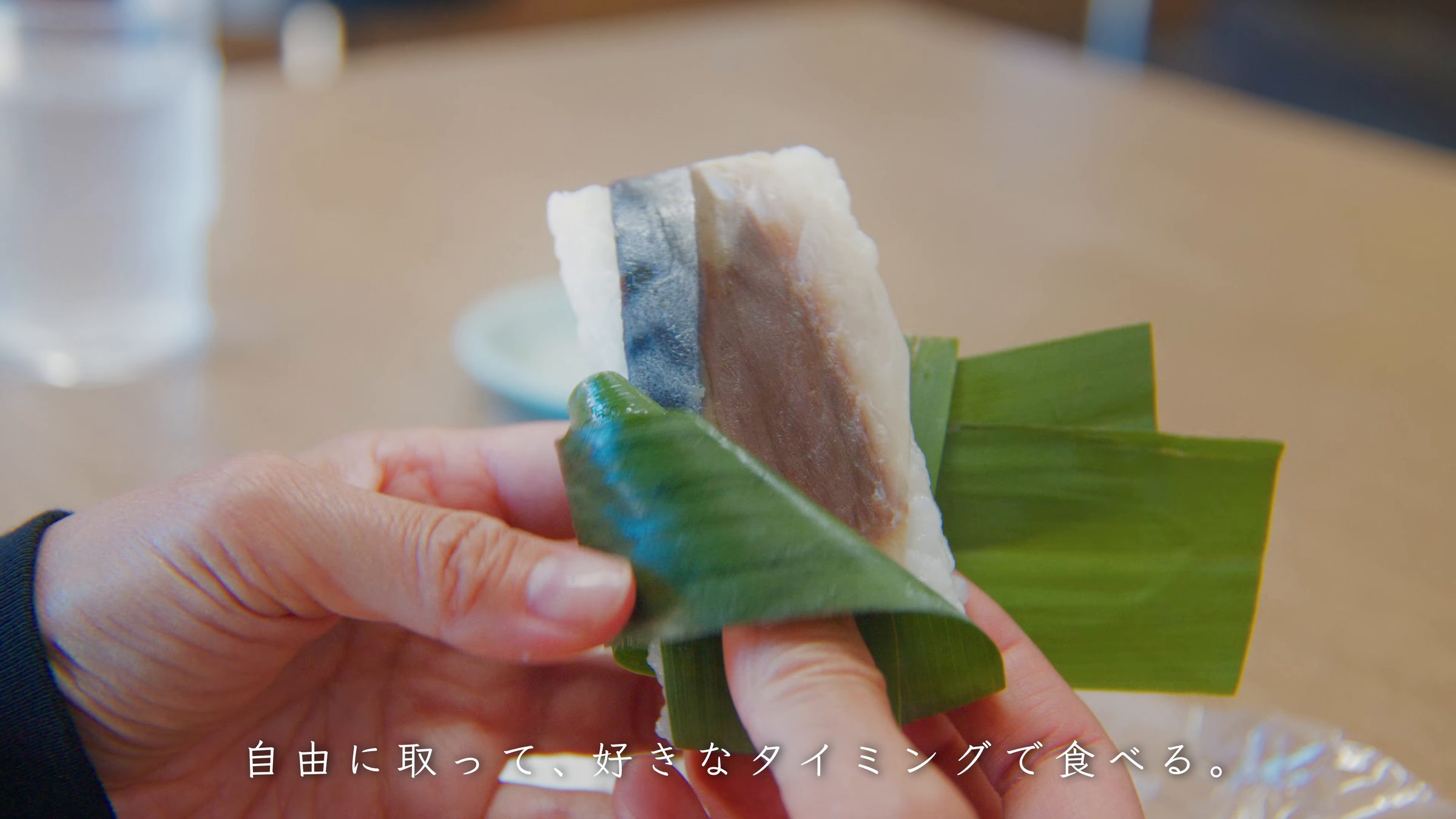
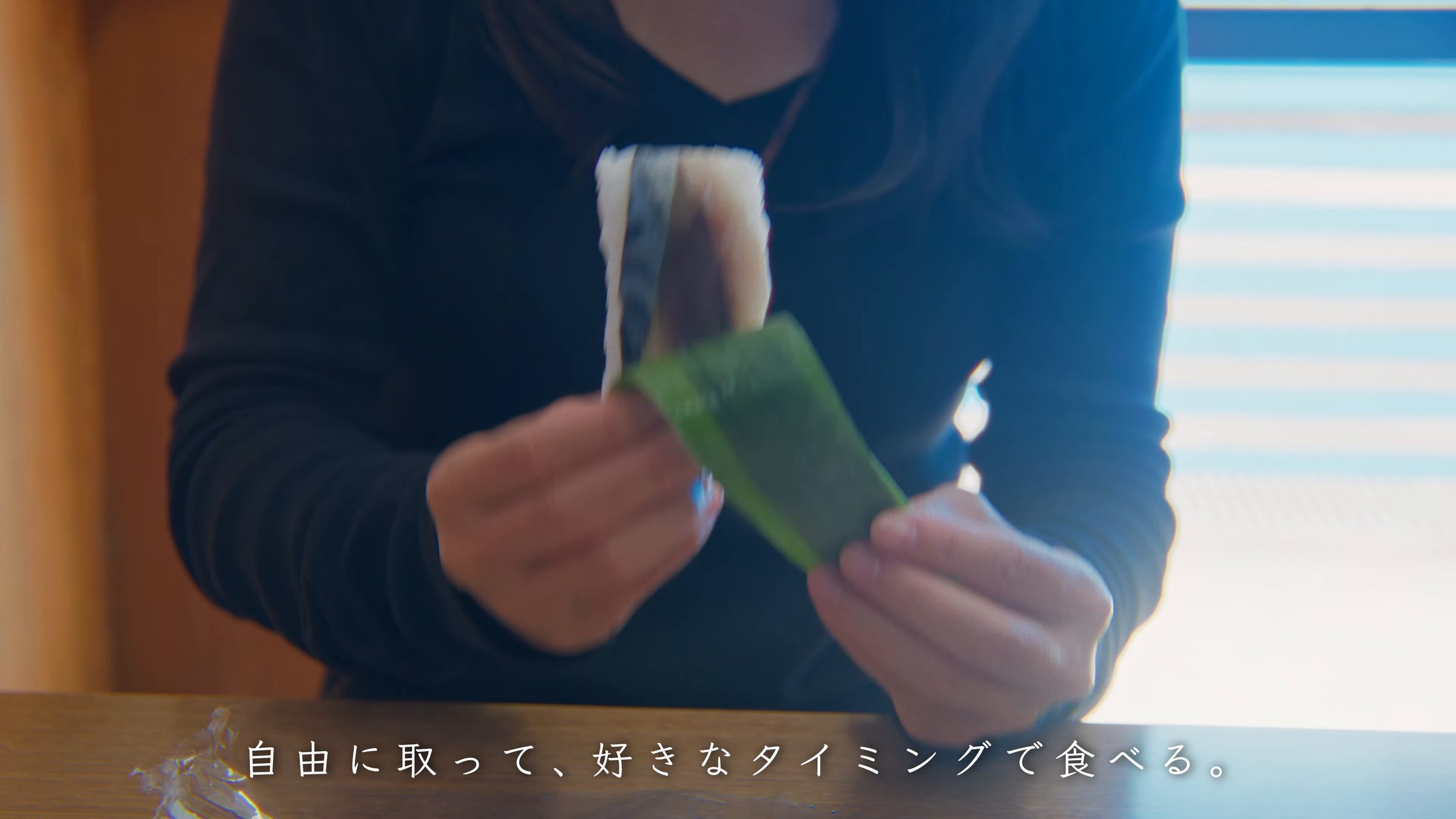
You help yourself to the sushi whenever you like (and pay for it at the end, of course). That is the way of ramen shops here in Wakayama. Ever since I'd heard that "in Wakayama, there's sushi on the ramen-shop table," my pressed-sushi-loving heart had been racing.
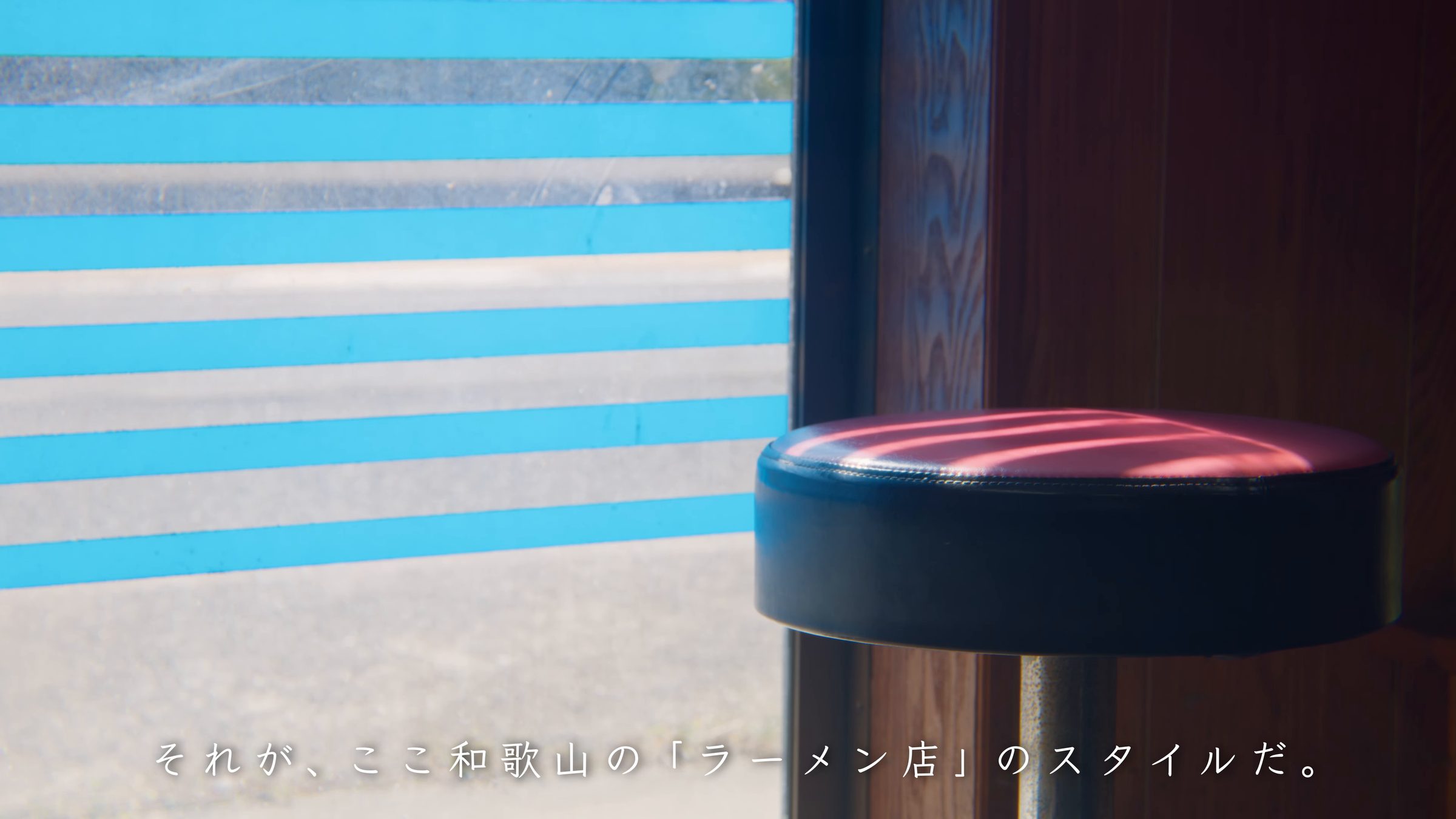
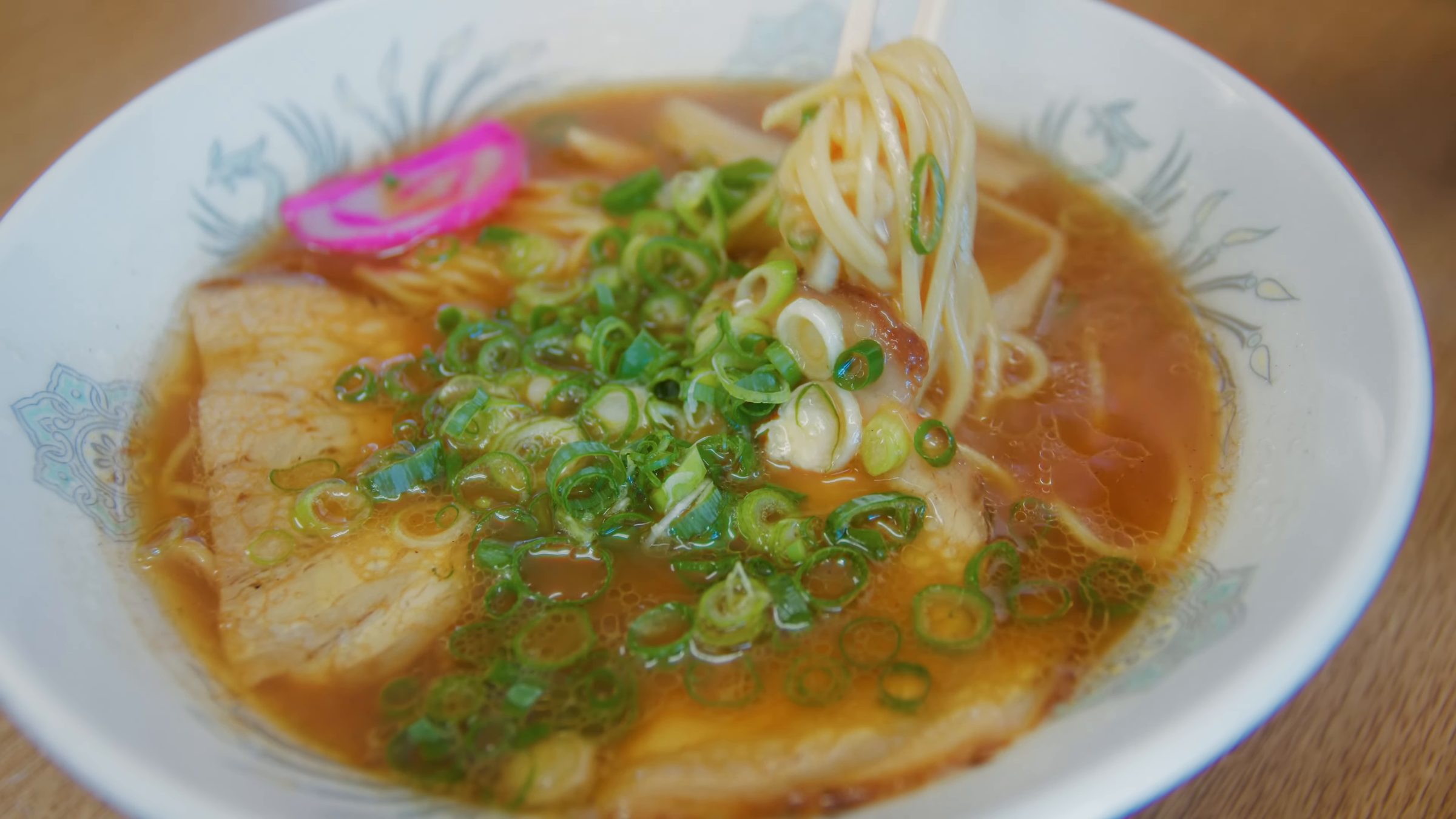
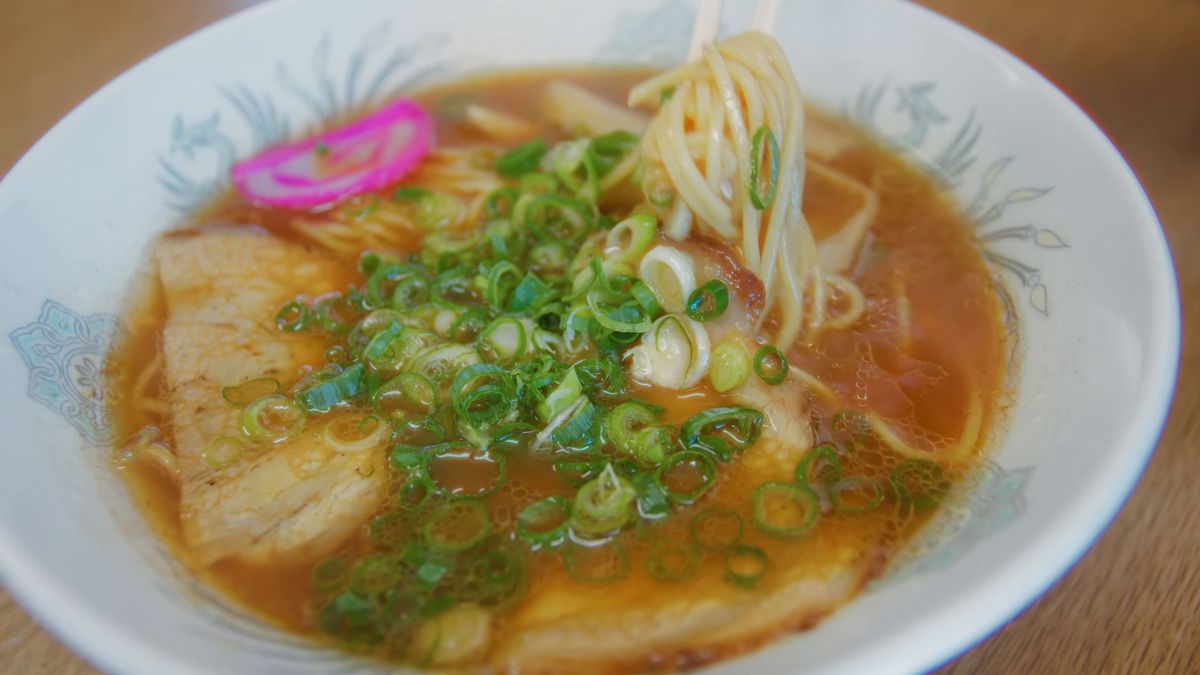
Unwrapping the leaf revealed mackerel cured in vinegar and pressed onto rice. A wall of menu boards, a red stool by the window, and then the bowl arrived: Wakayama ramen, a pork-bone and soy sauce broth topped with slices of kamaboko. The clean yet rich soup and the straight, medium-thin noodles were wonderful together.
The bright, tangy sushi set off the deep, savory ramen. One bite, and I understood why this supporting actor has a seat at every table.
Watch this scene on YouTube4:01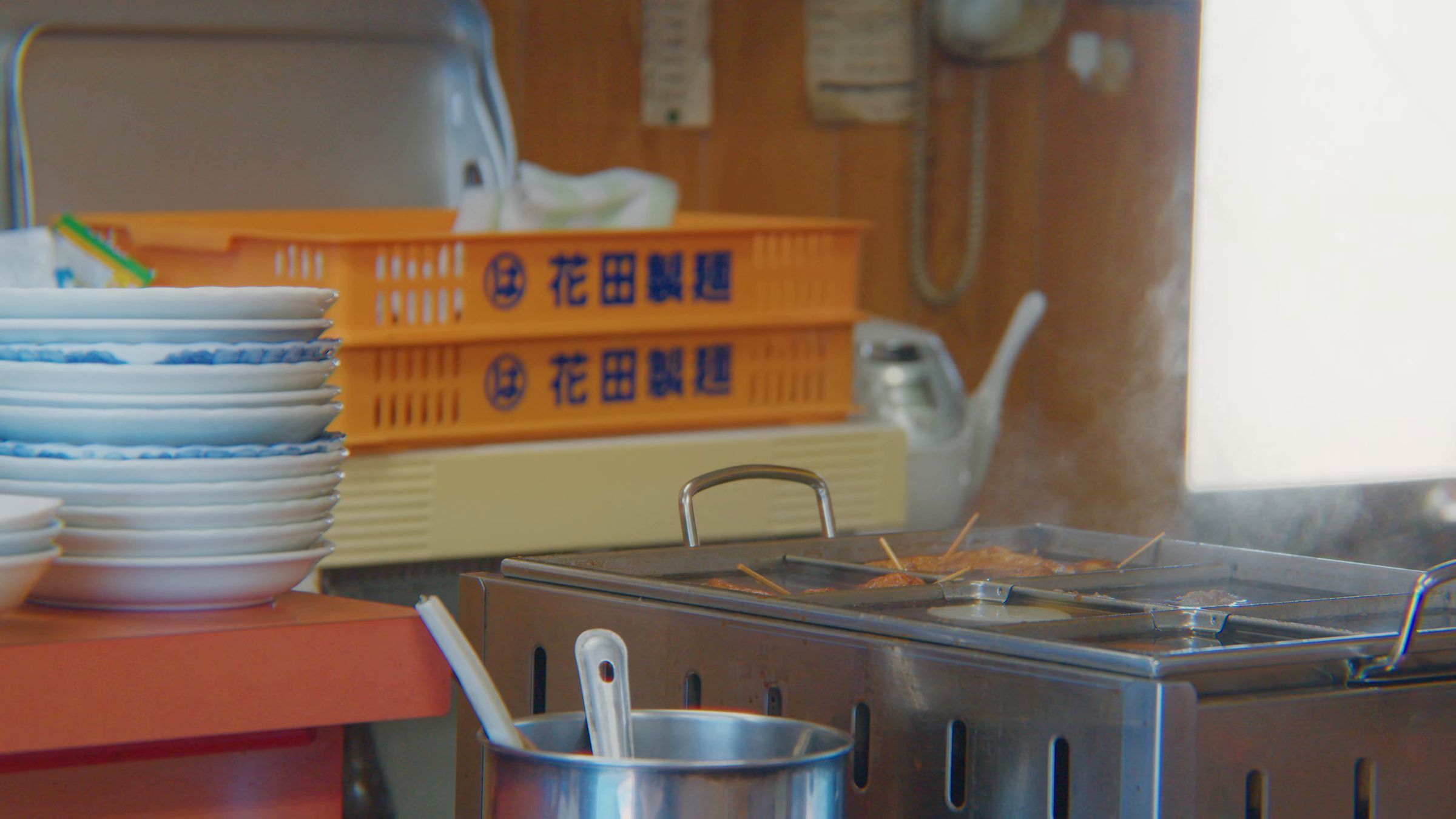
09TRAVEL JOURNAL
Arida mandarins, and one more taste of autumn
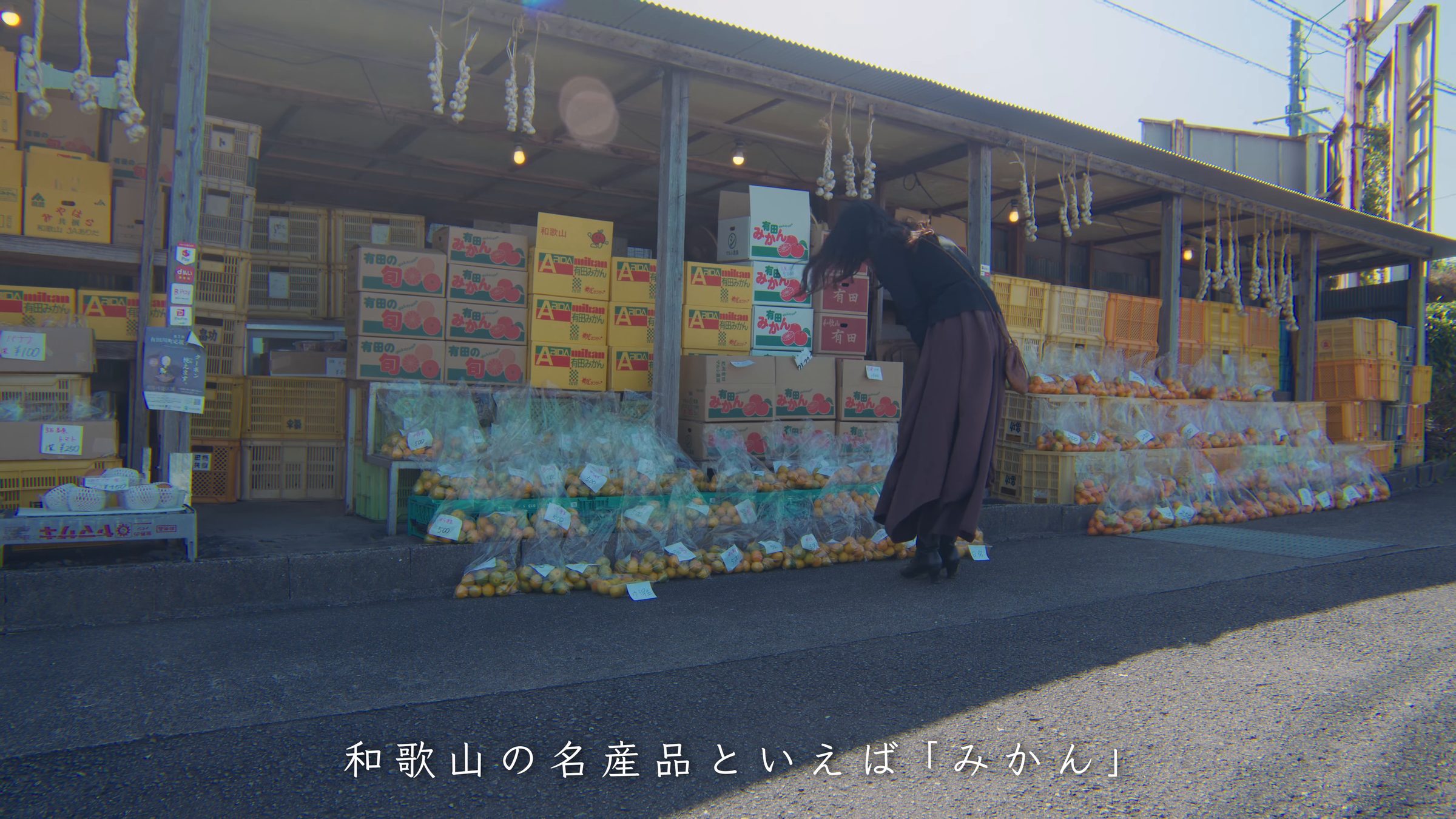
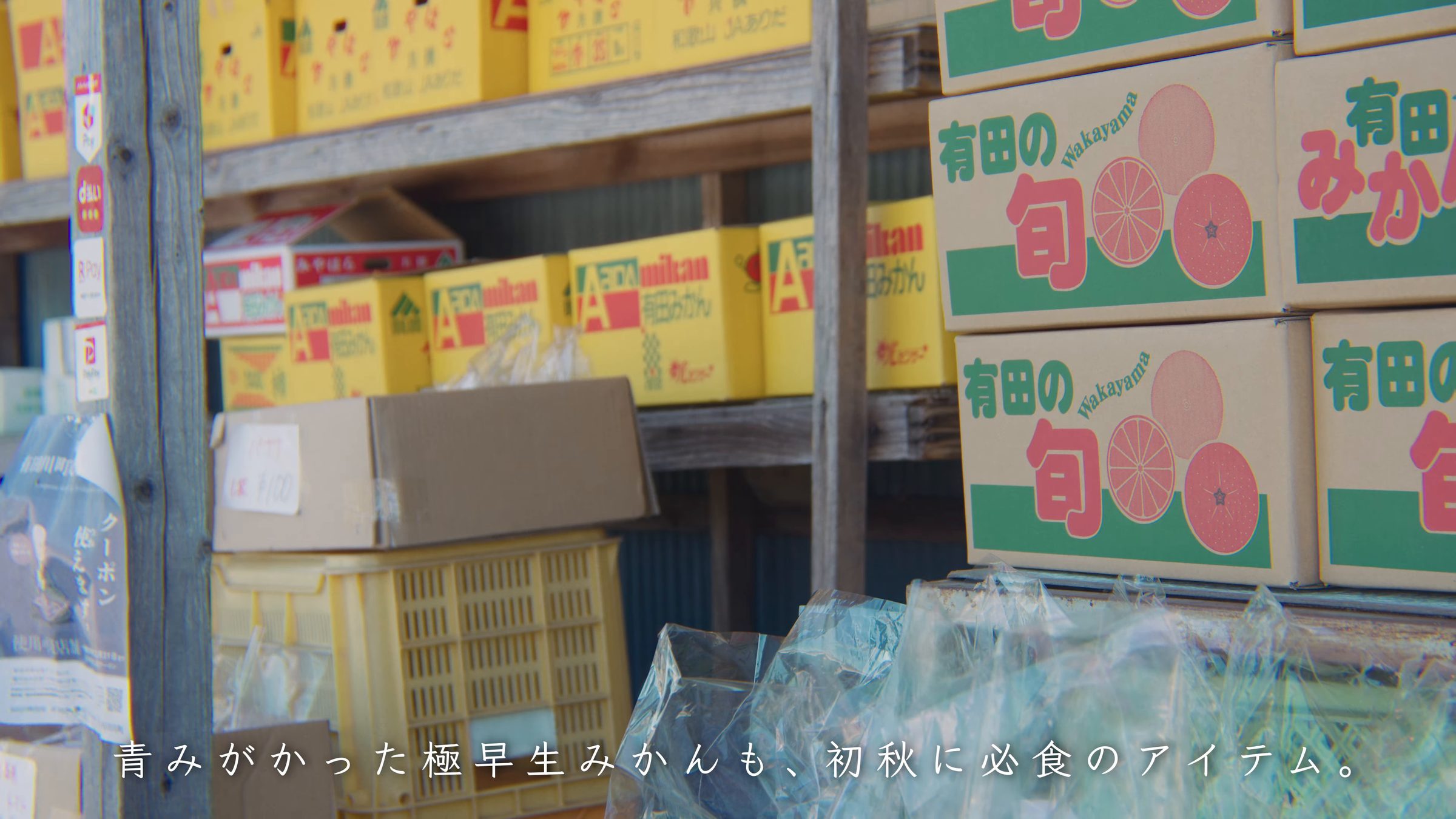
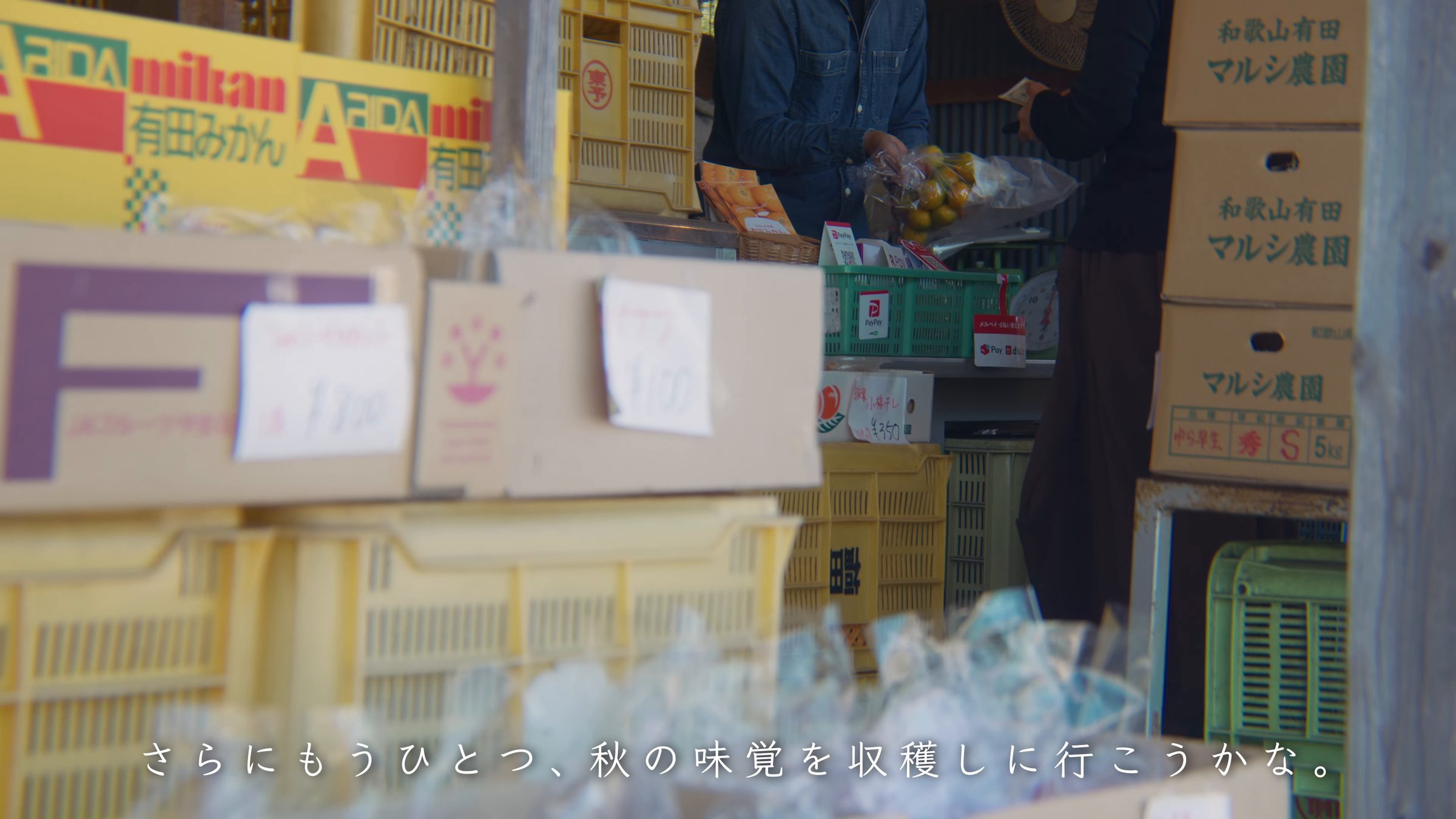
For dinner, I decided to treat myself to an "autumn Wakayama feast." On the way home, I stopped at a roadside stand with a big MIKAN sign.
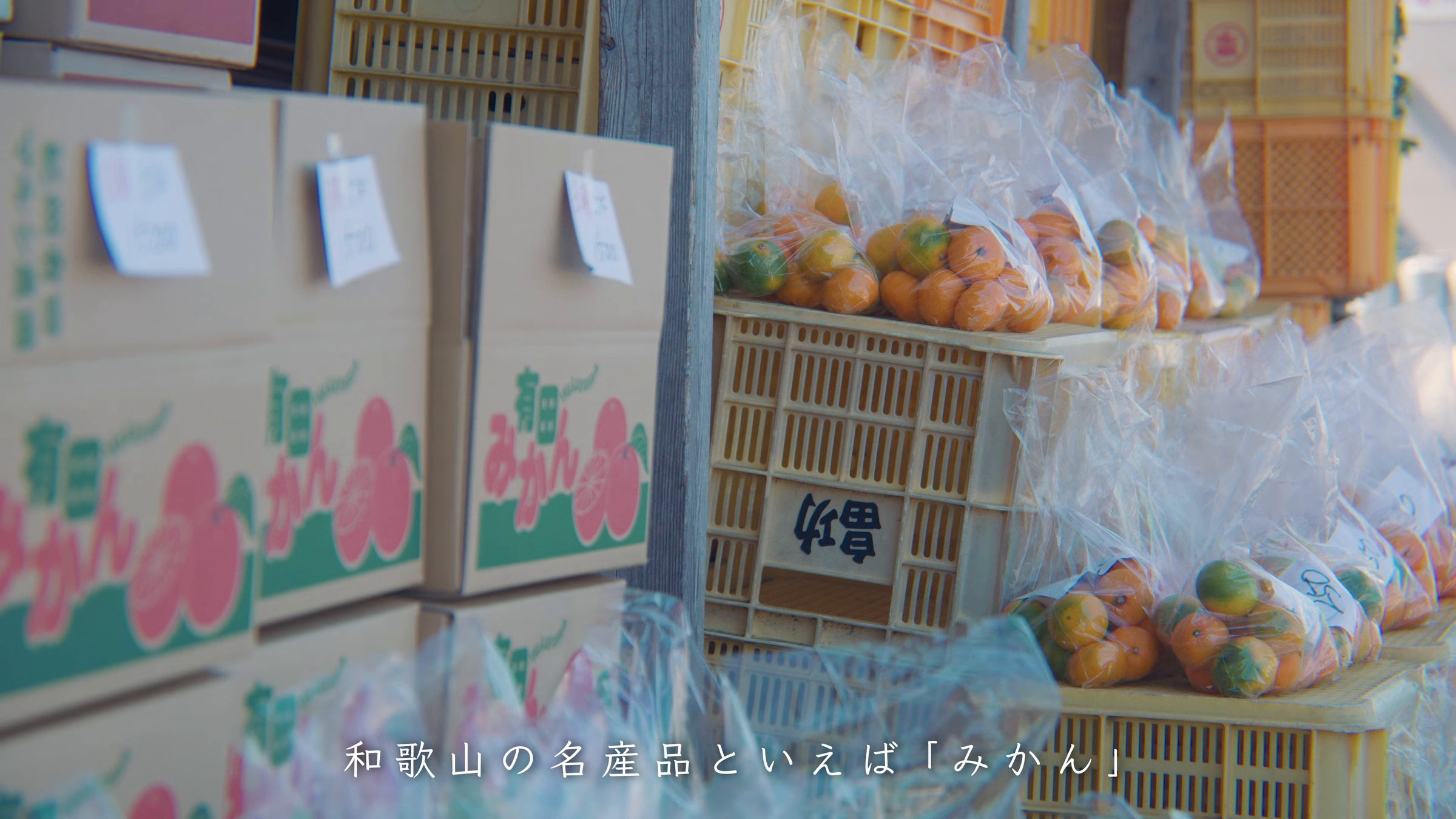
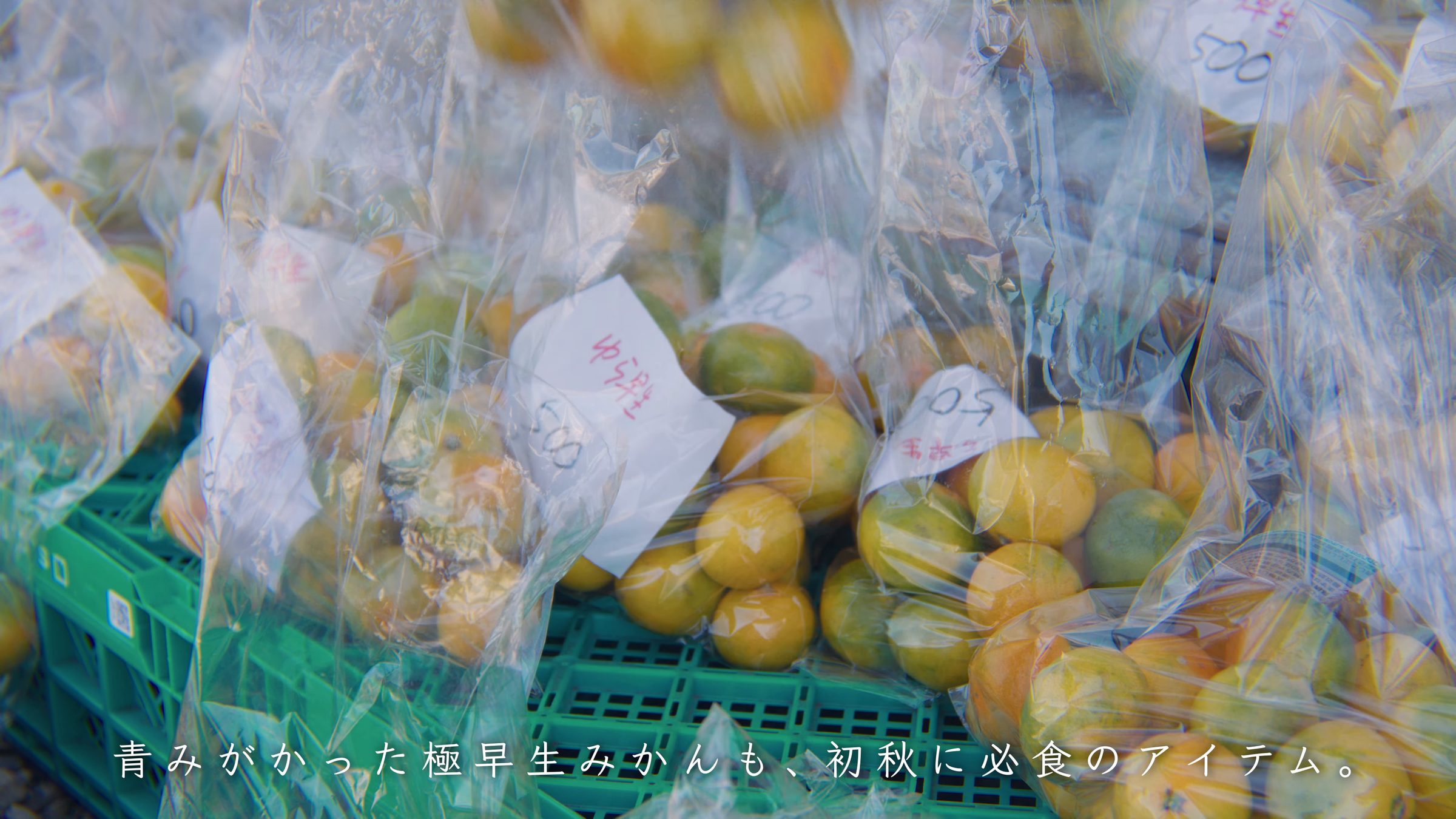
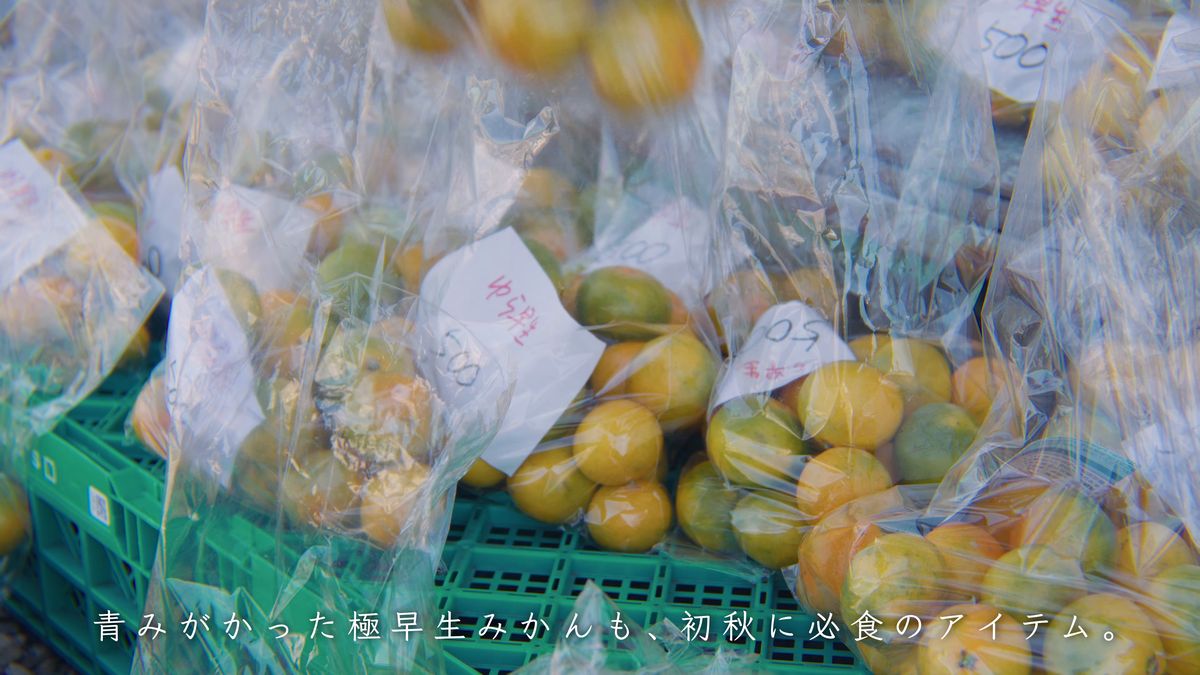
Wakayama's signature product is, of course, the mandarin. Boxes marked "In season in Arida" and bags of Arida mandarins were piled out front. The greenish, extra-early mandarins are a must in early autumn.
And maybe I'll go and harvest one more taste of autumn.
Watch this scene on YouTube5:09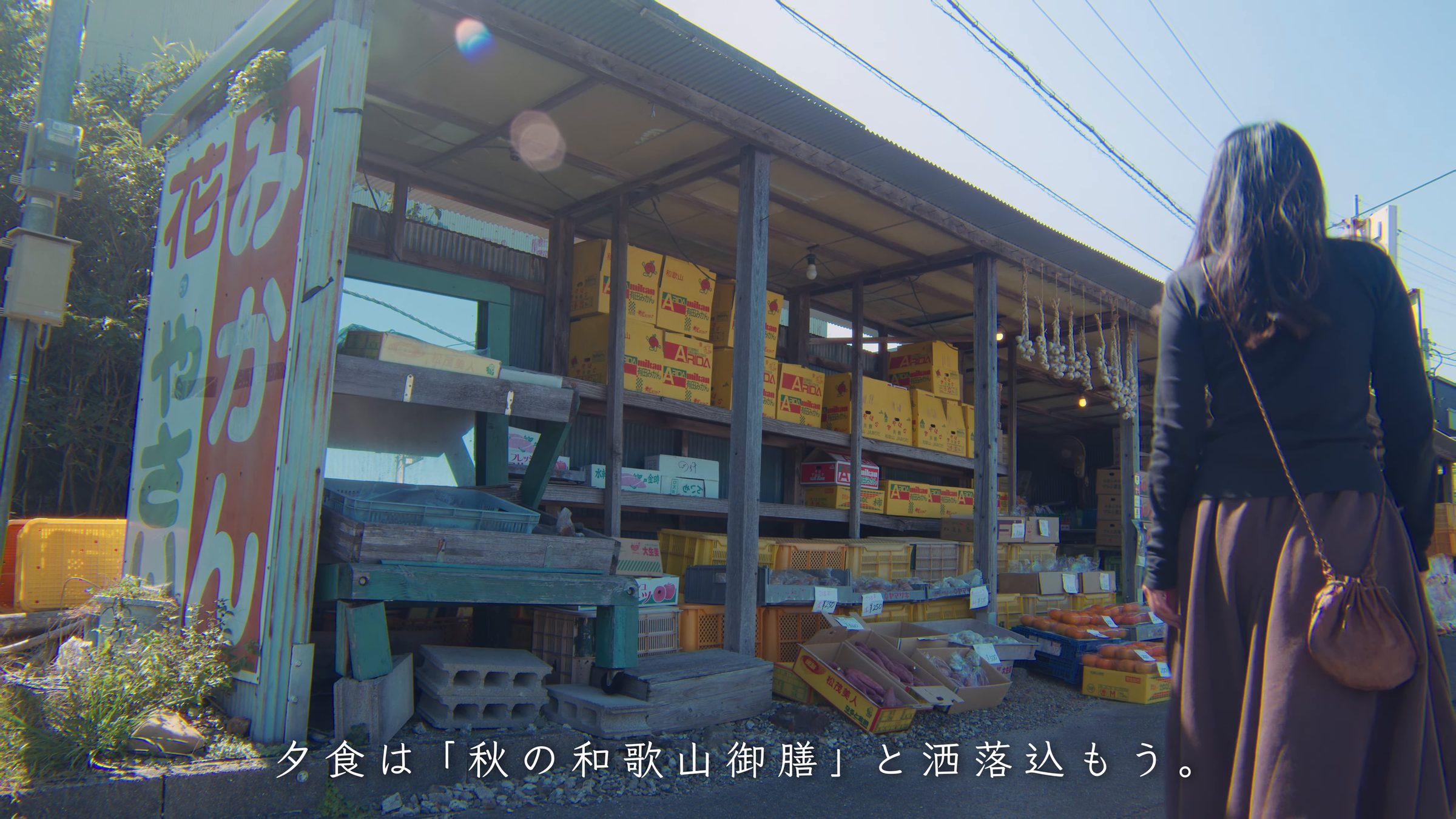
10TRAVEL JOURNAL
To be continued
Glass in hand by the window, I looked back on the day. Next time: chestnuts, saury, and an autumn feast.
Watch this scene on YouTube5:50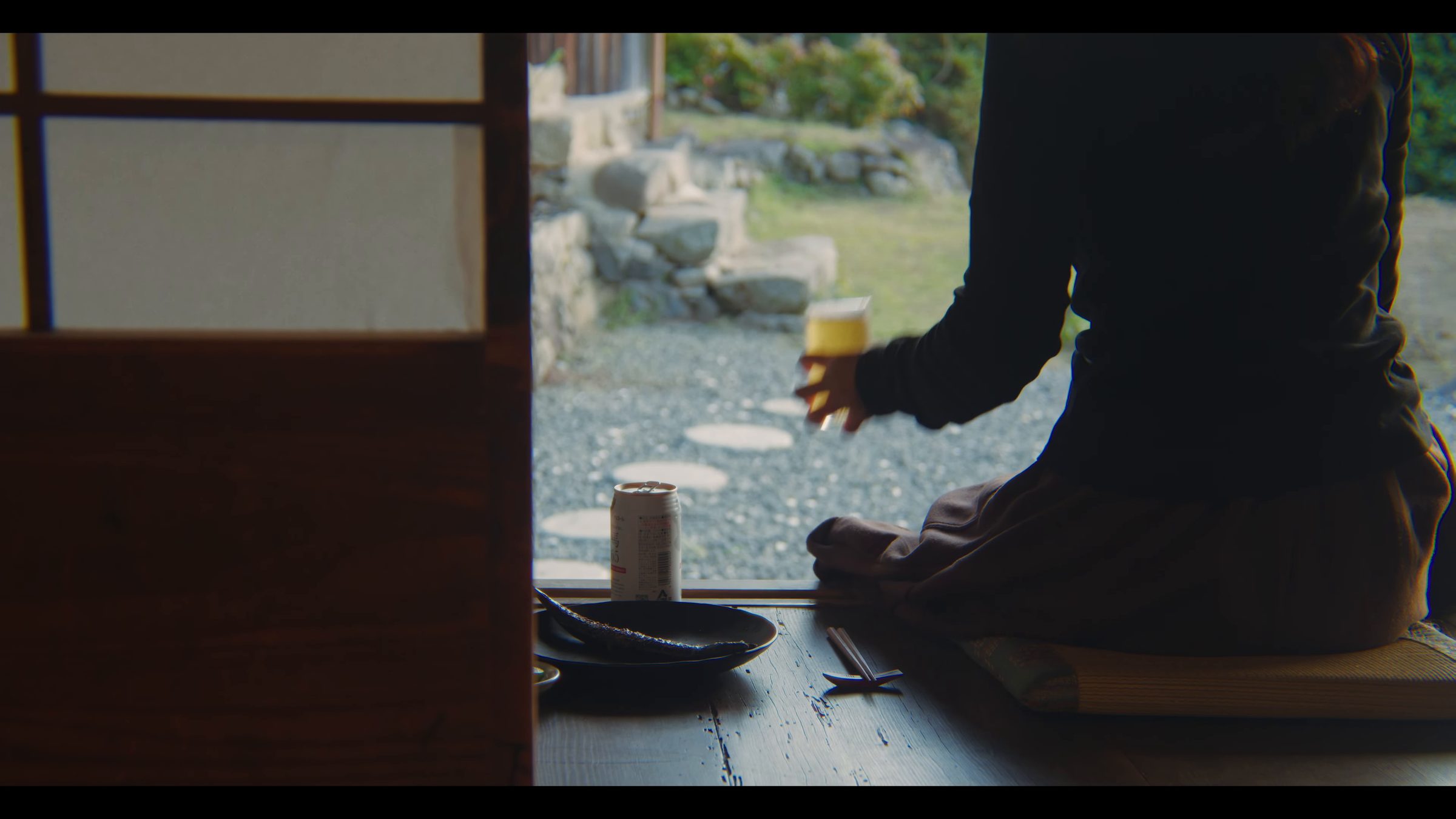
THE JOURNEY IN FILM
The wind. The sounds of a kitchen.
Spend a little more time inside the journey, on film.
Watch the video6 minTHE BORROWER’S NOTES
The Borrower's Notes: Aridagawa, Wakayama
Places we stopped, dishes we made, and stories of the land. A few things to keep from the journey.
01Where I ate and shopped
Chuka Soba Marutoku
430-4 Tokuda, Aridagawa, Arida District, Wakayama
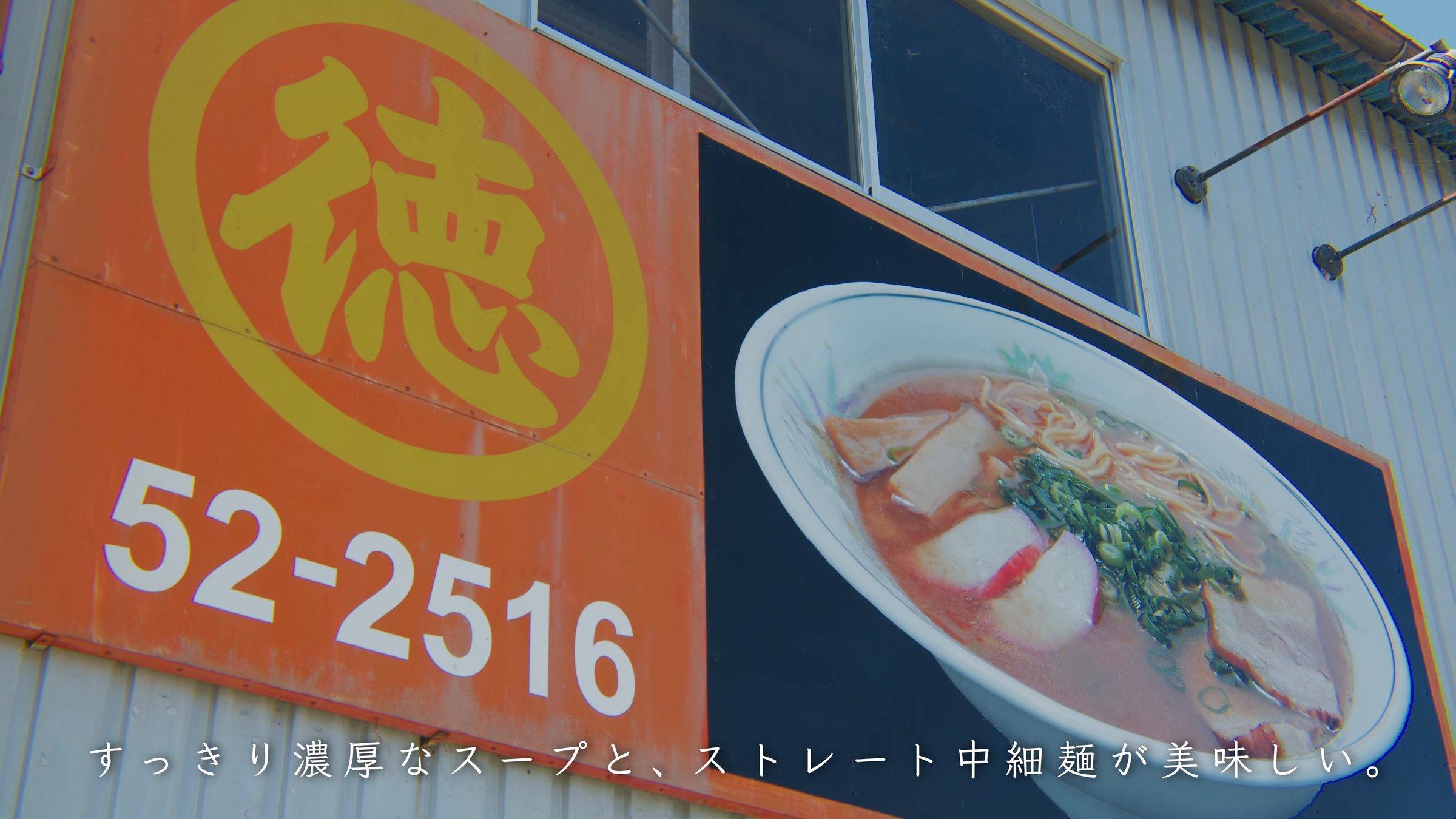
A long-standing shop serving old-style soy-based chuka soba. Hayazushi (wrapped in ase leaves) sits on every table for you to help yourself. The ramen comes with kamaboko and green onions. Opening hours vary between listings, so check before you go.
Sources: guruwaka.com tabelog.com
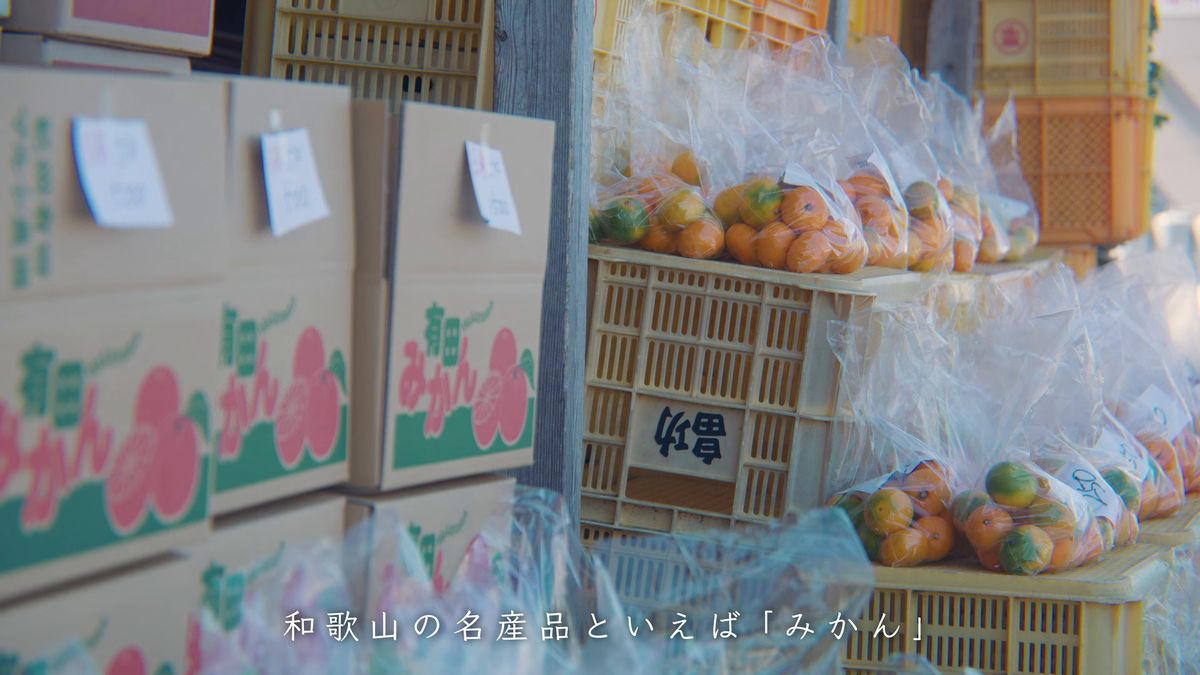
Mandarin farm stand (Marushi Farm)
A roadside stand selling bagged Arida mandarins, including the extra-early Yura Wase variety that appears in early autumn.
02What I cooked
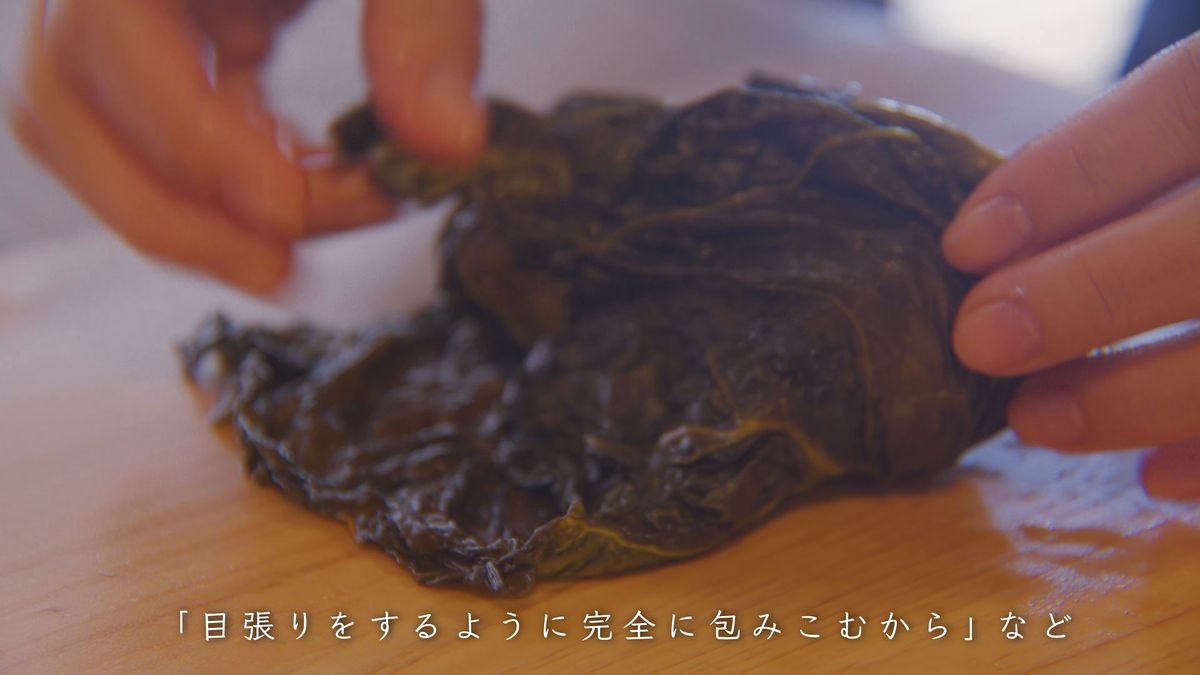
Mehari-zushi
A Wakayama specialty: a large rice ball wrapped in salt-pickled takana leaves. It spread through the south of the prefecture, where fishing and forestry thrive, as a lunch that could be eaten quickly between jobs. Takana grows well even in shady spots, so it has long been cultivated in the mountainous south where flat land is scarce; it is harvested from winter to early spring and pickled in salt. The name has several explanations: opening your mouth so wide your eyes open wide, food so good it makes your eyes widen, or wrapping it with no gaps. This time I seasoned the takana with soy sauce from neighboring Yuasa.
IngredientsCooked rice, Pickled takana (leaves and stems), Soy sauce (from Yuasa)
- Chop the takana stems and season them with soy sauce
- Fold the chopped takana into rice and press into a ball
- Wrap the ball completely in a whole takana leaf
Sources: maff.go.jp
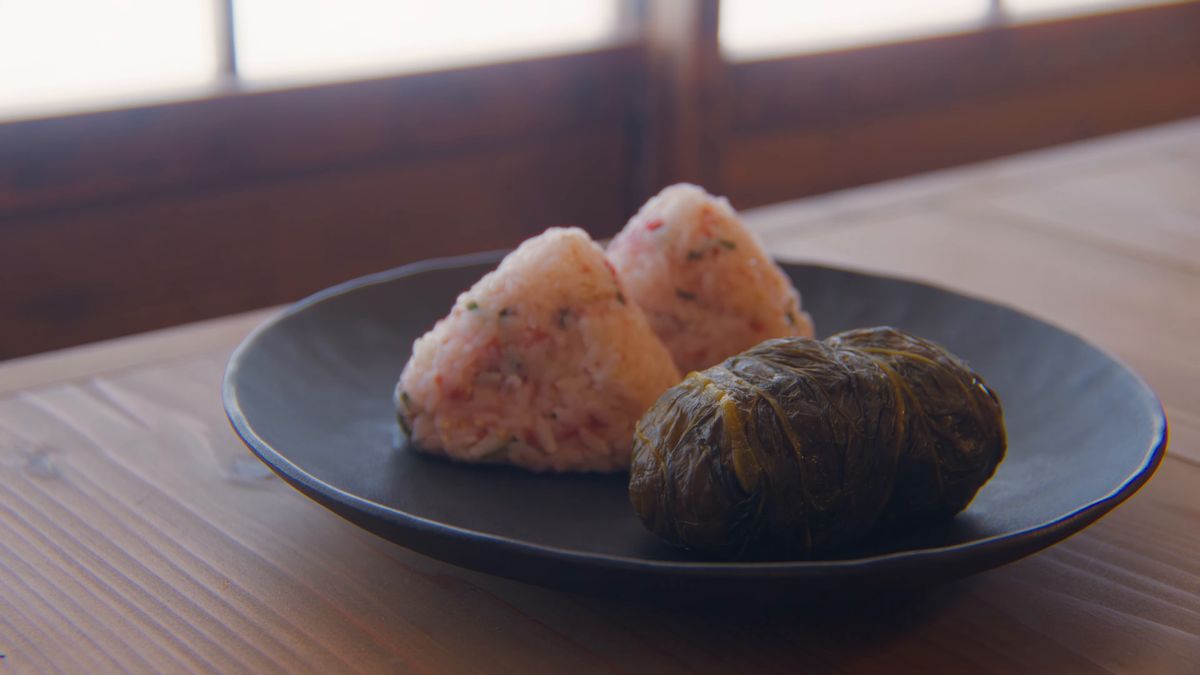
Umeboshi and red shiso rice ball
Wakayama grows more ume than any other prefecture in Japan: 58% of the national harvest in 2024 (64% the year before). I chopped Kishu umeboshi and mixed it into rice with red shiso.
IngredientsCooked rice, Kishu umeboshi, Red shiso
- Take the umeboshi flesh off the pits and chop it
- Mix the plum and red shiso into rice and press into balls
Sources: maff.go.jp
03About the area
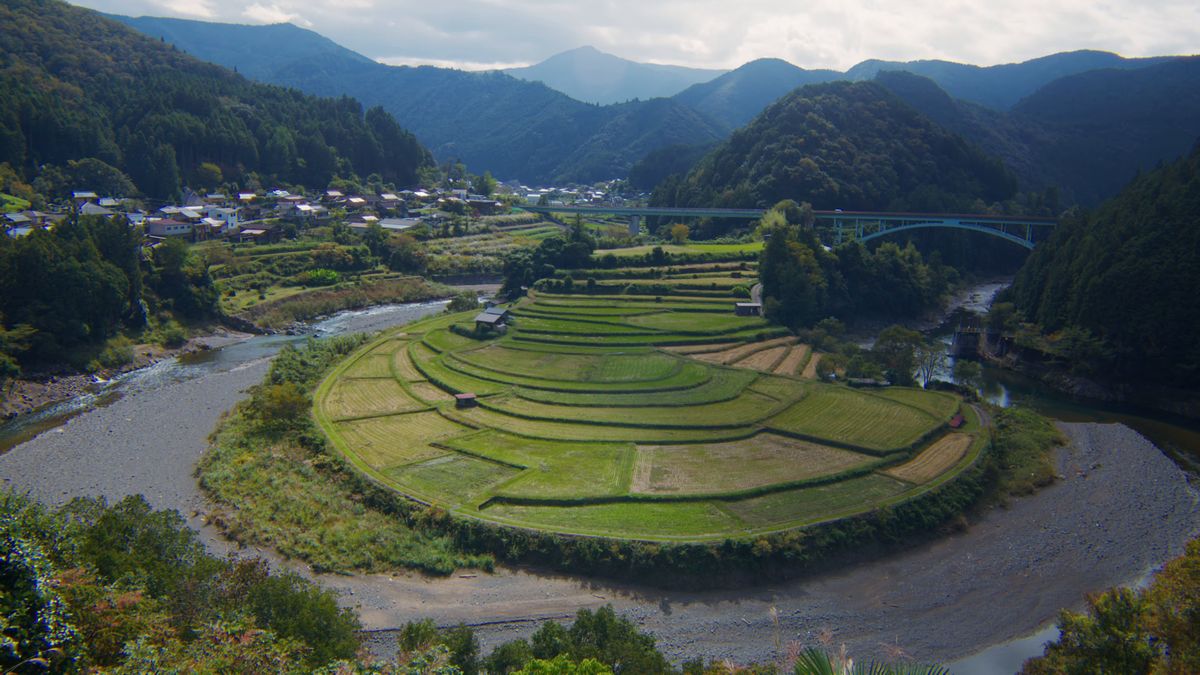
Aragijima Rice Terraces
A fan-shaped terrace of rice paddies wrapped by a bend of the Arida River. In 1655, Kasamatsu Sadayu, head village official of the Yamahota district, built a weir on the Yukawa River and dug the Uwayu irrigation channel, which made rice farming possible on Aragijima (some tourist guides give 1661). On October 17, 2013, the area was designated a national Important Cultural Landscape. It is also one of Japan's 100 Selected Terraced Rice Fields.
Sources: online.bunka.go.jp mlit.go.jp youtube.com
Washigamine Cosmos Park
244-2 Nagatani, Aridagawa, Wakayama
About a million cosmos bloom across the summit of Mt. Washigamine, roughly 586 meters above sea level. The best time is usually late September to mid-October, depending on the year. On clear days you can see the town of Arida, Yuasa Bay, and as far as Awaji Island and Shikoku.
Sources: tabi-mag.jp
Arida mandarins and stone-walled terraces
Wakayama produces more unshu mandarins than any other prefecture. In Arida, farmers have built stone-walled, stair-stepped groves for more than 400 years. On August 26, 2025, the "Stone-walled Terraced Mandarin Orchard System of Arida and Shimotsu" was recognized as a Globally Important Agricultural Heritage System.
Sources: pref.wakayama.lg.jp
Yura Wase, an extra-early mandarin
Discovered in 1985 in Yura, Wakayama, as a bud mutation of the Miyagawa Wase mandarin, and registered as a variety in 1995. It reaches the market while the skin is still partly green, and is notably sweet for an extra-early variety.
Sources: maff.go.jp
Soy sauce of Yuasa
Yuasa, the town next to Aridagawa, is known as the birthplace of soy sauce brewing. Legend has it that the liquid pooling in barrels of Kinzanji miso, brought back by a Zen monk who trained in China, became the first soy sauce. In 2017 it was recognized as a Japan Heritage site, "The First Drop: Kishu Yuasa, Birthplace of Soy Sauce Brewing." Breweries such as Kadocho, founded in 1841, still operate there.
Sources: walkerplus.com kyodonewsprwire.jp
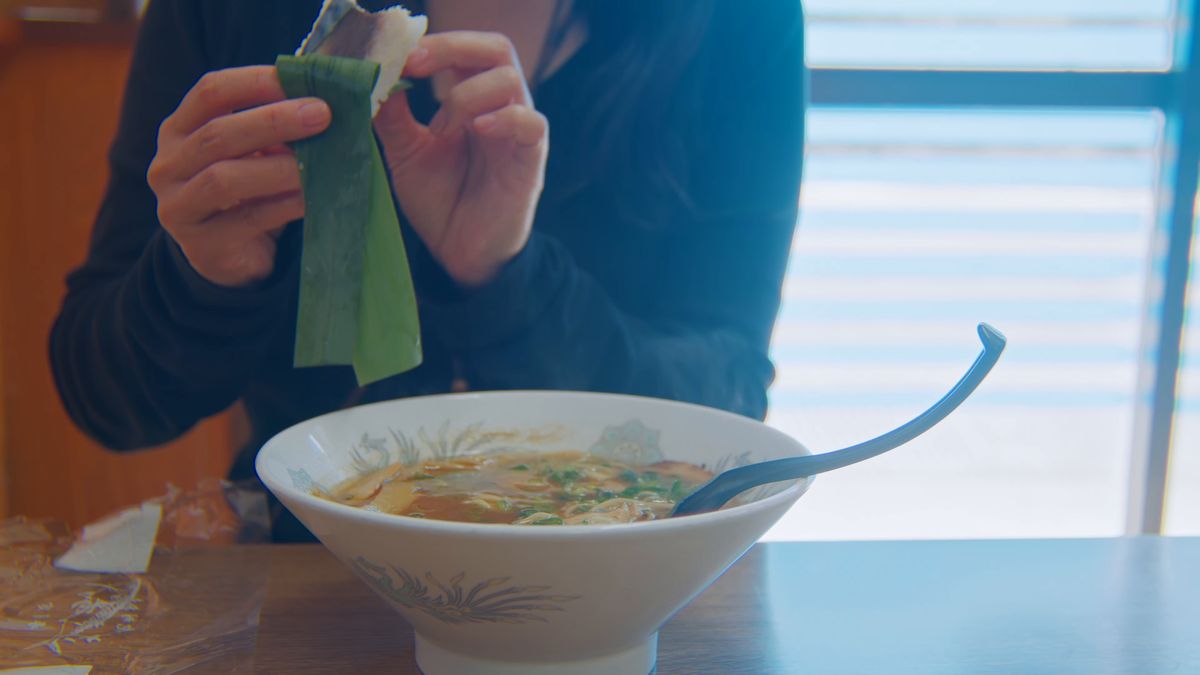
Wakayama ramen and hayazushi
Locals call Wakayama ramen simply chuka soba; it is said to have begun at street stalls in the early Showa era. The base is a pork-bone and soy sauce broth, in two broad styles: the lighter Shakomae style and the mellow, rich Ide style. Hayazushi (vinegar-cured mackerel pressed on rice) and boiled eggs sit on the table for you to take whenever you like. In the Shimizu area of Aridagawa, traditional hayazushi is wrapped in ase leaves, which make it easy to carry and help keep it fresh.
Sources: wakayama-kanko.or.jp mlit.go.jp
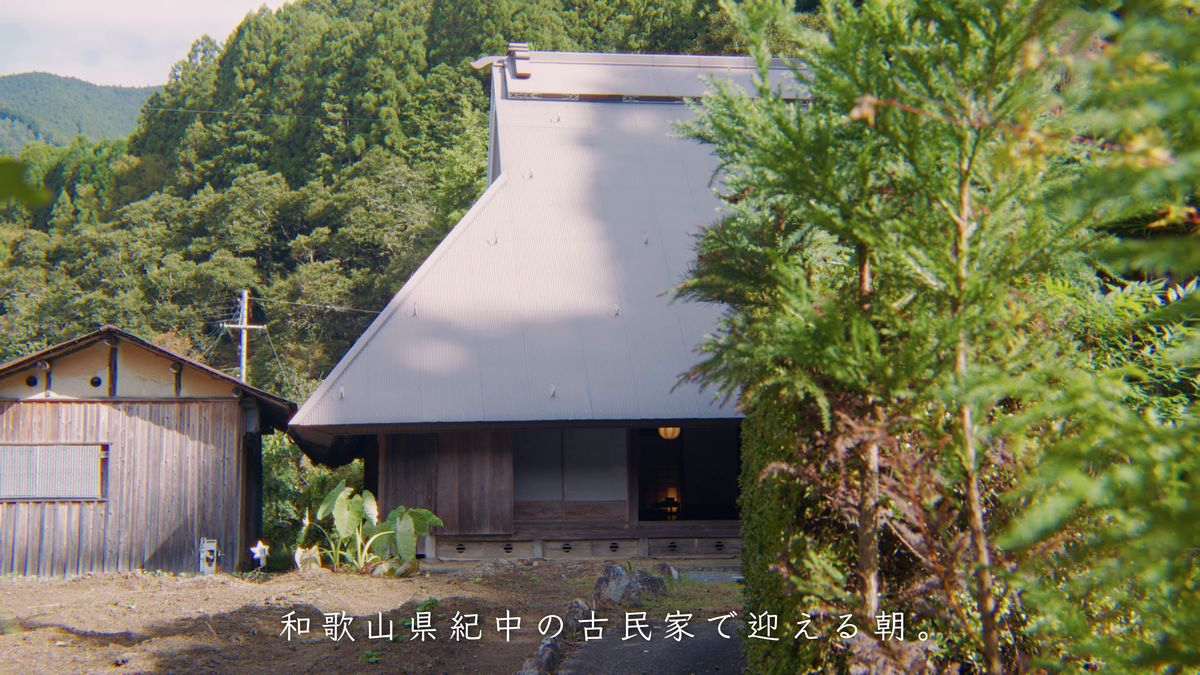
An early-Meiji farmhouse inn
This time I borrowed a thatched-roof farmhouse inn built in the early Meiji era, complete with a tiled kamado stove and a storeroom full of old wooden tubs.
PHOTO ALBUMPhoto album66Open all photographsClose the photo album
Select a photograph to explore the journey one frame at a time.