A TRAVEL ESSAY
Noboribetsu, Hokkaido
Life in Hokkaido
Below freezing outside,a fireplace within
A day of Hokkaido winter, savored beside the fire.
Read the journey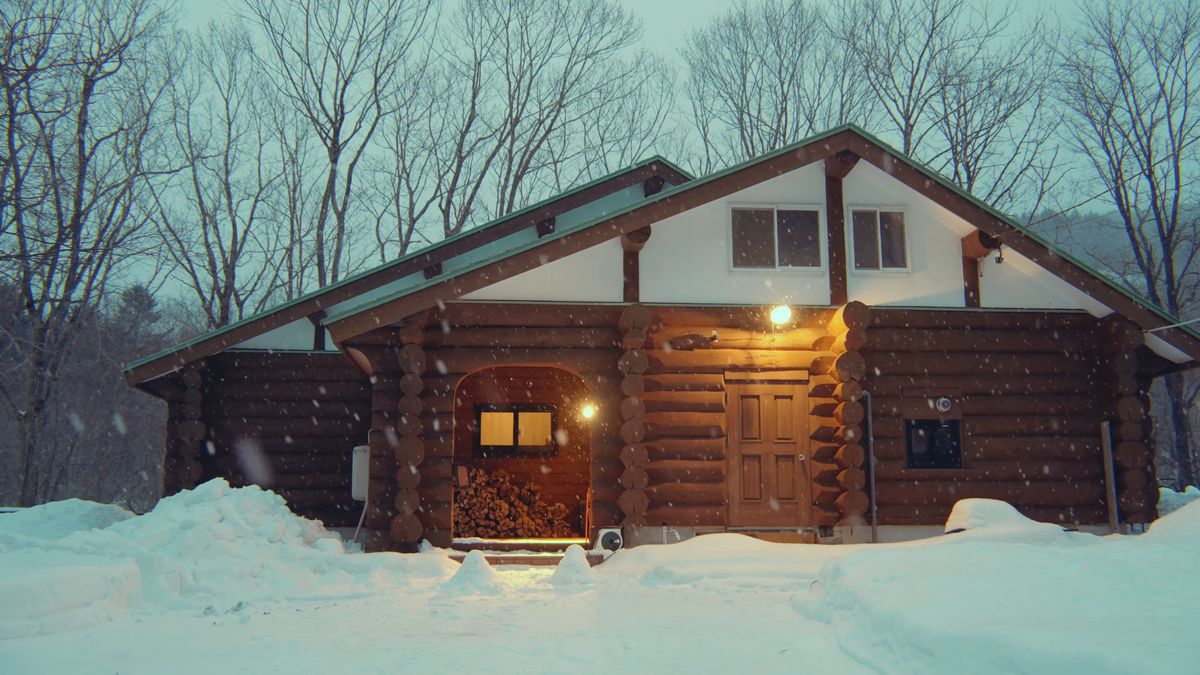
ABOUT THIS JOURNEY
I spent a Hokkaido winter day, when even the high stays below freezing, in a log house in the snowy hills. A seafood rice bowl for breakfast at the town supermarket, a first try at ice fishing on a frozen lake, and miso ramen and zangi chicken to thaw a frozen body. At night I lit the fireplace and made the nabeyaki udon from the film "Whisper of the Heart," with fried chika smelt on the side. A very cold, very warm day.
A little more about the food and the land01TRAVEL JOURNAL
A morning below freezing, beside the fire
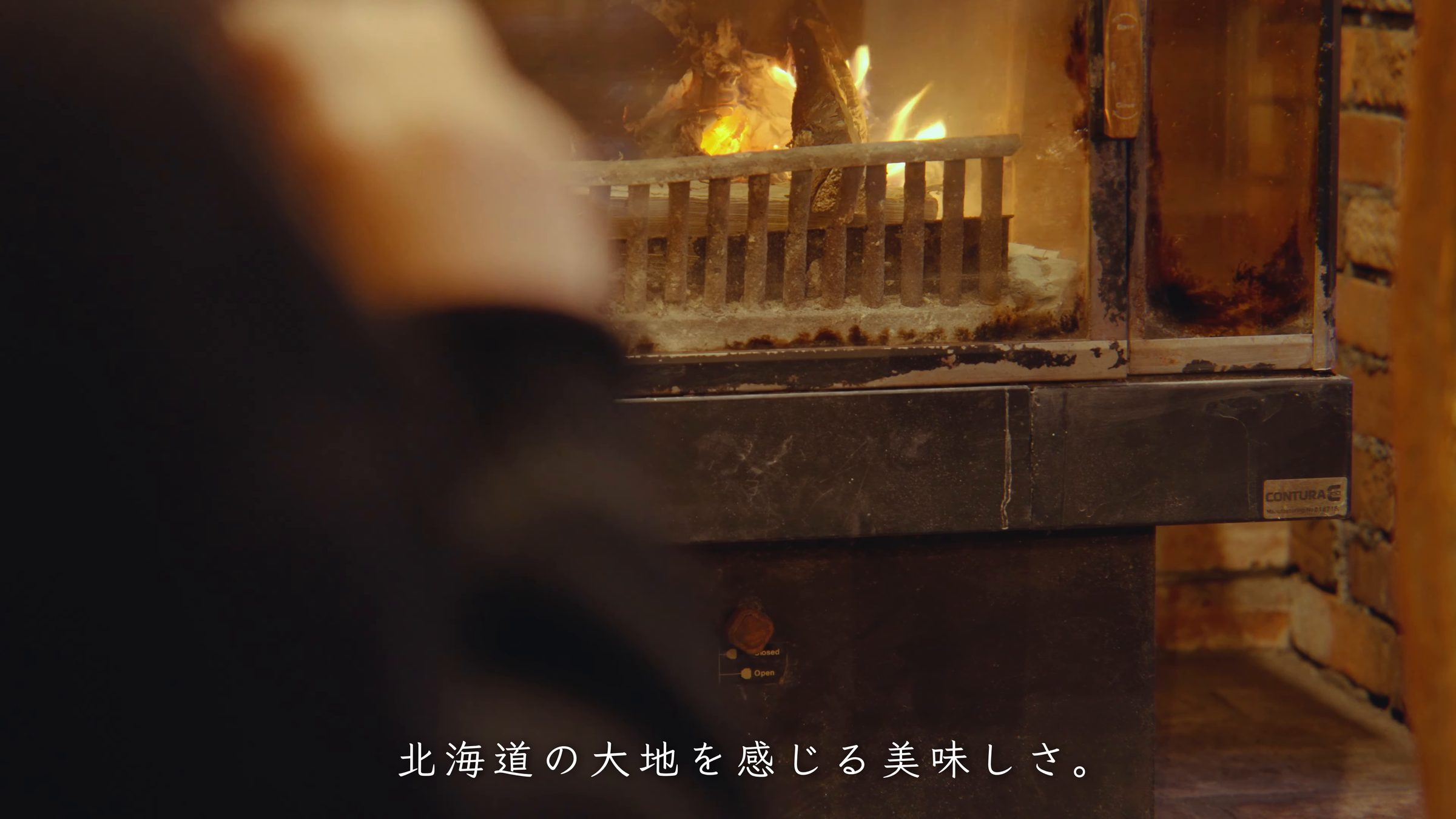
A winter day in Hokkaido, when the highest temperature stays below freezing. I woke up in a log house in the quiet, snowy hills. Behind the glass door of the fireplace, logs were burning softly.
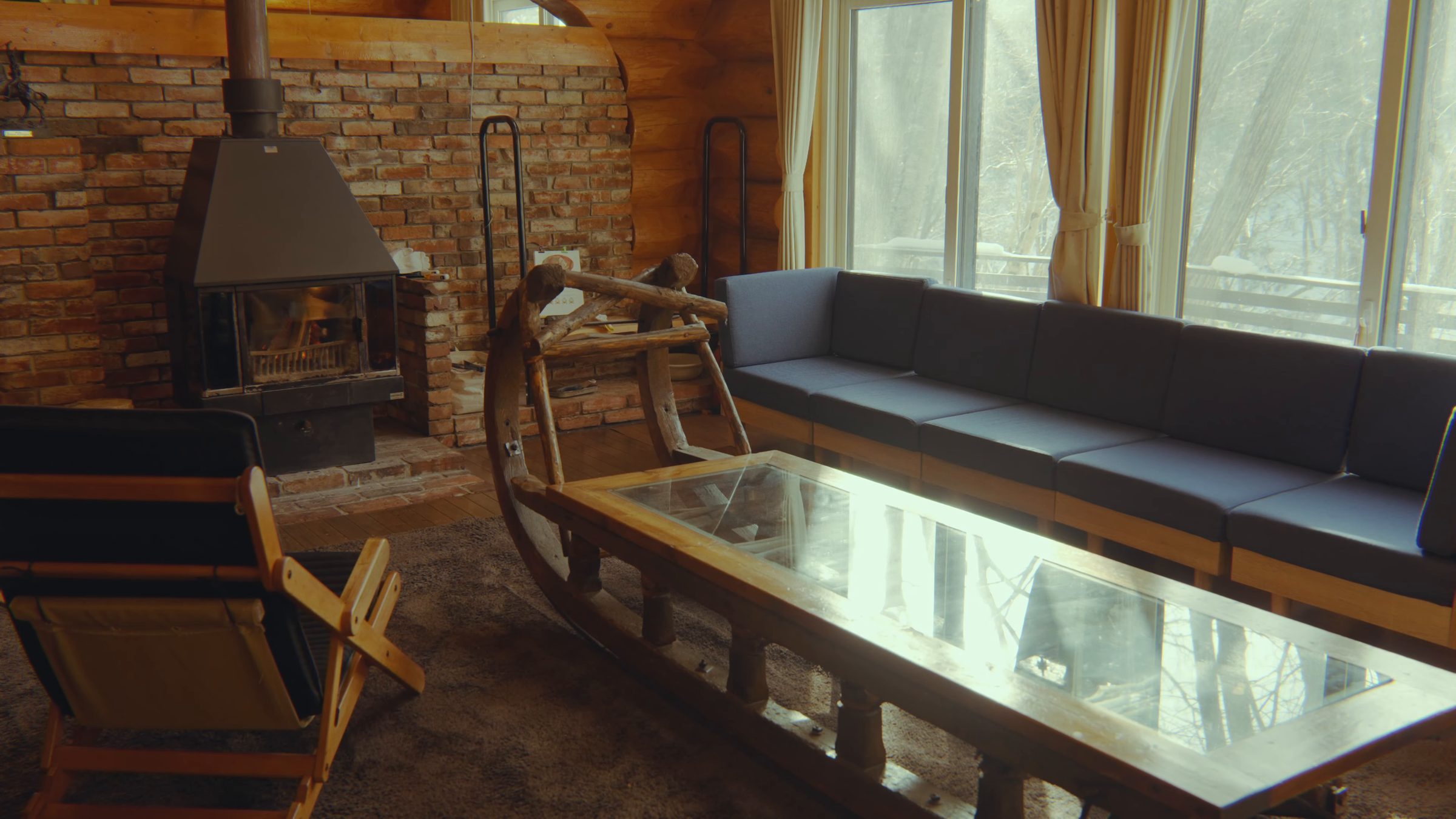
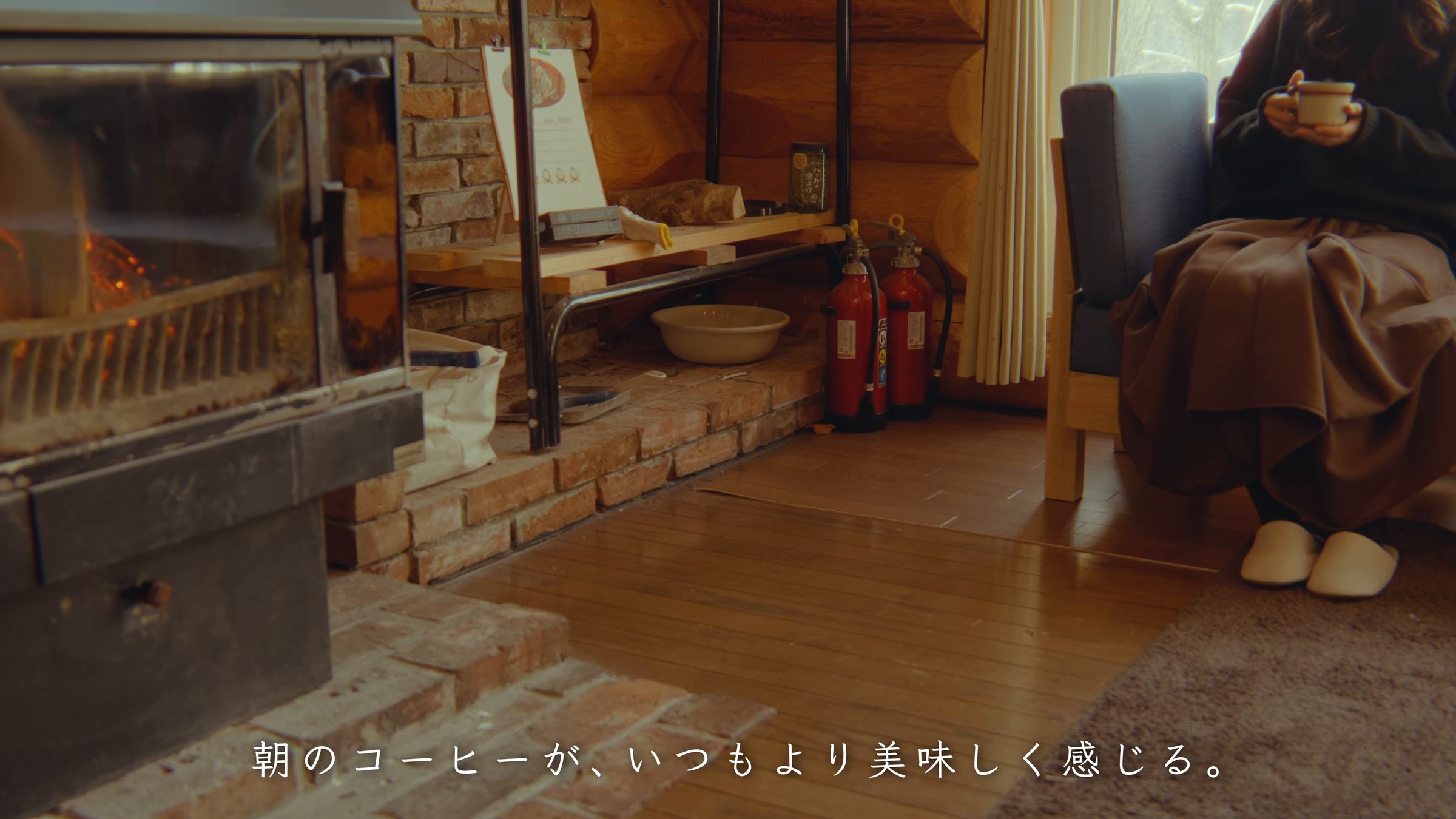
The living room had a fireplace, a sofa and a table built from logs. I sat in a chair by the fire with my morning coffee. It tasted better than usual, surely because of the cold outside. The night had dropped to minus 14, yet the house stayed warm. Homes in Hokkaido are built to stand up to the cold.
Watch this scene on YouTube0:29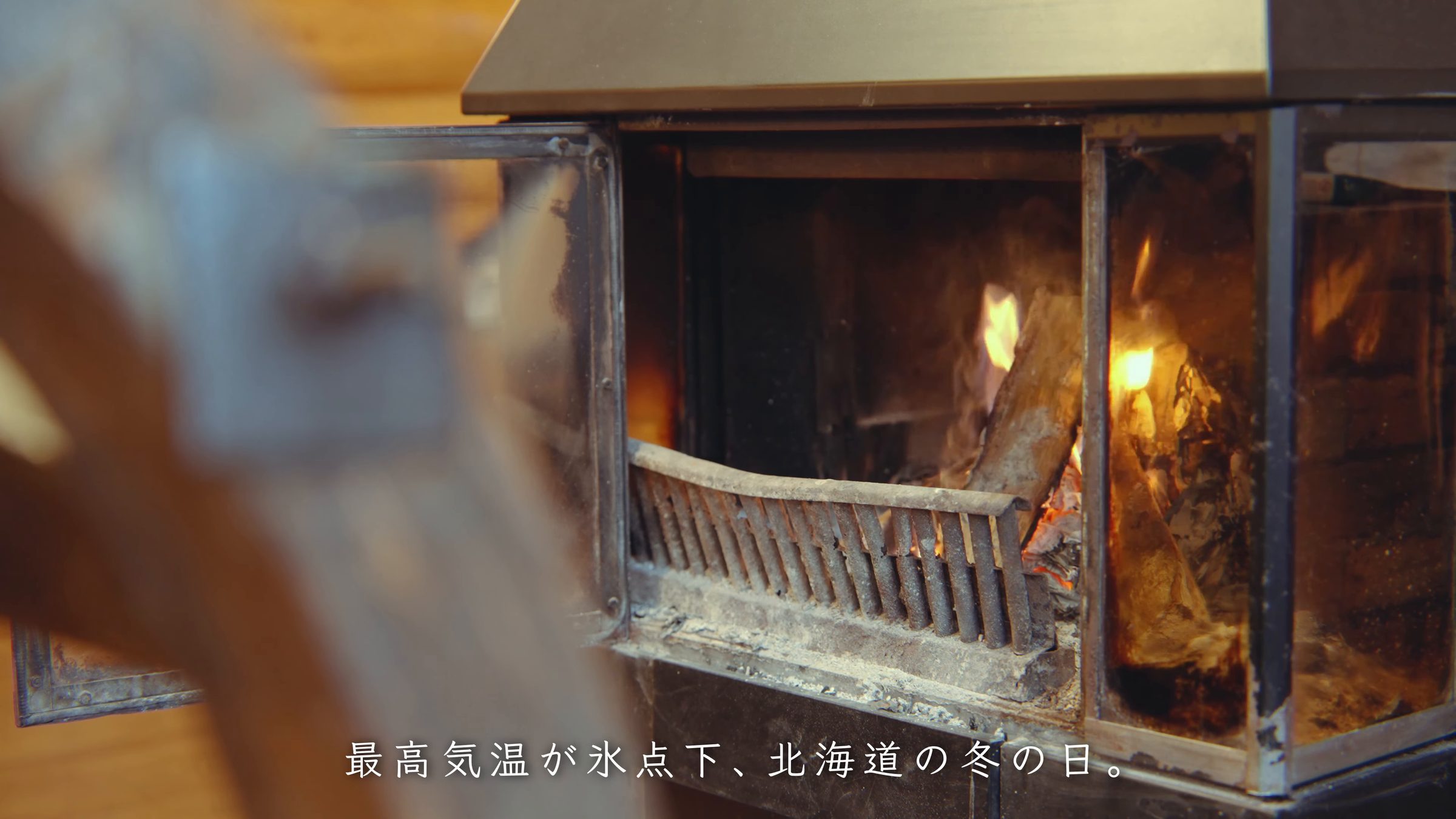
02TRAVEL JOURNAL
The snow has stopped
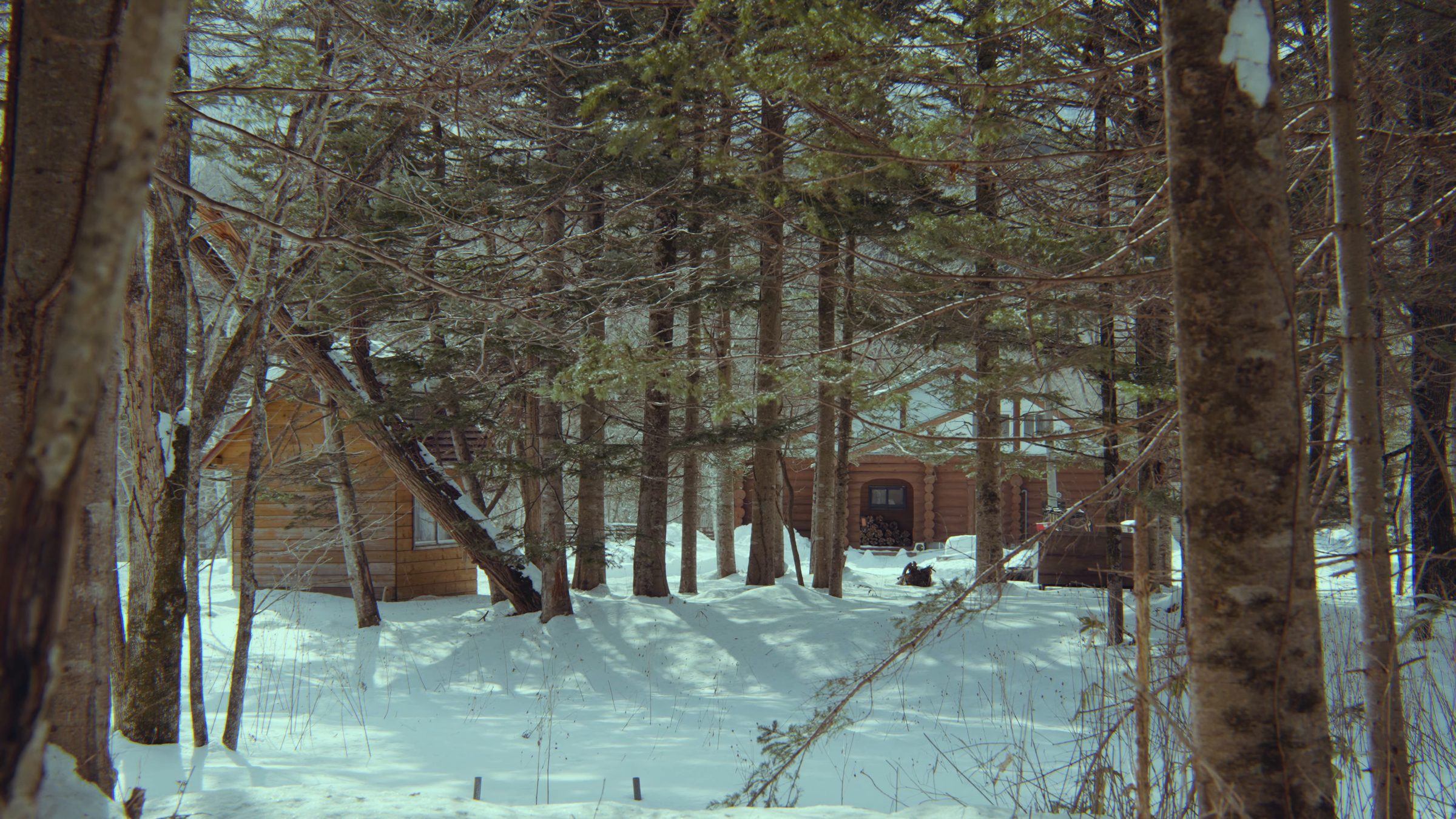
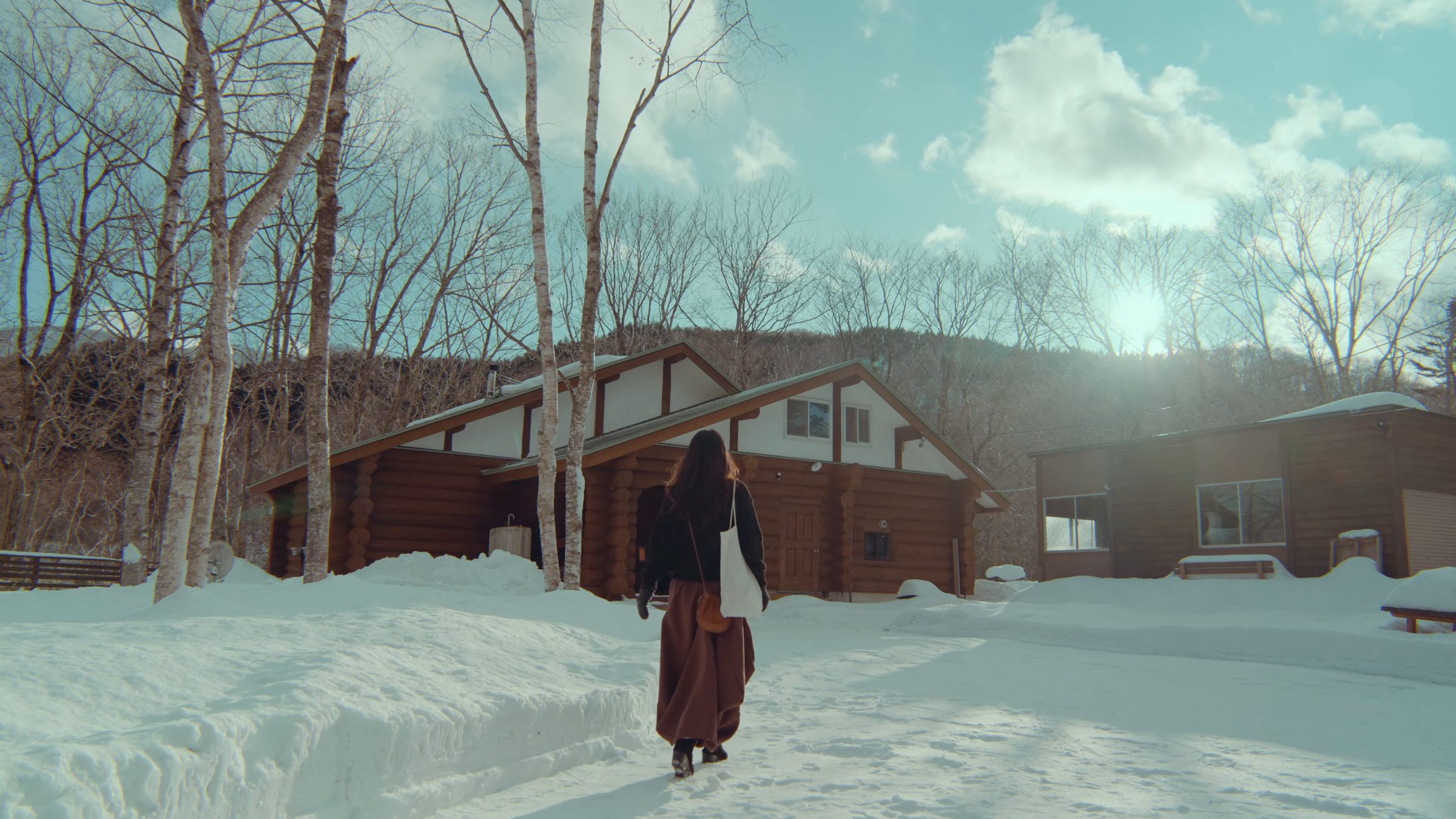
The snow stopped and the sun came out. Standing at the window, I watched the white woods begin to glow. The log house sits in a snowy forest, and the snow by the door had piled up waist-high.
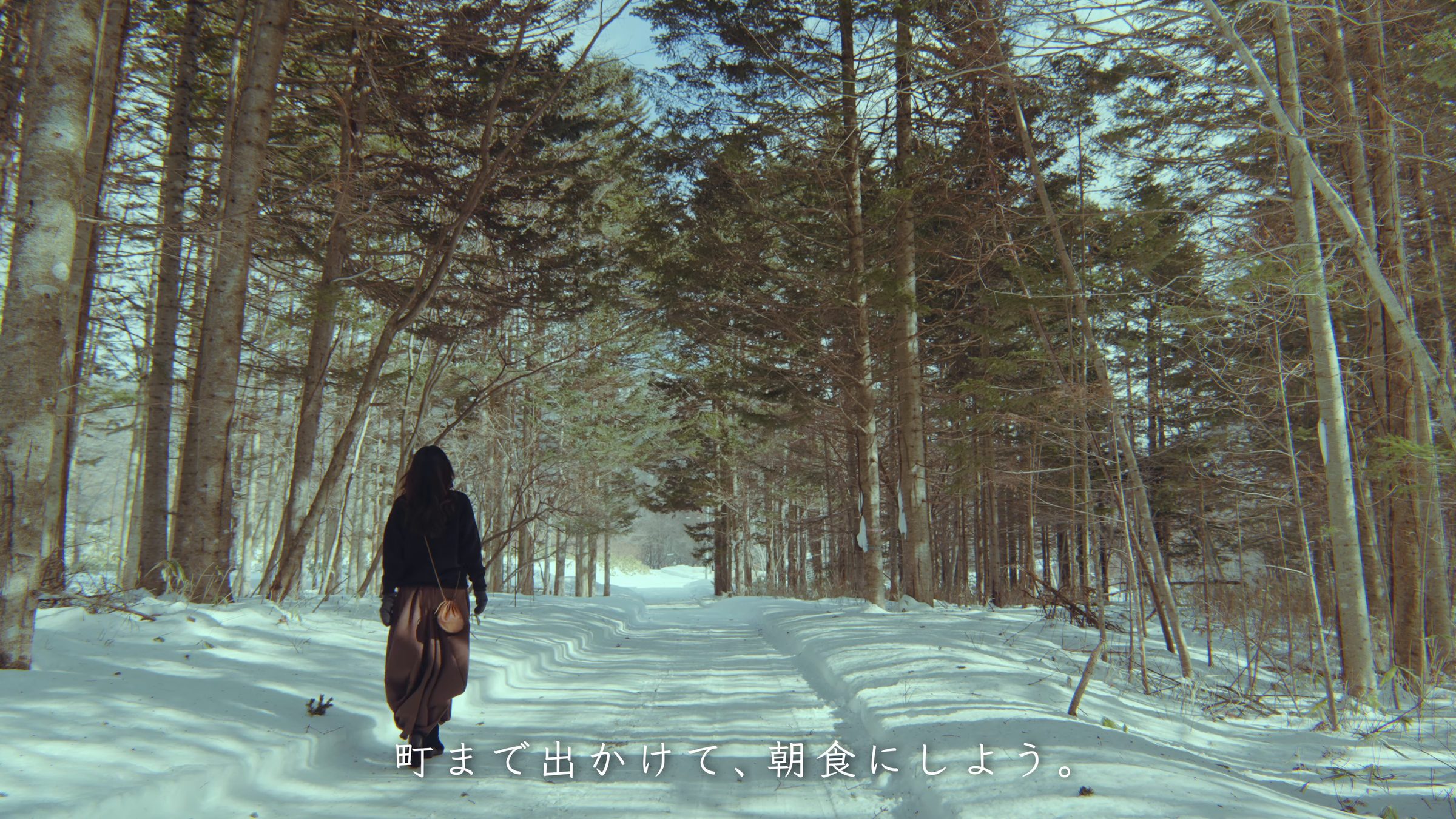
Let's go to town and have breakfast. One step at a time, I walked down the snowy road through the trees.
Watch this scene on YouTube1:01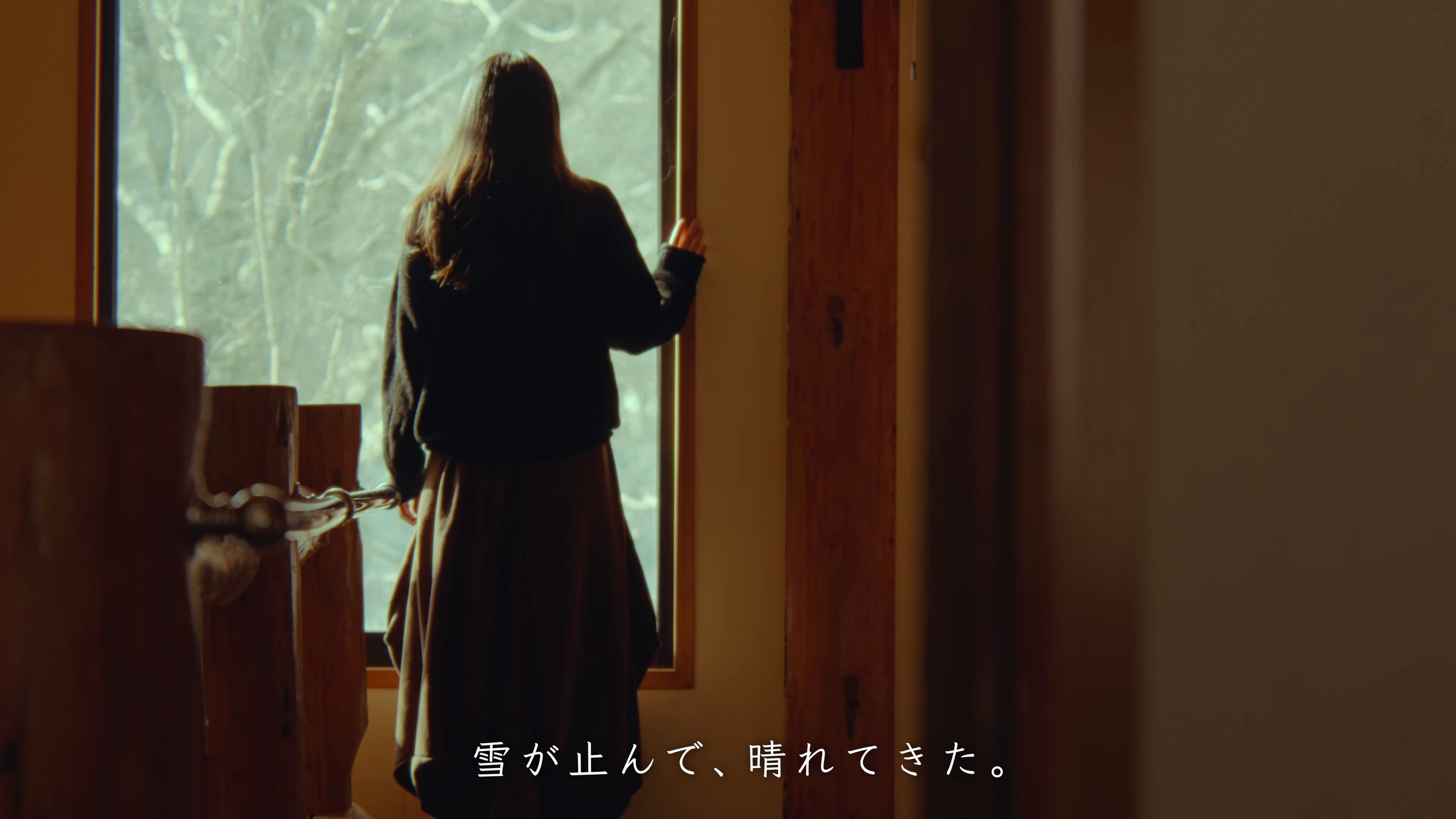
03TRAVEL JOURNAL
A seafood bowl at the supermarket
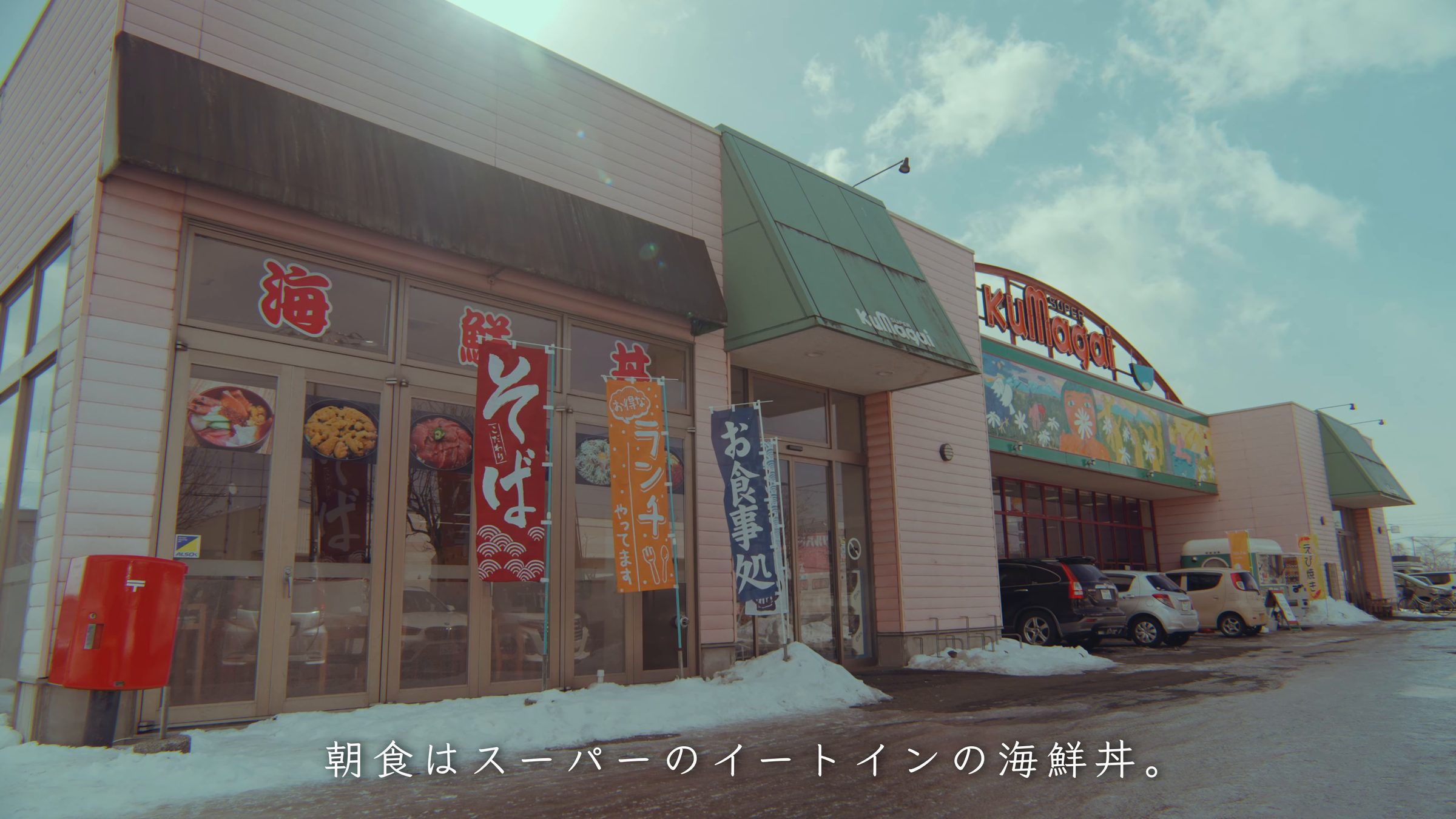
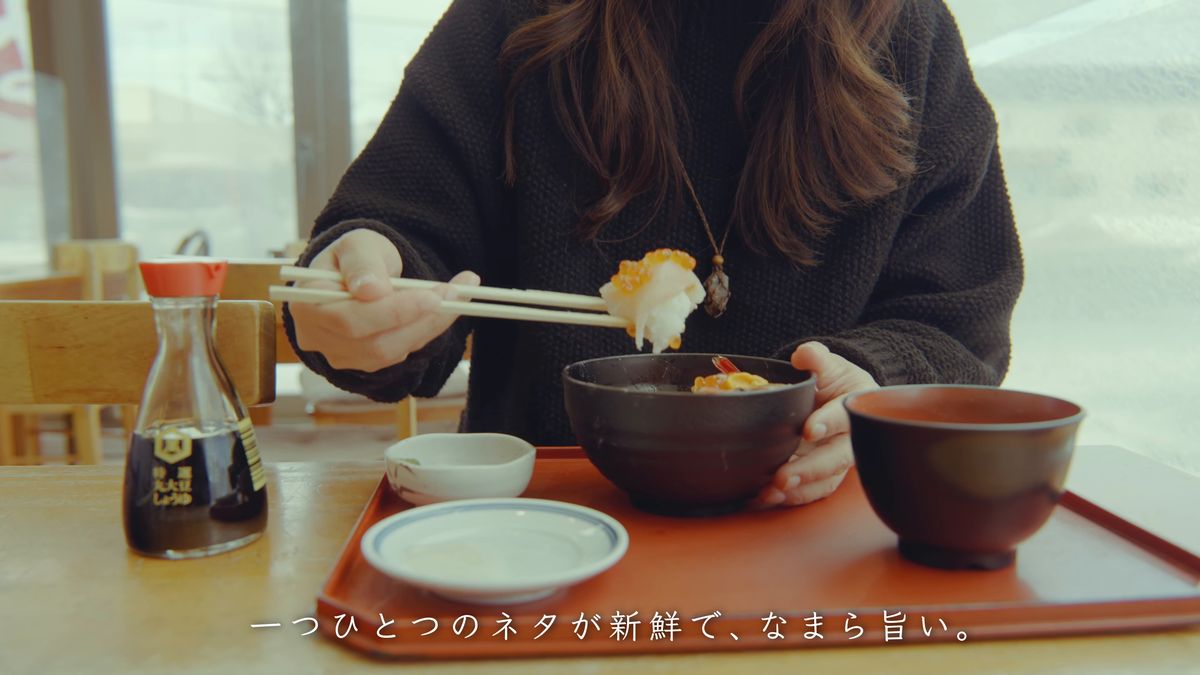
Breakfast was a seafood rice bowl at the eat-in corner of the town supermarket. Banners for seafood and soba lined the entrance, with a sign for the dining area.
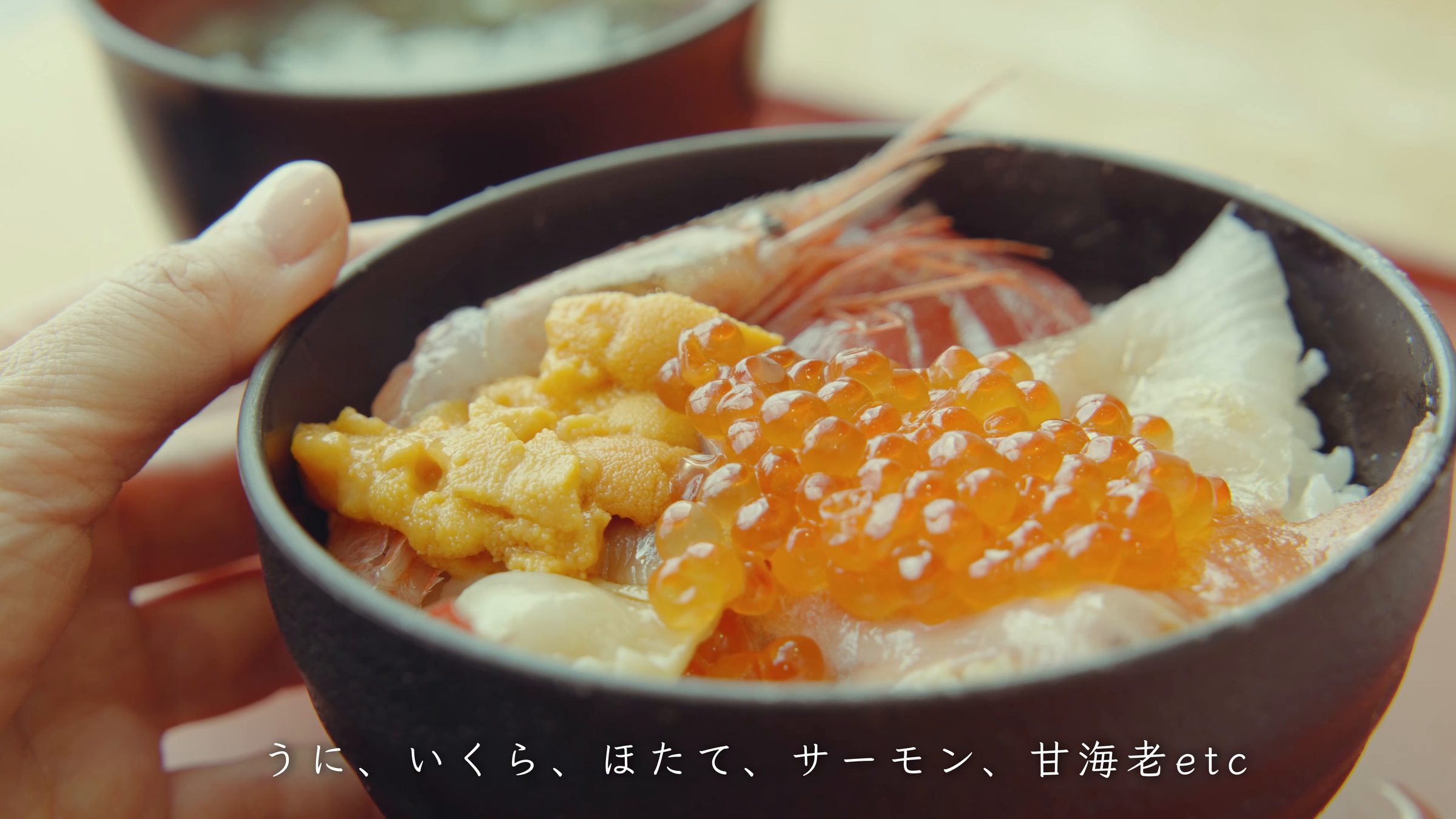
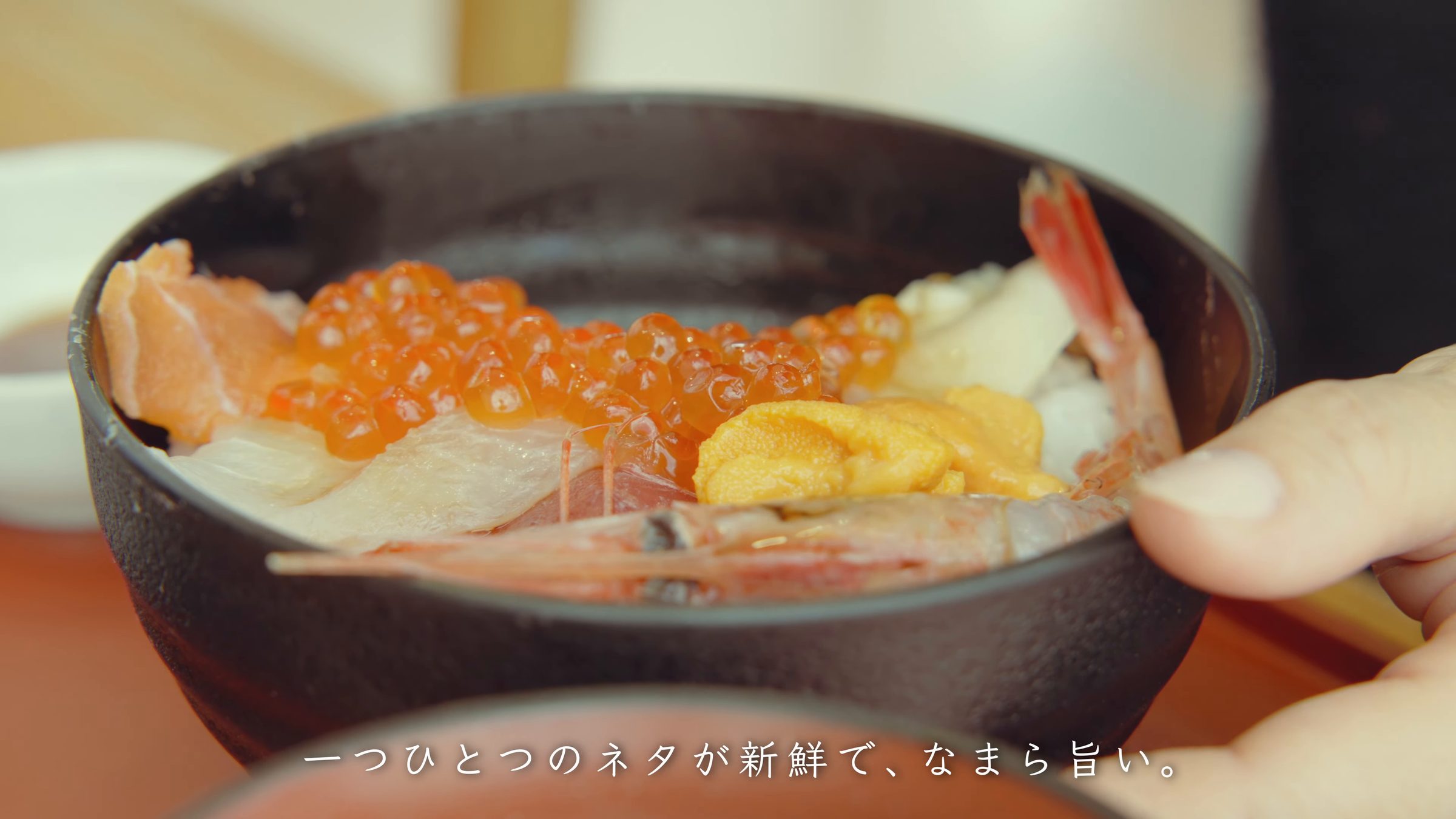
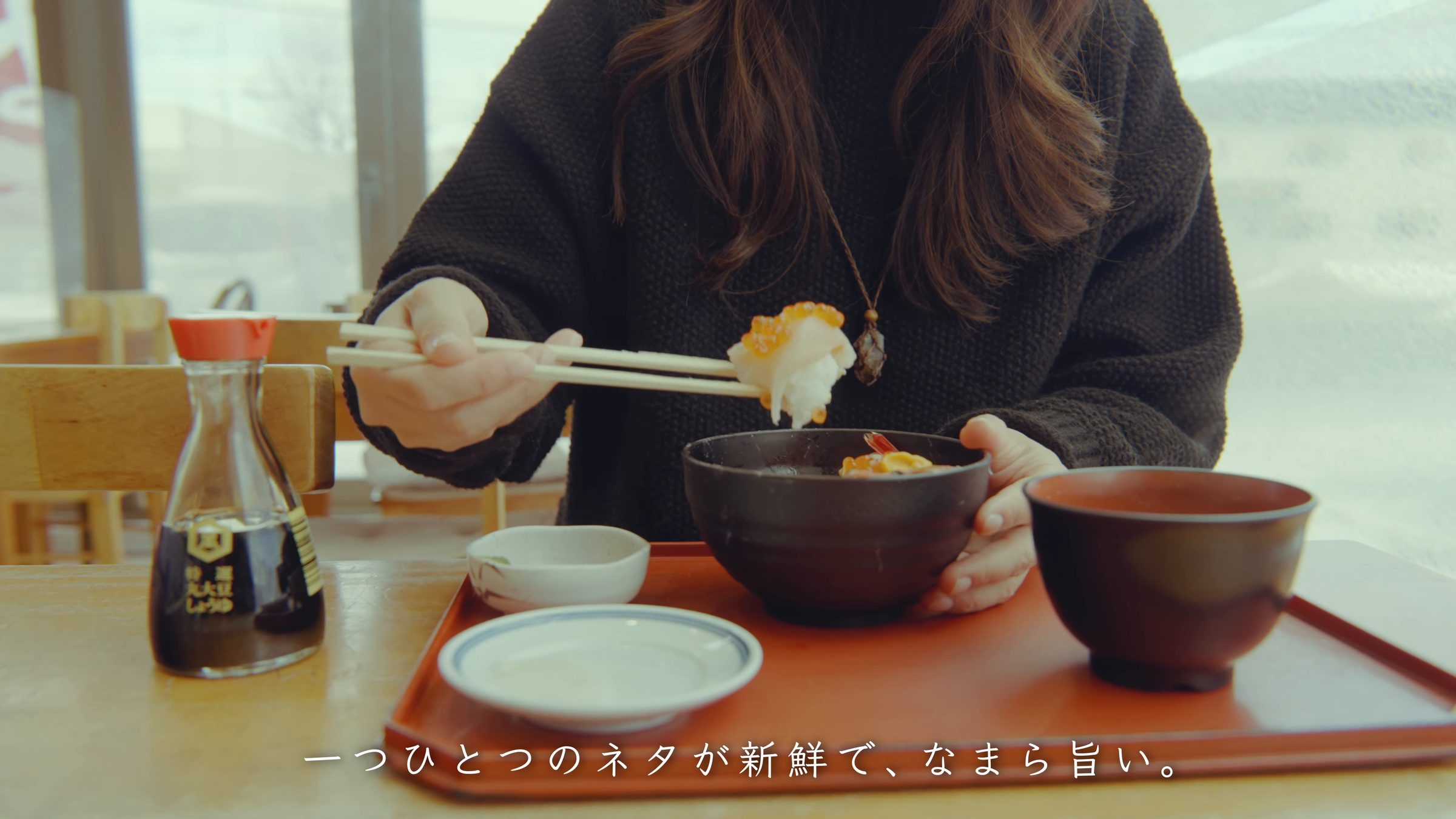
In a black bowl: sea urchin, salmon roe, scallop, salmon and sweet shrimp. Every topping was fresh and, as they say here, namara good. Namara is Hokkaido dialect for "very." I ate slowly at a table by the window, with a bowl of soup. Only in Hokkaido can a neighborhood supermarket serve a bowl like this.
Watch this scene on YouTube1:18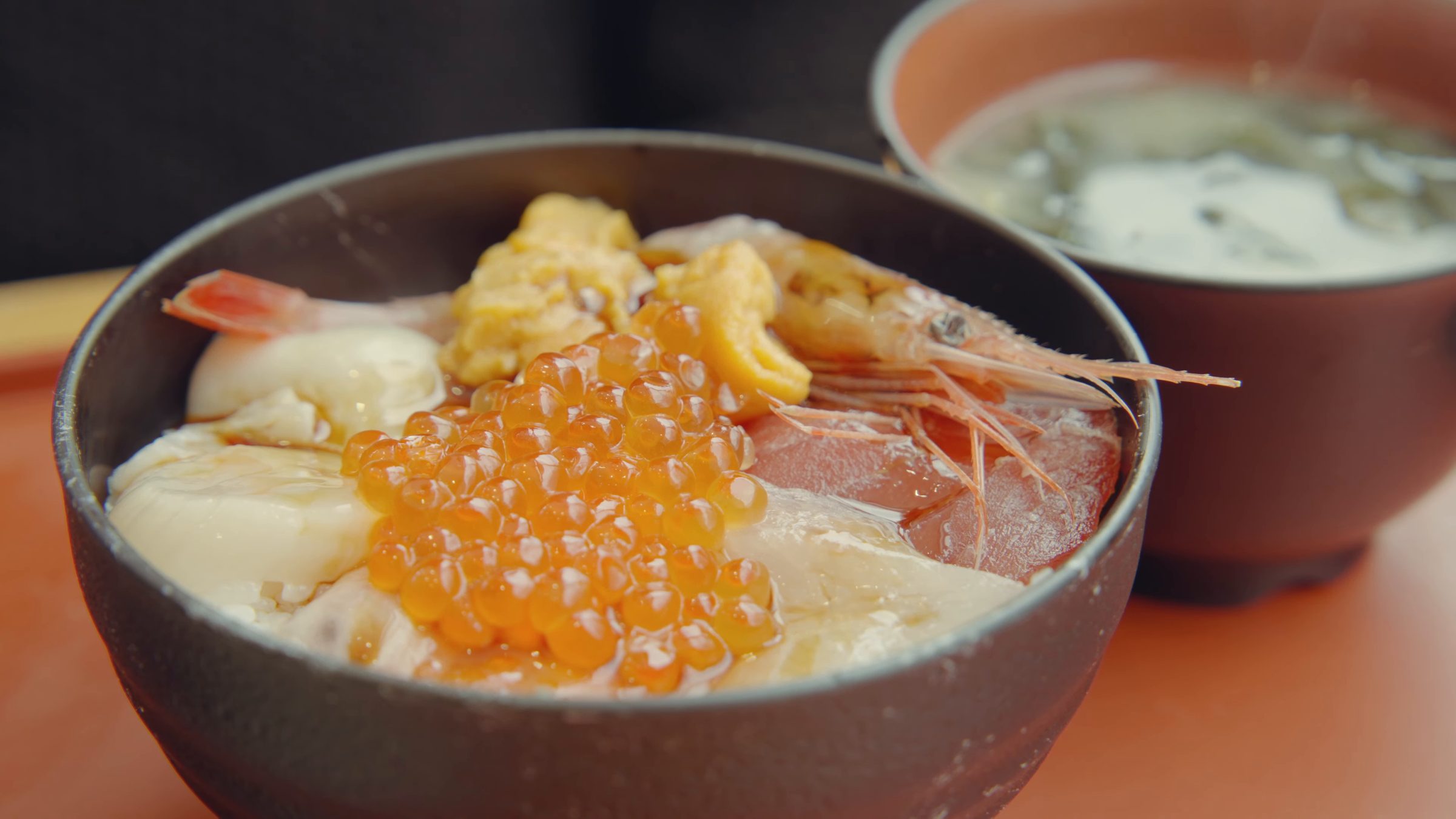
04TRAVEL JOURNAL
Ice fishing on a frozen lake
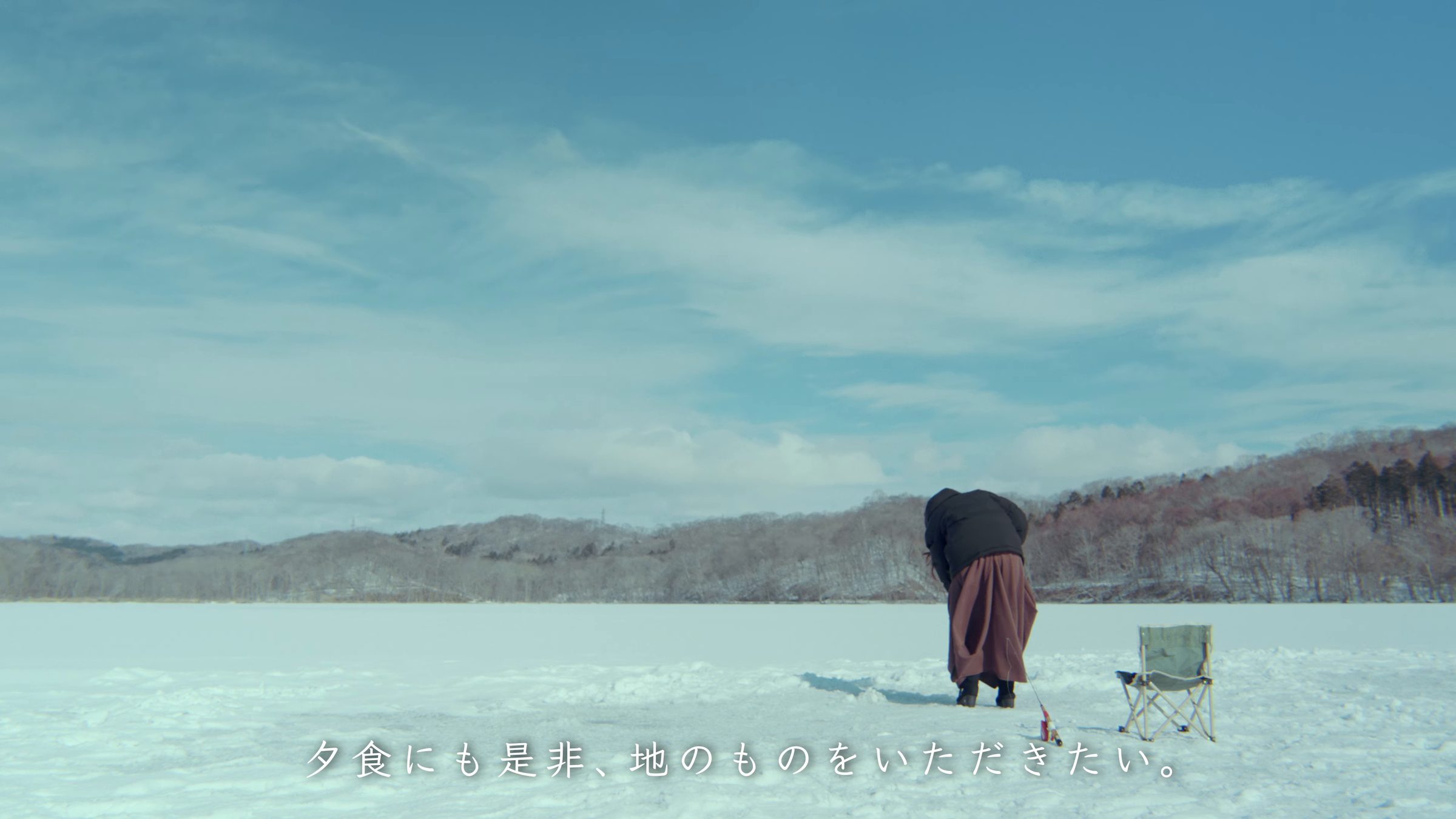
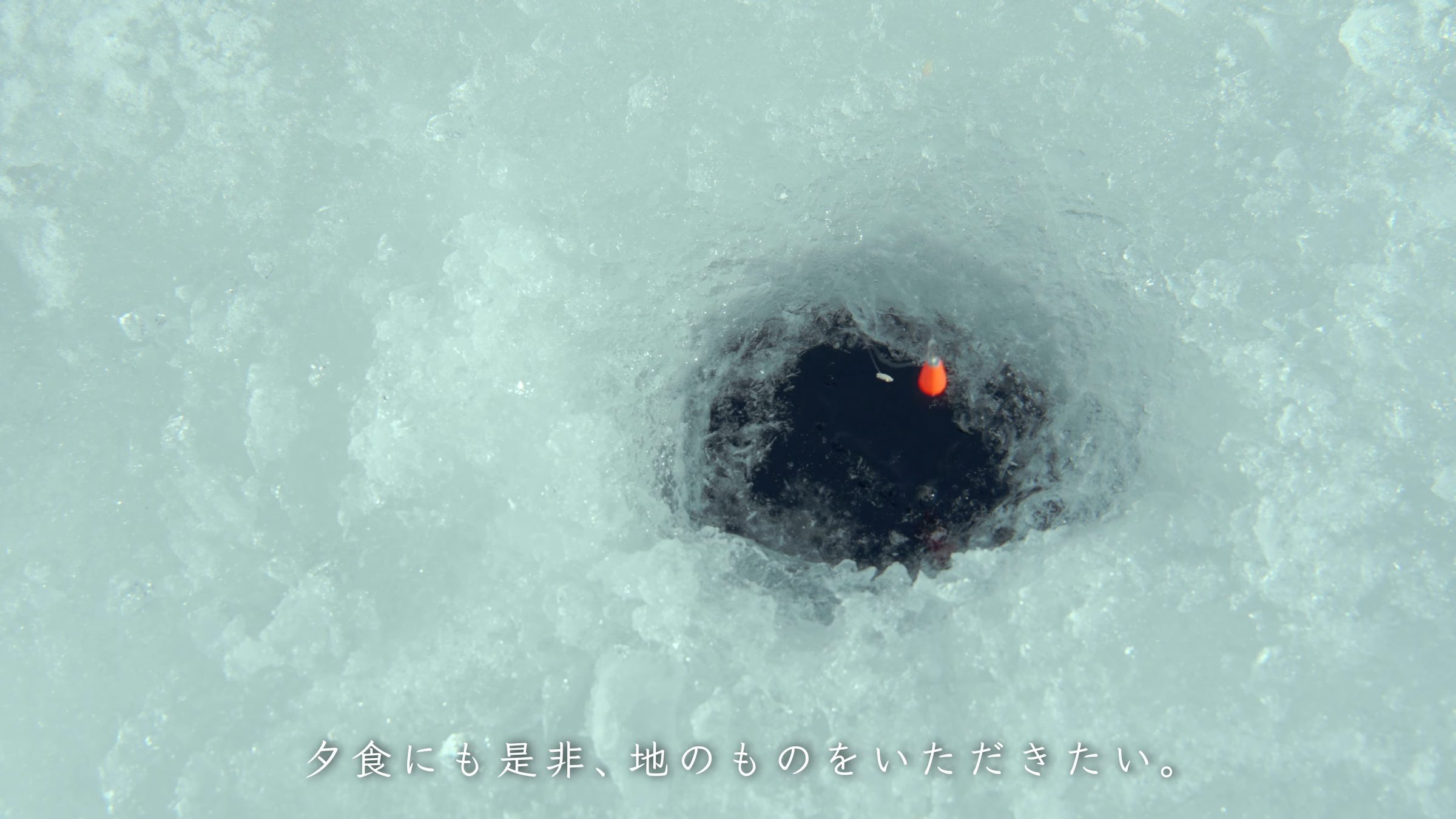
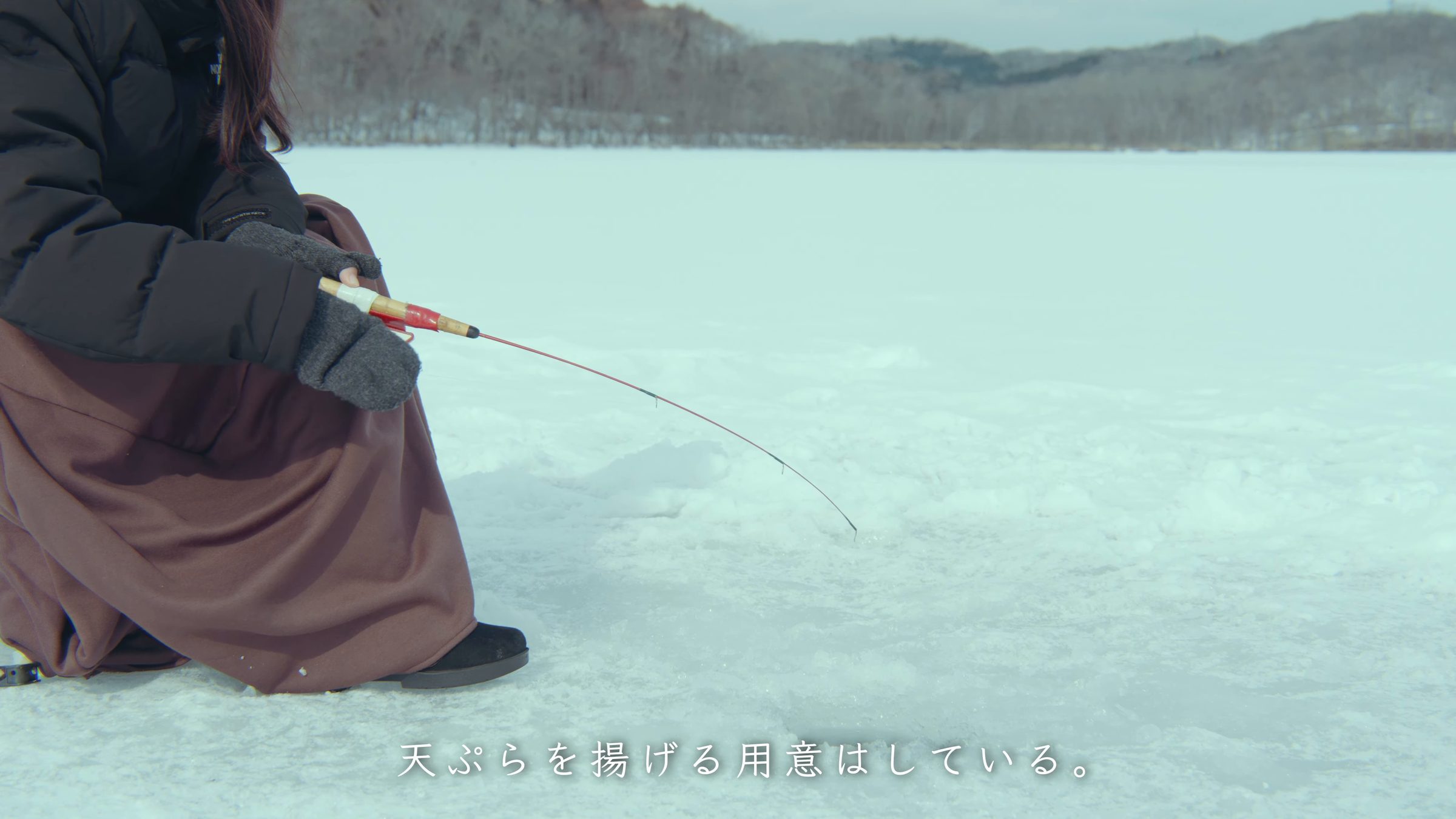
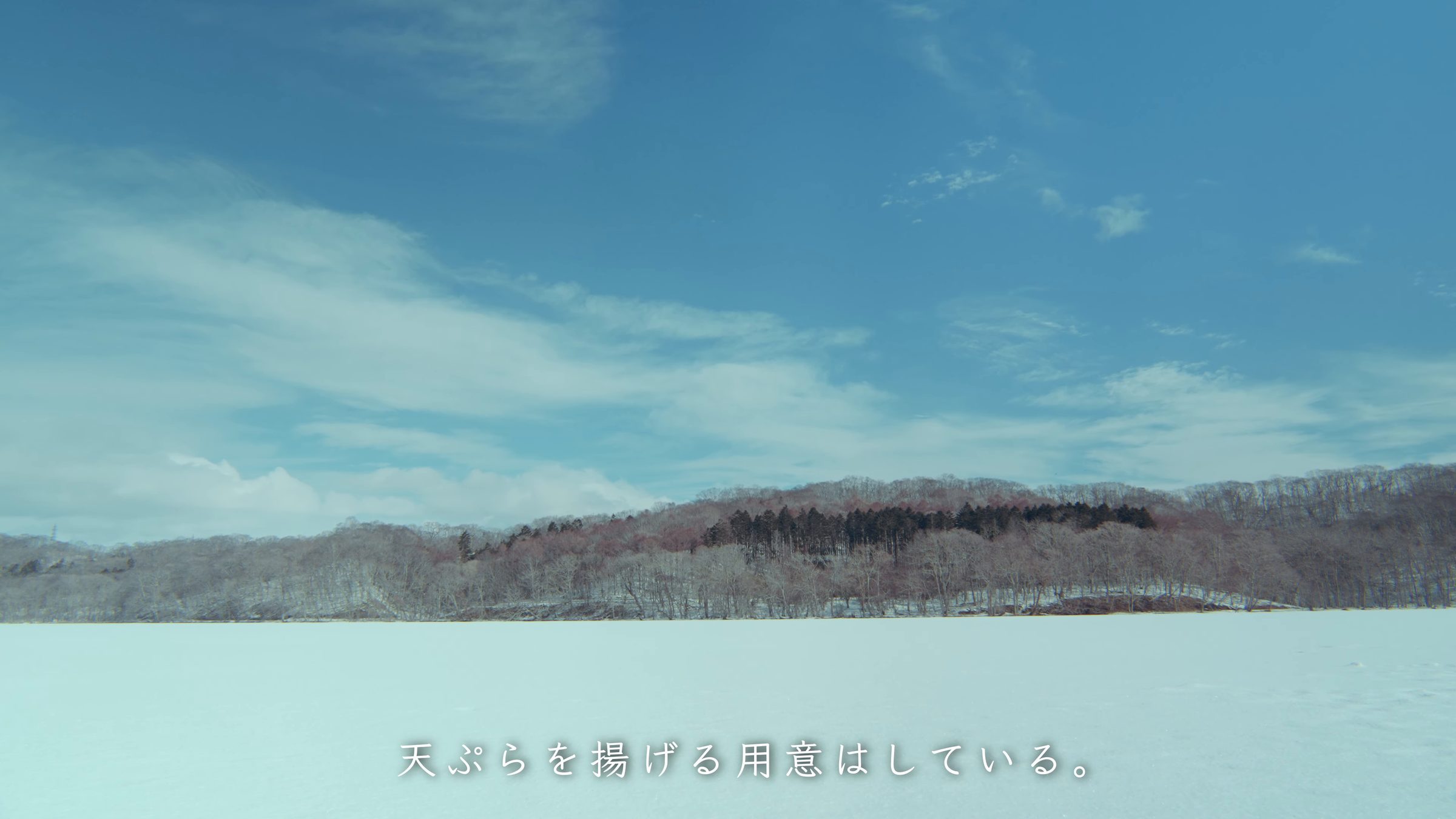
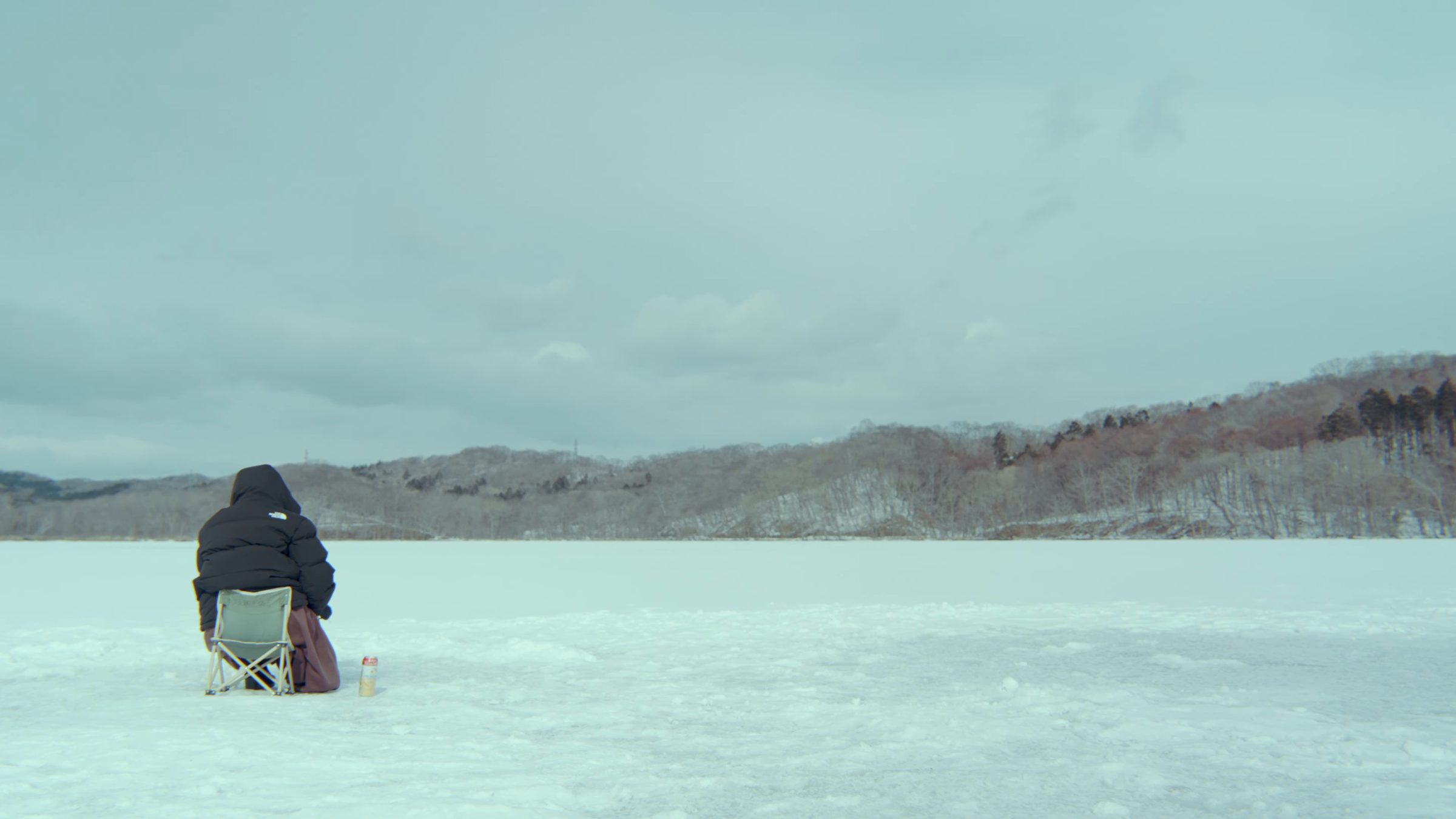
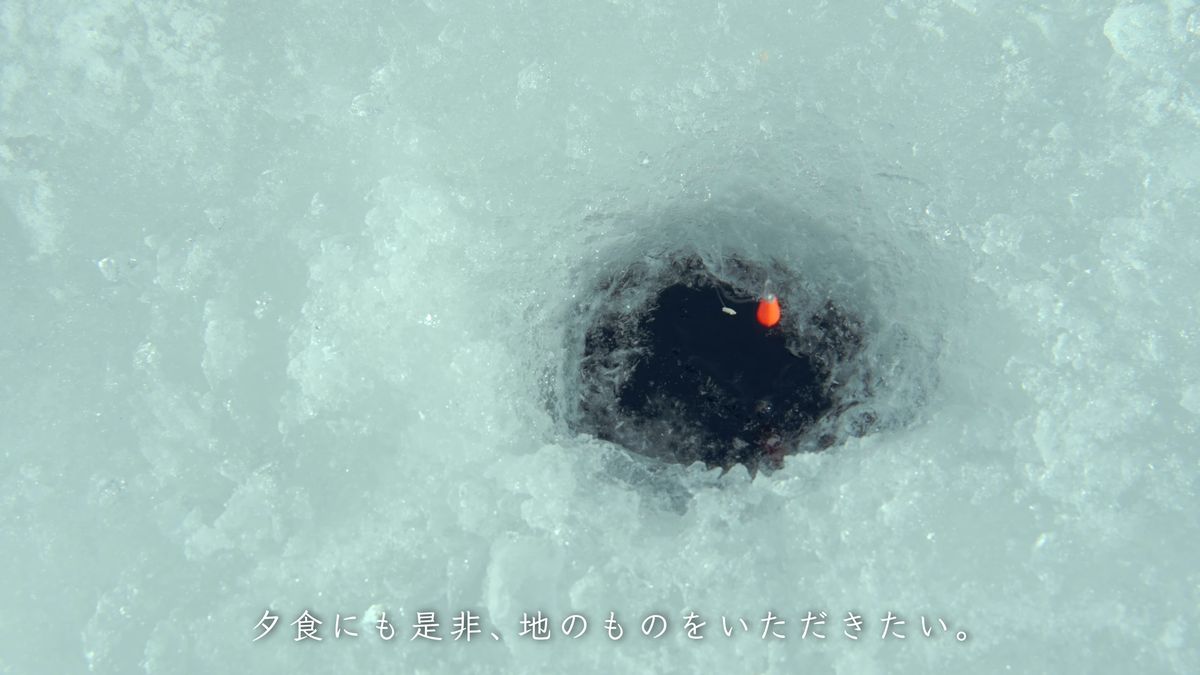
For dinner, too, I wanted something local. So I headed for a lake frozen solid from shore to shore. Drop a short rod through a hole in the ice: my first try at fishing for wakasagi, the pond smelt. A red float bobbed in the hole.
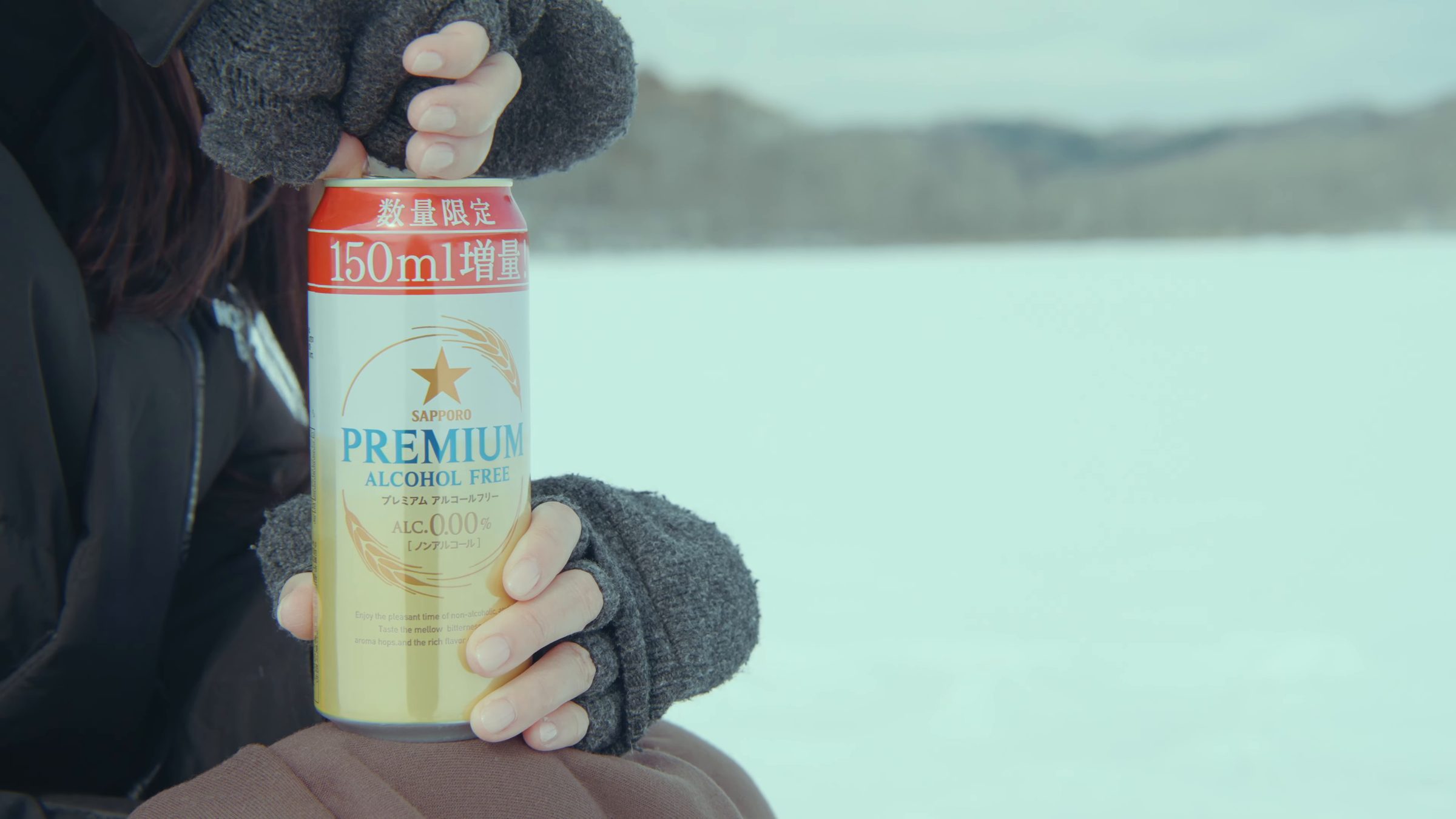
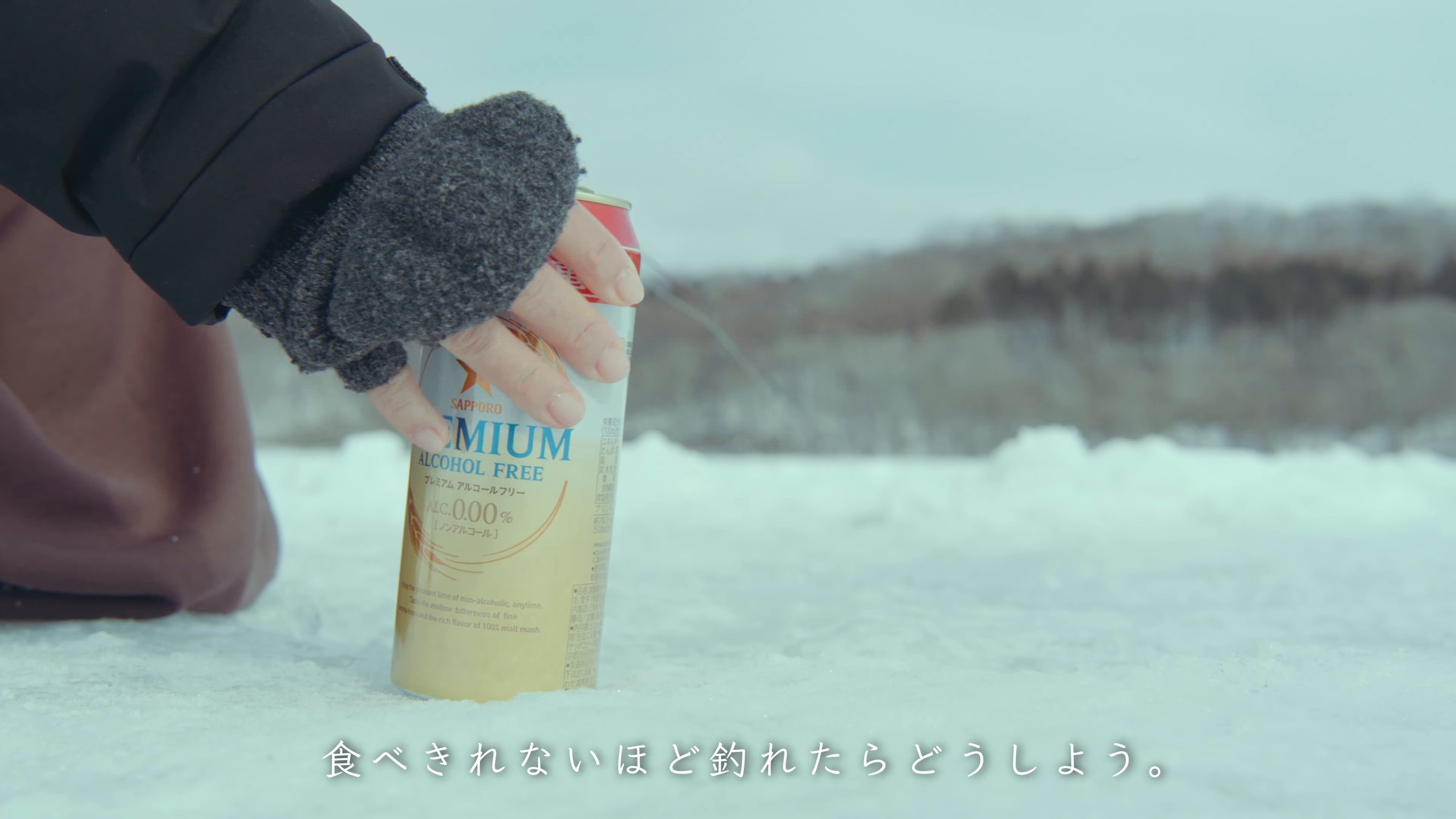
I sat on a folding chair and stared at the tip of the rod. Everything was ready for tempura at home. What if I caught more than I could eat? Under a blue sky, low hills ran along the far side of the snowfield. Still in my gloves, I opened an alcohol-free beer and set it down on the snow.
I jiggled the line just above the bottom, then held it still. I stuck with it until I forgot how cold I was, but not a single wakasagi bit.
Watch this scene on YouTube1:55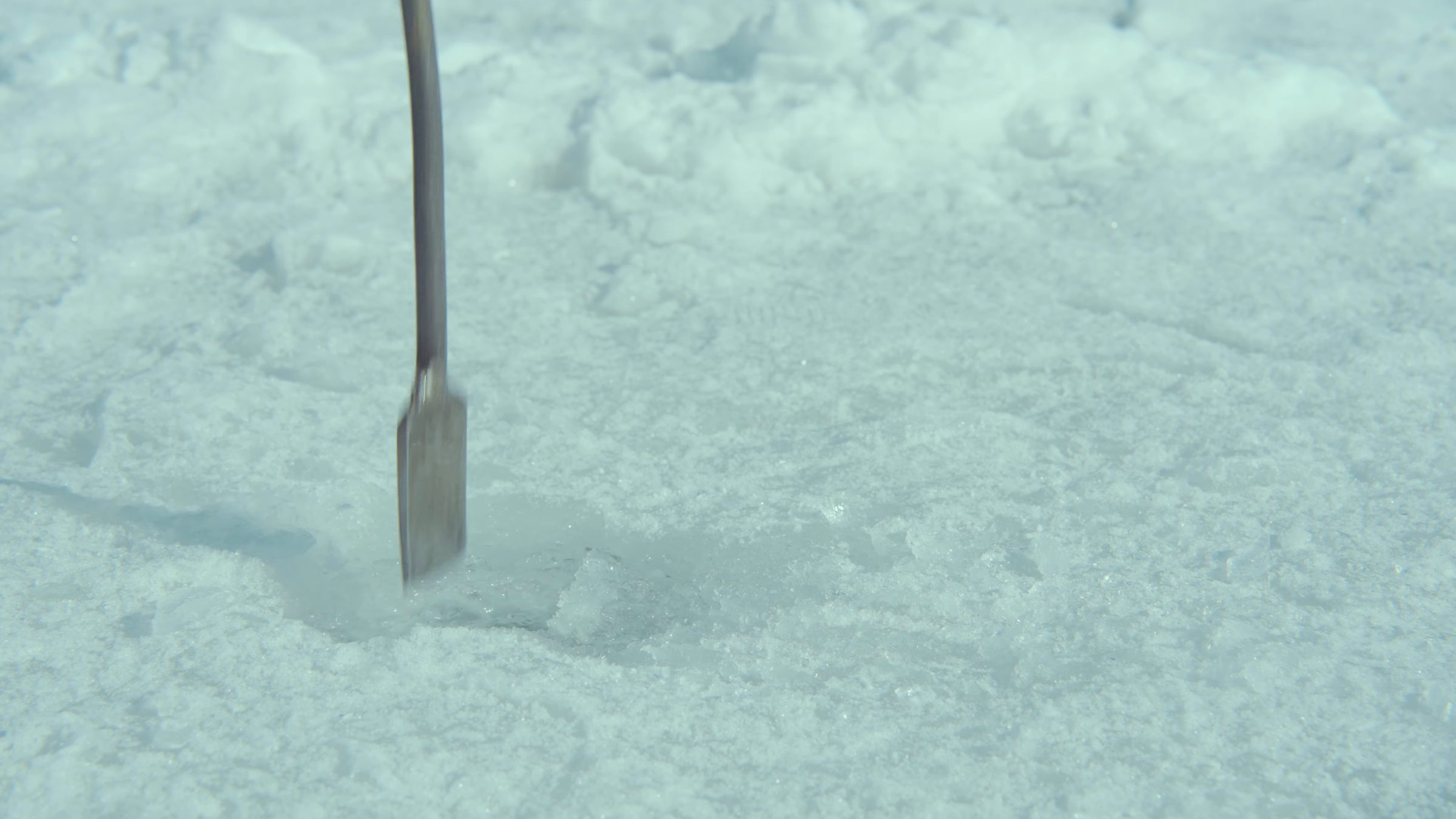
05TRAVEL JOURNAL
When it rains, it snows
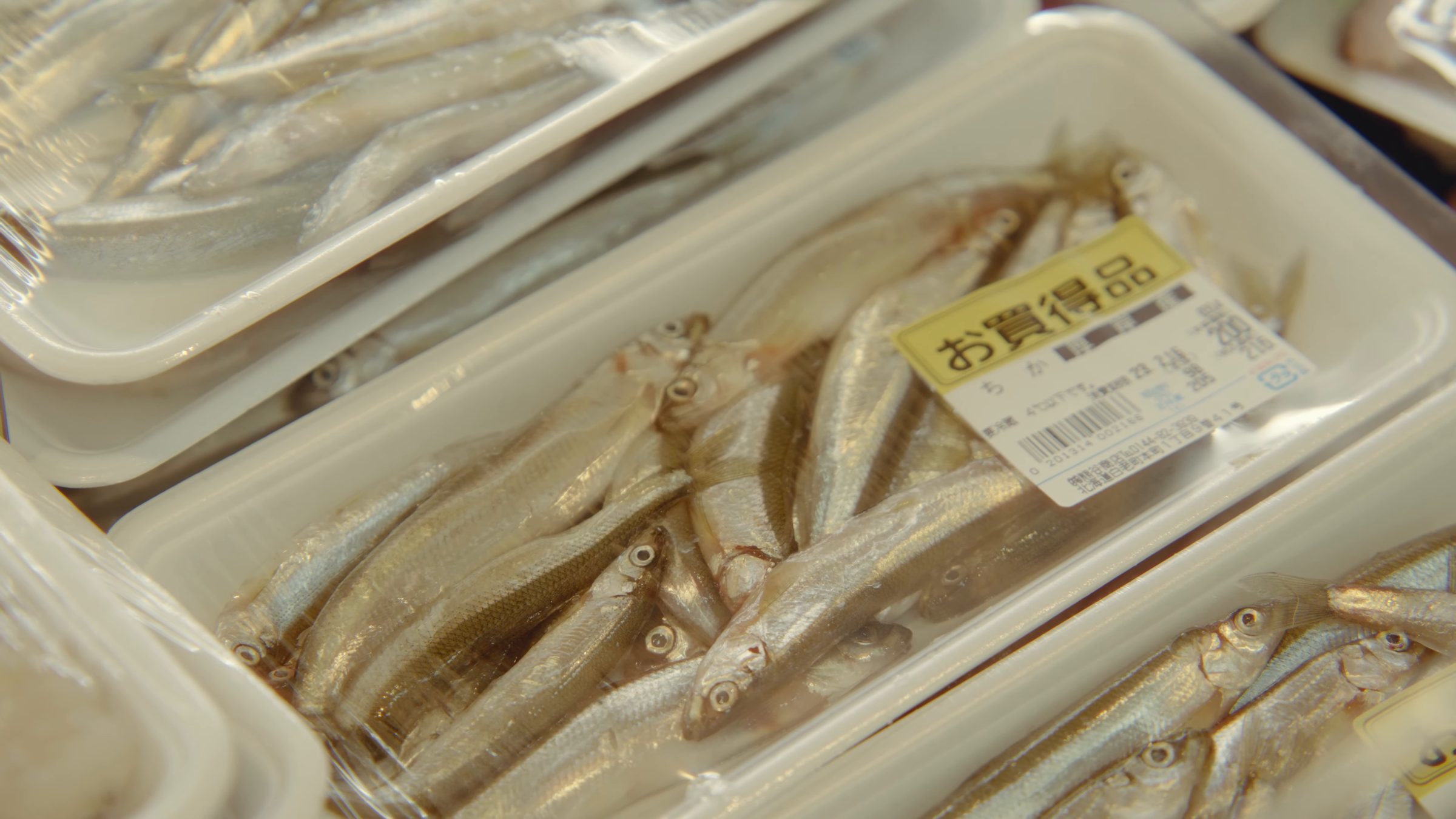
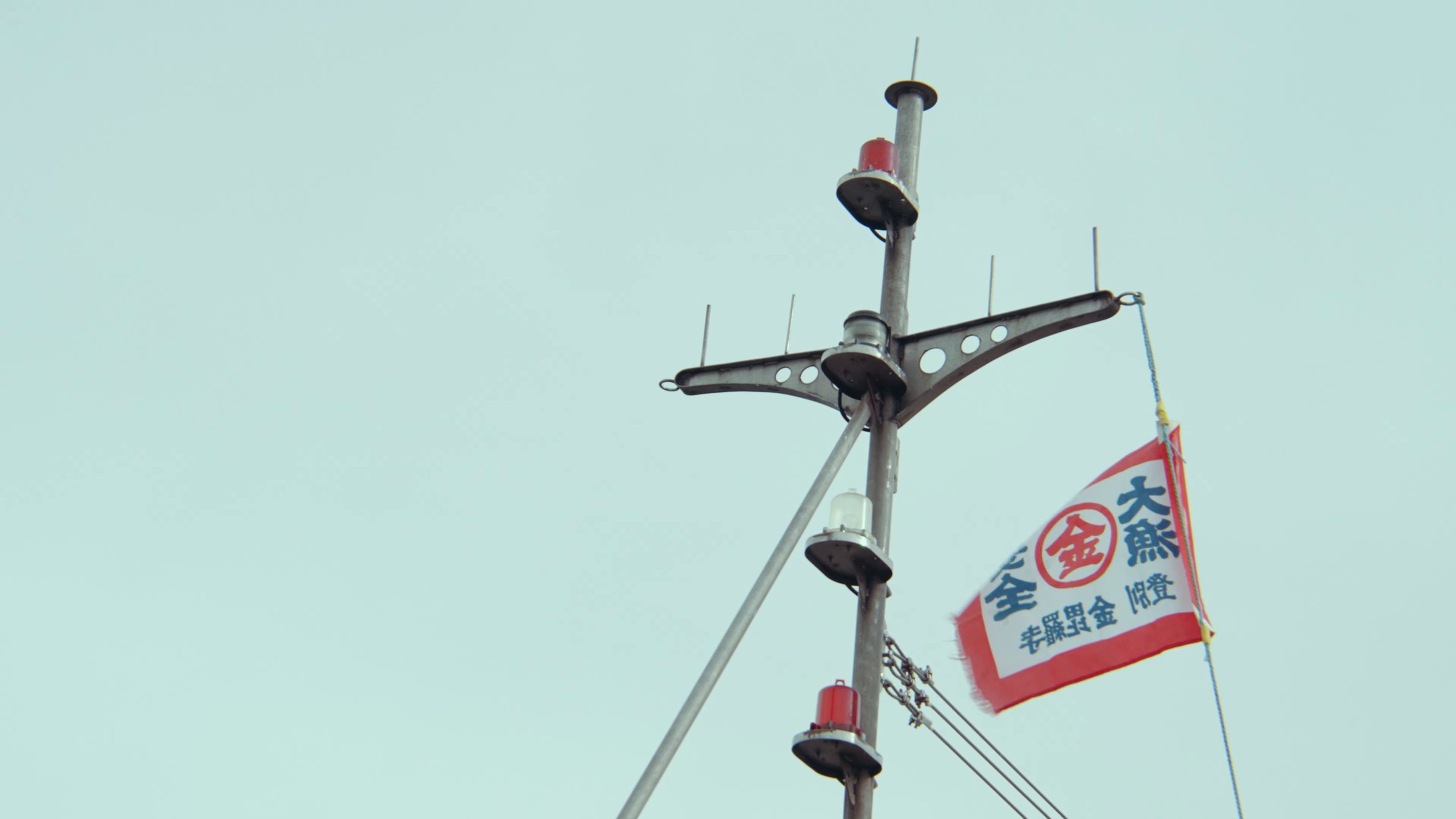
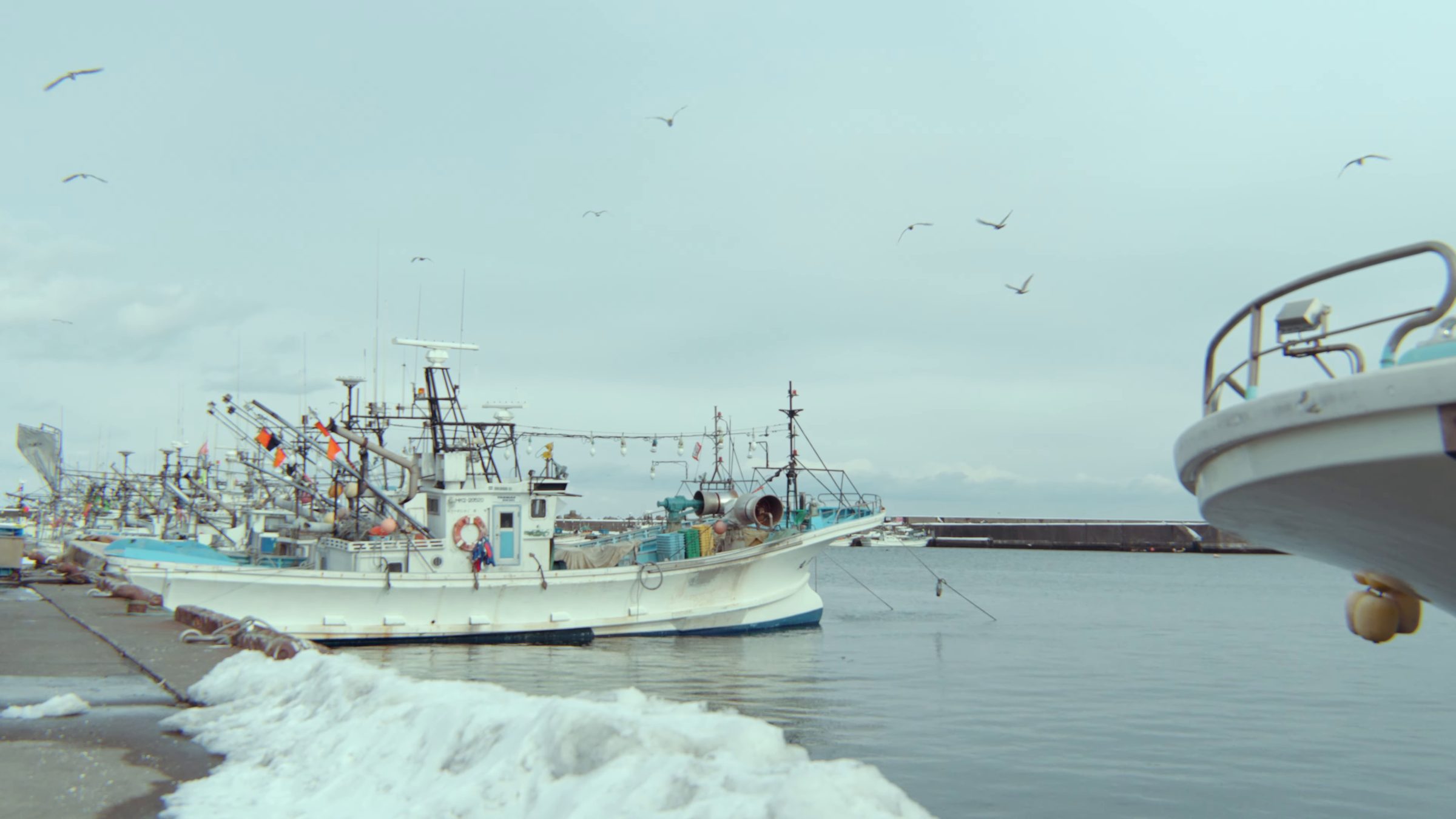
To add insult to injury, I went home empty-handed and it started to snow. At the fish counter, though, I found packs of chika, a smelt that looks just like wakasagi. Down at the harbor, fishing boats were moored side by side, and a big-catch flag snapped from a mast. That is how I got my fish for dinner.
Watch this scene on YouTube2:40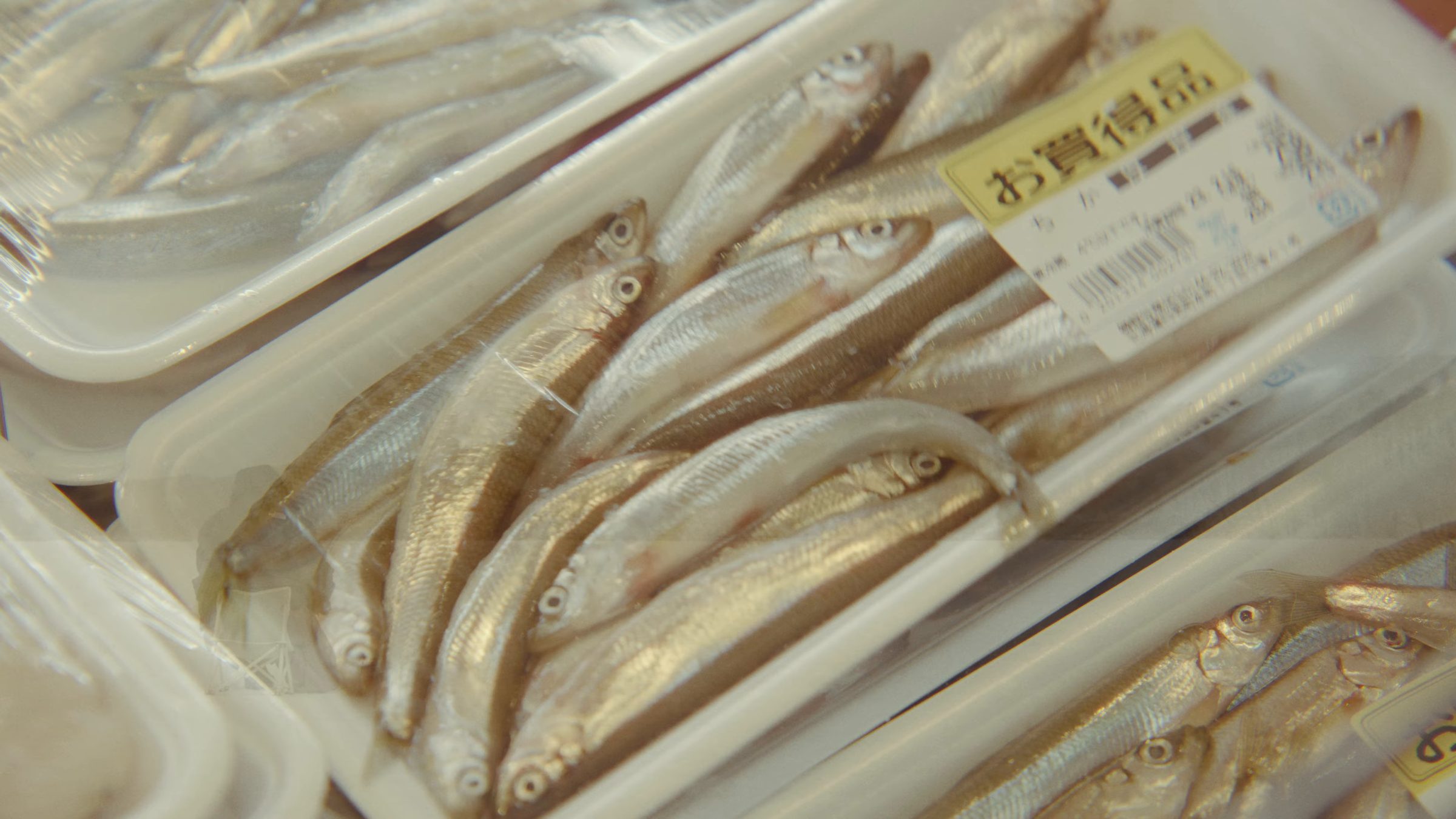
06TRAVEL JOURNAL
Miso ramen for a frozen body
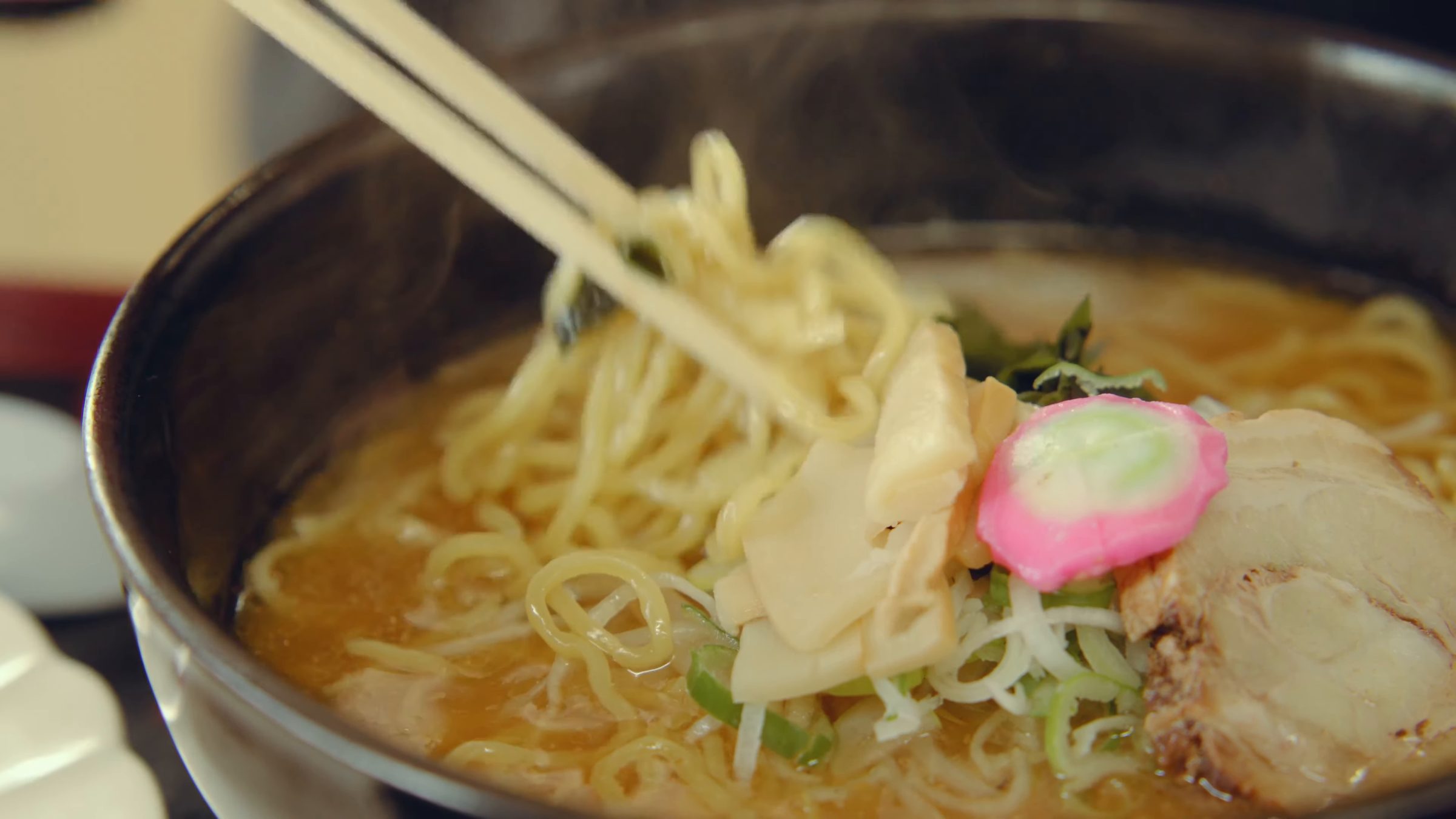
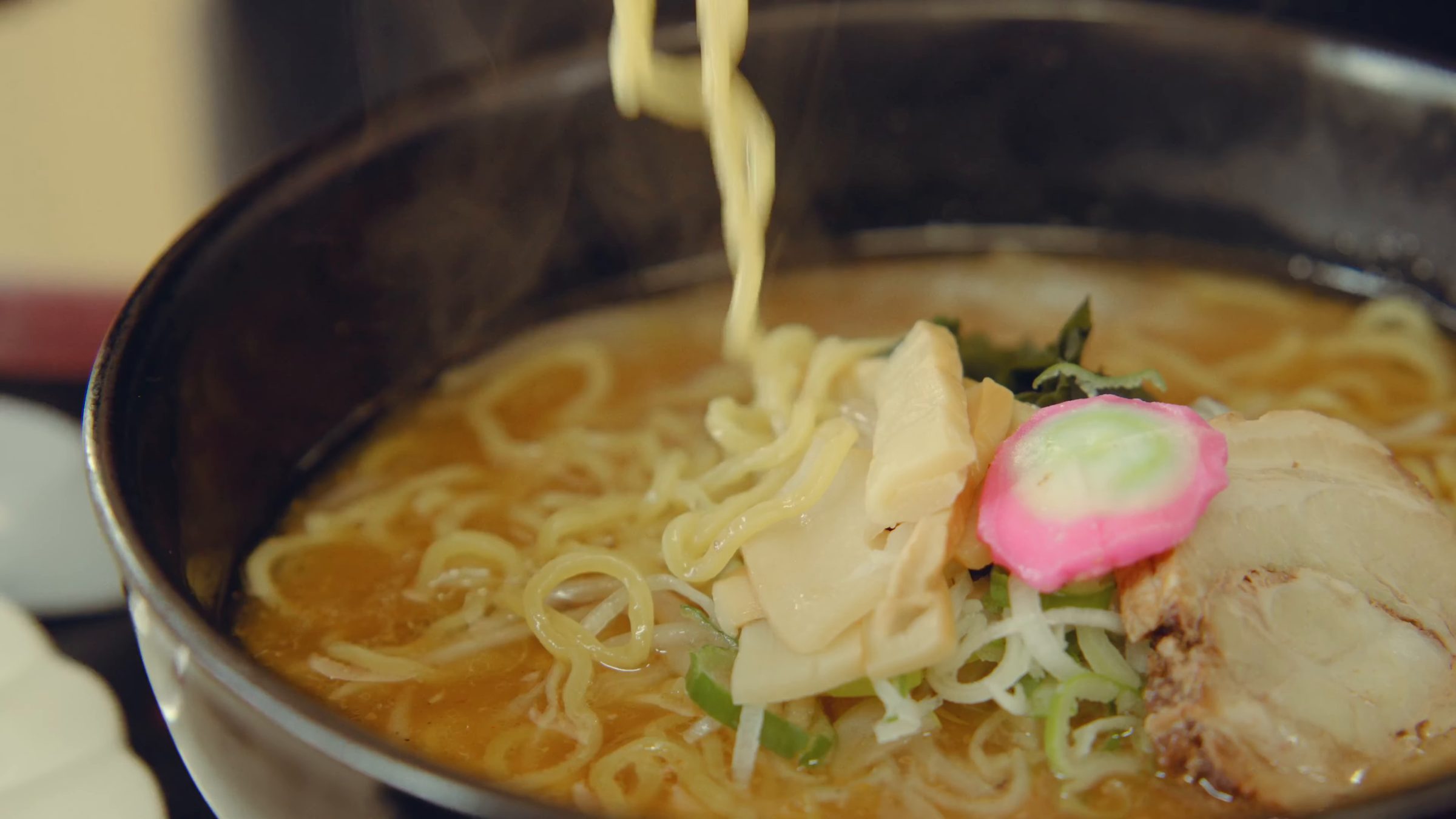
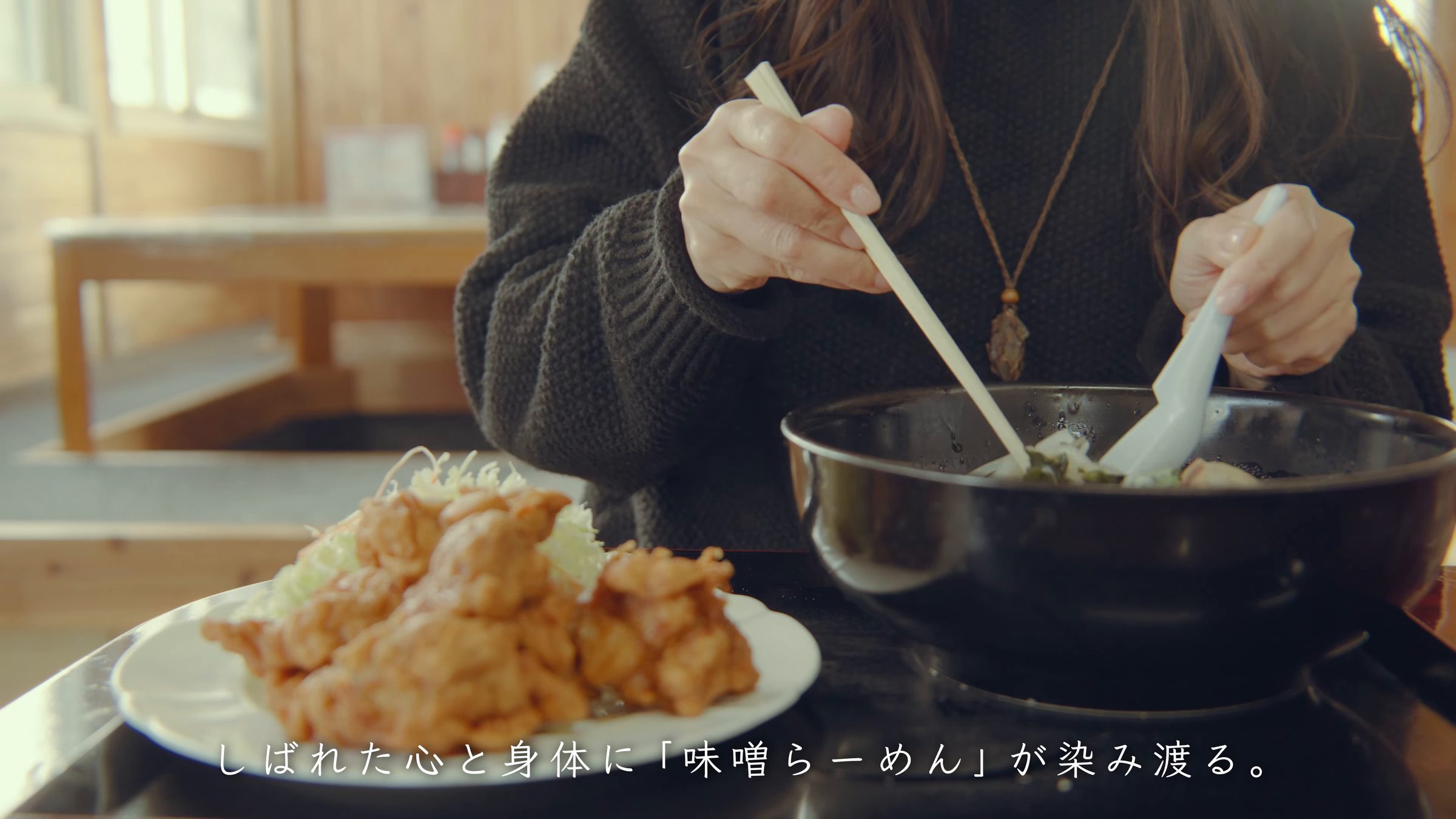
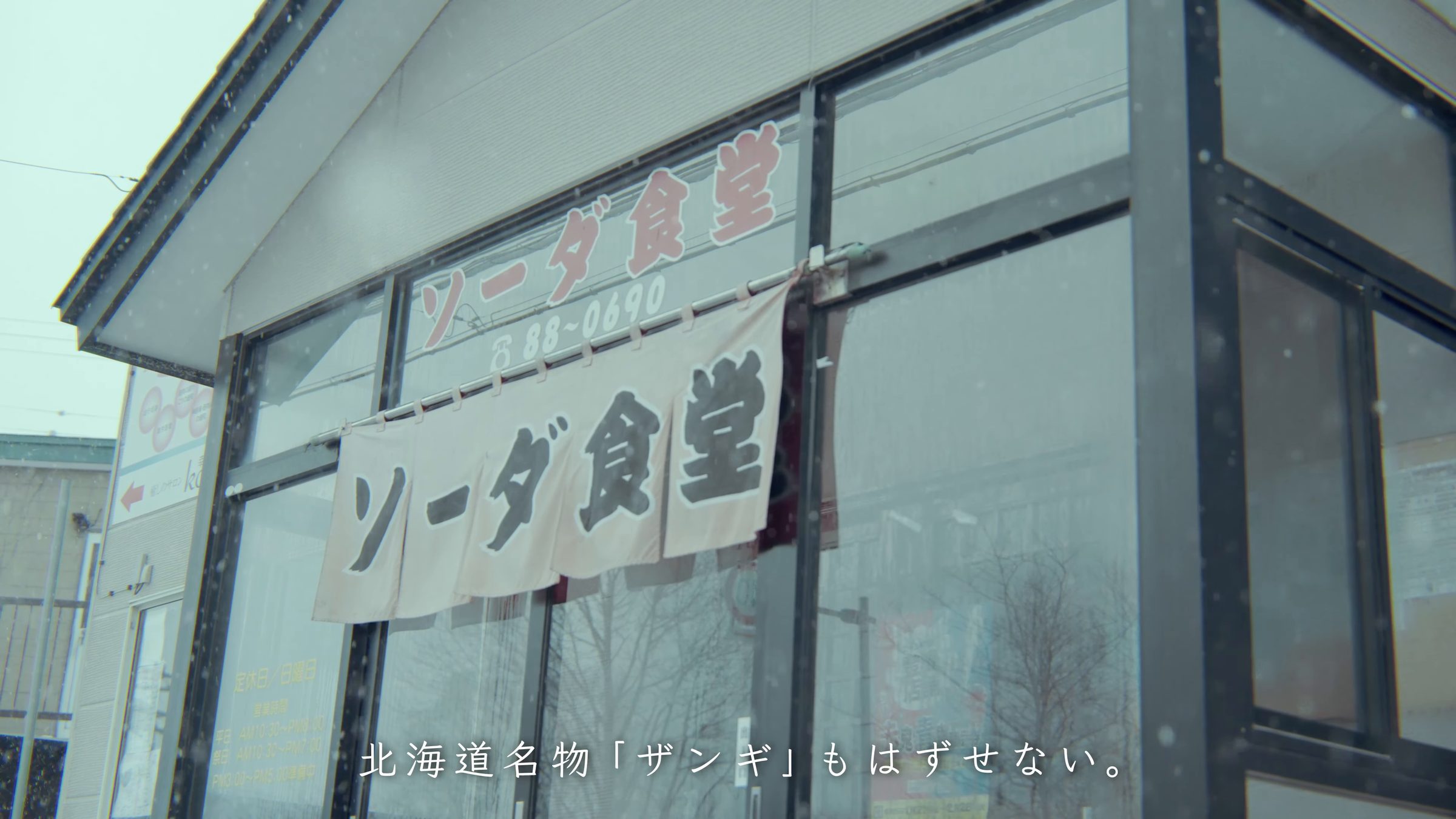
In the falling snow, I ducked under the noren curtain of a diner. Miso ramen soaked into my frozen body and mind. Shibareru, the local word, means cold enough to freeze.
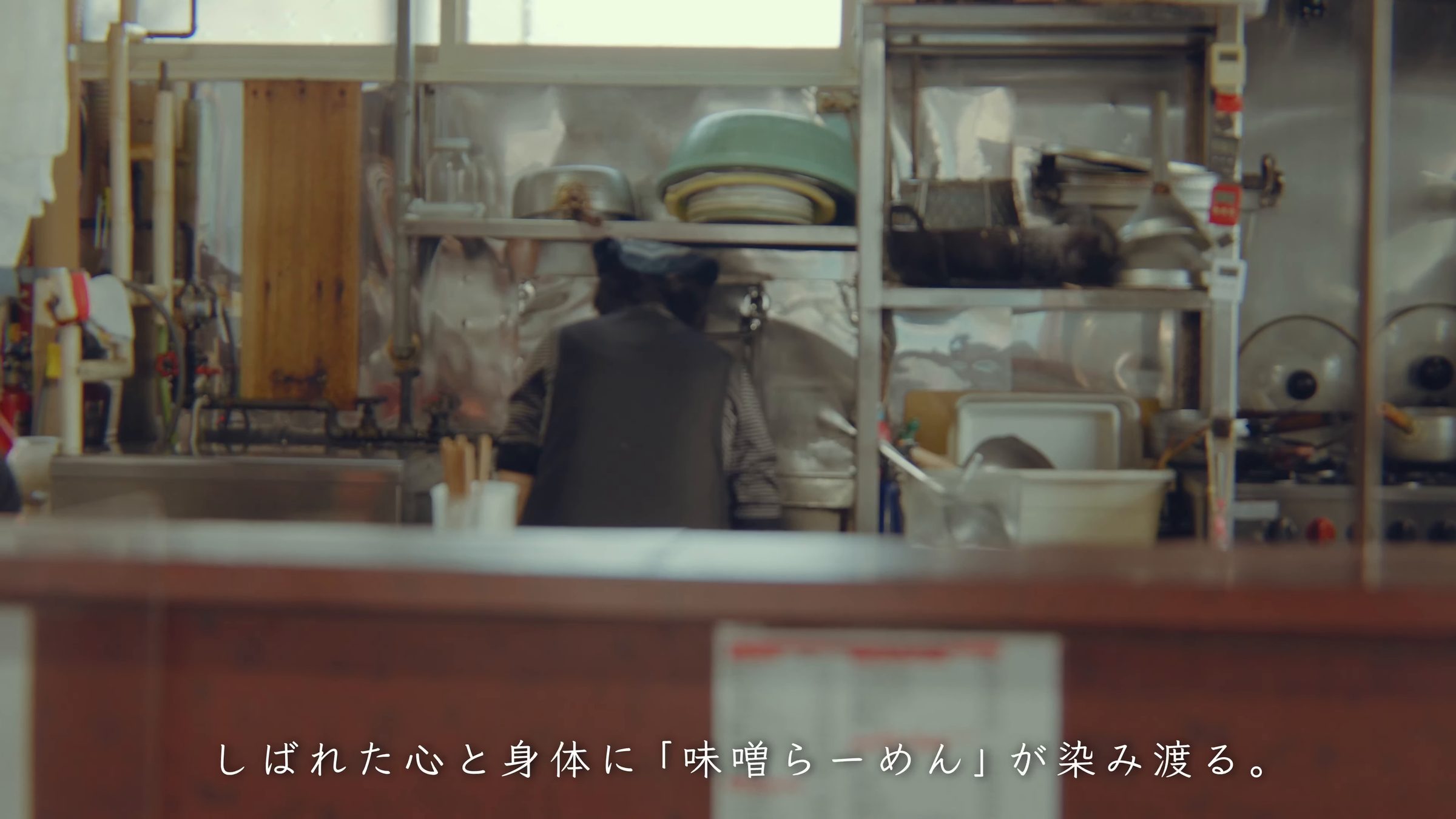
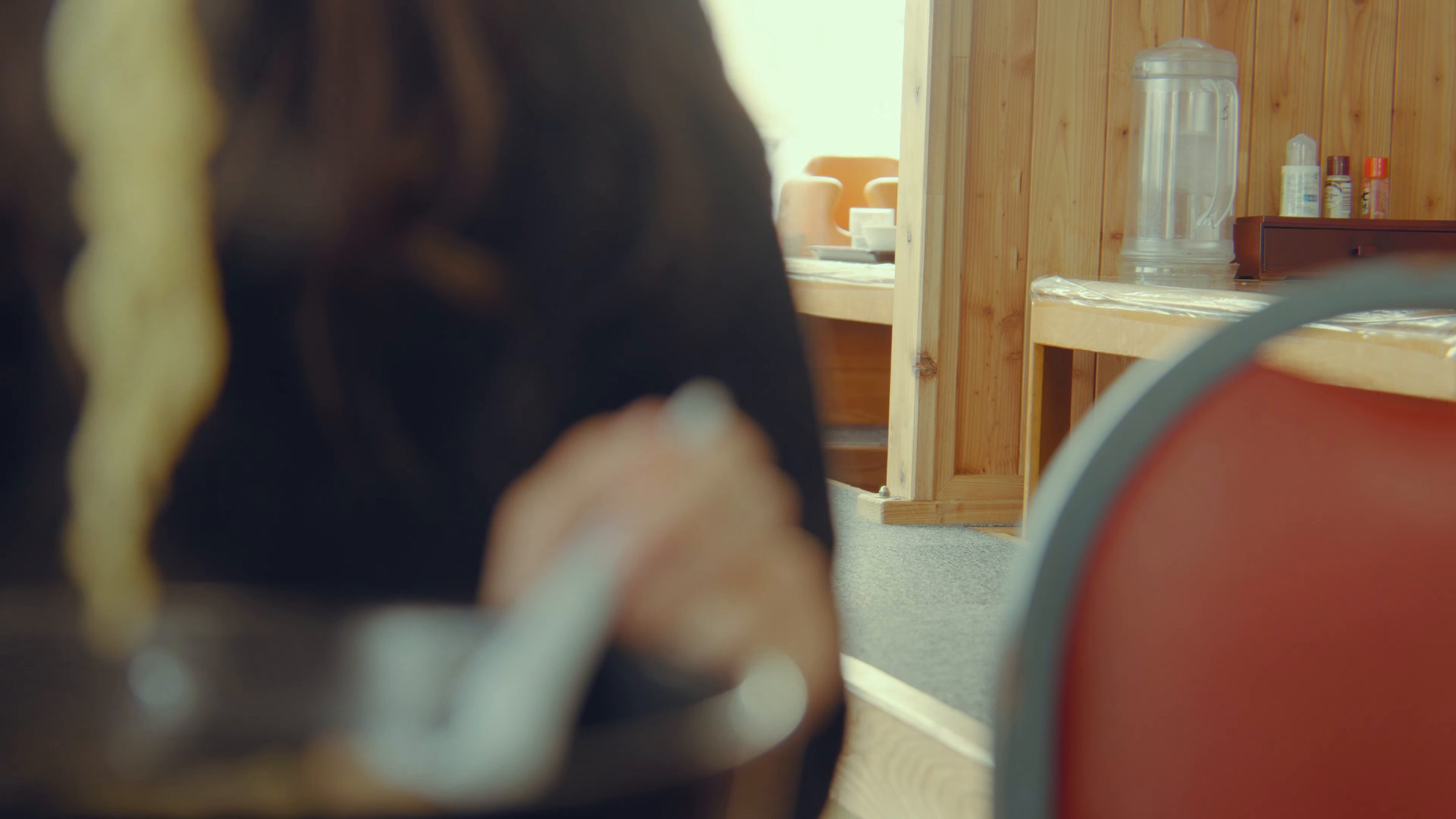
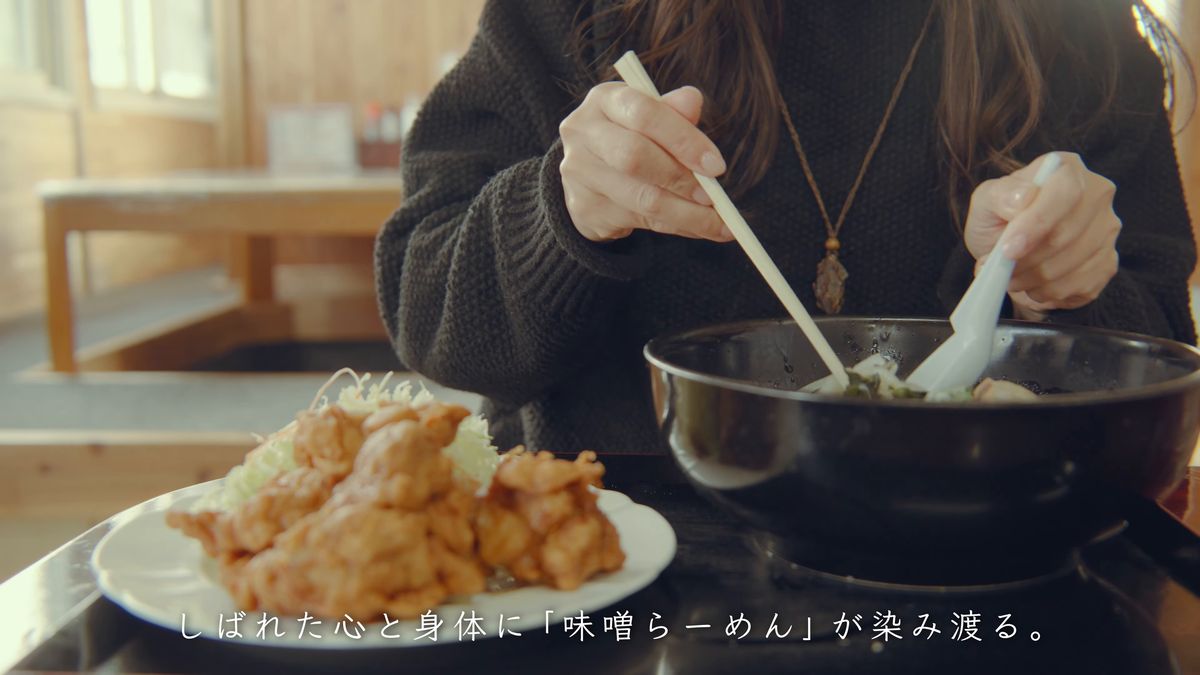
Yellow wavy noodles, a slice of naruto fish cake, chashu pork and green onions. Steam rose from the kitchen beyond the counter. I couldn't miss zangi either, Hokkaido's specialty: chicken marinated in sauce and deep-fried, served piled high on a plate.
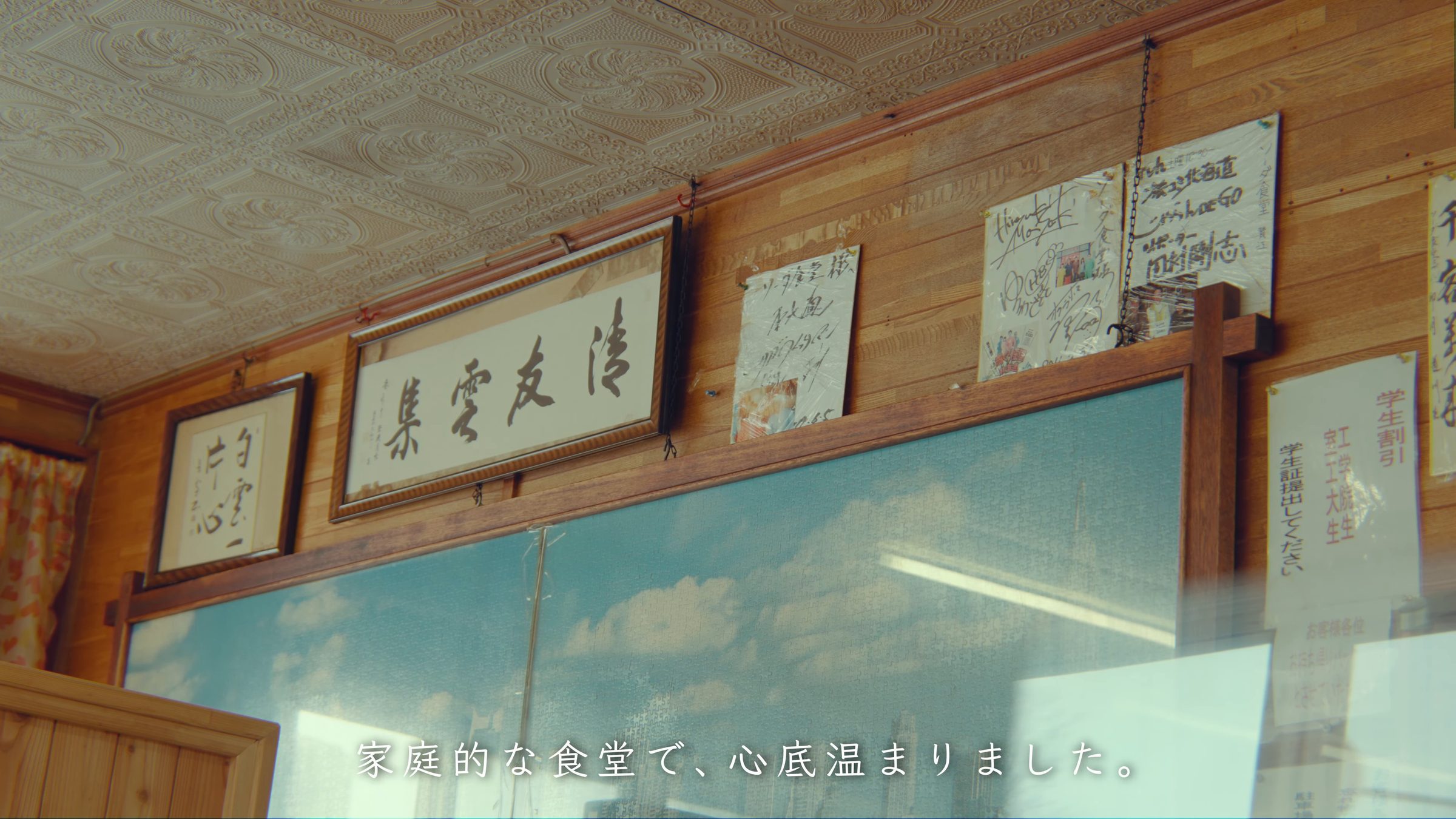
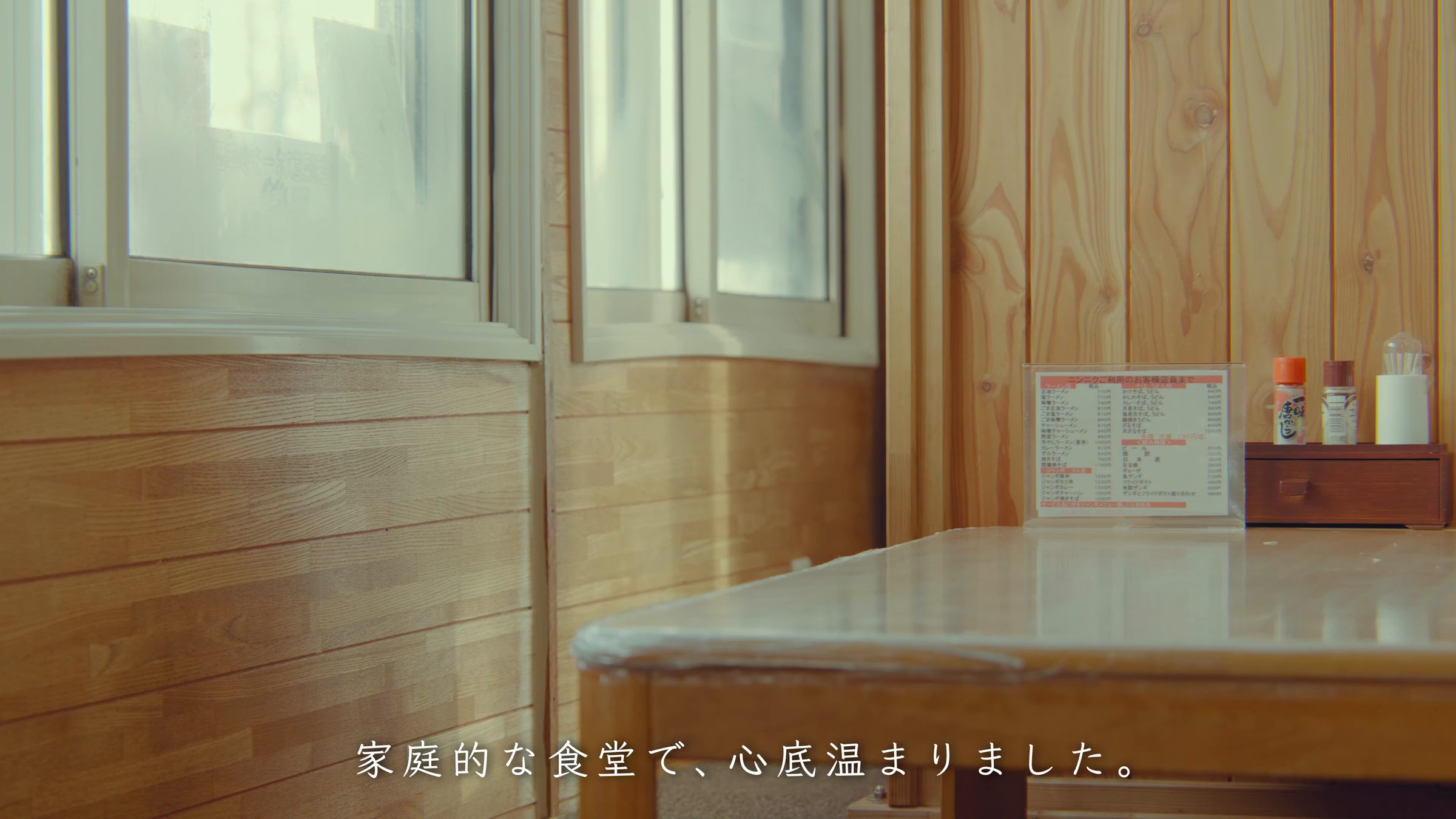
A counter with red stools, a wall of framed calligraphy and signed boards, a menu on the table by the window. A homely diner that warmed me to the core.
Watch this scene on YouTube2:51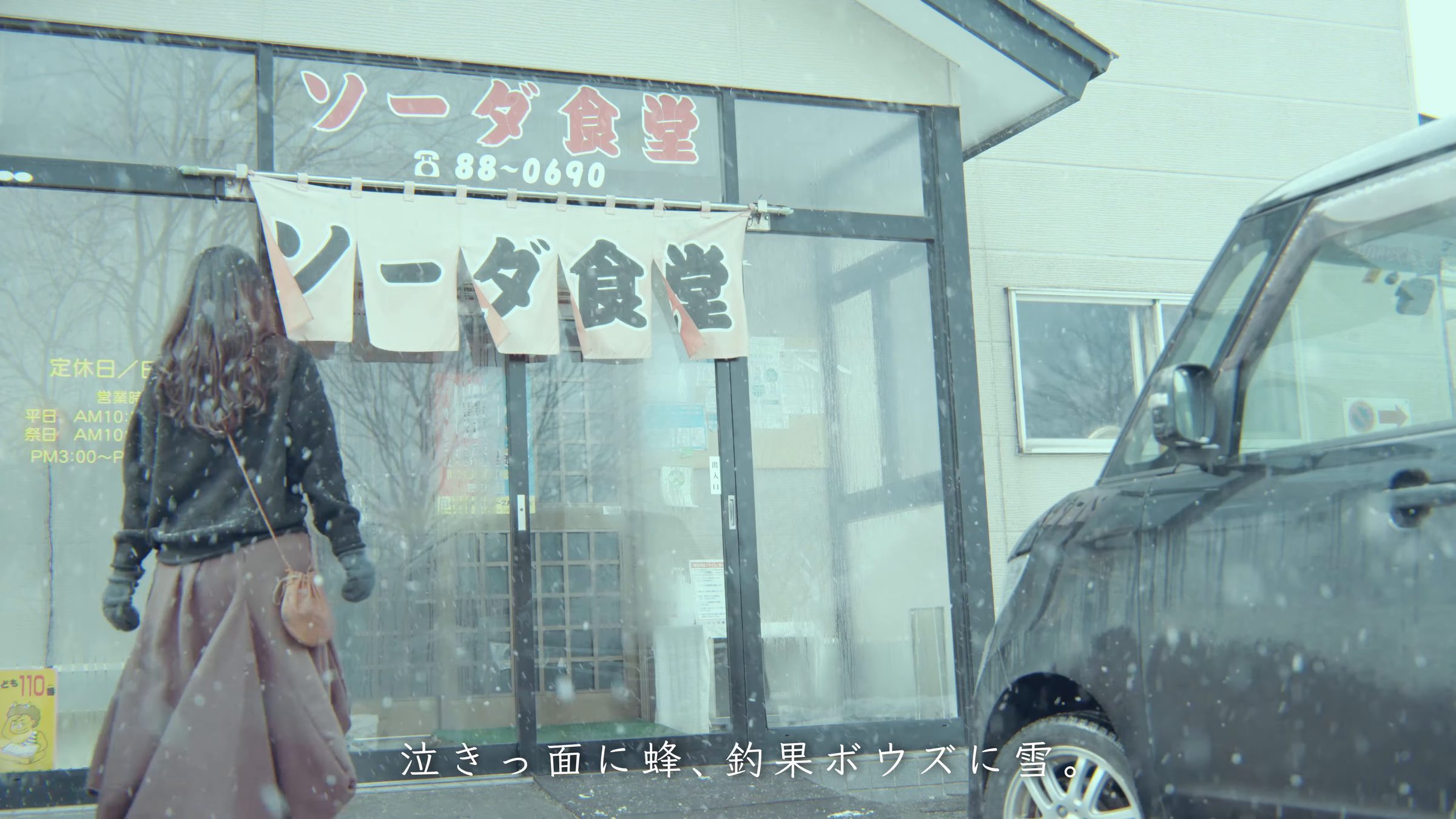
07TRAVEL JOURNAL
A bear and a salmon on the roof
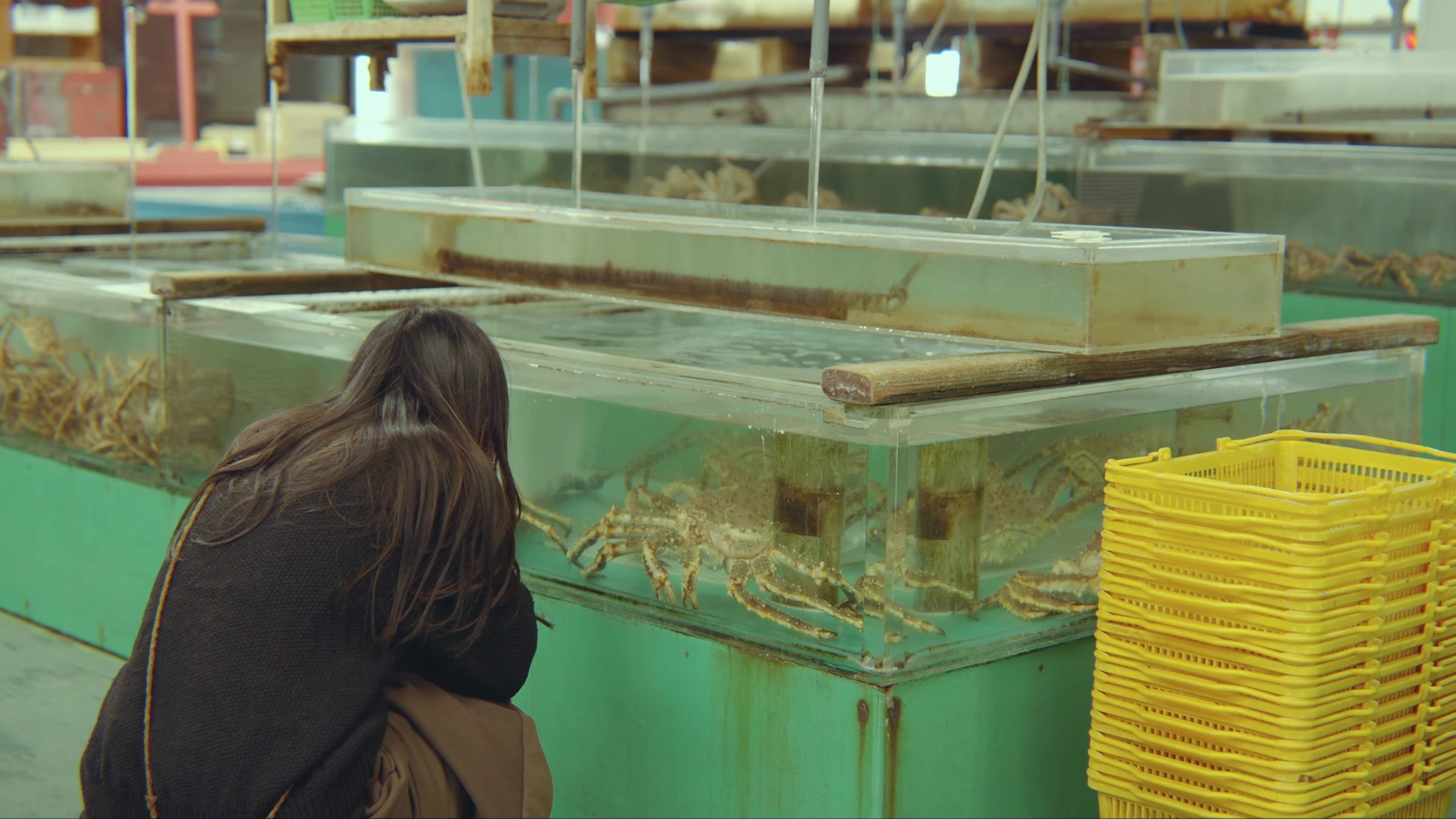
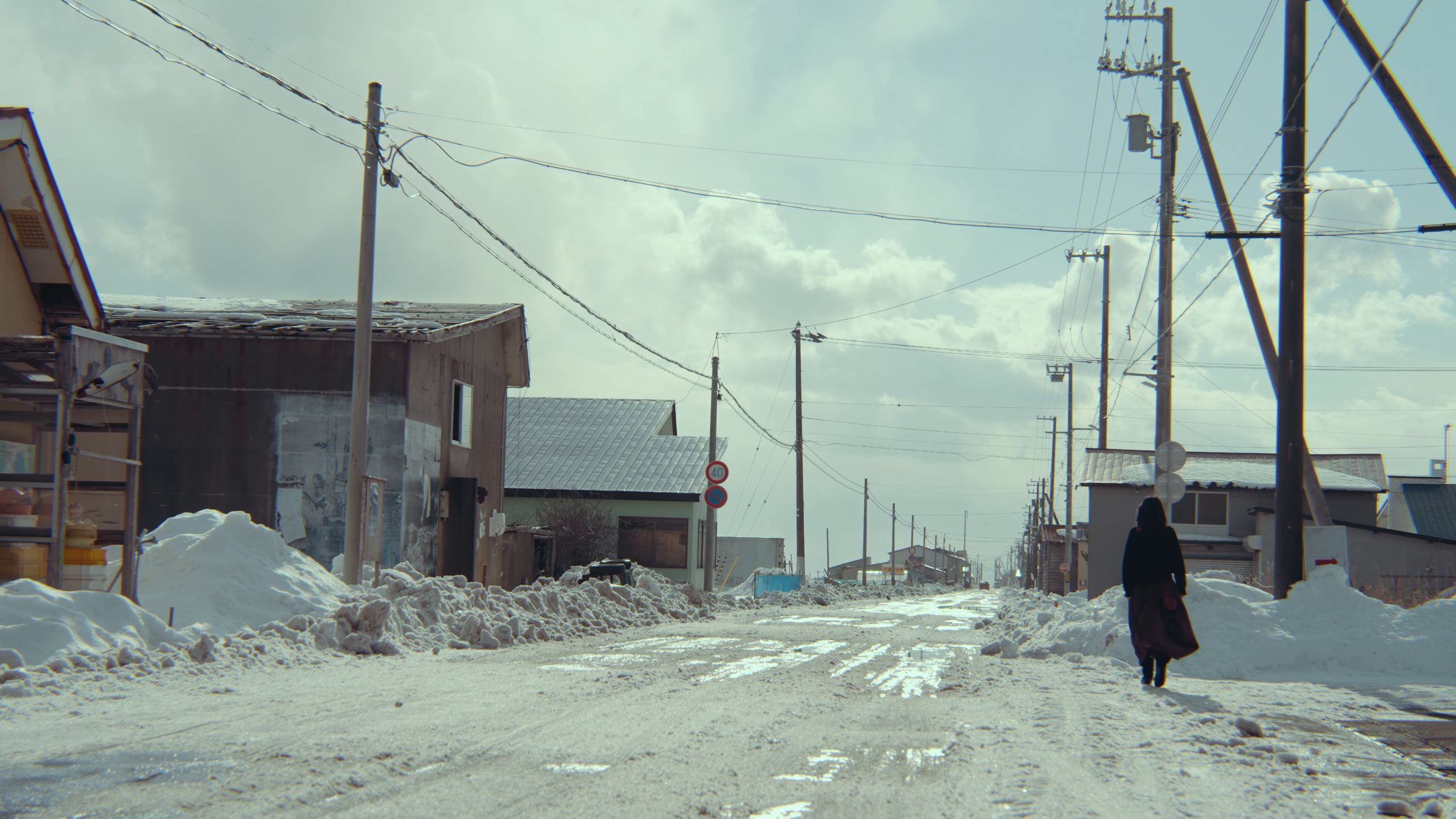
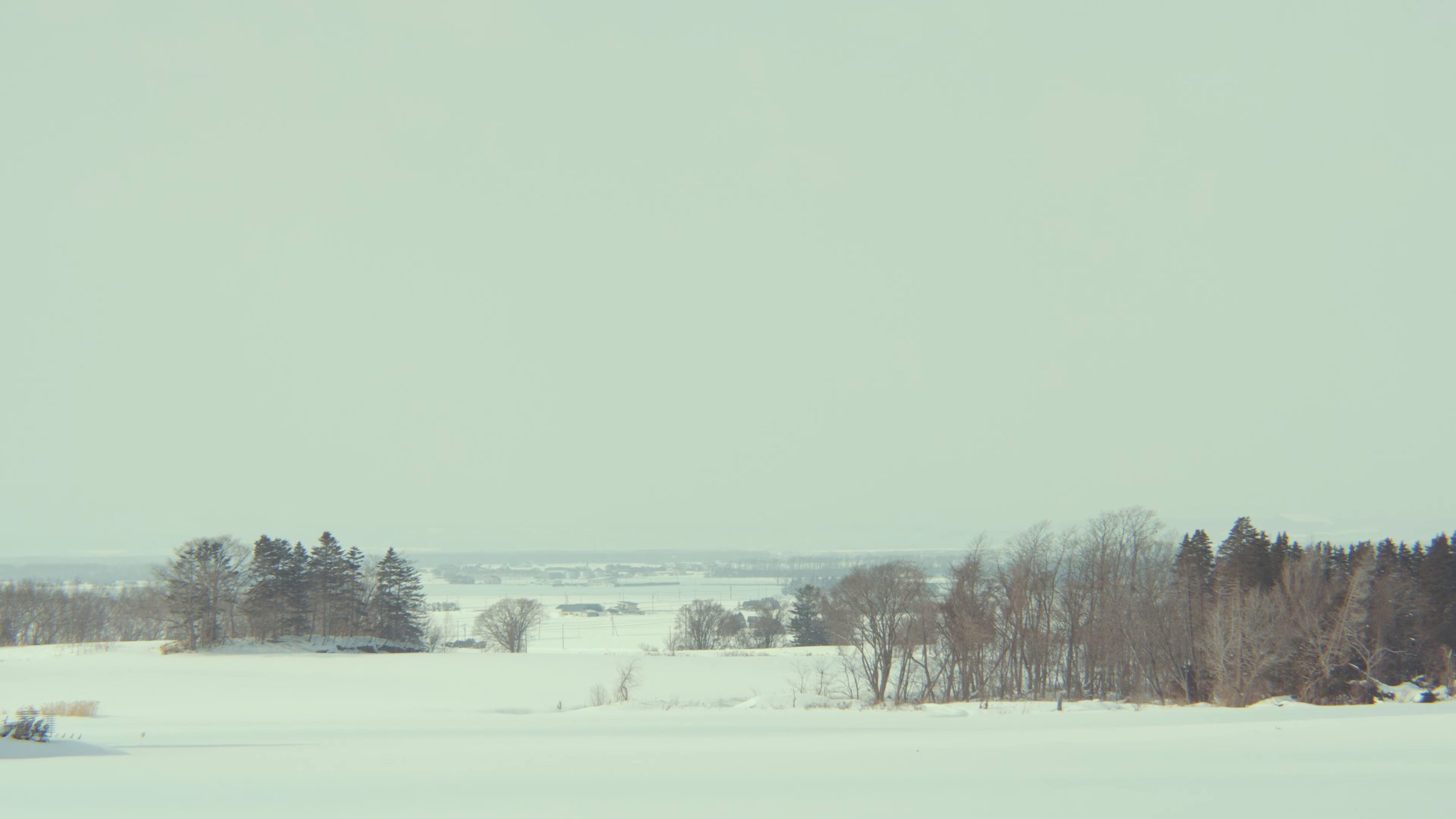
Along the highway stood a red building with a bear and a salmon perched on its roof: a seafood restaurant, with tanks full of crabs. I walked on through the snow-piled streets, looking across the snowfield to the trees and the town, toward the next stop.
Watch this scene on YouTube3:38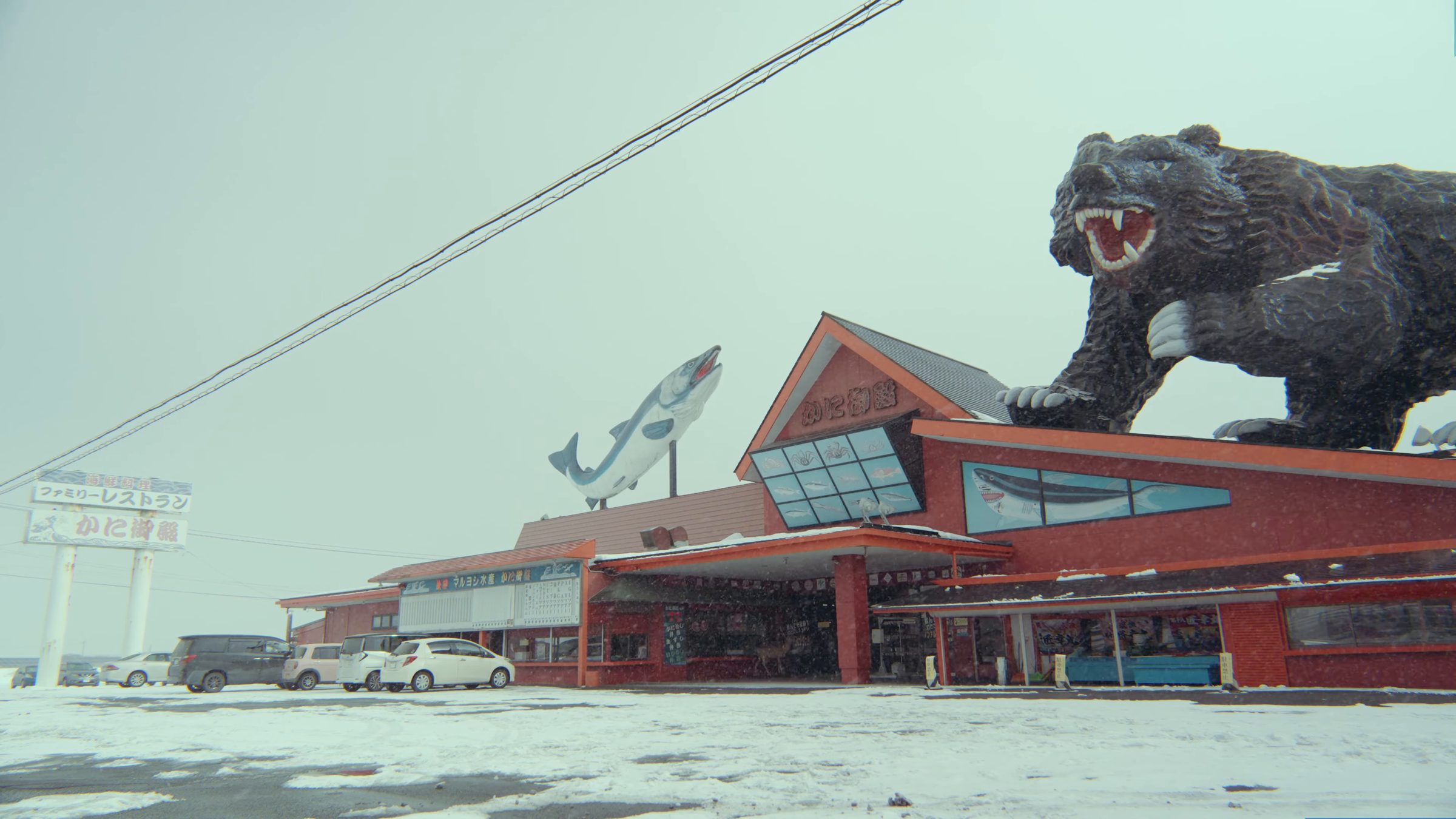
08TRAVEL JOURNAL
Hokkaido means dairy
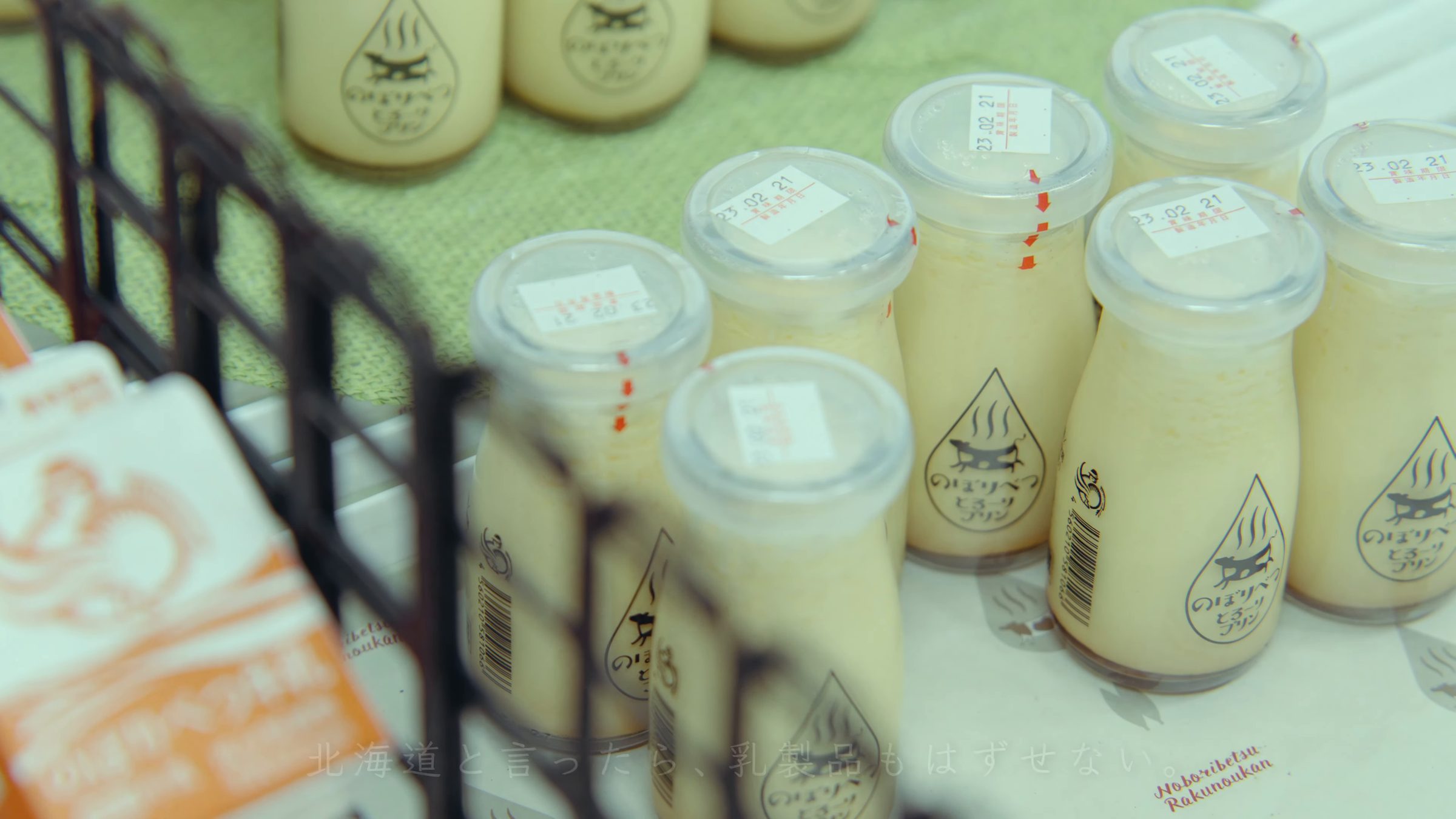
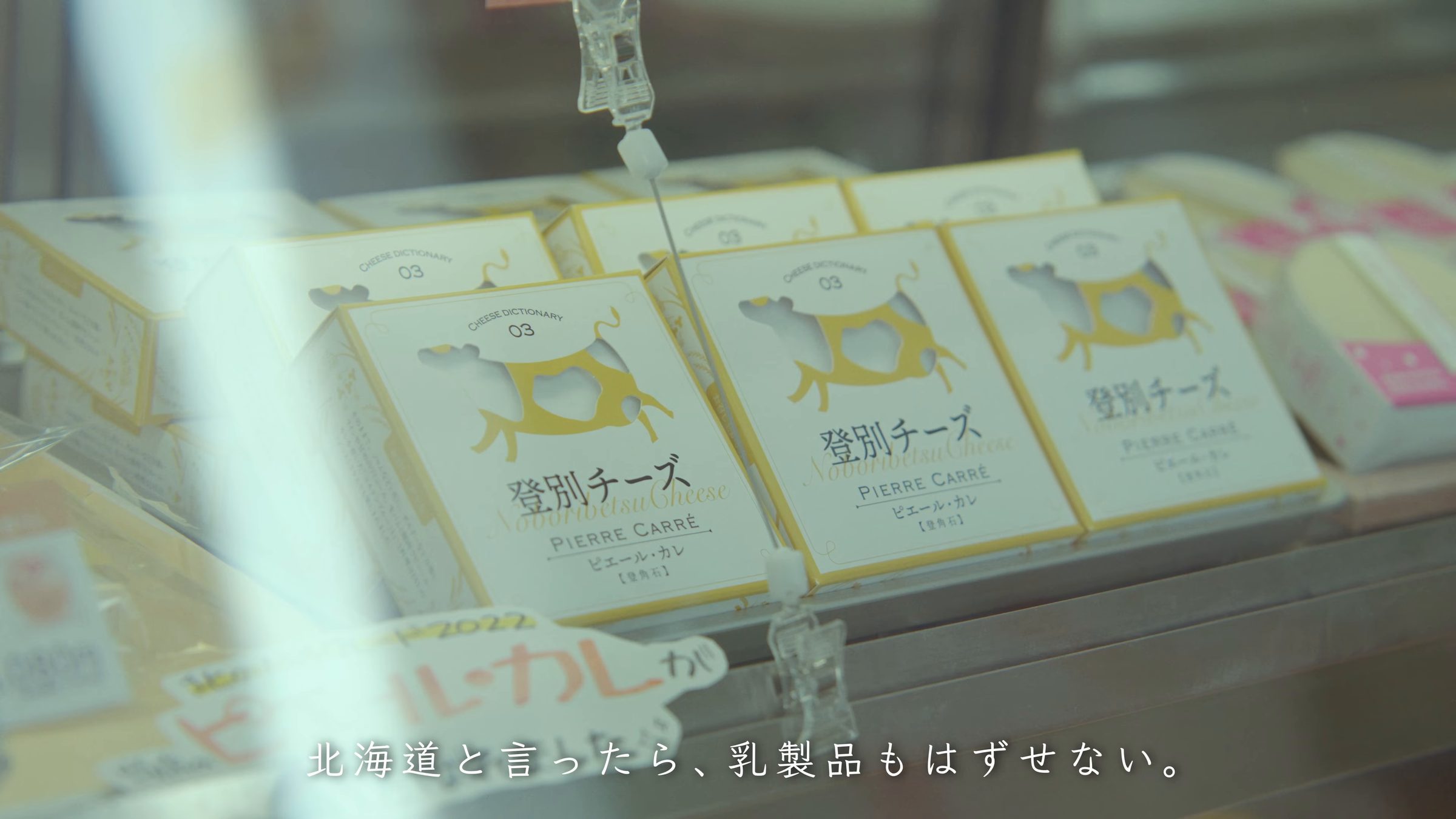
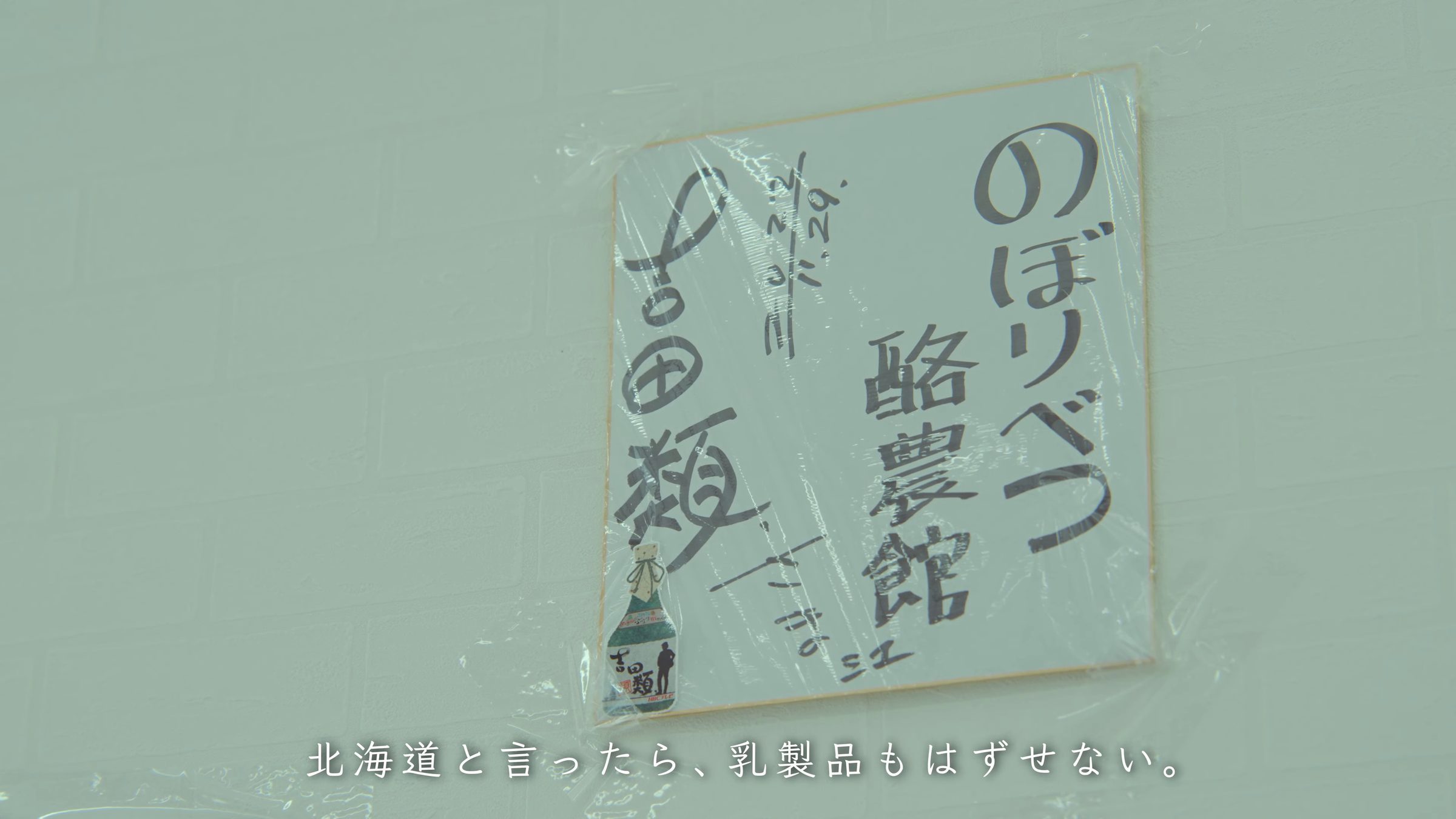
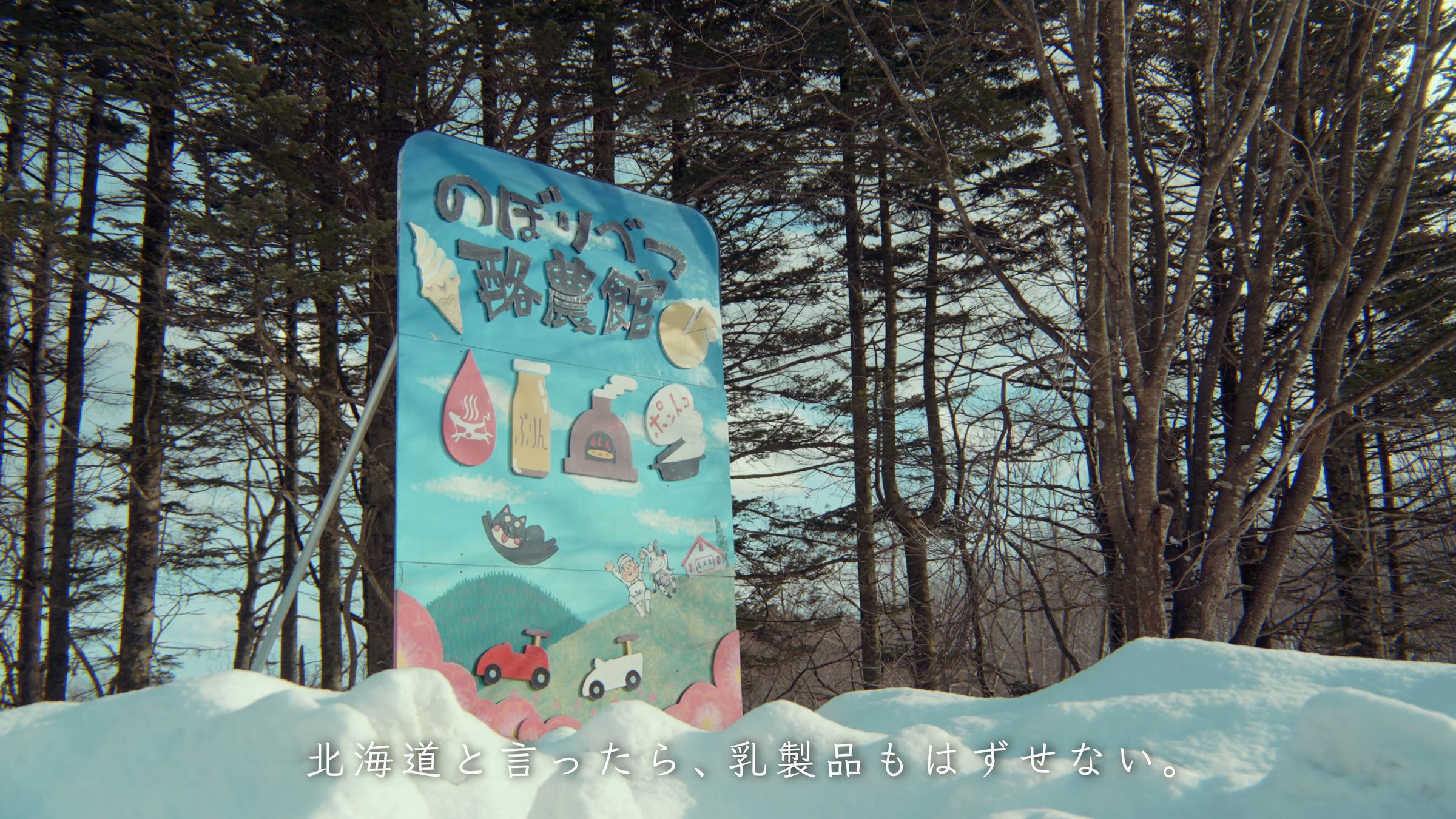
Speaking of Hokkaido, you can't miss the dairy. At a dairy shop set up in a closed school building, I picked up jars of torori pudding and boxes of Noboribetsu cheese. A banner from the school's days still hung over the entrance: "Gentle and strong, the children of Satsunai."
Watch this scene on YouTube3:49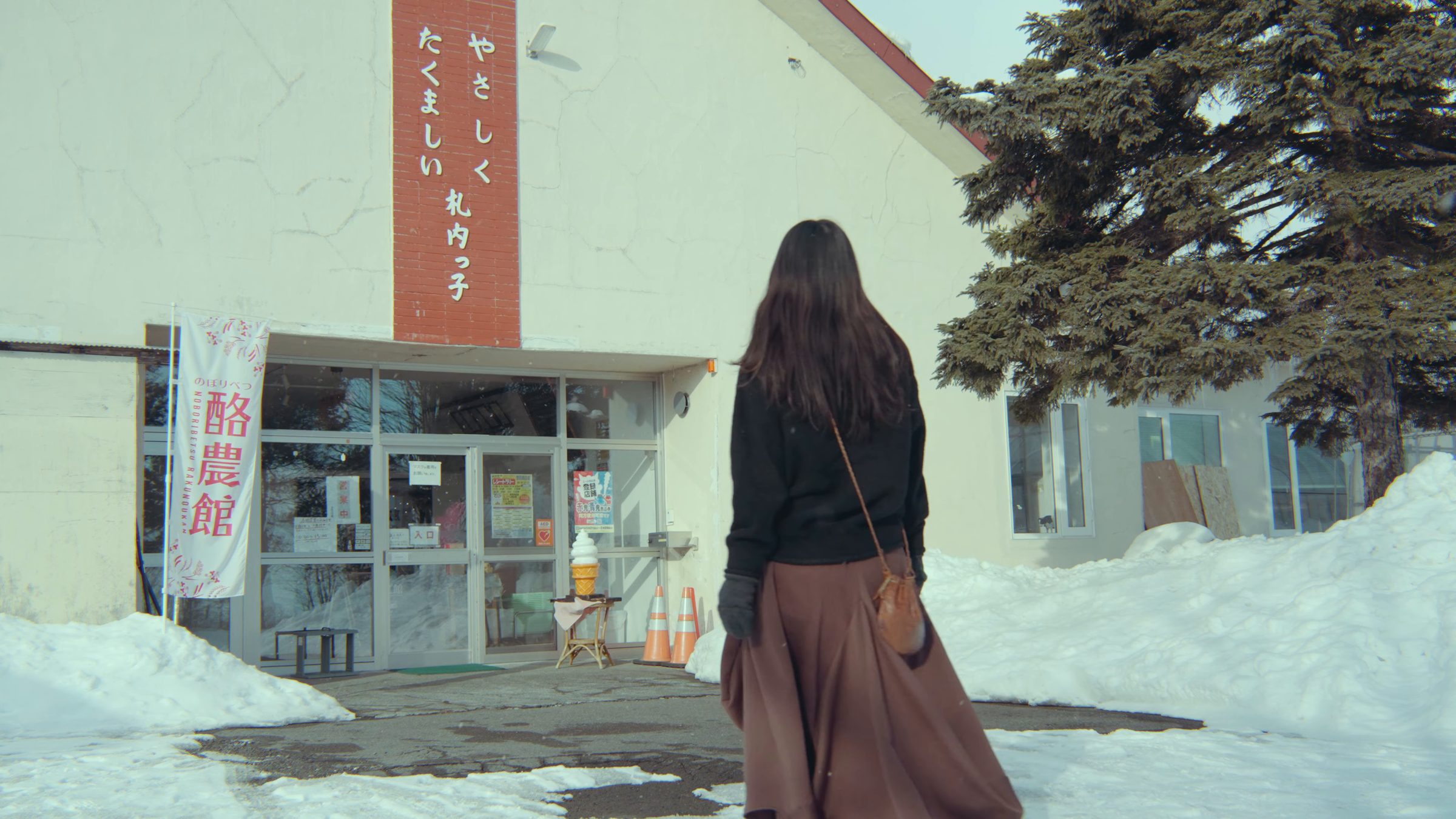
09TRAVEL JOURNAL
Home again
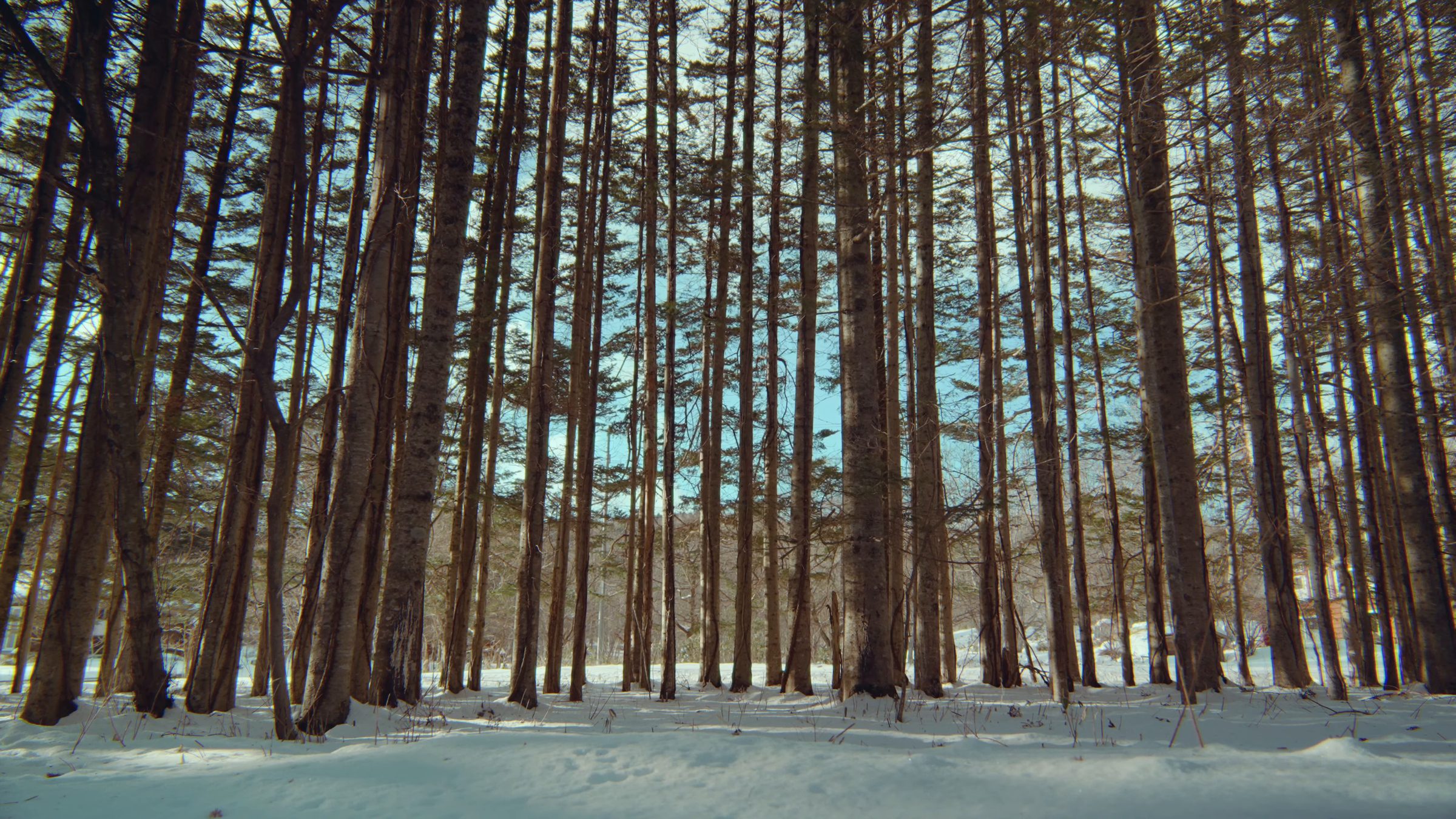
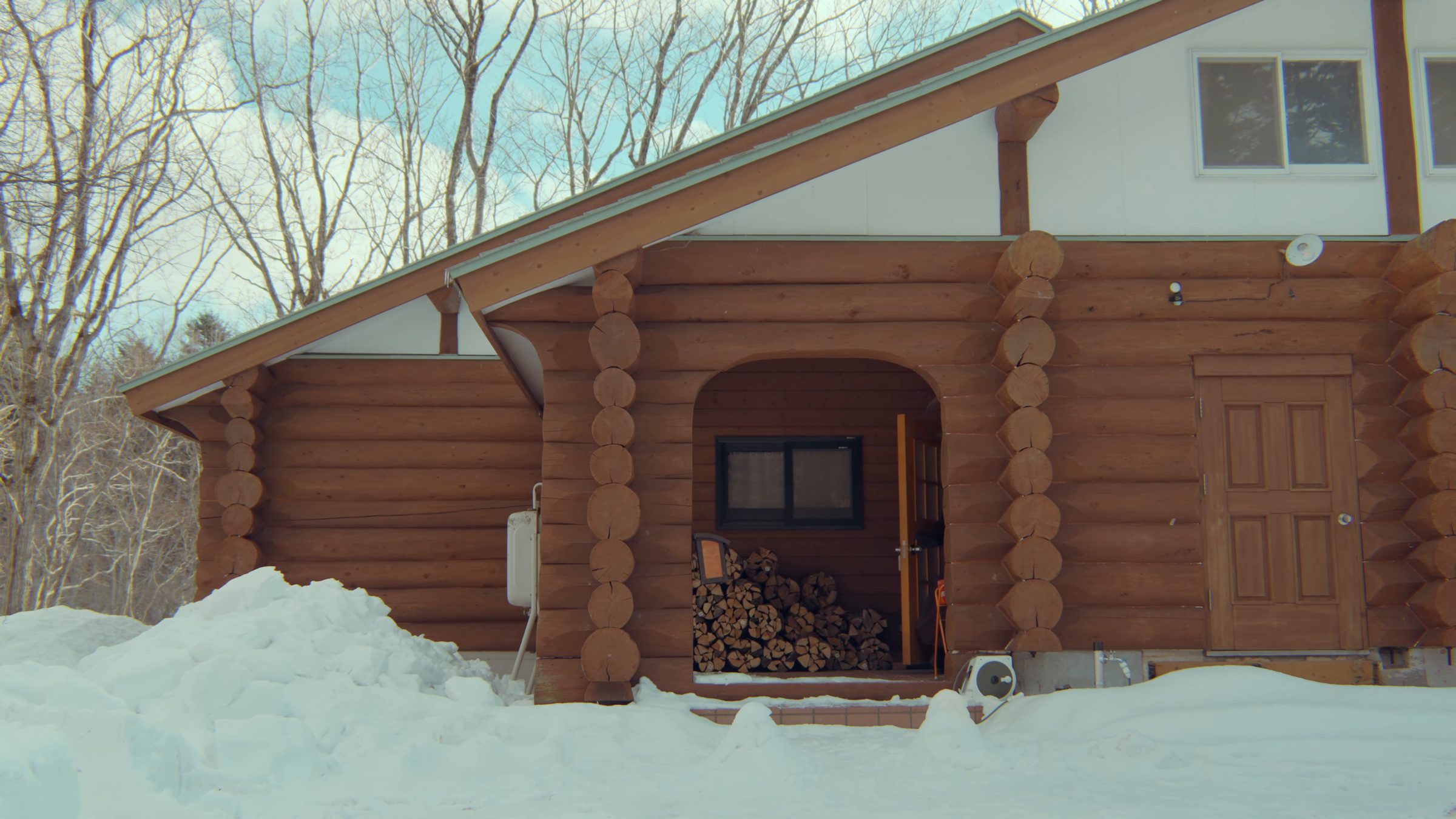
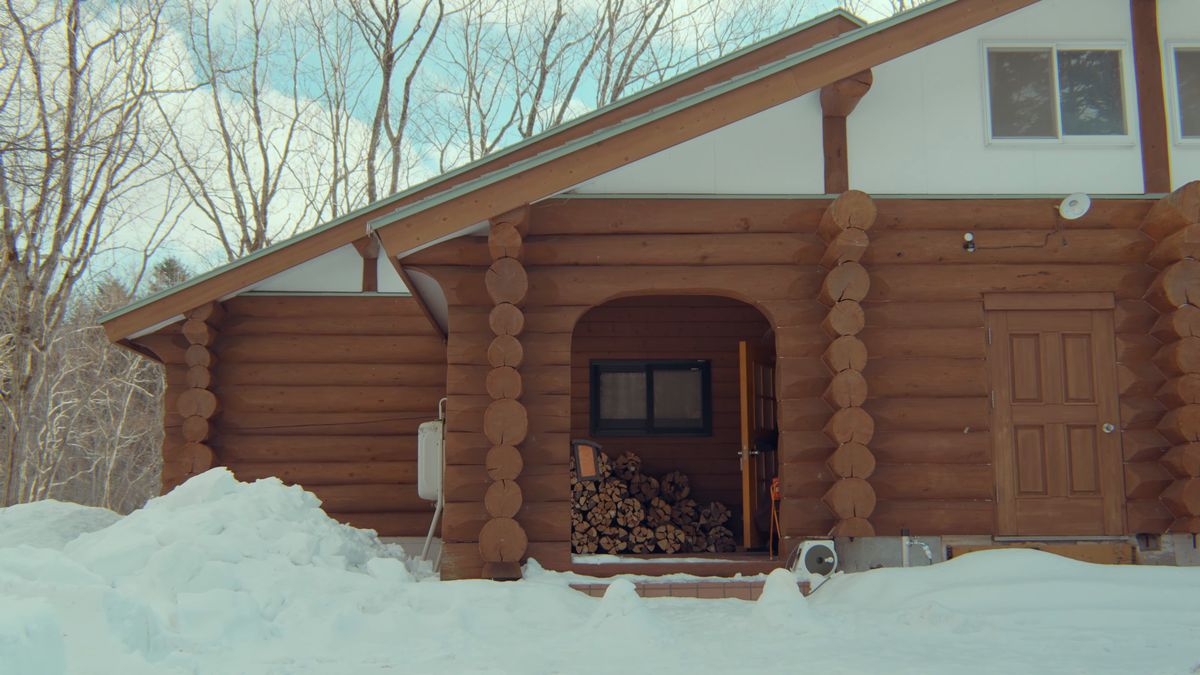
I walked back along the snowy road through the woods. Afternoon light fell between the straight trunks. Firewood was stacked beside the front door, and two little mounds of snow sat in front of it. I'm home.
Watch this scene on YouTube4:00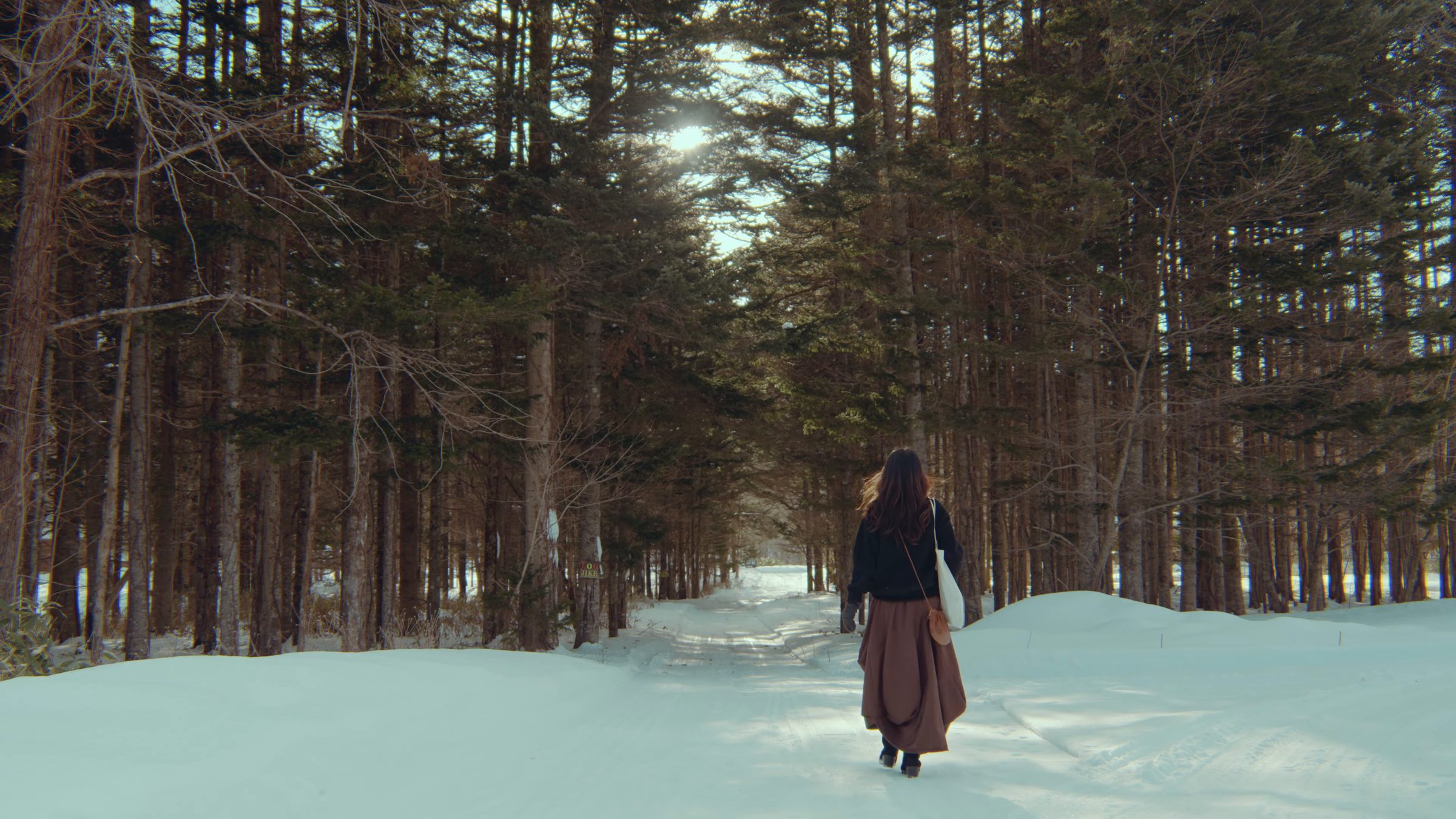
10TRAVEL JOURNAL
Feeding the fire
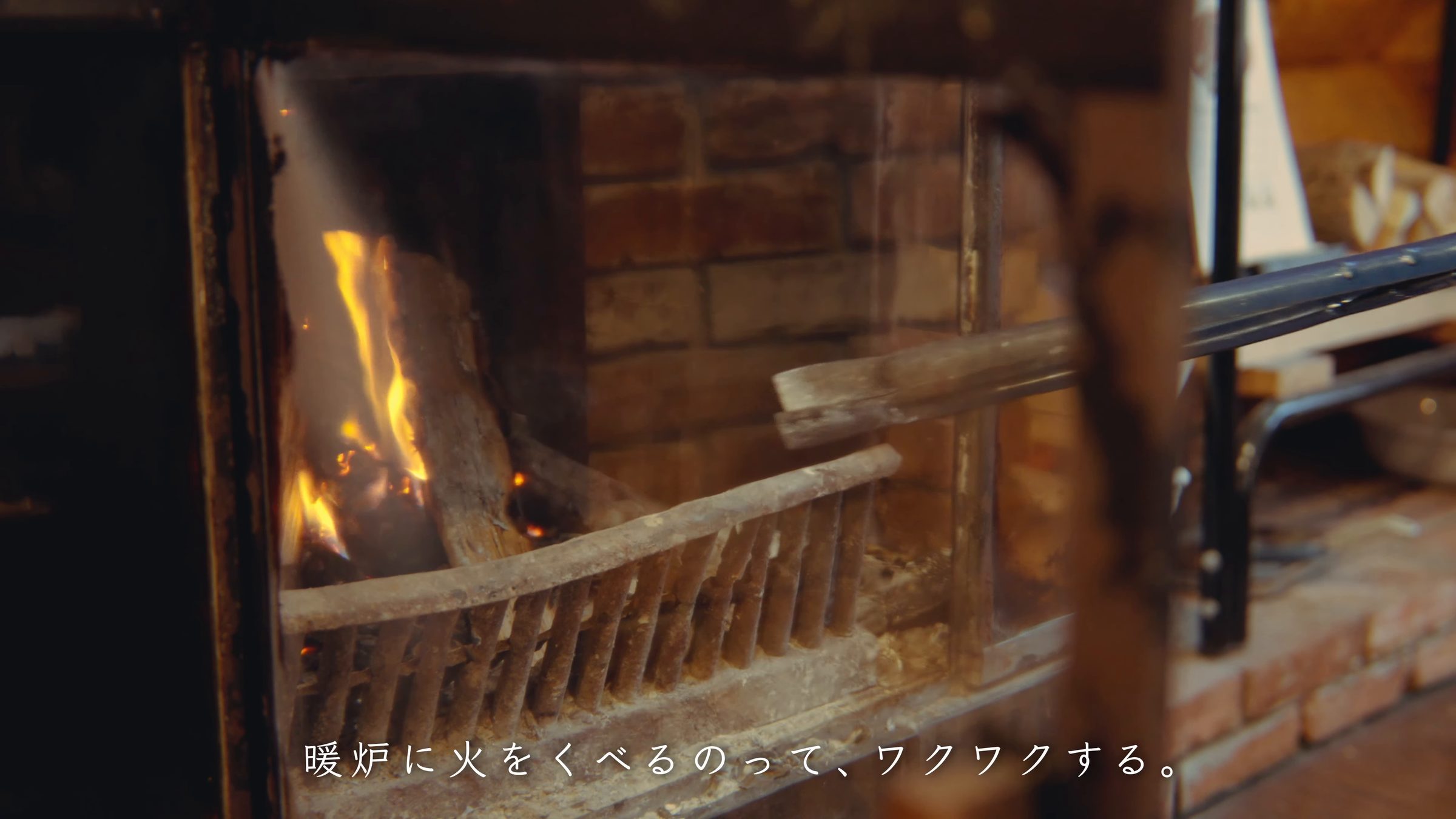
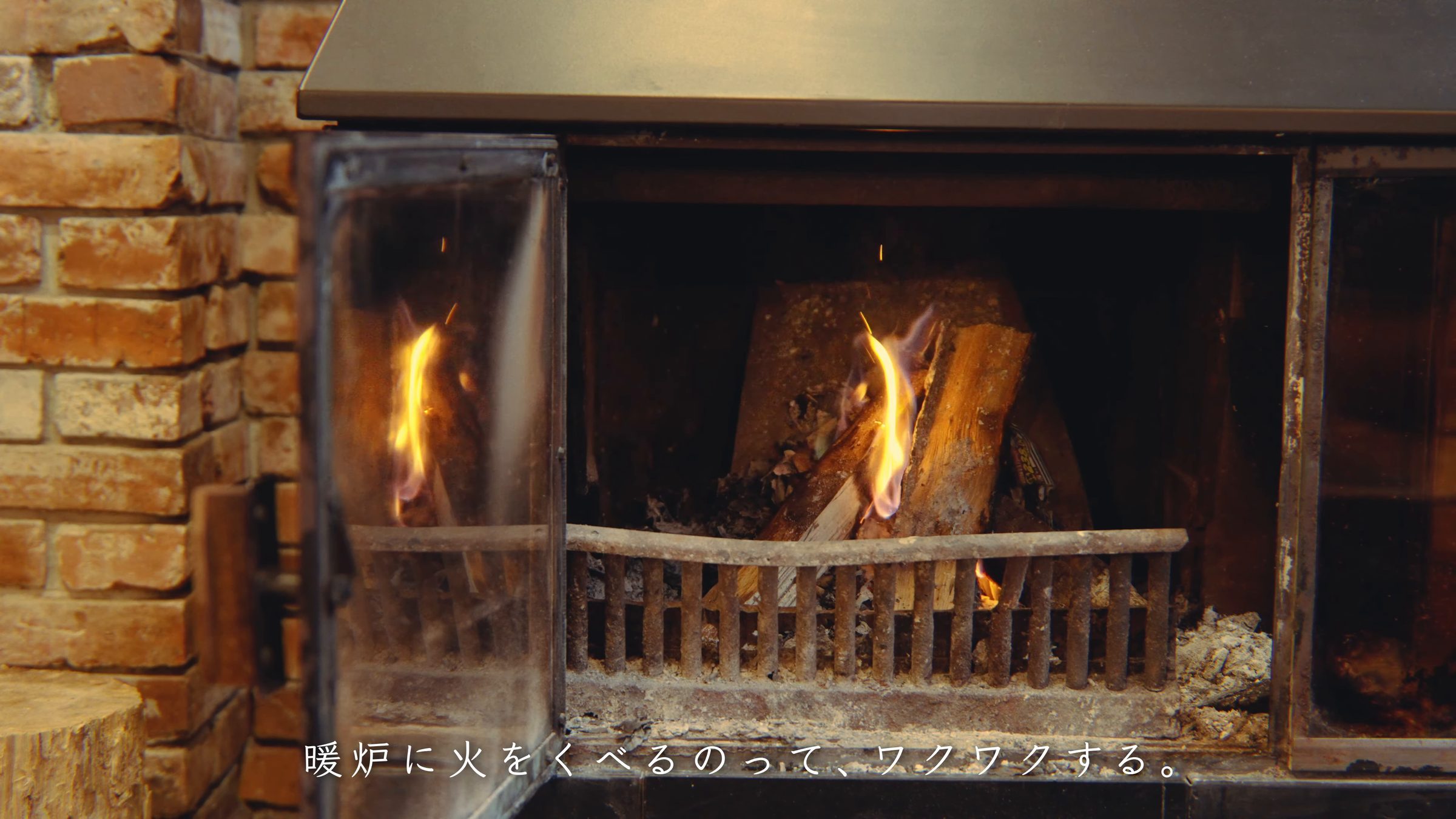
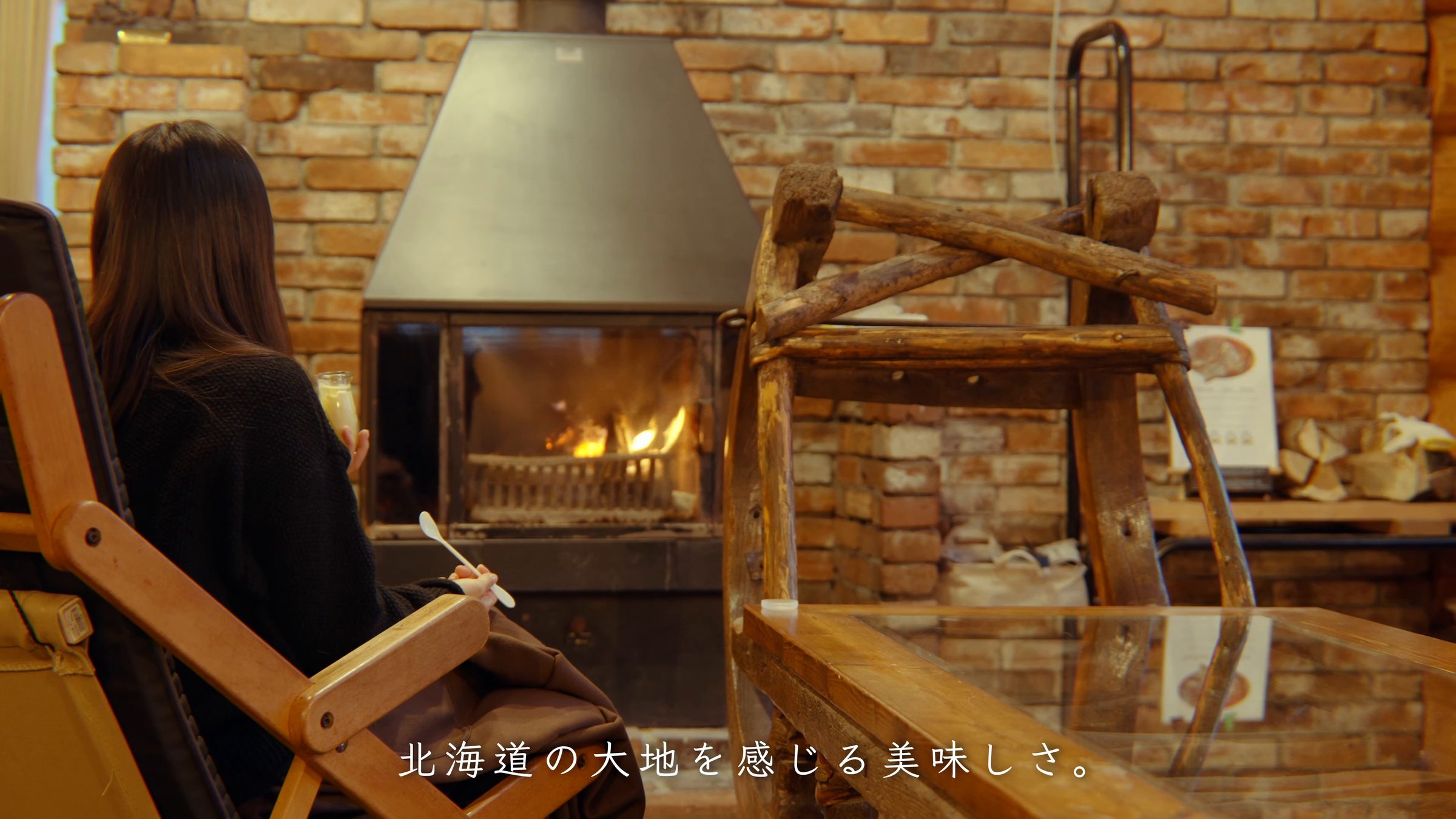
I fed the fire with a pair of tongs. It wouldn't be easy to do this every day, but there is something thrilling about building a fire in a fireplace. Flames rose behind the glass door, and the brick hearth slowly warmed the room.
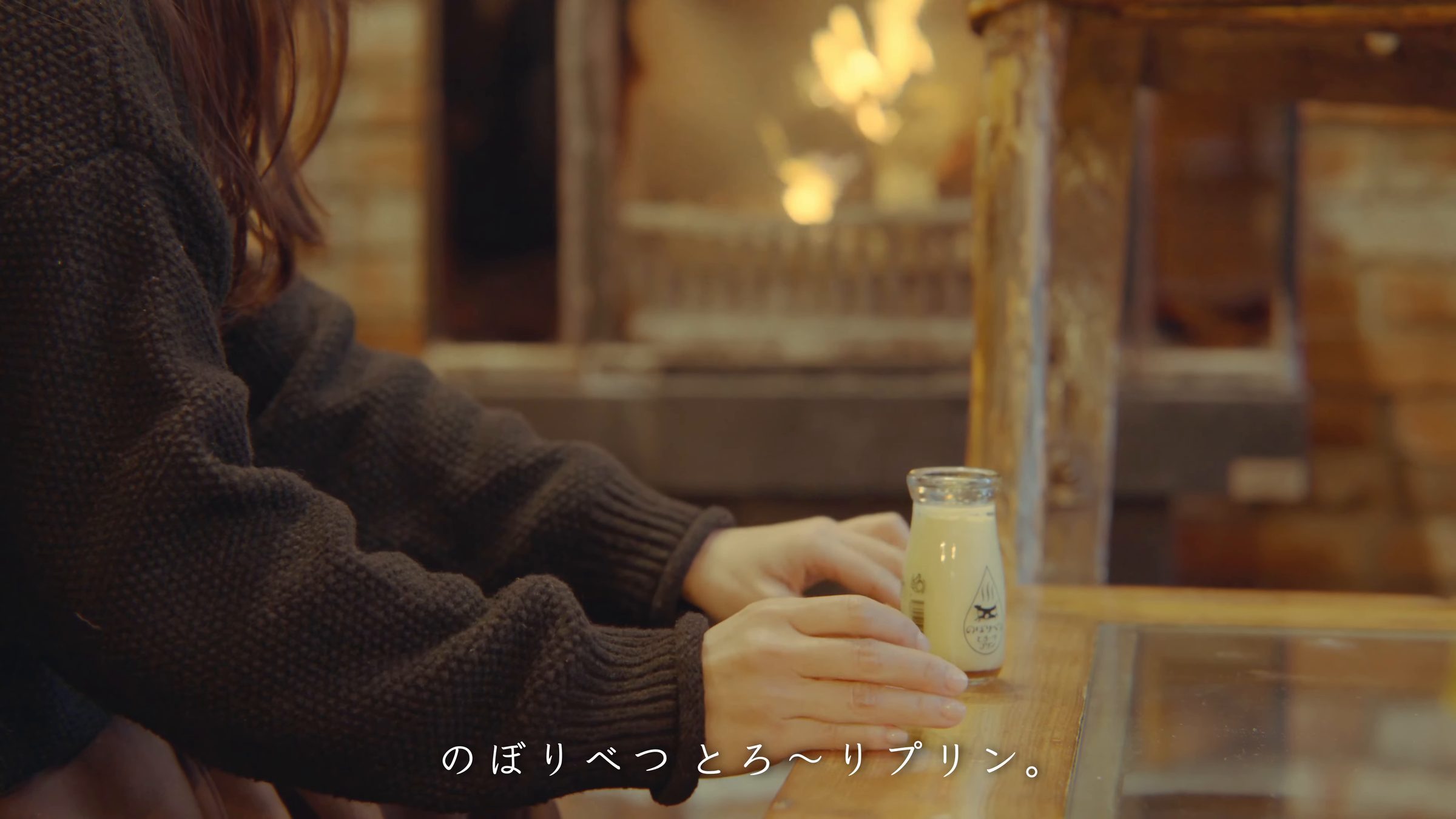
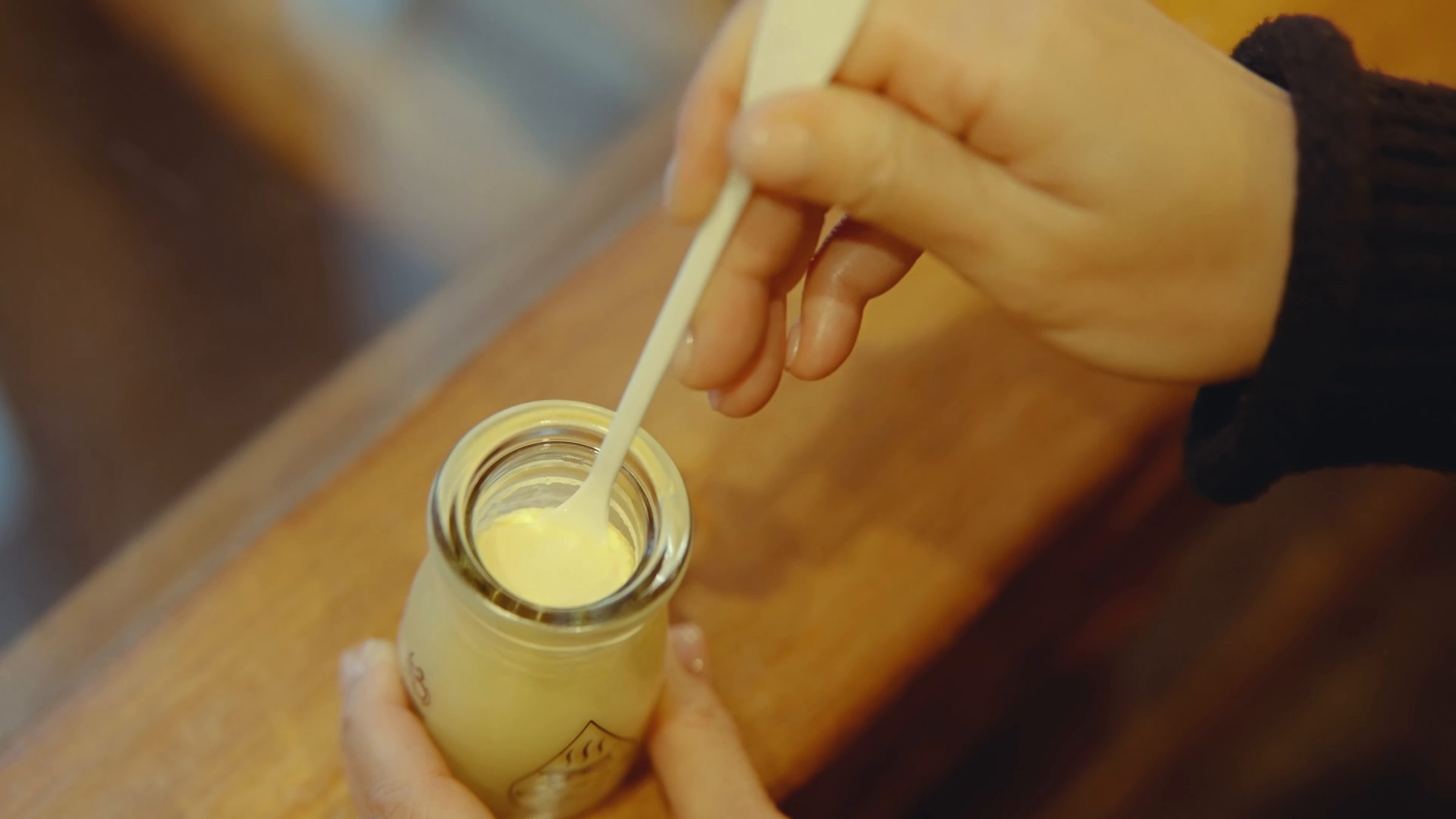
Beside the fire, a Noboribetsu torori pudding. The spoon slid into the jar and came up with a wobbling, melting scoop, just as the name promises. It tasted of Hokkaido's wide land. I gazed idly at the flames and added one more log.
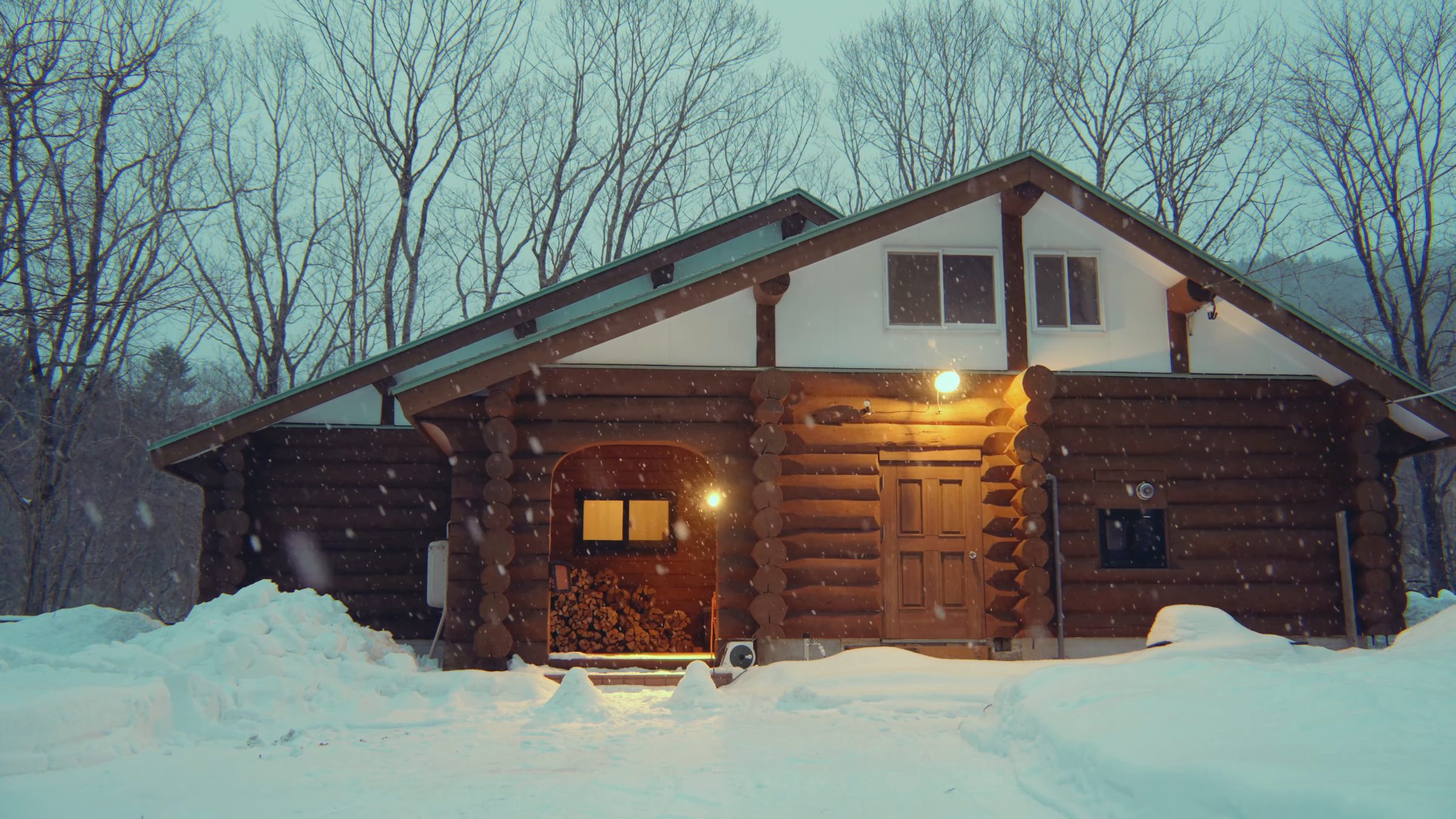
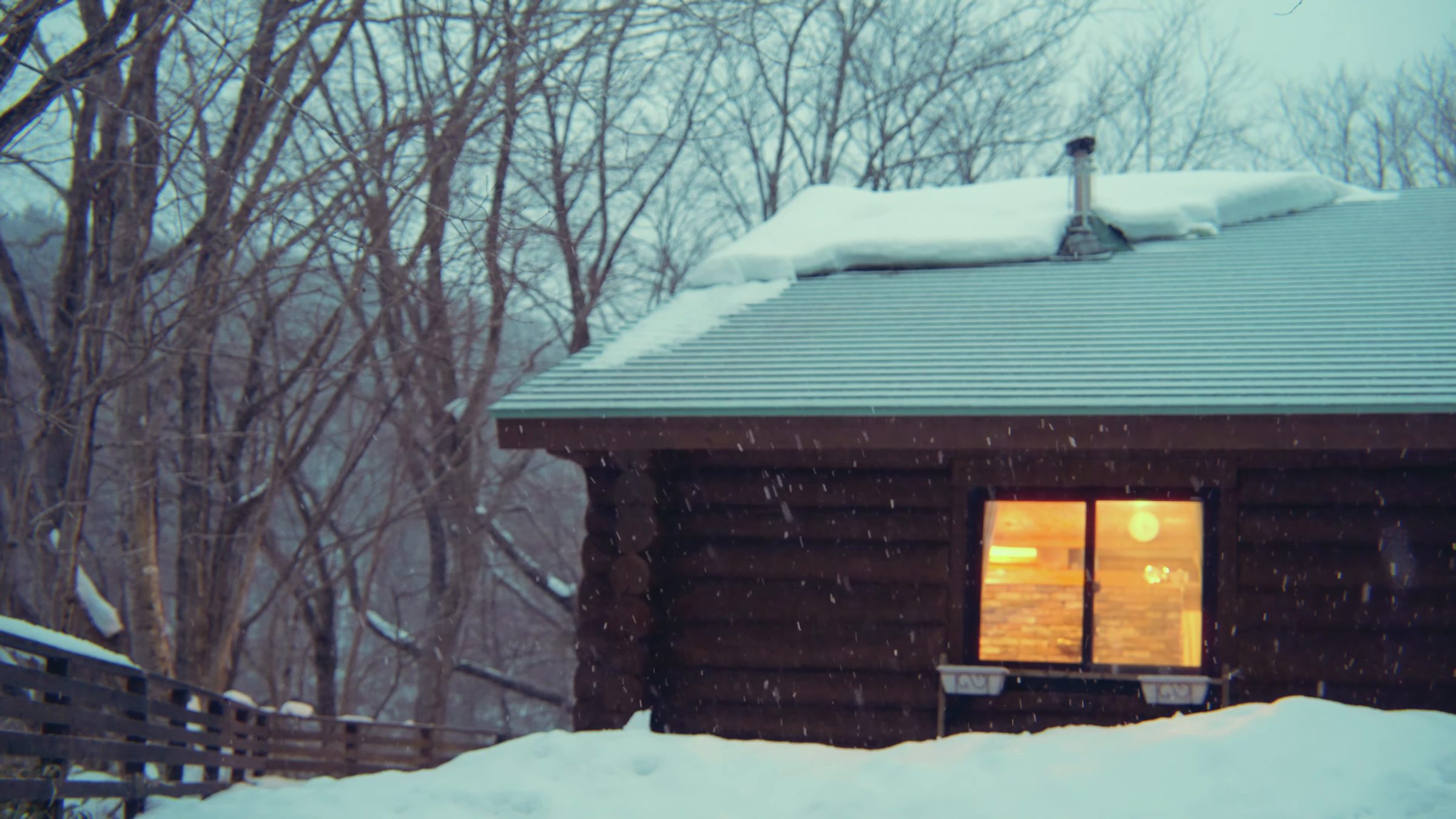
As the day ended, the lights came on in the log house in the snow. Snow lay thick on the roof, and a chimney rose above it.
Watch this scene on YouTube4:16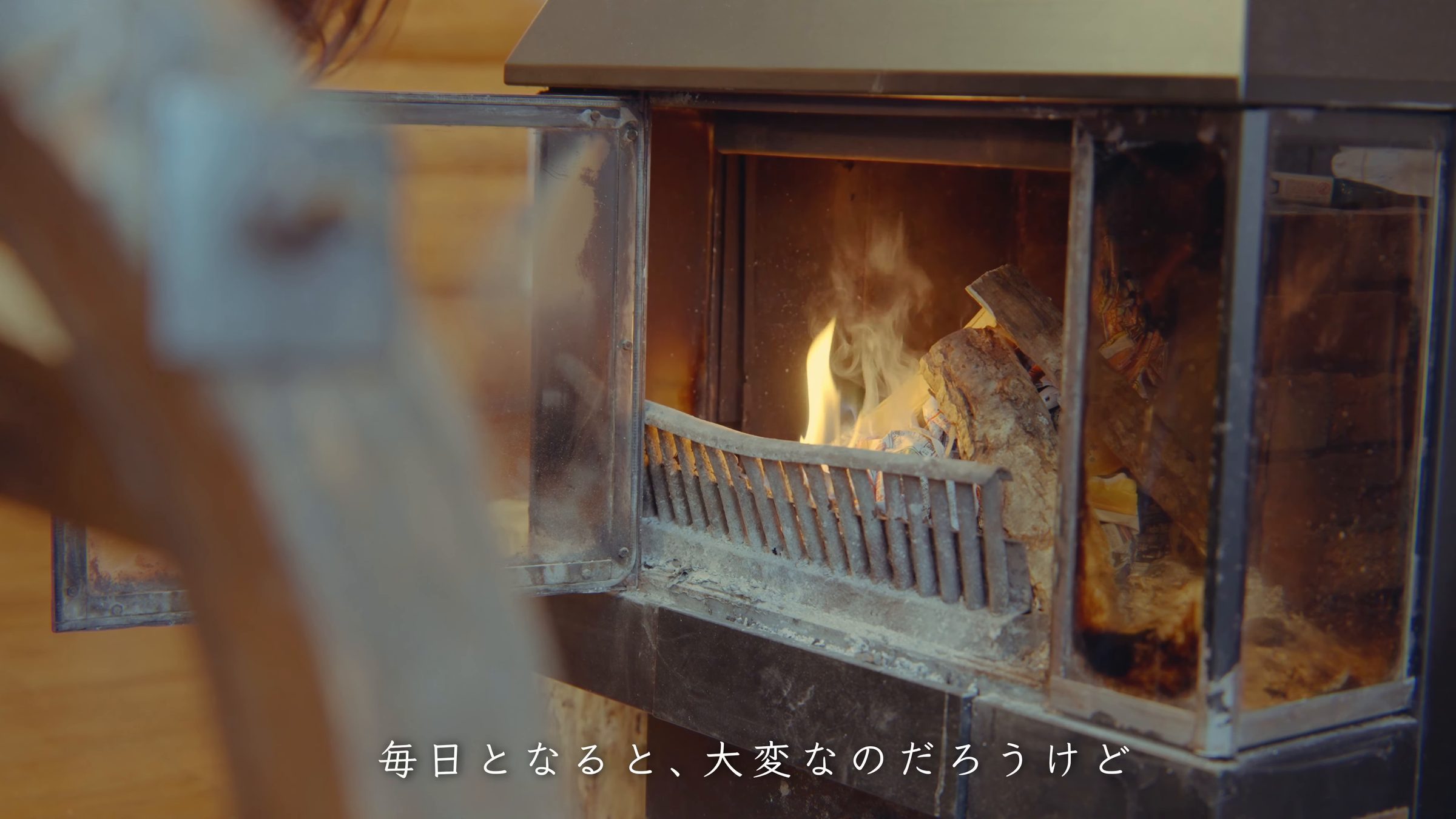
11TRAVEL JOURNAL
Star carrots and fried chika
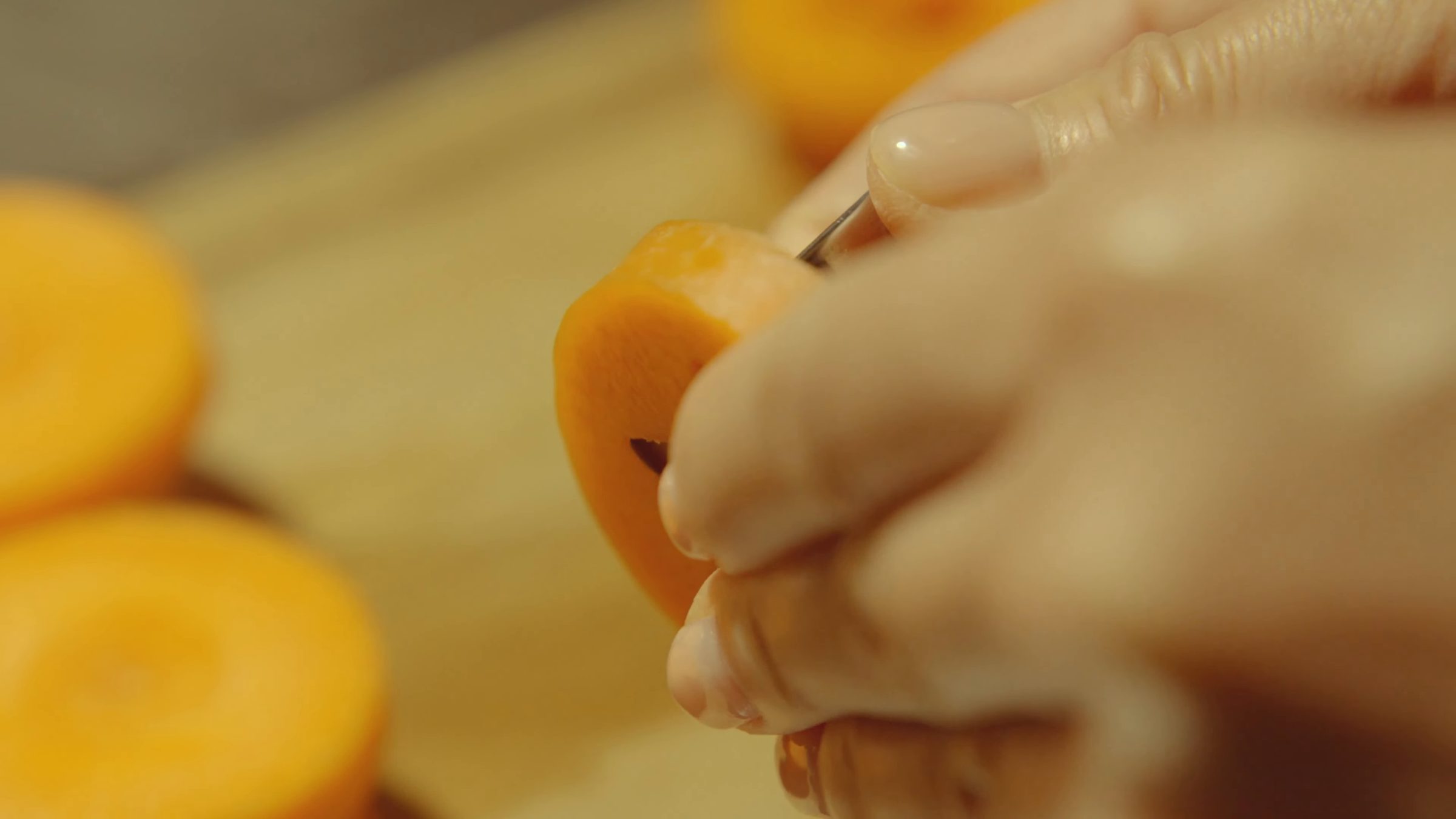
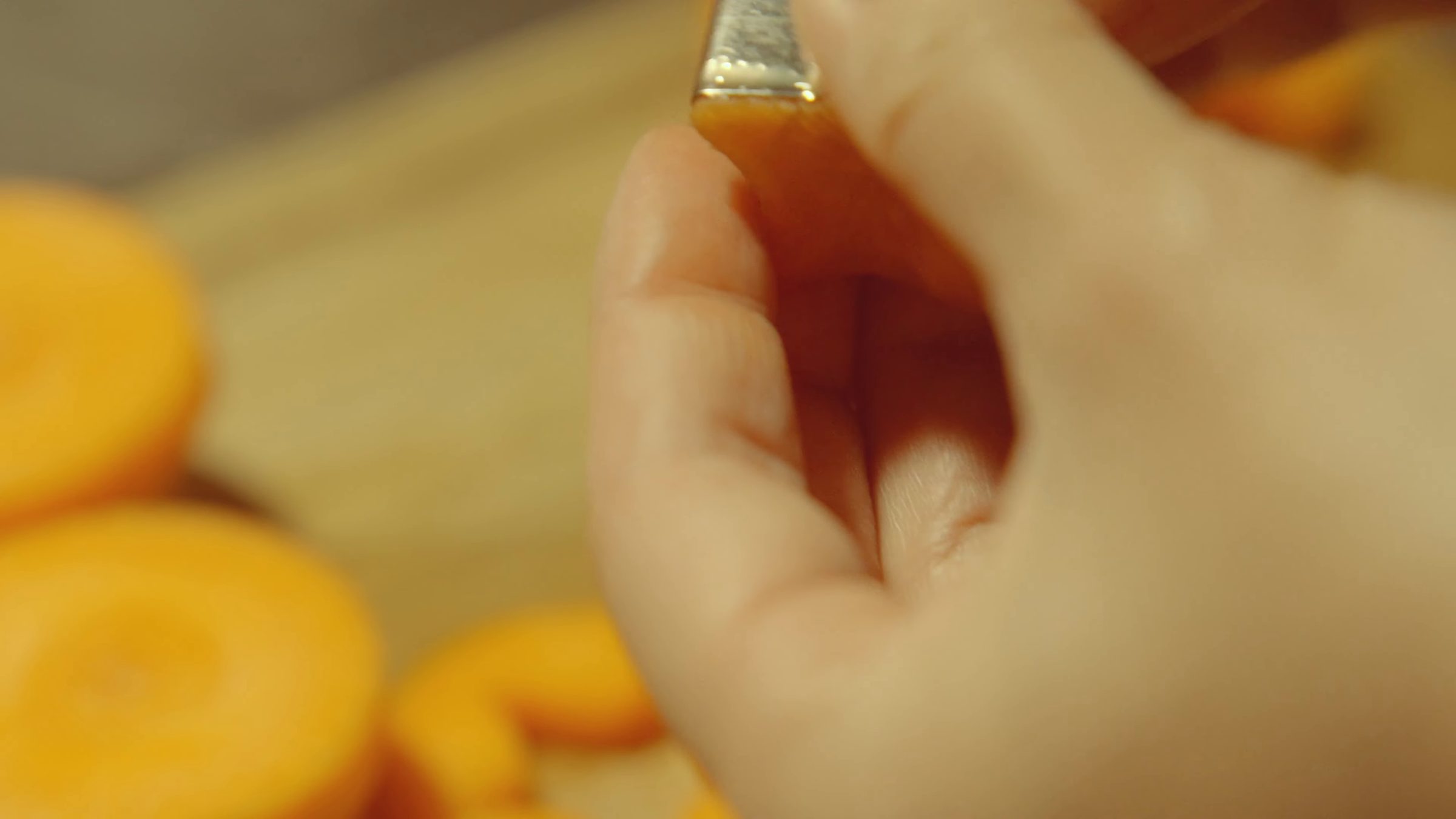
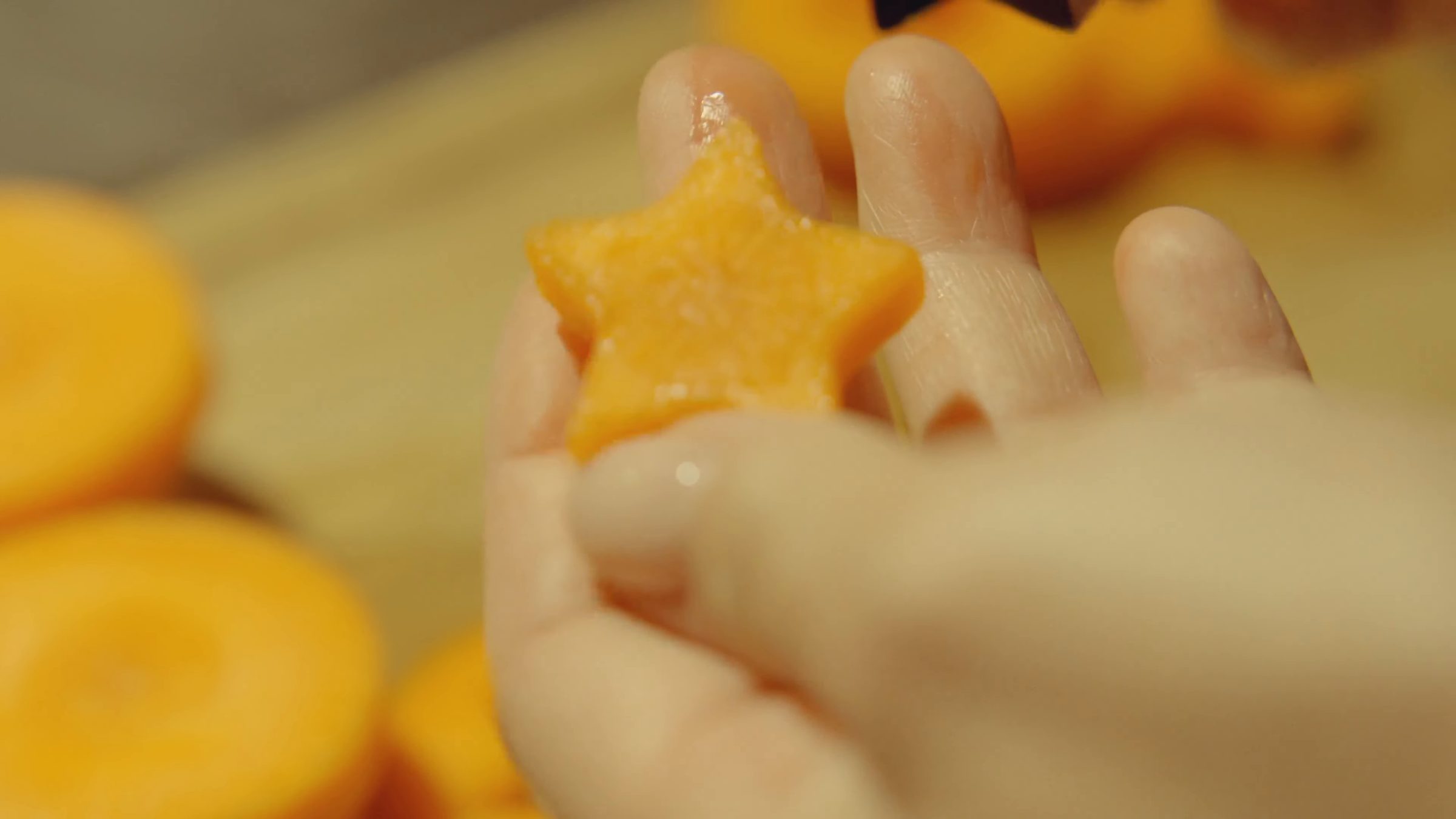
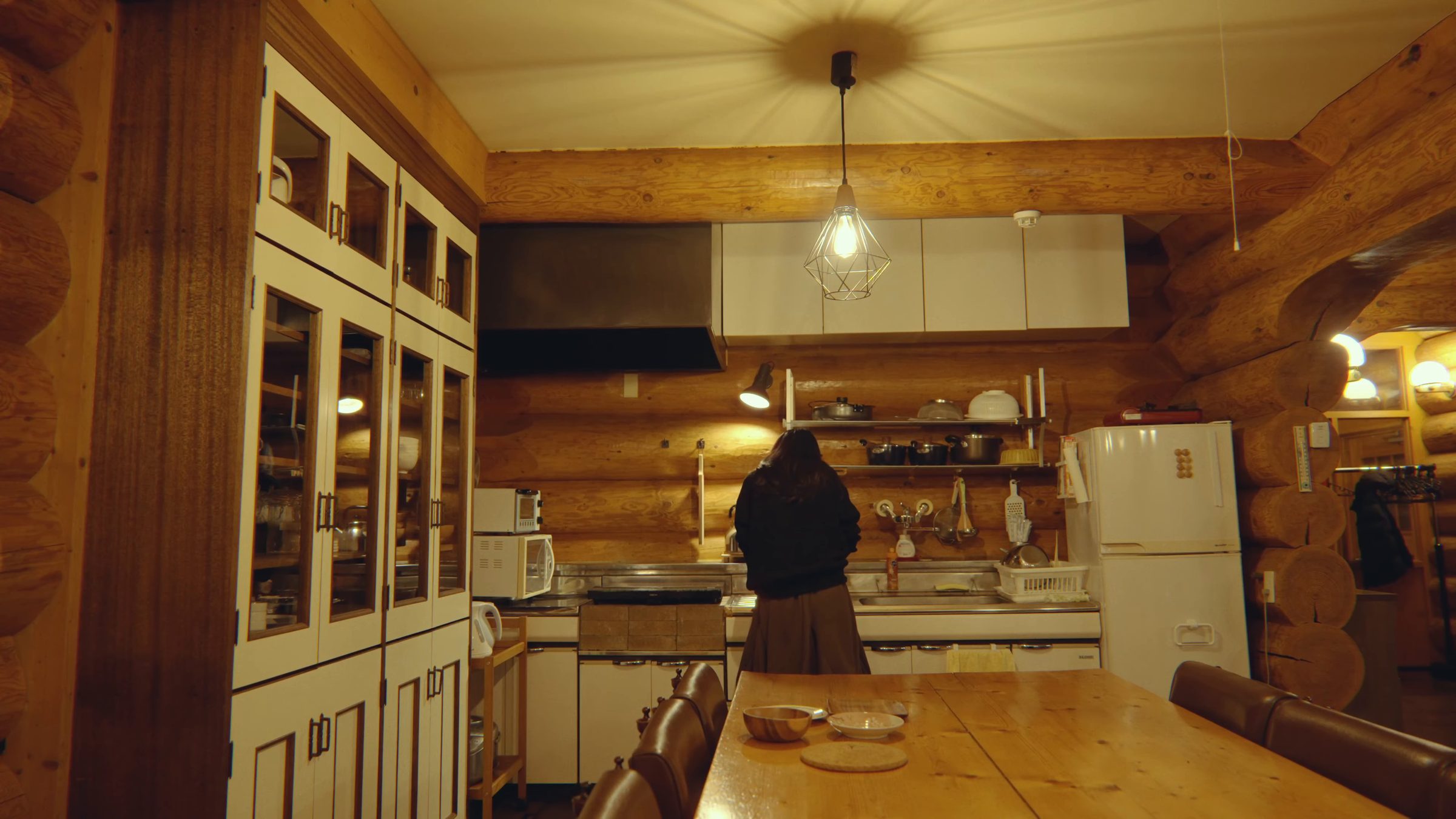
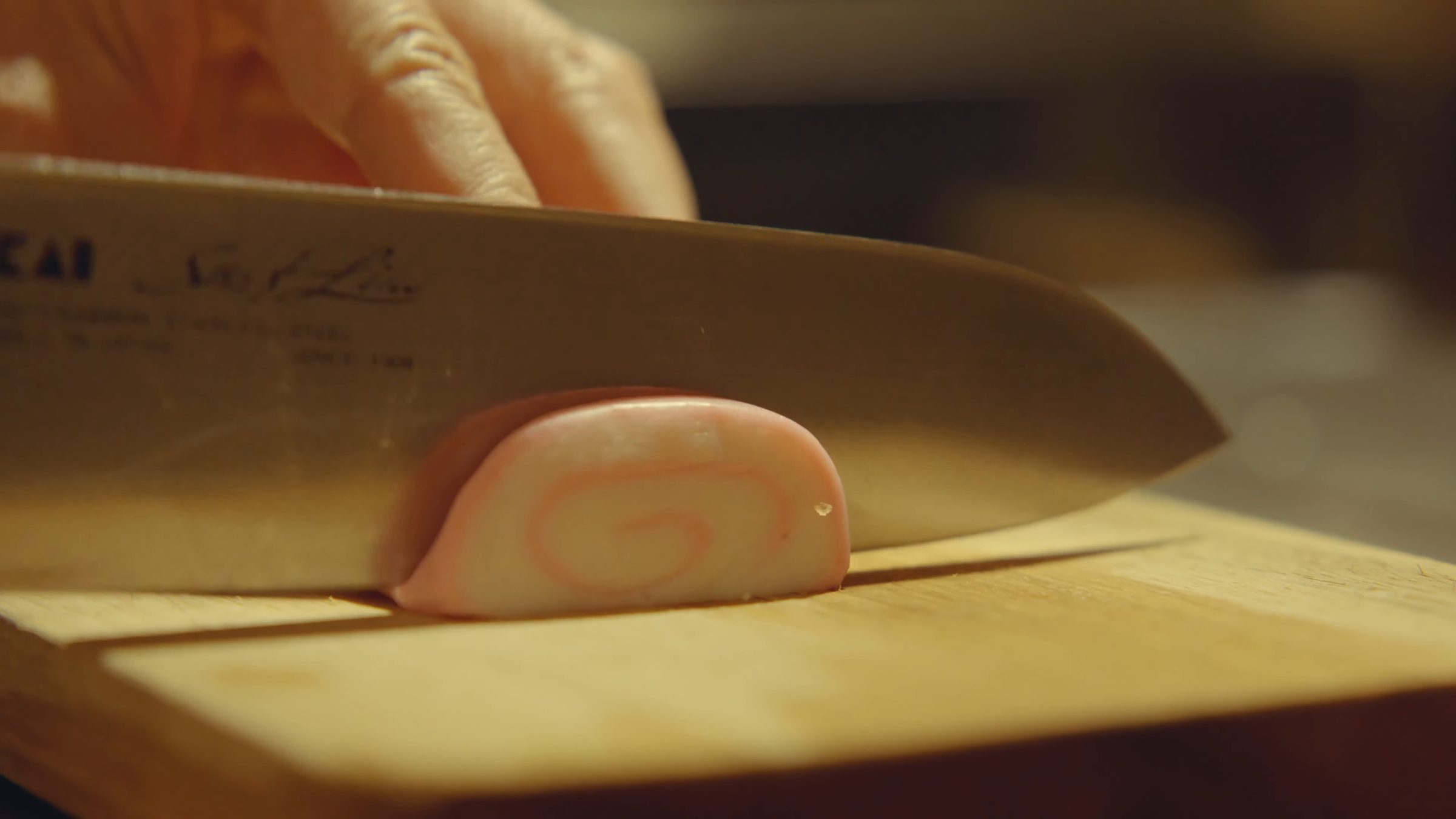
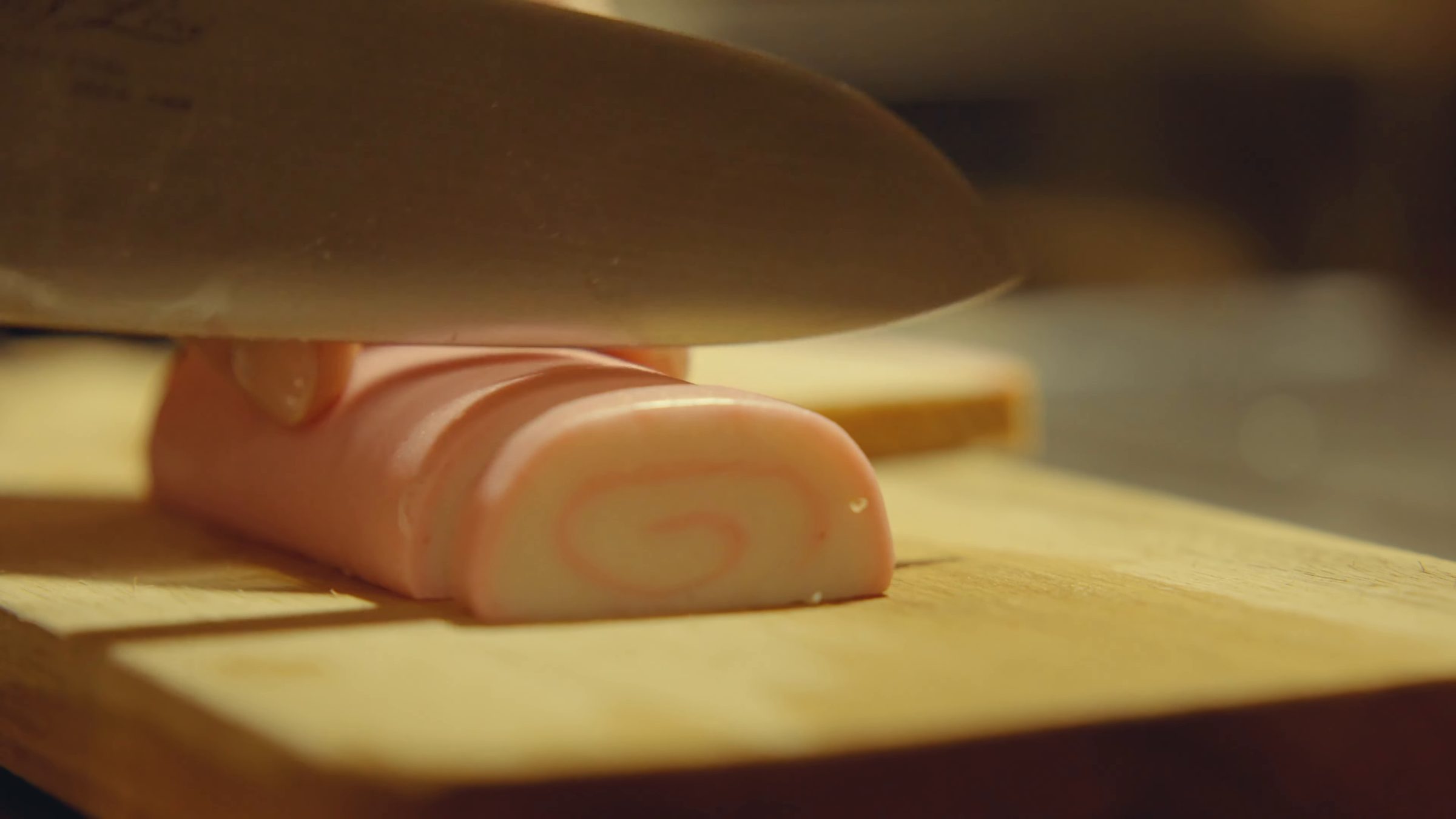
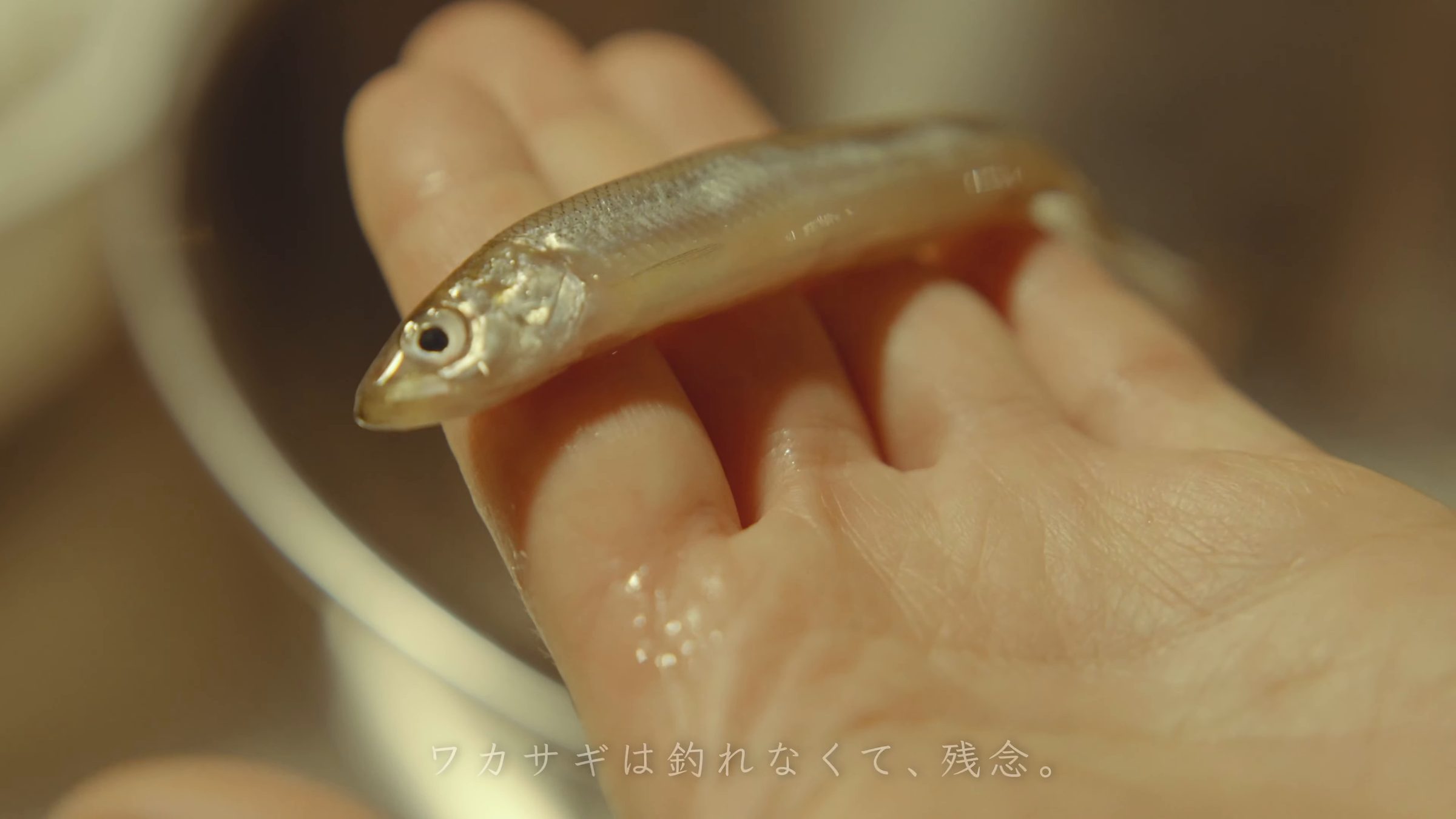
Time to make dinner. I cut carrot slices into stars and sliced the swirled kamaboko fish cake. Since the wakasagi never bit, shitakke, the look-alike chika would step in. Shitakke is Hokkaido dialect for "well then."
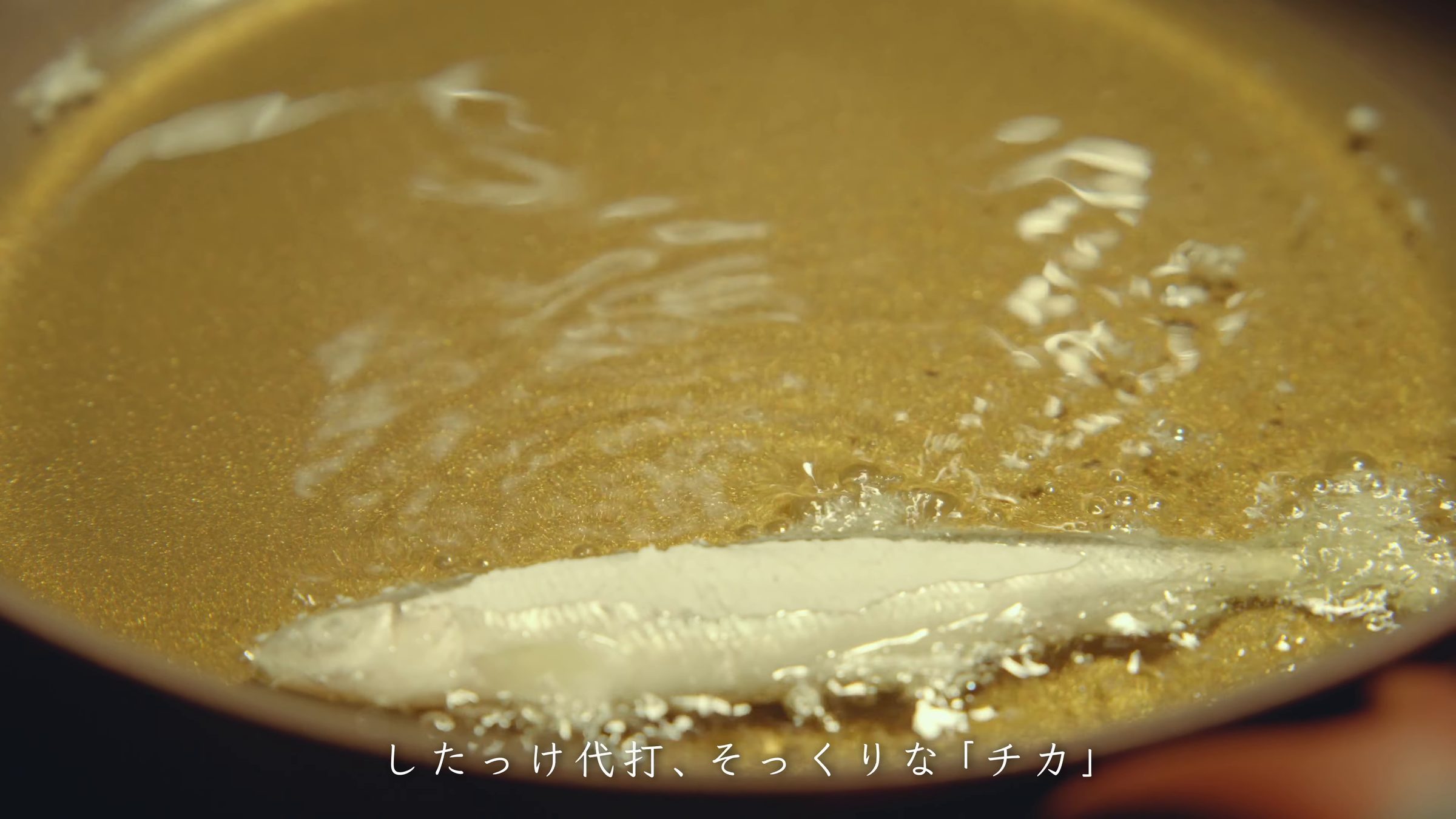
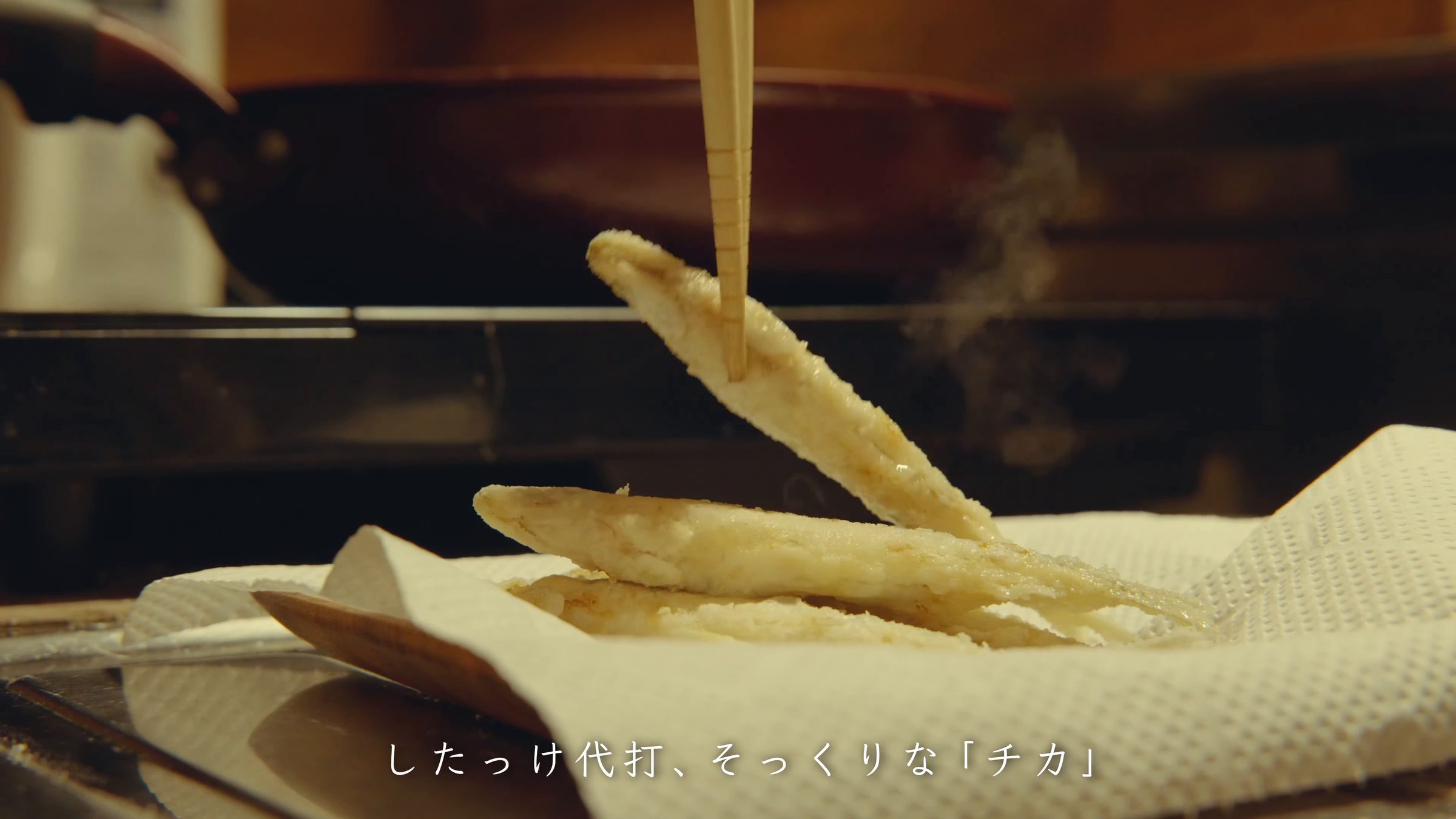
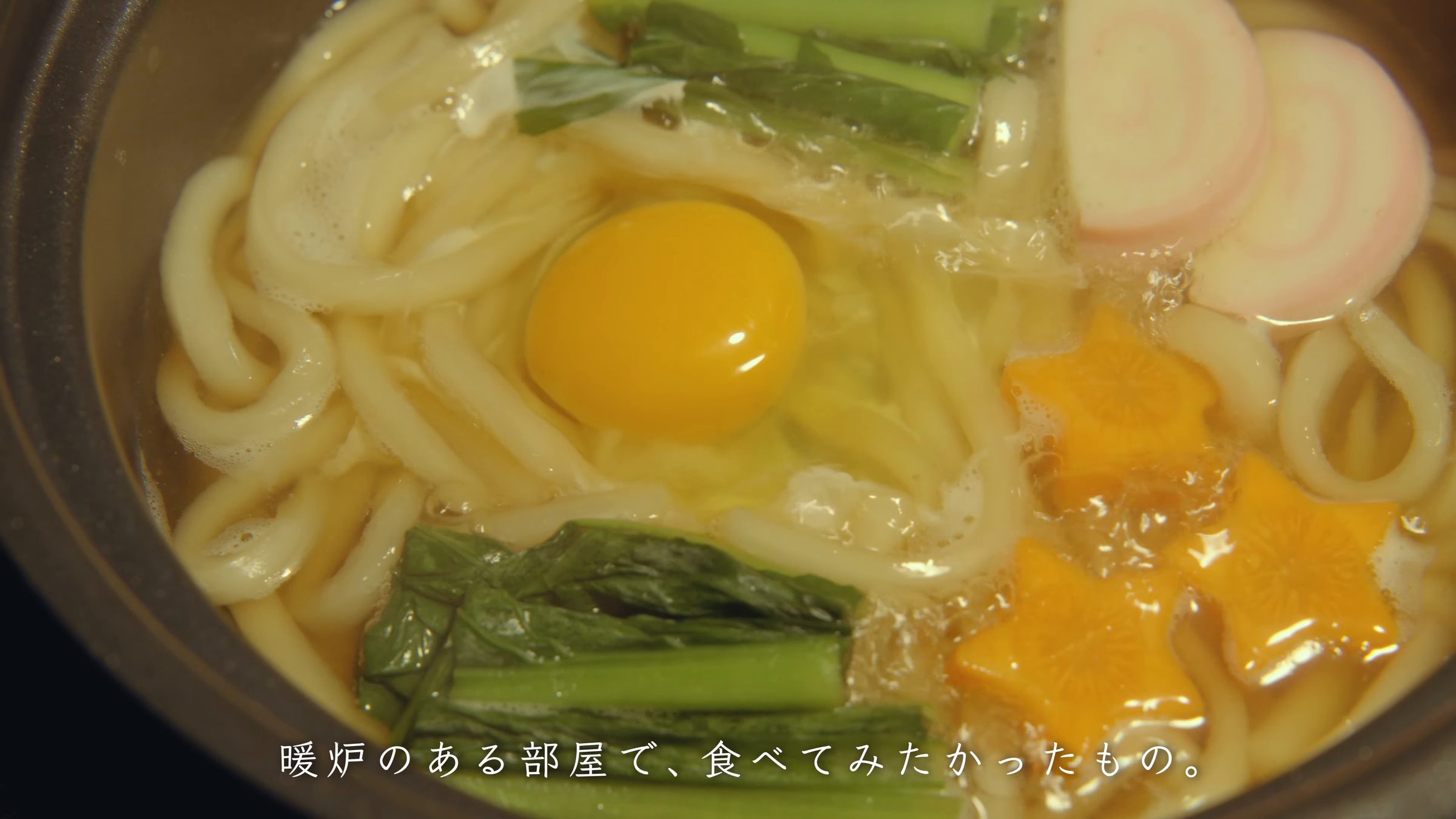
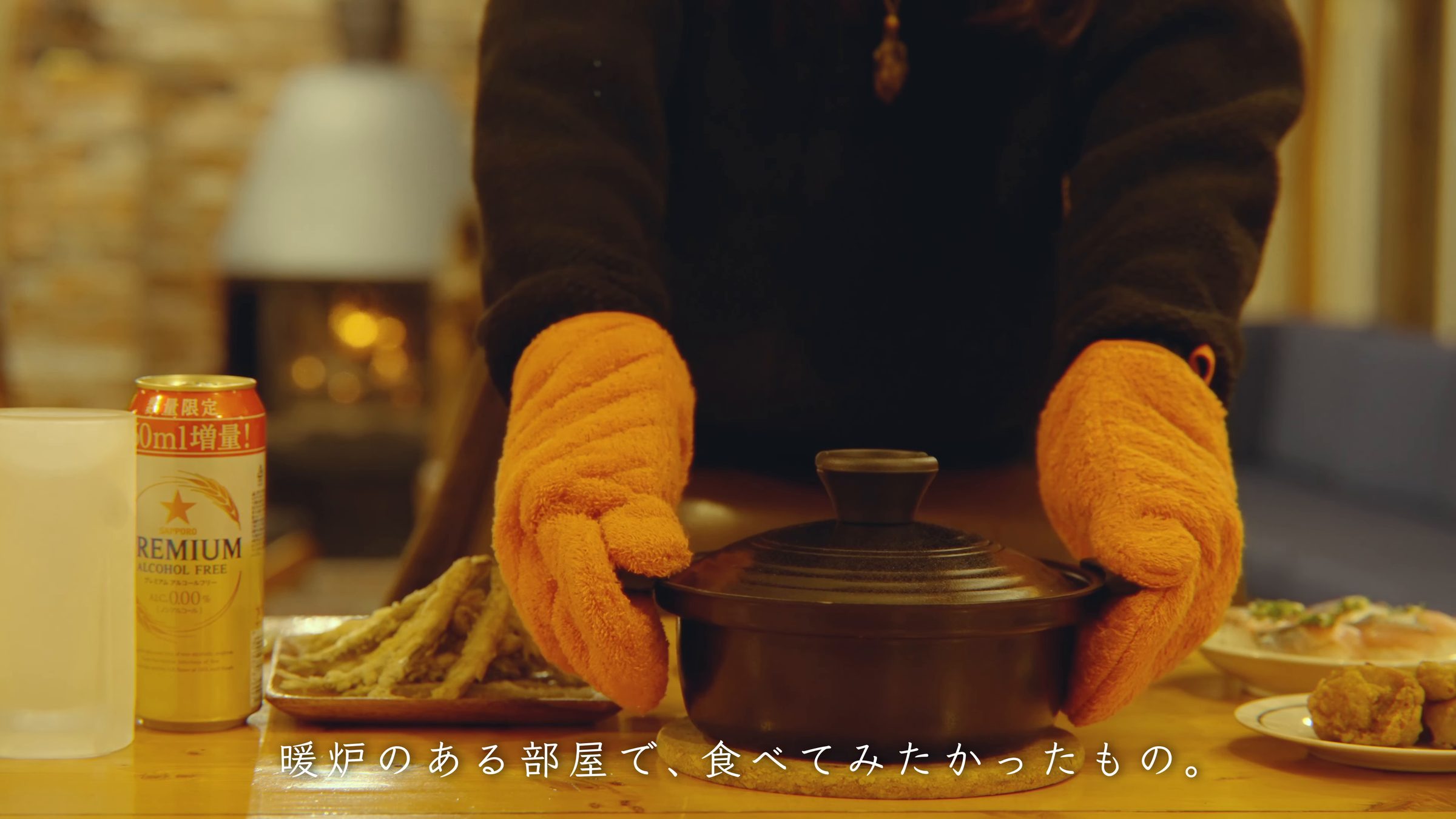
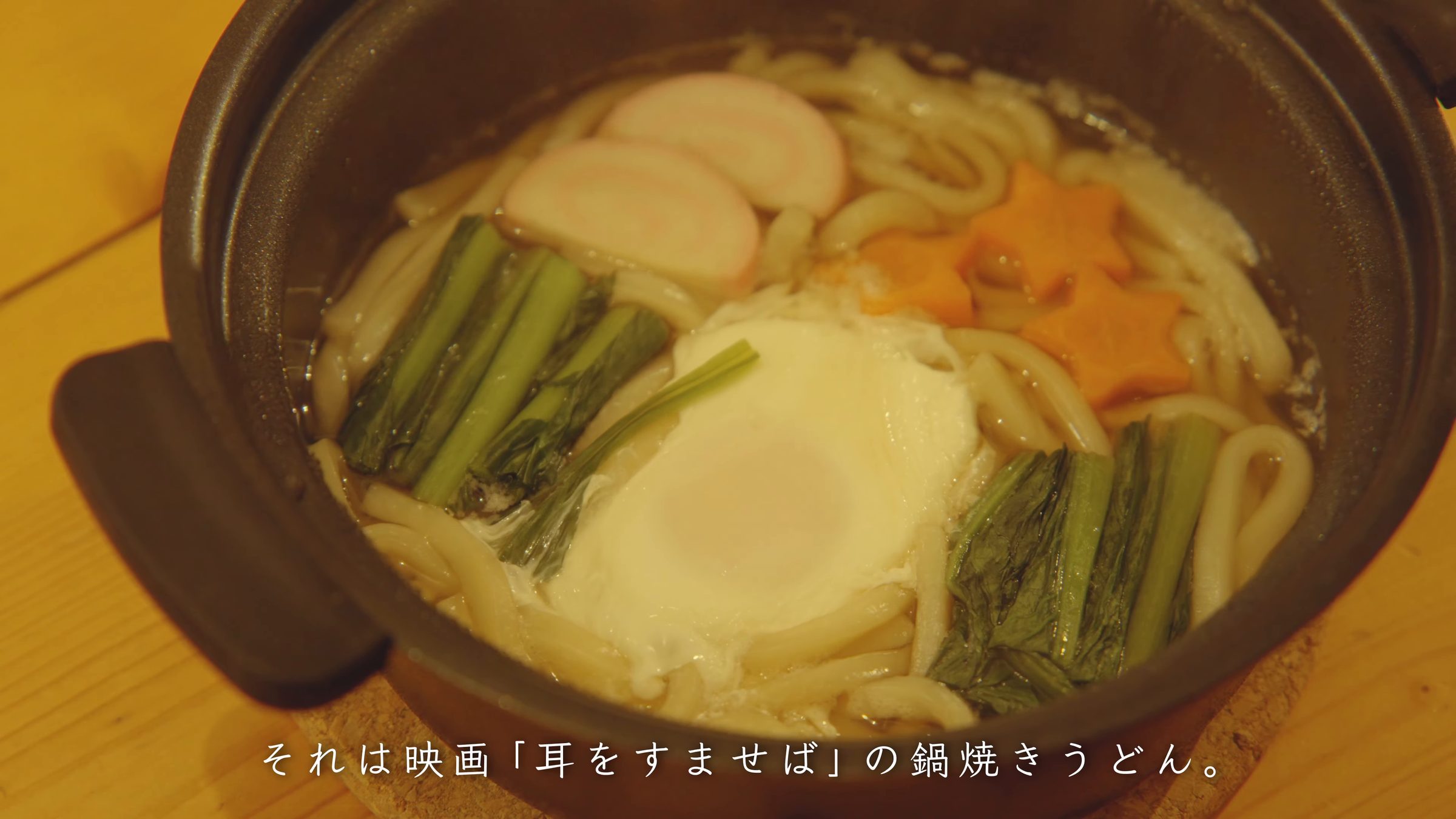
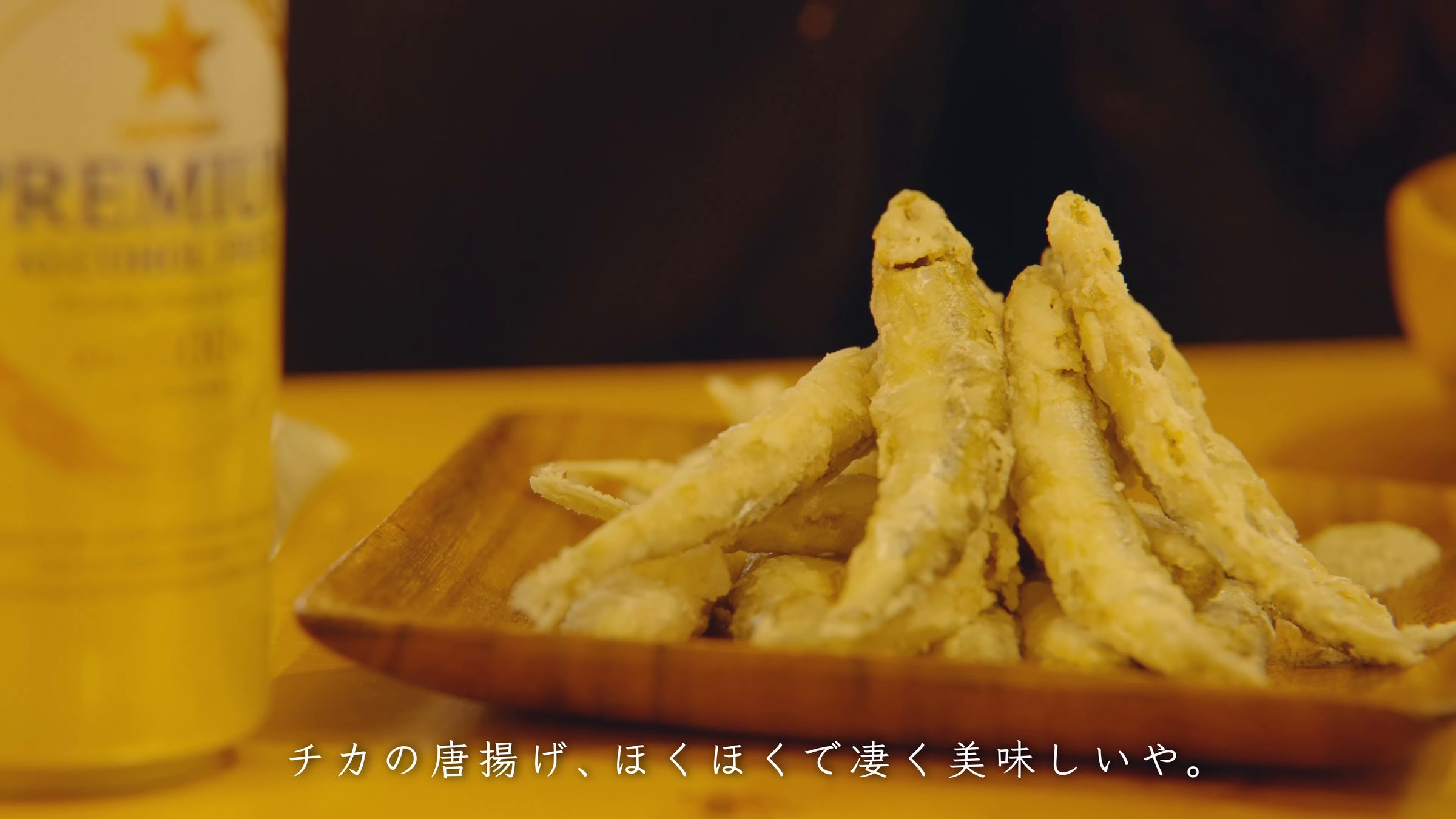
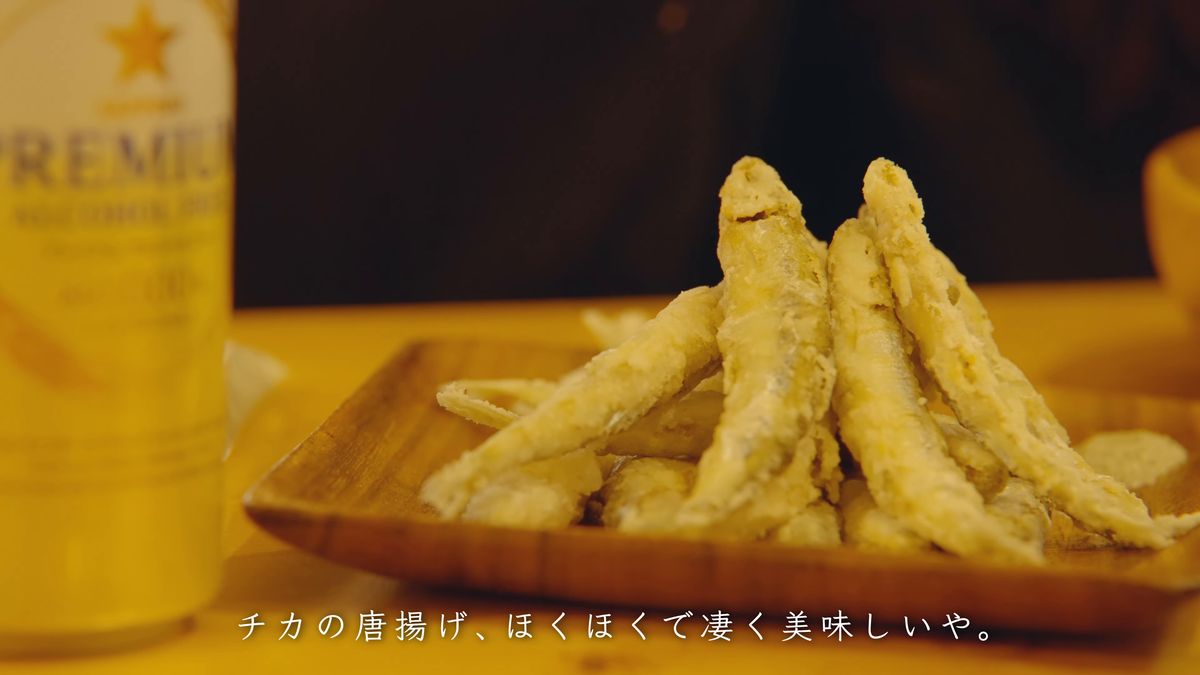
I dusted the palm-sized chika with flour and slid them into hot oil. Lifted onto paper, their coating had turned golden. Into the clay pot went the udon and the toppings: an egg cracked on top, kamaboko, the star carrots and greens. Lid on, oven mitts on, and off to the table.
Watch this scene on YouTube5:02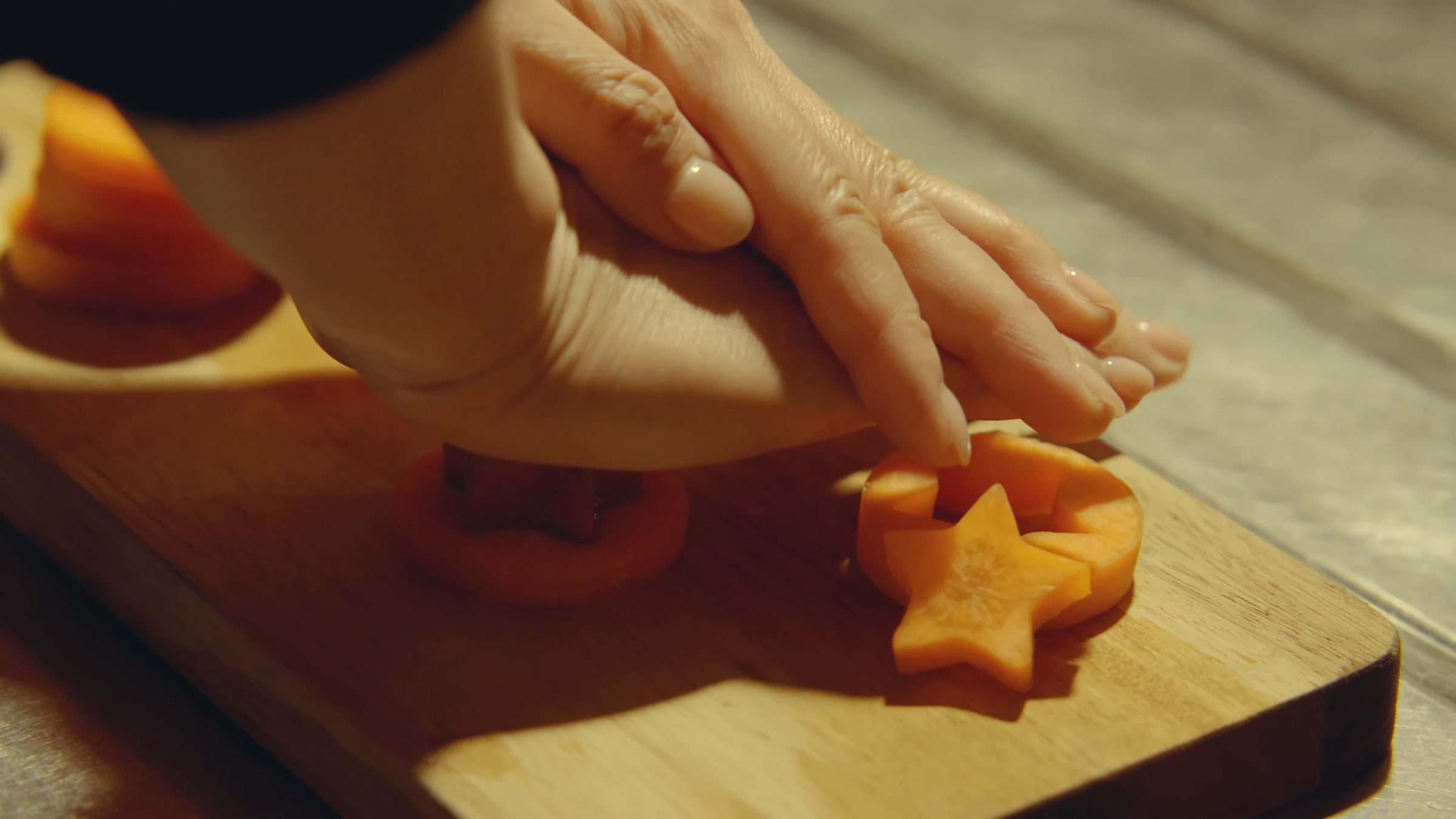
12TRAVEL JOURNAL
Nabeyaki udon in a room with a fireplace
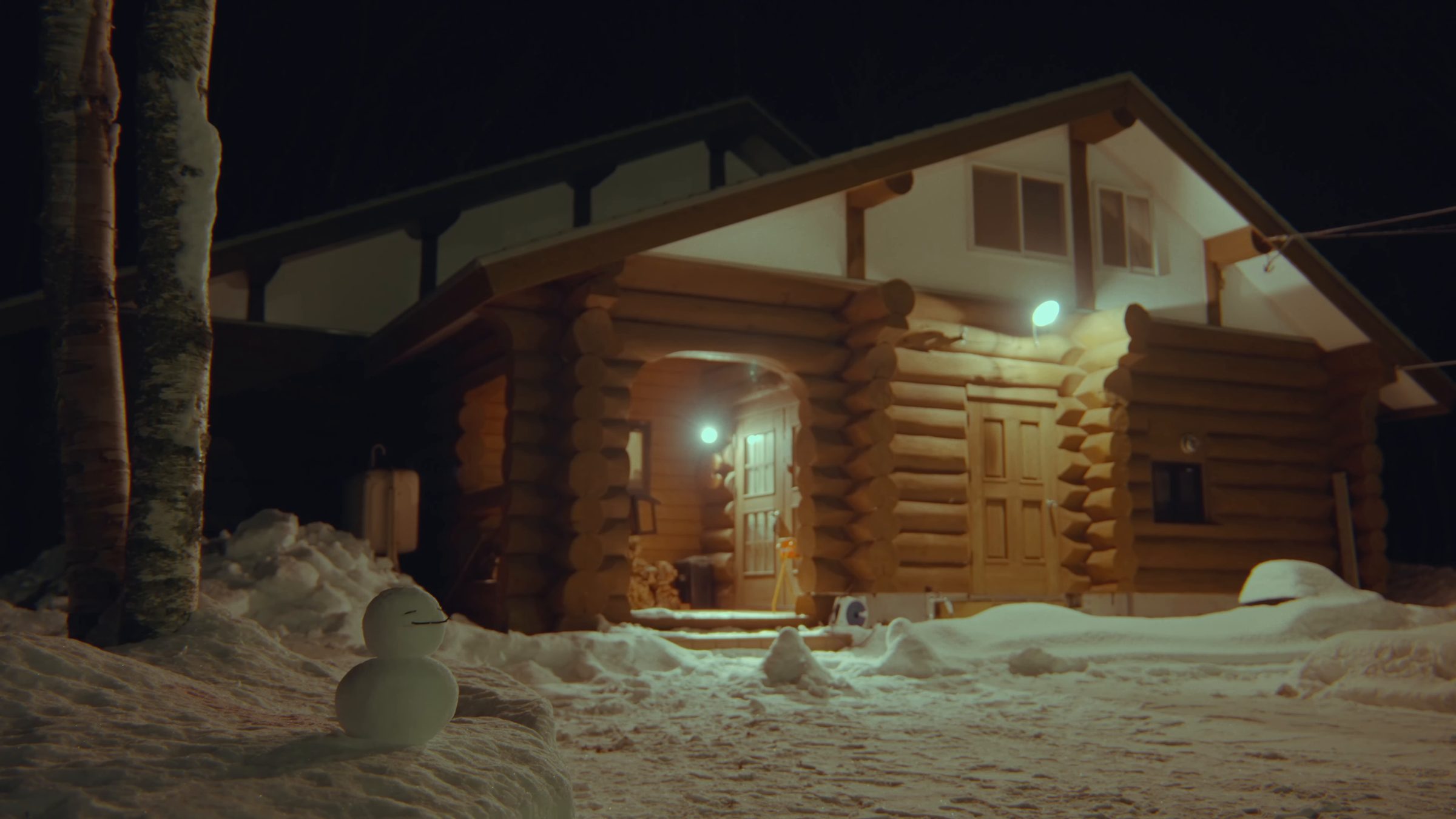
Outside the window, a little snowman stood on the night snow. The powder was too dry to roll, so I had carved a lump of snow round instead. With a twig for a face, it reminded me of an actor I like, so I named it Toshiyuki.
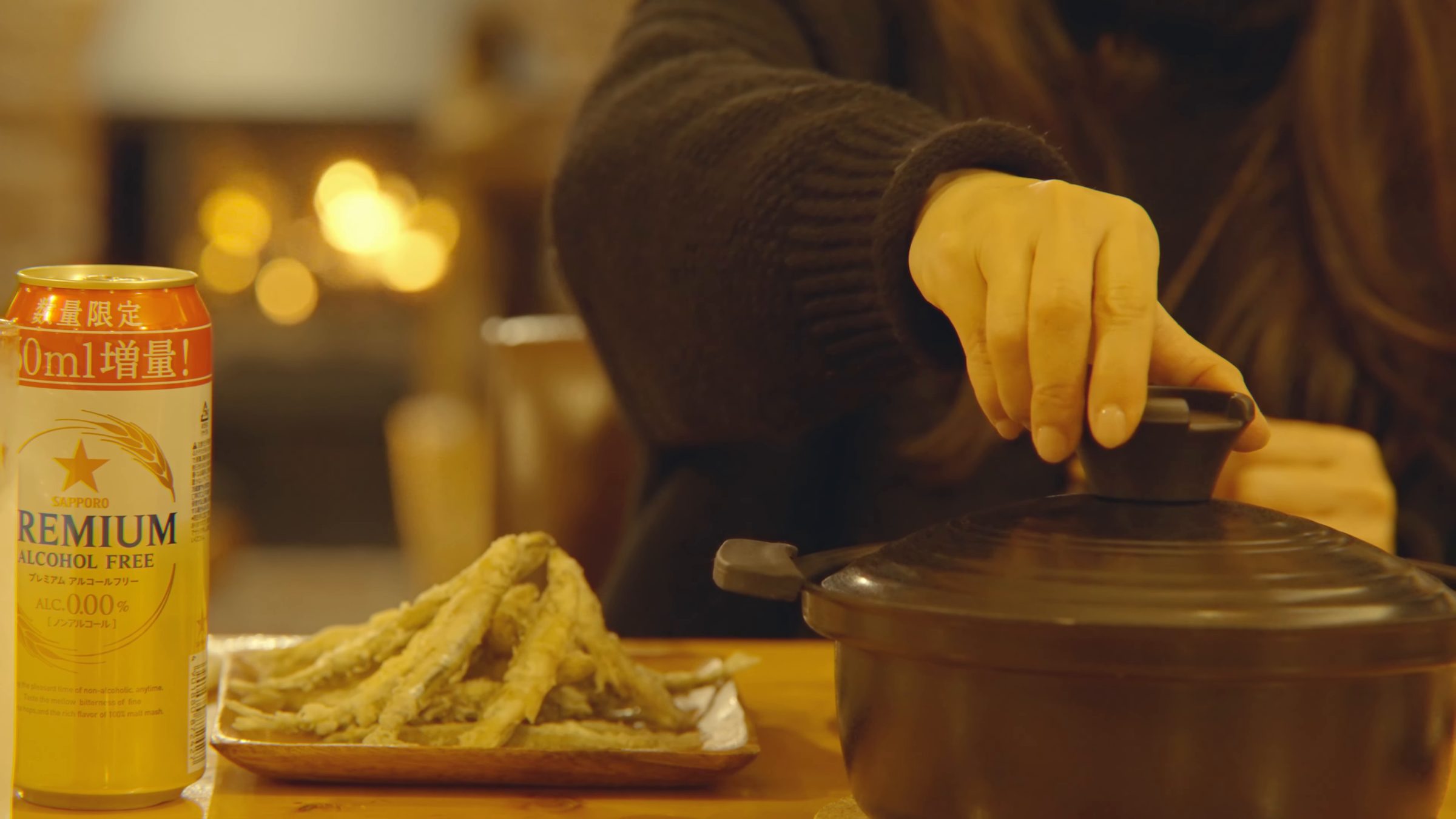
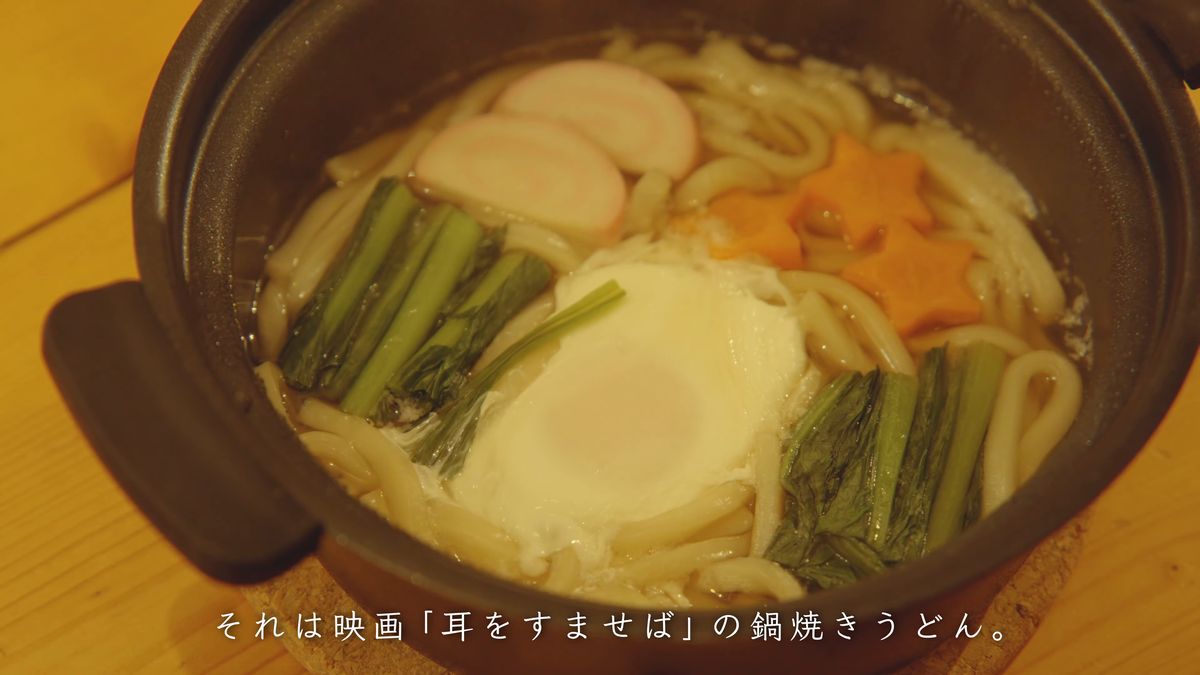
What I had wanted to eat in a room with a fireplace: the nabeyaki udon from the Ghibli film "Whisper of the Heart." When I lifted the lid of the clay pot, a soft-cooked egg and the star carrots appeared through the steam. The udon was made from Hokkaido wheat.
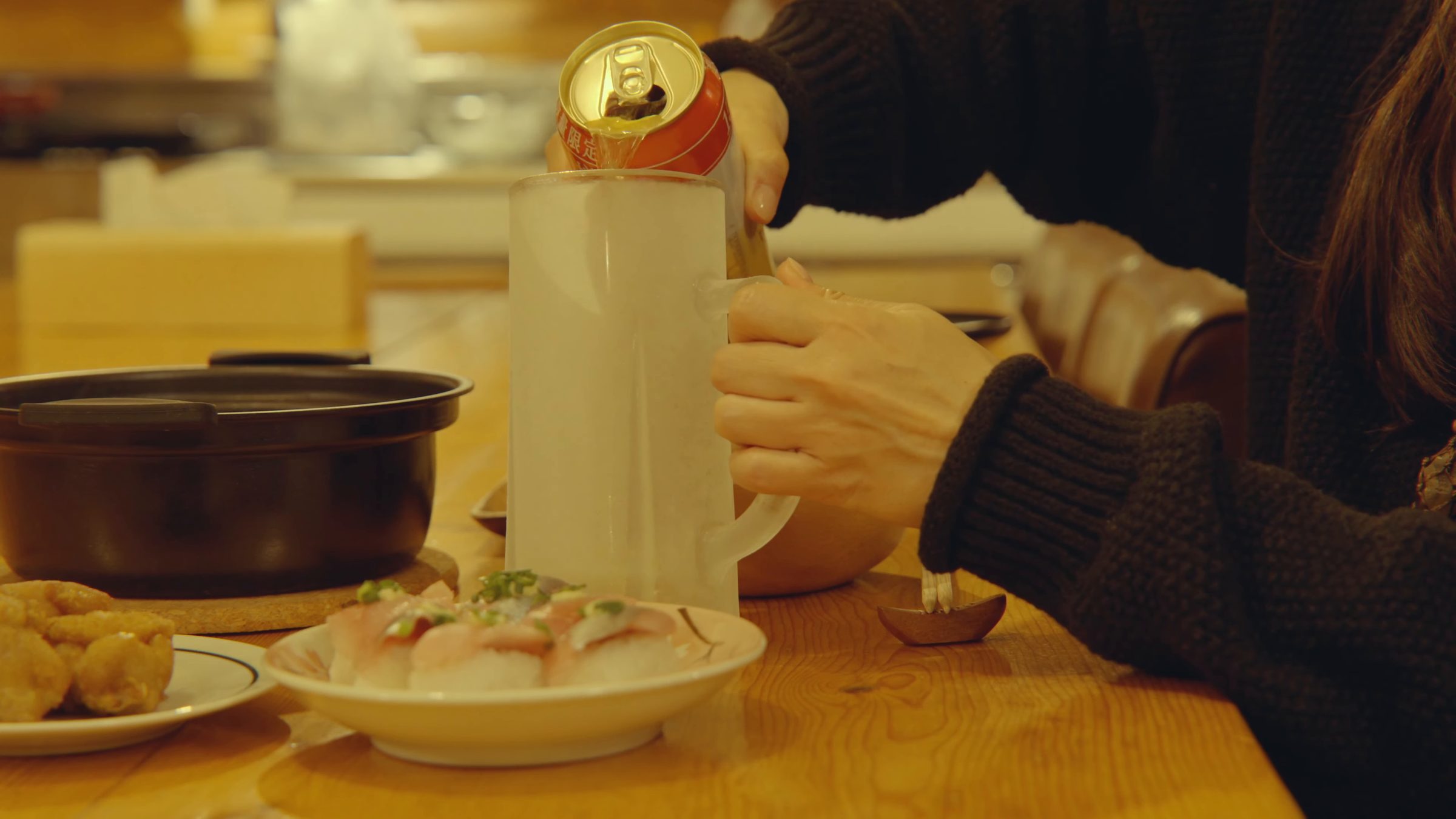
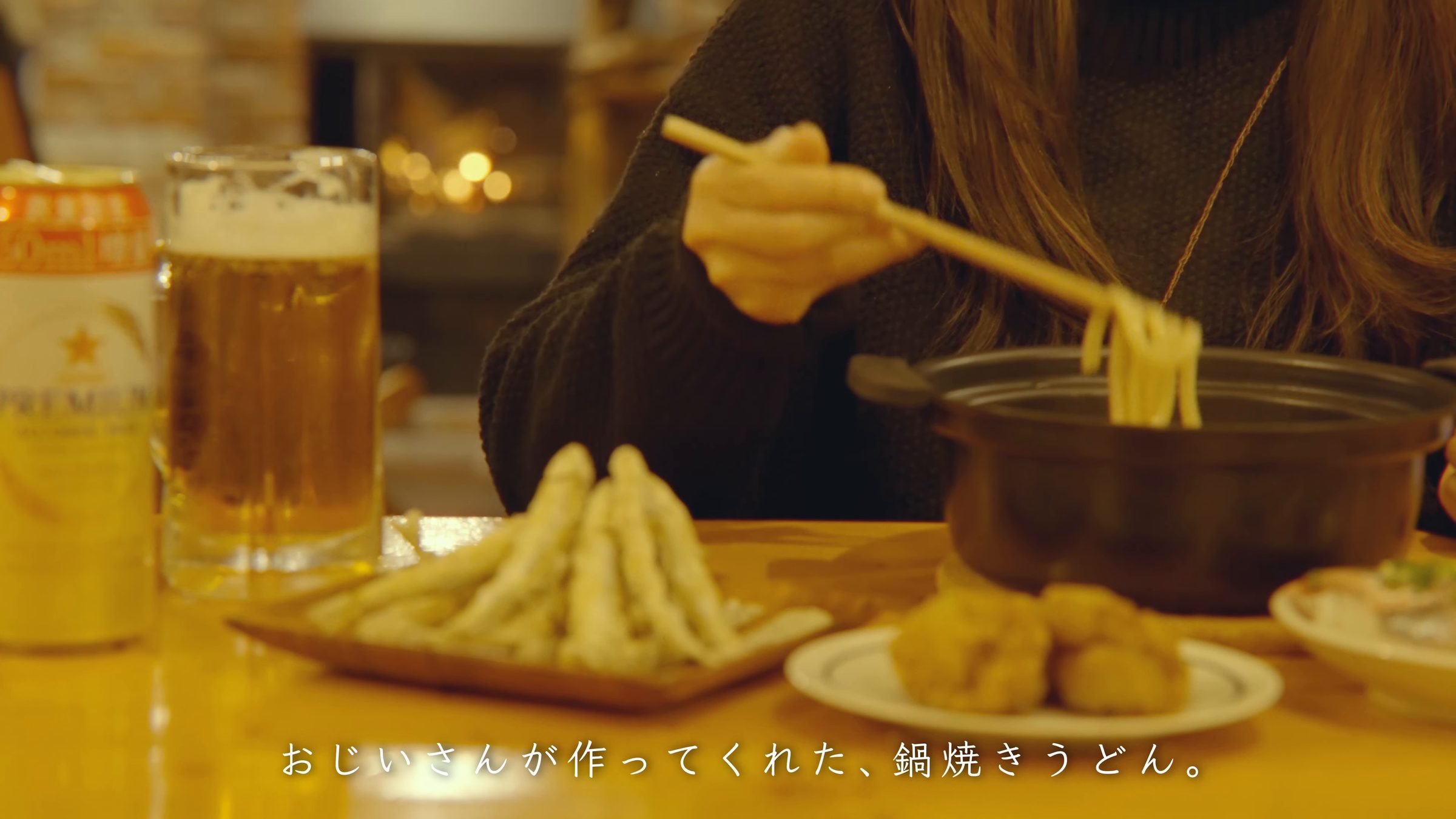
The fried chika could be eaten bones and all, hot, soft and really good. I poured the alcohol-free beer into a glass and raised it to myself. The nabeyaki udon the grandpa made in the film looked so delicious, and the fireplace is part of why. But I'm sure it's mostly because Shizuku had worked so hard.
Watch this scene on YouTube5:50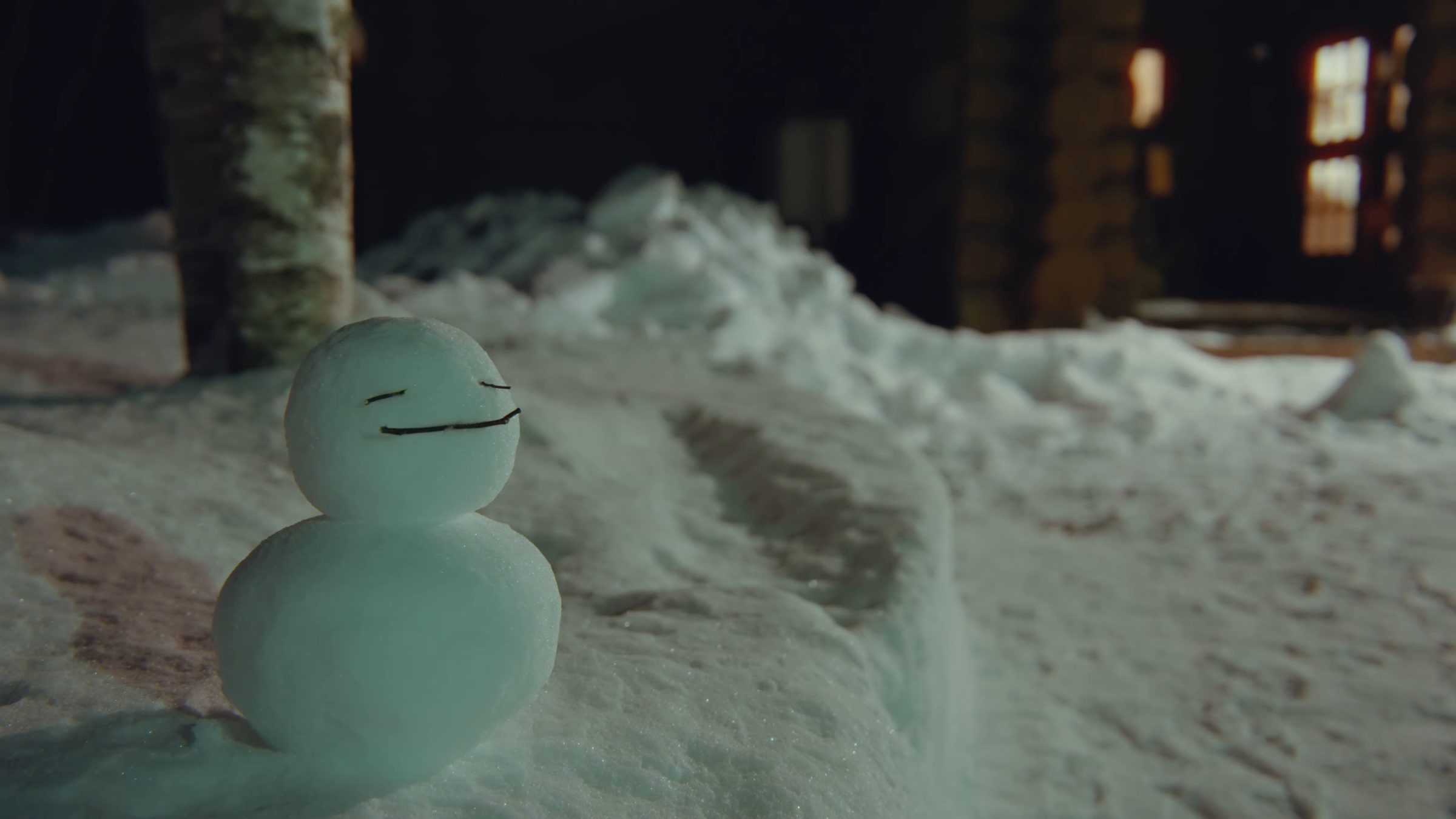
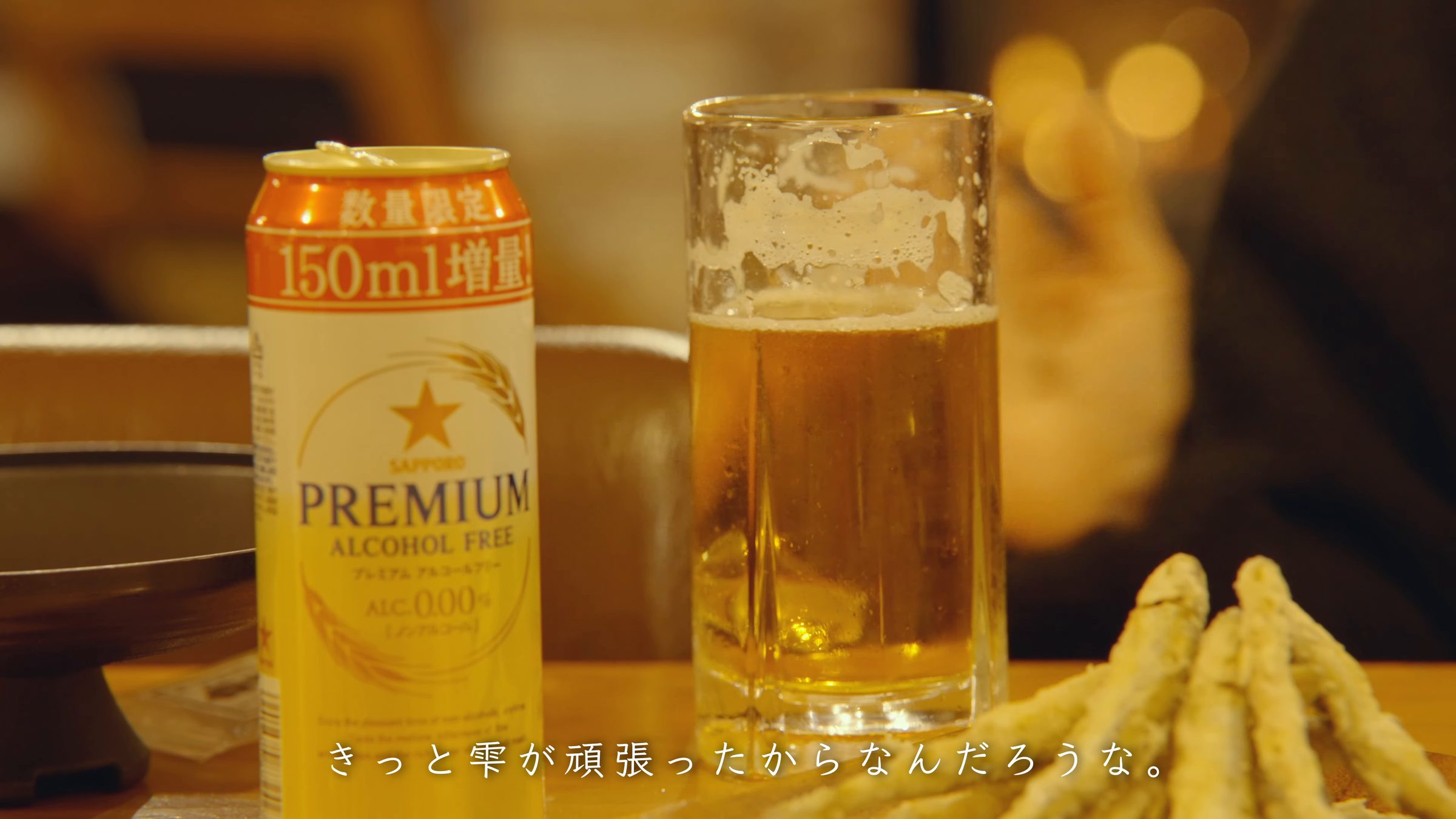
13TRAVEL JOURNAL
A silent night
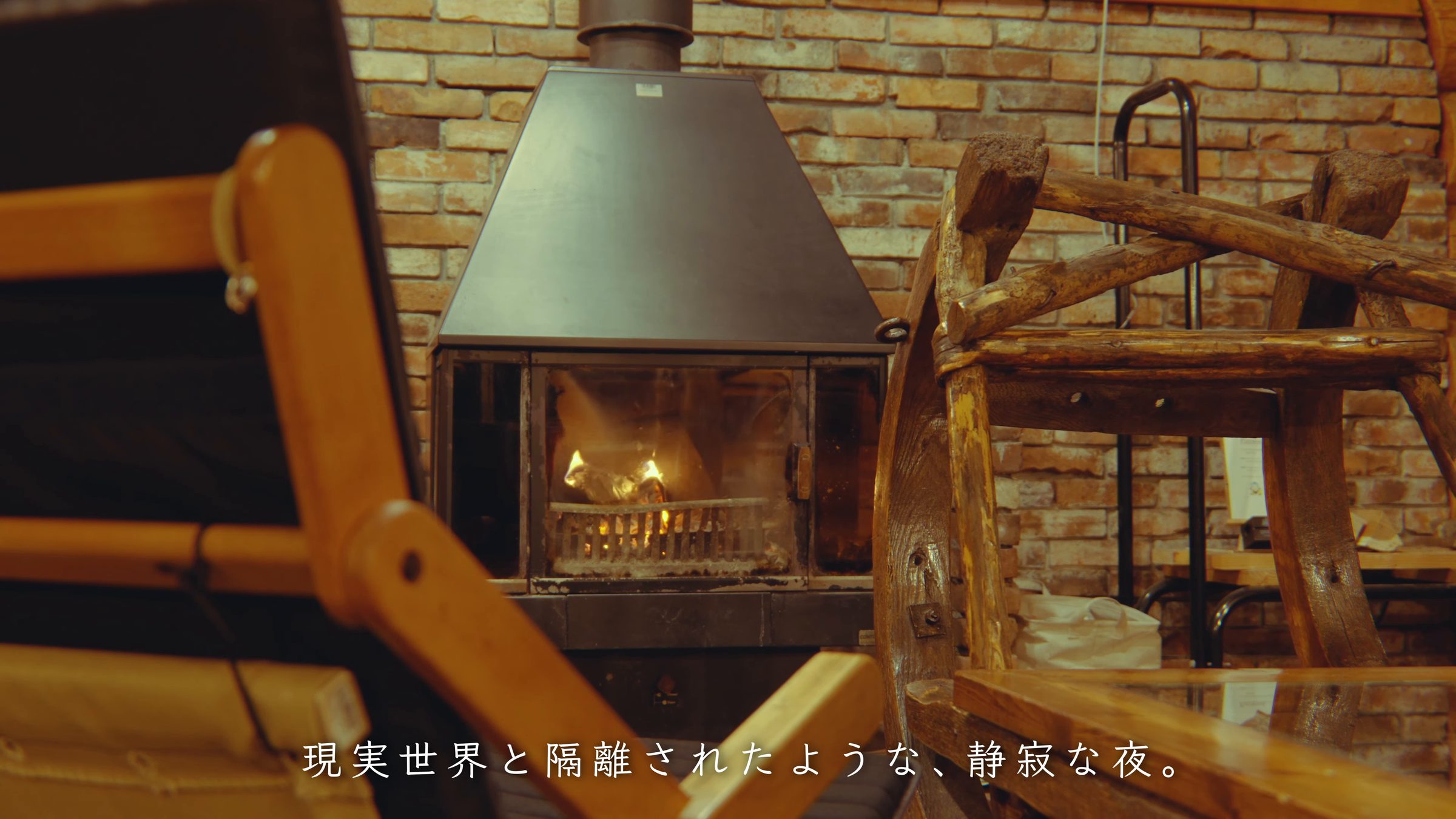
A quiet night, as if cut off from the real world. I sat at the far table in the living room and watched the small flame in the fireplace. Outside, the lit log house and the snowman stood side by side in the snow. Why not sink slowly into the world of a story tonight?
Watch this scene on YouTube6:54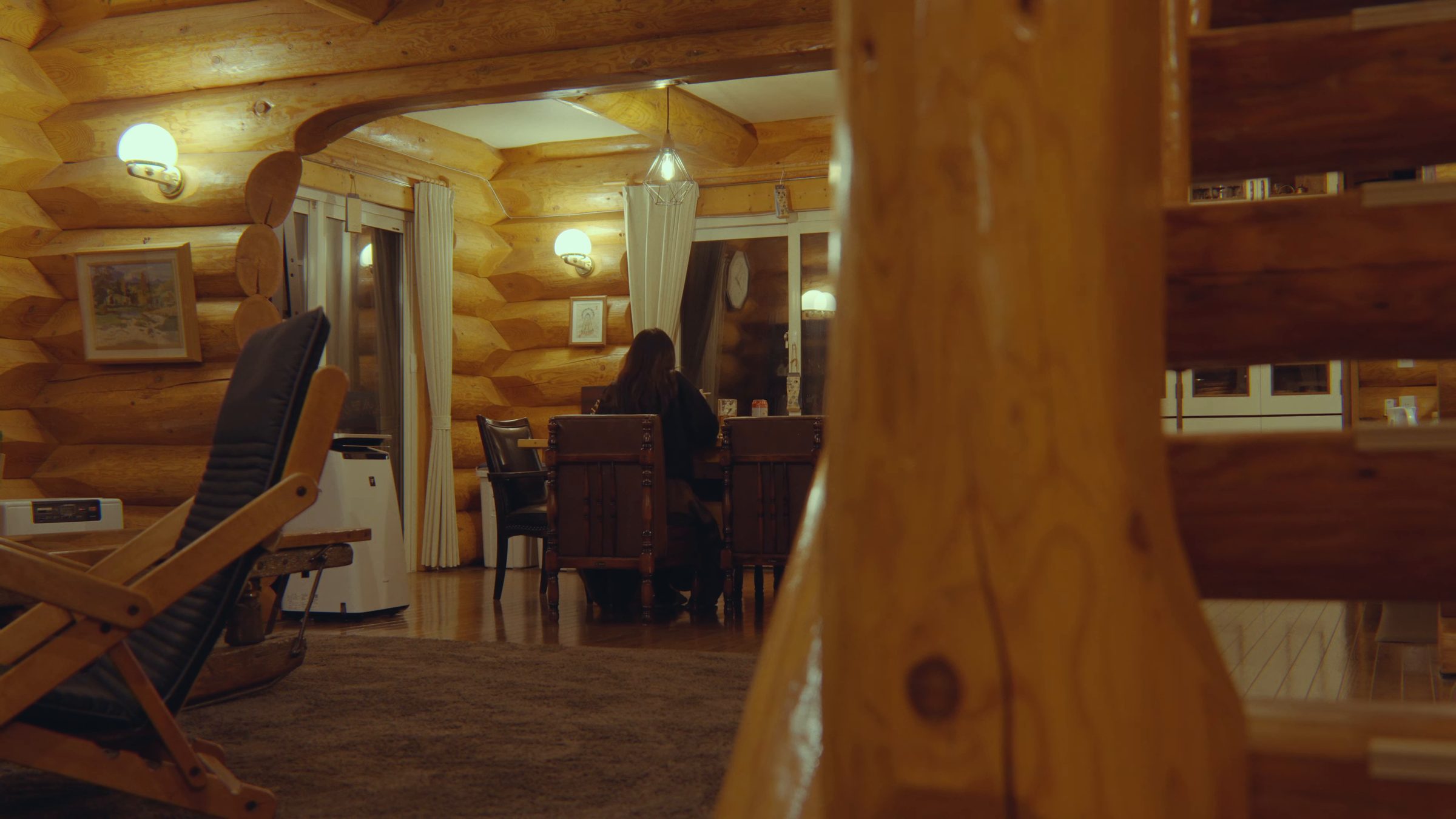
THE JOURNEY IN FILM
The wind. The sounds of a kitchen.
Spend a little more time inside the journey, on film.
Watch the video7 minTHE BORROWER’S NOTES
The Borrower's Notes: Hokkaido
Places we stopped, dishes we made, and stories of the land. A few things to keep from the journey.
01Where I ate and shopped
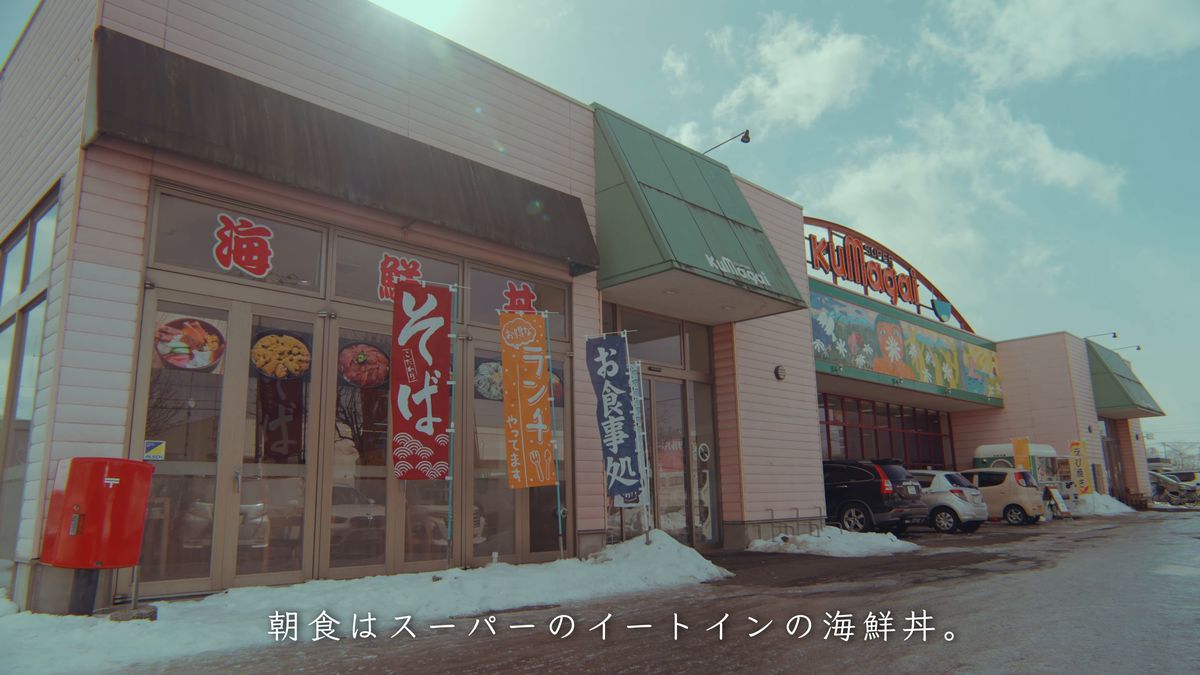
The town supermarket's eat-in corner
A supermarket with banners for seafood and soba and a sign for the dining corner. Breakfast there was a seafood bowl of sea urchin, salmon roe, scallop, salmon and sweet shrimp.
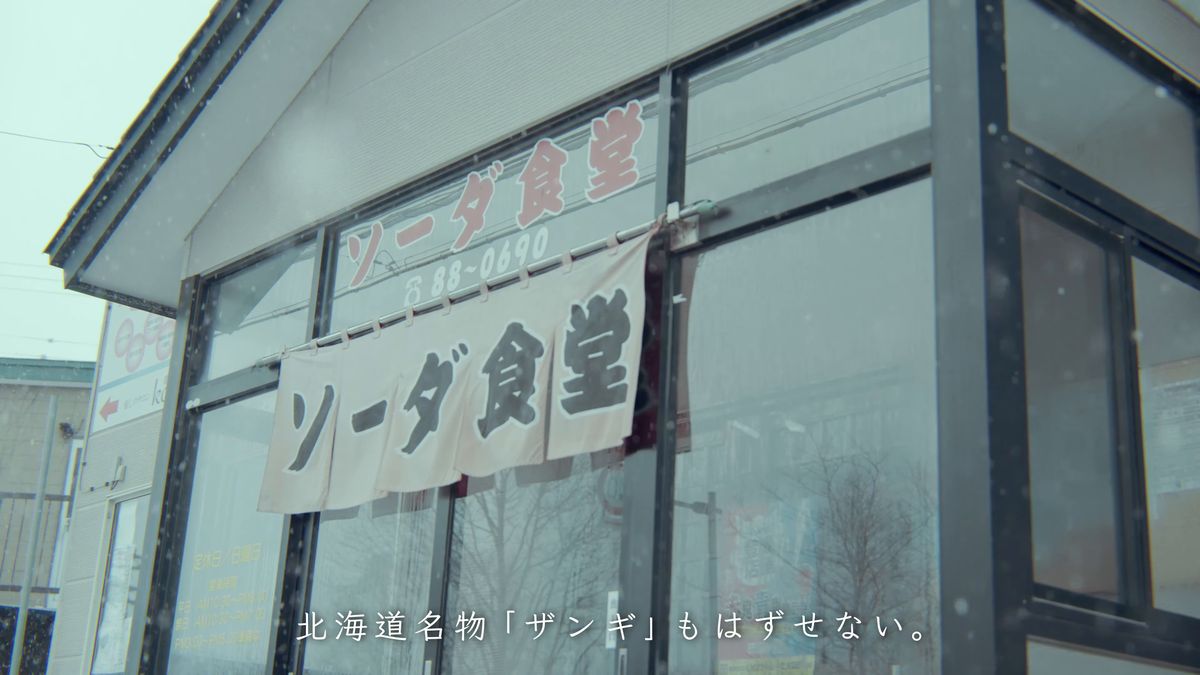
Soda Shokudo
6-1-98 Chitose-cho, Noboribetsu, Hokkaido
A neighborhood diner in the town of Noboribetsu. I had miso ramen and a heaping plate of zangi. The counter with red stools and the wall of framed calligraphy and signed boards give it a homely feel. Hours change, so check before you go.
Sources: tabelog.com
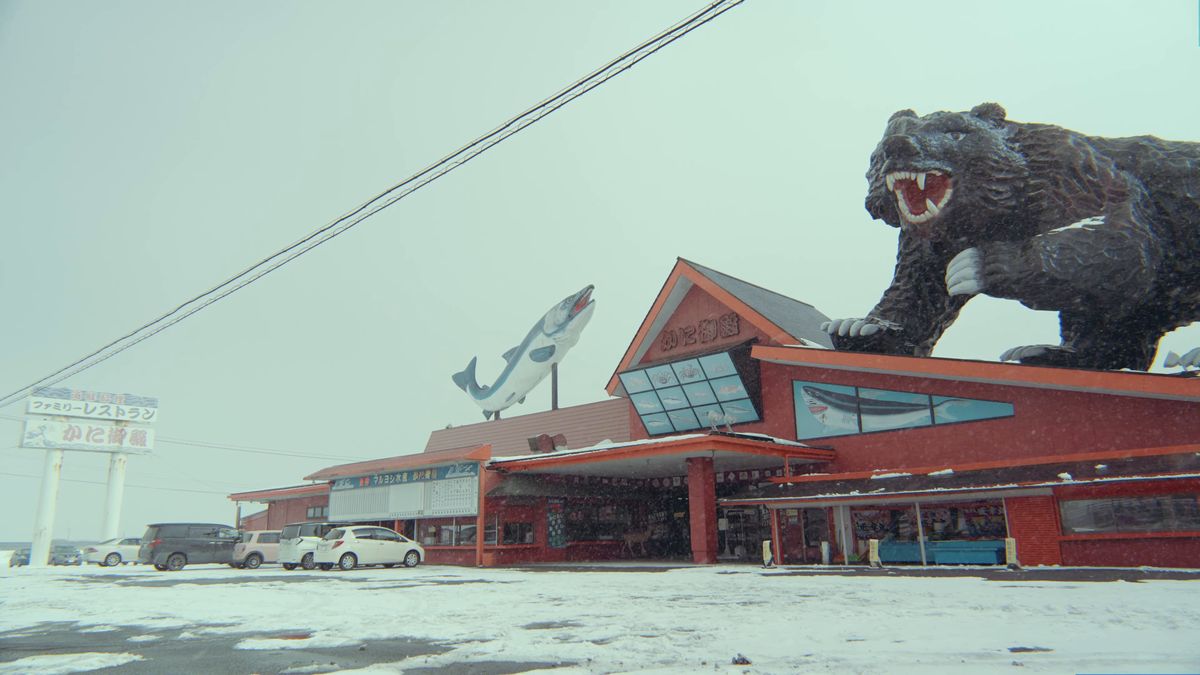
Kani Goten
96-2 Takeura, Shiraoi, Hokkaido
A red building on Route 36 with a bear and a salmon on its roof, housing a seafood restaurant and a seafood shop. I peered into the tanks of crabs. Listings now show that it has since closed.
Sources: tabelog.com 4travel.jp
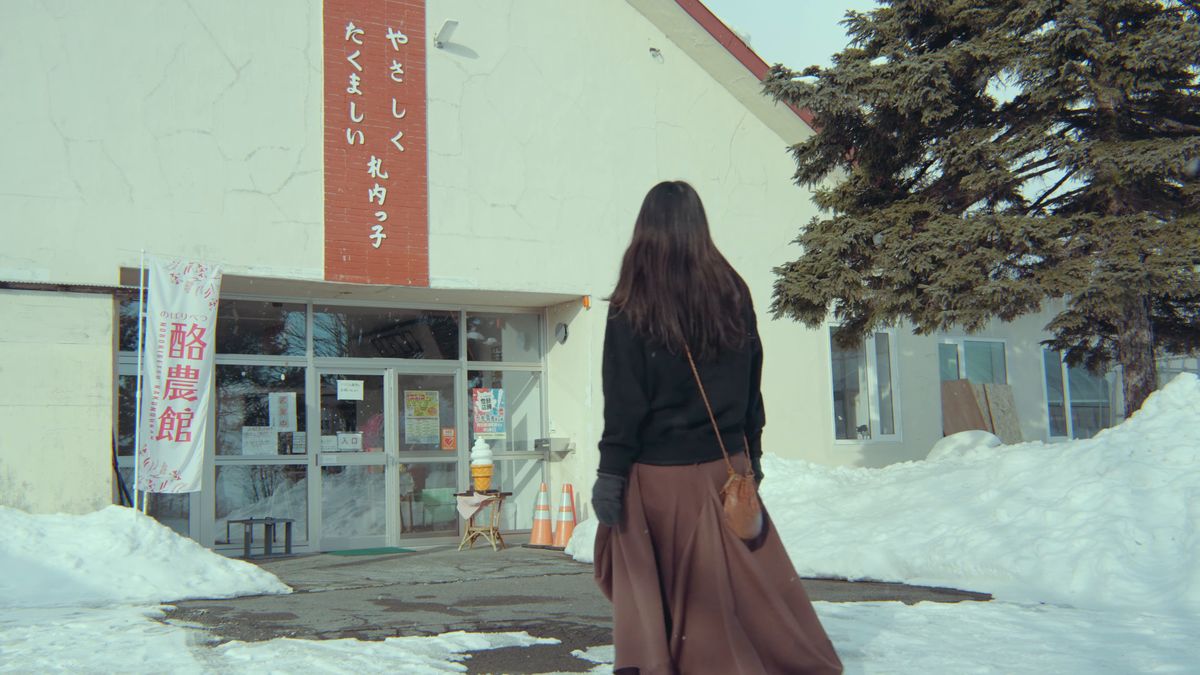
Noboribetsu Rakunokan (dairy)
73-3 Satsunai-cho, Noboribetsu, Hokkaido
A dairy that made milk products from Noboribetsu milk, with its factory and shop in a closed school building; a banner from the school's days still hung over the entrance. I bought jars of torori pudding and Noboribetsu cheese. It was reported to have ceased operations in May 2026.
Sources: 4travel.jp gutabi.jp hokkaido-np.co.jp
02What I cooked
Nabeyaki udon
A tribute to the nabeyaki udon in Studio Ghibli's 1995 film "Whisper of the Heart" (directed by Yoshifumi Kondo), which the owner of the antique shop Chikyuya serves to the heroine Shizuku in front of his fireplace. The star-shaped carrots are a fixture of recipes recreating the scene. I used udon made from Hokkaido wheat.
IngredientsUdon (made from Hokkaido wheat), Egg, Kamaboko fish cake, Carrot, Leafy greens
- Slice the carrot and cut the slices into stars with a cutter
- Slice the kamaboko
- Put the udon and broth in a clay pot, crack in an egg, and top with kamaboko, carrot and greens
- Cover, bring to a simmer, and carry the pot to the table
Sources: eiga.com news.allabout.co.jp
Fried chika
Chika is a sea-dwelling smelt of the same genus as wakasagi, common along the Hokkaido coast. It looks much like wakasagi but has finer scales and grows to about 18 centimeters; tempura and frying are the usual ways to eat it. After my ice fishing came up empty, I fried chika from the fish counter instead. It could be eaten bones and all, hot and soft inside.
IngredientsChika (a smelt), Flour, Oil for frying
- Put the whole chika in a bowl and dust with flour
- Deep-fry until crisp
- Lift onto paper to drain
Sources: honda.co.jp
03About the area
Zangi
Fried chicken eaten all over Hokkaido. It is said to have begun around 1955 at a chicken restaurant in Kushiro that chopped up whole birds and fried them; one story says the name comes from the Chinese dish zhaji, with an extra "n" added for luck. The chicken is marinated in a sweet soy-based sauce before frying, so it is more strongly seasoned than ordinary karaage.
Sources: maff.go.jp
Wakasagi and ice fishing
Wakasagi is a smelt about 10 centimeters long; in Hokkaido it is also called chika locally. It lives in the Ishikari River and lakes such as Abashiri, Akan and Toya, and fishing for it through holes in the ice is a classic scene of the Hokkaido winter. On Lake Abashiri, nets are even drawn beneath the ice. The flesh is delicate, and it is usually eaten as tempura or kakiage fritters.
Sources: pref.hokkaido.lg.jp
Hokkaido dialect
Three Hokkaido words from this episode's narration: namara means "very"; shibareru means freezing cold; and shitakke means "well then" or "so," and also serves as a casual goodbye.
Sources: livejapan.com
A log house in the snowy hills
This time I borrowed a log house standing in a snowy forest, with a brick fireplace and a stack of firewood, a table built from logs, and a kitchen with big windows. The night dropped to minus 14, but inside it stayed warm.
PHOTO ALBUMPhoto album79Open all photographsClose the photo album
Select a photograph to explore the journey one frame at a time.