A TRAVEL ESSAY
Omihachiman, Shiga
Omihachiman, Japan's historical castle town
A day in Omihachiman,where boats glide through town
A day of old streets and Omi flavors.
Read the journey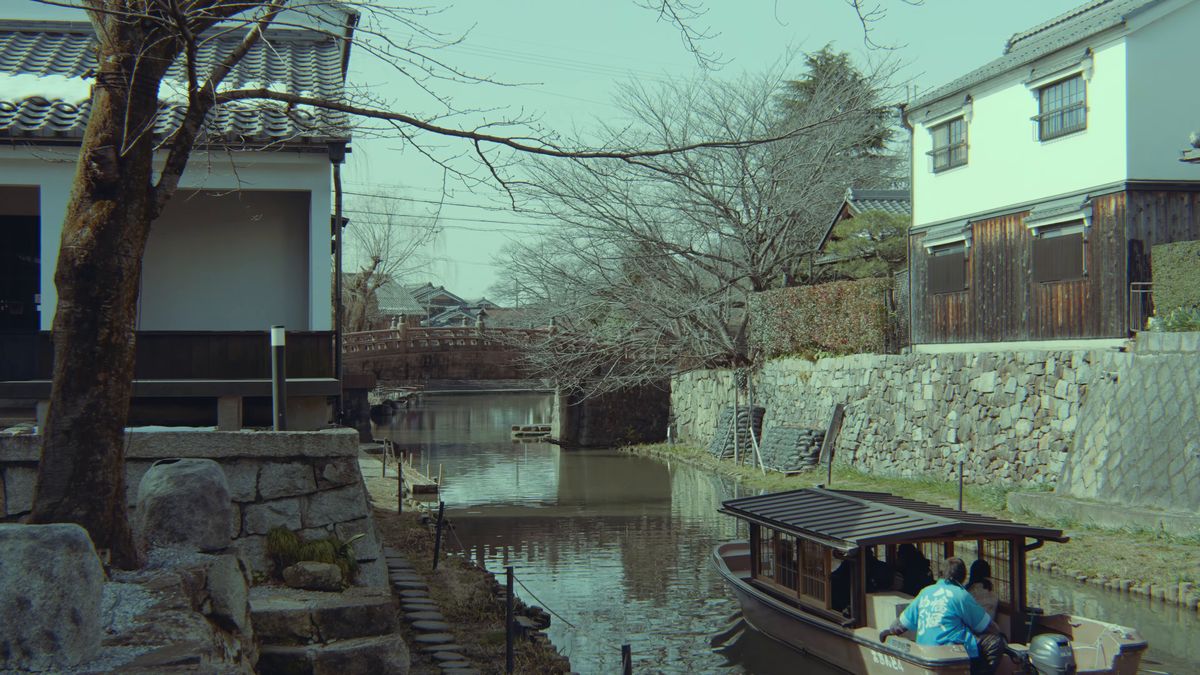
ABOUT THIS JOURNEY
Omihachiman is a town where merchant houses built between the end of the Edo period and the Meiji era still stand in neat rows. I borrowed a townhouse from the last years of Meiji and began the morning with ochazuke topped with funazushi. A wooden boat carried me along the Hachimanbori canal, lunch was at a Showa-era diner, and I ate my way through freshly baked tsubura mochi and Hachiman castella. In the evening came Omi beef and red konnyaku at the low table. A day of old streets and Omi flavors.
A little more about the food and the land01TRAVEL JOURNAL
A town straight out of a period drama
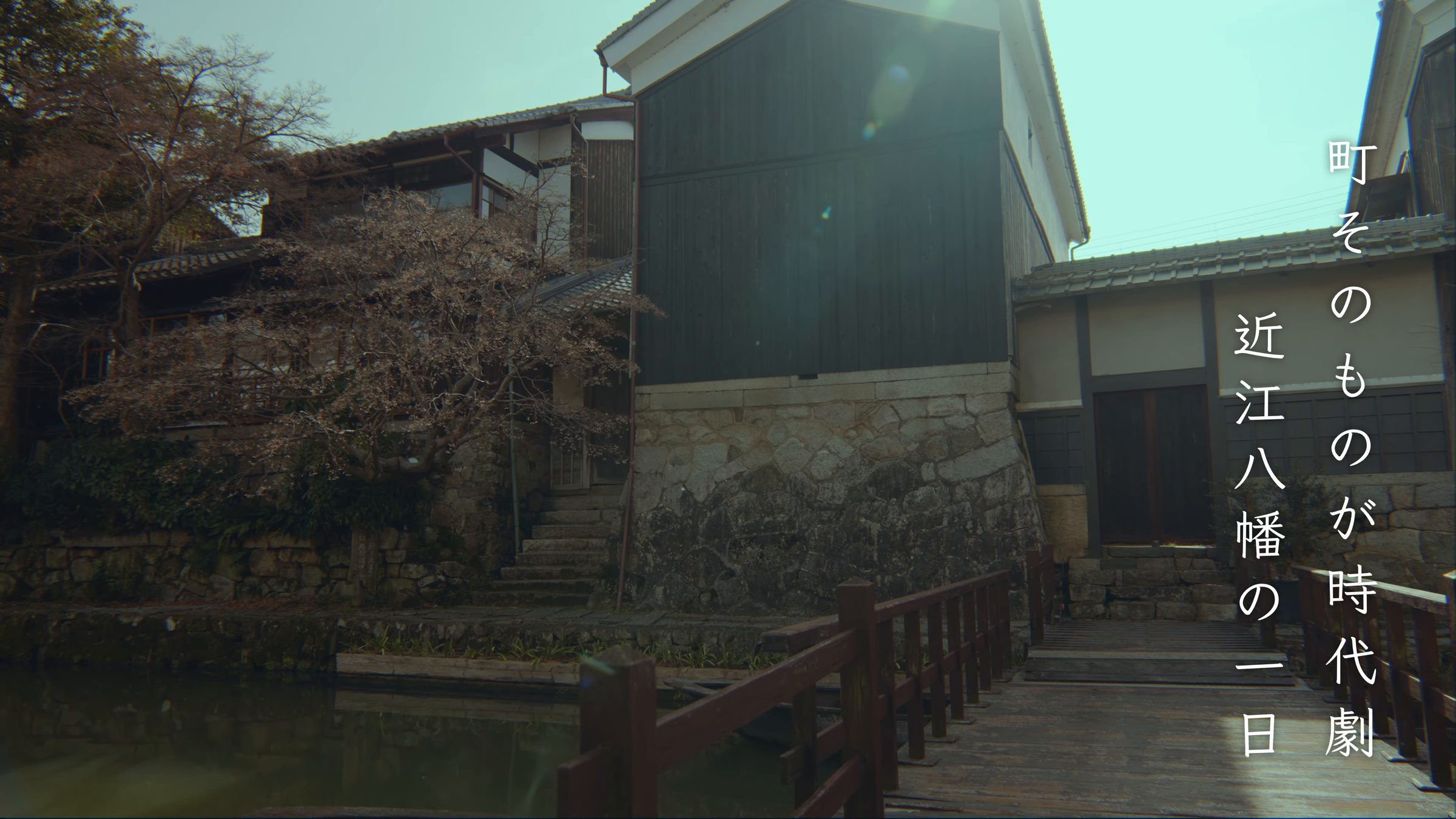
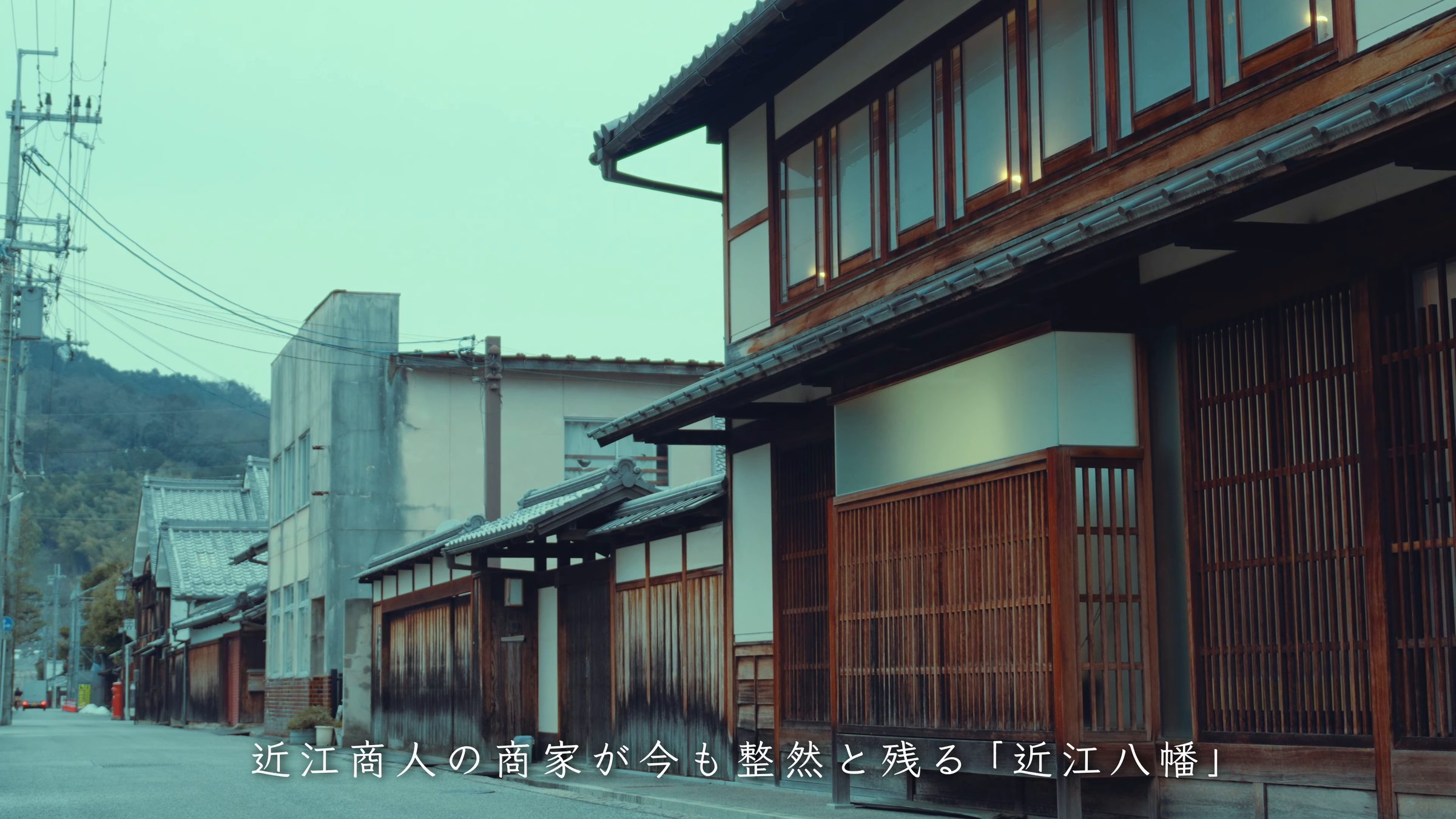
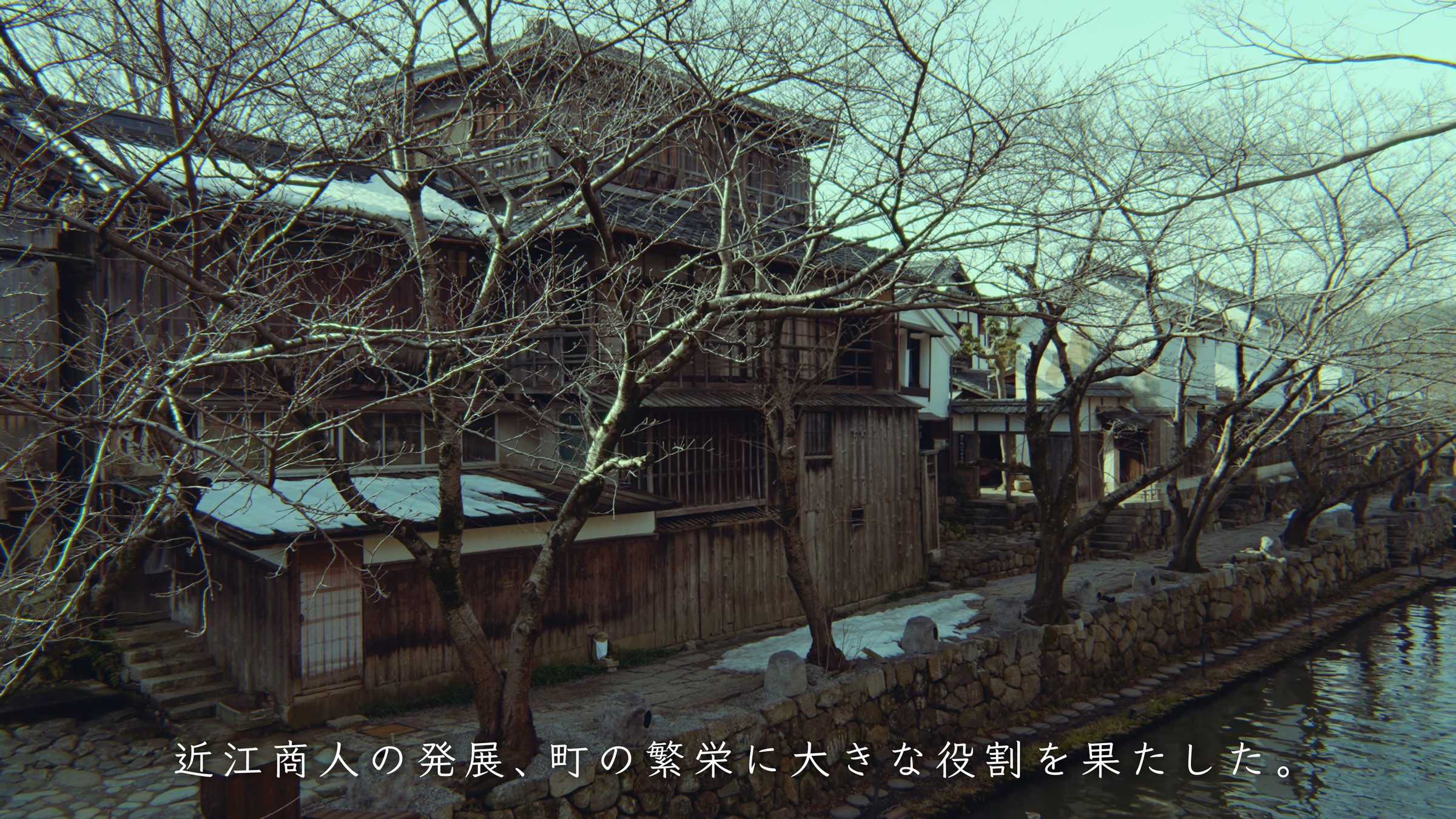
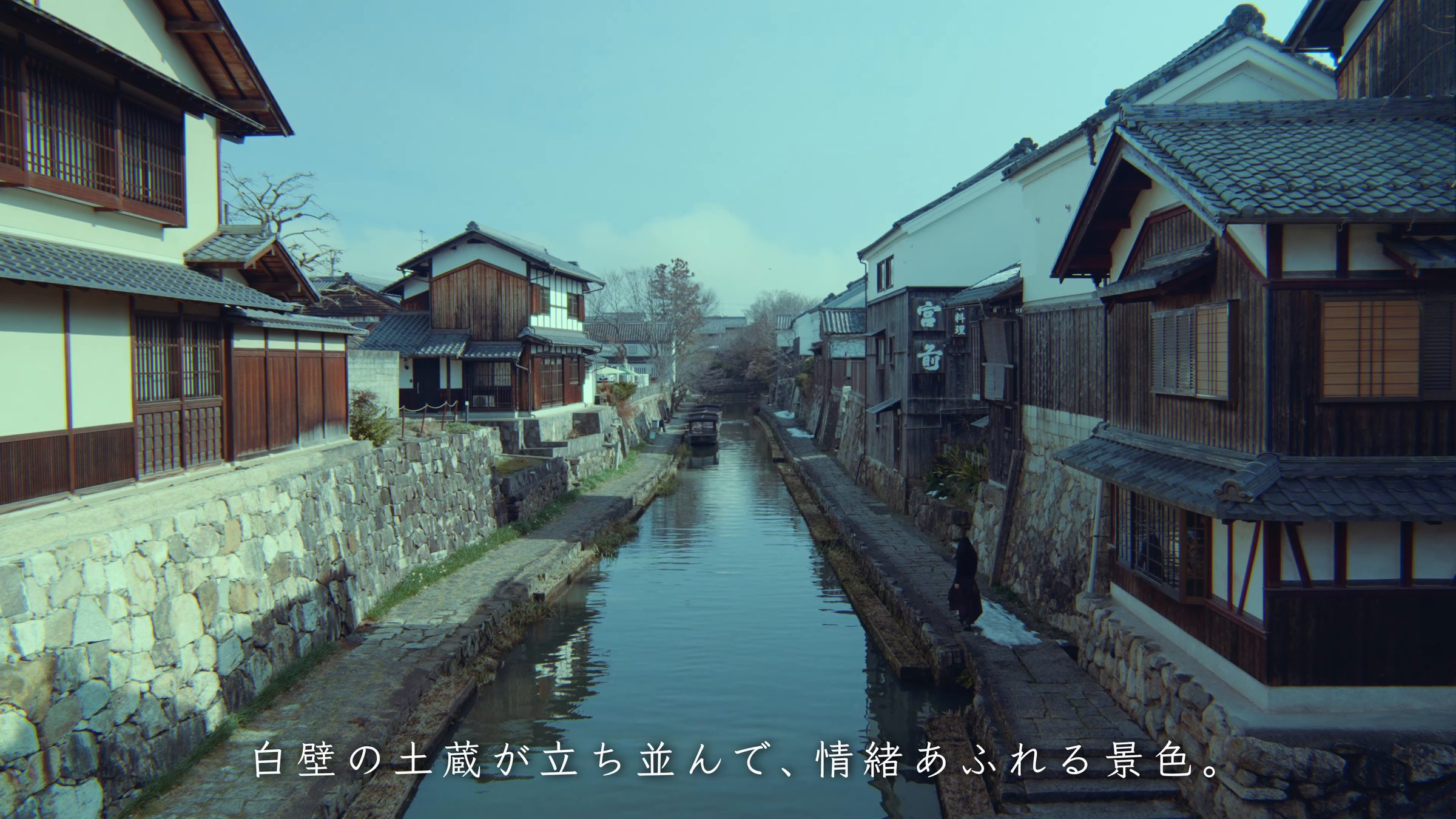
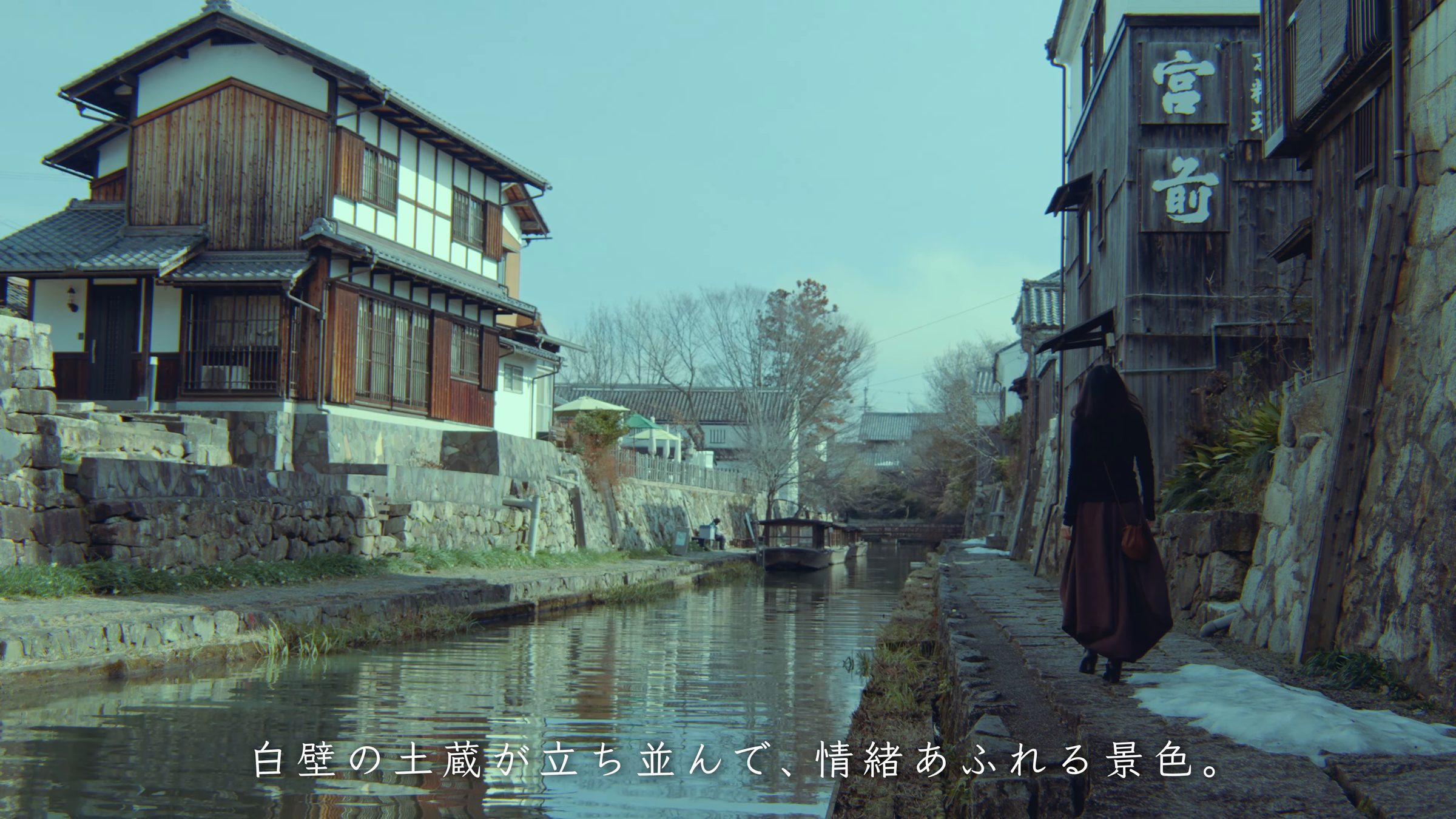
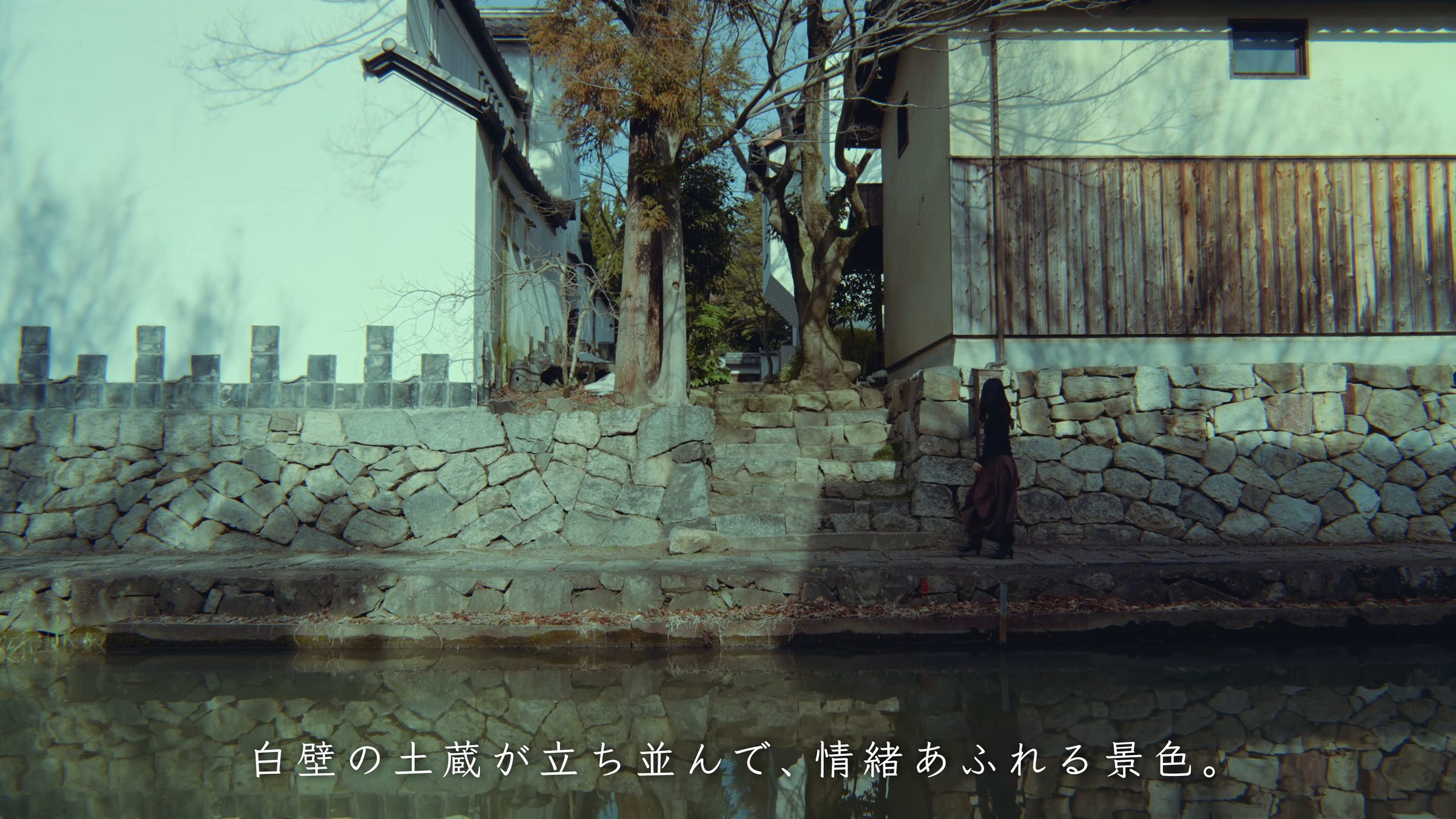
Omihachiman, in Shiga Prefecture, is a town where the houses of the Omi merchants, built from the last years of the Edo period into the Meiji era, still stand in orderly rows. White-walled storehouses line the canal, and roofed boats drift slowly along the water.
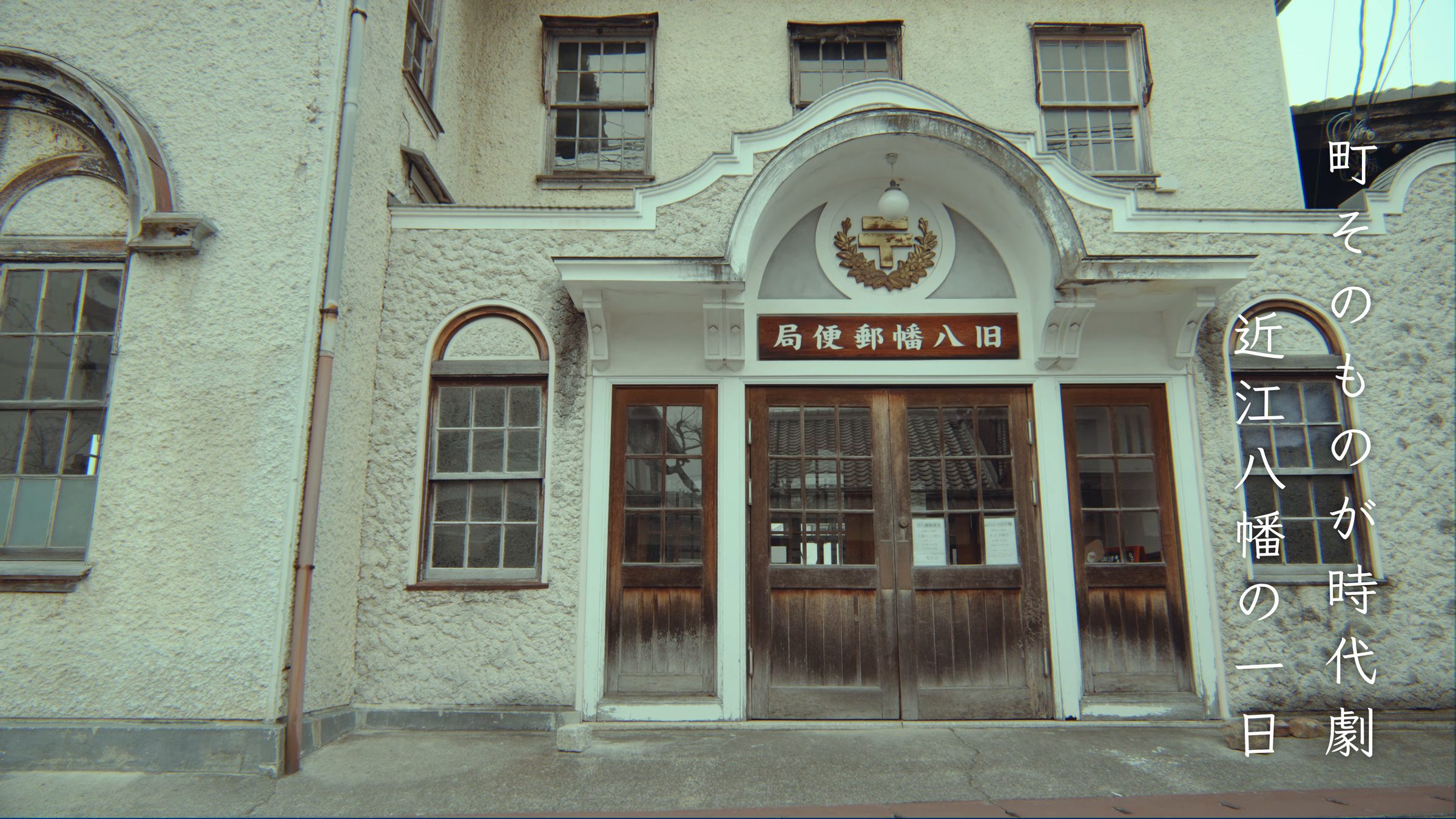
Walking along the canal, past storehouses perched on stone walls, I came to the old Hachiman Post Office, designed by William Merrell Vories and built in 1921: cream-colored walls and an arched entrance. The whole town felt like the set of a period drama.
Watch this scene on YouTube0:20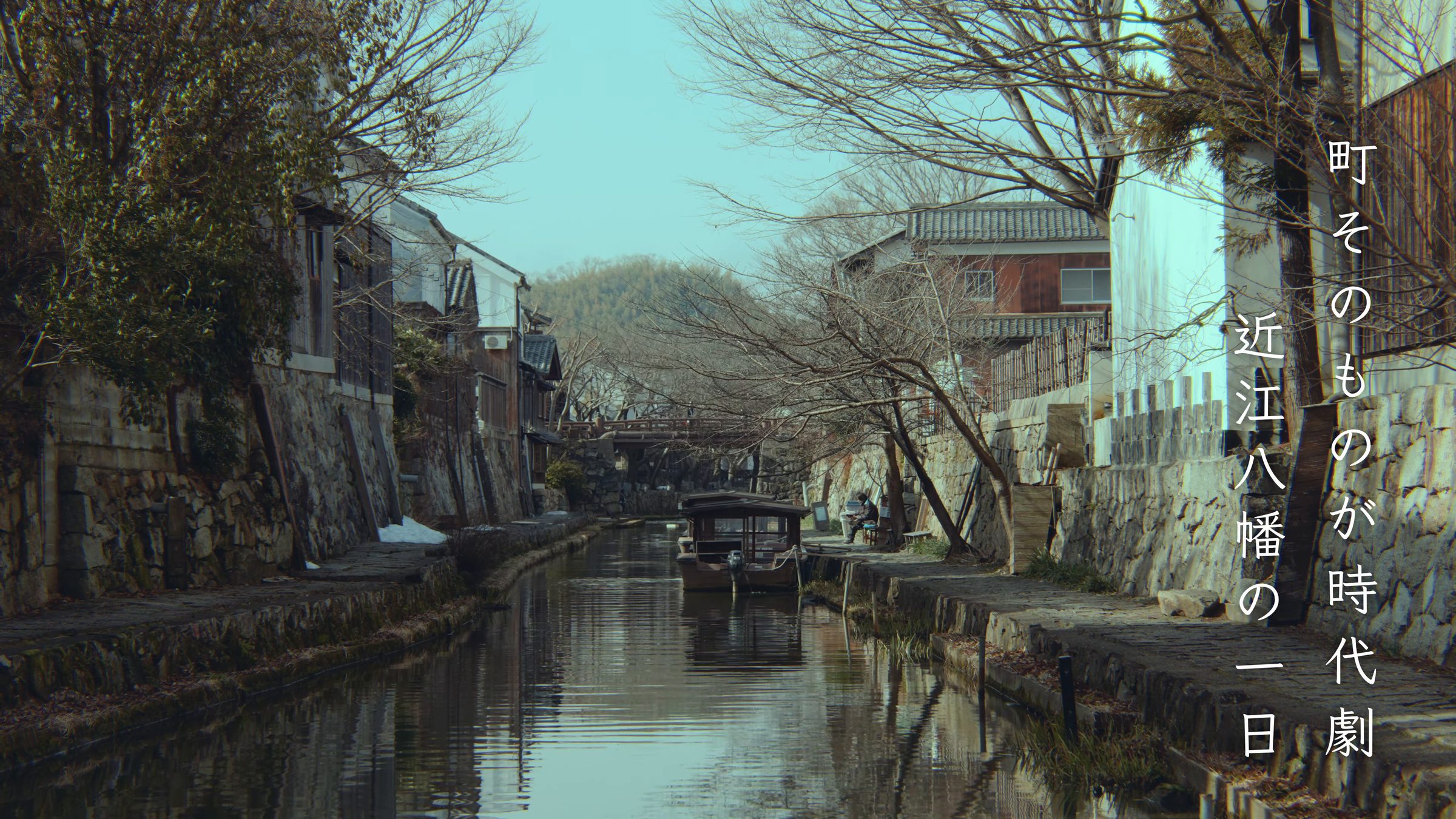
02TRAVEL JOURNAL
A townhouse where time stands still
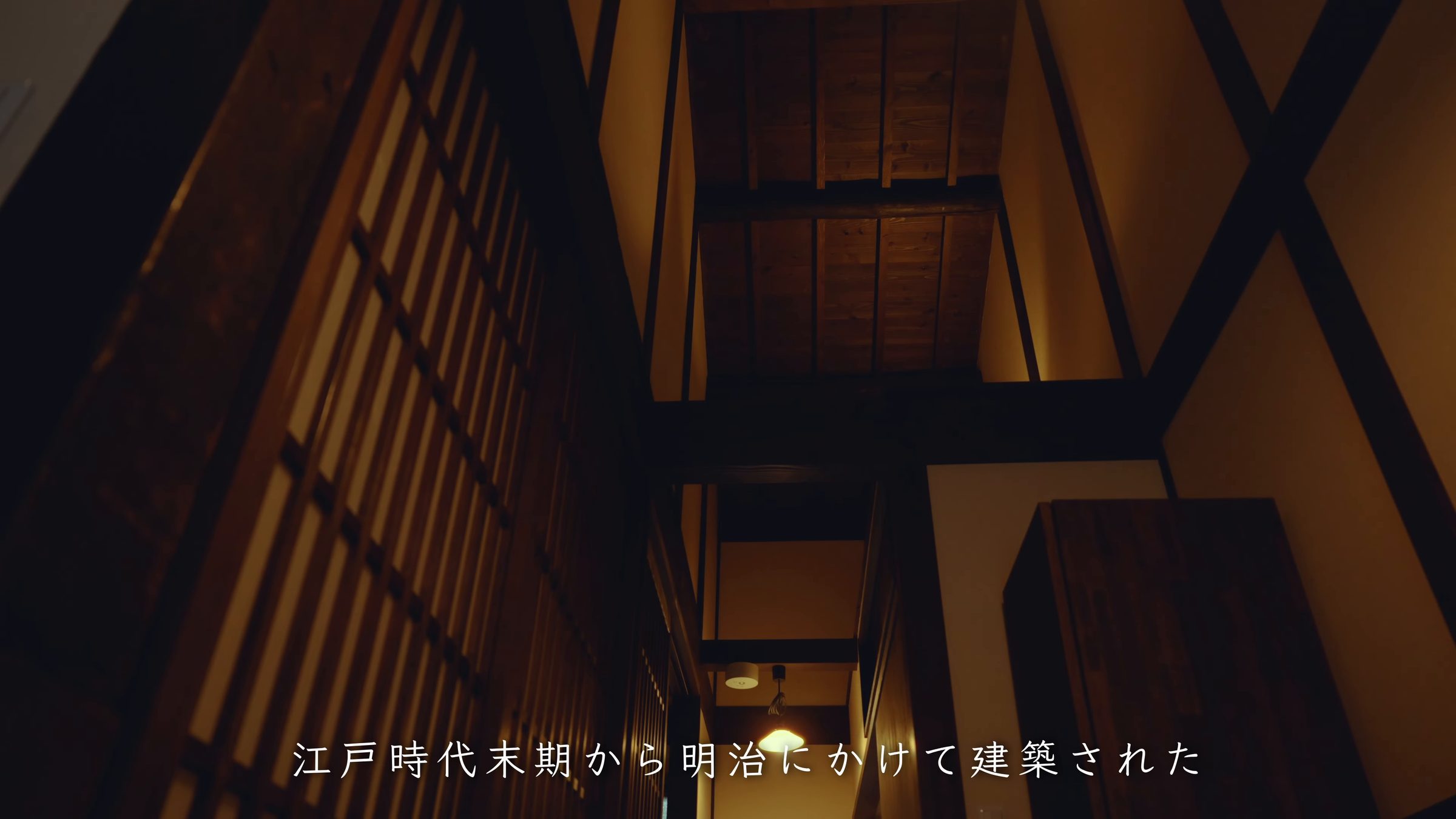
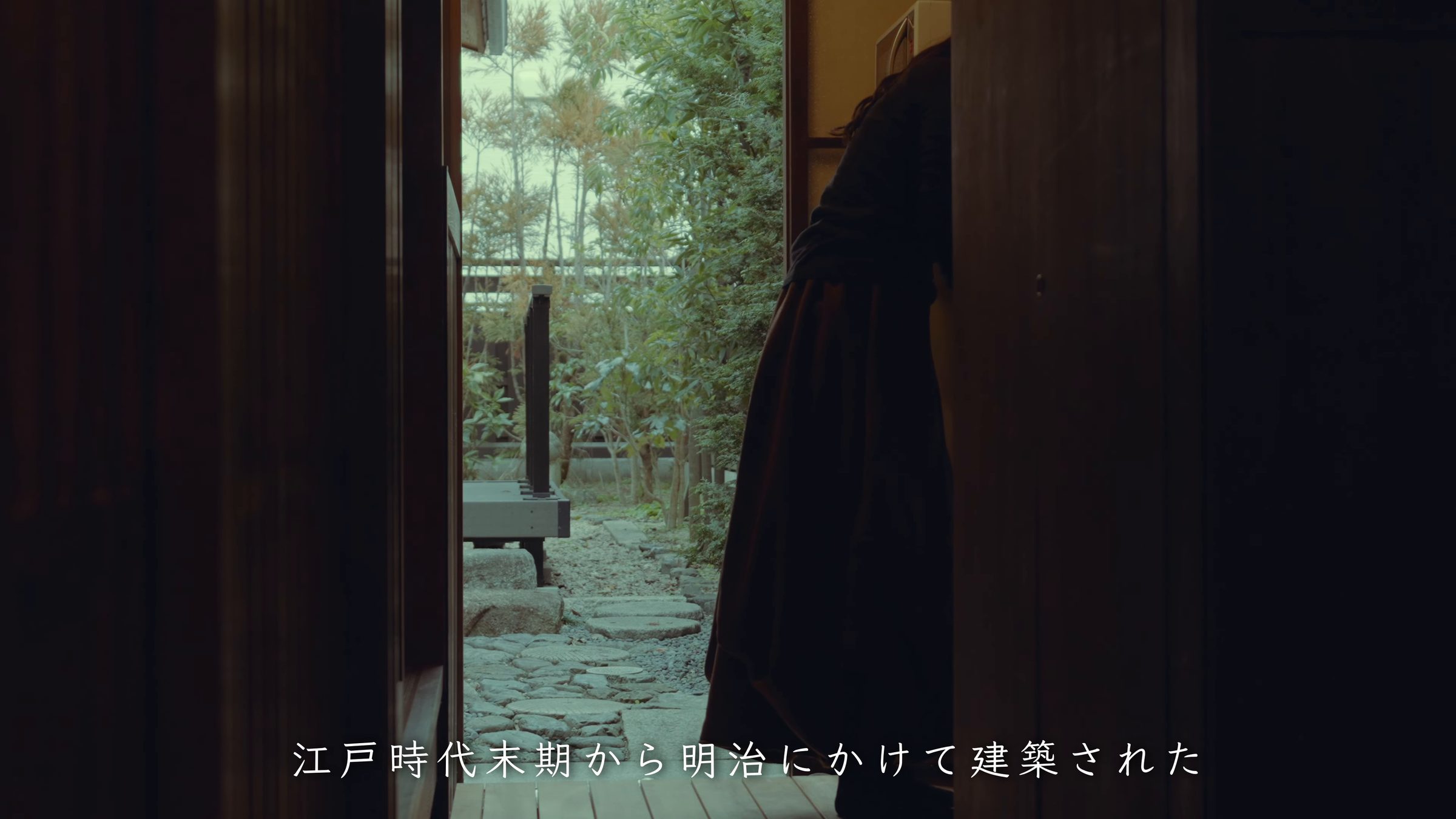
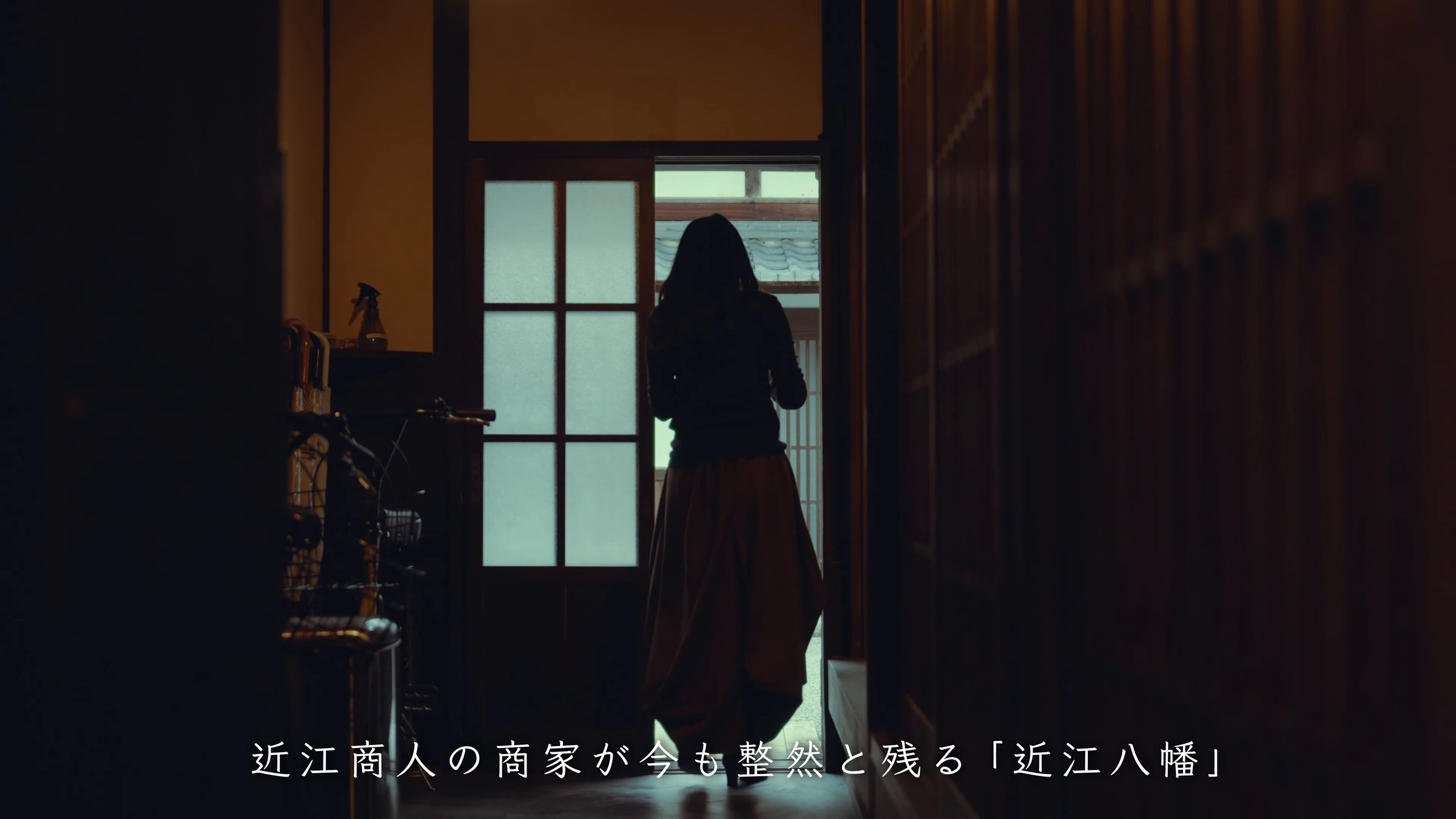
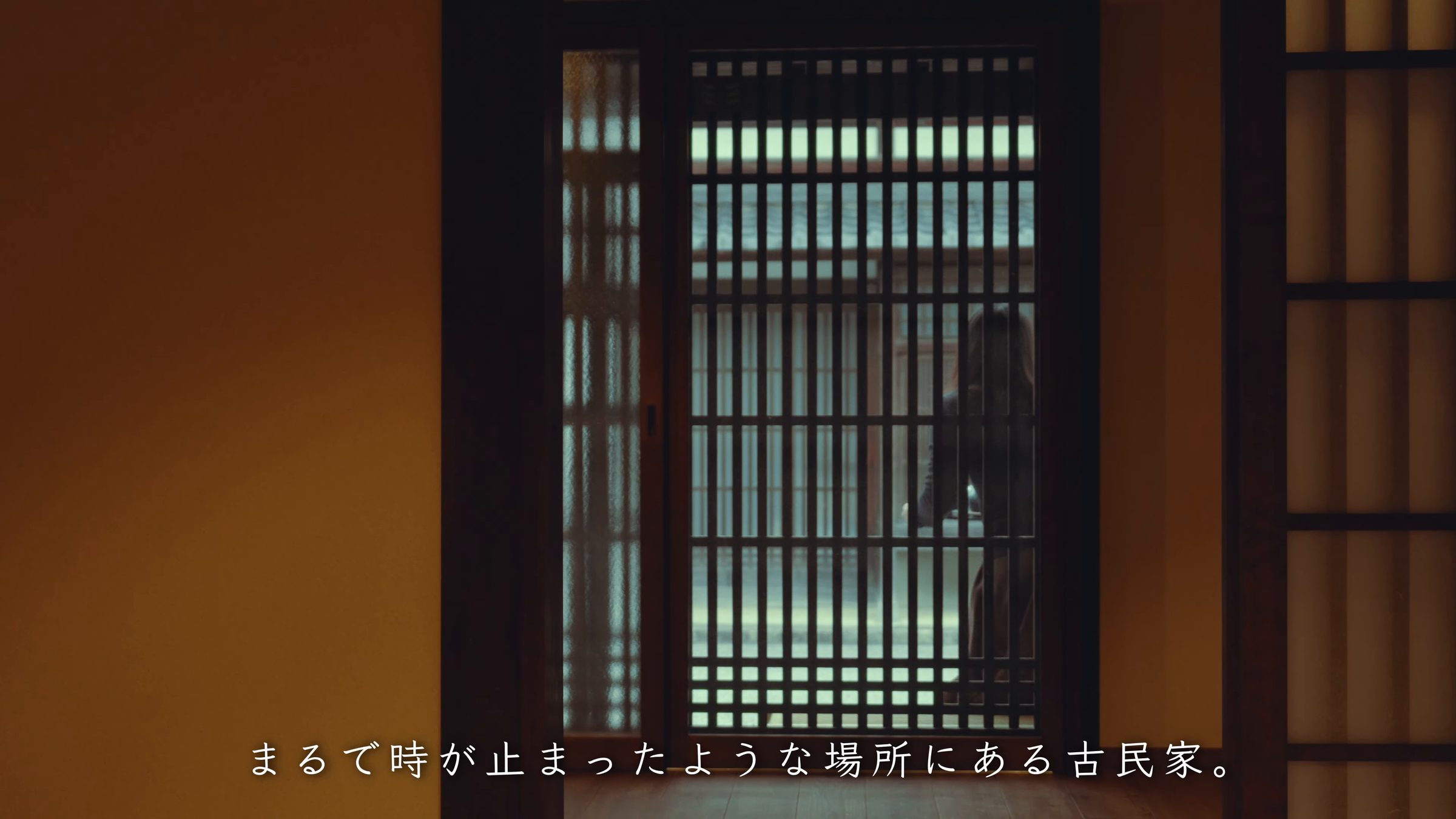
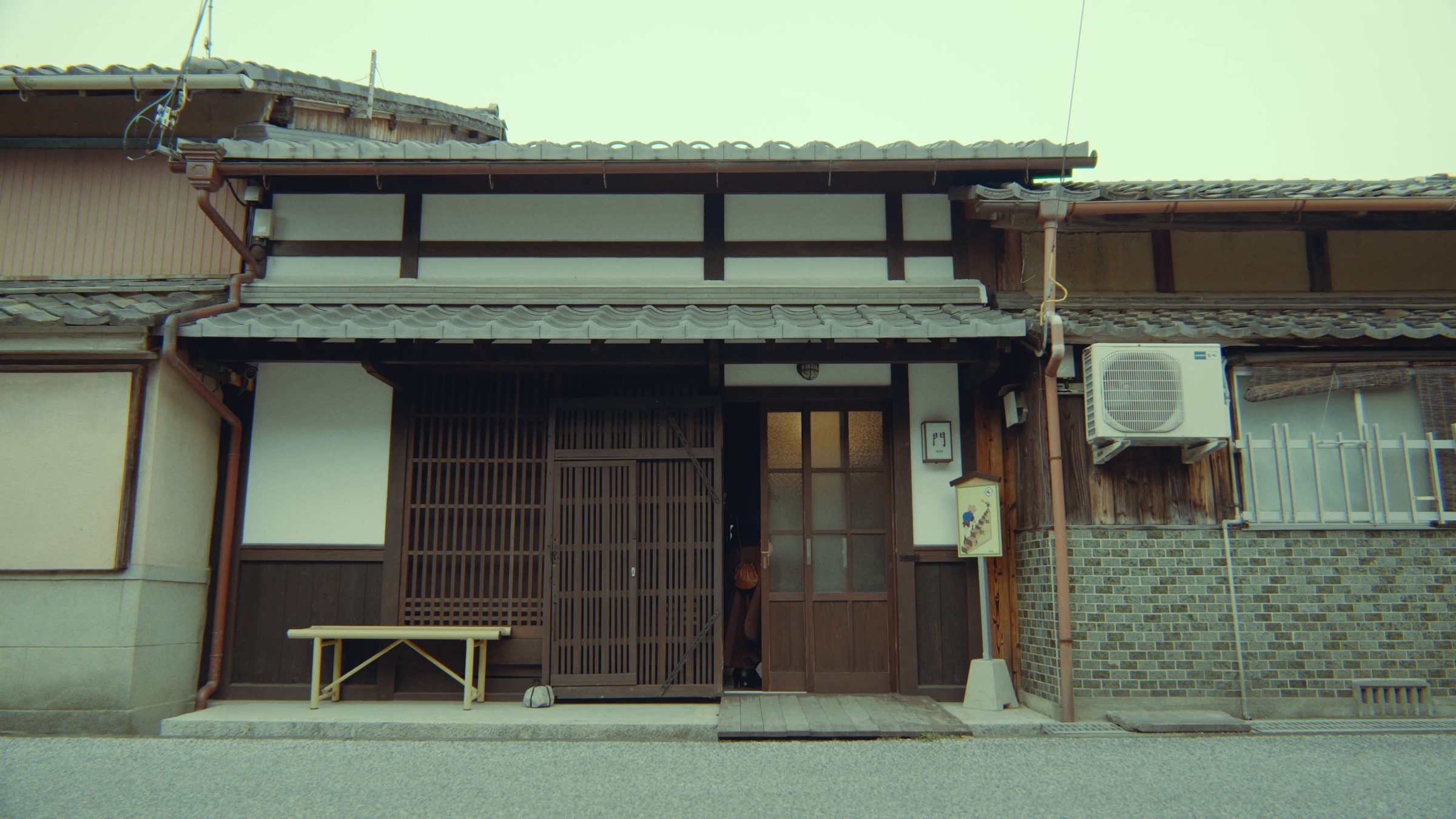
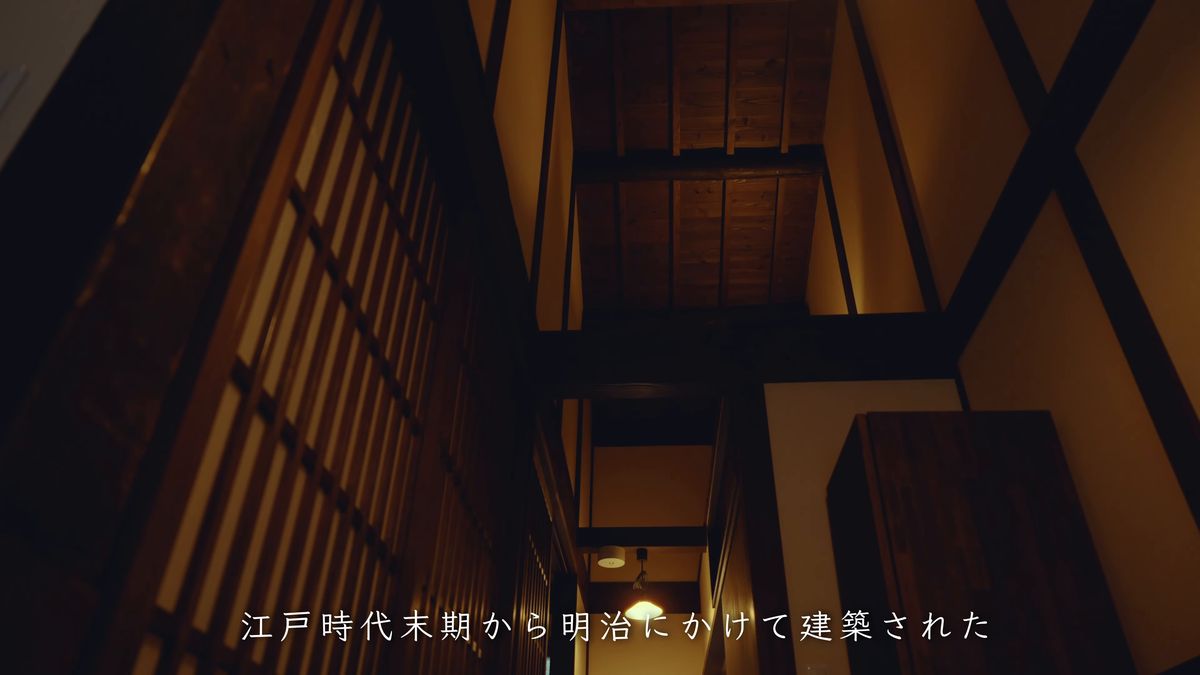
The house I borrowed this time is a townhouse built at the very end of the Meiji era. A small lantern hangs beside the gate, and beyond the latticed sliding door a dim corridor runs deep into the house under exposed beams, ending at a small stone-paved garden.
Out on the street, merchant houses with latticed windows and white walls stand in neat rows. Back inside, light through the shoji fell softly on the tatami. It is an old house in a place where time seems to have stopped.
Watch this scene on YouTube0:25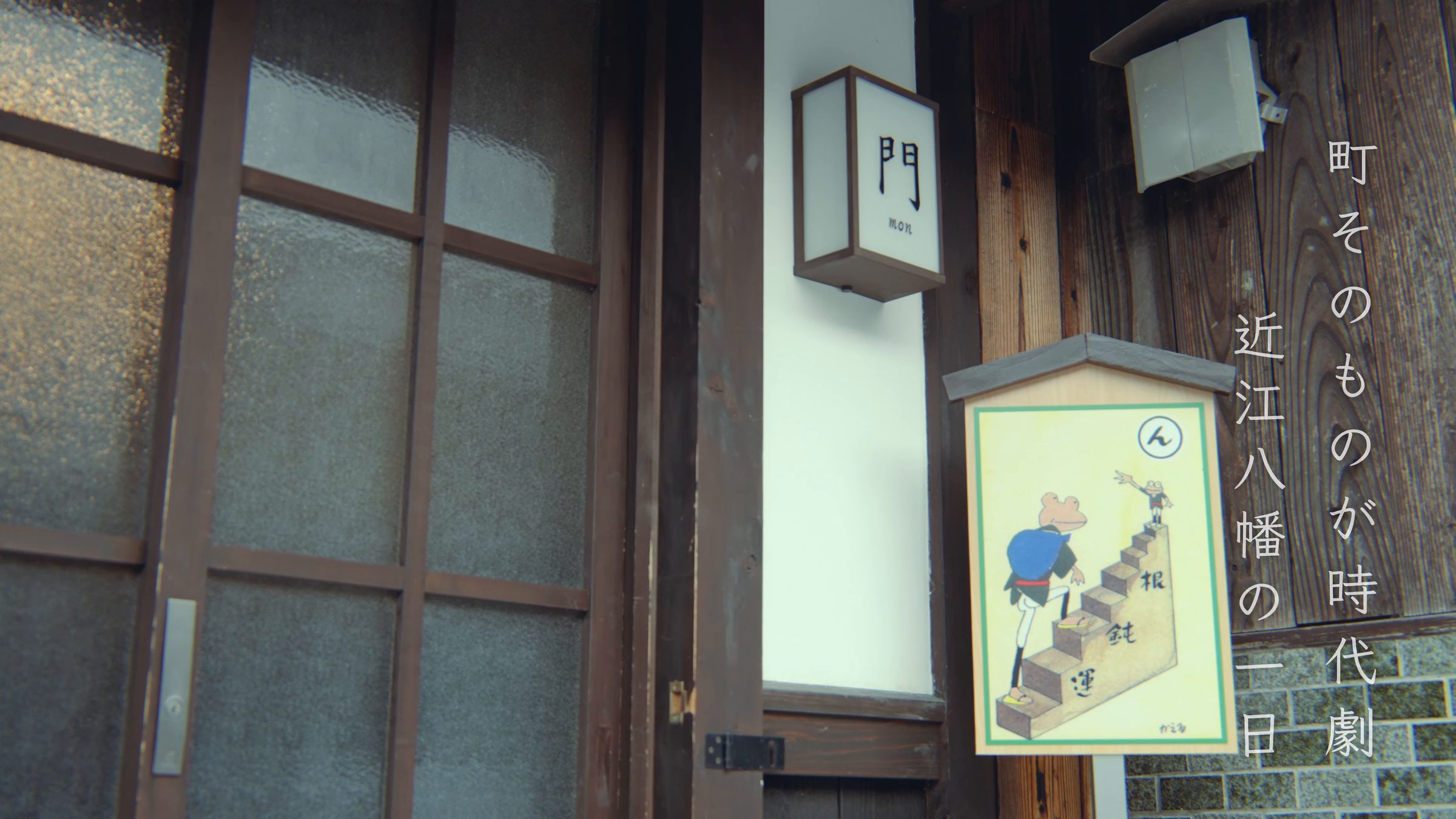
03TRAVEL JOURNAL
Ochazuke with funazushi
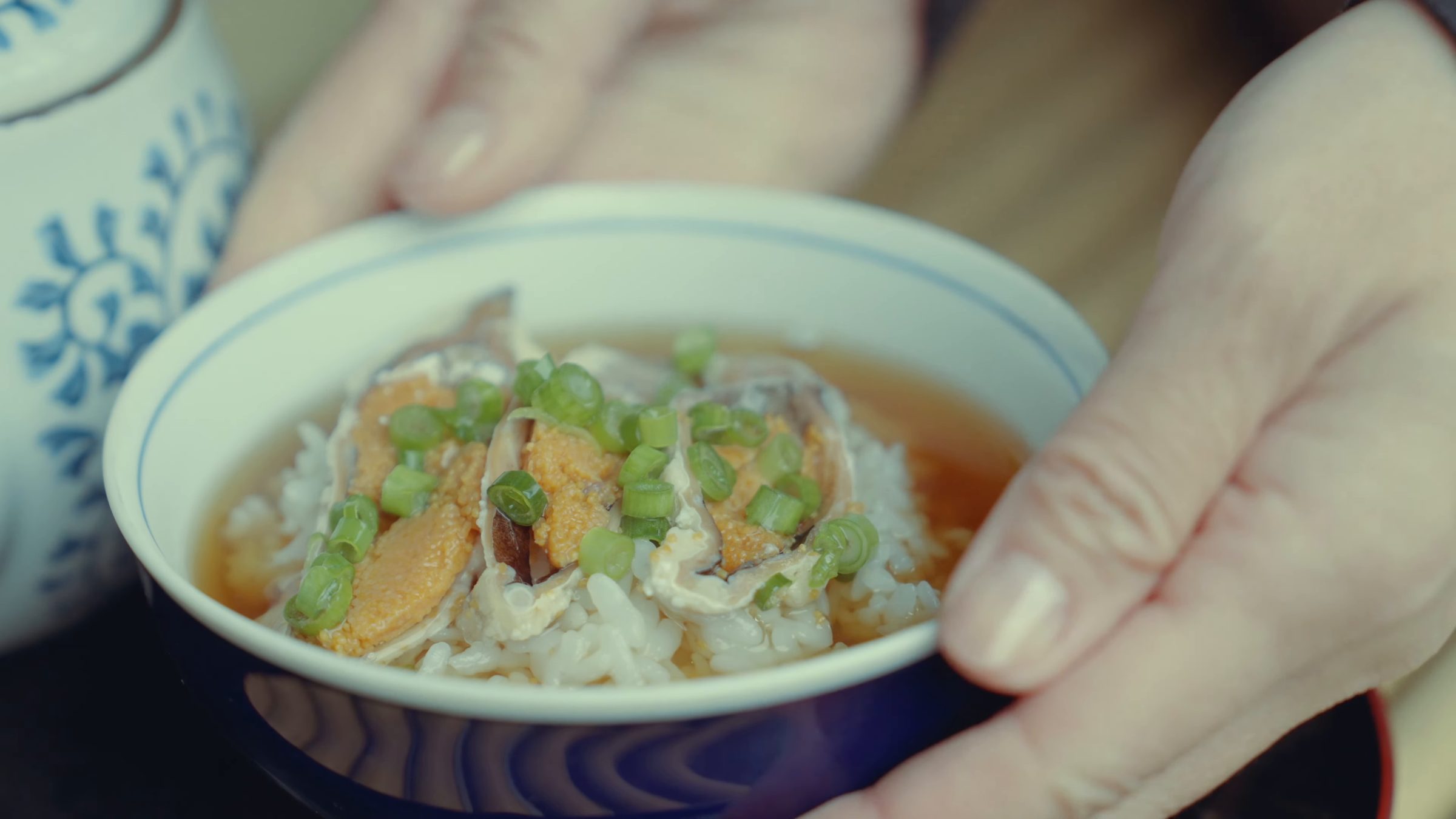
Breakfast was ochazuke made with funazushi, a Shiga specialty. Thin slices of the fish go on the rice with a scattering of chopped green onion, and hot broth is poured over the top.
Funazushi is an old style of fermented sushi: crucian carp from Lake Biwa, salted and then packed in rice for more than half a year. Its mature, rich sourness slowly unfolds in the broth.
Watch this scene on YouTube0:43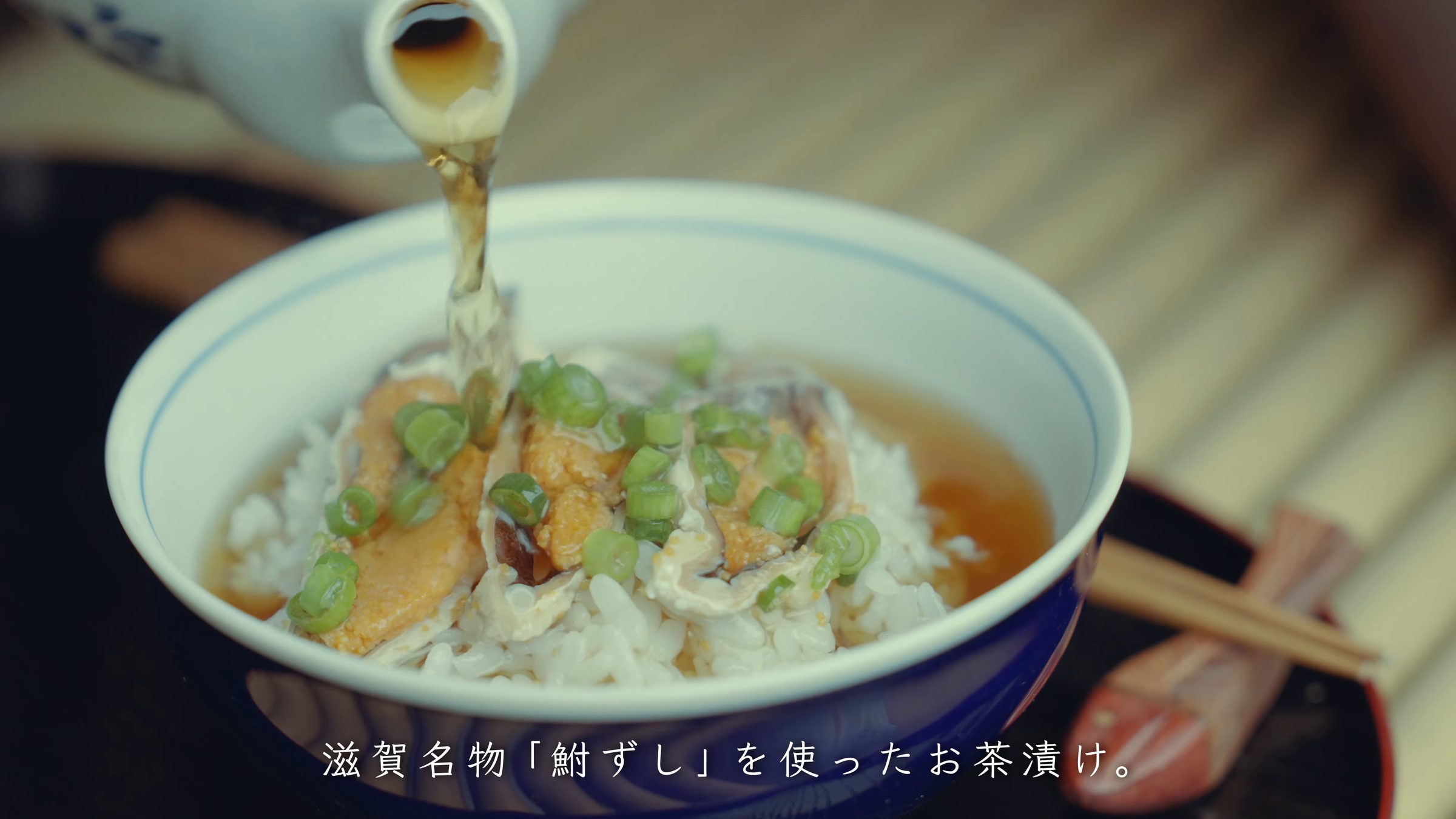
04TRAVEL JOURNAL
Along the Hachimanbori canal by wooden boat
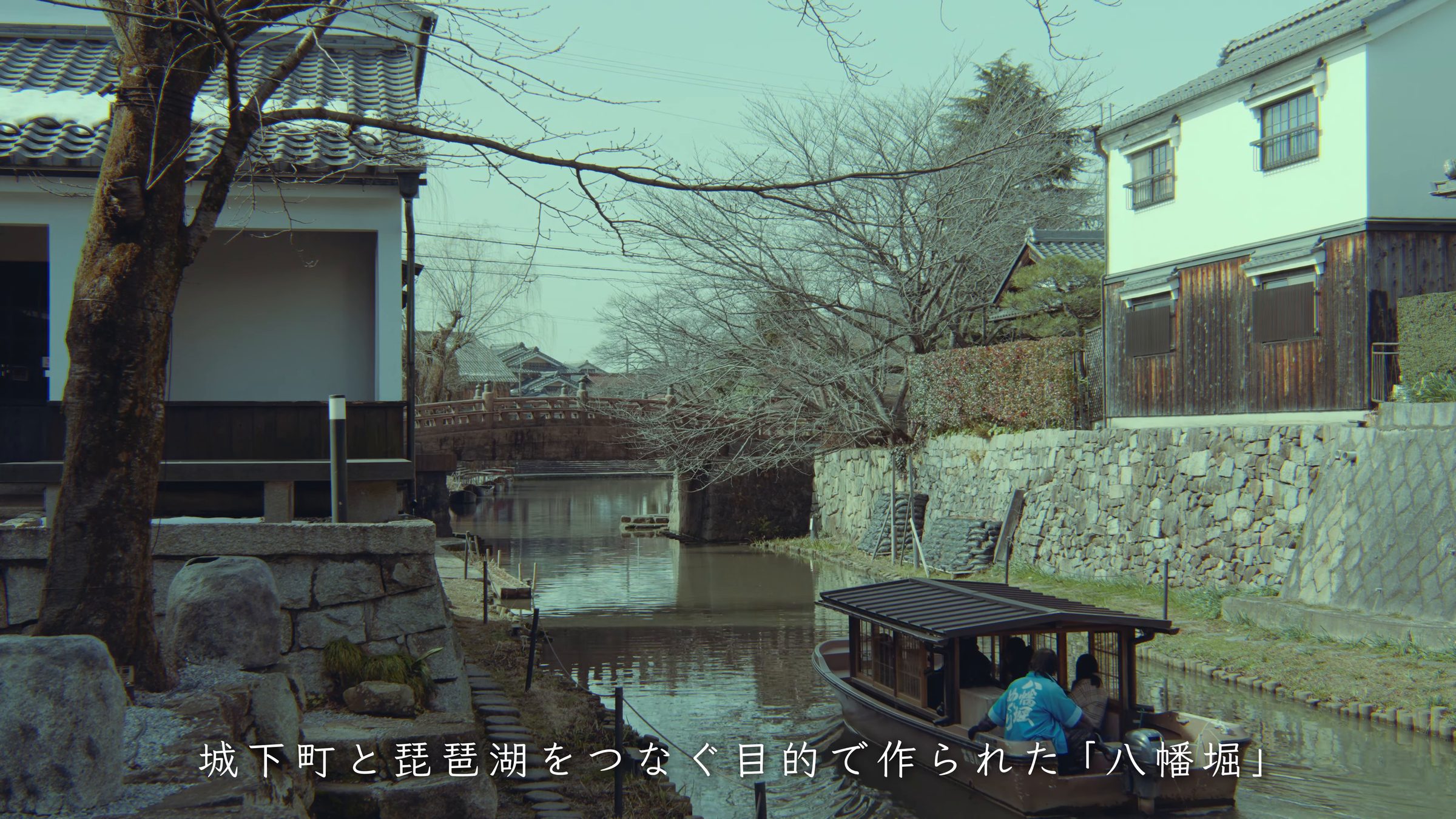
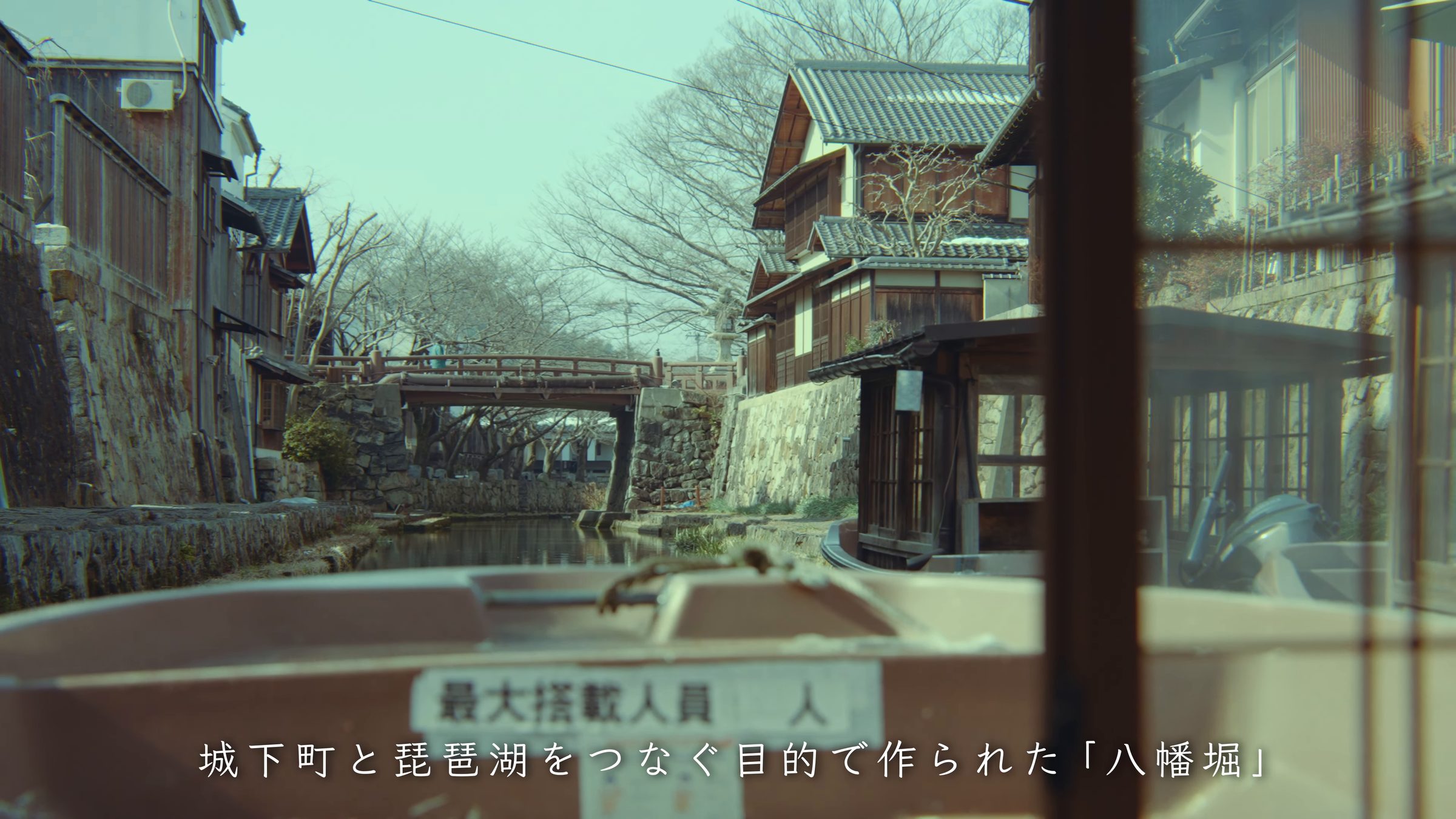
Past a street of shop signs, I reached the Hachimanbori canal. It was dug in 1585, when Toyotomi Hidetsugu built his castle on Mt. Hachiman, to link the castle town with Lake Biwa. Boats crossing the lake called here, people and goods gathered, and the canal played a major role in the rise of the Omi merchants and the prosperity of the town.
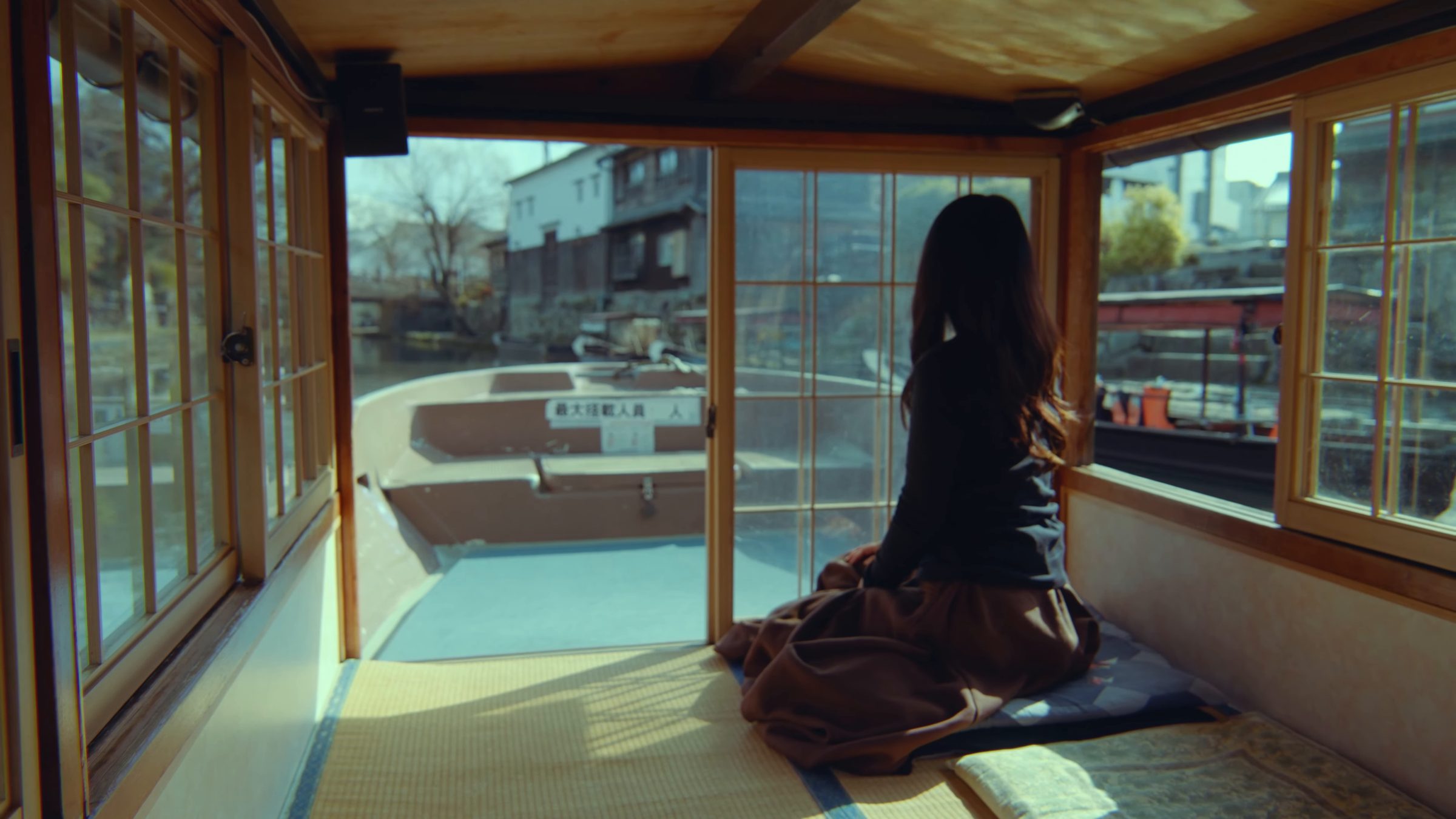
I climbed into a wooden boat with a roof and windows, sat on the tatami, and watched the town from the water. White-walled storehouses stand on stone embankments, and bare cherry trees stretch their branches over the surface. The boat moved slowly through the atmospheric scenery.
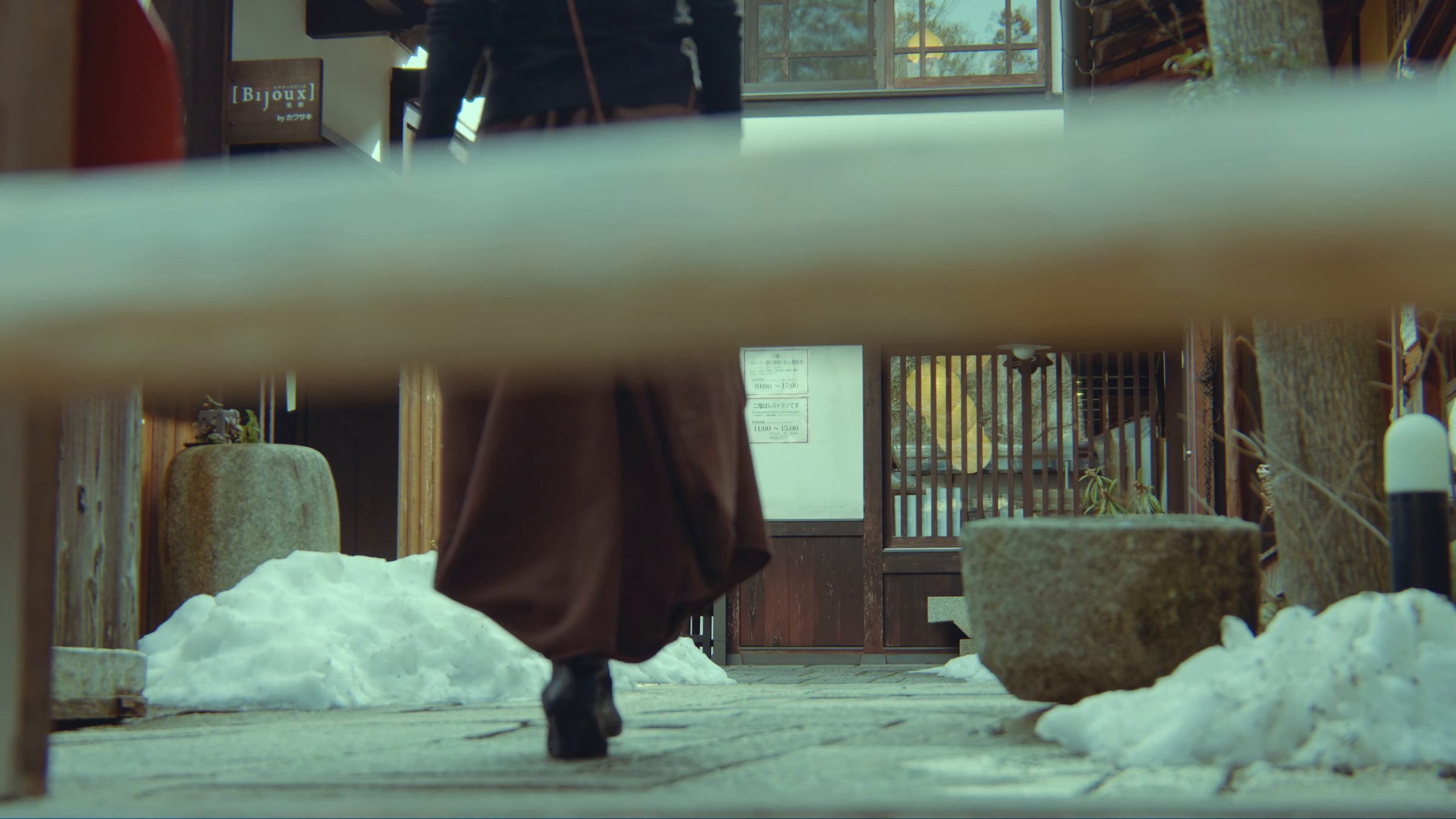
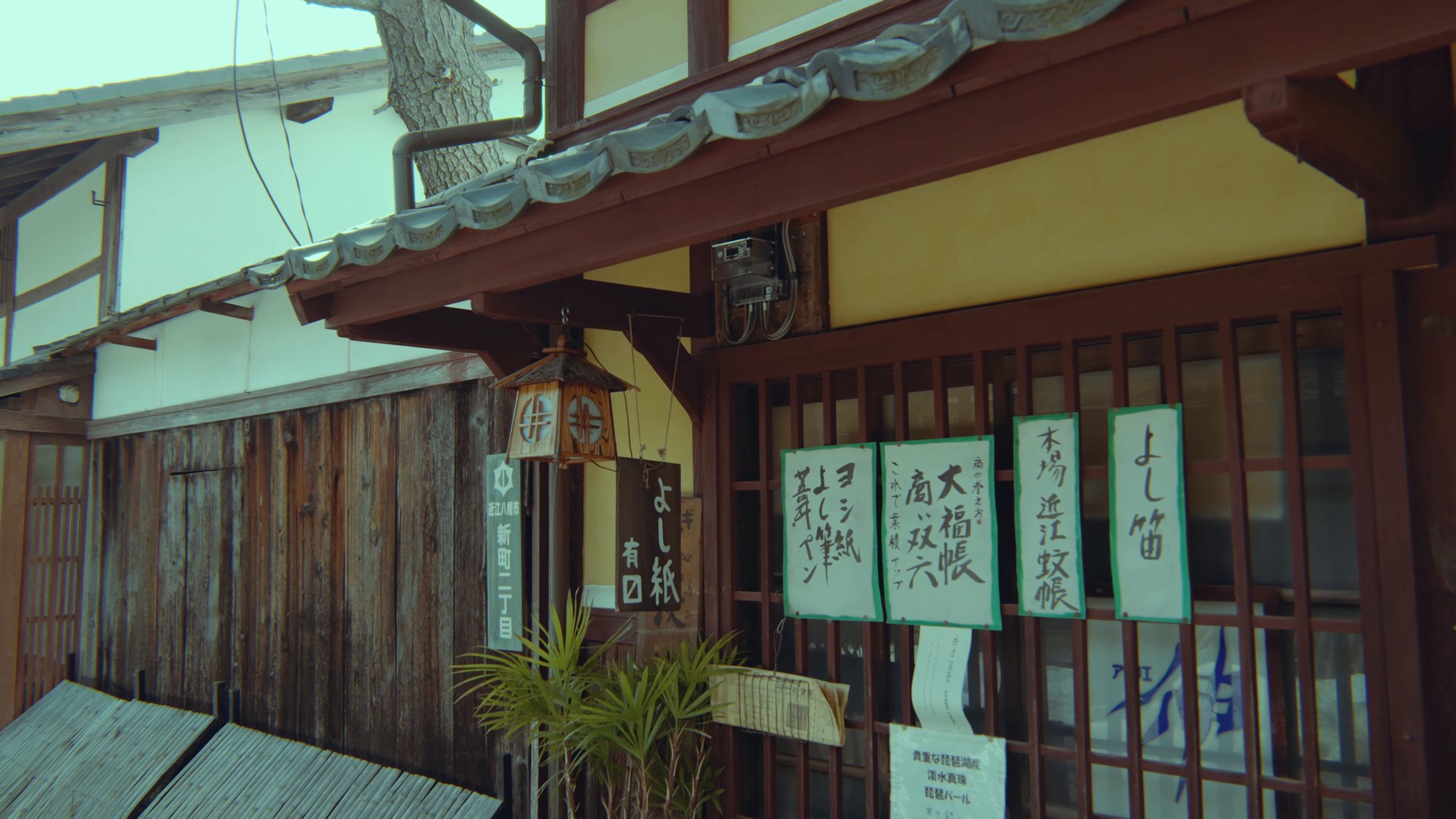
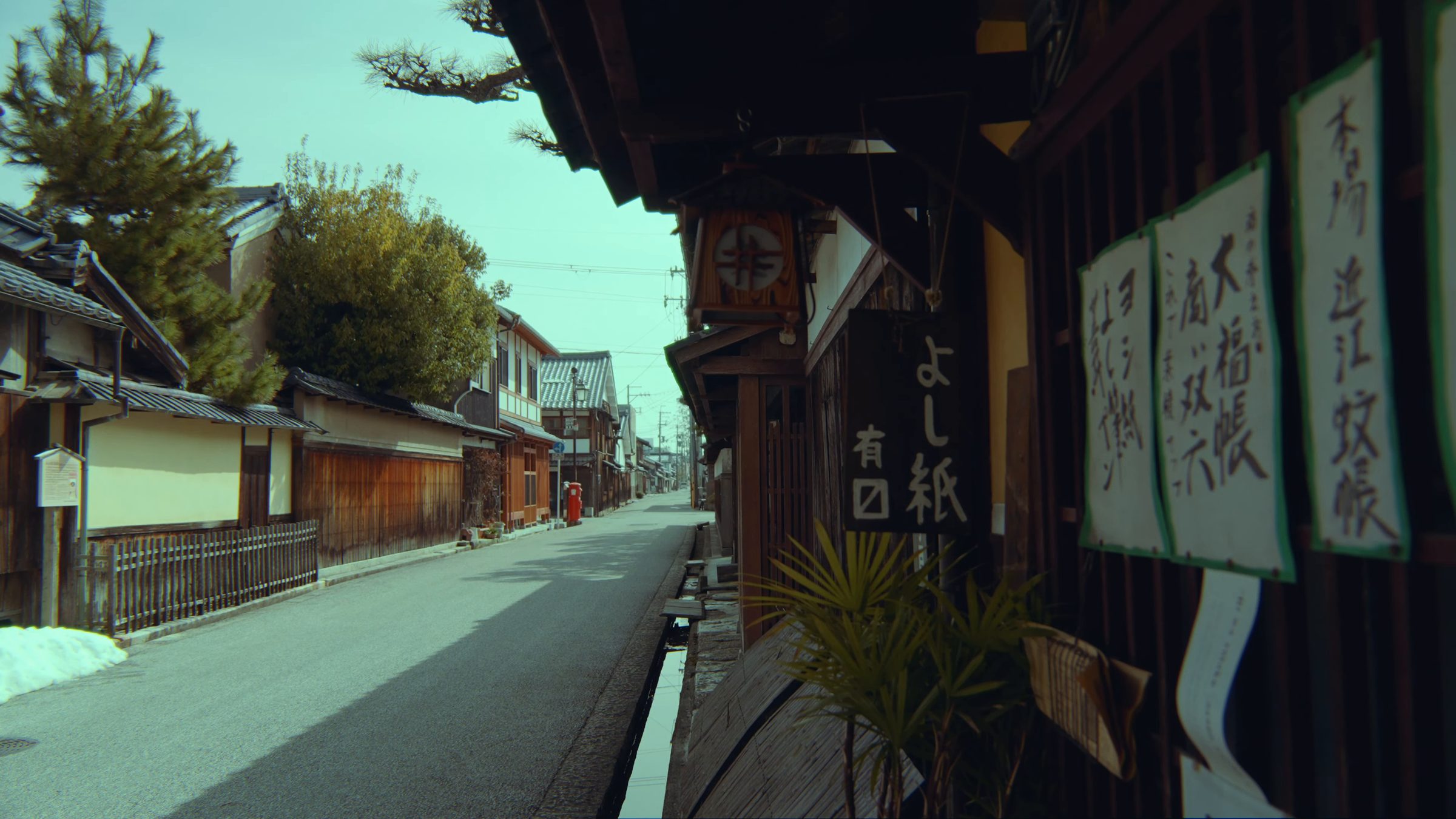
Back on land, I walked along stone pavements still patched with snow. On the latticed window of a souvenir shop were notices for reed flutes, Omi mosquito nets and freshwater pearls from Lake Biwa. The white-walled street ran straight ahead.
Watch this scene on YouTube0:54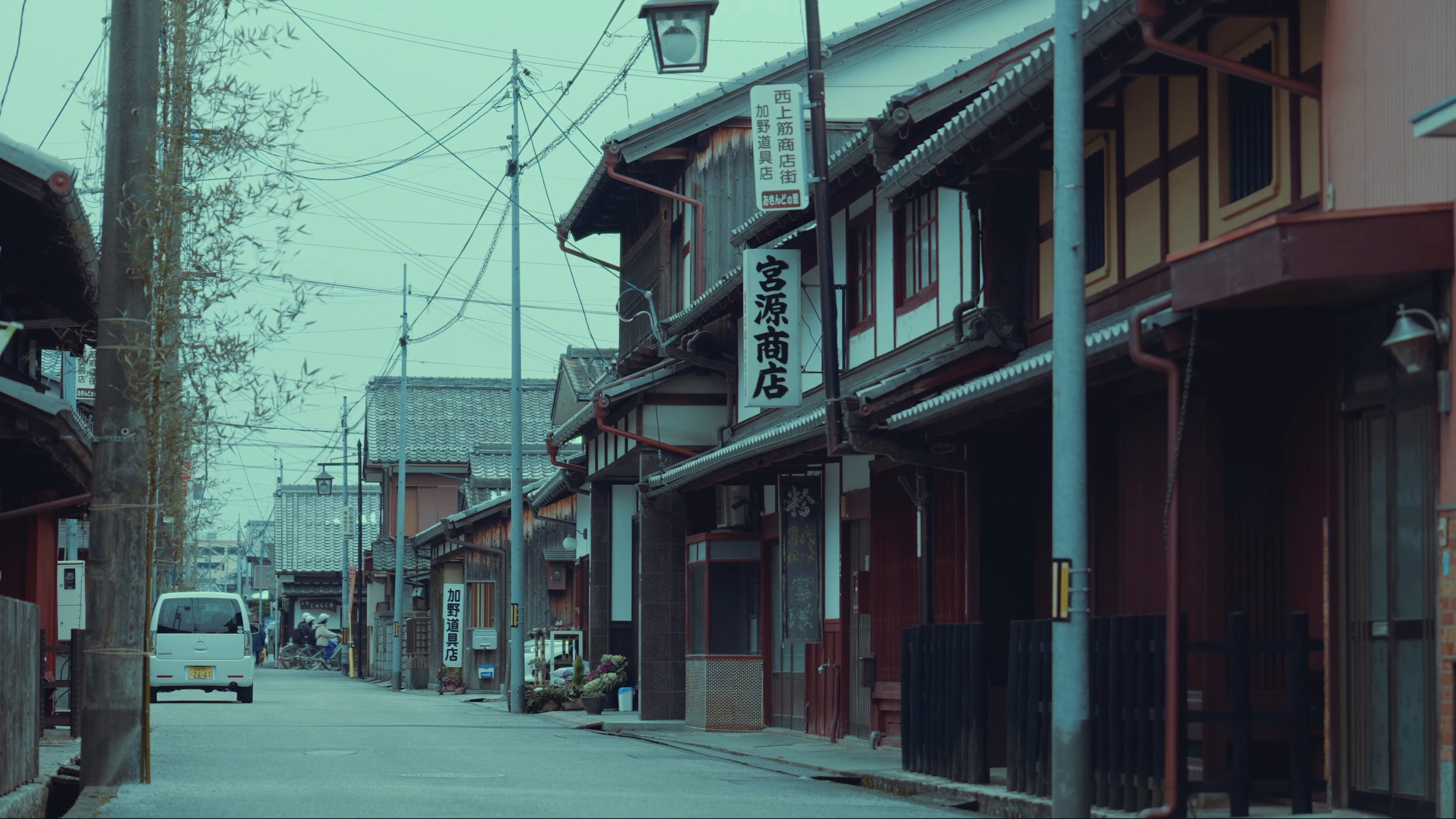
05TRAVEL JOURNAL
Lunch at a Showa-era diner
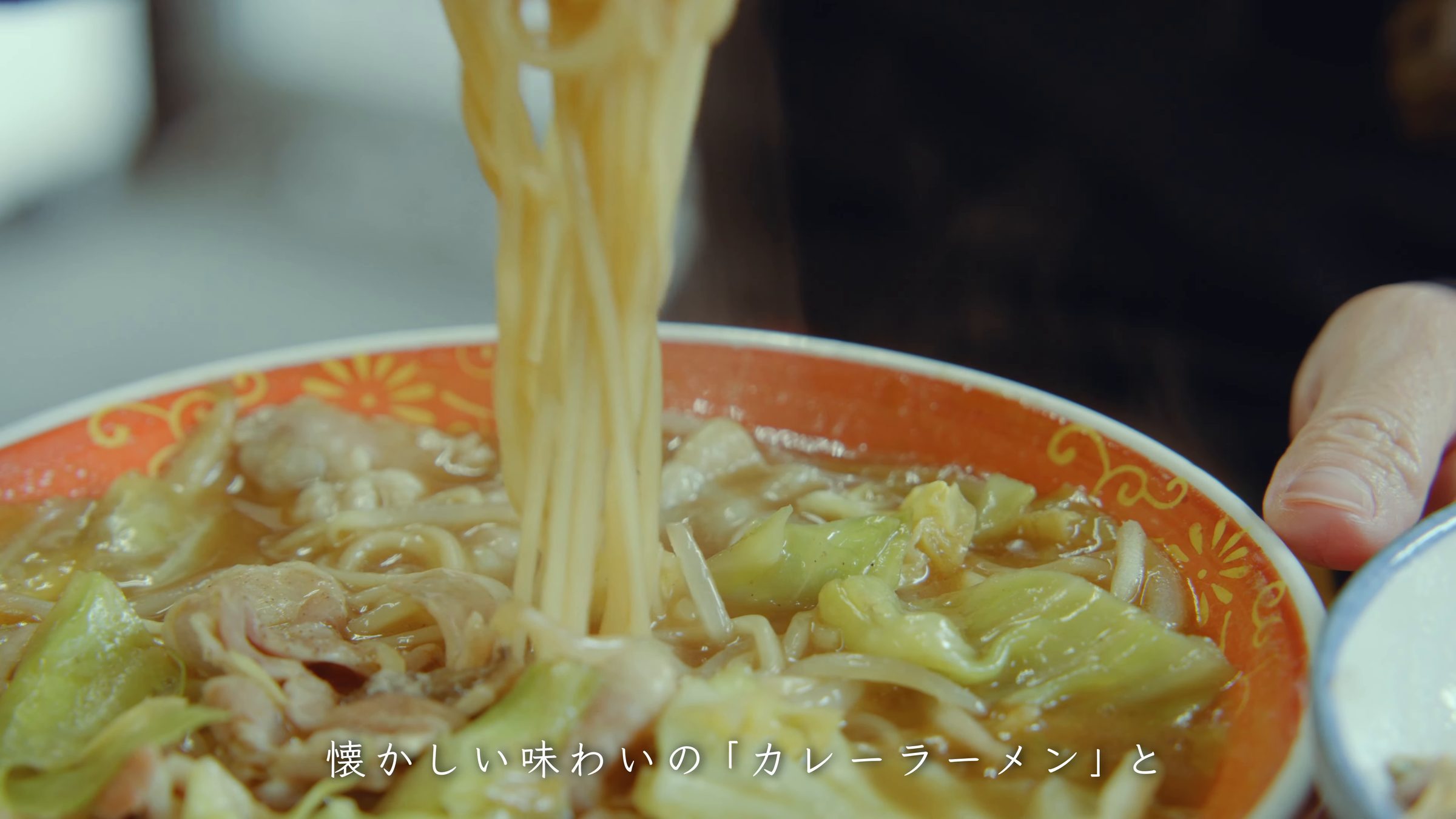
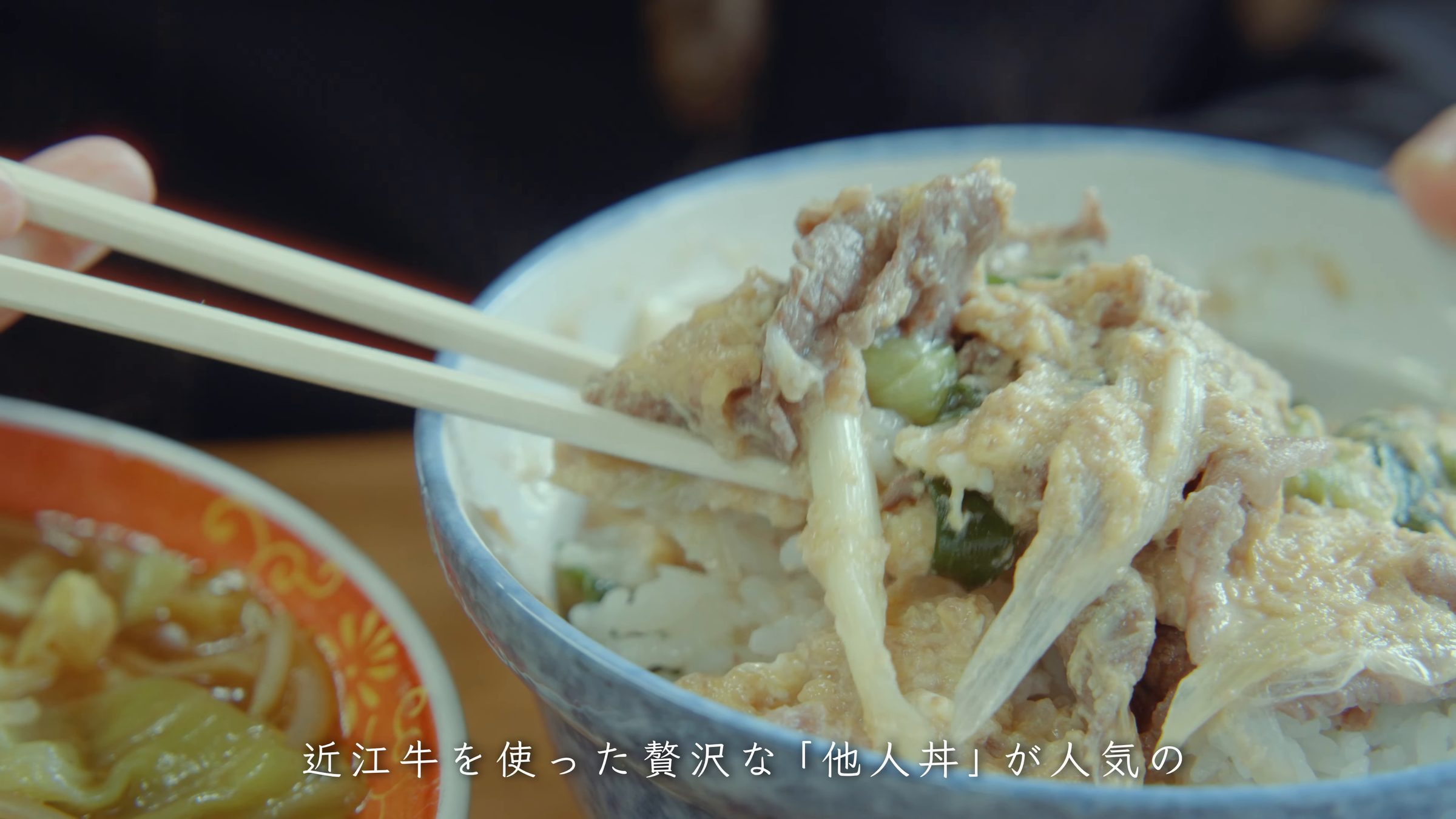
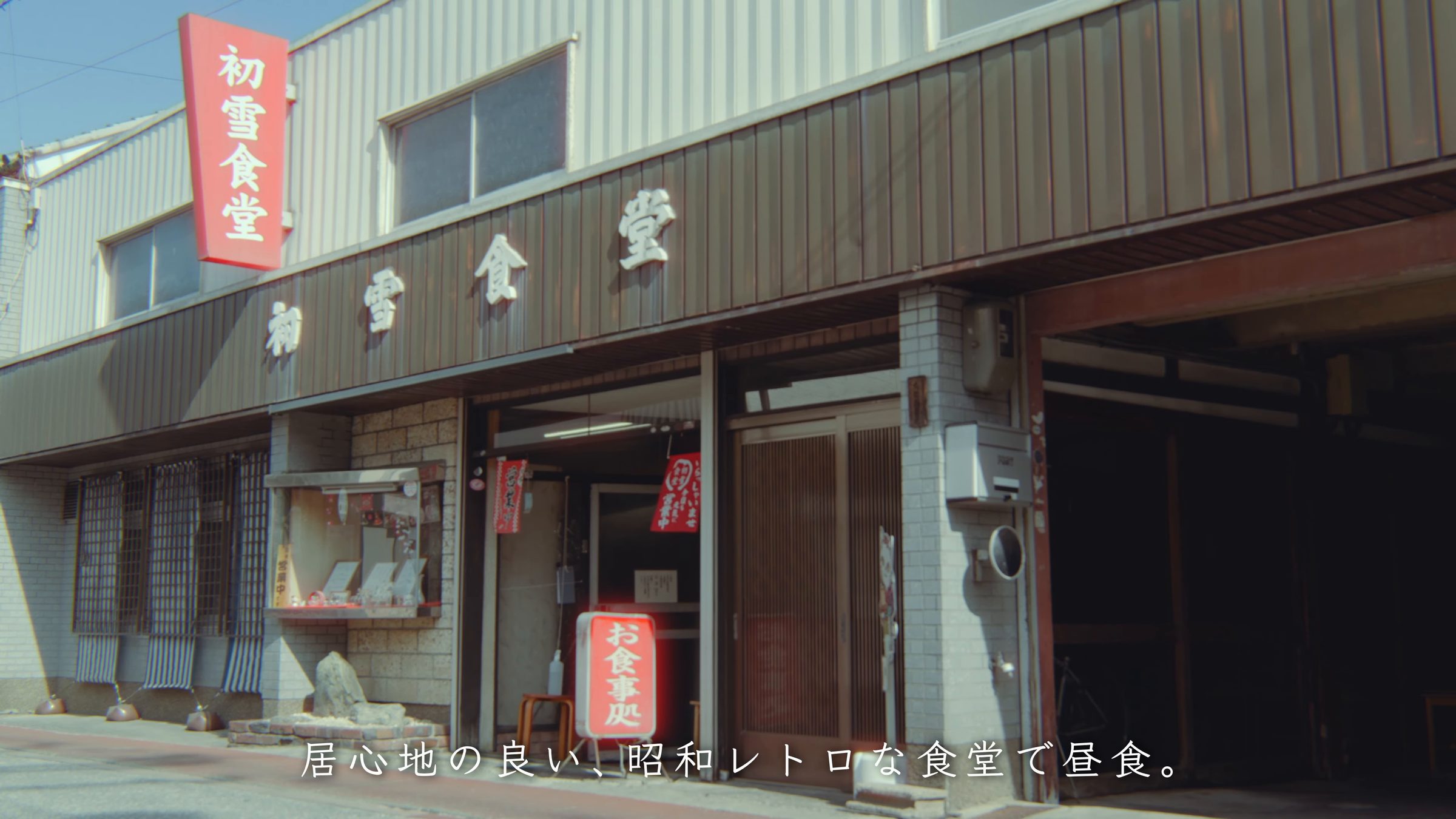
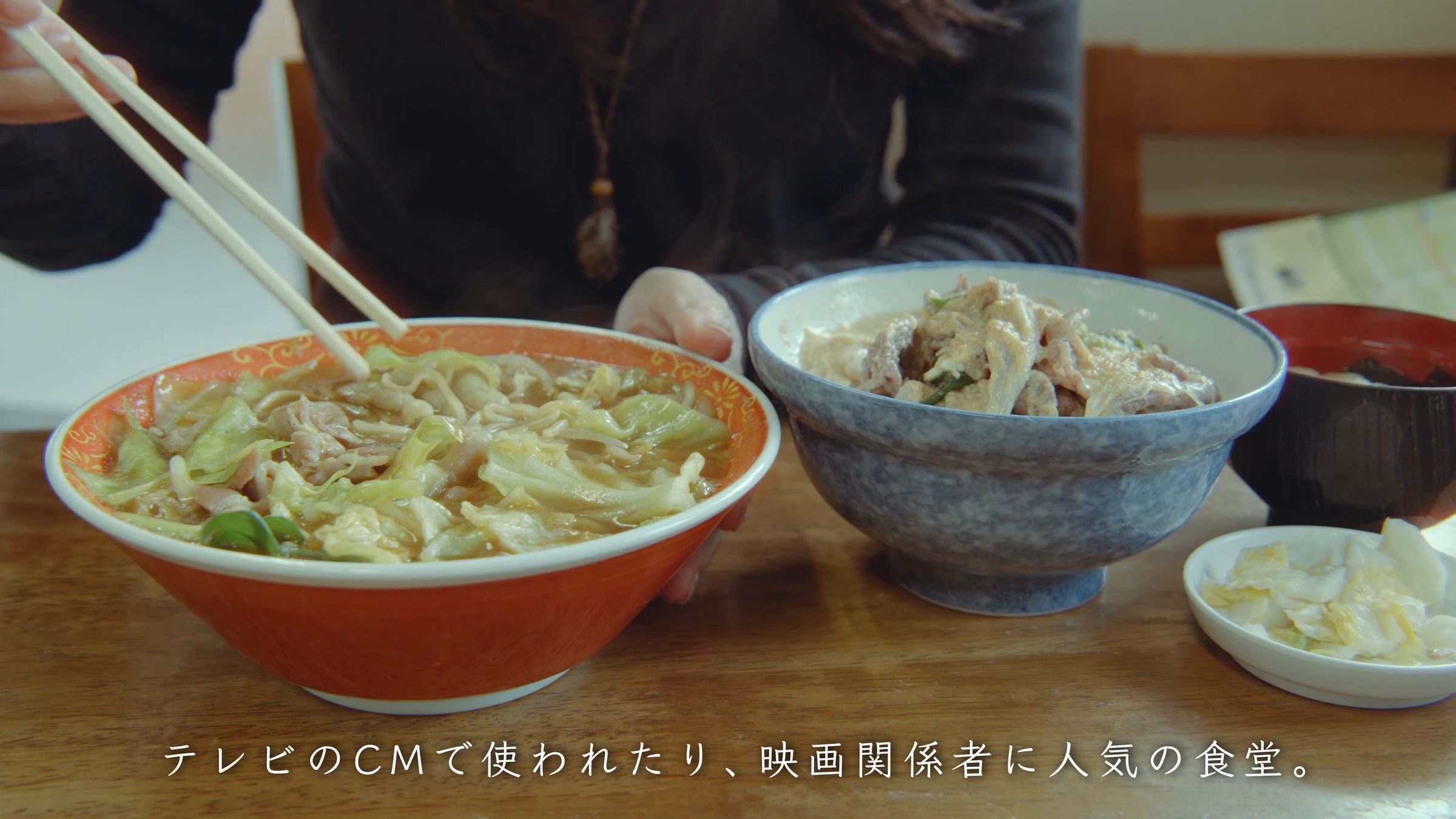
For lunch, a diner with a red noren. The curry ramen, with its nostalgic flavor, and the tanin-don, a rice bowl of Omi beef simmered with egg, are said to be the favorites. The thick curry broth comes loaded with cabbage and pork; the beef in the rice bowl is sweetly simmered and bound with egg.
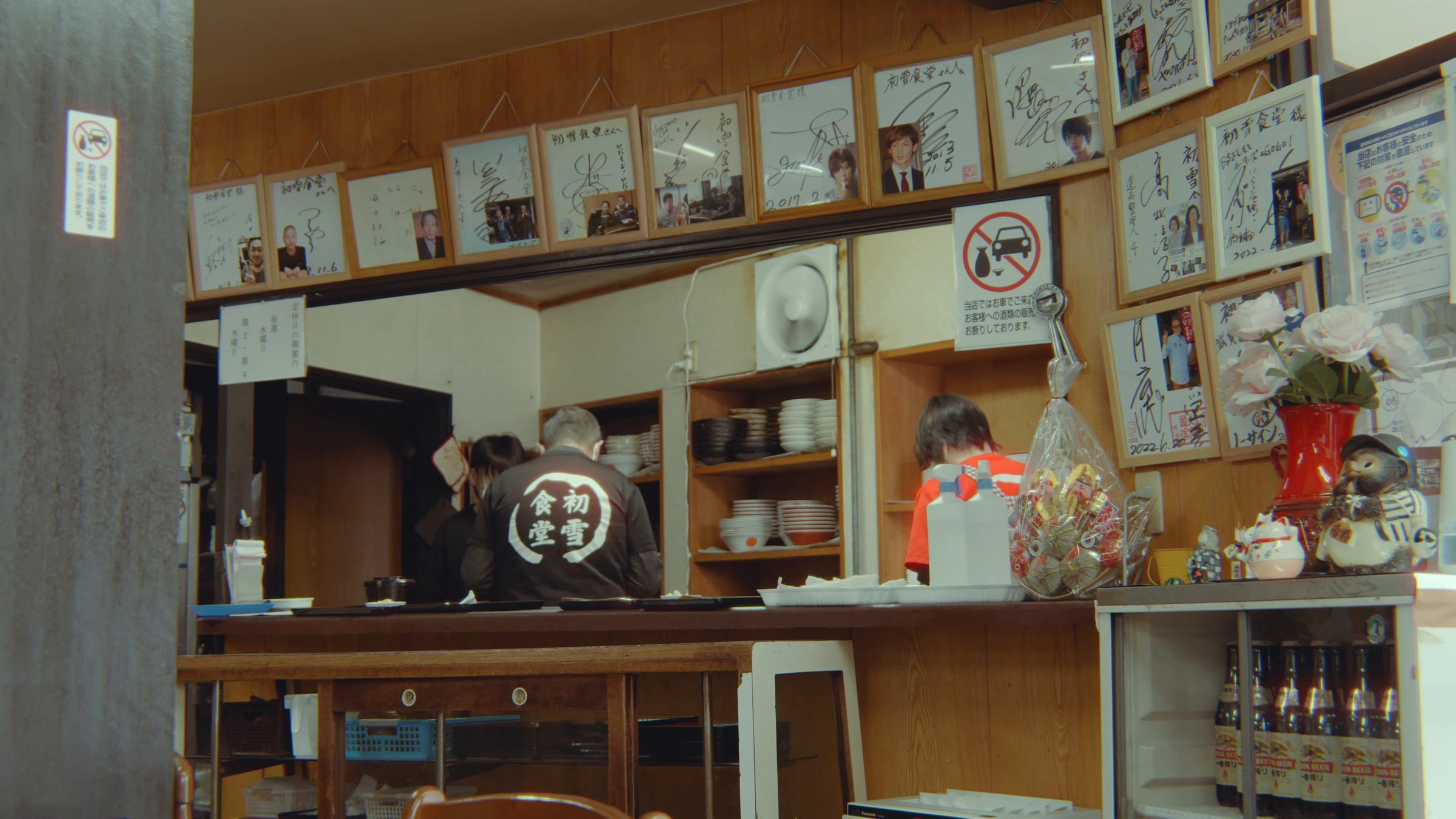
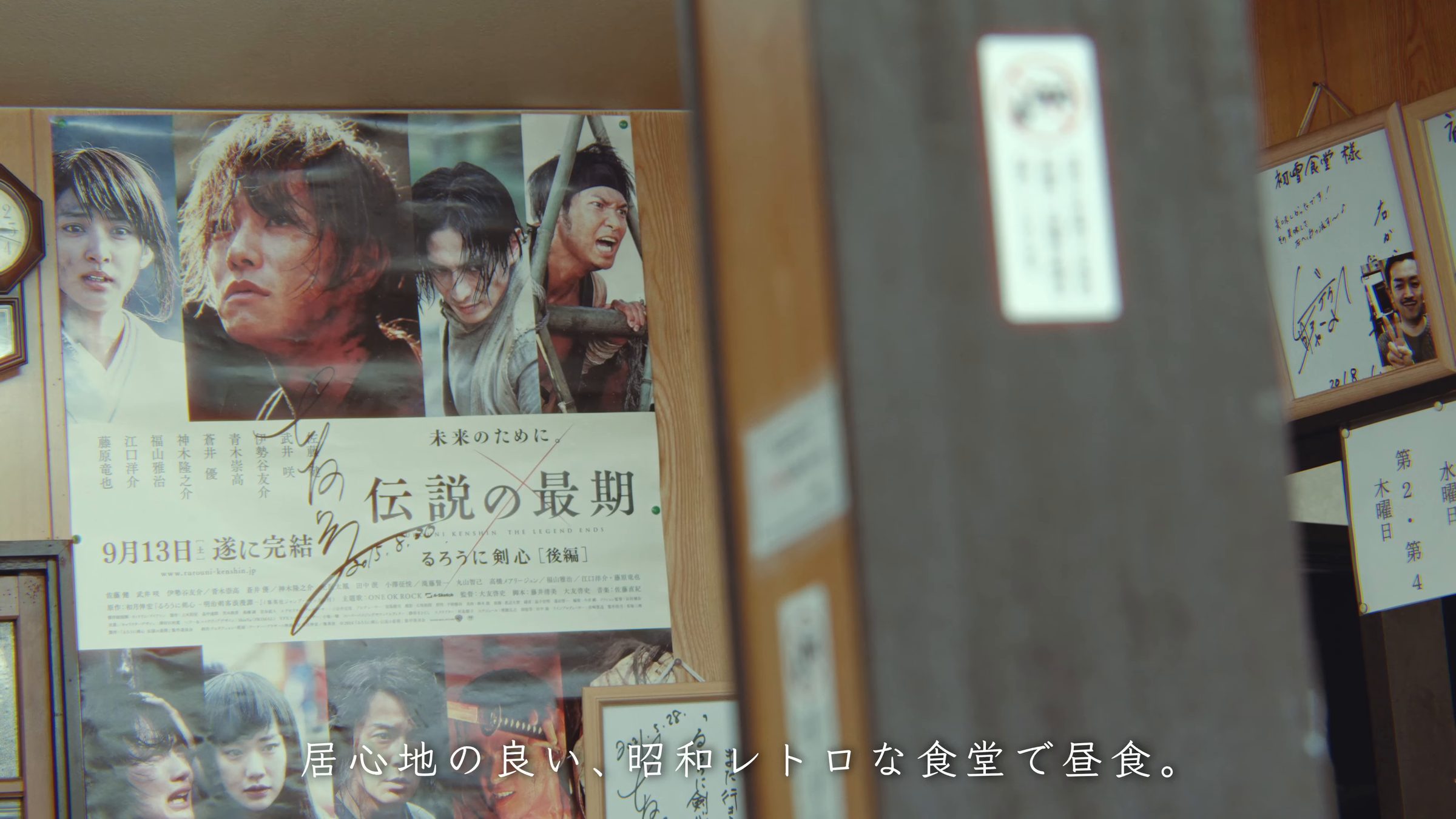
The walls are covered with autographed boards, and a movie poster hangs by the entrance. The diner has appeared in a TV commercial, I was told, and is popular with people in the film business. A cozy place with a Showa-era feel.
Watch this scene on YouTube1:52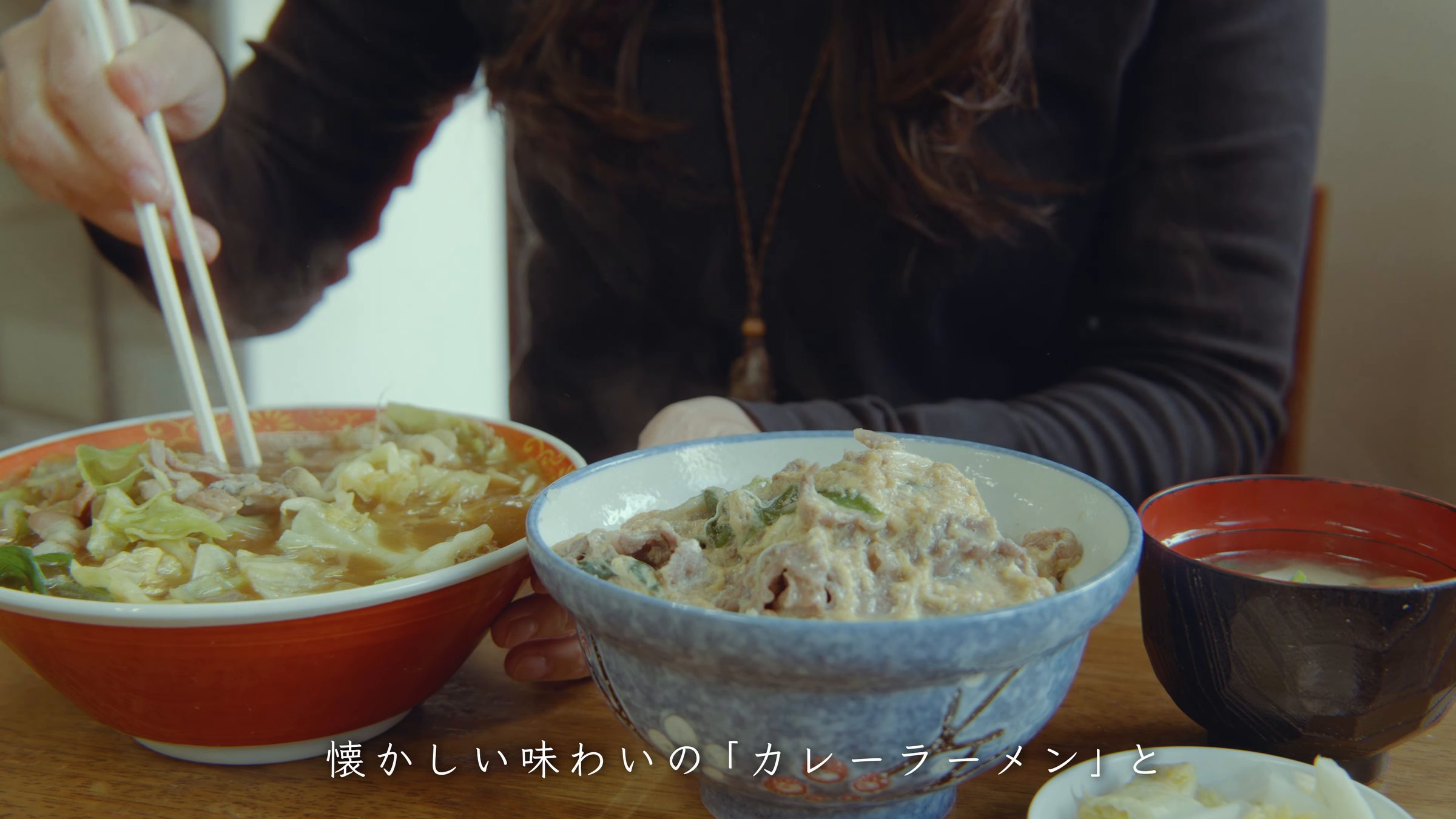
06TRAVEL JOURNAL
Freshly baked tsubura mochi
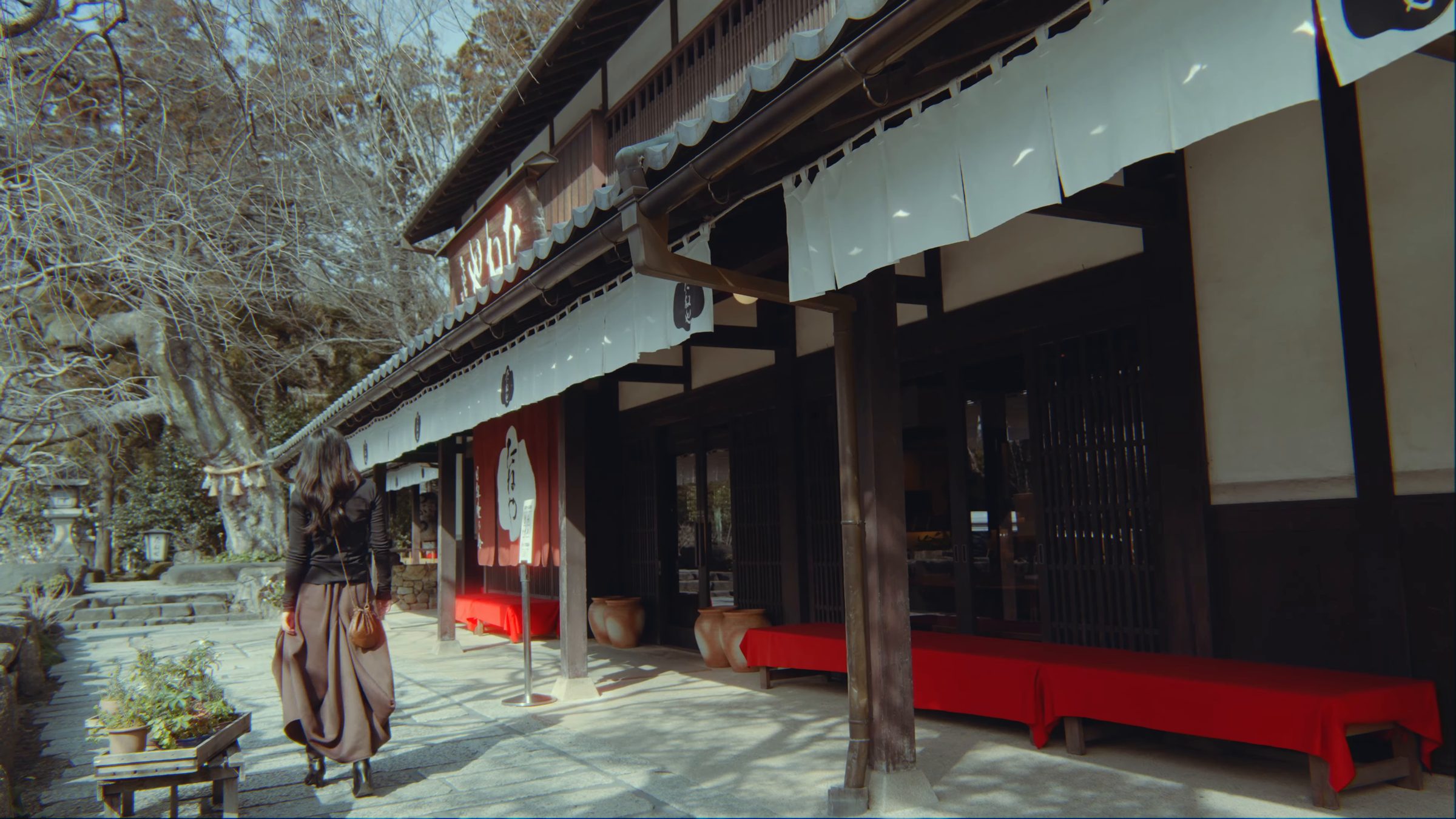
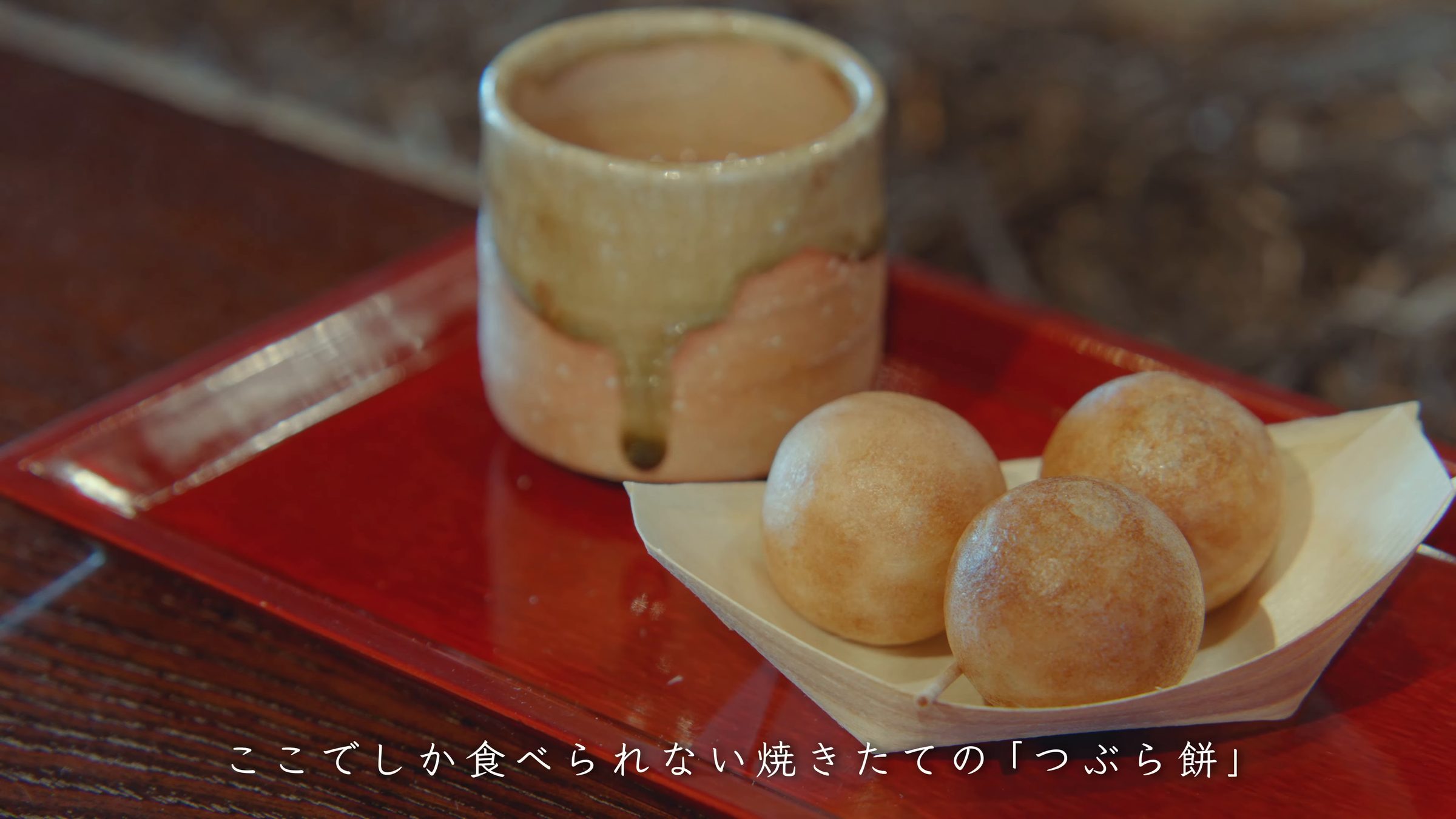
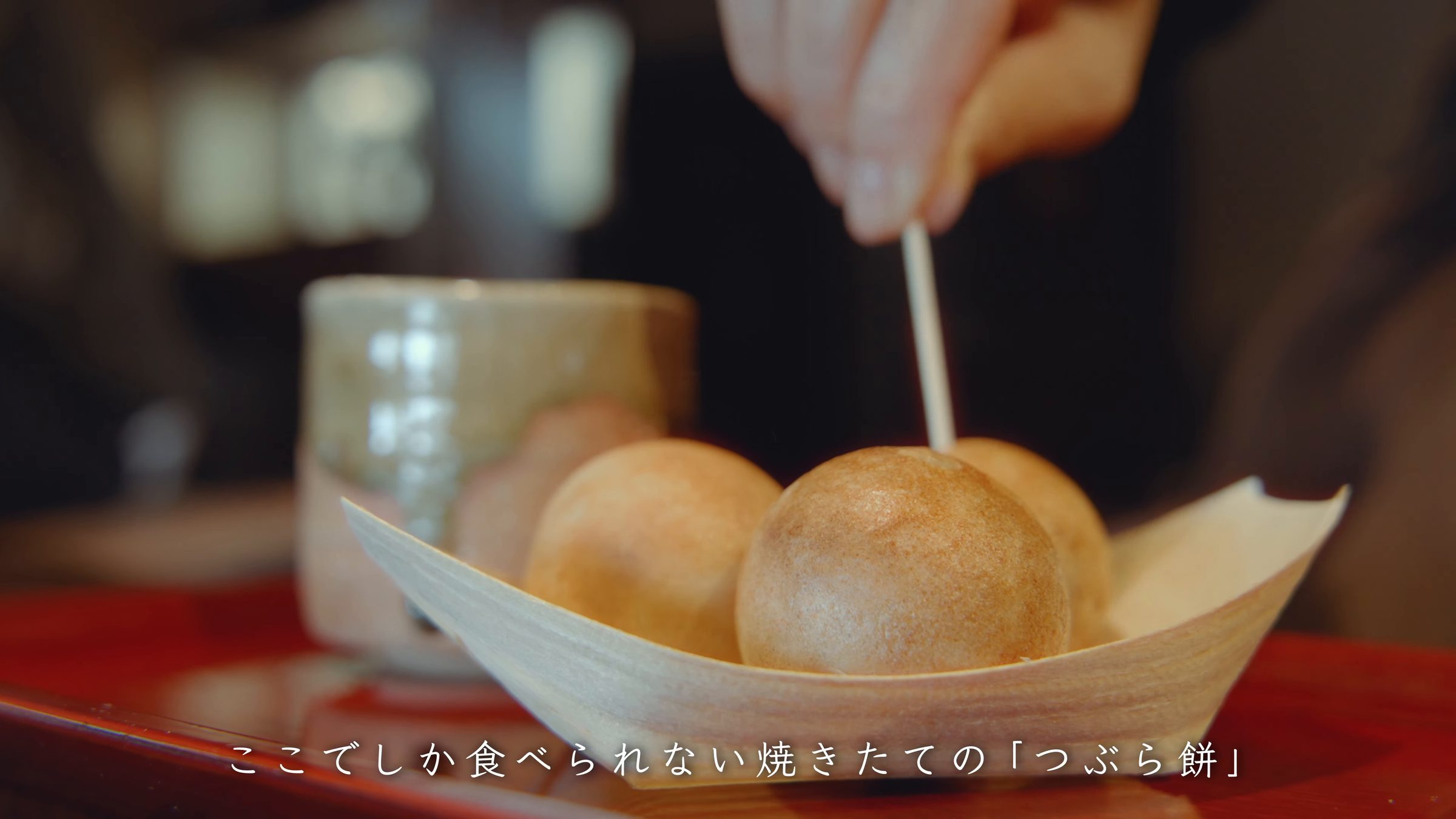
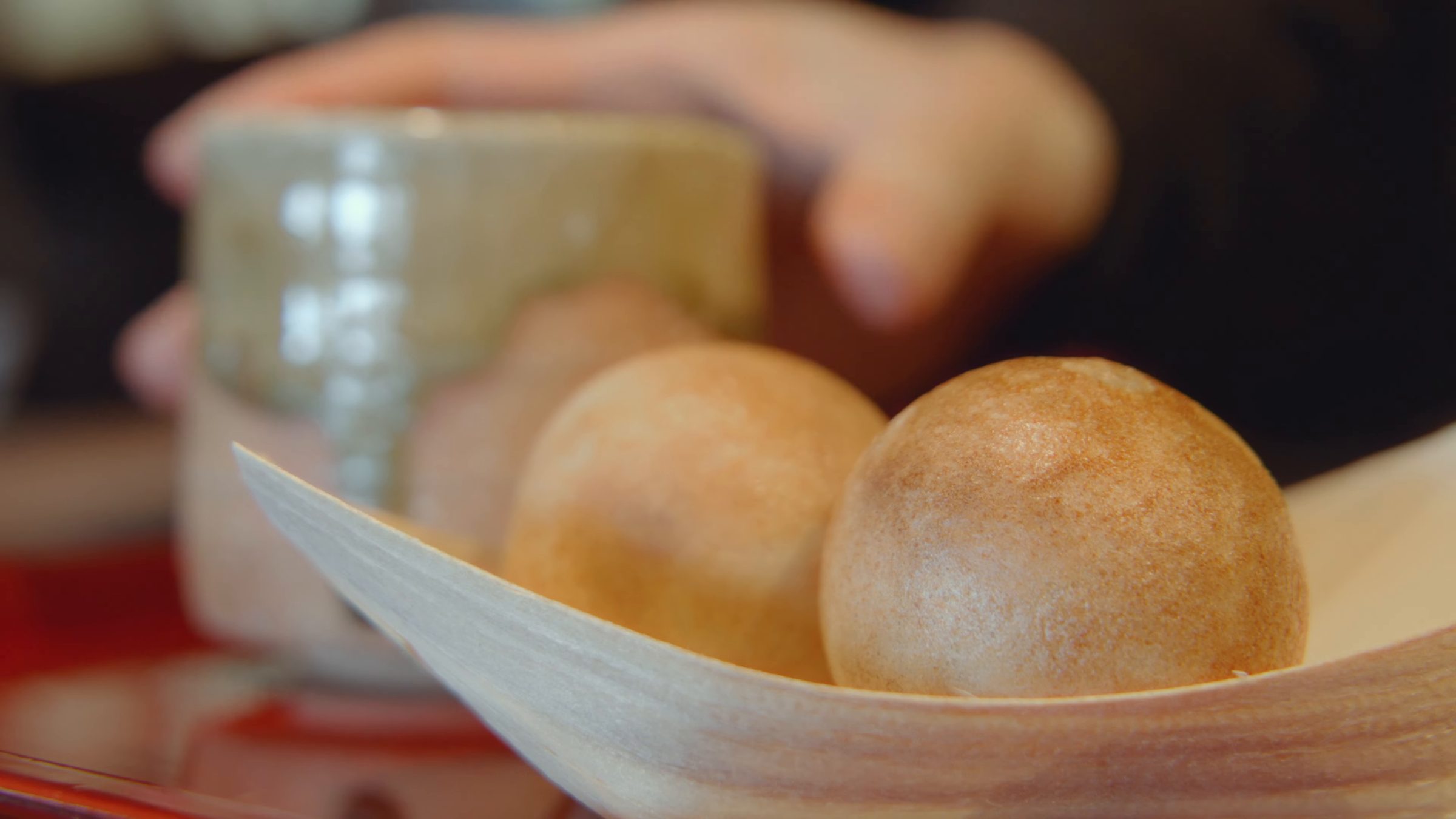
Next, a Japanese confectionery on the approach to Himure Hachimangu Shrine. Under a wooden sign, benches draped in red felt run the length of the long eaves. Tsubura mochi, baked fresh and sold only here, are small round rice cakes filled with sweet bean paste, crisp and fragrant on the outside.
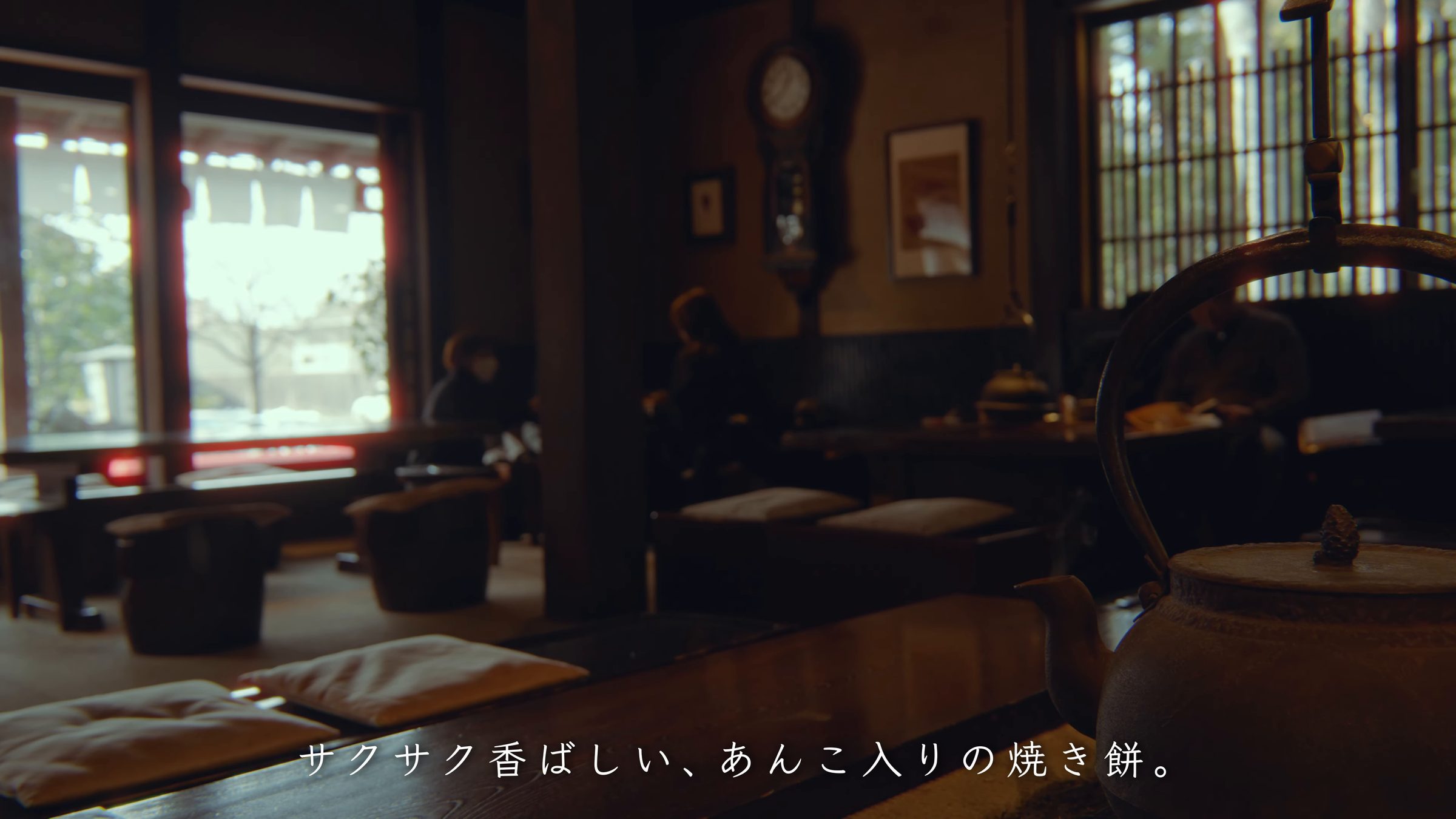
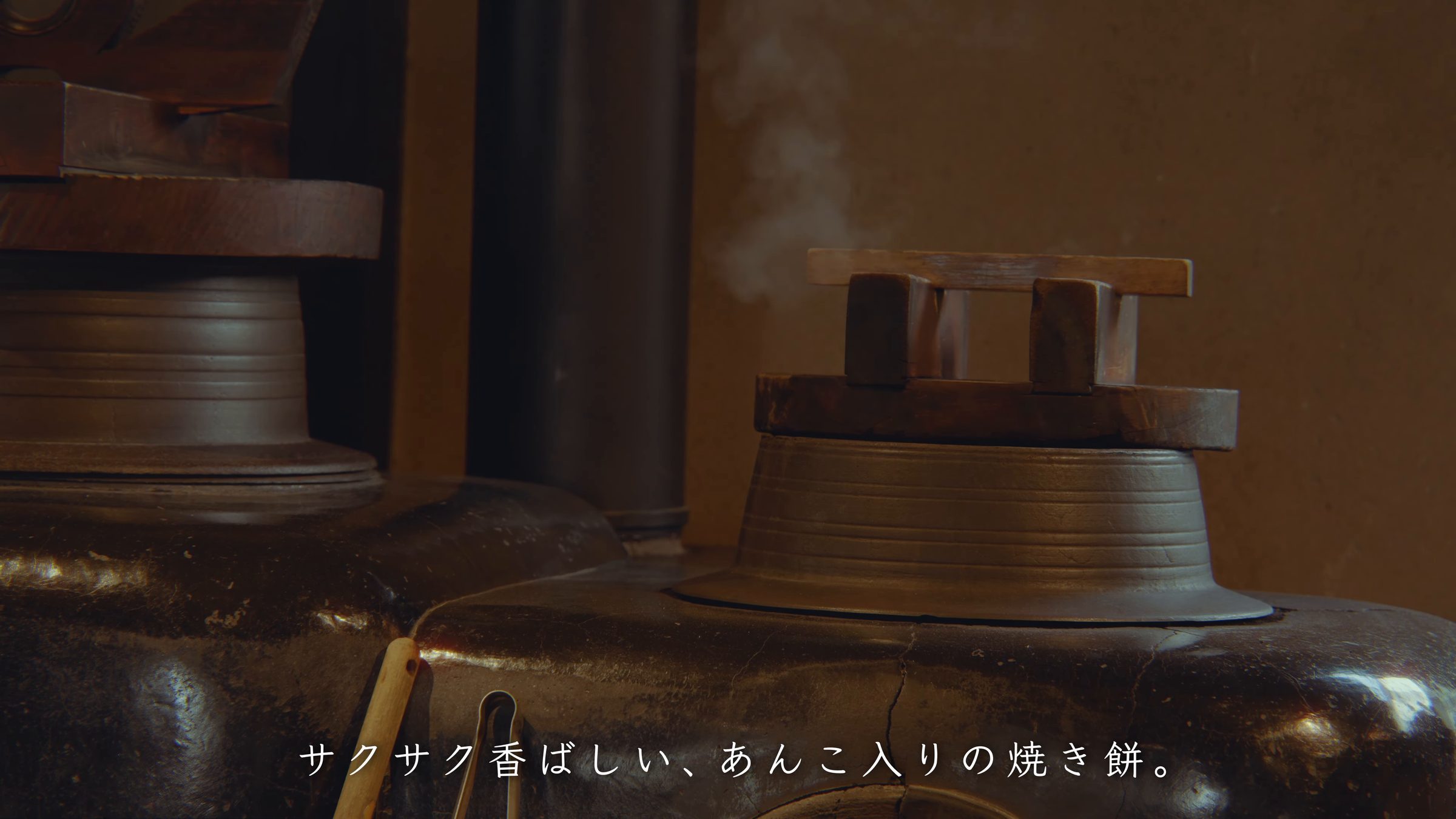
I sat in a tatami room with a sunken hearth, steam rising from the kamado stove nearby, and picked at three mochi served in a boat-shaped dish. The complimentary adzuki tea went well with their gentle sweetness.
Watch this scene on YouTube2:20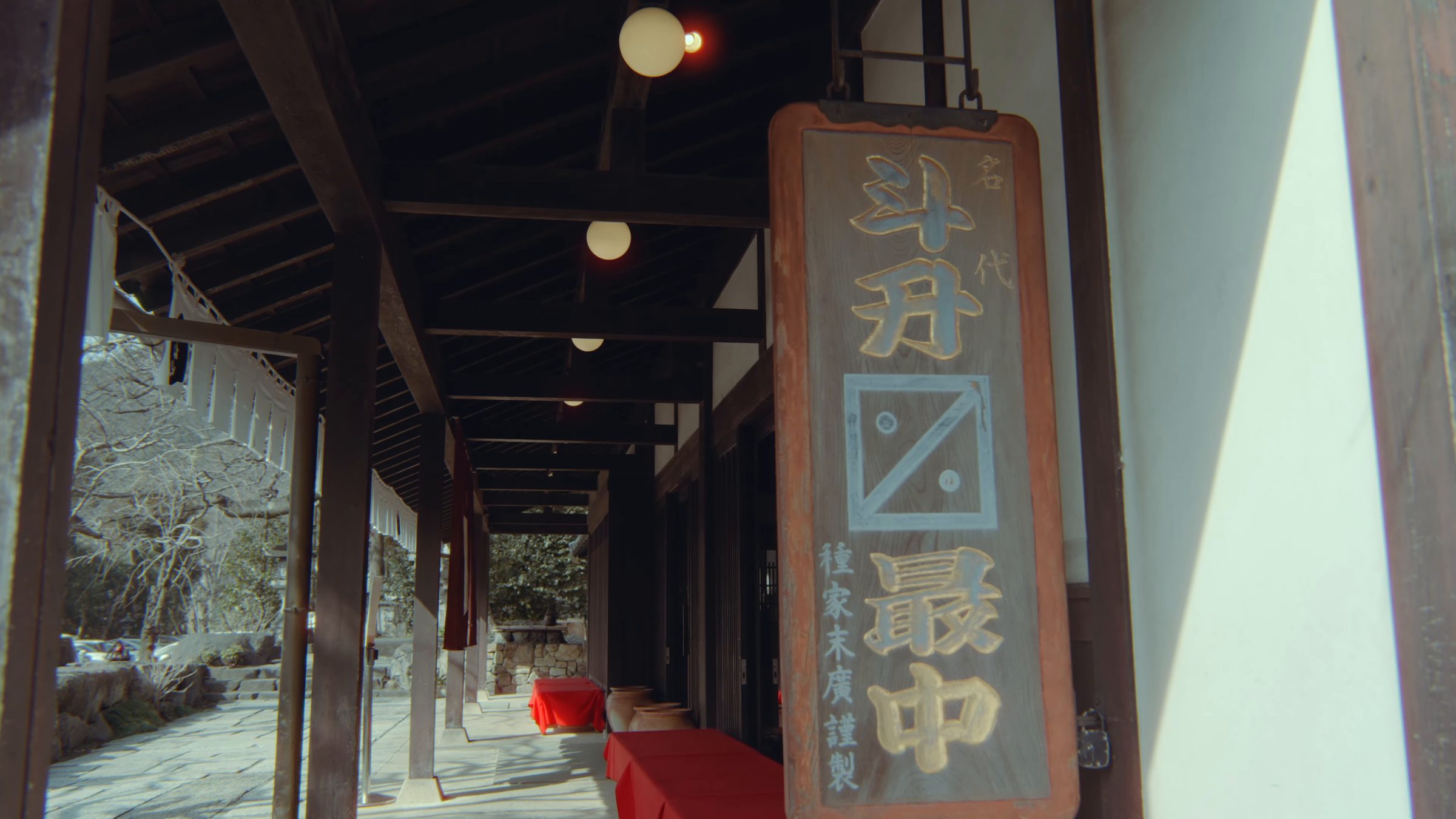
07TRAVEL JOURNAL
A grass-roofed building and Hachiman castella
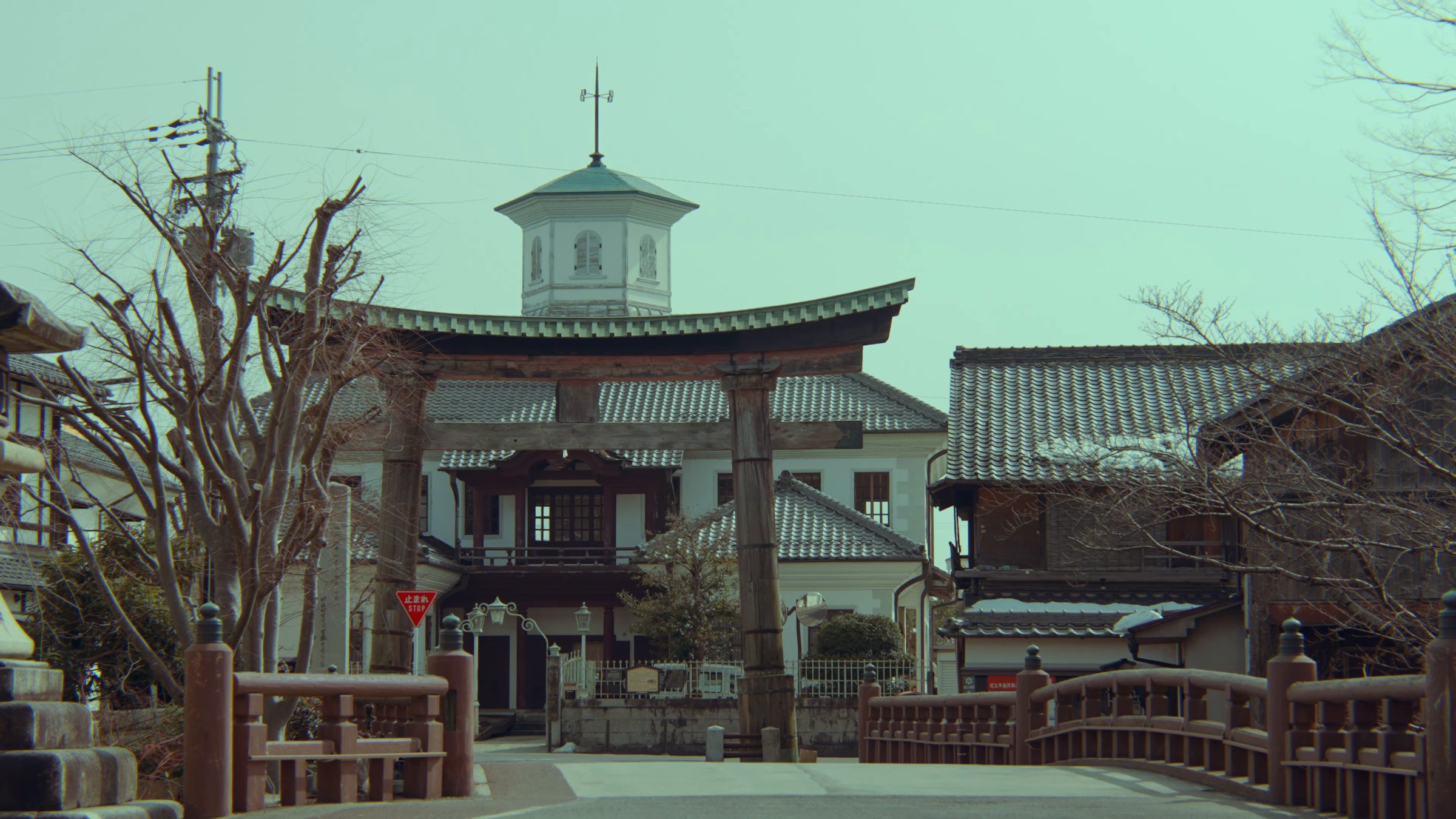
I passed beneath a great tree hung with a sacred rope and looked across at Hakuunkan, which stands before the shrine's torii gate. Built in 1877 as the Hachiman East School in a Western-influenced style, it now serves as the tourist information center.
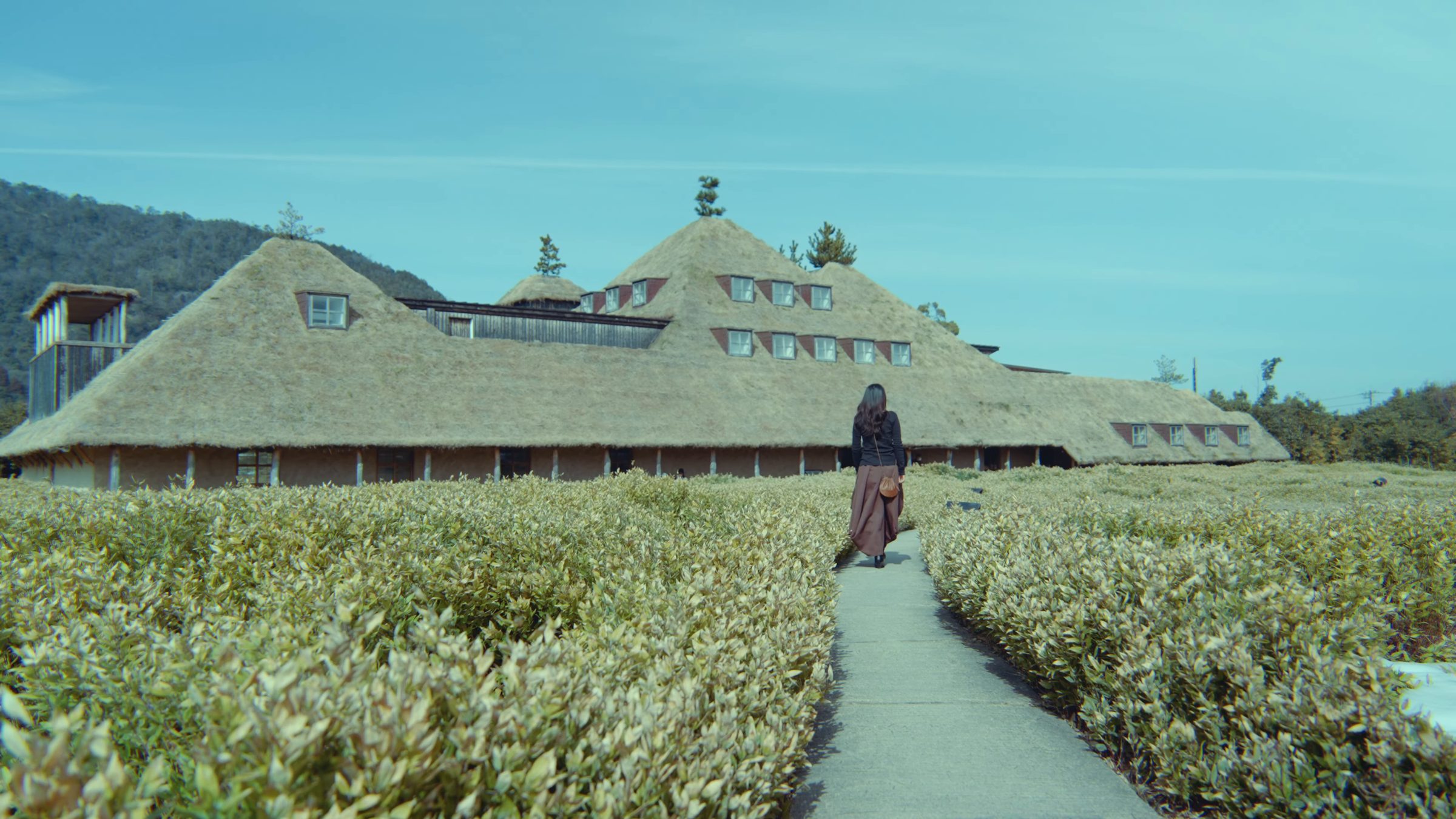
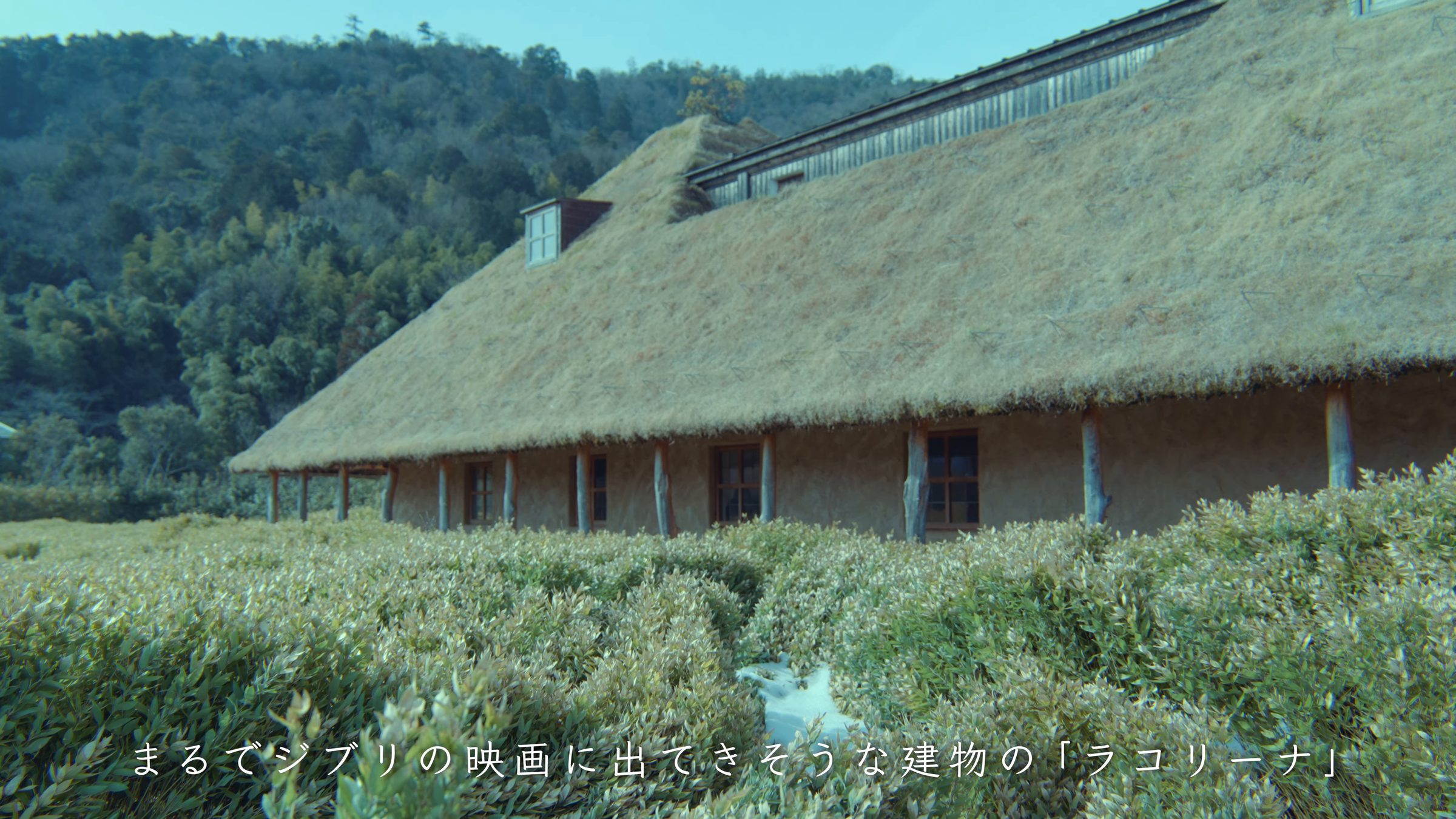
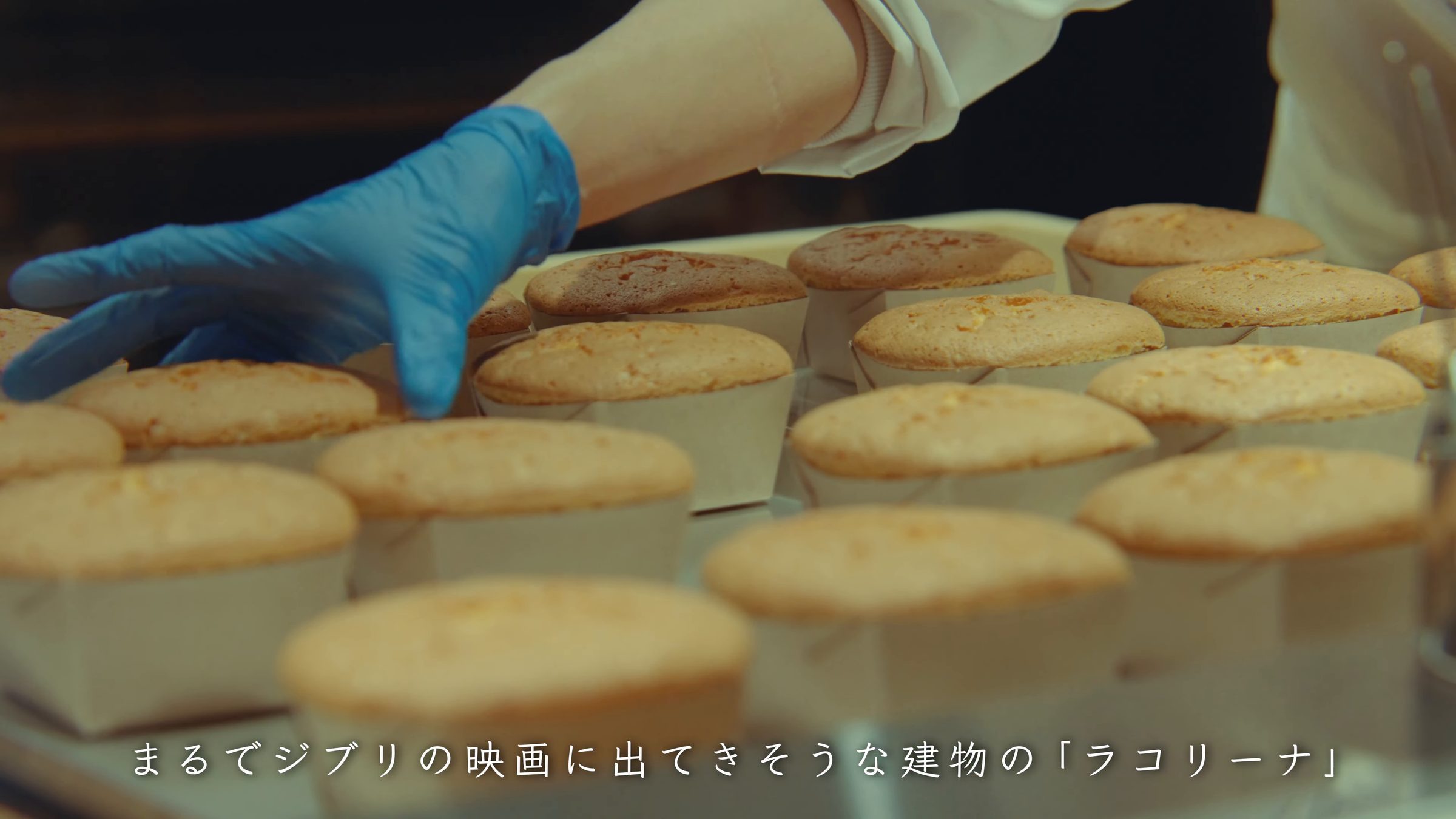
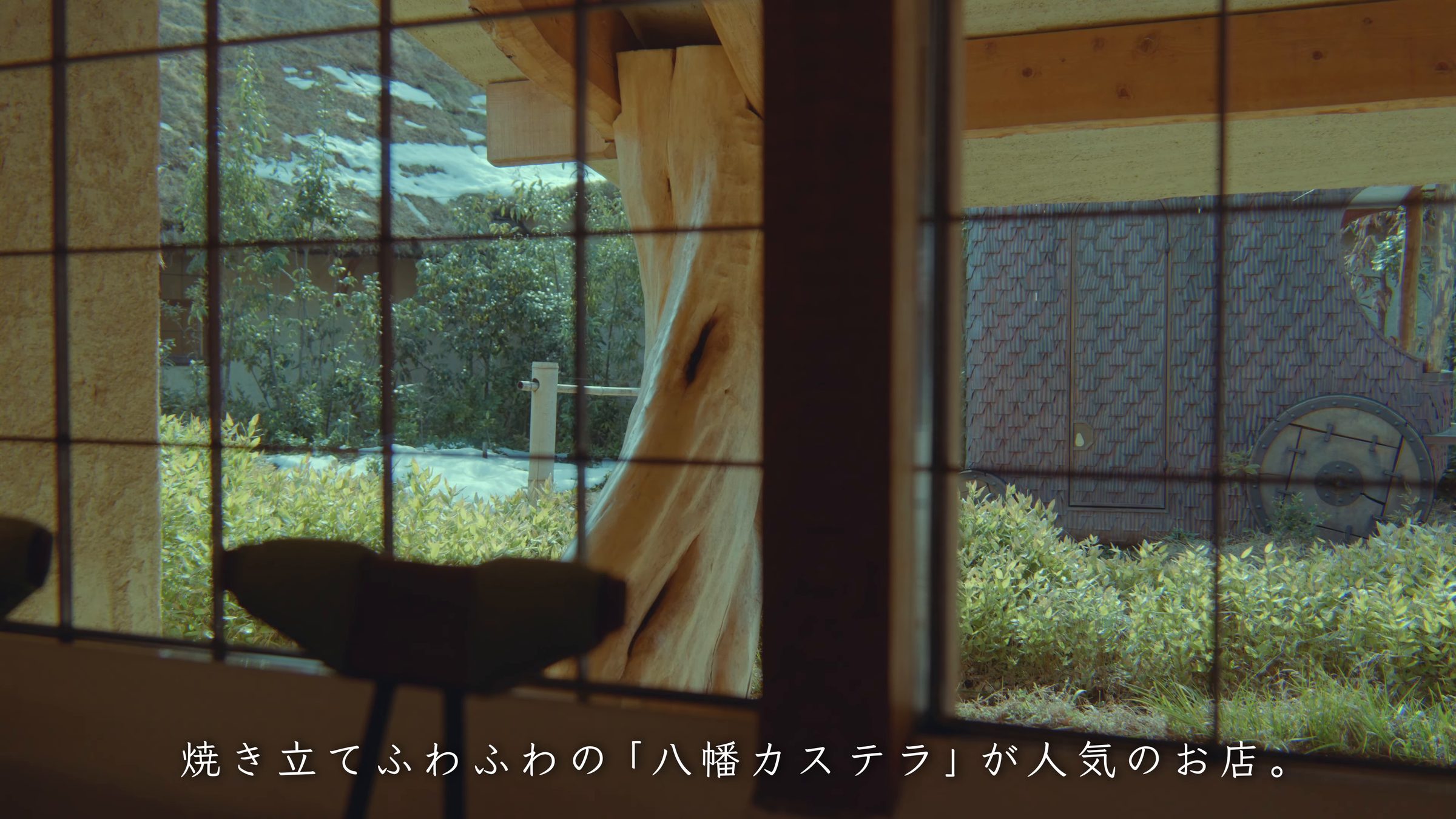
My destination was La Collina Omihachiman, a grass-roofed building that looks like something out of a Ghibli film. A path leads between green fields toward roofs that seem to go on forever against the hills. Inside, castella in paper molds were being lined up one after another.
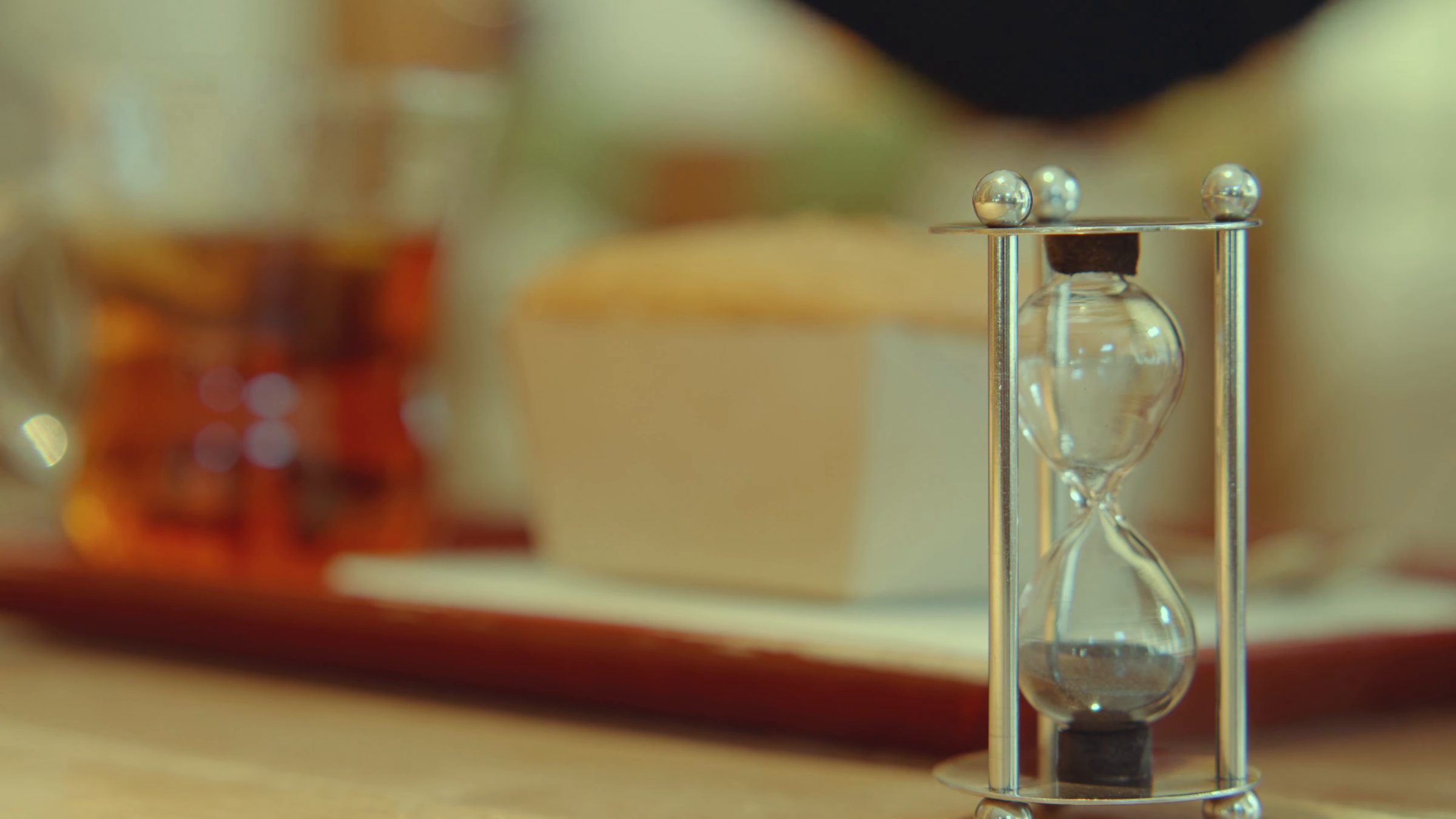
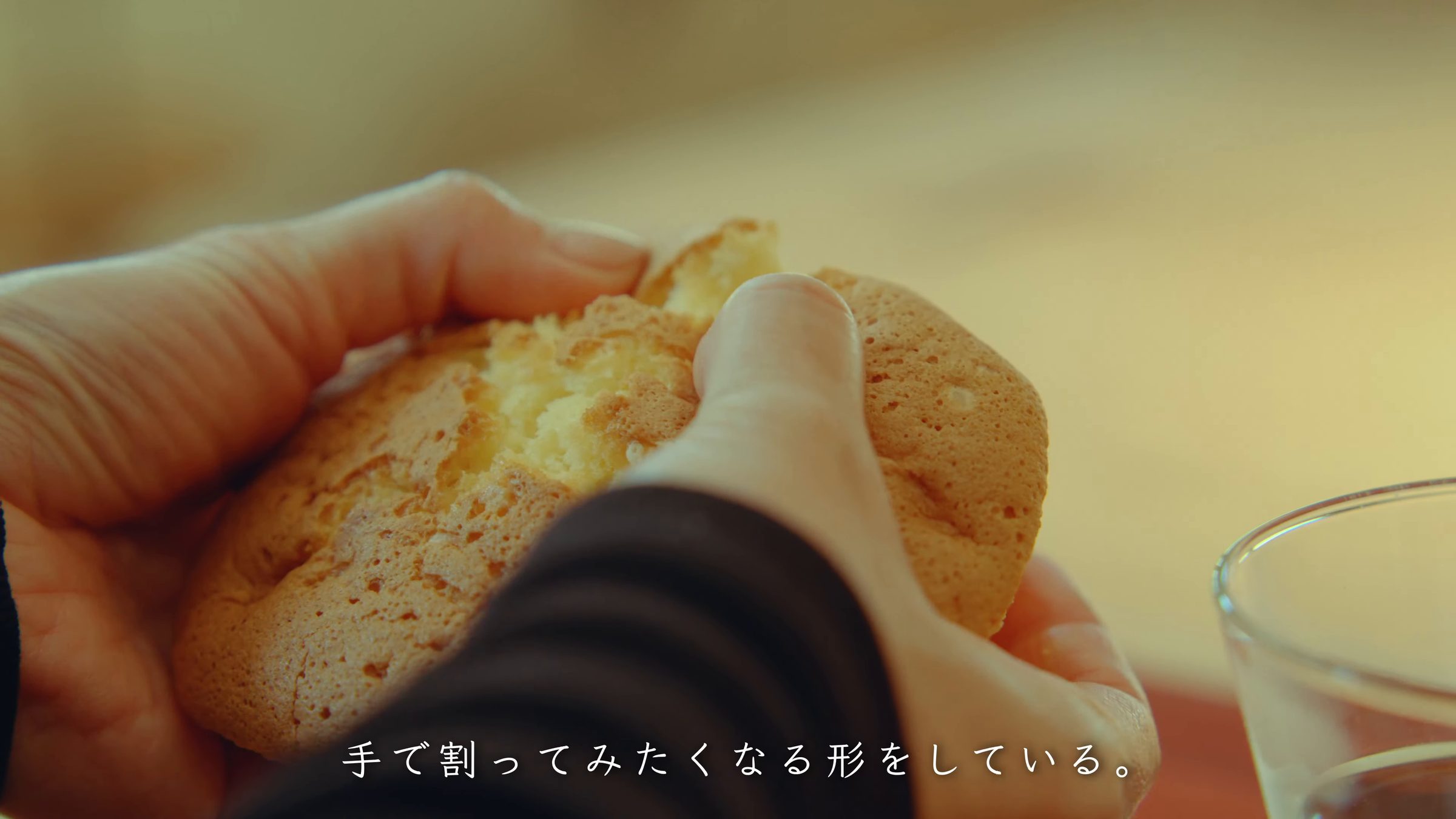
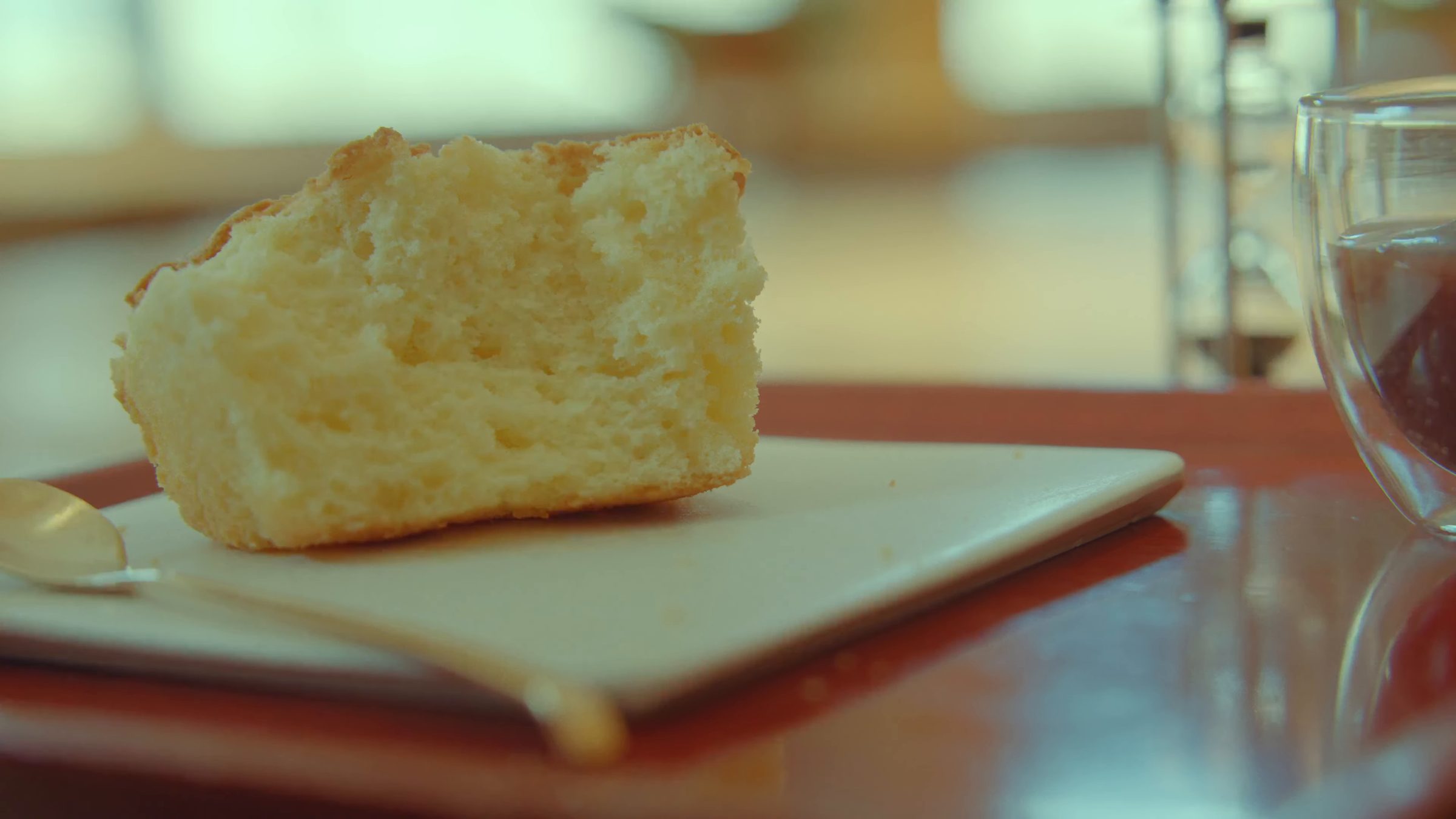
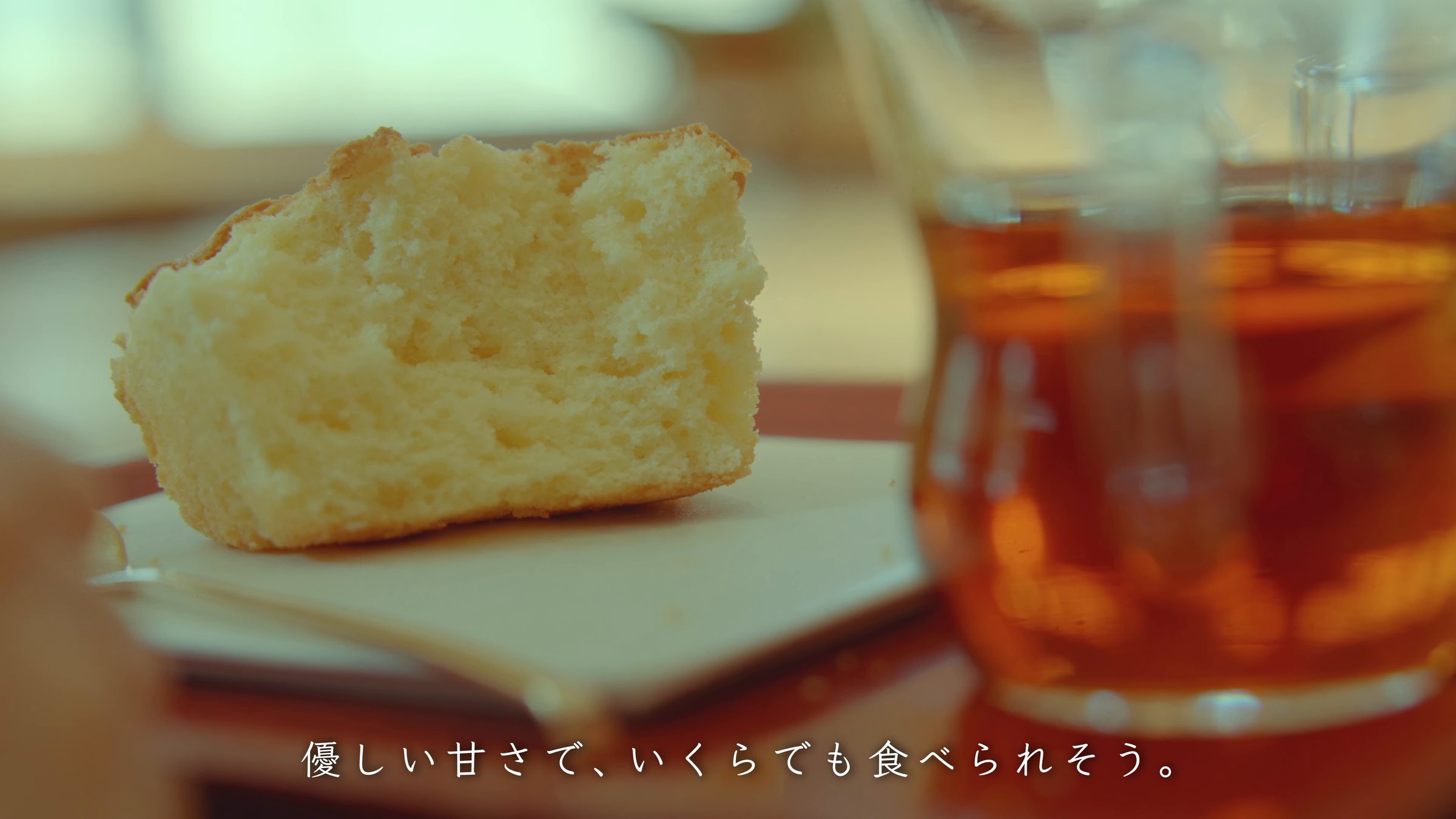
The shop is known for its Hachiman castella, served warm and fluffy from the oven. With tea and an hourglass before me and the grass outside the window, I tore into a cake whose shape begs to be broken by hand. Gently sweet; I felt I could eat it endlessly.
Watch this scene on YouTube2:39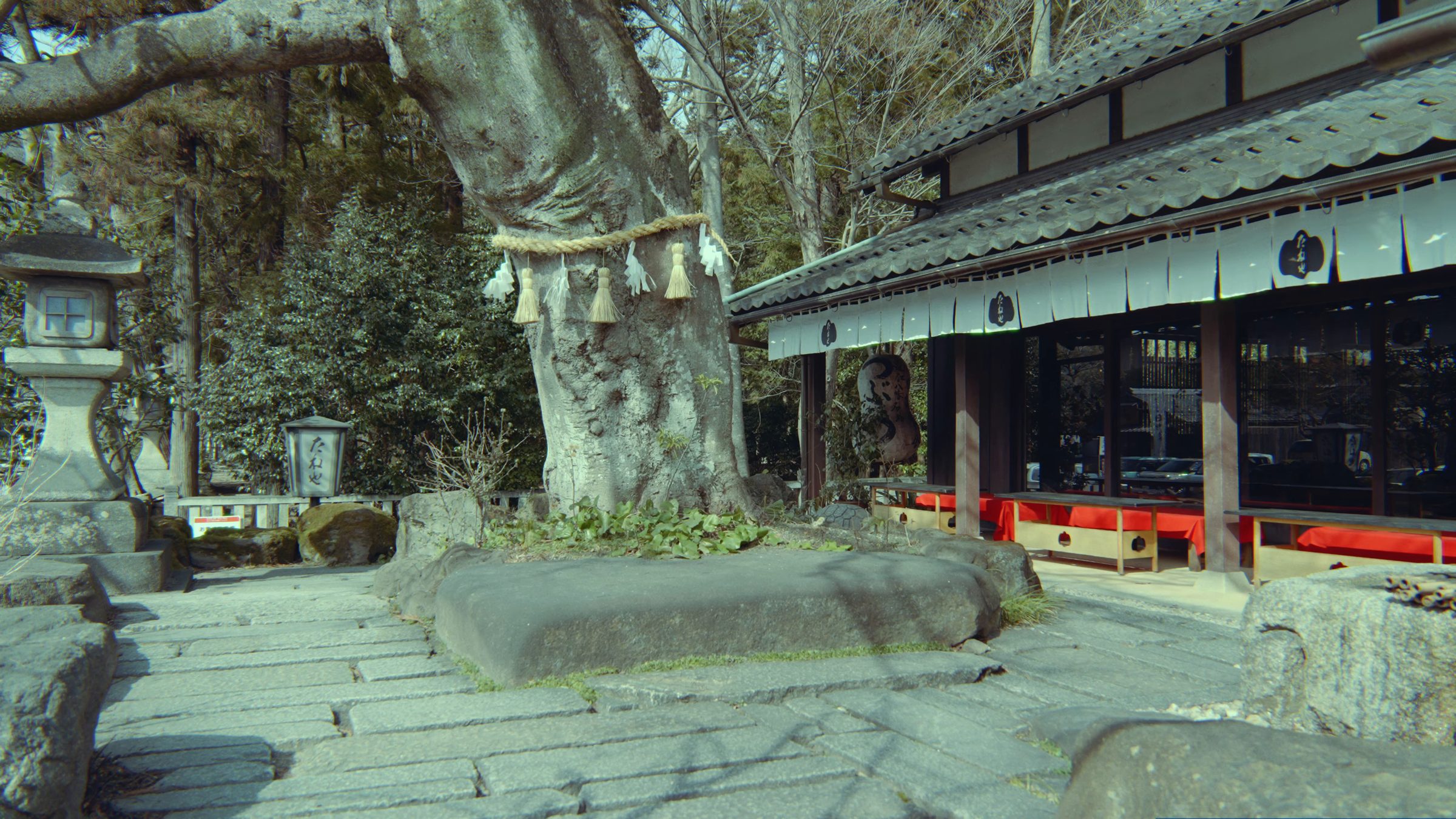

08TRAVEL JOURNAL
Red konnyaku and hinona pickles
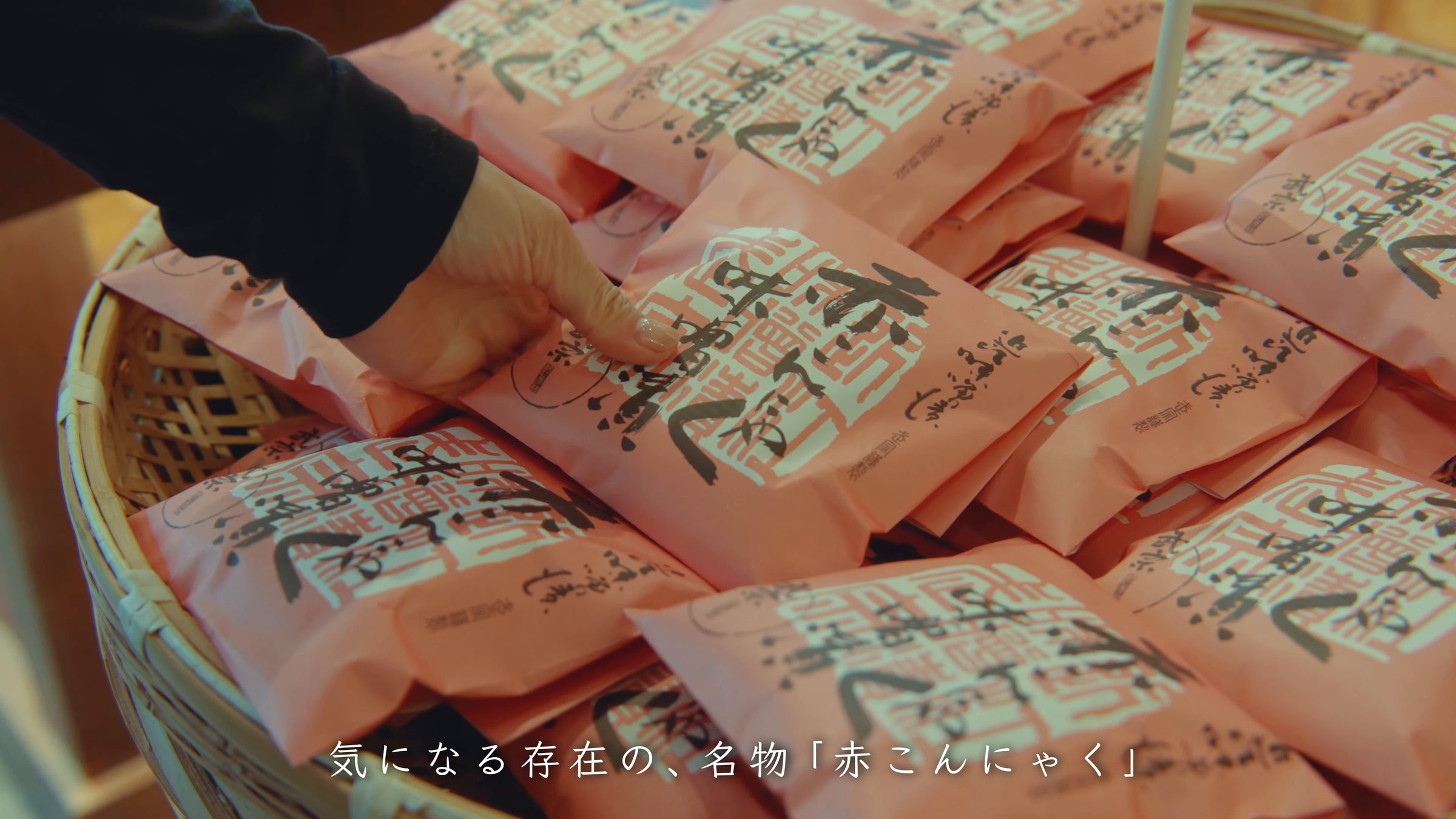
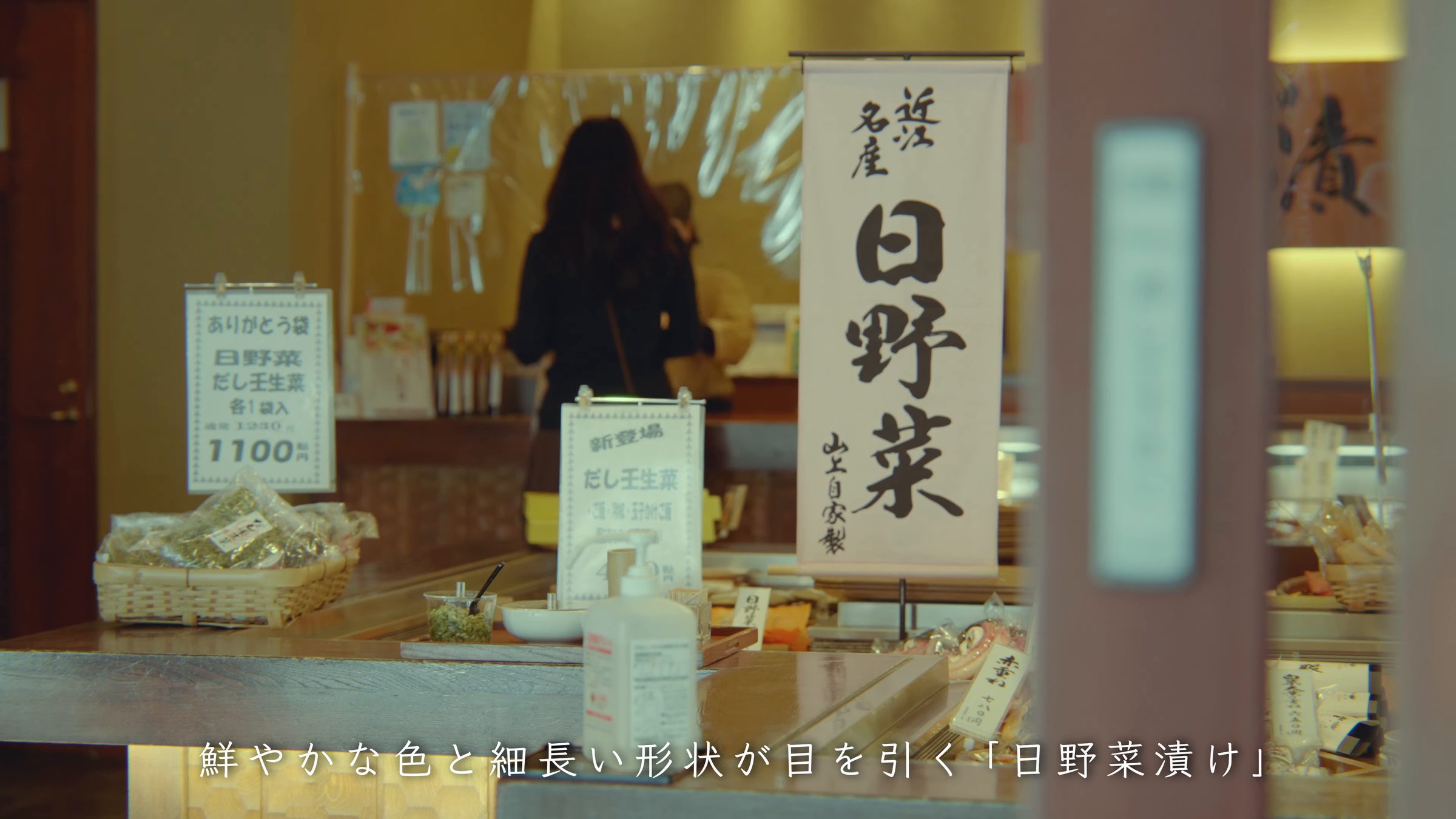
I stopped at a pickle shop beside a stone wall. A banner under the eaves announced that the hinona pickles were ready. In a basket sat piles of red konnyaku, the local specialty I had been curious about, in pink packets.
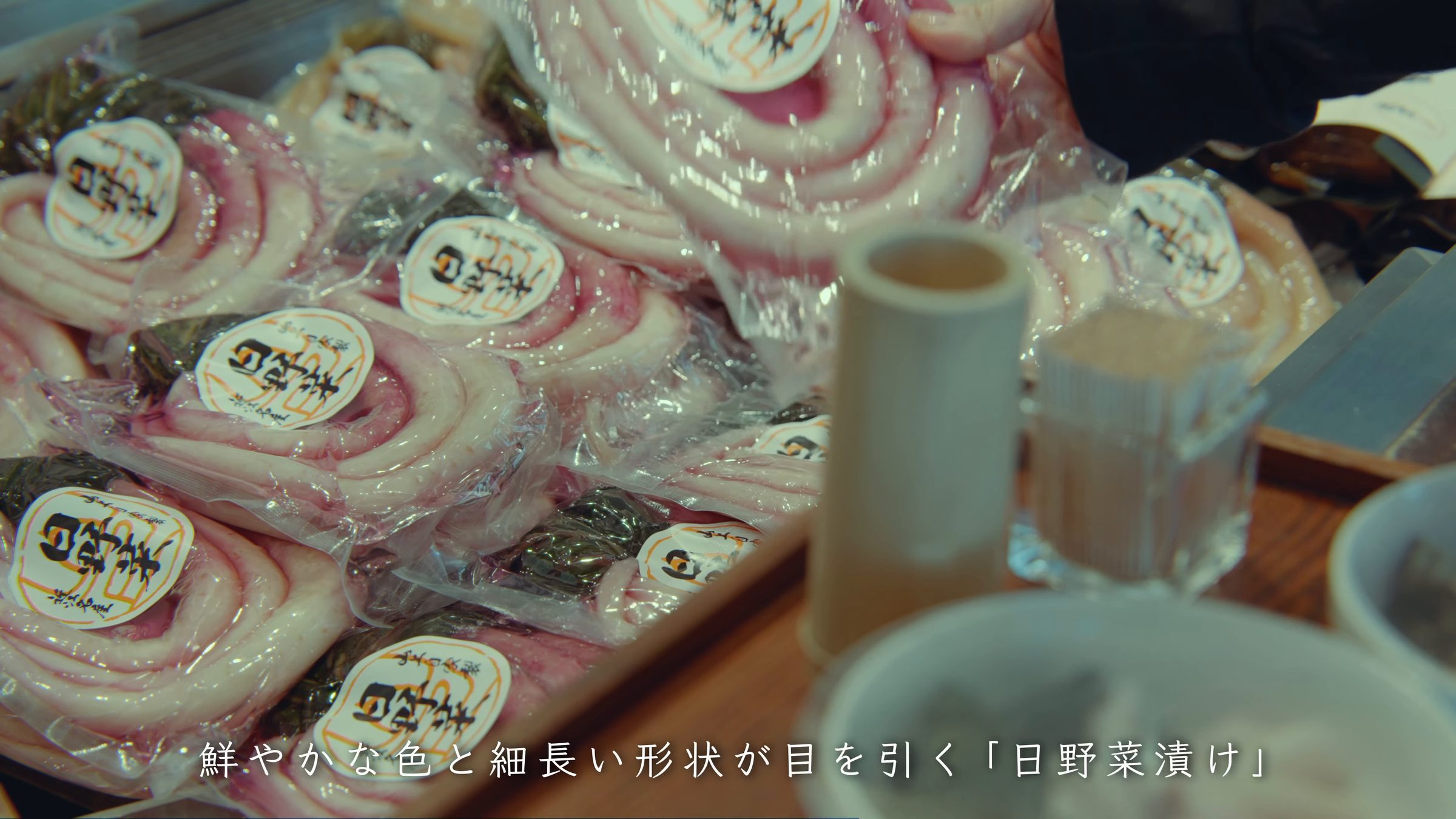
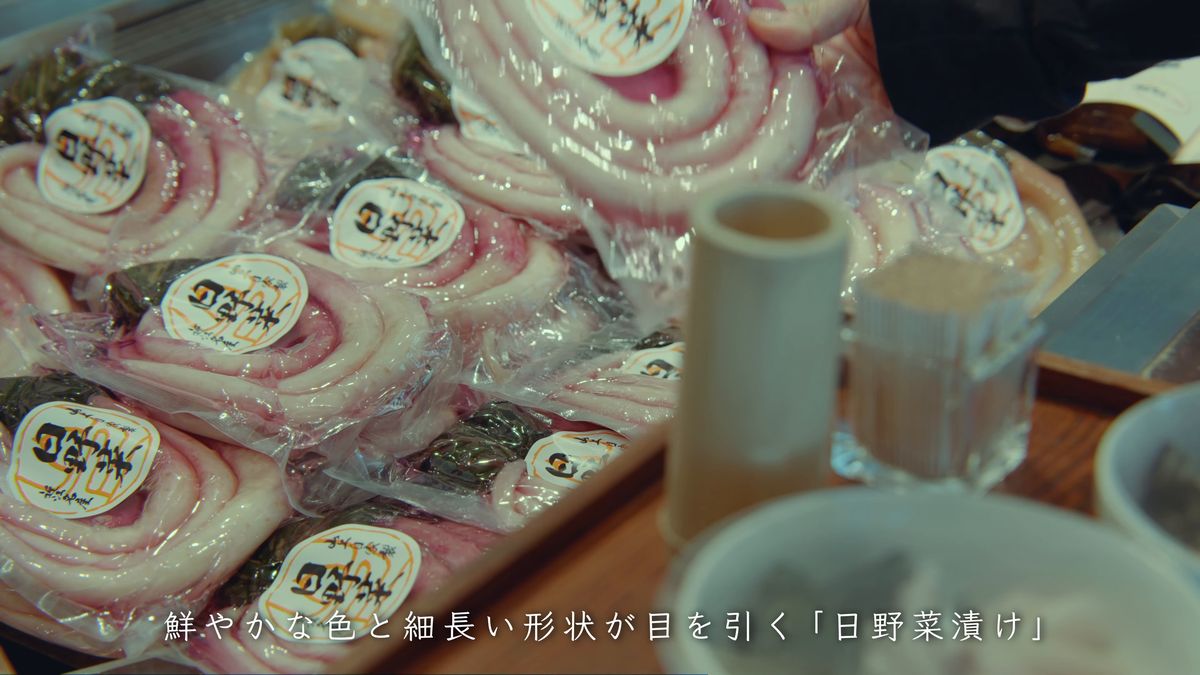
Hinona pickles, striking for their vivid purple-red color and slender shape, were coiled into spirals and packed. At the back of the shop hung a banner reading "Hinona, a specialty of Omi." I bought both for tonight's table.
Watch this scene on YouTube3:16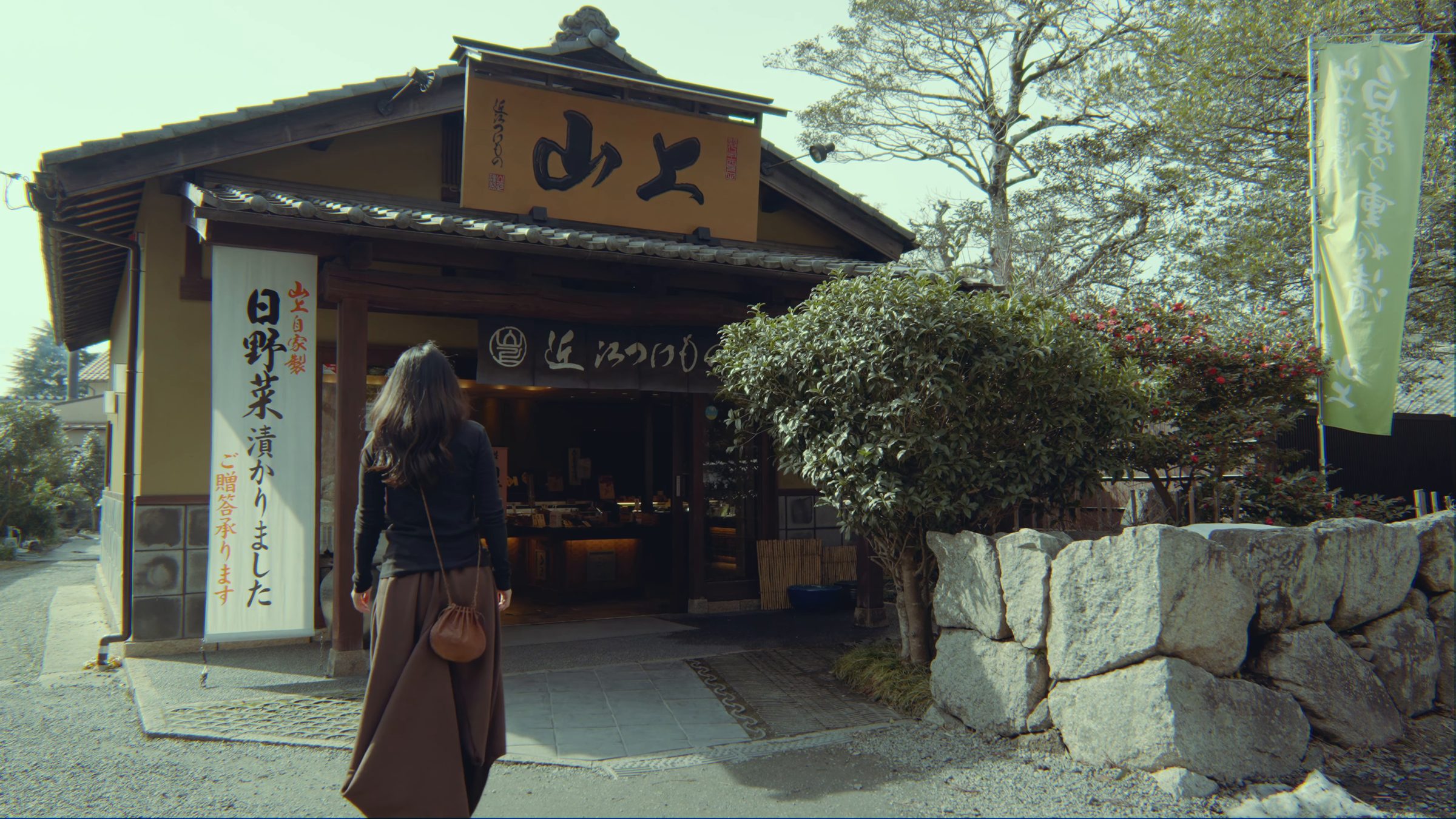
09TRAVEL JOURNAL
An Omi beef shop, and home along Shinmachi street
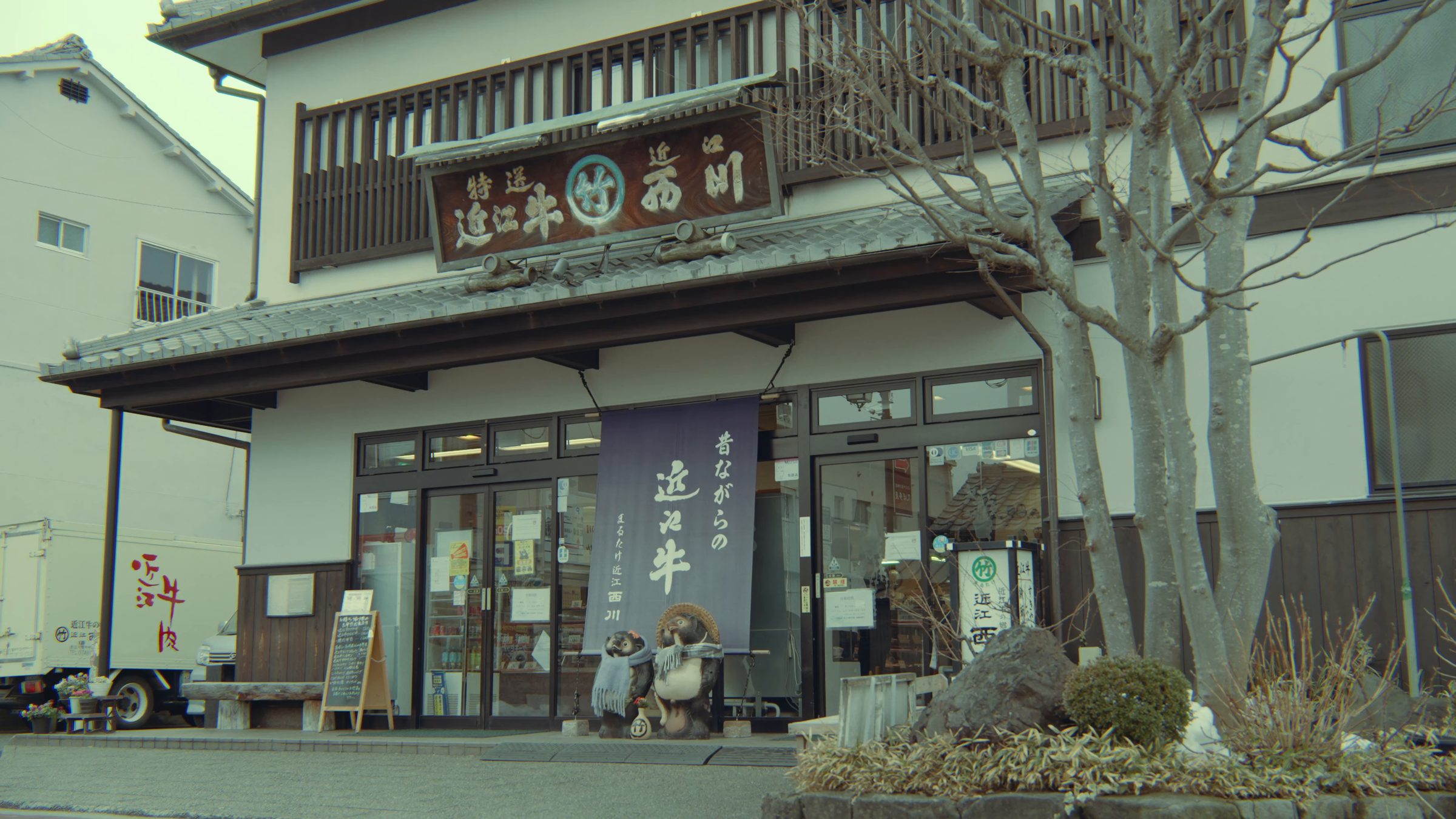
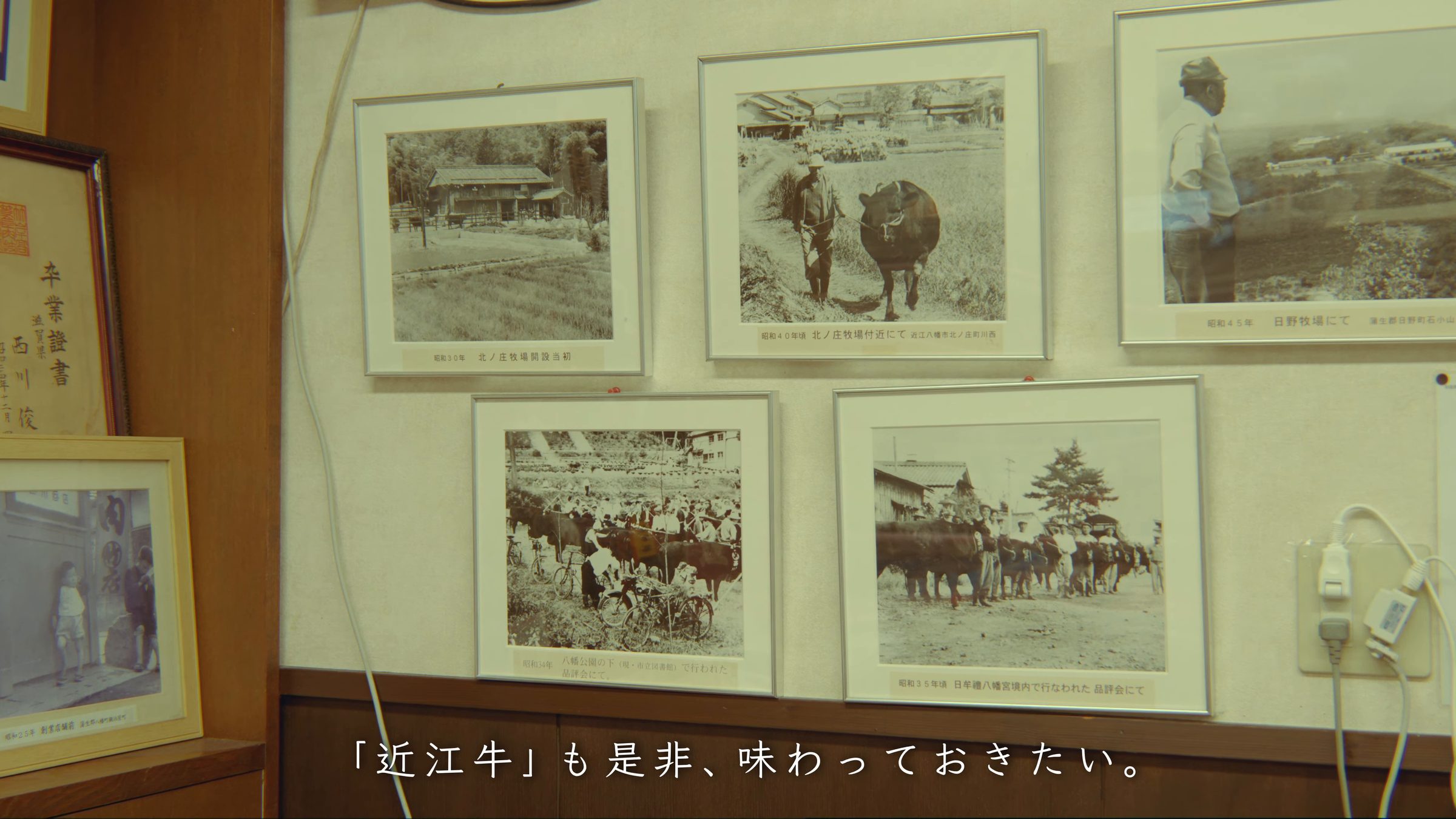
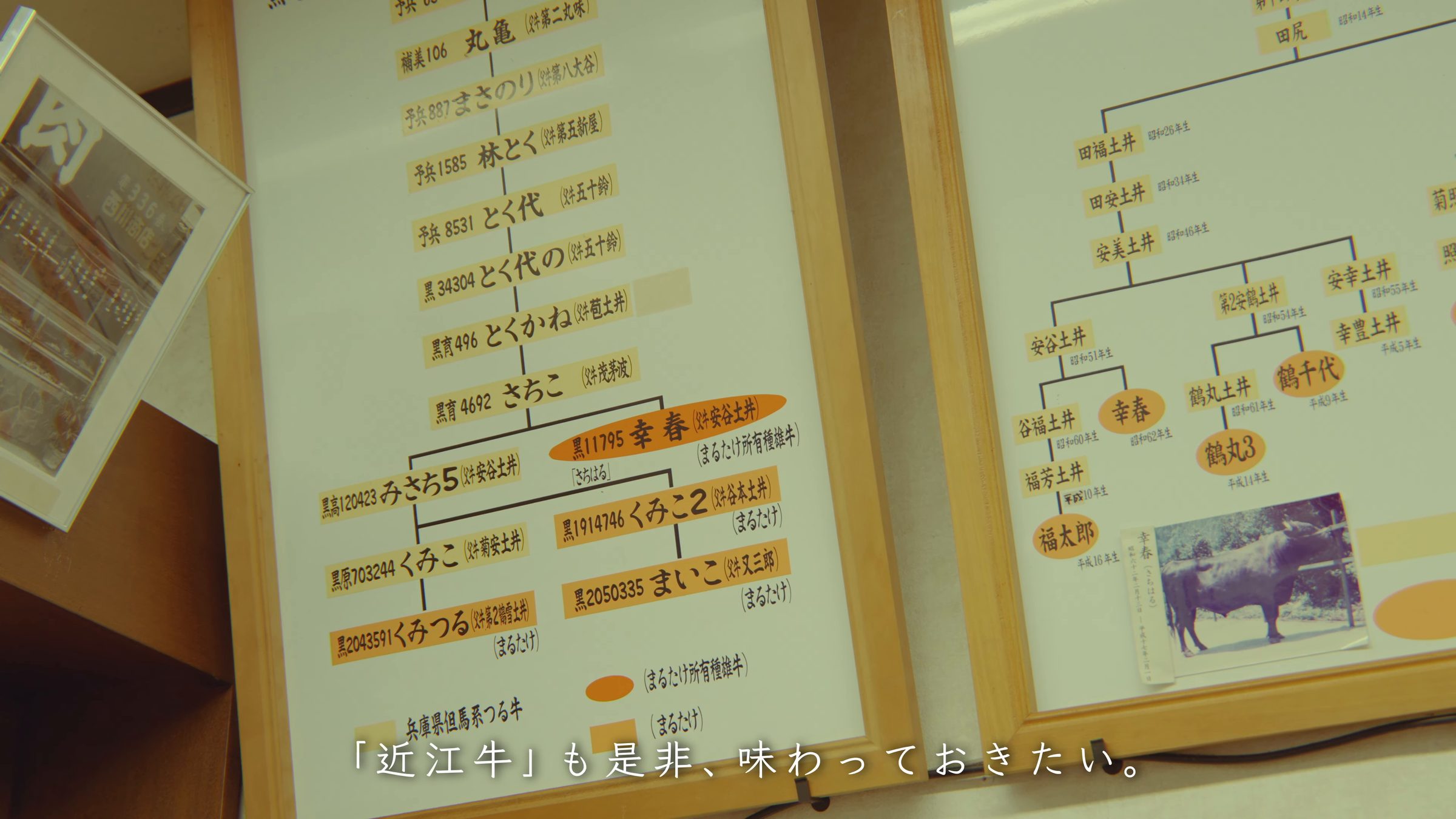
Through the shrine's torii, hung with a sacred rope and straw ornaments, I walked to a butcher's whose sign reads "Omi beef." The shop deals in Omi beef the old-fashioned way; old photographs of cattle being led and grazing line the walls, along with a chart tracing the lineage of the cows they raise. Omi beef was something I definitely wanted to taste.
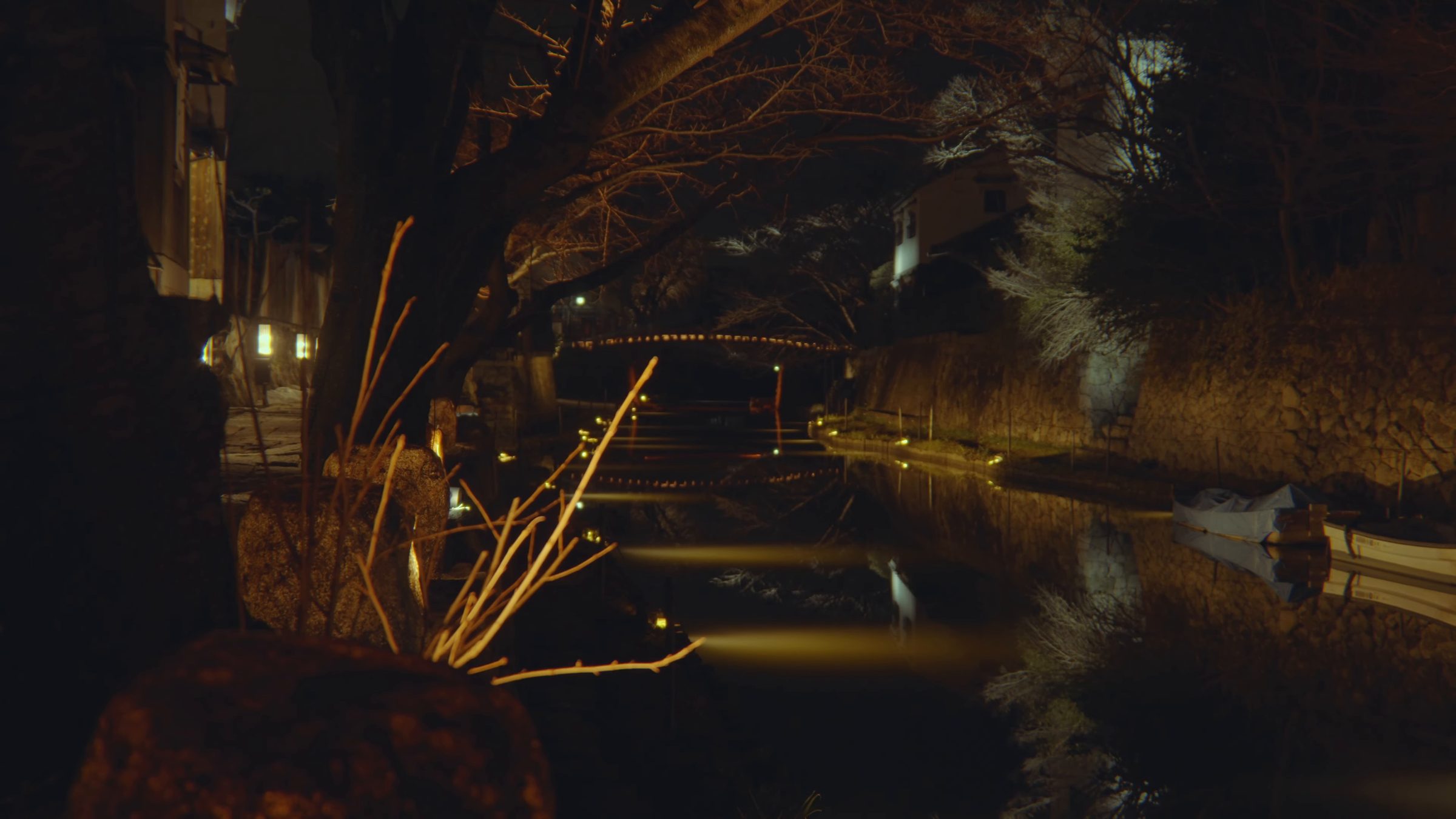
I walked home along the elegant Shinmachi street. After dark, the Hachimanbori canal glowed under orange lights, the shadows of cherry branches wavering on the water.
Watch this scene on YouTube3:33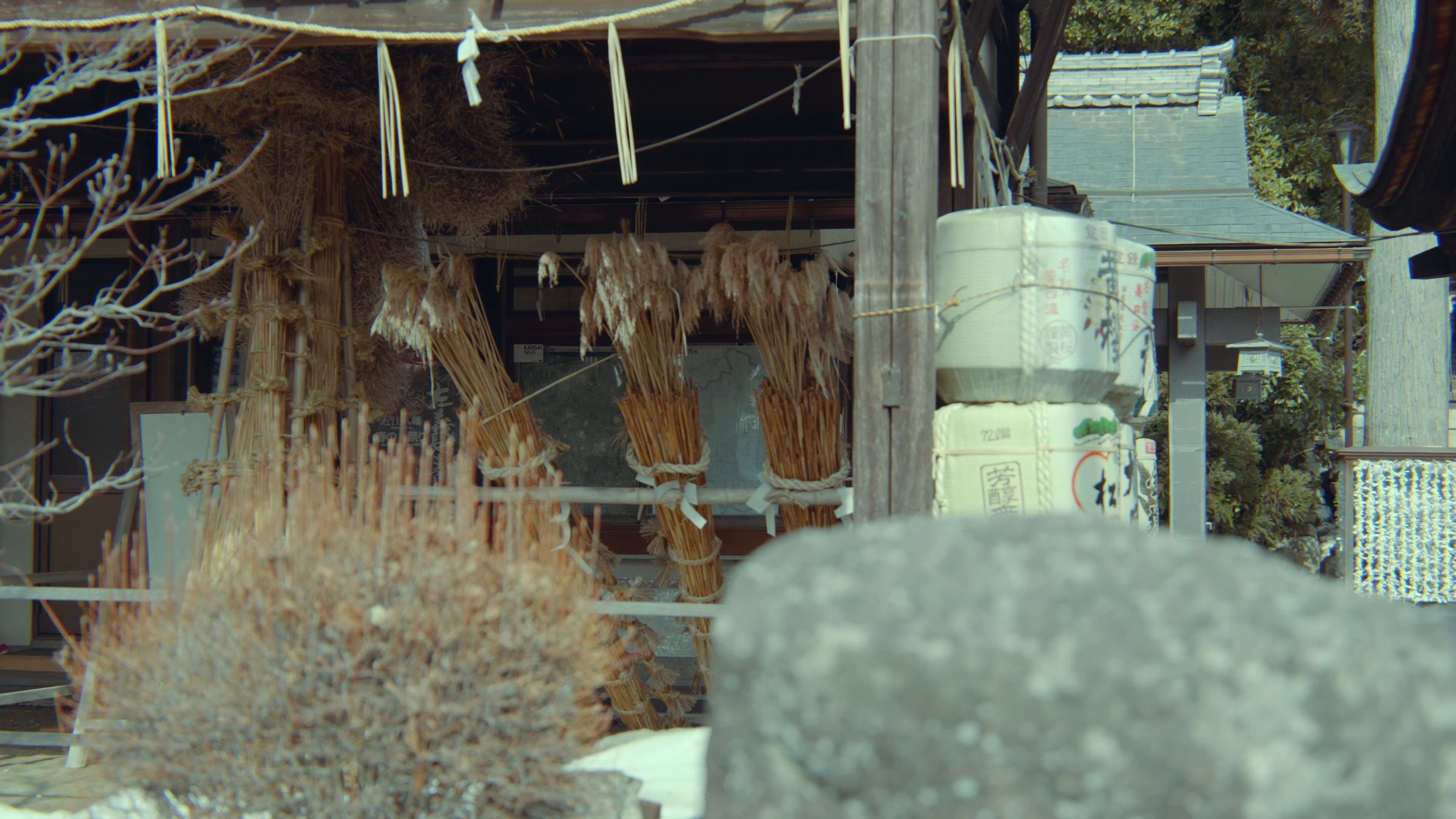
10TRAVEL JOURNAL
An evening meal of Omihachiman specialties
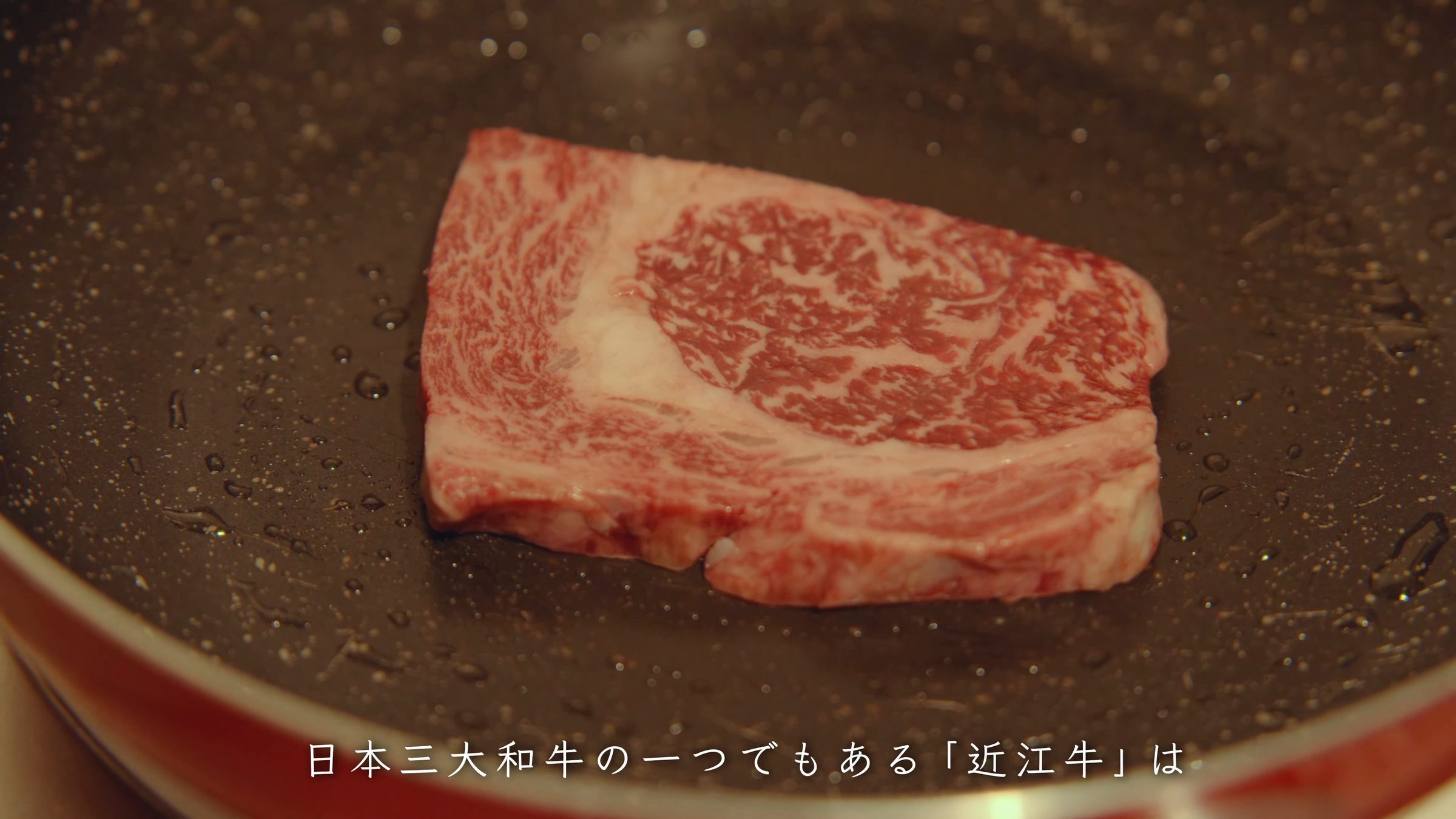
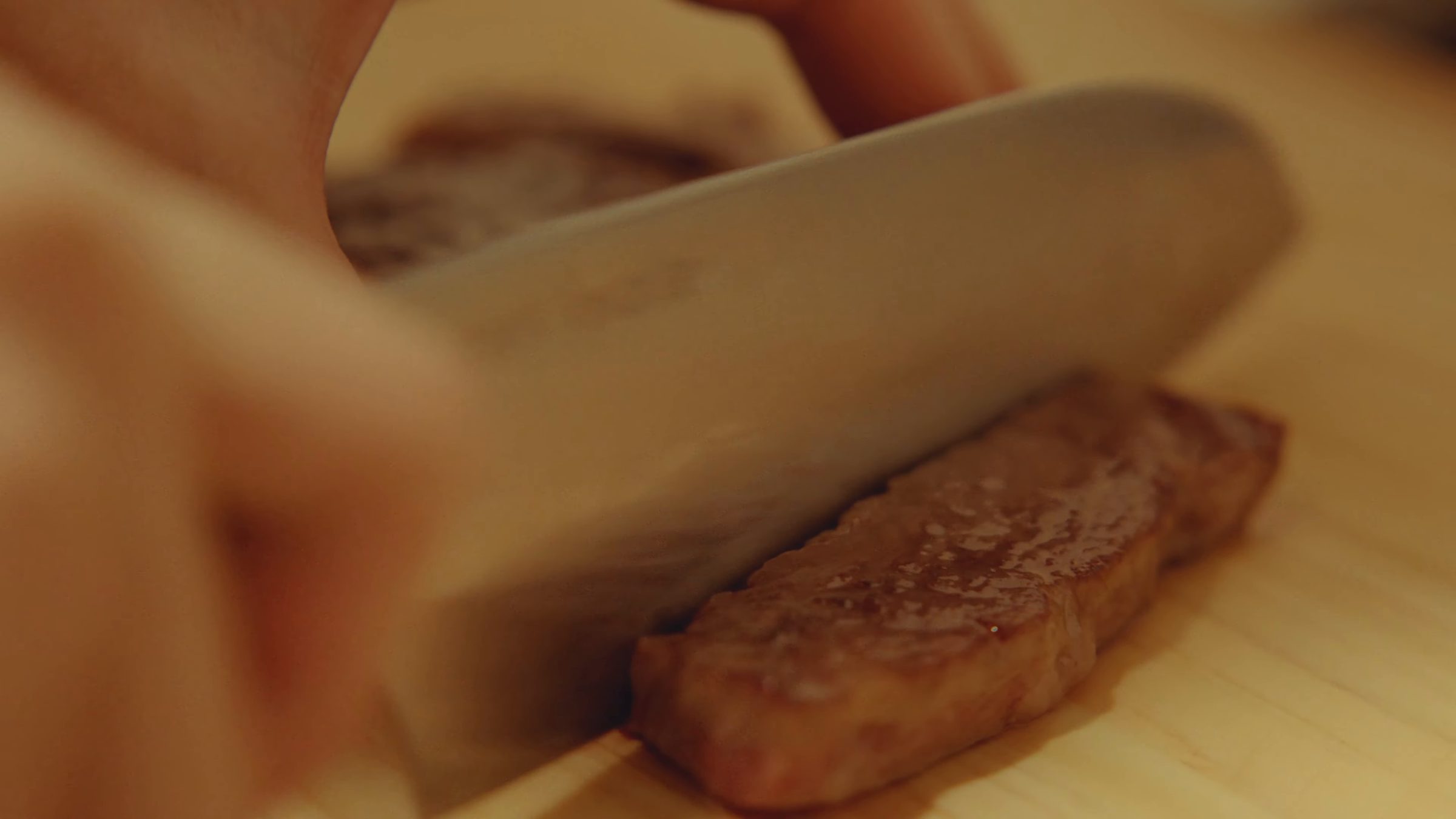
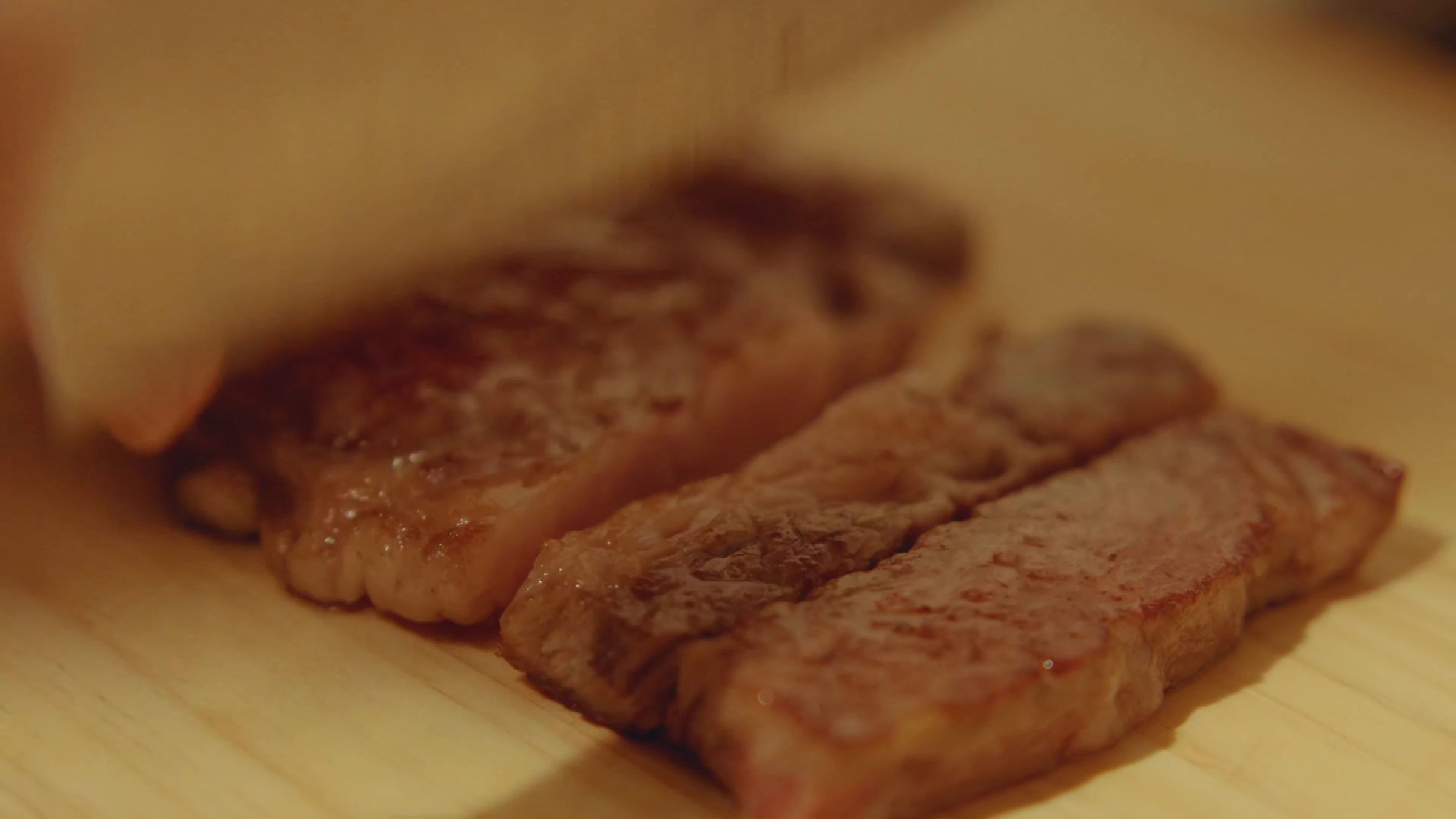
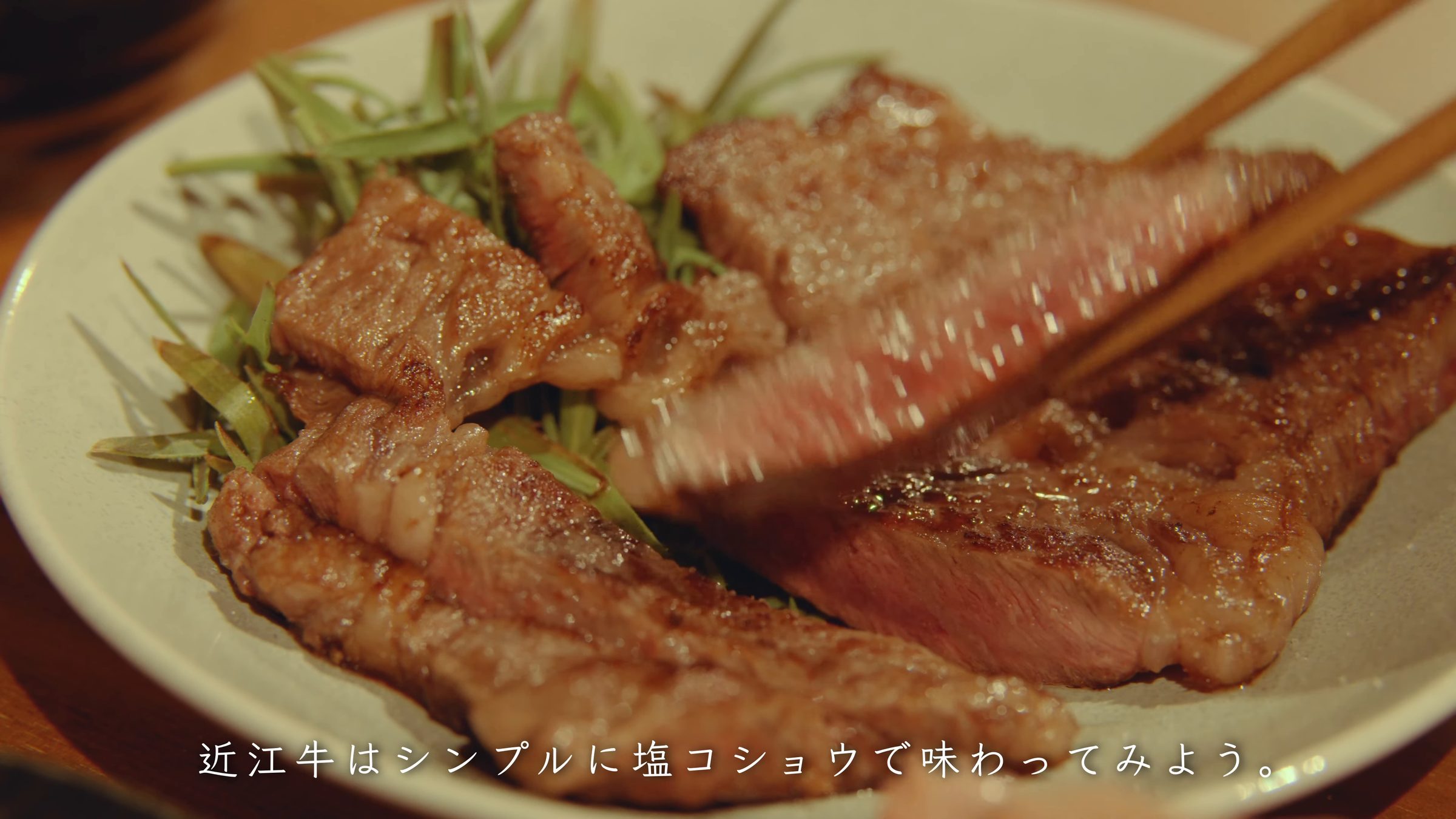
Dinner was an evening of Omihachiman specialties. I sliced cucumber thinly on the board, seared a thick cut of marbled Omi beef, and carved it with a knife. Omi beef is counted among Japan's three great wagyu, and is said to be the country's oldest brand of beef. I kept it simple, with just salt and pepper.
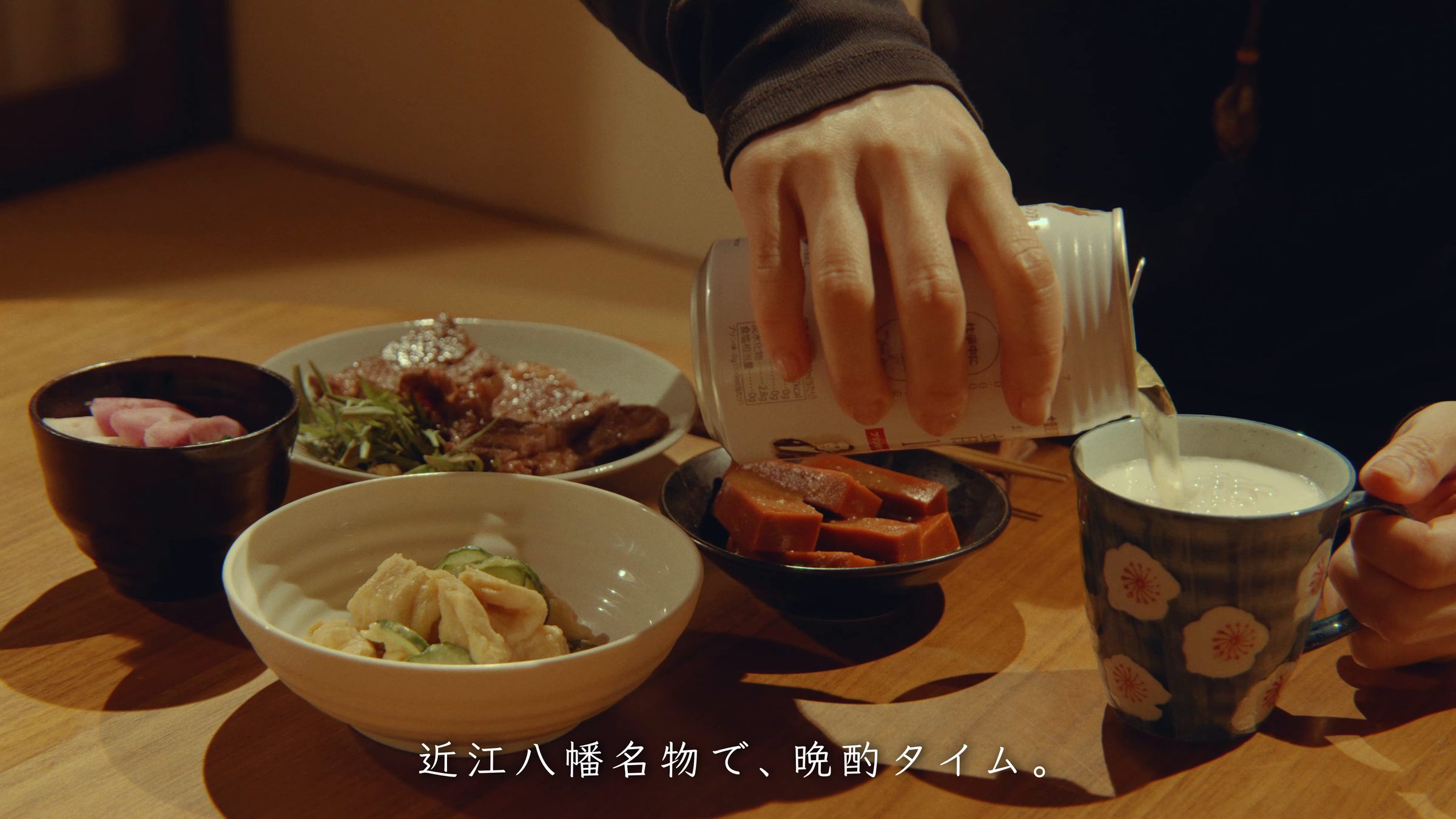
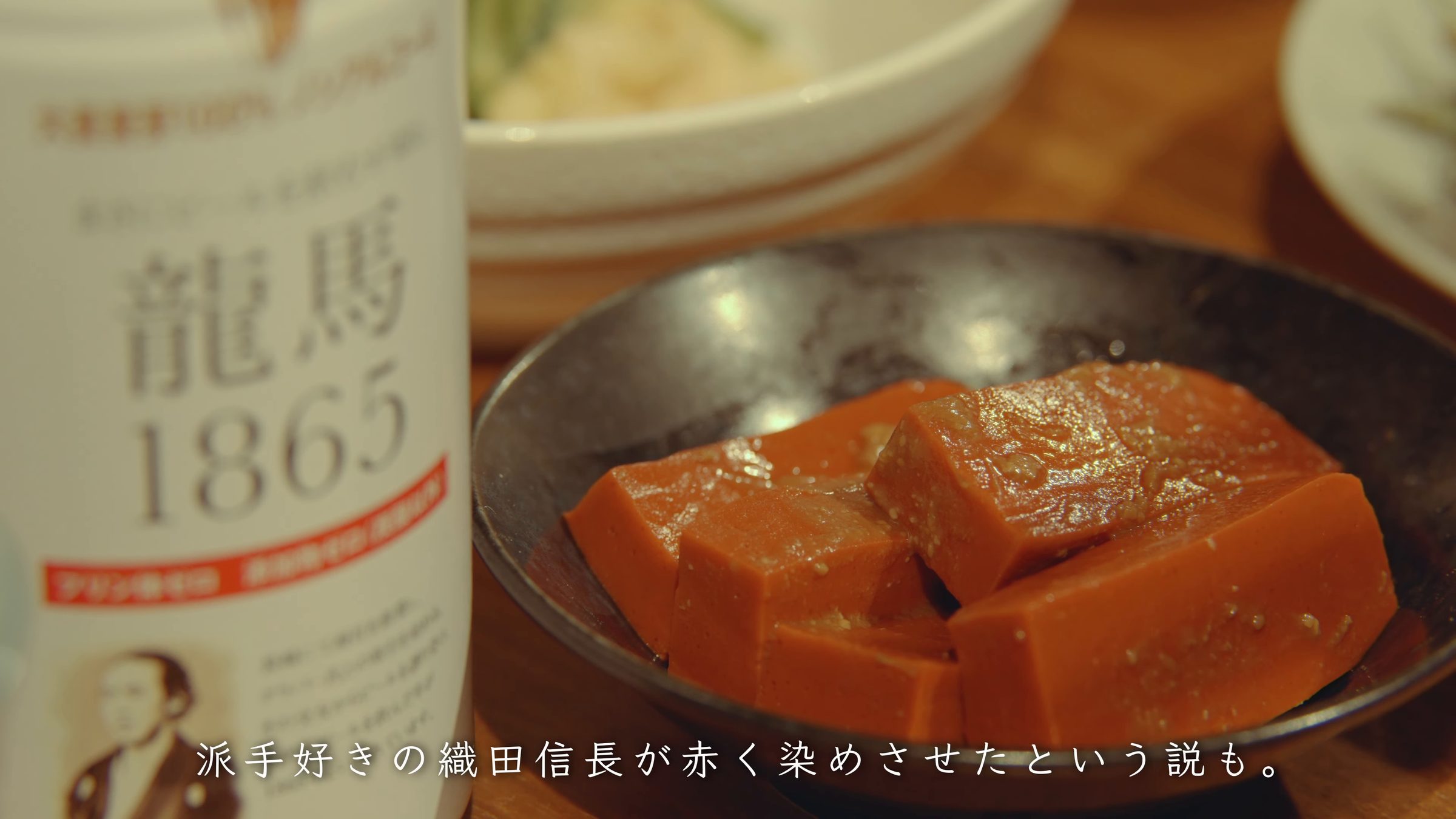
Small dishes went out on the low table, and I poured a glass of alcohol-free beer. Red konnyaku, fine-grained and smooth, gets its color from iron; one story says Oda Nobunaga, who loved flashy things, had it dyed red. It looks festive and is nourishing too.
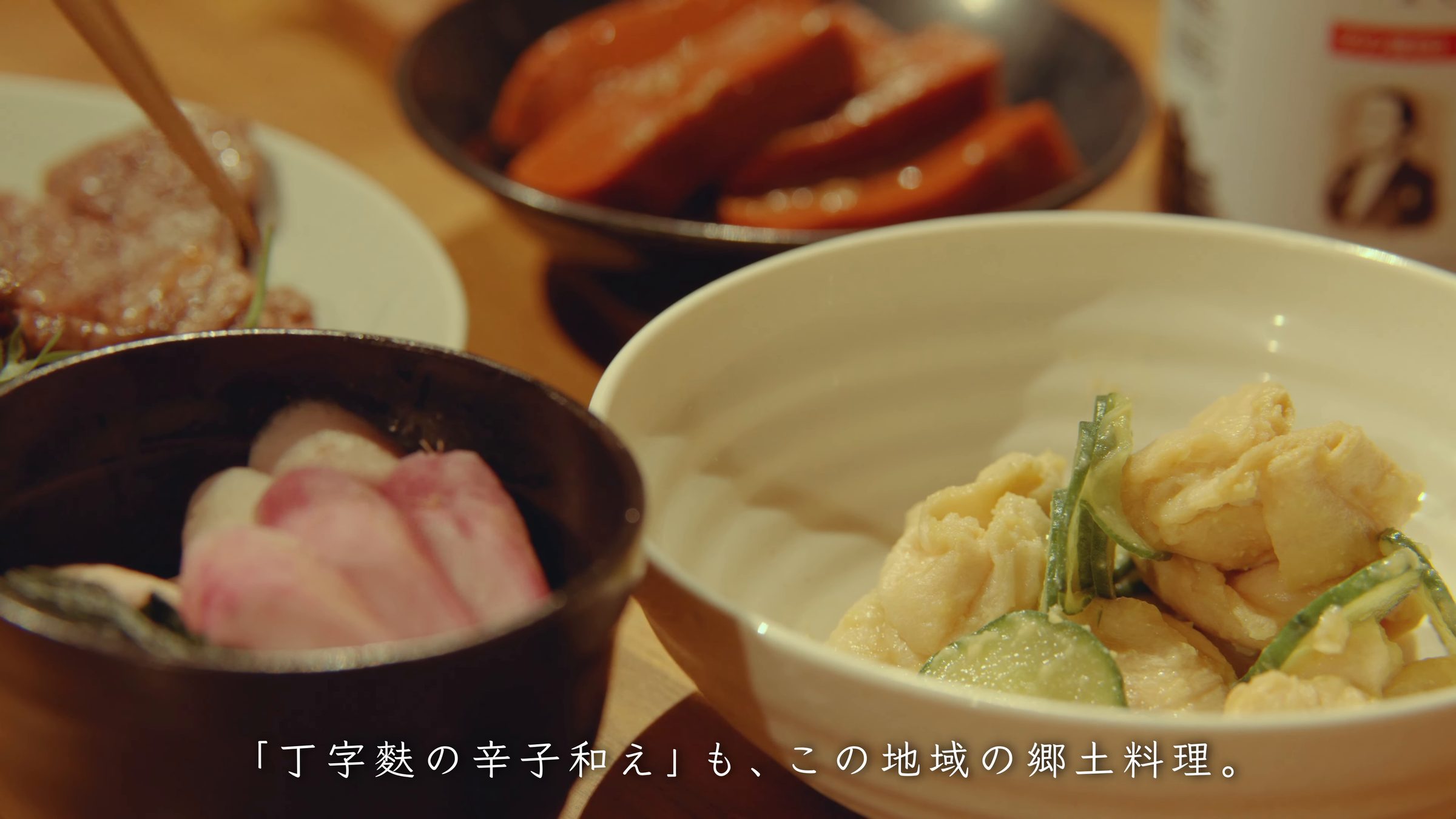
The pink hinona pickles had a pleasant bite, and chojifu no karashi-ae, cubes of the local chojifu wheat gluten dressed with mustard, is another dish of this region. The chewy texture of the fu kept my chopsticks coming back.
Watch this scene on YouTube4:04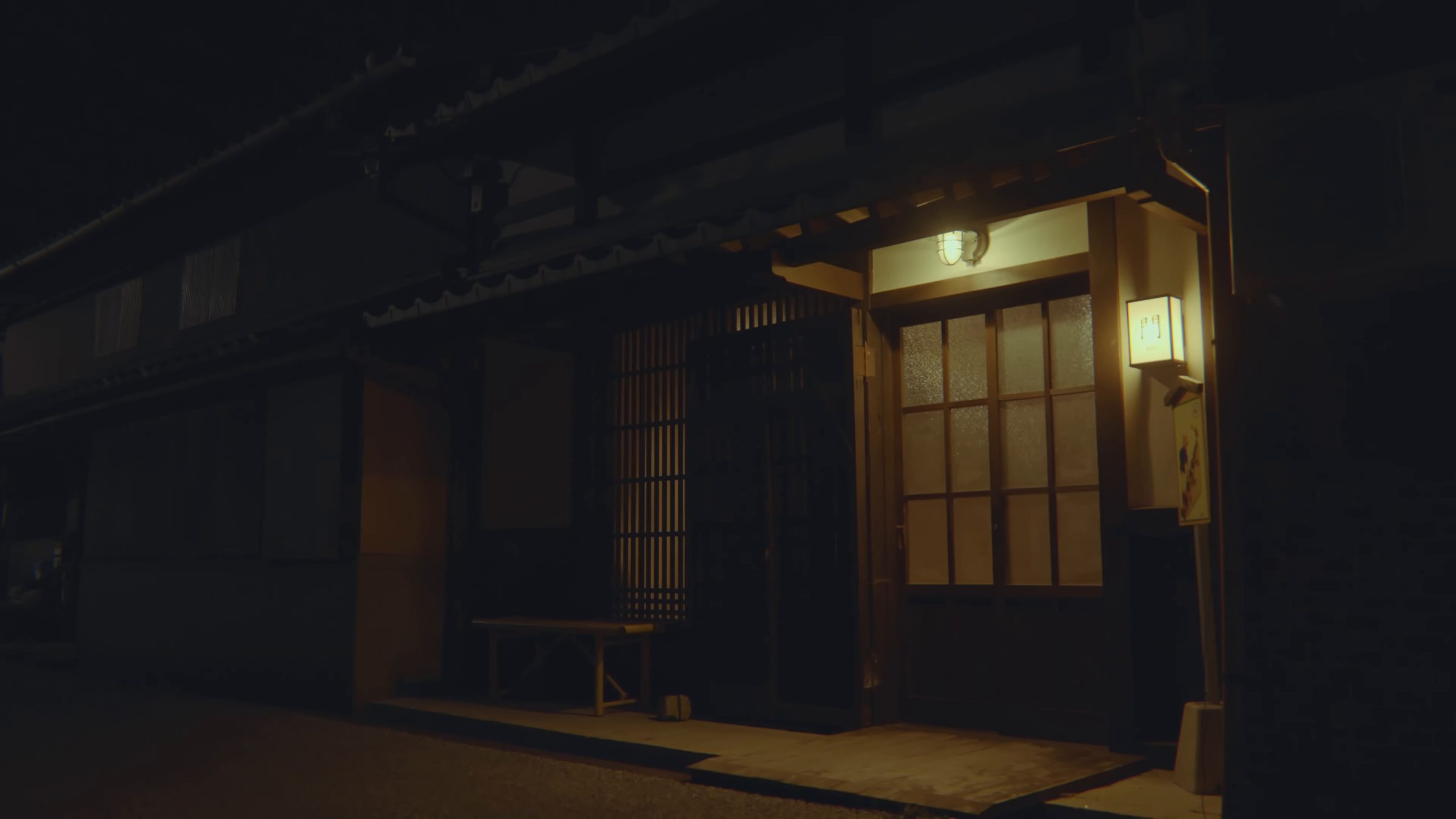
11TRAVEL JOURNAL
Where the Meiji era lives on
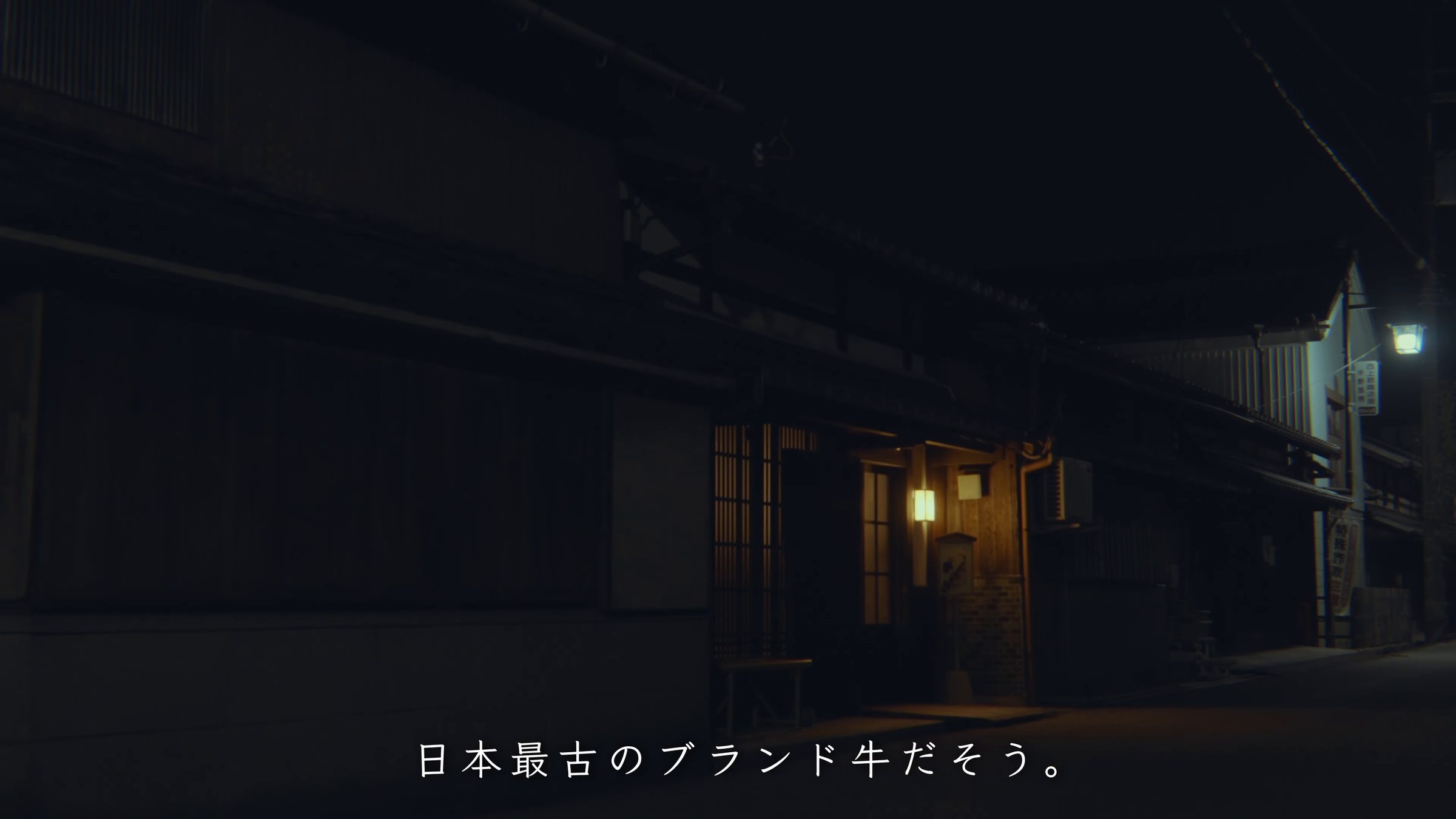
At night, the lantern by the inn's gate glows. Omihachiman is a town where the look of the Meiji era is woven into daily life. In the Showa era the Hachimanbori canal was nearly filled in, but townspeople waded in to clean it week after week until the plan was dropped. The work of protecting the town's culture and history continues today. I wonder what kind of life I will meet next.
Watch this scene on YouTube4:58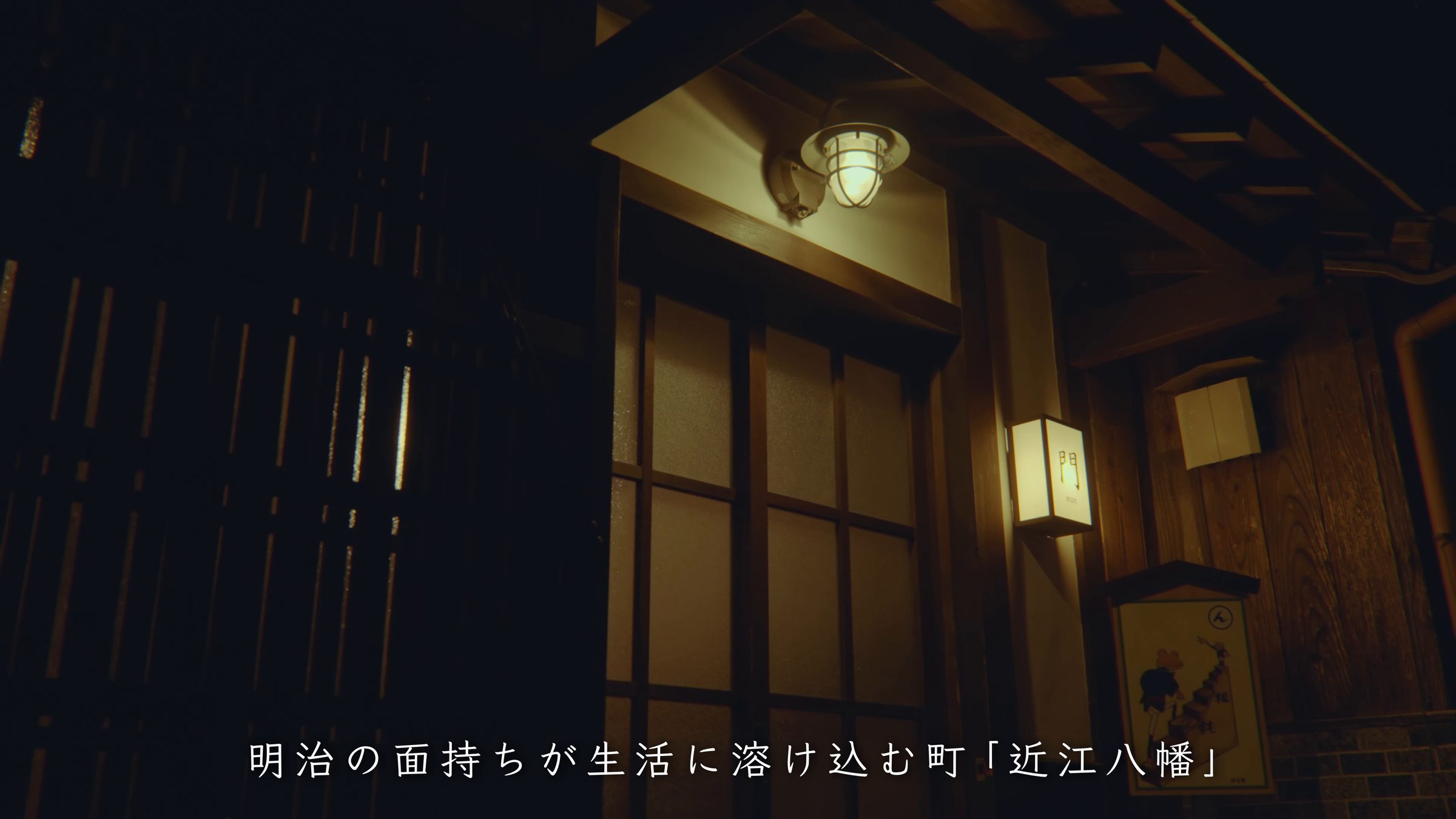
THE JOURNEY IN FILM
The wind. The sounds of a kitchen.
Spend a little more time inside the journey, on film.
Watch the video6 minTHE BORROWER’S NOTES
The Borrower's Notes: Omihachiman
Places we stopped, dishes we made, and stories of the land. A few things to keep from the journey.
01Where I ate and shopped
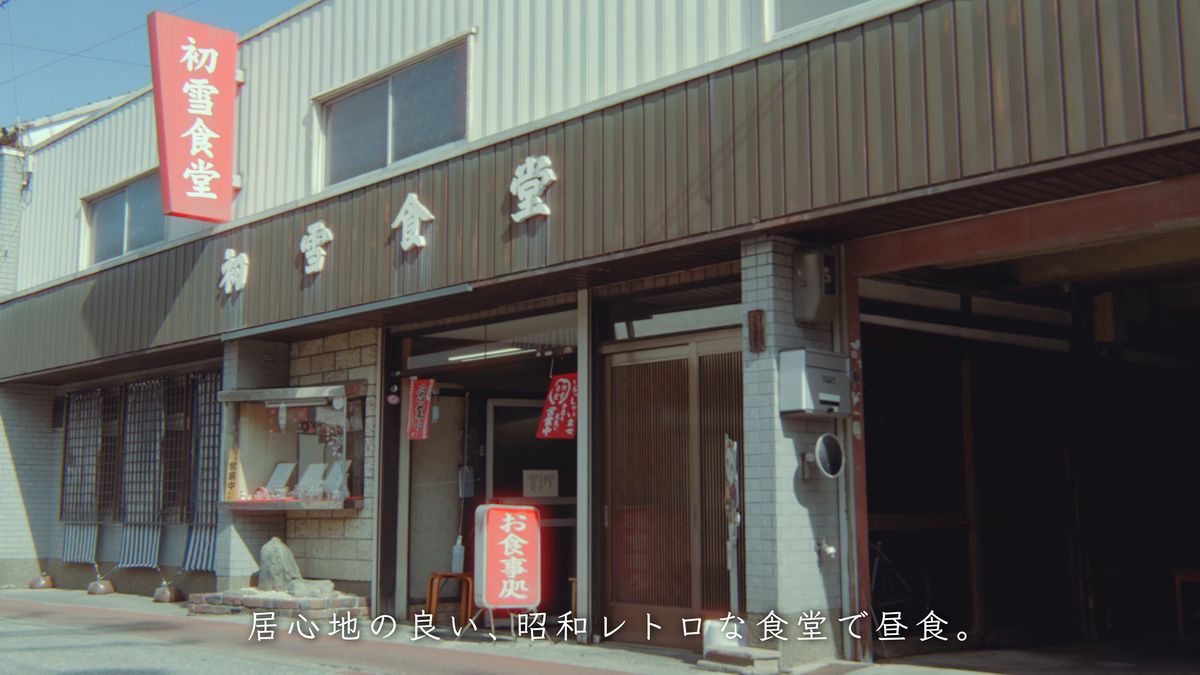
Hatsuyuki Shokudo
7 Nakayamachi-moto, Omihachiman, Shiga
A Showa-era diner. I had the curry ramen and a tanin-don rice bowl of Omi beef bound with egg. Autographed boards cover the walls, and a movie poster hangs by the entrance.
Sources: tabelog.com
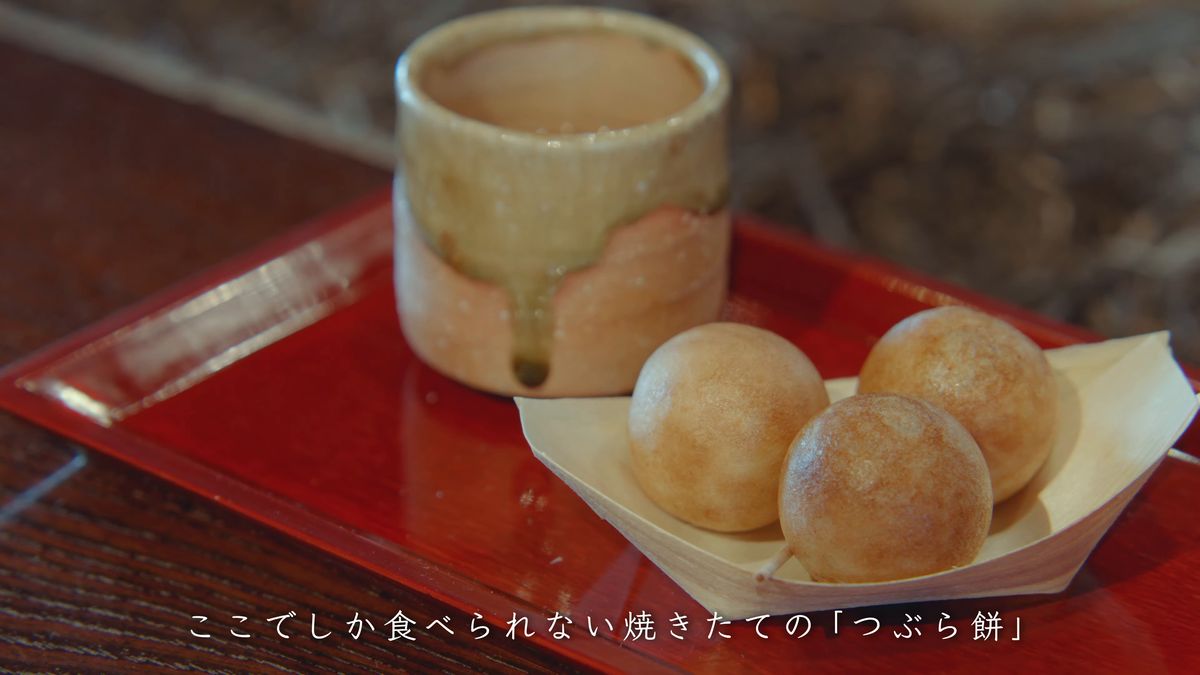
Taneya Himure-no-ya
Himure Village, Miyauchi-cho, Omihachiman, Shiga
Taneya's confectionery beside Himure Hachimangu Shrine, in a Japanese-style house with a kamado stove and a sunken hearth. I ate freshly baked tsubura mochi, small rice cakes filled with bean paste; the adzuki tea was complimentary.
Sources: taneya.jp
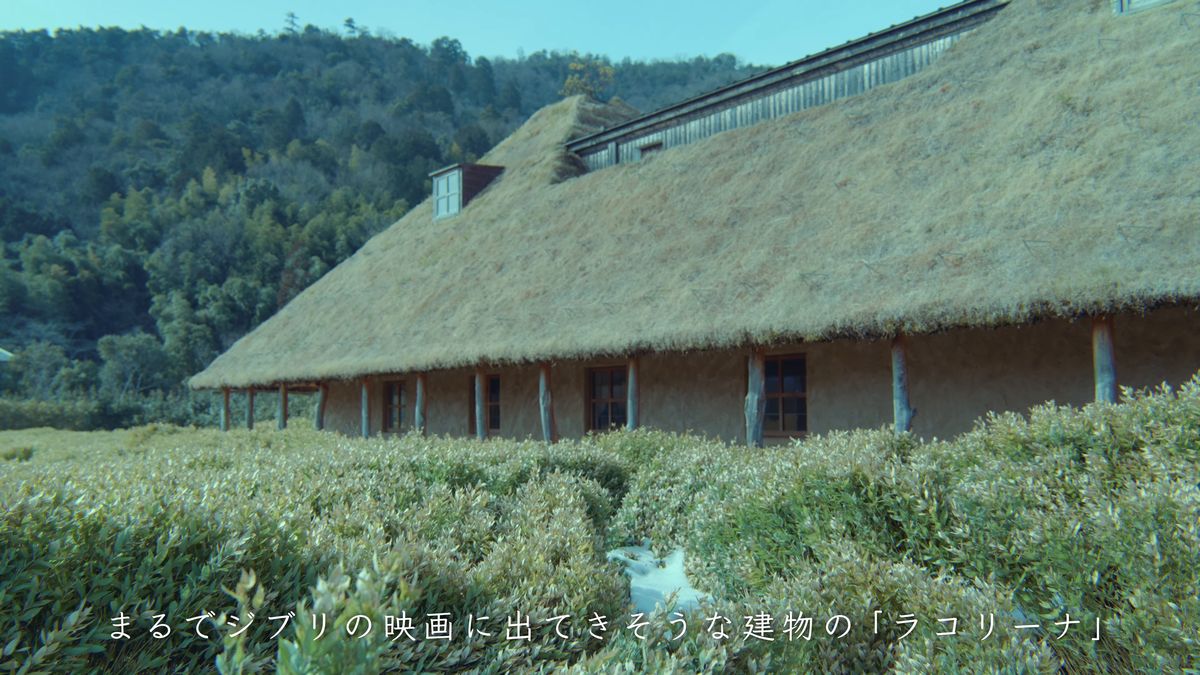
La Collina Omihachiman
615-1 Kitanosho-cho, Omihachiman, Shiga
The Taneya group's confectionery complex, with grass-roofed buildings. The castella shop serves cake fresh from the oven; I had the Hachiman castella with tea.
Sources: taneya.jp macaro-ni.jp
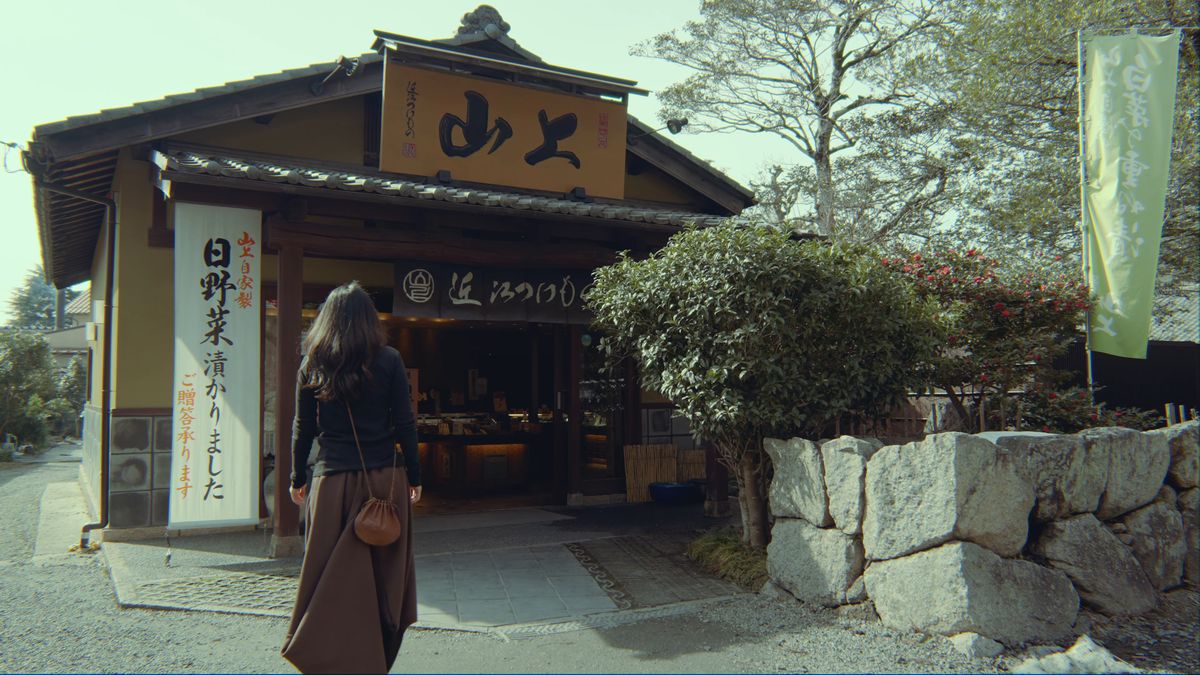
Omi Tsukemono Yamajo, Himure shop
253-1 Miyauchi-cho, Omihachiman, Shiga
The pickle maker's own shop on the approach to Himure Hachimangu Shrine. I bought red konnyaku and hinona pickles.
Sources: yamajou.co.jp
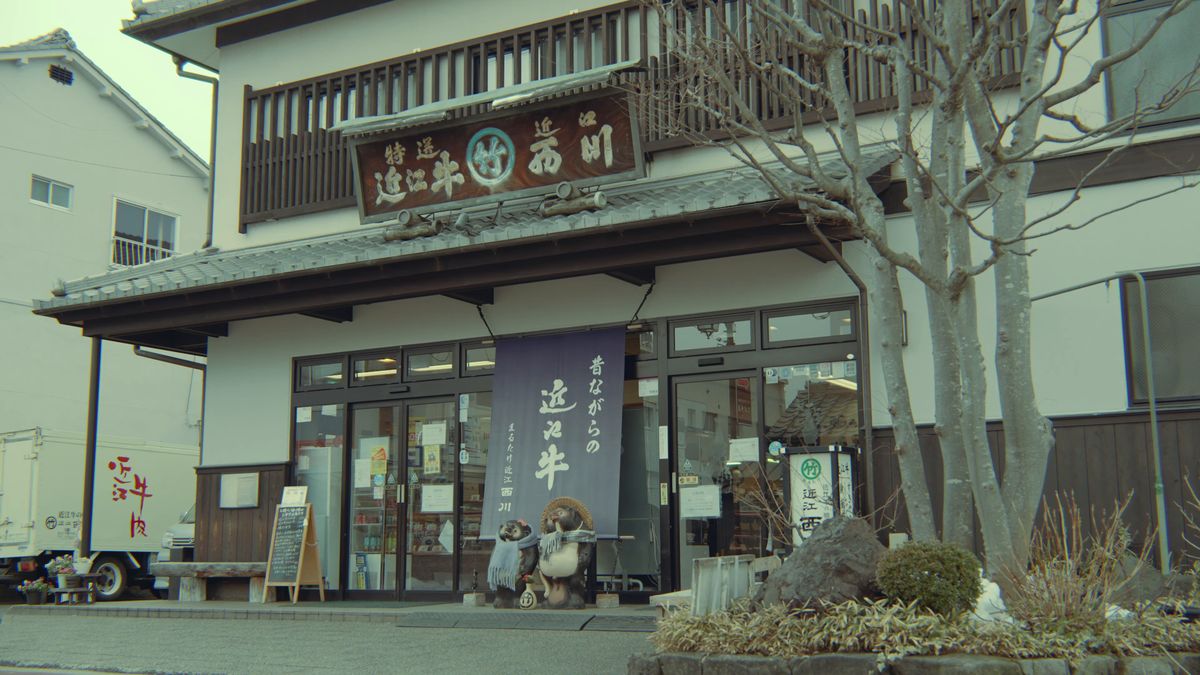
Marutake Omi Nishikawa
16 Nakayamachi-naka, Omihachiman, Shiga
An Omi beef shop founded in 1947, with a butcher's counter and a restaurant, selling beef raised on its own farm. Old photographs and a cattle lineage chart hang inside.
Sources: oumi-marutake.jp tabelog.com
02What I cooked
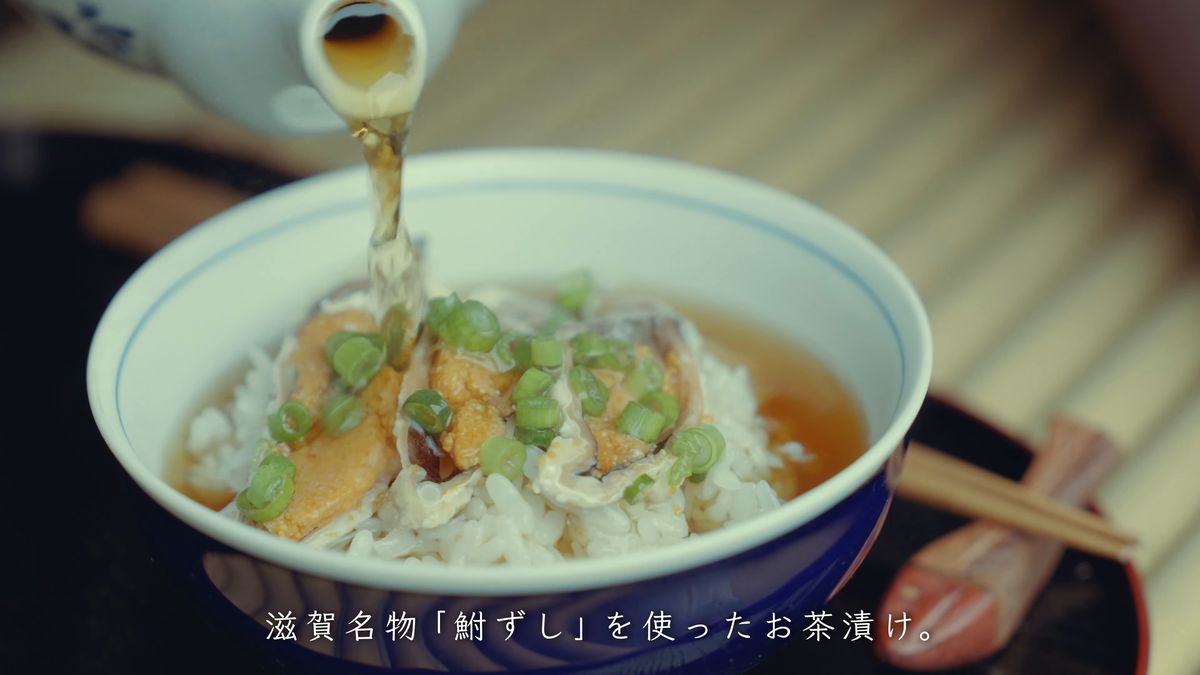
Funazushi ochazuke
Funazushi is a fermented sushi found throughout Shiga: crucian carp from Lake Biwa, salted and then layered with cooked rice in a tub to ferment for more than half a year. Egg-bearing nigorobuna carp are usually used, and it has long been eaten on festive days such as New Year and shrine festivals. In 1998 it was selected as one of Shiga's intangible folk cultural properties of food. This time I sliced it thinly over rice and poured broth over it for ochazuke.
IngredientsCooked rice, Funazushi, Green onion, Dashi broth
- Lay thin slices of funazushi on the rice
- Scatter chopped green onion on top
- Pour hot dashi broth over everything
Sources: maff.go.jp
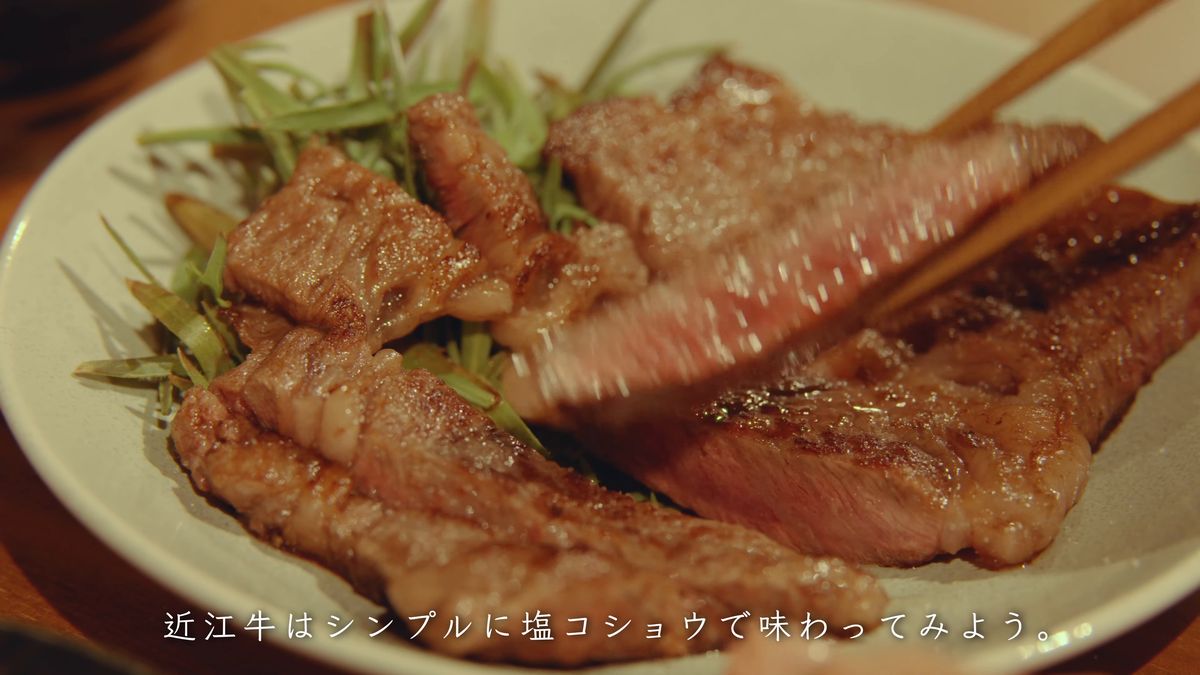
Omi beef steak
Omi beef is Shiga's pride, Japan's first brand of beef and counted among the three great wagyu. Butchers in town hang signs and noren reading "Omi beef." I seasoned it simply with salt and pepper and served it on a bed of mizuna.
IngredientsOmi beef (thick cut), Salt, Pepper
- Sear the thick cut in a frying pan
- Slice it with a knife
- Season simply with salt and pepper
Sources: pref.shiga.lg.jp
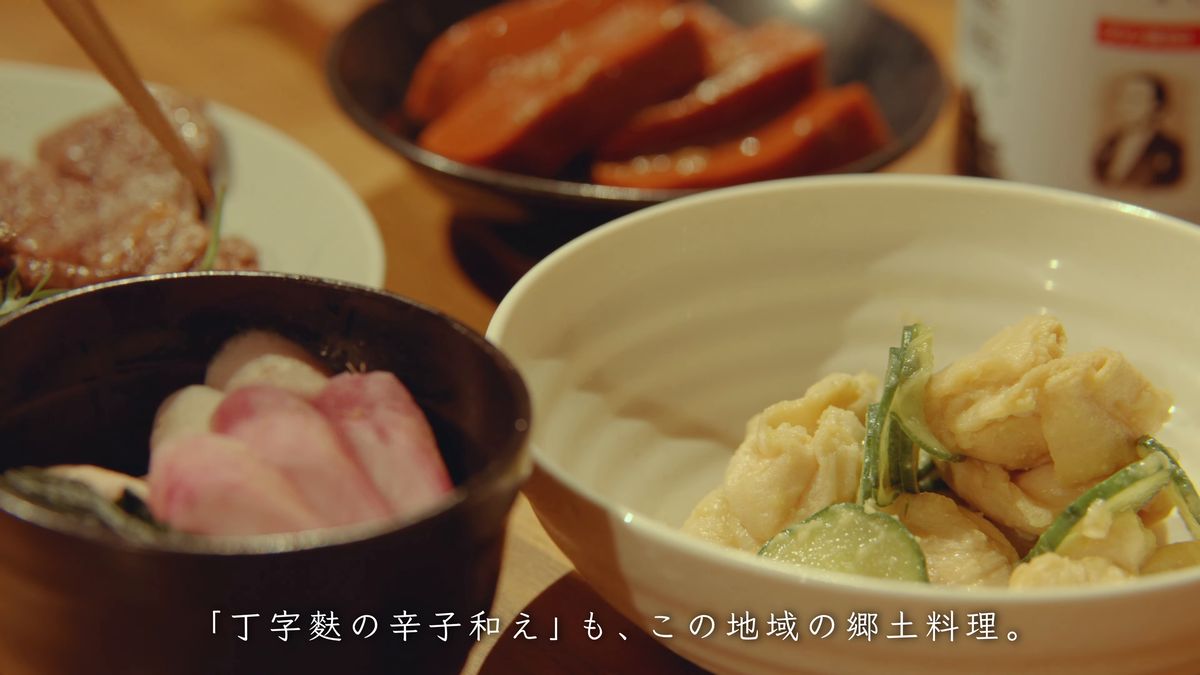
Chojifu with mustard dressing
Chojifu is Omihachiman's local wheat gluten, cut into squares. In the Ministry of Agriculture's guide to regional cuisine, chojifu no karashi-ae is listed, alongside decchi yokan and simmered red konnyaku, among the dishes of the Koto region that trace back to the Omi merchants. The chewy, smooth fu takes the mustard dressing well.
IngredientsChojifu (square wheat gluten), Cucumber, Mustard dressing
- Slice the cucumber thinly
- Dress the chojifu and cucumber with the mustard dressing
Sources: maff.go.jp
03About the area
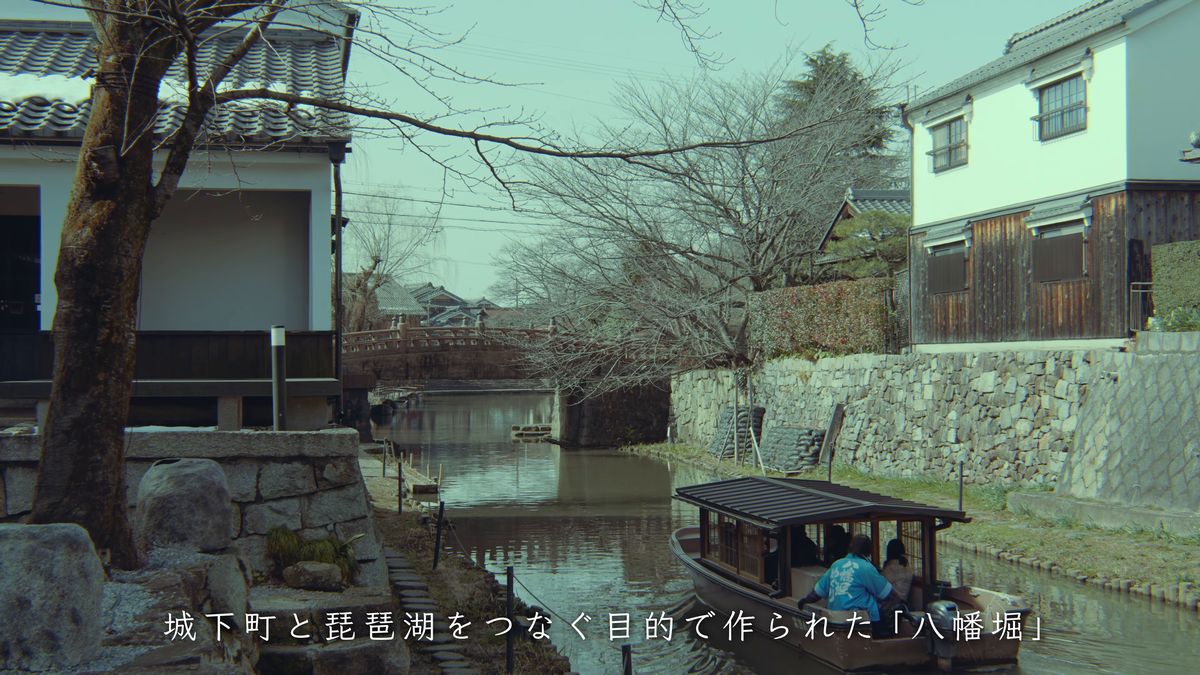
Hachimanbori Canal
A 4,750-meter canal dug in 1585, when Toyotomi Hidetsugu, nephew of Hideyoshi, built his castle on Mt. Hachiman and laid out the town. Linked to Lake Biwa, it let lake boats call at the castle town, bringing people, goods and information, and with them prosperity. In 1972 a plan to fill it in was proposed, but the local Junior Chamber rallied residents under the slogan "regret begins the moment the canal is filled," its members waded in to clean the canal every Sunday, and in 1975 the prefecture cancelled the work. In 1991 the area around Hachimanbori, Shinmachi street and Nagaharacho street became Shiga's first nationally designated preservation district for groups of traditional buildings, and in 2006 the canal and Nishinoko lake were selected as Japan's first Important Cultural Landscape. The boat tour of the canal takes about 30 minutes.
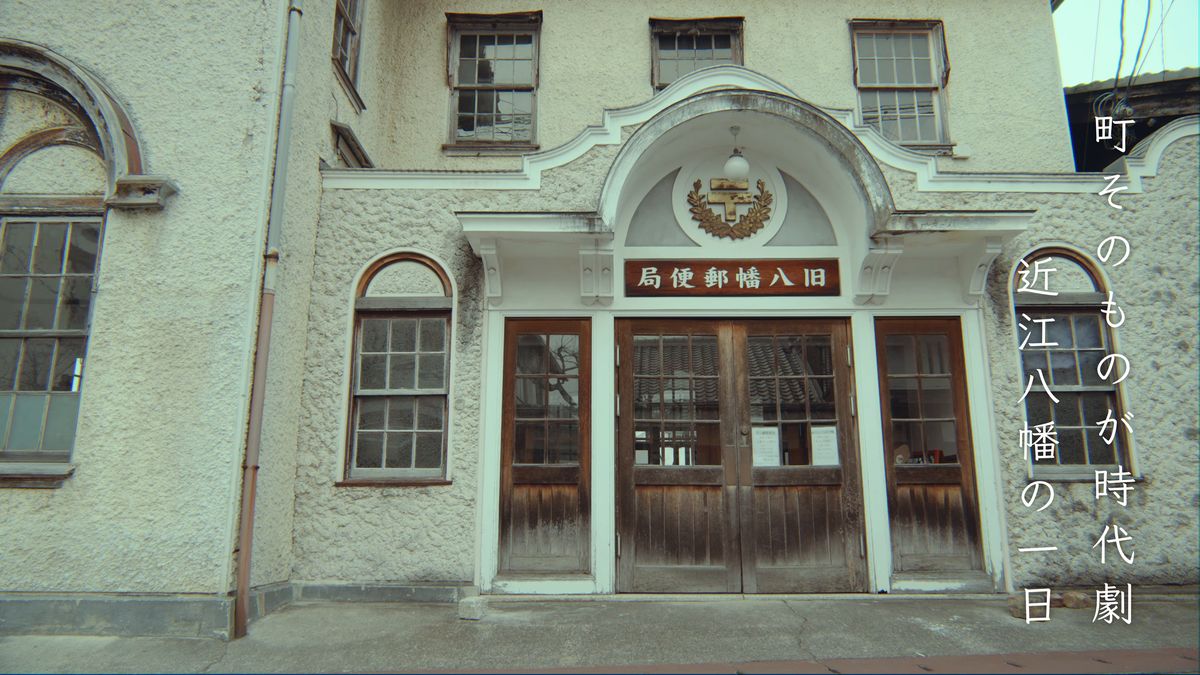
Old Hachiman Post Office
8 Nakayamachi-naka, Omihachiman, Shiga
A two-story wooden Western-style building designed by William Merrell Vories and completed in 1921. It served as a post office until 1960, then stood empty for years until the NPO Hitotsubu no Kai restored it, rebuilding the Spanish-style front entrance that had been removed. A nationally registered tangible cultural property, it is now a gallery and event space, open mainly on weekends.
Sources: omi8.com tabi-mag.jp
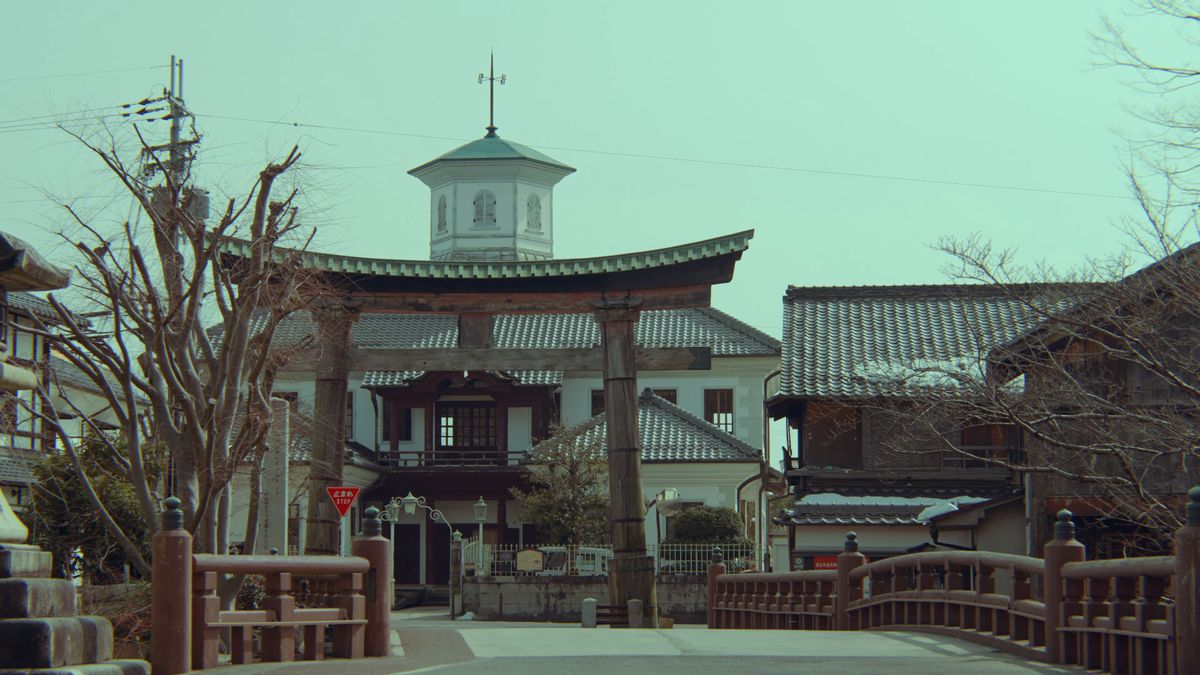
Hakuunkan
9-1 Ishincho-moto, Omihachiman, Shiga
Built in 1877 as the Hachiman East School by Omi merchants to educate their children, in a Western-influenced style, with most of the cost covered by donations. A registered tangible cultural property, it now houses the tourist information center, with local products on sale downstairs and a multipurpose hall for exhibitions upstairs. It stands before the torii of Himure Hachimangu Shrine.
Sources: omi8.com tabi-mag.jp
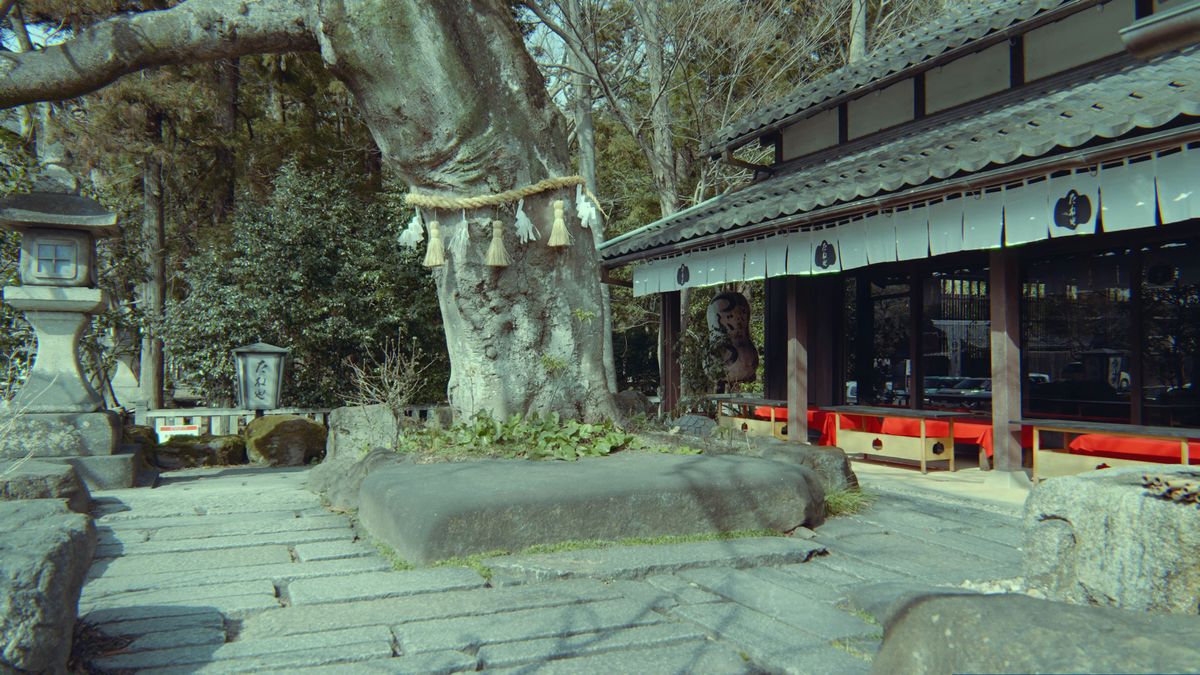
Himure Hachimangu Shrine
257 Miyauchi-cho, Omihachiman, Shiga
An ancient shrine long revered as the guardian of the Omi merchants. Its two fire festivals, the Sagicho Matsuri in March and the Hachiman Matsuri in April, are nationally selected intangible folk cultural properties; the Sagicho is said to have been loved by Oda Nobunaga. Confectioners and a pickle shop line the approach.
Sources: gltjp.com
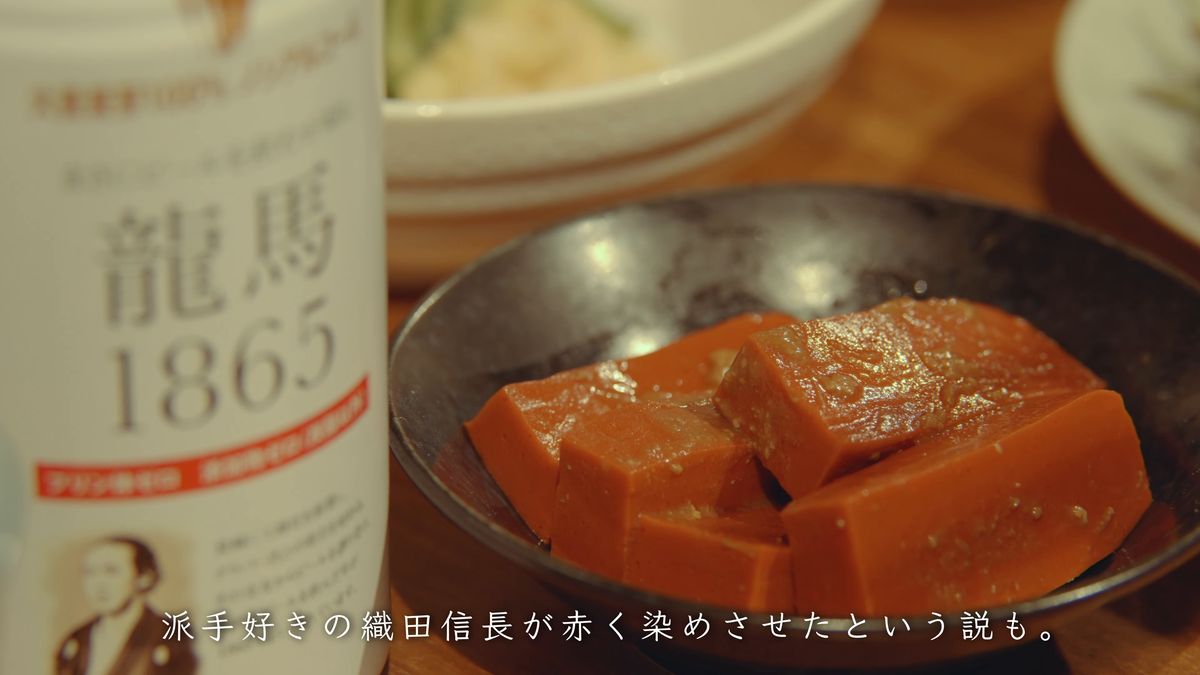
Red konnyaku
A local ingredient that spread nationwide from Omihachiman. Its red comes from iron oxide and does not fade with cooking. One story says it was born when Oda Nobunaga, fond of flashy things, had even konnyaku dyed red. It has little of konnyaku's usual smell and a soft, springy texture.
Sources: maff.go.jp
Hinona pickles
Hinona is a slender turnip native to Hino, Shiga, purple-red at the top of the root and white below, with a flavor that carries both bitterness and bite. Pickled, it turns the color of cherry blossoms, and was once presented to the emperor, which is how the pickle came to be known as sakura-zuke. In 2022, Omi Hino hinona was registered as a geographical indication (GI).
Sources: pref.shiga.lg.jp maff.go.jp
Ryoma 1865
With dinner I opened Ryoma 1865 from Nippon Beer, an alcohol-free (0.00%) beer made only from malt, hops and carbonation.
Sources: nipponbeer.jp
A late-Meiji townhouse inn
This time I borrowed an inn in a townhouse built at the end of the Meiji era, carefully renovated while keeping its old character, with a beamed corridor, a small stone garden and shoji-screened rooms.
PHOTO ALBUMPhoto album67Open all photographsClose the photo album
Select a photograph to explore the journey one frame at a time.