A TRAVEL ESSAY
Kyoto City, Kyoto
Kyoto Machiya Stay
An ordinary morningin a hundred-year-oldKyoto townhouse
One day in Kyoto, living as if the machiya were my own.
Read the journey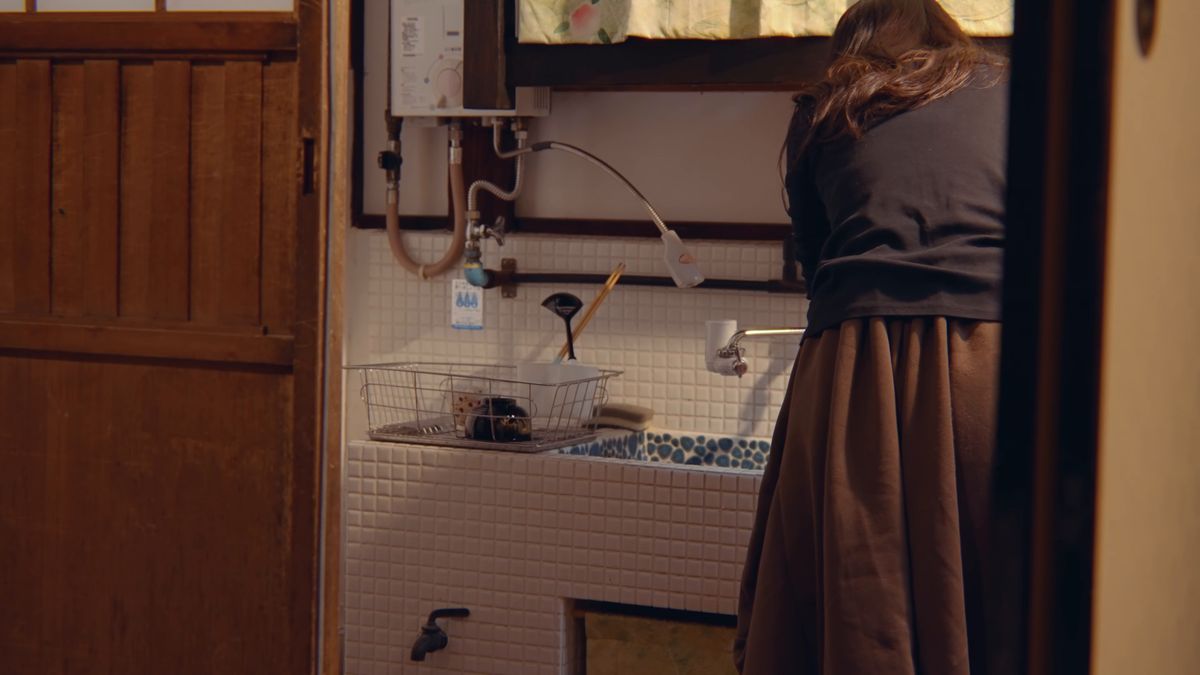
ABOUT THIS JOURNEY
I woke up in a hundred-year-old Kyoto machiya townhouse. I made oyakodon in the old tiled kitchen, then went out into the streets after the rain: rich kotteri ramen at the original Tenkaippin in Ichijoji, matcha and a seasonal sweet at Toraya near Karasuma-Ichijo, and Beijing cuisine in a Spanish Baroque building on the Kamo River. To end the day, a bowl of bubu-zuke. One day in Kyoto, living as if the machiya were my own.
A little more about the food and the land01TRAVEL JOURNAL
In the machiya kitchen
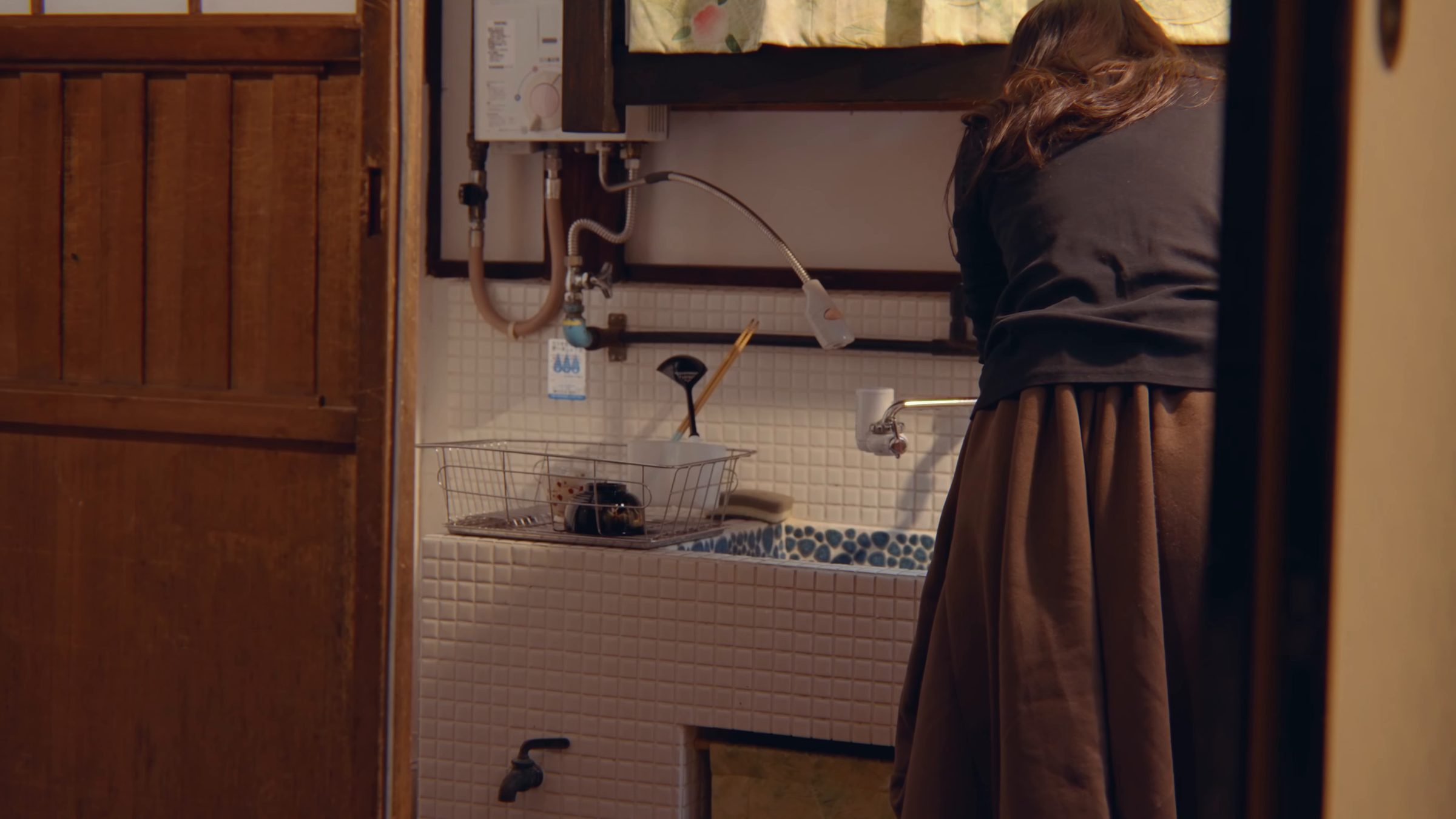
Morning in a kyomachiya, one of Kyoto's traditional townhouses. The kitchen here is tiled the old way: a white-tiled sink and a counter of blue-patterned tiles. On the cutting board, I sliced an onion thin. This morning's breakfast would be oyakodon, chicken and egg over rice.
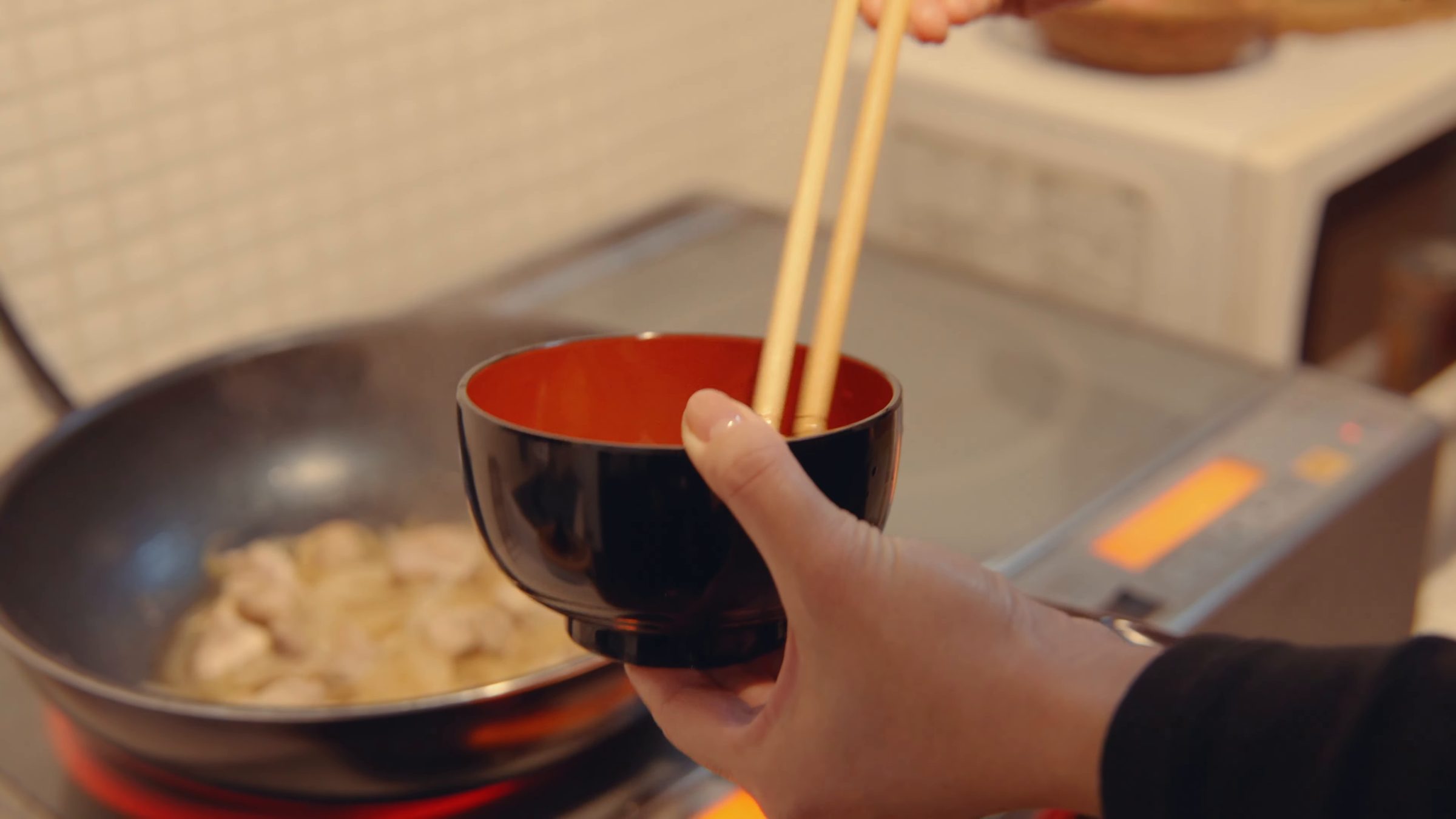
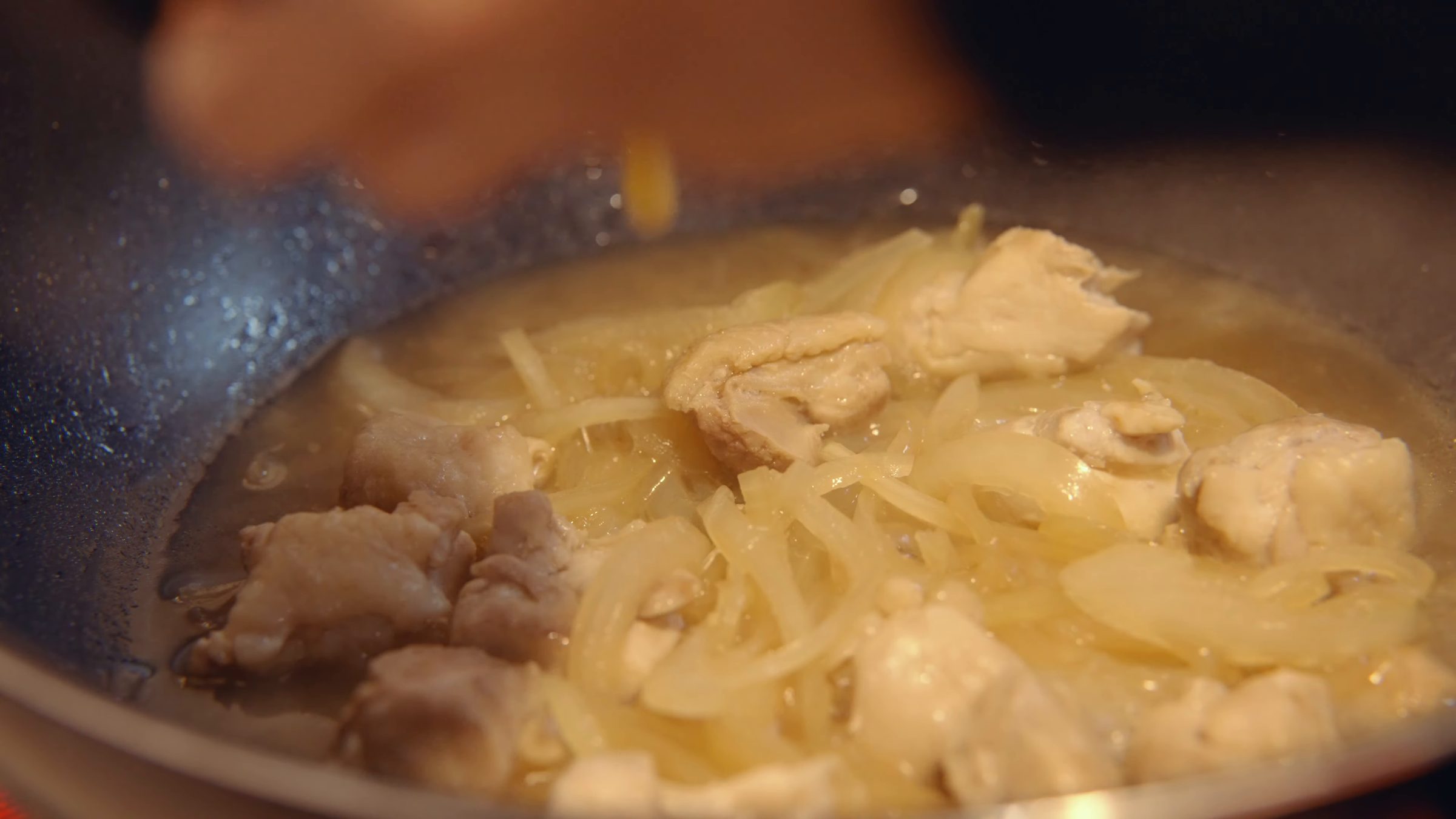
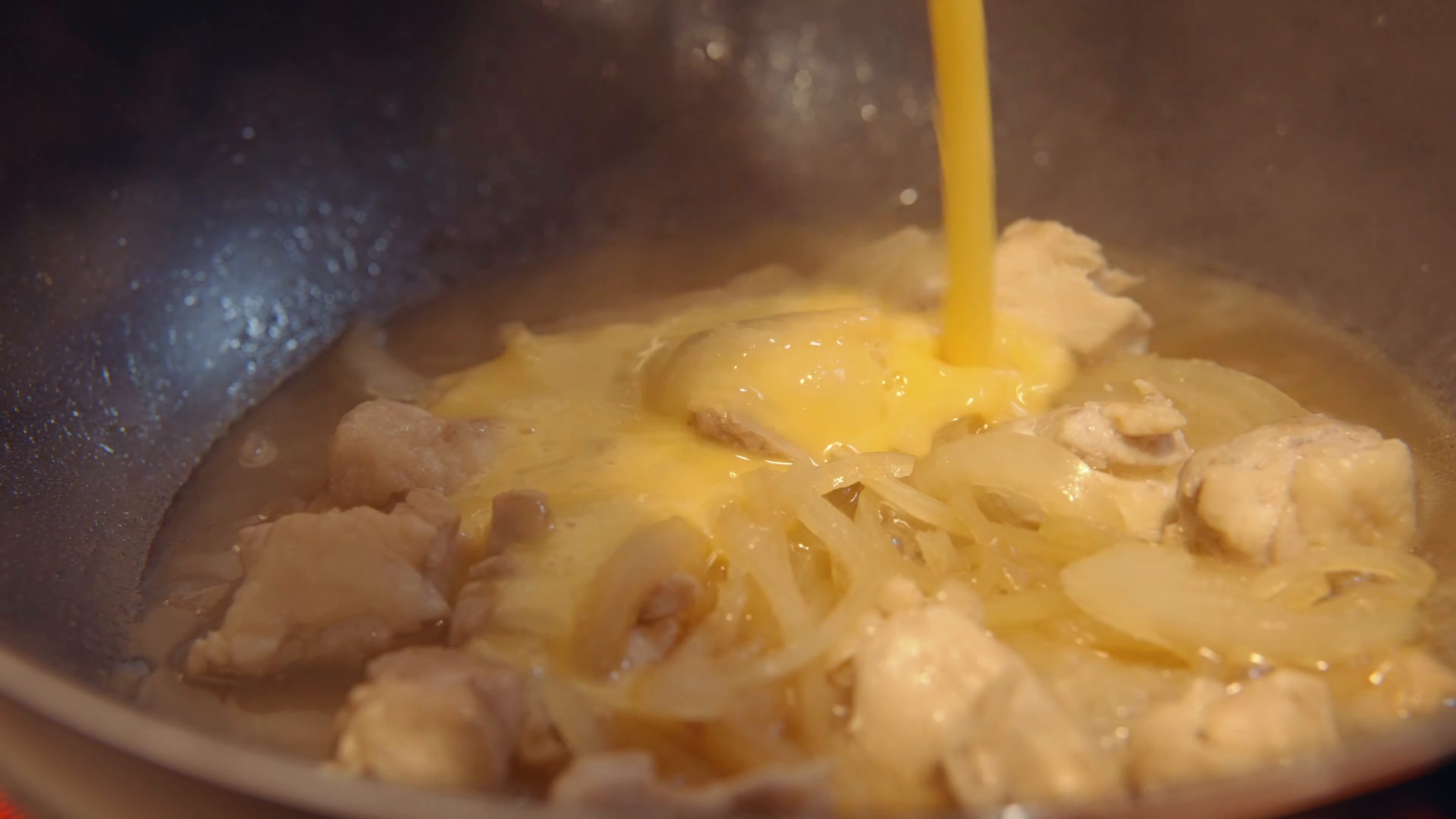
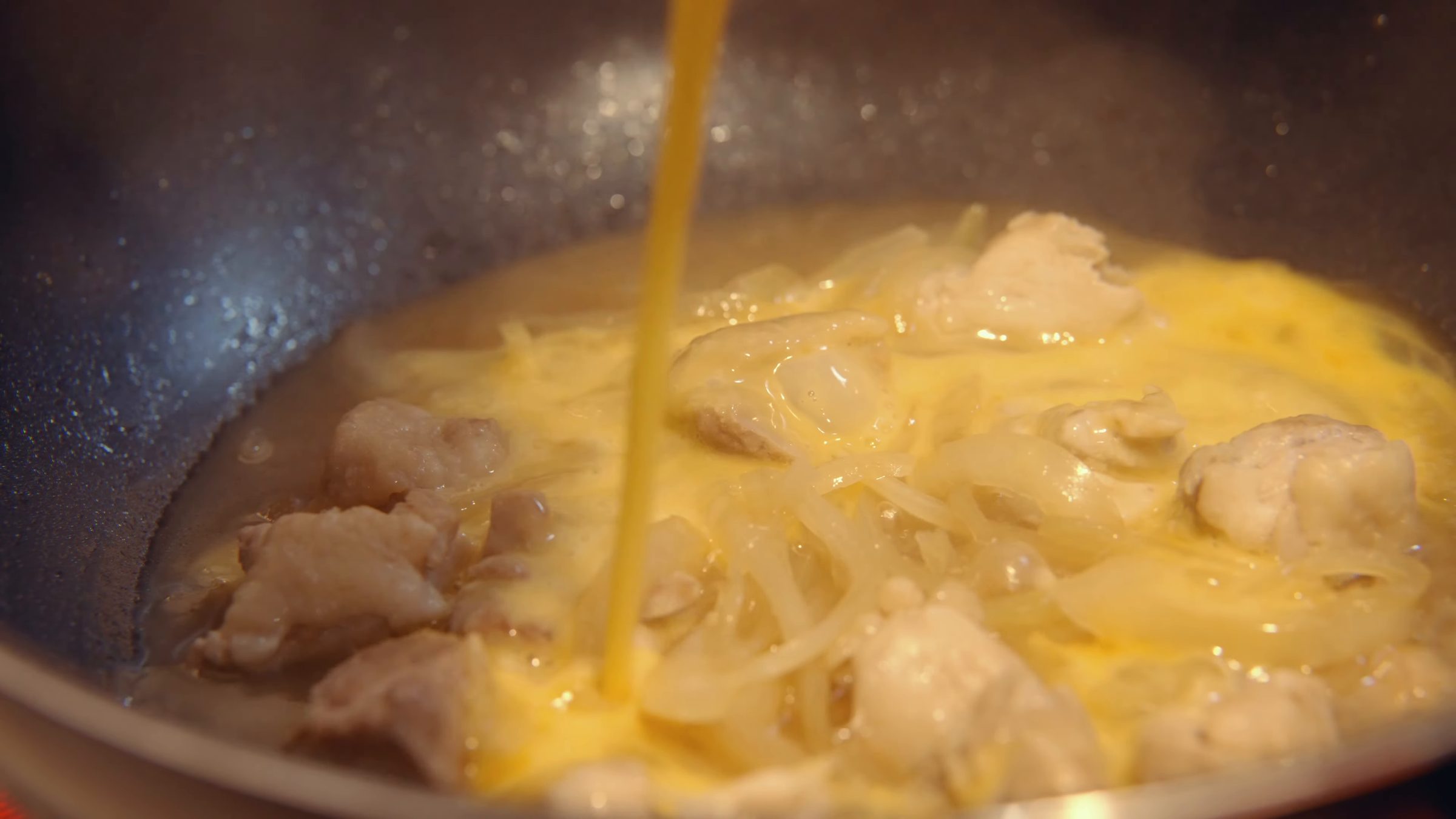
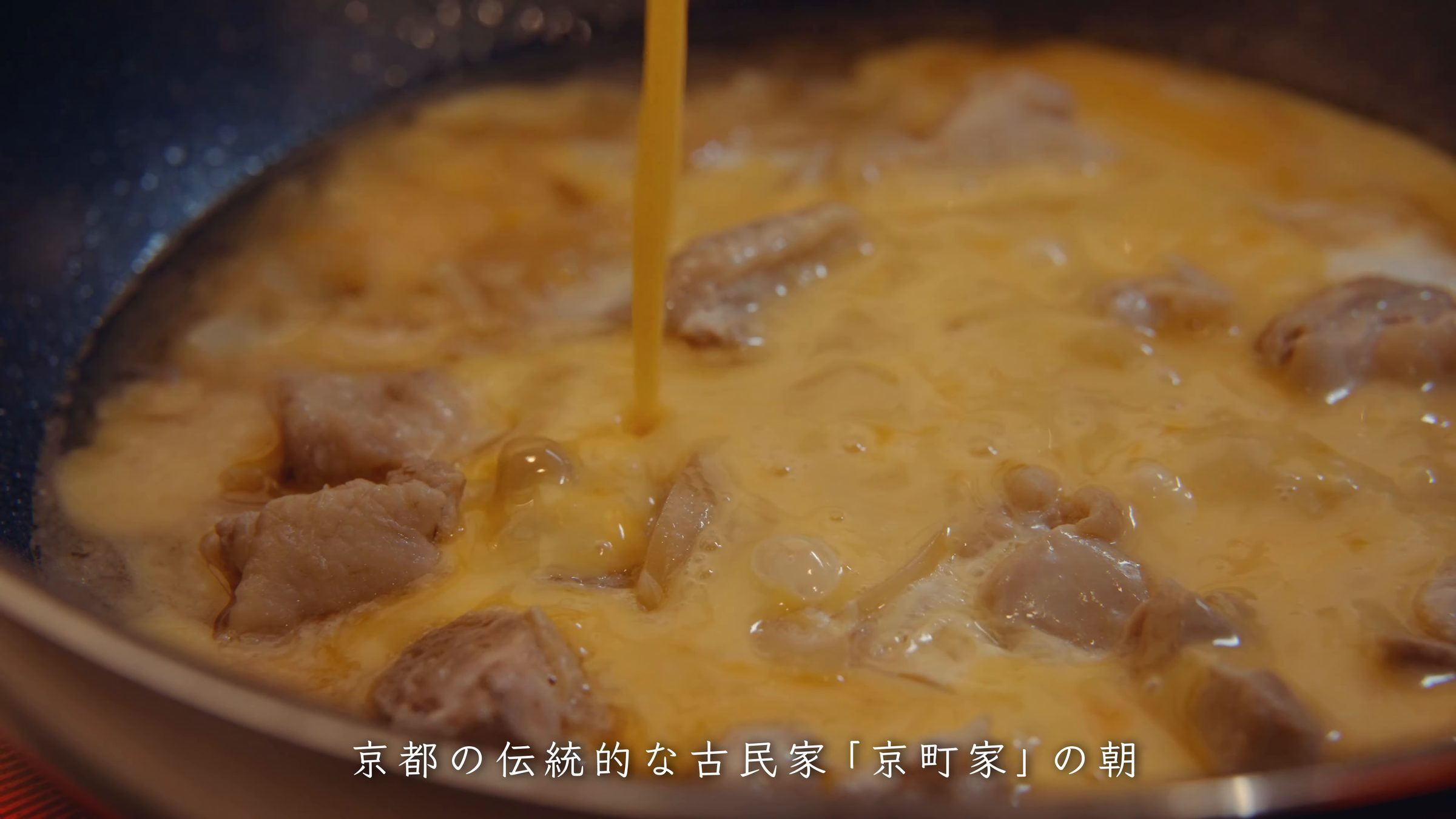
In a pan on the stove, the chicken and onion simmered while I beat eggs in a black lacquered bowl. When I poured the beaten egg into the bubbling pan, the yellow spread softly over the chicken and onion.
Watch this scene on YouTube0:27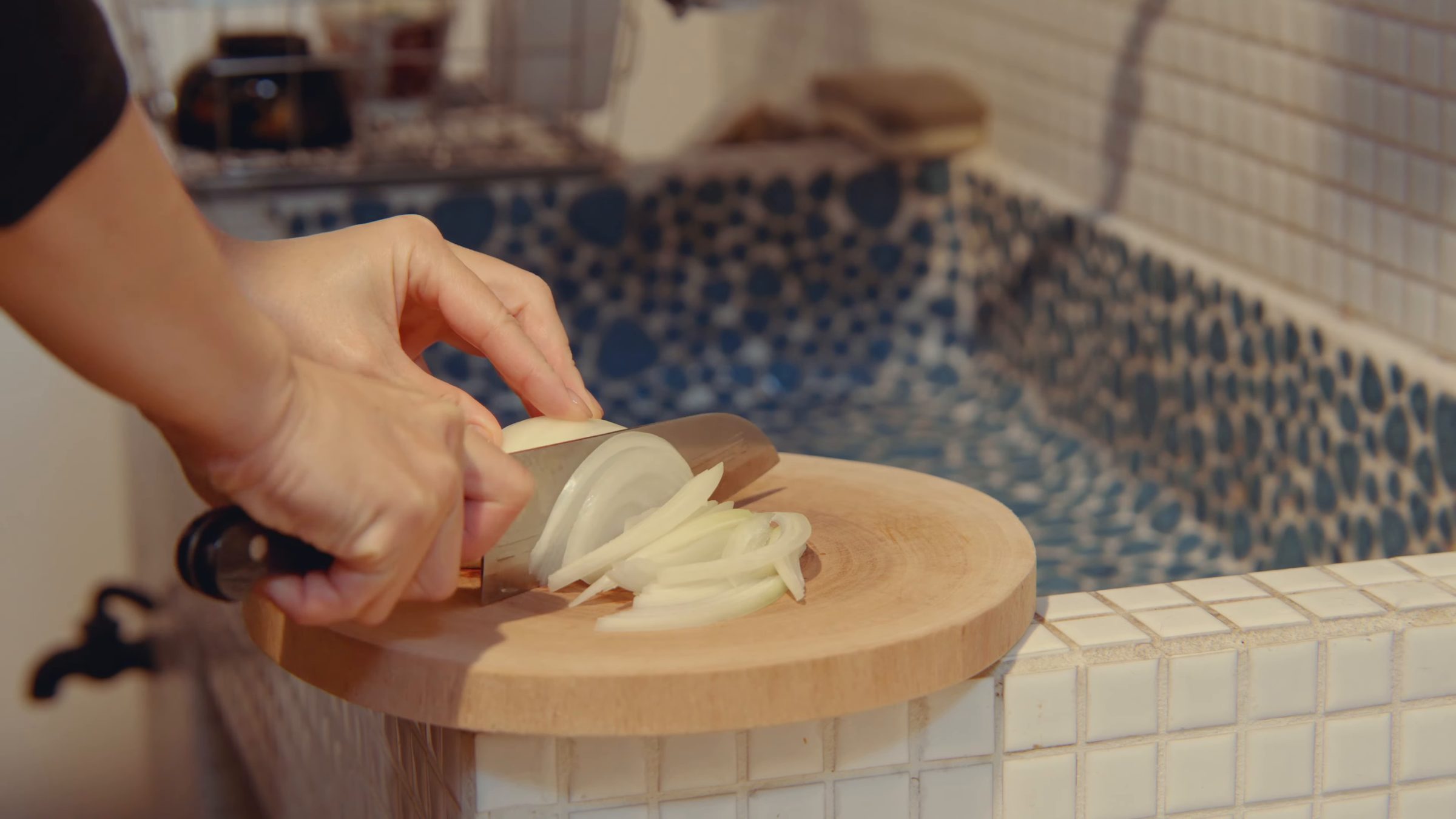
02TRAVEL JOURNAL
Oyakodon and a flower-fu soup
I put the lid on and waited a moment for the egg to set soft. When I lifted it, the chicken and onion had soaked up the broth, and the egg lay over them, barely set.
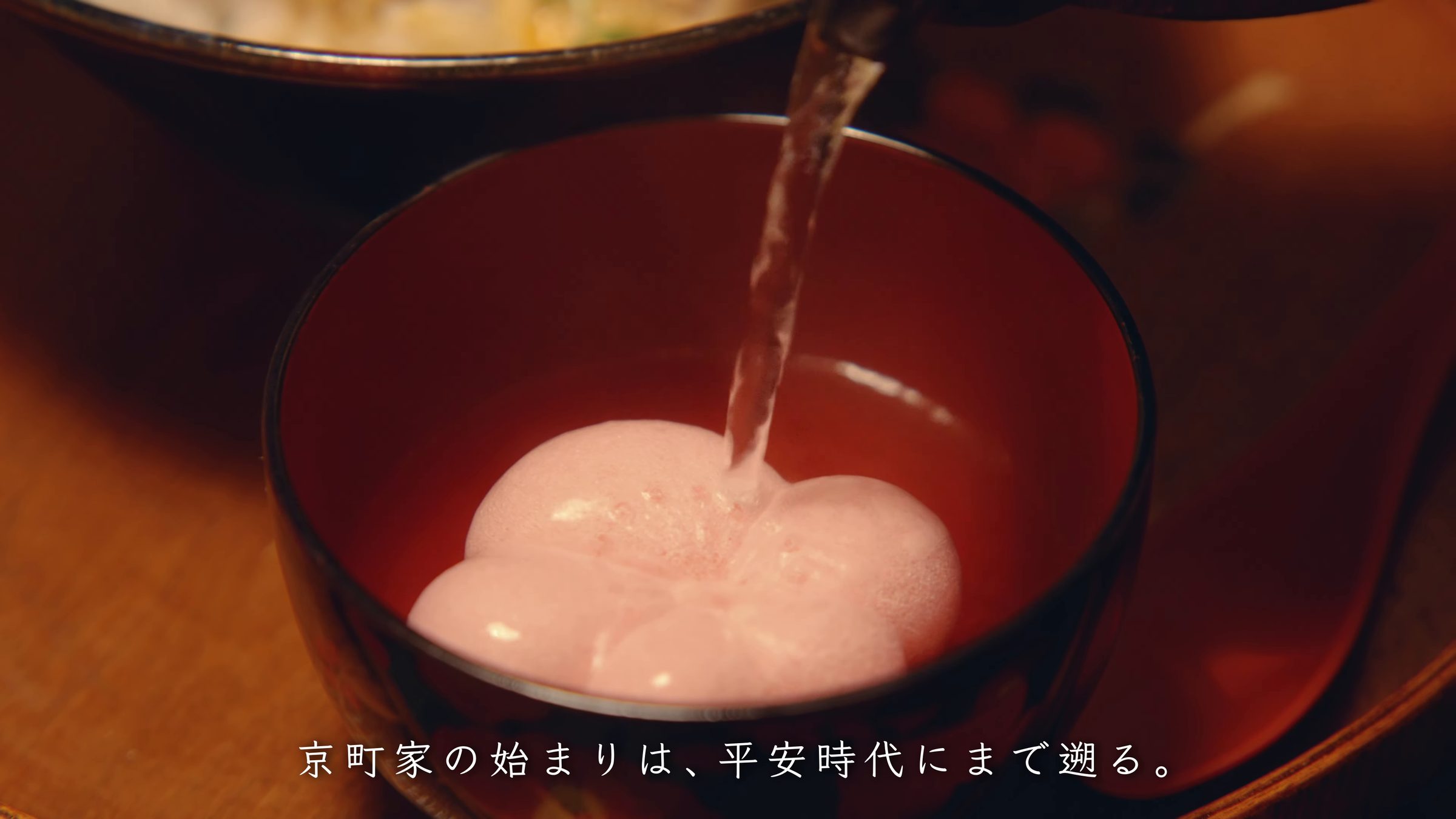
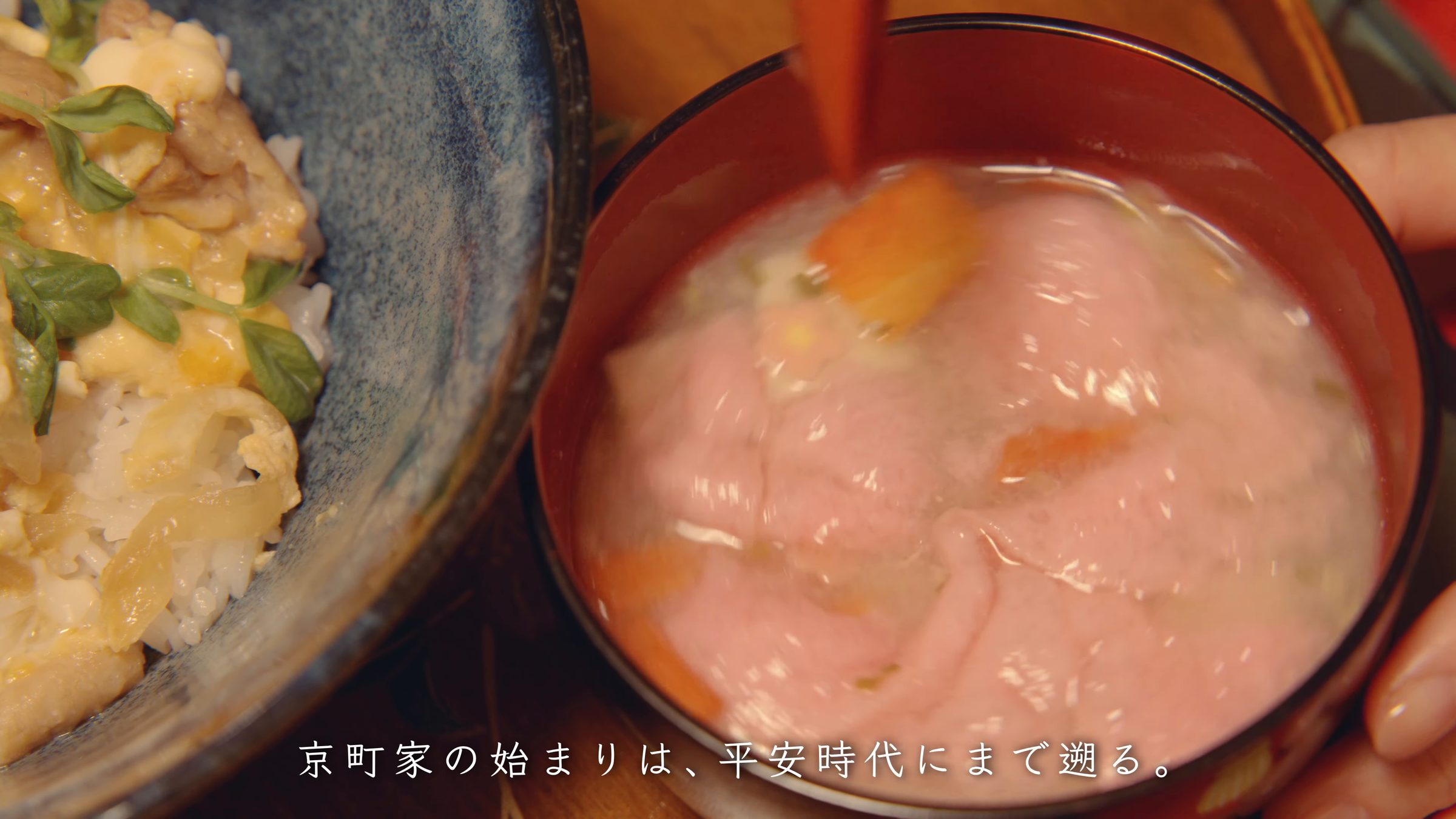
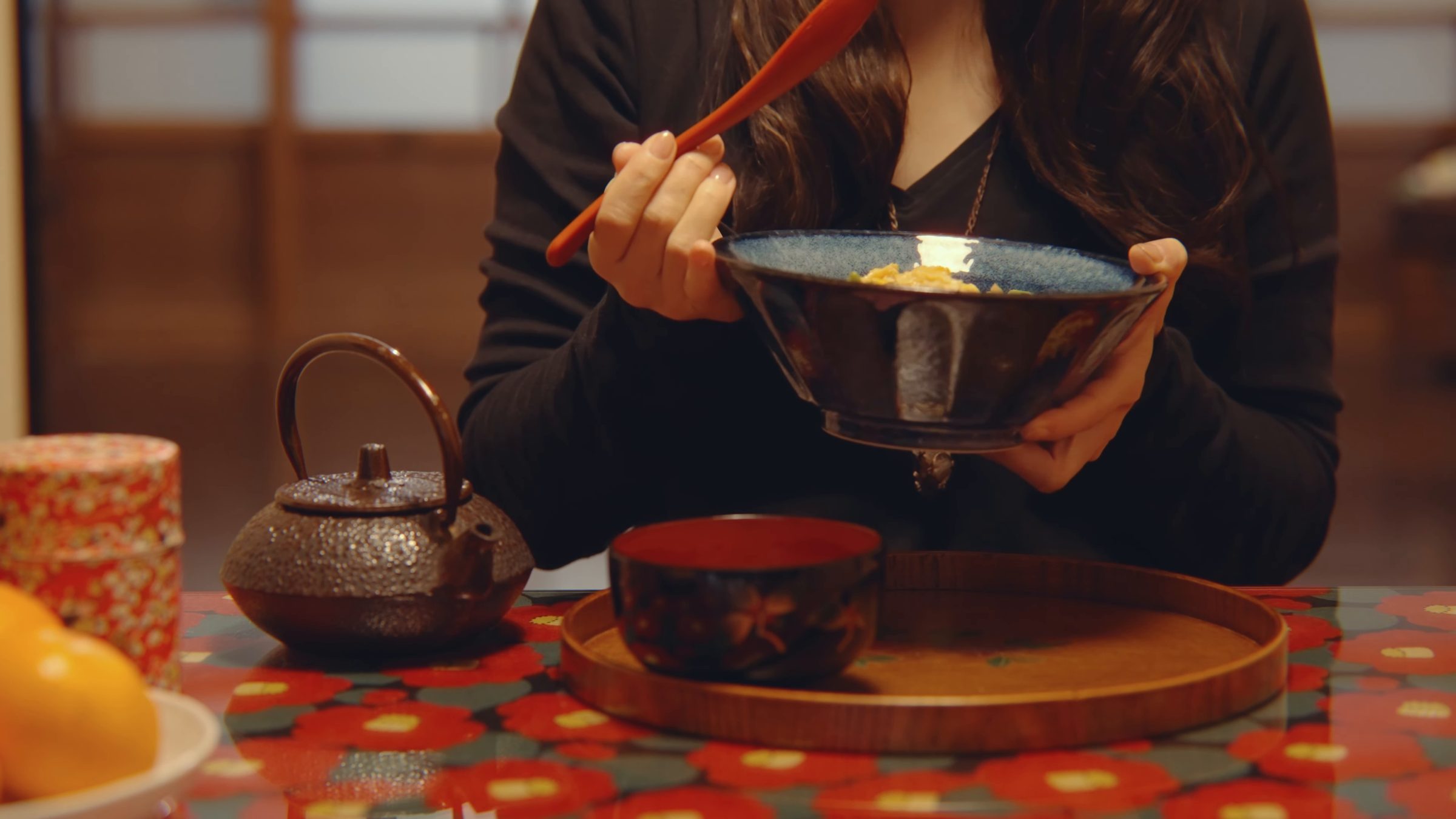
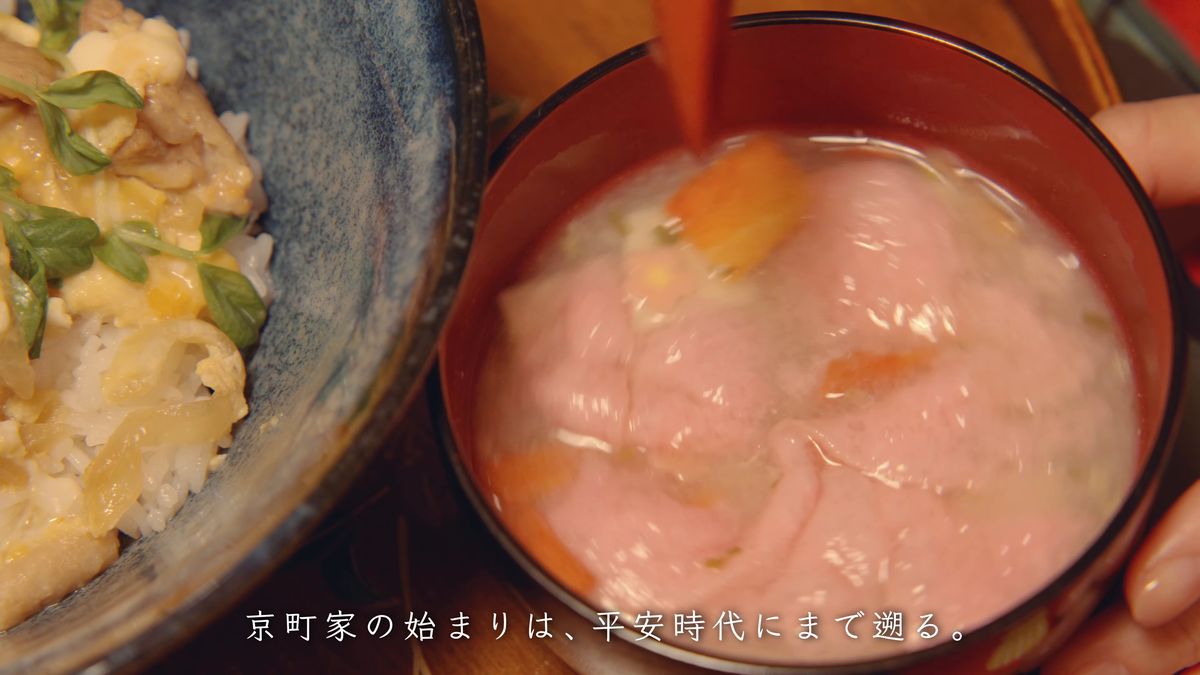
Into a red lacquered bowl went a pink lump of flower-shaped fu, wheat gluten, and then hot water. The color loosened, and carrot and other bits floated out: a clear soup. I spooned the chicken and egg over rice and scattered mitsuba on top. Breakfast in the machiya was ready.
Watch this scene on YouTube0:36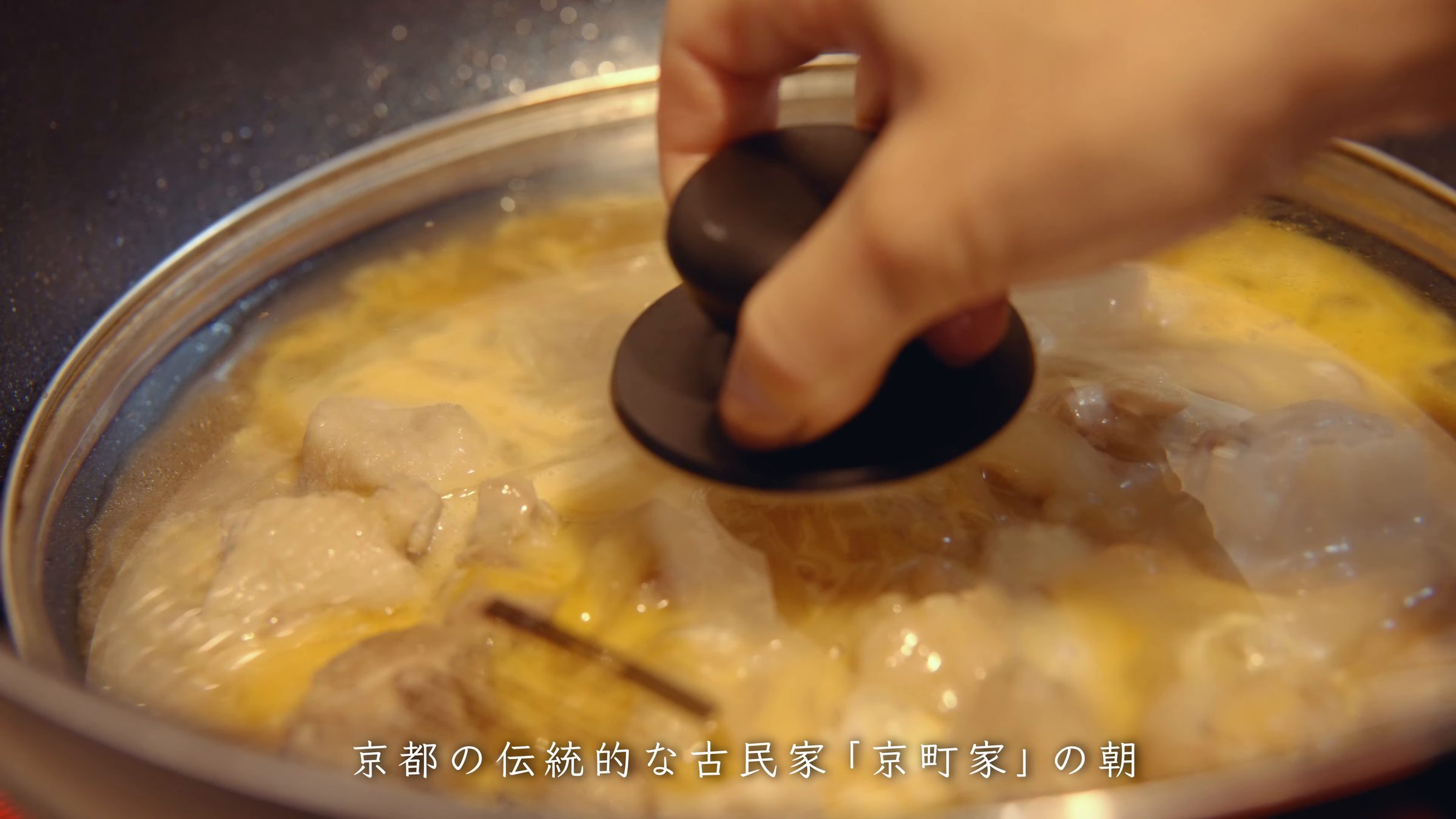
03TRAVEL JOURNAL
Hibukuro and tsuboniwa: old wisdom in the walls
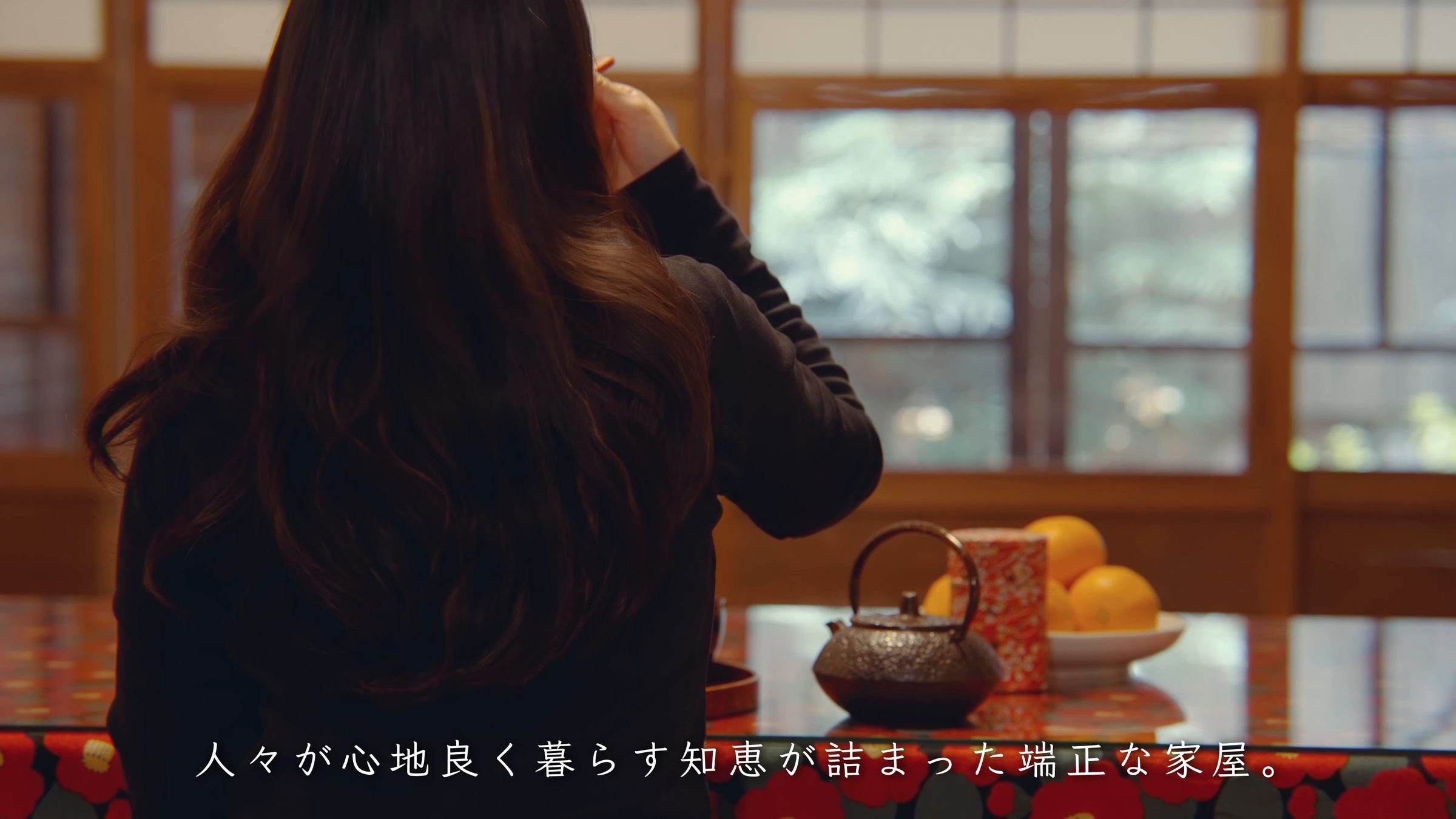
I ate at the table by the window: an iron kettle and mandarins on a red flowered tablecloth, soft light coming through the shoji screens.
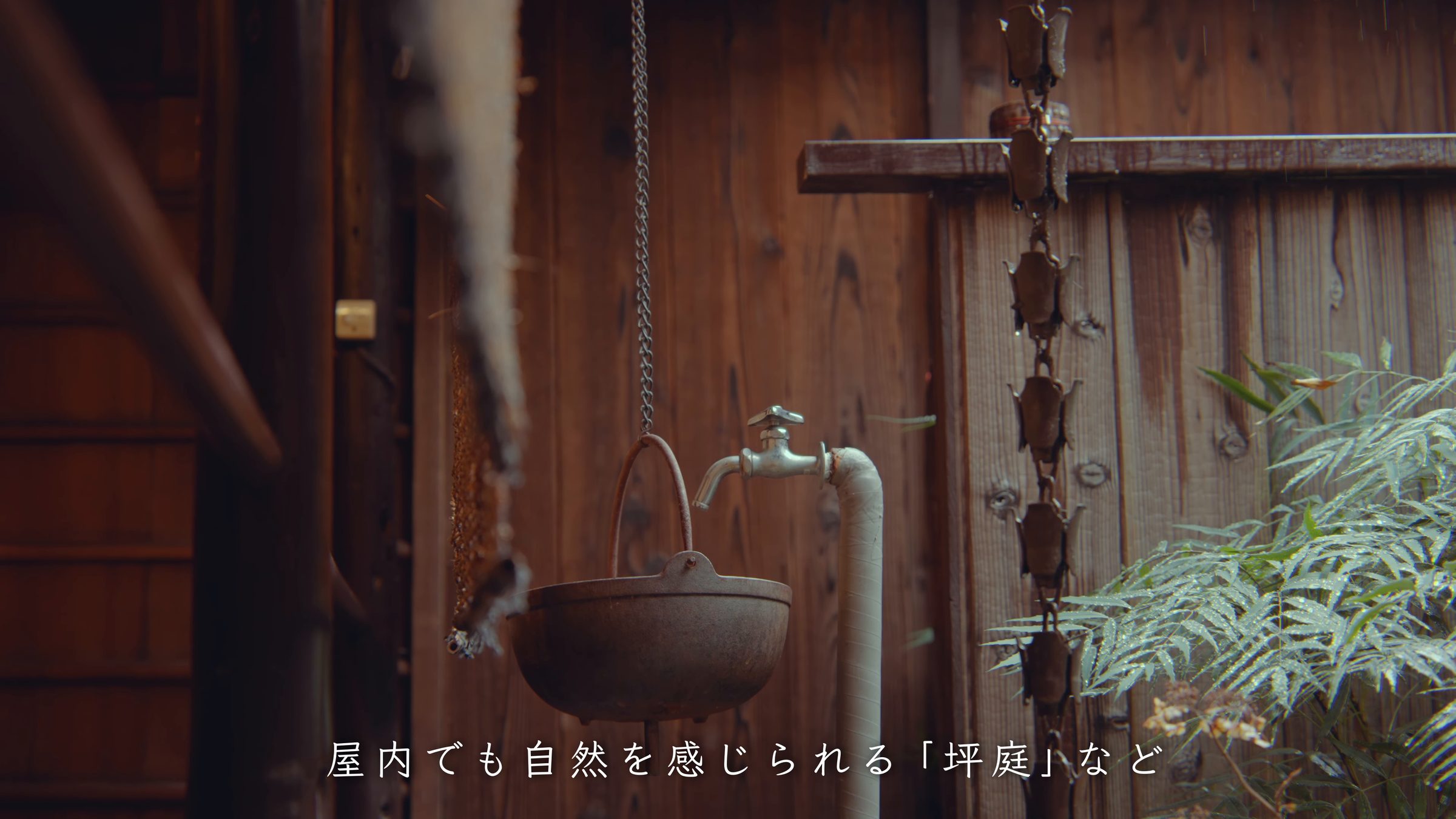
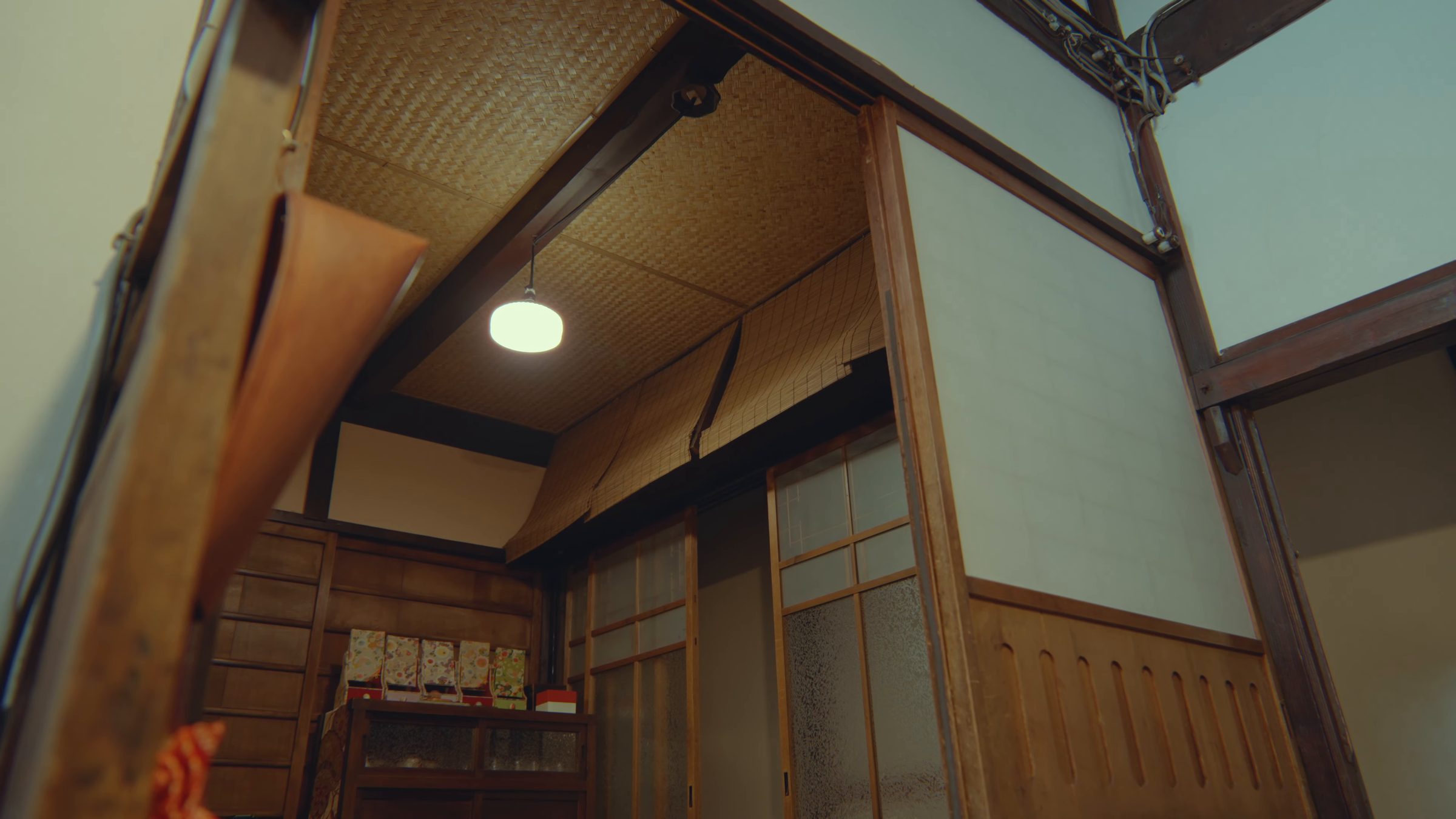
The kyomachiya, I learned, has its roots in the mid-Heian period, when people who came to the capital to make and sell things built small houses facing the avenues and lanes. The form we see today took shape in the mid-Edo period. Above the kitchen rises the hibukuro, an open well of space that lets heat and smoke escape, and that keeps a fire from the stove from spreading to the other rooms. The tsuboniwa, a small inner garden, brings light and air deep into a house that is long and narrow.
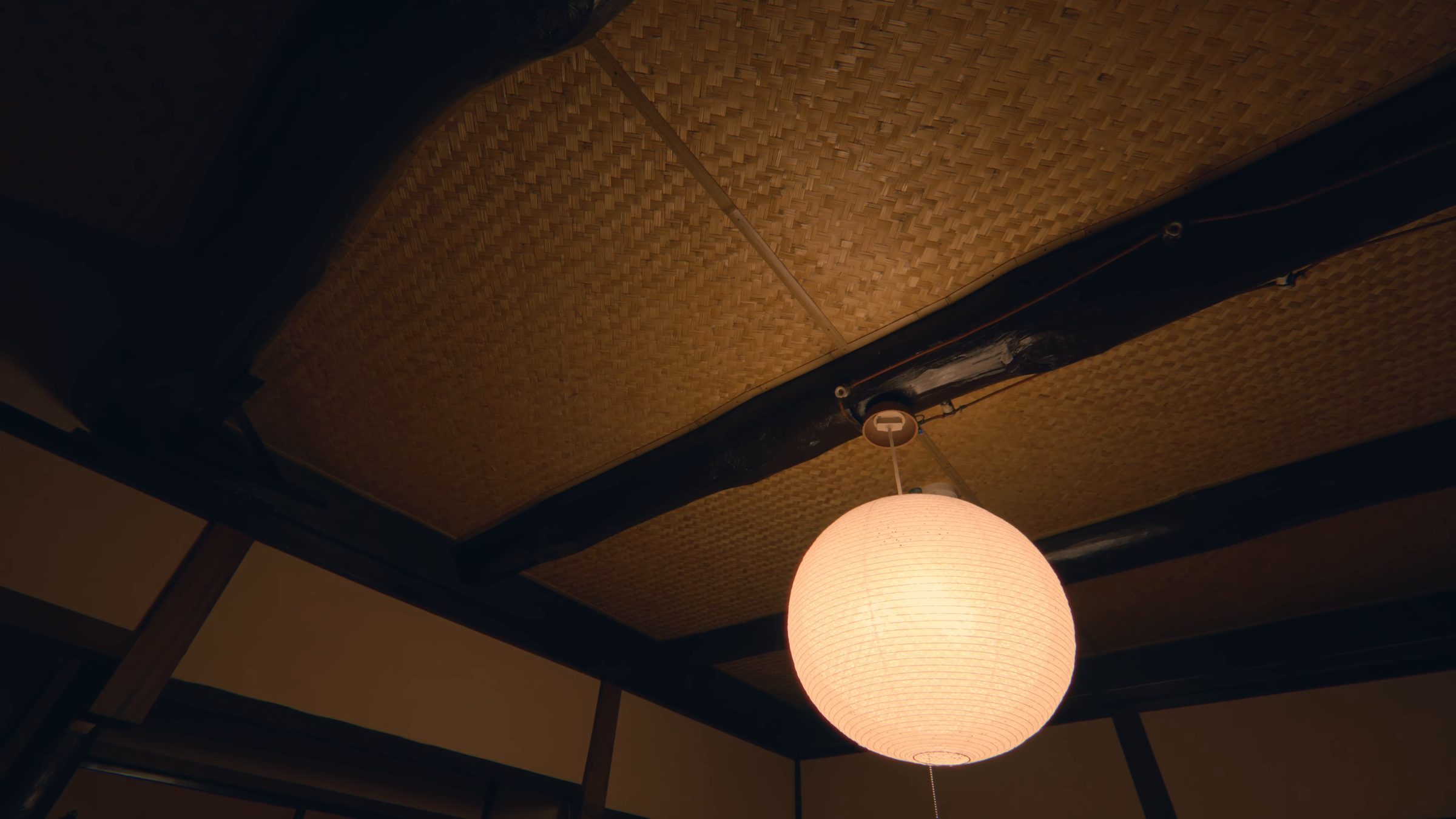
In this house's garden, an iron pot catches rainwater under a chain of rain cups, and bamboo stirs beside it. Looking up, I found a single bare bulb hanging in the open well of beams and ties. An elegant house, filled with the wisdom of people who wanted to live comfortably.
Watch this scene on YouTube0:56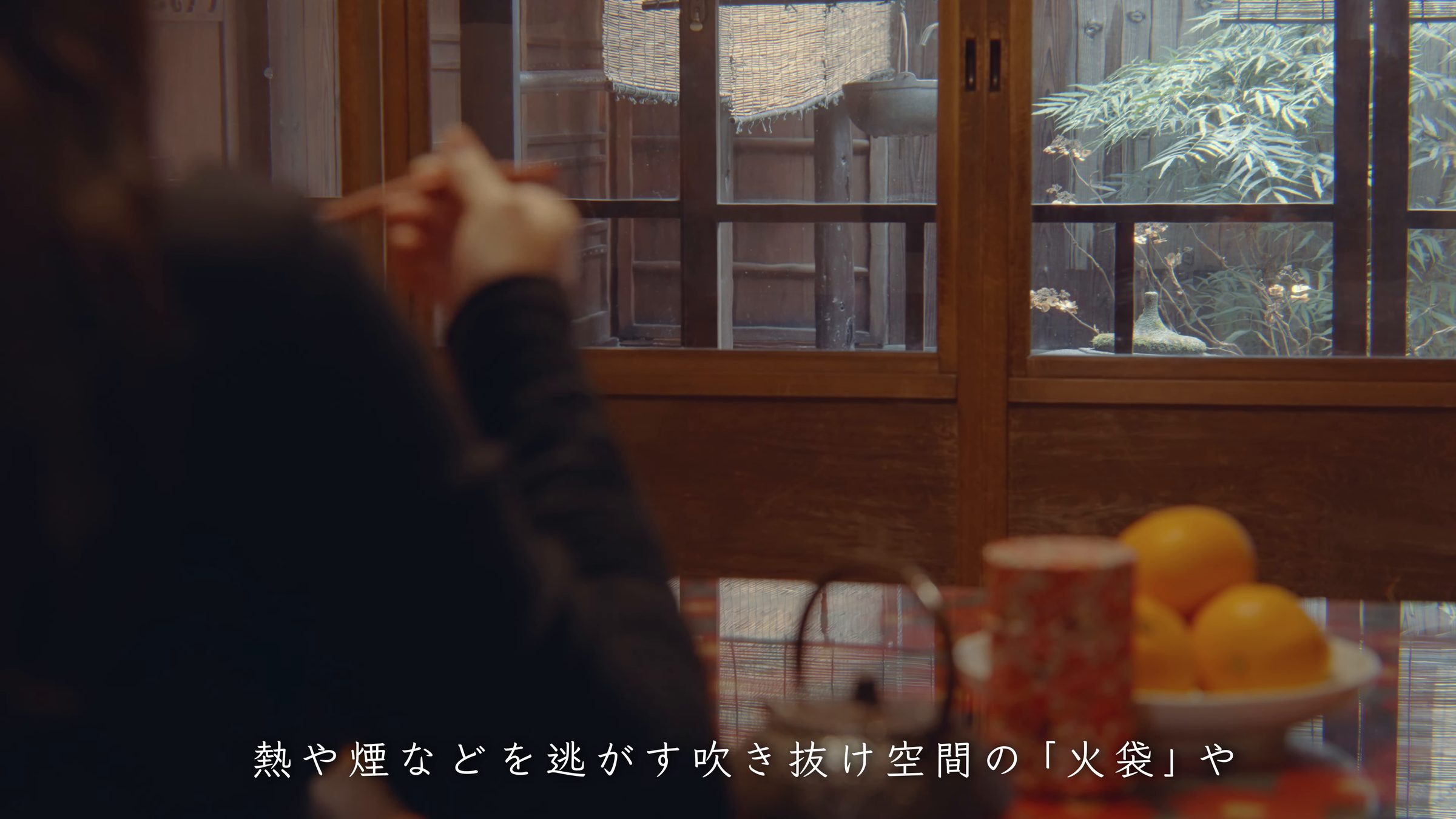
04TRAVEL JOURNAL
A stroll after the rain
Now that the rain was over, it was time for a walk through the streets of Kyoto. Seen through the bamboo blind, the wet garden was deep in color.
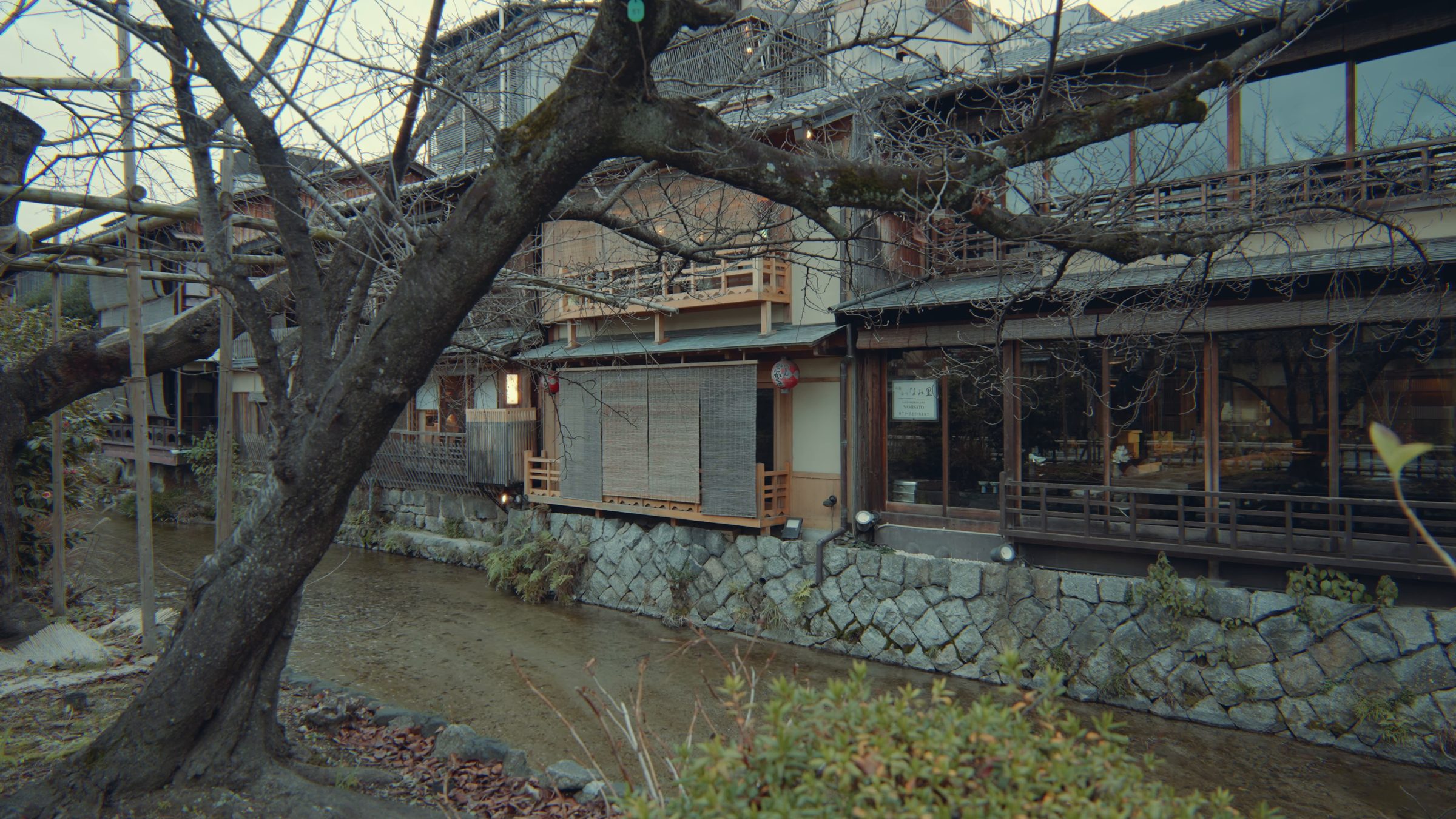
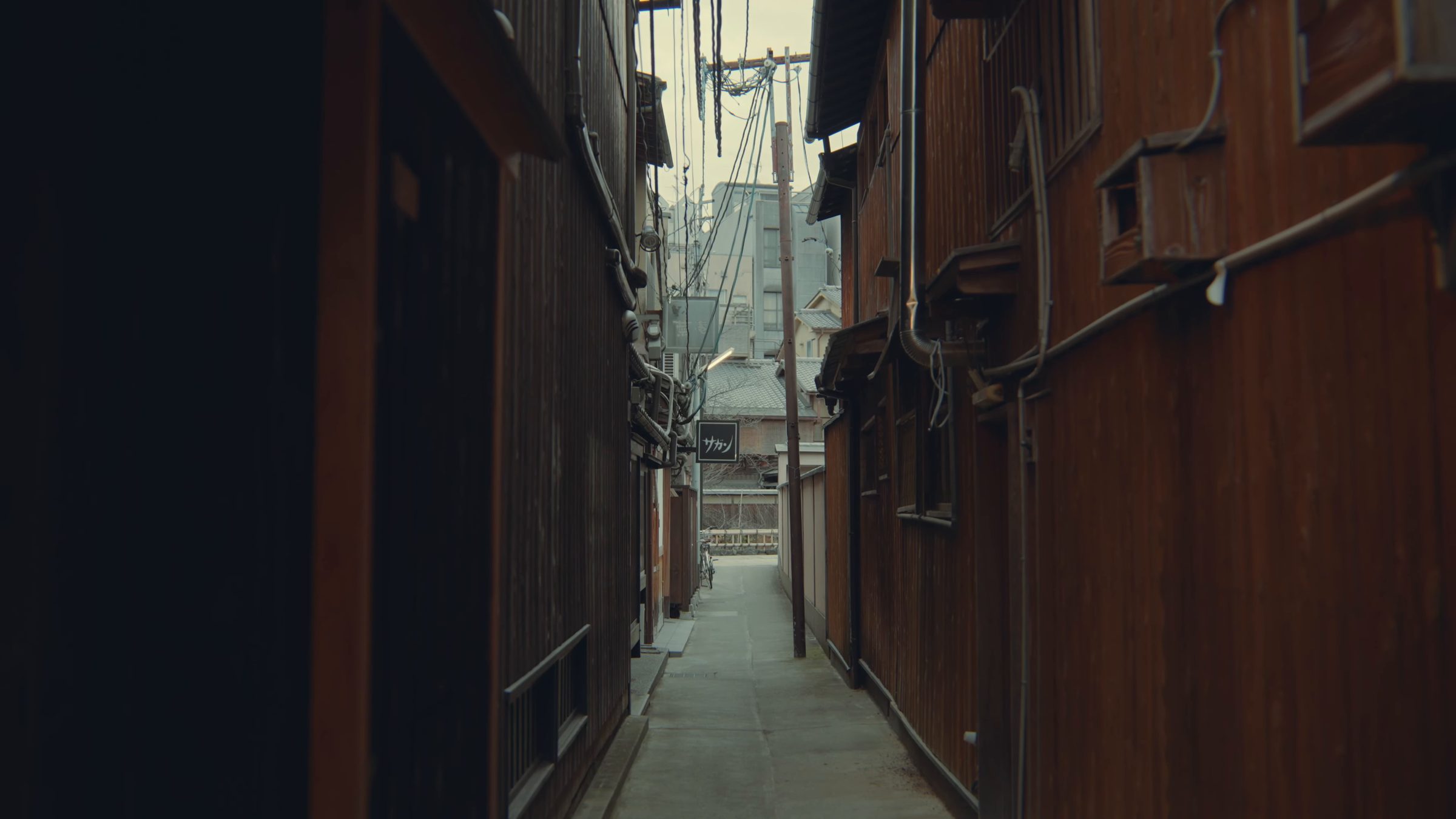
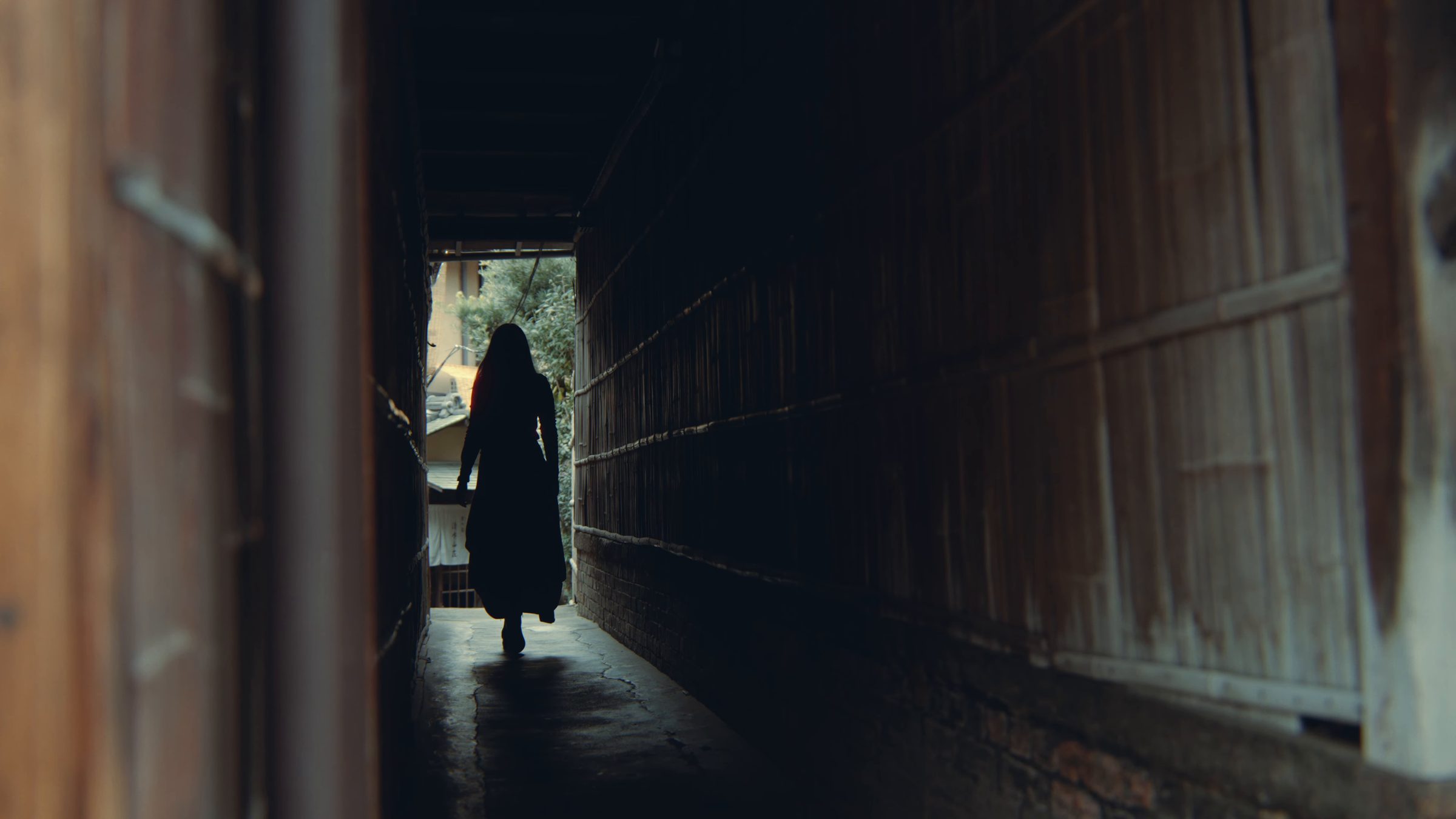
I followed the stone paving along the Shirakawa stream. Townhouses with red-ochre lattices stood in a row above the stone embankment, and a leafless cherry tree reached its branches over the water. Then through a narrow lane between wooden houses, and down a dim passage toward the light at its end.
Watch this scene on YouTube1:20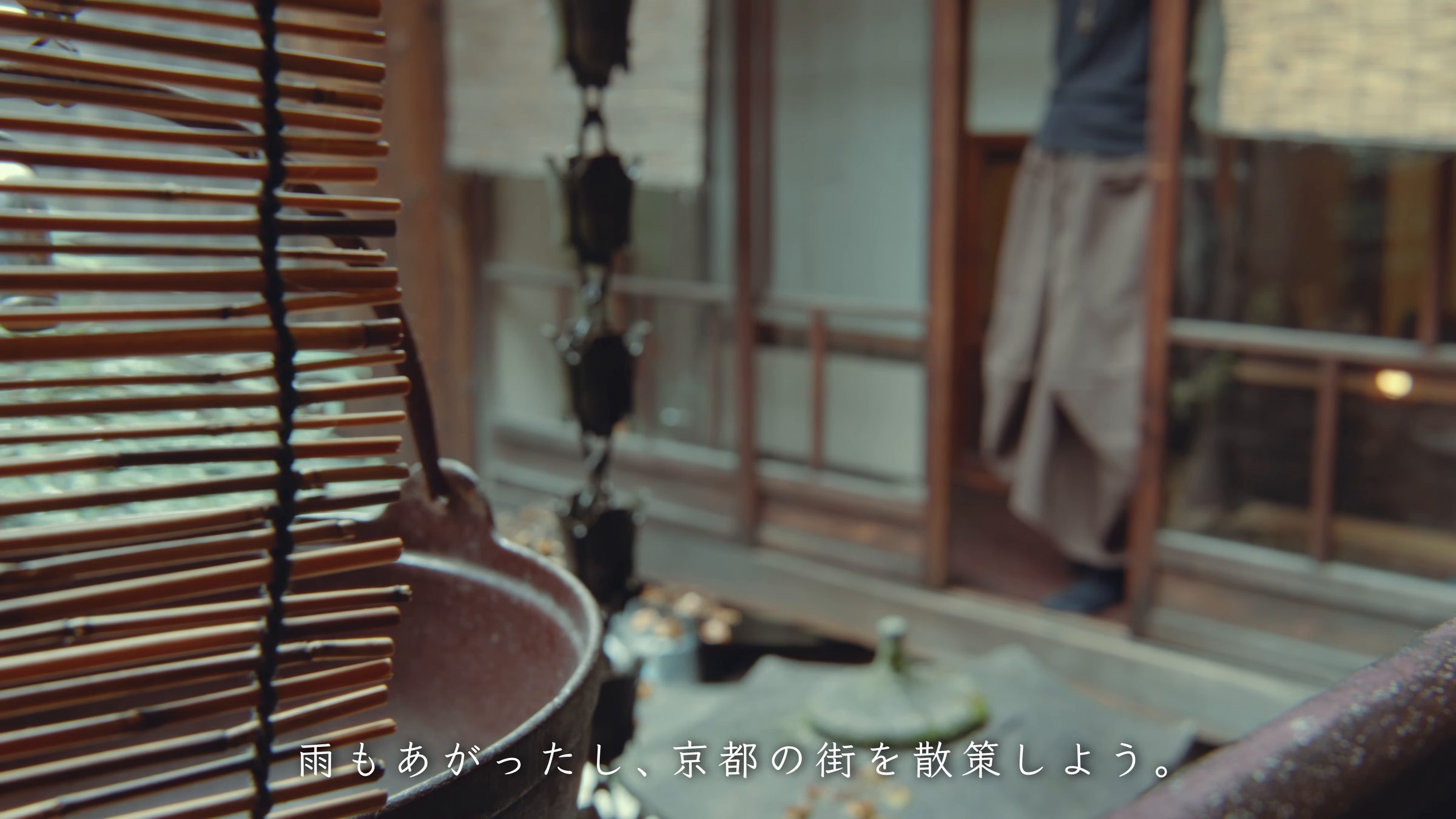
05TRAVEL JOURNAL
Kotteri at the original Tenkaippin
Kyoto is a city of fierce ramen competition, and Tenkaippin was born here. For lunch I went to the sohonten, the original shop, in Ichijoji. By the door hung a wooden sign reading "Chuka soba specialists, founded 1971," and a paper lantern that said "Main Shop."
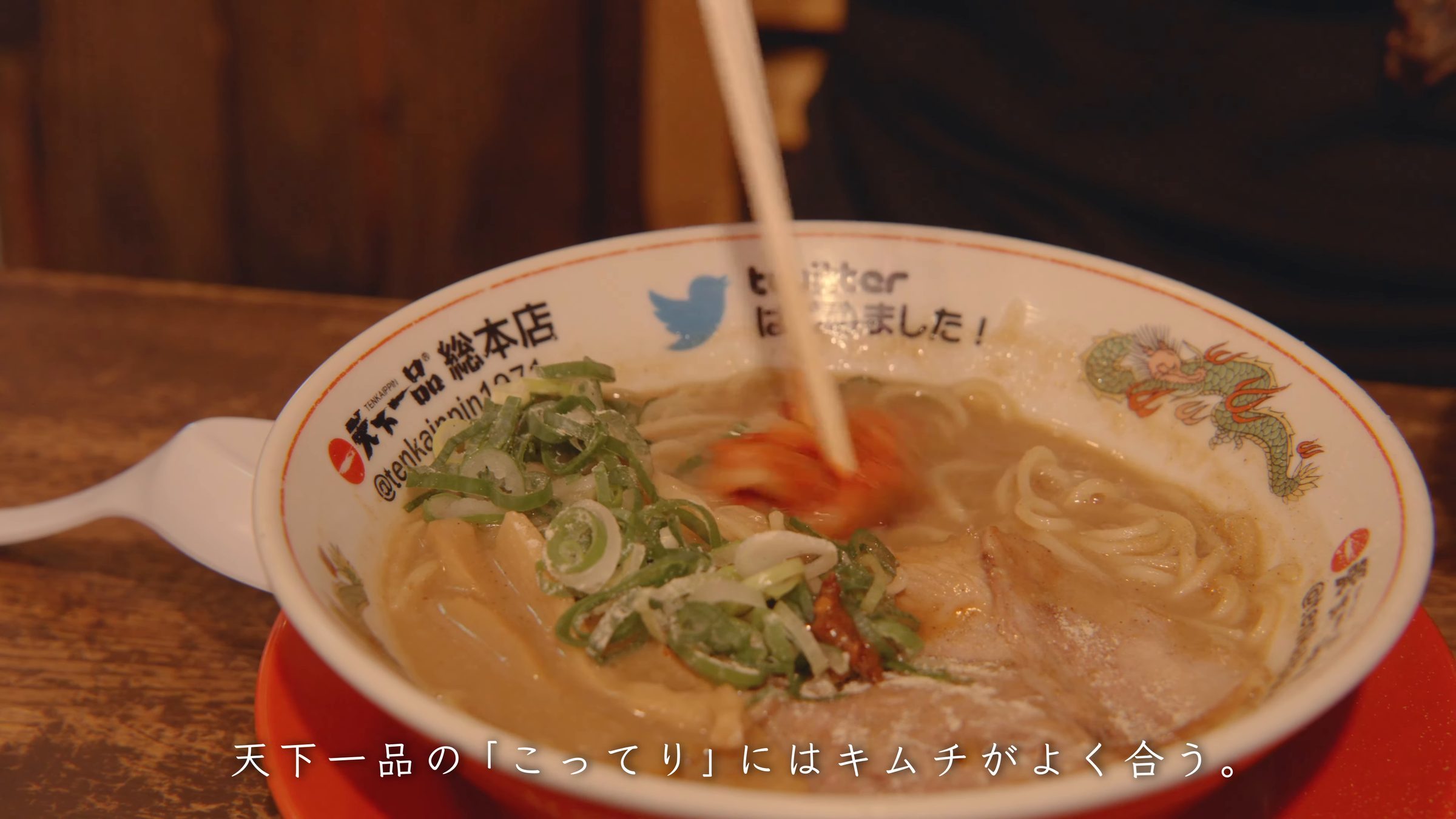
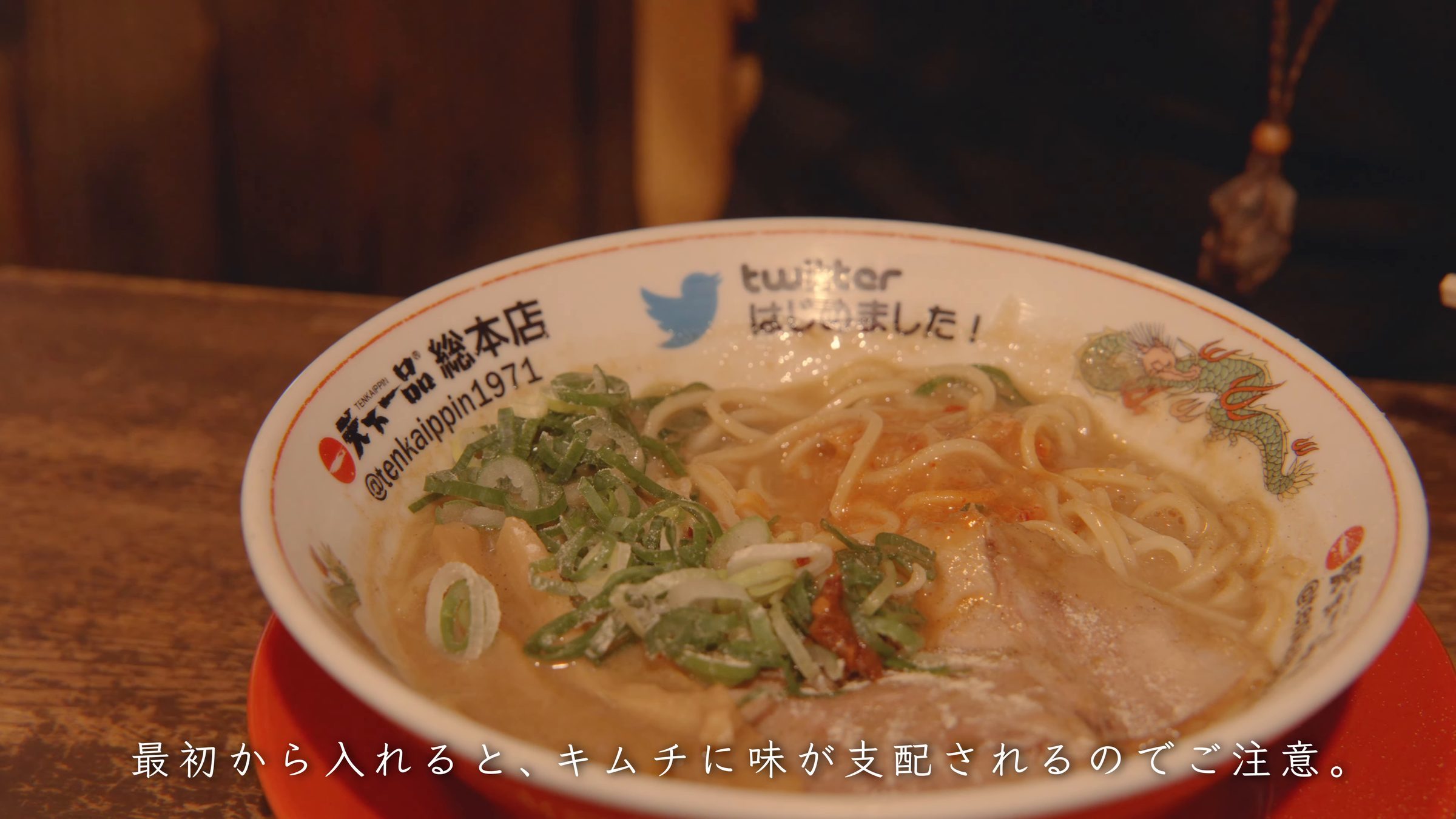
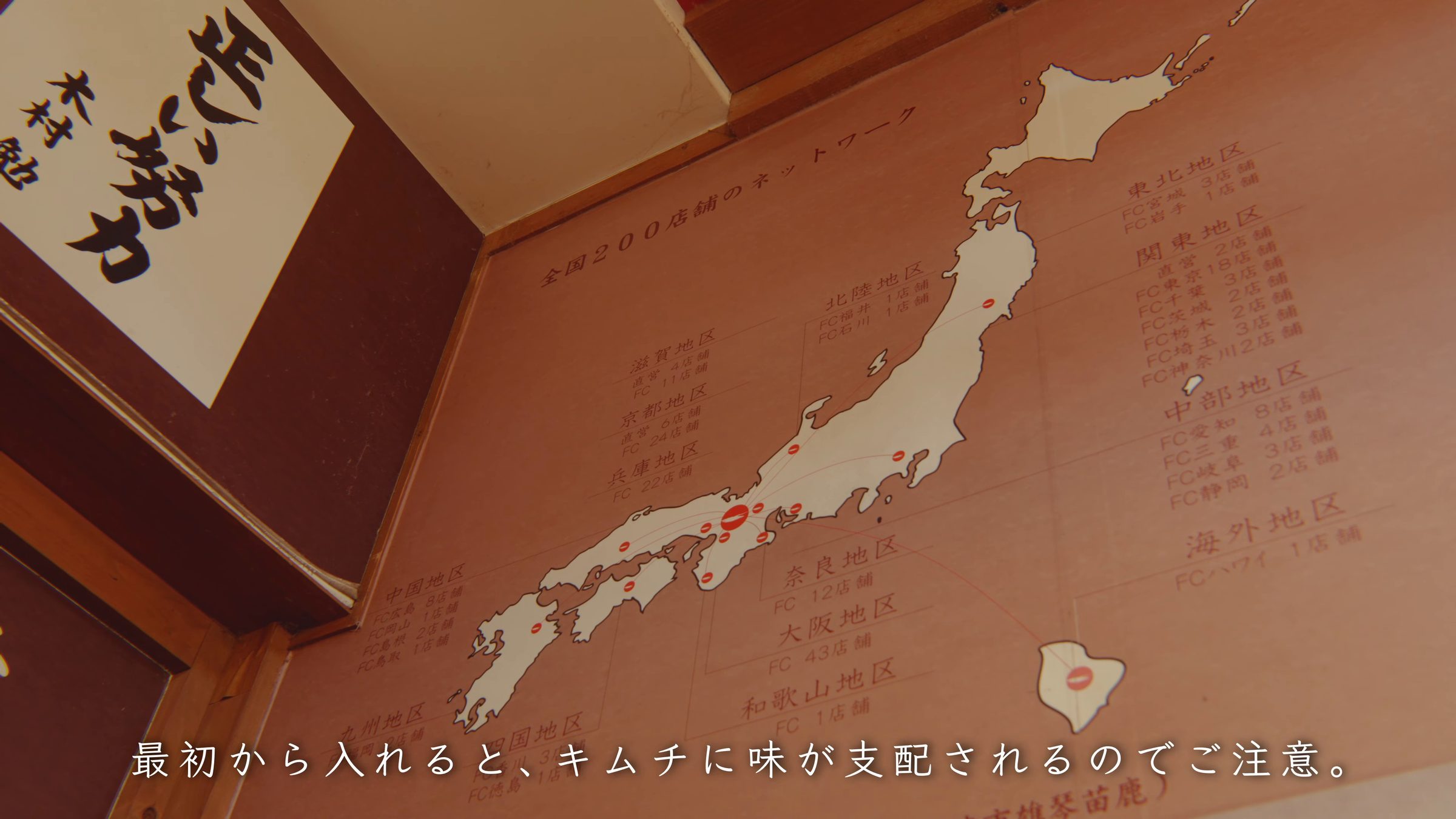
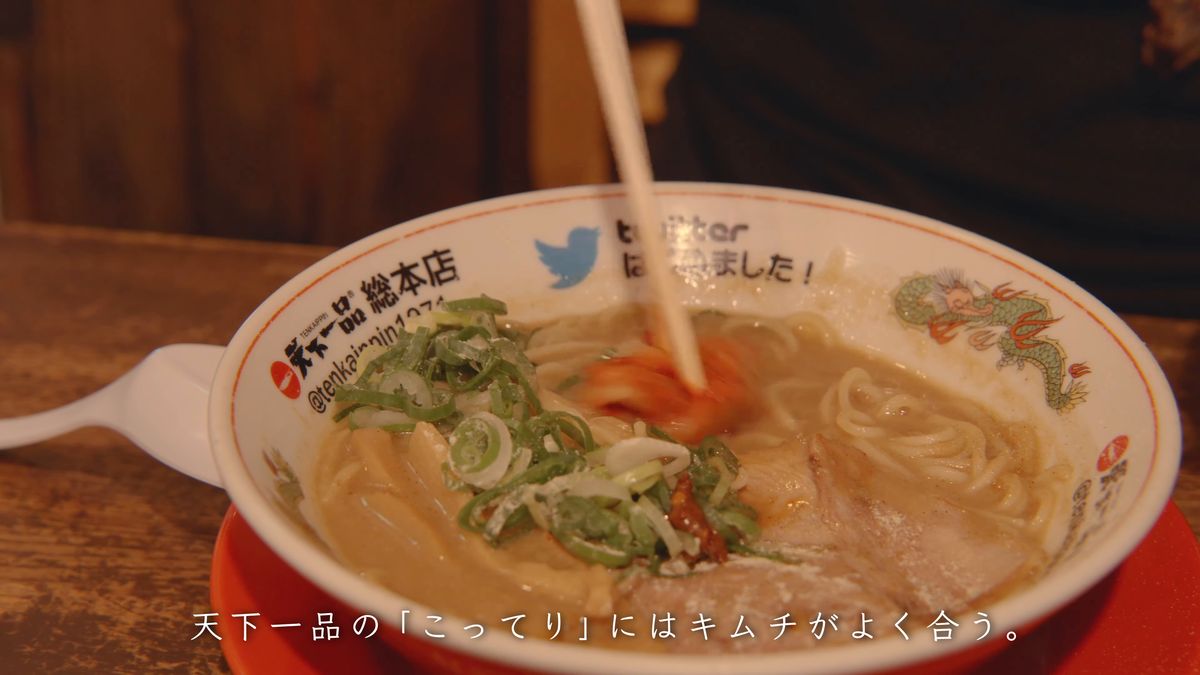
The bowl that arrived was kotteri, the rich one: a thick, almost velvety soup of chicken bones and vegetables, topped with green onion. Kimchi goes well with kotteri, but add it from the start and it takes over, so the trick is to add it partway through and enjoy the change of flavor. I shook on plenty of pepper and ate it the proper way.
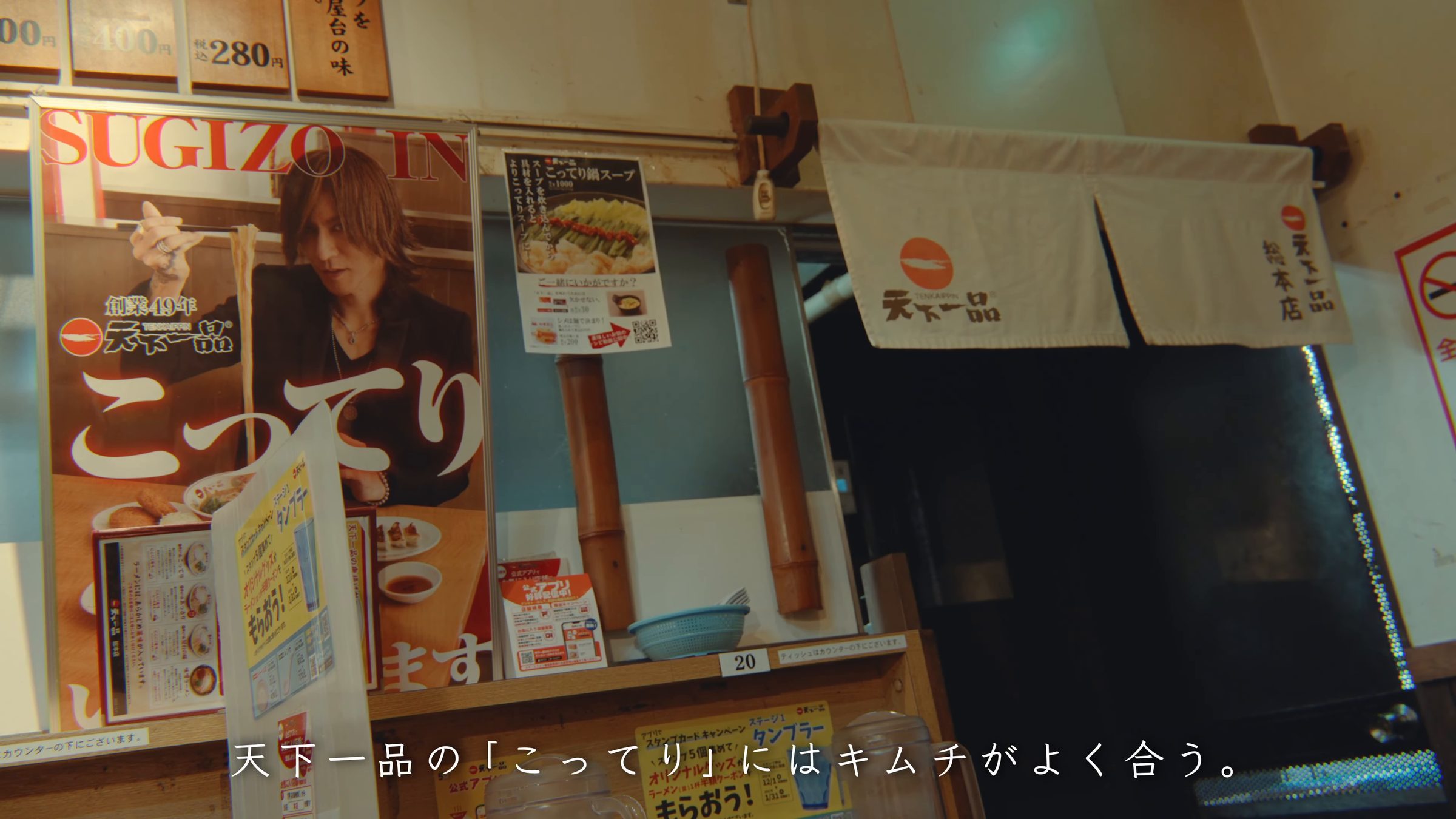
On the walls were a kotteri poster and a map of Japan marking the shops across the country. This is where that flavor began.
Watch this scene on YouTube1:56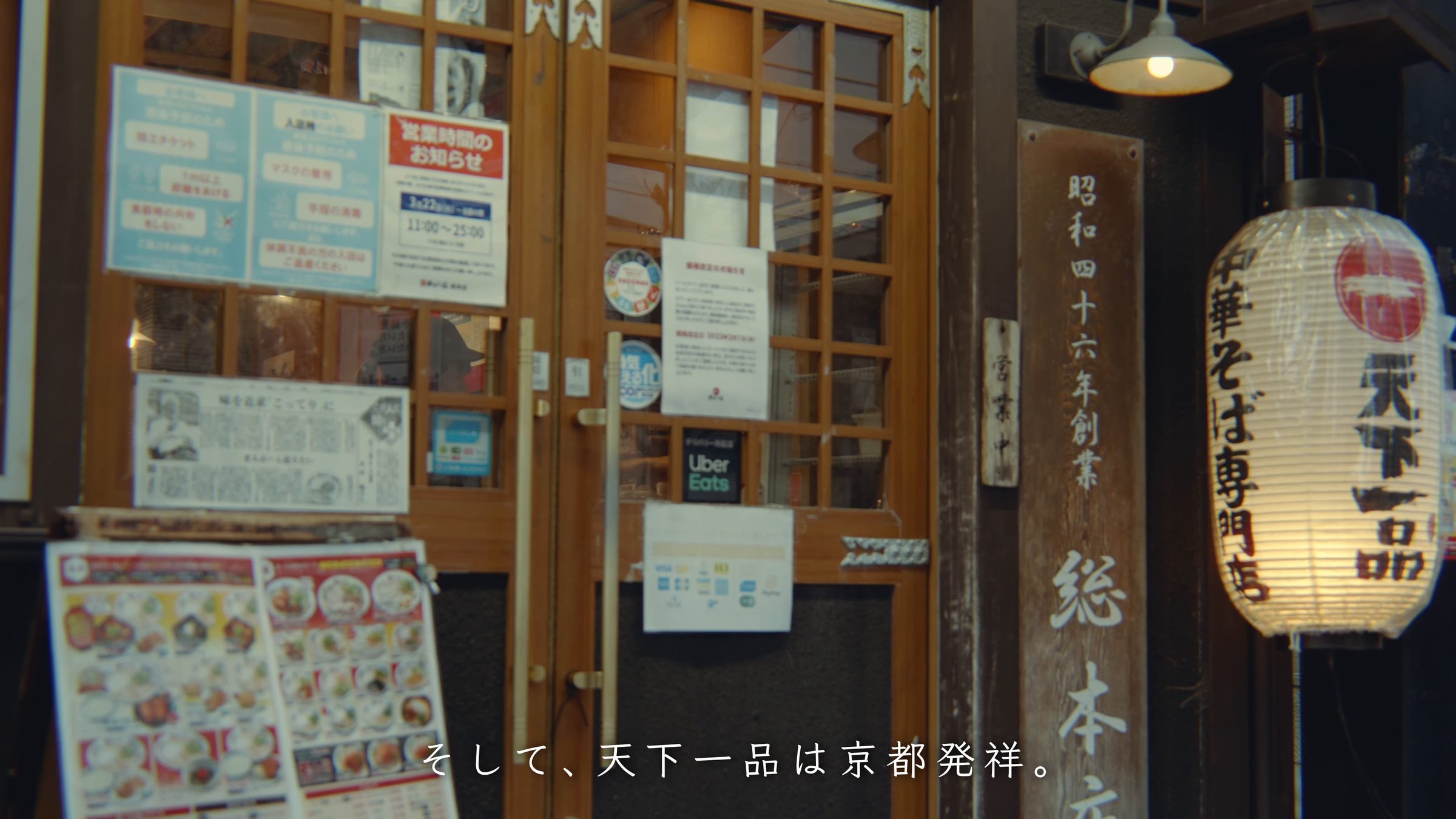
06TRAVEL JOURNAL
Tea time, looking out on the garden
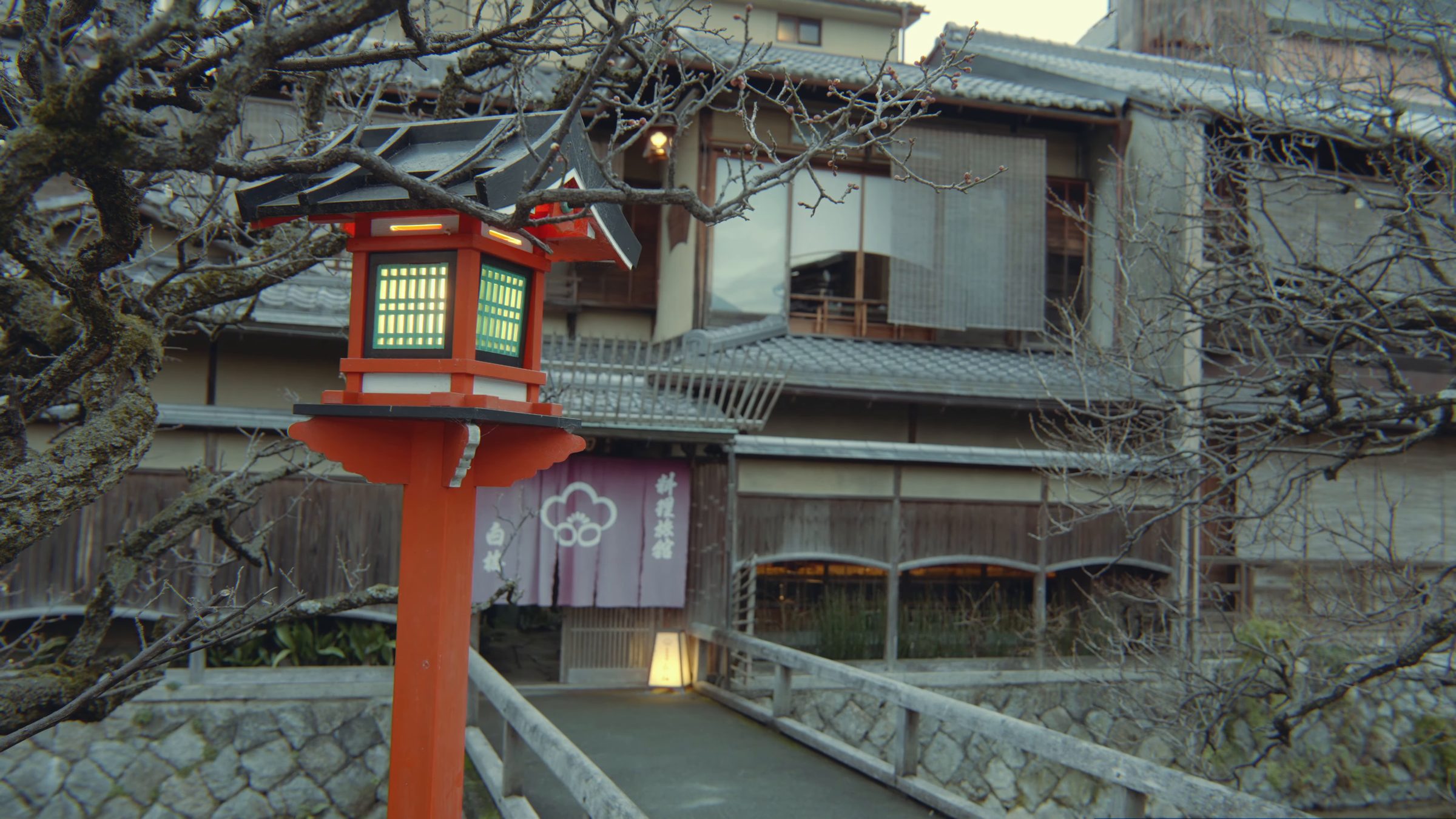
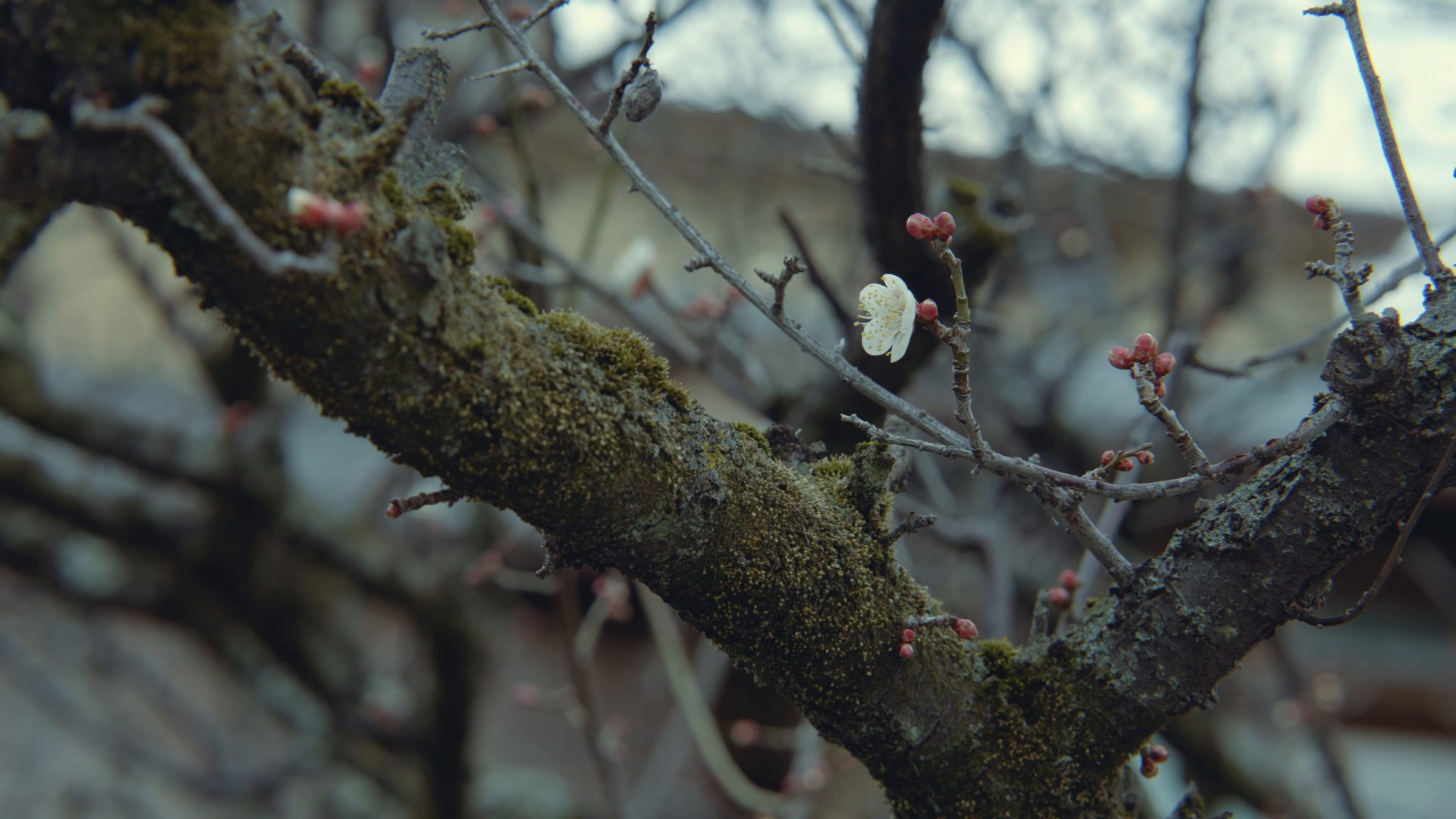
In the afternoon I went from the banks of the Shirakawa up to Kamigyo. A townhouse with a blue noren curtain, a red lantern beside a purple noren, white plum blossoms just opening on a mossy branch: the end of winter in Kyoto.
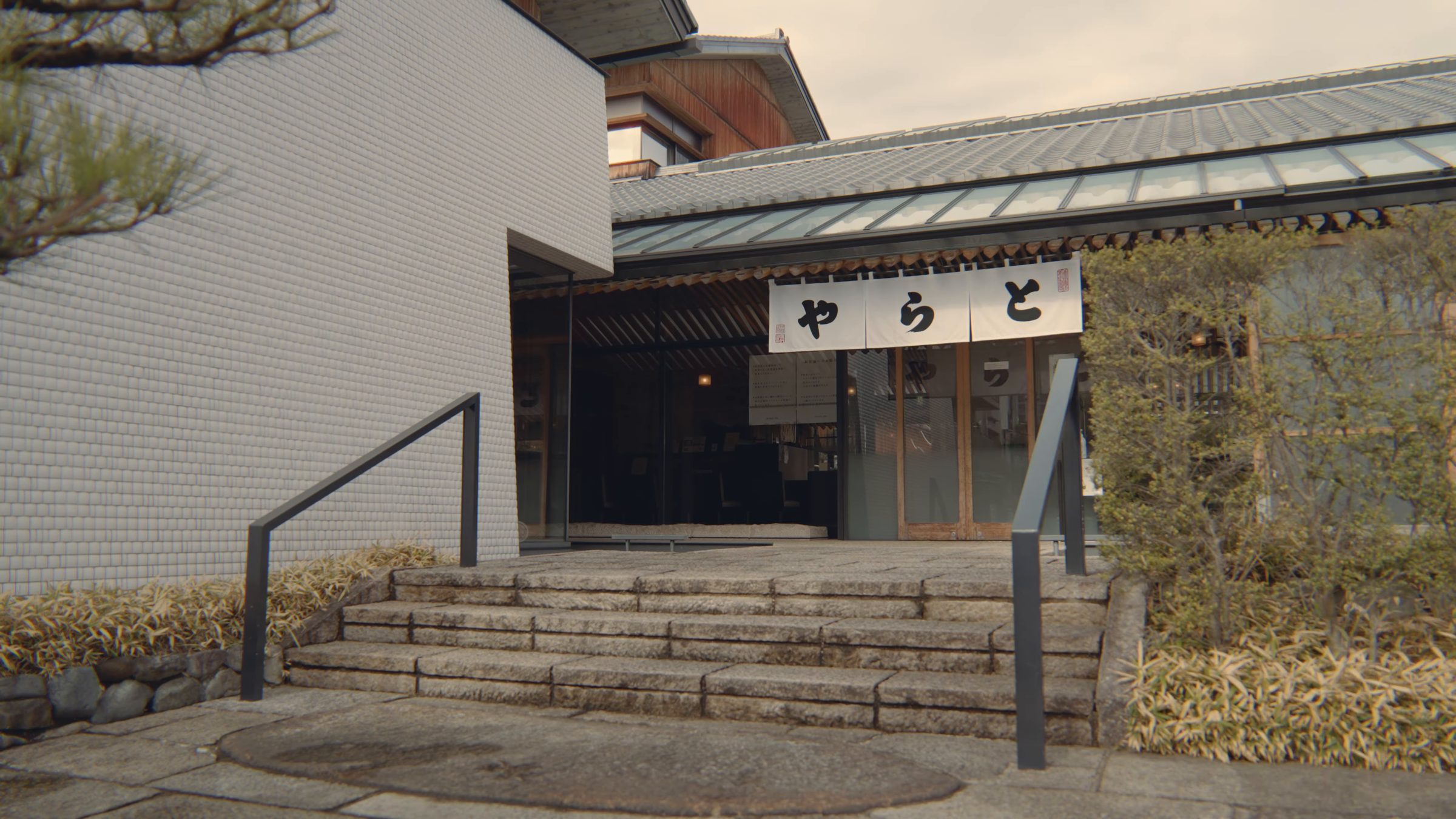
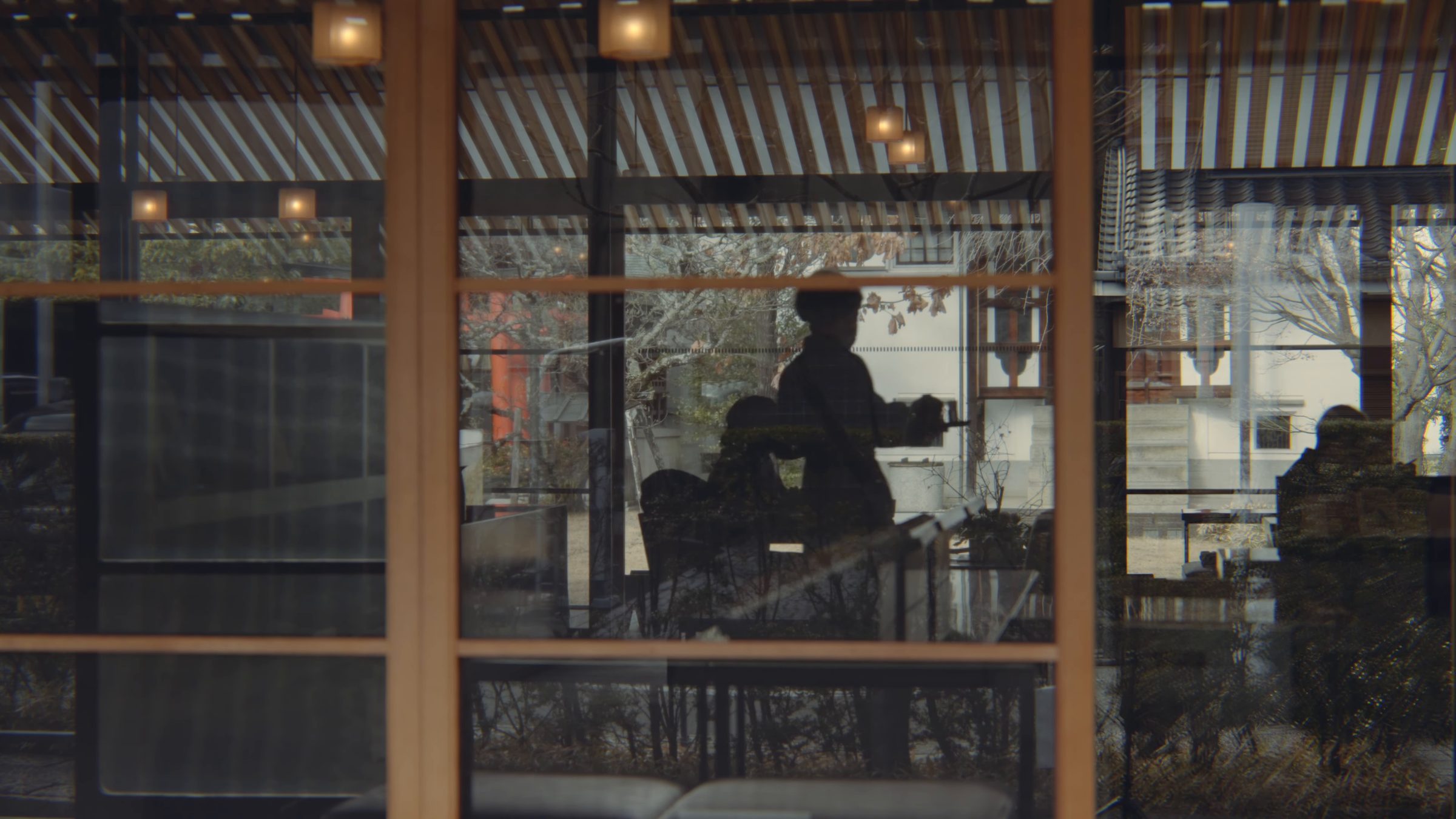
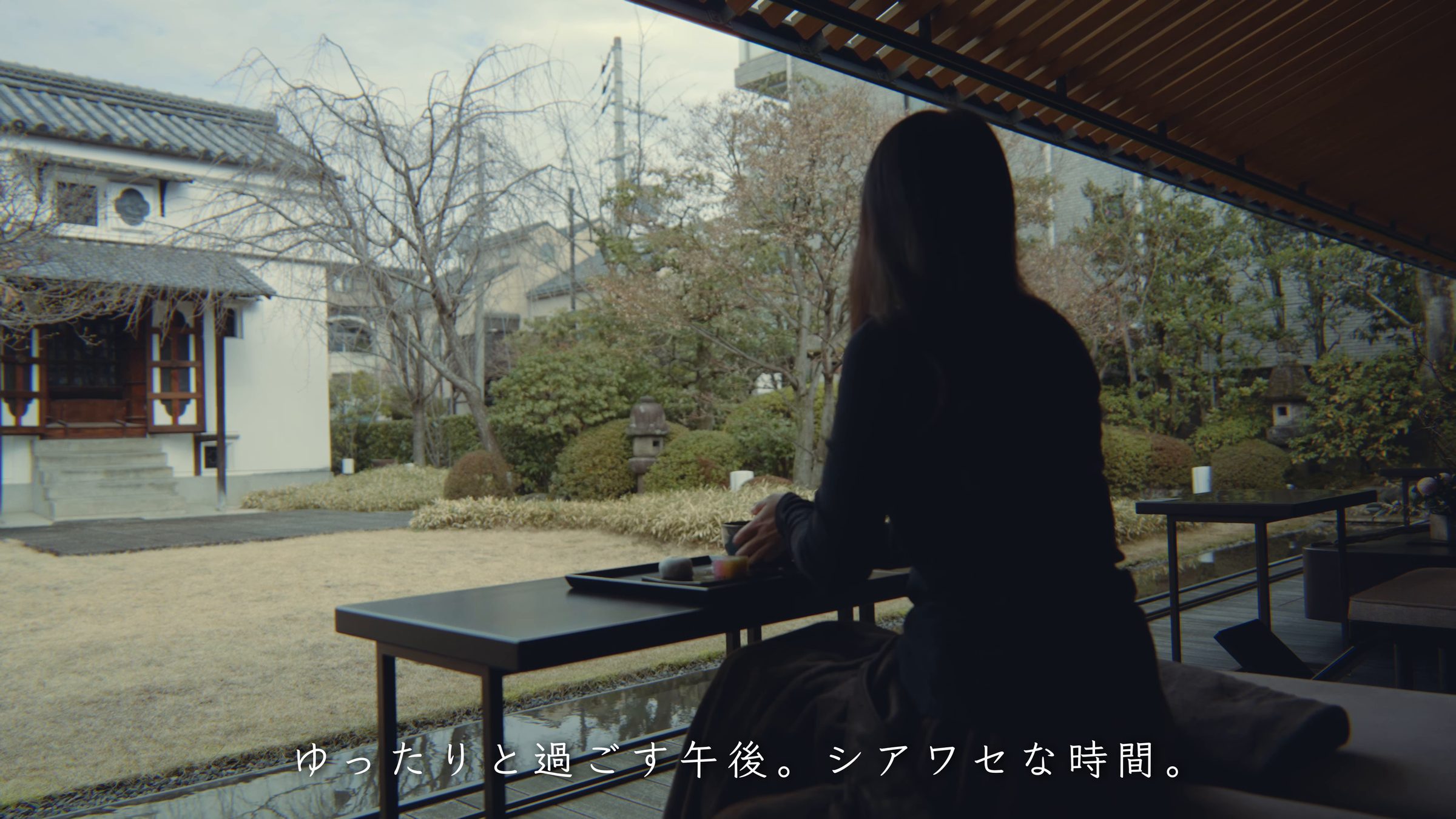
My destination was Toraya Karyo Kyoto Ichijo, near Karasuma-Ichijo, the tearoom of the confectioner Toraya in the city where it was founded. Under a cedar ceiling that curves in a gentle arch, I took a seat looking out through the glass onto the garden.
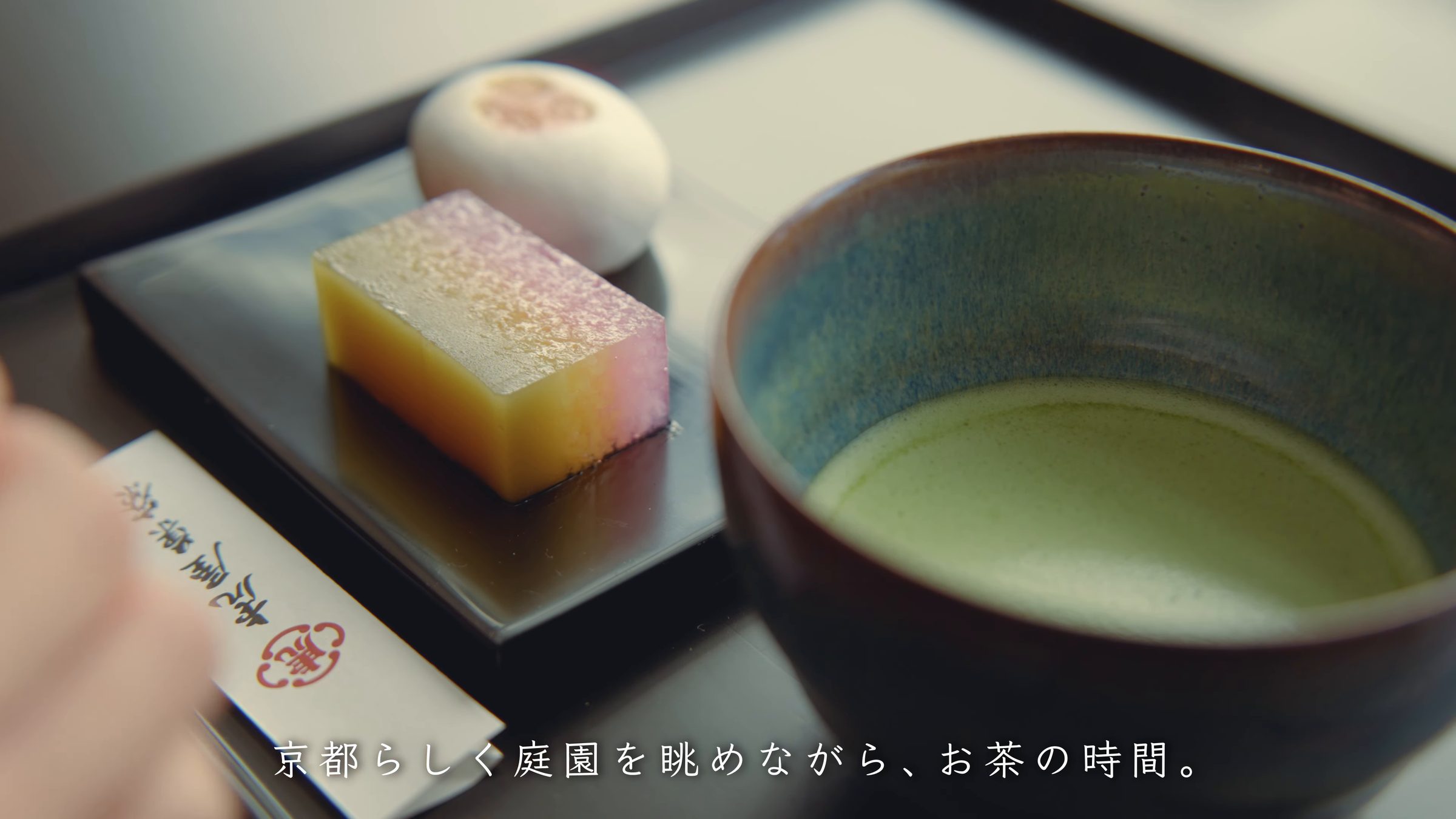
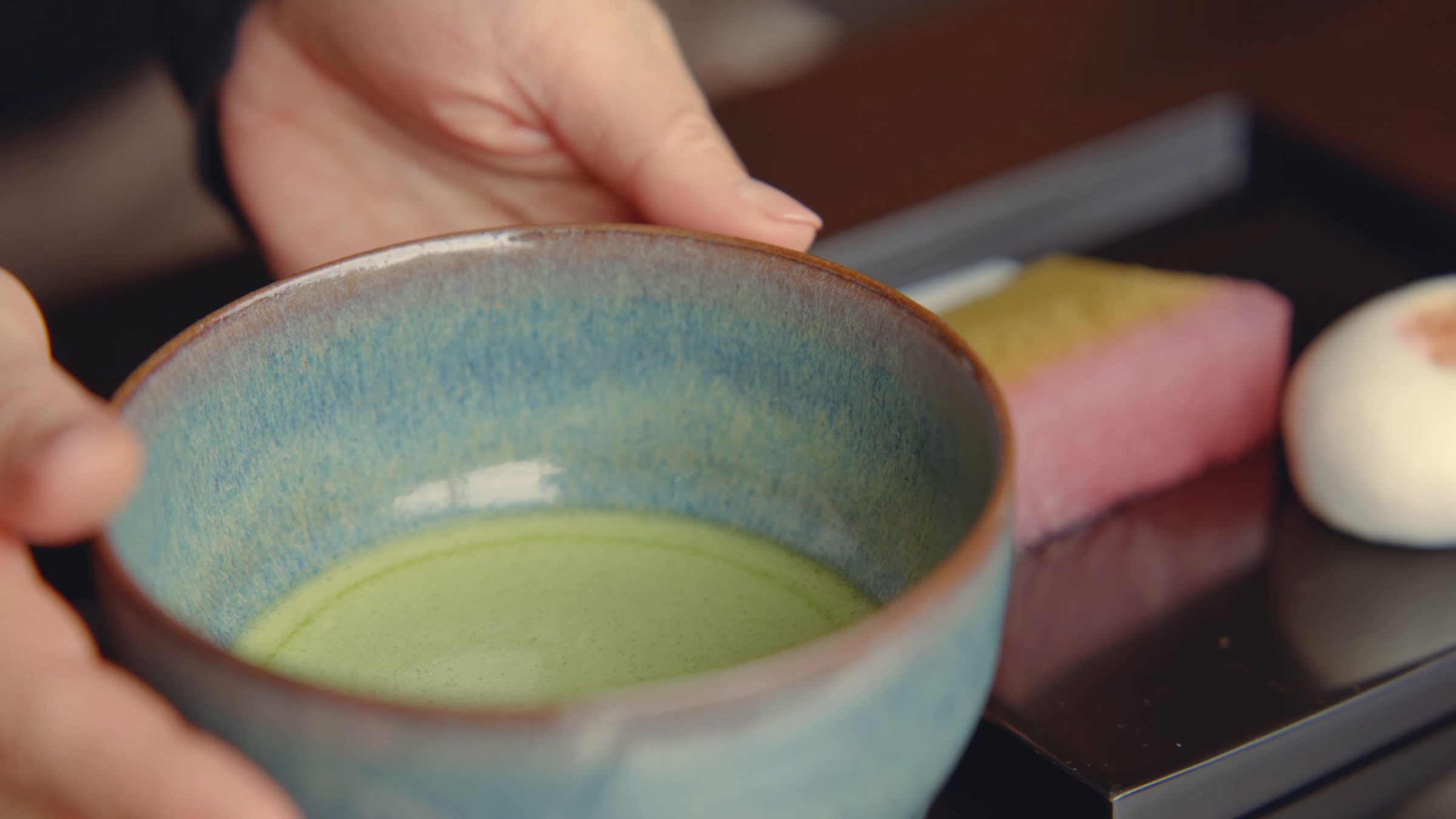
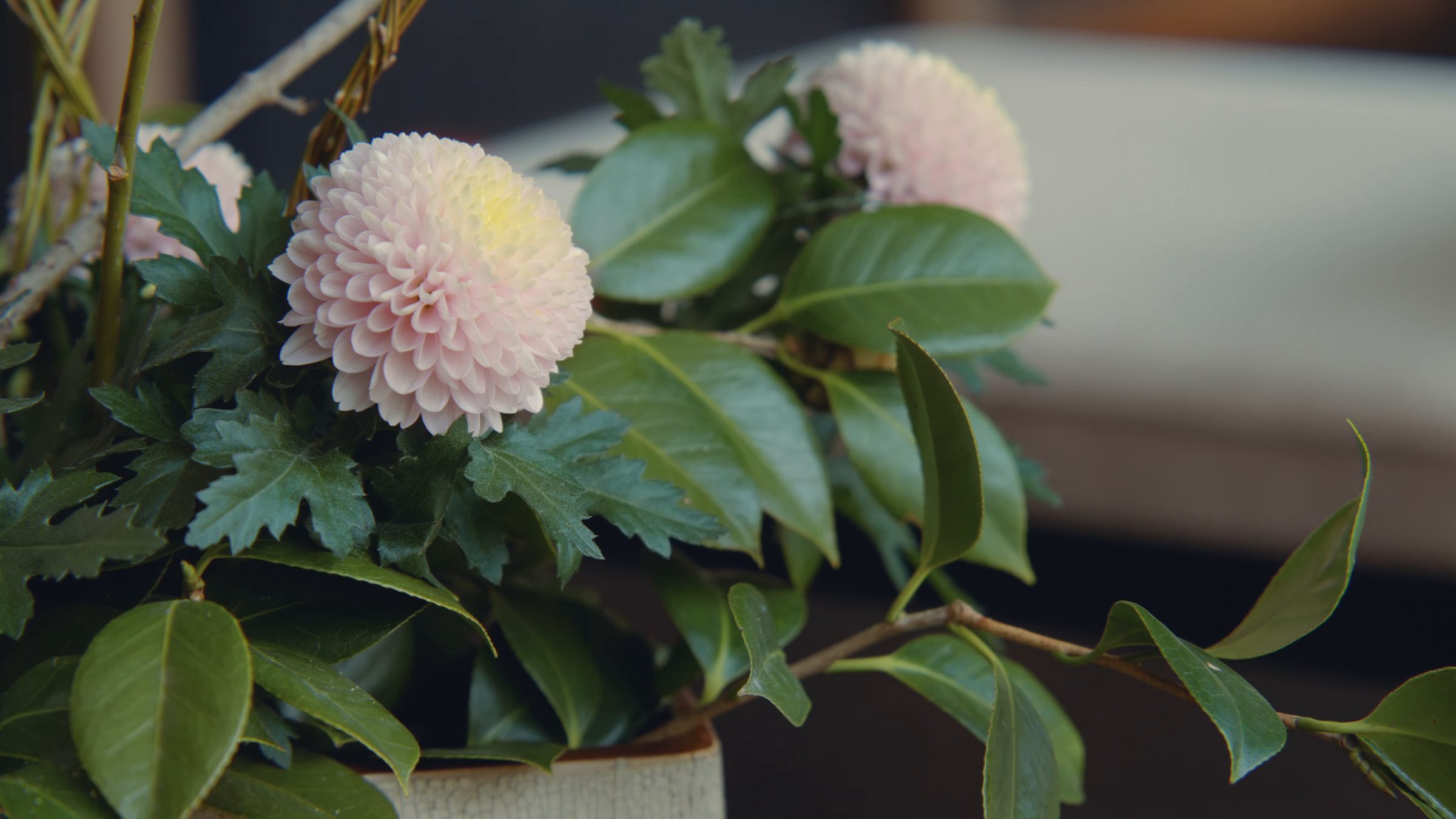
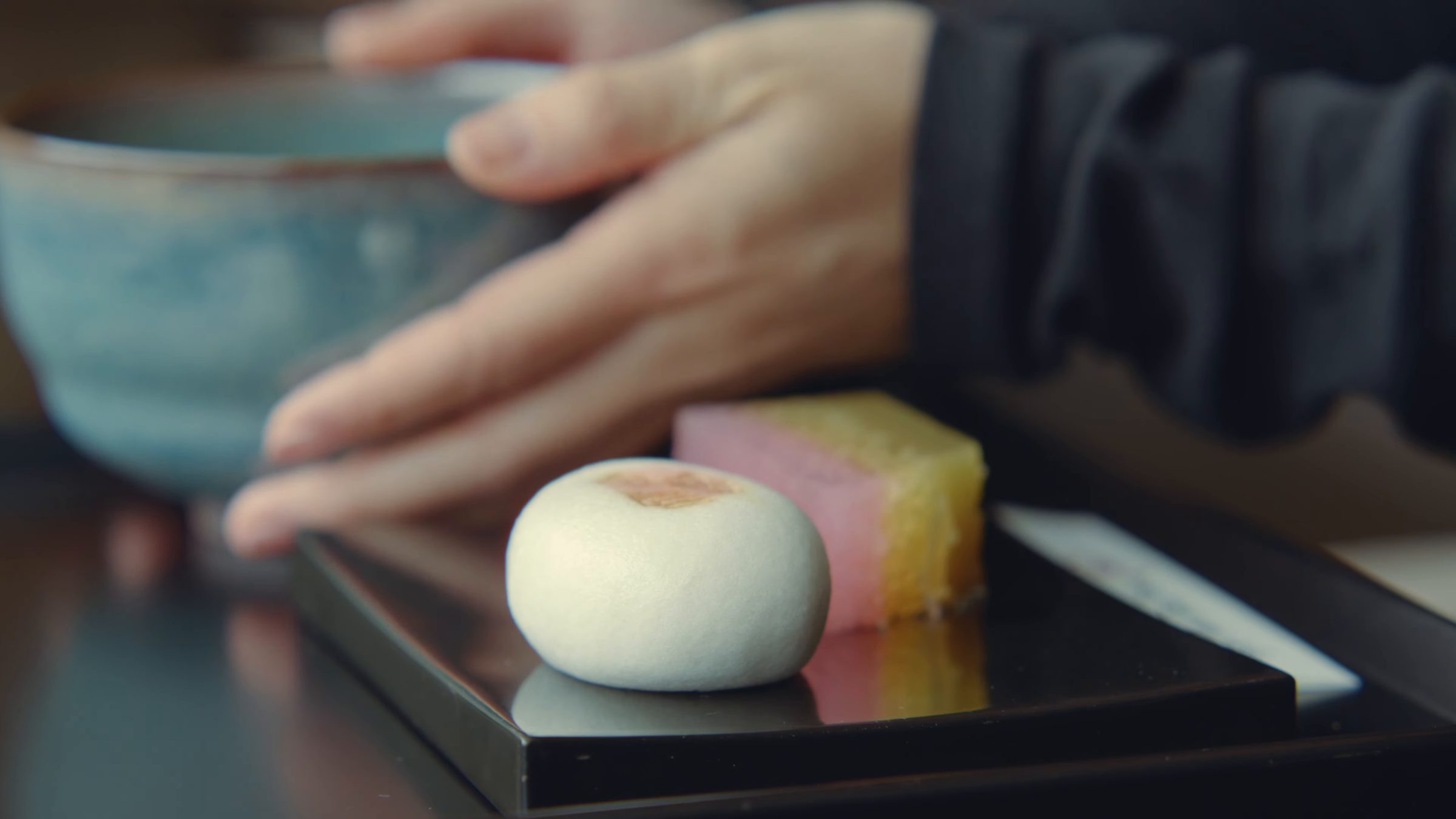
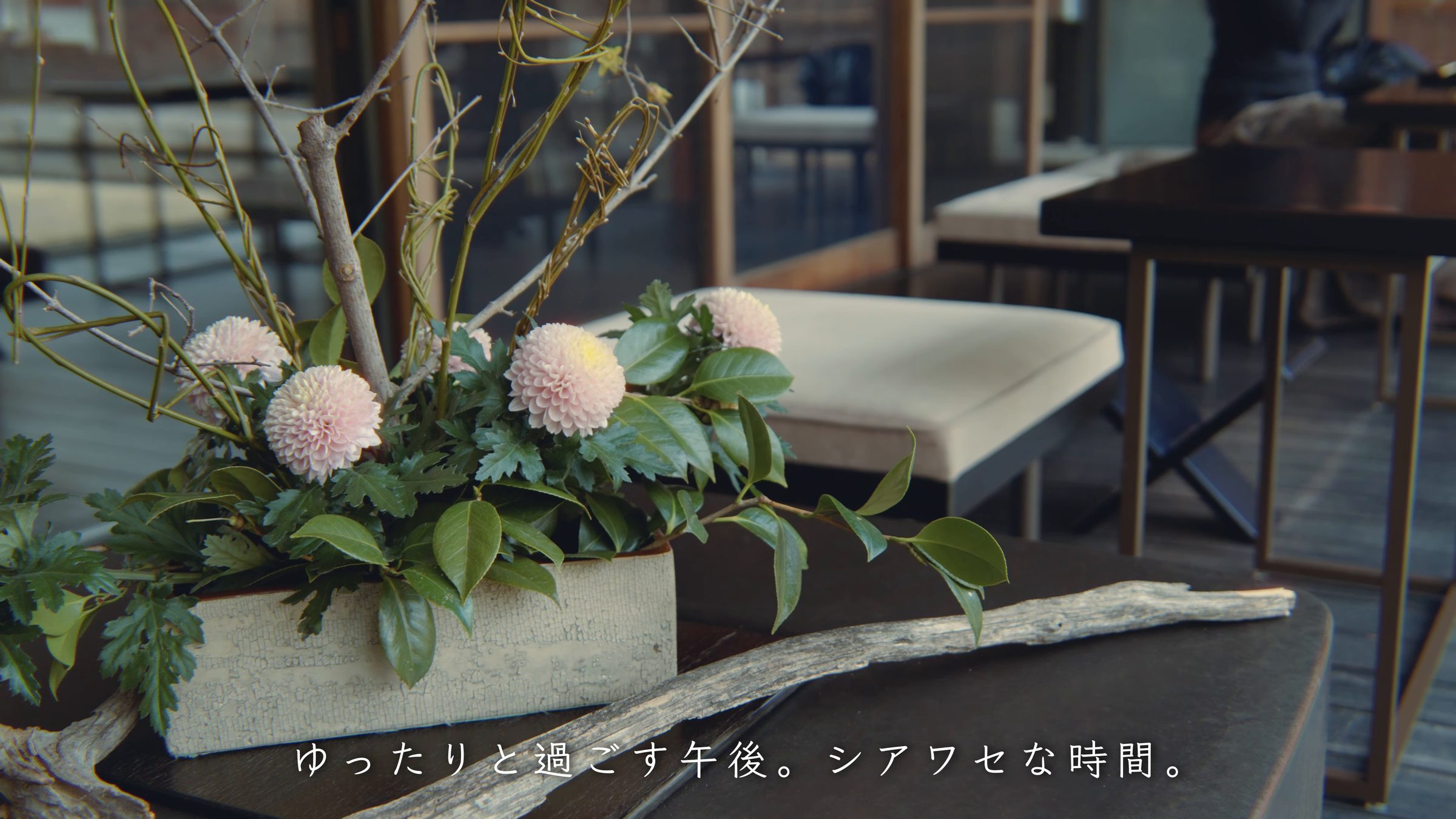
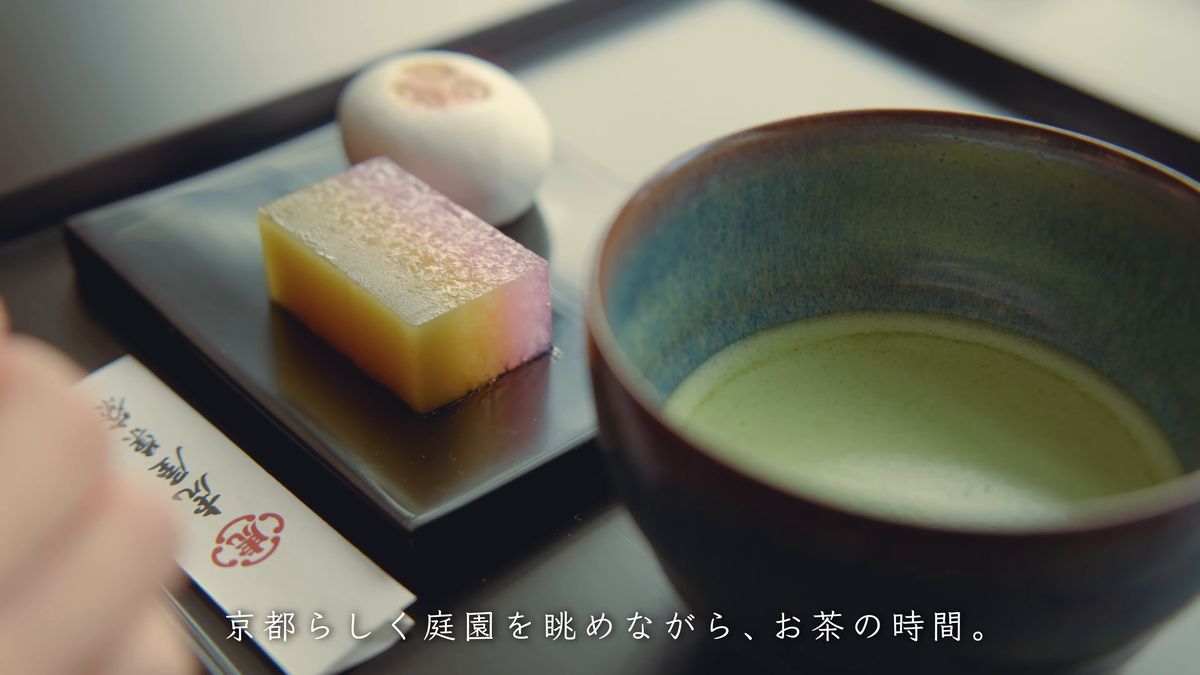
On a black tray came a seasonal sweet layered in yellow, white and pink, a white bun stamped with a pink mark, and a bowl of freshly whisked matcha. Tea time, looking out on a garden, the Kyoto way. On the table stood pink chrysanthemums. A slow afternoon. A happy hour.
Watch this scene on YouTube2:29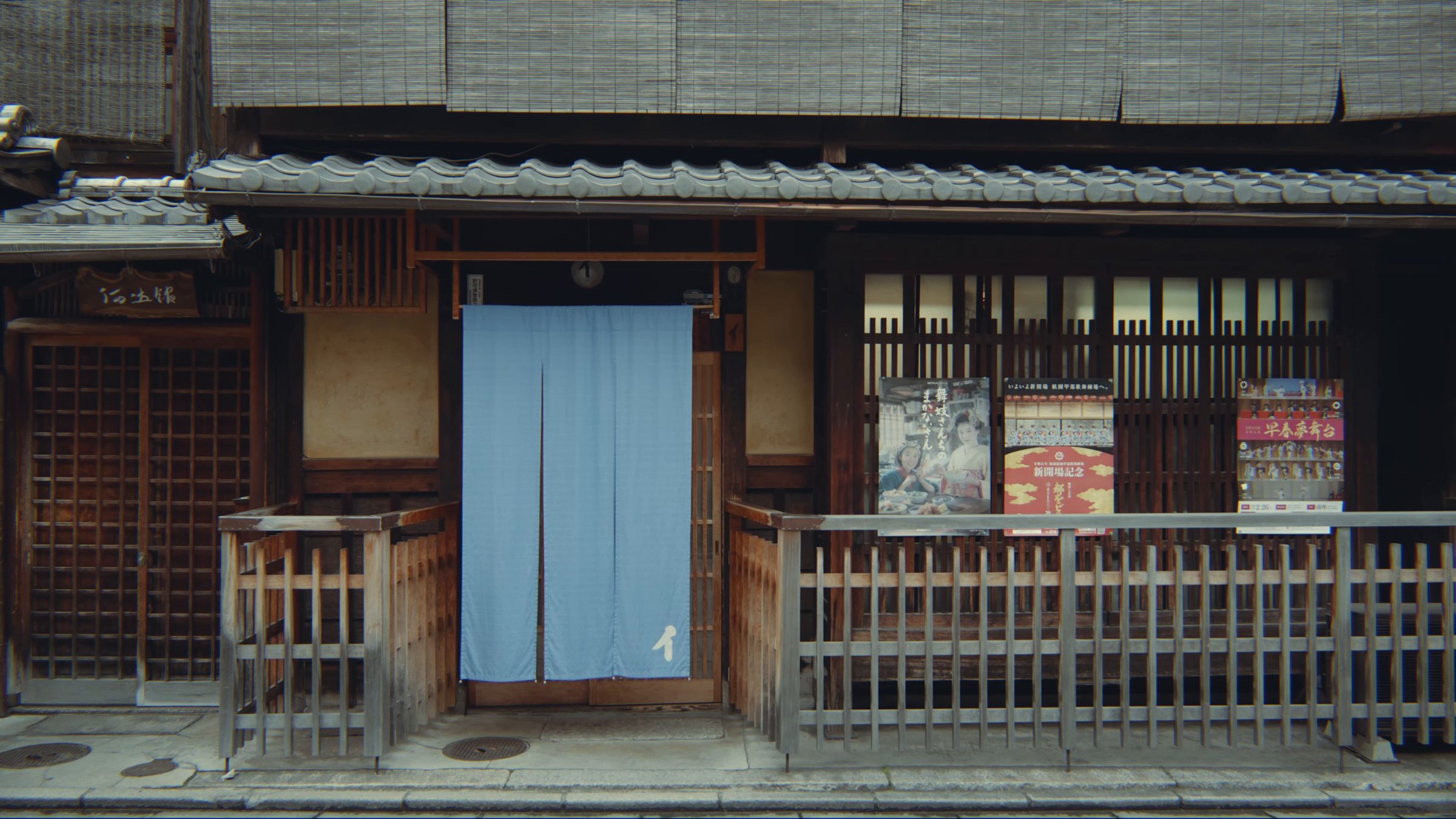
07TRAVEL JOURNAL
Gion after dark
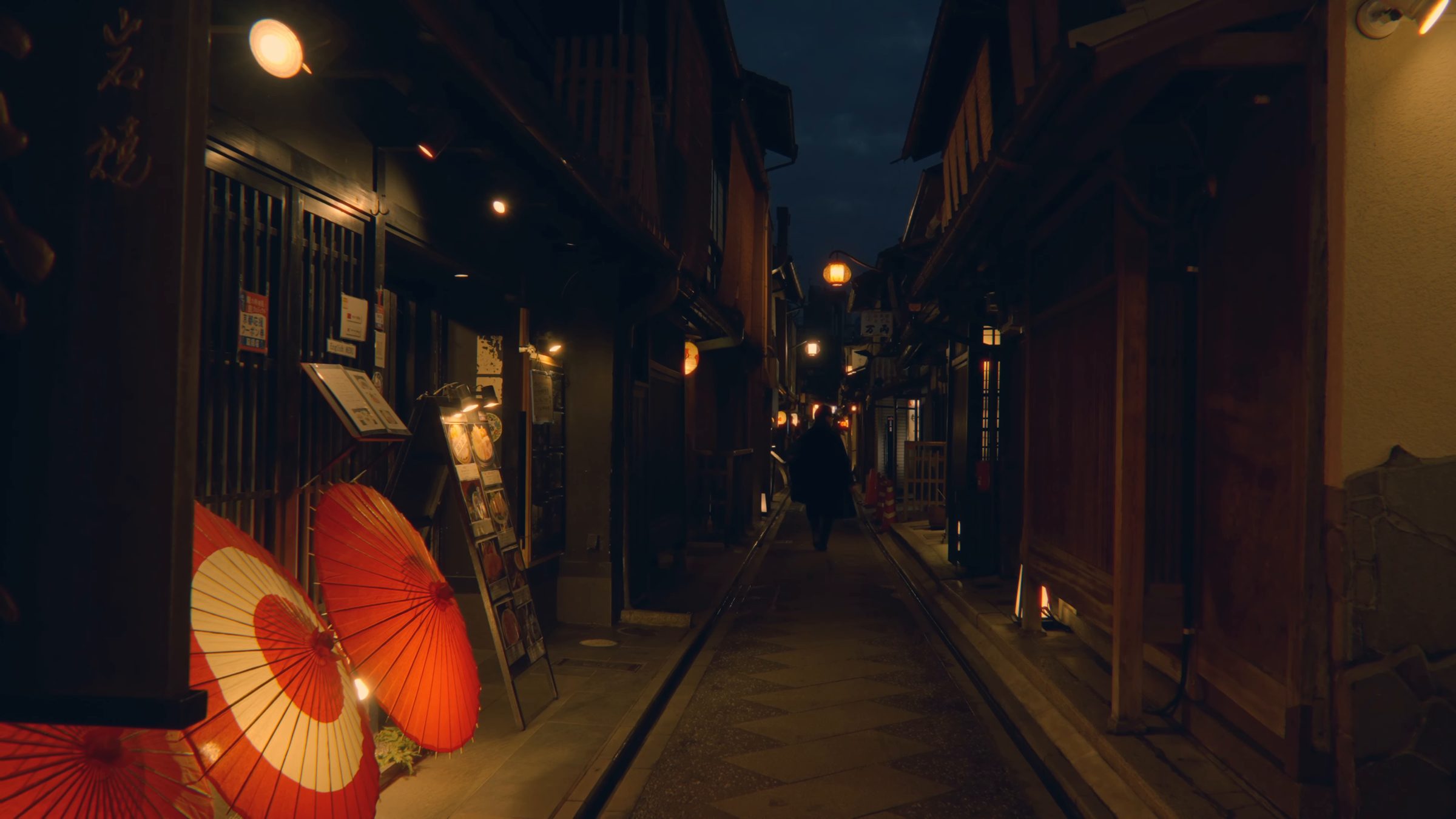
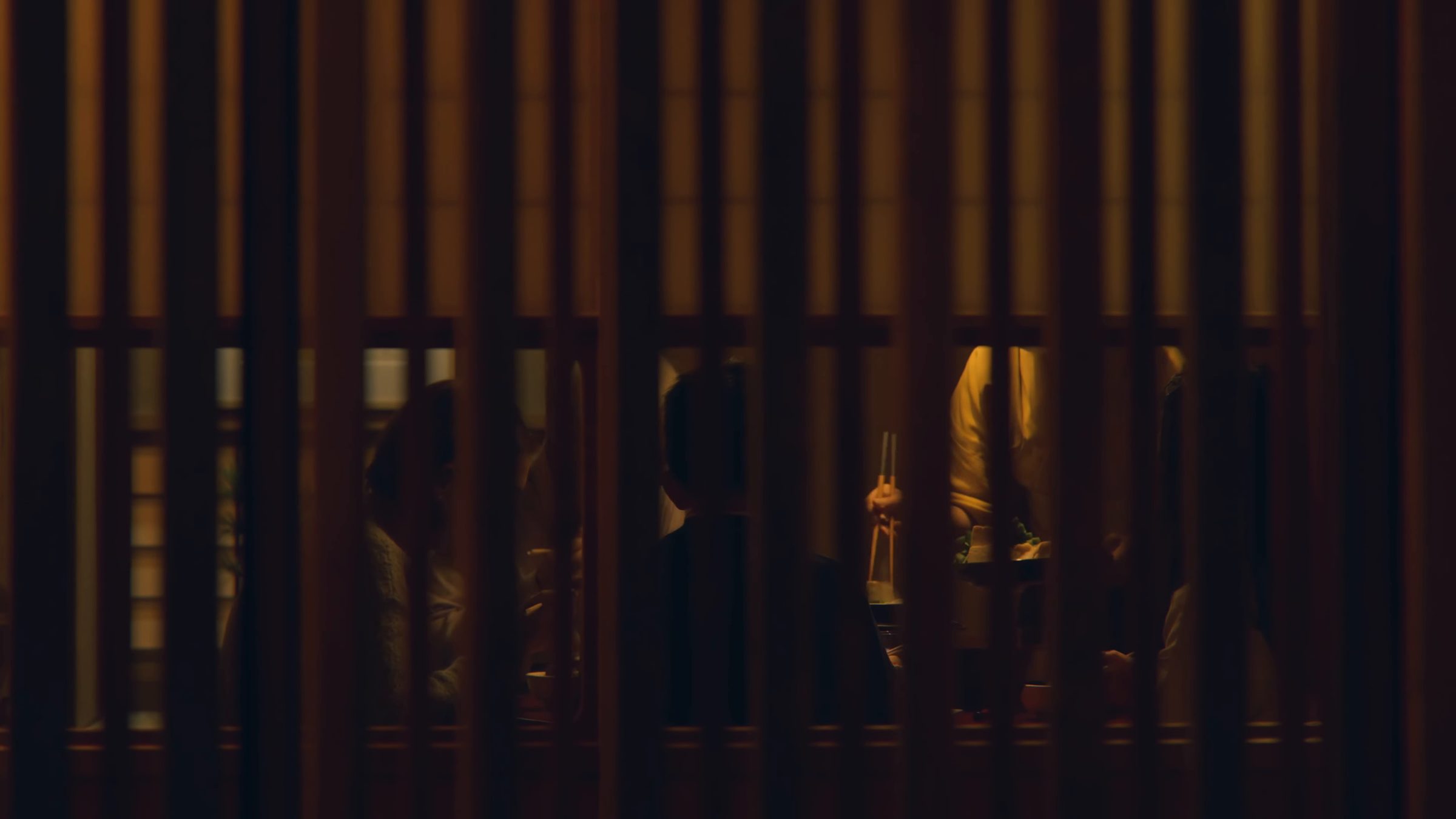
After dark I walked into the lanes of Gion. Lantern light lay on the wet paving stones, red paper umbrellas stood open under the eaves of the townhouses, and through the lattices glowed the lights of a tatami room.
Watch this scene on YouTube3:18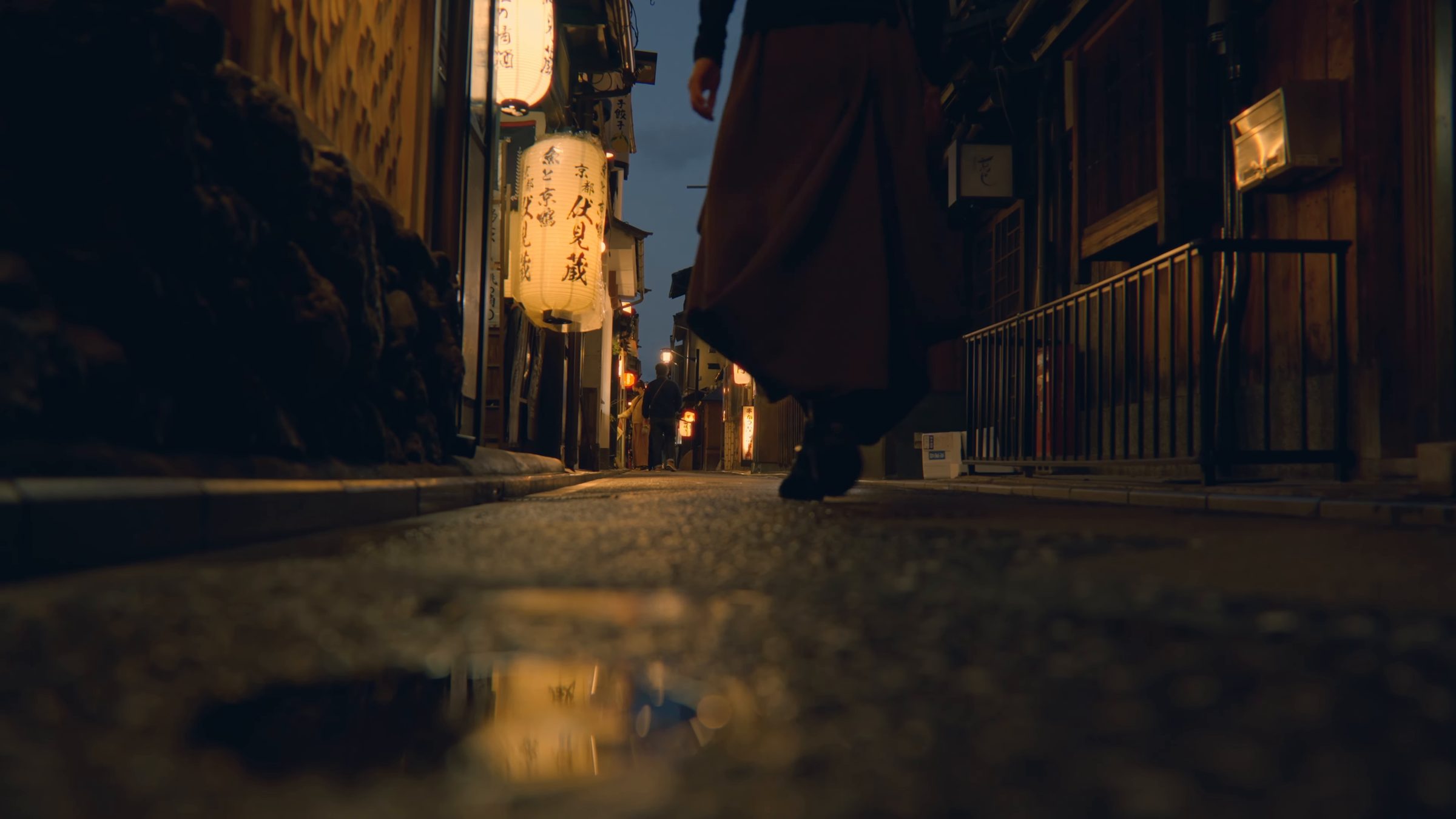
08TRAVEL JOURNAL
Beijing cuisine in a mansion on the Kamo River
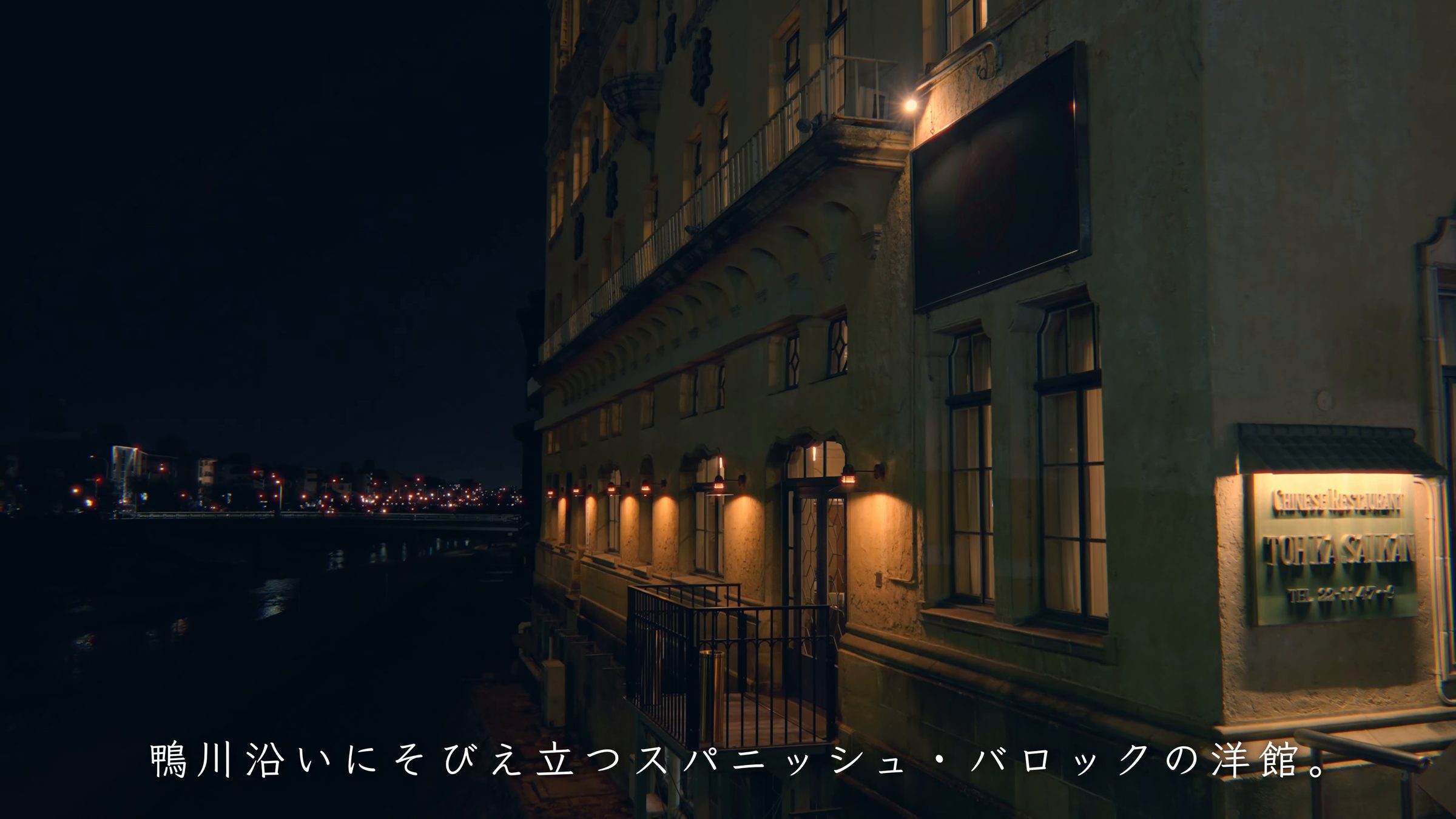
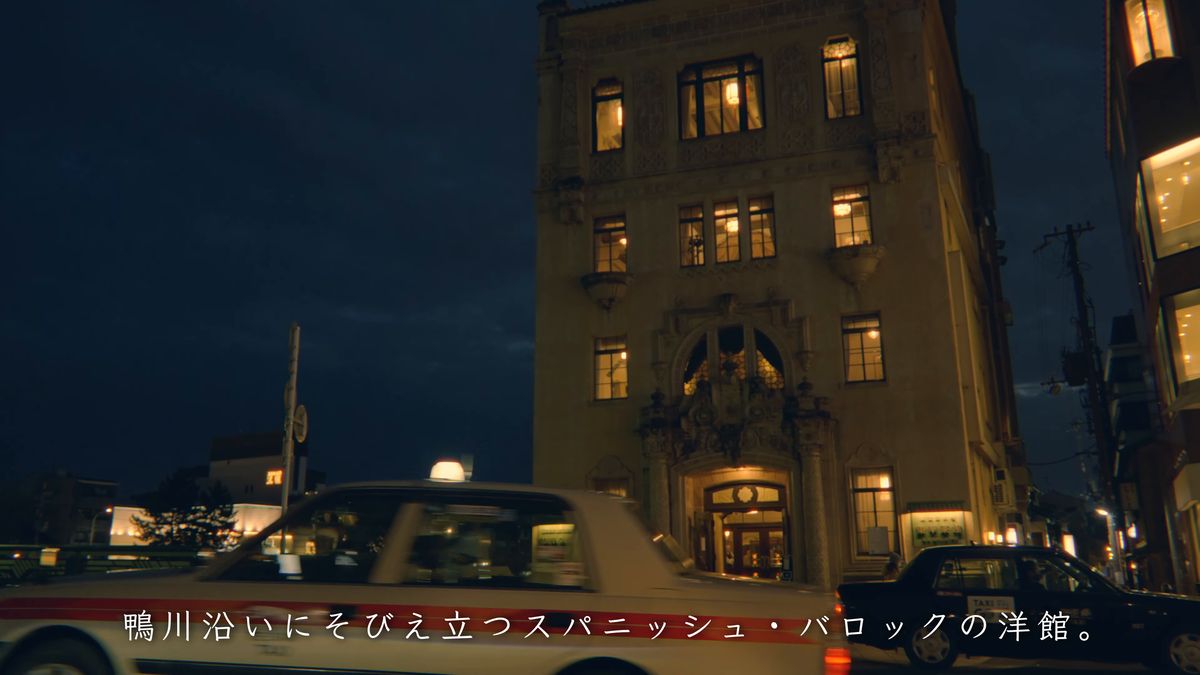
A Spanish Baroque building rises beside the Kamo River. Tohkasaikan's home was built in 1926 to a design by William Merrell Vories; it began as the Western restaurant Yaomasa, and at the end of 1945 it became a Beijing-cuisine restaurant. I had admired the building from outside, and tonight I finally walked in.
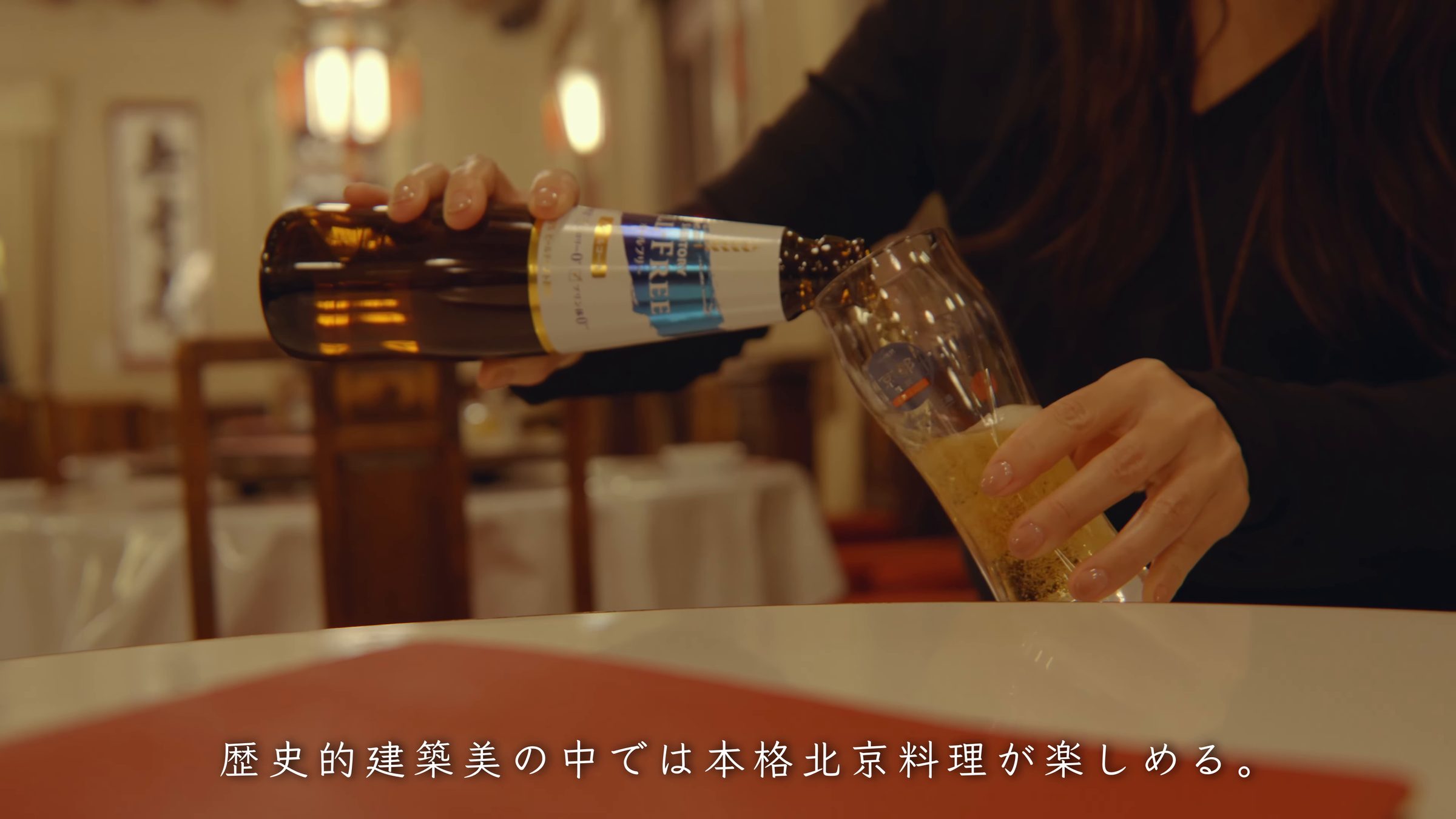
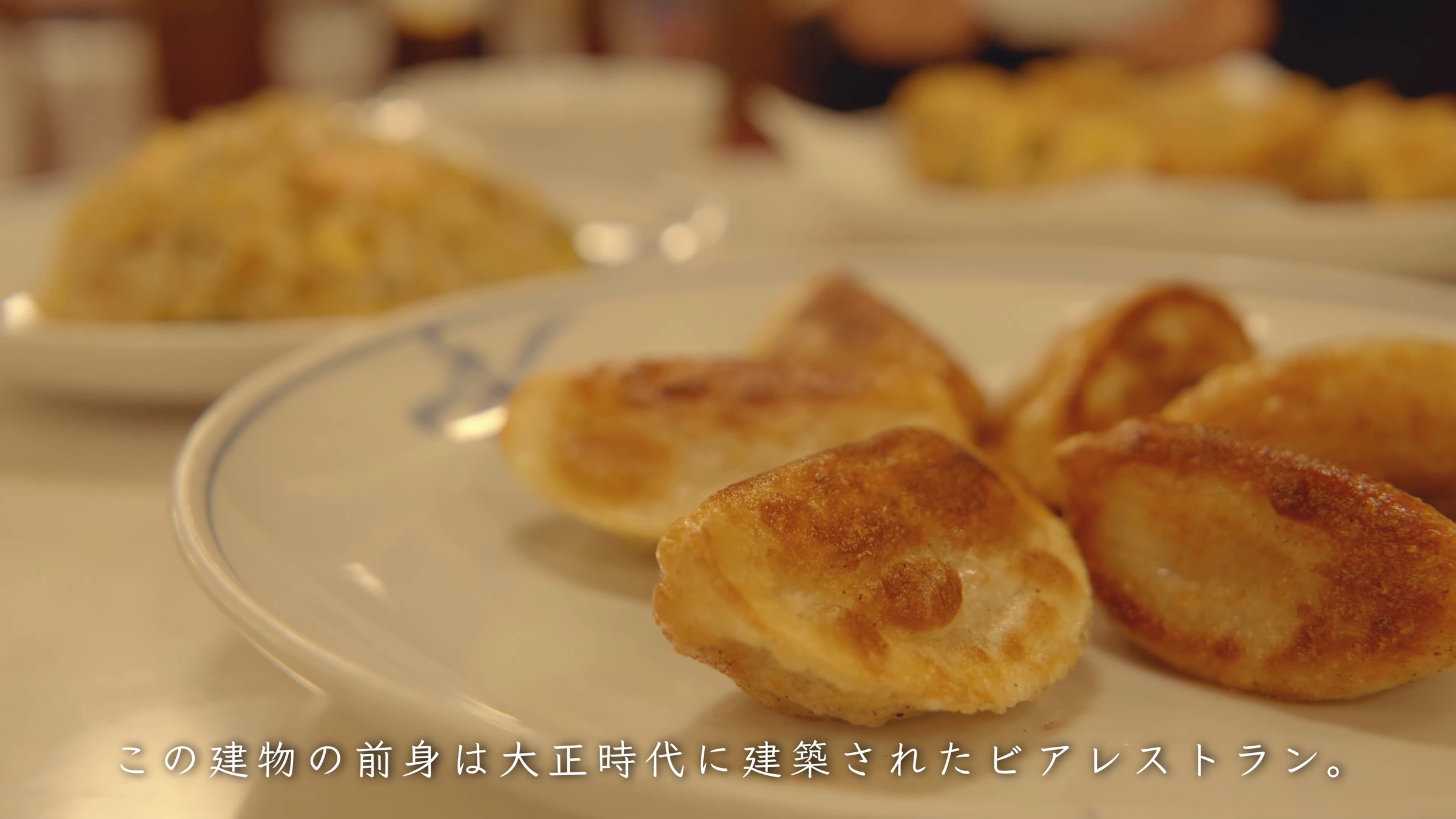
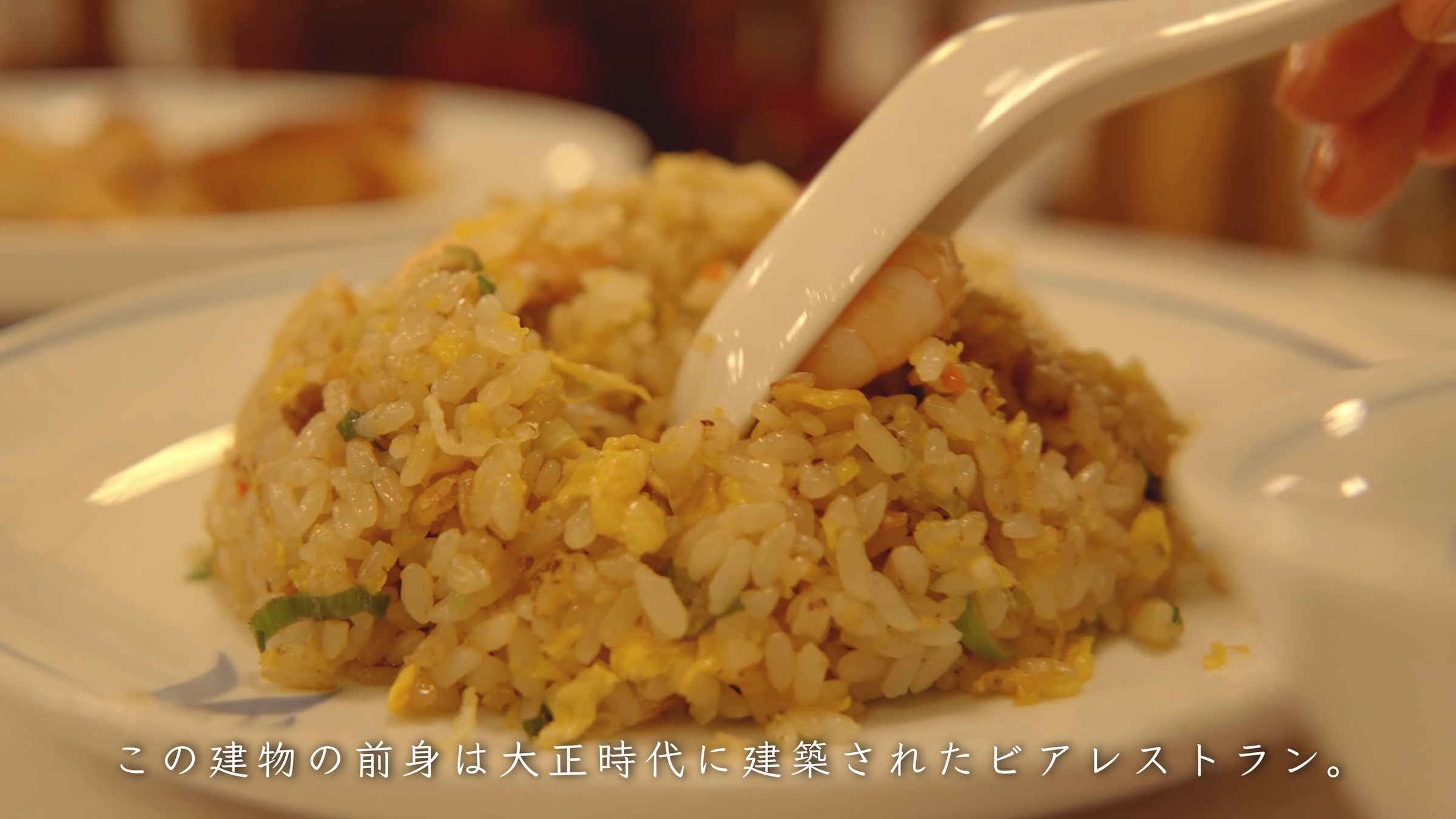
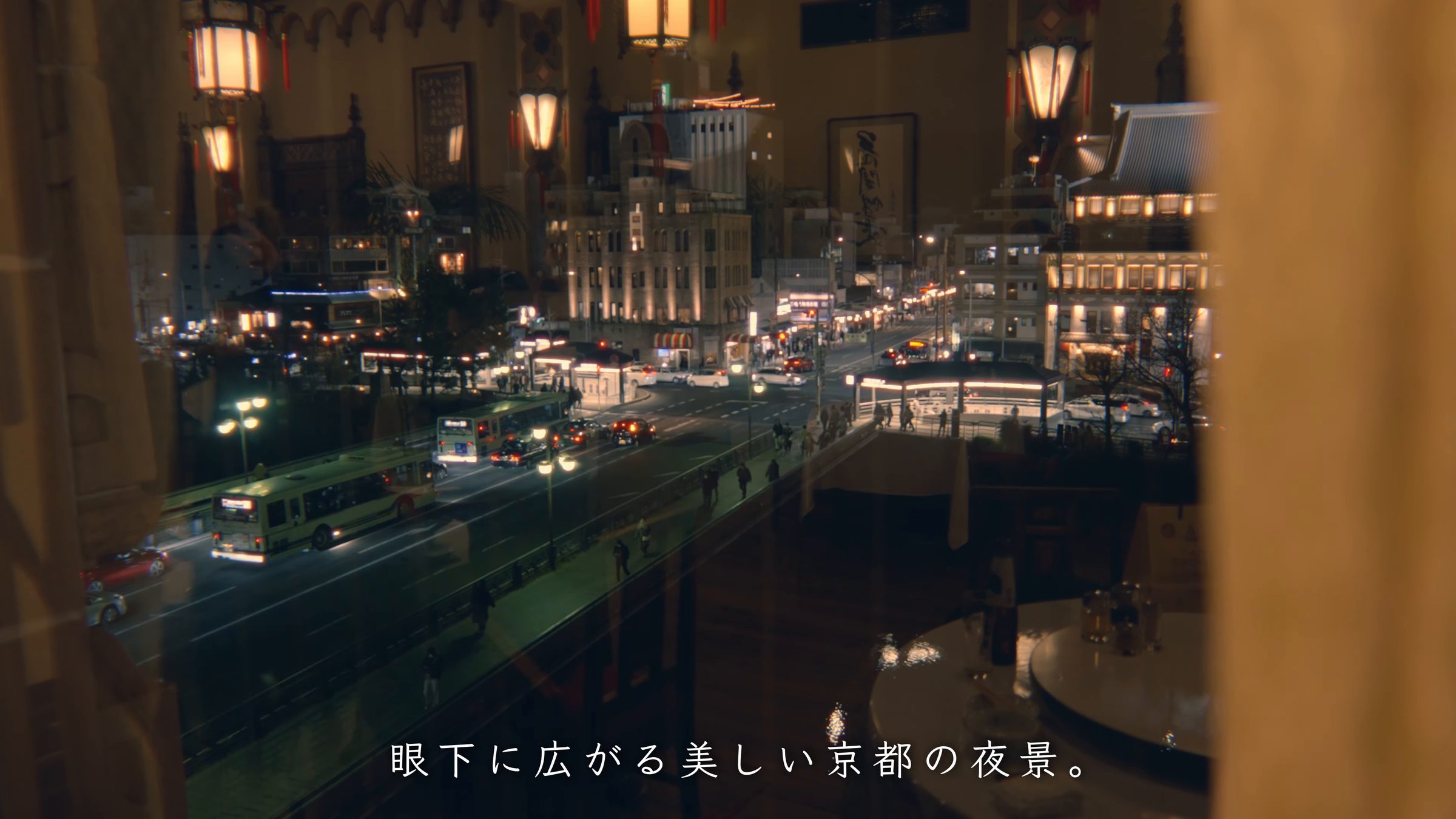
At a table with a white cloth, I poured bottled beer into a glass and ate pan-fried dumplings and fried rice with shrimp: authentic Beijing cooking inside a historic building. Below the window lay Shijo Bridge, the Kamo River and the lights of Kyoto.
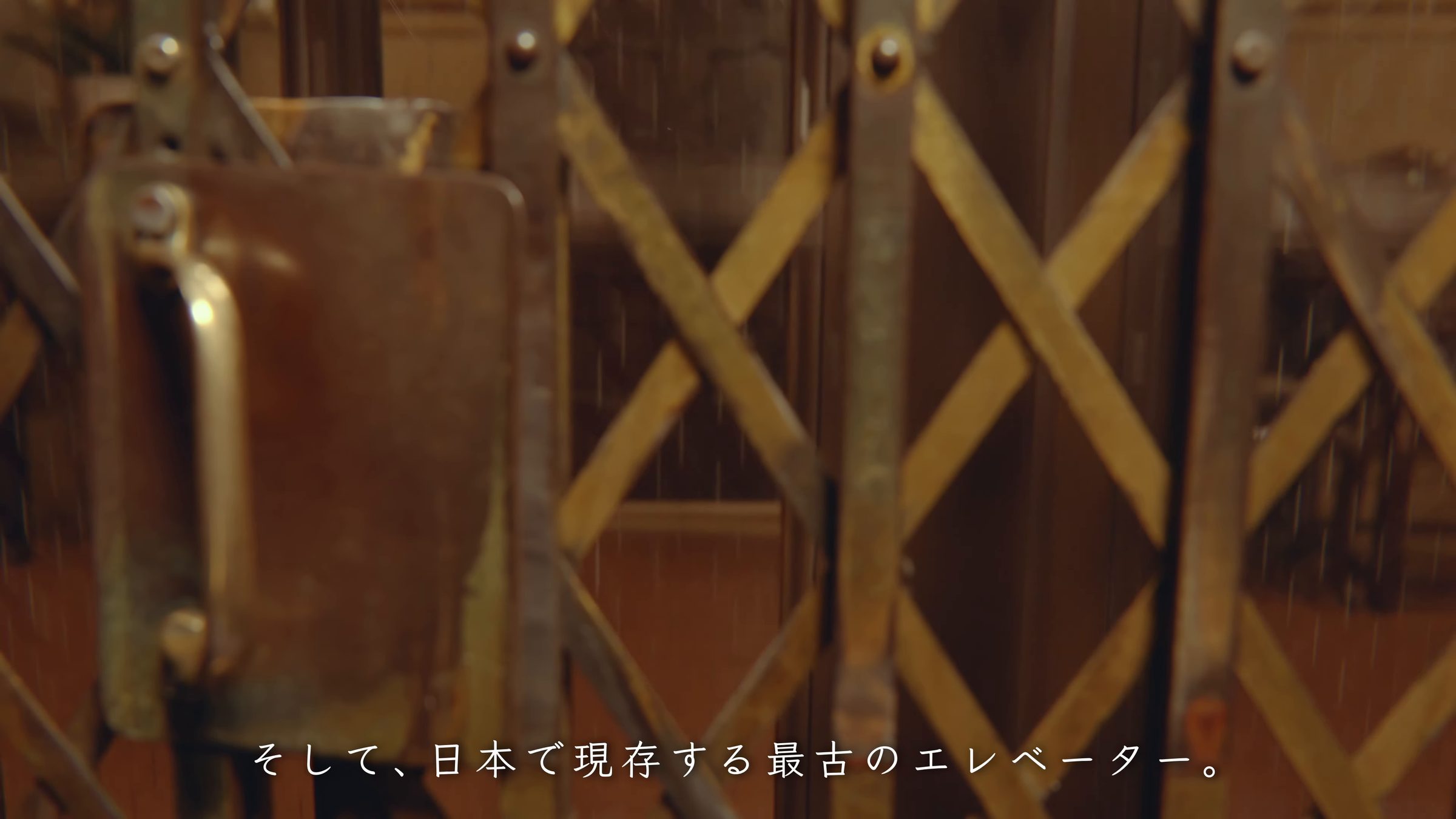
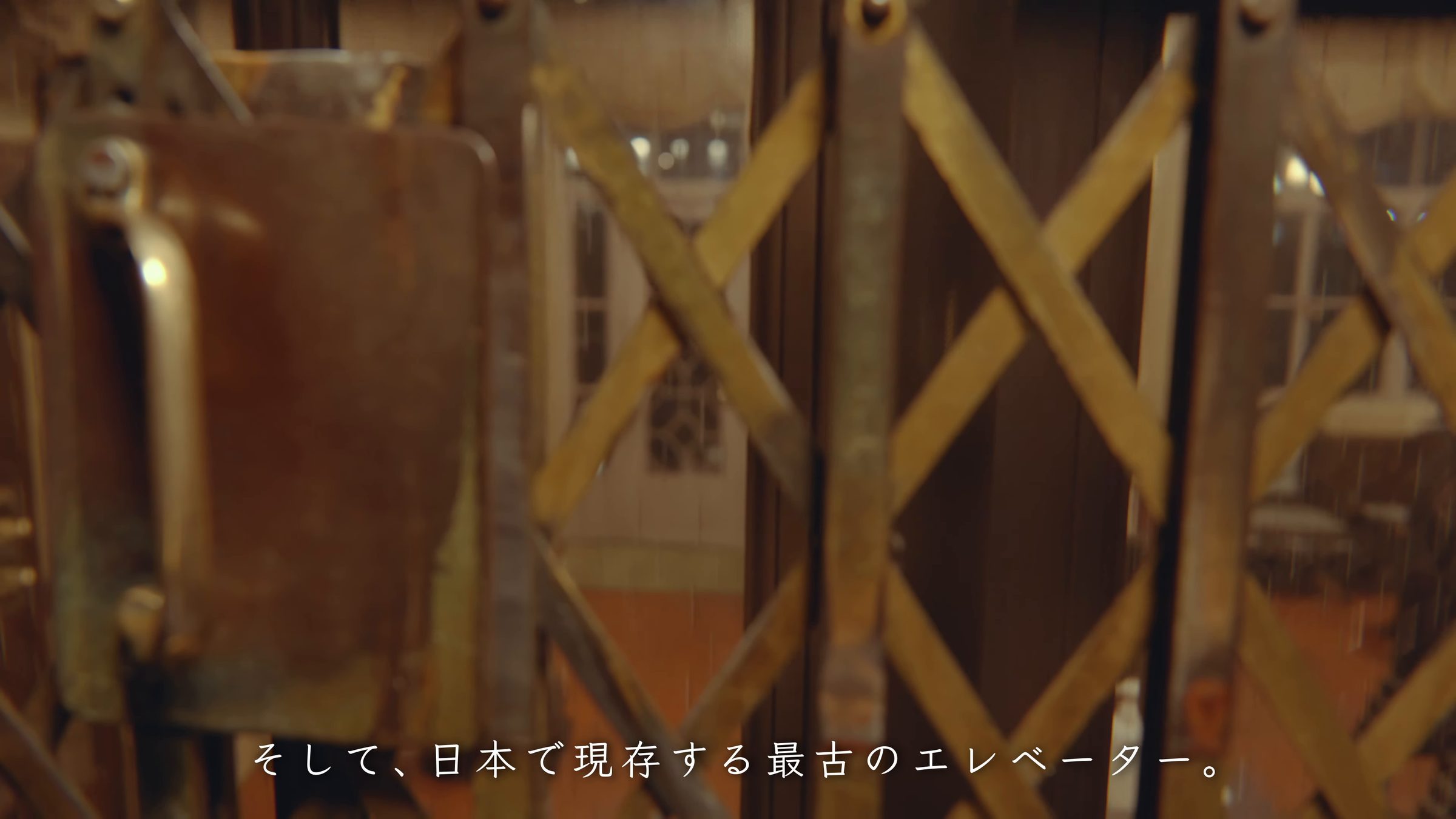
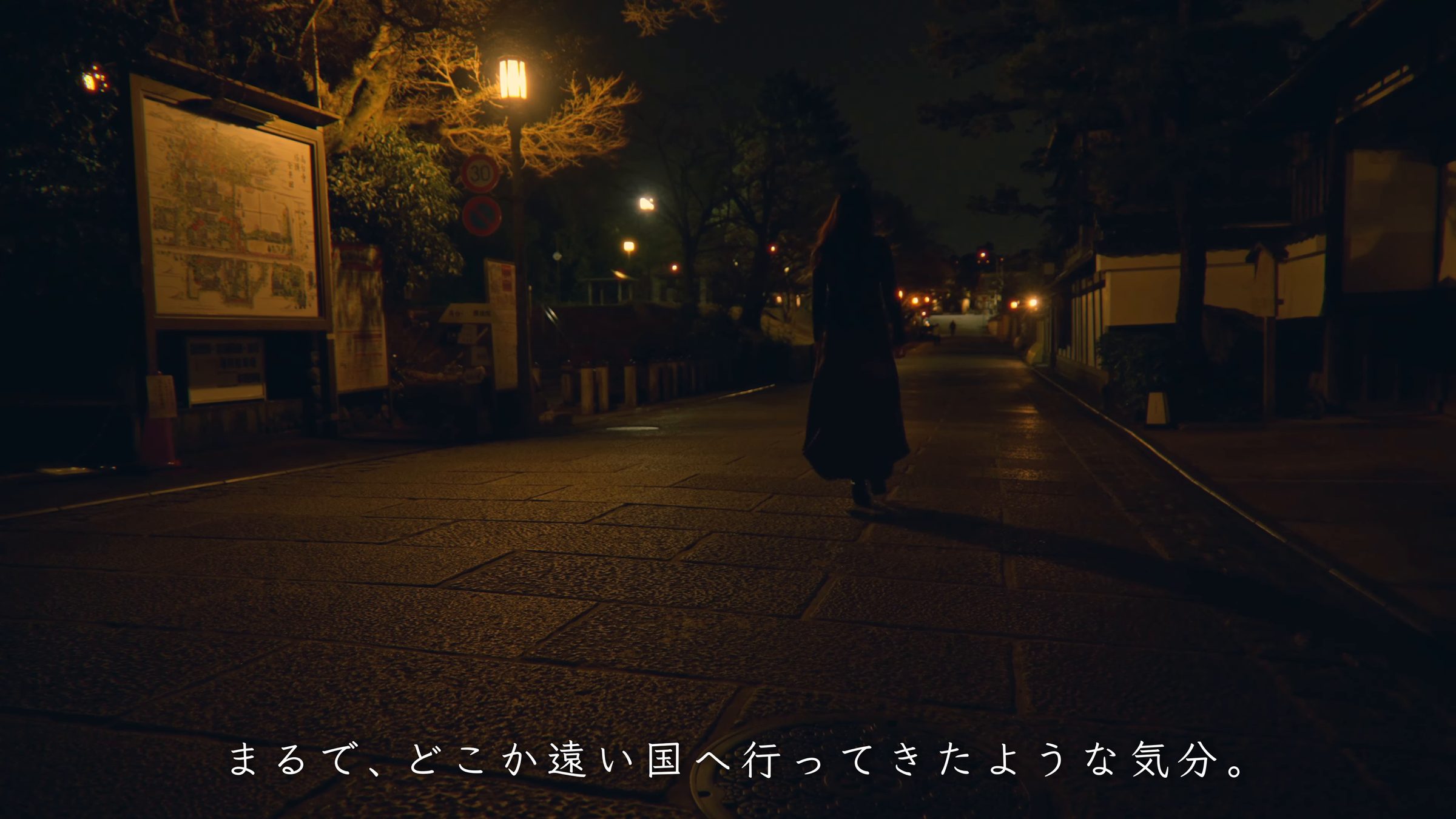
I took the elevator down. Made by Otis in the United States in 1924, it is said to be the oldest elevator still in service in Japan. The inner door is a folding lattice gate, closed by hand, and an operator drives it. I walked home through the night feeling as if I had been to some faraway country.
Watch this scene on YouTube3:26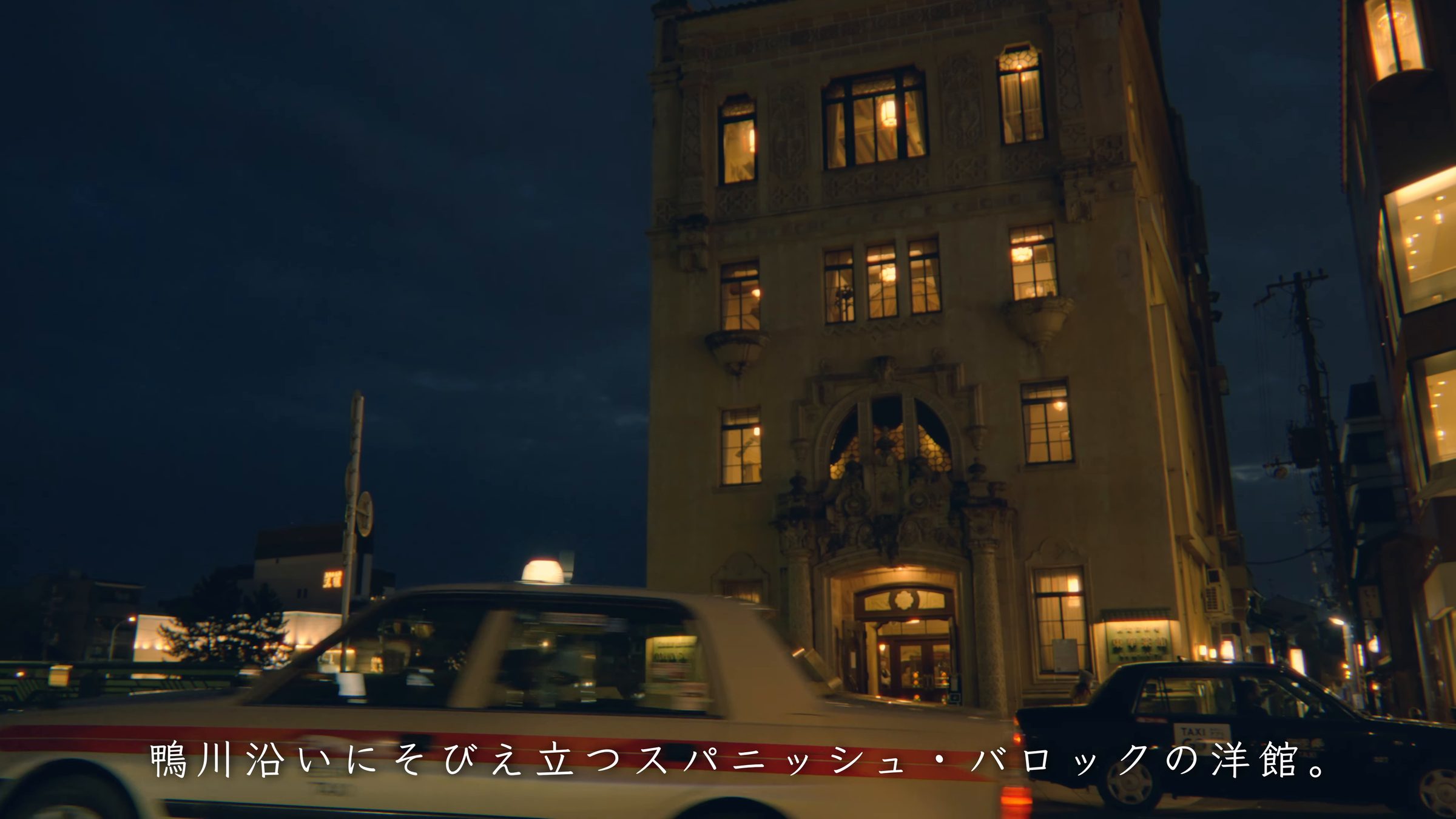
09TRAVEL JOURNAL
Would you care for some bubu-zuke?
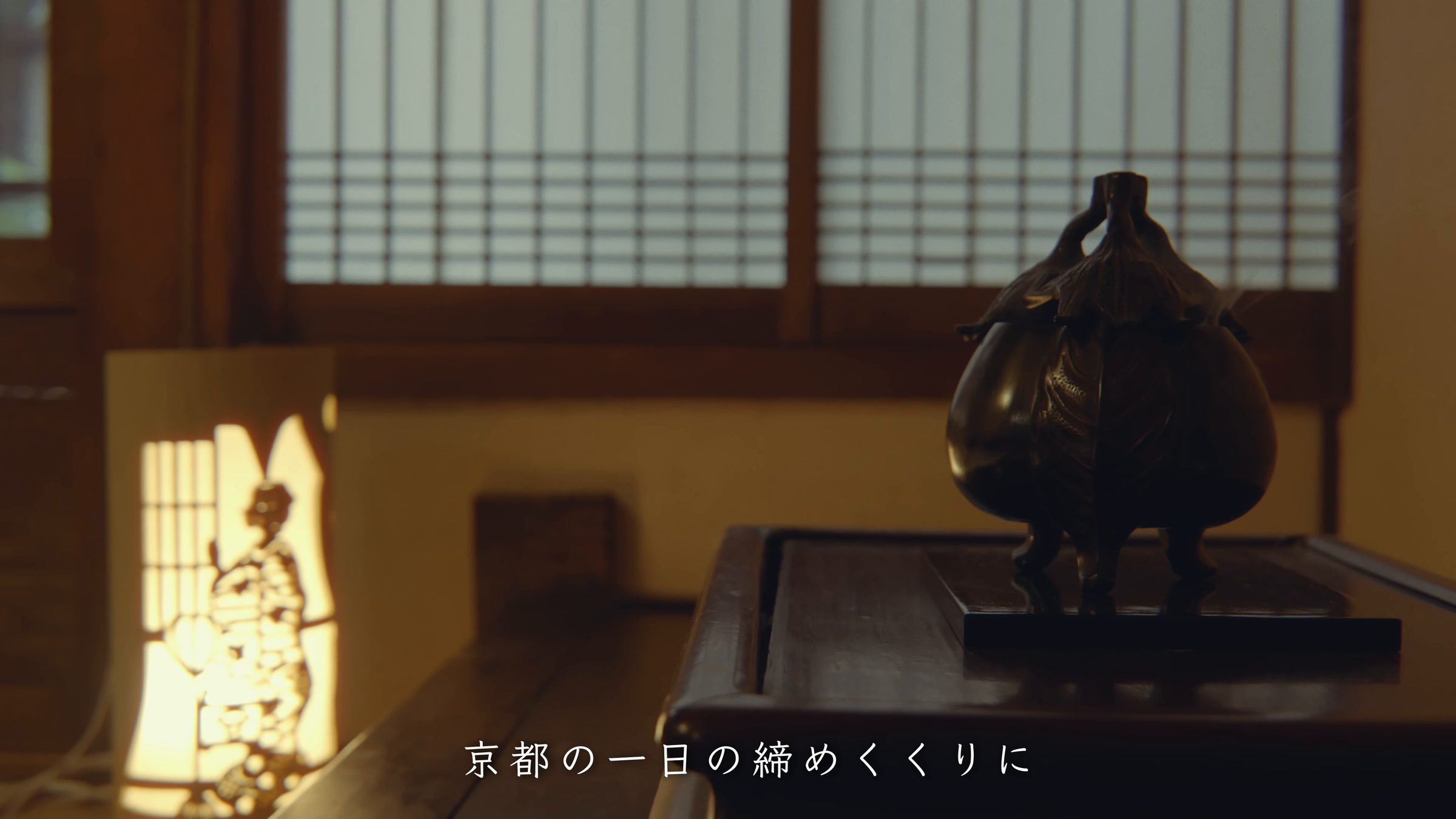
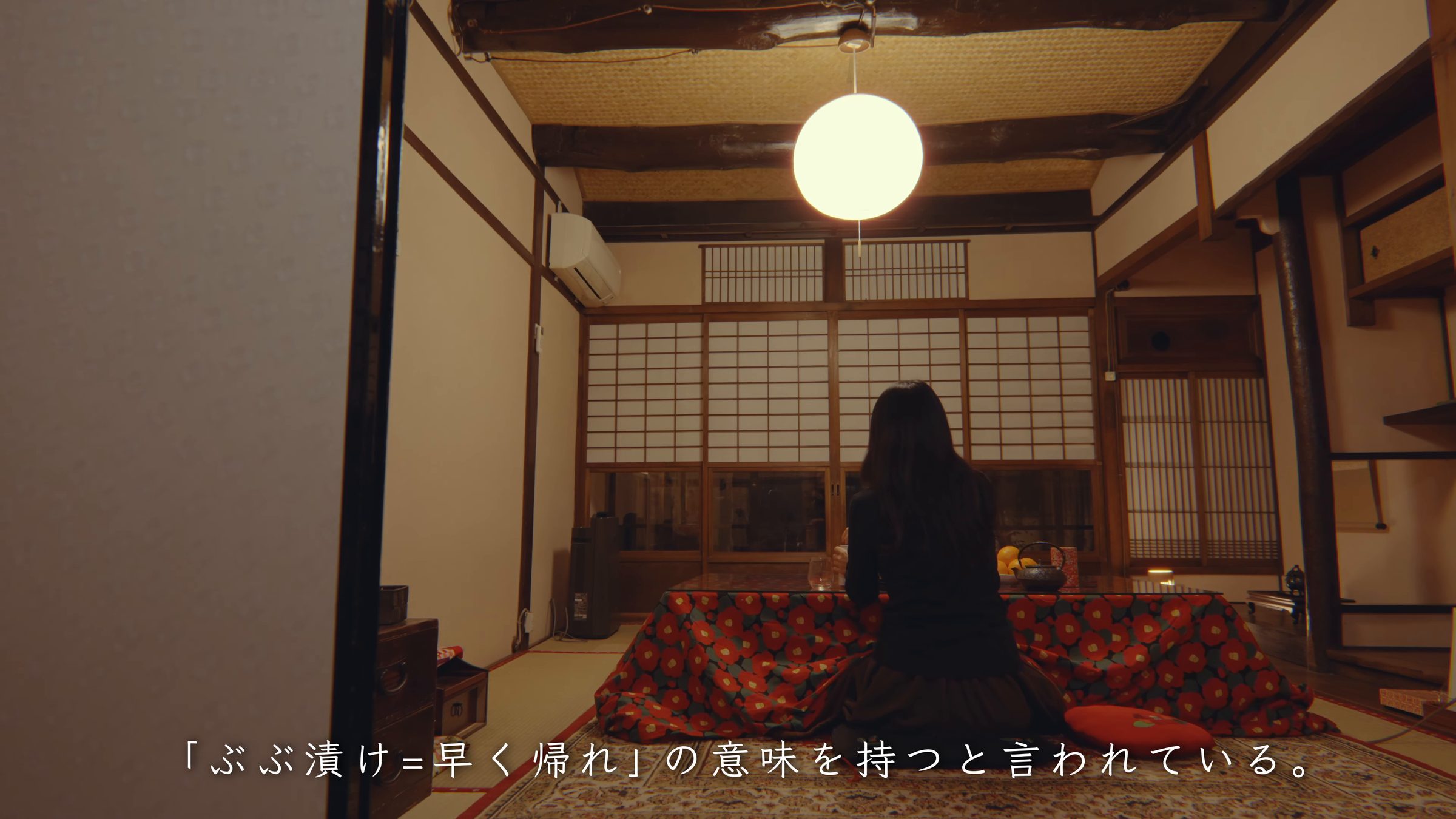
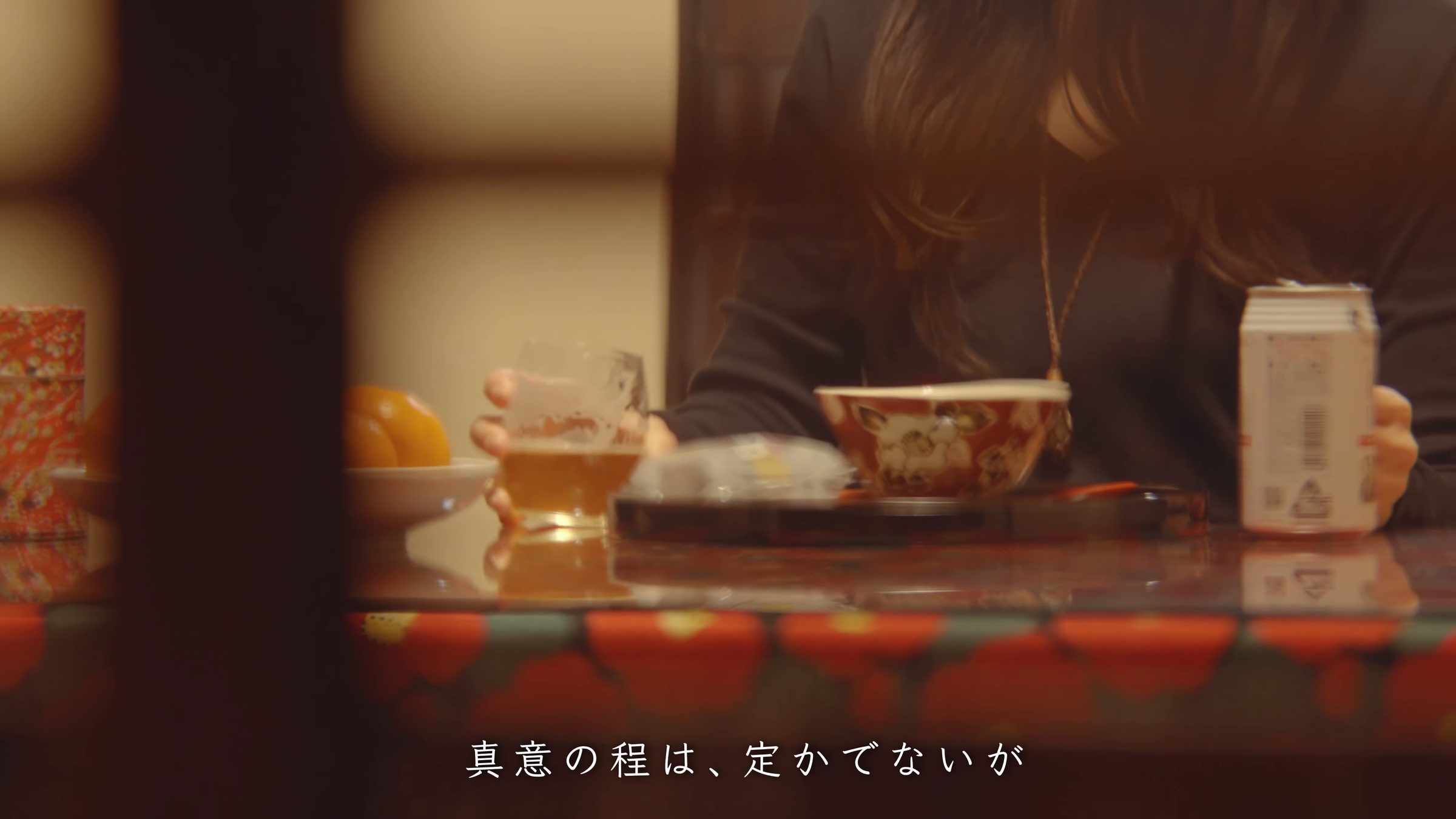
To end the day in Kyoto. I set a red-painted rice bowl in front of the white-tiled okudosan, the old stove, and boiled water in the iron kettle. In the tatami room, a paper lamp with the silhouette of a maiko was lit.
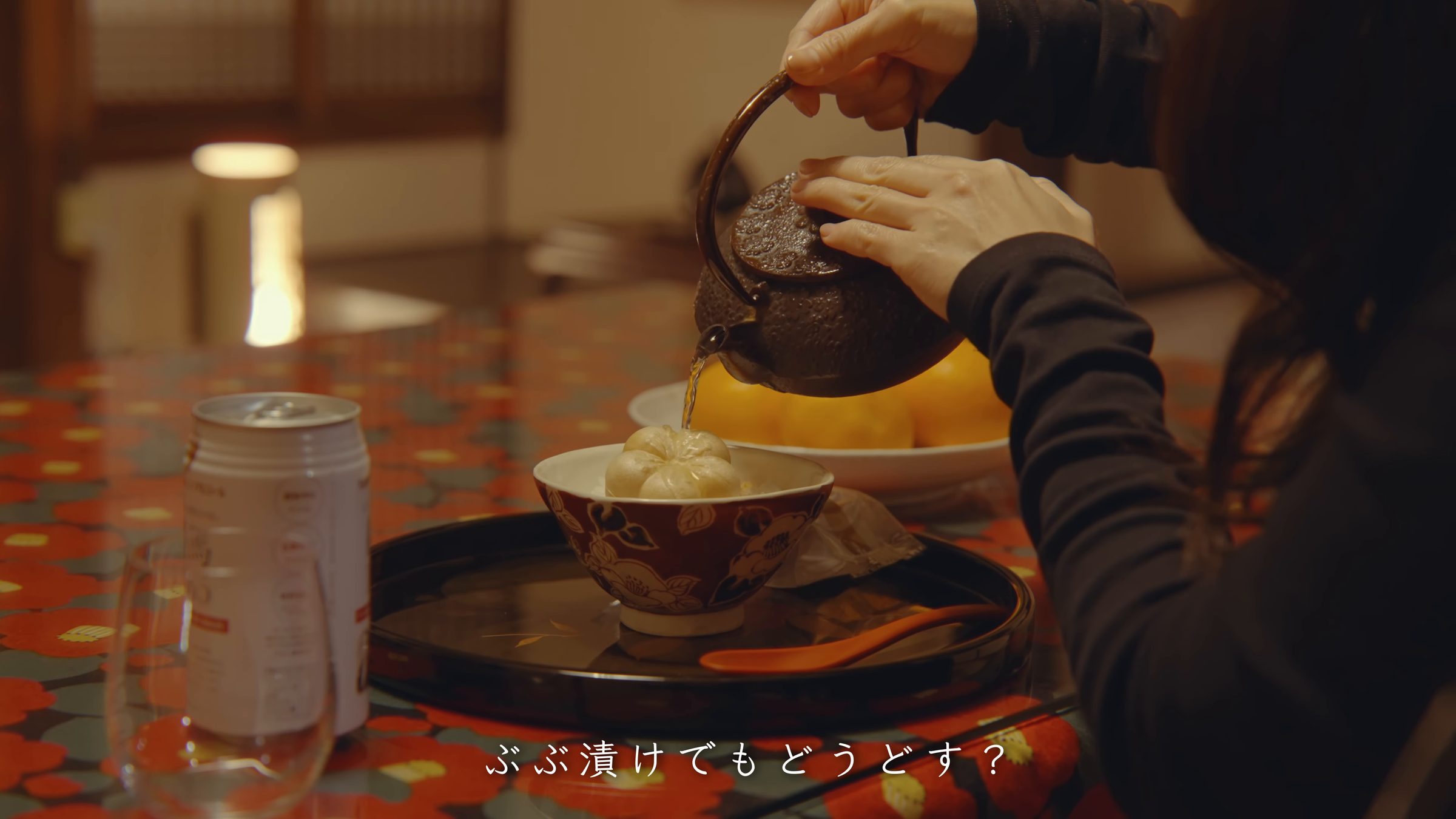
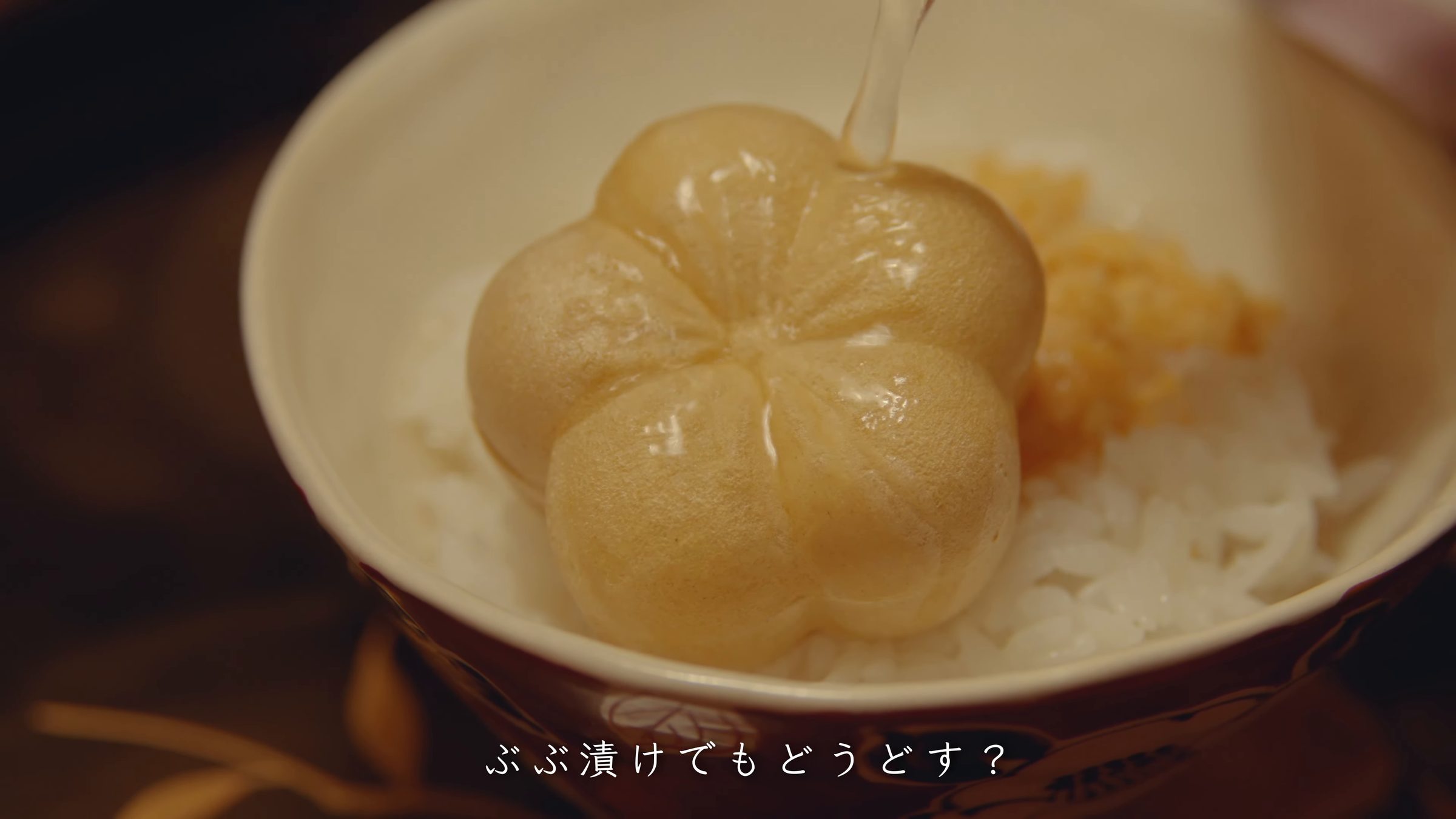
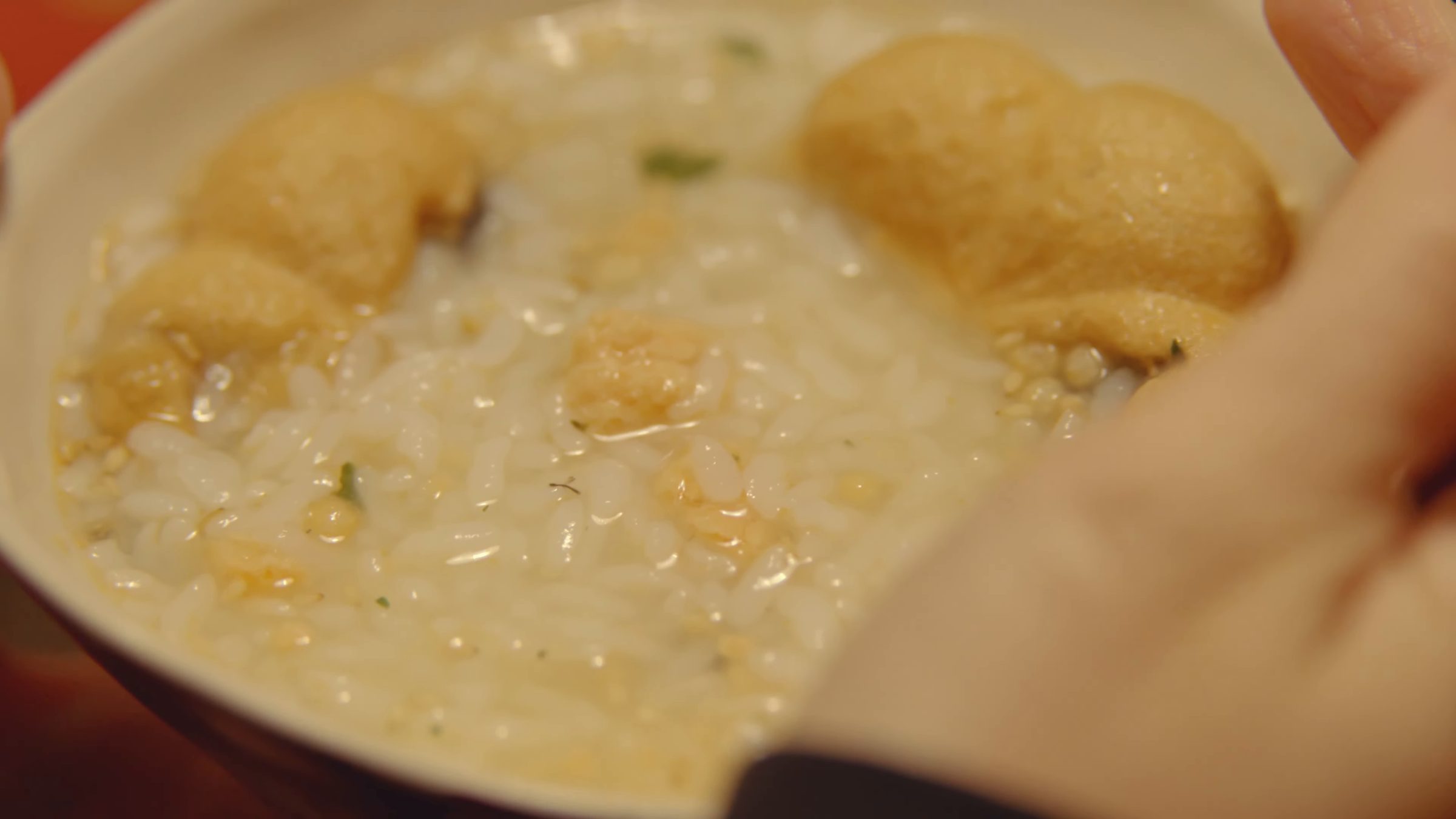
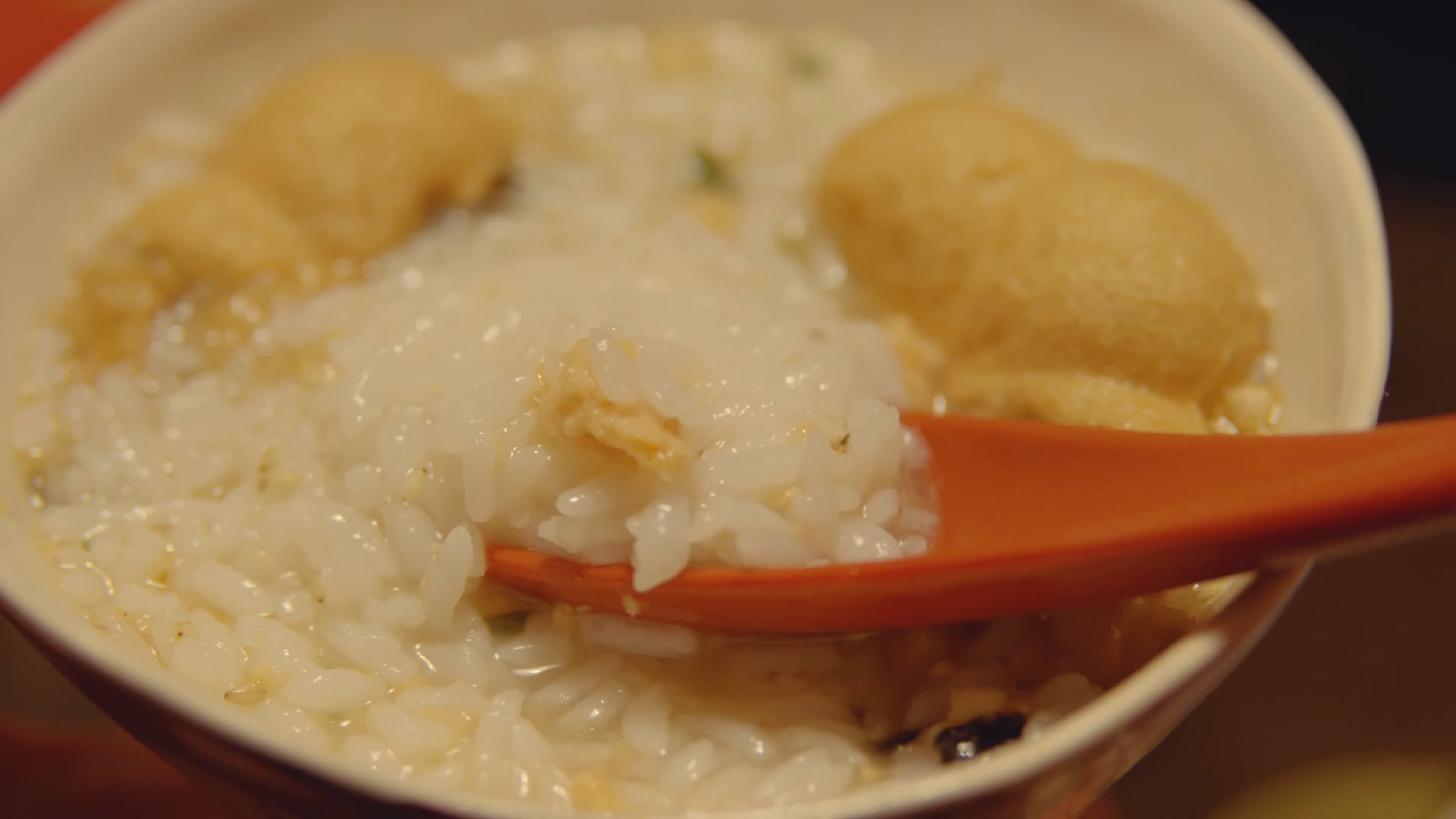
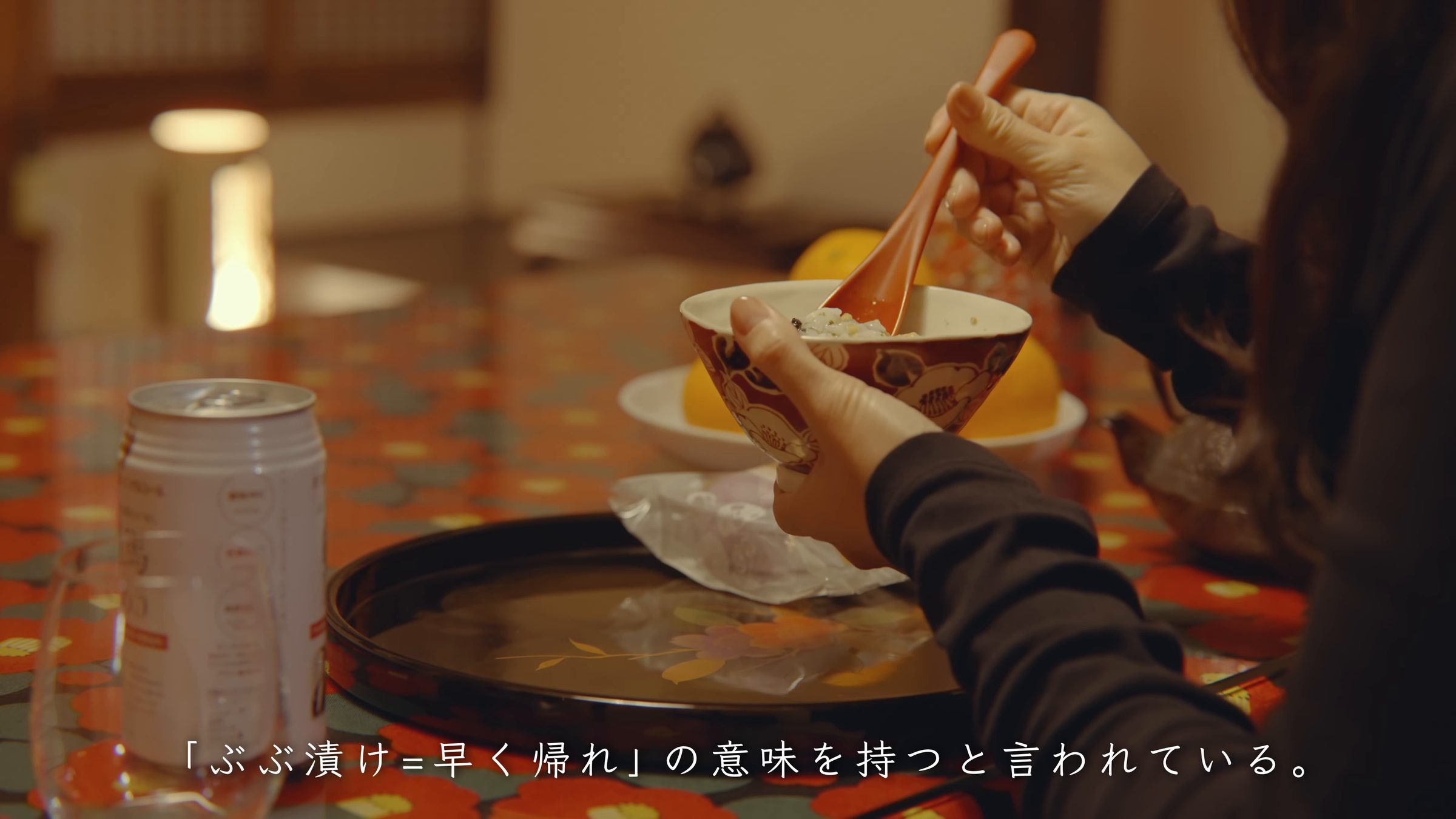
Rice into the bowl, then a plum-blossom-shaped monaka wafer on top, and hot water from the kettle over it. The wafer shell softened and opened, and rice crackers and other bits floated out. Would you care for some bubu-zuke?
In Kyoto, ochazuke, rice with tea or broth poured over it, is called bubu-zuke. Being offered it, they say, means "it's time you went home." Whether that is true, I can't say. In my case, I would take the words at face value and gratefully eat. Saying things gently and indirectly rather than head-on: I feel a kind of consideration in that. Sitting on a red flowered cushion, I slurped it down with a beer.
Watch this scene on YouTube4:44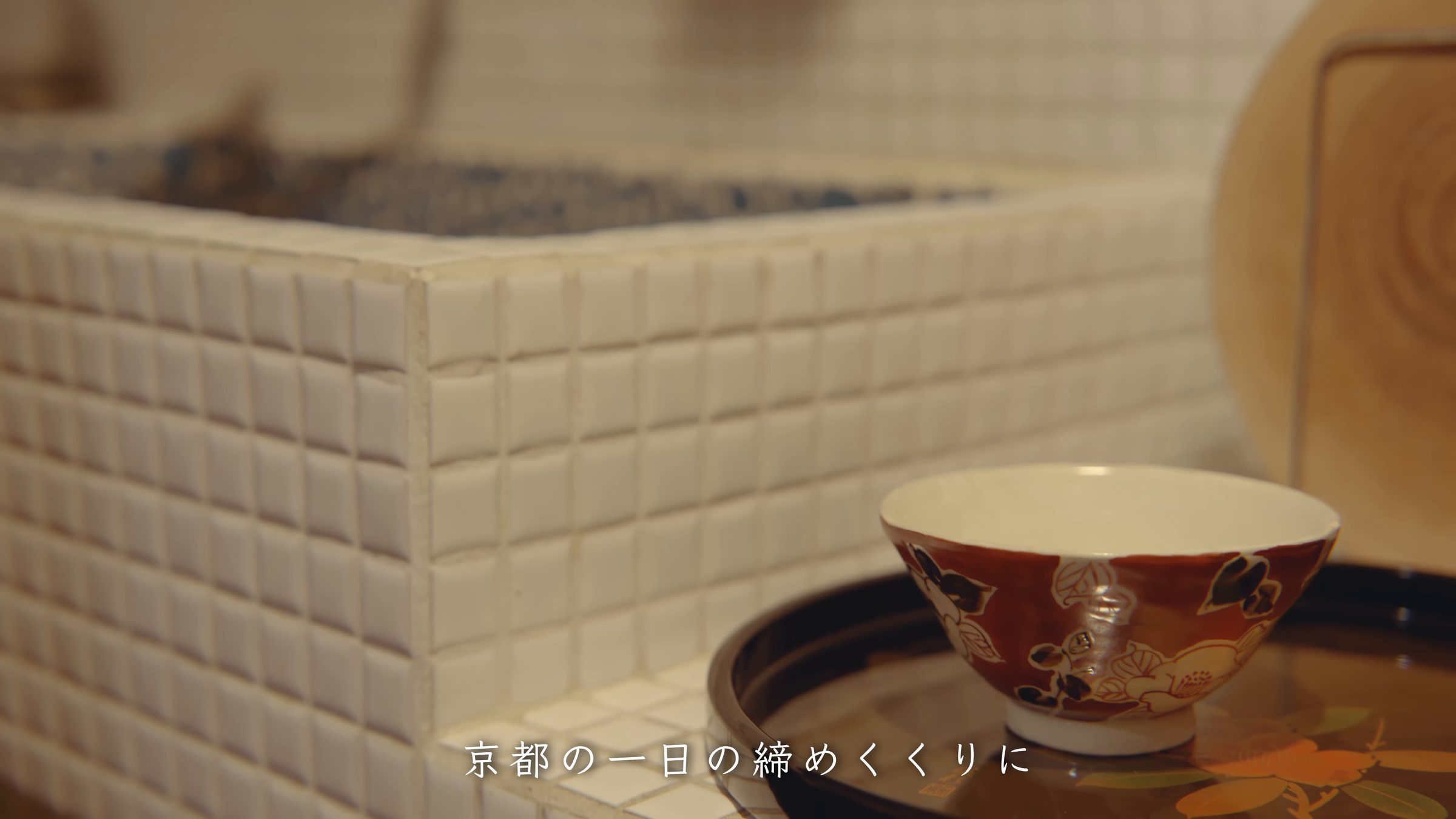
10TRAVEL JOURNAL
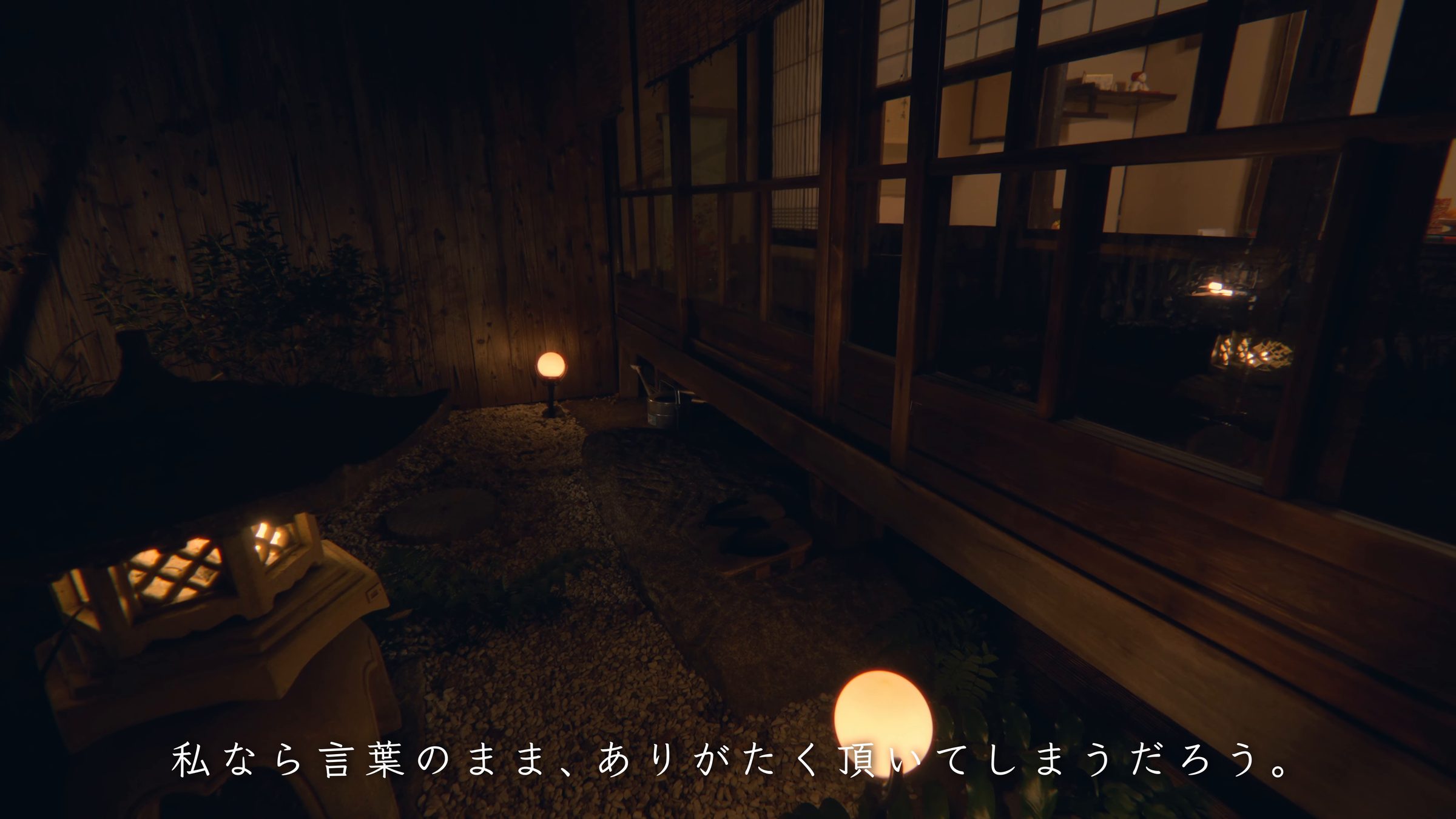
The garden at night
Small lights glowed in the garden at night. I looked at it through the shoji for a while, then up at the round lamp on the ceiling. A day in the machiya was quietly coming to an end.
Watch this scene on YouTube5:31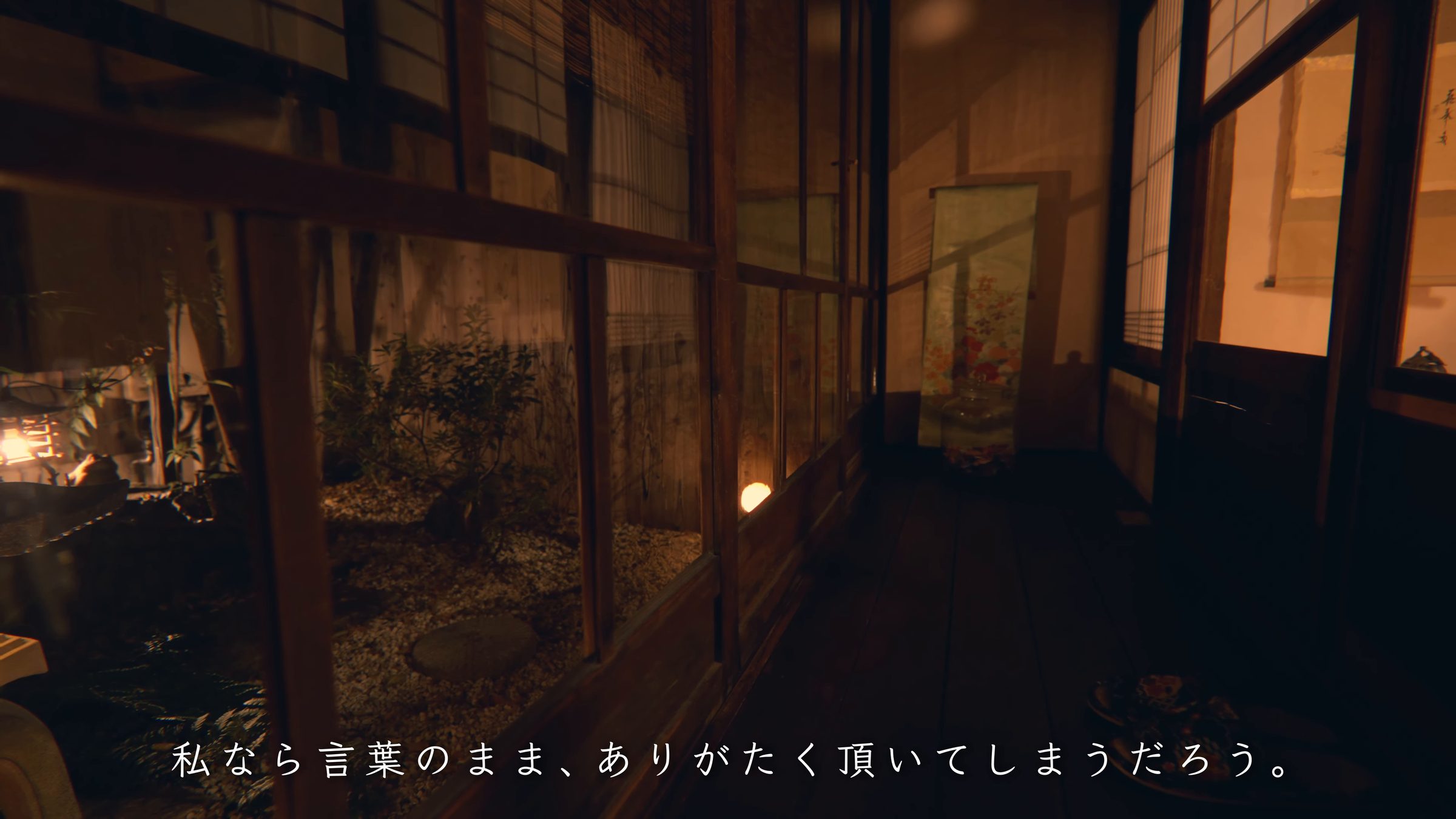
THE JOURNEY IN FILM
The wind. The sounds of a kitchen.
Spend a little more time inside the journey, on film.
Watch the video6 minTHE BORROWER’S NOTES
The Borrower's Notes: Kyoto
Places we stopped, dishes we made, and stories of the land. A few things to keep from the journey.
01Where I ate
Tenkaippin Sohonten (Main Shop)
Maison Shirakawa 1F, 94 Ichijoji Tsukudacho, Sakyo-ku, Kyoto
The first shop of Tenkaippin, the ramen chain born in Kyoto. The signature kotteri is a thick soup of chicken bones and vegetables, topped with green onion. Add the table kimchi partway through to enjoy the change of flavor. The wooden sign by the door says the shop was founded in 1971.
Sources: tenkaippin.co.jp rurubu.jp
Toraya Karyo Kyoto Ichijo
400 Hirohashidono-cho, Ichijo-dori Karasuma Nishi-iru, Kamigyo-ku, Kyoto
Toraya's tearoom in Kyoto, the city where the confectioner was founded. Renovated in 2009 to a design by architect Hiroshi Naito, it has a ceiling of Yoshino cedar that curves in a gentle arch. The garden on the north side has a water basin, a lawn, plum and cherry trees, and an old storehouse and a small Inari shrine at the back. The seasonal sweets change twice a month; this time I had a three-colored sweet, a white bun and matcha.
Sources: rurubu.jp
Tohkasaikan (Main Restaurant)
Shijo-Ohashi Nishizume, Shimogyo-ku, Kyoto
A Beijing-cuisine restaurant at the west end of Shijo Bridge. The Spanish Baroque building was designed in 1926 by William Merrell Vories for the Western restaurant Yaomasa, and is the only restaurant Vories ever designed. It became Tohkasaikan at the end of 1945. Its Otis elevator, made in the United States and imported in 1924, is still in service and is described as the oldest surviving elevator in Japan; the inner door is a folding lattice gate and an operator drives it by hand. This time I had bottled beer, pan-fried dumplings and fried rice.
Sources: tohkasaikan.com tohkasaikan.com tohkasaikan.com tohkasaikan.com
02What I cooked
Oyakodon (chicken and egg over rice)
Chicken and onion simmered in broth, bound with egg and served over rice. In the manga "Maiko-san chi no Makanai-san" (Aiko Koyama, Shogakukan), set in a house where maiko live in Kyoto's geisha district, the heroine Kiyo, who could not become a maiko herself, makes oyakodon for the house and it is such a hit that she becomes its makanai, the one who cooks every day. I made that oyakodon in the tiled kitchen of a Kyoto machiya.
IngredientsCooked rice, Chicken, Onion, Eggs, Simmering broth, Mitsuba (Japanese wild parsley)
- Slice the onion thin
- Simmer the chicken and onion in broth in a pan
- Pour in beaten egg, cover, and let it set soft
- Spoon over rice and scatter mitsuba on top
Sources: press.moviewalker.jp
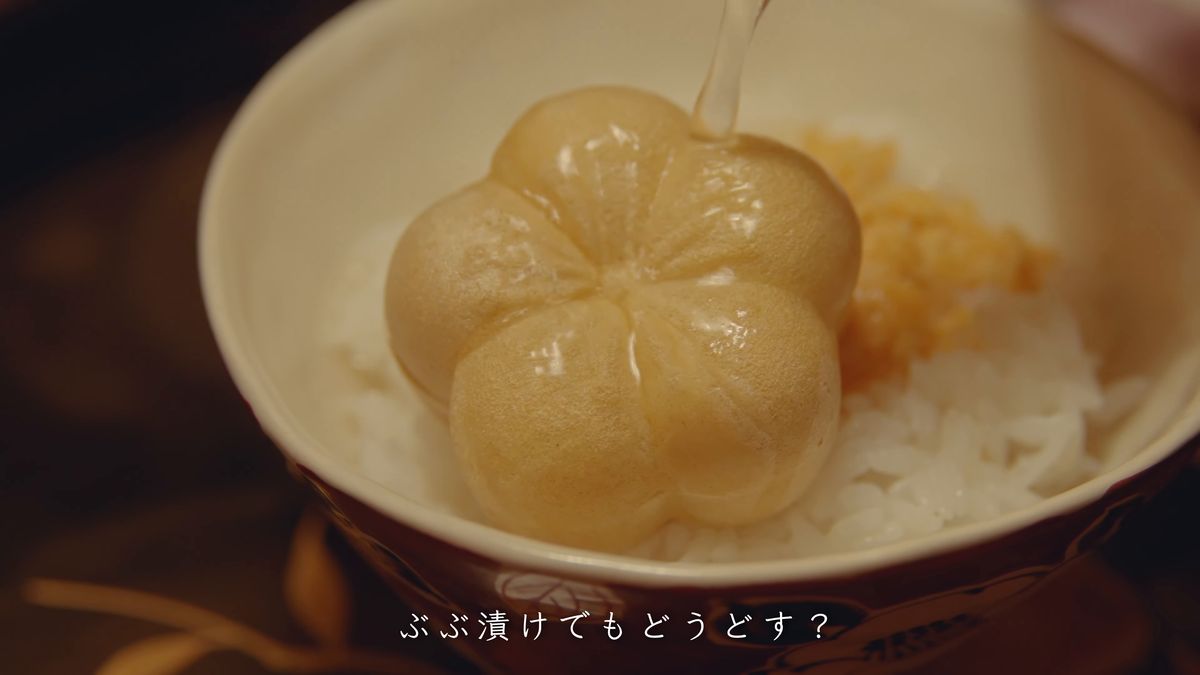
Bubu-zuke (ochazuke from a monaka wafer)
In Kyoto, ochazuke is called bubu-zuke. The story that being offered bubu-zuke means "it's time you went home" is widely known; the linguist Junichi Ono writes that it is not sarcasm but a way of saying something hard to say indirectly, to avoid friction, and that Japanese has similar expressions beyond Kyoto. This time I ended my day in Kyoto with a plum-blossom-shaped monaka wafer that opens when hot water is poured over it.
IngredientsCooked rice, A plum-blossom-shaped ochazuke monaka wafer, Hot water
- Put rice in a bowl
- Set the plum-blossom-shaped wafer on top
- Pour hot water from the kettle over it and wait for the shell to soften
Sources: president.jp
03About the area
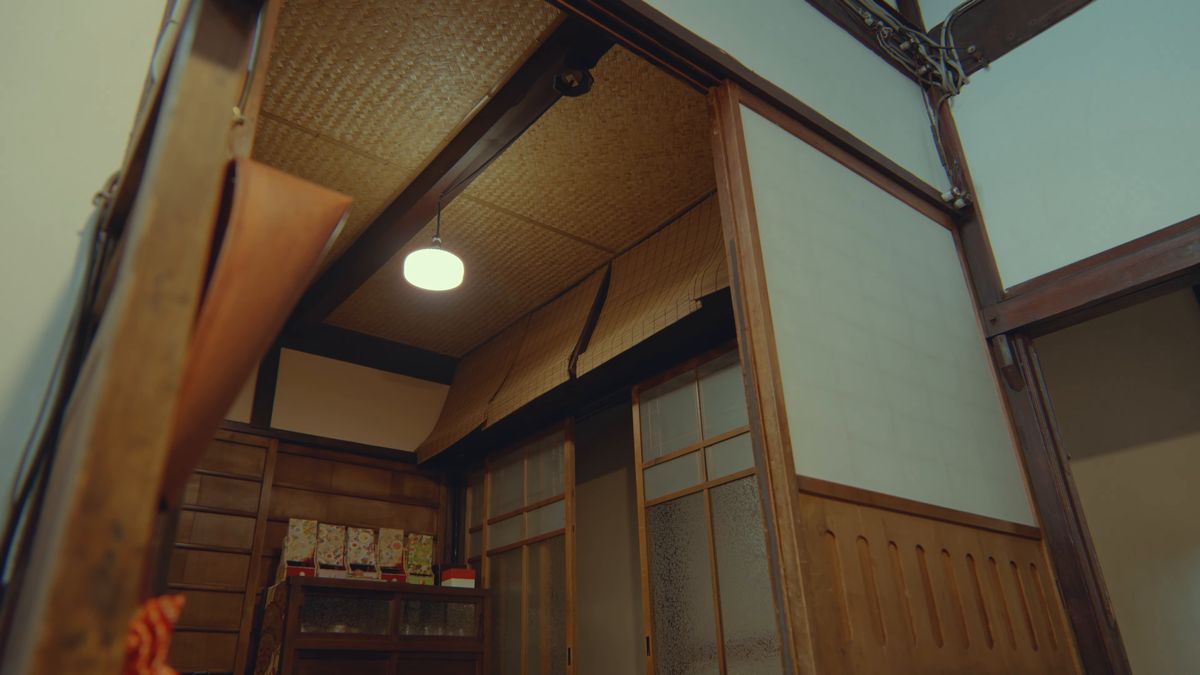
Kyomachiya, the Kyoto townhouse
Under Kyoto City's ordinance, a kyomachiya is a wooden building of traditional structure and form built before 1950, when the Building Standards Act came into force. Its origins go back to the mid-Heian period, when people who came to the capital to make and sell things built small houses facing the avenues and lanes; the form seen today took shape in the mid-Edo period. The tori-niwa, an earthen passage running from the street to the back garden, and the hibukuro, the open well above it, provide ventilation and light, and keep a fire from the stove from spreading to other rooms. The tsuboniwa, a small inner garden, brings light and air into the long, narrow house. The number of kyomachiya fell from 47,735 in 2008-09 to 34,580 in fiscal 2024, with about 800 lost every year.
Sources: kyomachiya.city.kyoto.lg.jp kyomachiya.city.kyoto.lg.jp
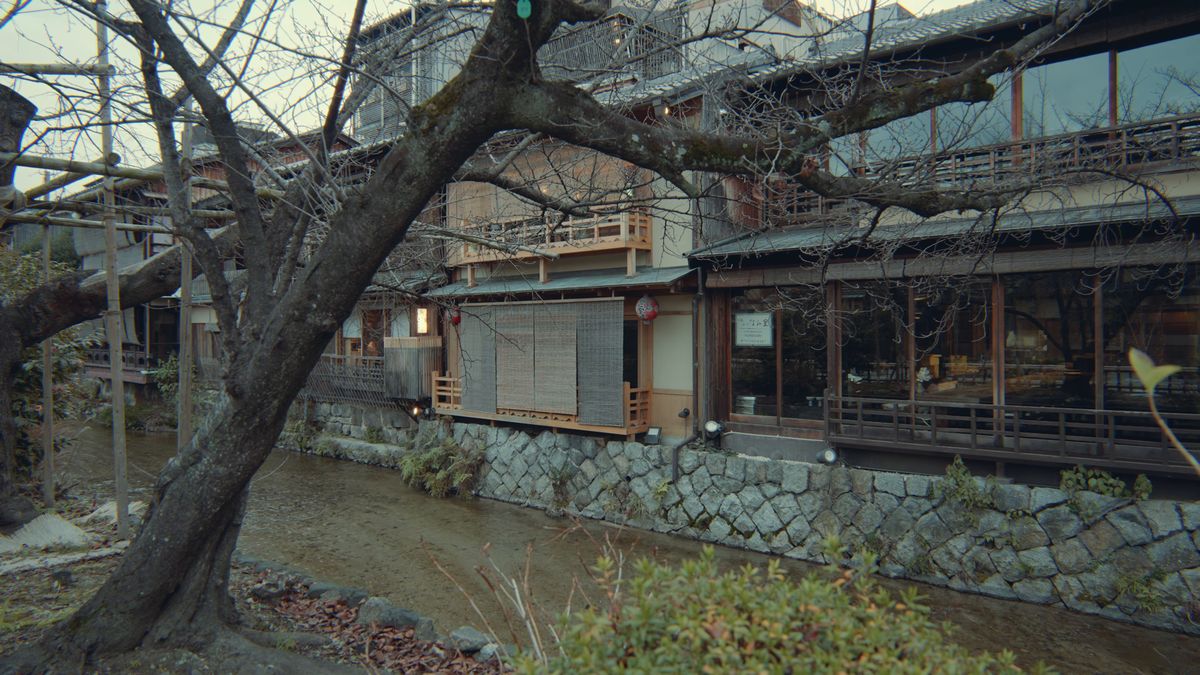
Gion Shinbashi and the banks of the Shirakawa
The Gion Motoyoshi-cho area along Shinbashi-dori, north of Gion, was designated a national Important Preservation District for Groups of Traditional Buildings on September 4, 1976, as a teahouse town (1.4 hectares). Most of the surviving buildings date from just after the great fire of 1865: two-storied, gable-roofed and tiled, with red-ochre lattices on the ground floor and a tatami room above, its veranda hung with bamboo blinds. The stone paving and embankment along the Shirakawa, Tatsumi Bridge and the Tatsumi Daimyojin shrine, where geiko and maiko pray, are the sights of the area.
Sources: bunka.go.jp tabi-mag.jp
A plum-blossom-shaped ochazuke monaka
A plum-blossom-shaped monaka wafer that turns into ochazuke when you set it on rice and pour hot water over it. Inside the shell are rice crackers and other bits. It was bought as a Kyoto souvenir; the shop does not appear in the video.
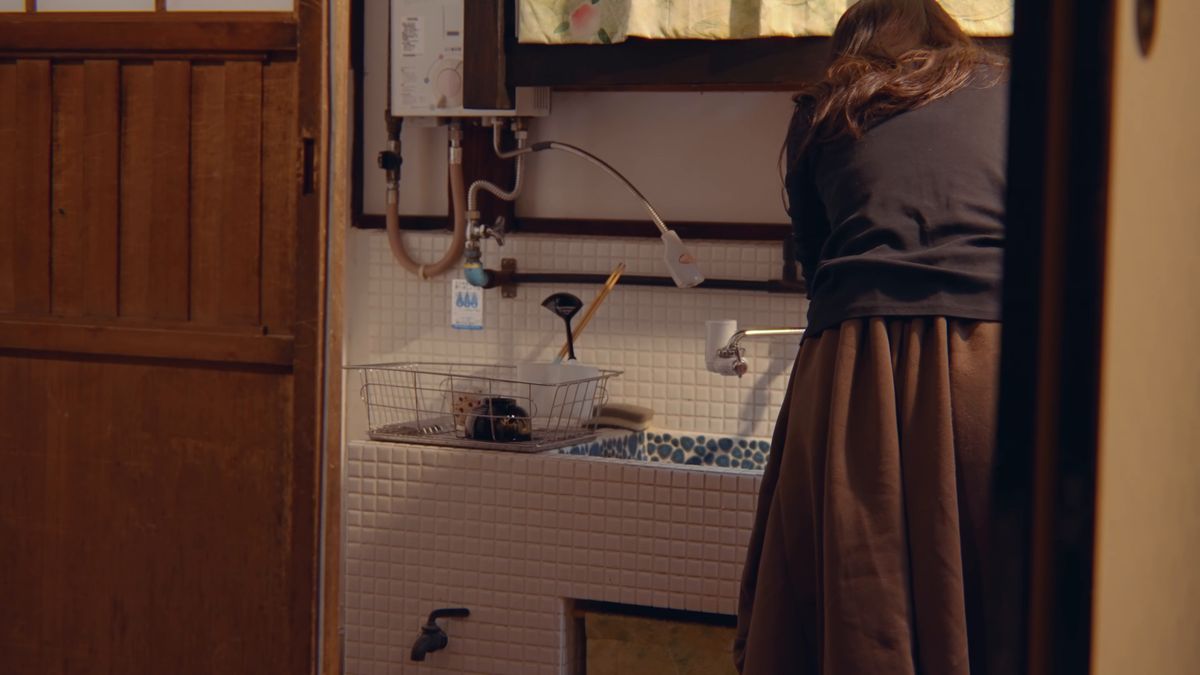
A hundred-year-old machiya inn
This time I borrowed a hundred-year-old kyomachiya: an old kitchen tiled in white and blue, an inner garden with an iron pot under the rain chain, an open well of timber beams, and a tatami room with a red flowered table. With so many machiya being torn down for age and lack of caretakers, I am grateful to the hosts who keep one carefully and let others live in it for a while.
PHOTO ALBUMPhoto album59Open all photographsClose the photo album
Select a photograph to explore the journey one frame at a time.