A TRAVEL ESSAY
Shiojiri, Nagano
A Quiet Day in an Old House in Nagano
Autumn leaves in Narai-jukuand an autumn table in Shinshu
A cat, soba and an old post town: one peaceful day in Nagano.
Read the journey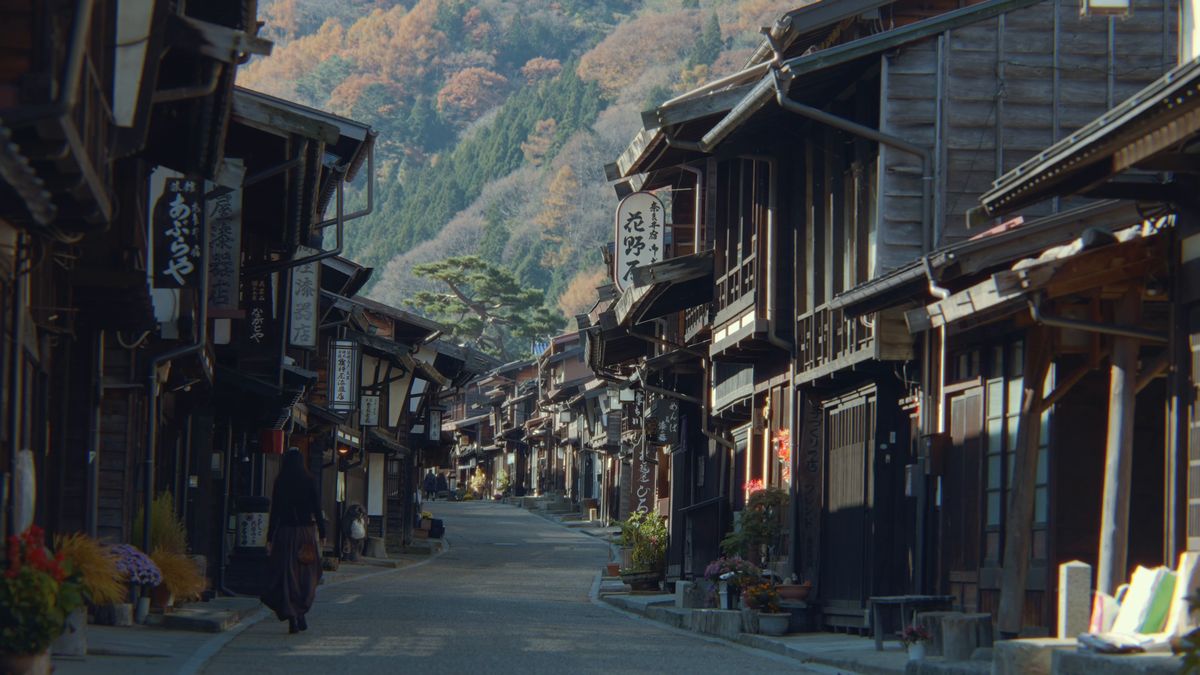
ABOUT THIS JOURNEY
My day in Nagano began in an old farmhouse with a resident cat. I made oyaki, the local stuffed dumplings, with rice flour and ate breakfast on the veranda. After lighting the wood stove, I headed through the autumn leaves to Narai-juku, an old post town on the Nakasendo road. A hot bowl of soba with wild vegetables warmed me up, and the day ended with Shinshu beef sukiyaki.
A little more about the food and the land01TRAVEL JOURNAL
Morning with a cat
I woke up in an old farmhouse in Nagano. When I drew back the curtain by the window of the shoji-screened room, it was already bright outside.
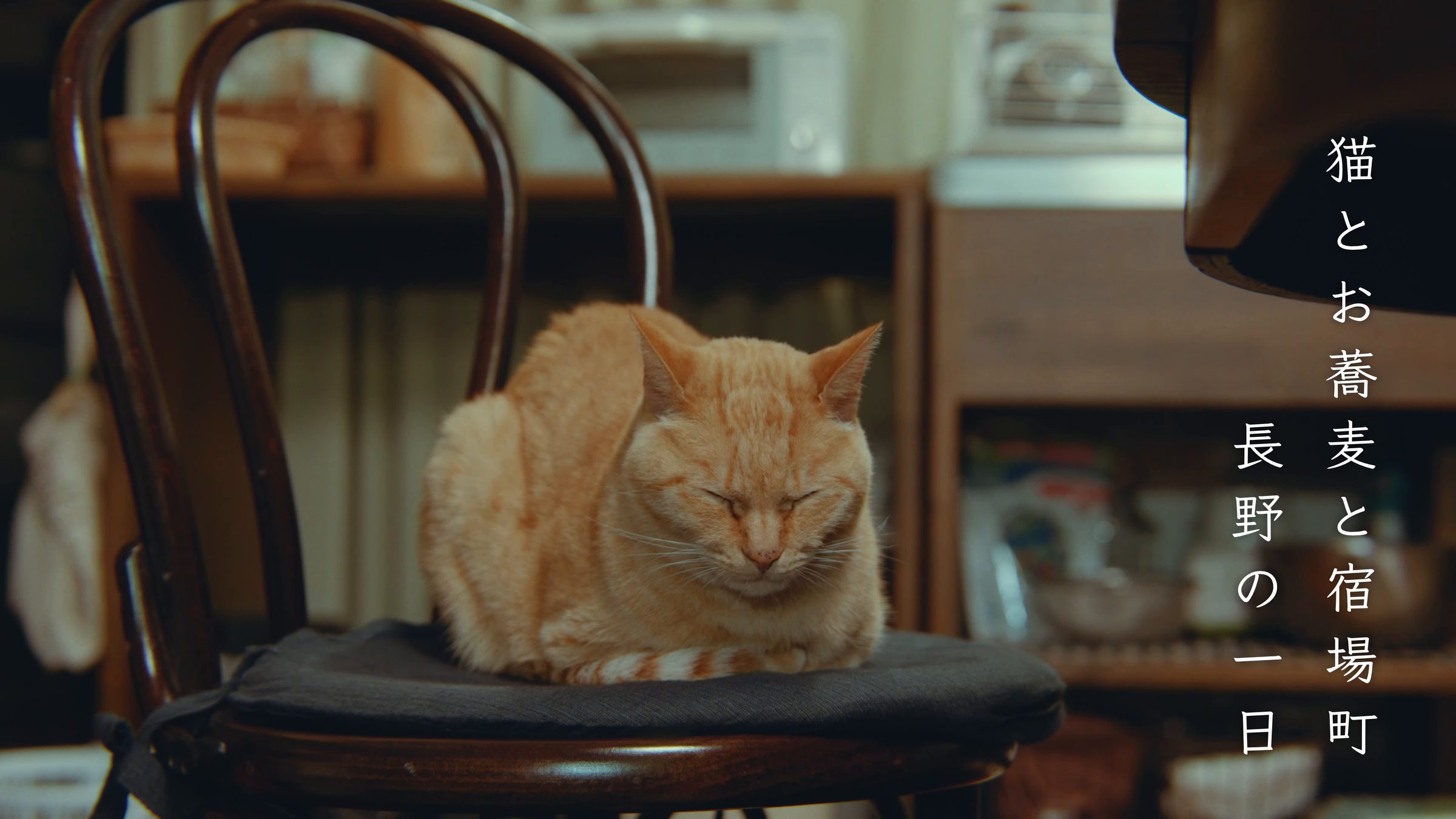
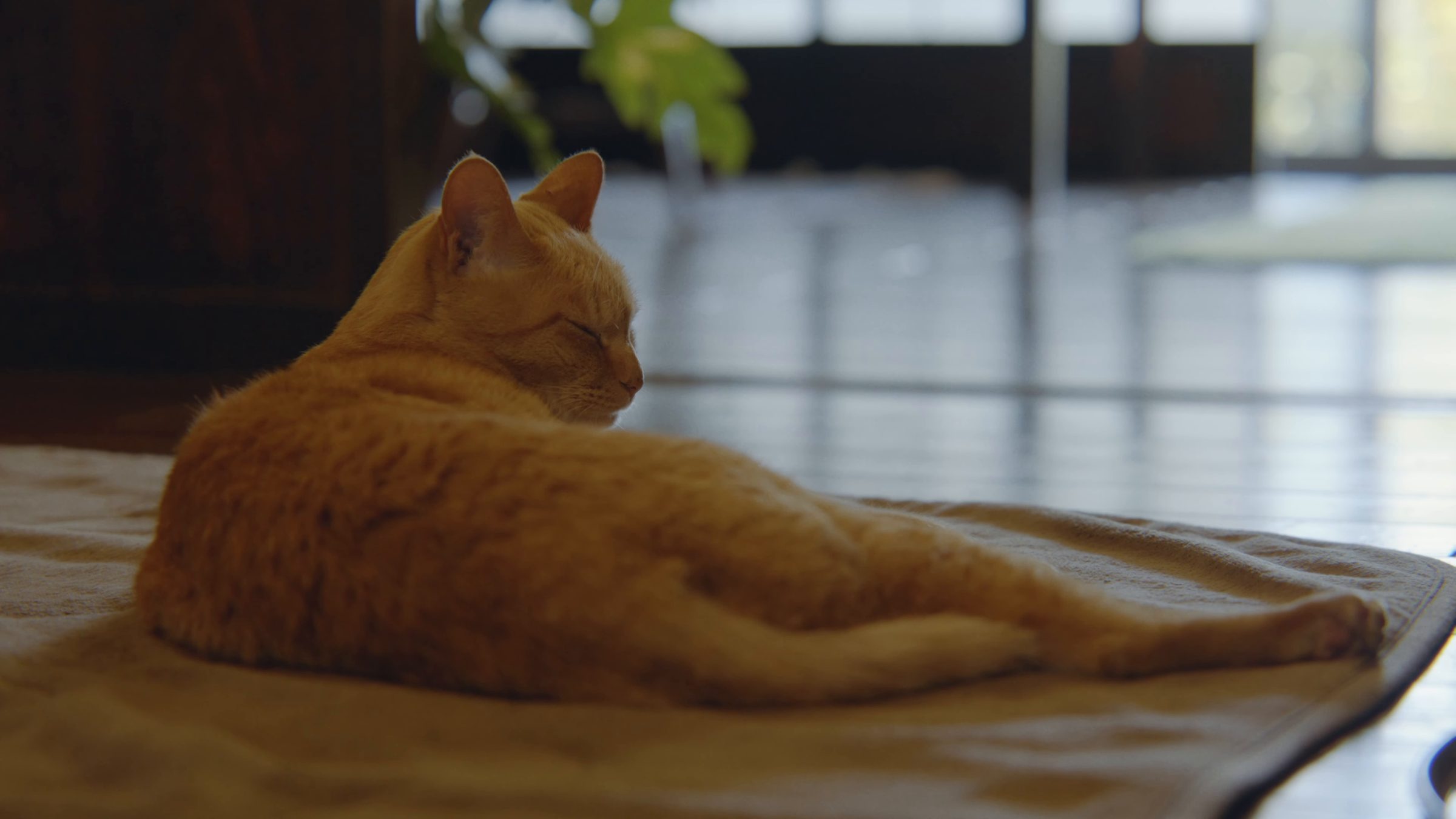
The house has a resident cat. A ginger tabby sat curled up on a wooden chair with its eyes closed. A cat, soba, and an old post town: one peaceful day in Nagano was about to begin.
Watch this scene on YouTube0:23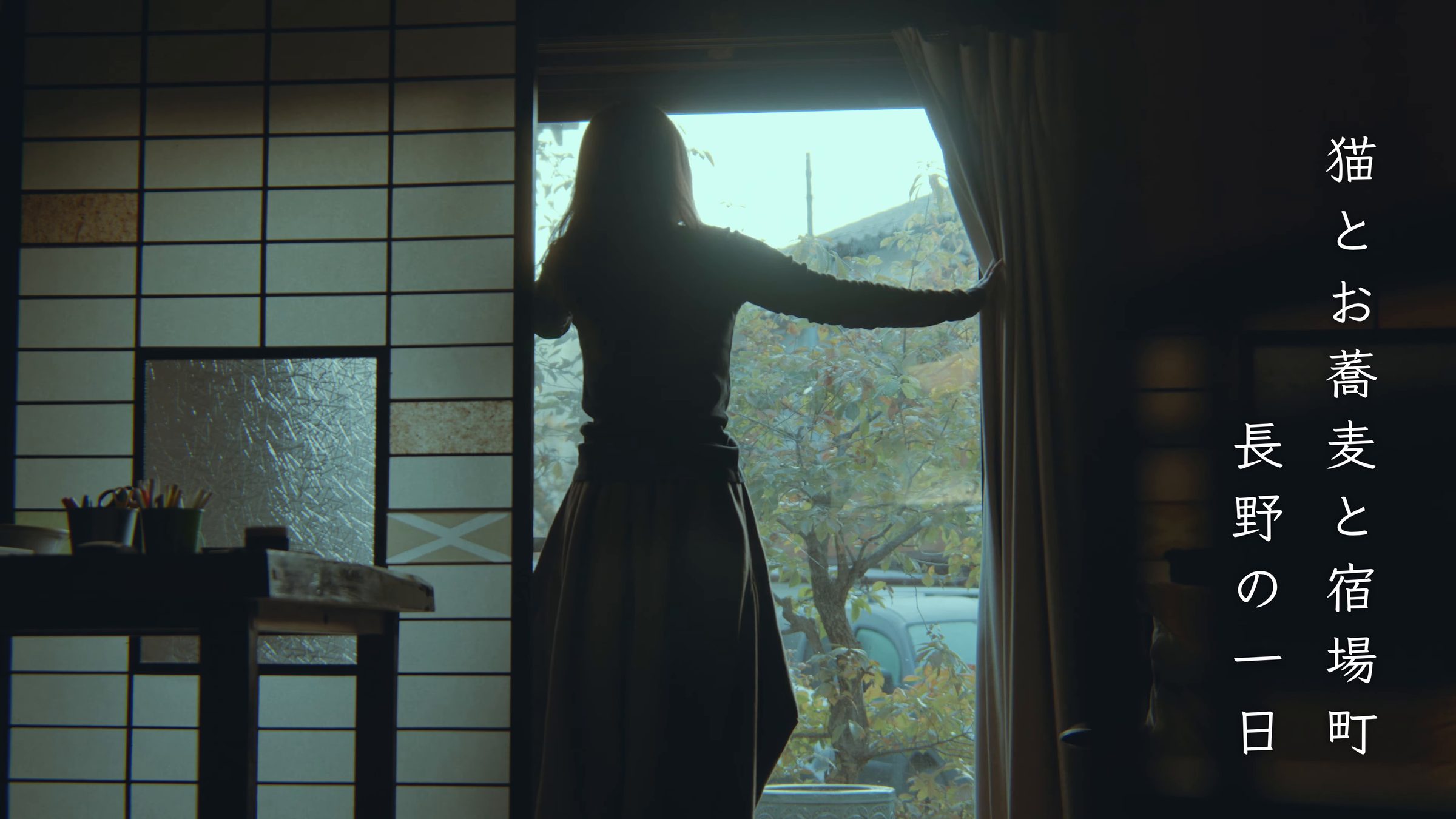
02TRAVEL JOURNAL
Oyaki dough, made with rice flour
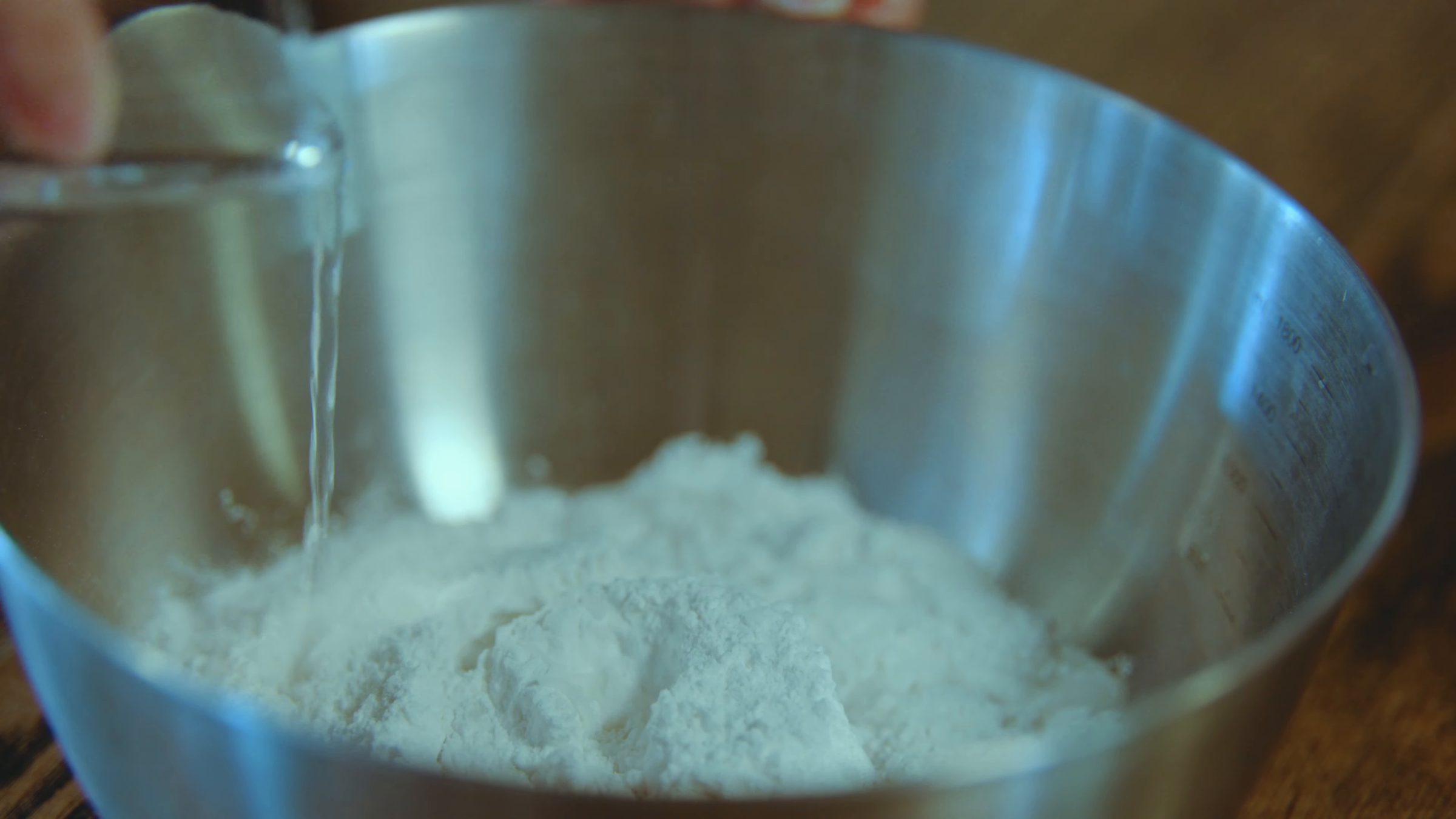
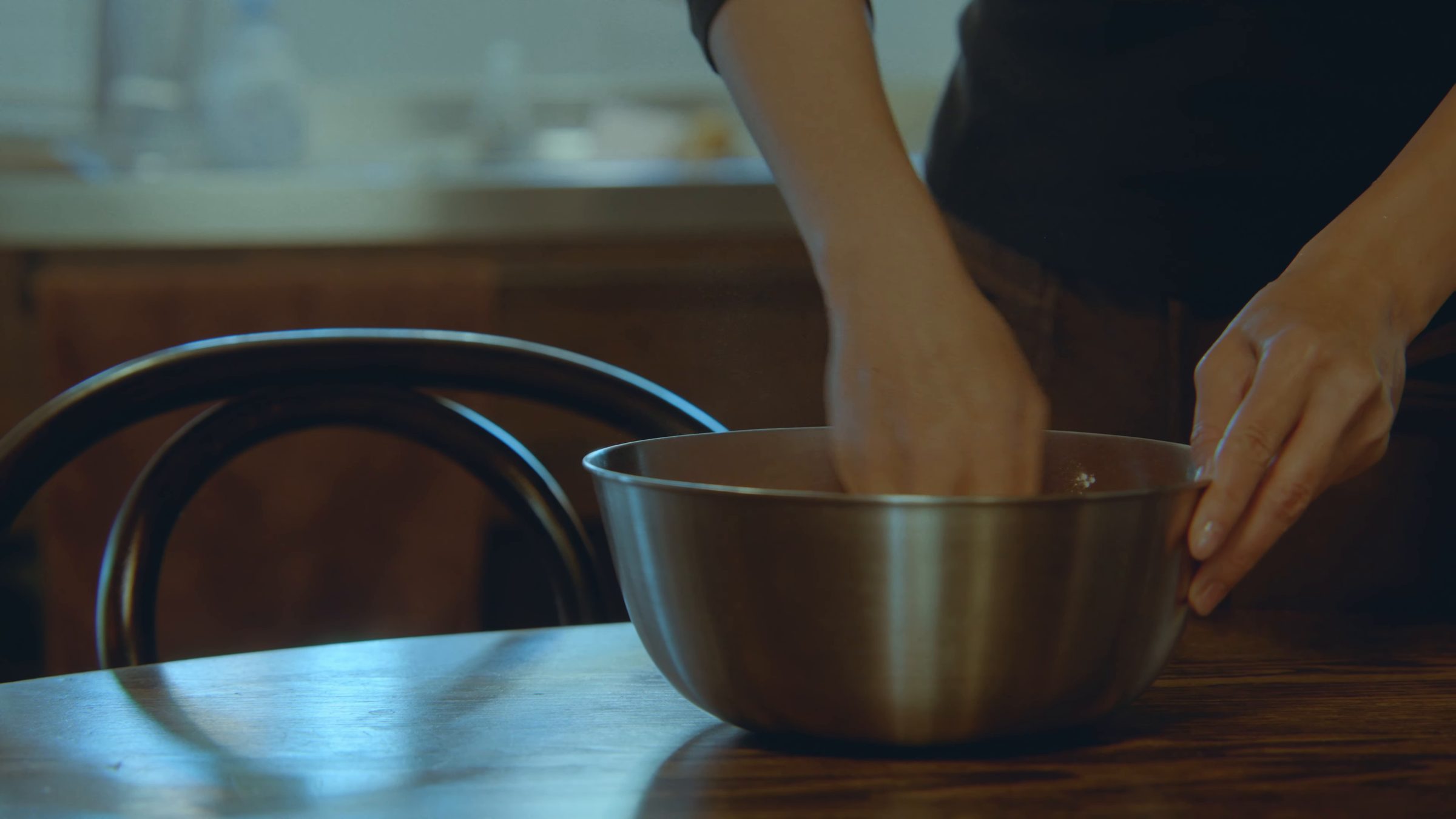
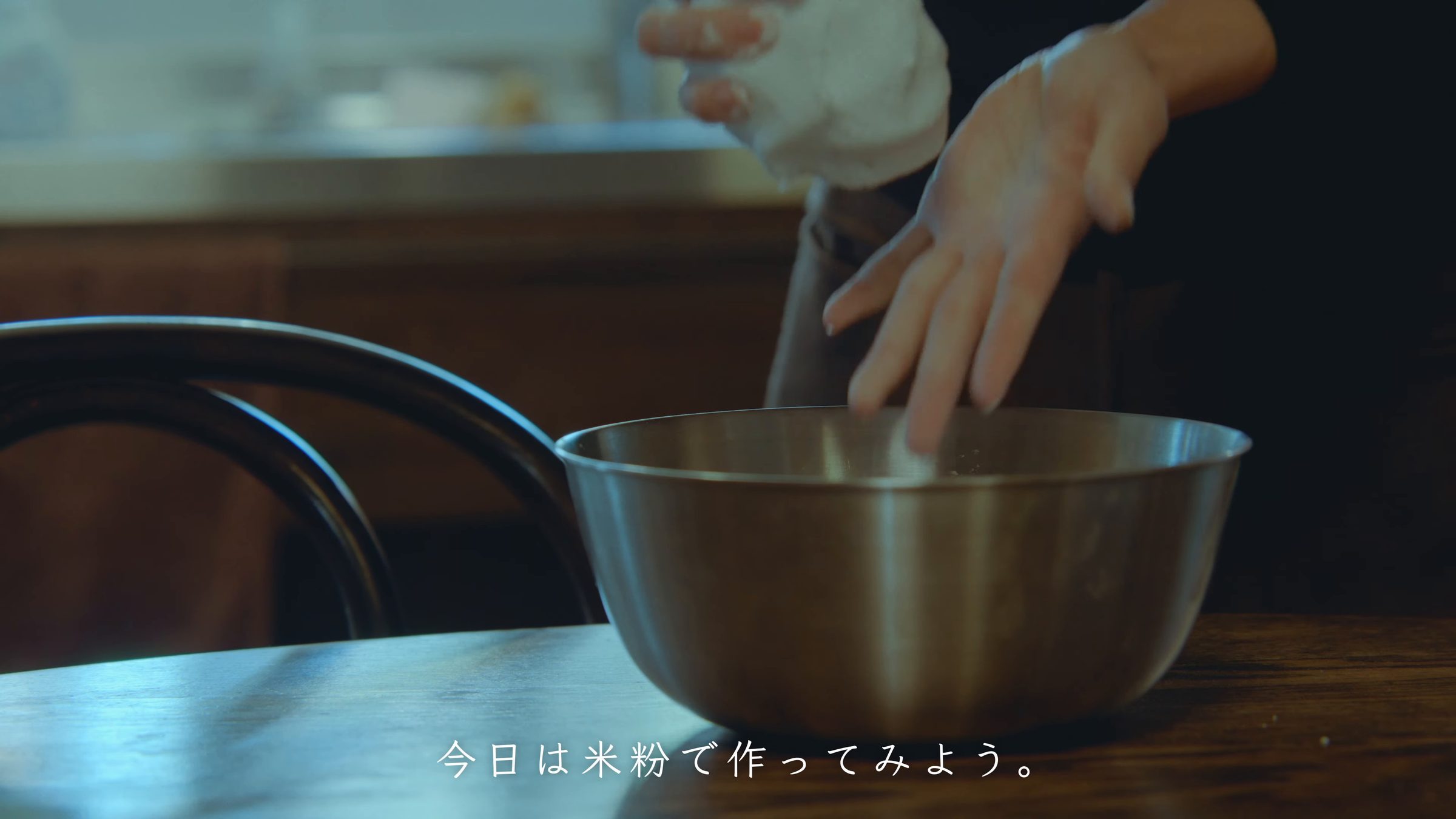
For breakfast, I decided to try making oyaki, Nagano's specialty dumplings. I poured water from a measuring cup into a steel bowl on the table. Wheat flour is the usual choice for the dough, but today I would make it with rice flour.
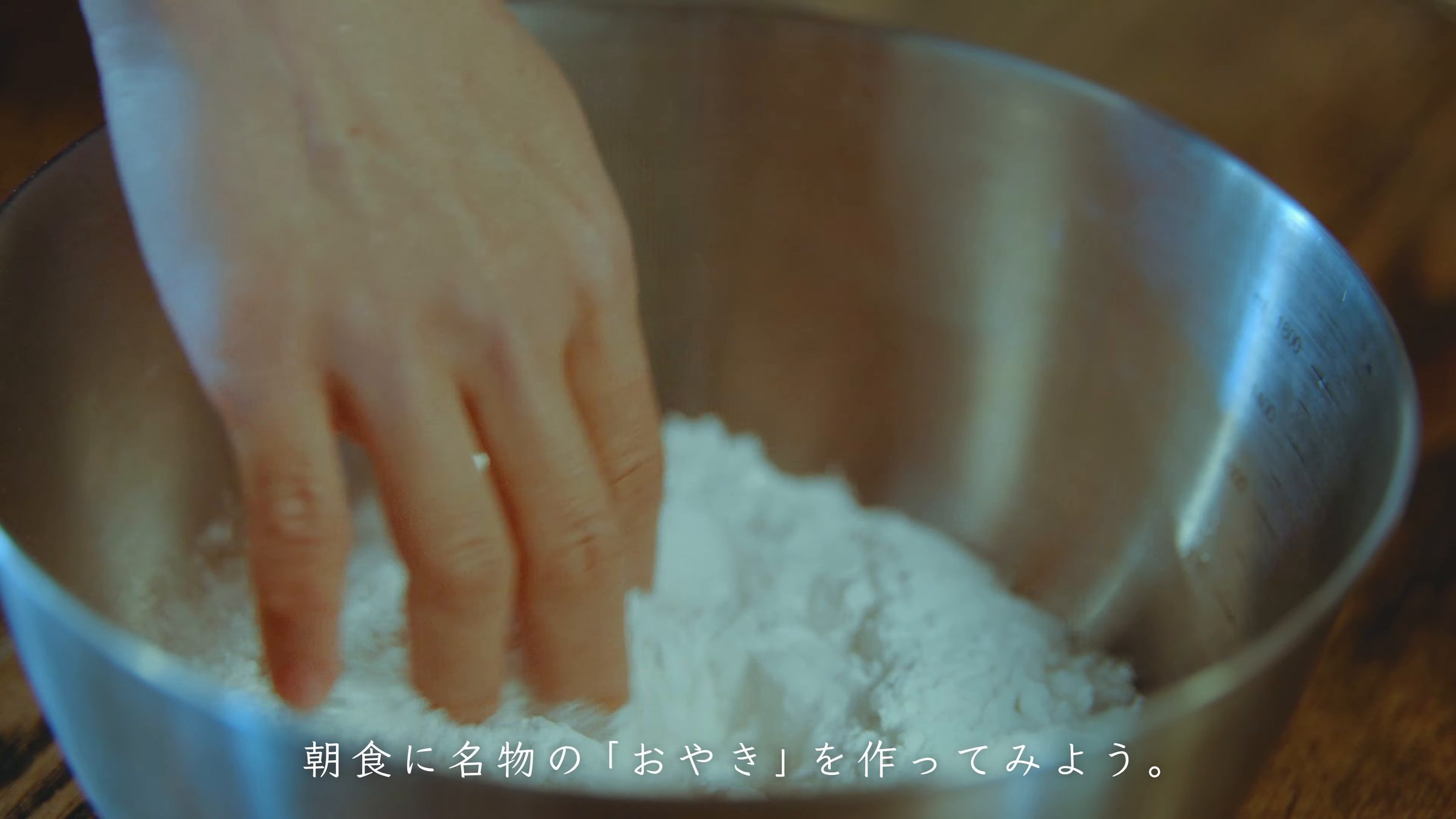
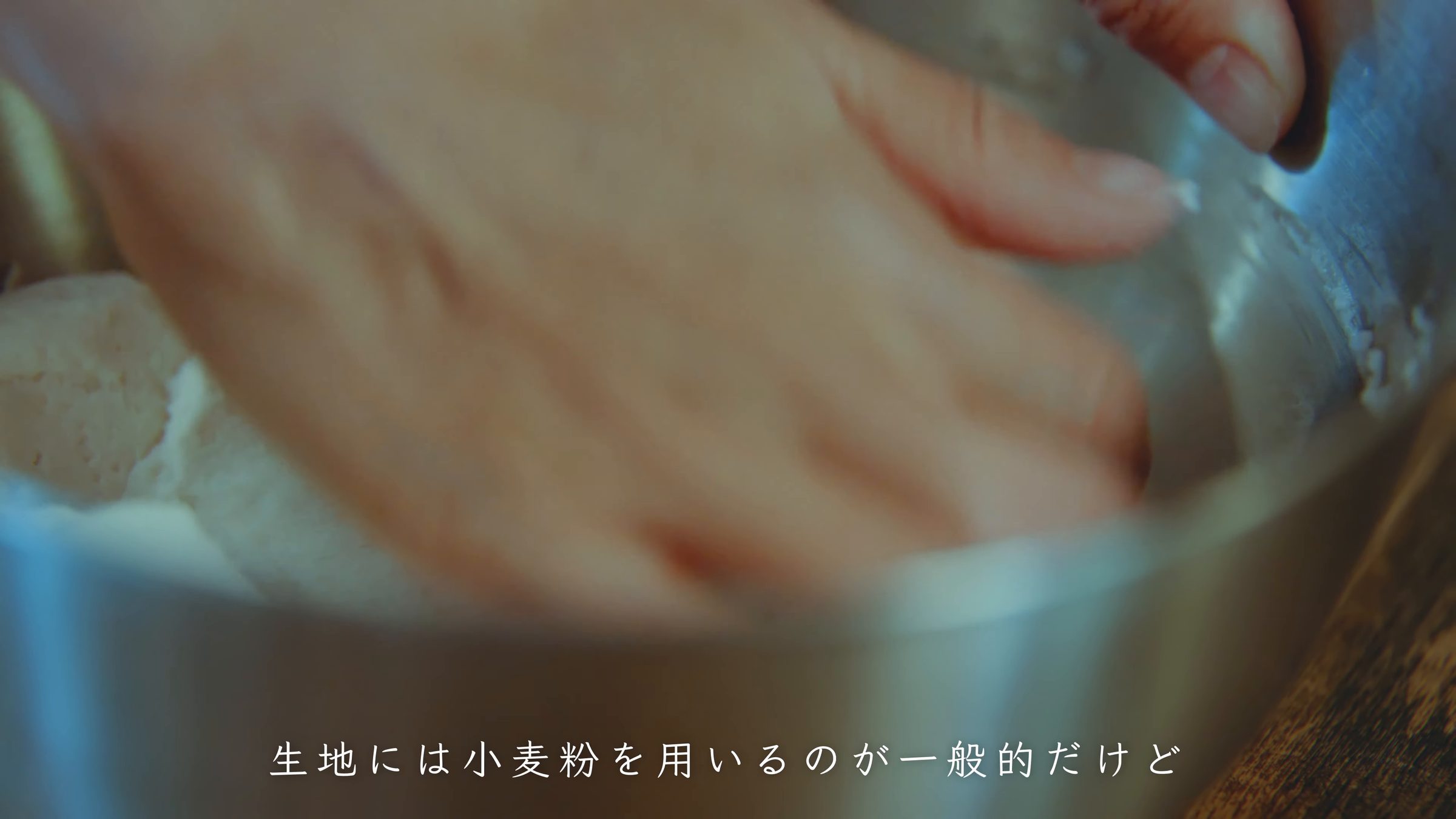
I worked the water into the flour by hand, then pressed and kneaded the dough in the bowl until it came together, smooth and white, and lifted out in one piece.
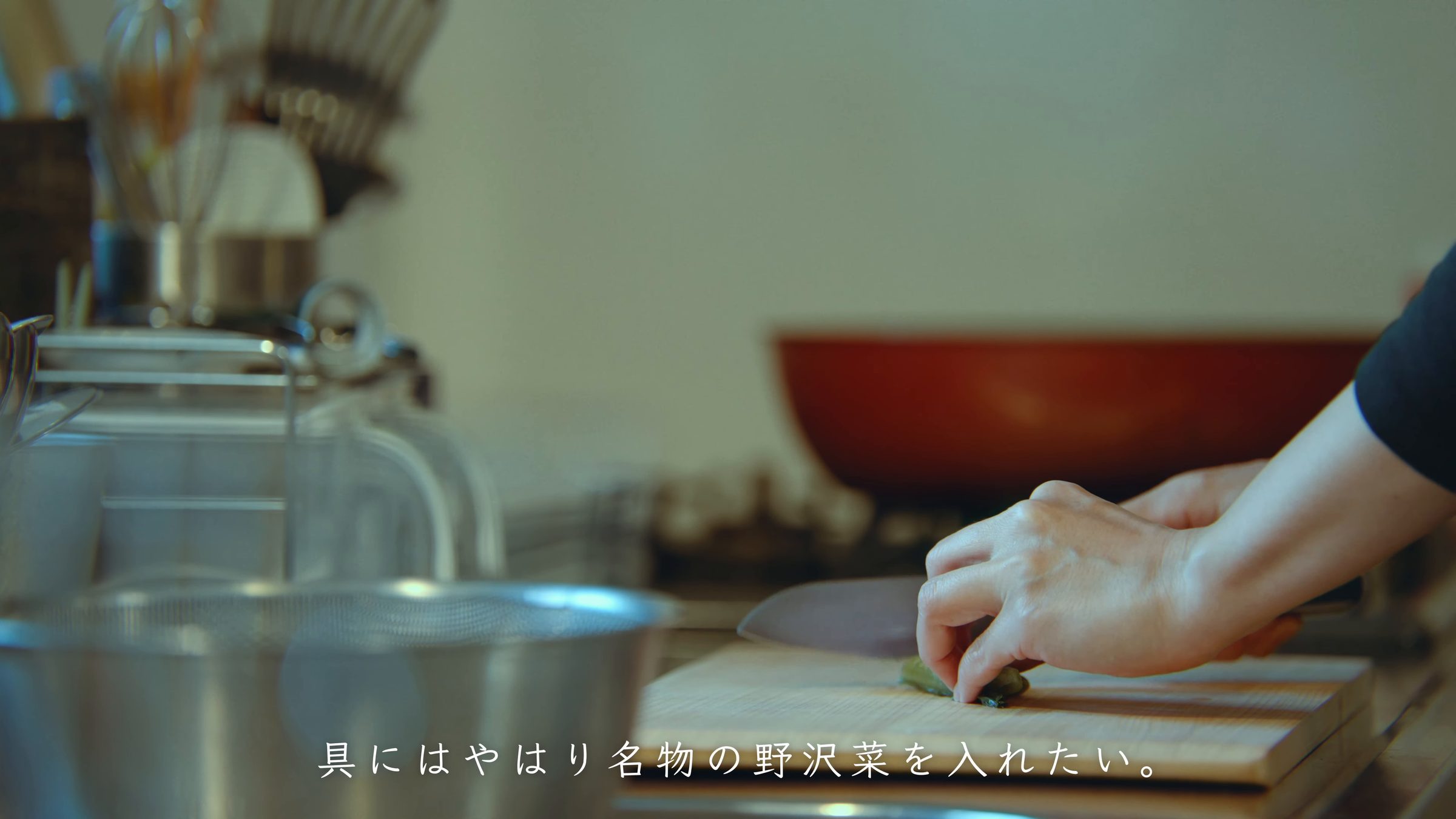
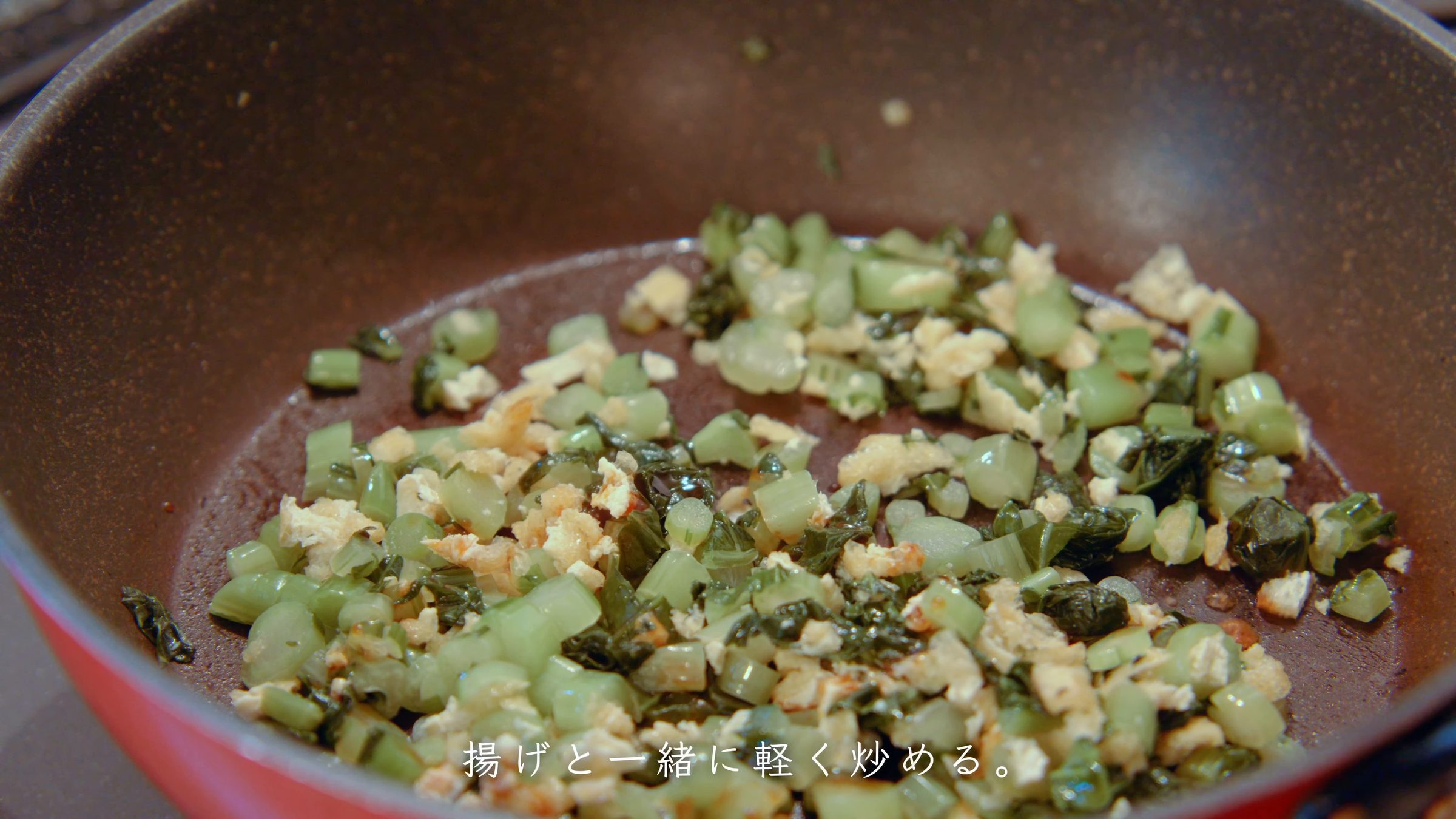
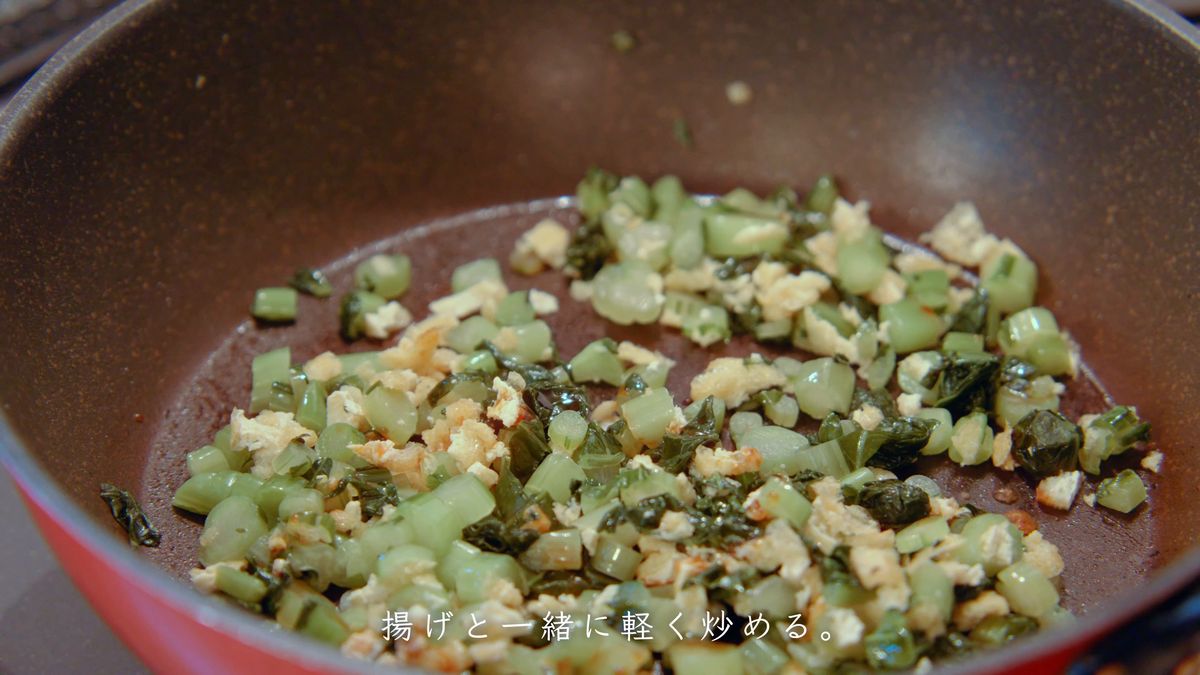
For the filling, it had to be nozawana, another Nagano specialty. I chopped the pickled greens on the board and stir-fried them lightly with fried tofu. The smell of soy sauce catching in the pan made me hungry.
Watch this scene on YouTube0:28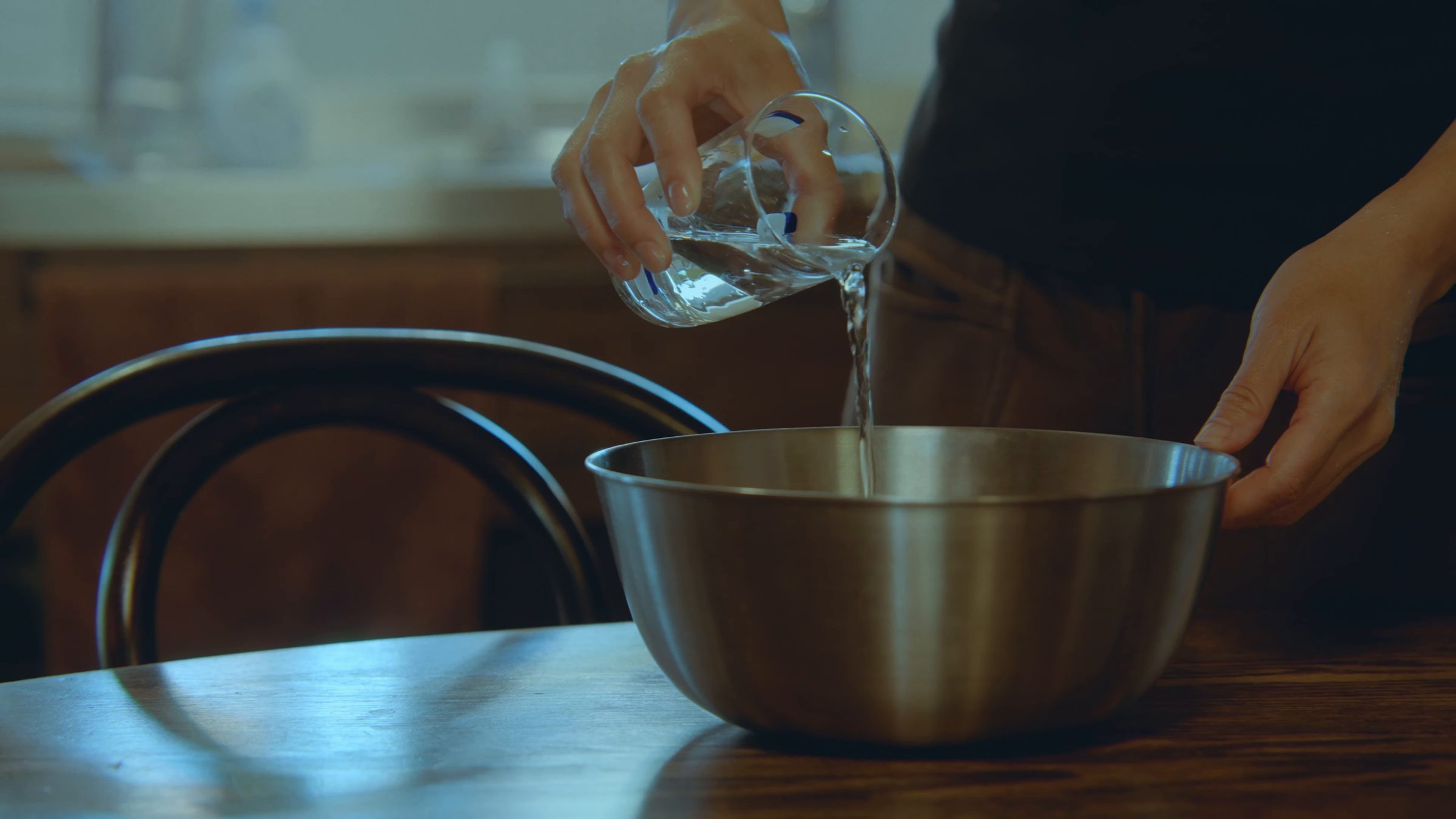
03TRAVEL JOURNAL
Wrap, then bake
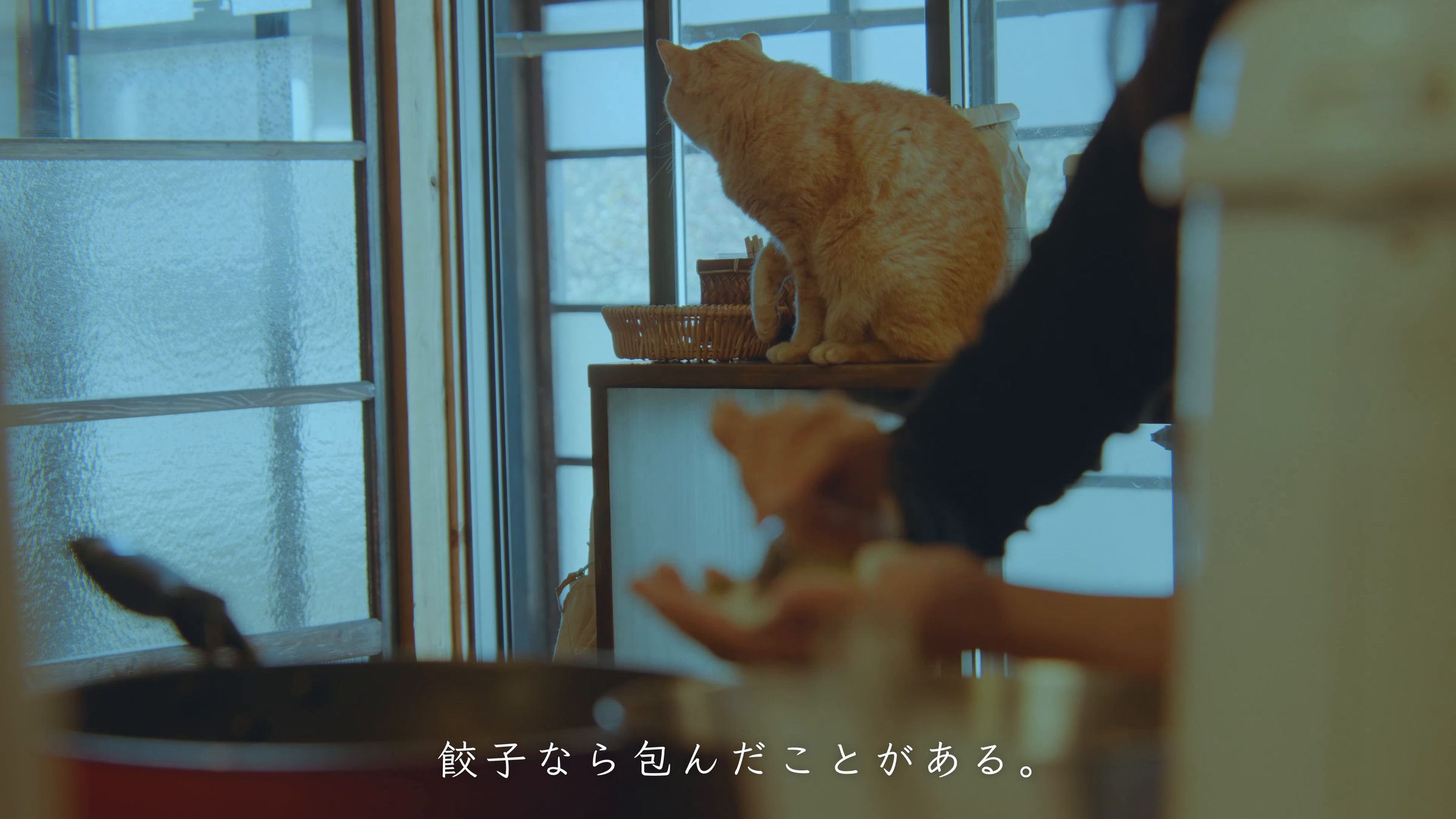
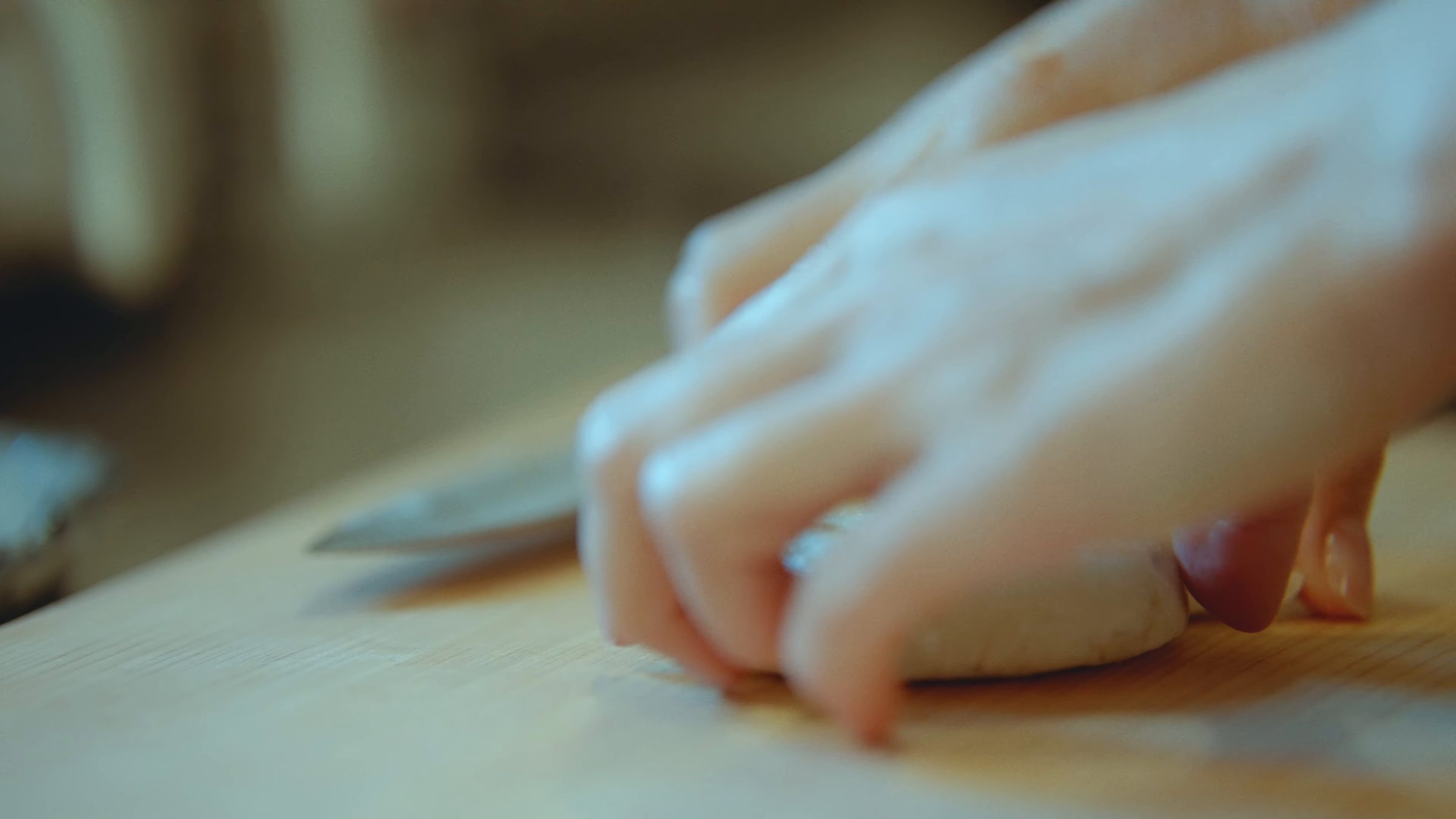
I flattened the dough in my palm, spooned on the nozawana, and folded it closed. I had wrapped gyoza before, so I knew roughly what to do. By the window, the cat watched my hands.
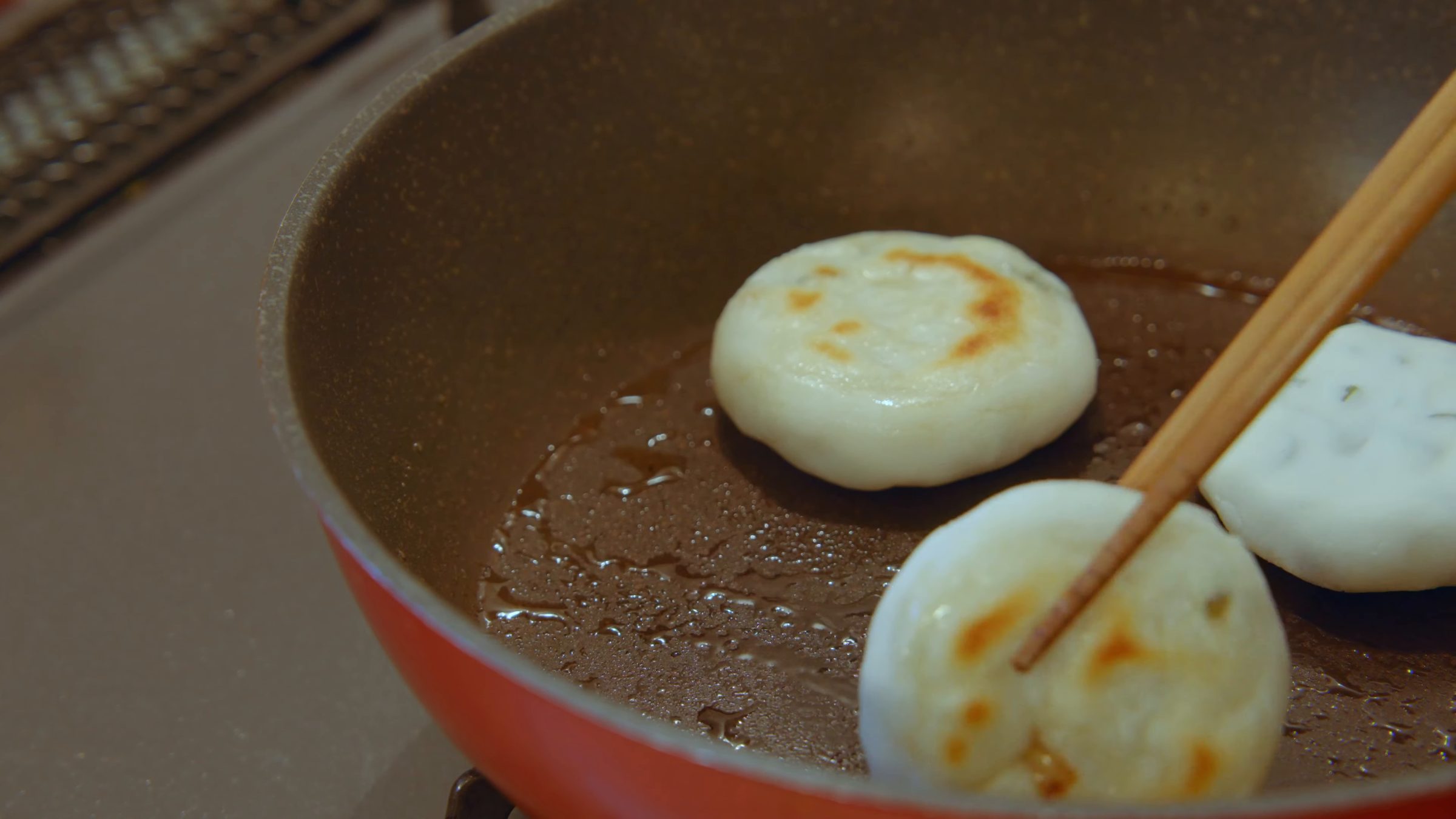
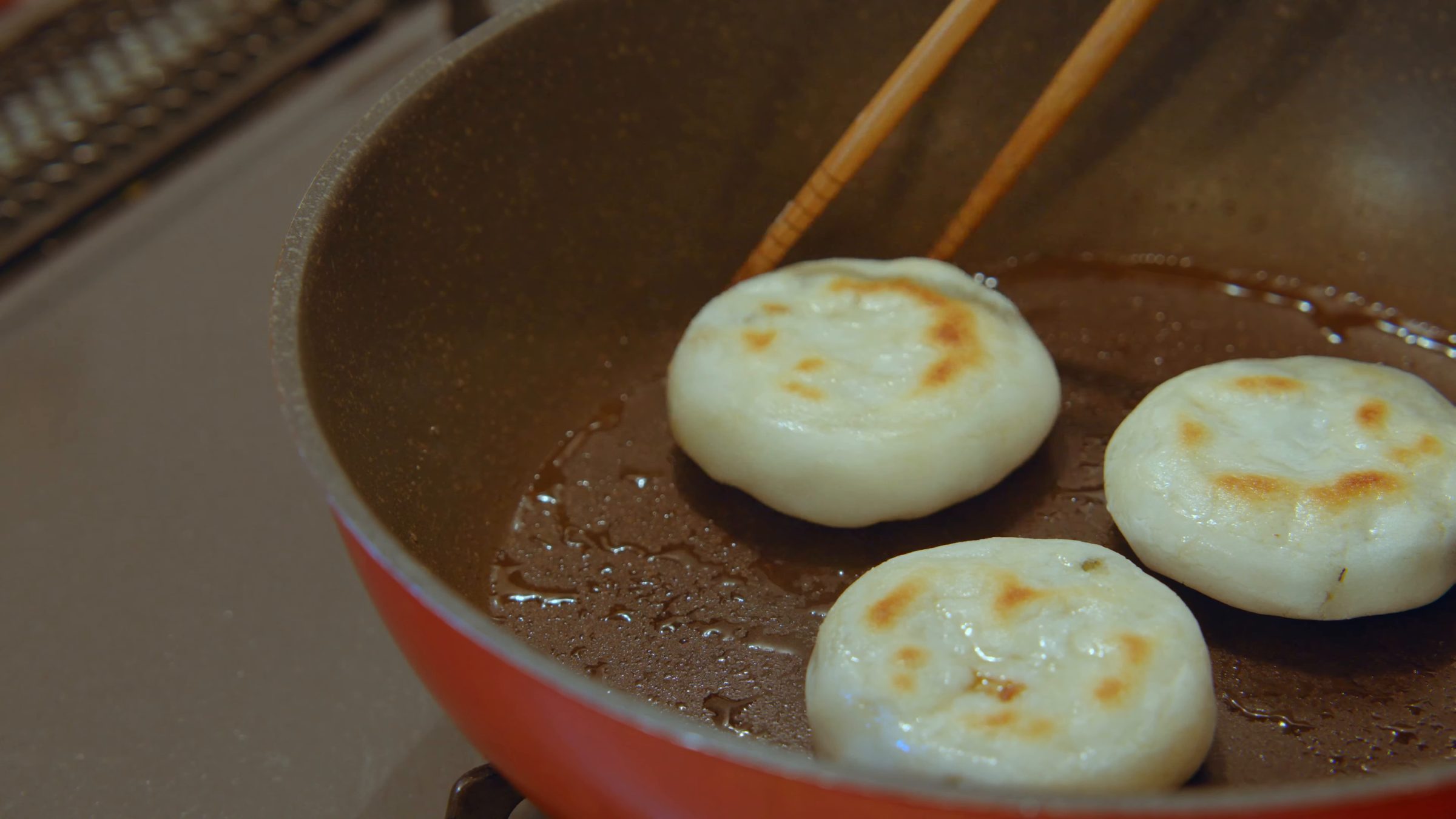
Into the pan they went, turned with long chopsticks. Before long the white dough had taken on a toasty brown crust.
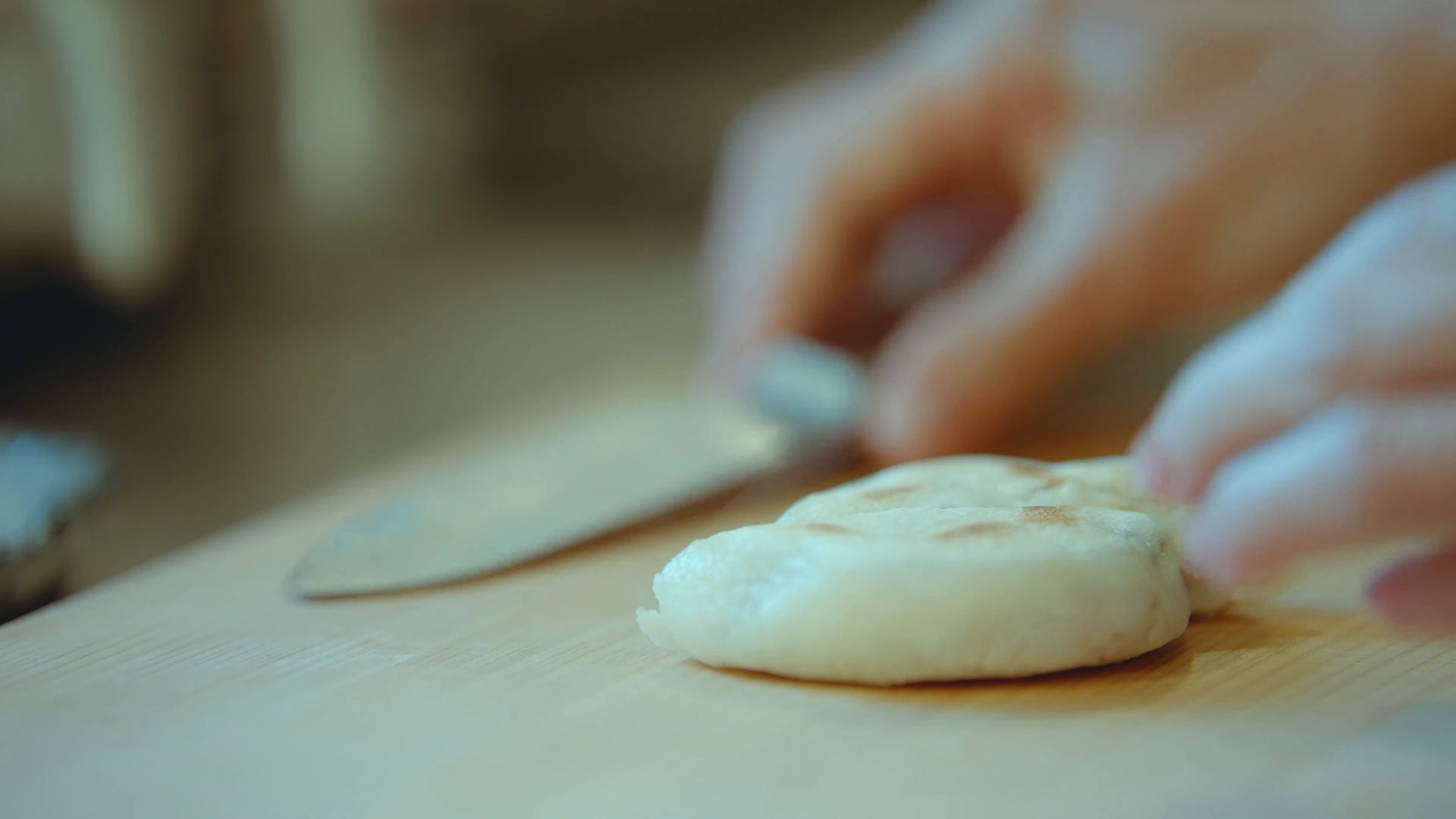
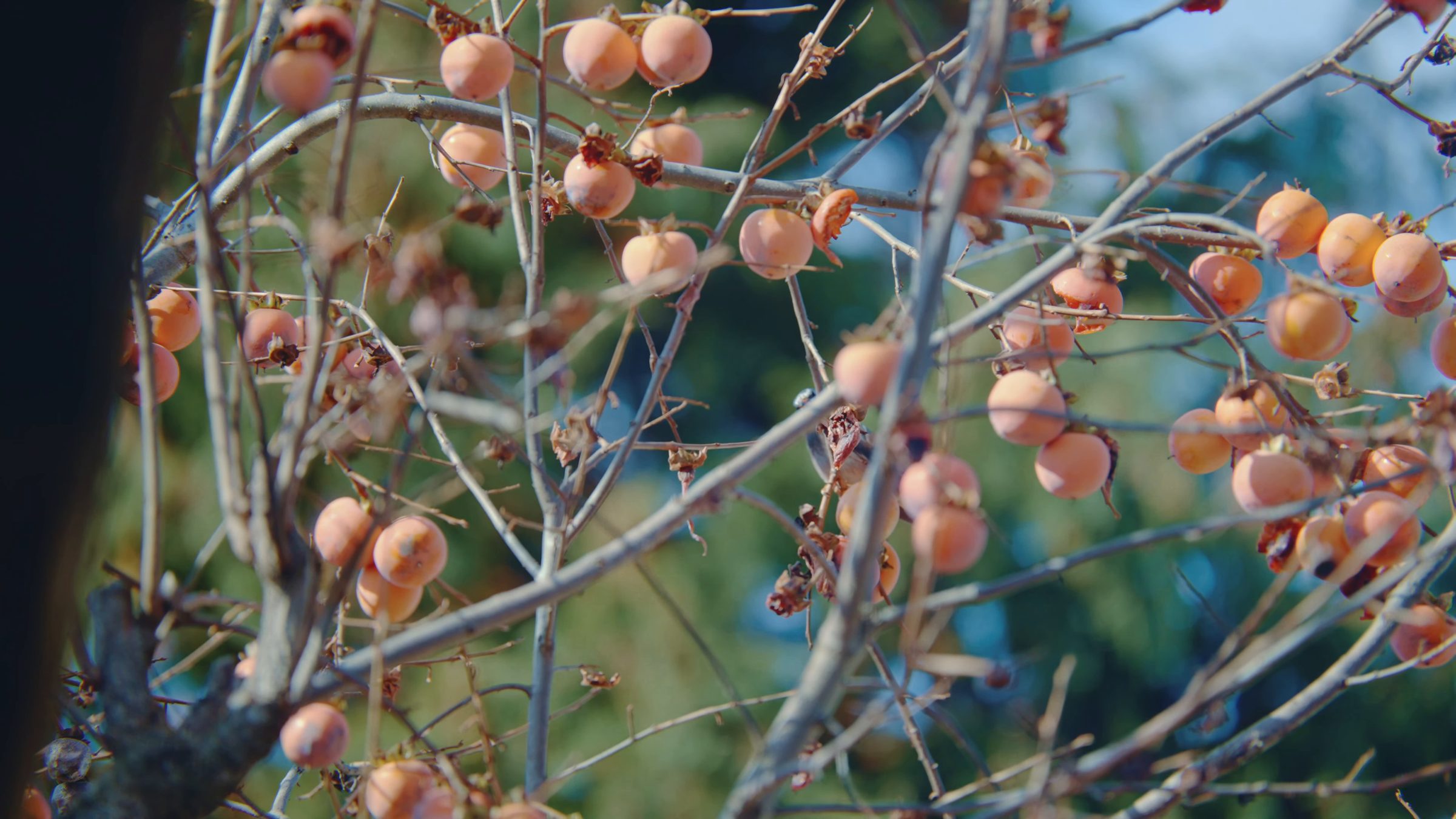
I cut one open on the board. Oops: not much filling in there. Even so, the rice-flour oyaki were ready. Out in the garden, a persimmon tree hung heavy with orange fruit.
Watch this scene on YouTube0:58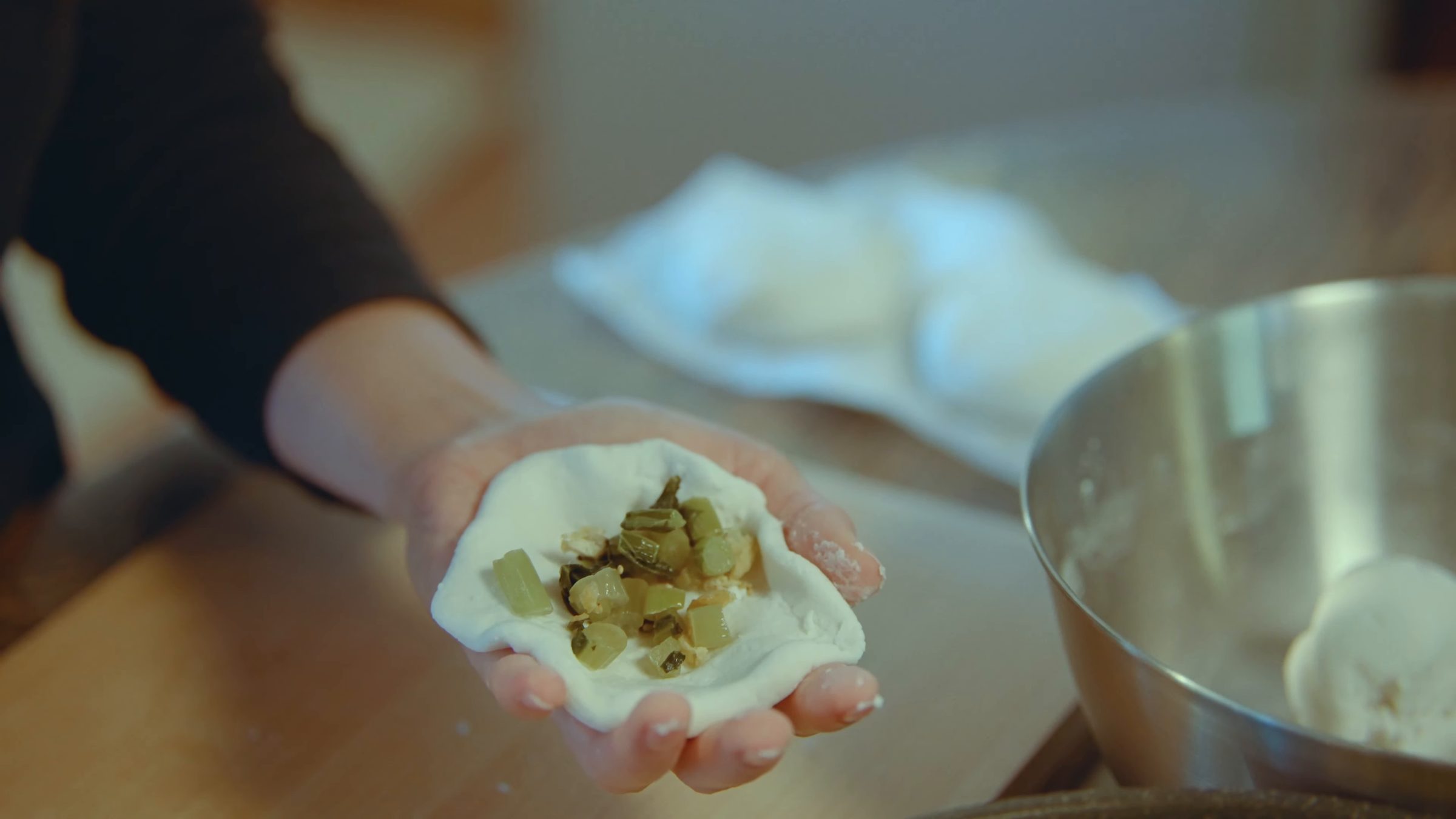
04TRAVEL JOURNAL
Breakfast on the veranda
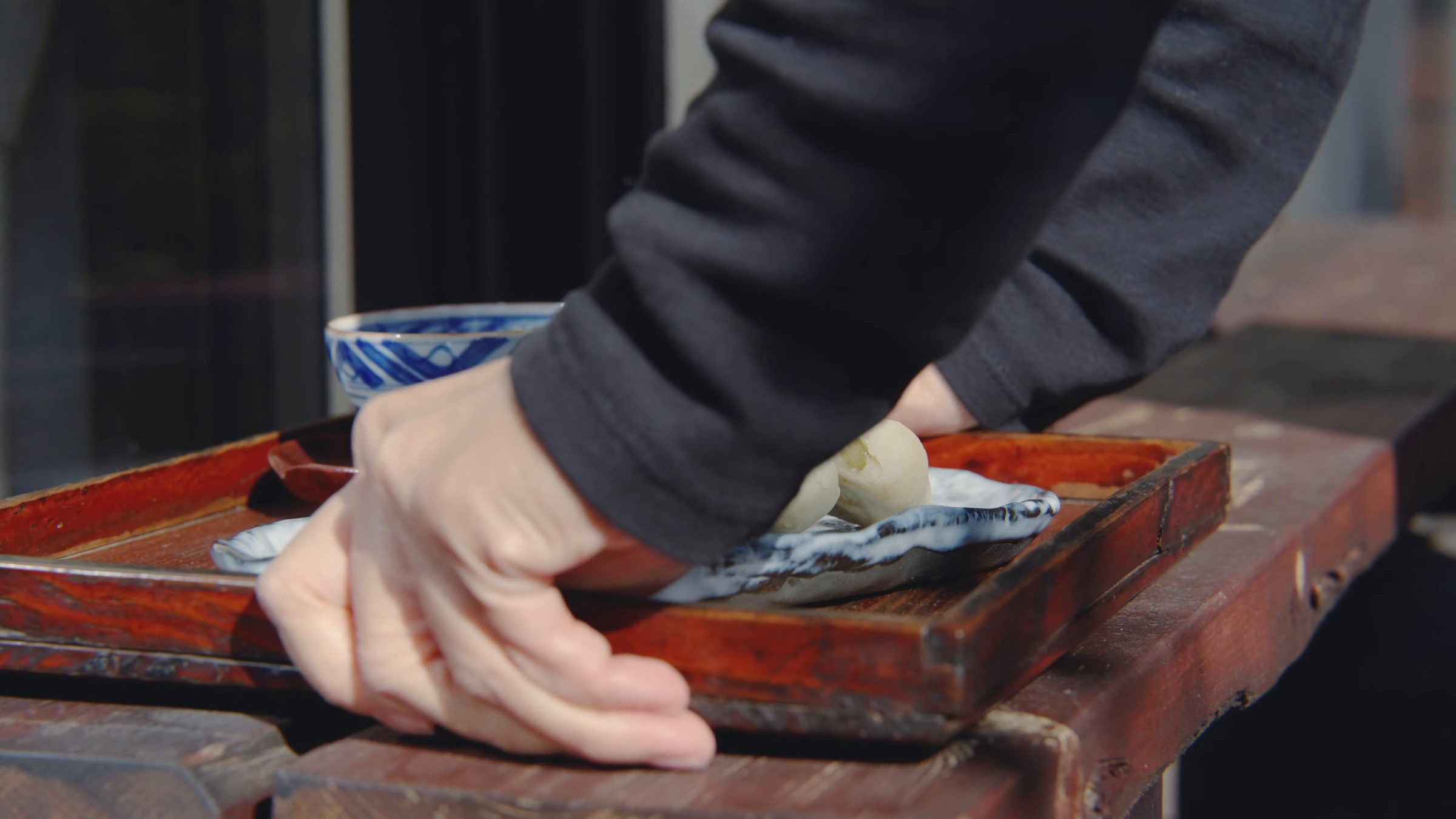
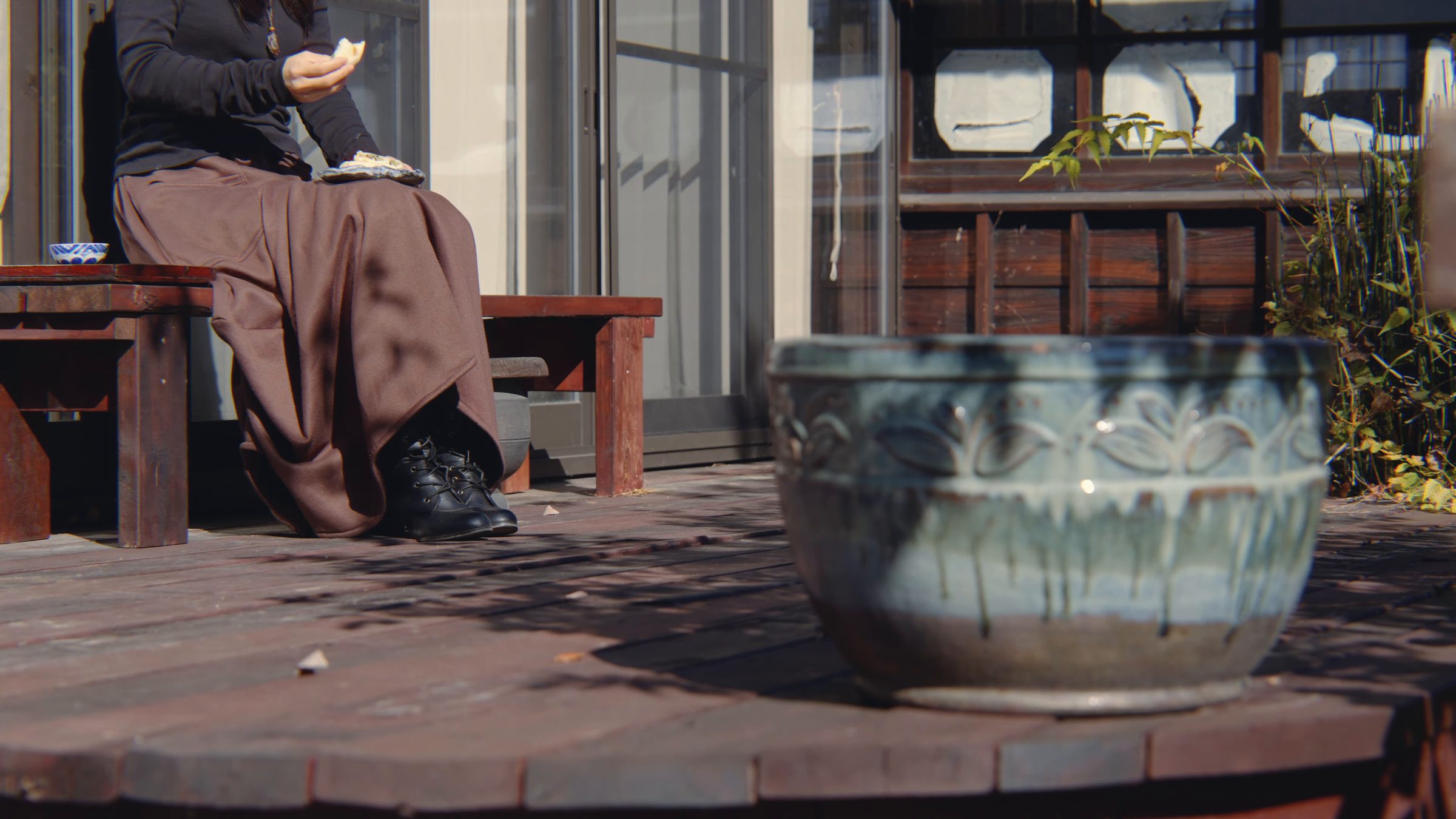
I stood in the open doorway at the far end of the shoji room and looked out at the garden, then carried the fresh oyaki out on a tray.
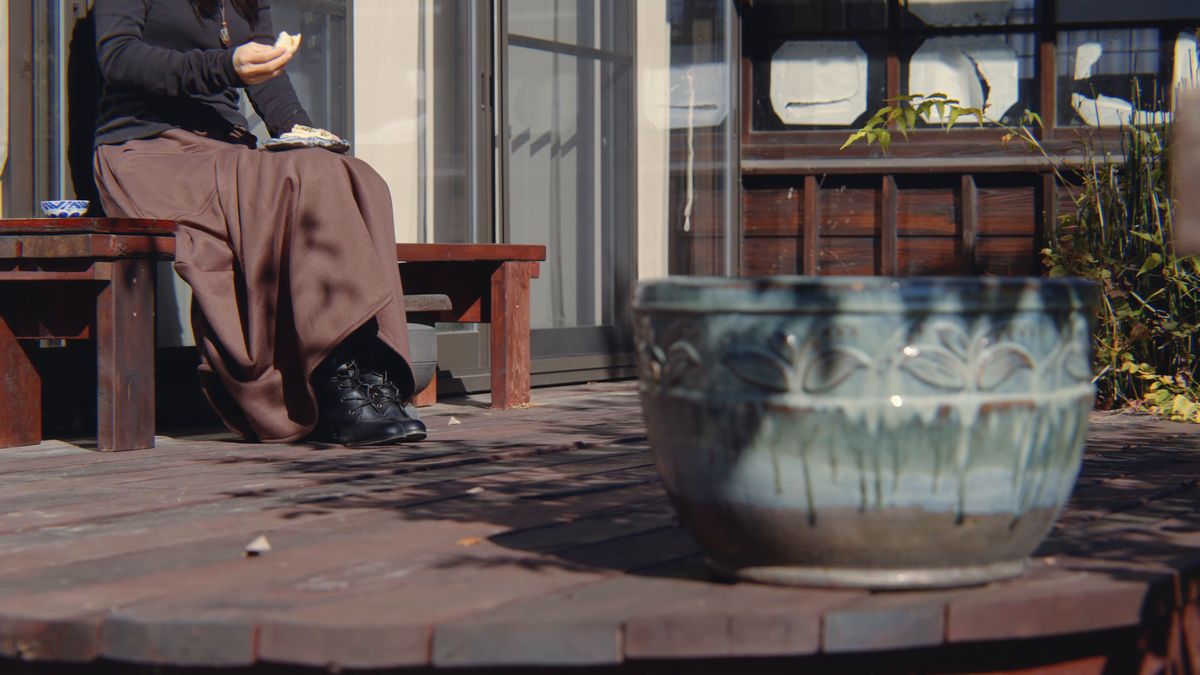
Sitting on the veranda in the morning sun, I bit into one. The filling was thin, but the rice-flour dough was pleasantly chewy, and my homemade oyaki tasted far better than I expected.
Watch this scene on YouTube1:31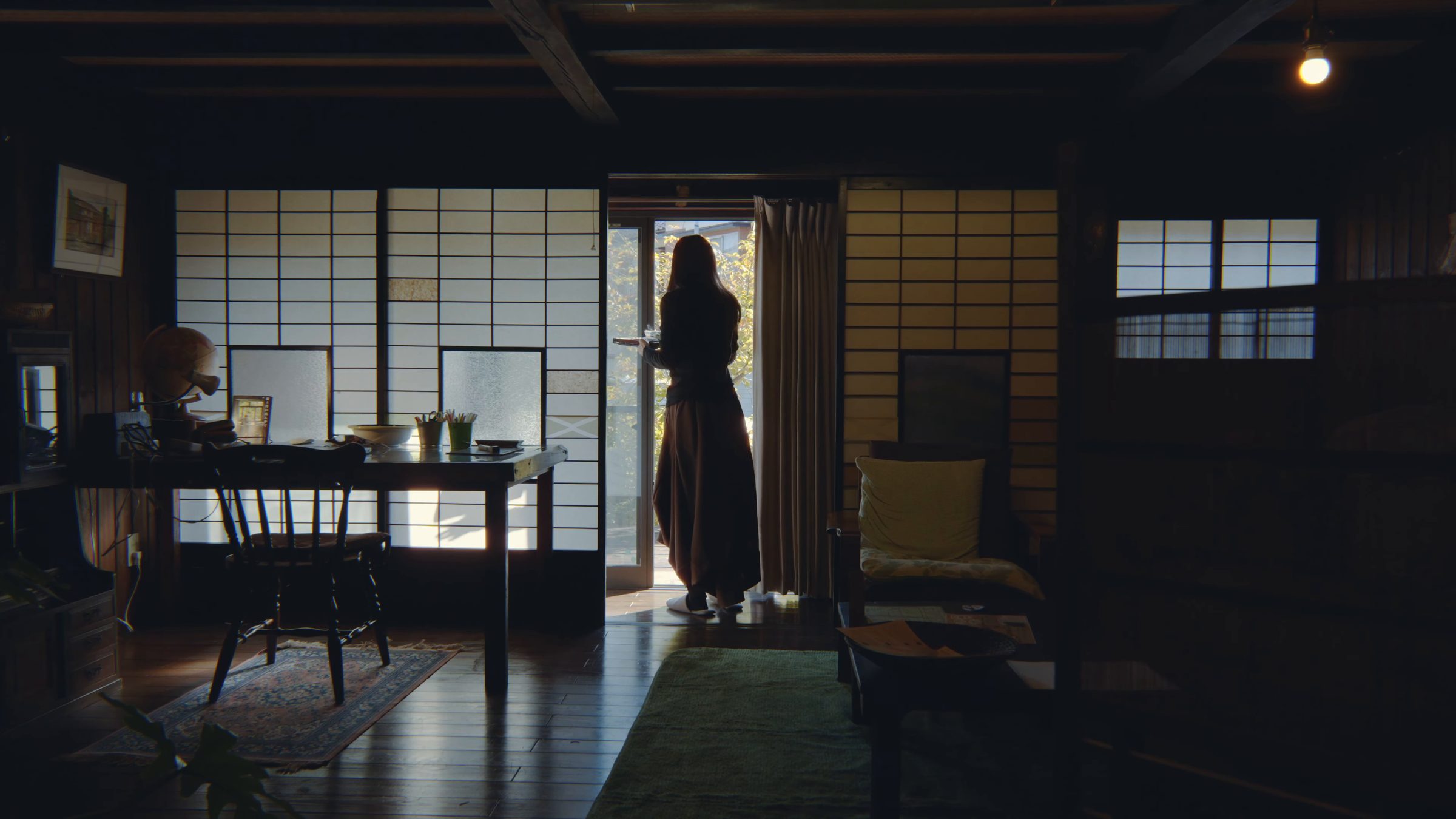
05TRAVEL JOURNAL
Warming up by the wood stove
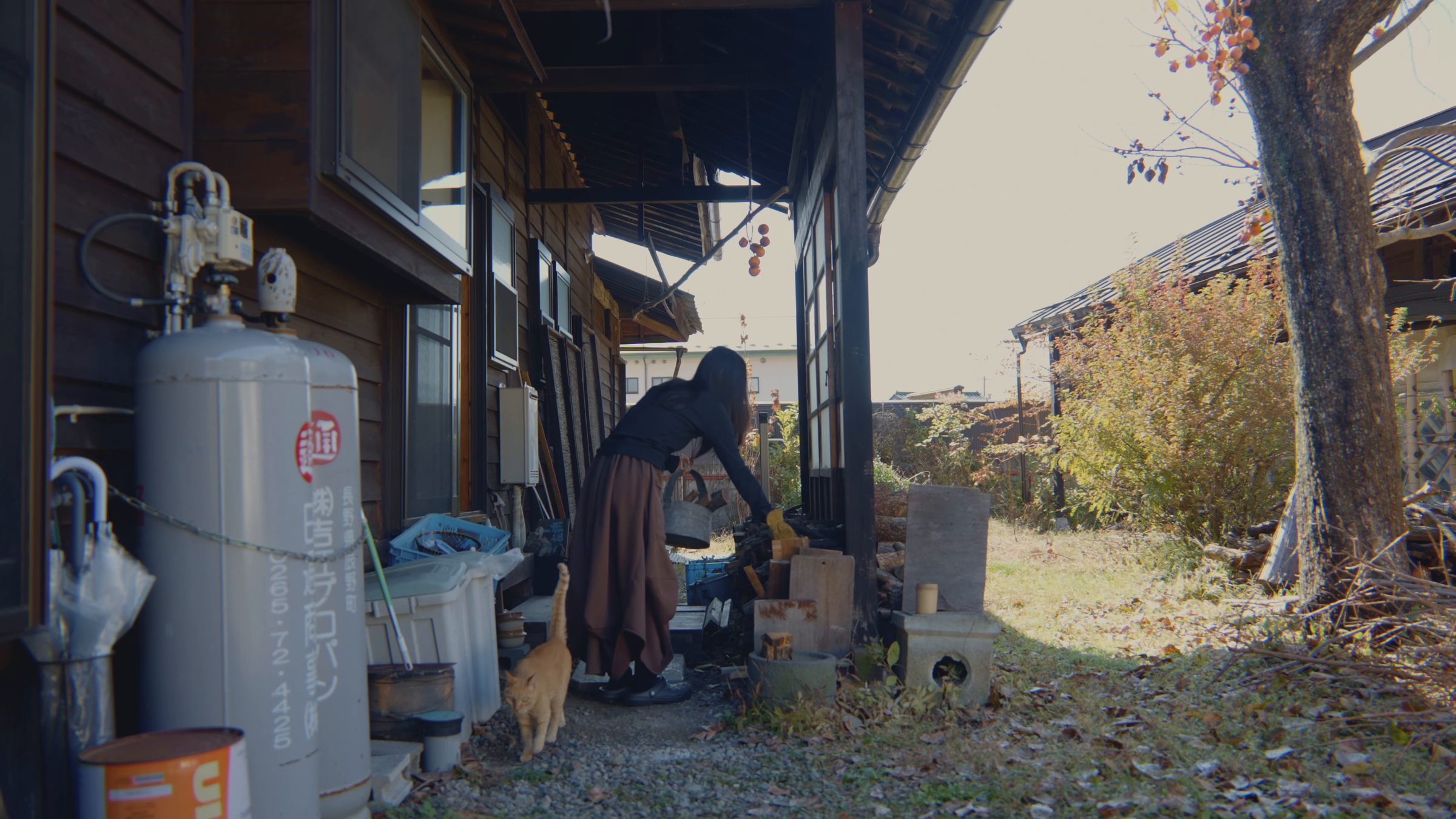
Firewood was stacked high beside the house, with work gloves hanging under the eaves. As I carried an armful inside, the cat trotted along at my feet.
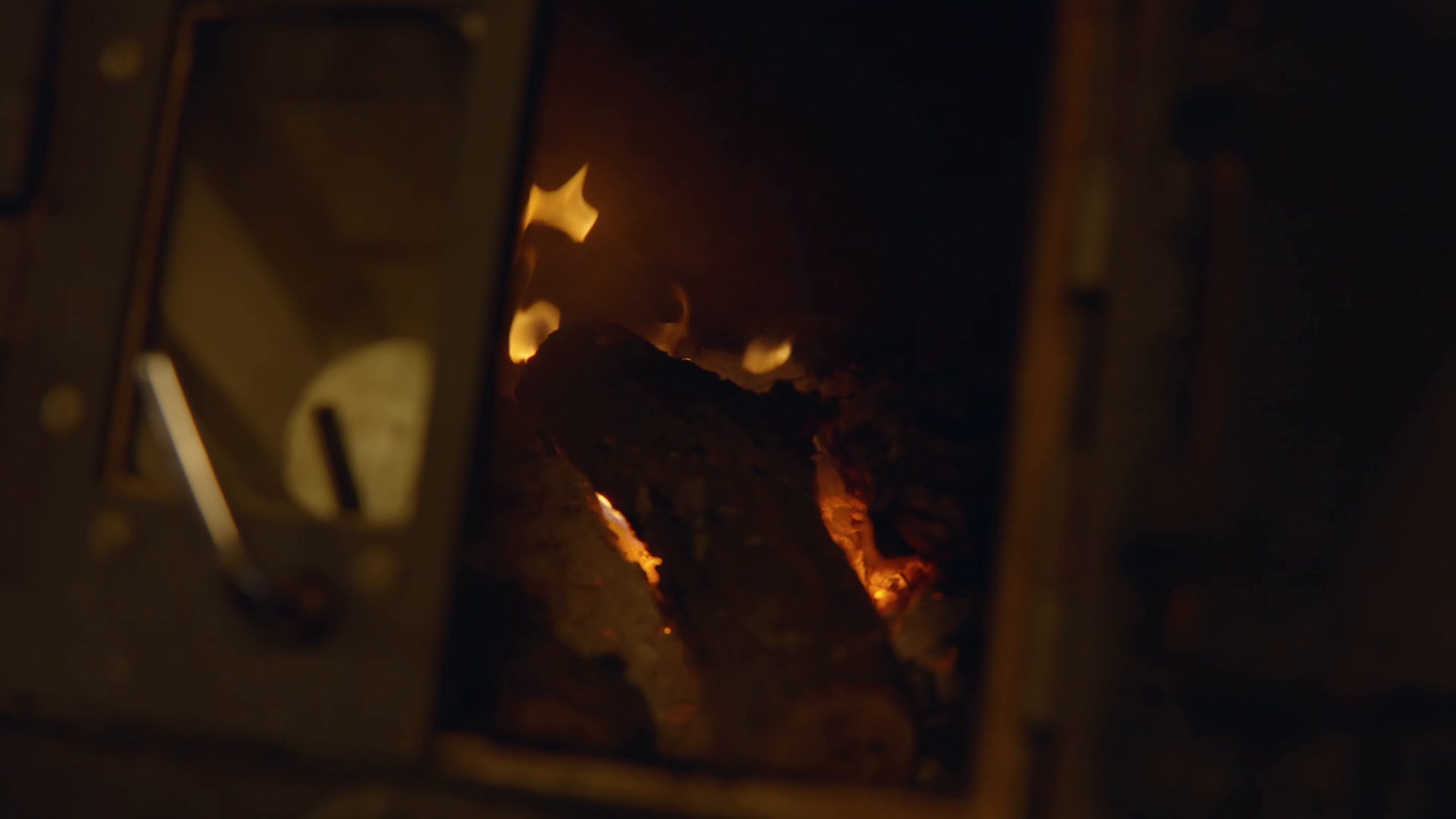
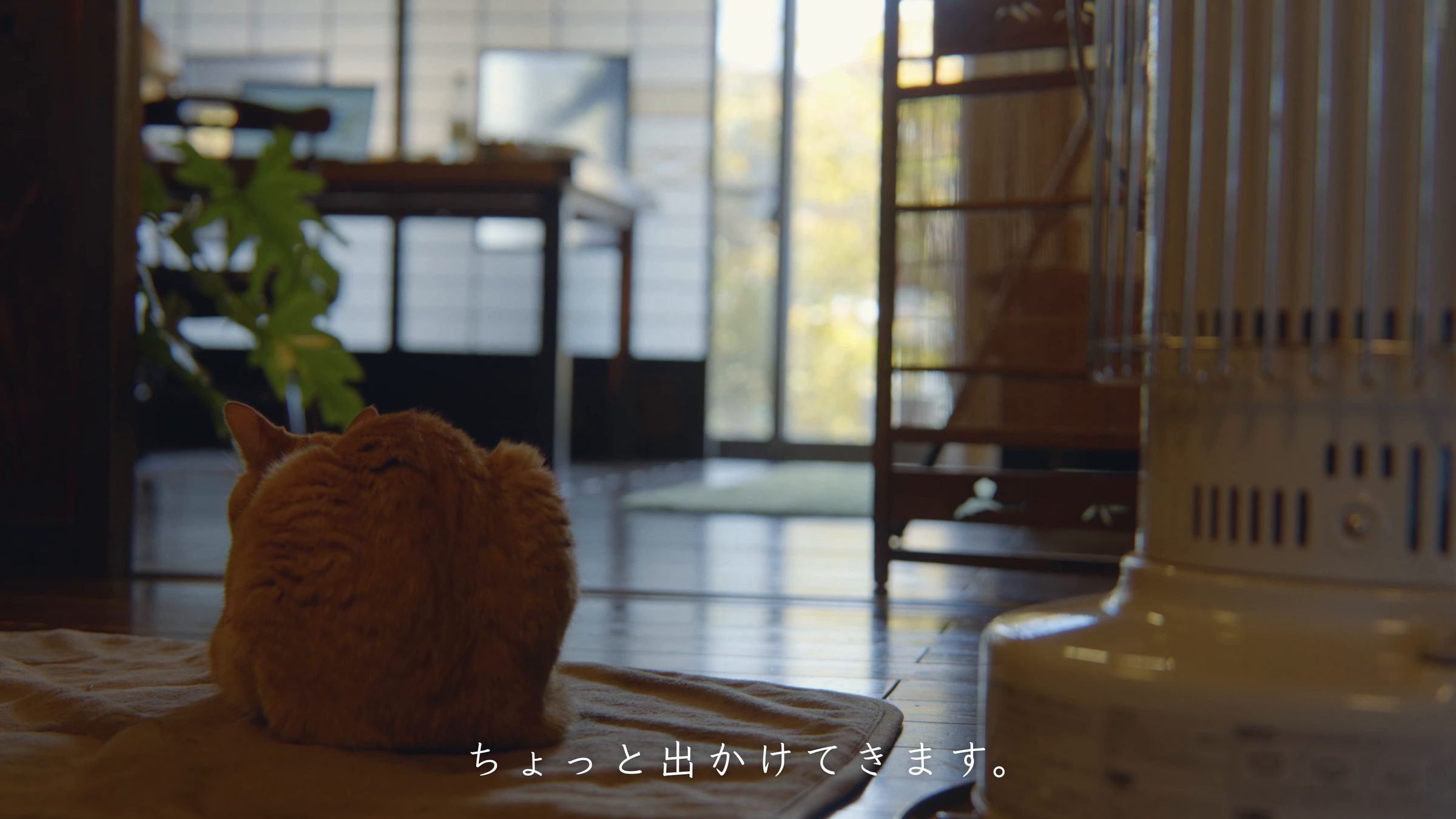
I lit the wood stove. Once the flames were dancing behind the little door, the room slowly warmed up. The cat stretched out on the tatami, then curled up with its back to the kerosene heater. I'm going out for a bit.
Watch this scene on YouTube1:57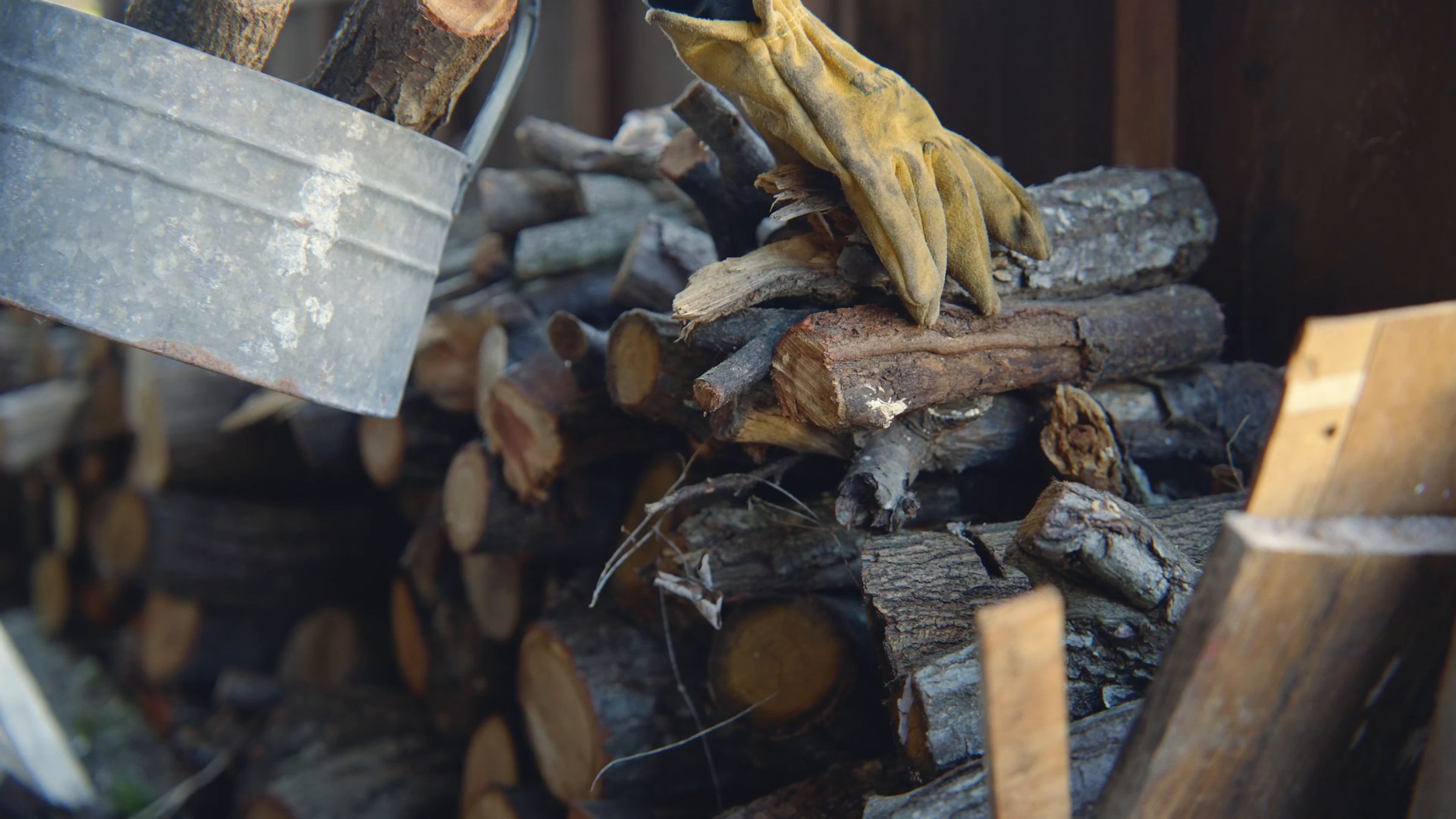
06TRAVEL JOURNAL
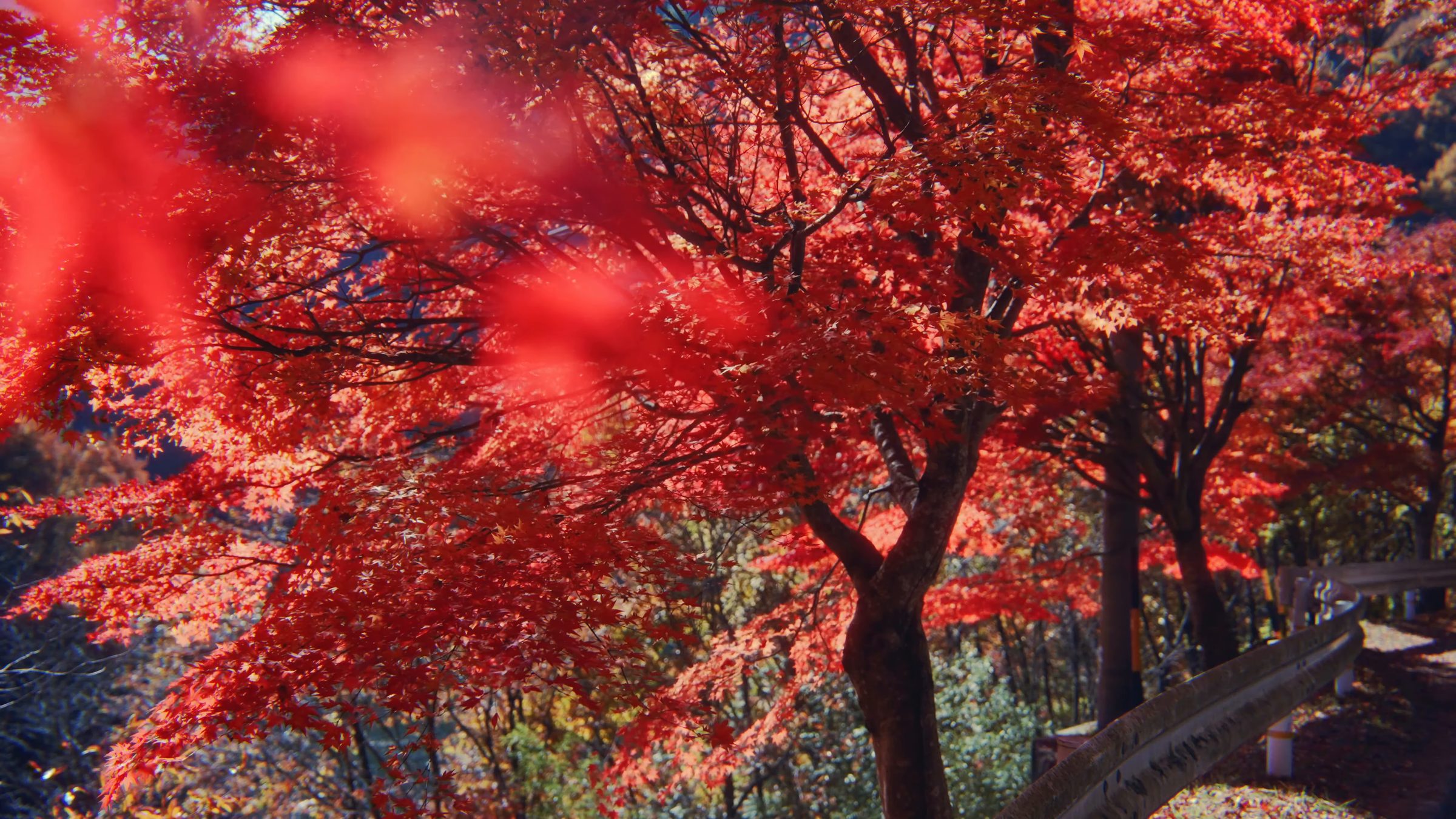
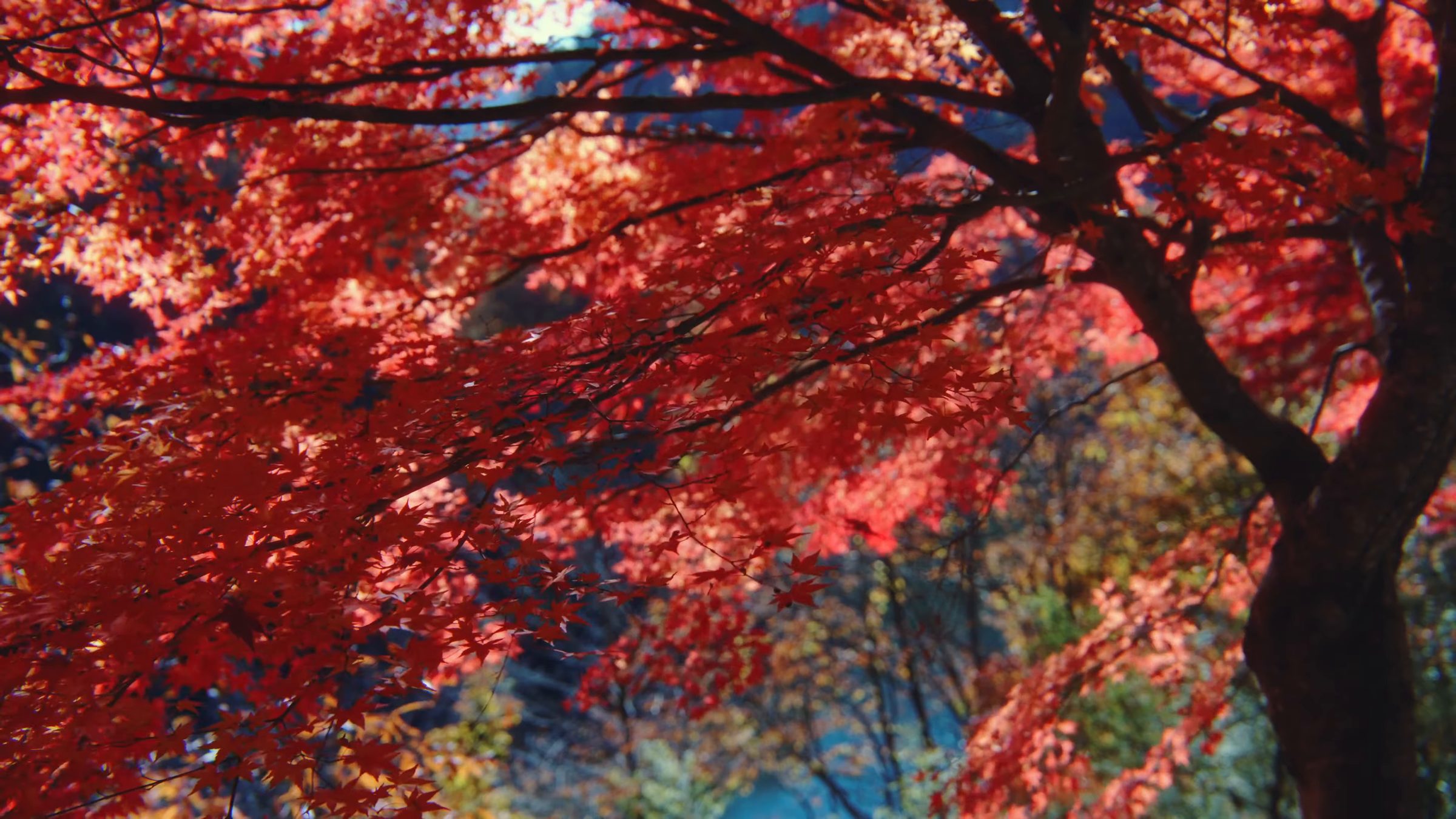
A road through autumn leaves
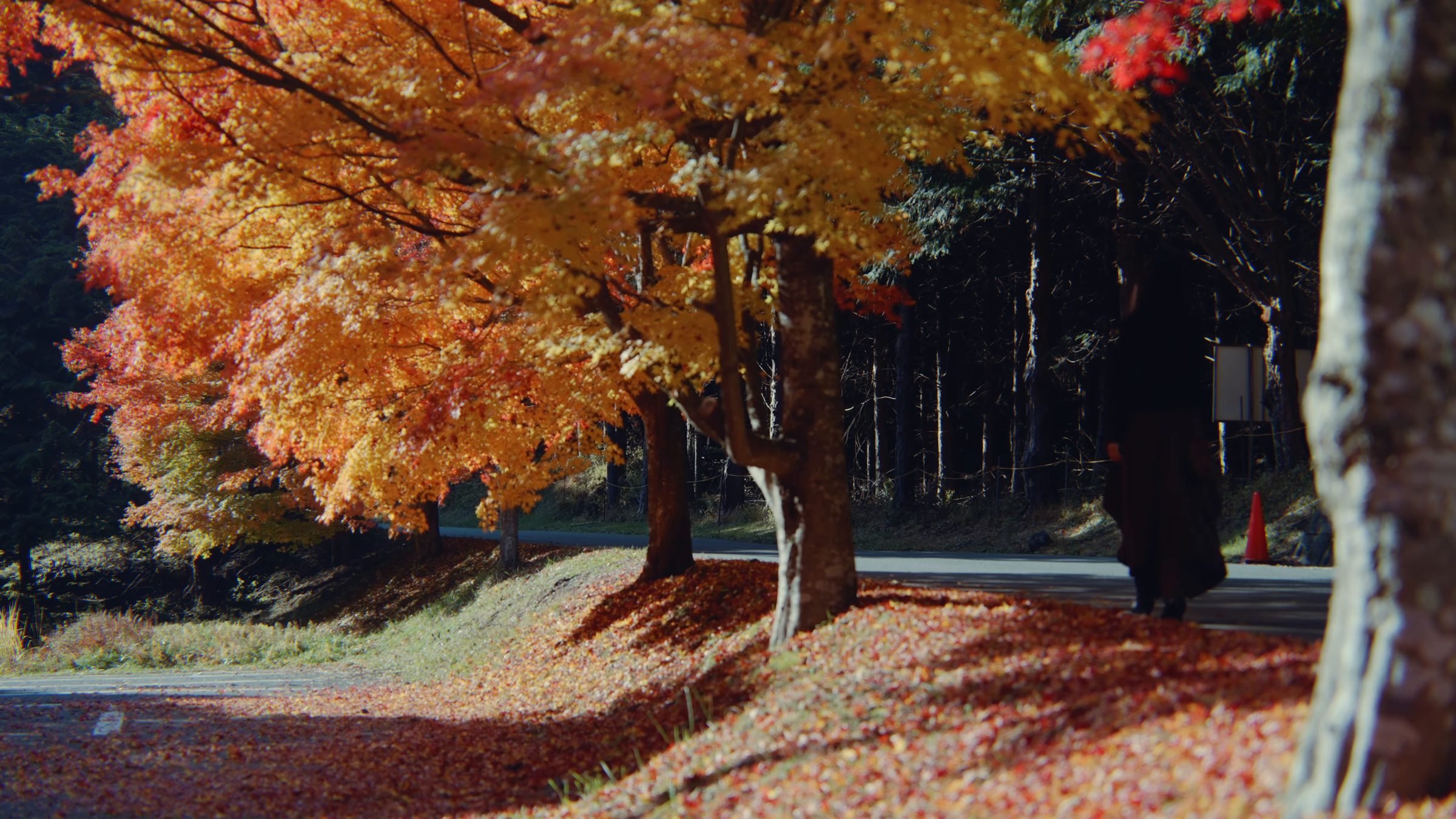
The road through the hills was at the height of autumn color. Through leaves of red and orange lit from behind, I could see the mountains.
I walked beneath a great maple along a road carpeted with fallen leaves. Looking up, crimson branches spread across the whole blue sky.
Watch this scene on YouTube2:35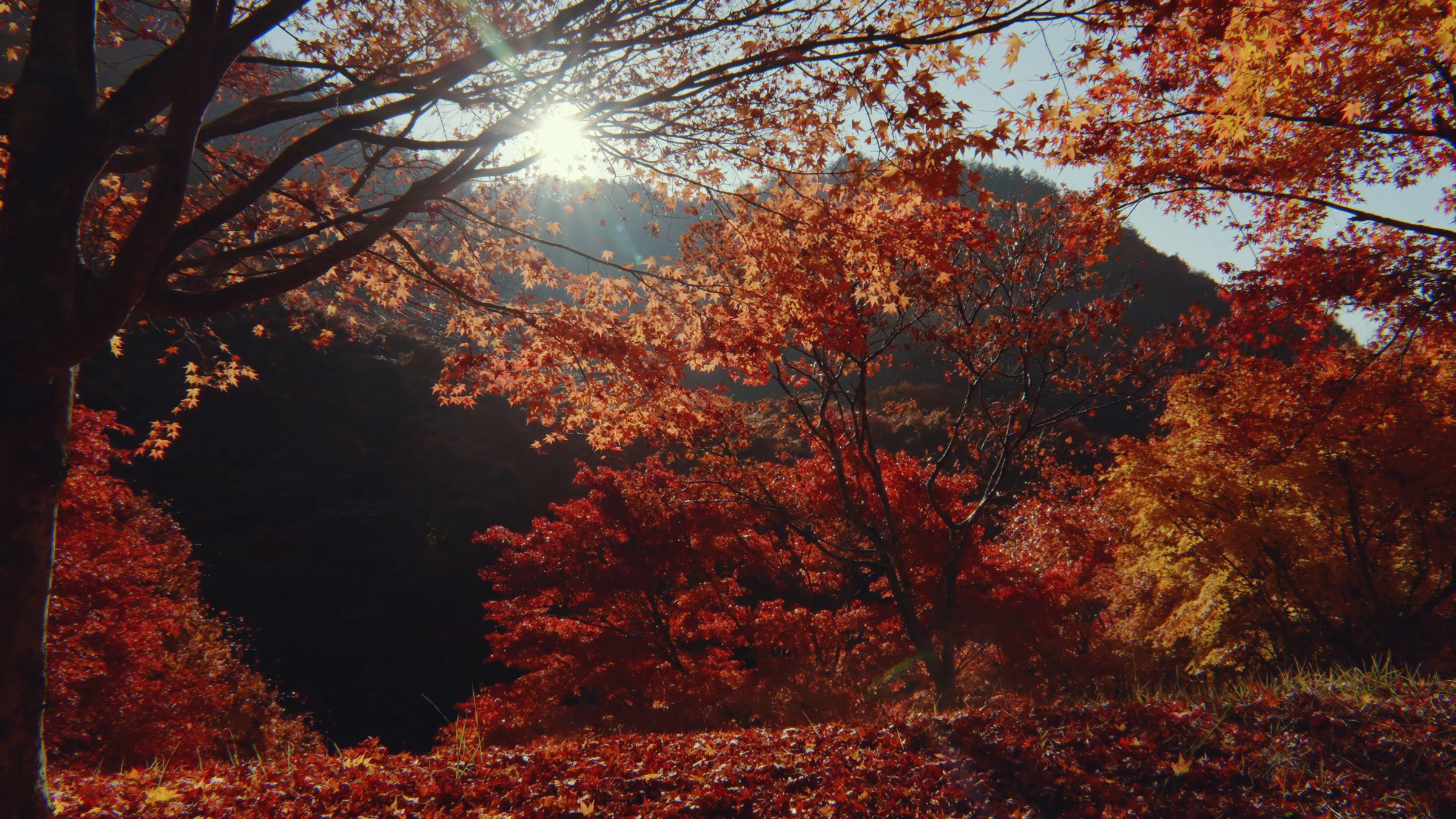
07TRAVEL JOURNAL
Narai-juku, the old post town
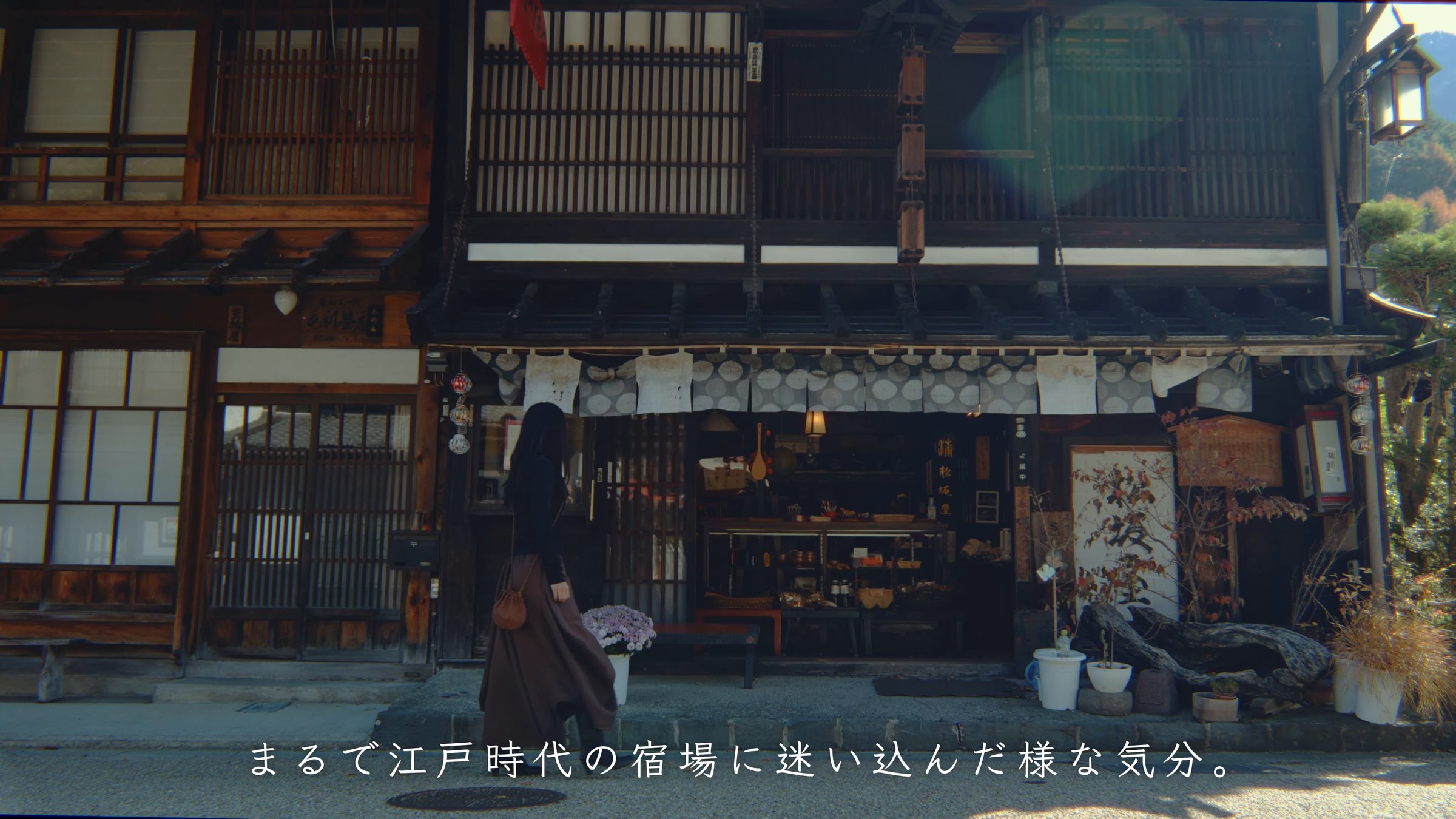
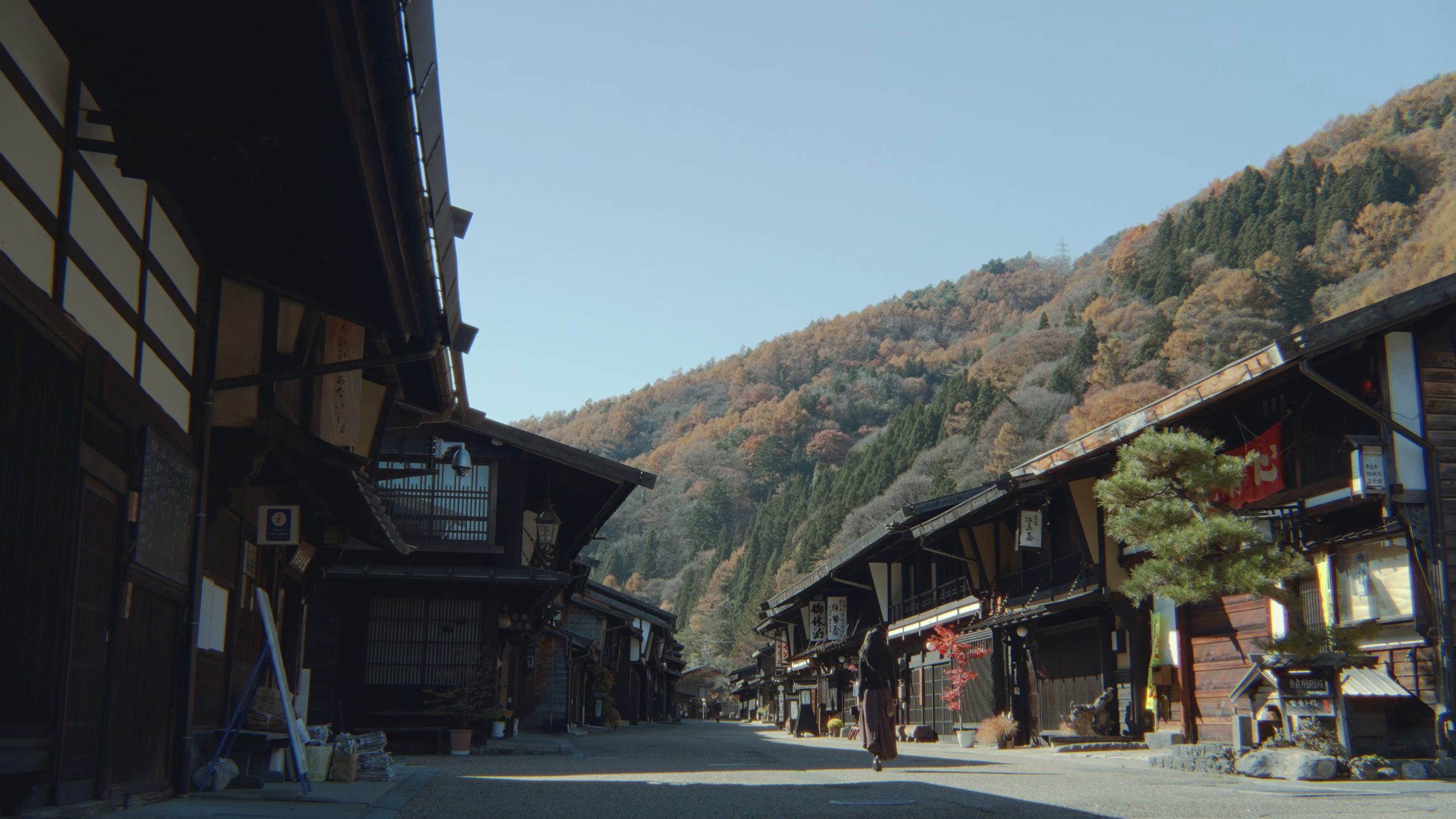
My destination was Narai-juku, a post town on the Nakasendo, the old highway between Edo and Kyoto. It sits almost exactly at the midpoint of the road and is the highest of the eleven Kiso Valley post towns. With the steep Torii Pass just ahead, it bustled with travelers and was known as "Narai of a thousand houses."
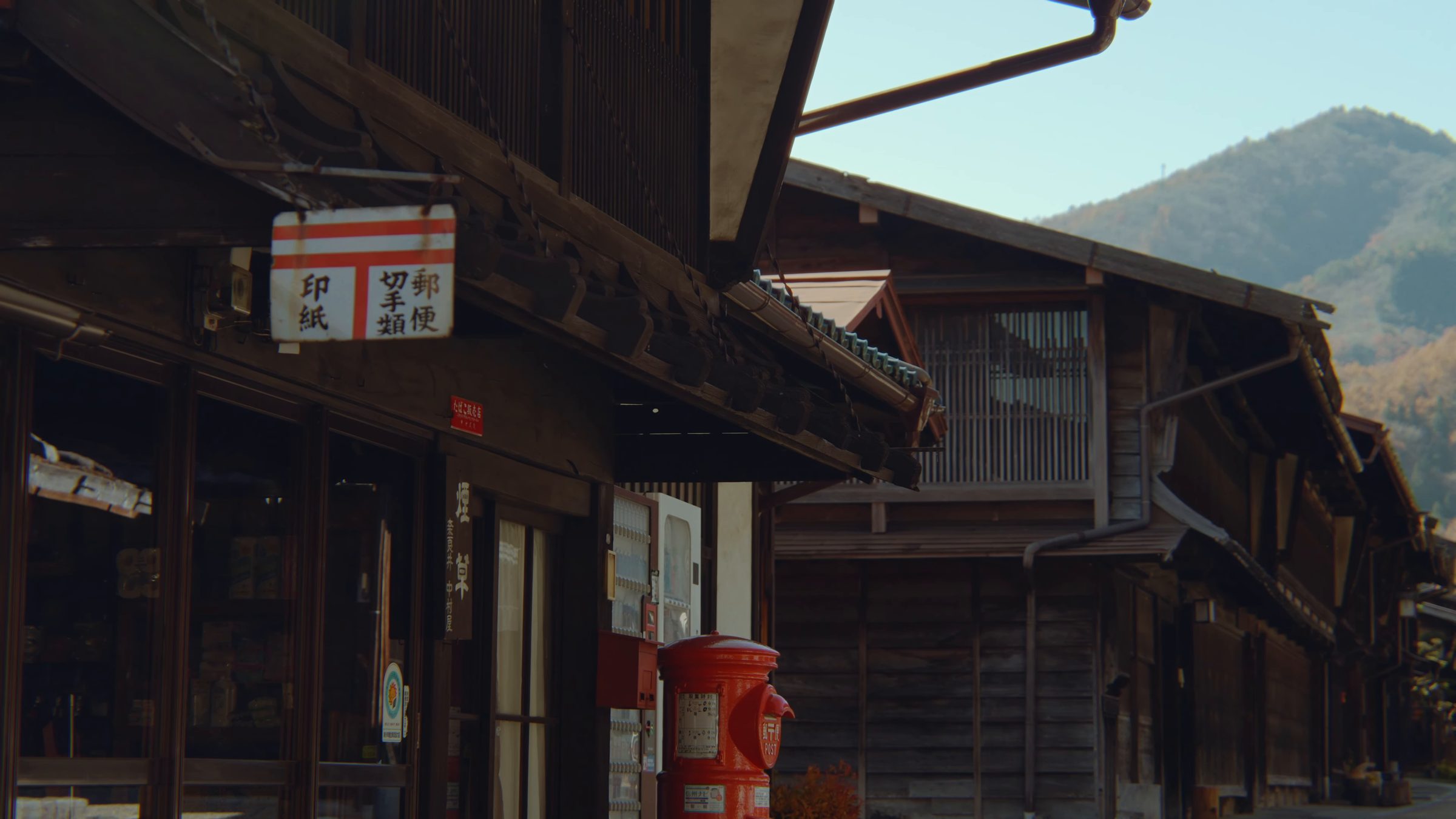
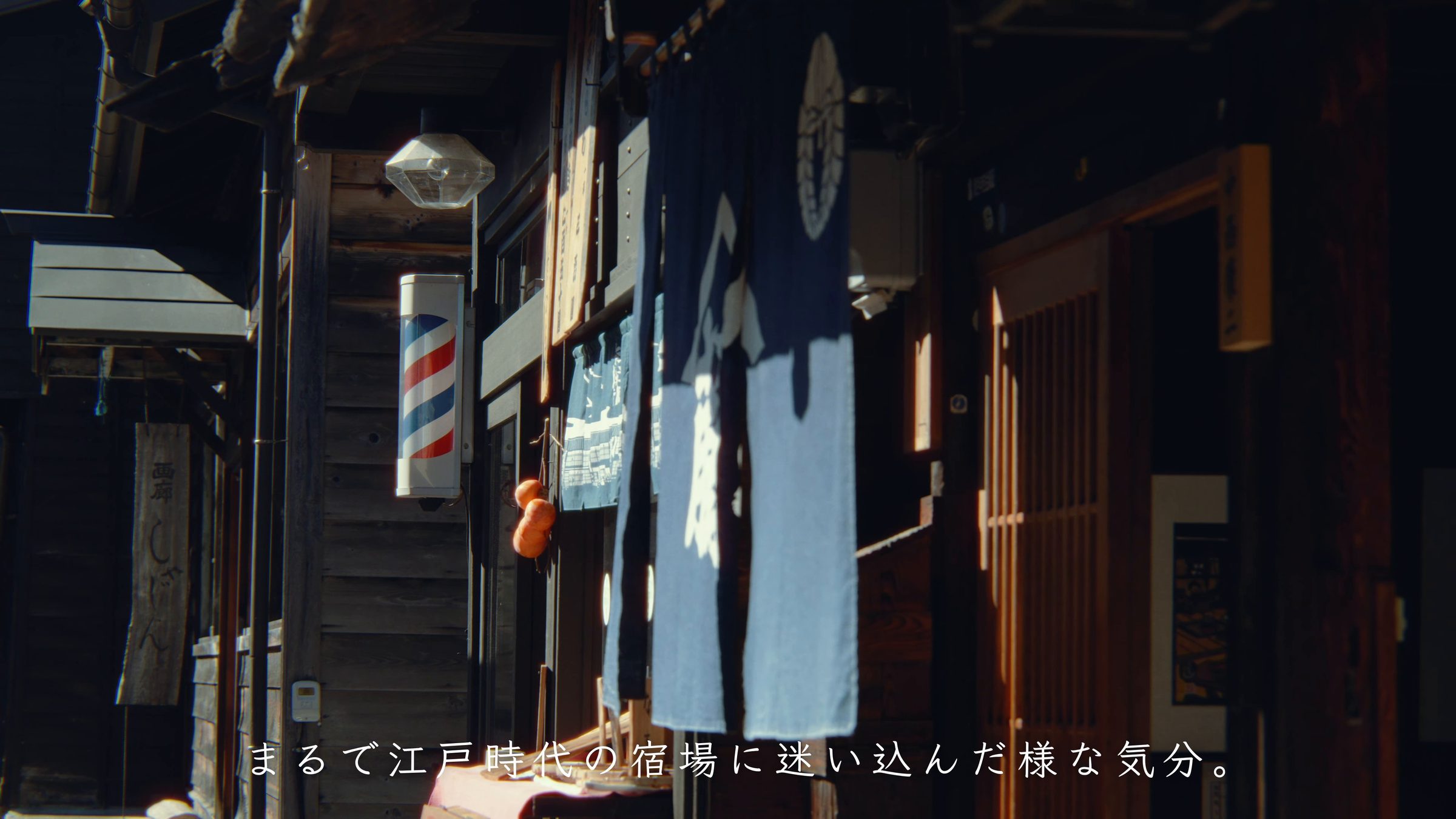
Wooden townhouses line the street for about a kilometer along the Narai River. A post office sign and a red postbox, a navy noren curtain beside a barber's pole. Walking past the houses with their overhanging second floors, I felt as though I had wandered into an Edo-period post town.
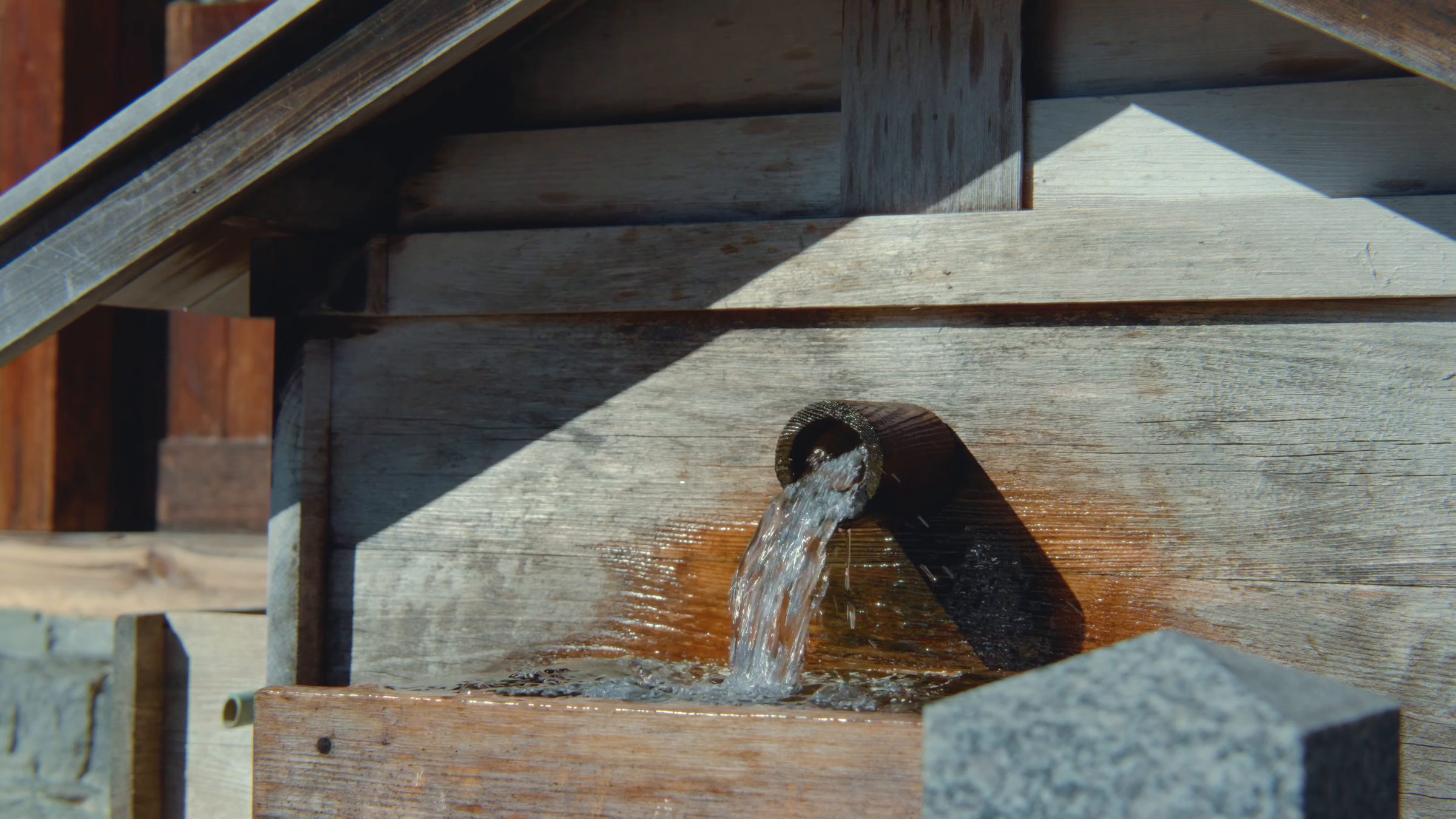
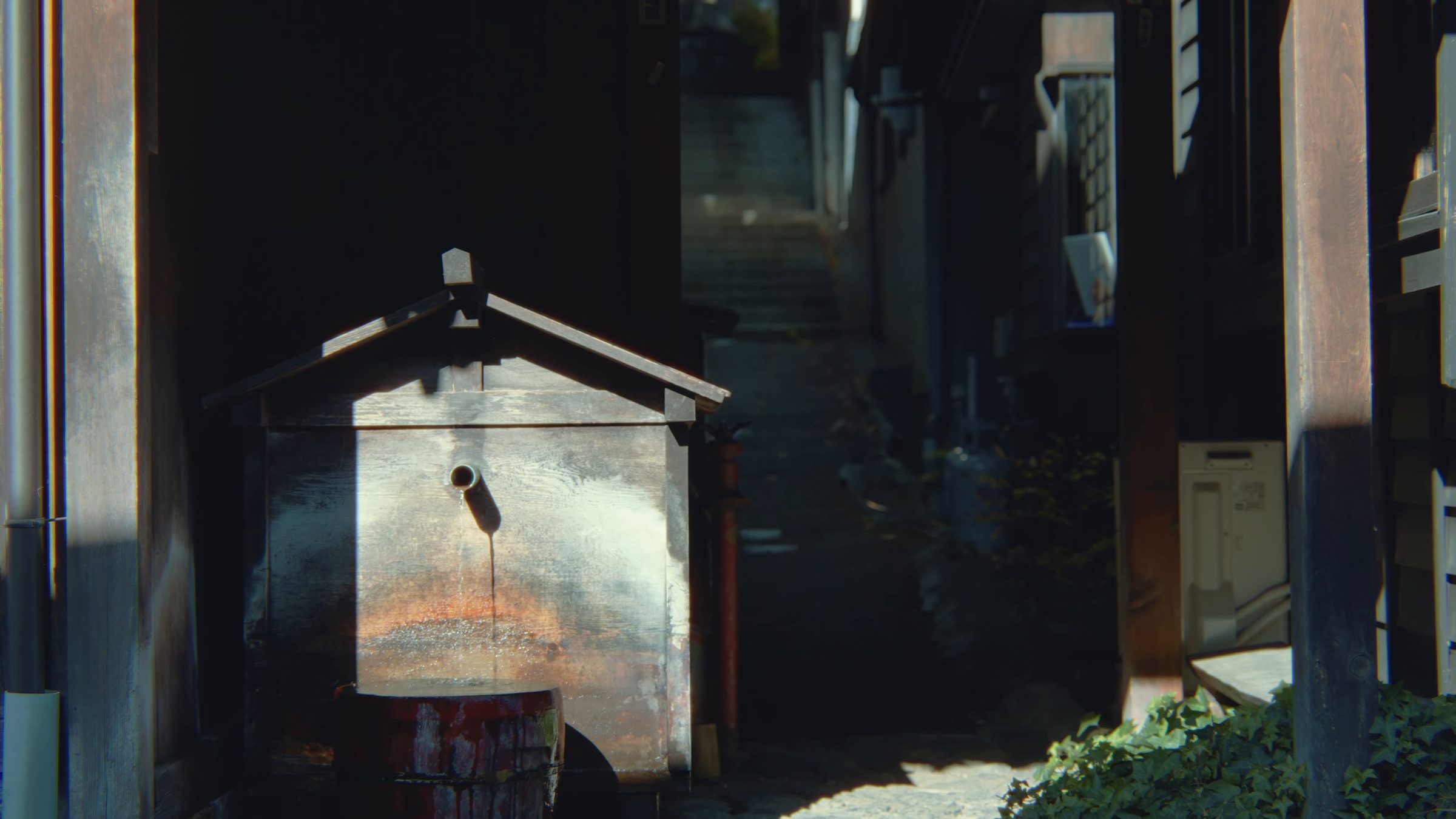
Along the street were water stations where water pours from a wooden spout. They once gave drinking water to travelers crossing the Torii Pass and served as firefighting water for the town. The townscape was designated a national Important Preservation District for Groups of Traditional Buildings in 1978. At the end of the street, the autumn mountains rose close.
Watch this scene on YouTube2:46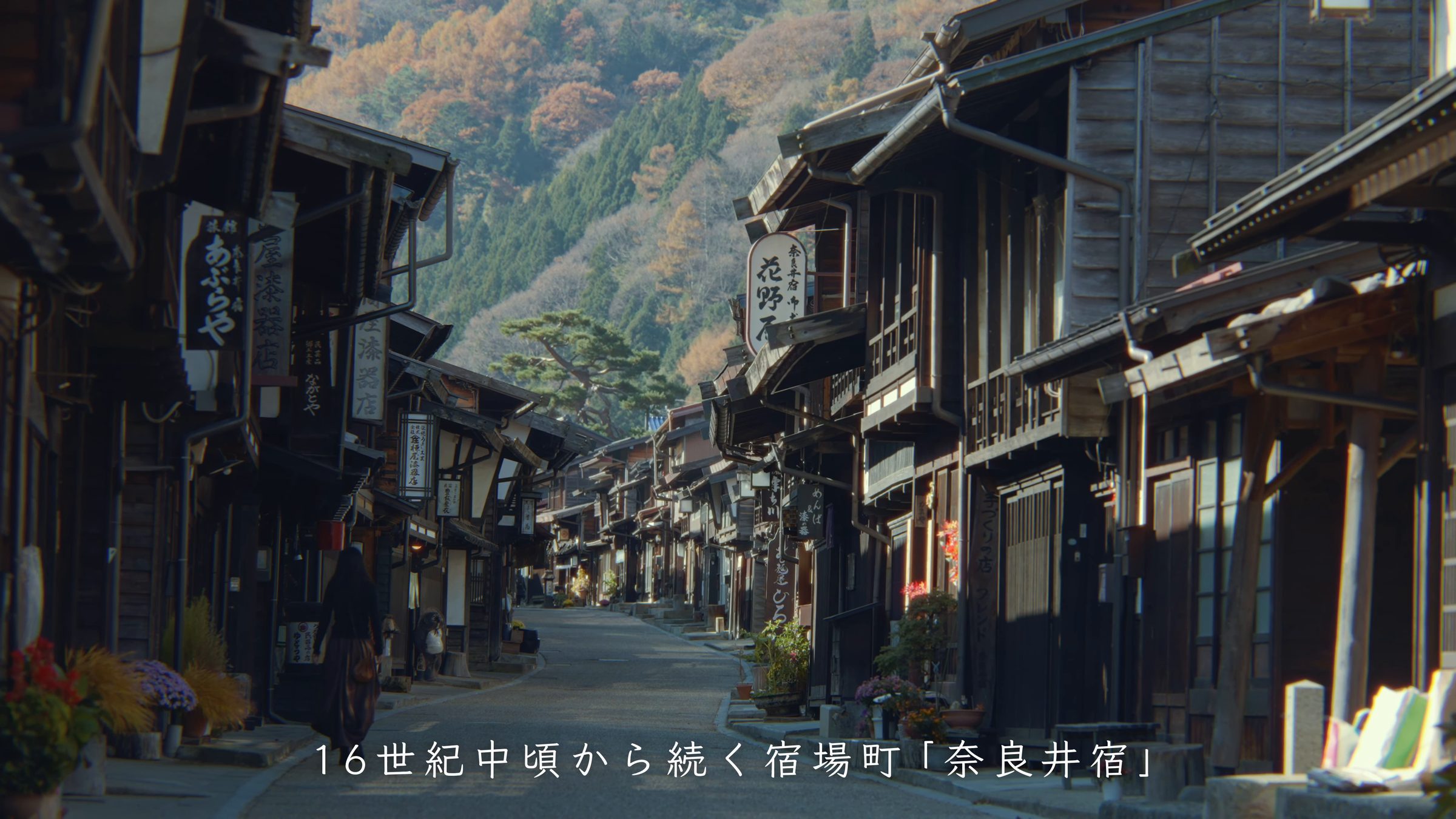
08TRAVEL JOURNAL
Hot soba with wild vegetables
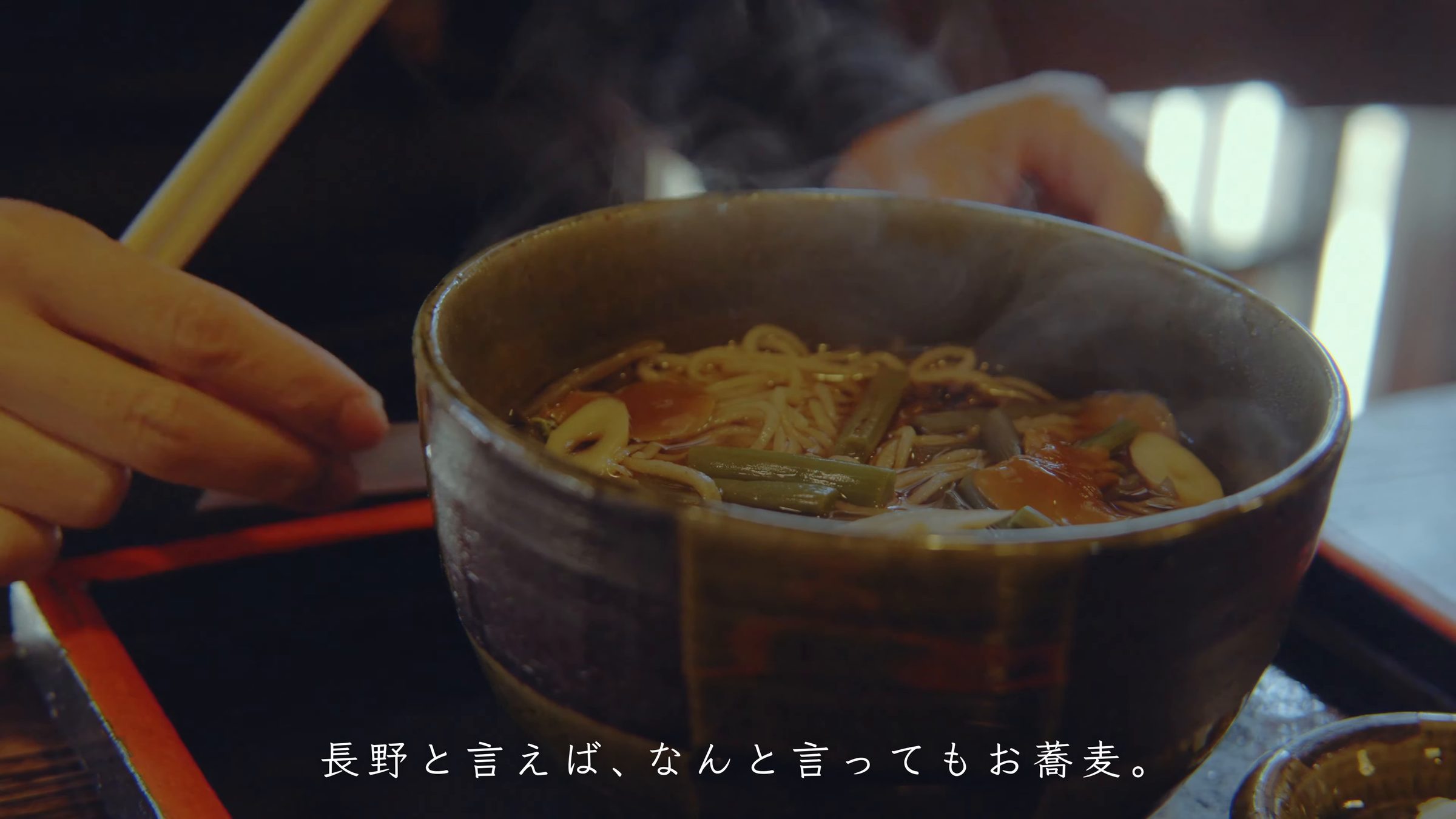
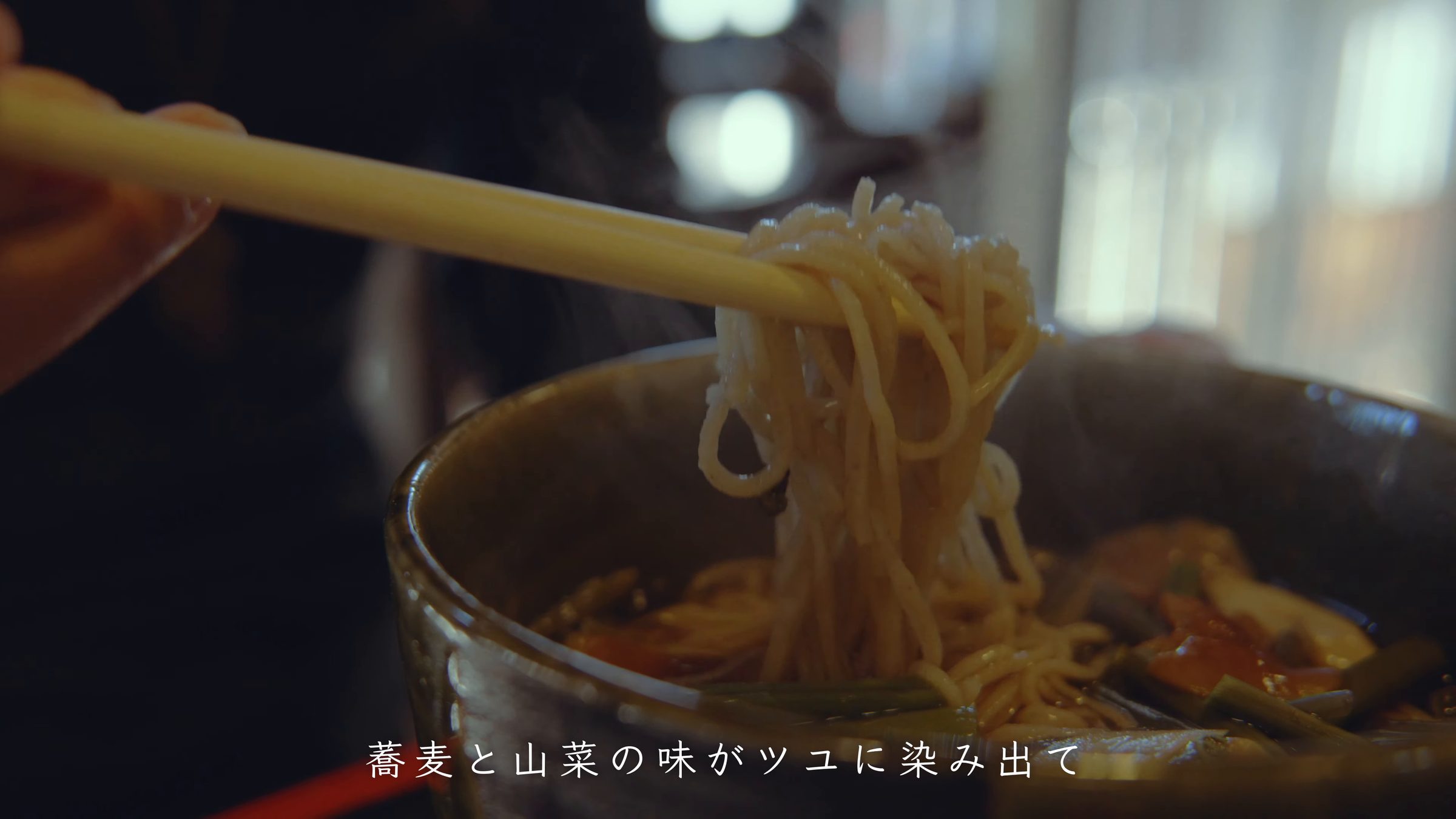
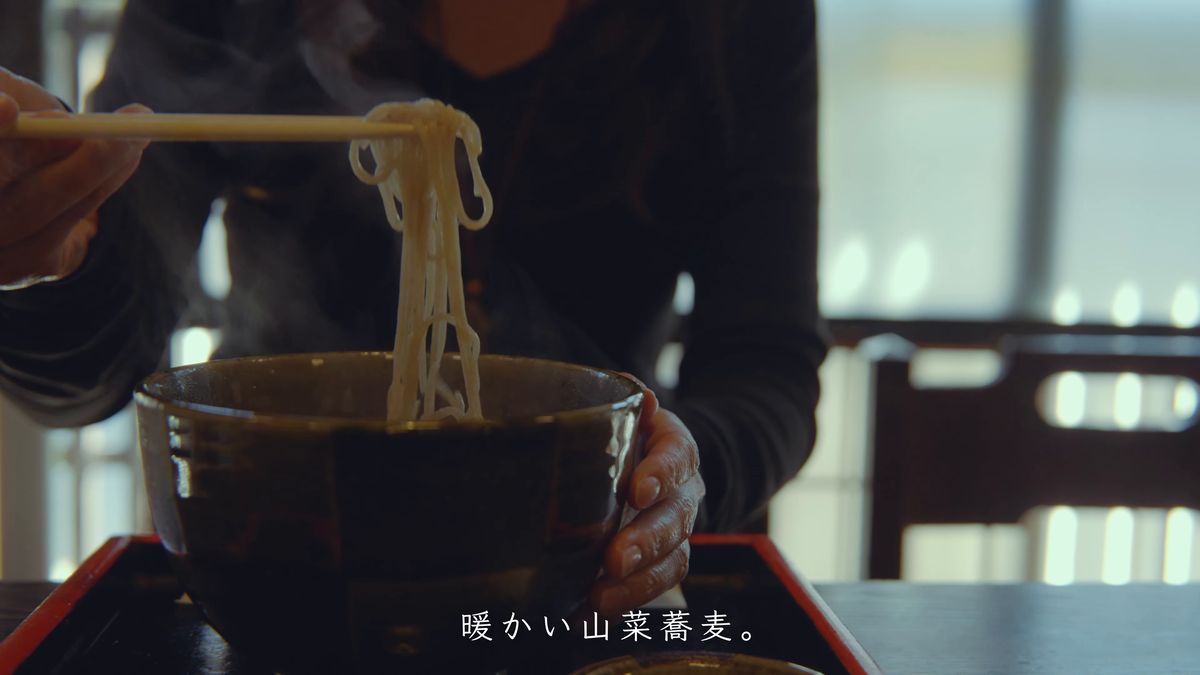
Nagano means soba, above all. I stepped into a handmade soba shop halfway along the post town. What arrived on the tray was hot soba with wild vegetables: a steaming bowl piled with bracken, mushrooms and green onions.
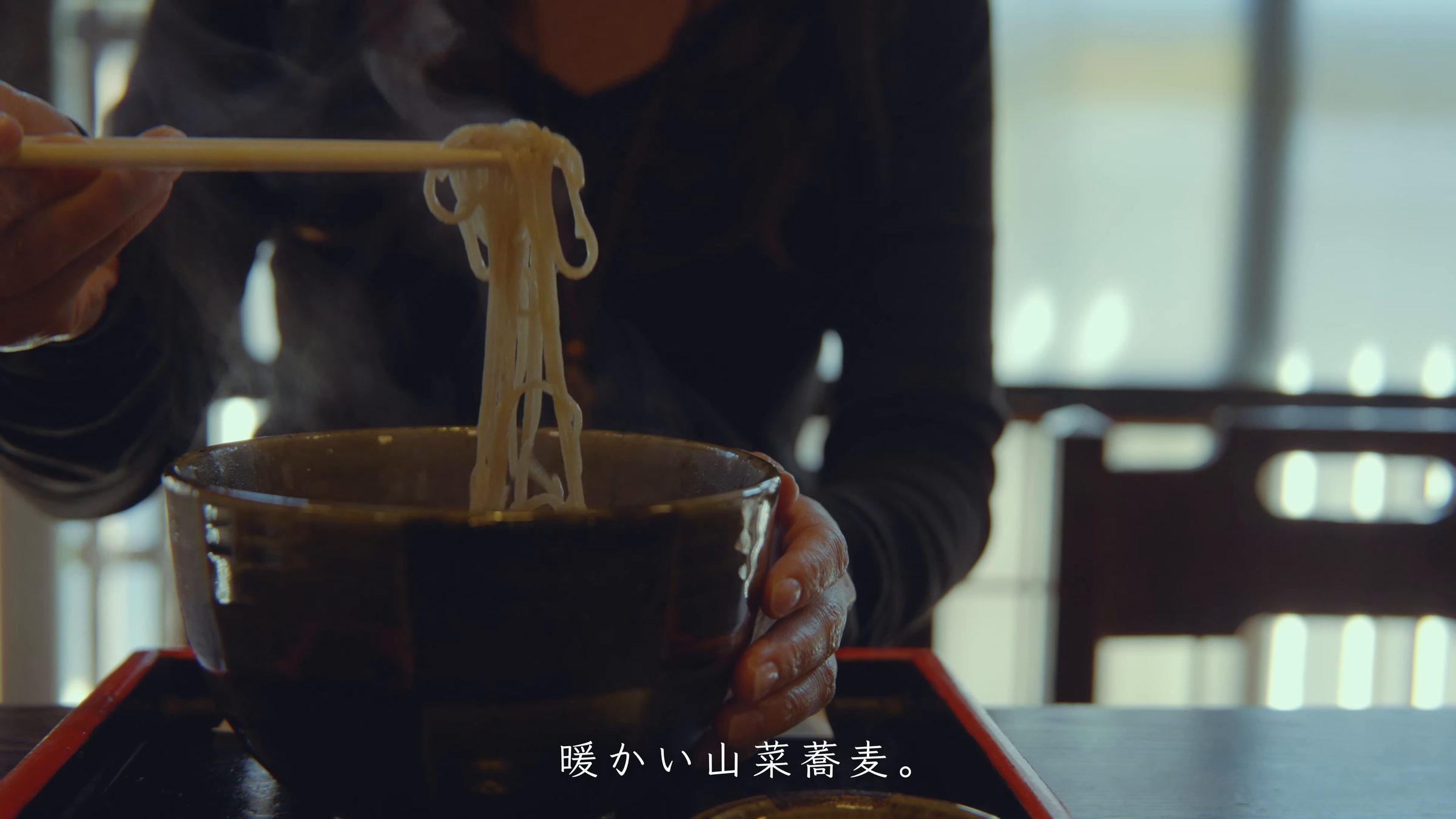
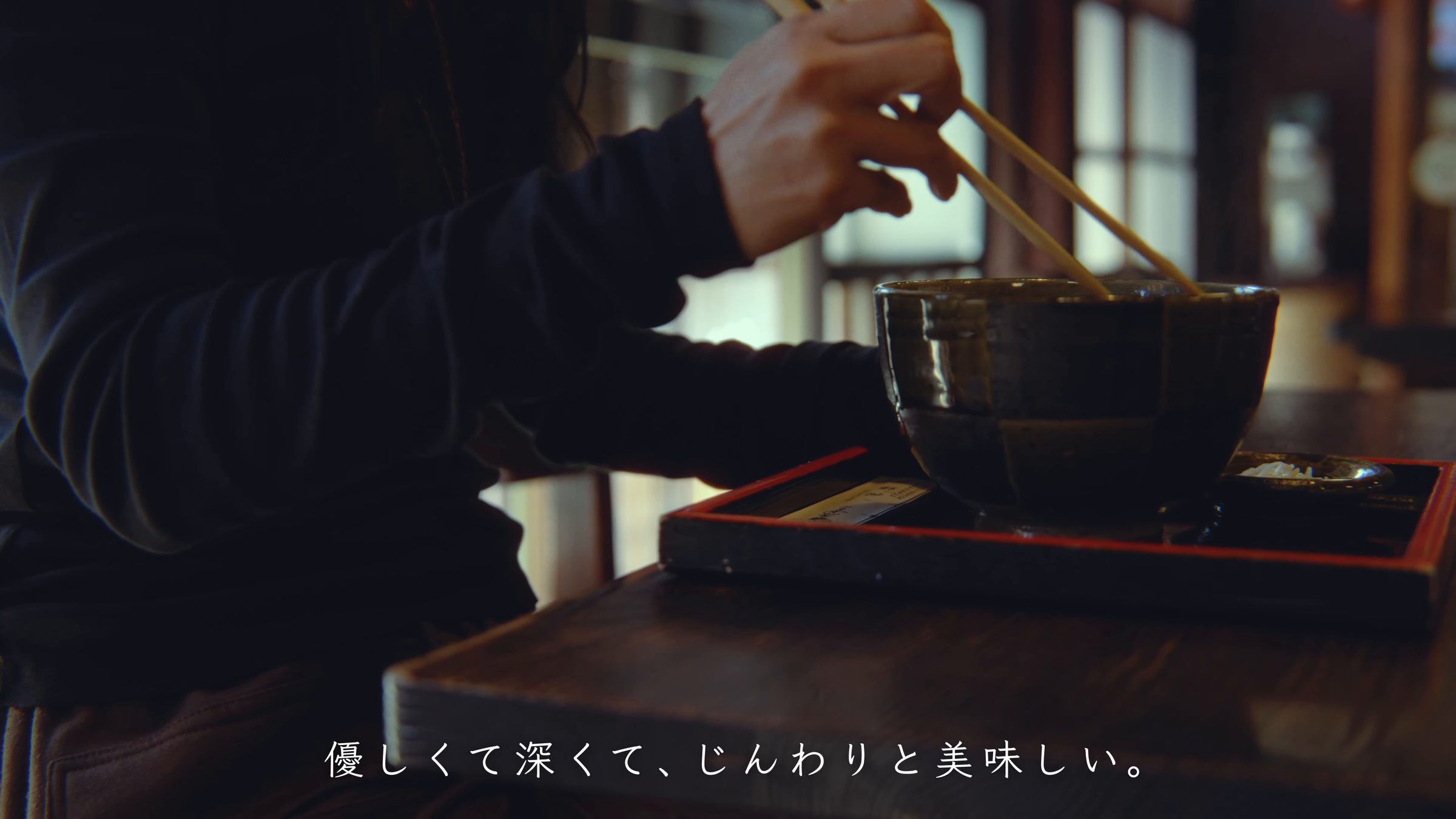
The thin noodles glistened with broth as I lifted them with my chopsticks. The flavor of the soba and the mountain greens seeped into the soup, gentle, deep, and quietly delicious. Sitting in the tatami room, I cradled the bowl and savored it to the end.
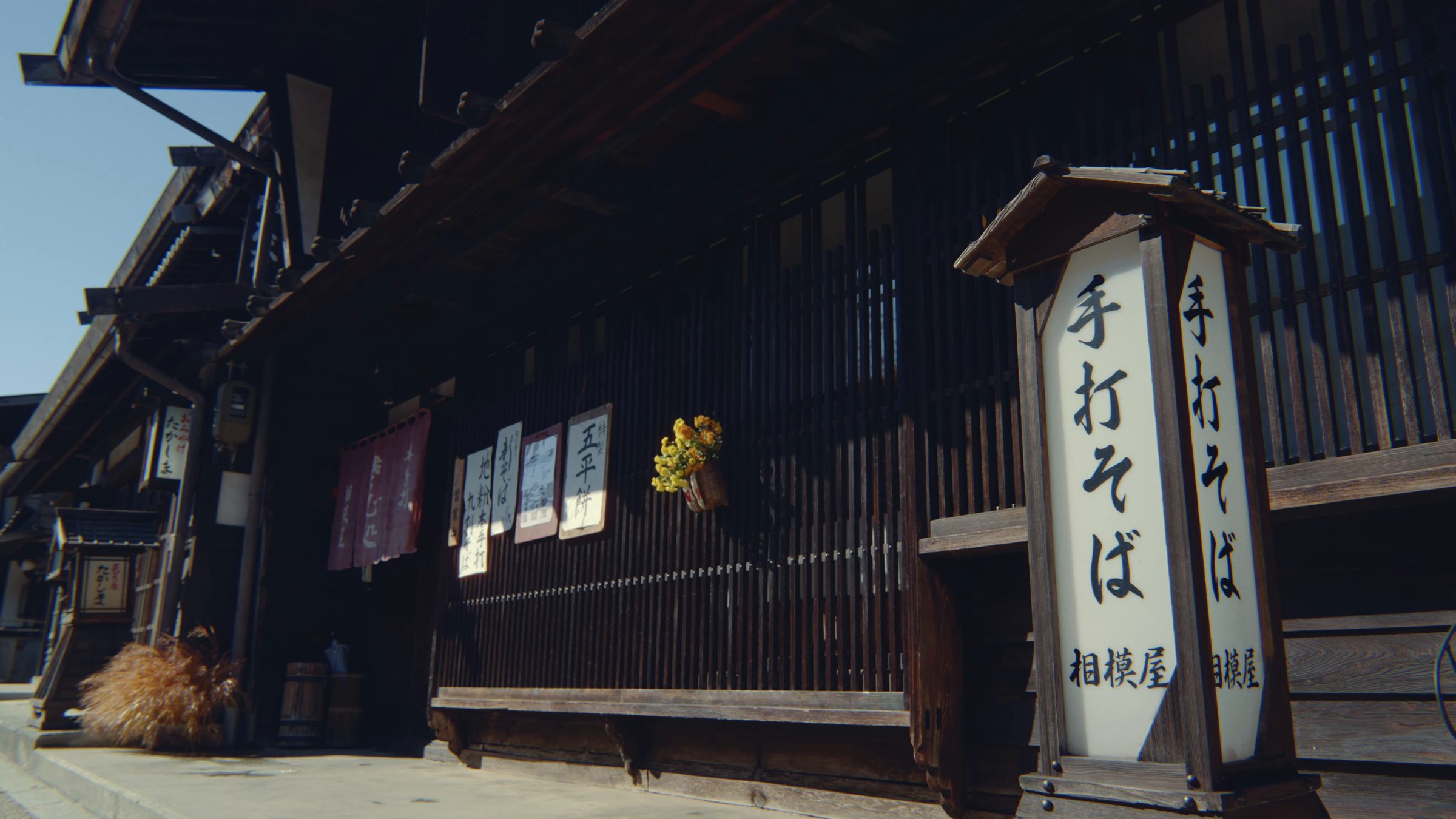
Outside, a paper lantern sign reading "handmade soba" hung by the latticed wall, where a pot of yellow flowers had been set.
Watch this scene on YouTube3:13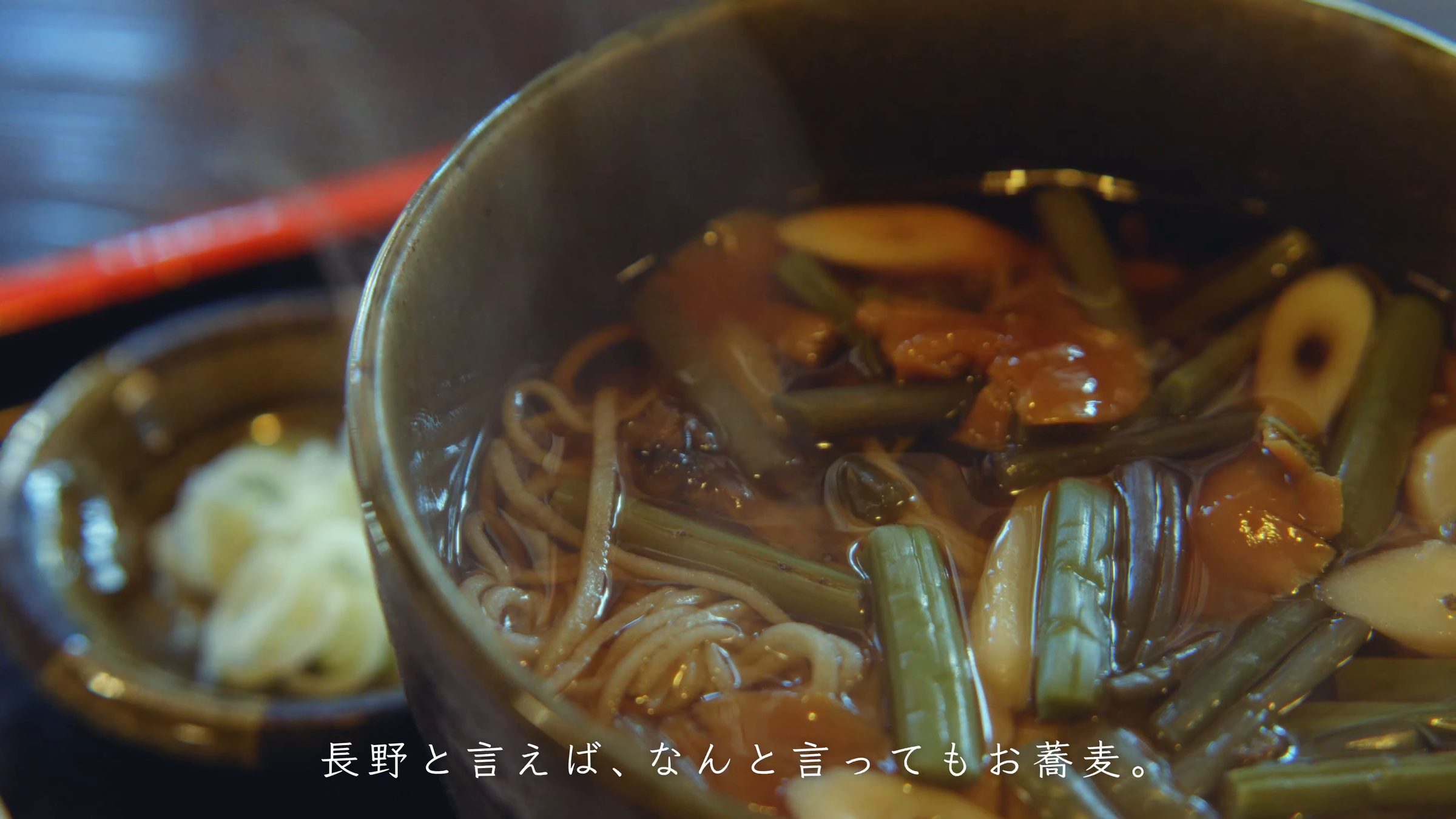
09TRAVEL JOURNAL
Home again, and a cup of coffee
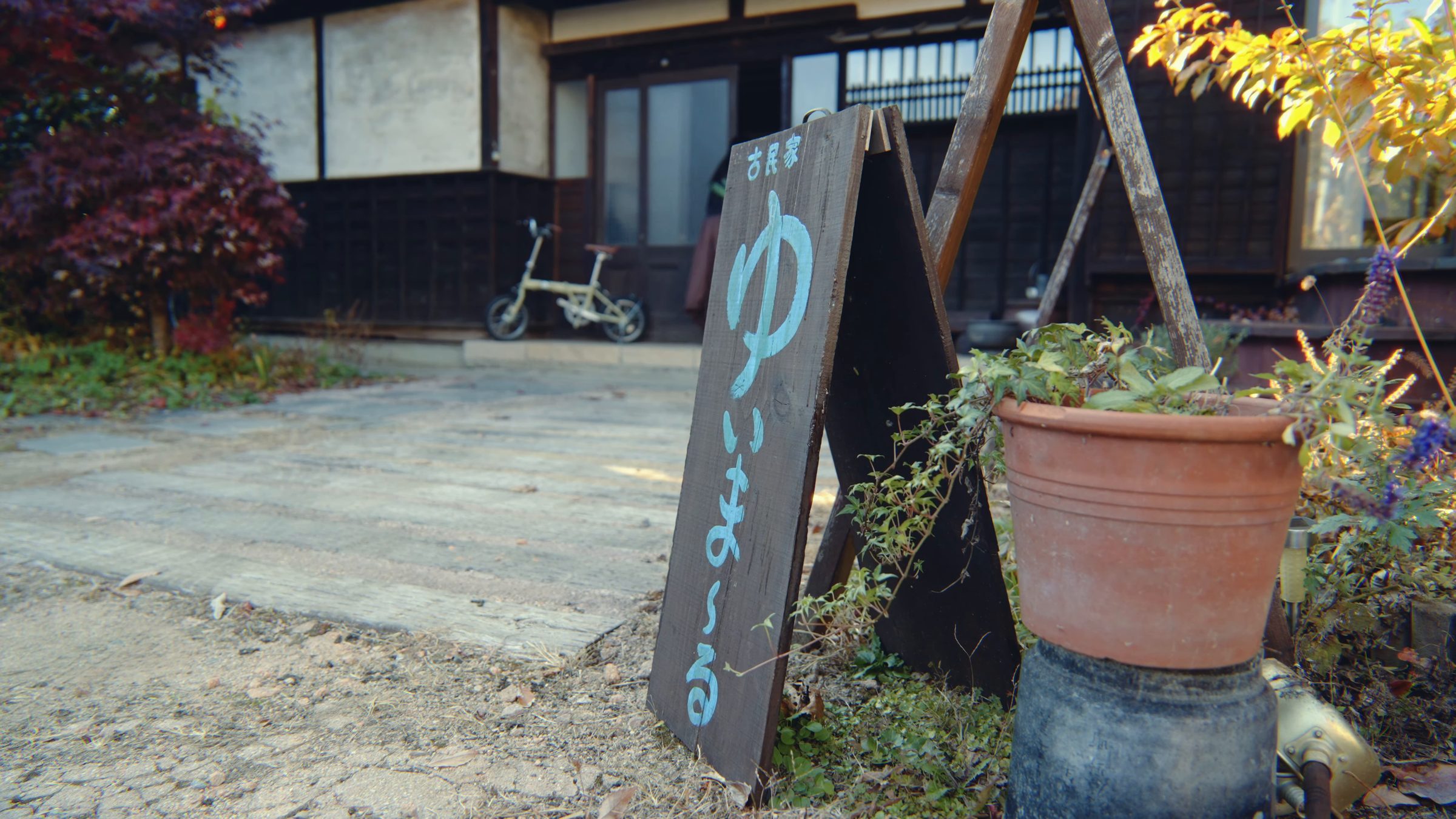
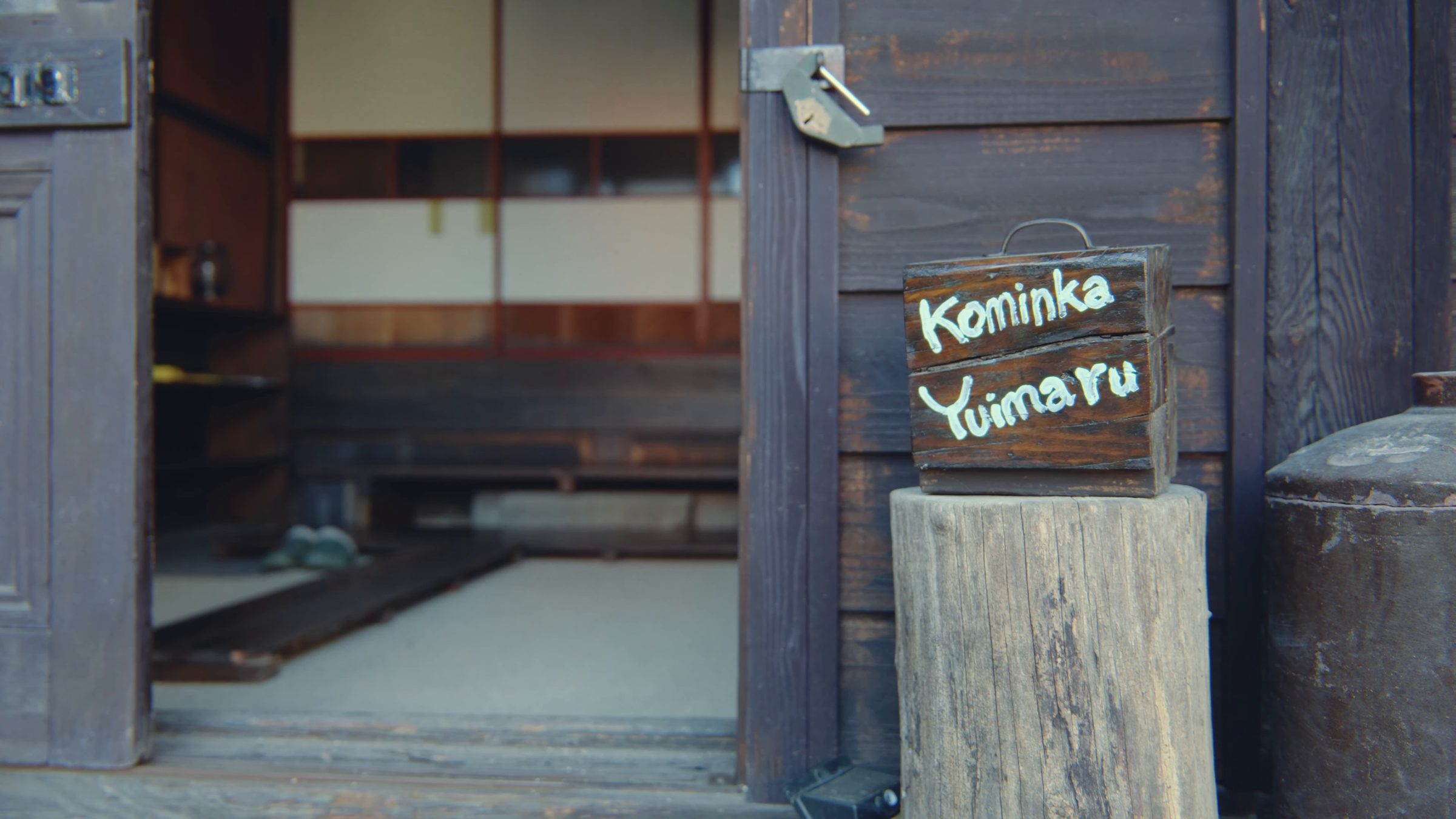
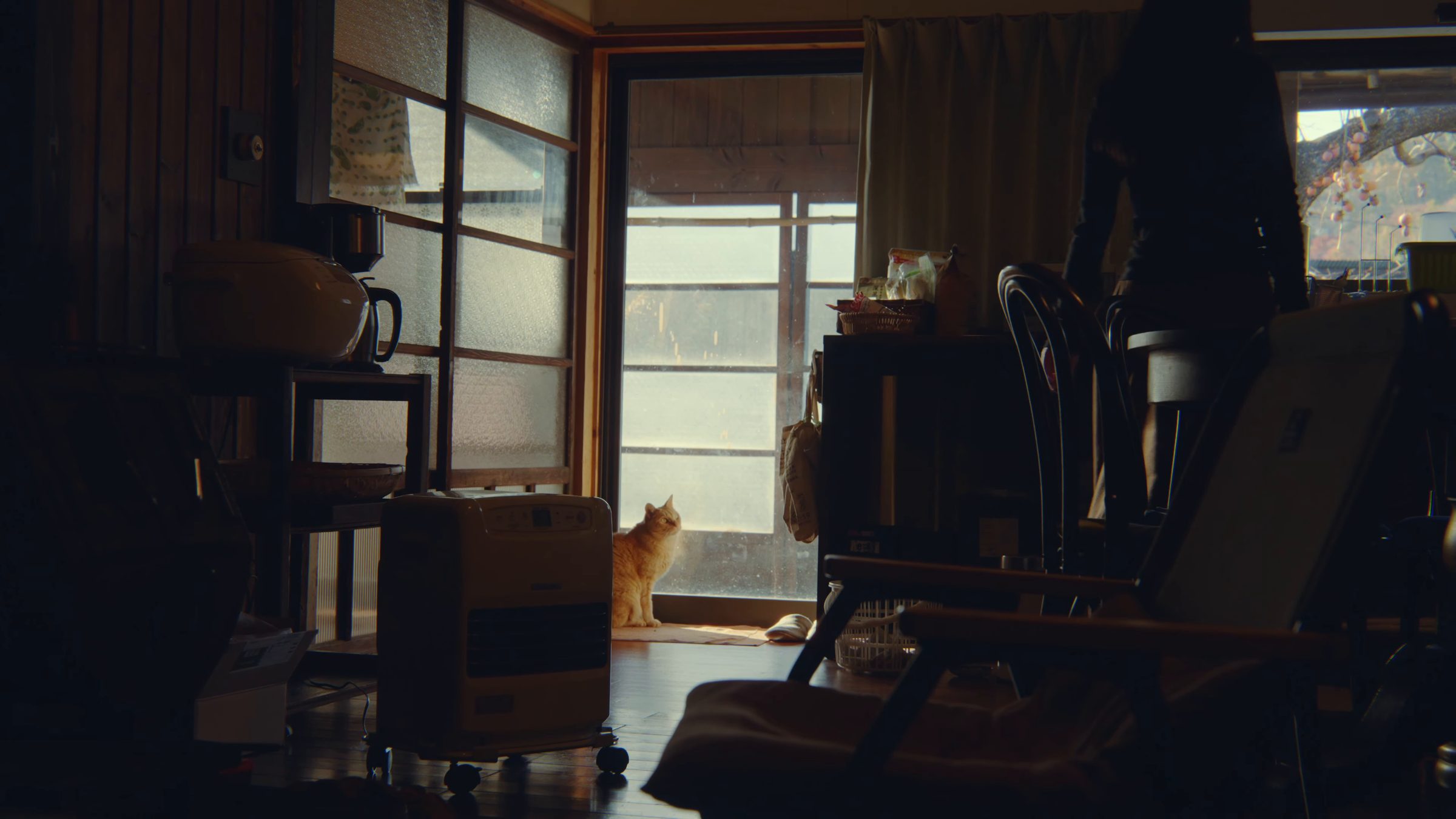
I came back to the farmhouse, wrapped in autumn leaves, past the inn's standing signboard in the yard and the wooden sign under the eaves. I'm home. At the far end of the room, where light came through the shoji, the cat was watching me.
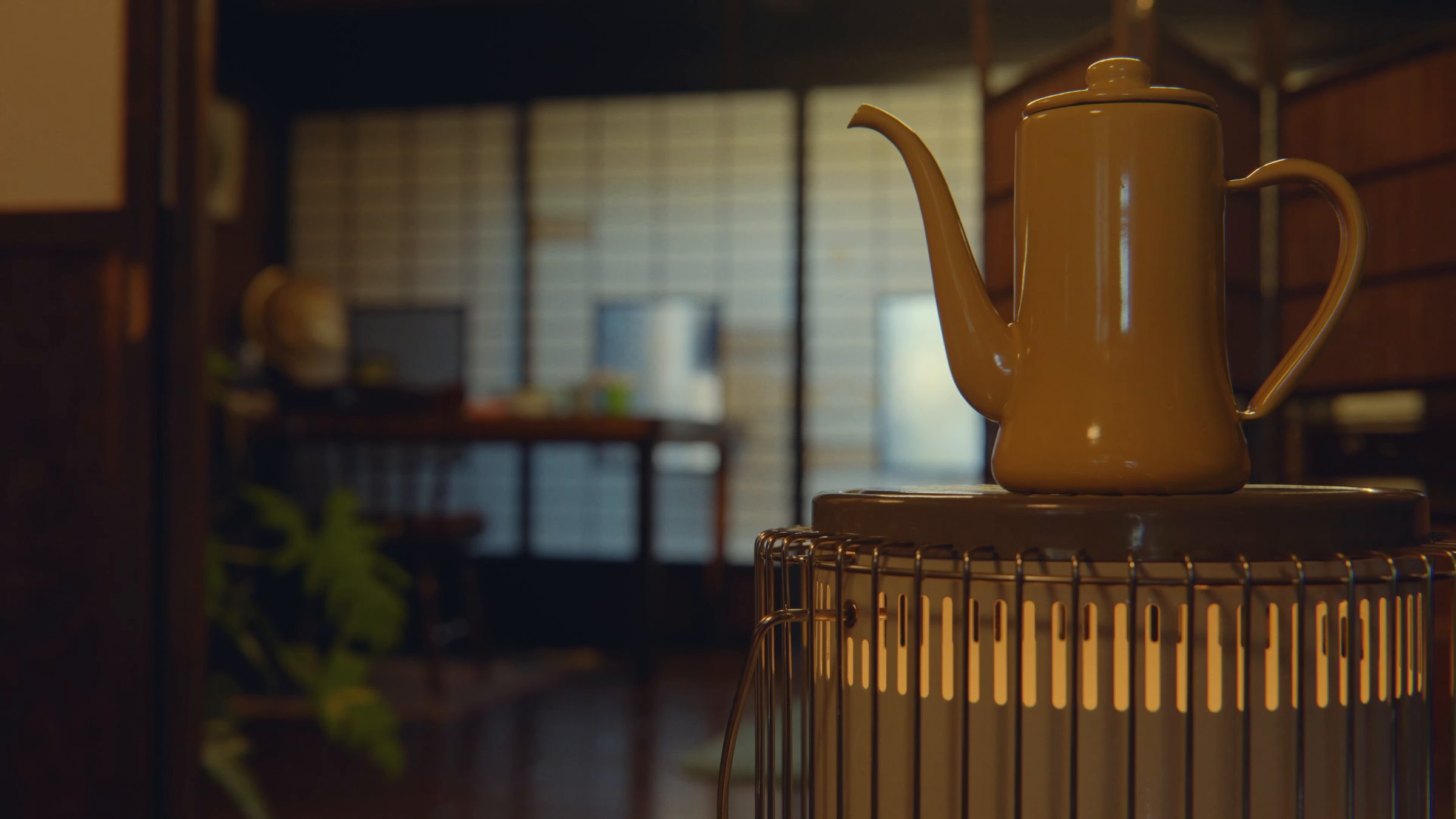
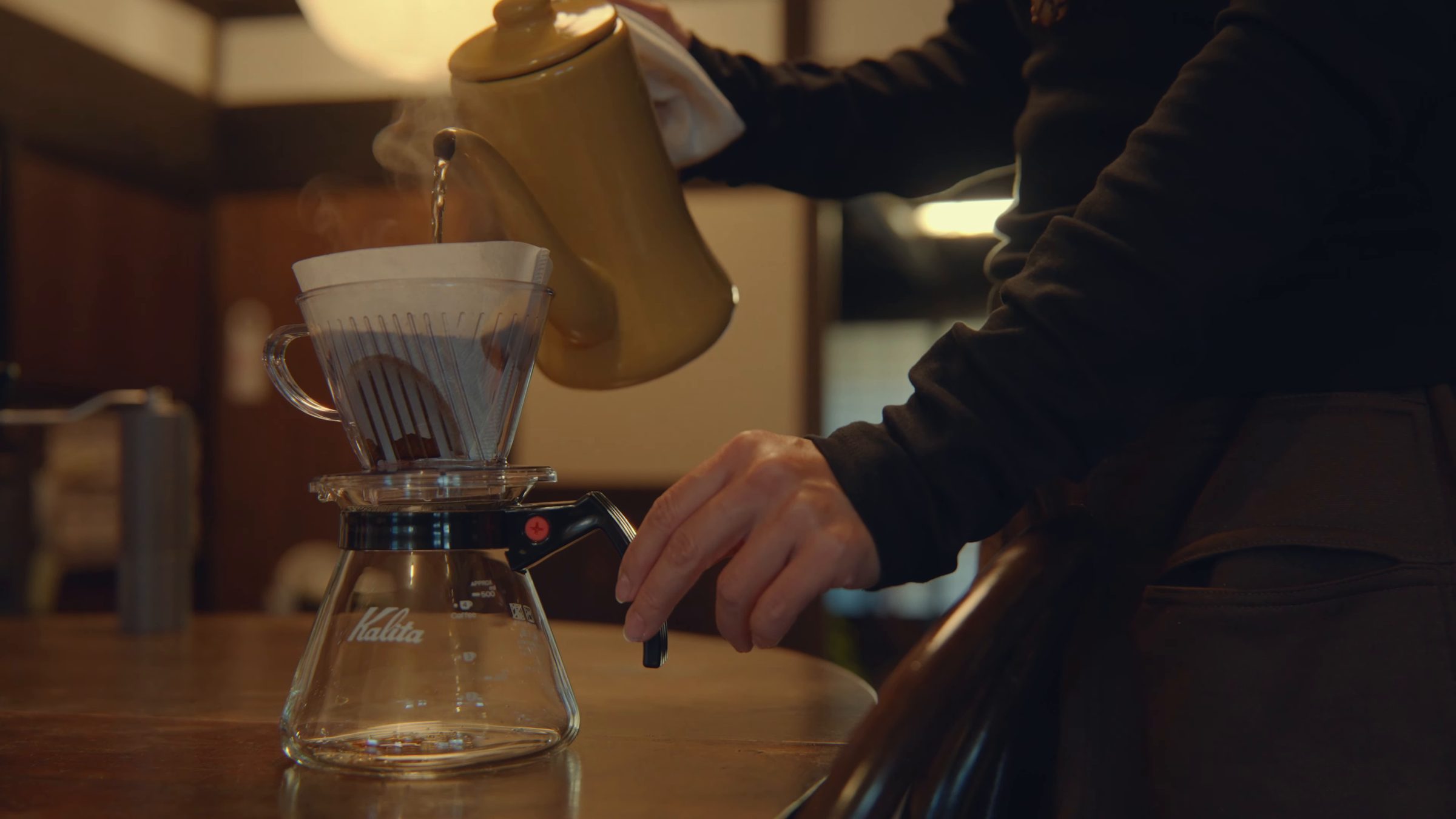
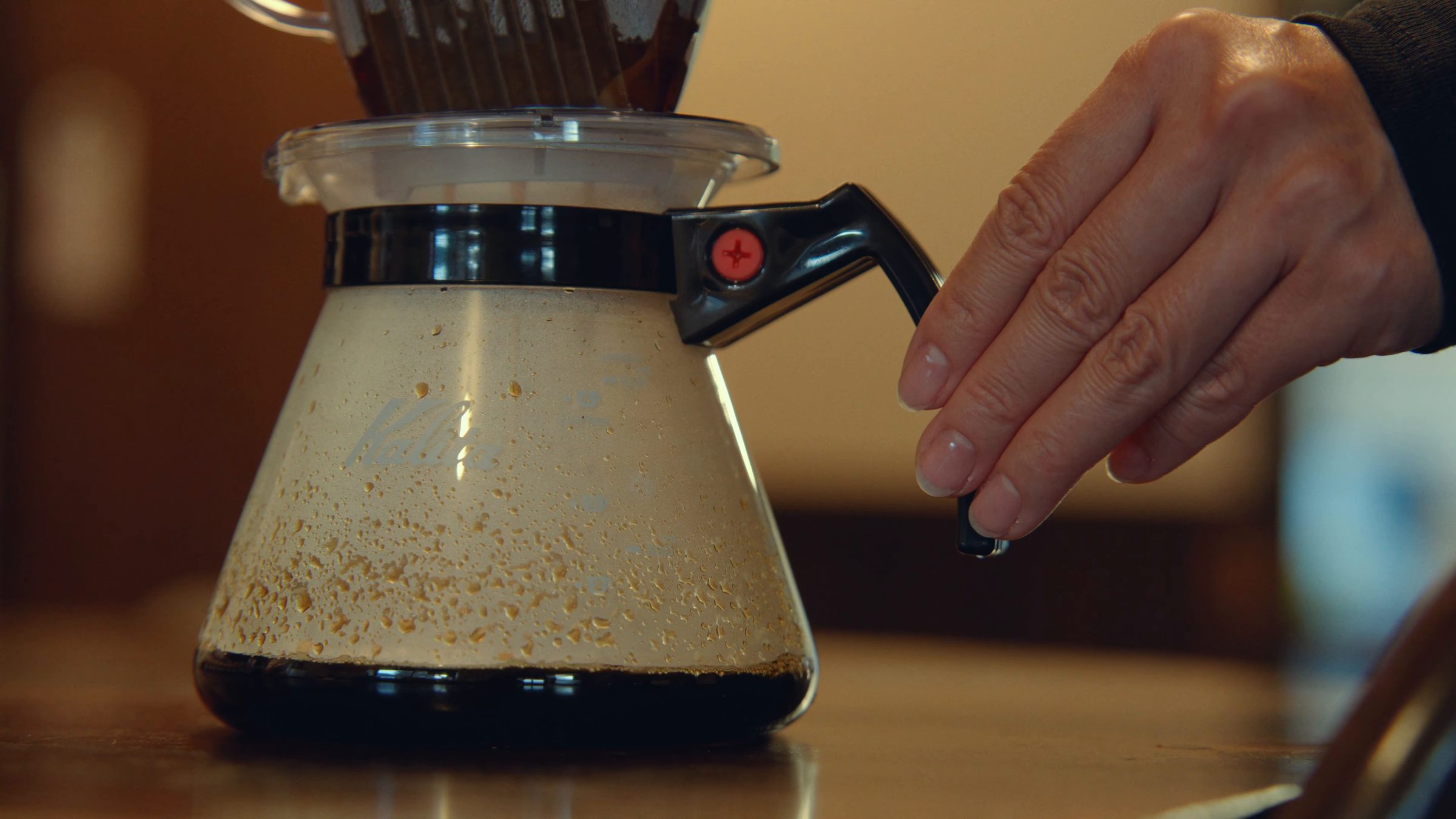
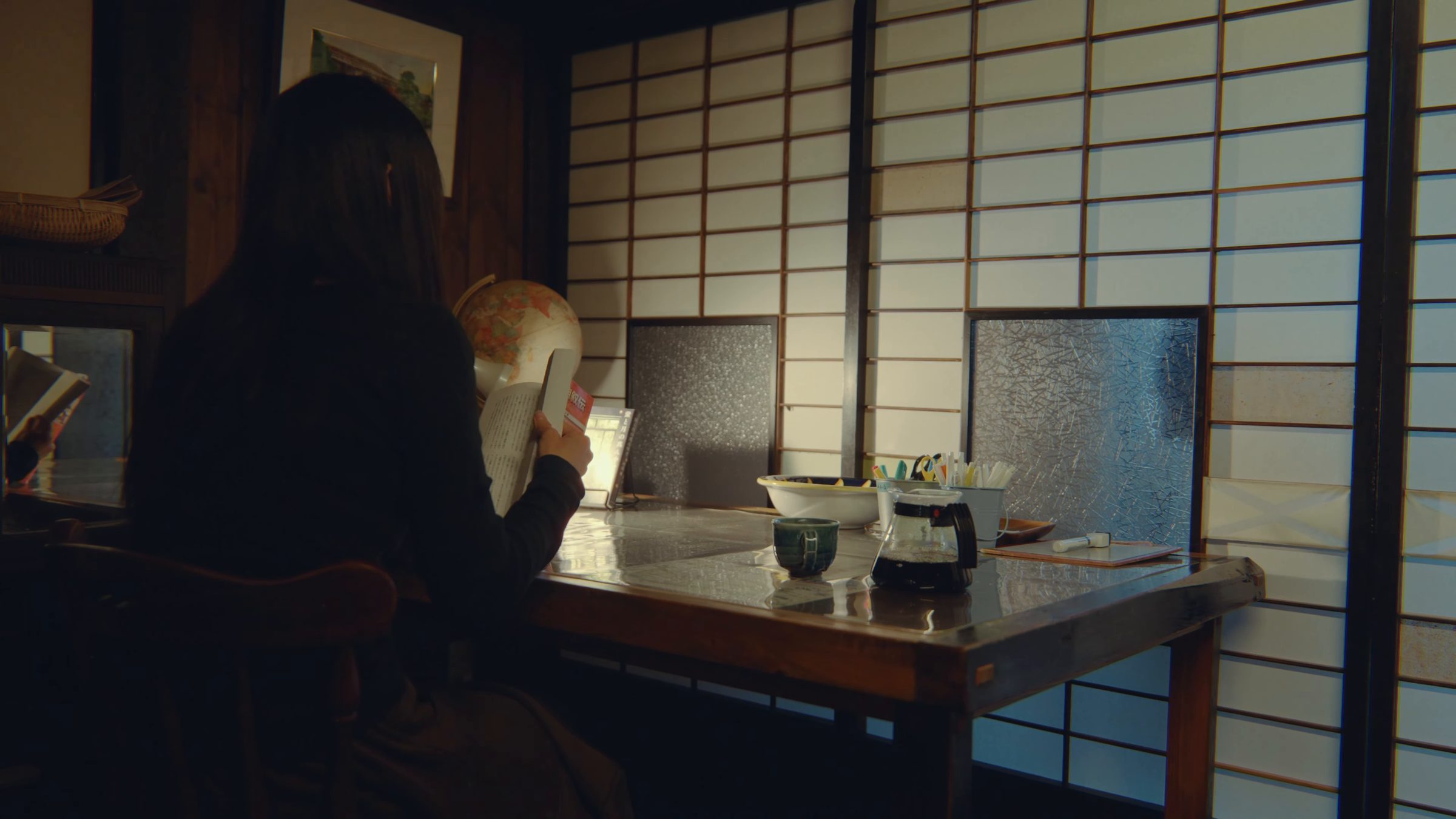
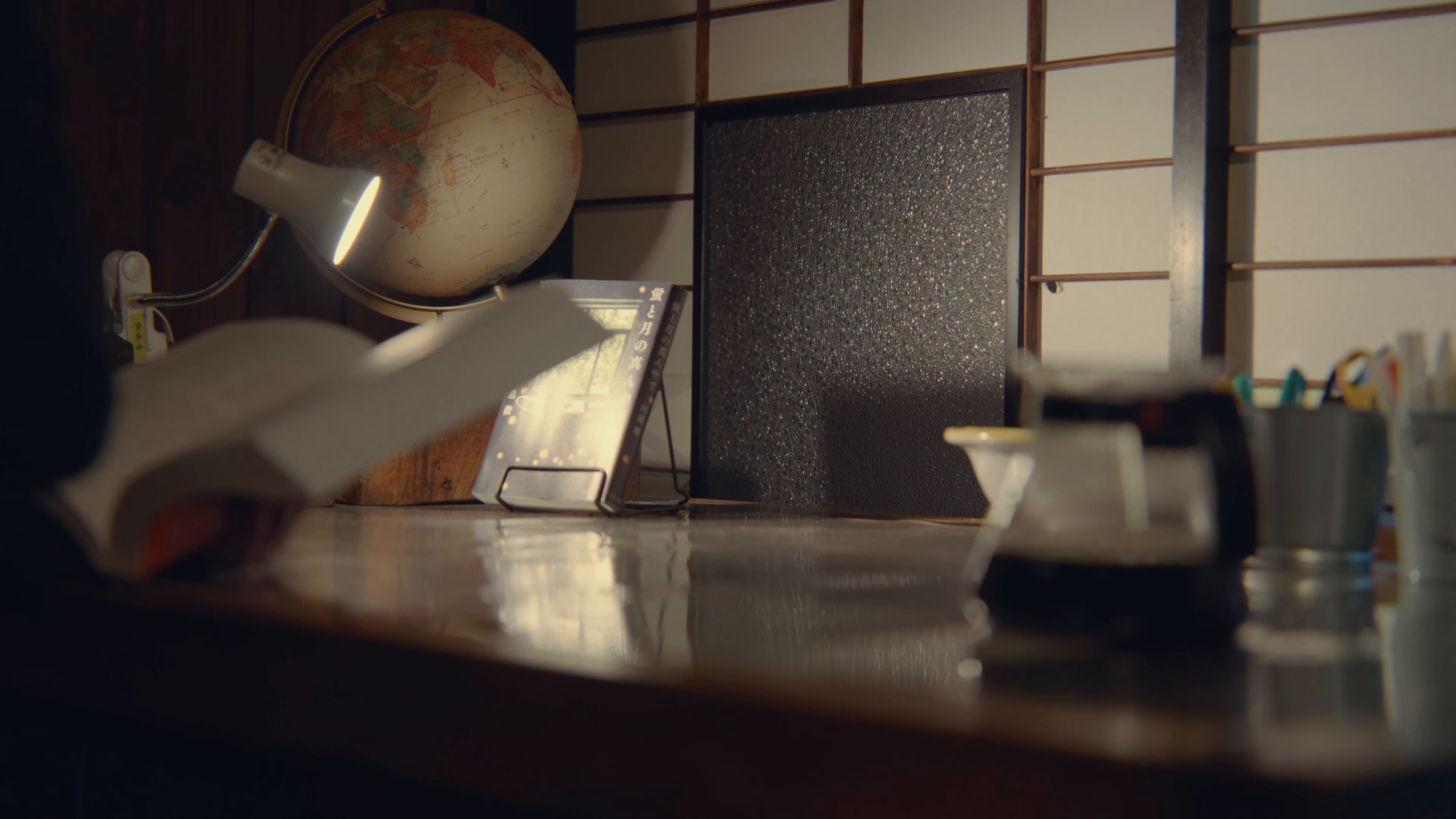
On the stove, a yellow enamel pot was heating water. I poured it over the dripper and watched the coffee gather in the glass server. Sitting at a desk in the shoji-screened room with a globe and a lamp for company, I let the afternoon pass slowly.
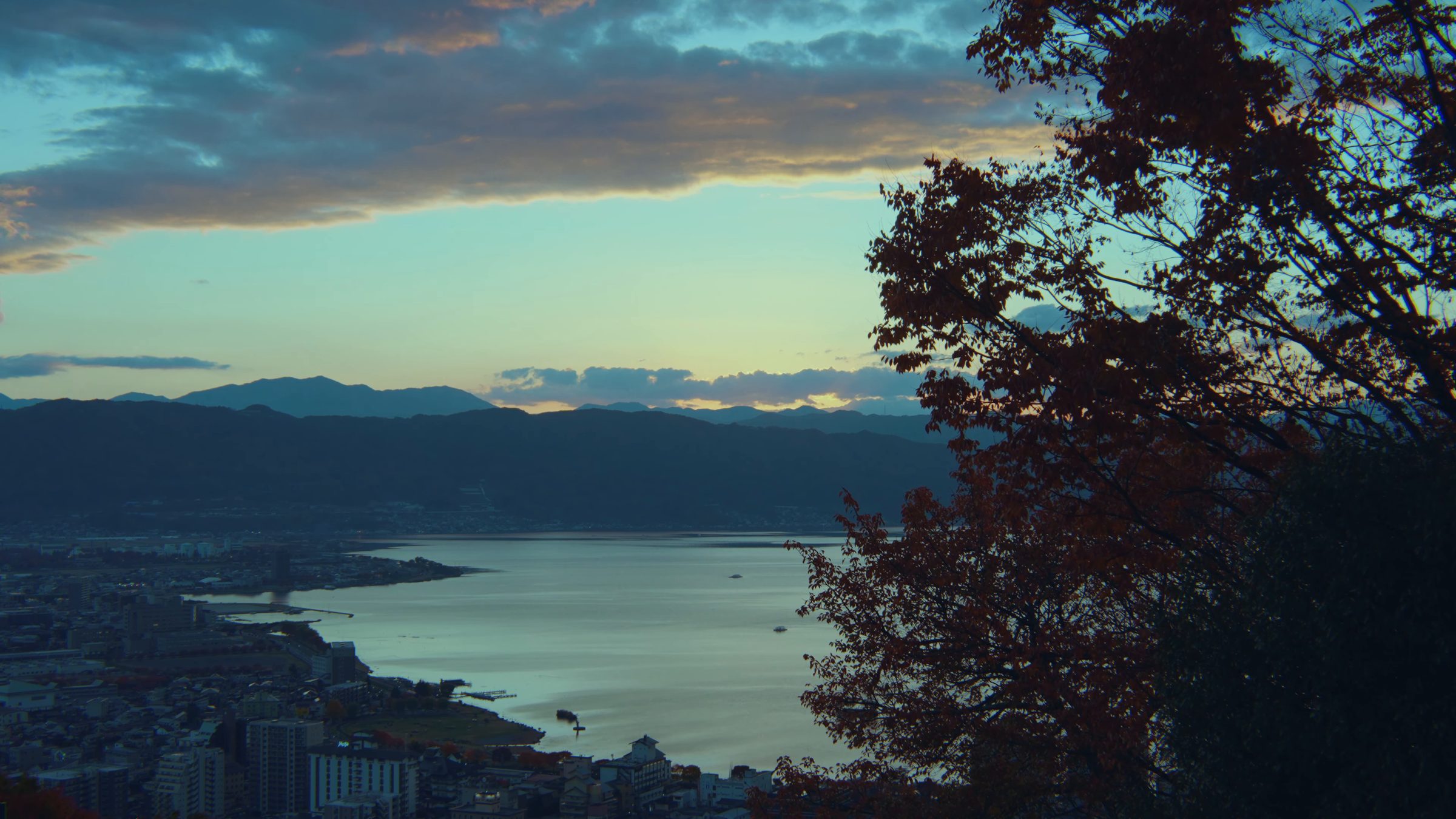
As the sun went down, from a rise above the town I could see a lake fading into dusk and the lights coming on below.
Watch this scene on YouTube3:39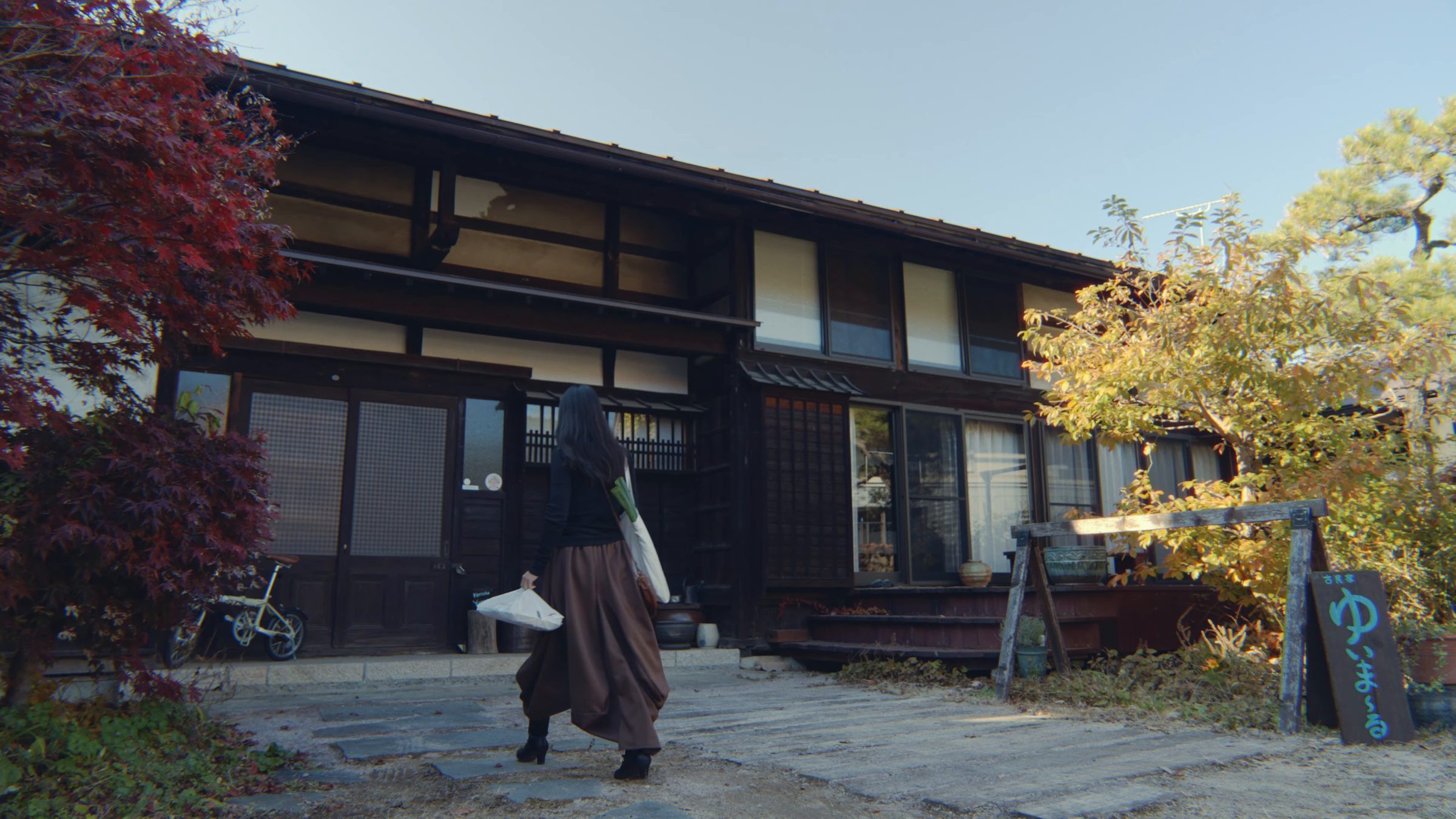
10TRAVEL JOURNAL
Shinshu beef sukiyaki
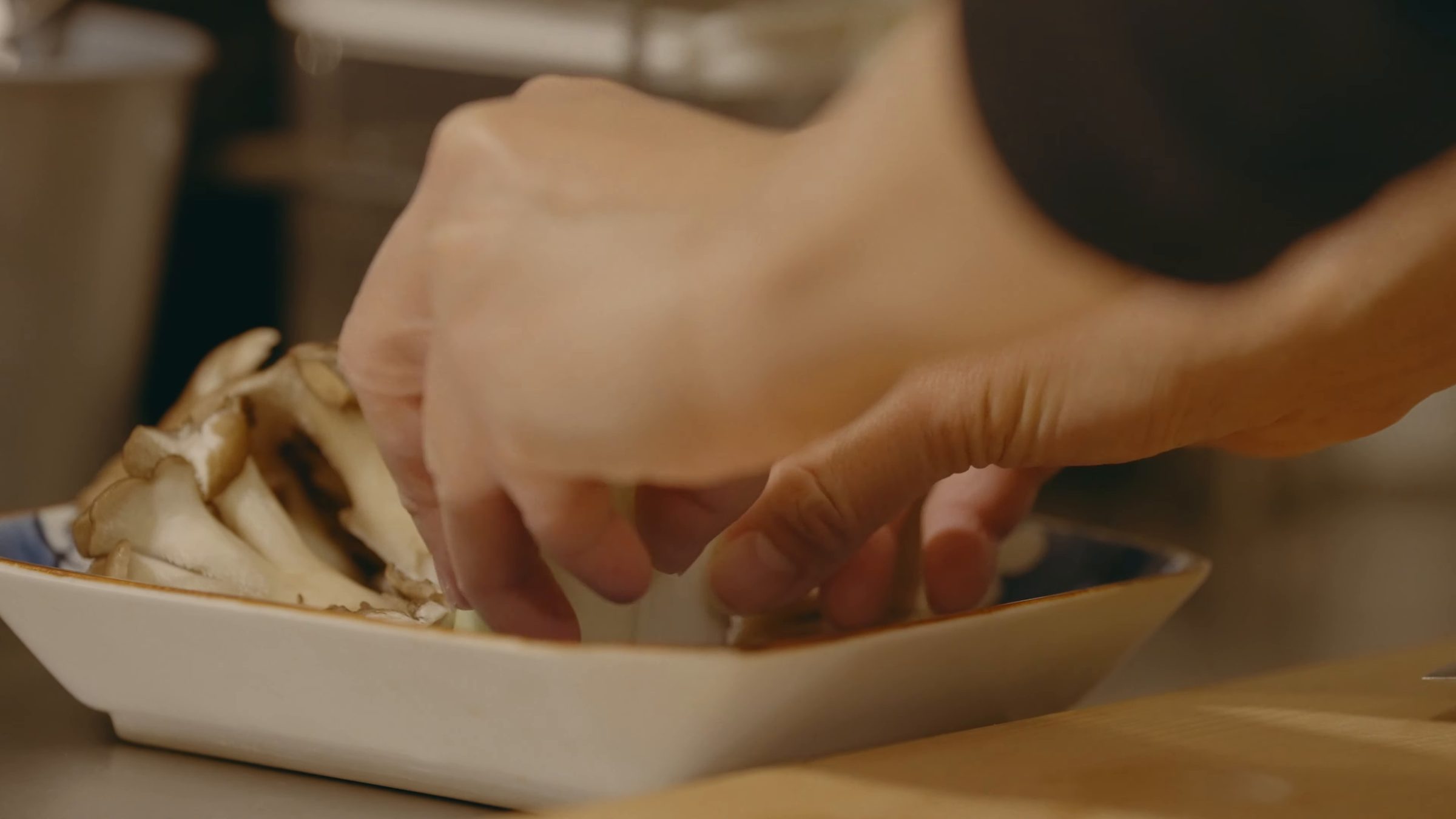
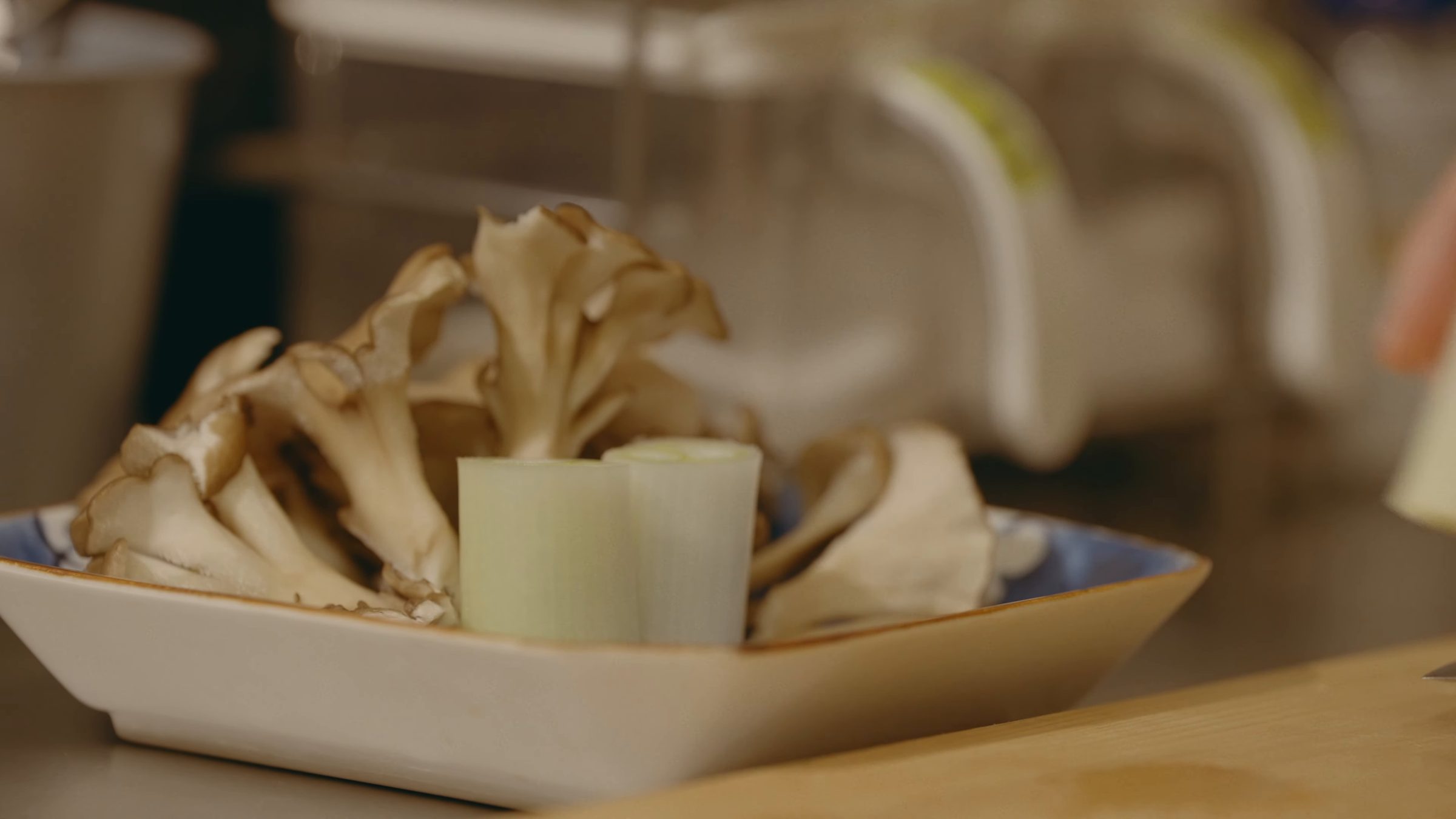
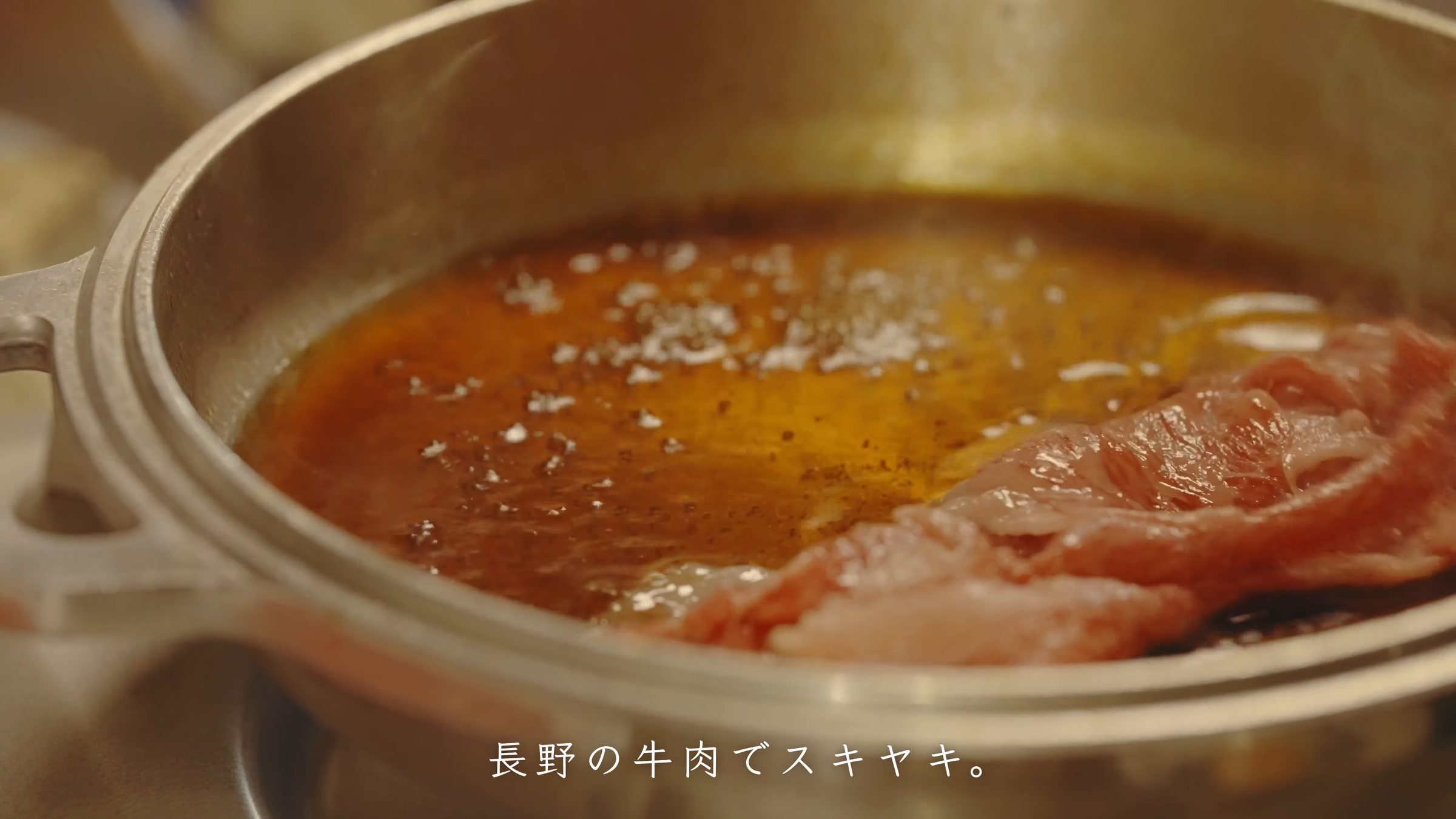
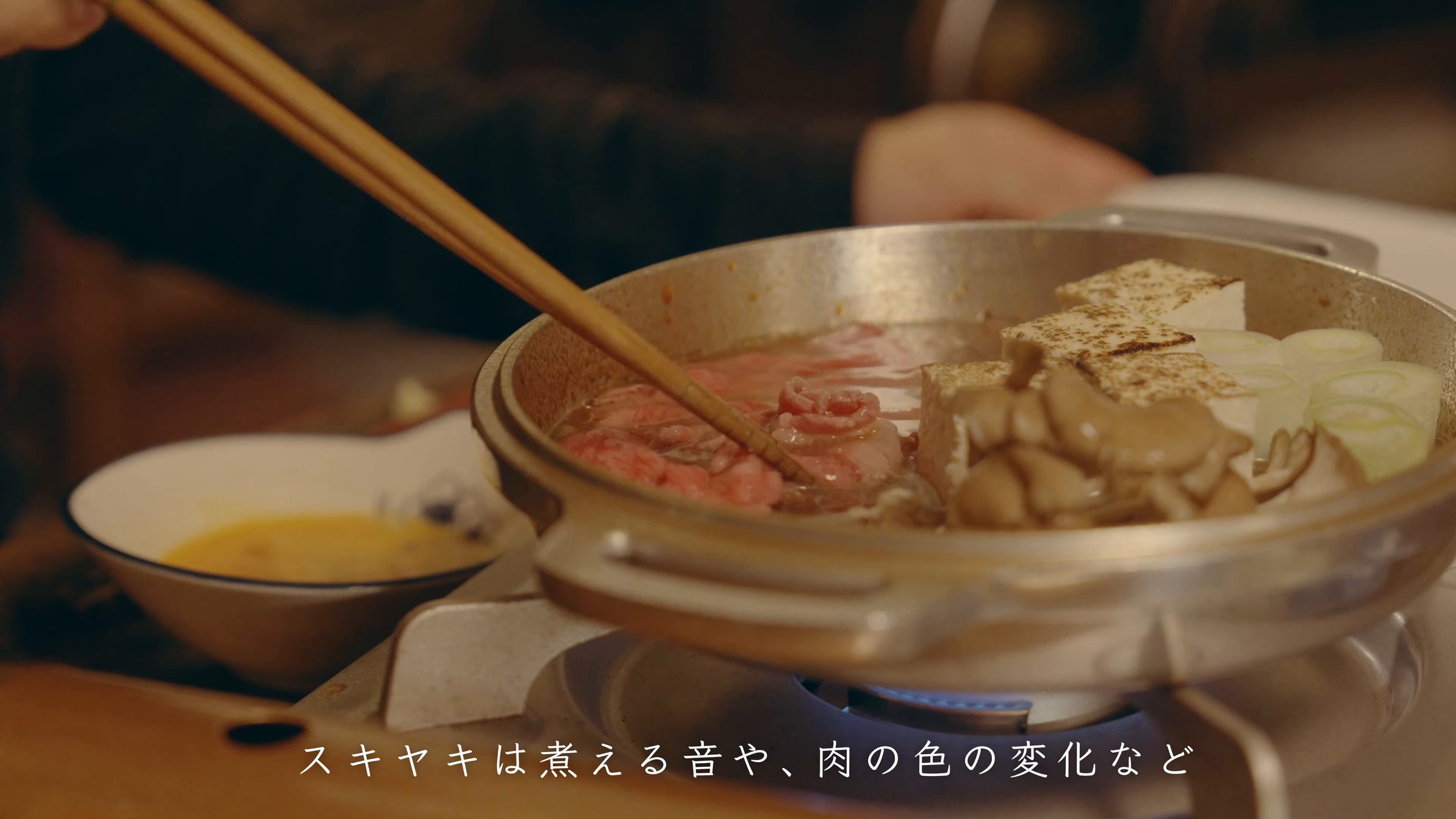
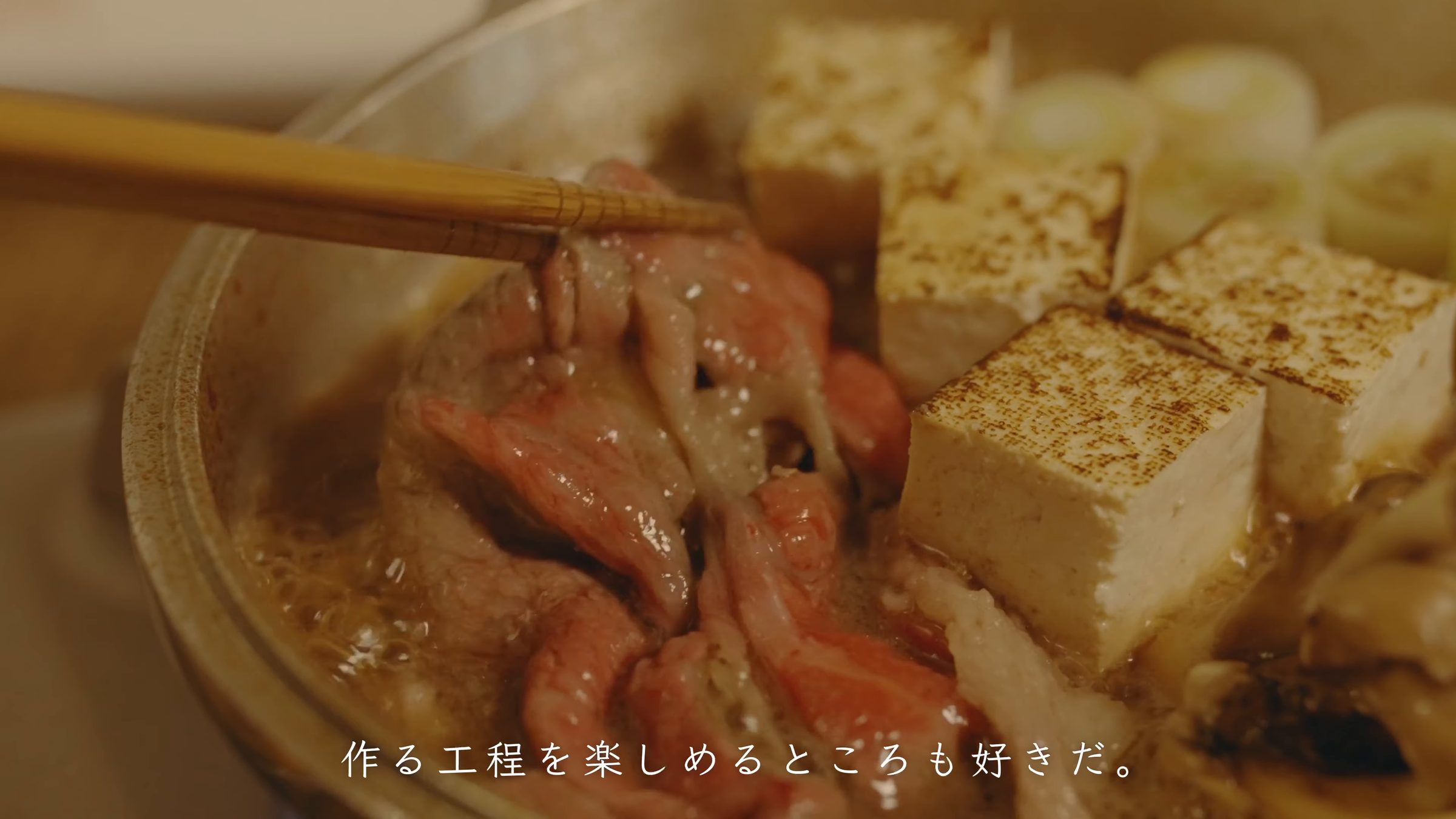
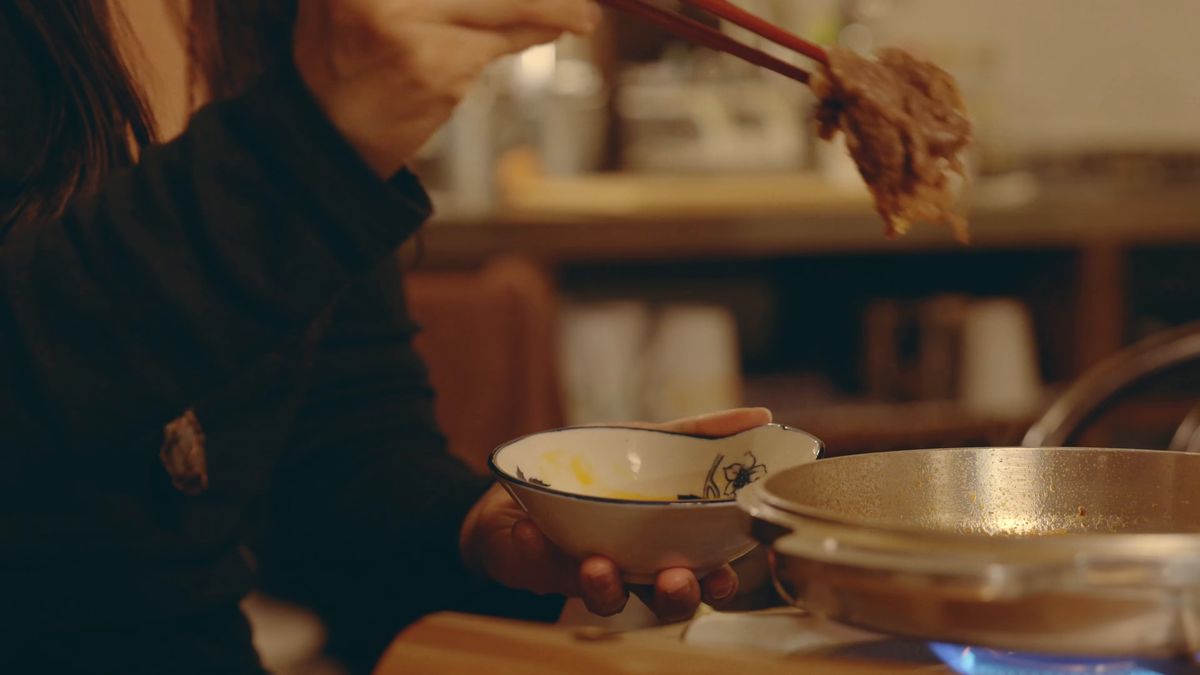
Dinner was sukiyaki with beef from Nagano. I sliced a leek on the board and arranged maitake mushrooms and leek on a plate, then set the pan on a tabletop burner and laid the beef in the sweet soy broth.
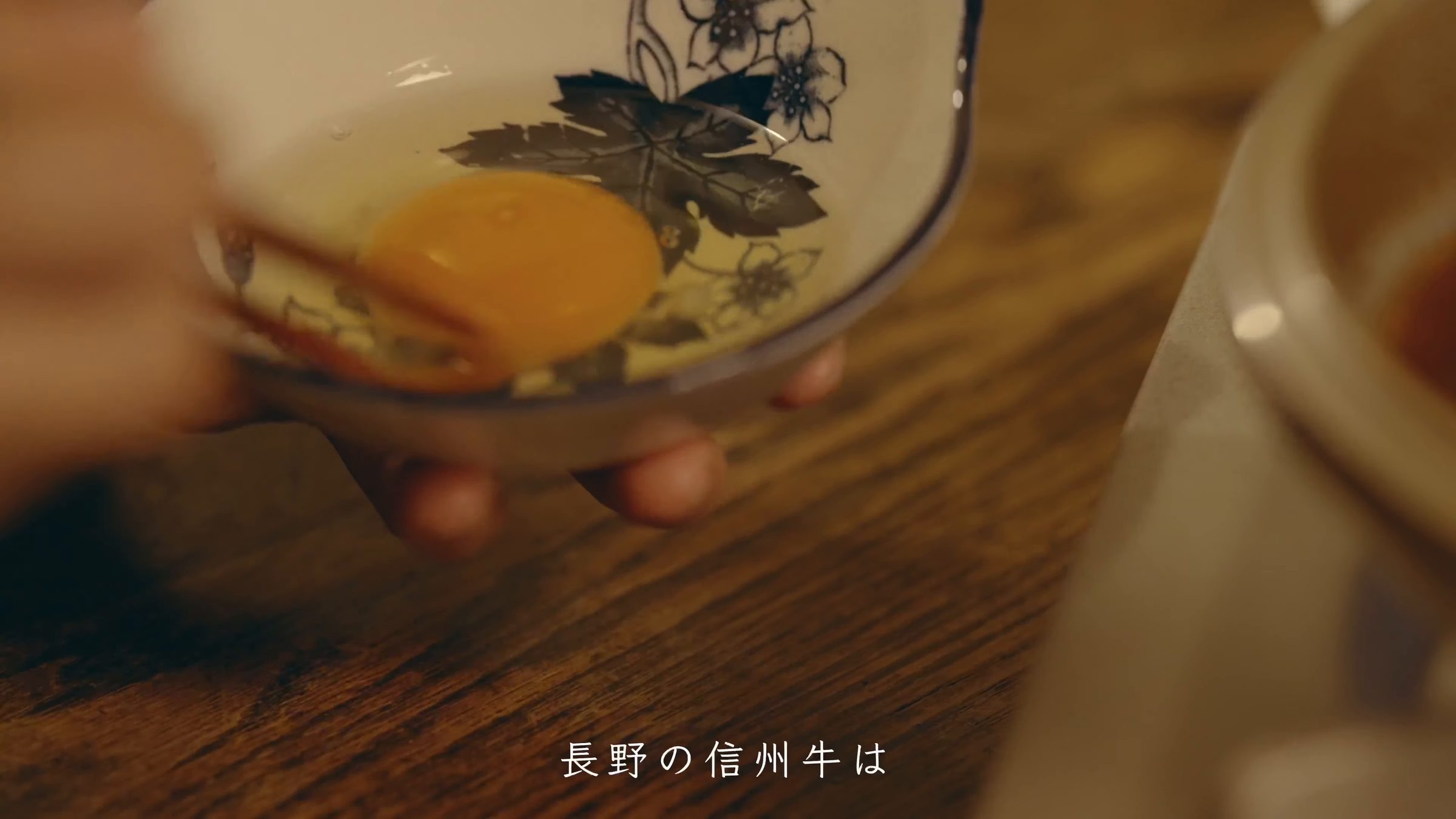
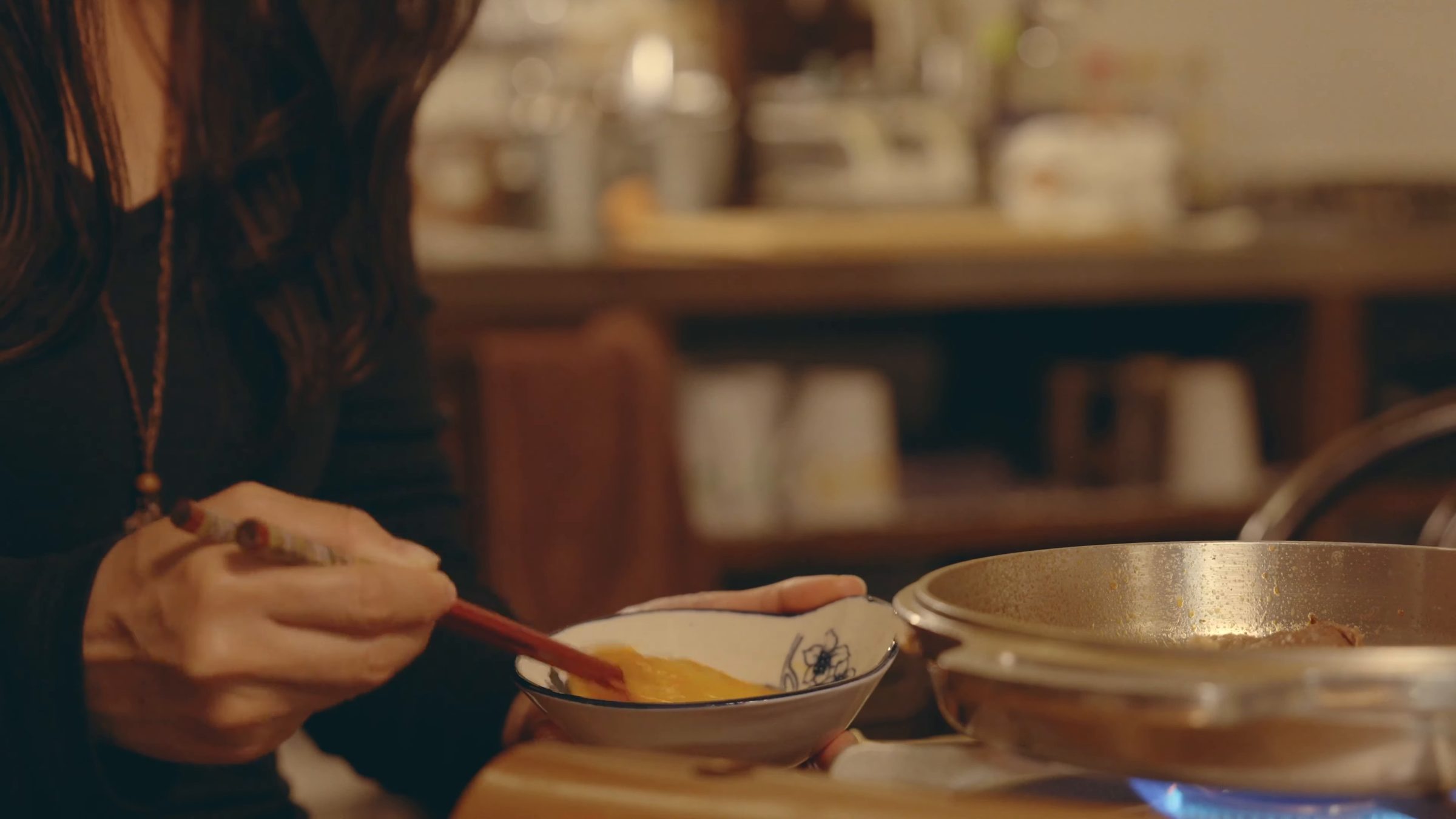
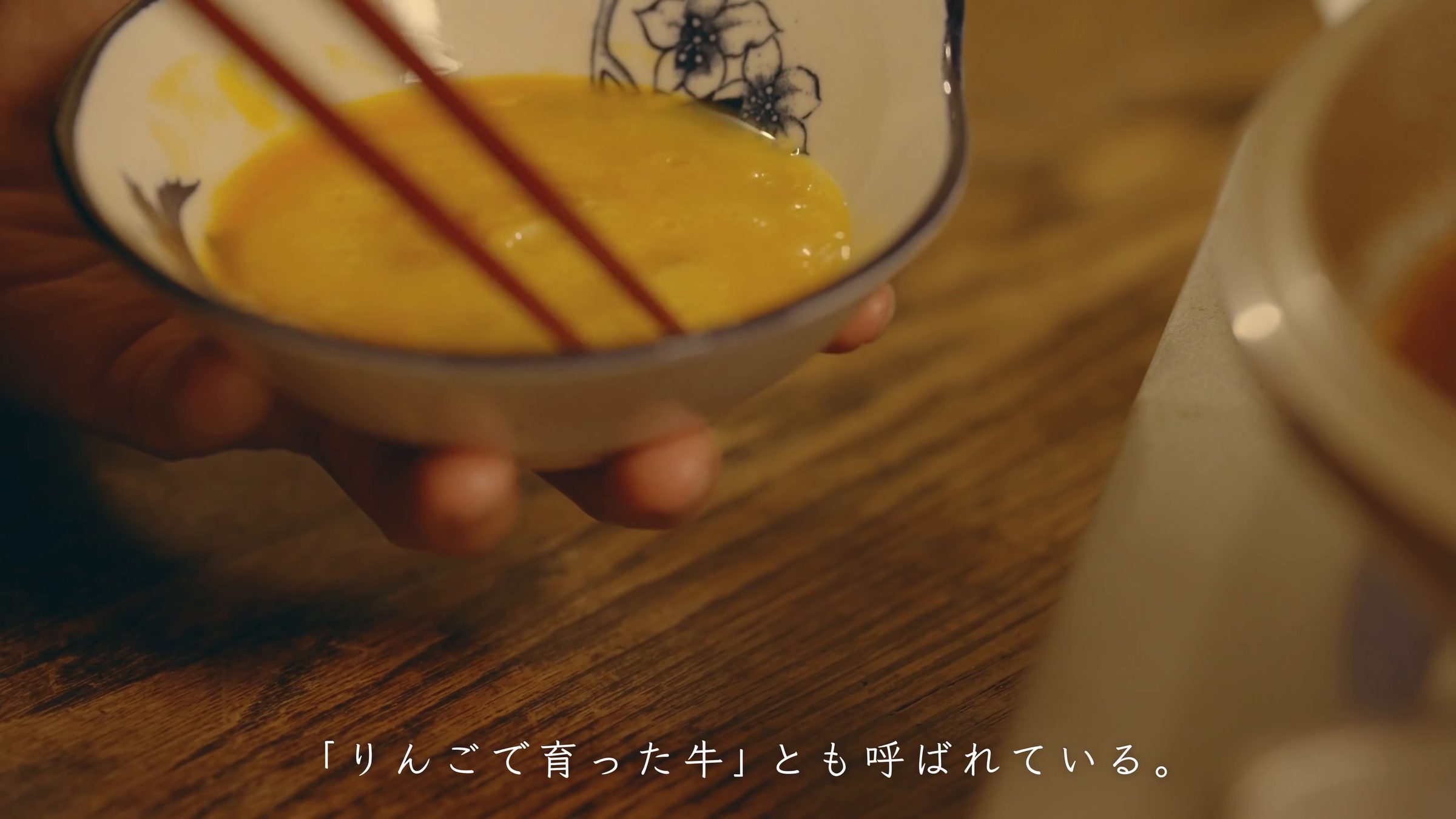
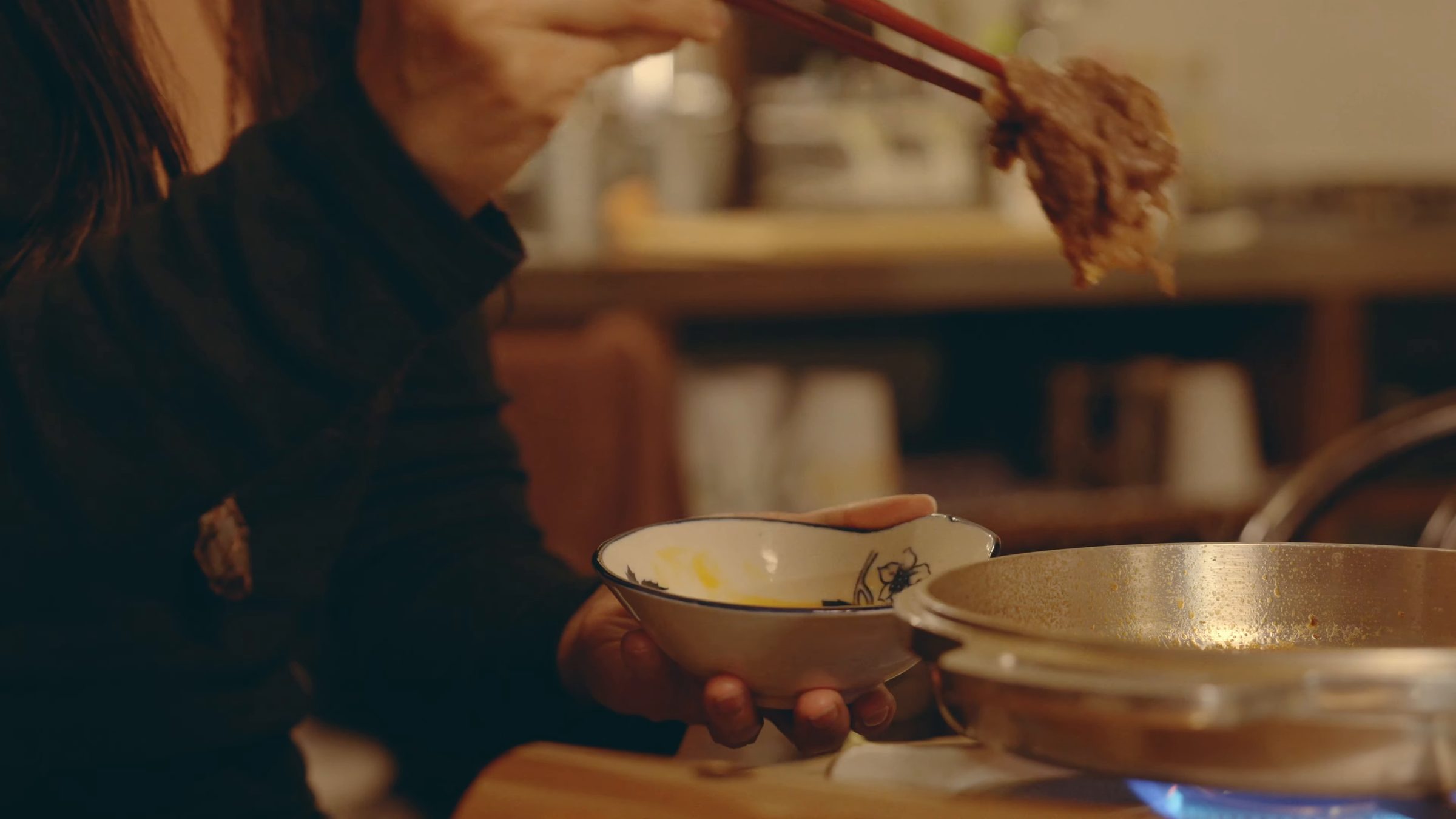
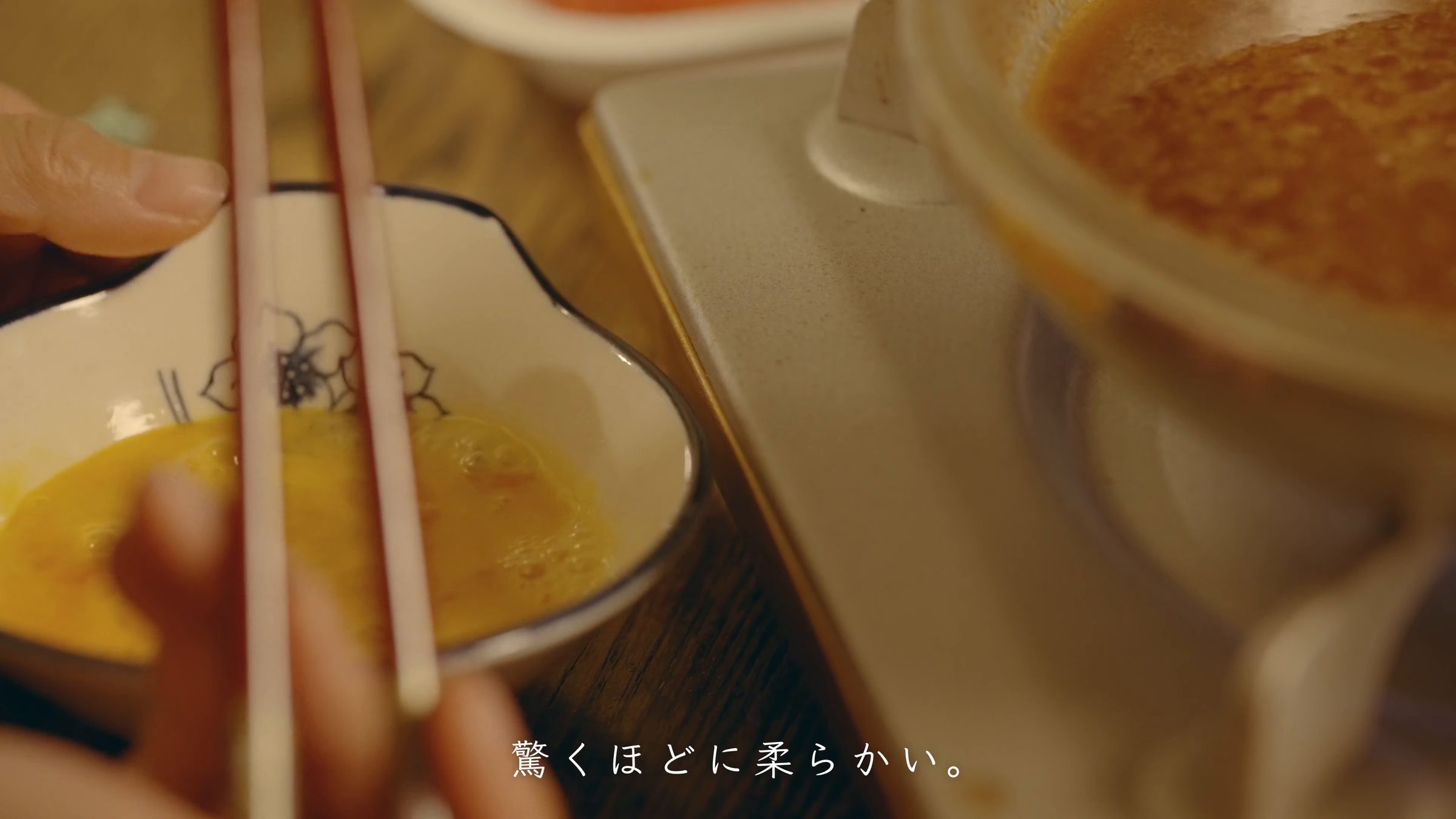
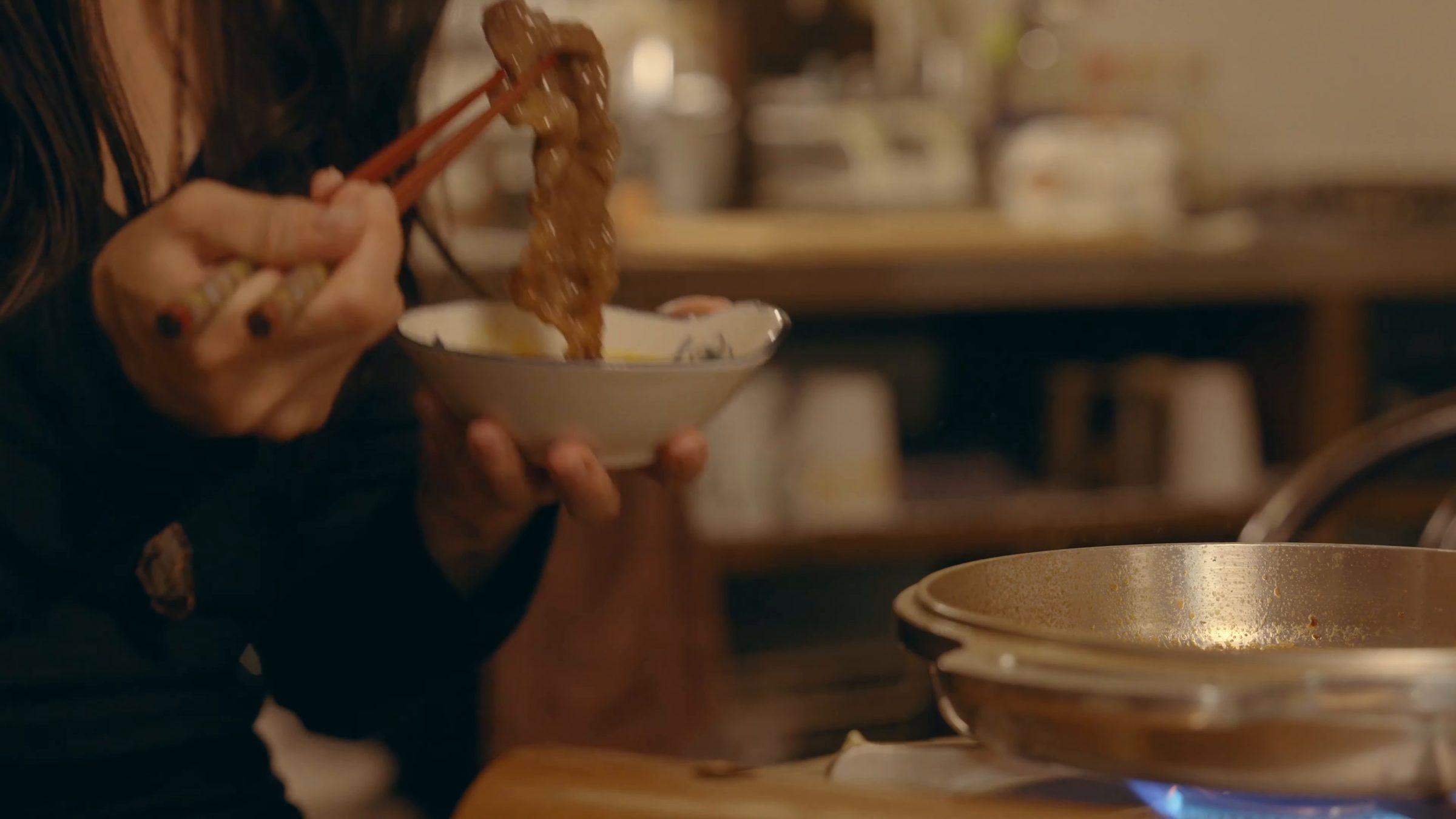
Shinshu beef is a premium brand from Nagano, also known as "apple-fed beef" because the cattle are raised on feed that includes apple pomace. I cracked an egg into a bowl, beat it with chopsticks, dipped the simmered beef in it, and took a bite. It was astonishingly tender.
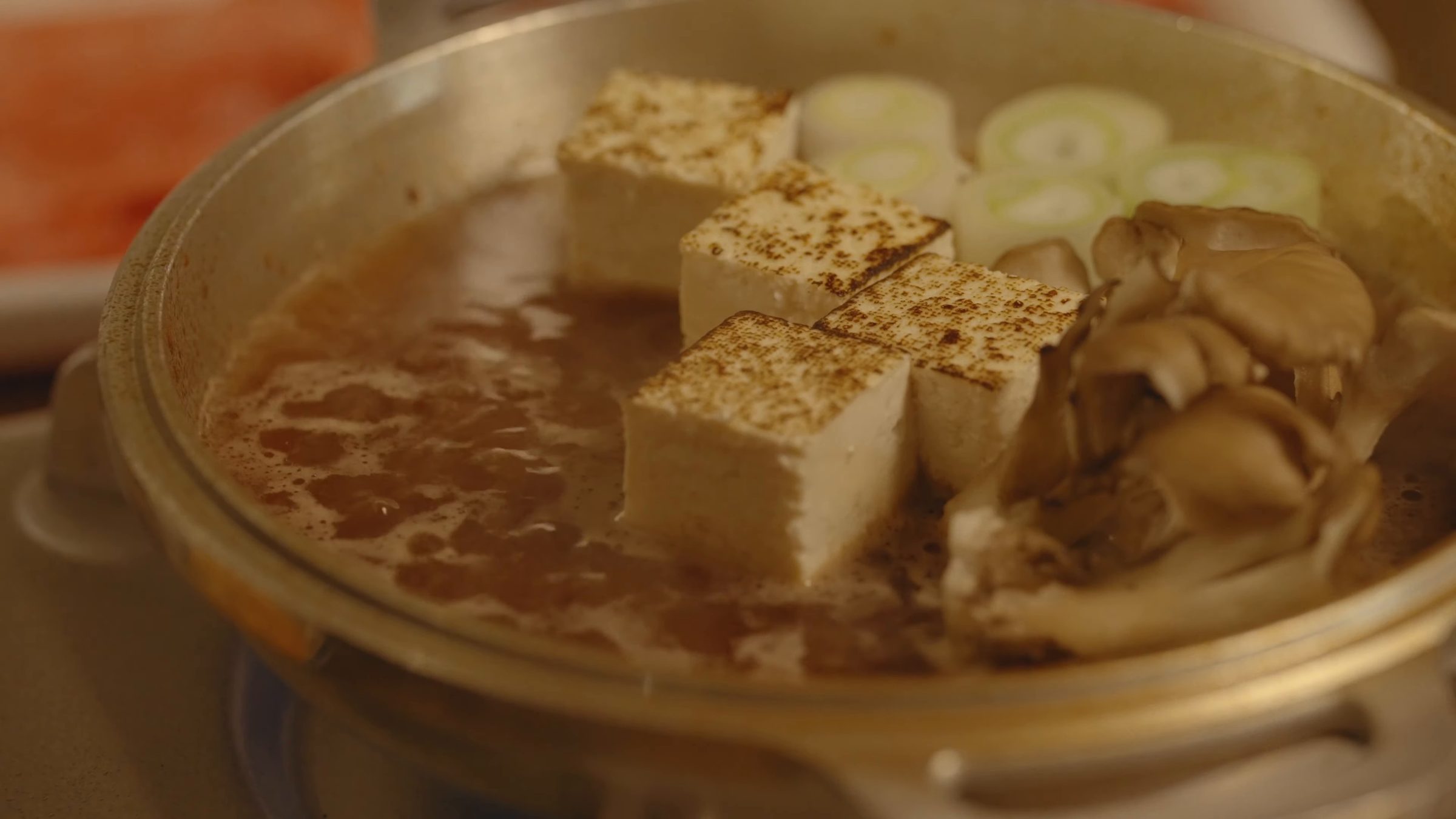
Into the pan went tofu, maitake and rounds of leek, with more beef added as I went. I like sukiyaki because you get to enjoy the cooking itself: the sound of the simmering, the meat changing color.
Watch this scene on YouTube4:49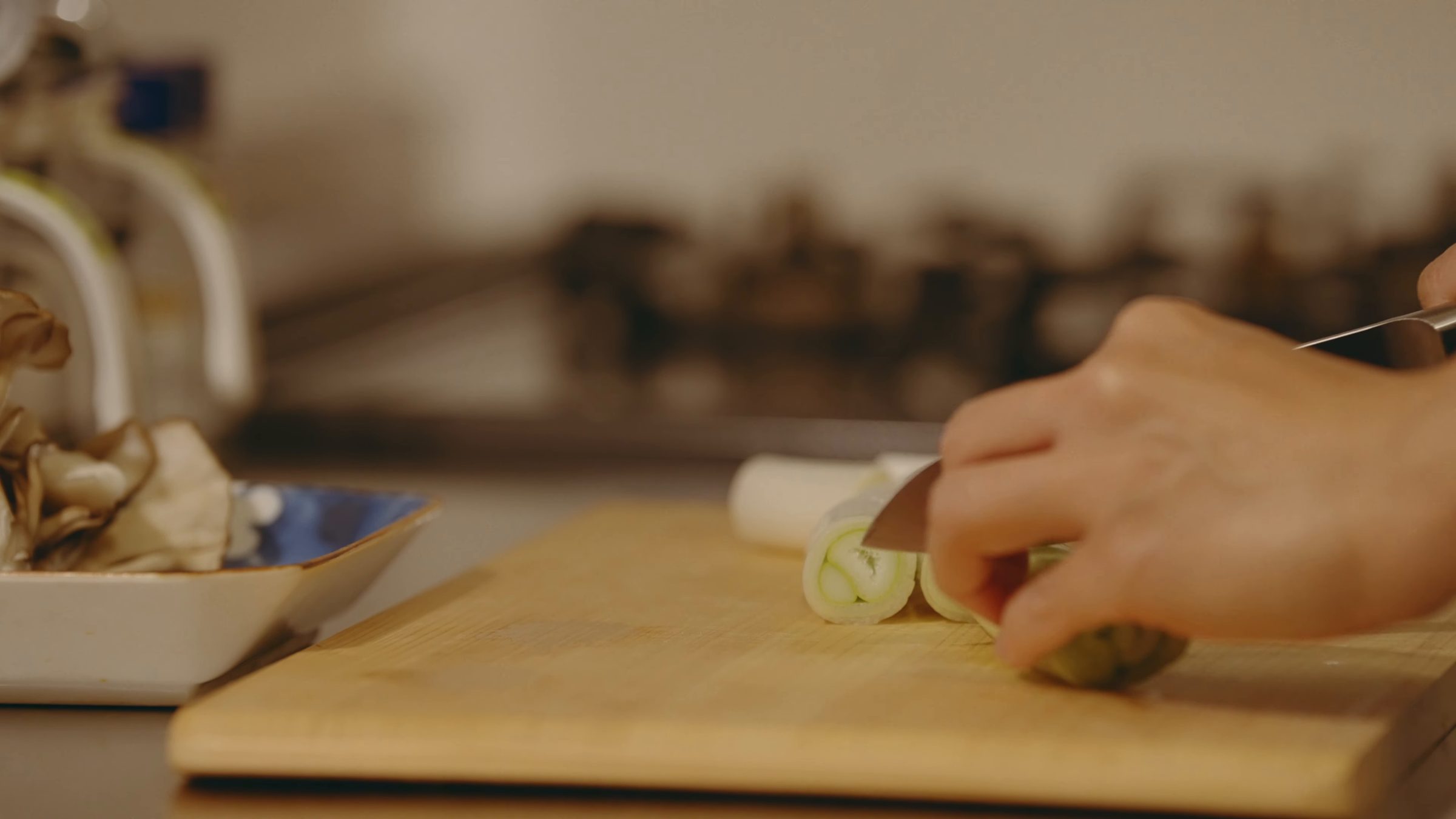
11TRAVEL JOURNAL
Until the next season
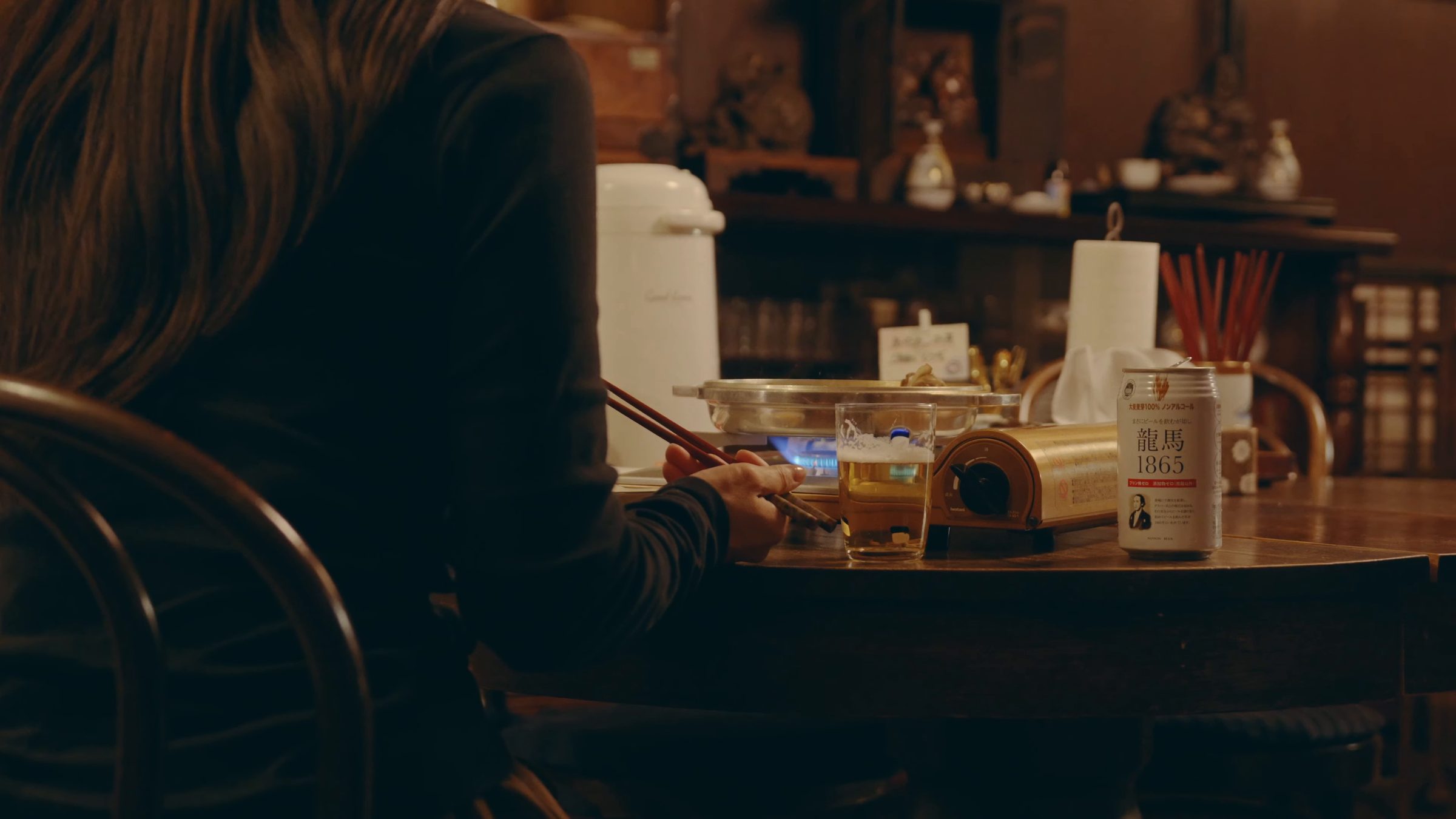
In the darkened room, I sat before the pan on the table, served myself more beef, and looked back on the day over a glass.
Next time, I'd like to come to Nagano when snow is on the ground. I'm looking forward to seeing another face of this place.
Watch this scene on YouTube5:53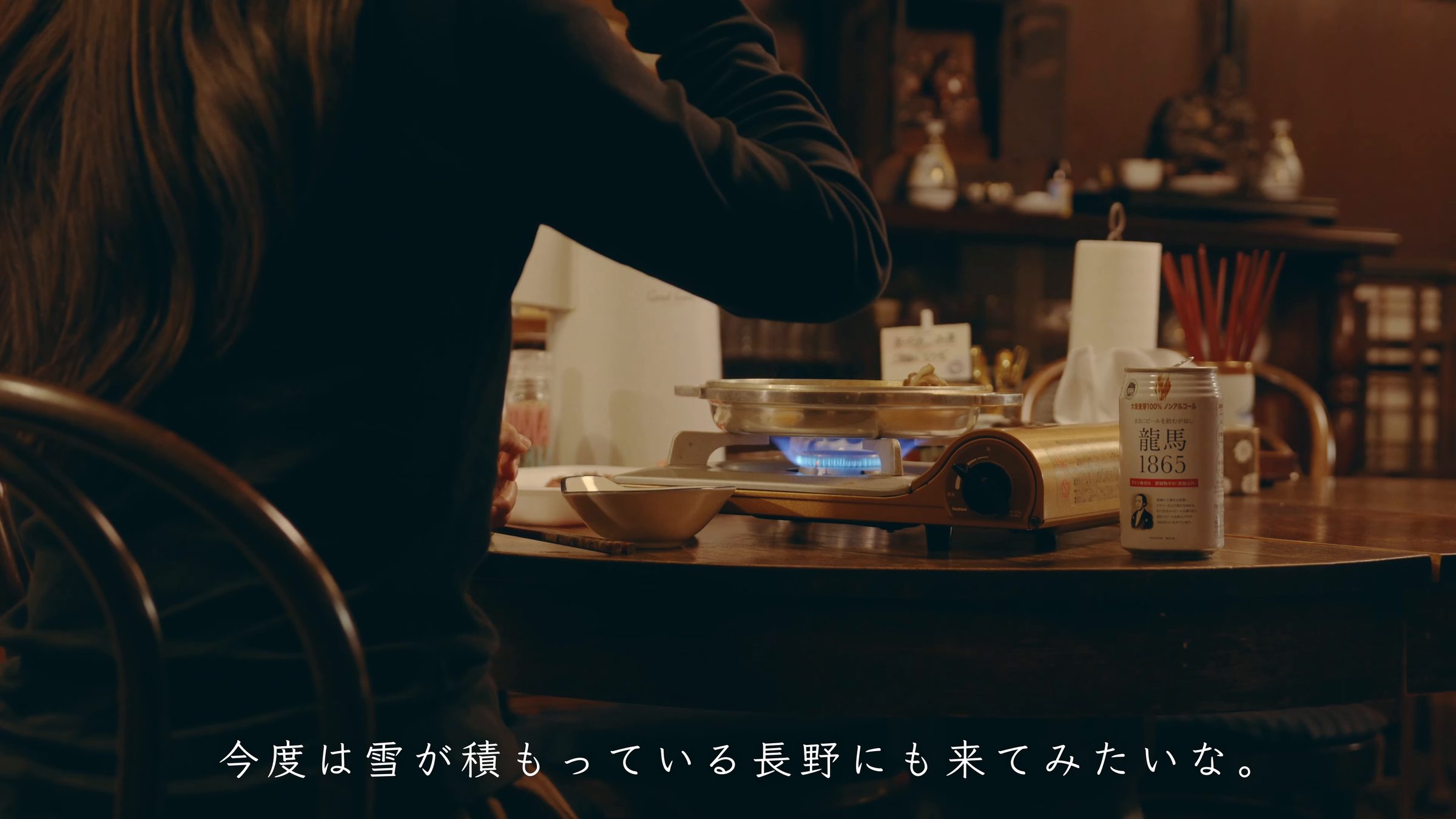
THE JOURNEY IN FILM
The wind. The sounds of a kitchen.
Spend a little more time inside the journey, on film.
Watch the video6 minTHE BORROWER’S NOTES
The Borrower's Notes: Narai-juku, Nagano
Places we stopped, dishes we made, and stories of the land. A few things to keep from the journey.
01Where I ate
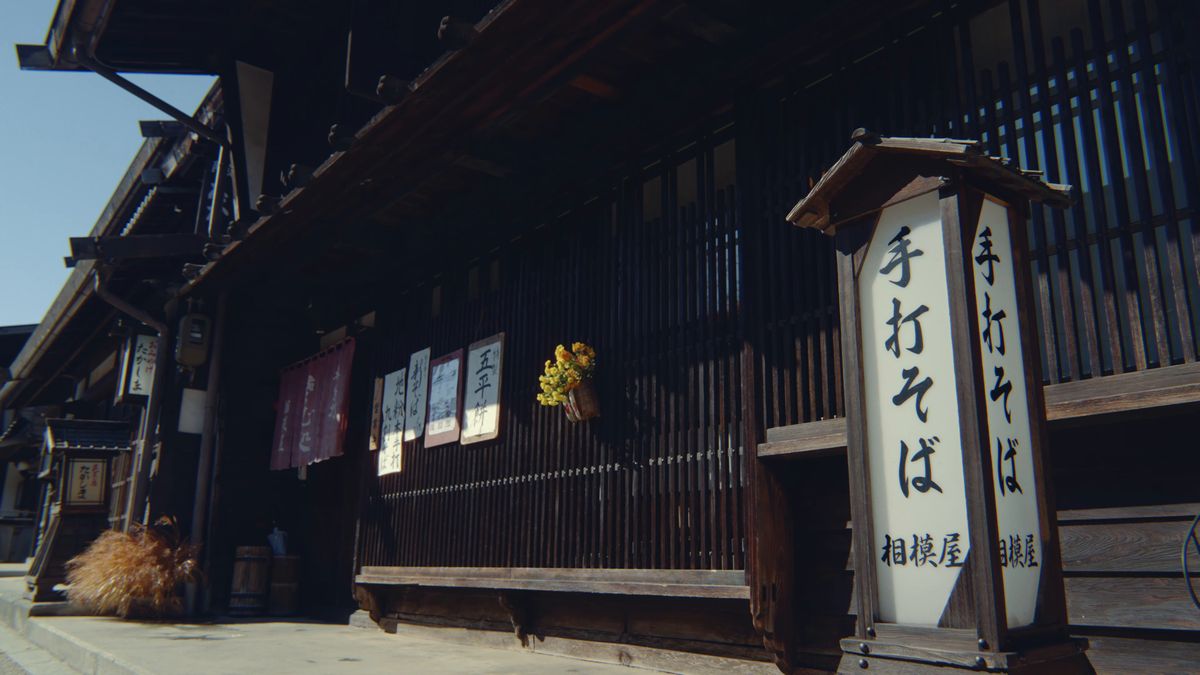
Sagamiya Soba
413 Narai, Shiojiri, Nagano
A handmade soba shop in the middle of Narai-juku. The noodles are thin and made with 90% buckwheat; this time I had the hot soba with wild vegetables. There are table seats and a tatami room at the back. Opening hours differ between listings, so check before you go.
Sources: naraijuku.com hotpepper.jp
02What I cooked
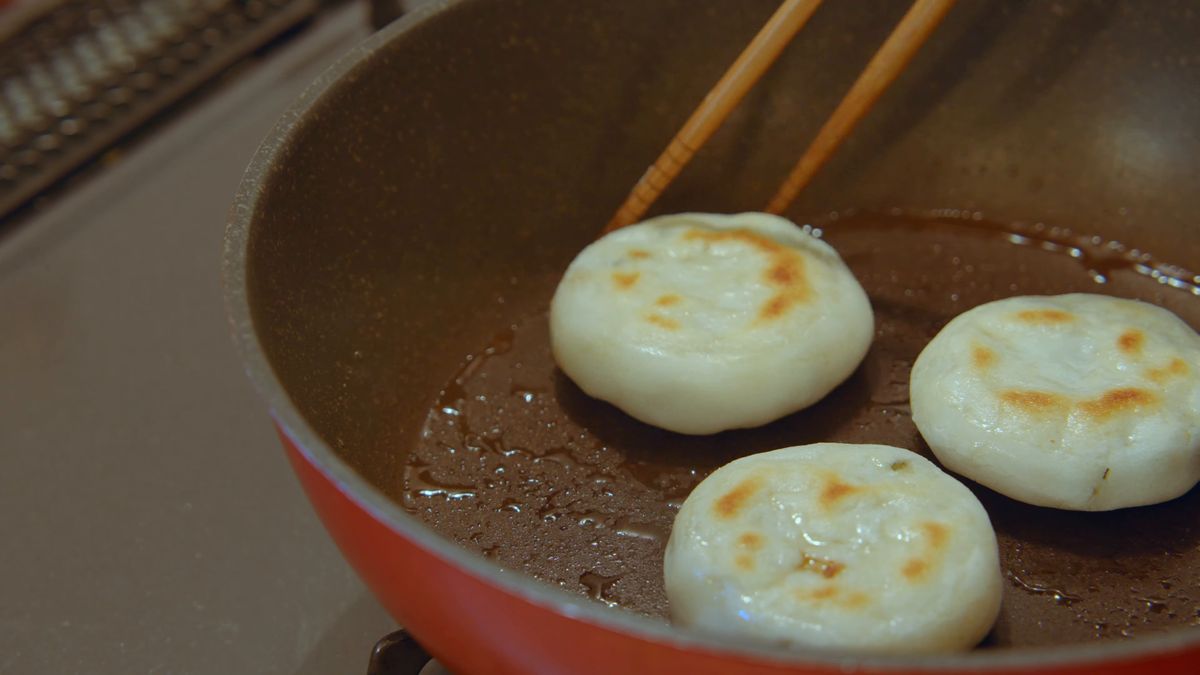
Rice-flour oyaki with nozawana
Oyaki are the signature home dish of Shinshu: a dough of wheat or buckwheat flour rolled thin, wrapped around a filling and baked. The mountain villages were poorly suited to rice, so wheat and buckwheat served as staples in its place. The dish is said to originate in the Nishiyama area of Kamiminochi District, with fillings such as eggplant, mushrooms, pumpkin and dried daikon. In the snowy village of Sakae, a rice-flour version called anbo is also made. In 1983, oyaki (yakimochi) was registered as one of Nagano Prefecture's selected intangible folk cultural assets. This time I used a rice-flour dough and filled it with pickled nozawana, another Nagano specialty.
IngredientsRice flour, Water, Pickled nozawana, Fried tofu (aburaage), Soy sauce
- Add water to rice flour, mix by hand and knead until smooth
- Lightly stir-fry chopped pickled nozawana and fried tofu with soy sauce
- Flatten a piece of dough in your palm, add the filling and fold it closed
- Cook in a frying pan until both sides are browned
Sources: maff.go.jp maff.go.jp
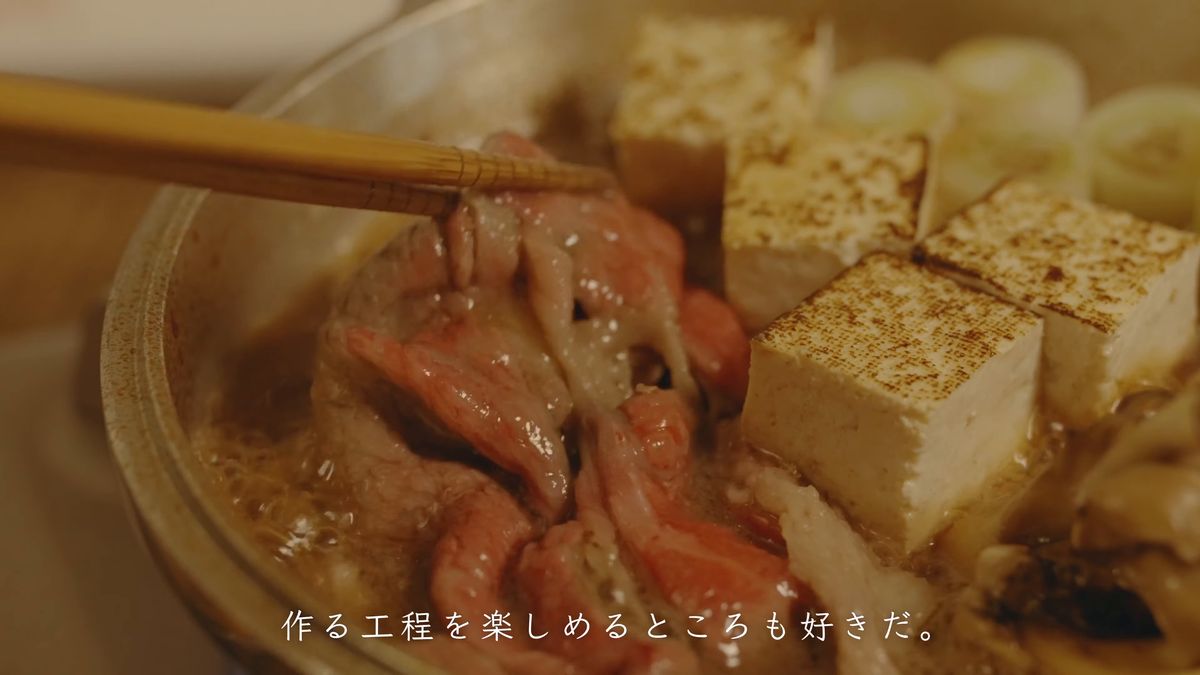
Shinshu beef sukiyaki
Nagano's "apple-fed Shinshu beef" is black wagyu that meets standards set by a producers' association; the cattle are fed by-products of the prefecture's food industry, such as apple pomace from juice making and the soybean broth left from making miso and soy sauce. The fat has a low melting point and is known for melting smoothly in the mouth. This time I simmered it with maitake, leek and tofu in a pan on the table.
IngredientsBeef (Shinshu beef), Leek (naganegi), Maitake mushrooms, Tofu, Sukiyaki broth (warishita), Egg
- Slice the leek and arrange it on a plate with the maitake
- Set the pan on a tabletop burner, heat the broth and simmer the beef in it
- Add tofu, maitake and leek, adding more beef as you go
- Dip in beaten egg and eat
Sources: go-nagano.net meats-town.com
03About the area
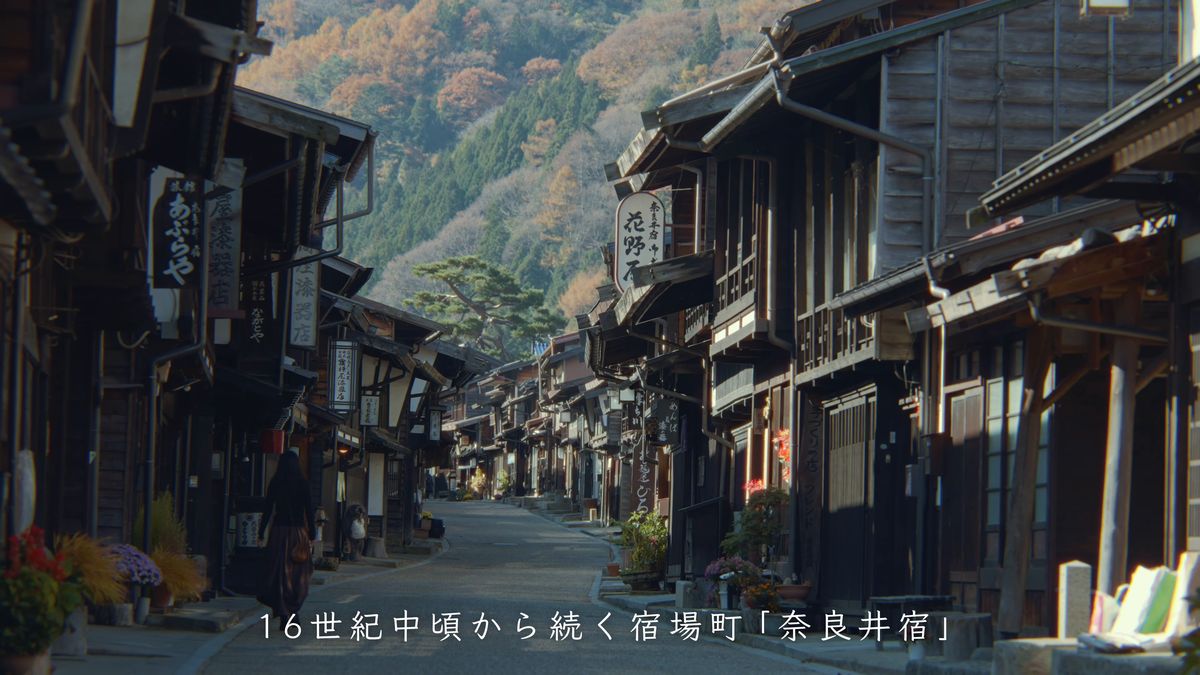
Narai-juku
Narai, Shiojiri, Nagano
The 34th of the 69 post towns on the Nakasendo, equidistant from Edo and Kyoto. It is the highest of the eleven Kiso Valley post towns, and travelers crossing the steep Torii Pass made it so busy that it was called "Narai of a thousand houses." Townhouses in the dashibari style, with second floors projecting over the street, continue for about a kilometer along the Narai River. Six water stations in the town once served as drinking water for travelers and as firefighting water. On May 31, 1978, it was designated a national Important Preservation District for Groups of Traditional Buildings.
Sources: naraijuku.com go-nagano.net go-nagano.net ja.wikipedia.org
Shinshu soba
Buckwheat grows even in cool highlands where rice and wheat struggle, so it has long been cultivated in Nagano, helped by the wide day-night temperature swings and clear water. Soba kiri, buckwheat cut into thin noodles, is said to have appeared in the early Edo period; a 1645 text, the Kefukigusa, calls soba kiri a specialty of Shinano Province. Motoyama-juku in Shiojiri is counted among the birthplaces of soba noodles. In 1983, handmade soba was registered as one of Nagano Prefecture's selected intangible folk cultural assets.
Sources: go-nagano.net maff.go.jp
Pickled nozawana
Nozawana is said to descend from Tennoji turnips that a temple priest in Nozawa Onsen brought back from Kyoto in 1756. In the high, snowy village the roots stayed small while the leaves and stems flourished, and the green took the village's name. It is harvested from November, once frost has sweetened it, and pickled in salt. Beyond being served with tea, it is a favorite filling for rice balls and oyaki, and was selected in 1983 as one of Nagano's intangible folk cultural assets of food.
Sources: maff.go.jp
Apple-fed Shinshu beef
A brand of black wagyu from Nagano. The cattle are raised on feed that includes by-products of the prefecture's food industry, such as apple pomace from juice making and the soybean broth from miso and soy sauce production. Standards call for shipping at 28 to 32 months, fattening on designated farms within the prefecture, and a grade of 4 or higher. The fat has a low melting point, giving a smooth taste that is not heavy.
Sources: go-nagano.net meats-town.com
An old farmhouse with a cat
This time I borrowed an old farmhouse with a wood stove and a kerosene heater. In the shoji-screened room stands a desk with a globe and a lamp, and from the veranda you can look out at a persimmon tree in the garden. The resident ginger tabby kept me company in the kitchen and on the tatami.
PHOTO ALBUMPhoto album67Open all photographsClose the photo album
Select a photograph to explore the journey one frame at a time.