A TRAVEL ESSAY
Nozawaonsen, Nagano
Life in Nozawa Onsen Village
Boiling breakfast in a hot spring:life in Nozawa
A day in a hot-spring village, in good spirits in the steam of an old spa.
Read the journey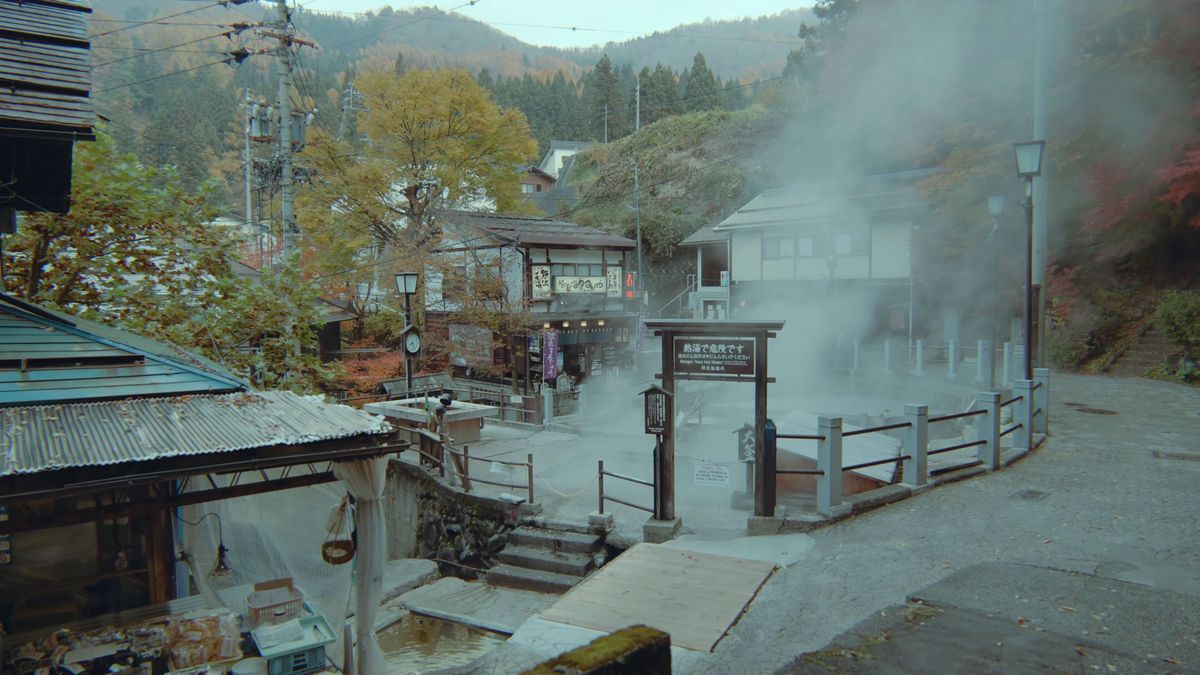
ABOUT THIS JOURNEY
Nozawa Onsen is the only village in Japan with the word onsen, hot spring, in its name. In the morning I lowered eggs into the spring beside the Ogama and ate them with freshly boiled corn. I walked the steaming lanes to buy nozawana pickles and oyaki, then watched evening come from the porch of a 200-year-old farmhouse. After warming up in a public bathhouse, there were nozawana dumplings and horse sashimi at a tavern. A day in a village where life still leans on the gift of the hot springs.
A little more about the food and the land01TRAVEL JOURNAL
A village named for its hot springs
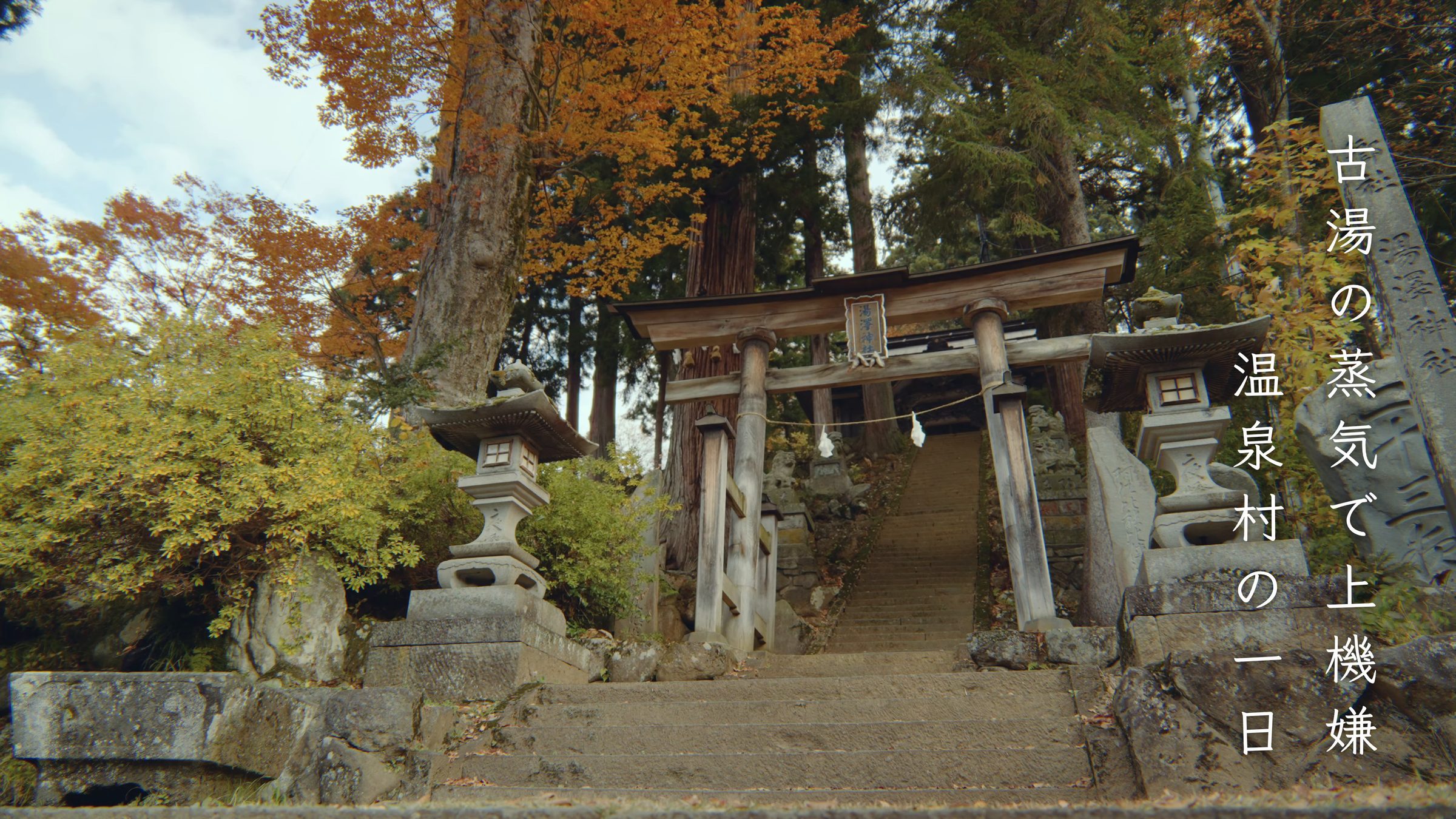
A valley of fields in the hills of northern Shinshu. Autumn leaves framed the torii of a shrine, and beyond it, white steam was already rising over the hot-spring town. This is Nozawa Onsen in Nagano, the only village in Japan with onsen in its name.
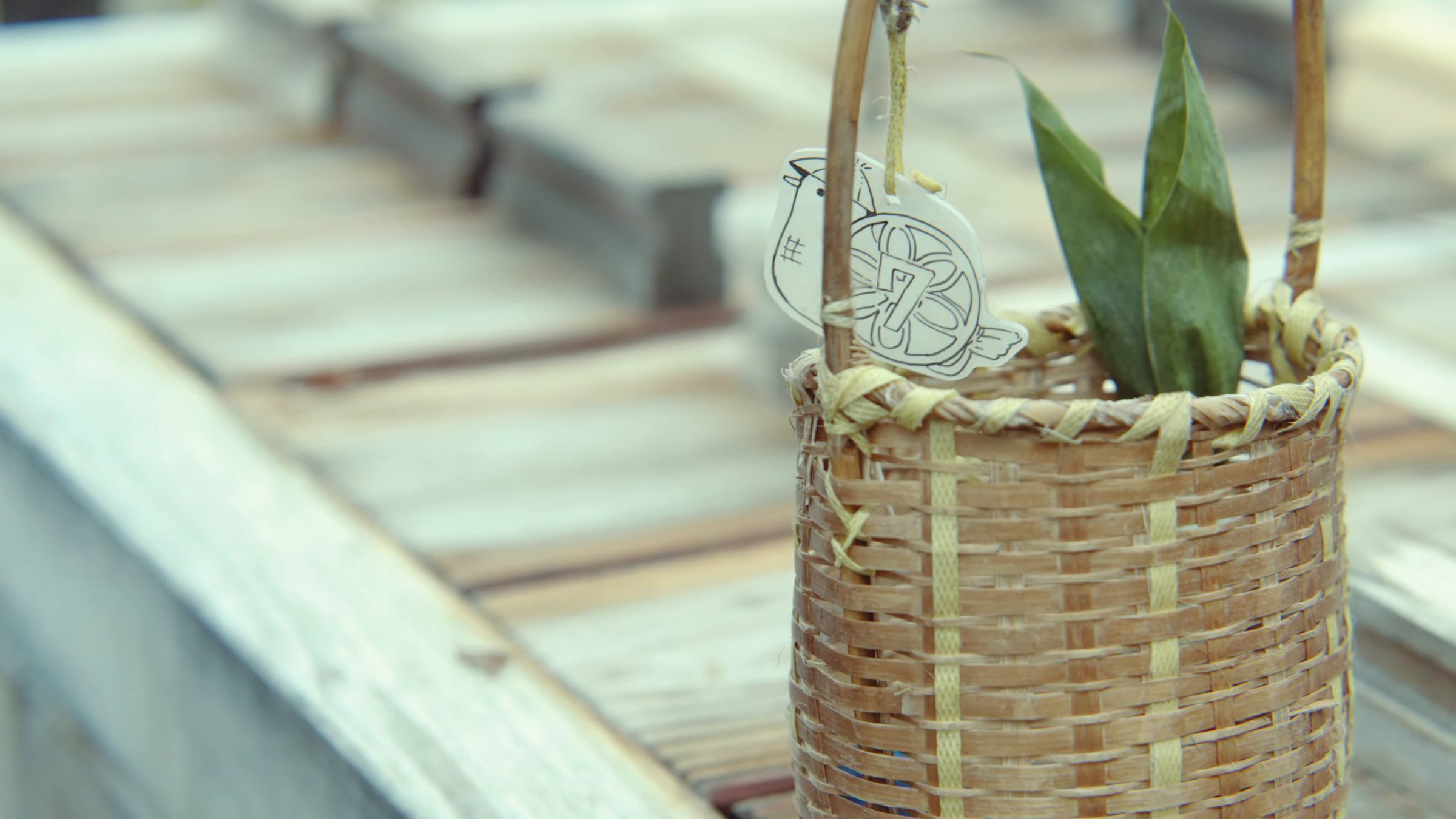
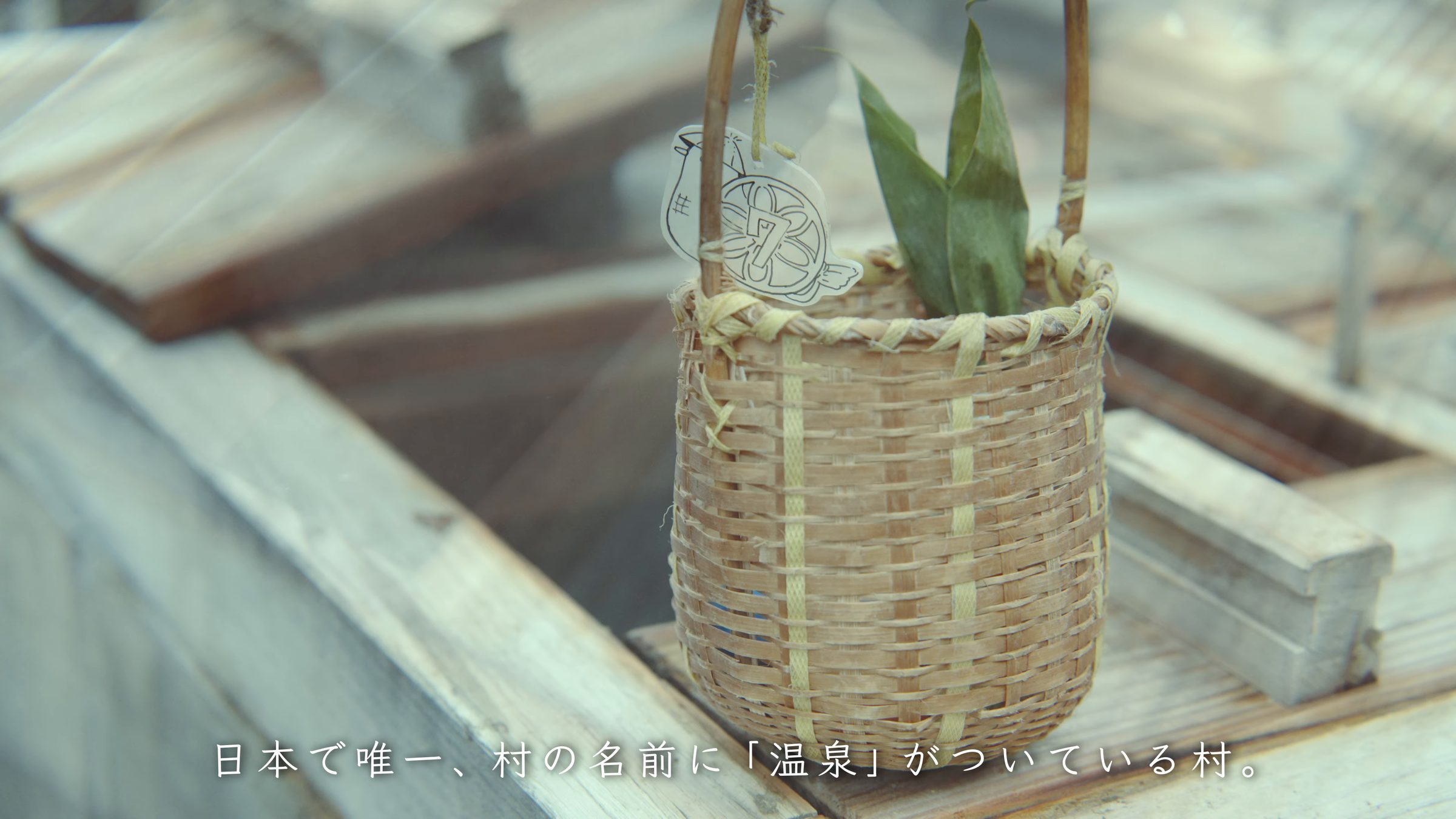
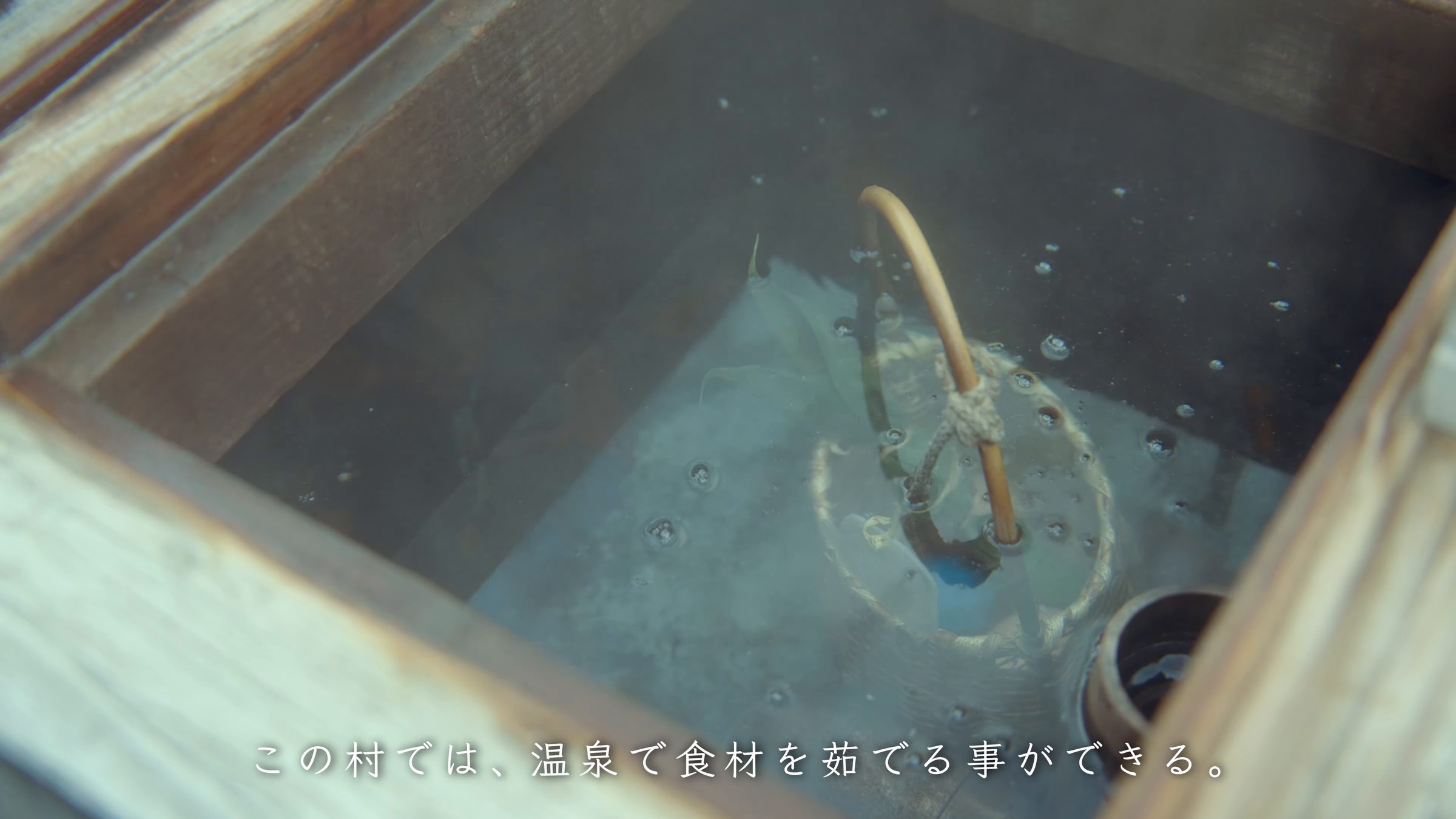
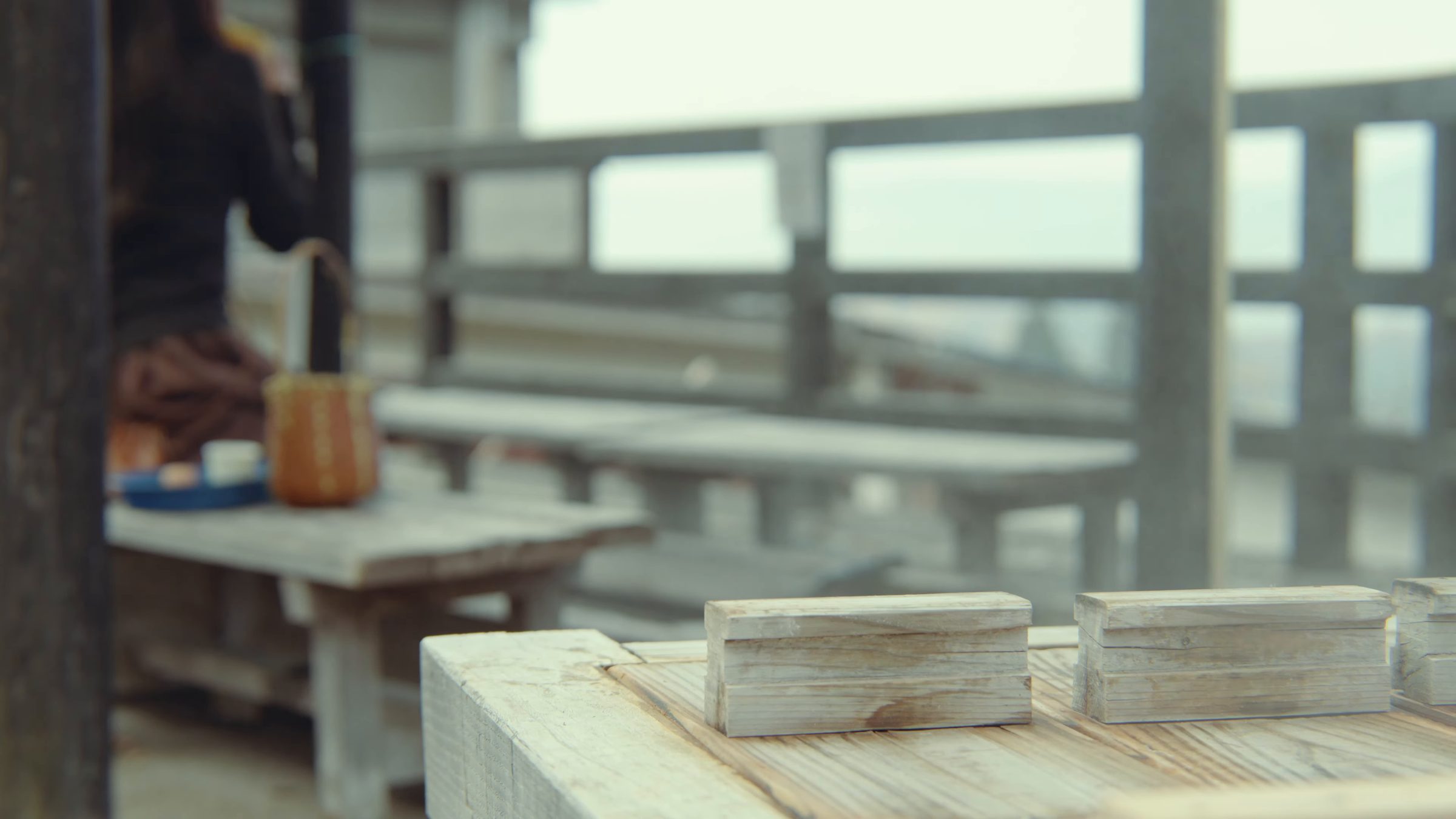
I set a bamboo basket on the wooden lids that cover the steaming source, with an ear of corn inside. Here, you can cook food in the hot spring itself. I lowered the basket into the water, and breakfast was under way.
Watch this scene on YouTube0:20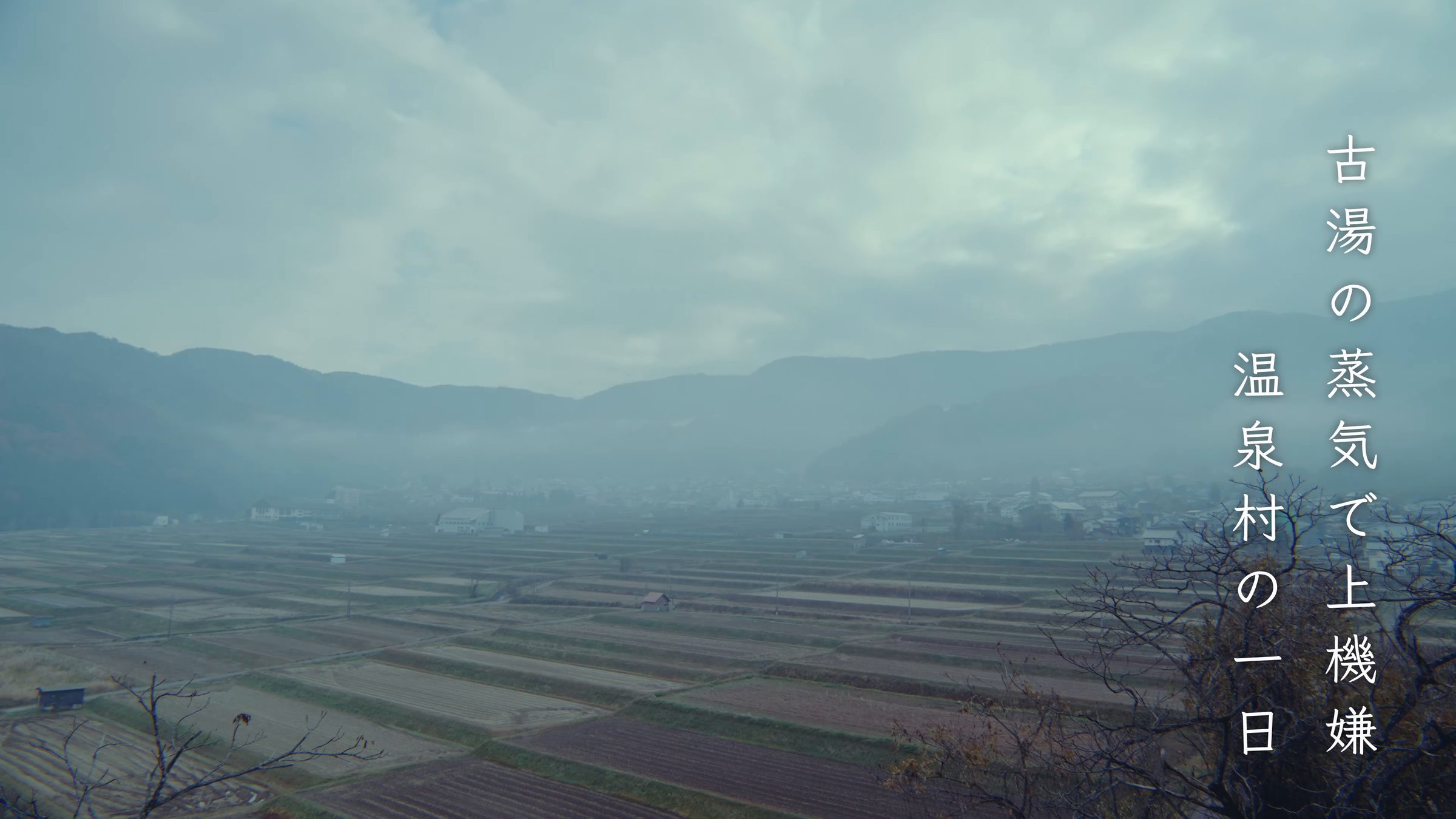
02TRAVEL JOURNAL
Beside the Ogama
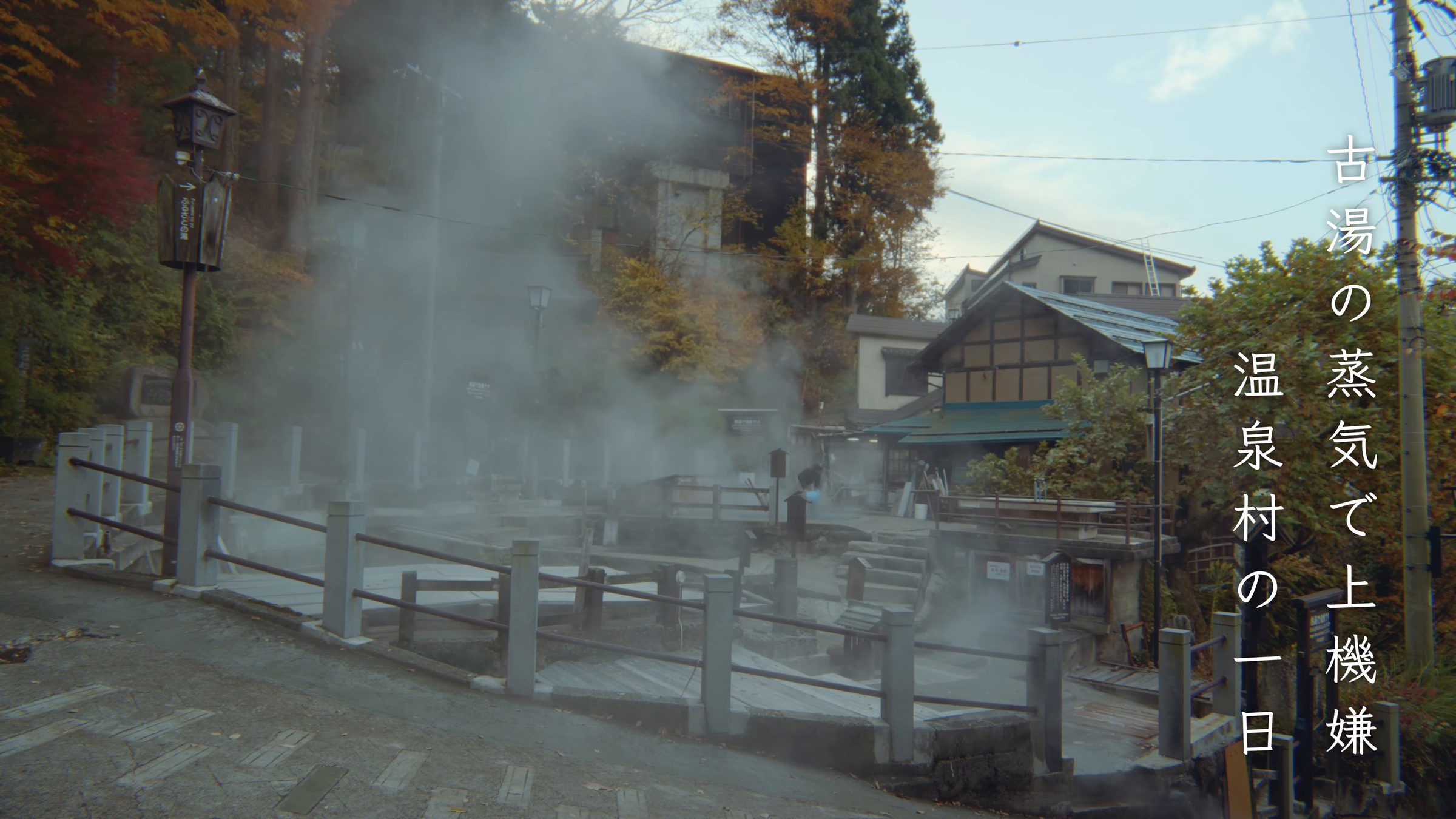
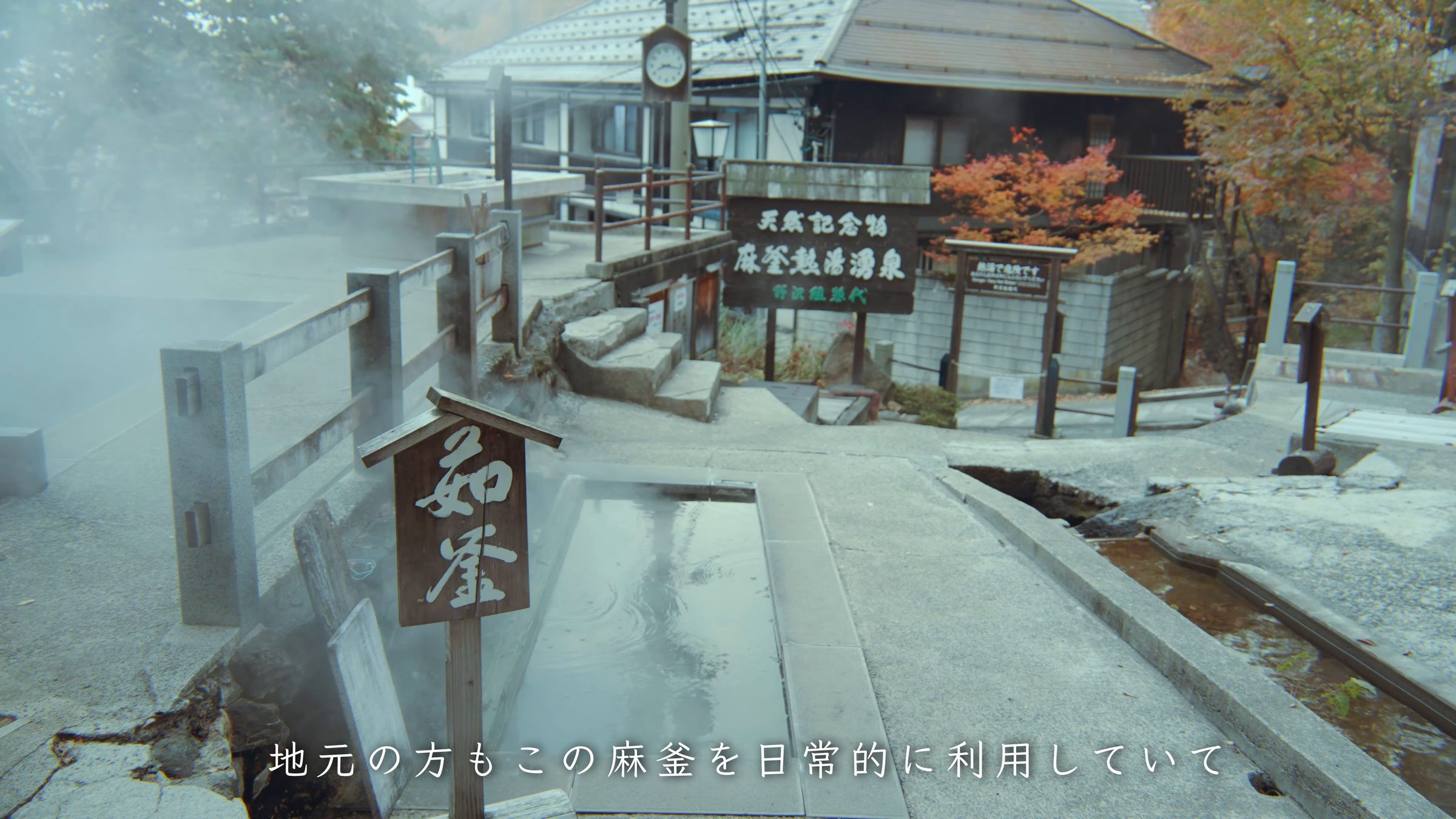
At the heart of all this steam is the Ogama, a source where water close to 90 degrees wells up. A sign names it a natural monument, and another on the railing warns that the water is scalding. Locals still boil mountain vegetables and eggs here and wash their greens. The hot springs run deep in village life.
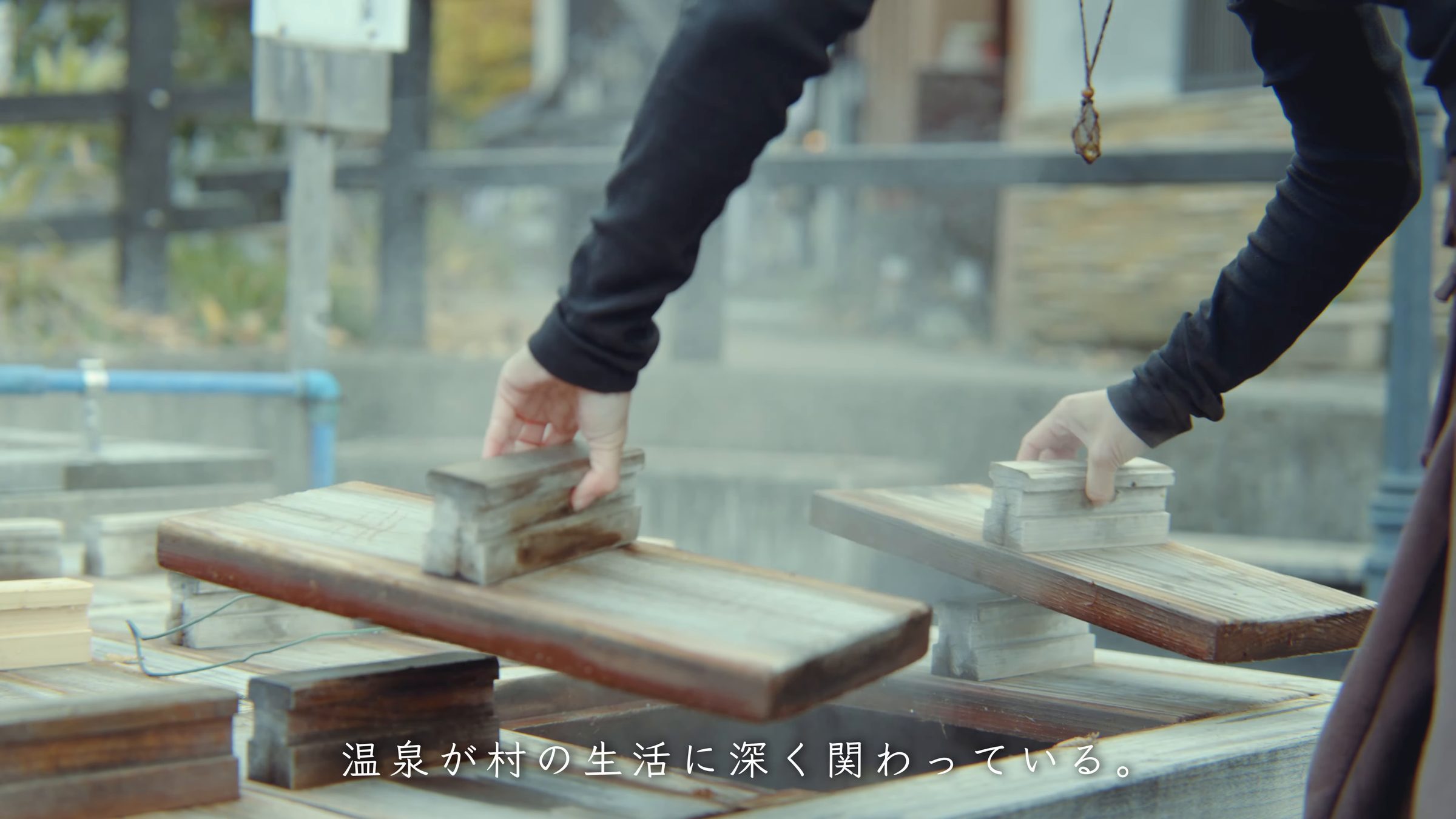
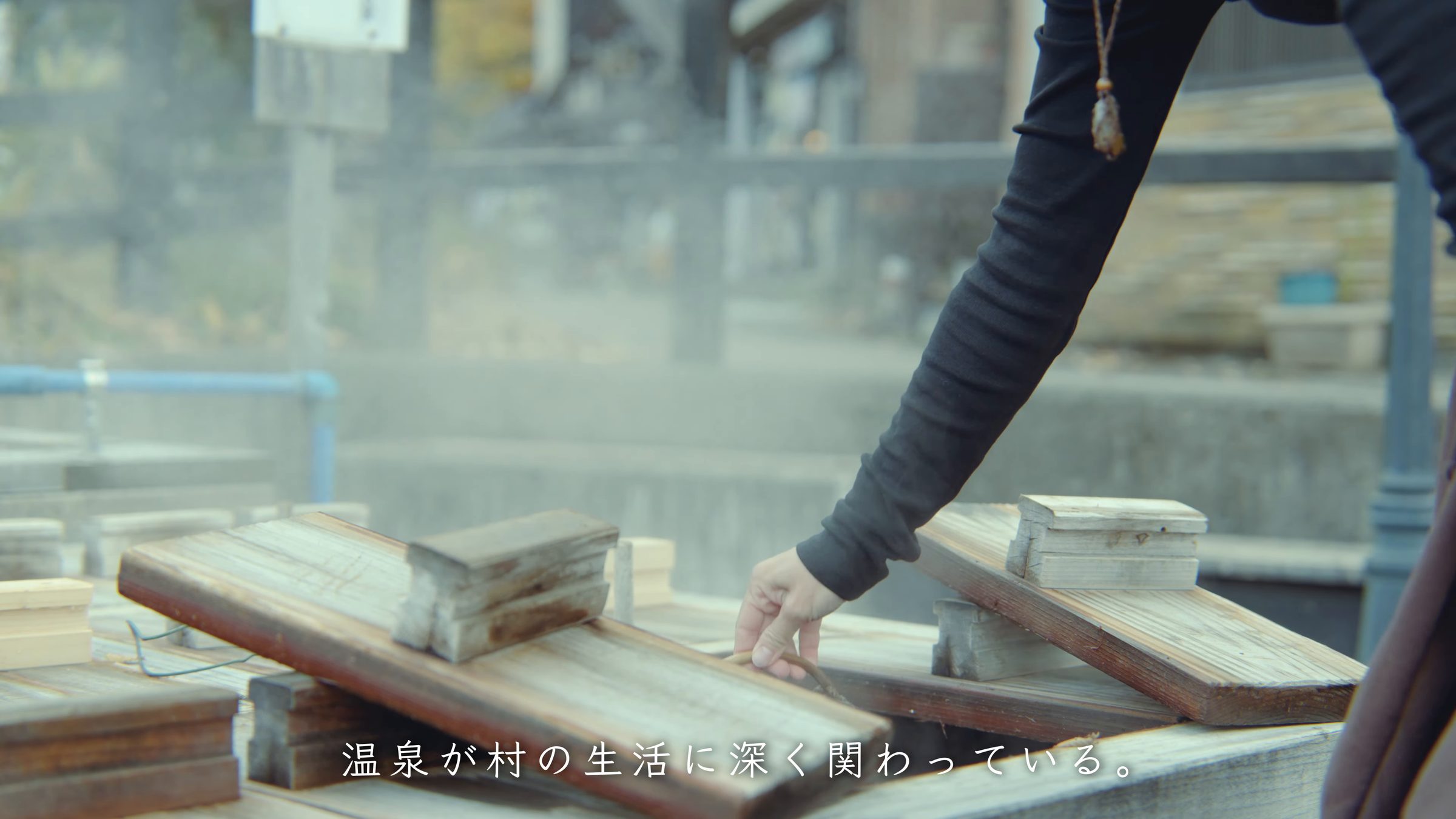
Right beside the Ogama is a cooking spot that visitors may use. I lifted the wooden lid with both hands and a cloud of steam hit my face. Up came the basket: breakfast was ready.
Watch this scene on YouTube0:41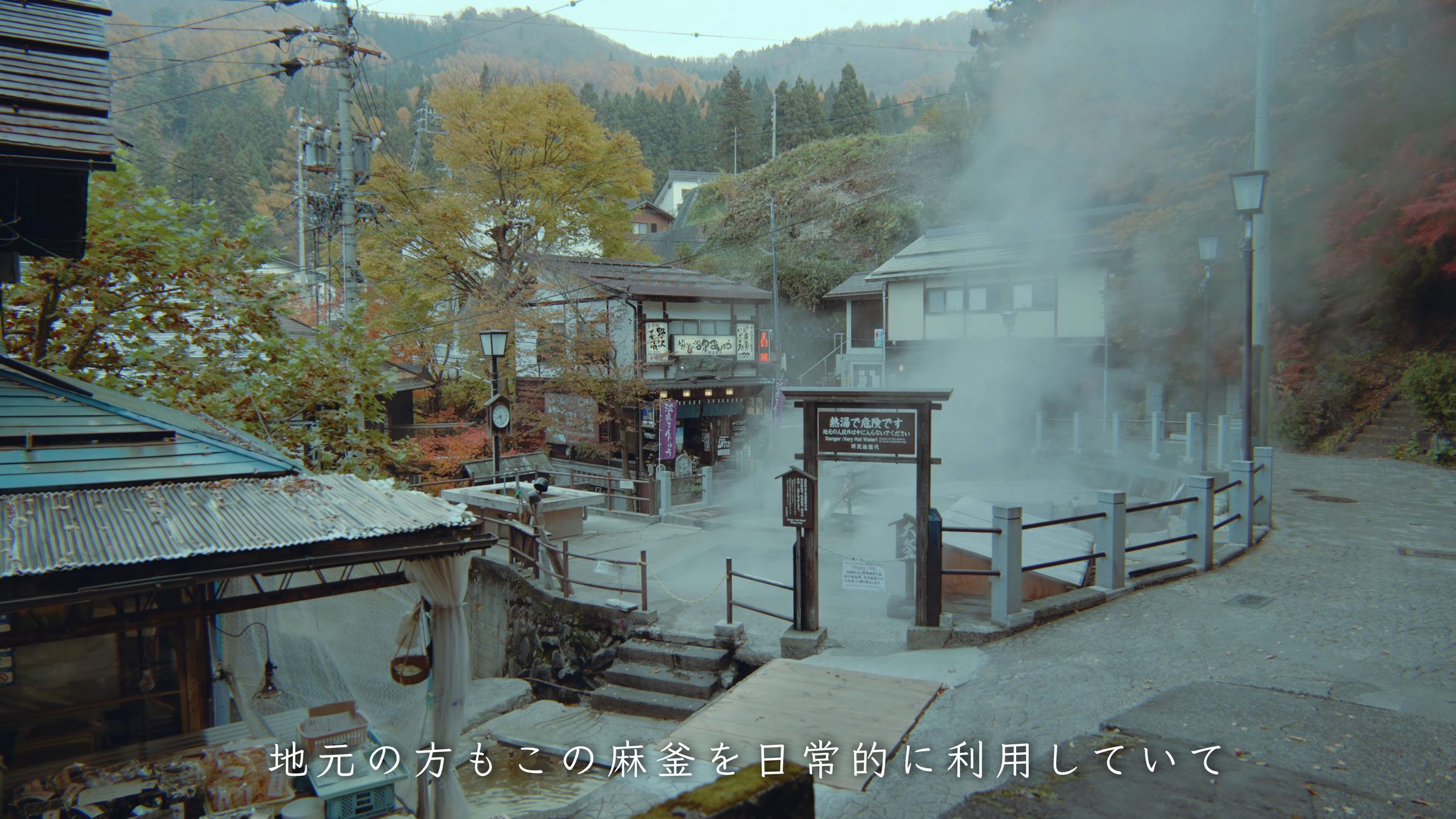
03TRAVEL JOURNAL
Onsen tamago and corn
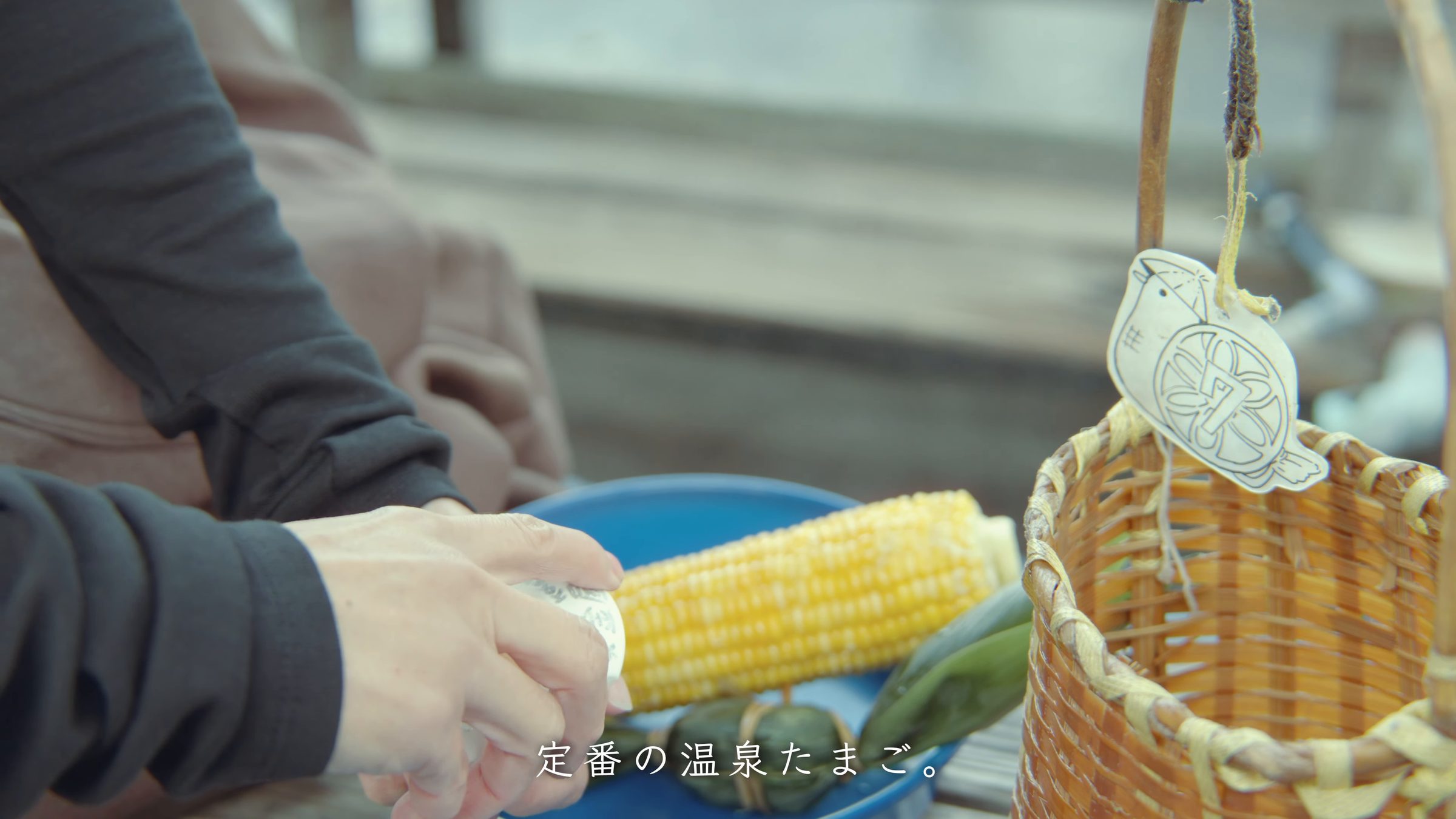
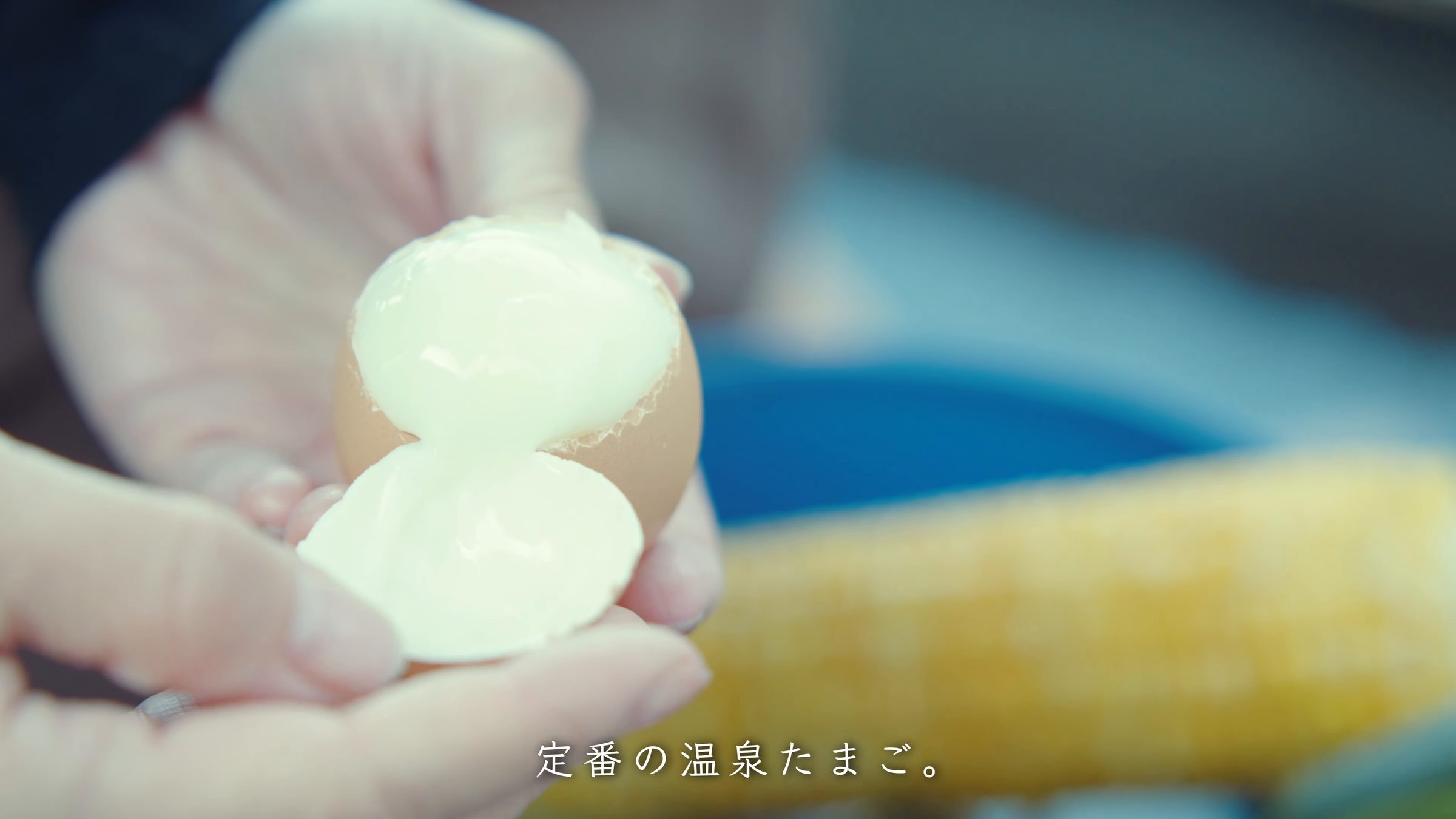
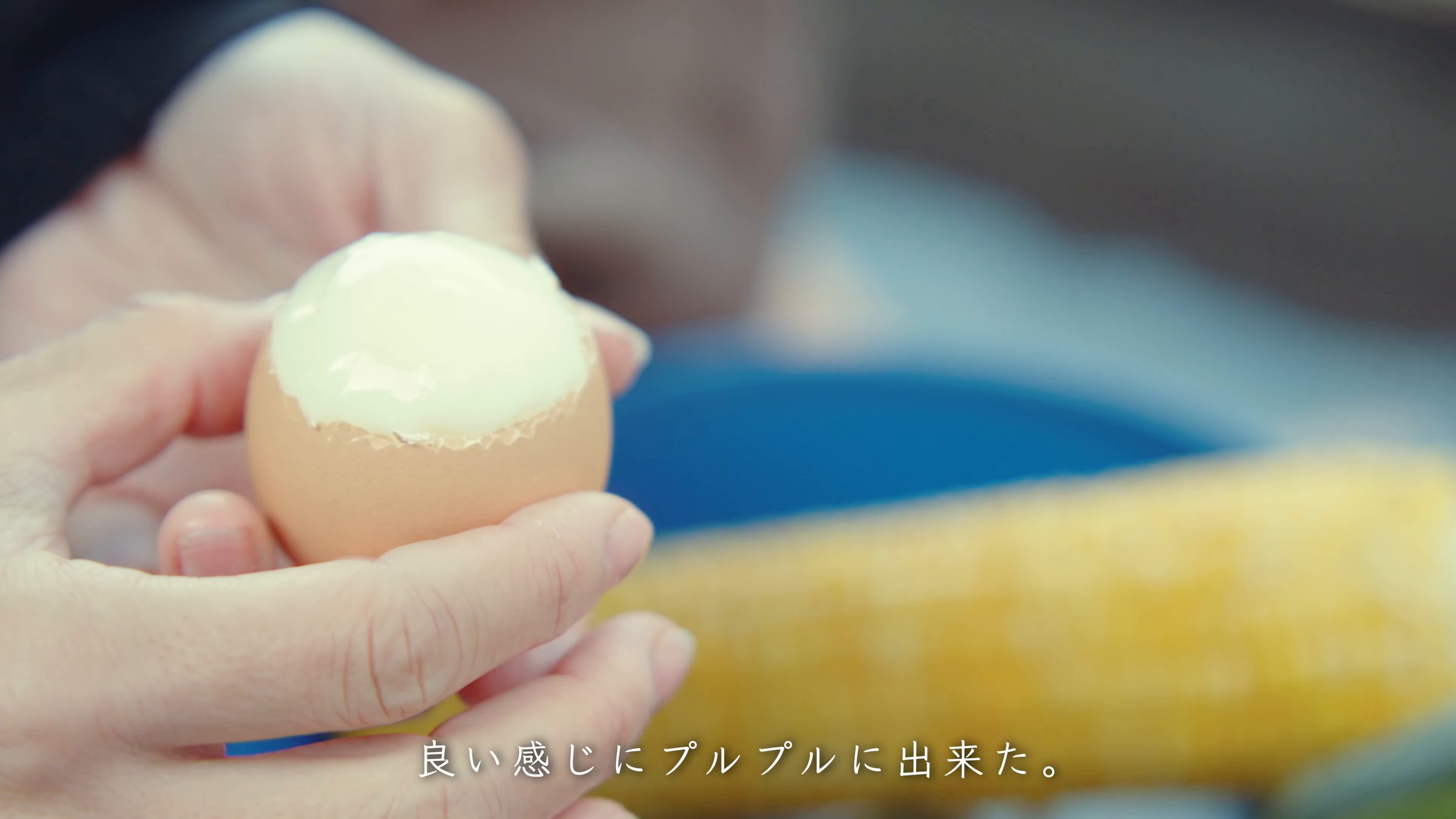
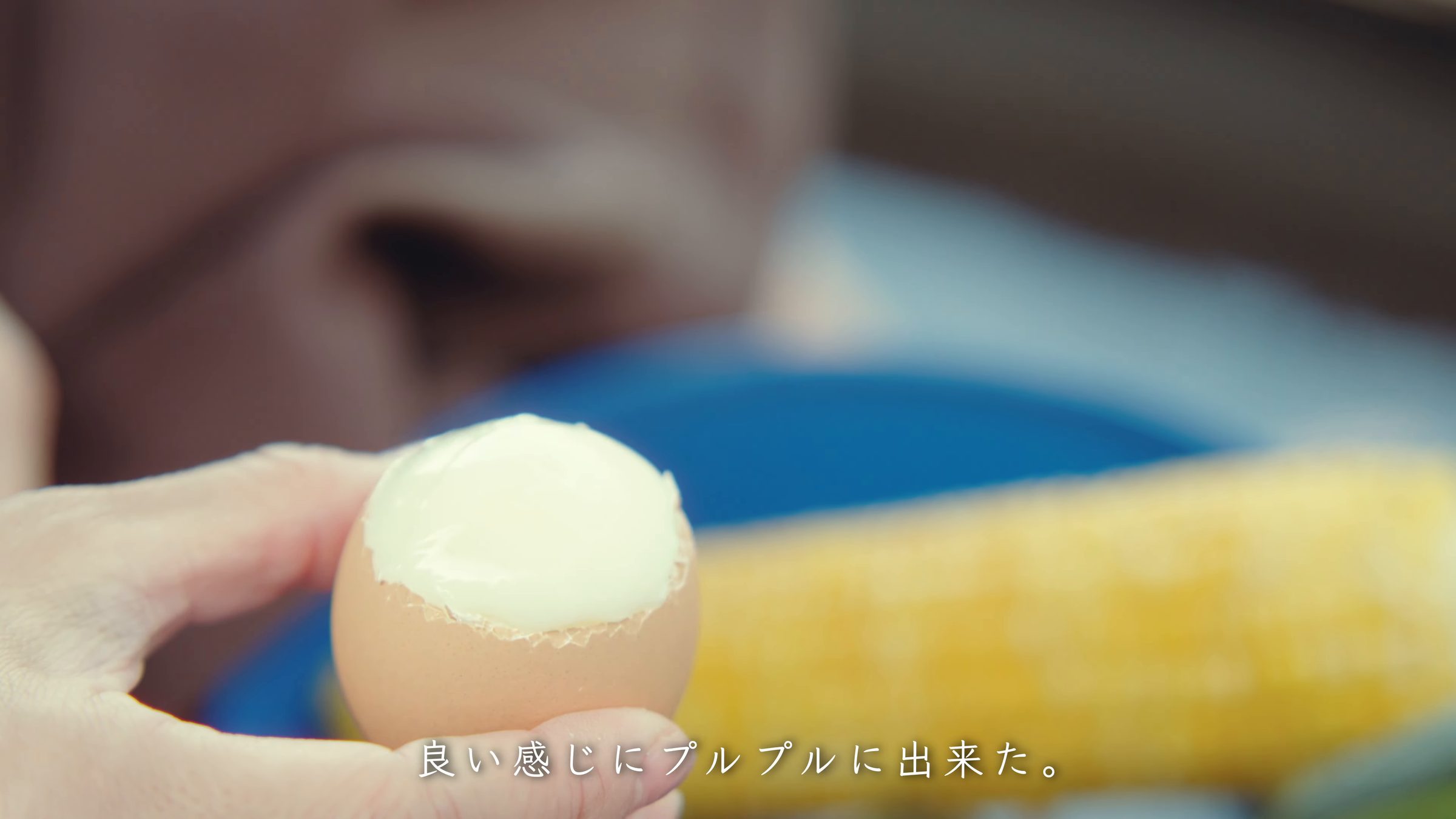
On a blue plate: steaming corn and a sasa-dango dumpling wrapped in bamboo leaves. The corn and the dumpling had been boiled fresh by the shopkeeper who sold them. And then the classic, onsen tamago. All I had done was keep to the time, yet when I peeled the shell the white quivered like jelly.
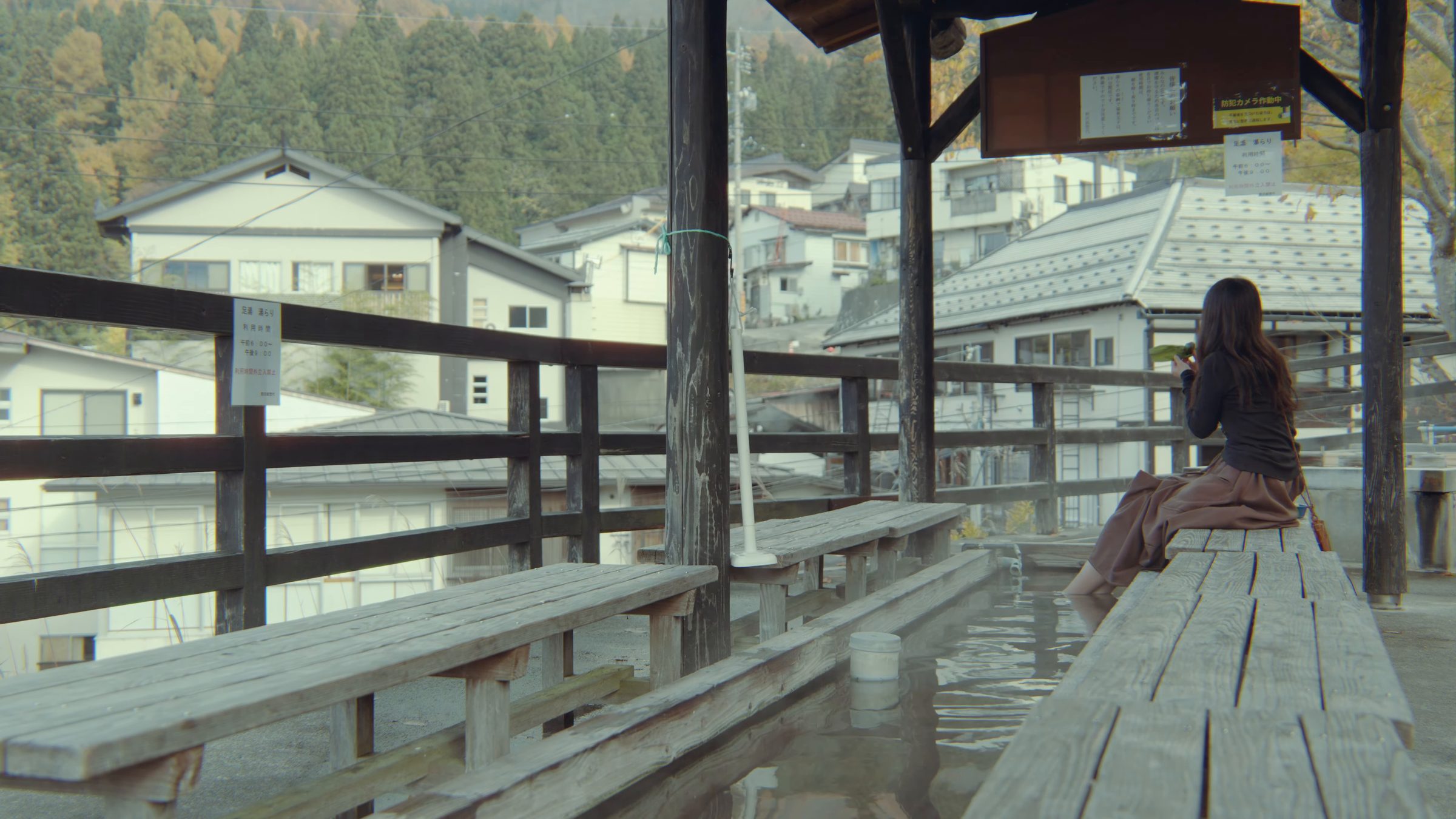
The yolk was soft and runny. It was a cold morning, but with every steaming bite the chill slipped away. I sat on a bench under the little shelter and ate breakfast looking out over the rooftops of the town.
Watch this scene on YouTube1:06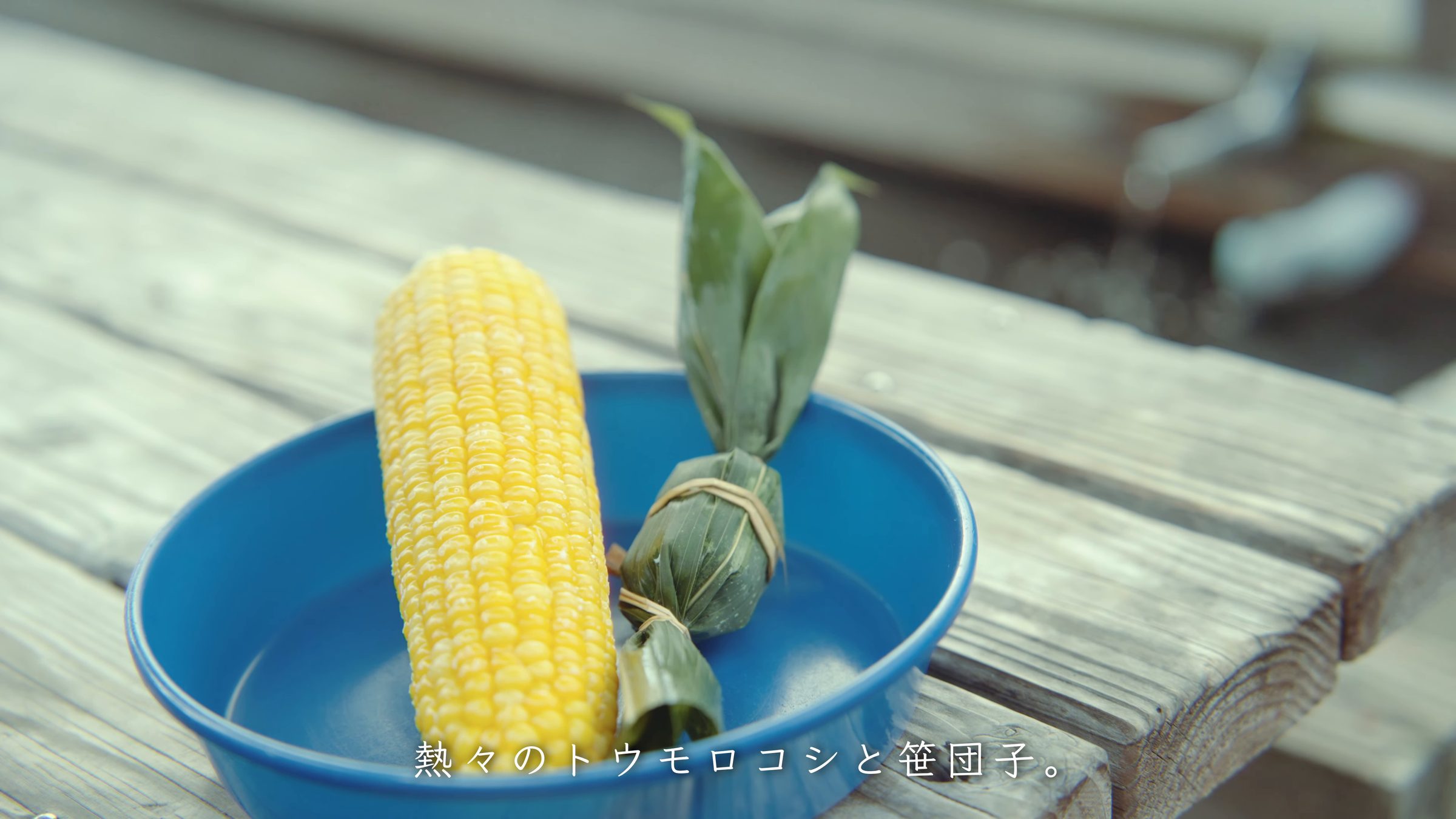
04TRAVEL JOURNAL
Steaming lanes and a nozawana shop
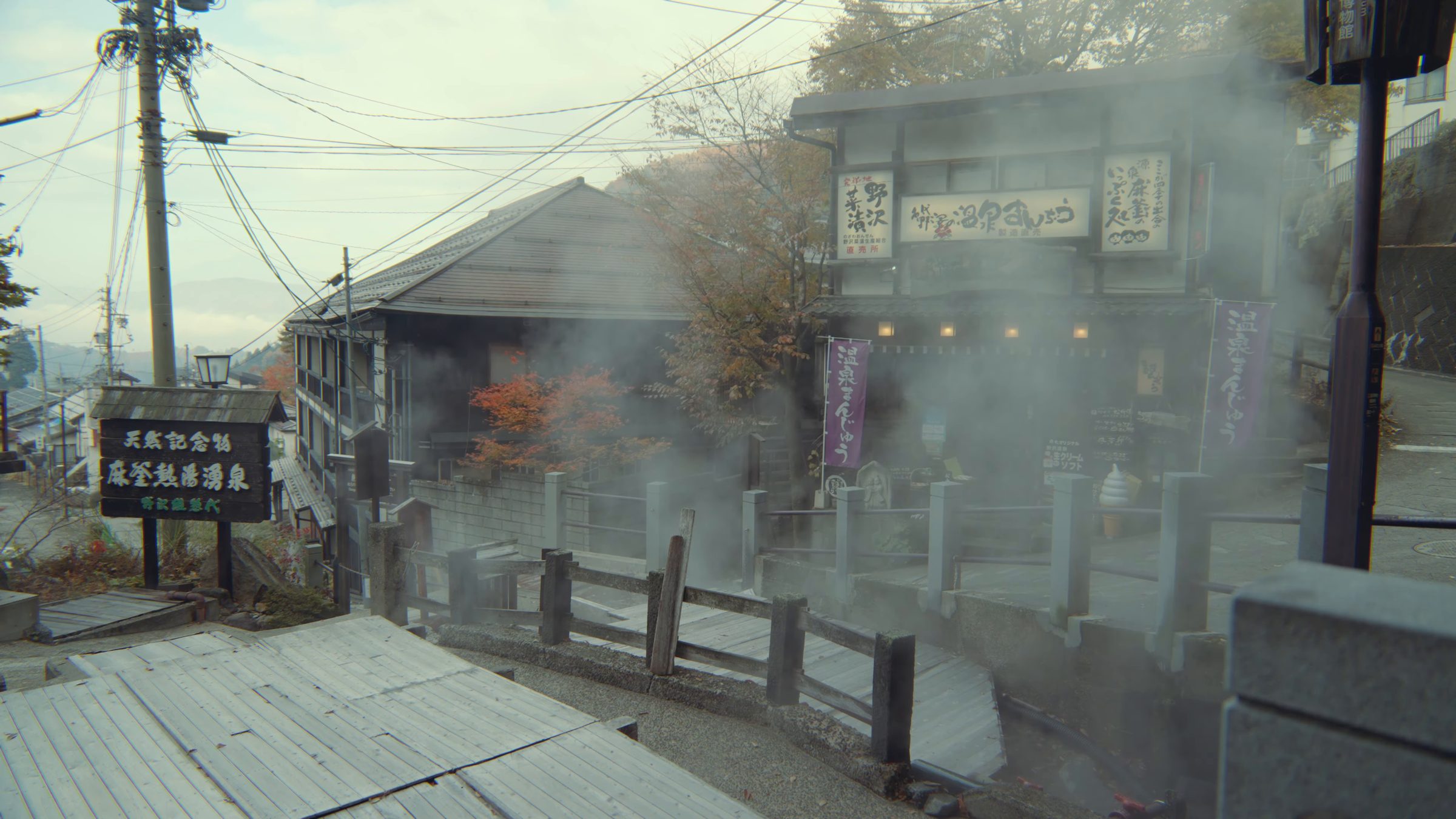
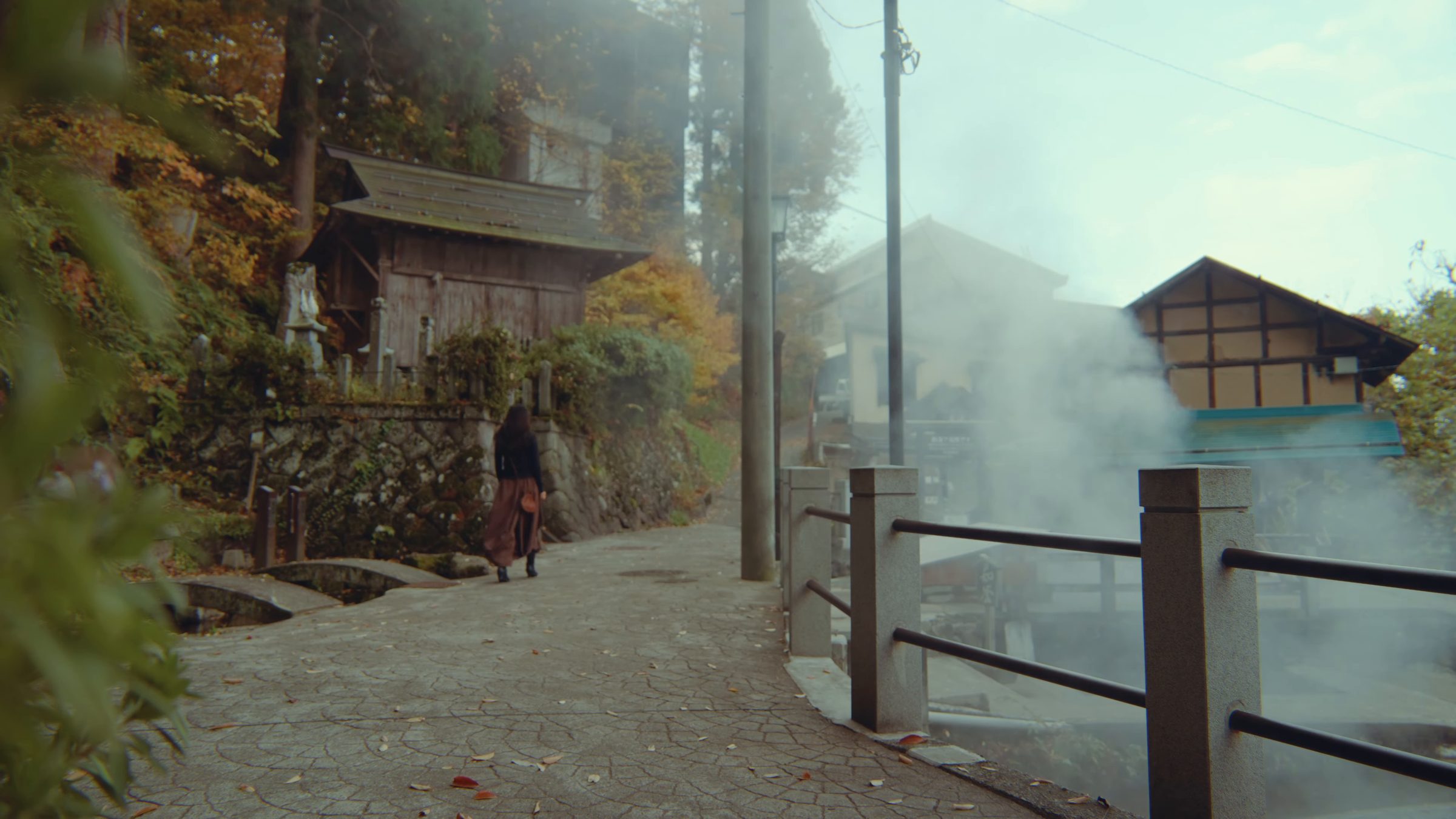
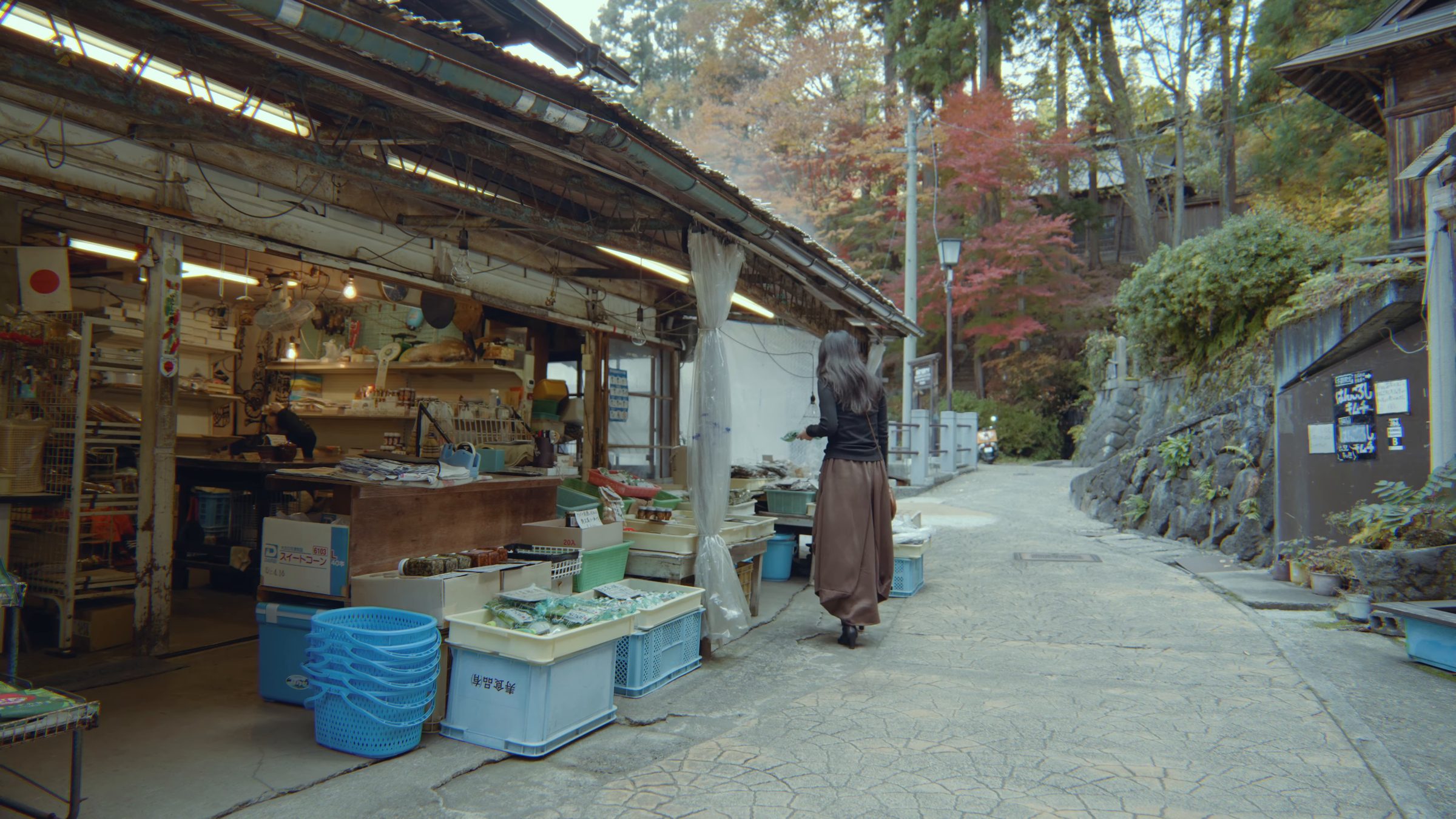
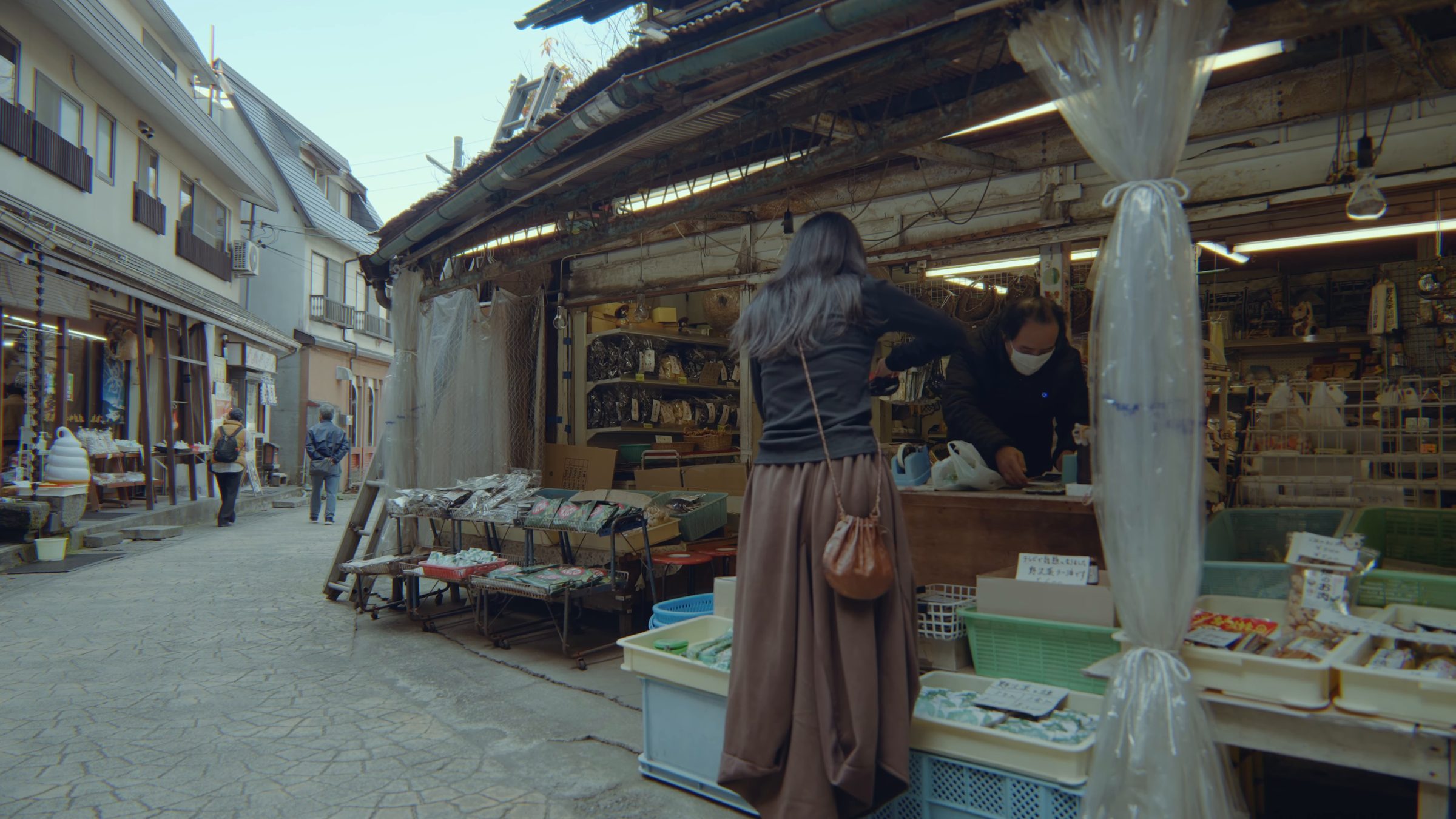
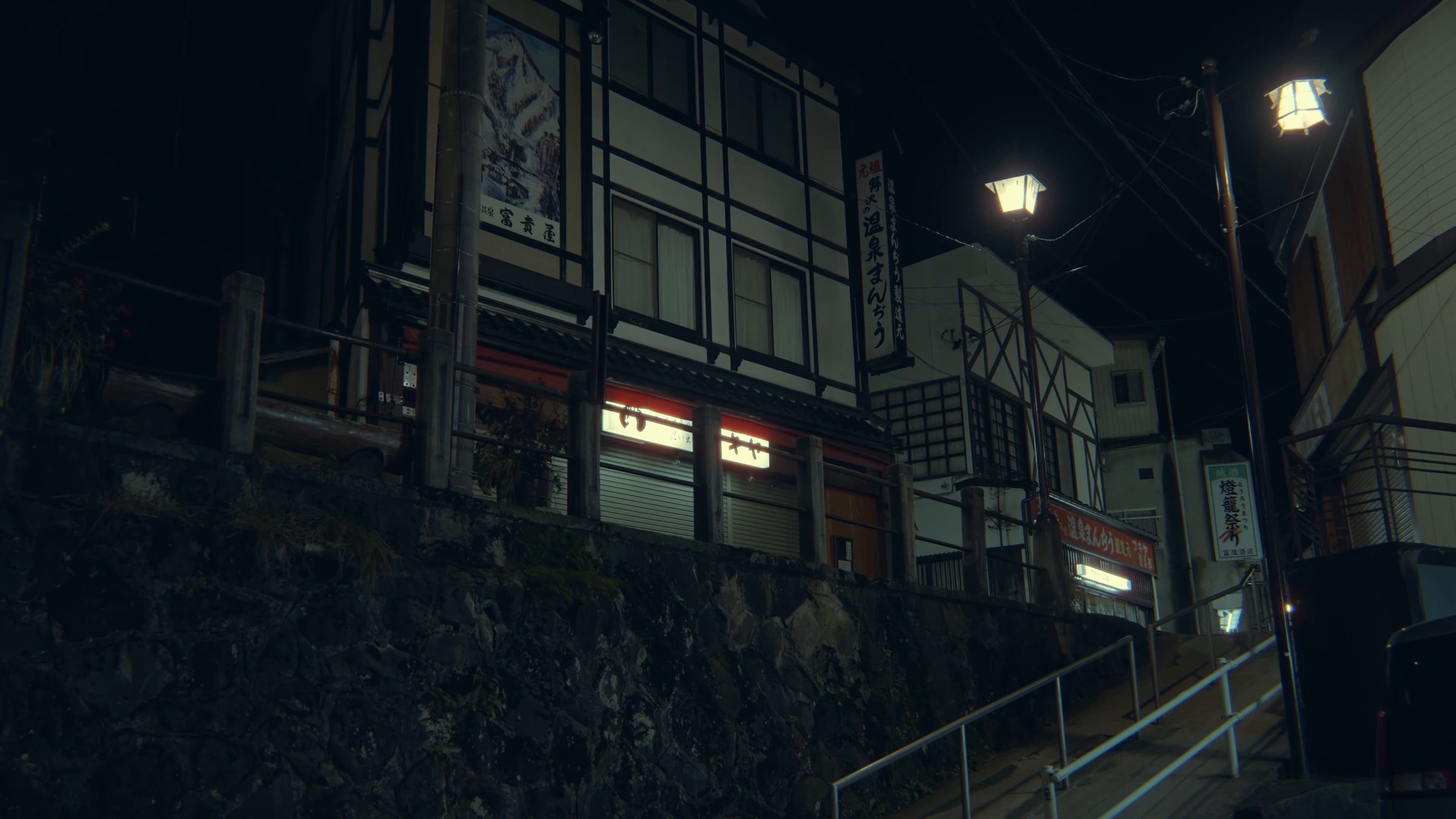
Steam rises without pause from the pools of the Ogama. I passed the shops with their painted signs and climbed a lane between stone walls. In a hot-spring town, you eat as you walk.
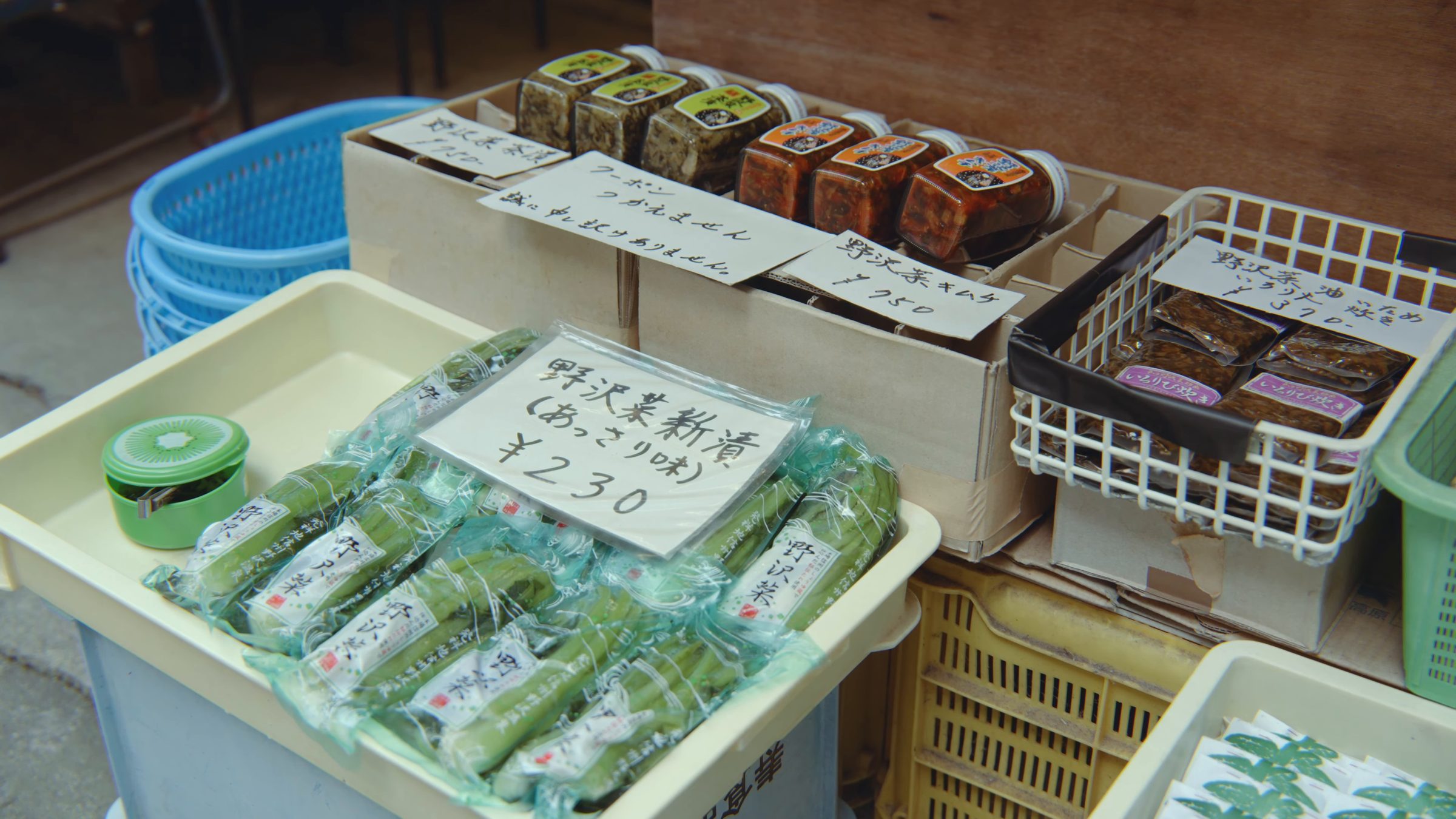
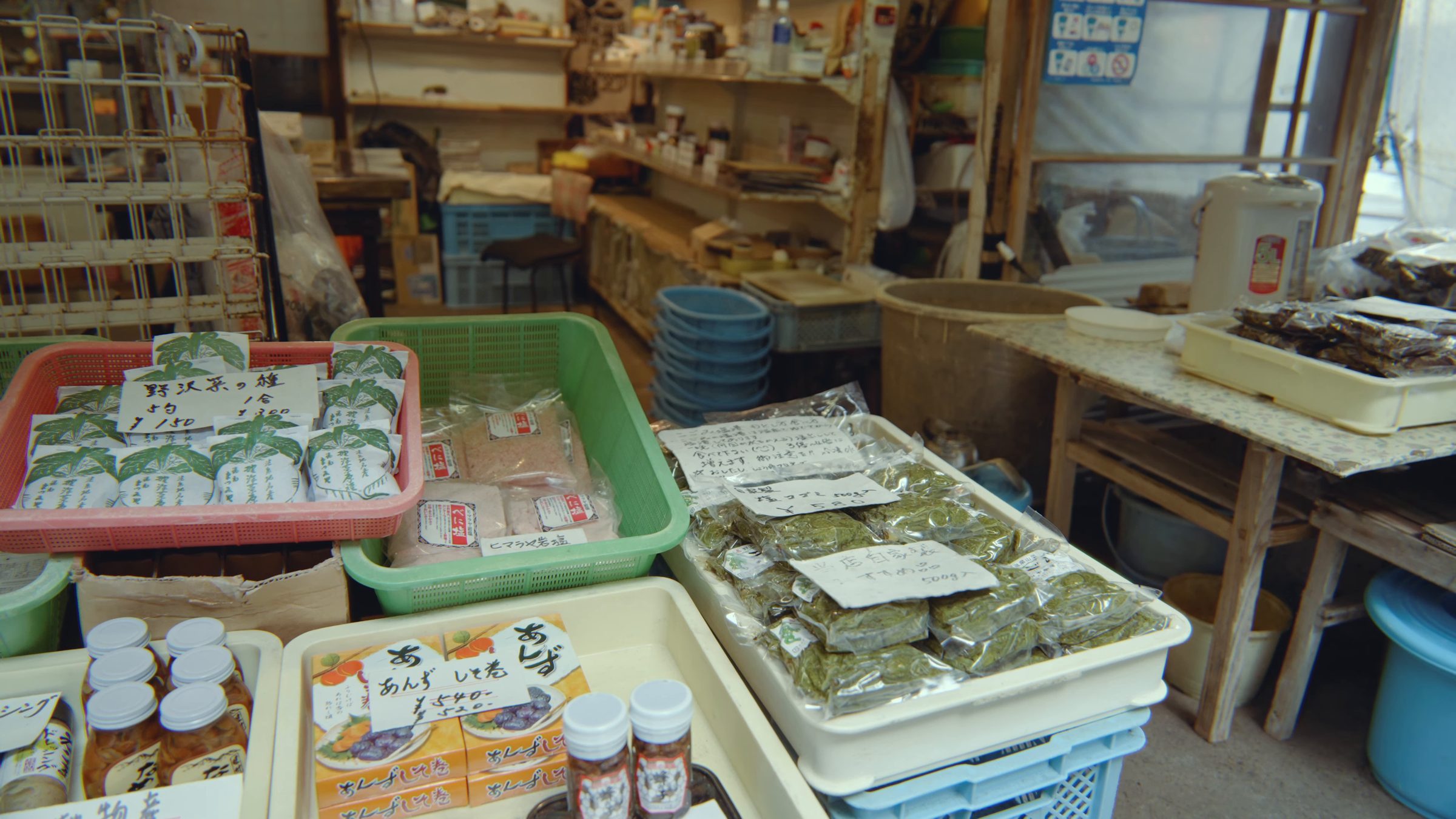
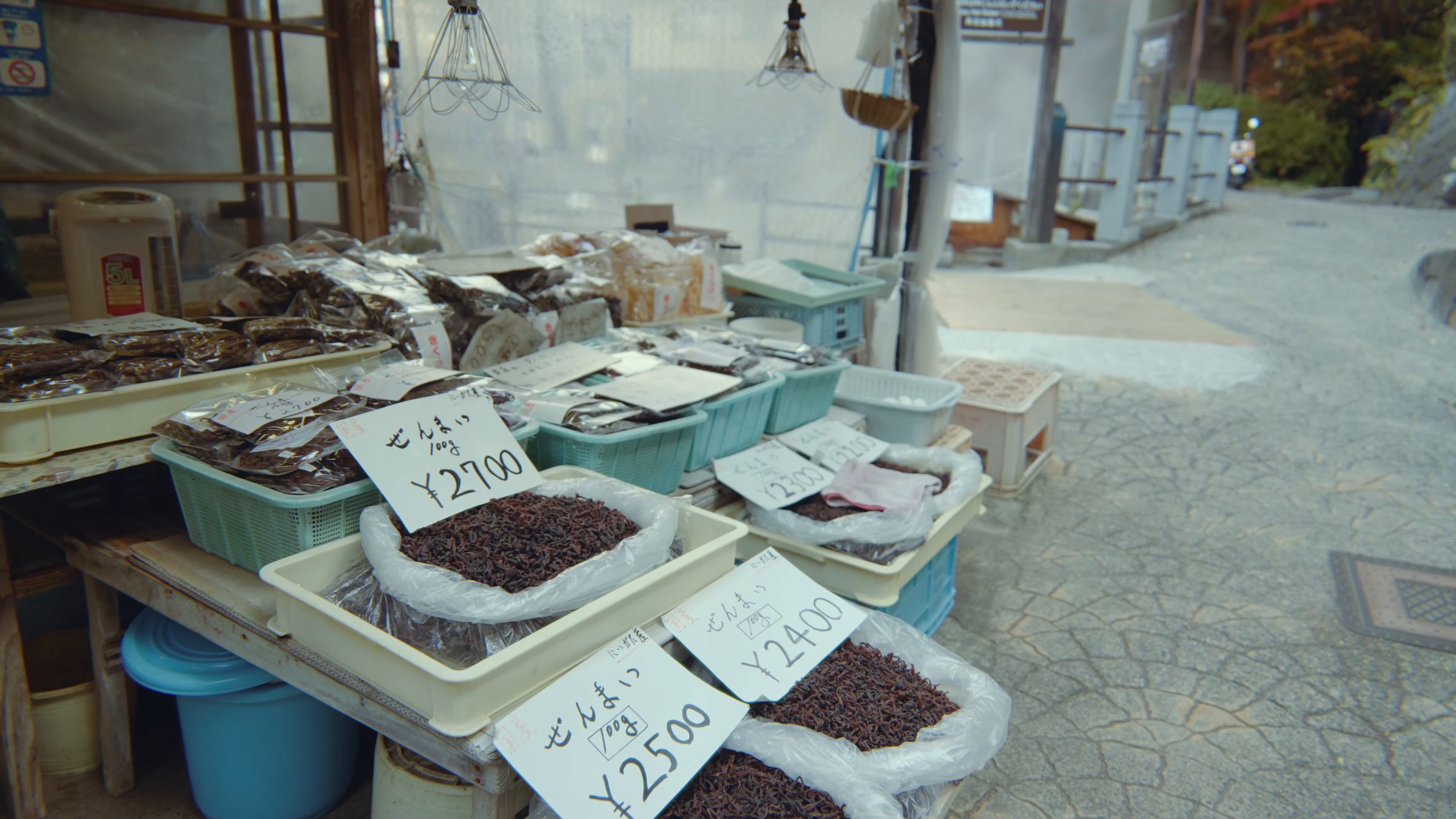
My first stop was a shop selling nozawana pickles and dried goods: bags of lightly pickled nozawana, nozawana seeds, apricots wrapped in shiso, jars of this and that, and price tags for dried zenmai fern and azuki beans. I bought a bag of nozawana for tonight.
Watch this scene on YouTube1:28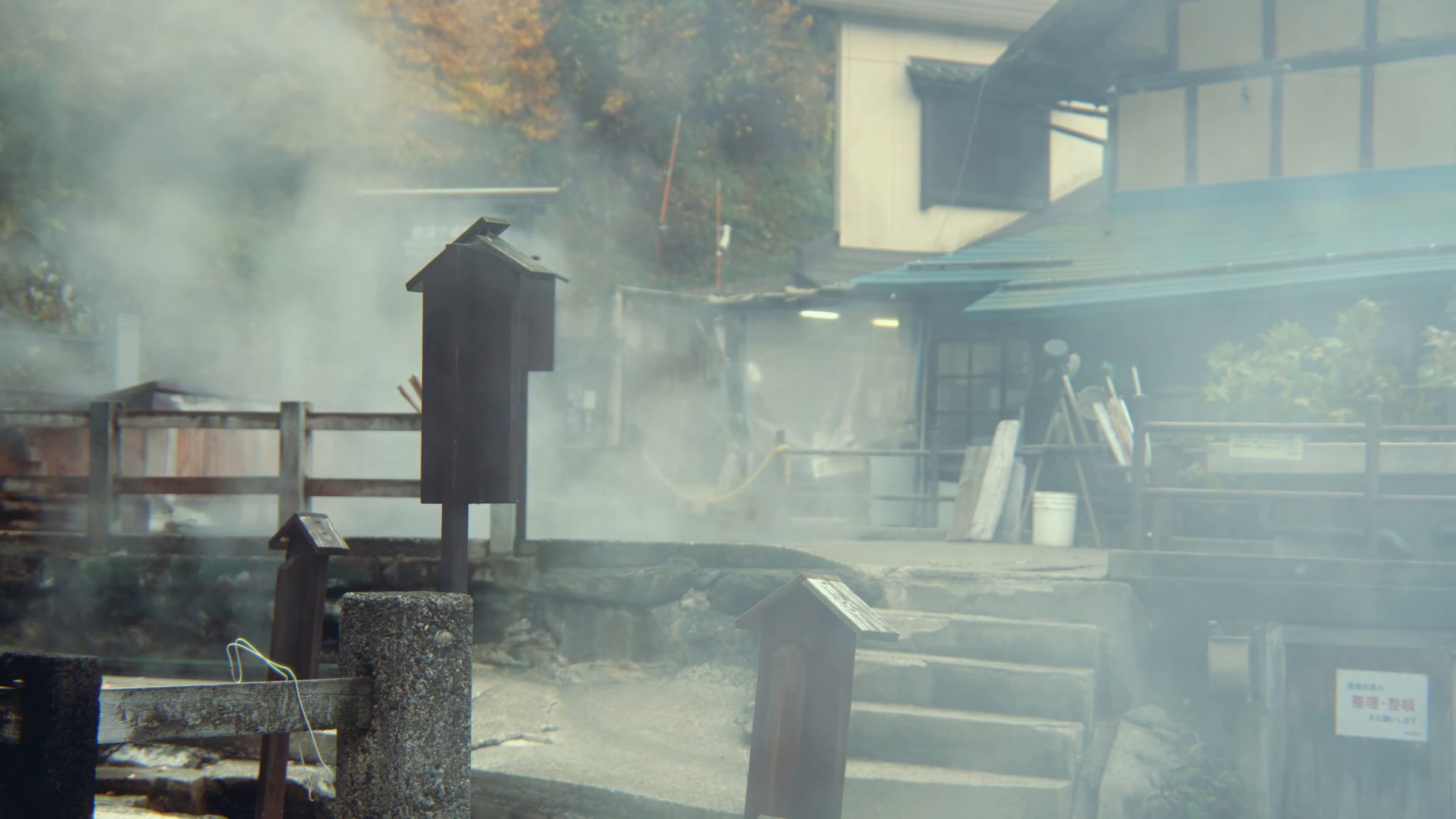
05TRAVEL JOURNAL
Oyaki and onsen manju
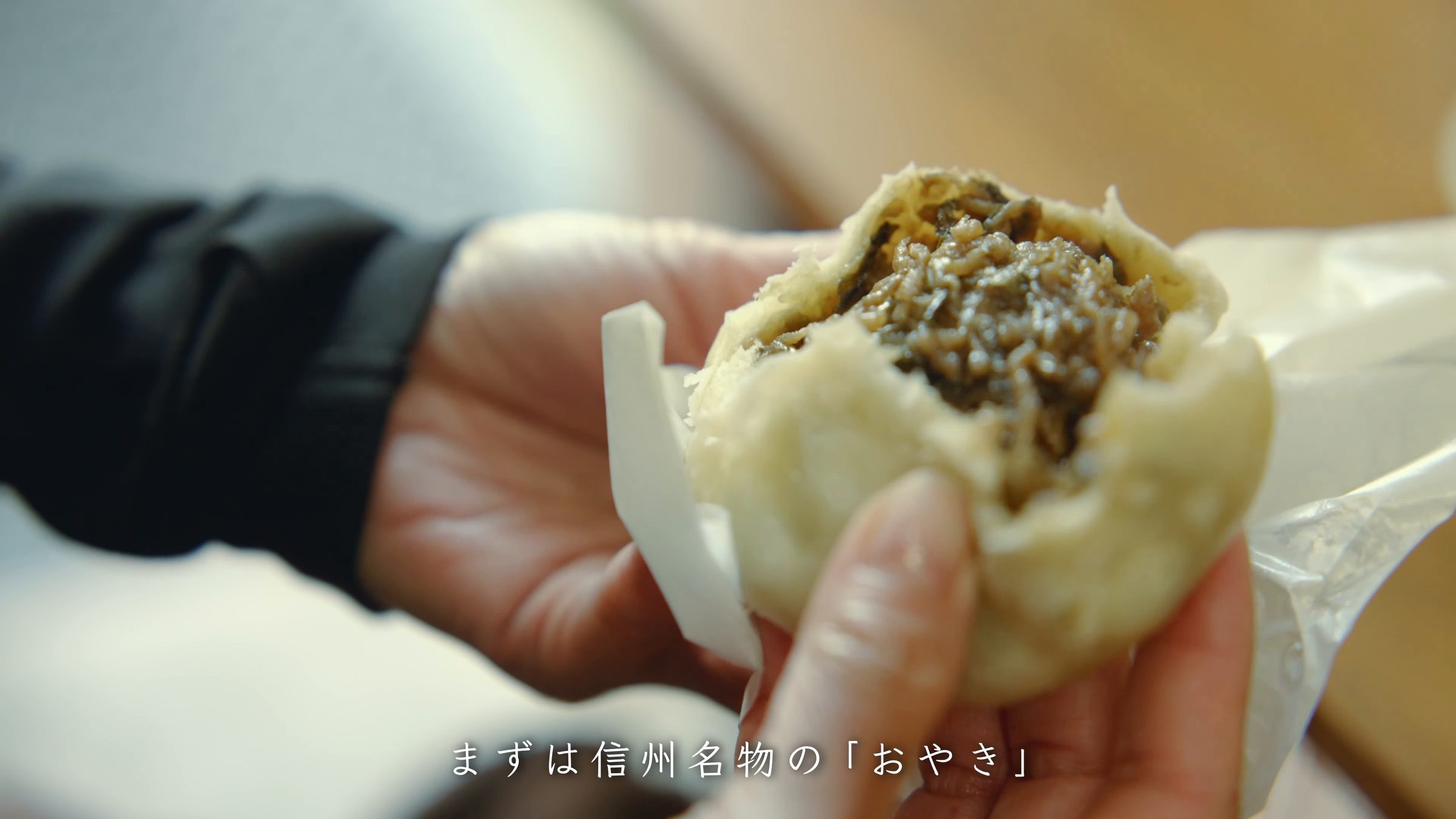
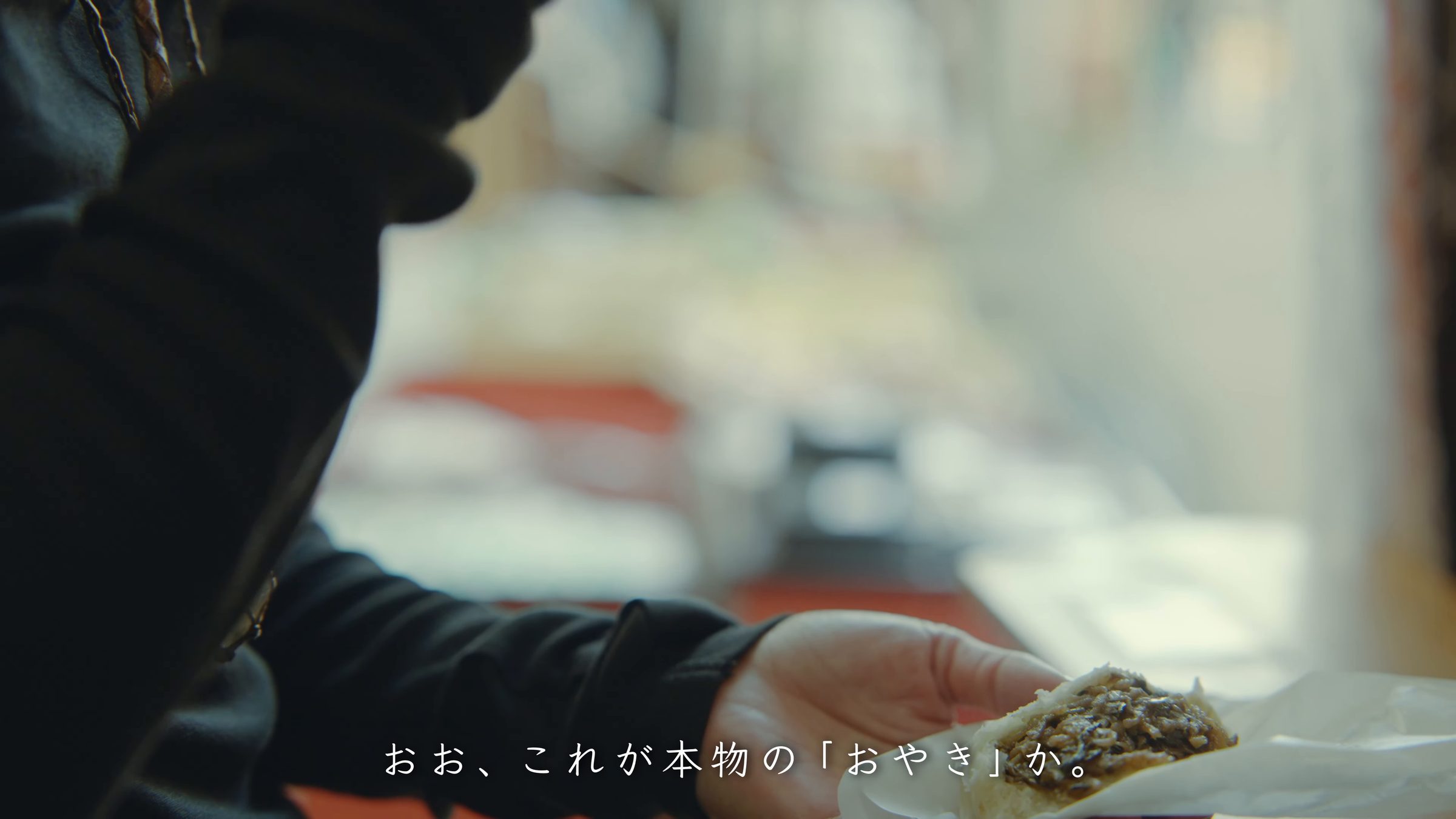
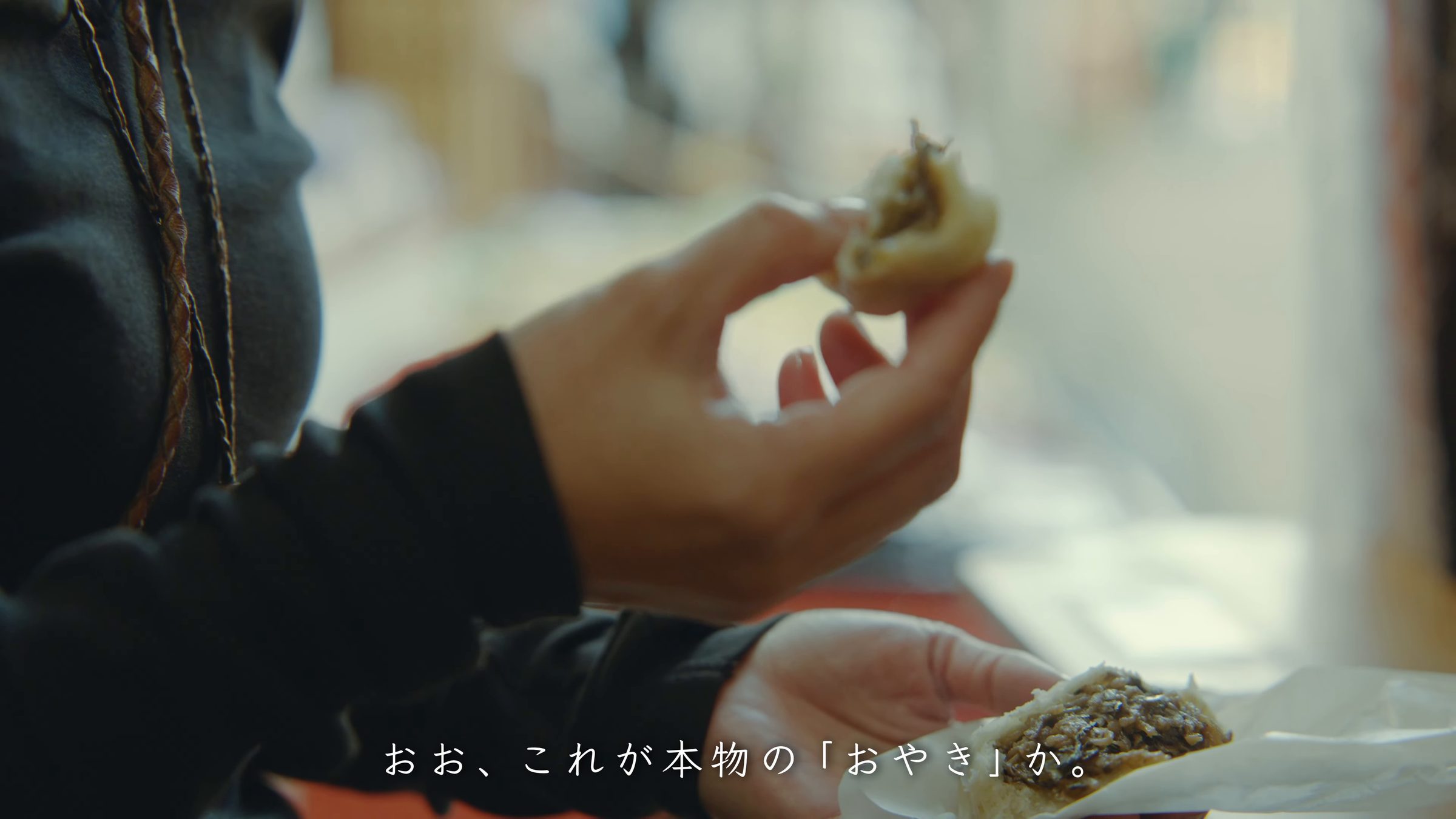
Beyond the Ogama signpost, steam wrapped the stone steps in white. First, Nagano's famous oyaki. Breaking one open with my hands revealed a filling packed with nozawana. I once made oyaki by imitation in an old house in Nagano, but the real thing is in a different class: the sweet-salty filling goes perfectly with the warm dough.
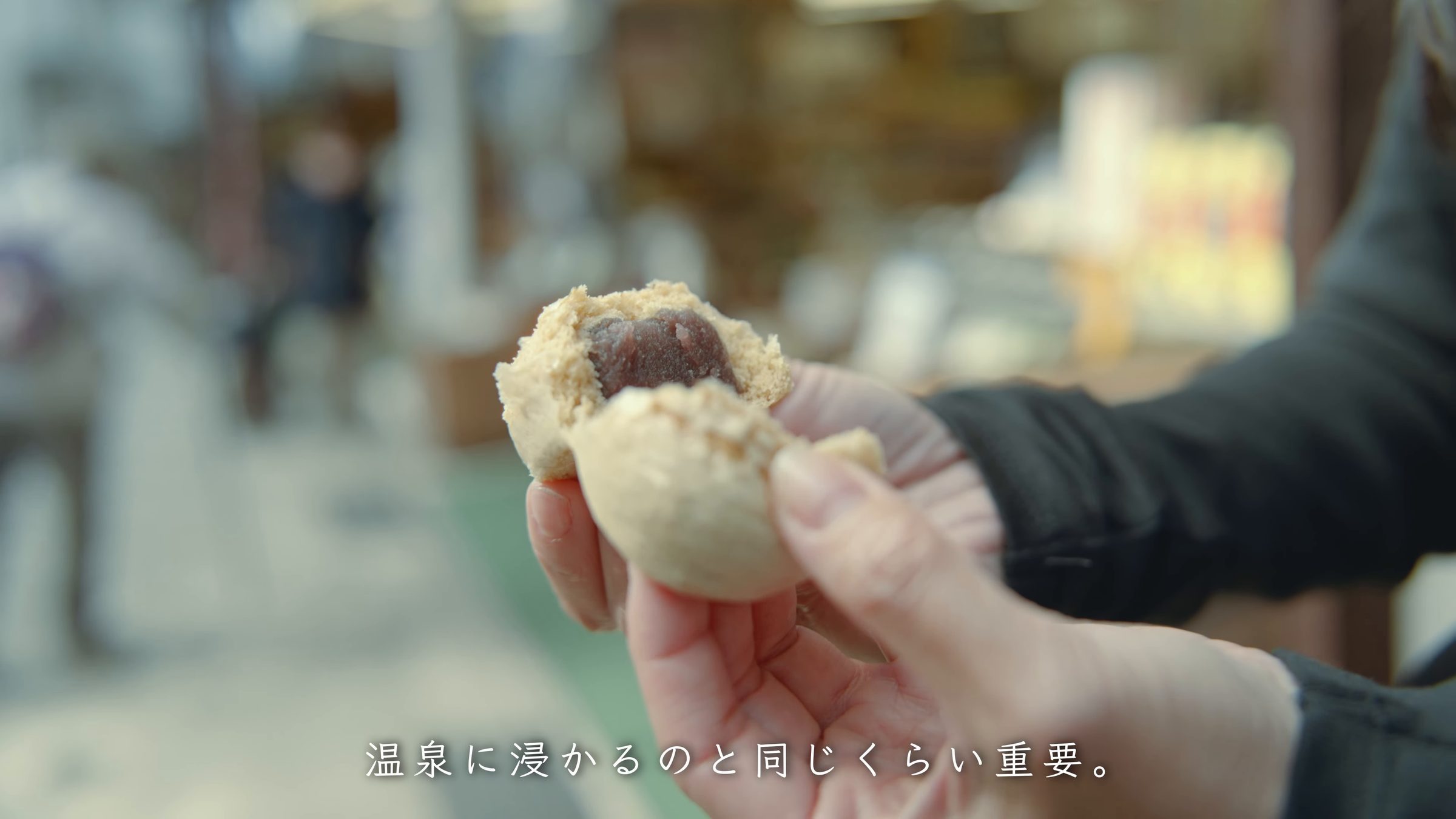
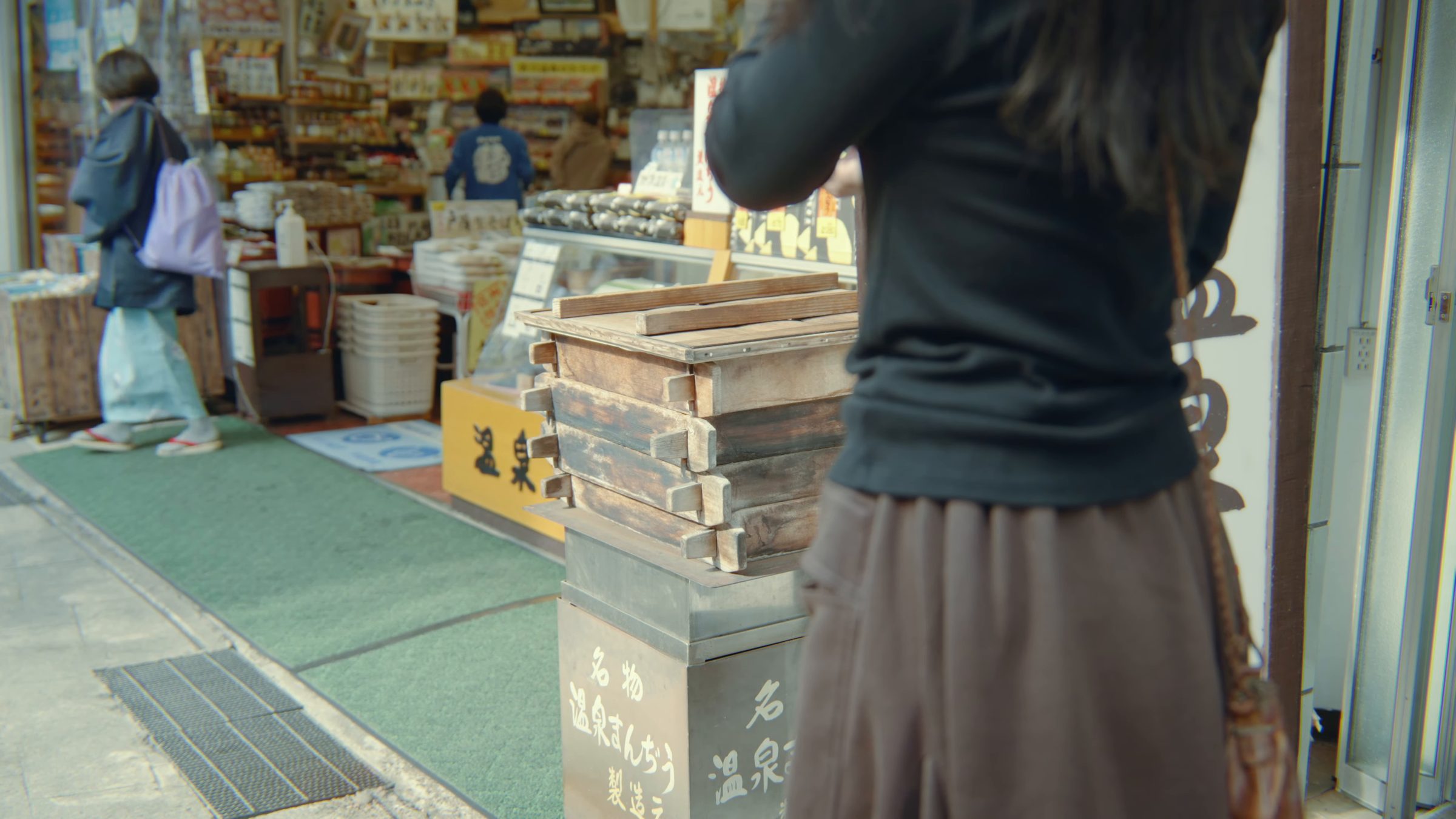
Then an onsen manju. Eating a steamed bun in a hot-spring town is as essential as soaking in the hot spring itself. At a shop whose sign read 'Famous onsen manju, made here', I split one open to find it packed with smooth bean paste.
Watch this scene on YouTube1:48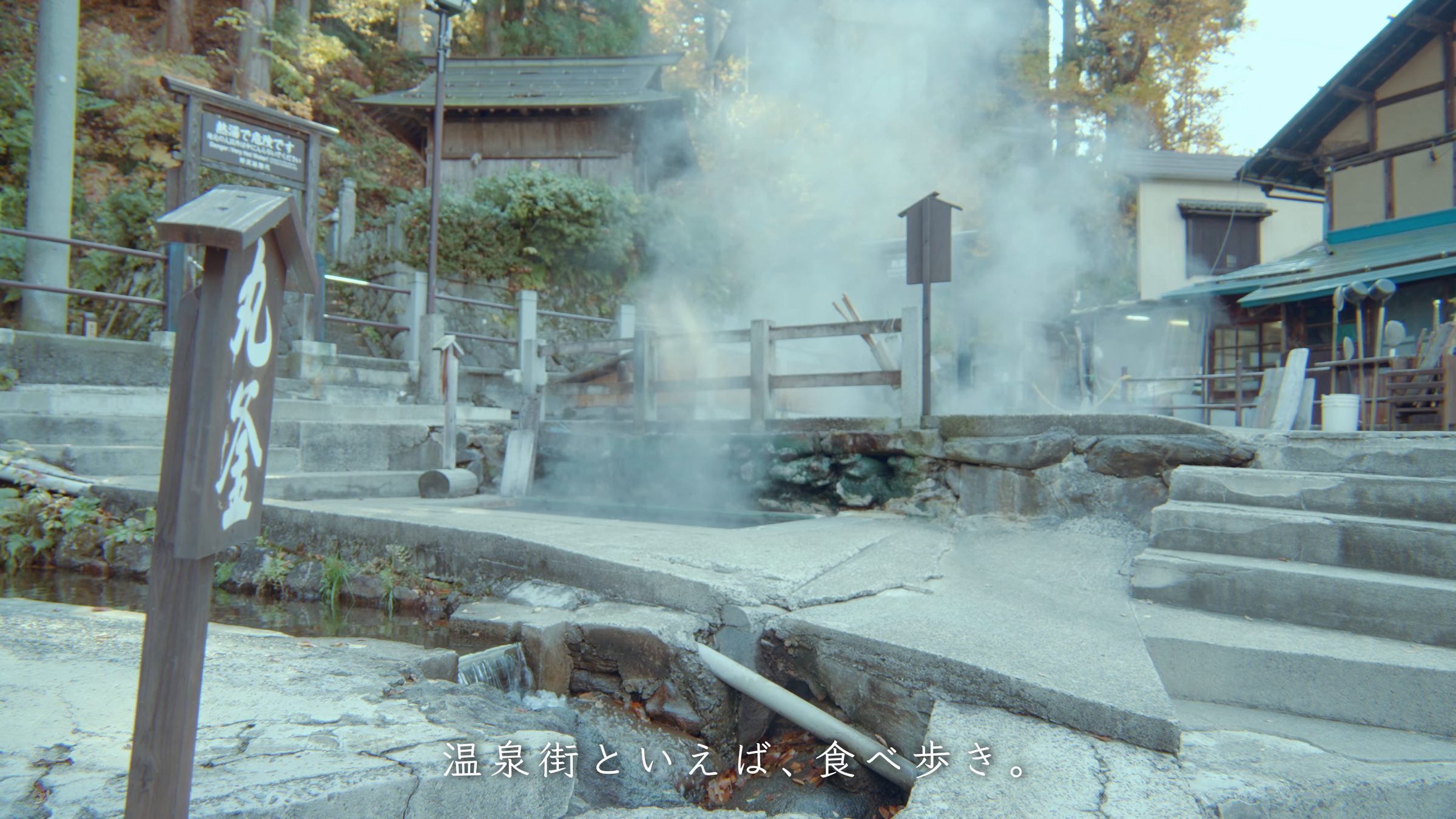
06TRAVEL JOURNAL
To a farmhouse in the hills
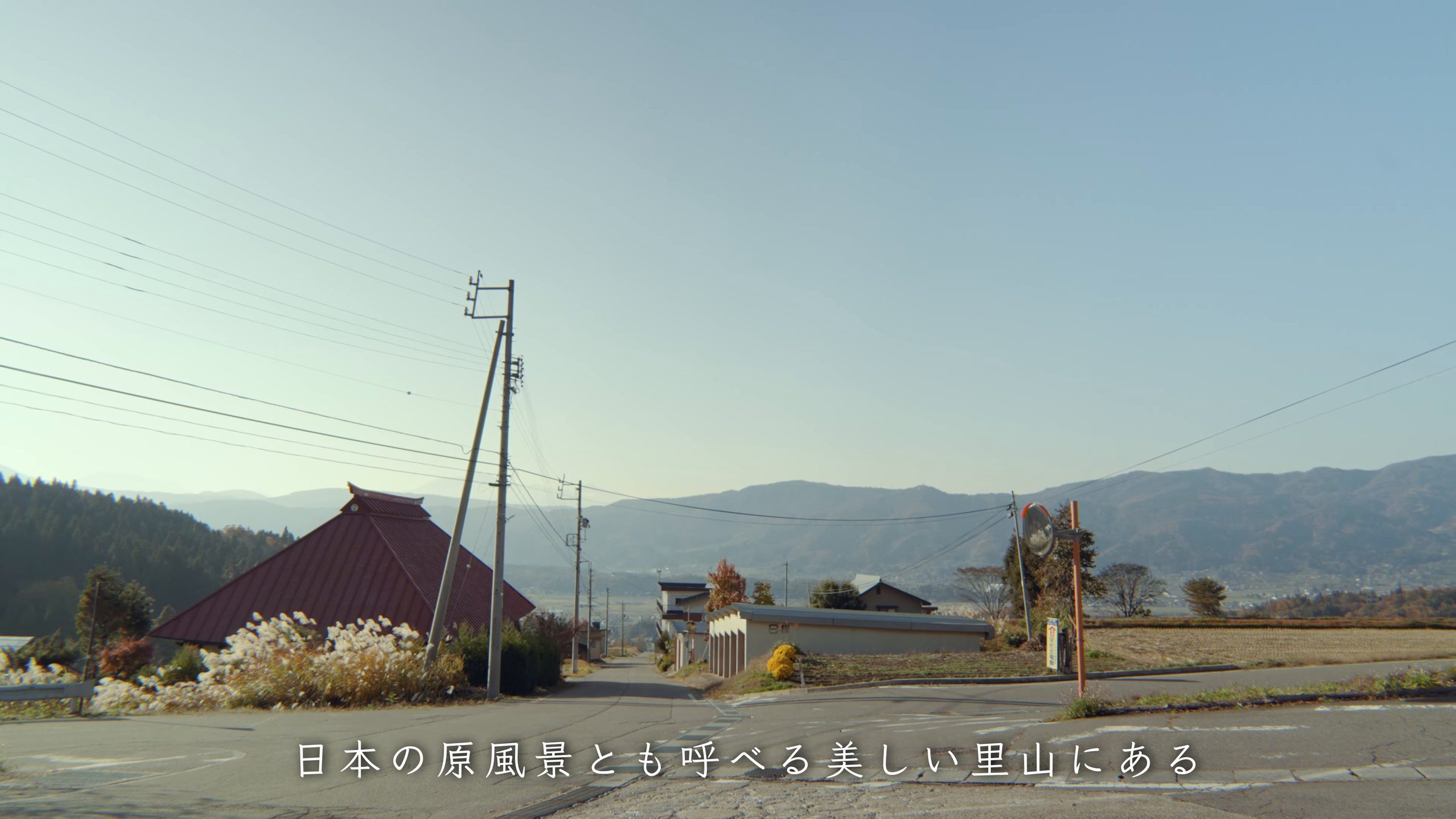
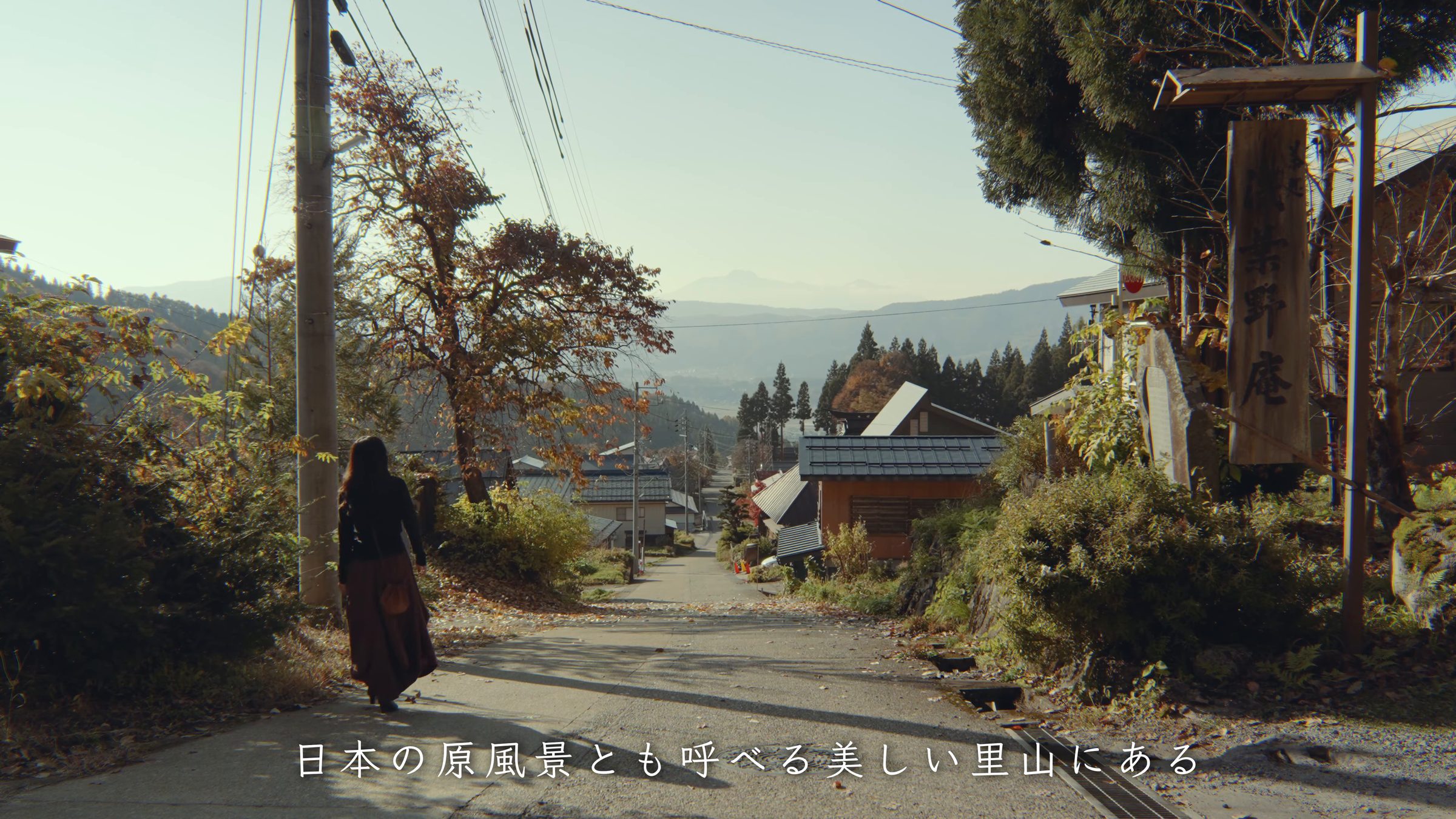
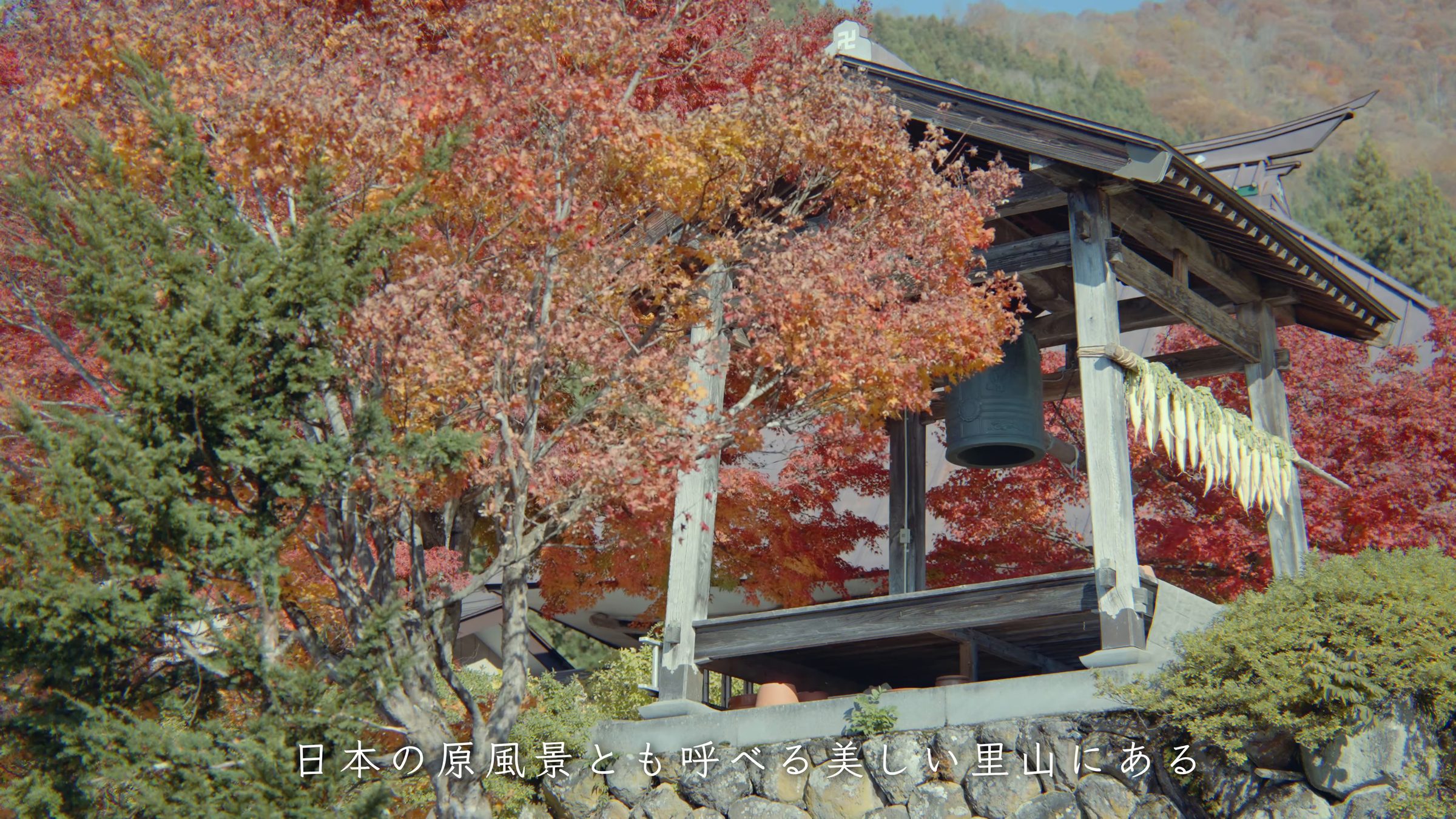
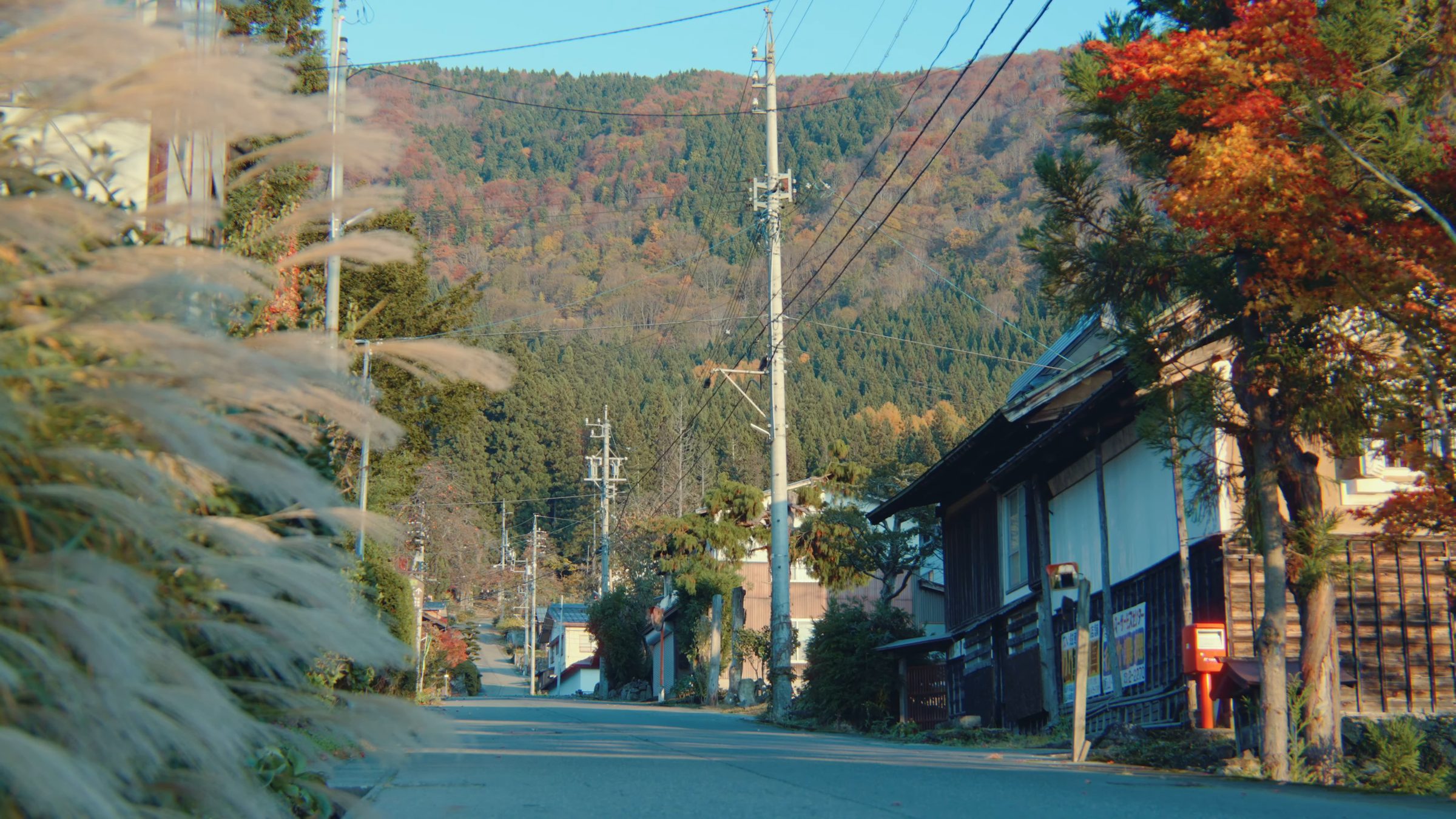
I left the town's main street and headed for tonight's lodging. Mountains stretched beyond a house with a red roof, and as I walked a leaf-strewn lane, a bell tower appeared among the autumn colors, with bundles of white vegetables hung to dry under its eaves. A beautiful village landscape, the kind people call the original scenery of Japan.
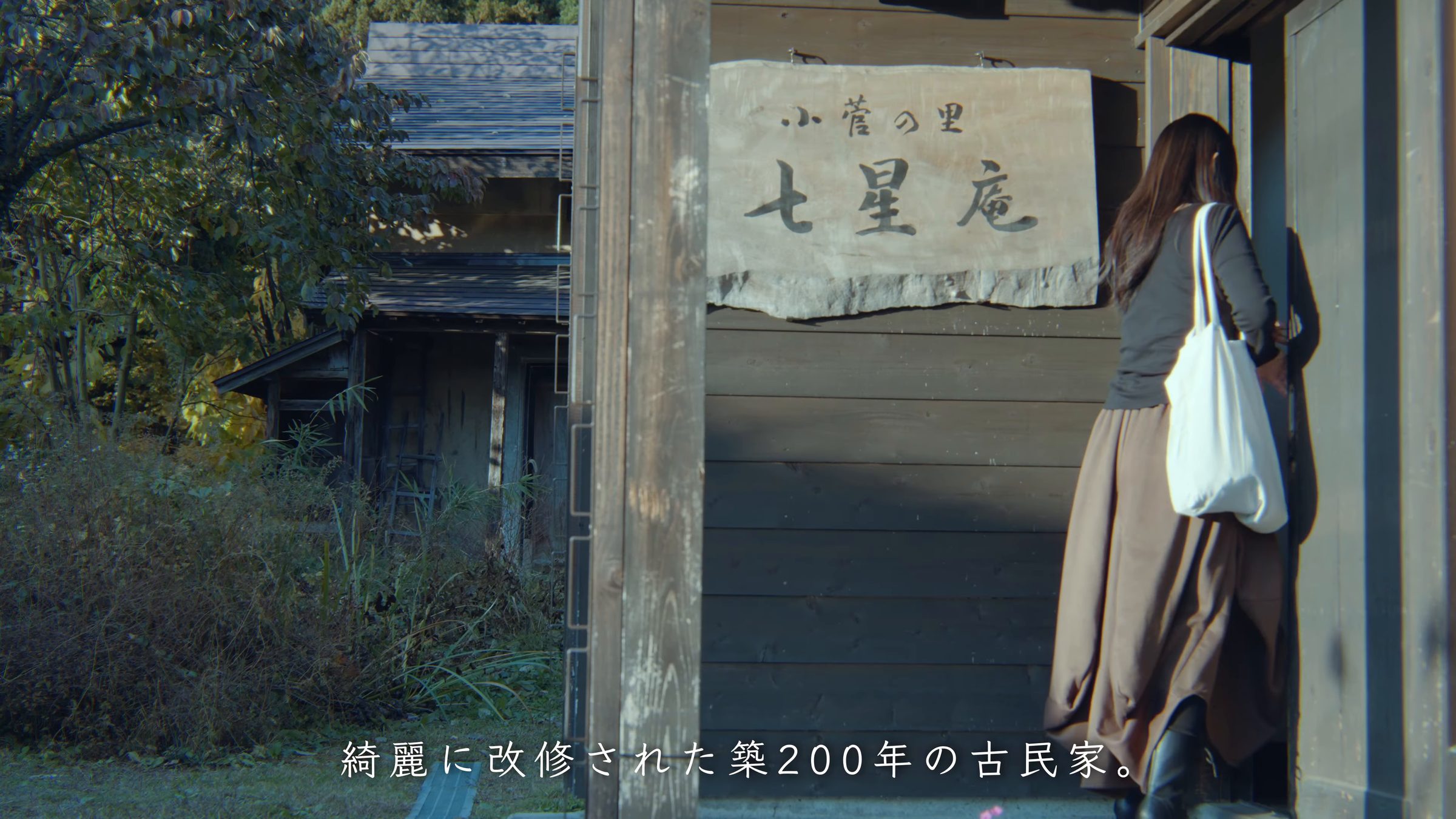
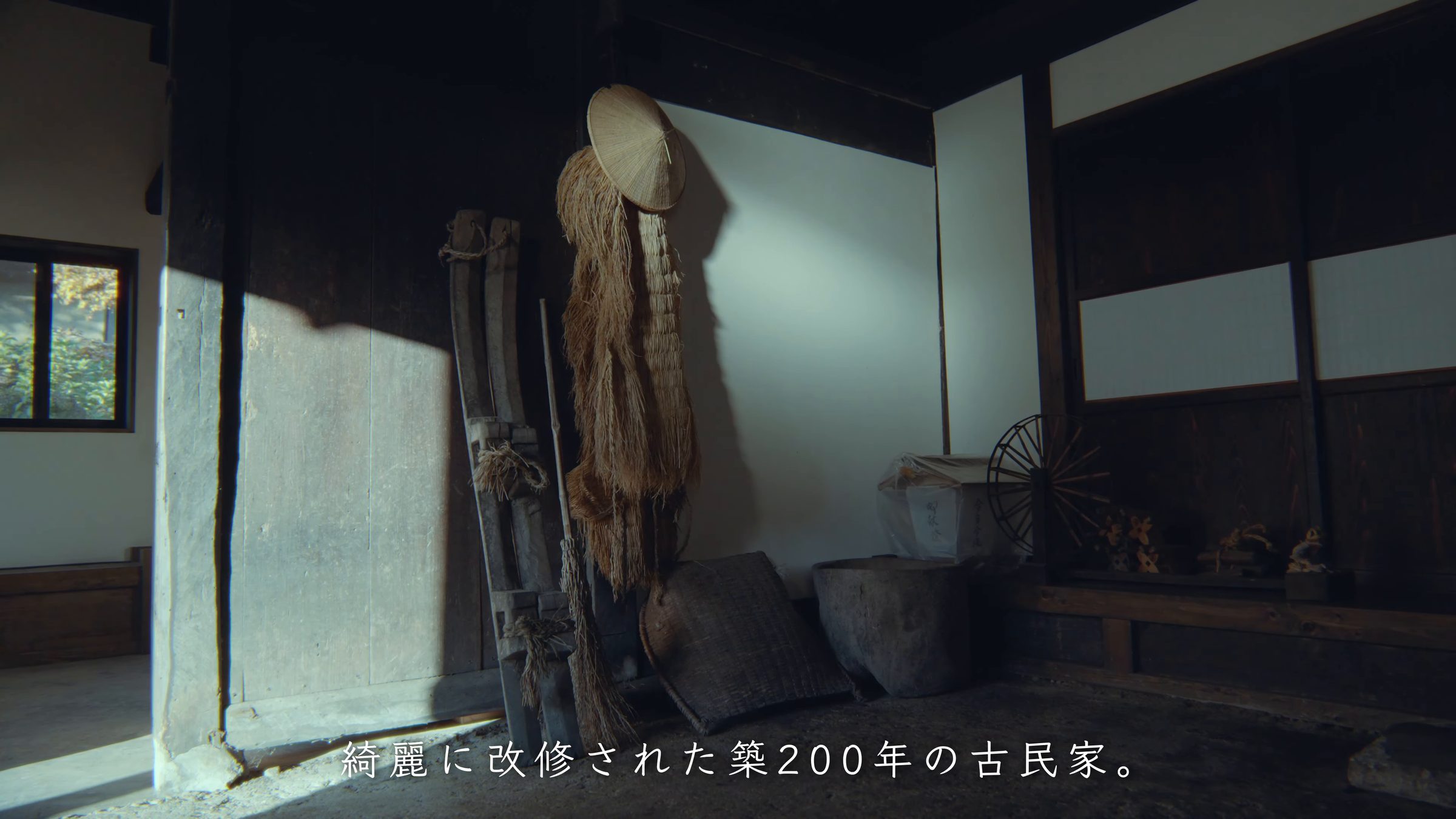
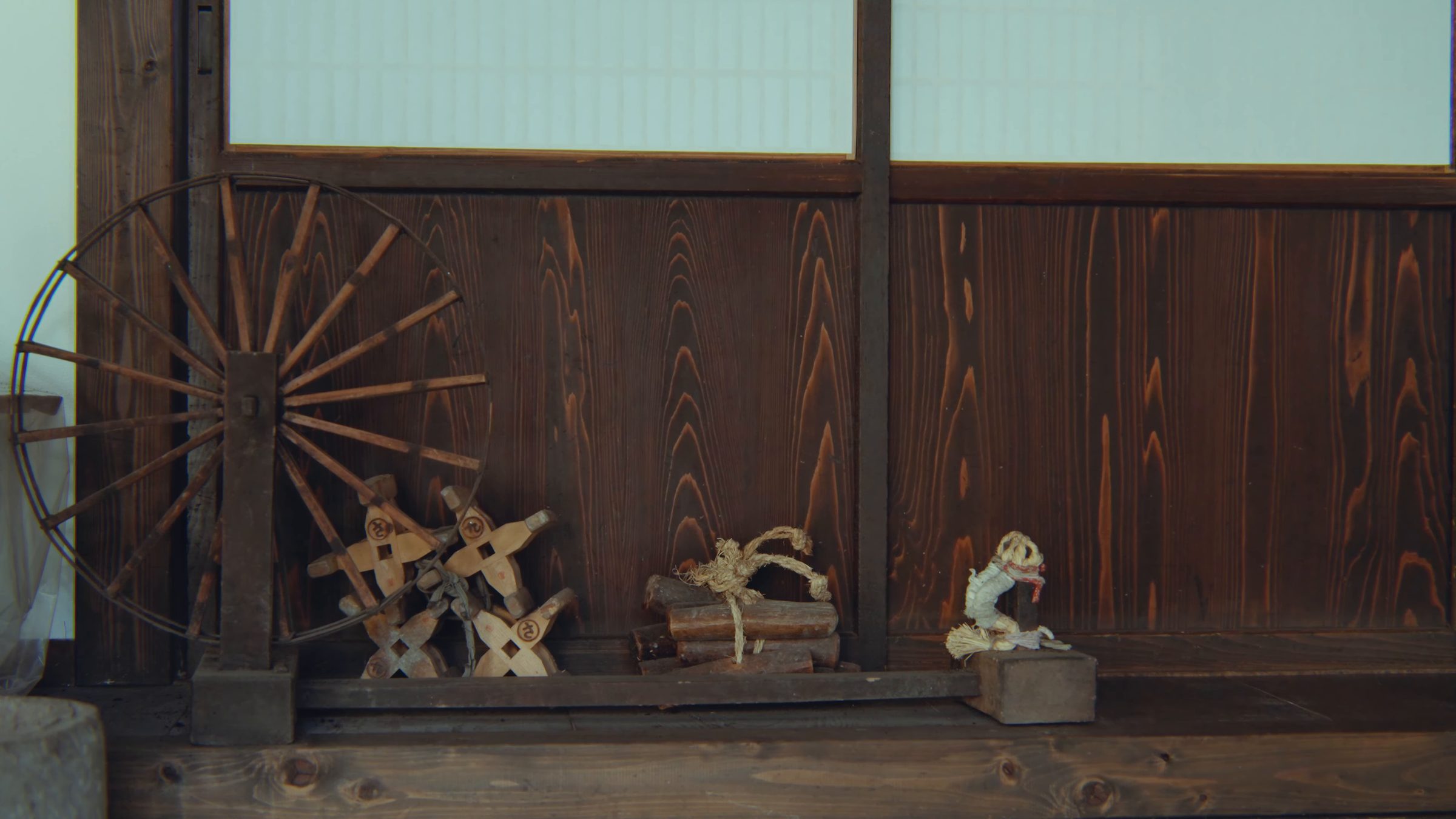
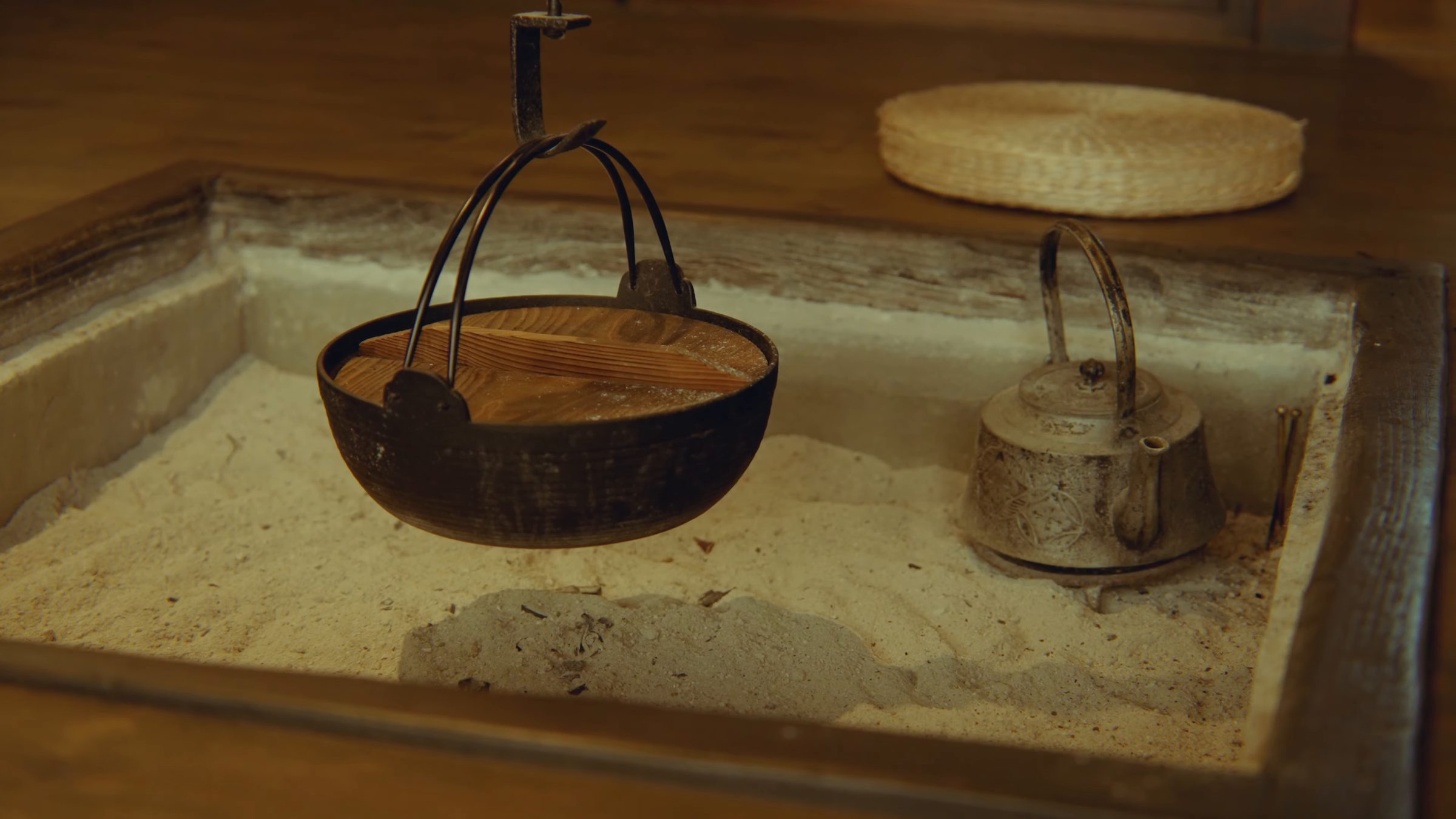
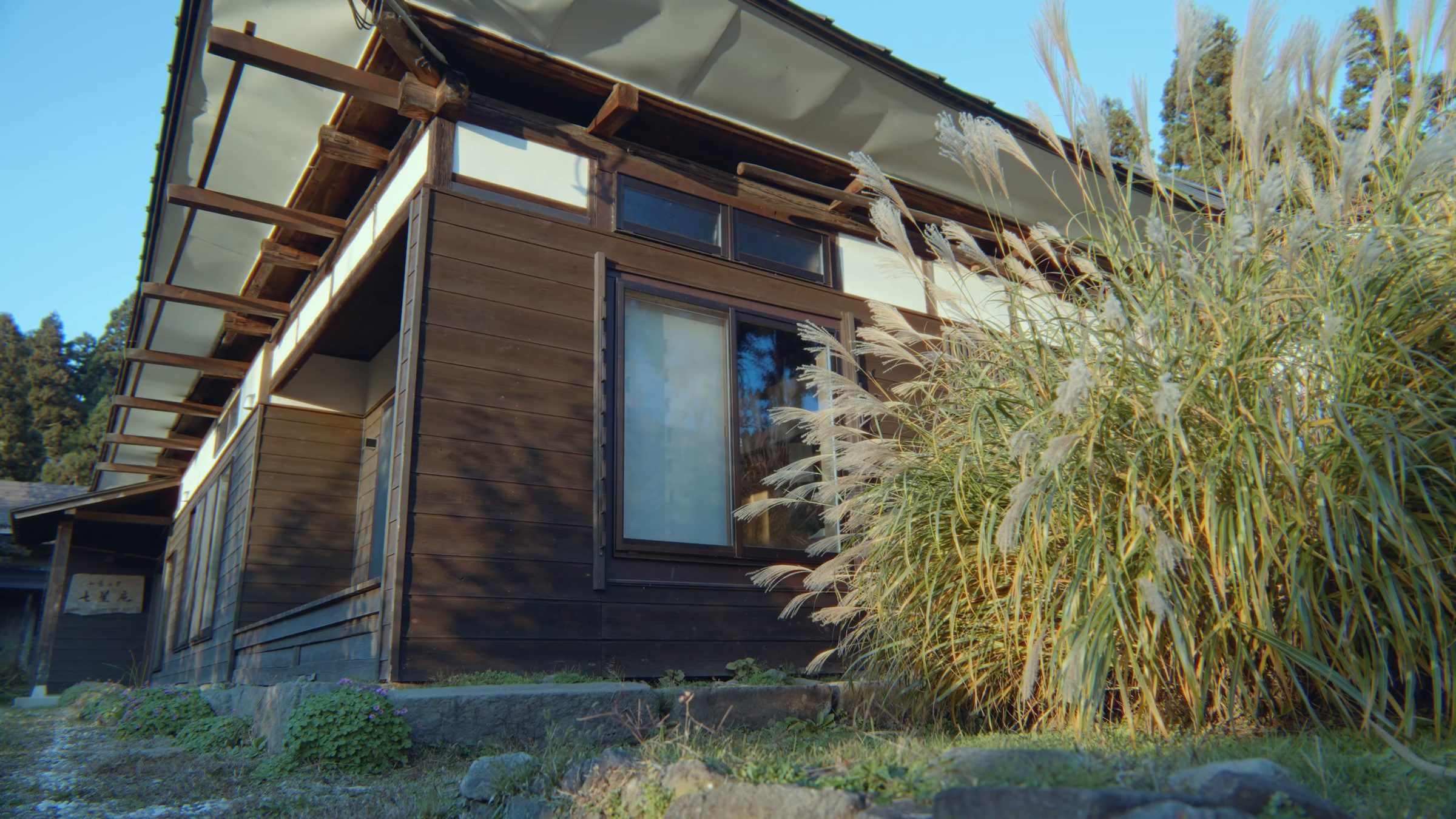
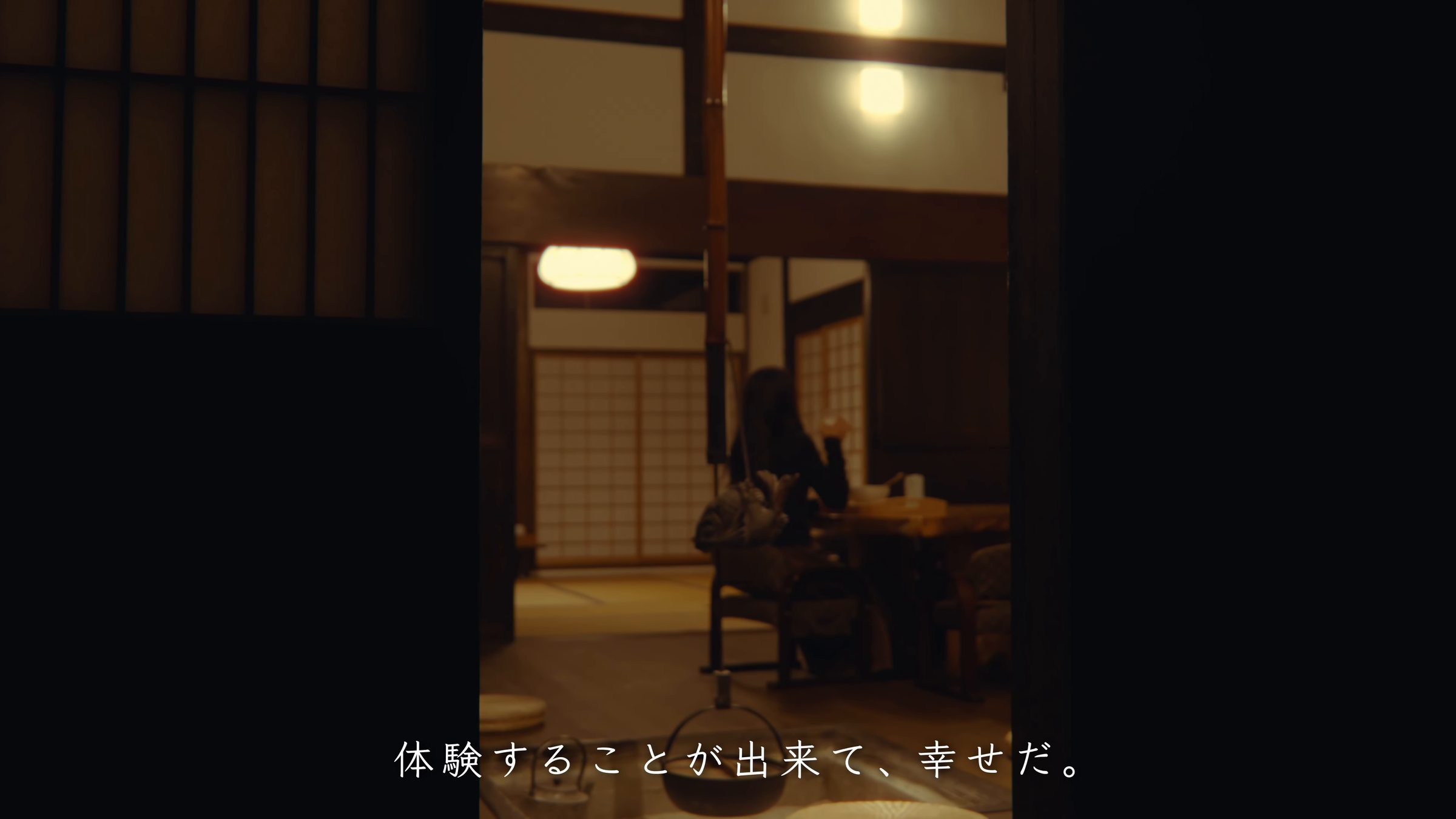
My home for the night was a beautifully restored farmhouse, 200 years old. A straw raincoat and a hat hung on the wall of the earthen-floored entrance; a spinning wheel and straw crafts stood before the board walls; an iron kettle and pot hung over the hearth. Outside, pampas grass swayed in the afternoon light against the wooden siding.
Watch this scene on YouTube2:15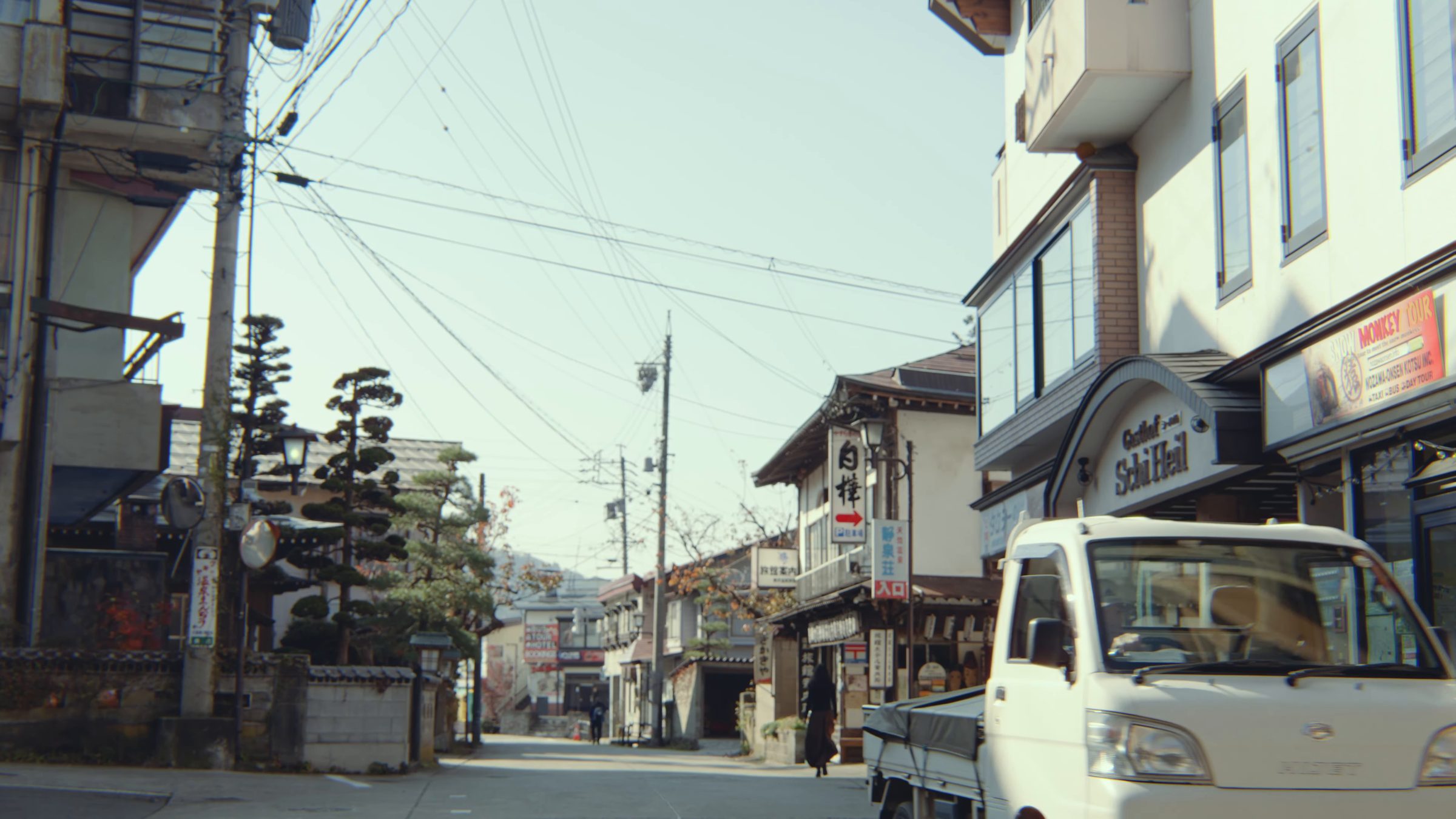
07TRAVEL JOURNAL
Dusk on the porch
In the dim tatami room hung a carved wooden fish. I slid open the shoji onto a quiet village evening.
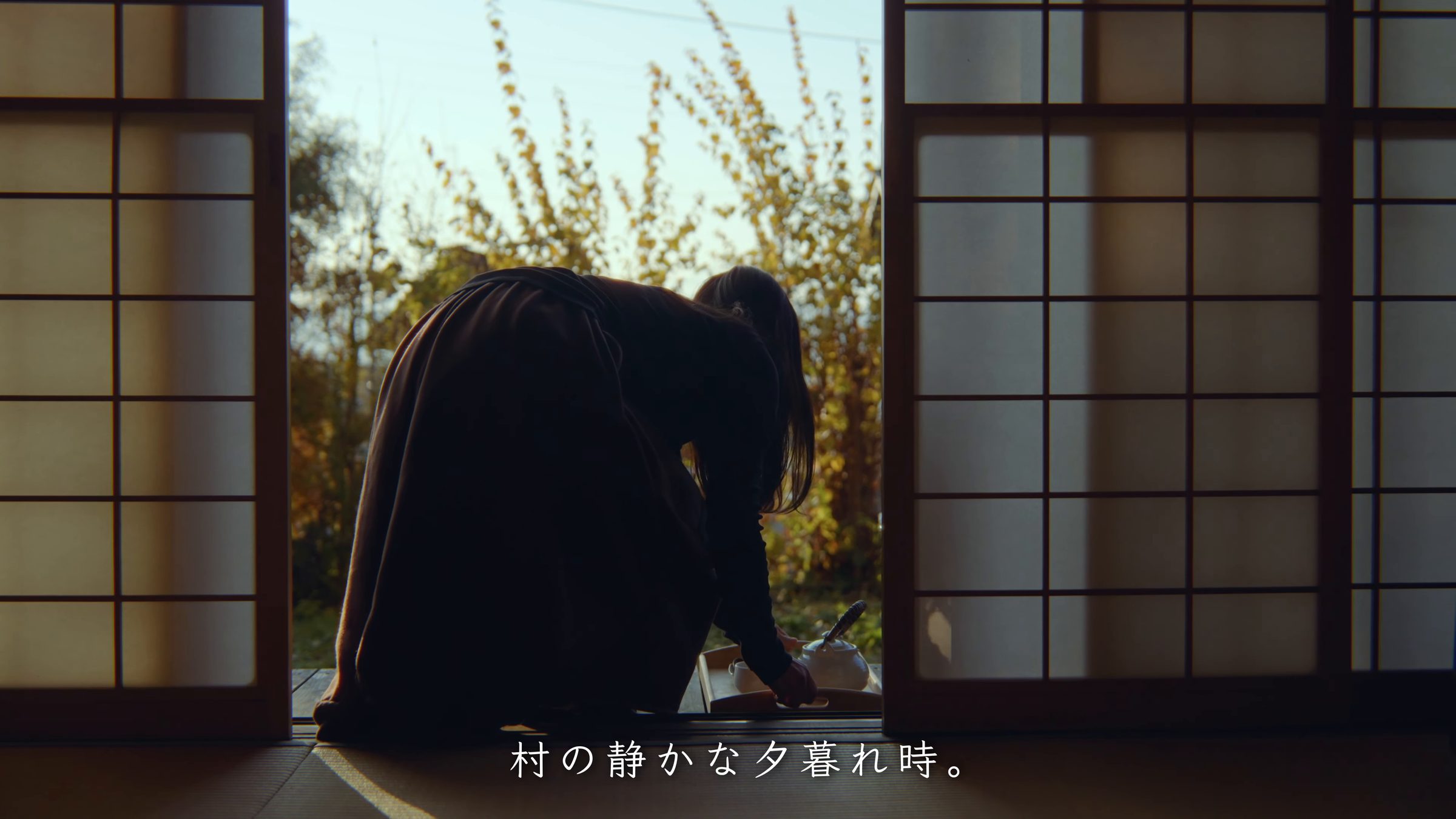
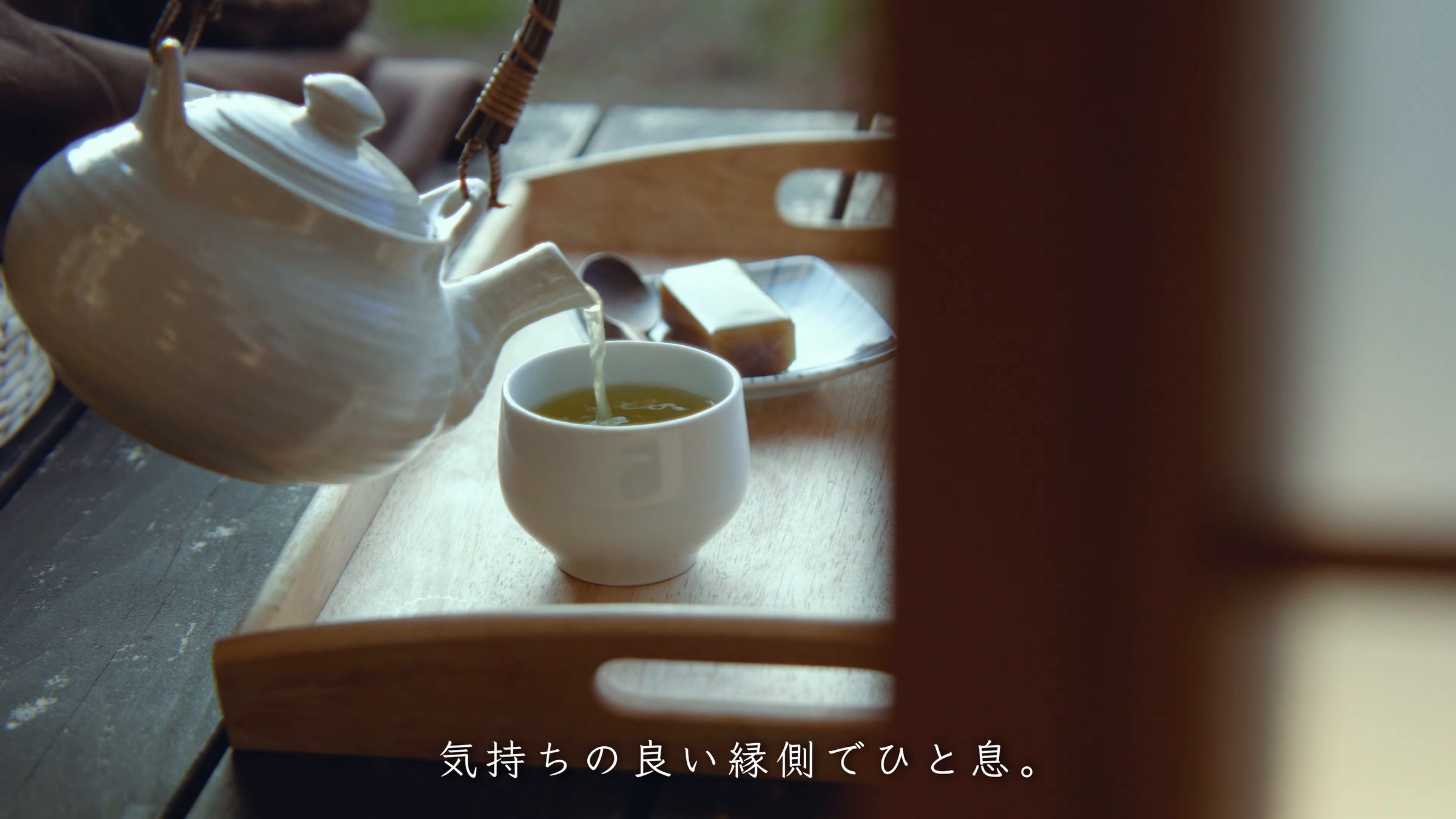
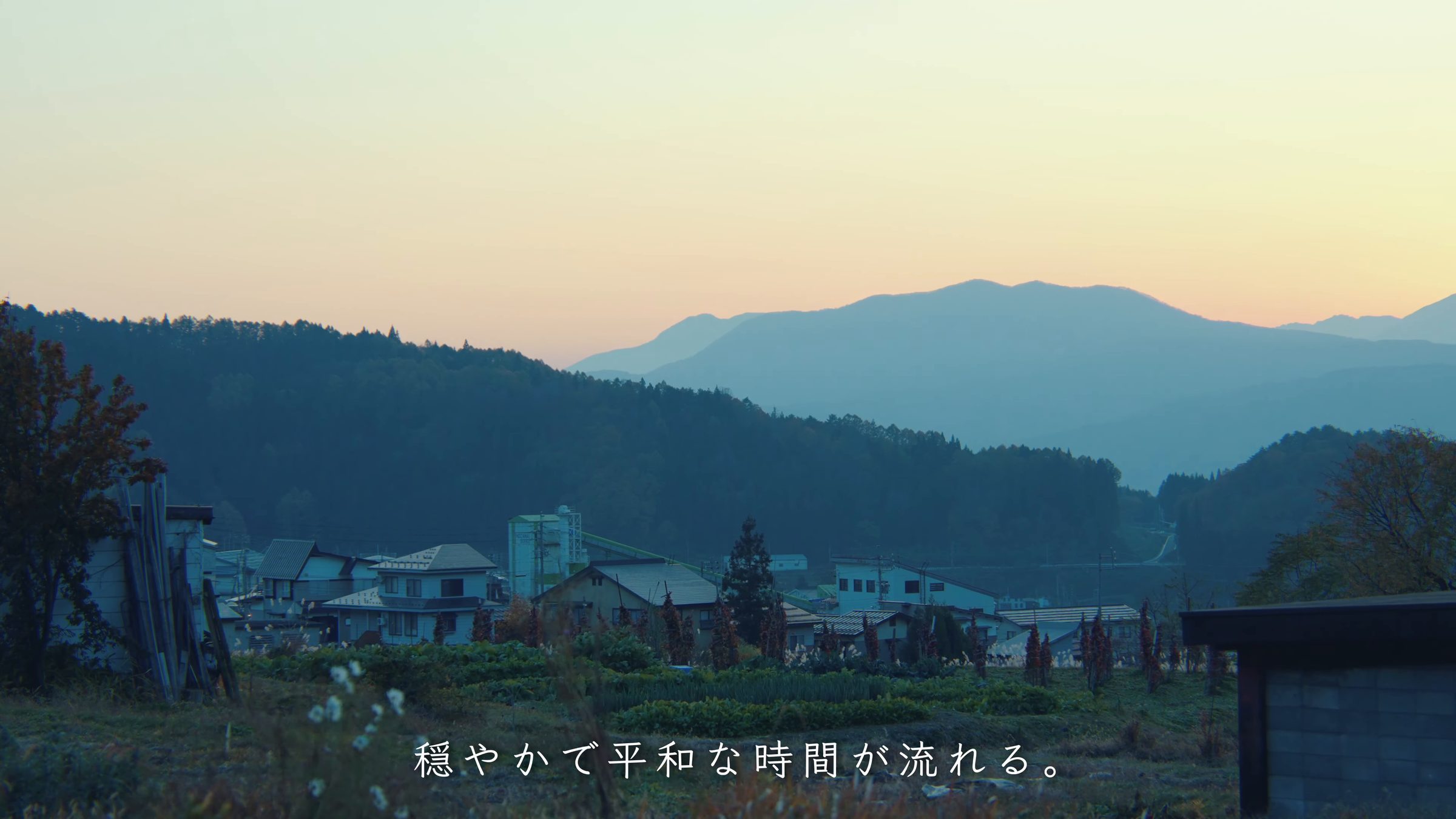
I set a tray on the porch and poured tea from the pot. A breather on the pleasant veranda. Pampas grass swayed along the road, and the ridgeline turned the color of sunset. Time passed slowly and peacefully.
Watch this scene on YouTube2:40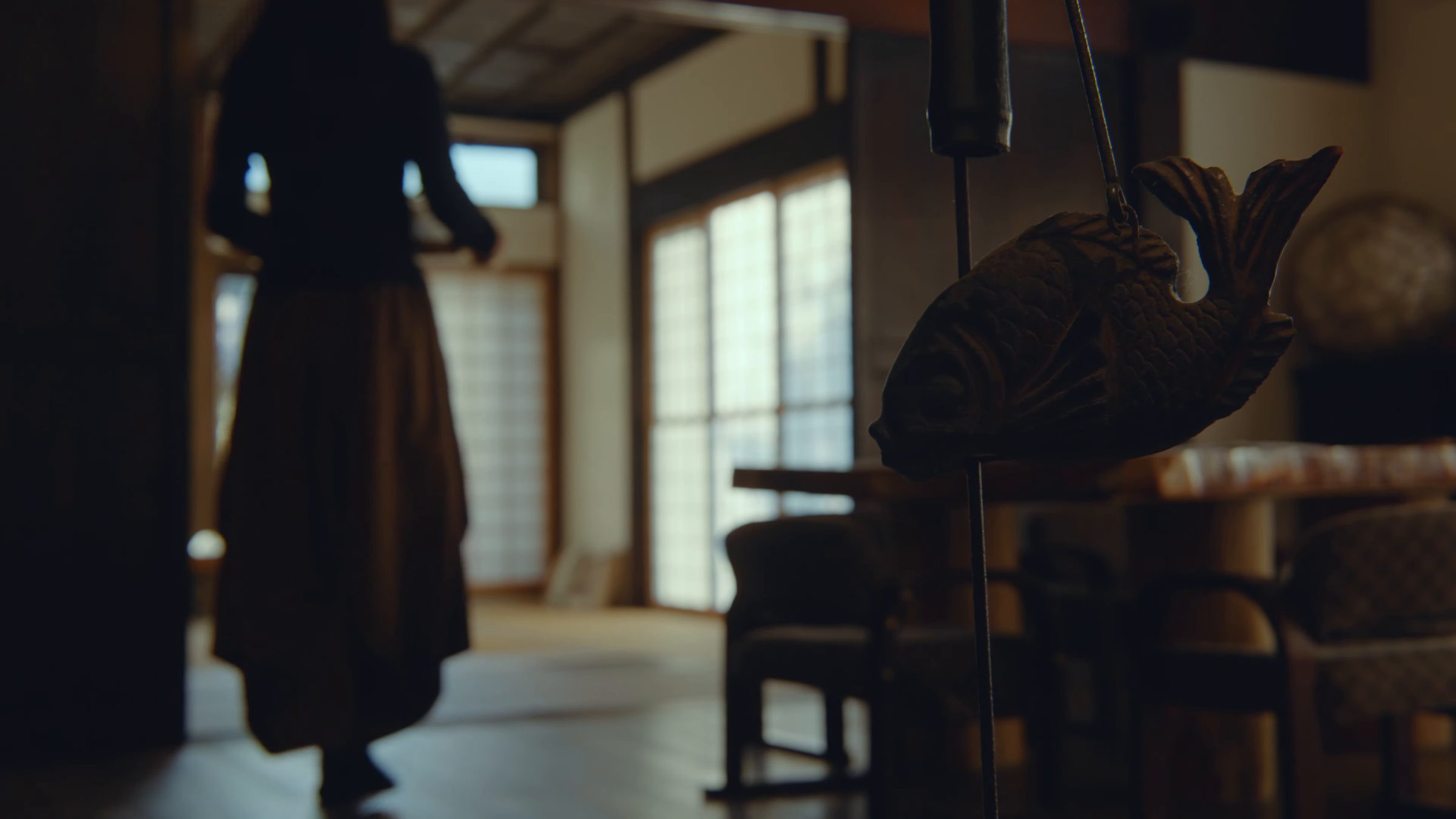
08TRAVEL JOURNAL
The bathhouse in the old style
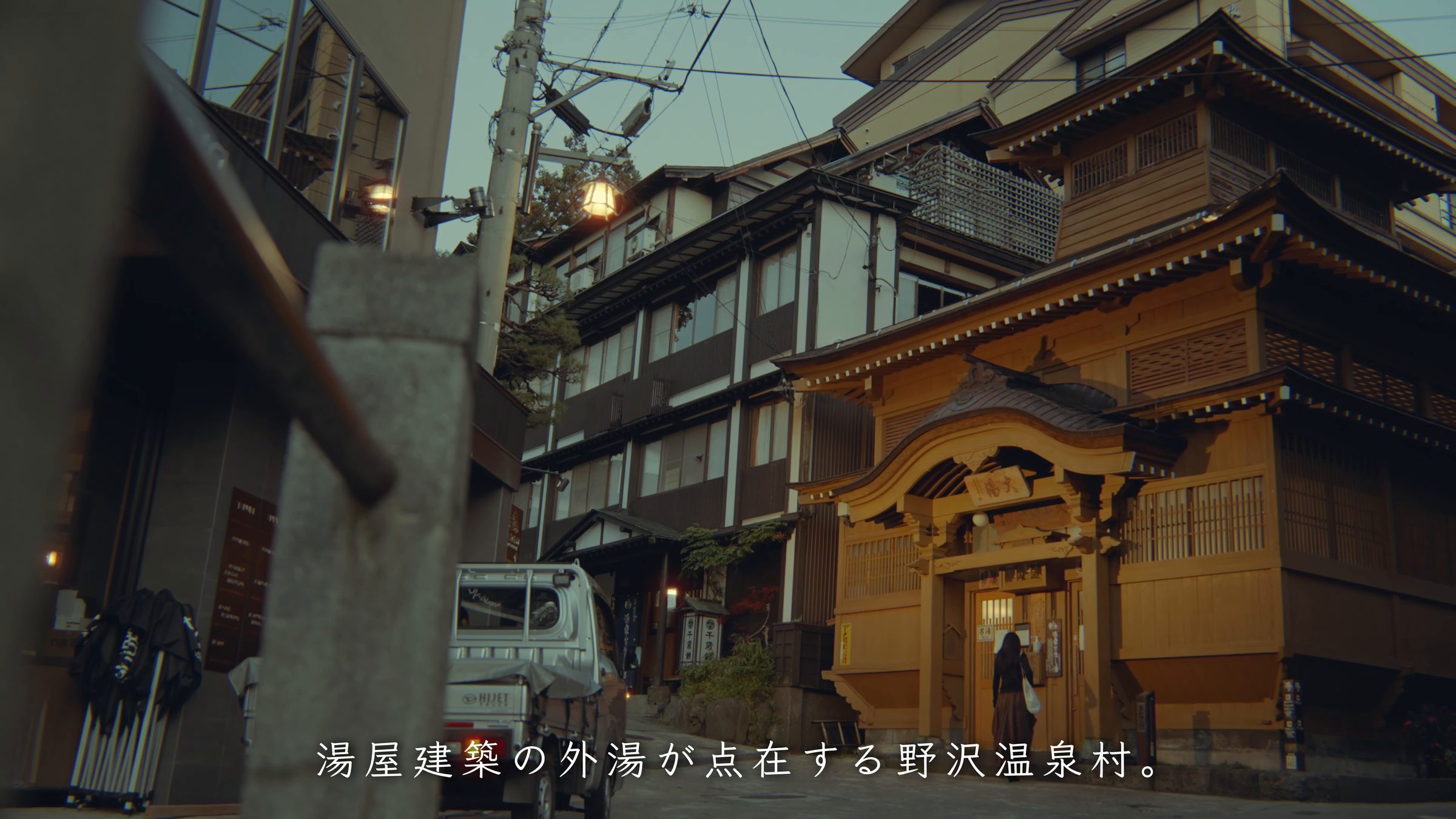
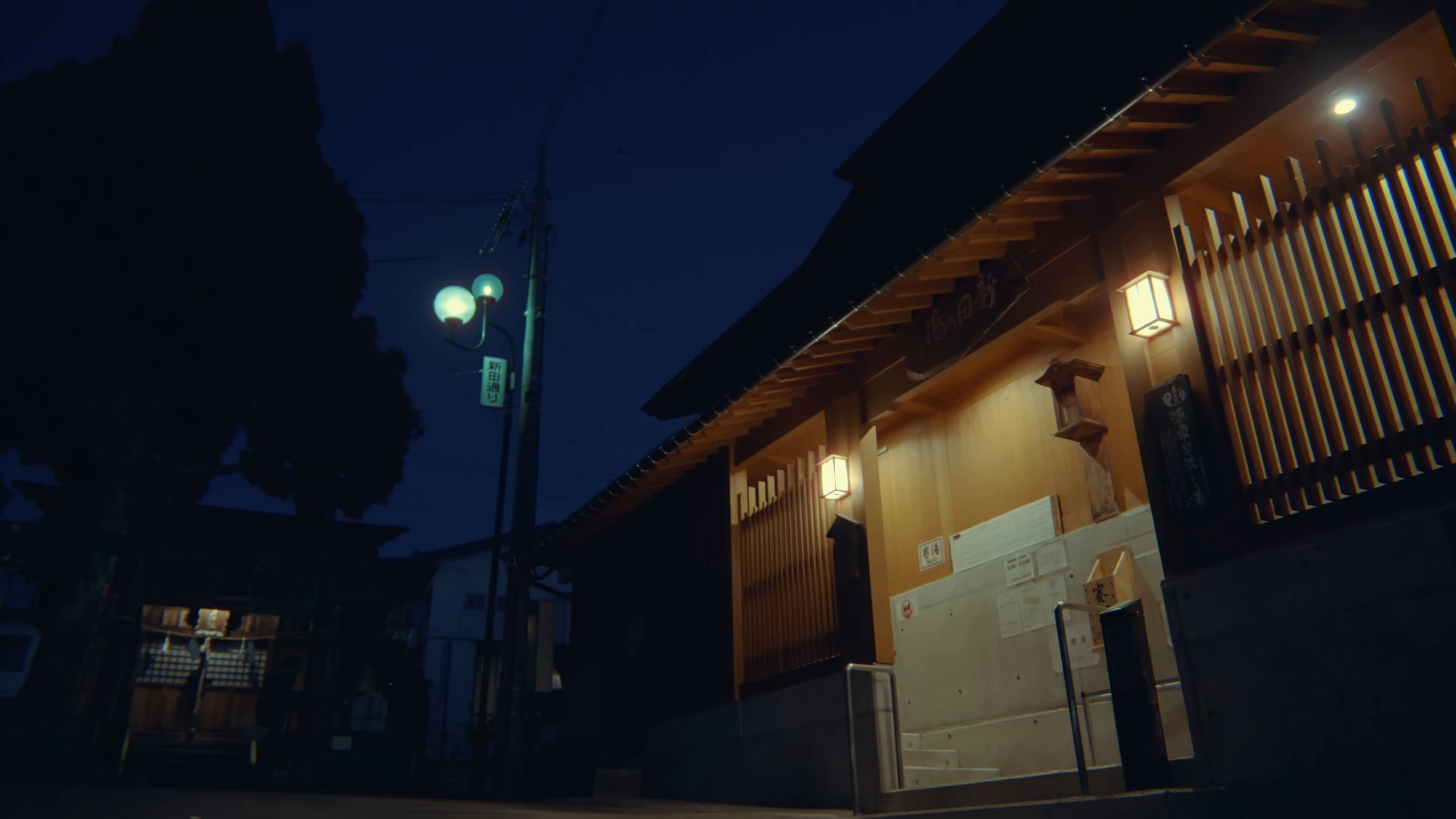
After dark, back to the town. Past the steaming wooden lids, I headed for the Oyu, the village's symbol: a bathhouse with a sweeping karahafu gable in the traditional yuya style. Thirteen of these sotoyu, communal baths, are scattered through Nozawa Onsen.
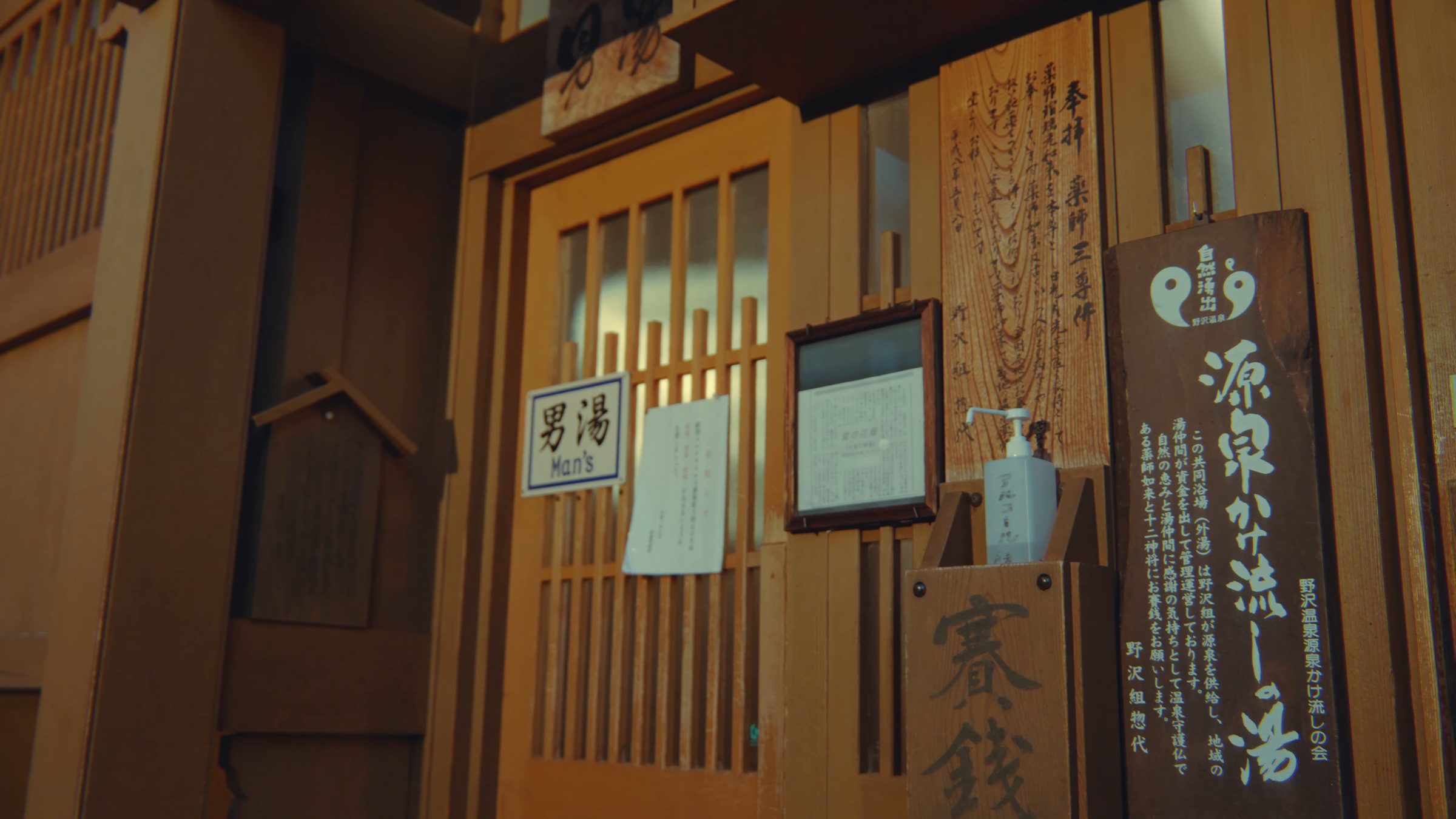
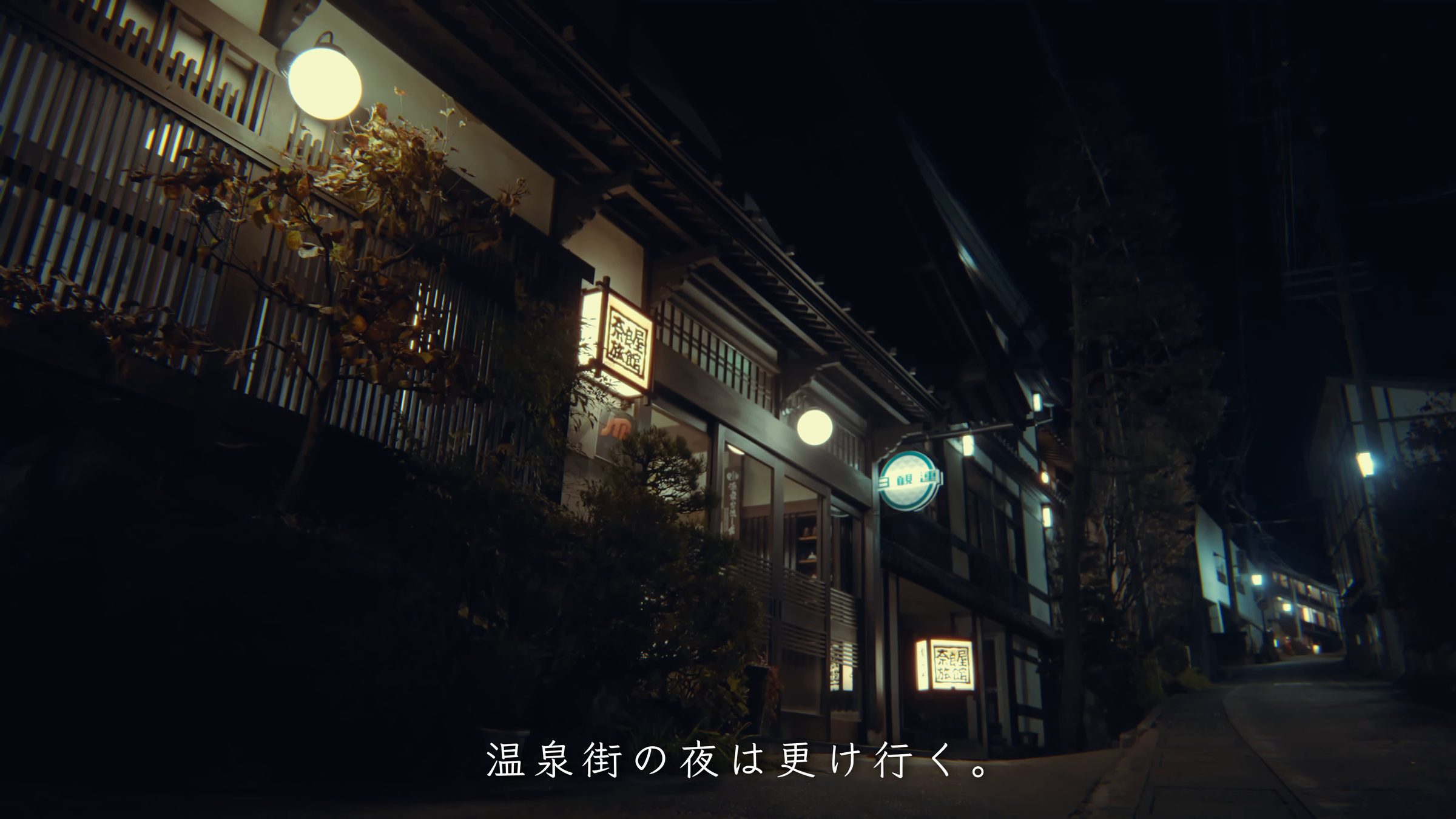
At the entrance hung a sign for the men's bath and an offering box. A notice explained that the Nozawa-gumi supplies the spring water and that the local yunakama, the bath fellowship, fund and run the place. I looked up at the wooden plaque reading 'free-flowing from the source' and slipped through the curtain. Along the night street, the lights of inns and souvenir shops were glowing.
Watch this scene on YouTube3:17
09TRAVEL JOURNAL
A drink after the bath
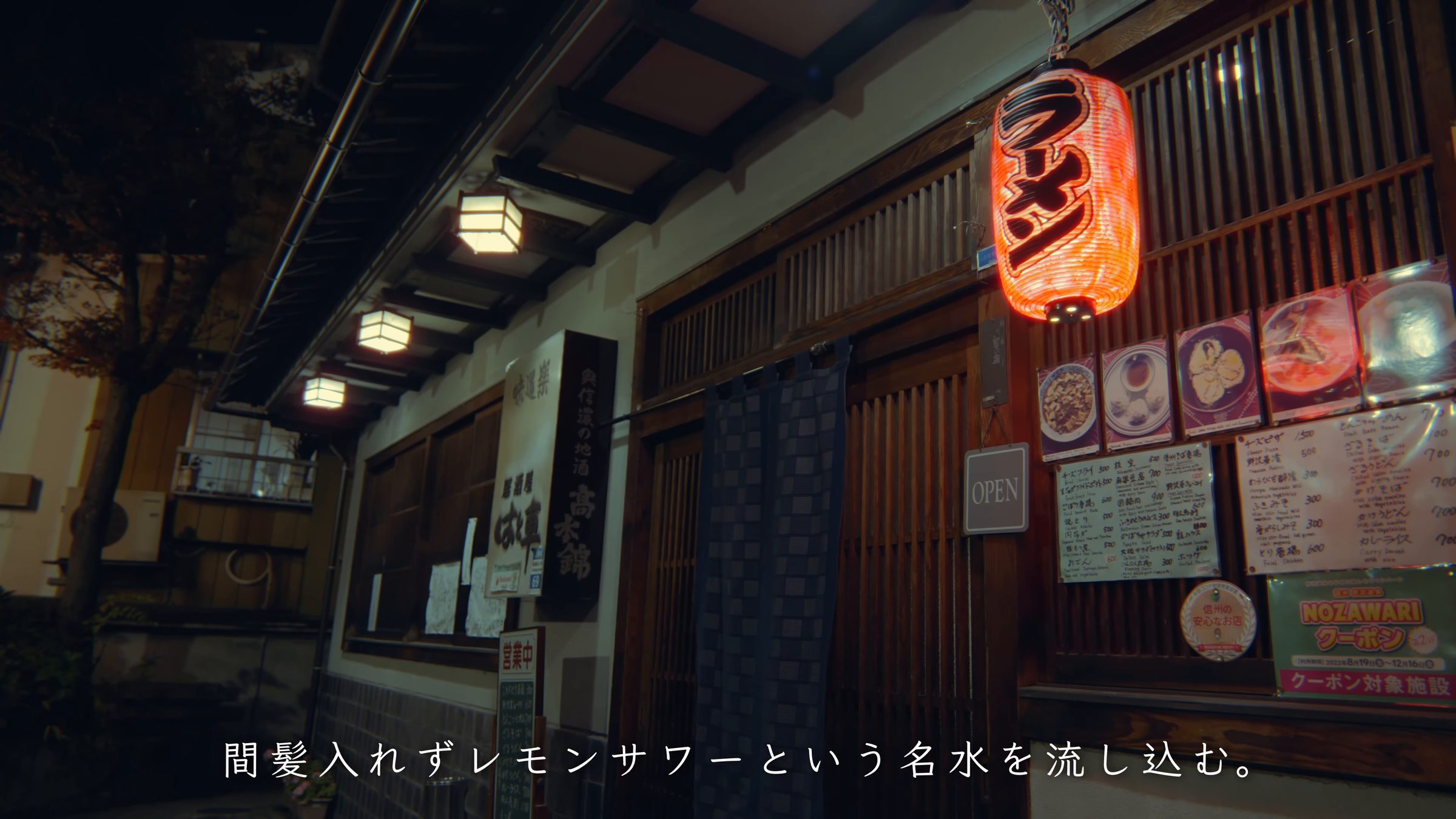
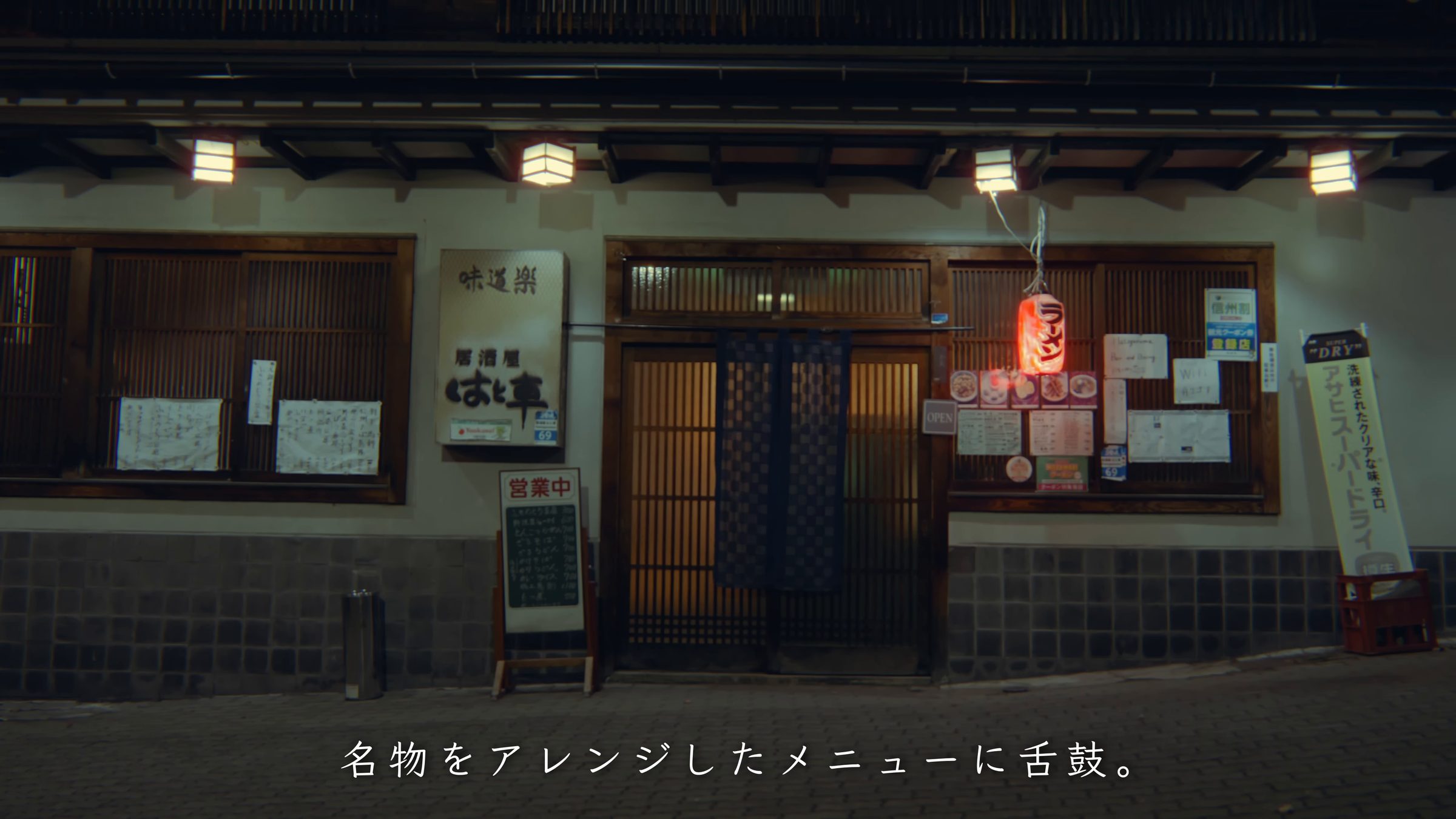
Into a body warmed by the free-flowing spring, I poured, without a moment's pause, that other famous water: a lemon sour. The tavern was Hatoguruma, with a red lantern hanging out front. A hot-spring town truly is a paradise.
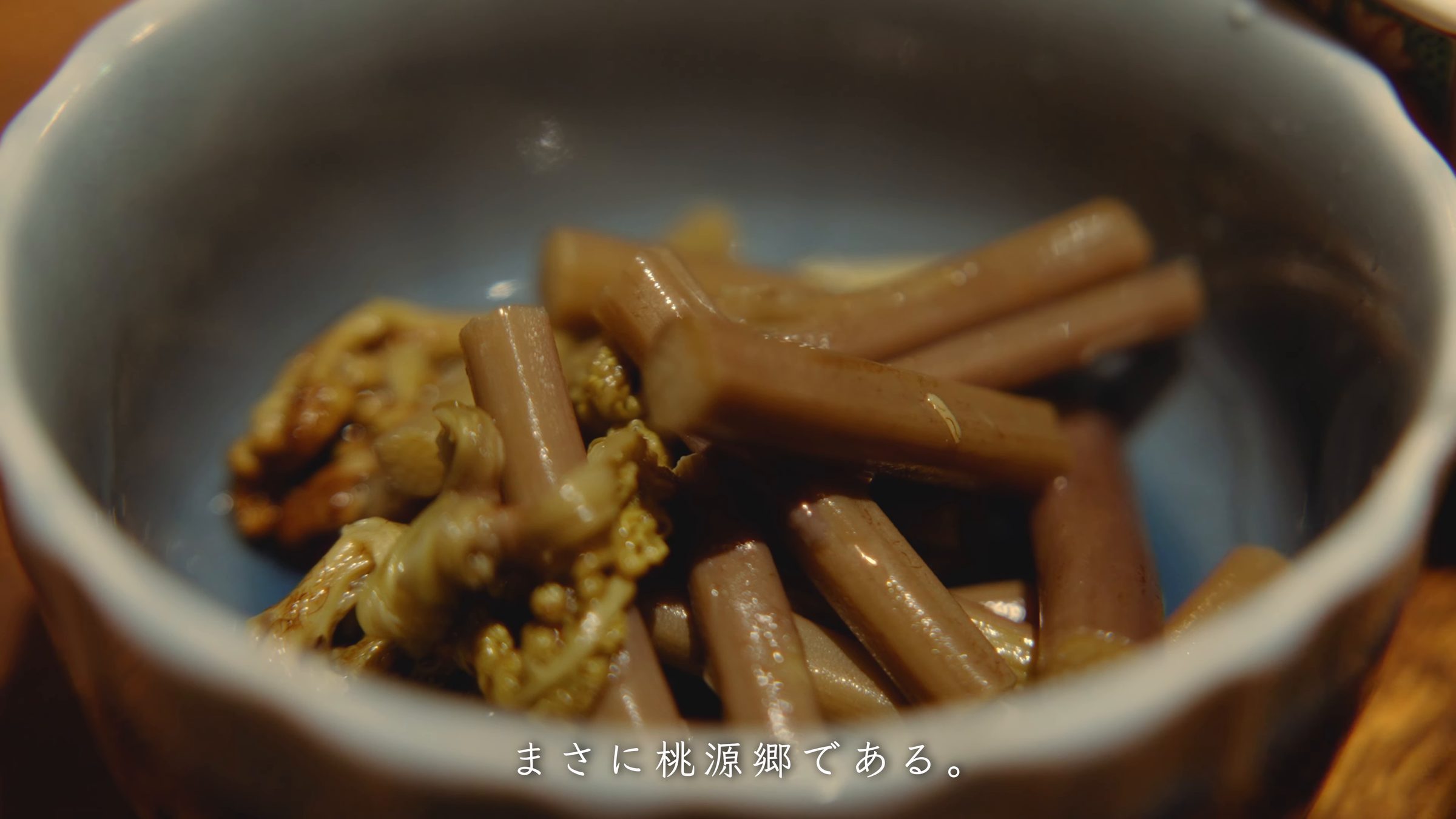
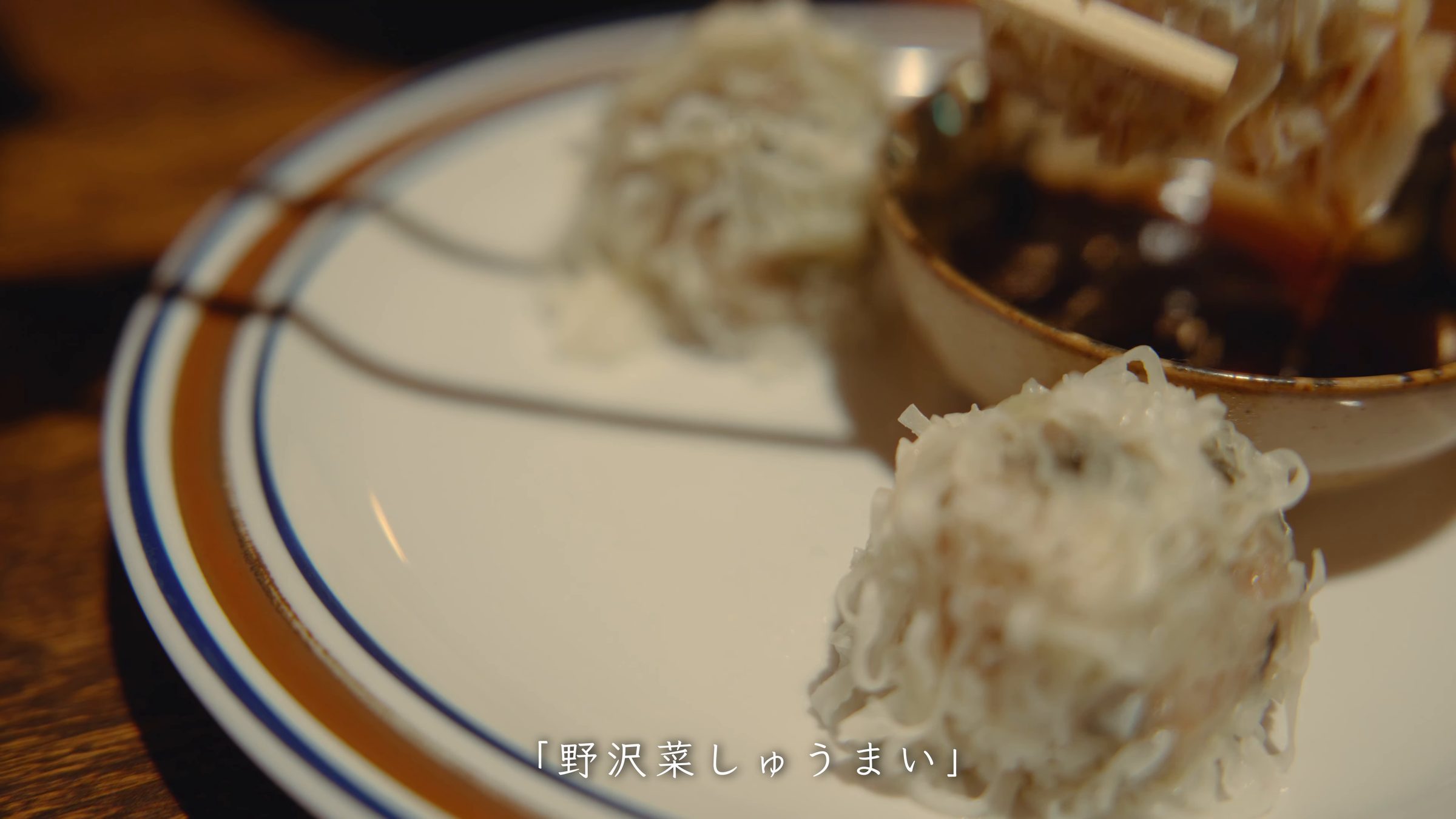
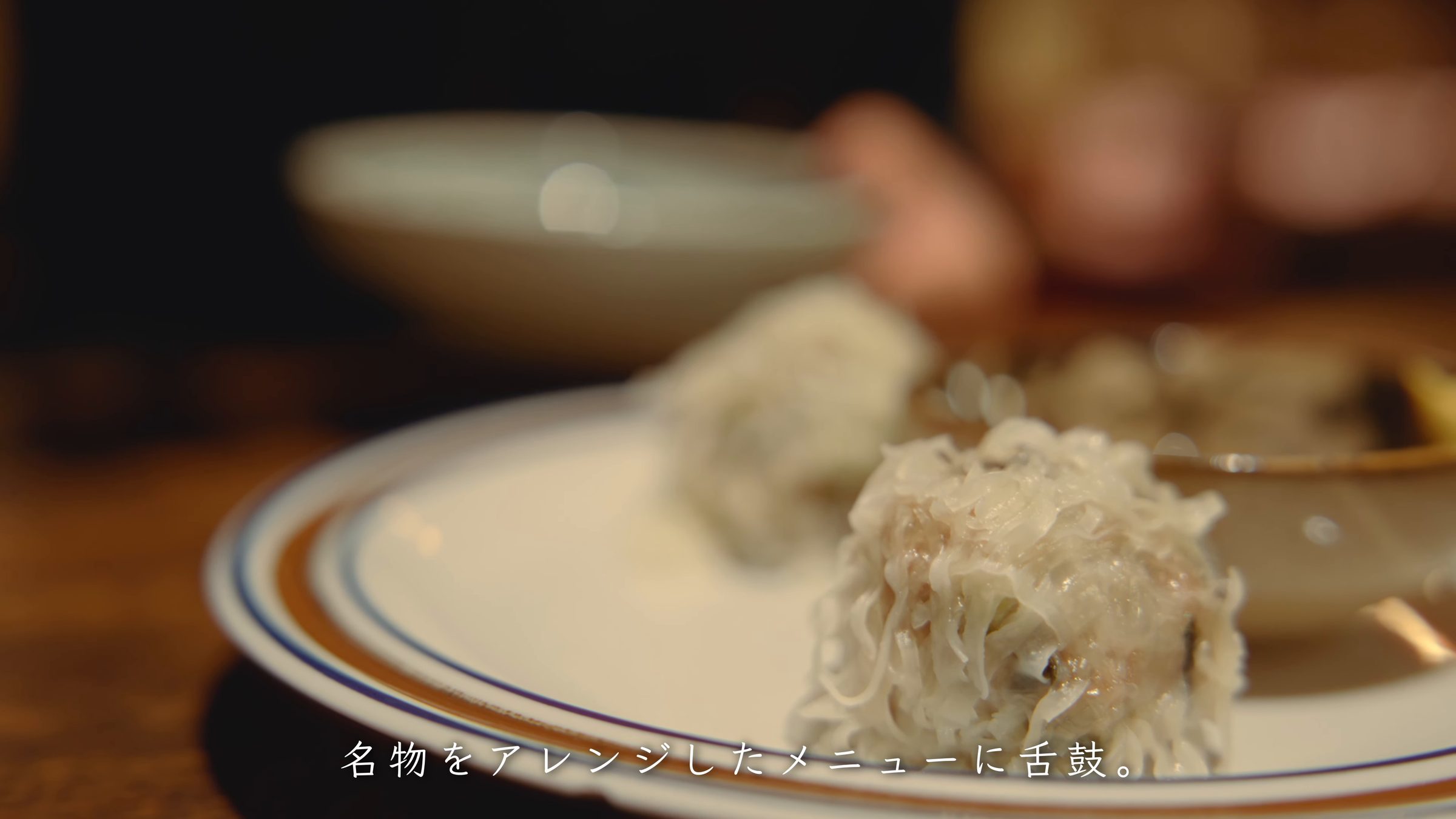
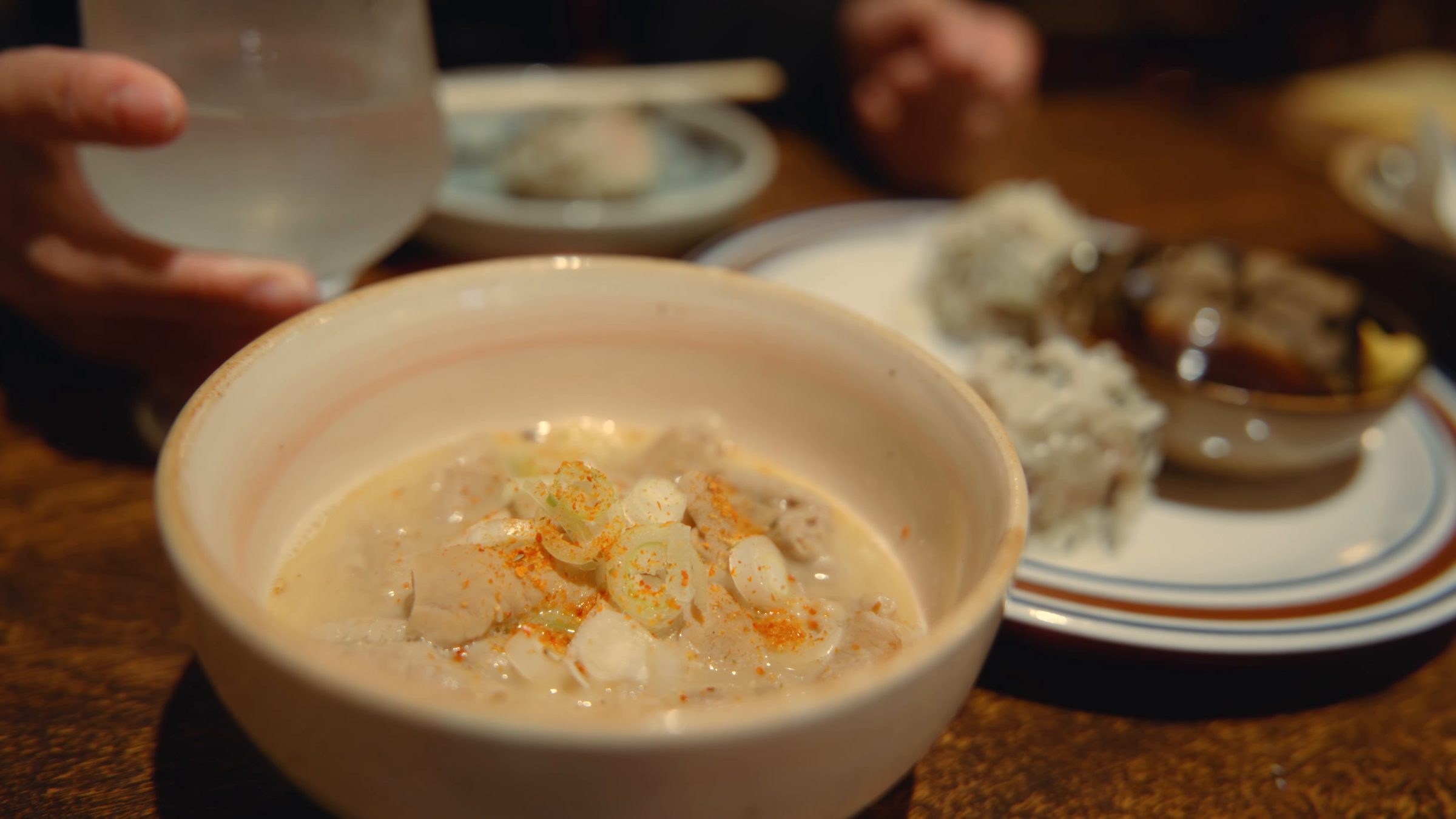
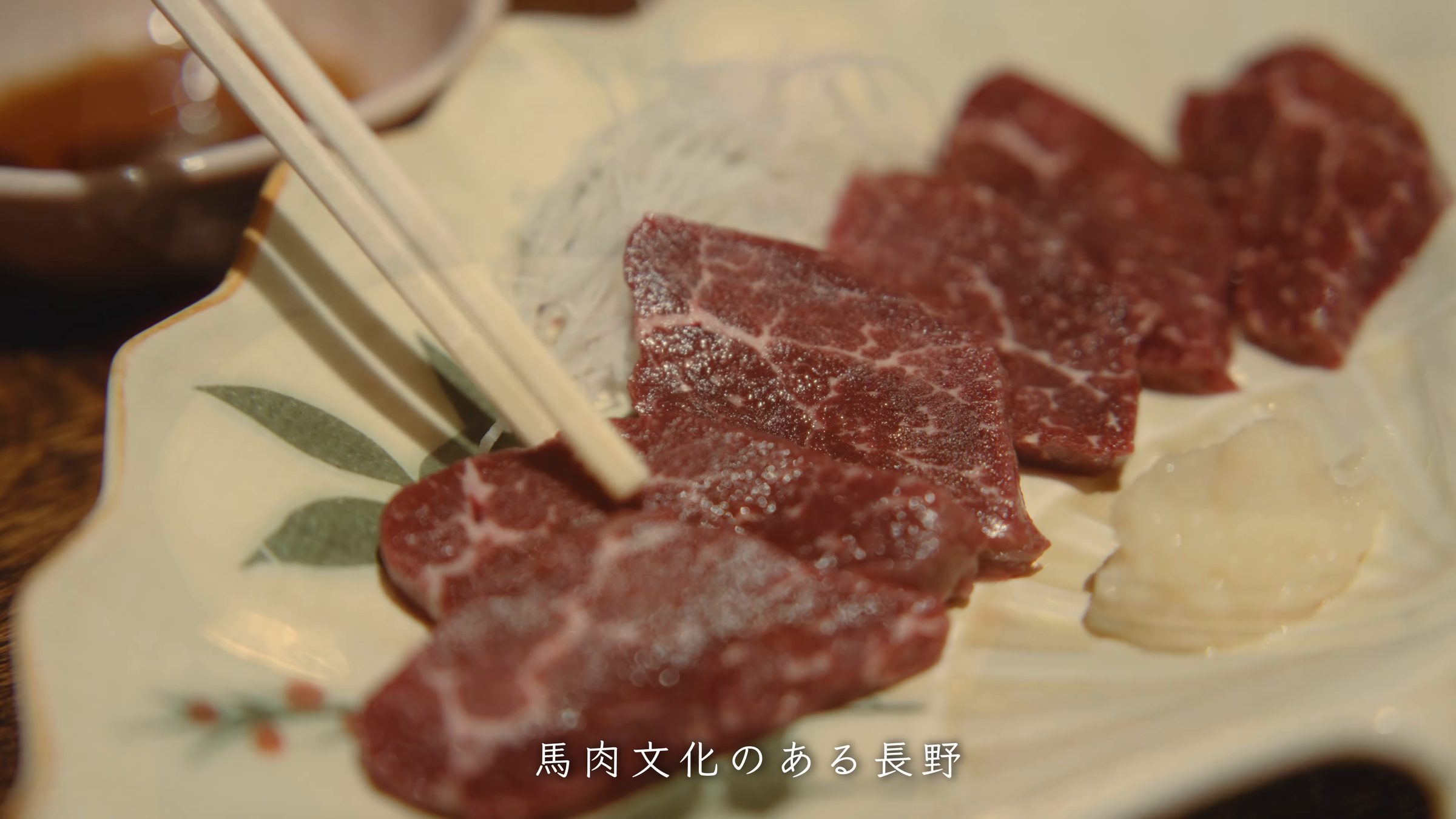
The starter was simmered mountain vegetables. The local specialty with a twist, nozawana shumai, is a dumpling coated in chopped nozawana instead of a wrapper, dipped in sauce and eaten in a bite. A small bowl of white soup came with green onion and chili. And in Nagano, with its horse-meat culture, the horse sashimi was superb.
Out on the street again, under the lamps, the night deepened over the hot-spring town.
Watch this scene on YouTube3:33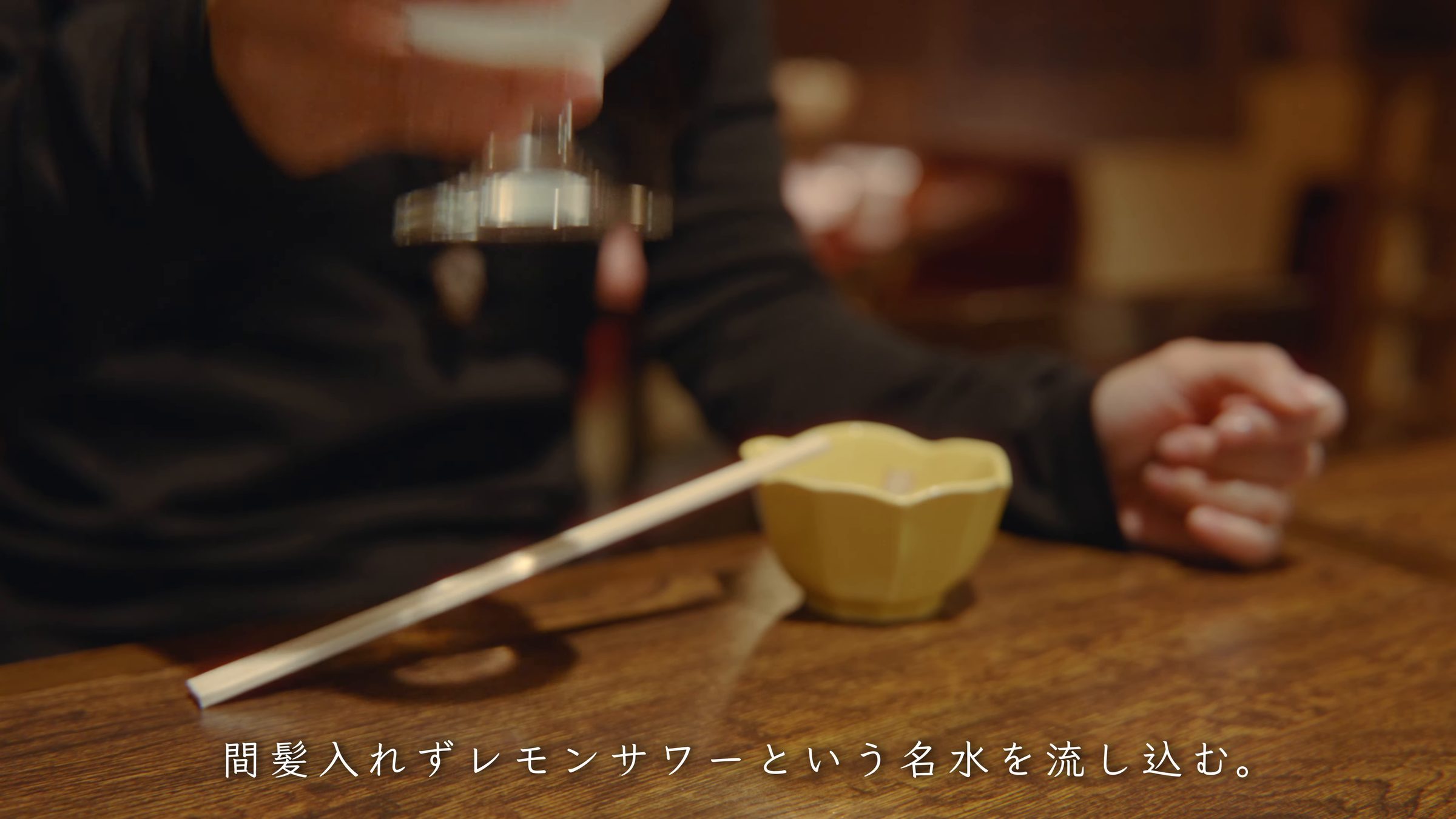
10TRAVEL JOURNAL
Finishing with nozawana
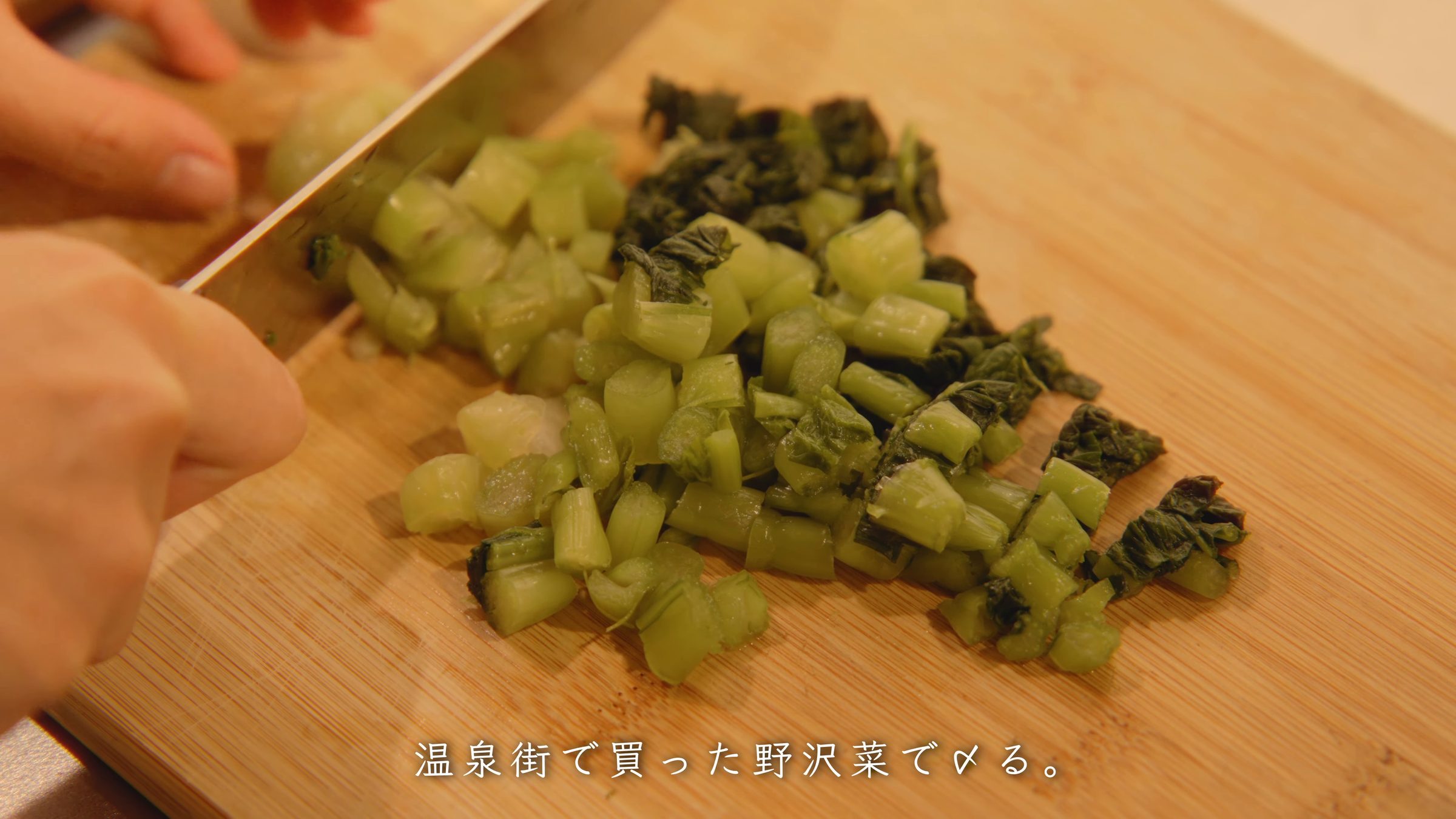
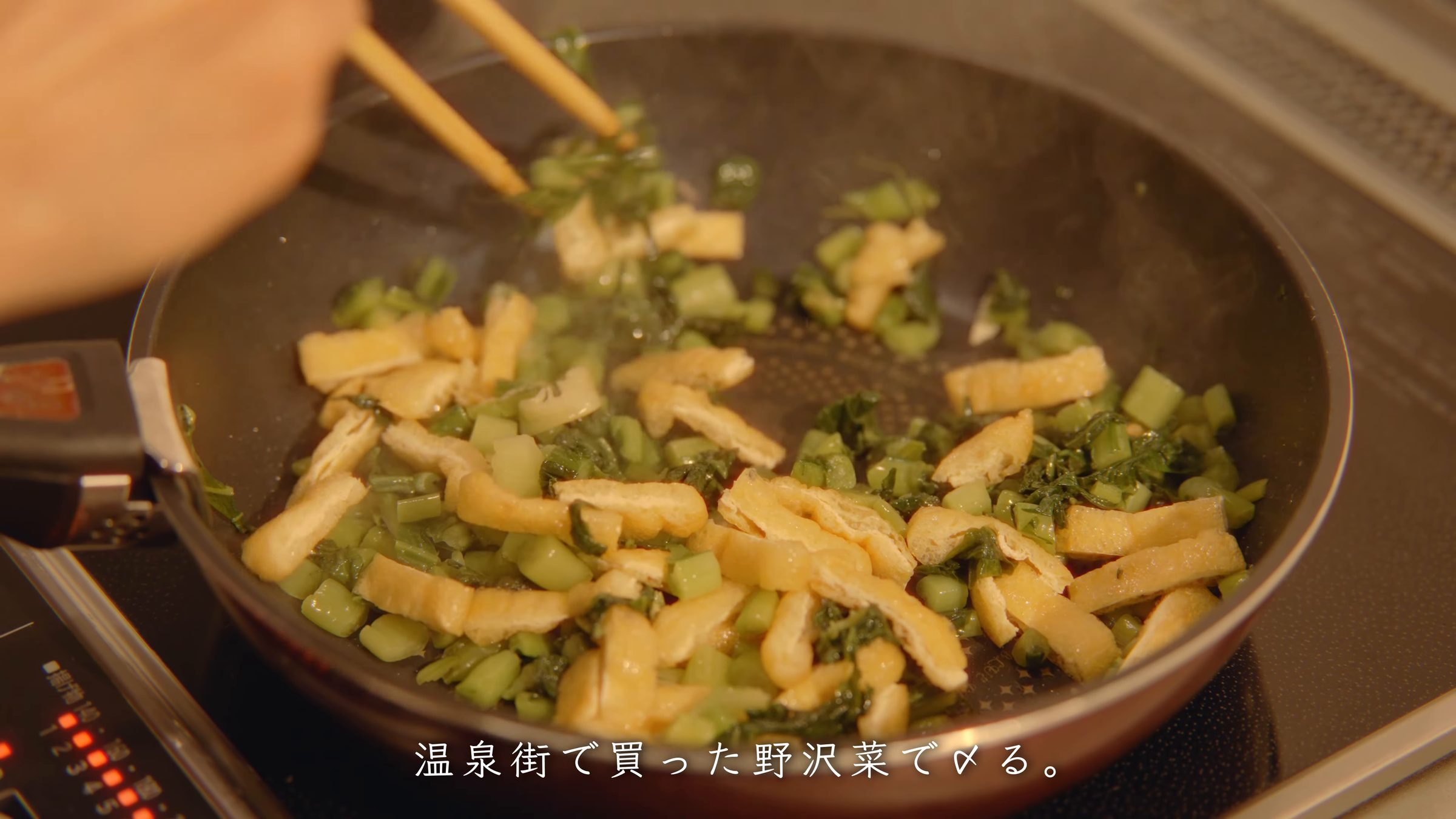
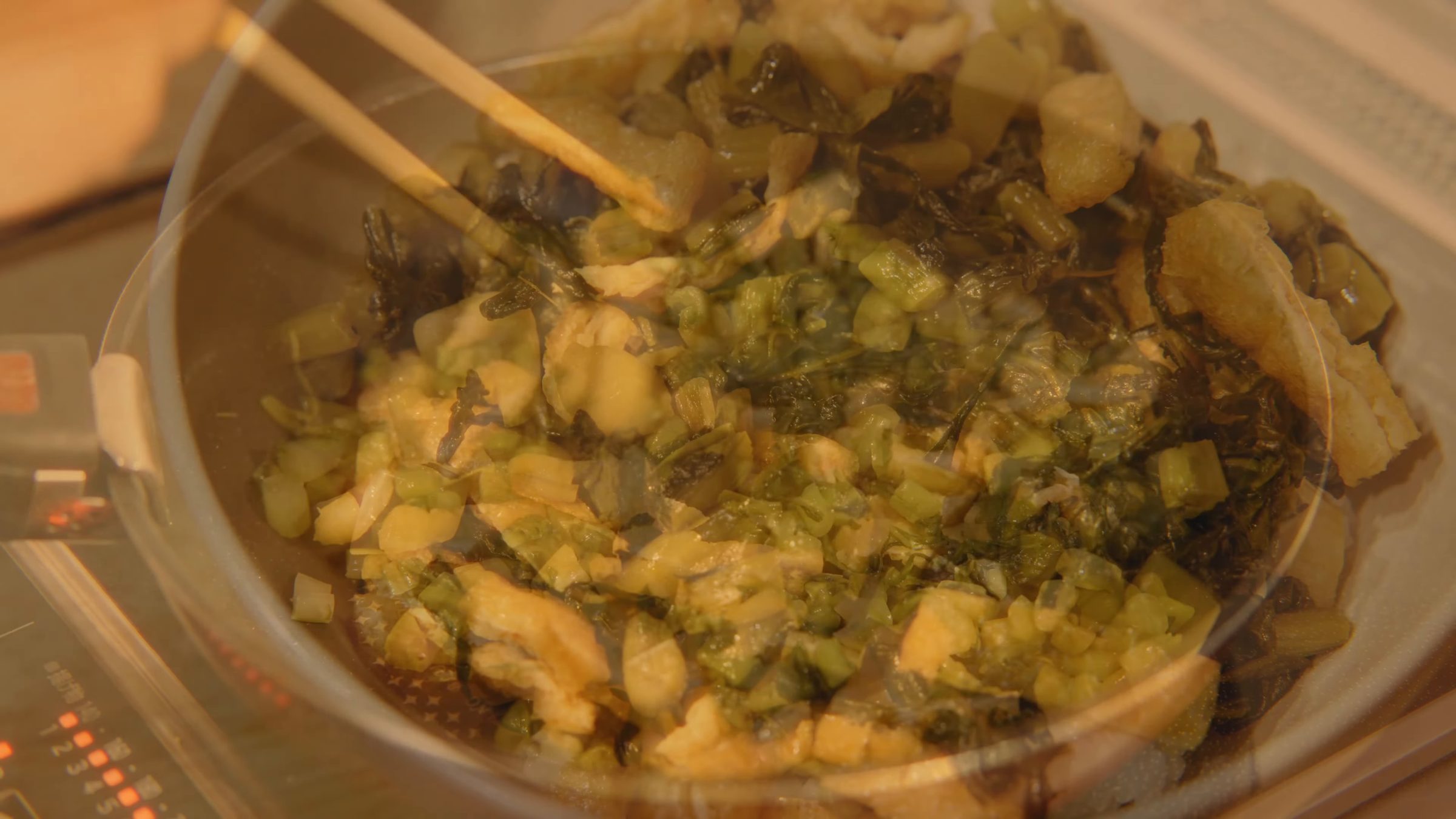
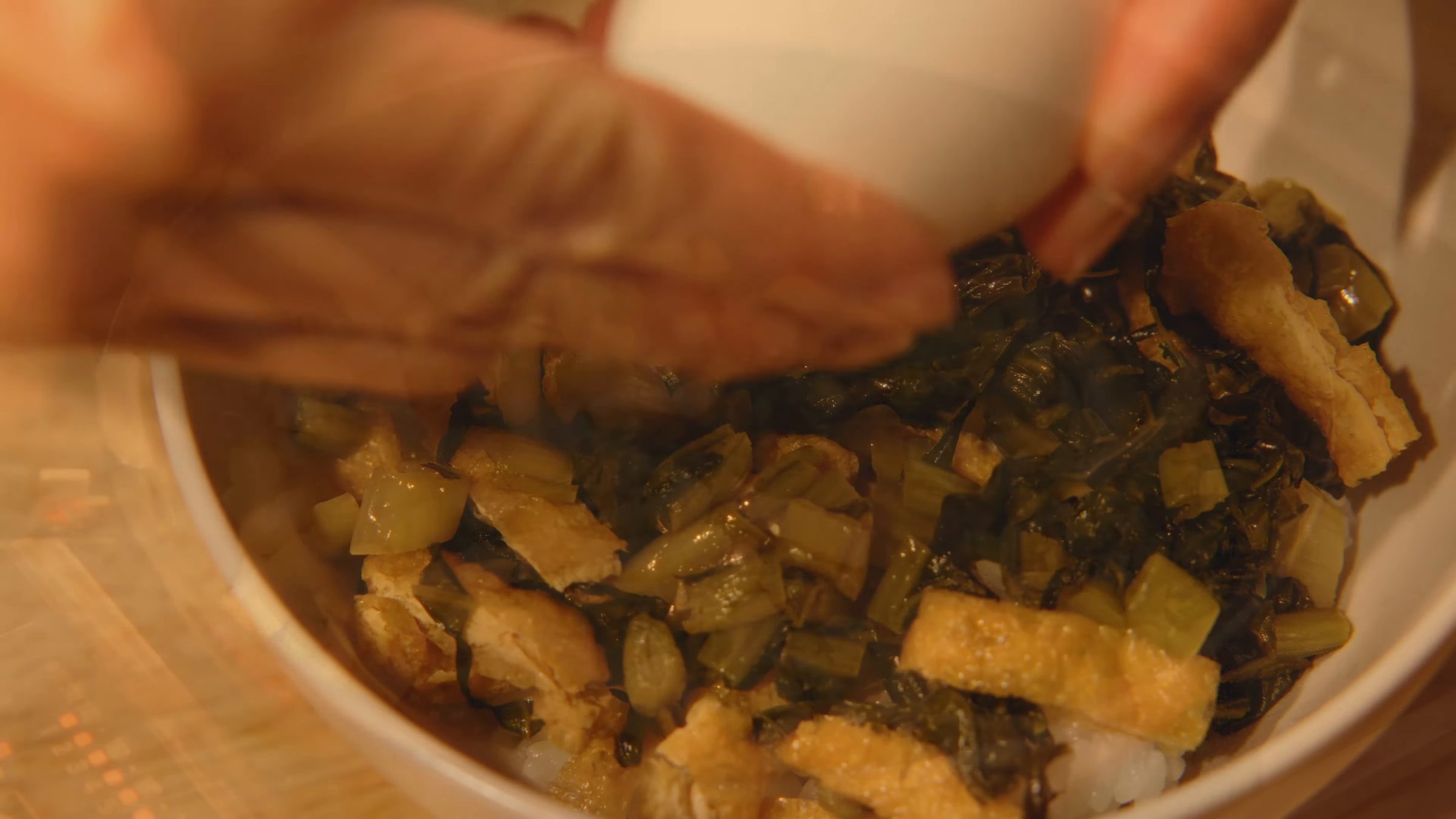
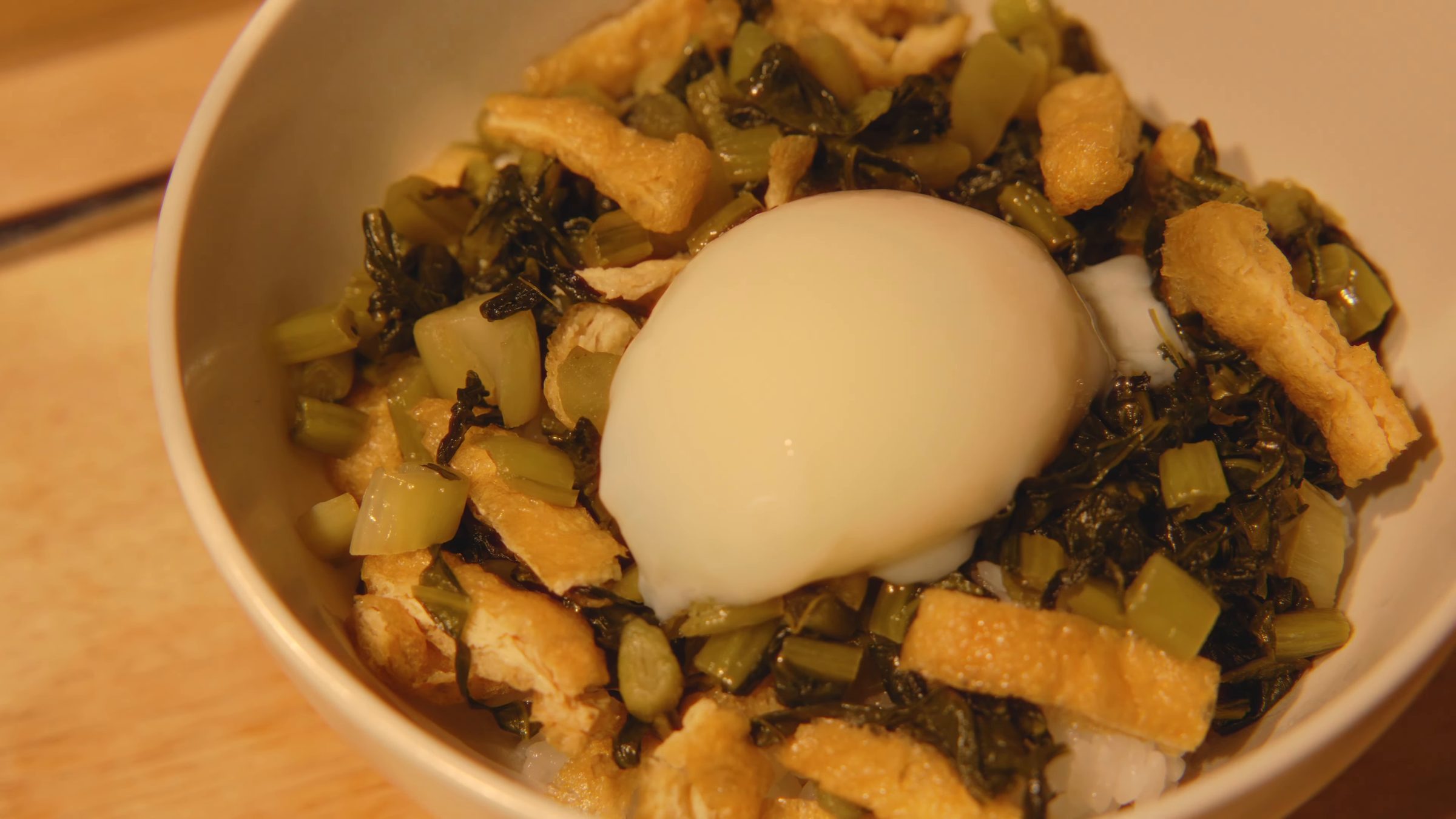
Back at the farmhouse, I set rice cooking in the rice cooker. The finale was the nozawana I had bought in town. I chopped the stems and leaves finely and stir-fried them in a pan with strips of fried tofu.
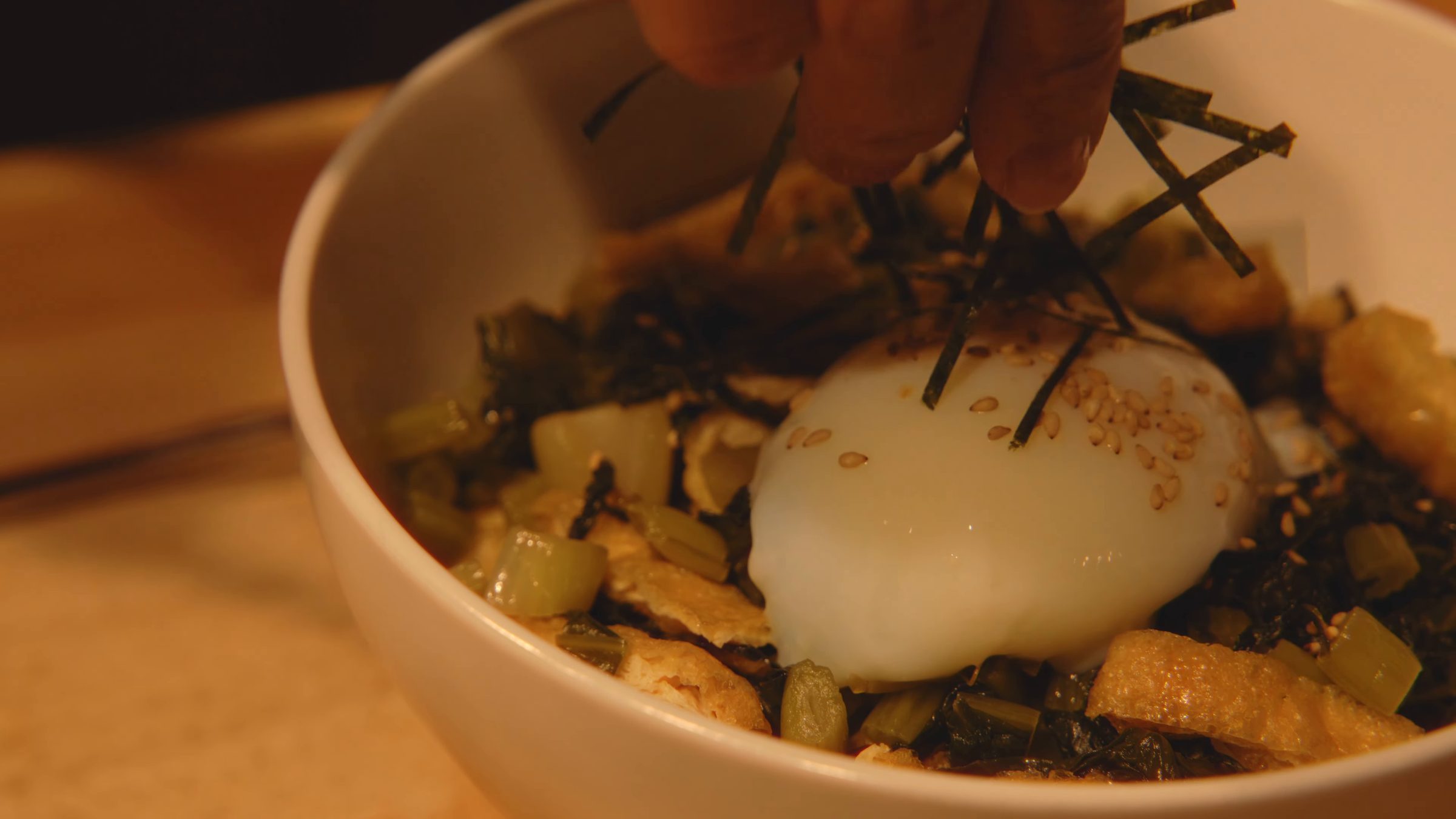
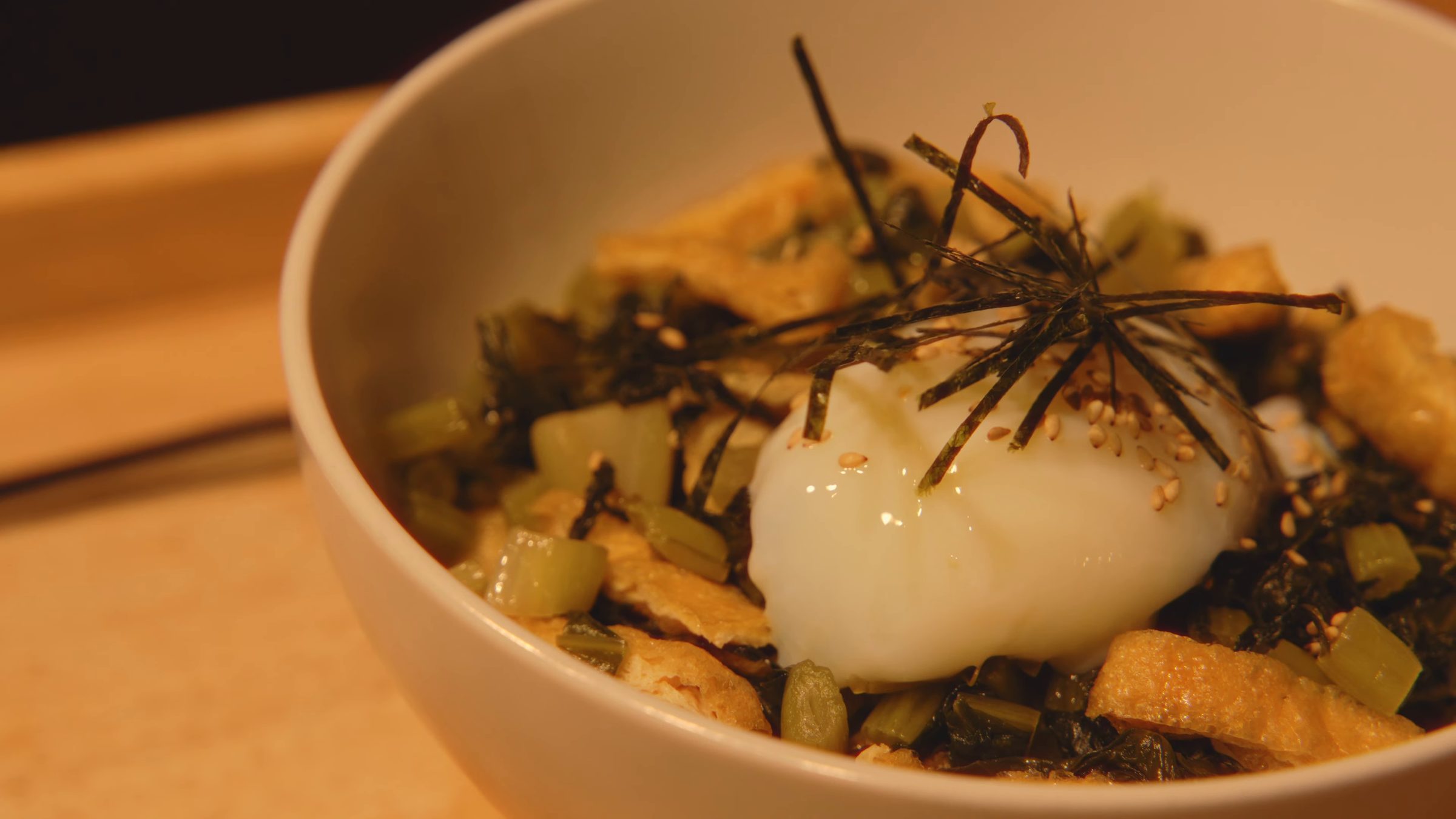
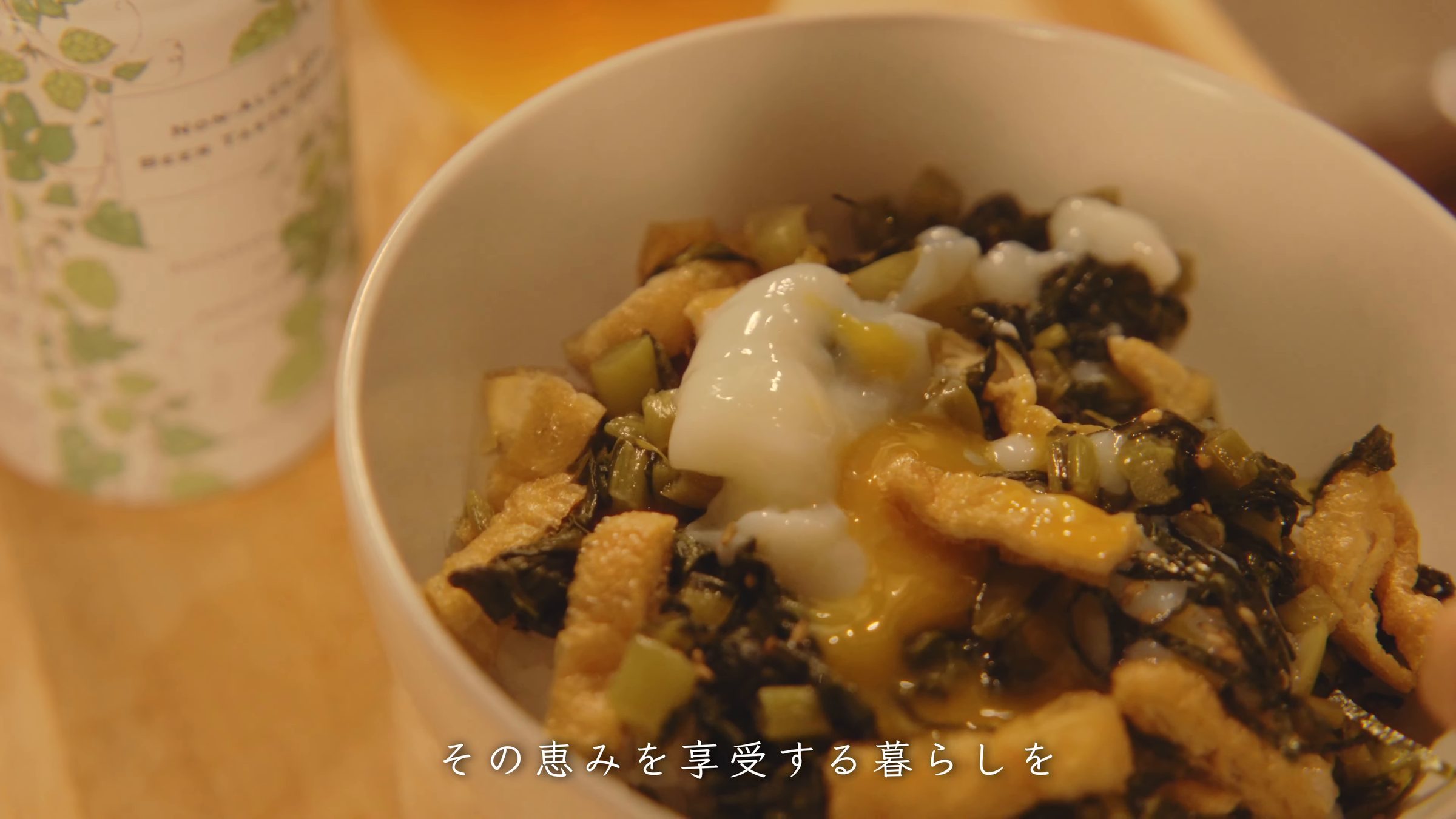
A generous heap went over the hot rice, and an onsen tamago was cracked into the middle. A scattering of shredded nori and white sesame, and the nozawana and hot-spring-egg rice bowl was done.
Watch this scene on YouTube4:28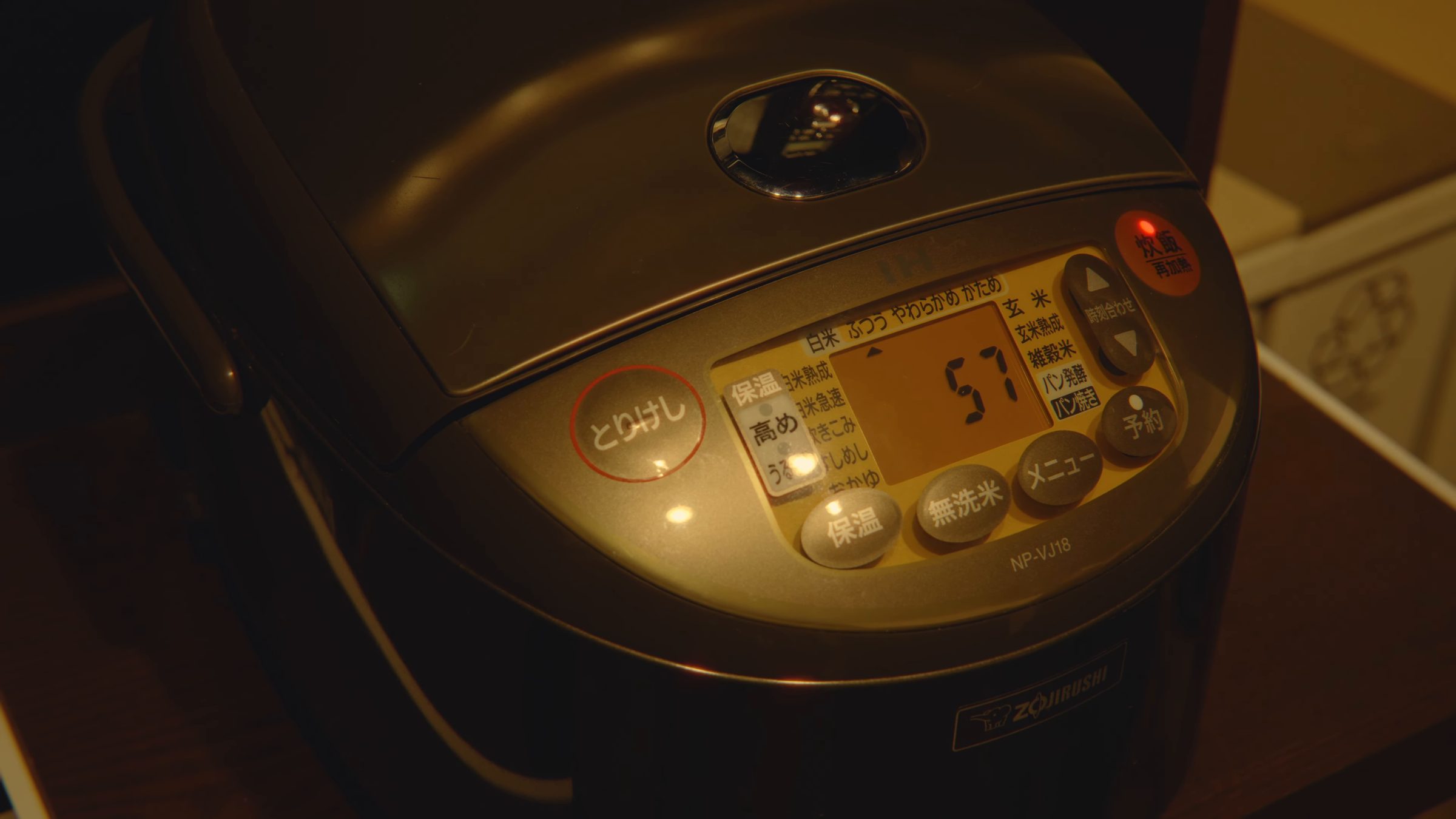
11TRAVEL JOURNAL
The gift of the hot springs
In the tatami room, under a round paper lamp, I dug into the bowl with a glass at my side. When I broke the egg, the yolk ran into the nozawana.
These hot springs have been cherished since ancient times. To have lived, even for a day, a life that enjoys their blessing: I am grateful.
Watch this scene on YouTube4:49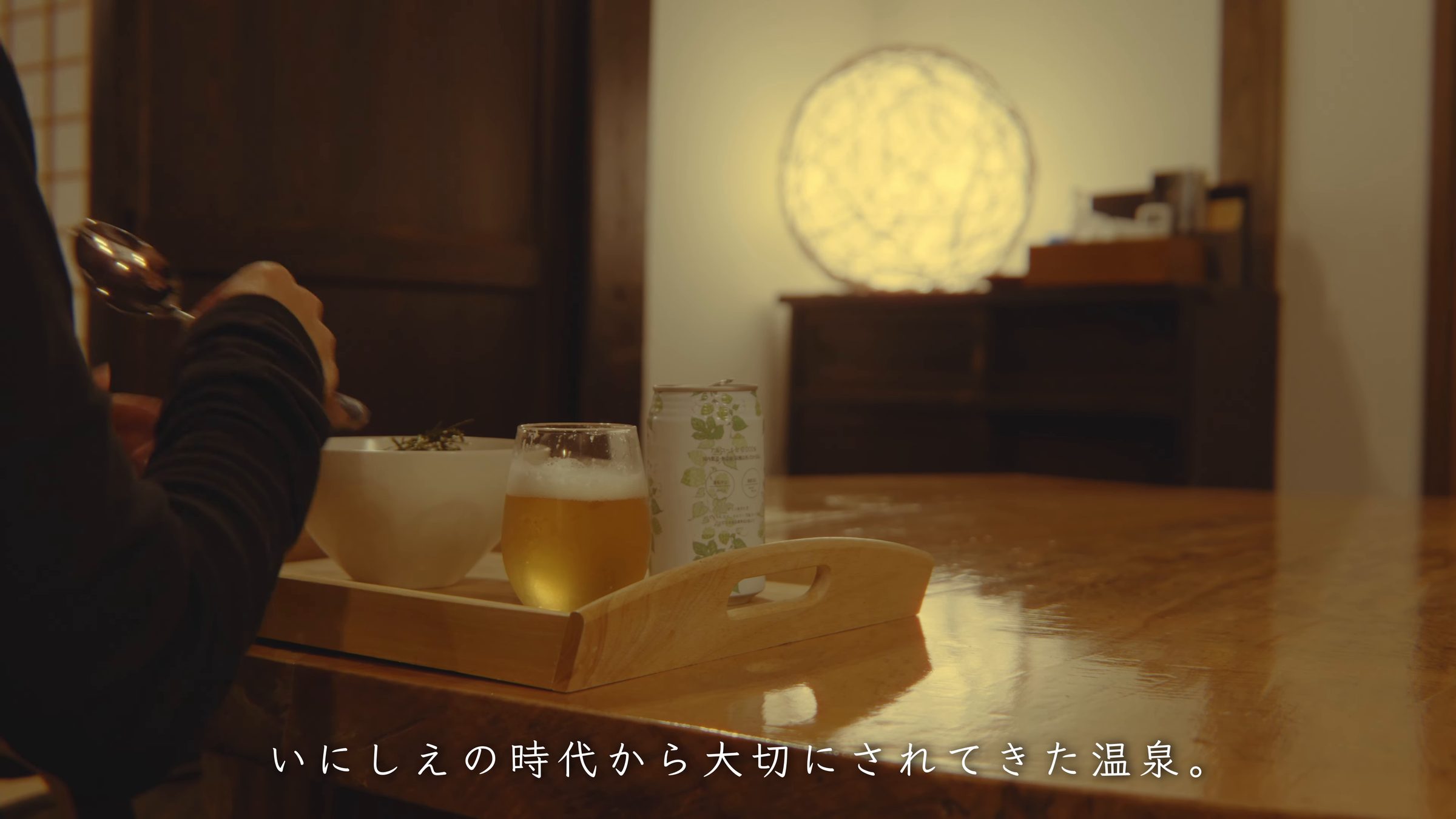
THE JOURNEY IN FILM
The wind. The sounds of a kitchen.
Spend a little more time inside the journey, on film.
Watch the video5 minTHE BORROWER’S NOTES
The Borrower's Notes: Nozawa Onsen
Places we stopped, dishes we made, and stories of the land. A few things to keep from the journey.
01Where I ate and shopped
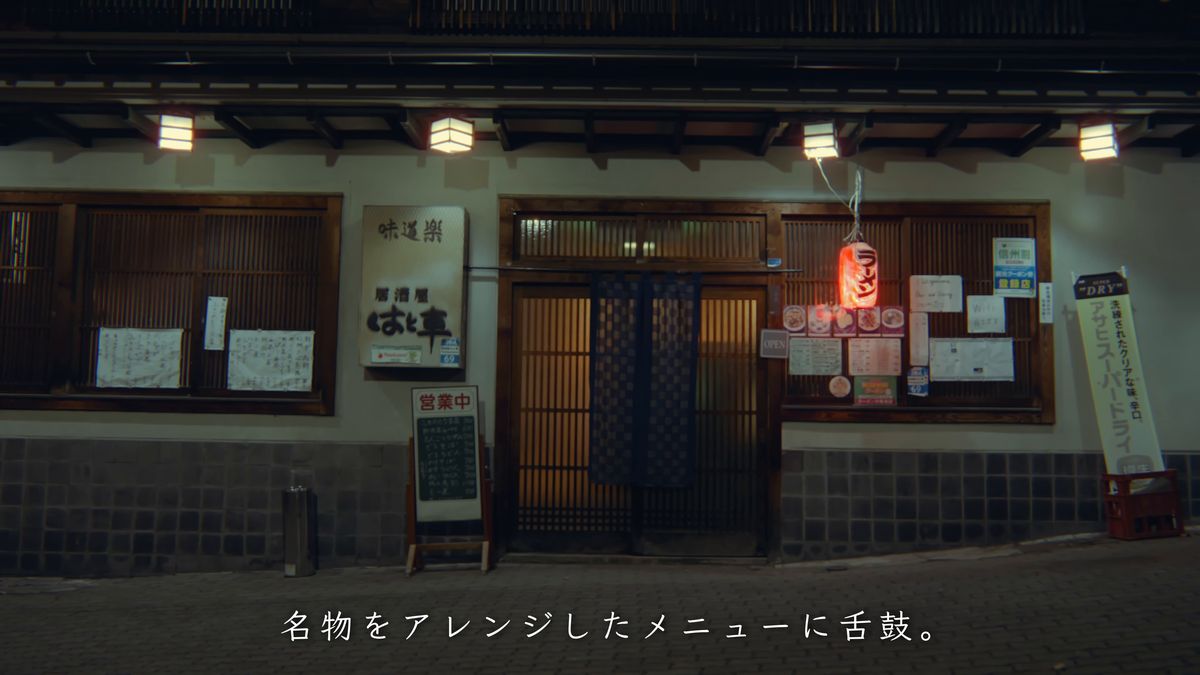
Hatoguruma (izakaya)
8737 Toyosato, Nozawaonsen, Shimotakai District, Nagano
A tavern marked by a red lantern and a noren curtain. I had a lemon sour, simmered mountain vegetables, nozawana shumai coated in chopped pickles, a white soup and horse sashimi. Hours and closing days vary between listings, so check before you go.
Sources: tabelog.com retty.me
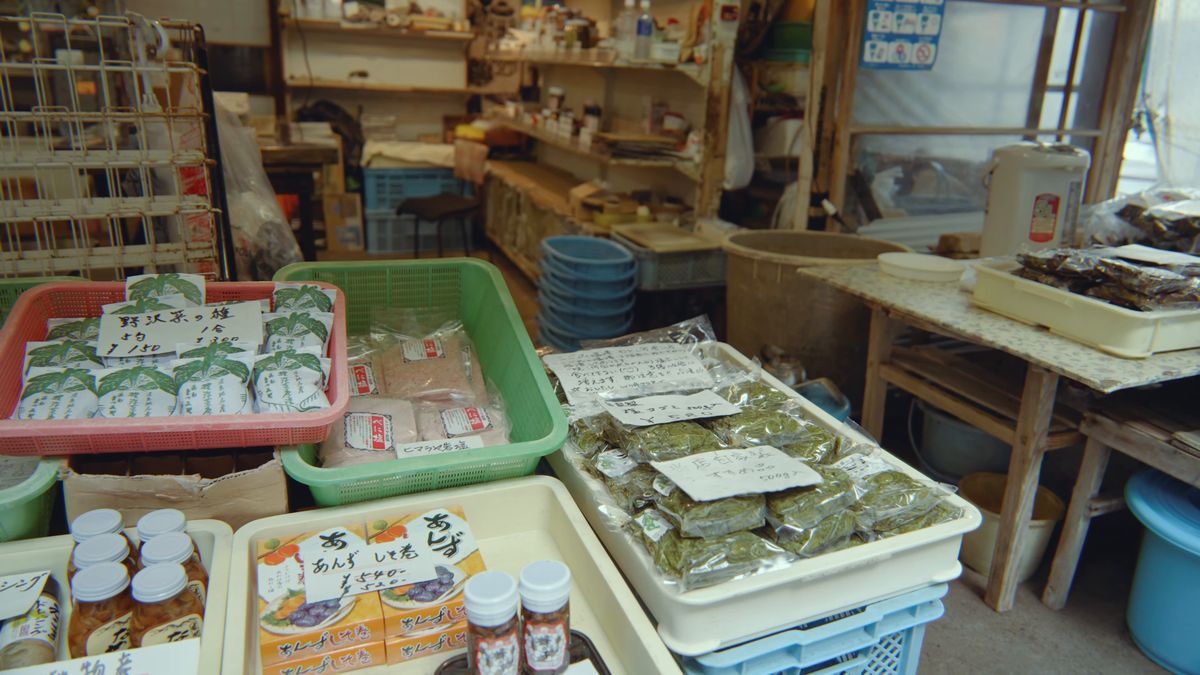
A pickle and dried-goods shop near the Ogama
An open-fronted shop under a roof, with bags of lightly pickled nozawana, nozawana seeds, shiso-wrapped apricots, jars, dried zenmai fern and azuki beans. I bought tonight's nozawana here.
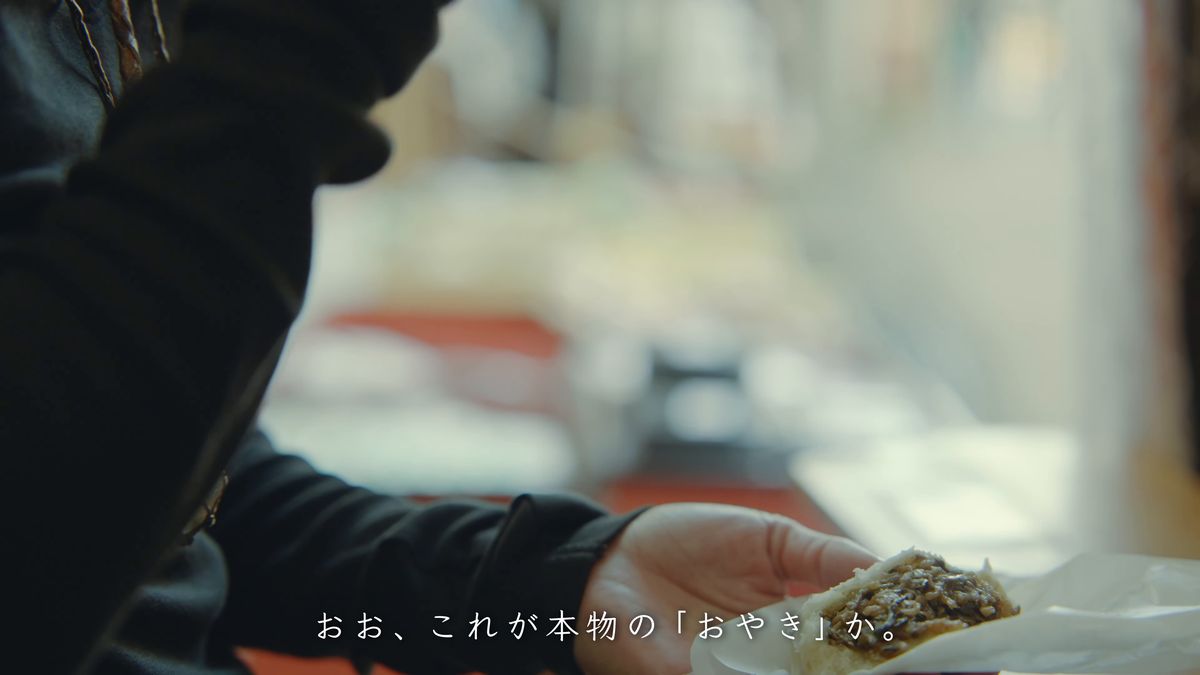
The shop where I bought oyaki
At a shop front in town, one oyaki filled with nozawana: a sweet-salty filling that goes well with the warm dough.
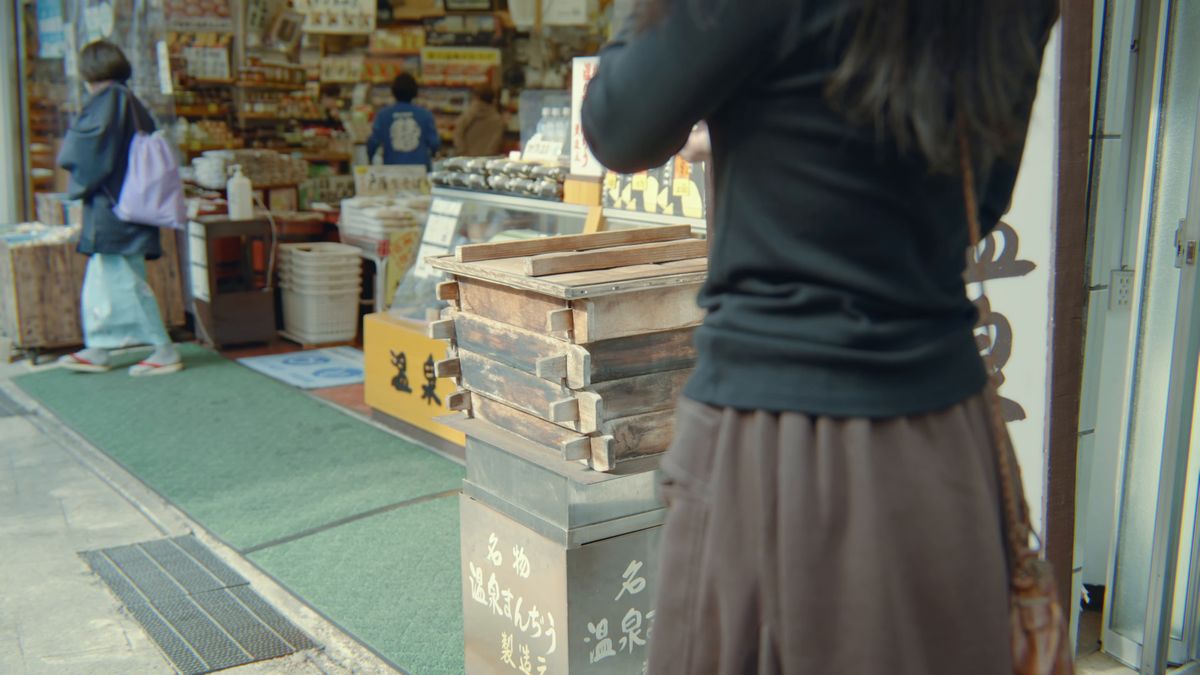
An onsen manju shop
A shop with a sign reading 'Famous onsen manju, made here' and wooden steaming boxes out front. One manju filled with smooth bean paste.
02What I cooked
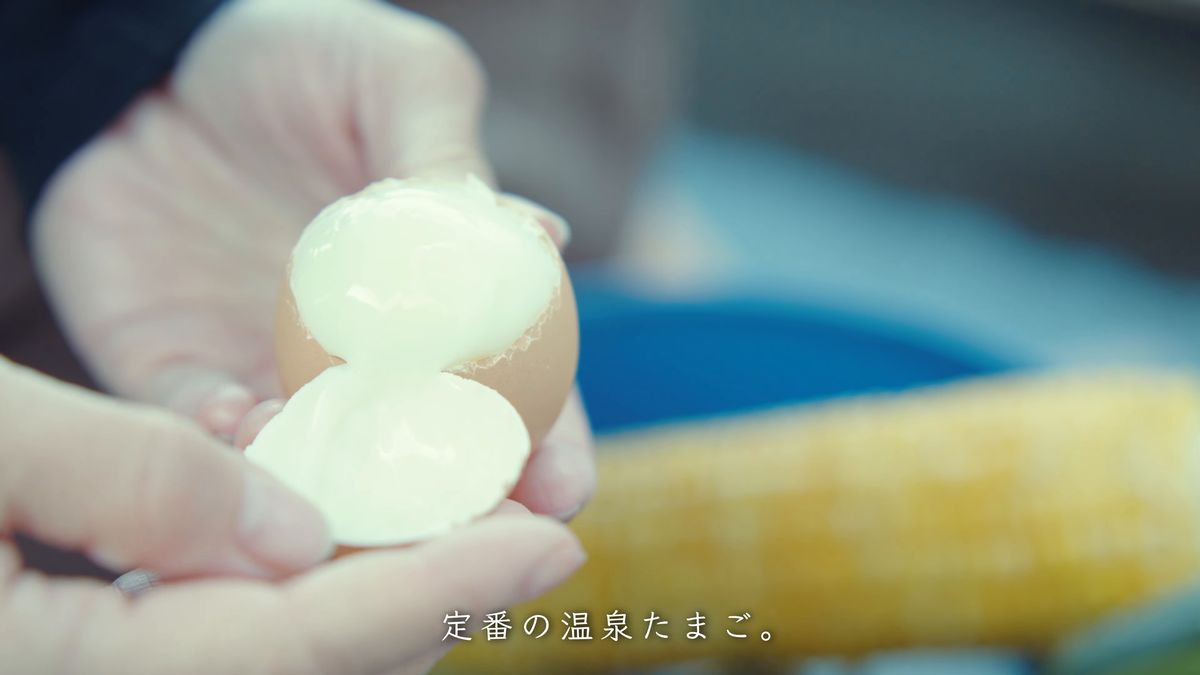
Onsen tamago boiled in the hot spring
At the Ogama, the main source of Nozawa Onsen, water close to 90 degrees wells up, and locals have long boiled mountain vegetables and eggs in it. The Ogama itself is closed to non-residents, but there are several spots in the village where visitors can boil eggs. Just keep to the time, and the whites set to a trembling softness.
IngredientsEggs
- Put the eggs in a bamboo basket and lower it into the hot spring
- Wait, keeping strictly to the time
- Lift out the basket and peel the eggs
Sources: go-nagano.net nozawakanko.jp
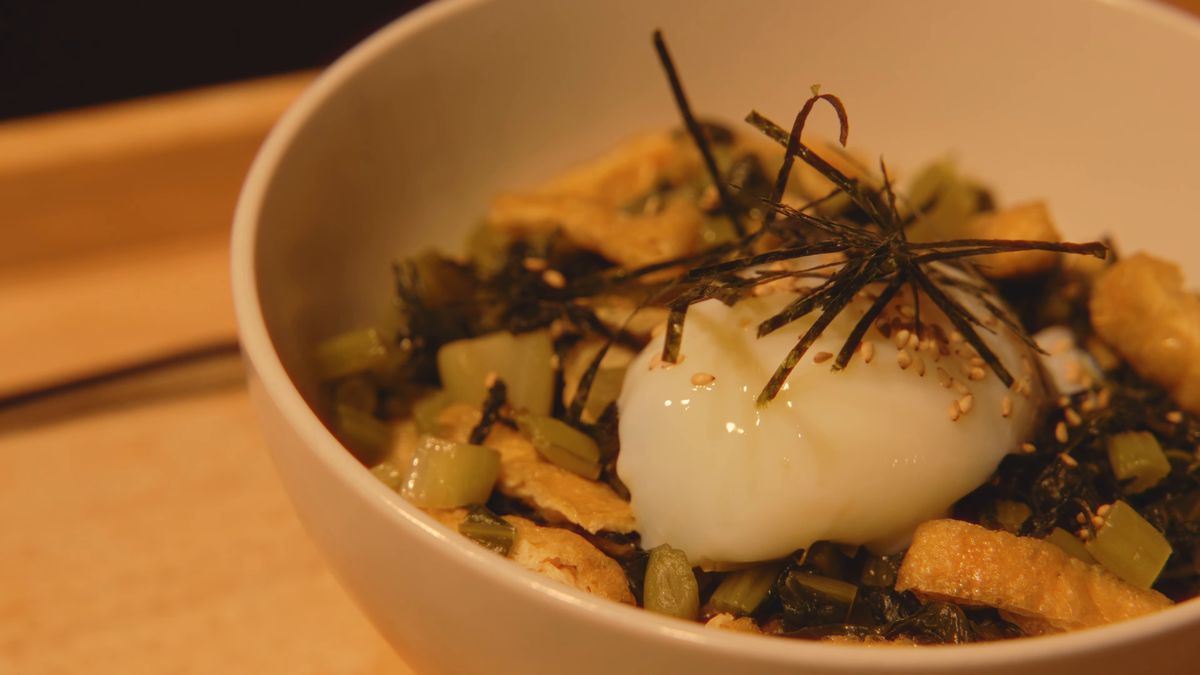
Rice bowl with stir-fried nozawana, fried tofu and onsen tamago
Nozawana is said to descend from Tennoji turnip seeds that the priest of Kenmei-ji temple in Nozawa Onsen brought back from Kyoto in 1756. In the deep snow the roots would not grow, but the leaves and stems did, and a new vegetable was born. Salt-pickled nozawana is eaten with tea and used in rice balls and oyaki; it pairs well with oil, which makes it good for stir-fries. In 1983 it was selected as a Nagano Prefecture intangible folk cultural asset, a 'cultural asset of taste'.
IngredientsCooked rice, Nozawana pickles, Fried tofu (aburaage), Onsen tamago, Shredded nori, White sesame seeds
- Finely chop the stems and leaves of the nozawana pickles
- Stir-fry them in a pan with strips of fried tofu
- Pile onto hot rice and crack an onsen tamago on top
- Scatter shredded nori and white sesame
Sources: maff.go.jp
03About the area
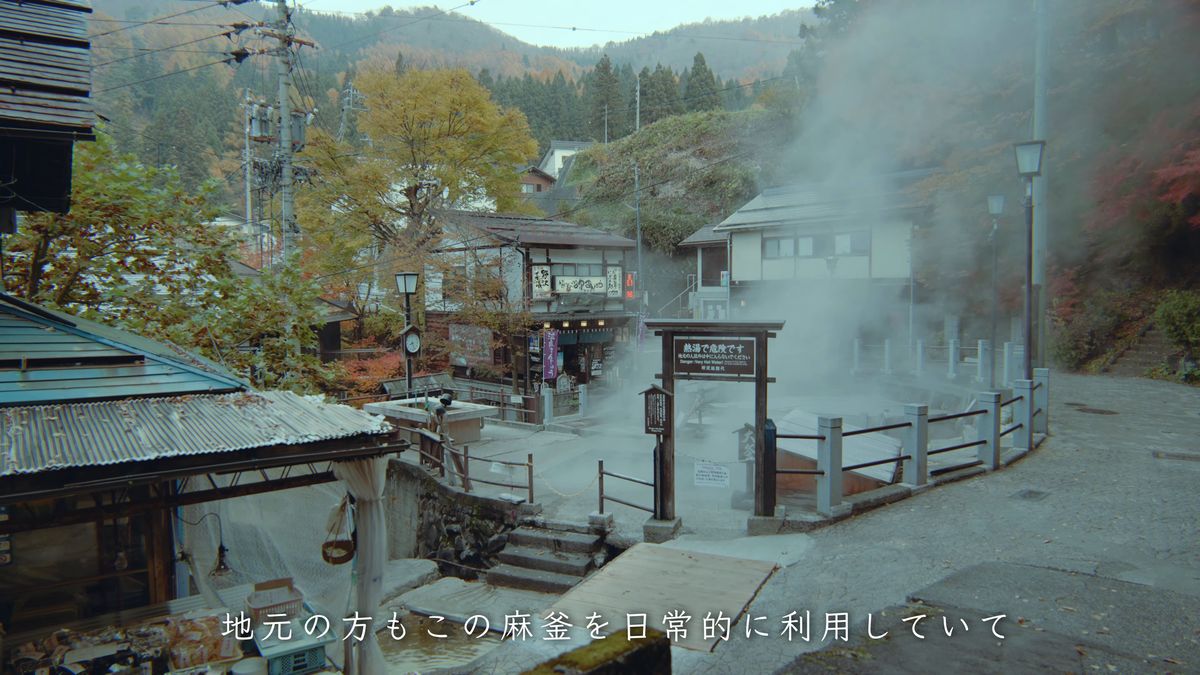
The Ogama hot-spring source
8713-Ro Toyosato, Nozawaonsen, Nagano
One of the springs that feed Nozawa Onsen, with water close to 90 degrees. The name covers five pools (Ogama, Marugama, Yudegama, Takenoshigama and Shimogama) and is said to come from soaking hemp here to strip its bark. Designated a natural monument by the village, it is still used by residents to boil mountain vegetables and eggs or soak akebi vines, each pool serving a different purpose. Because of the scalding water, entry is limited to villagers.
Sources: go-nagano.net
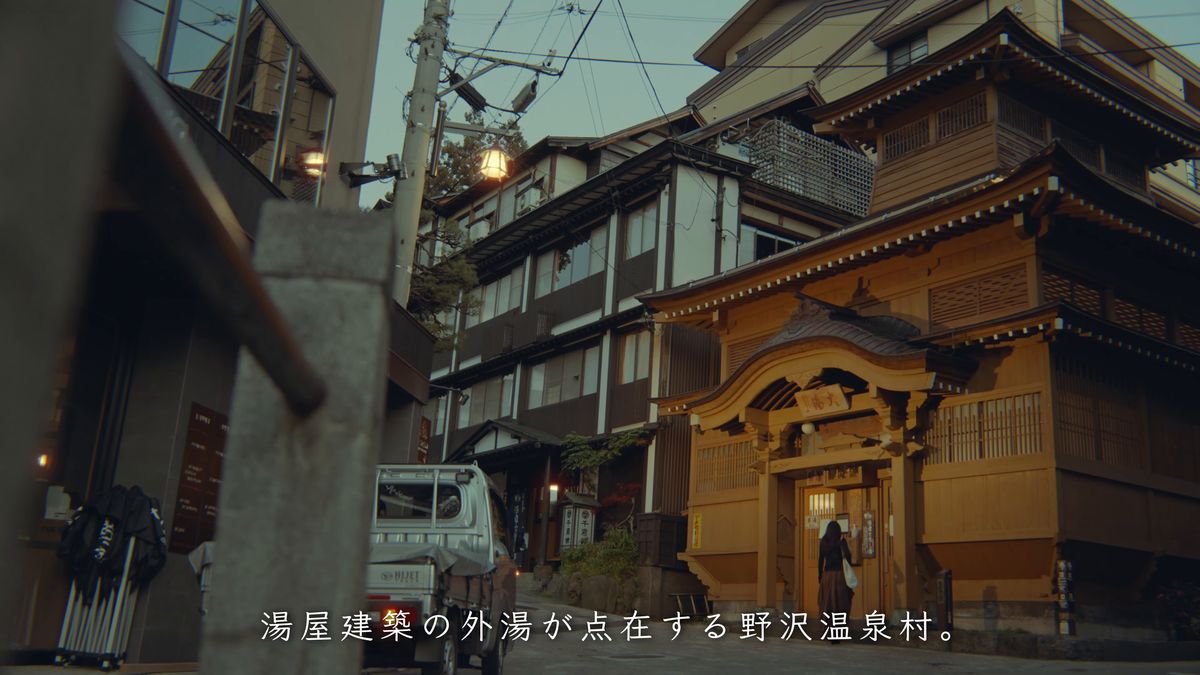
The Oyu and the 13 sotoyu bathhouses
Nozawa Onsen has 13 sotoyu, communal bathhouses, kept up by villagers through a system called yunakama. The water is 100% natural spring water flowing straight from the source, and instead of a fee, bathers leave a small donation for the yunakama. The Oyu, in the center of town, is the village symbol and preserves the look of an Edo-period bathhouse (one source says the present building was rebuilt in 1994). The water is a simple sulfur spring, with a hot tub and a cooler one.
Sources: nozawakanko.jp tabi-mag.jp
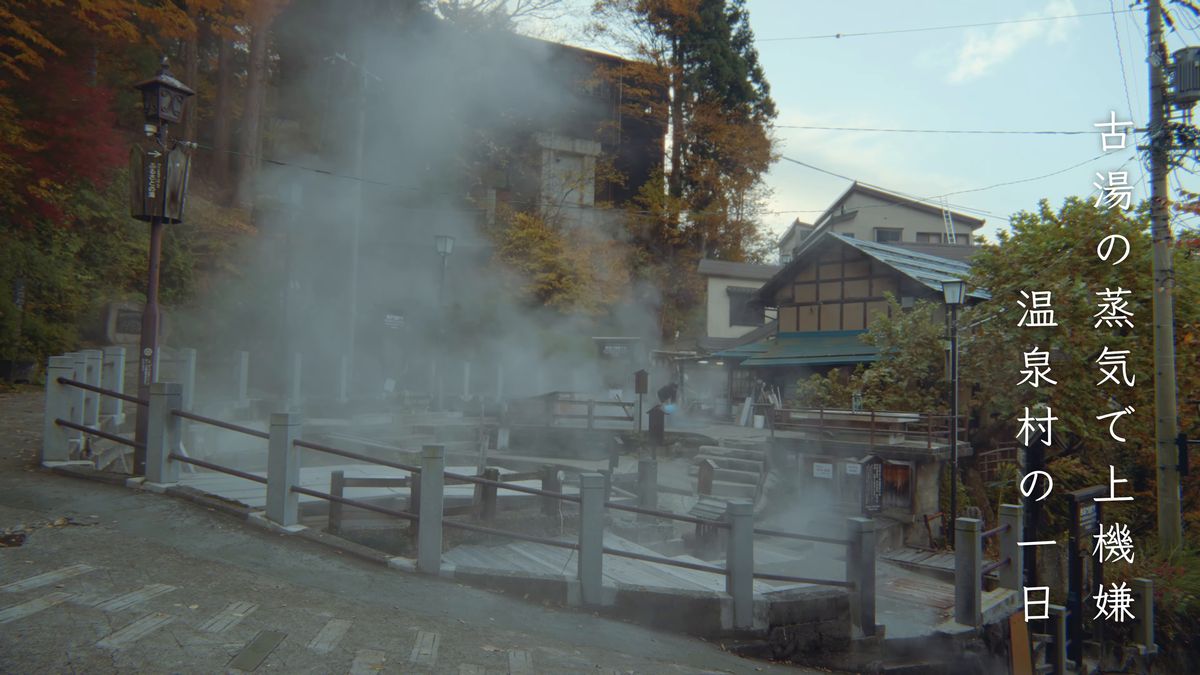
The village with onsen in its name
Nozawaonsen, in Shimotakai District, Nagano, is the only village in Japan with onsen in its name. Its springs are managed by the Nozawa-gumi, a self-governing body that dates back to the Edo period. The village flower is the nozawana blossom.
Sources: nozawakanko.jp ja.wikipedia.org
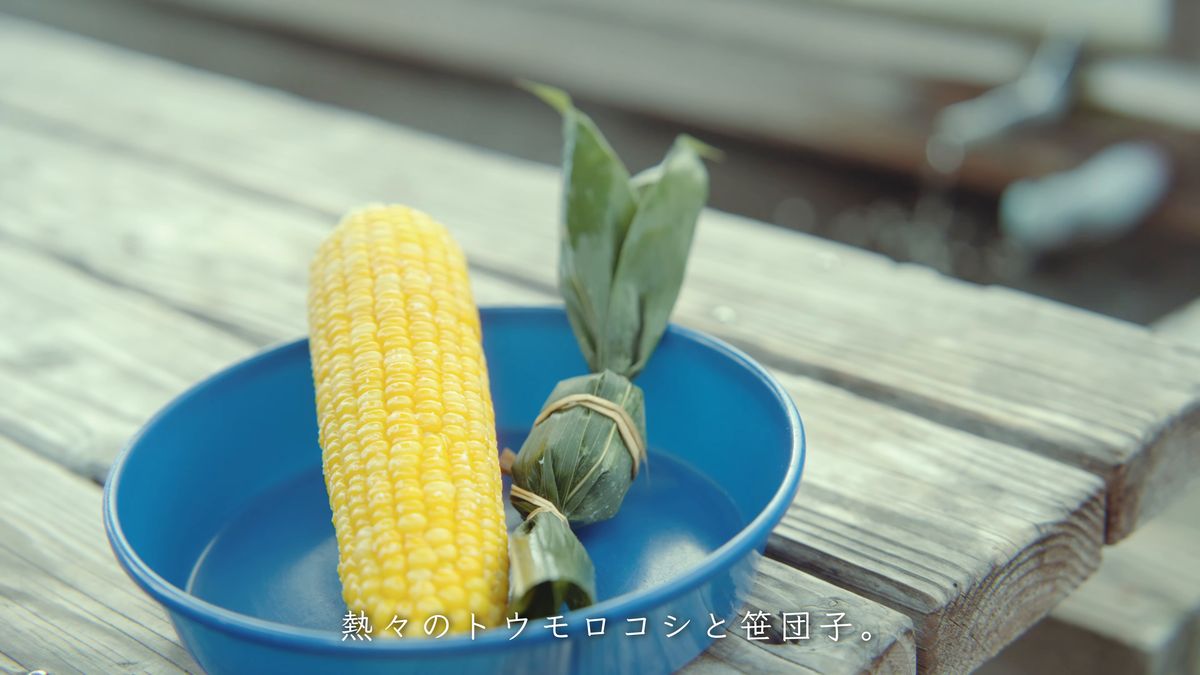
Freshly boiled corn and sasa-dango
Eaten with the onsen tamago beside the Ogama. The corn was boiled fresh and handed over piping hot by the shopkeeper, with just the right touch of salt; the dumpling wrapped in bamboo leaves was boiled soft as well.
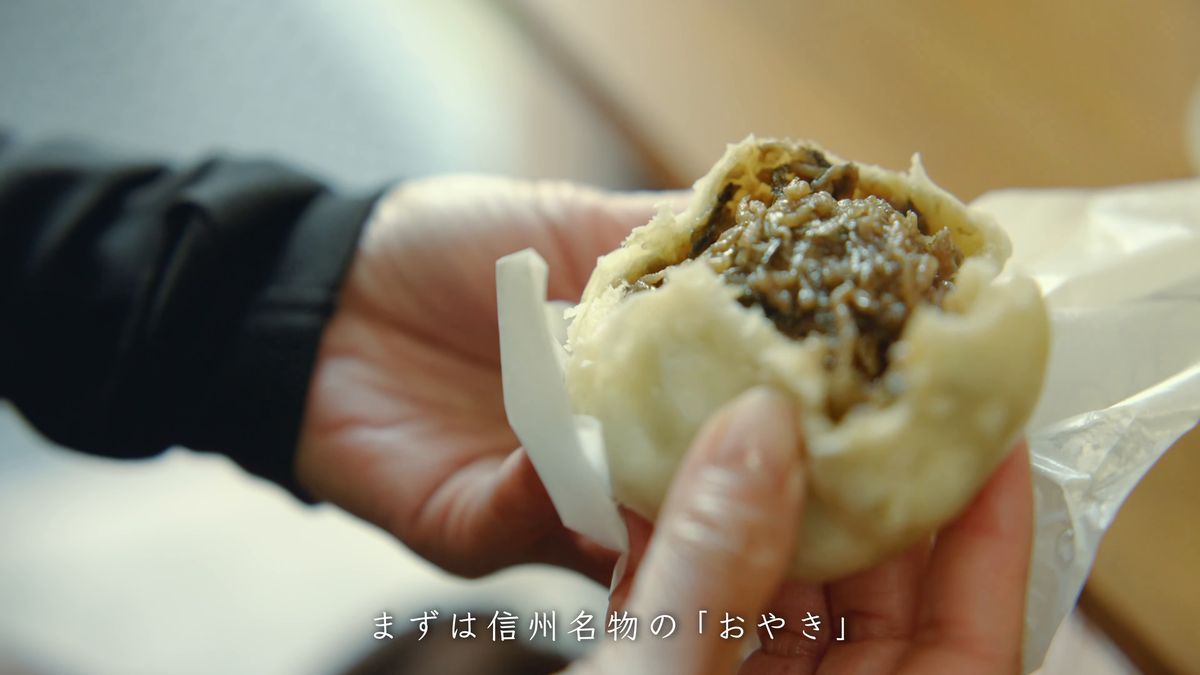
Oyaki of Shinshu
One of Nagano's best-known regional foods: a wheat-flour dough wrapped around nozawana, seasonal vegetables or sweet bean paste, then baked or steamed. Fillings and methods vary so much from place to place that people say you could draw a map of oyaki. In 1983 it was registered, together with nozawana pickles and hand-made soba, as a Nagano Prefecture intangible folk cultural asset.
Sources: maff.go.jp
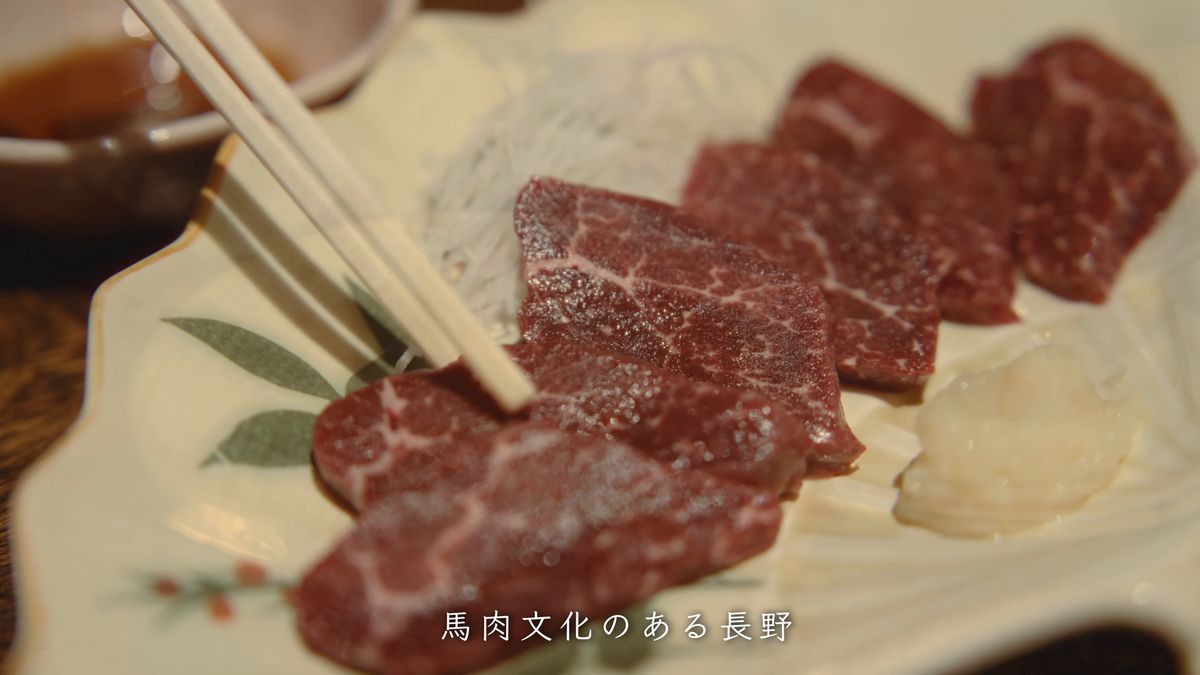
Nagano's horse-meat culture
Eating horse meat in Nagano is said to have begun in the late Meiji era, when aging farm horses were put to the table, and took root mainly in the central and southern parts of the prefecture. Nagano is often named, after Kumamoto and Fukushima, as one of the prefectures where horse meat is most at home.
Sources: go-nagano.net
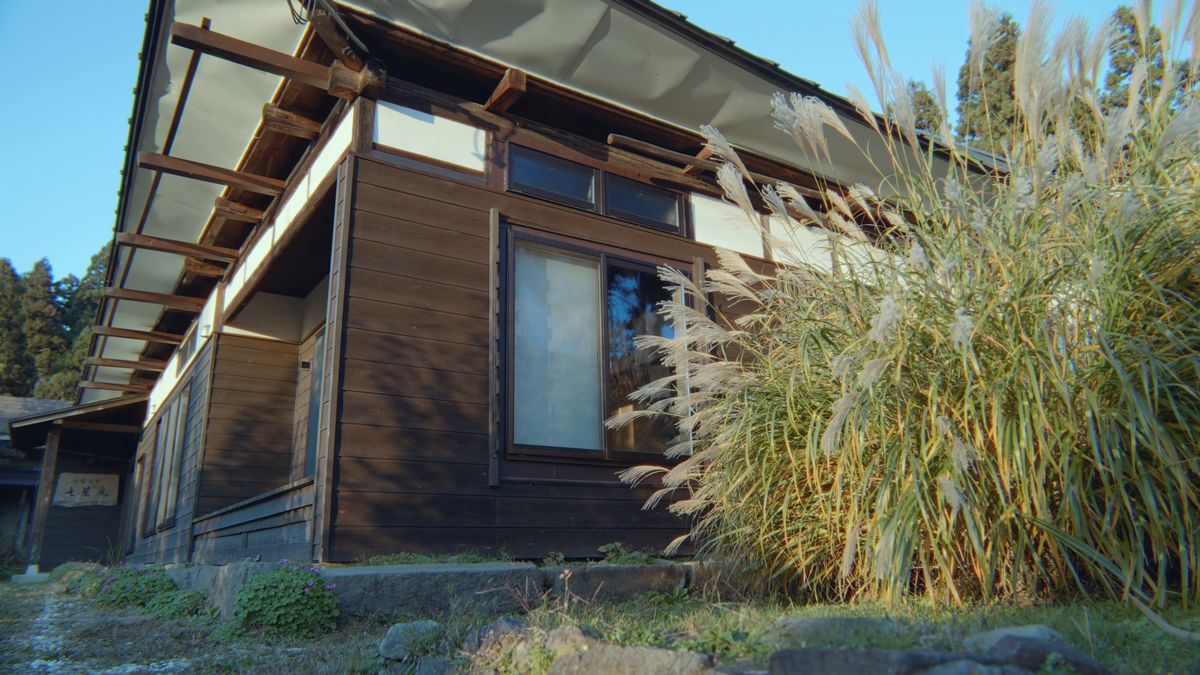
A 200-year-old farmhouse inn
This time I borrowed a beautifully restored farmhouse some 200 years old, with a straw raincoat and hat in the entrance, a spinning wheel and straw crafts by the board walls, an iron kettle and pot over the hearth, and a porch looking out on the village at dusk.
PHOTO ALBUMPhoto album72Open all photographsClose the photo album
Select a photograph to explore the journey one frame at a time.