A TRAVEL ESSAY
Numazu, Shizuoka
What if you lived in a town with a view of Mt. Fuji?
Gifts of the sea in a townthat looks out on Mt. Fuji
Treasures of Suruga Bay, gathered at the market and the port, in one bowl.
Read the journey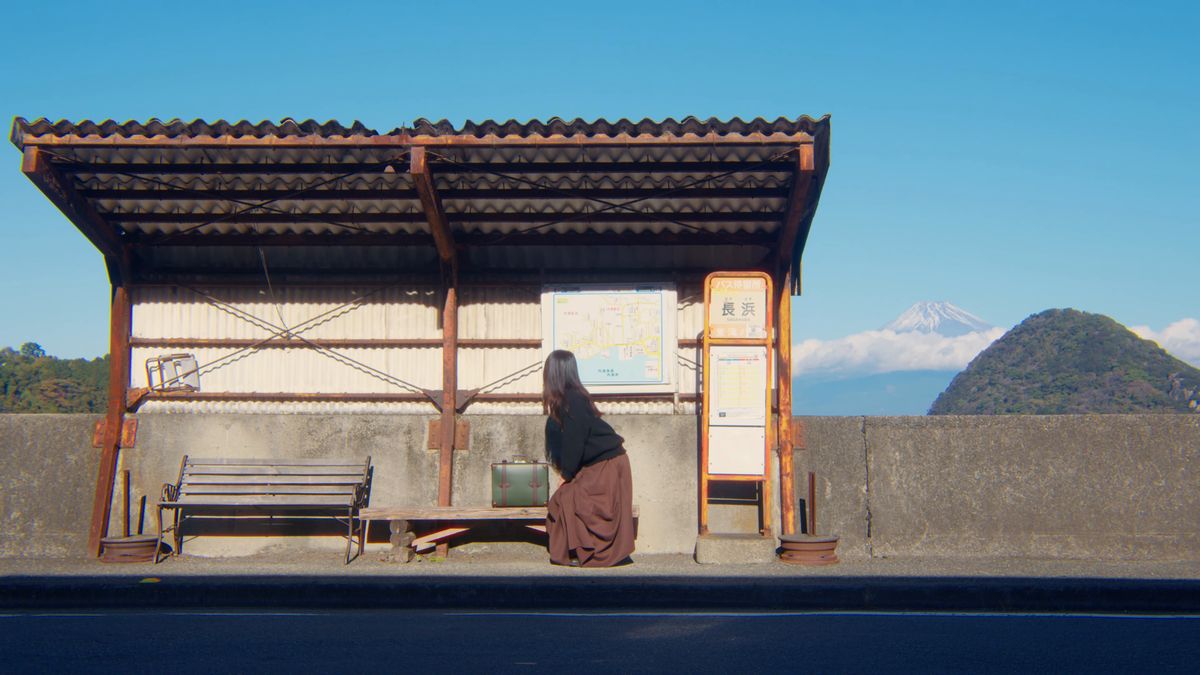
ABOUT THIS JOURNEY
When the temperature drops and Mt. Fuji stands out clear, I find myself wanting to come back to this town. I bought handmade aji-zushi at the morning market in the shopping arcade and ate breakfast by the sea, looking at Mt. Fuji and the island of Awashima. I set down my trunk at a ninety-year-old house, then went to Numazu Port for the seafood kakiage bowl I had been dreaming of. With treasures of Suruga Bay gathered at the port and at a fishery cooperative shop in Yui, I made a Numazu bowl for dinner, and horse mackerel chazuke the next morning. Another year of living, for a while, in Numazu.
A little more about the food and the land01TRAVEL JOURNAL
The season when Mt. Fuji is clear
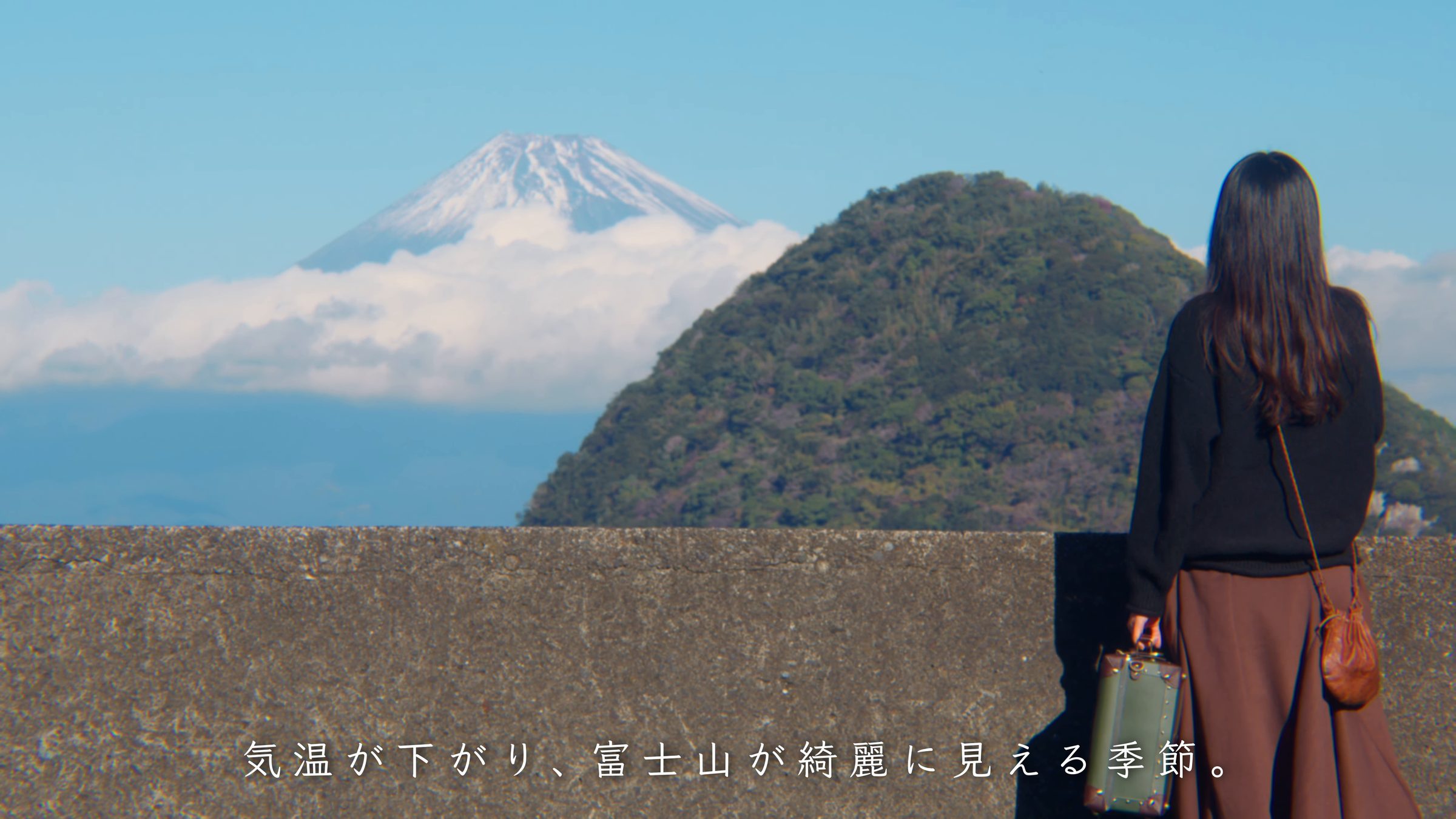
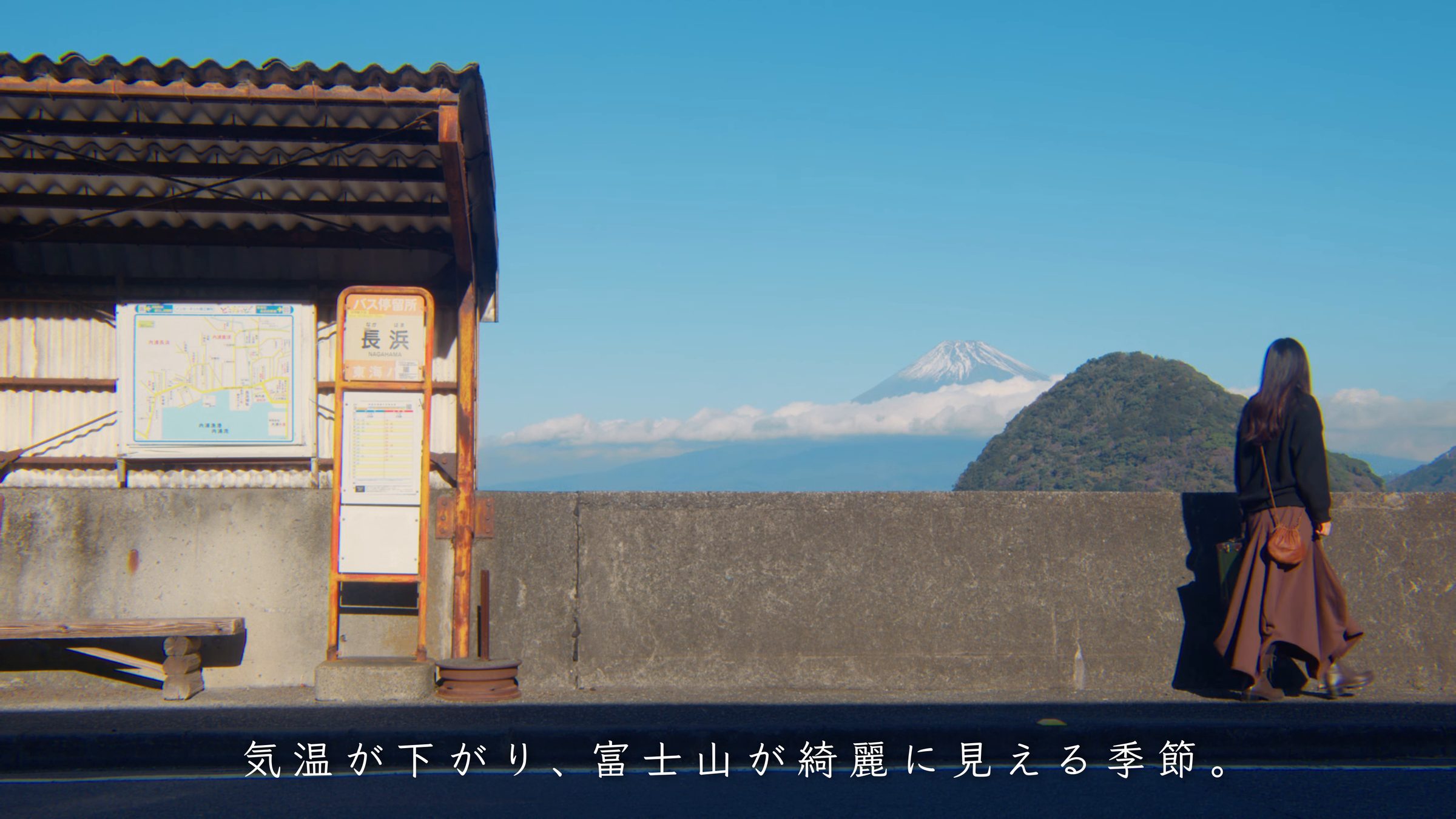
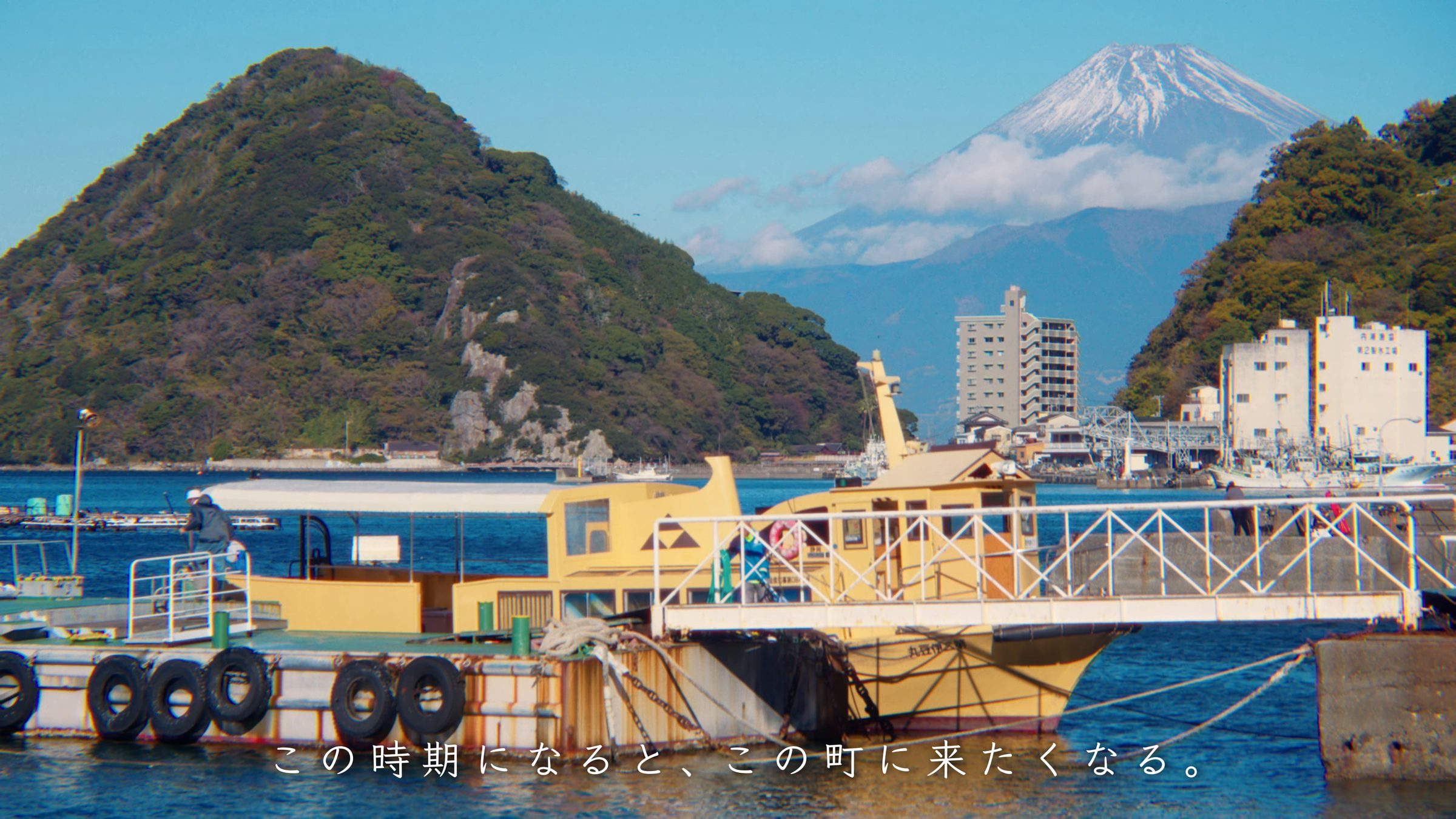
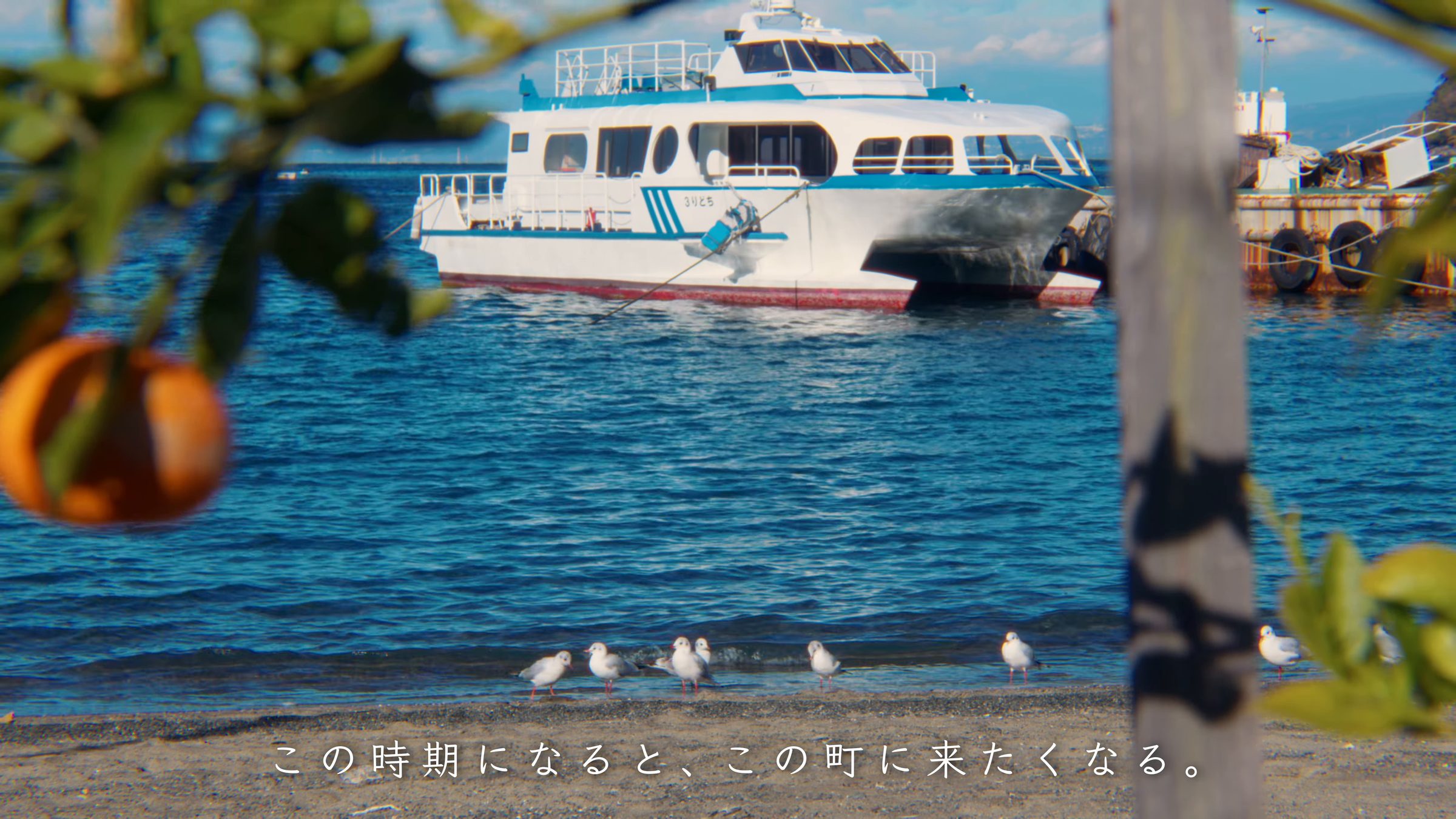
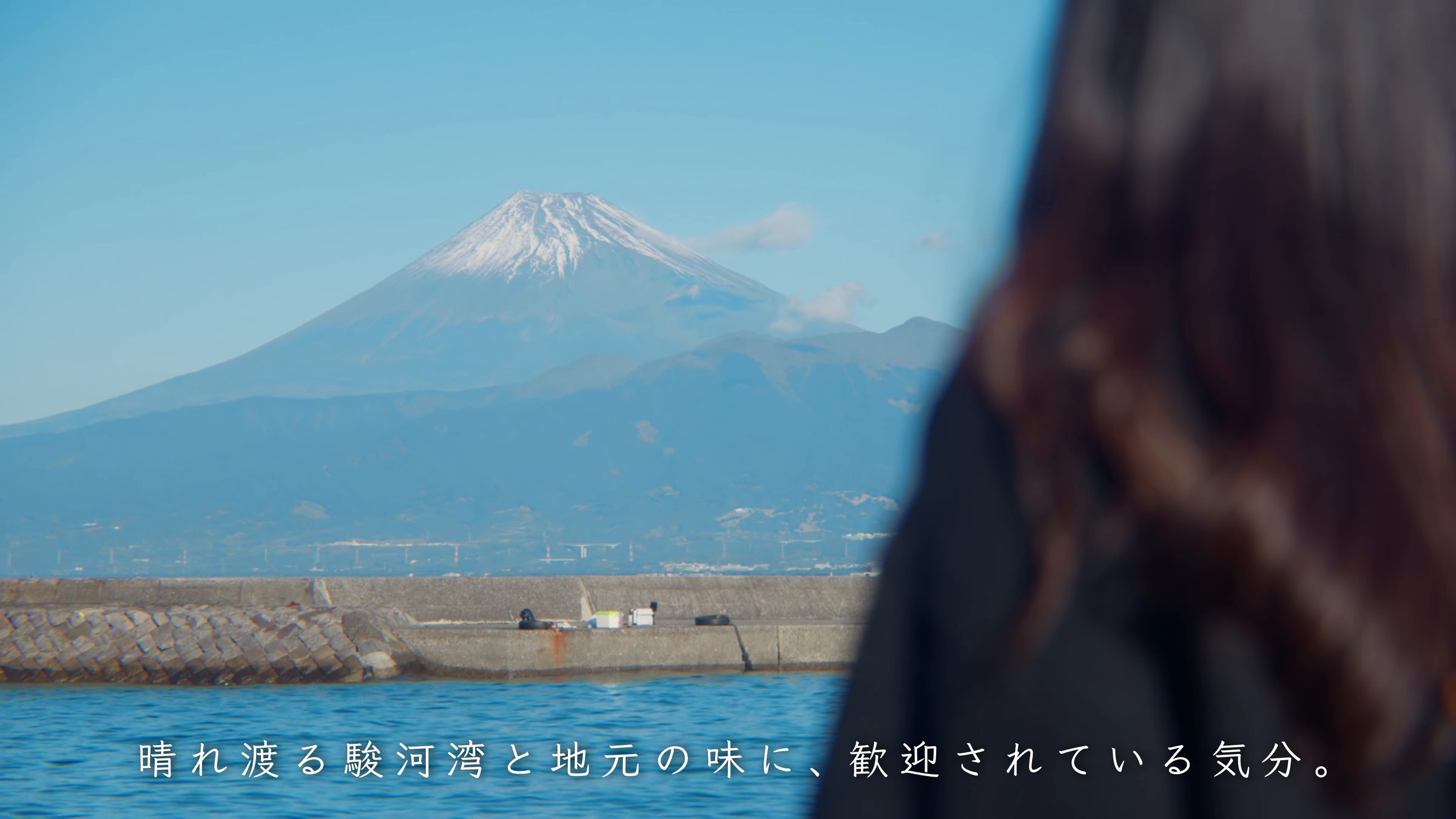
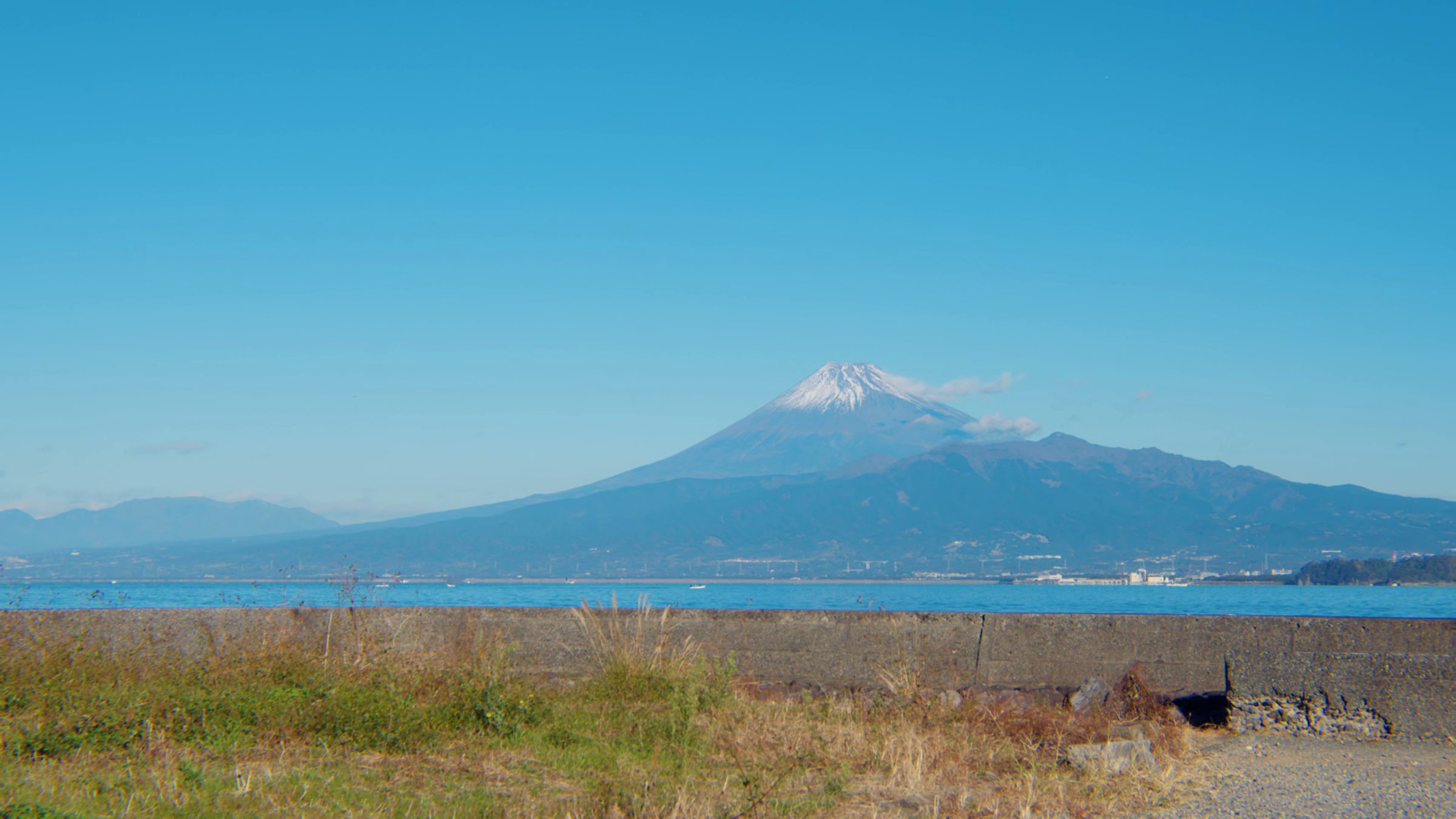
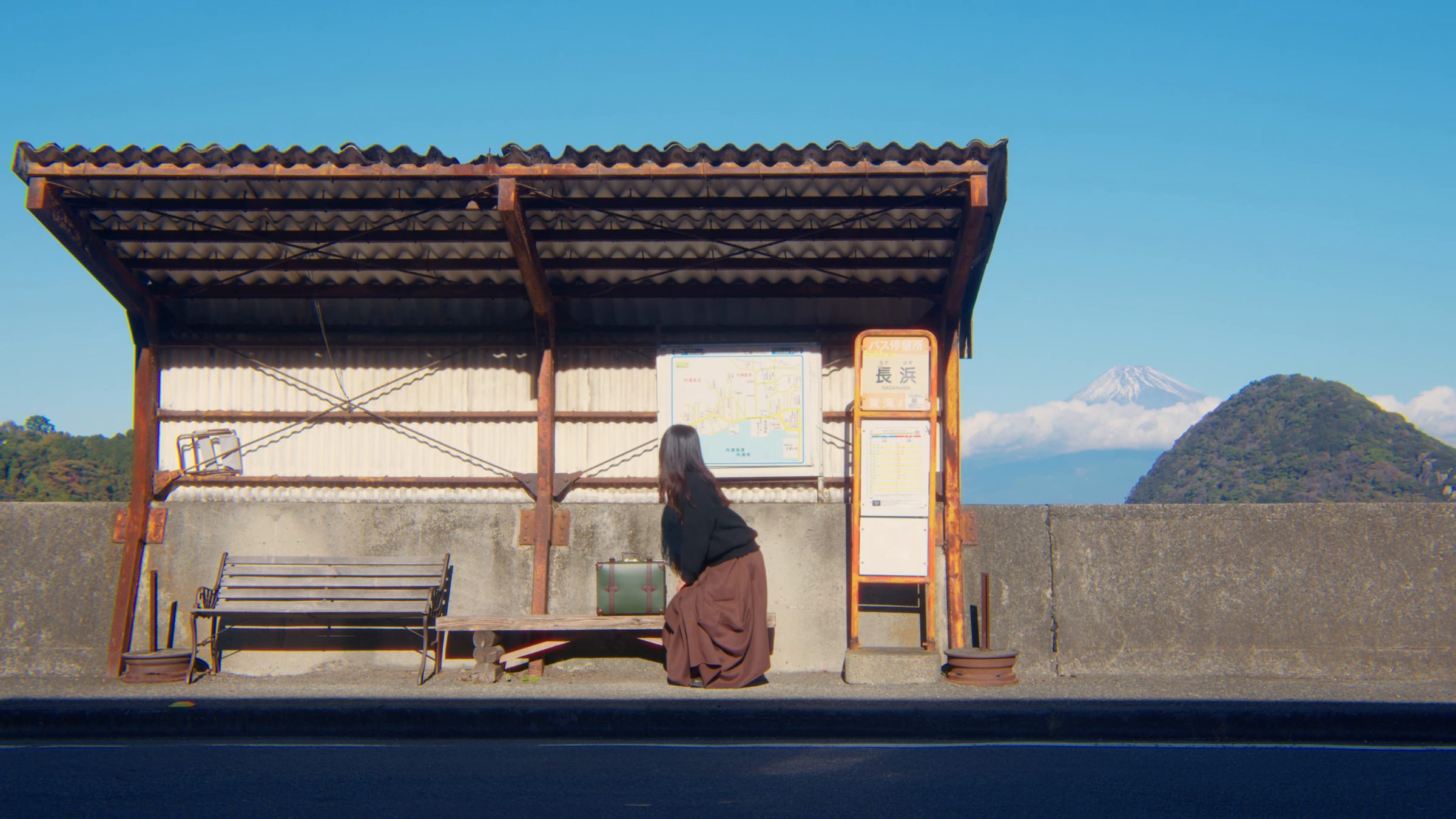
This is the season when the temperature drops and Mt. Fuji can be seen clearly. Every year at this time, I want to come to this town. Stepping off the bus at the Nagahama stop with my trunk, I saw the island of Awashima floating beyond the seawall, and above it, snow-capped Mt. Fuji showing its head.
A yellow boat sat in the harbor, and the mandarins on a tree by the shore were turning orange. A row of seagulls stood on the beach, looking out at a white boat on the water.
Watch this scene on YouTube0:25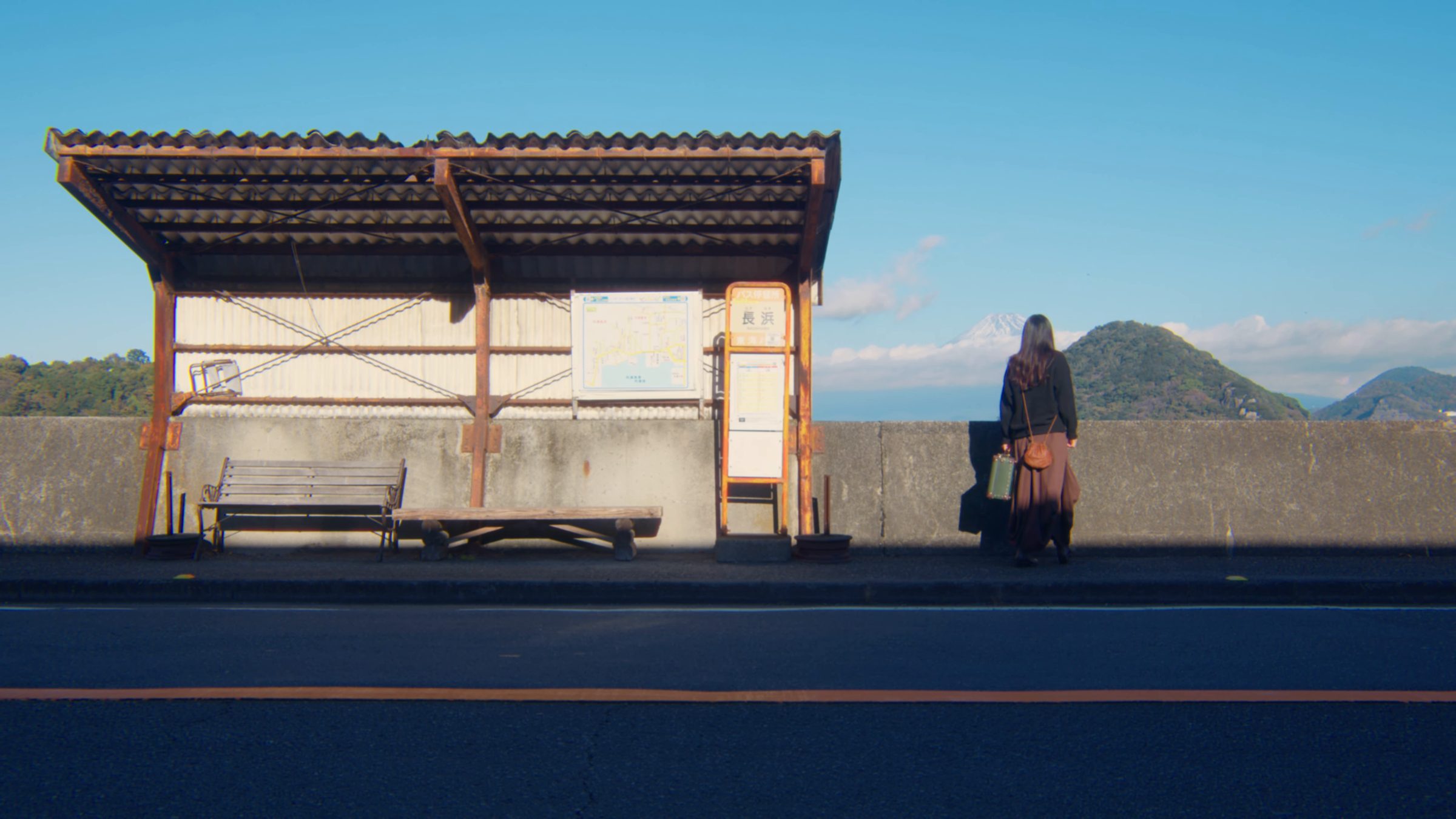
02TRAVEL JOURNAL
The morning market in the arcade
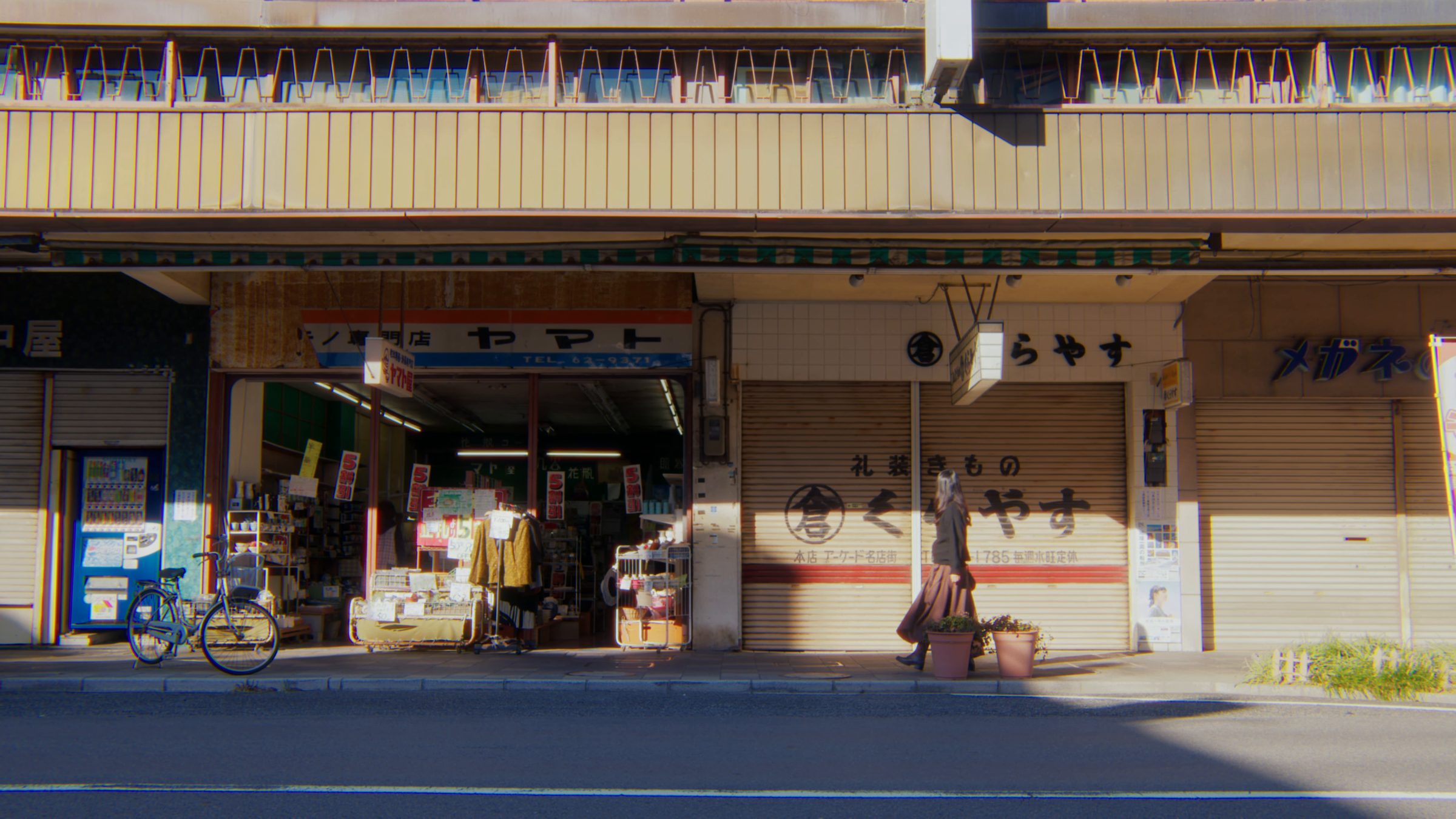
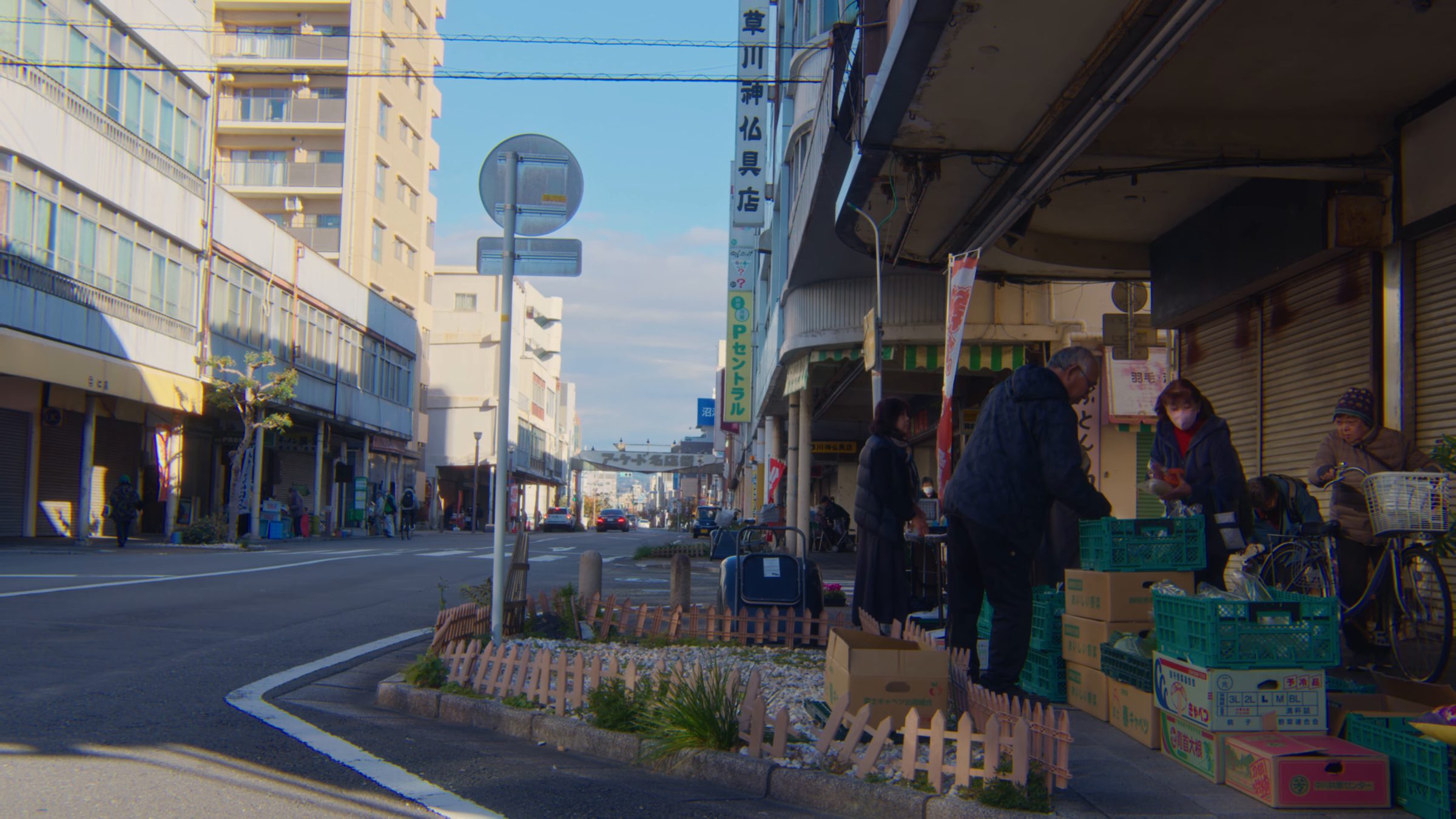
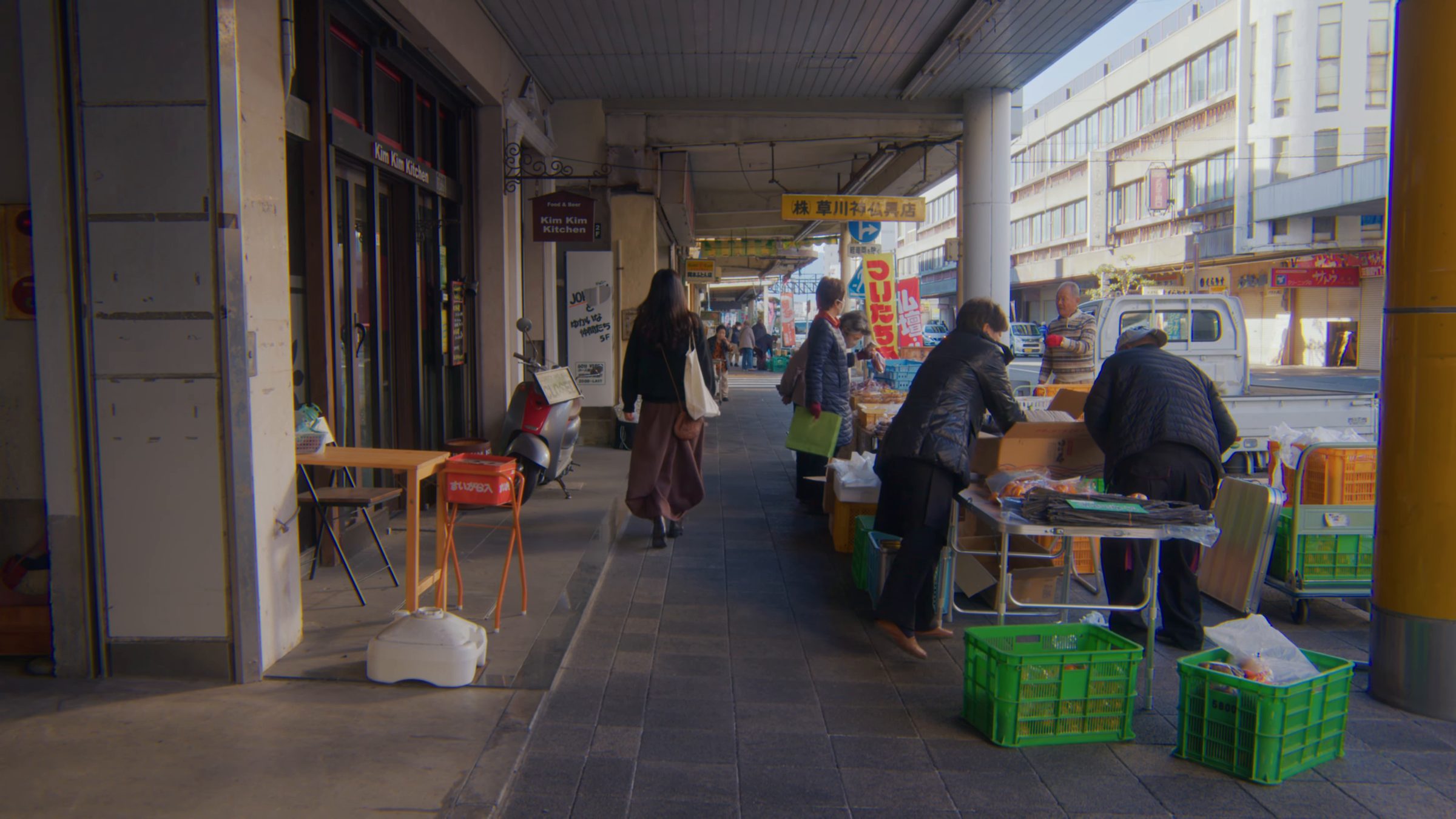
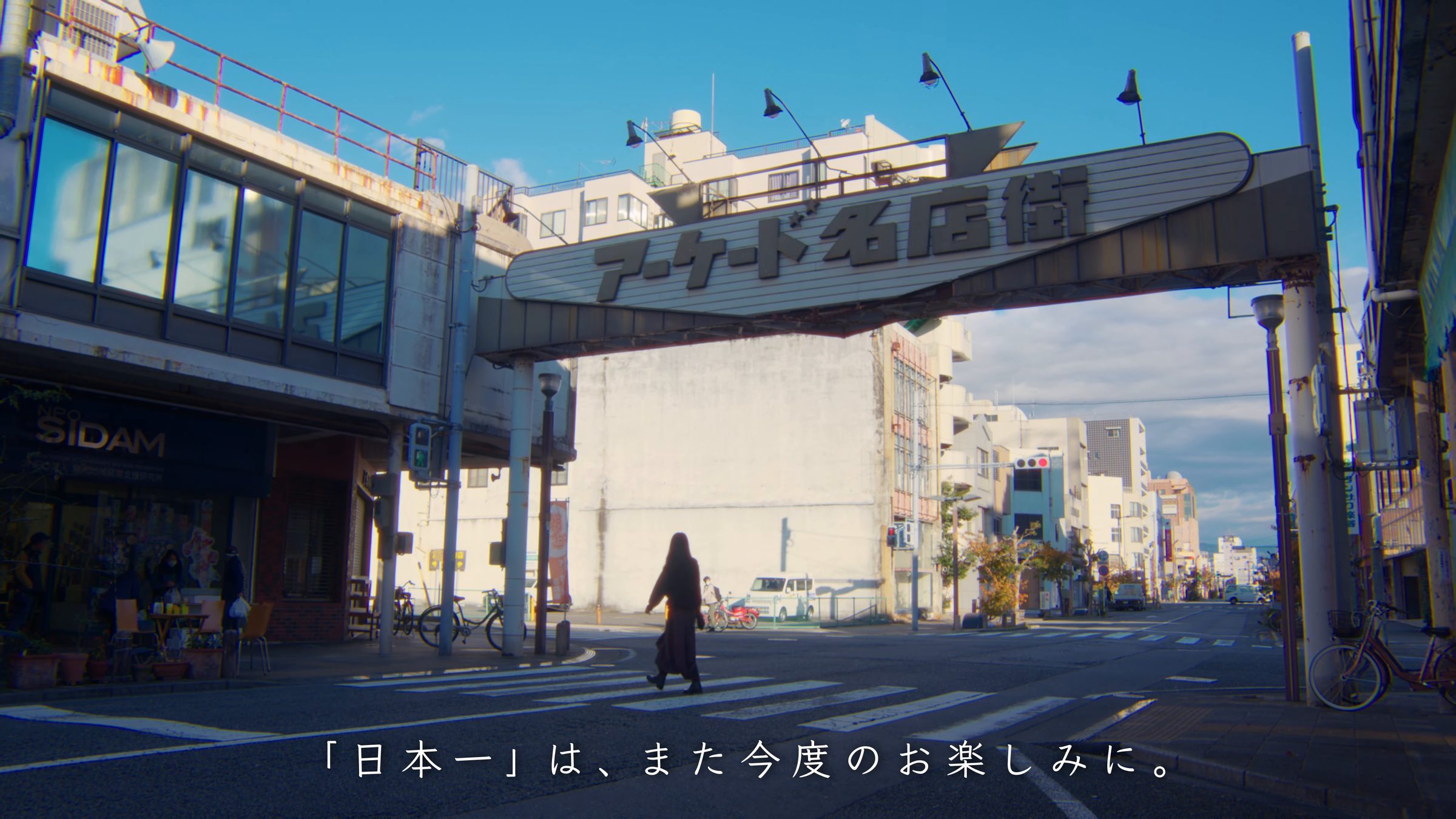
First, let me take a look at the local morning market. I got off at the Izuhakone Bus stop called Arcade Meitengai, and the shopping arcade stretched ahead in the morning light. The market held on the first day of every month happened to fall during my stay.
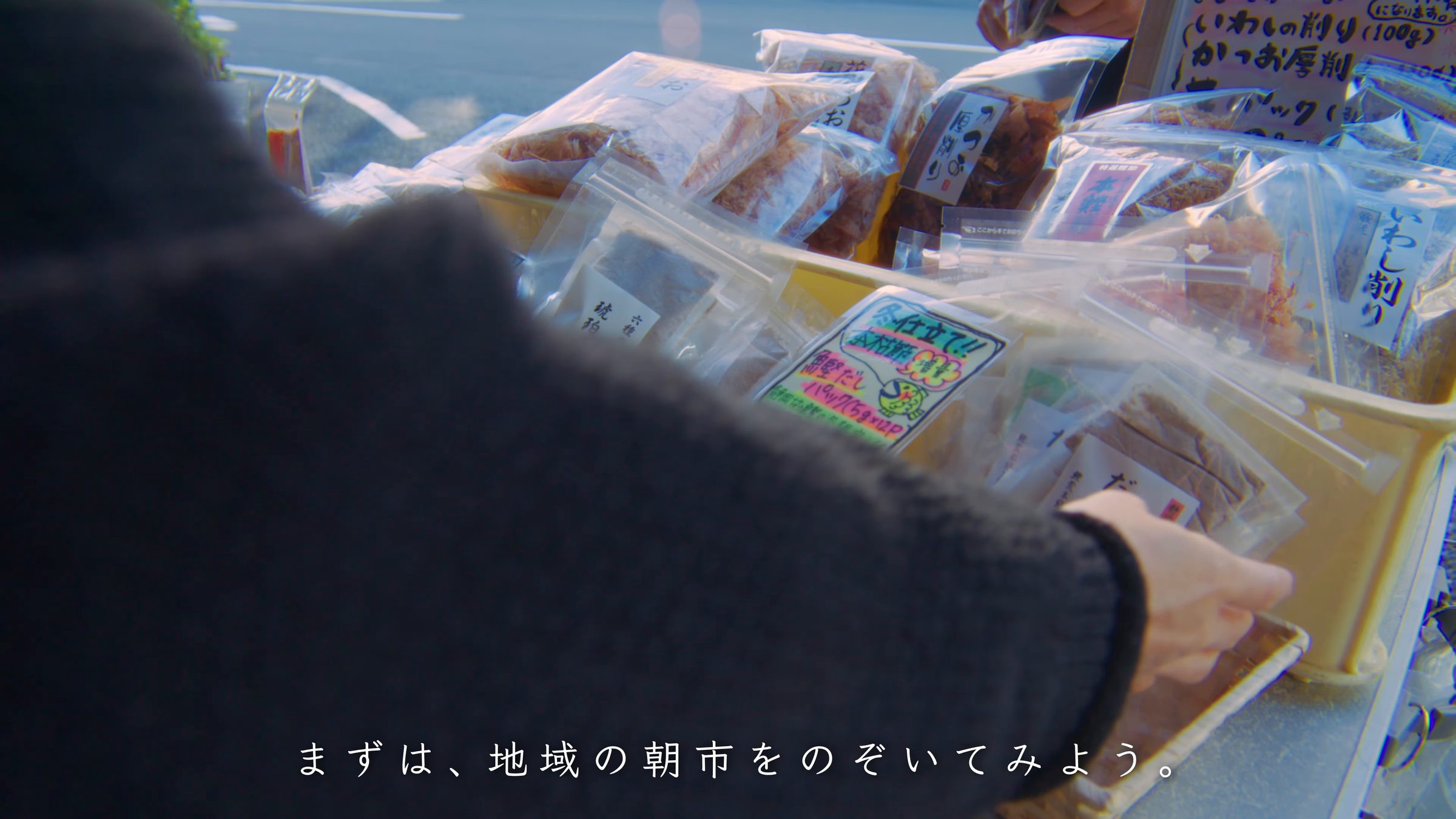
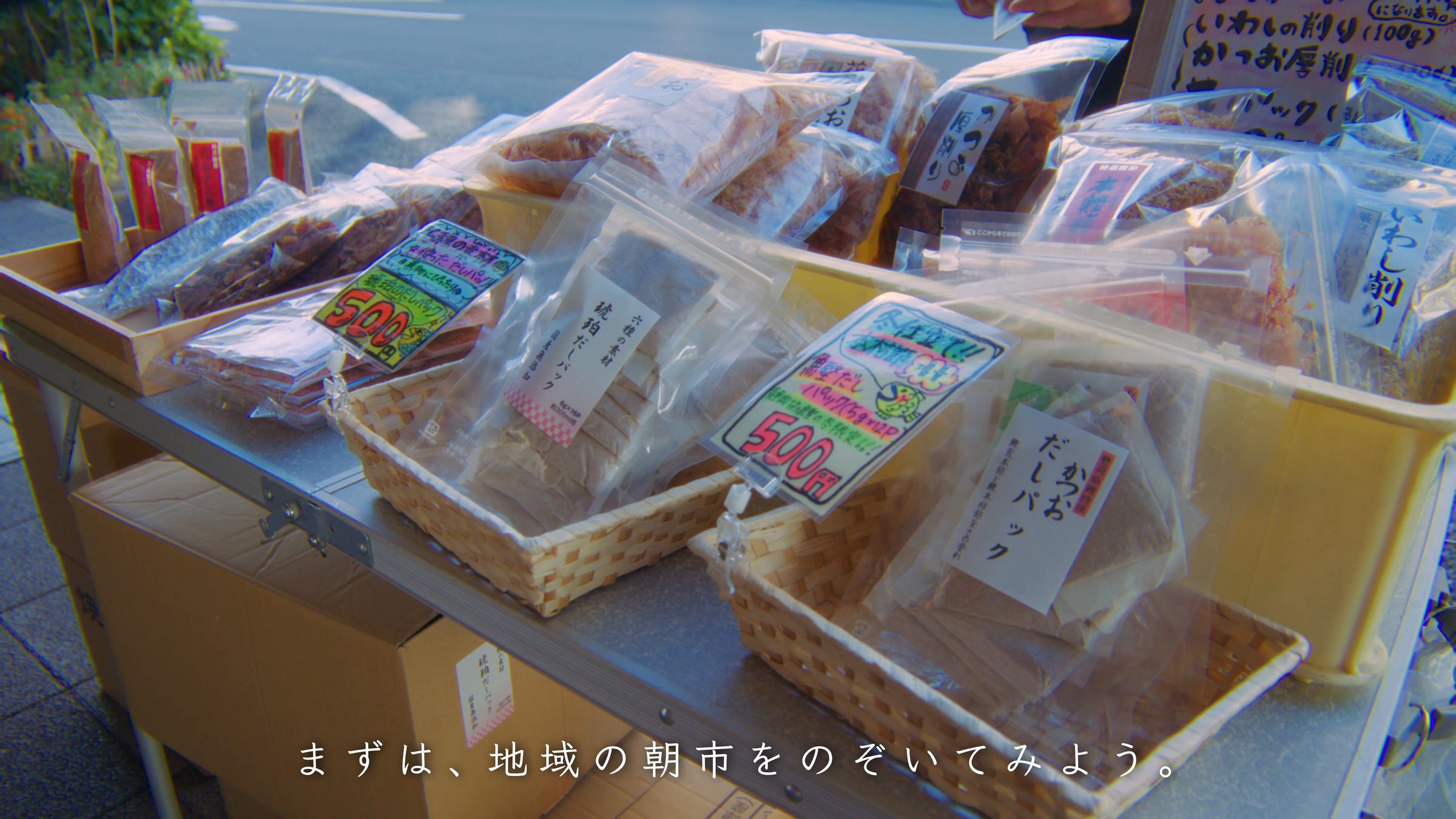
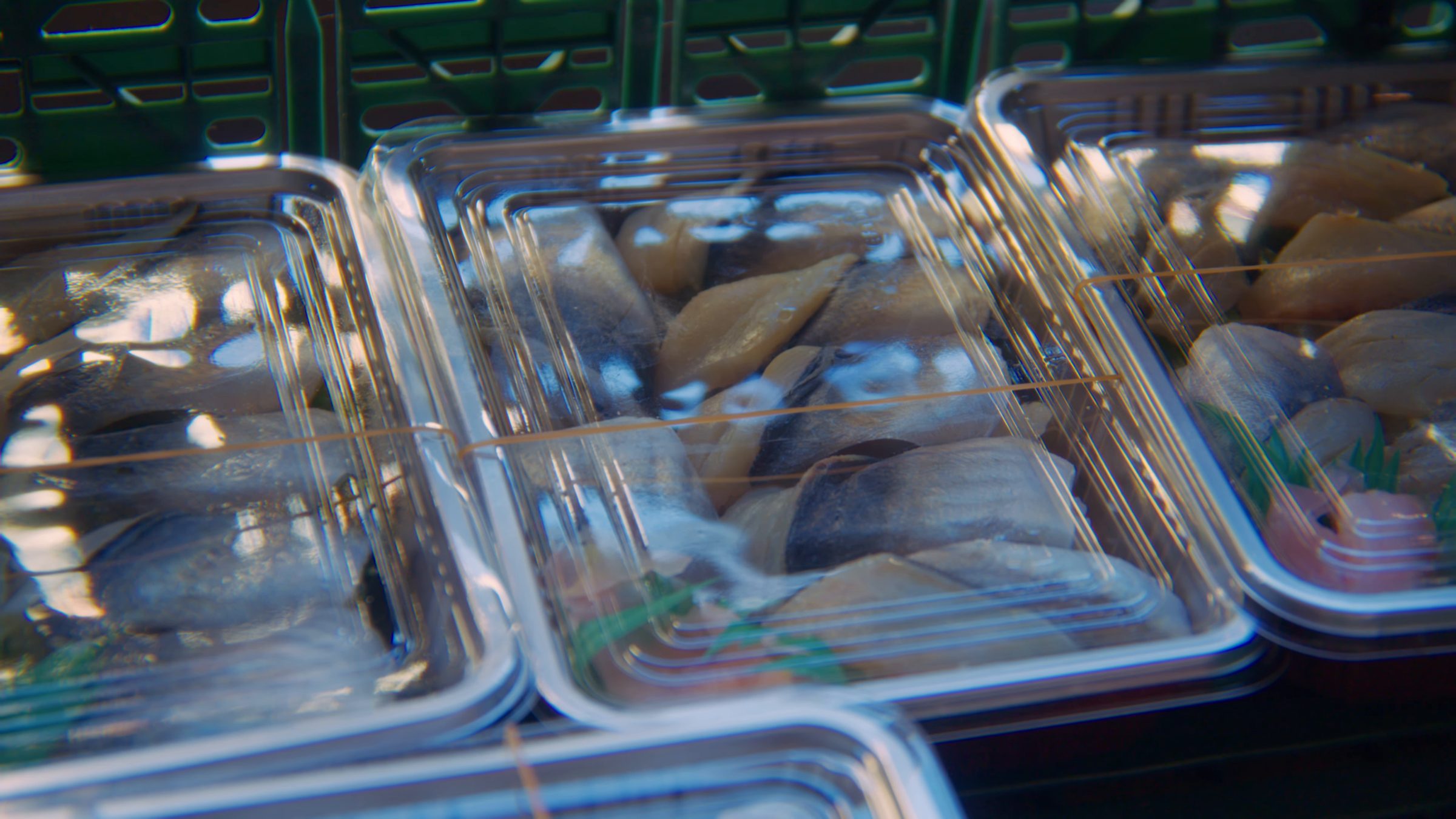
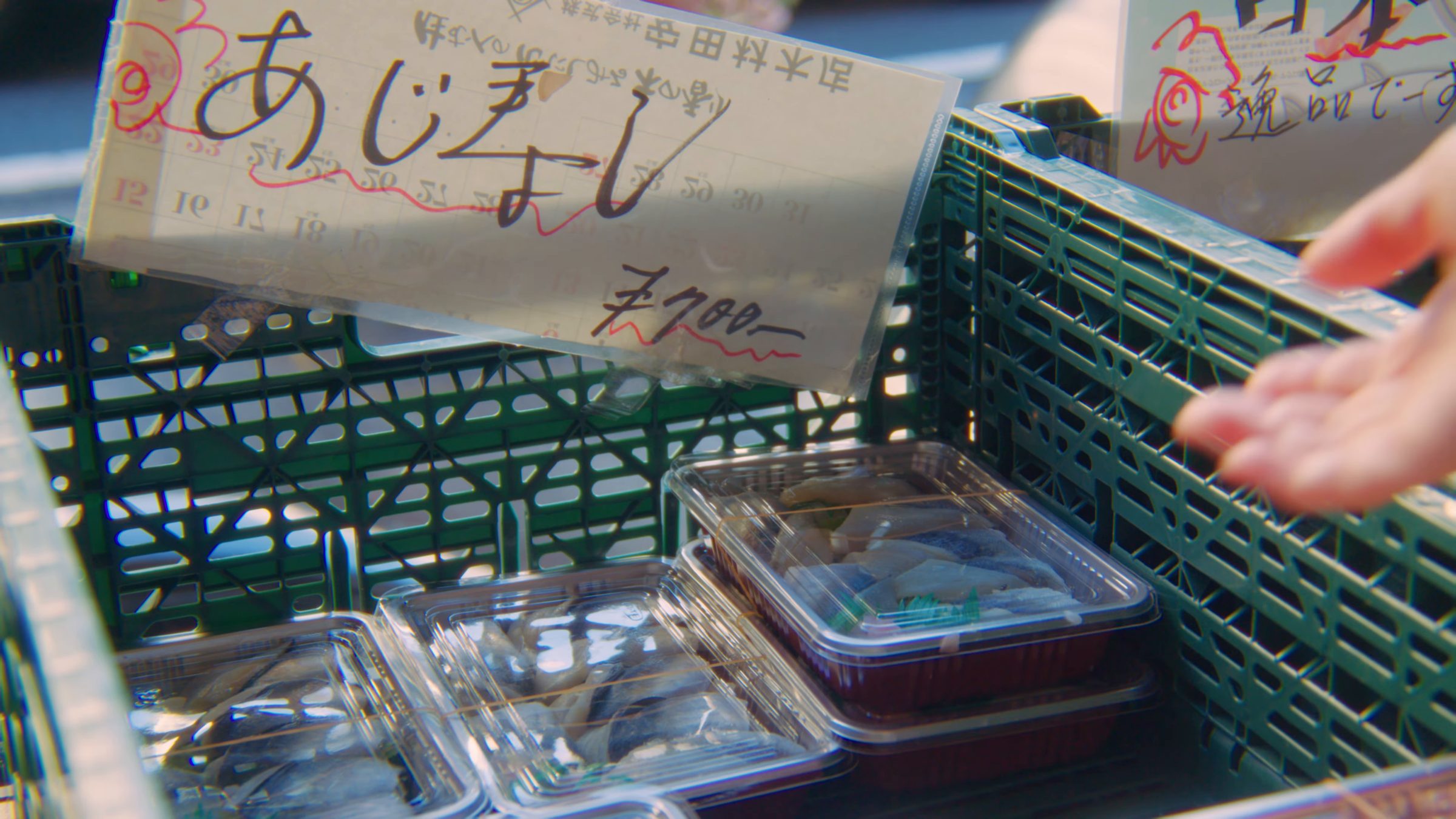
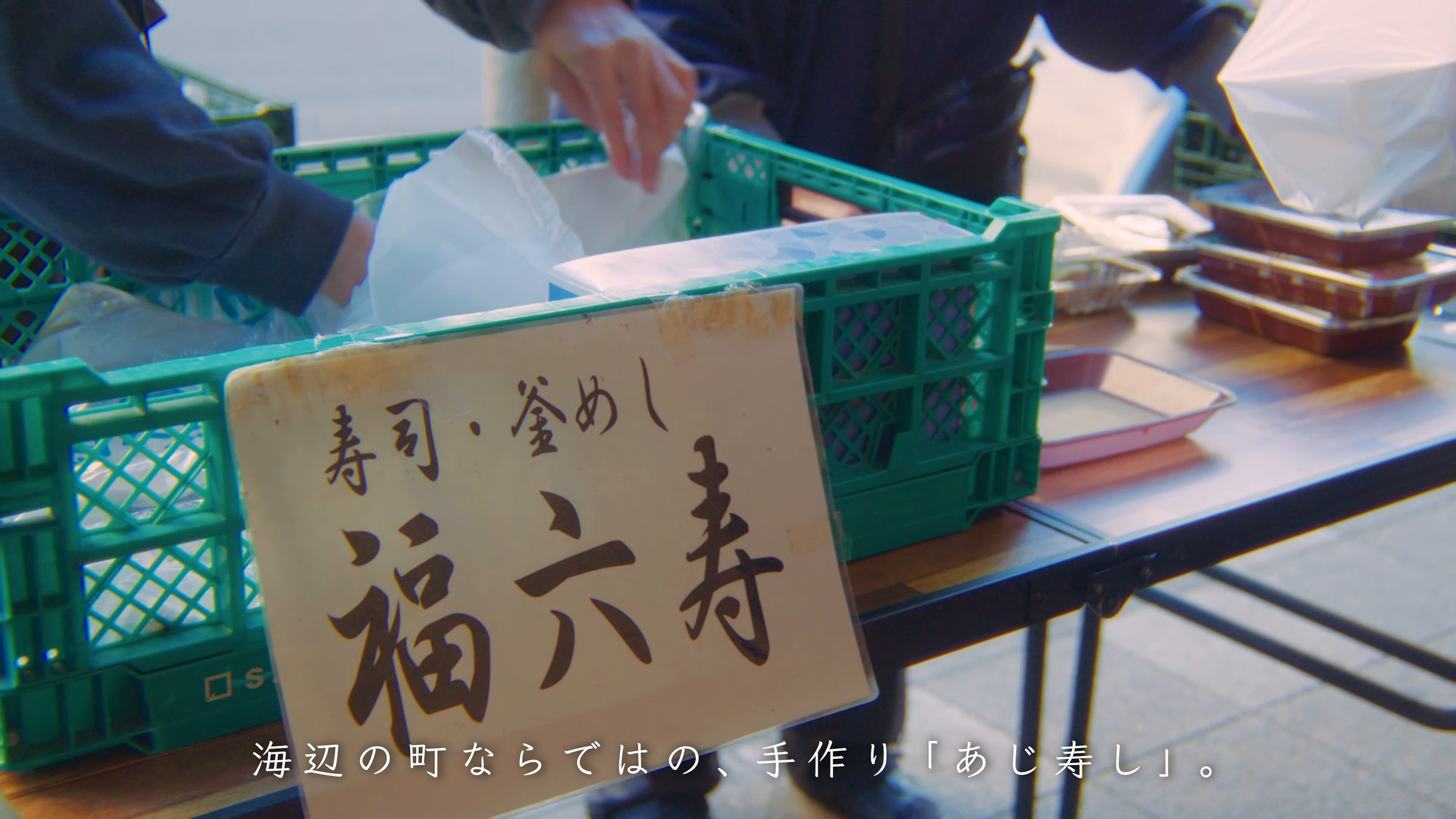
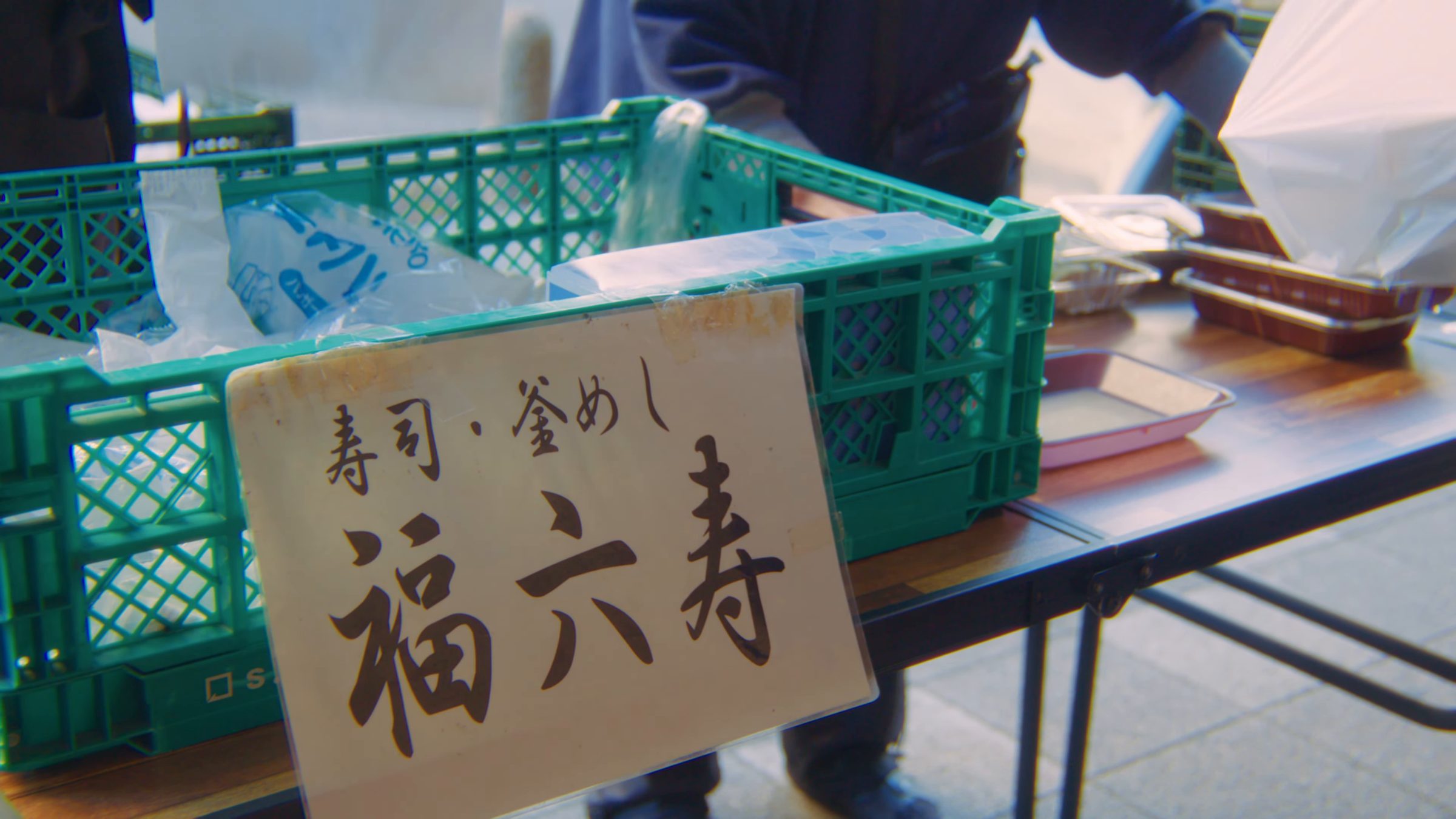
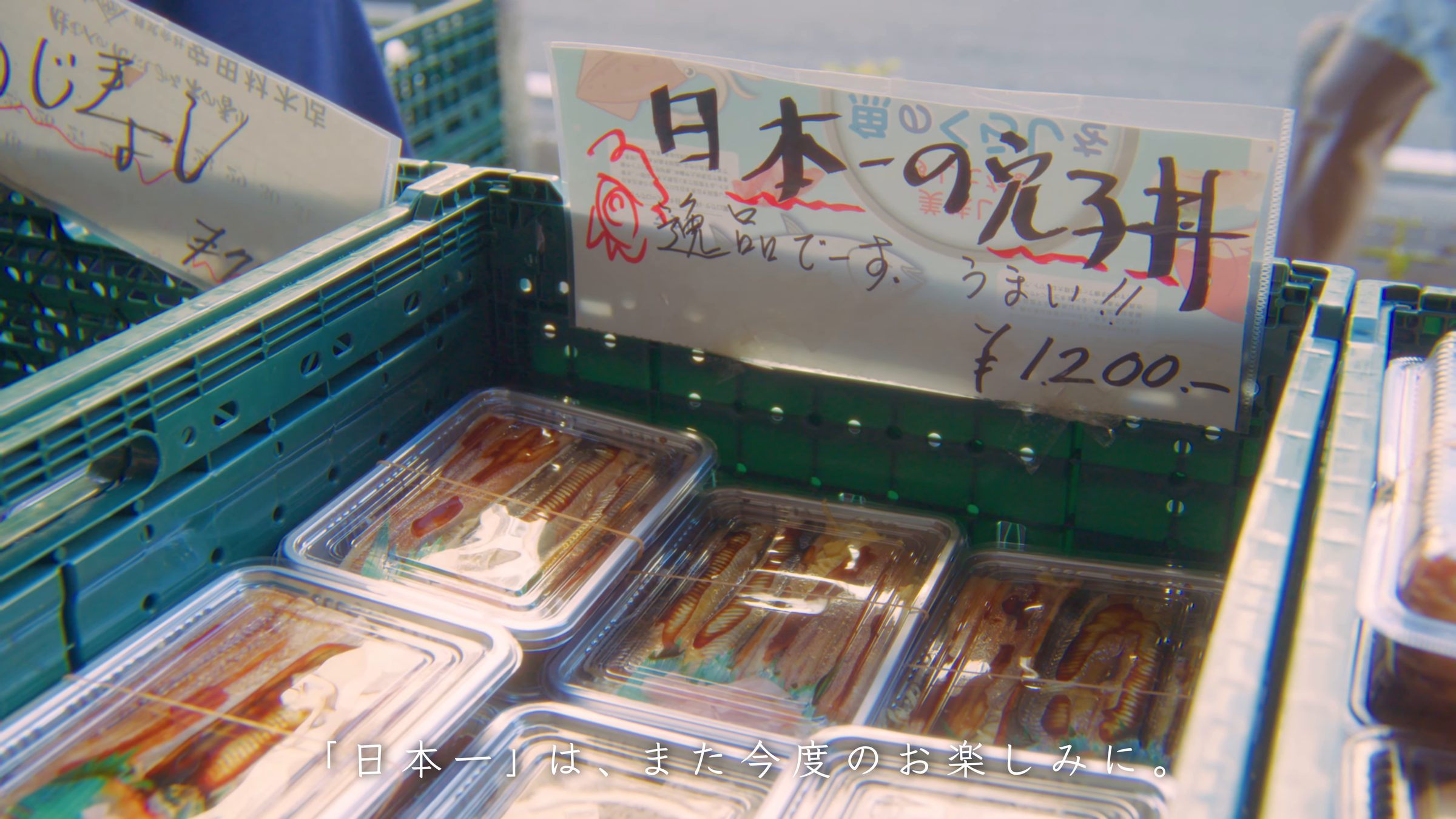
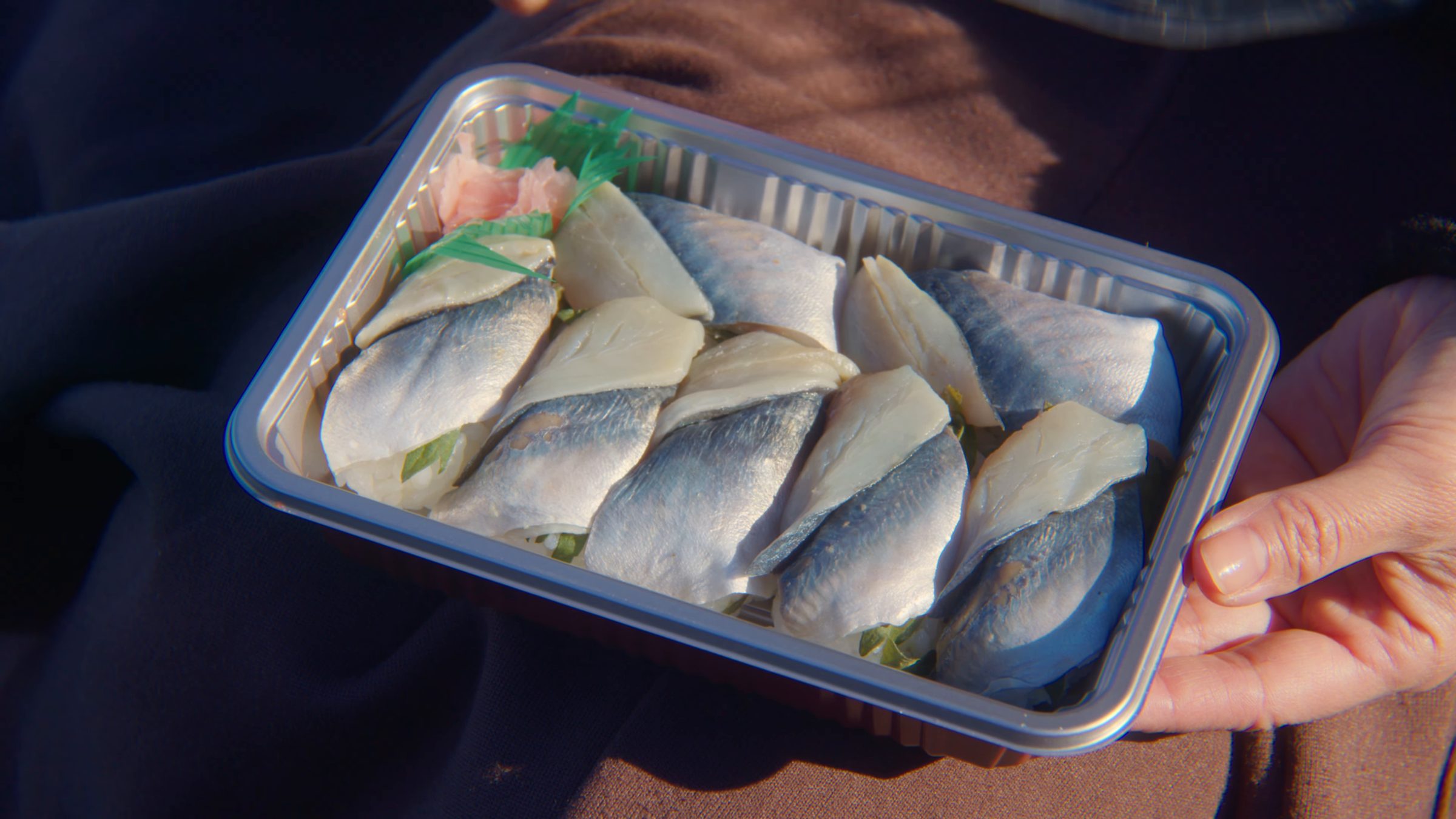
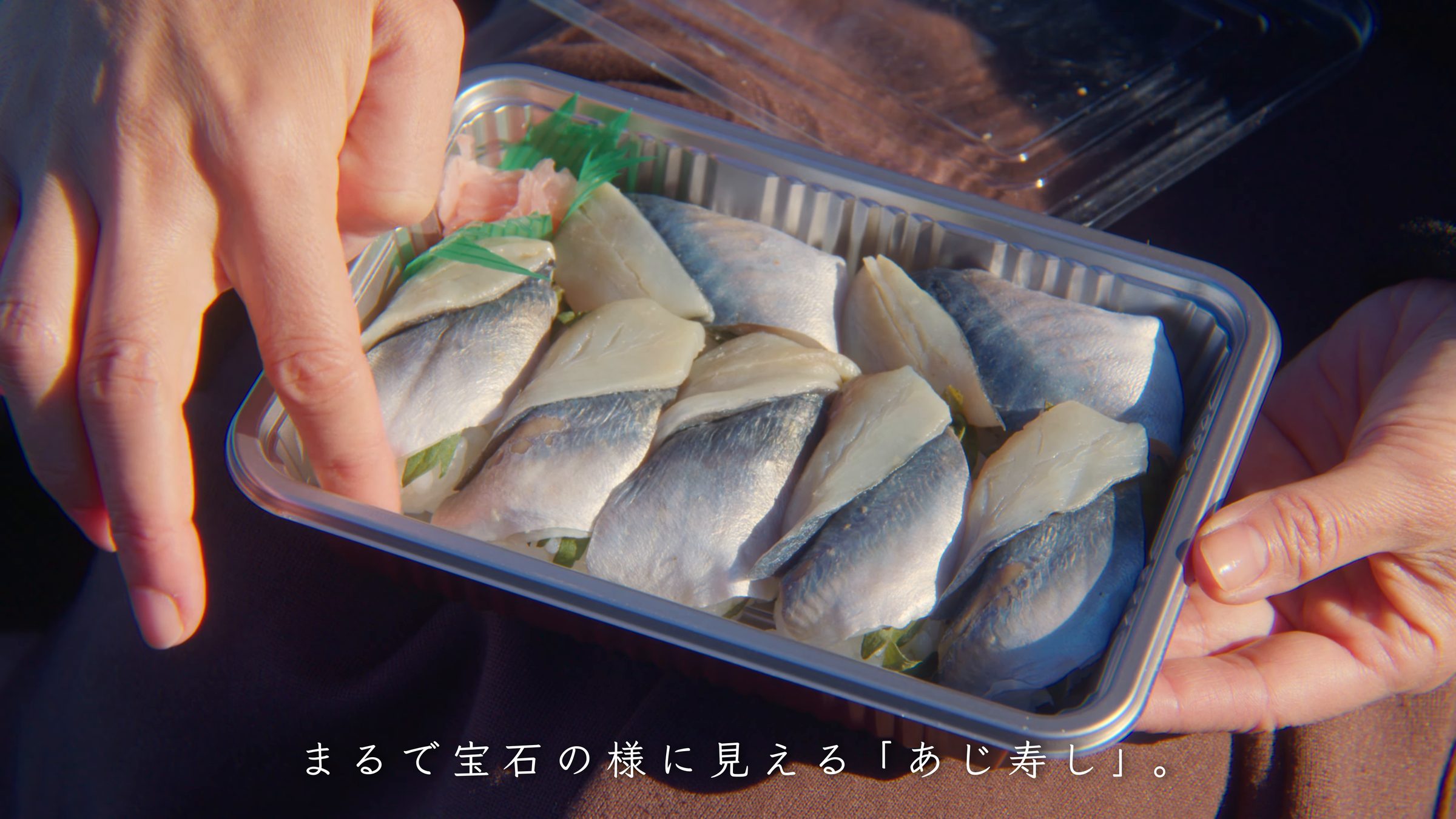
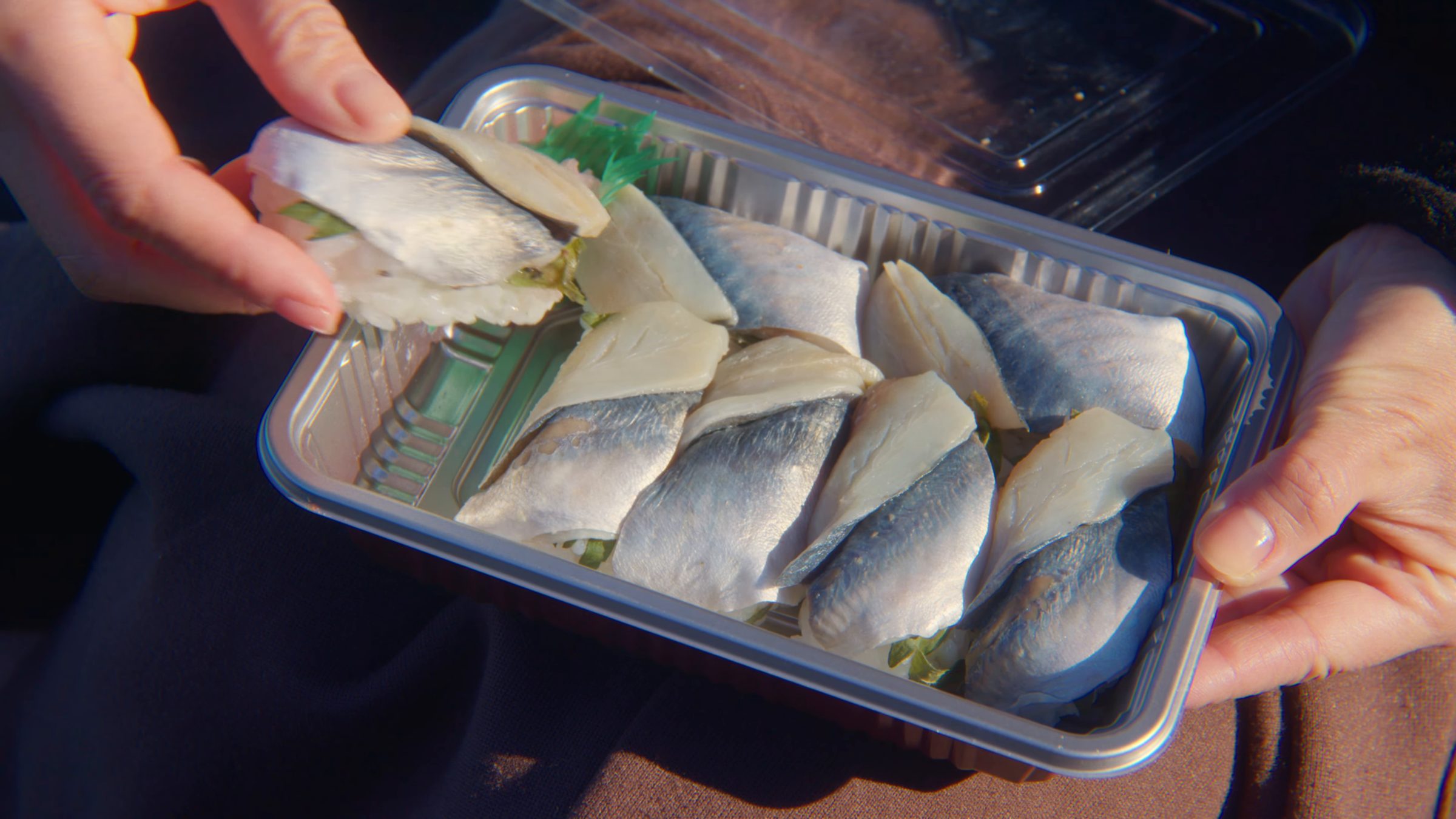
Stalls lined the sidewalk with crates and folding tables, among them a dry-goods seller with bonito flakes and dashi packs. At a stall whose sign read Fukurokuju, sushi and kamameshi, I found handmade aji-zushi, horse mackerel sushi of the kind you only find in seaside towns. The next crate carried a sign for Japan's best conger eel bowl. I'll look forward to that one next time.
I passed under the gate of the arcade and headed for the sea.
Watch this scene on YouTube0:44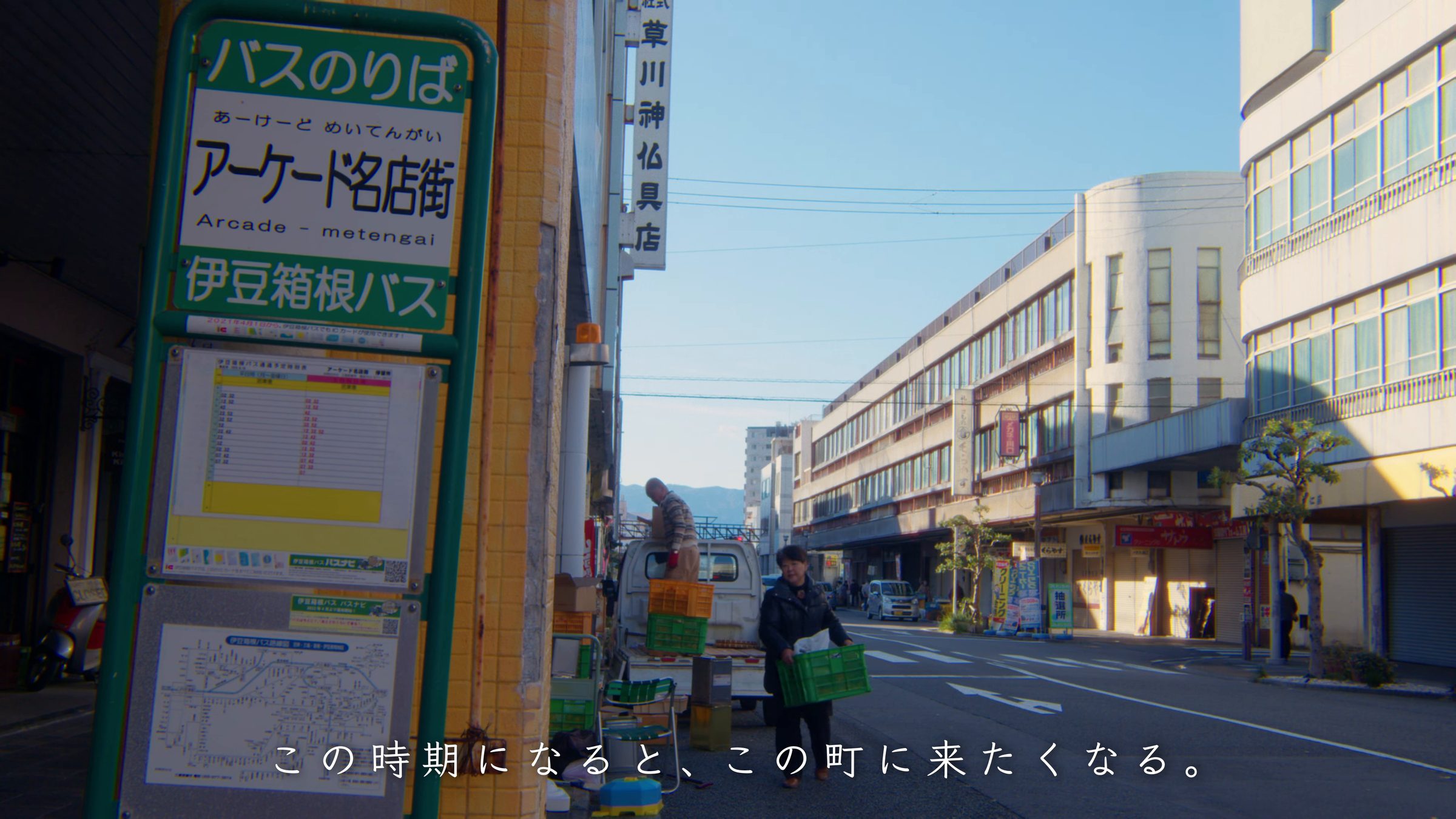
03TRAVEL JOURNAL
Breakfast by the sea
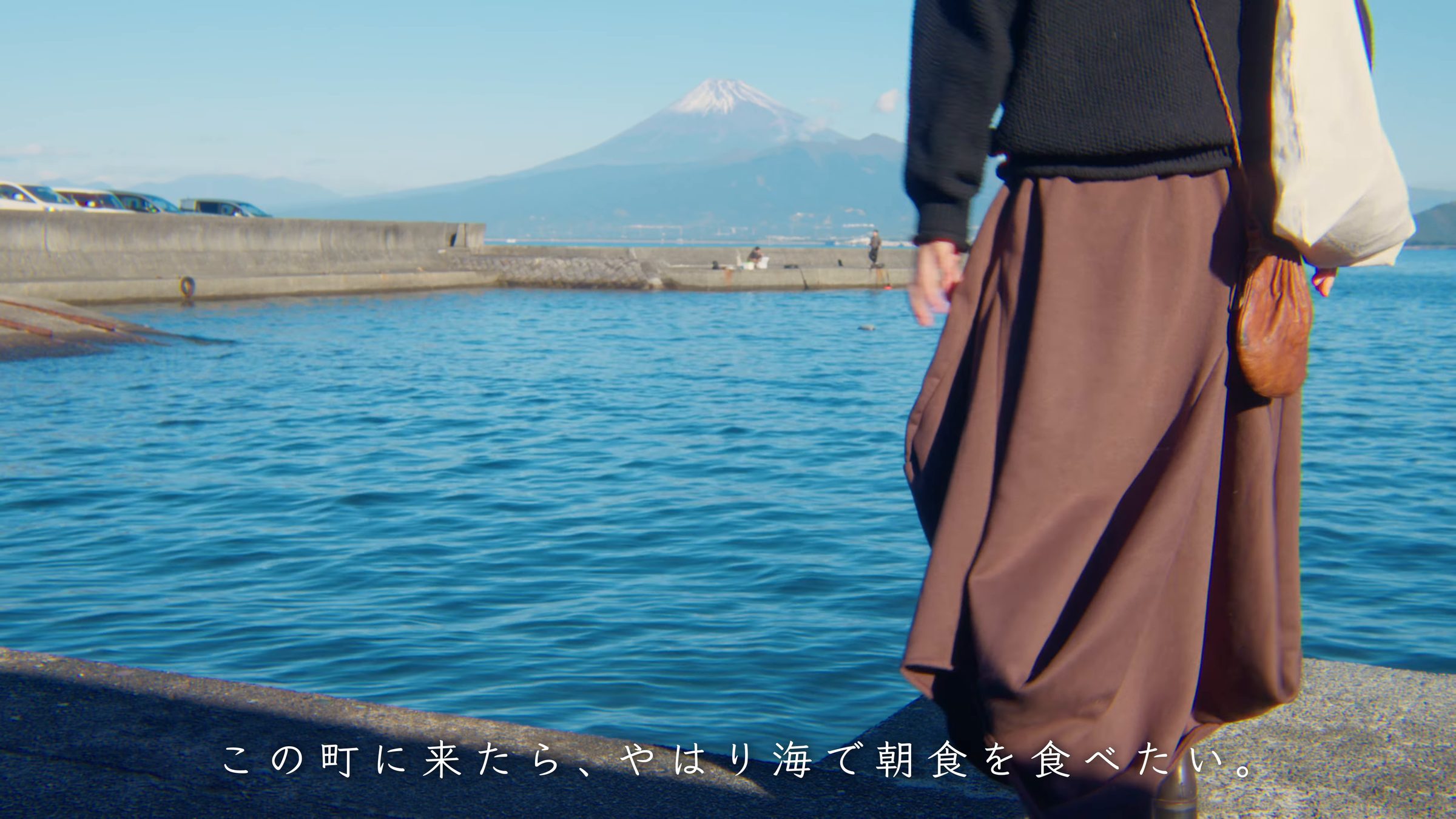
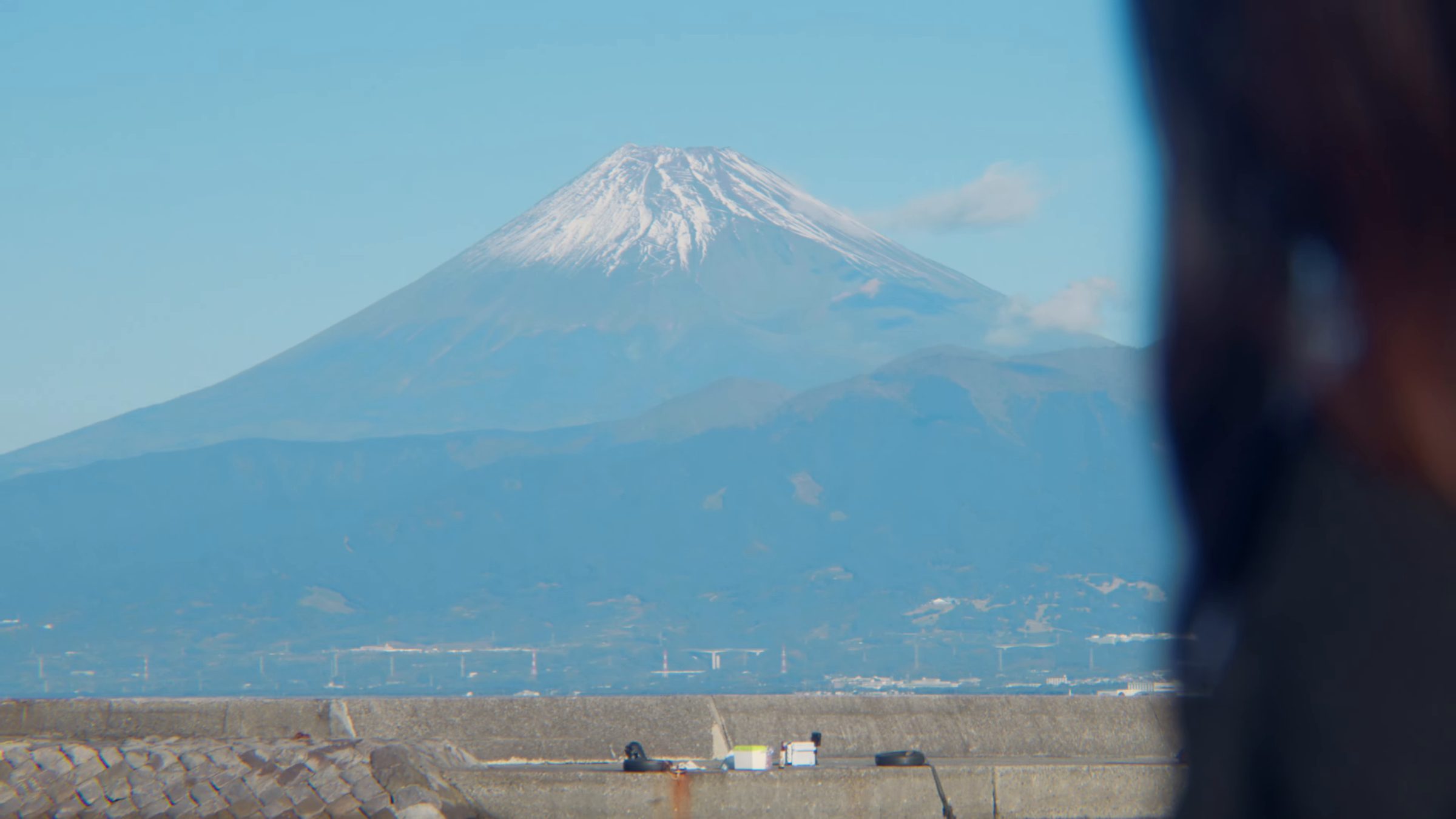
When I come to this town, I want to have breakfast by the sea. Carrying my bag along the road beside the seawall, I walked straight toward Mt. Fuji.
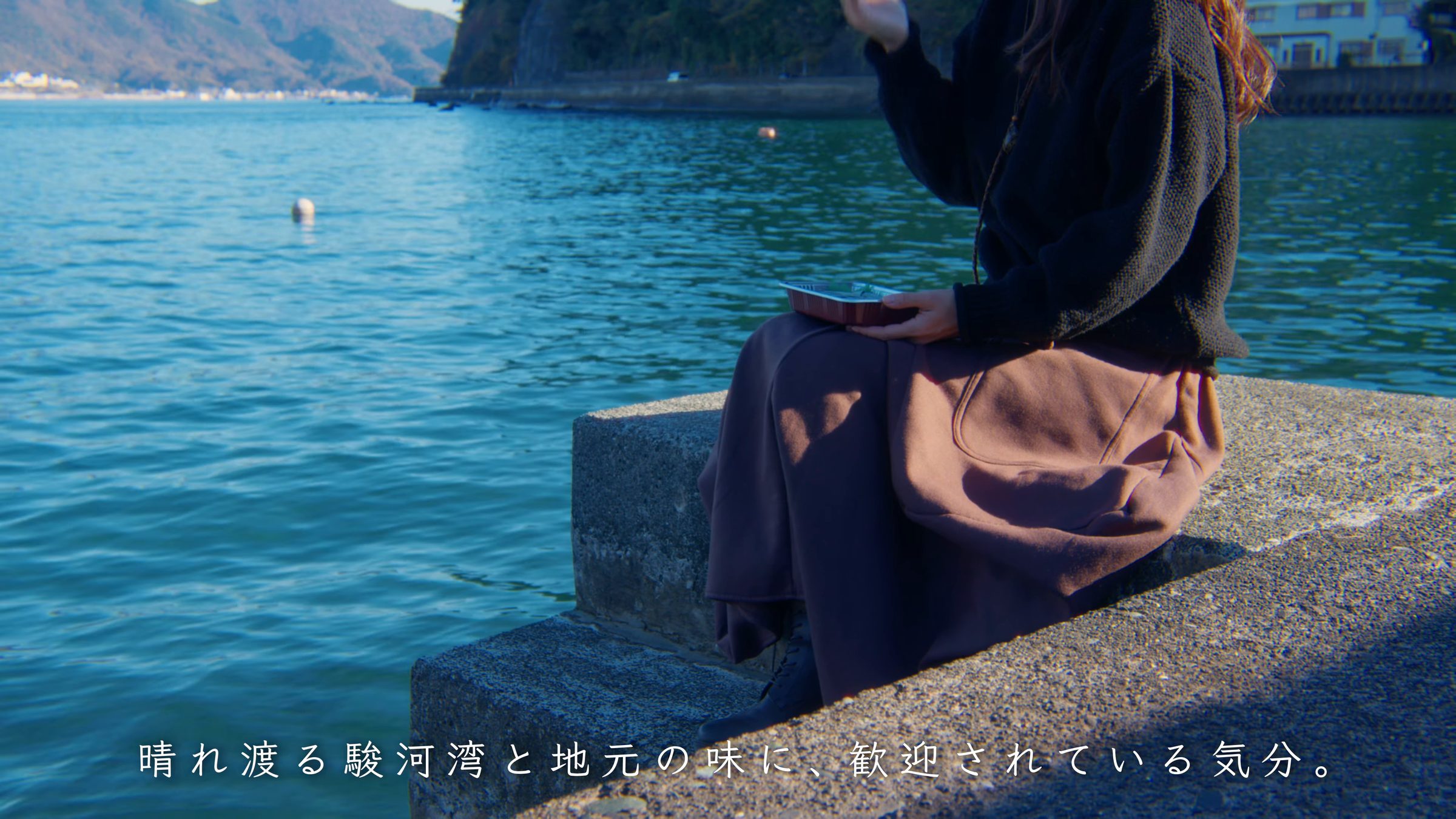
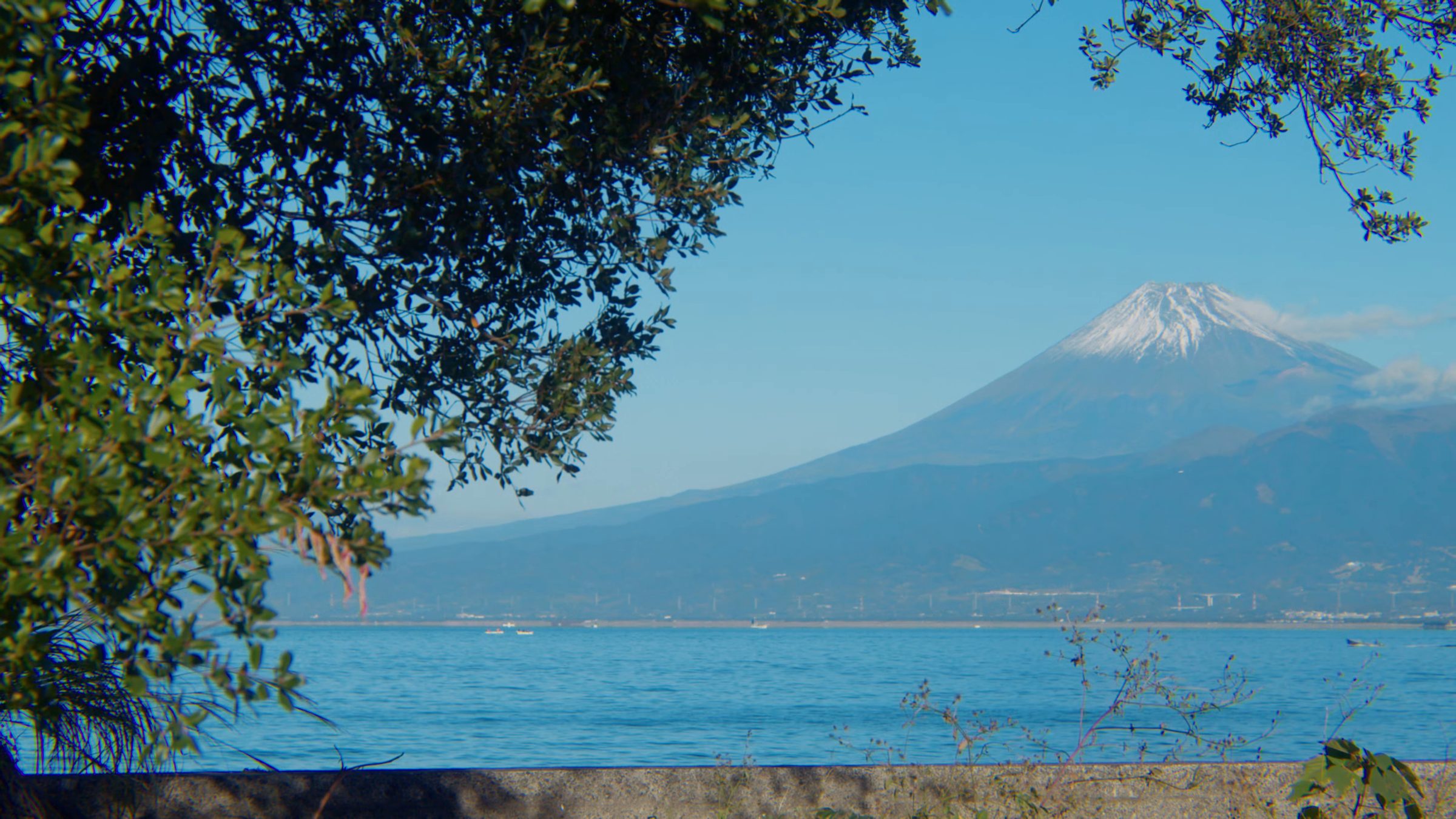
I sat down on the seawall and opened the pack on my lap. To a sushi lover like me, the aji-zushi looked like a row of jewels: thick horse mackerel with shining silver skin and the scent of shiso leaves. The clear skies over Suruga Bay and the local flavors made me feel welcomed. Through the branches of a tree, Mt. Fuji kept watching.
Watch this scene on YouTube1:24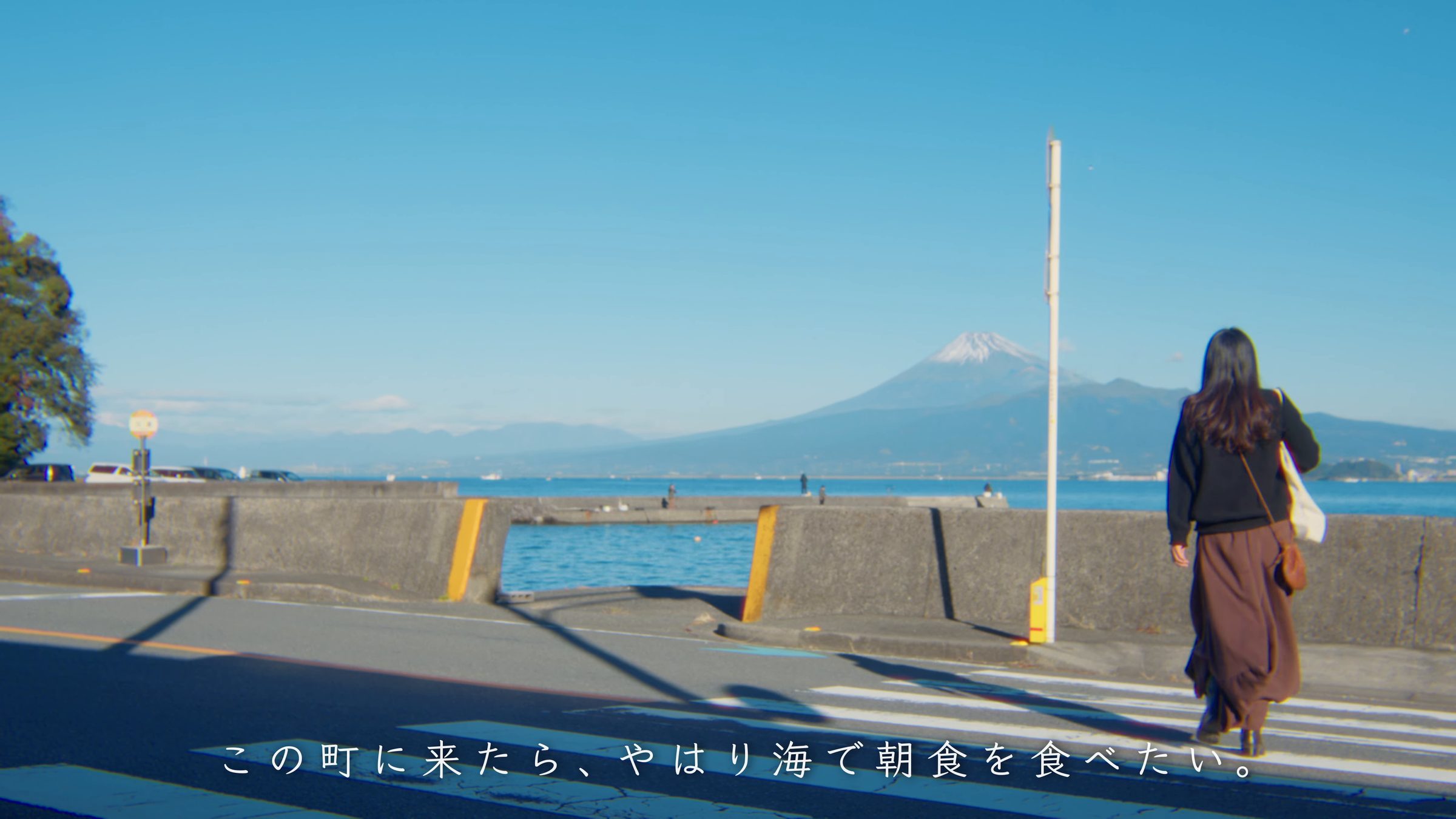
04TRAVEL JOURNAL
My borrowed life in Numazu begins again
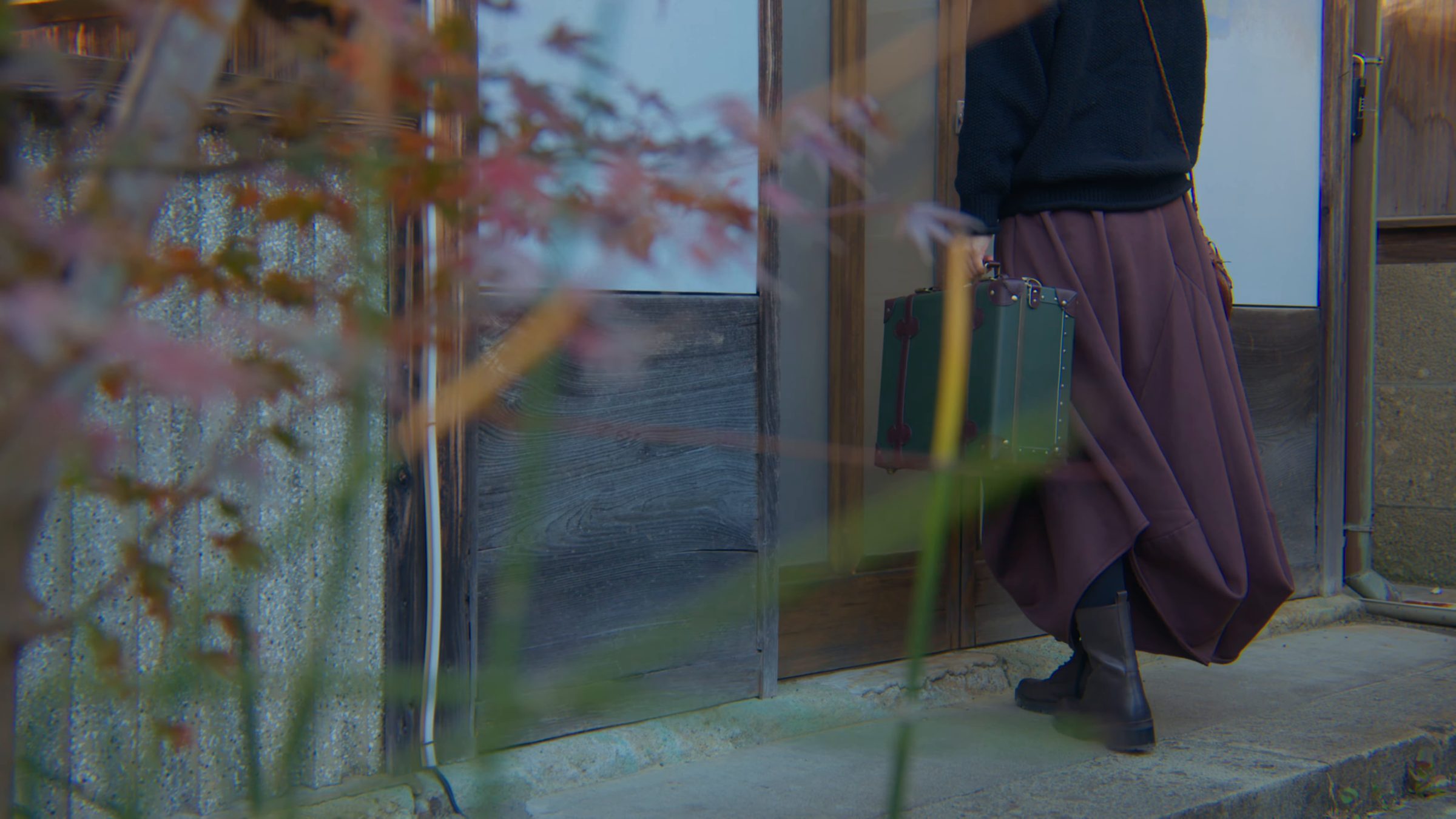
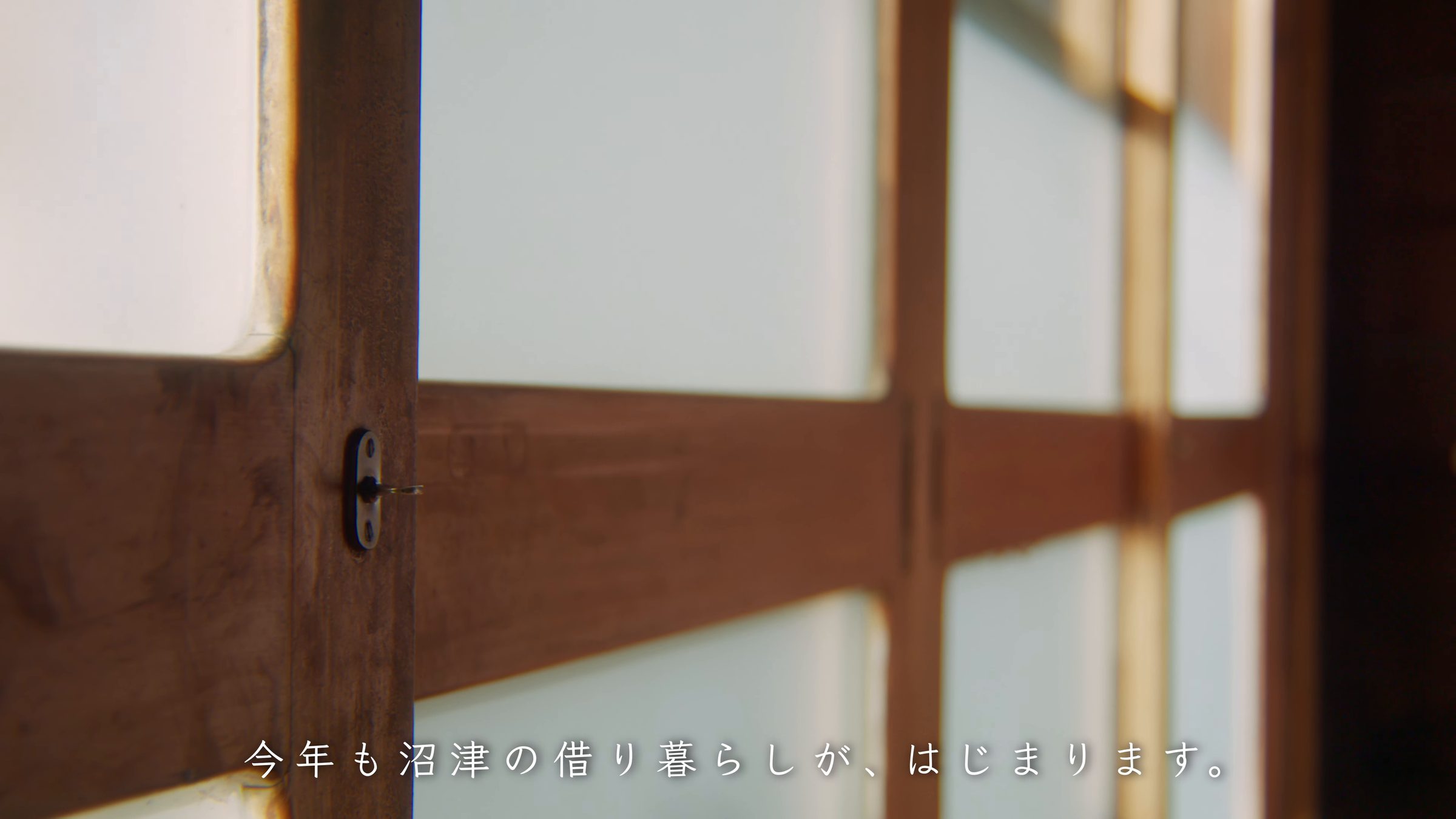
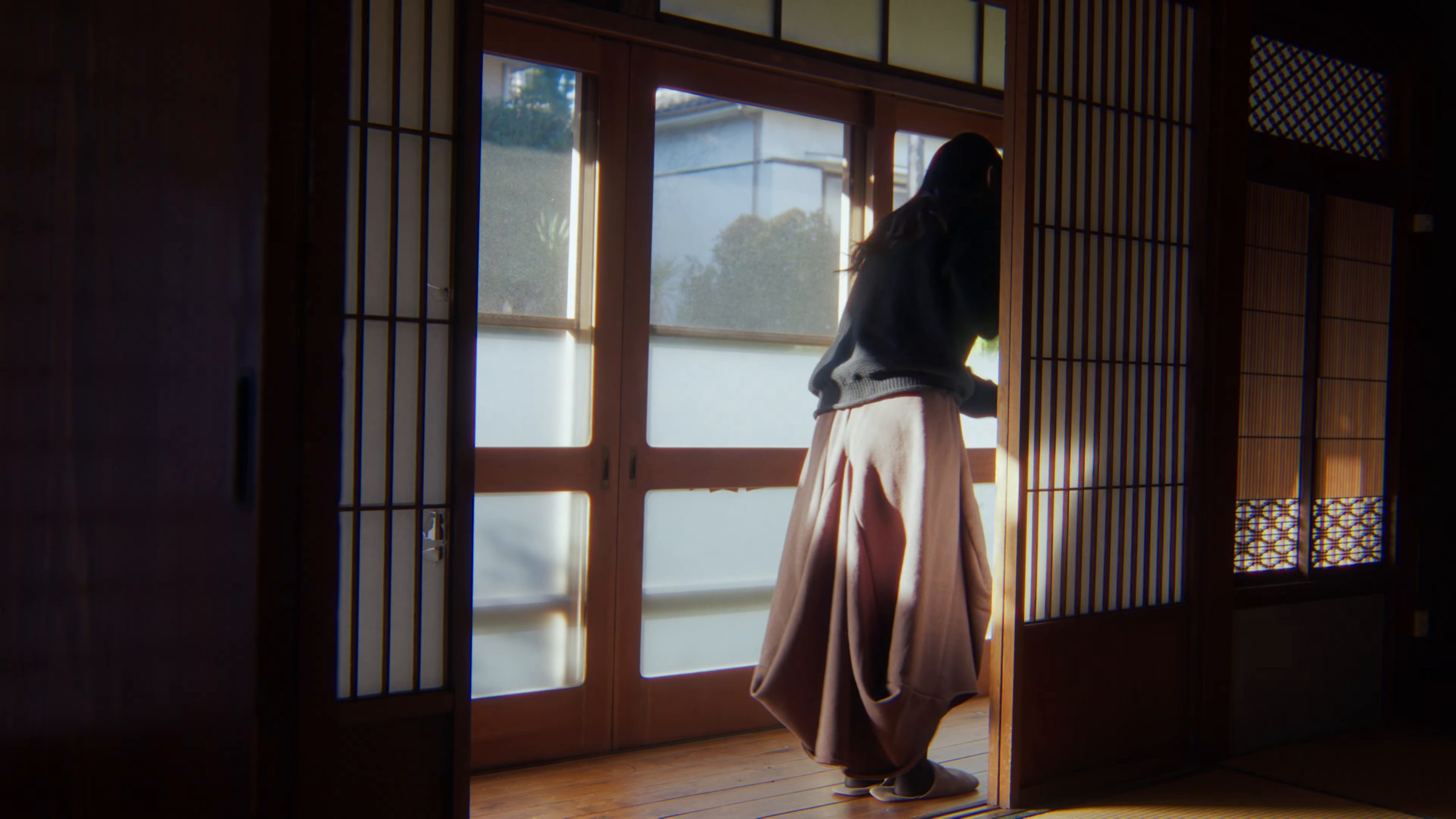
Through a gate between stone walls and garden trees: let me stay here for a while. This time I borrowed a ninety-year-old house, now an inn, in a town by the sea. The water is less than a minute's walk away.
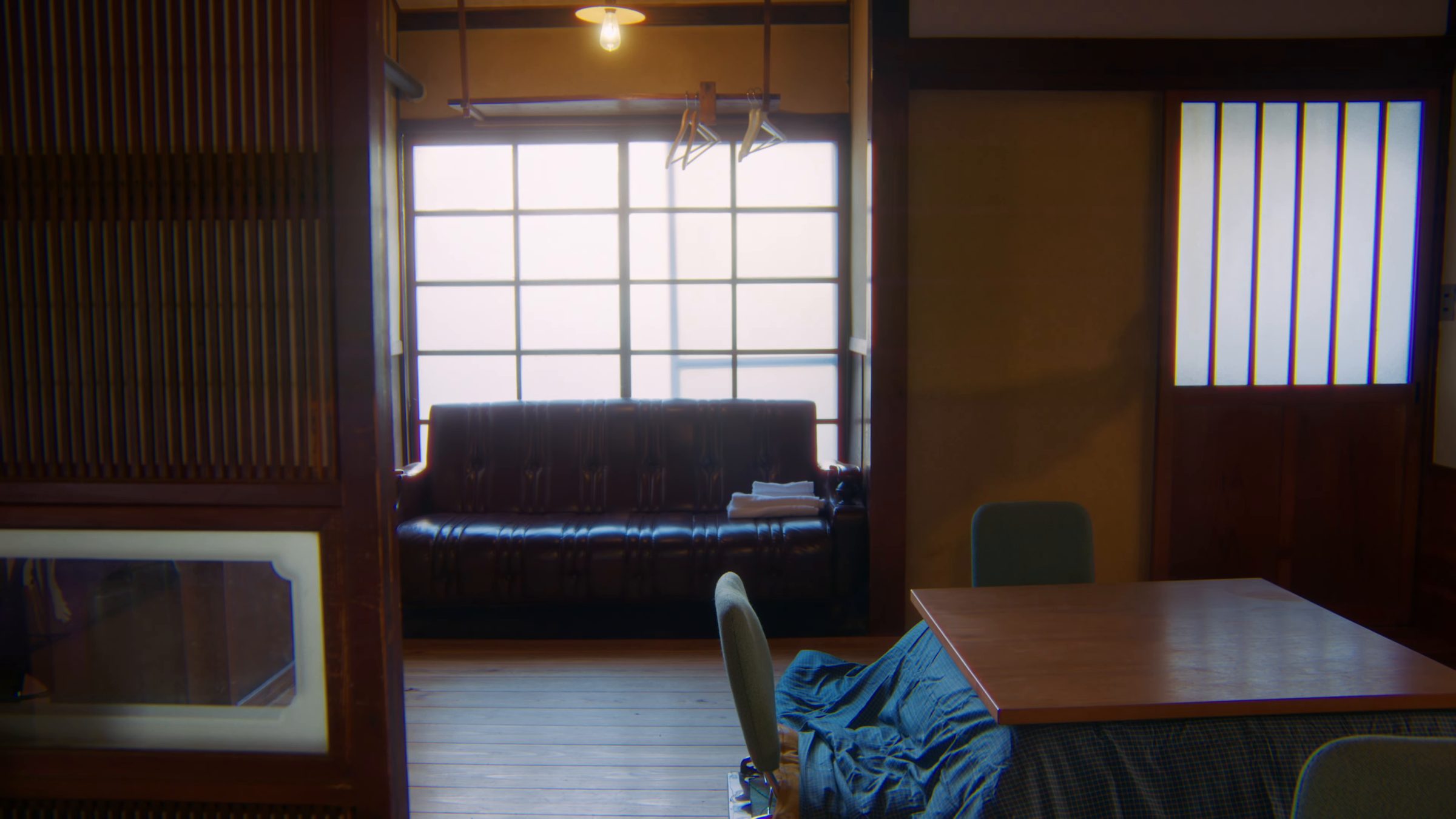
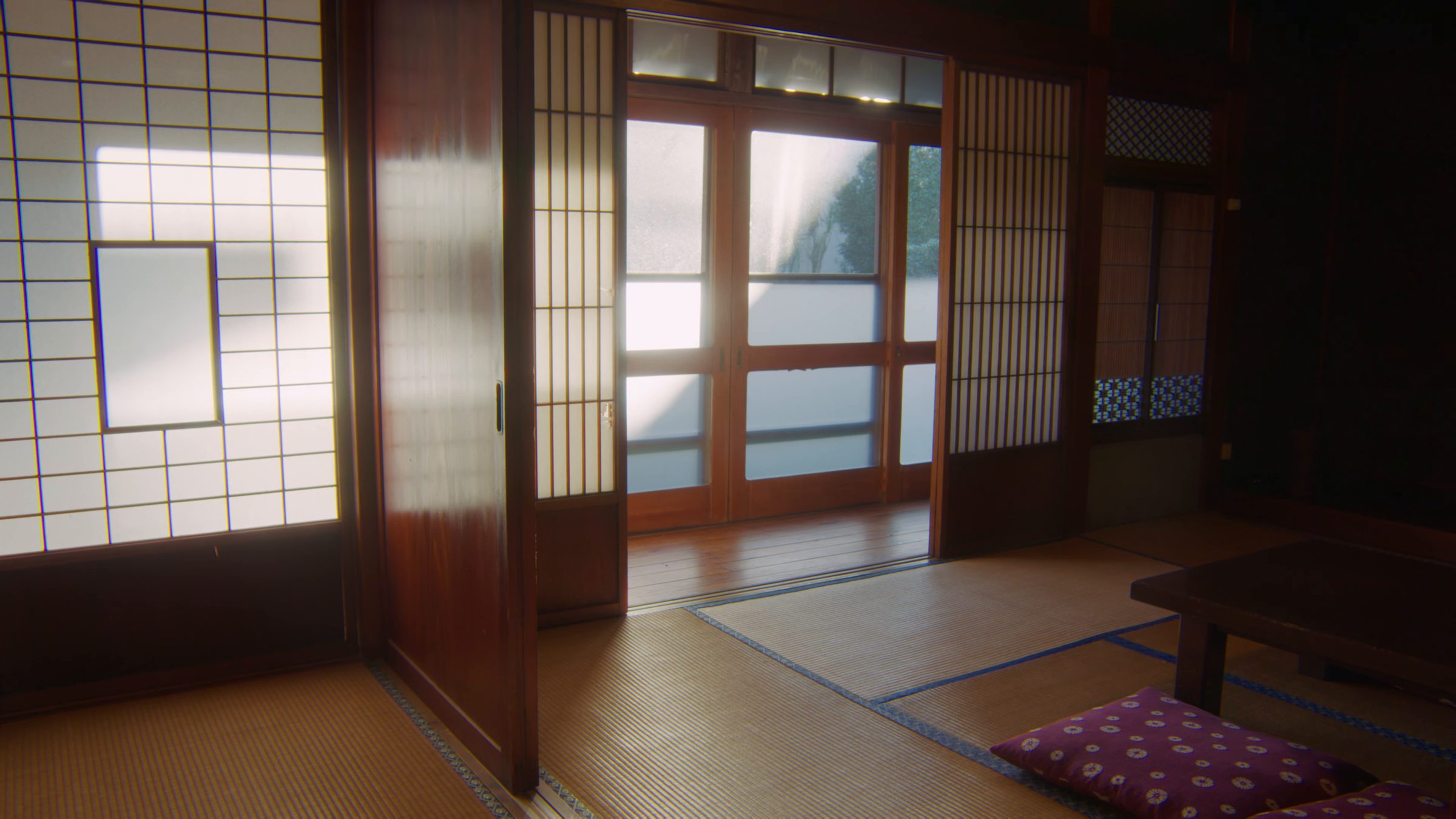
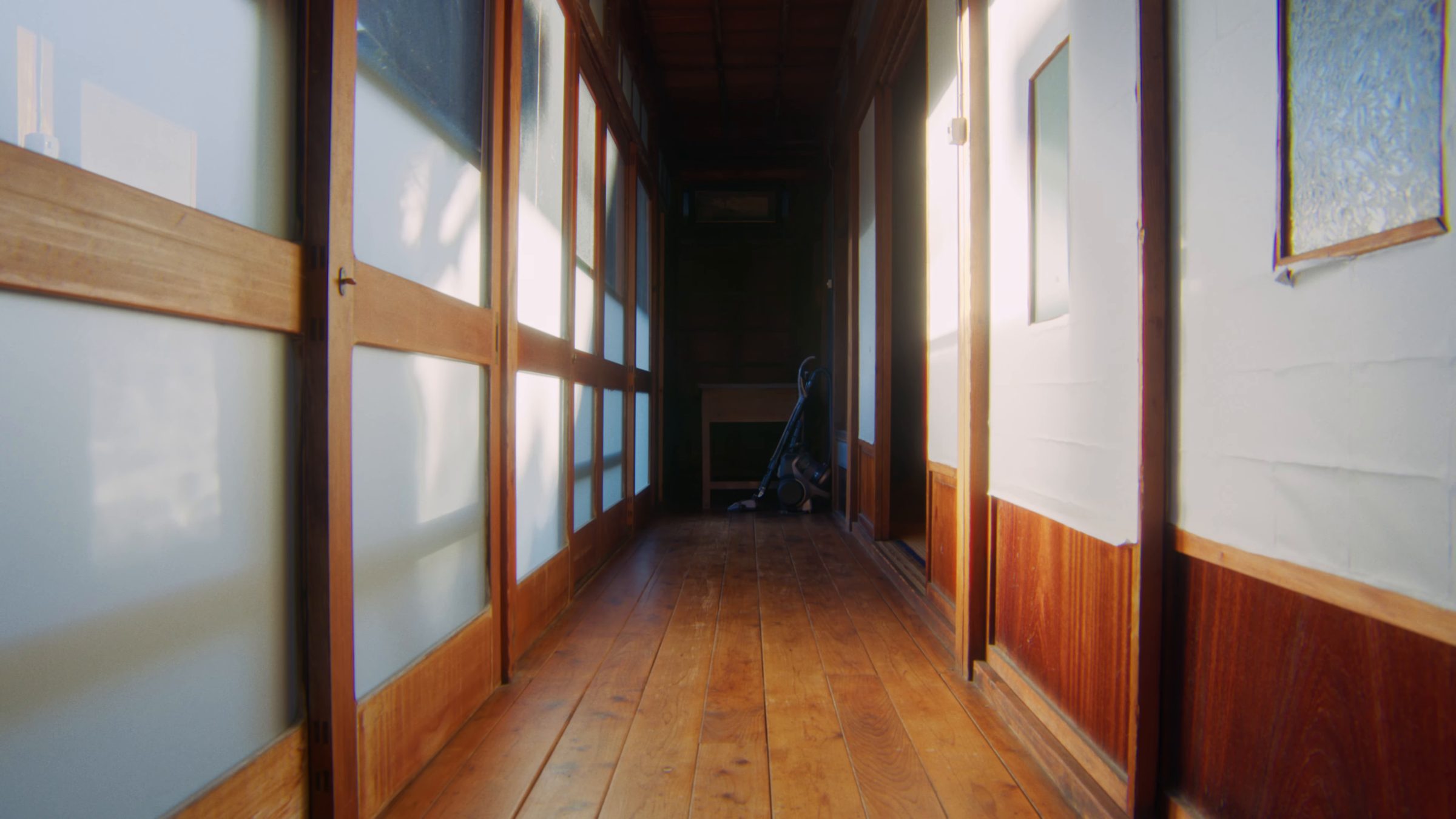
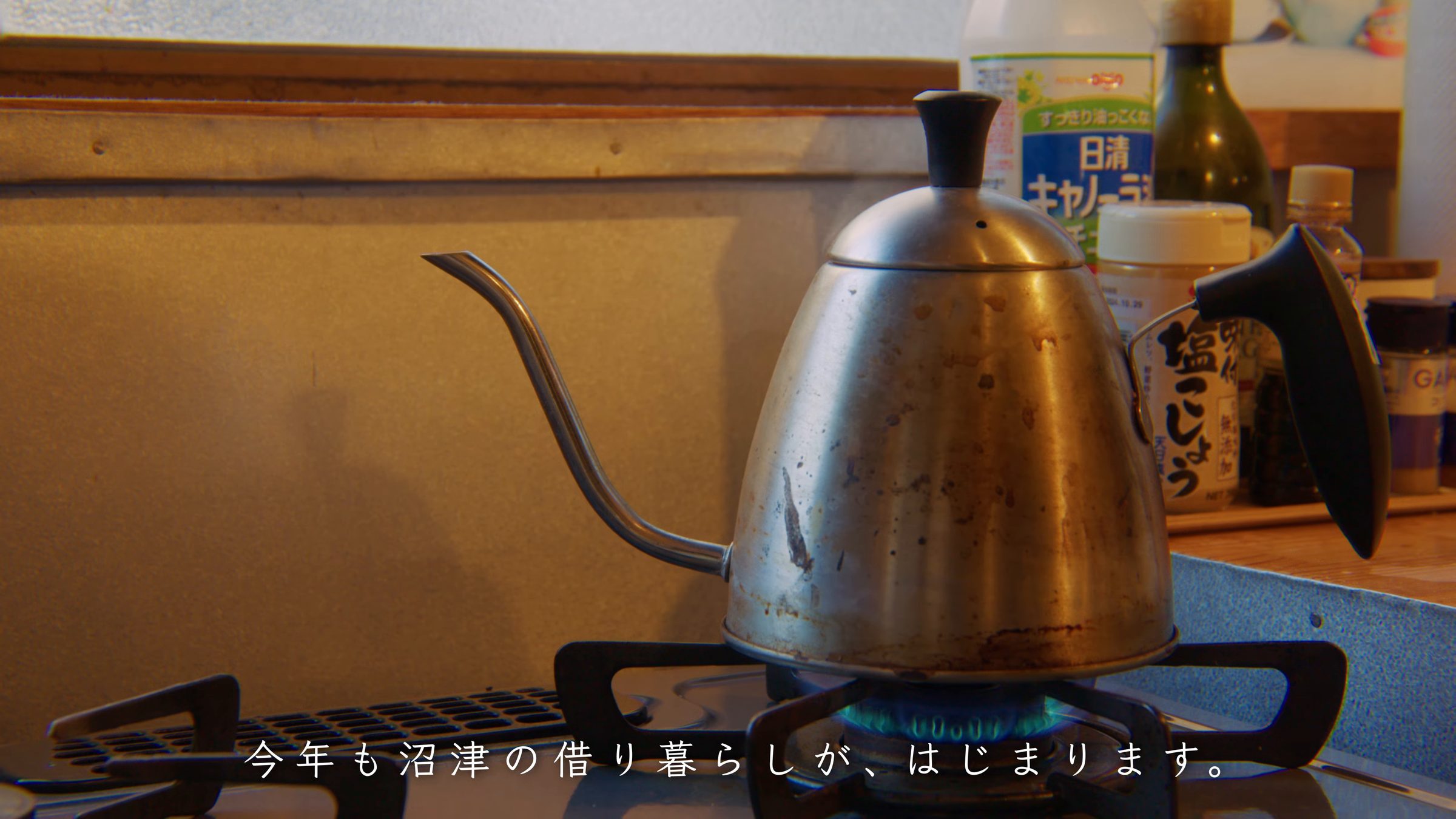
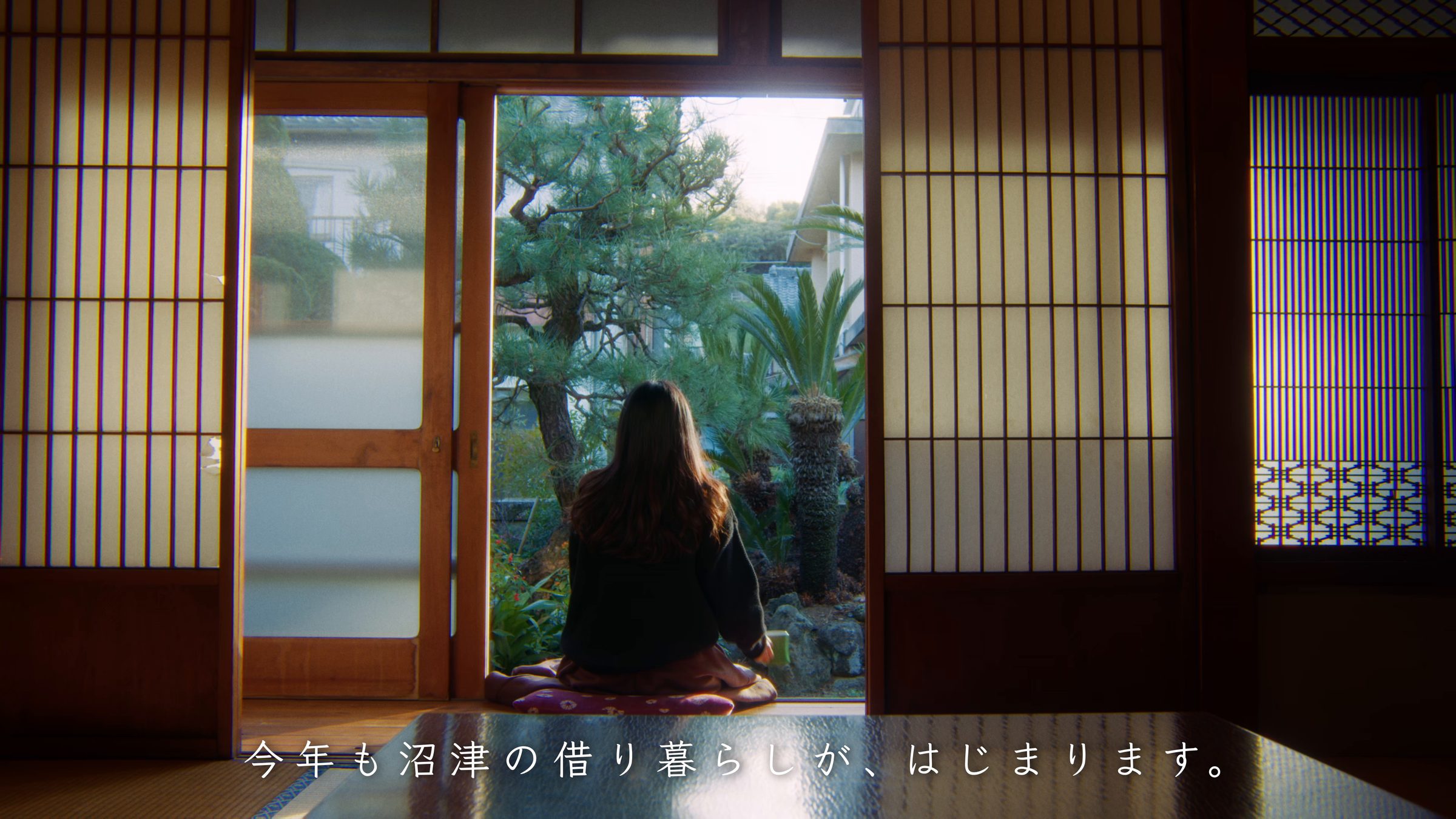
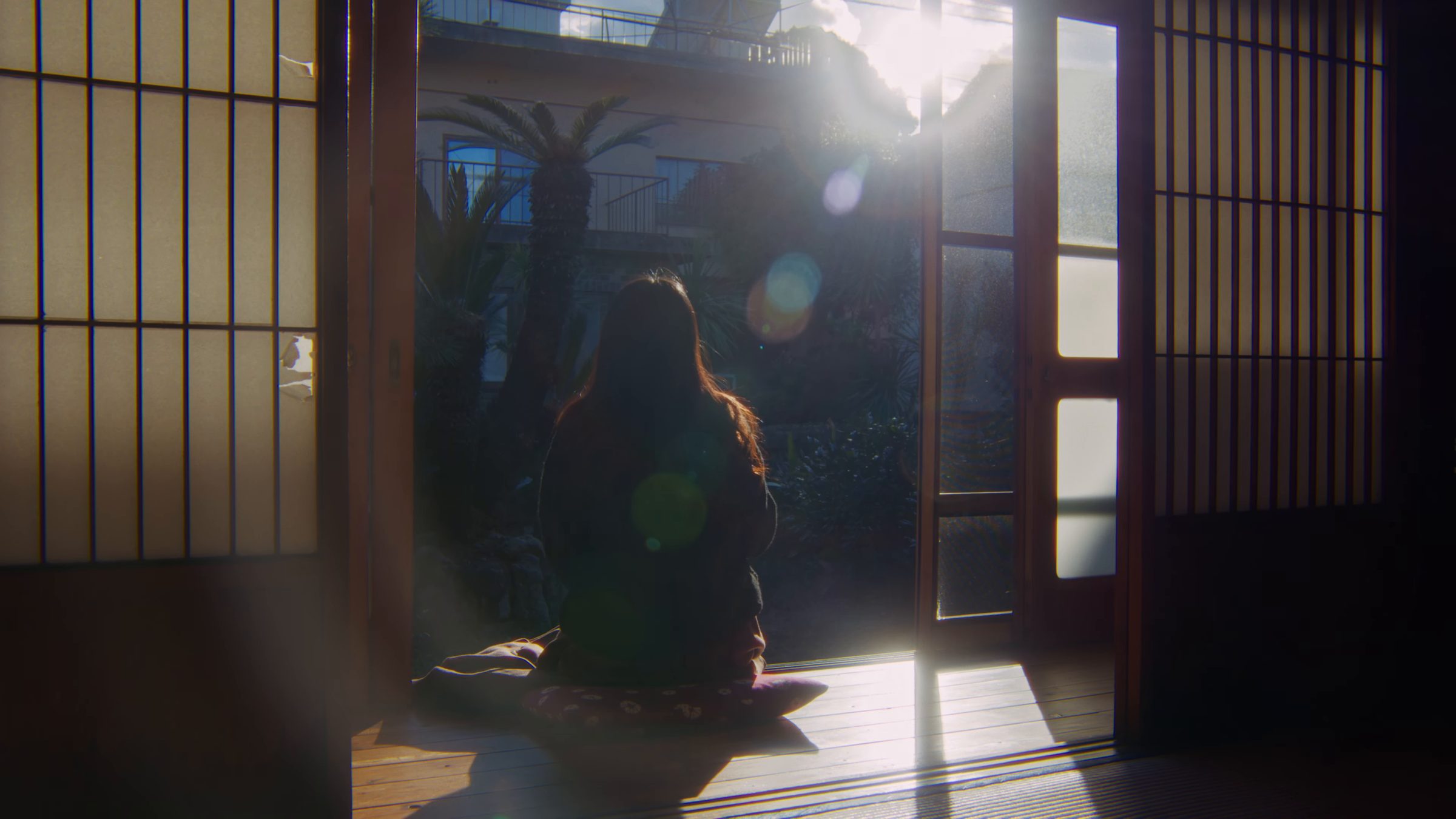
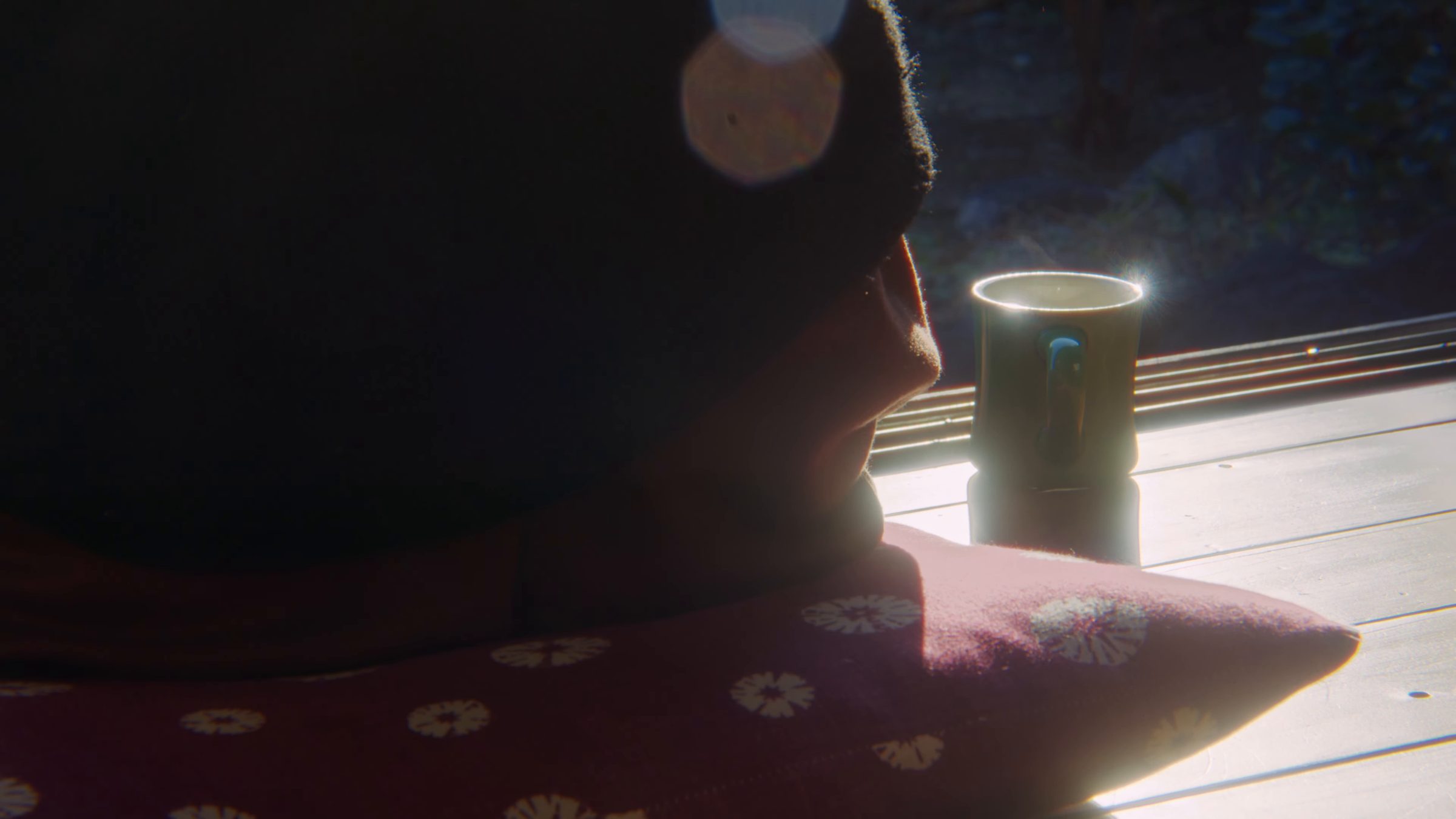
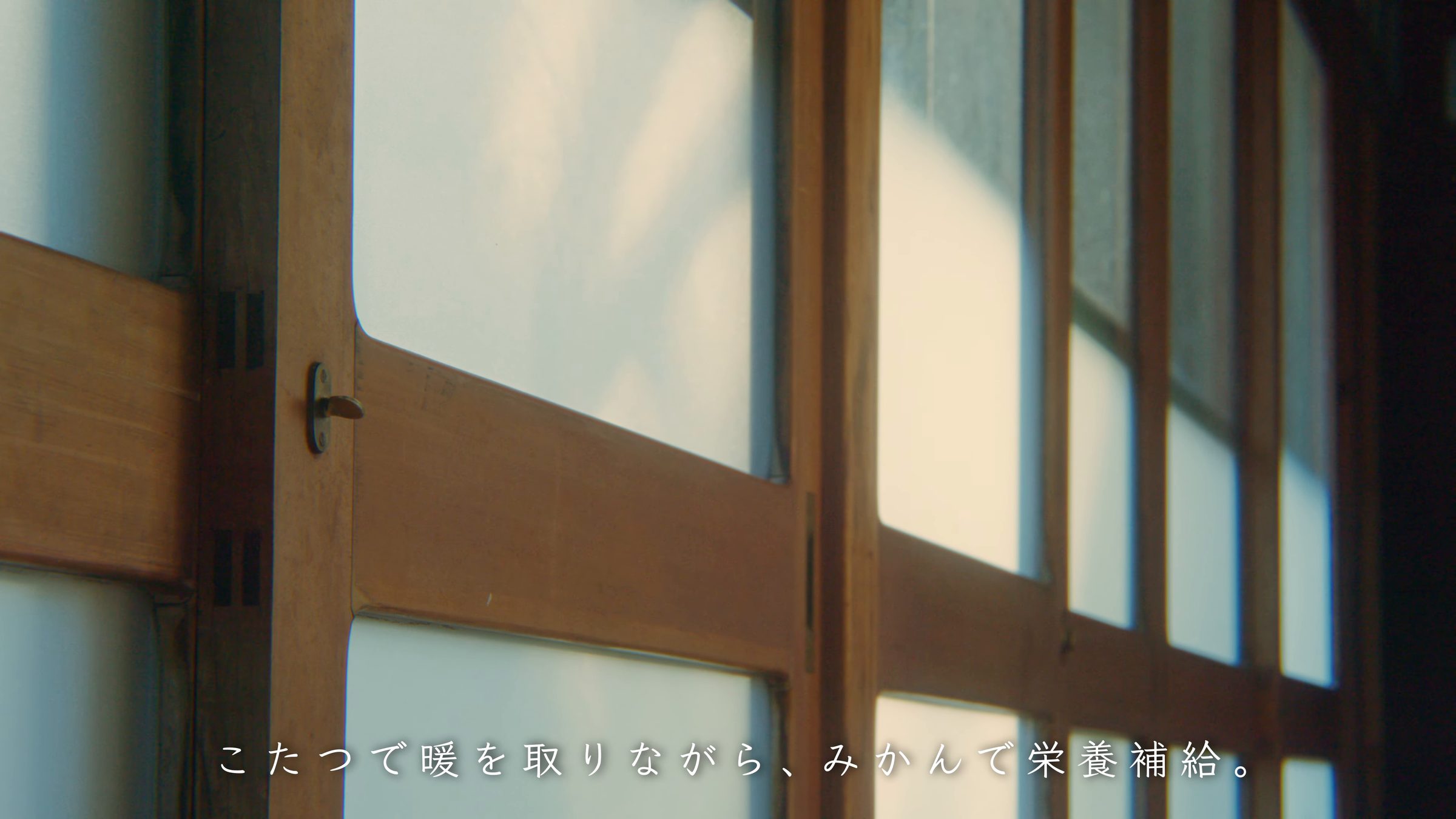
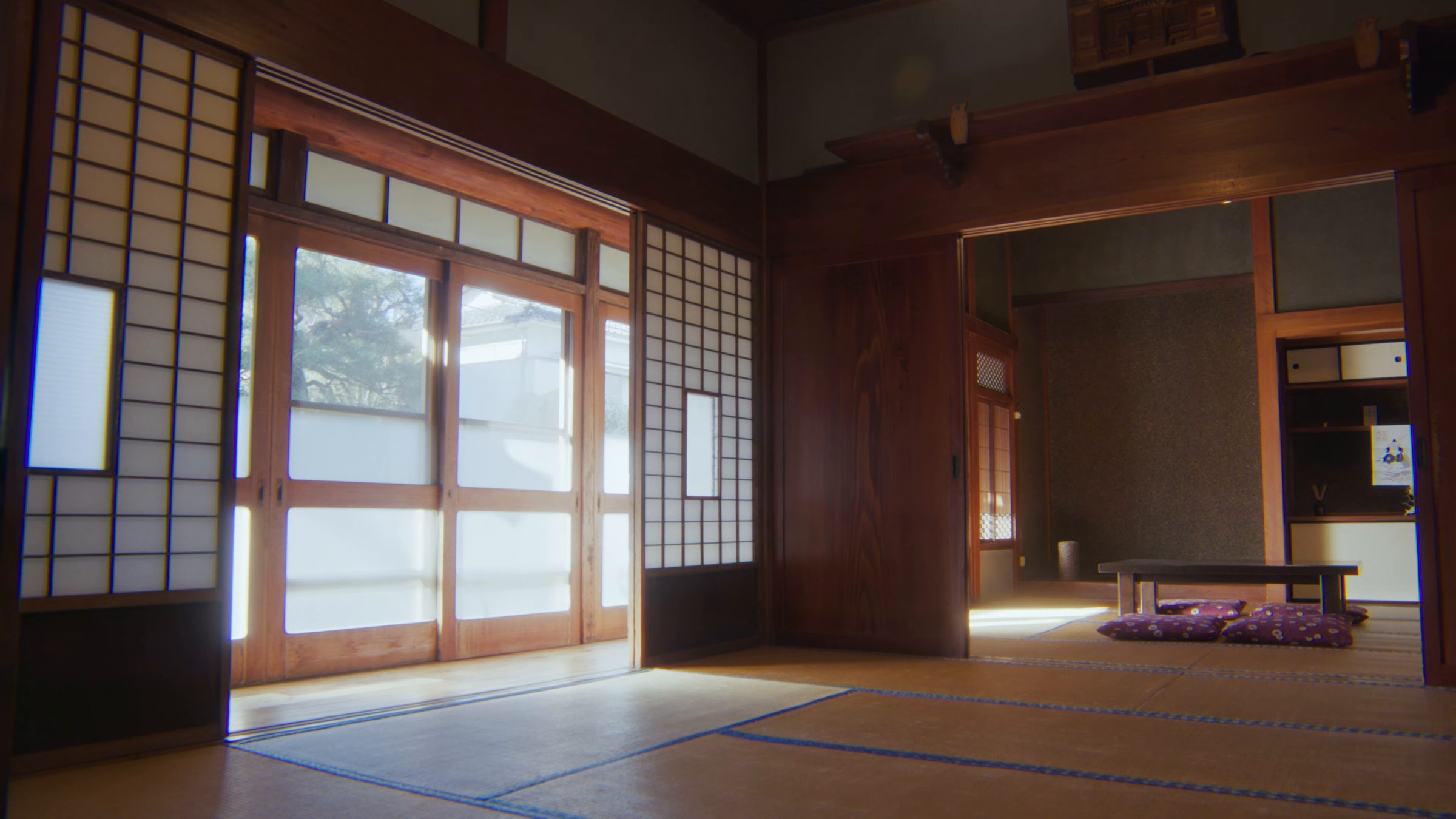
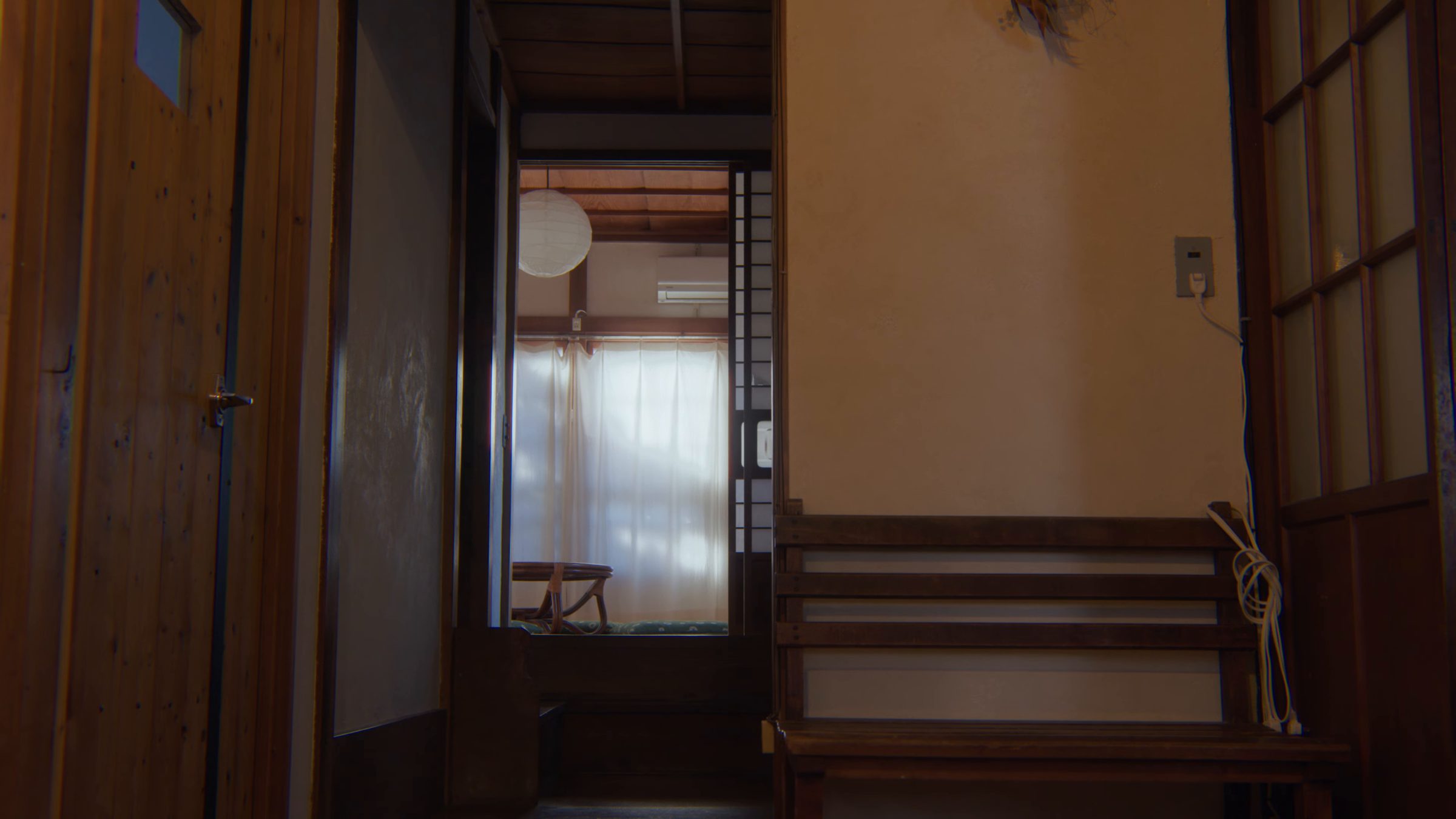
A wood-floored room with glass windows and a sofa, a tatami room beyond the shoji, a long corridor of wooden walls. A slender kettle steamed on the gas flame. I sat looking out at the pine in the garden while the shoji frames cast their shadows. My borrowed life in Numazu begins again this year.
Watch this scene on YouTube2:06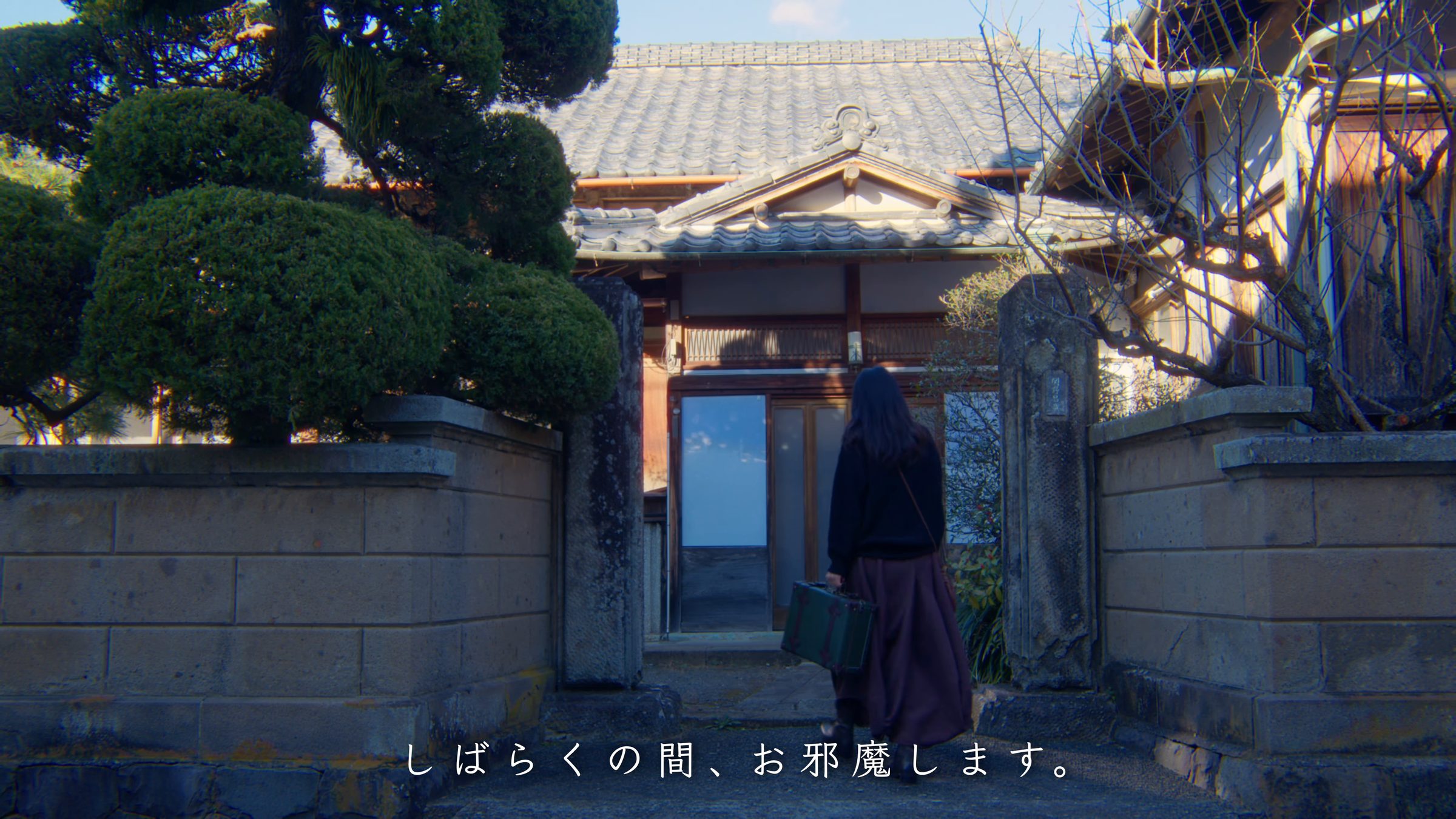
05TRAVEL JOURNAL
The seafood kakiage bowl, at last
Beyond the sign of the Kuzura bus stop, Mt. Fuji caught the evening light. After a rest on the veranda, I headed for Numazu Port.
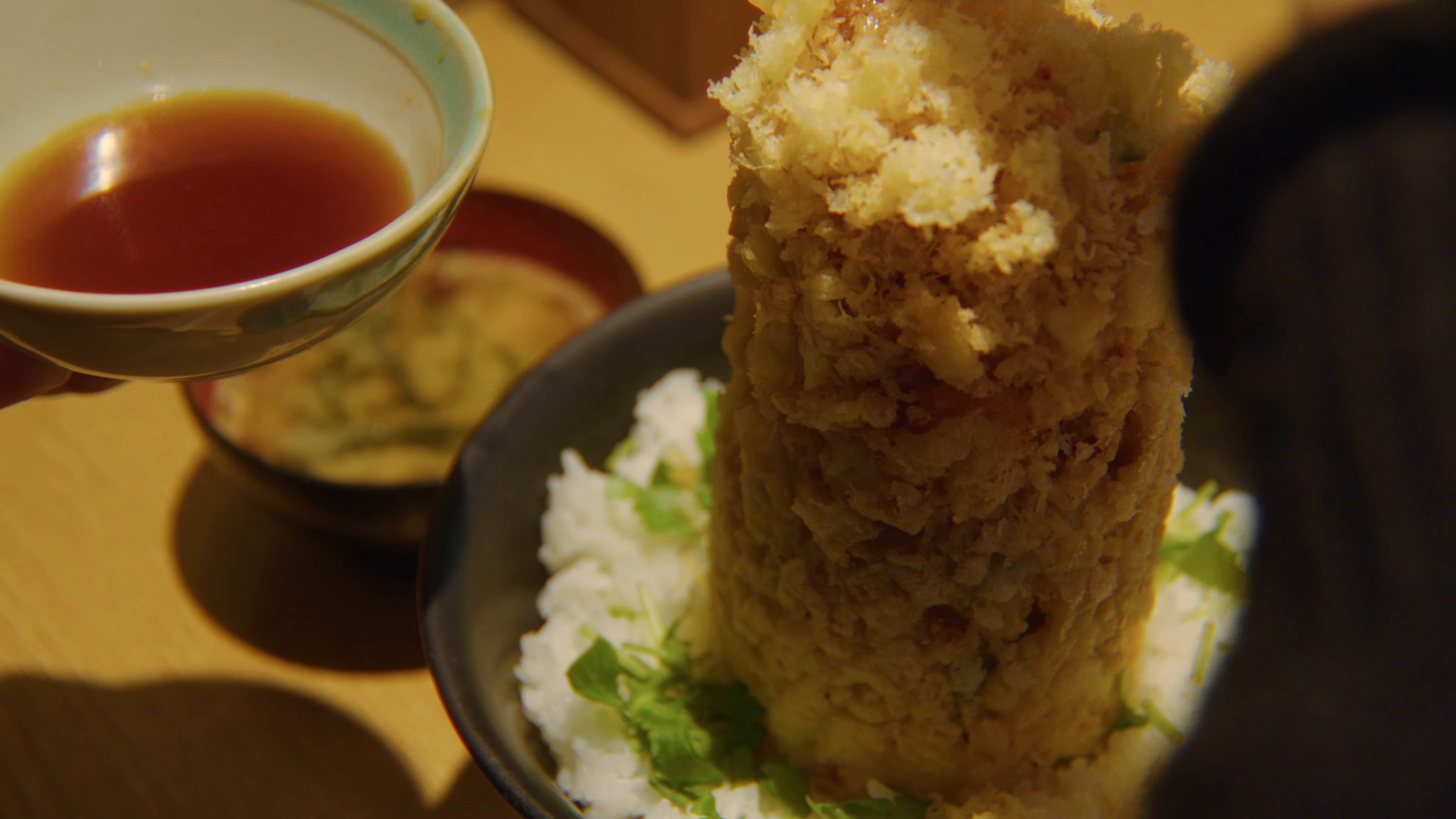
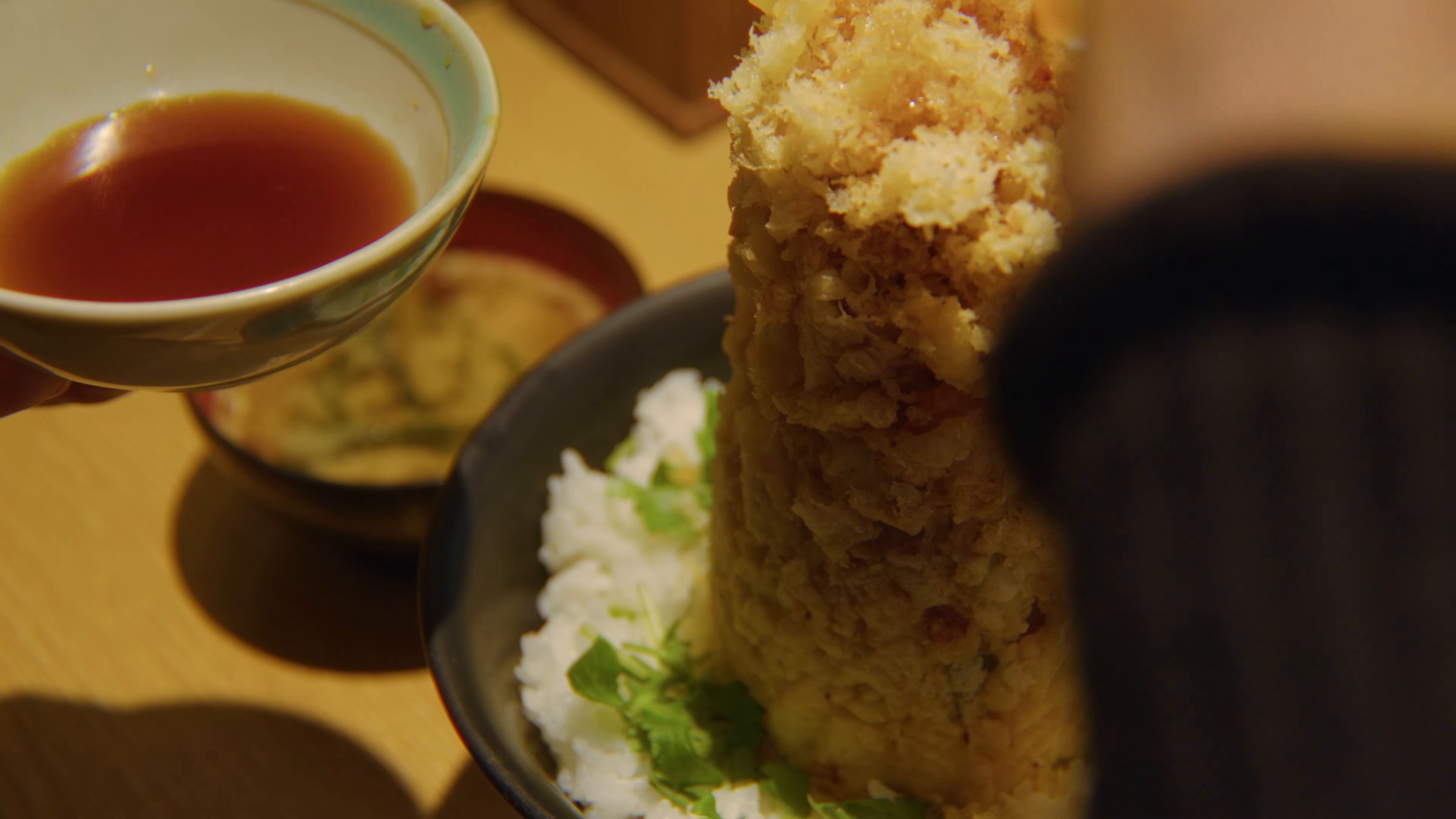
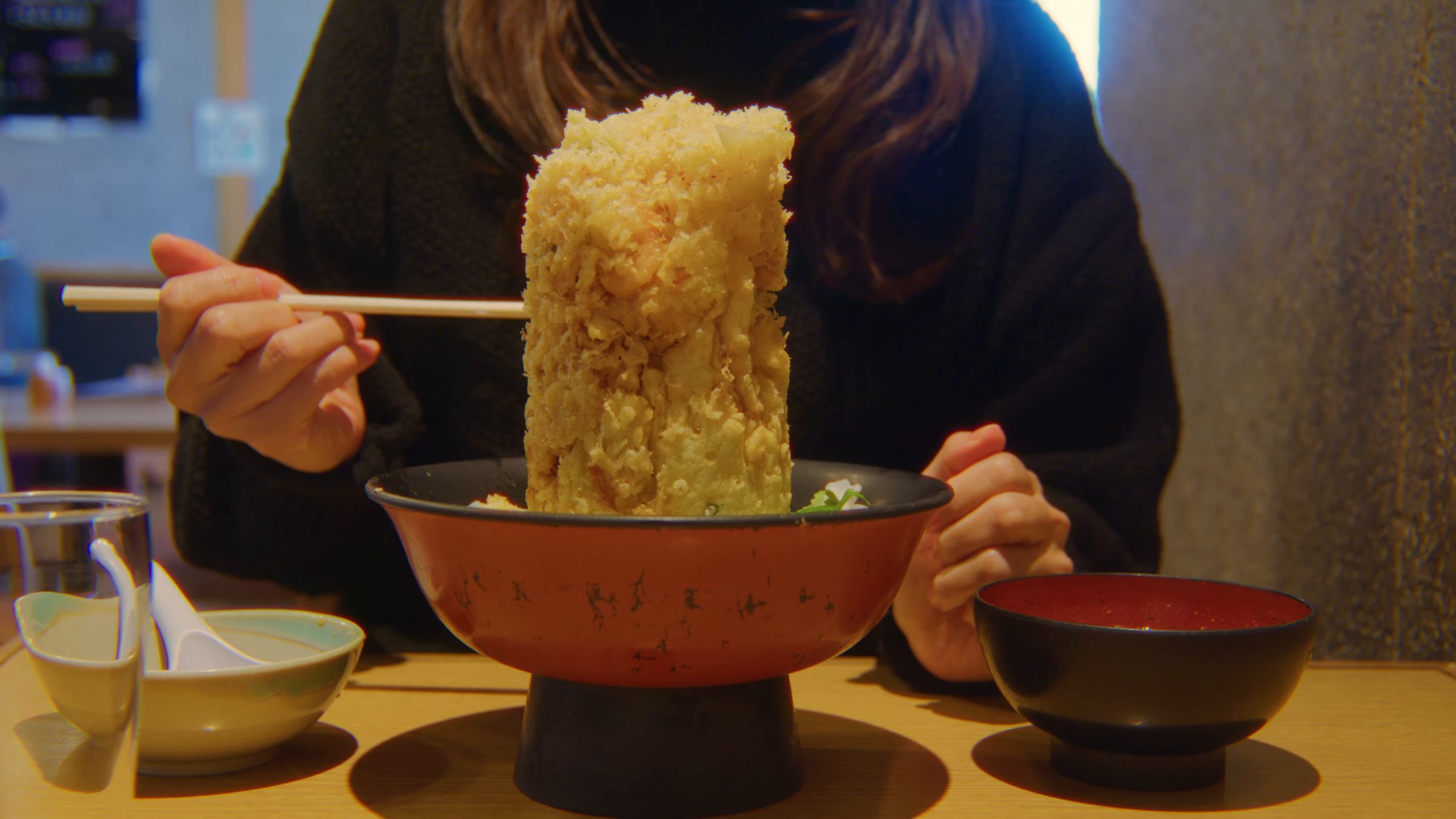
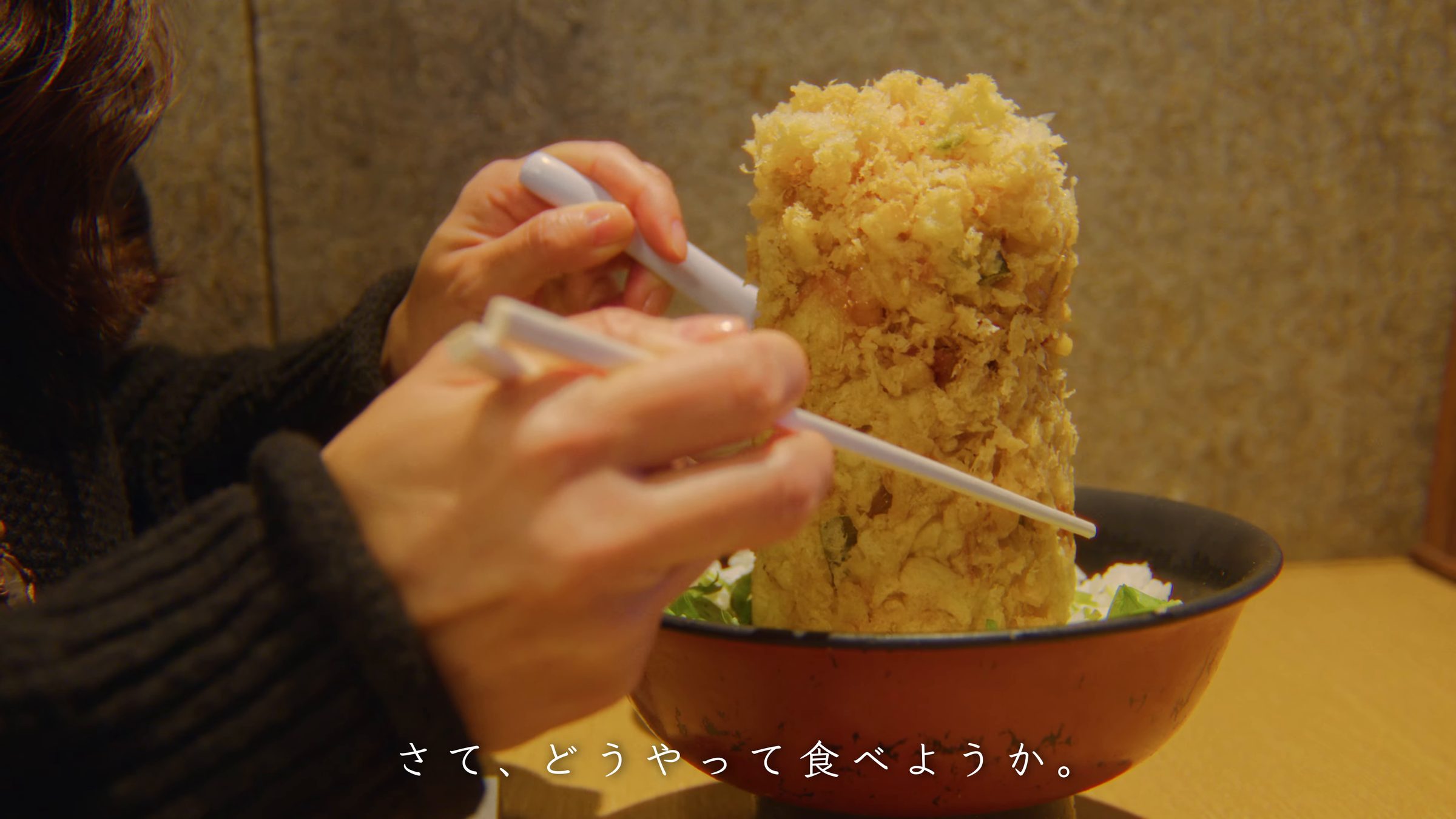
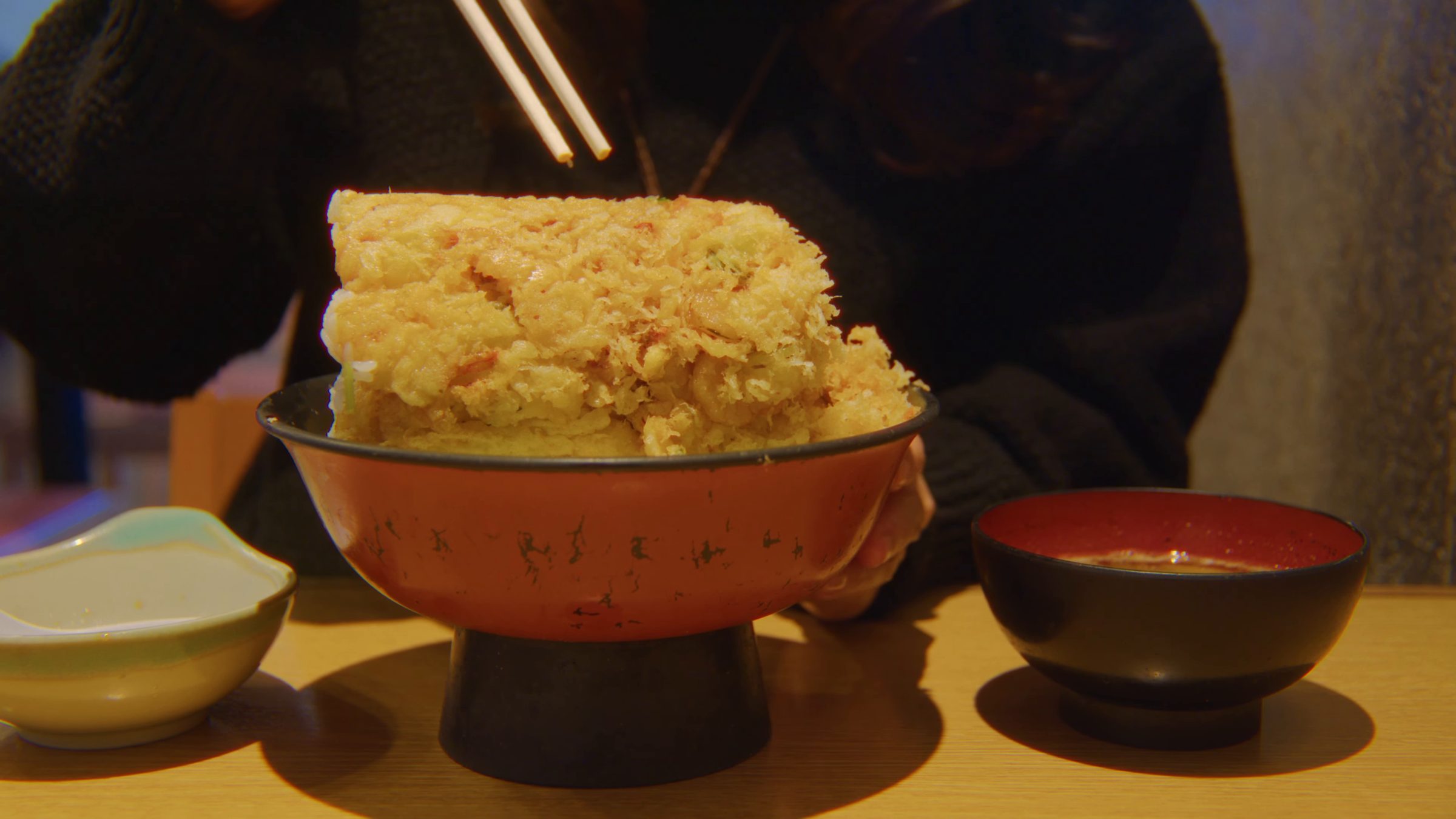
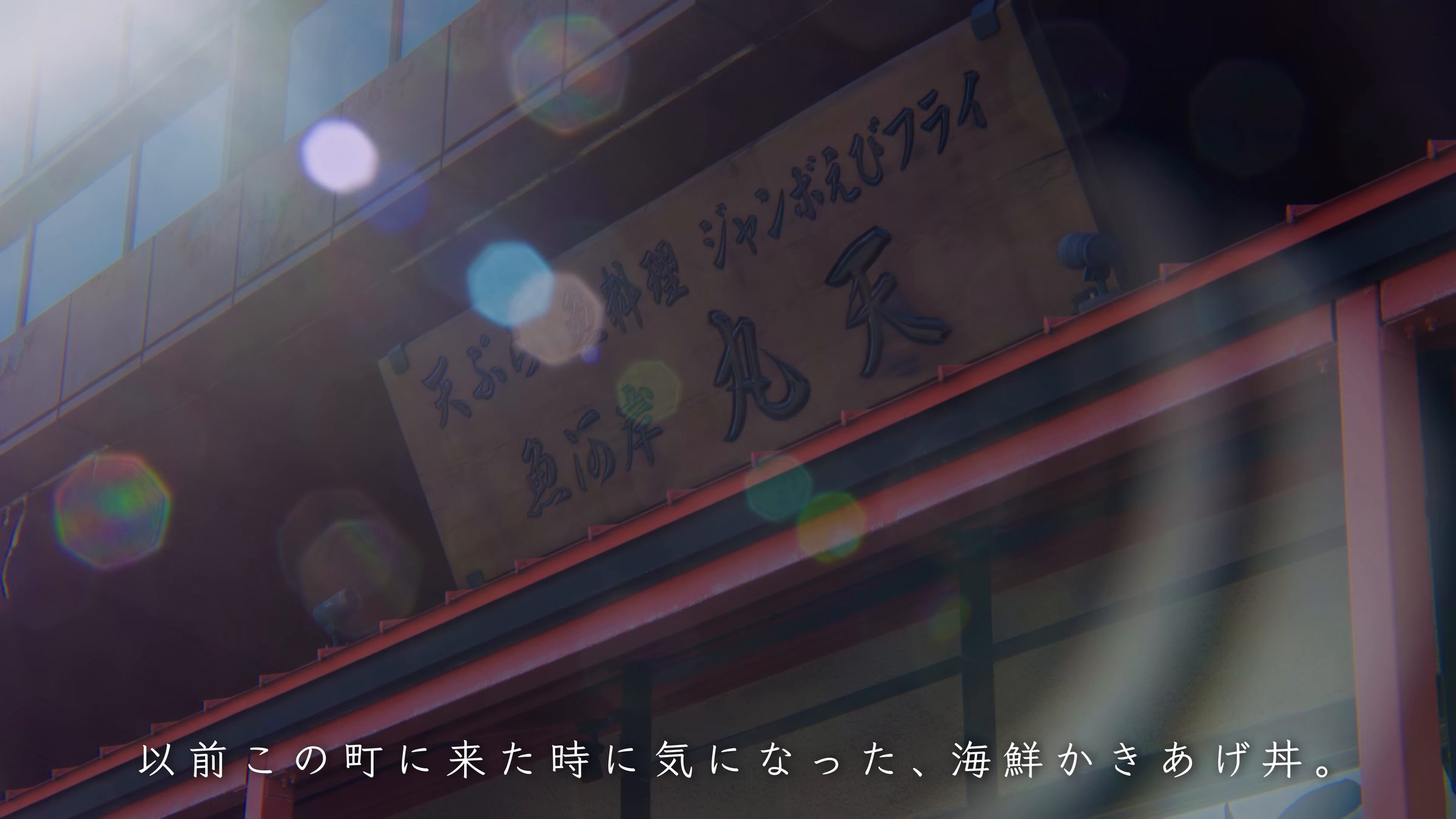
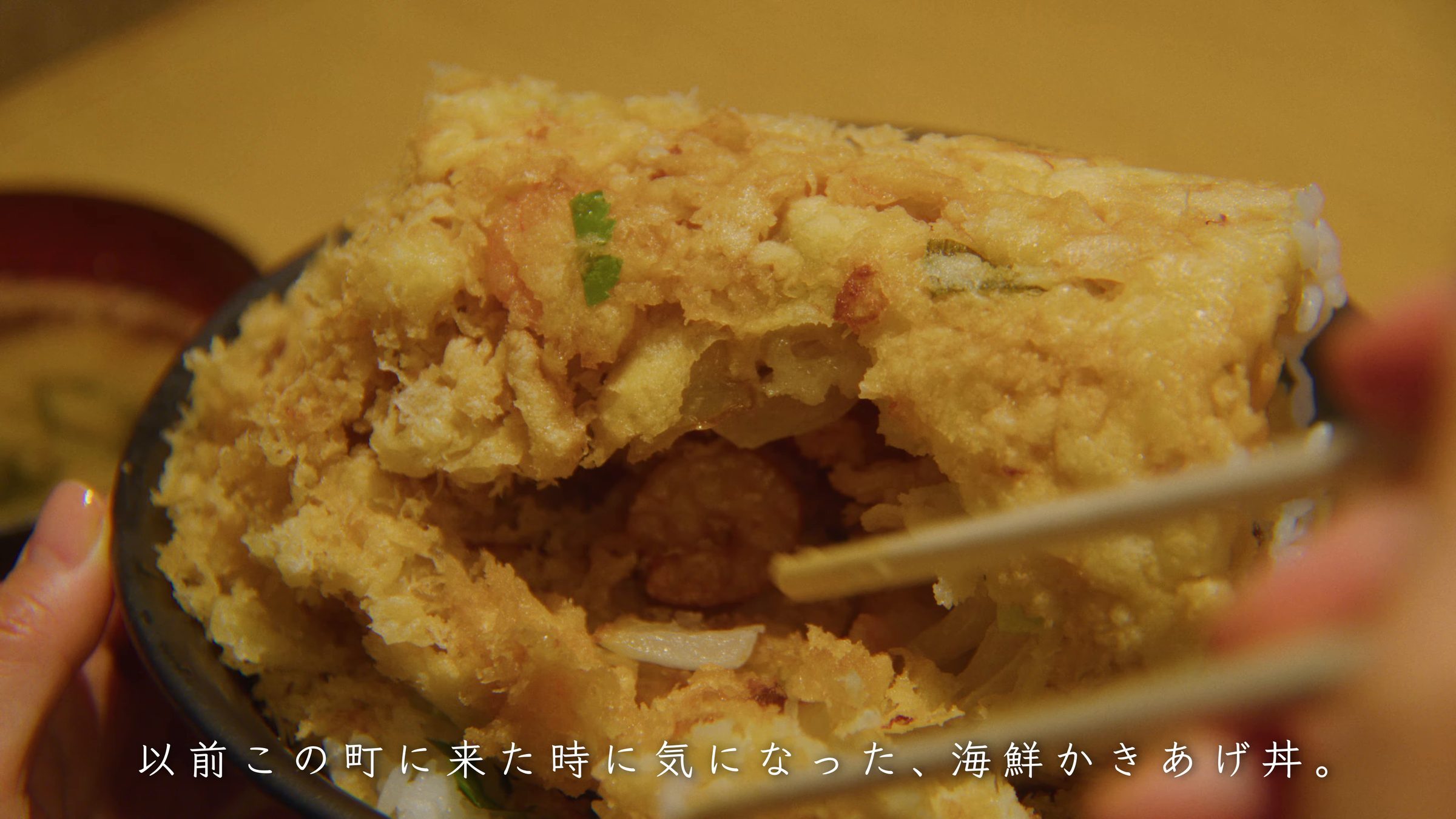
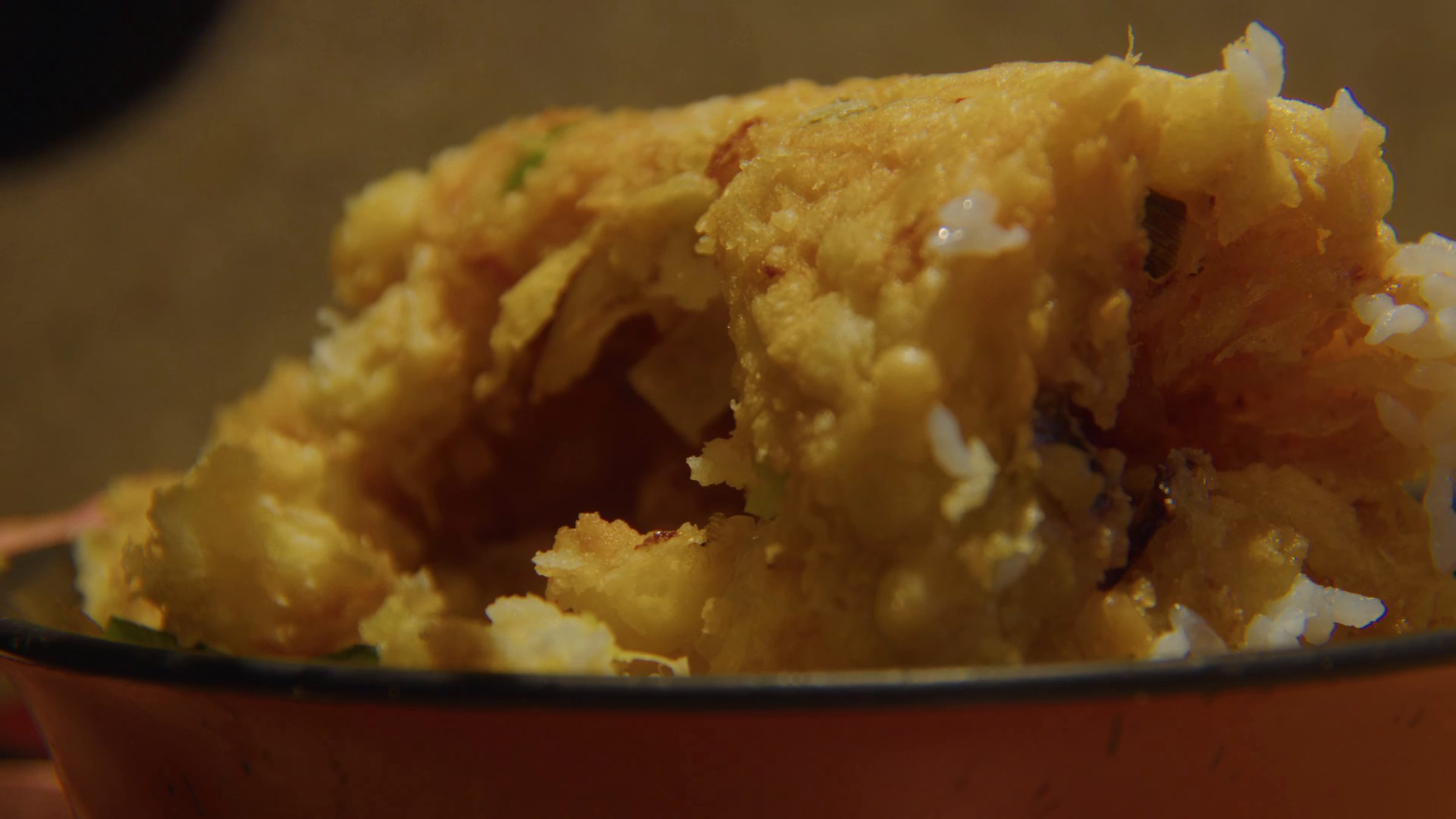
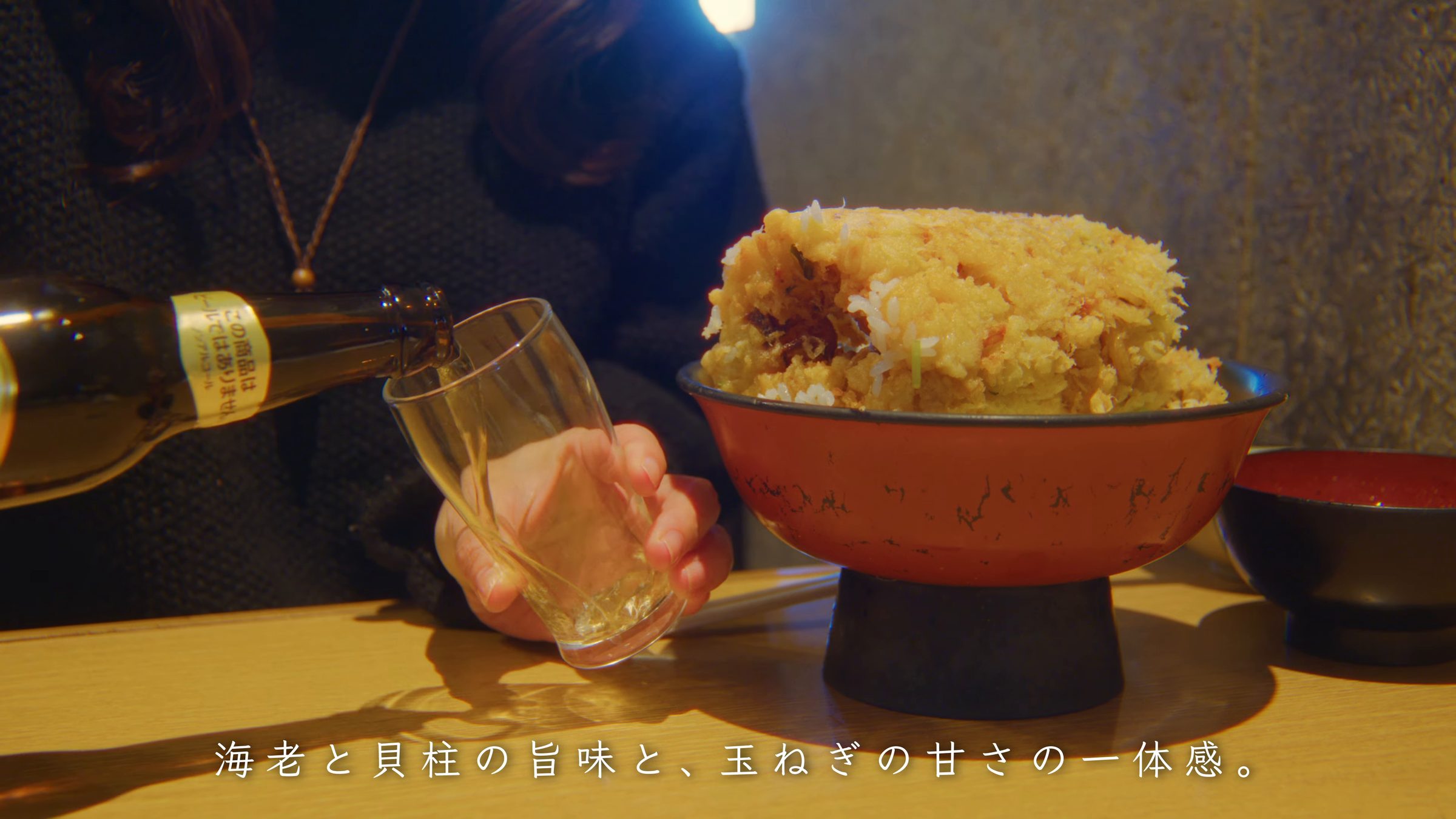
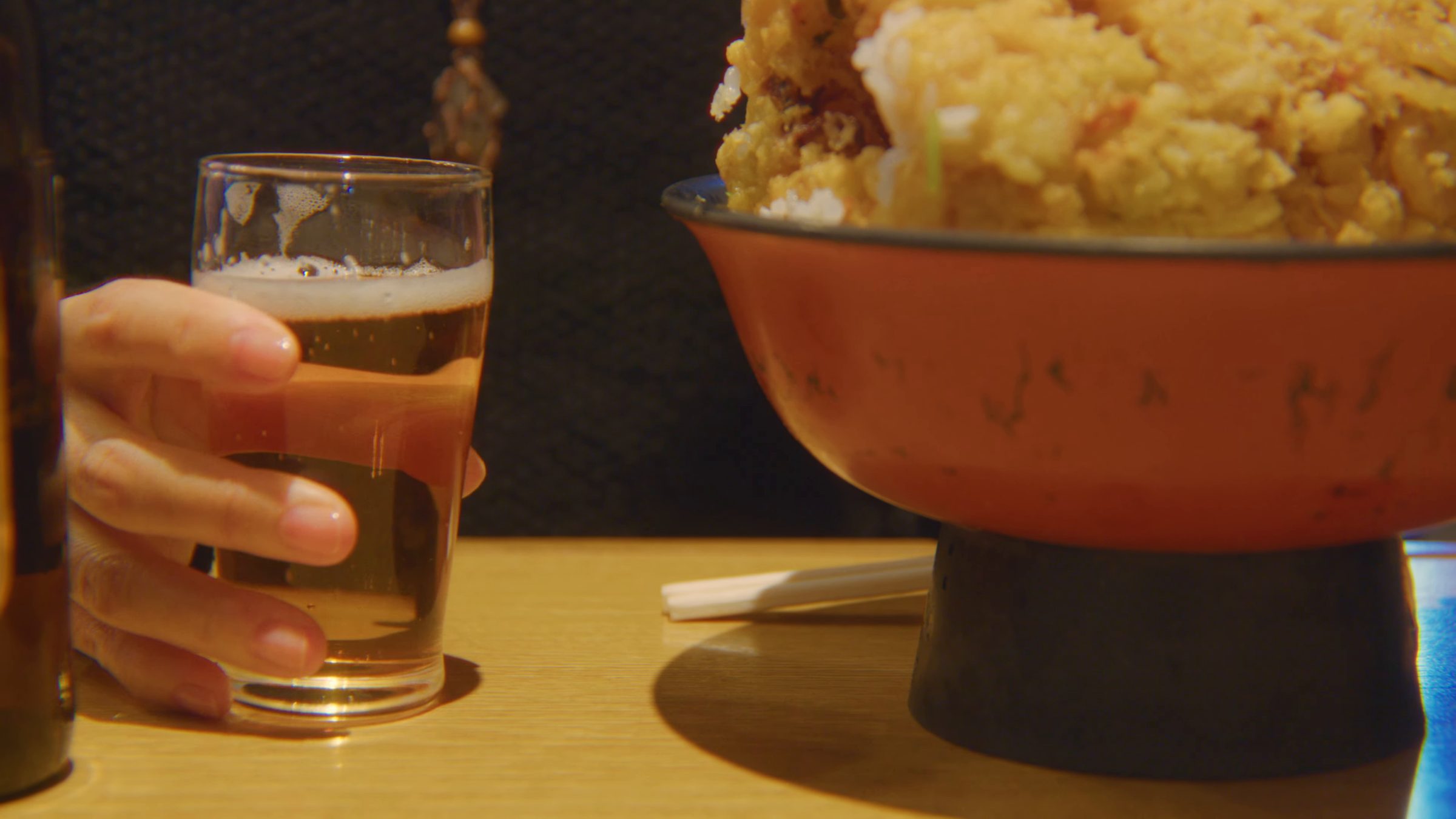
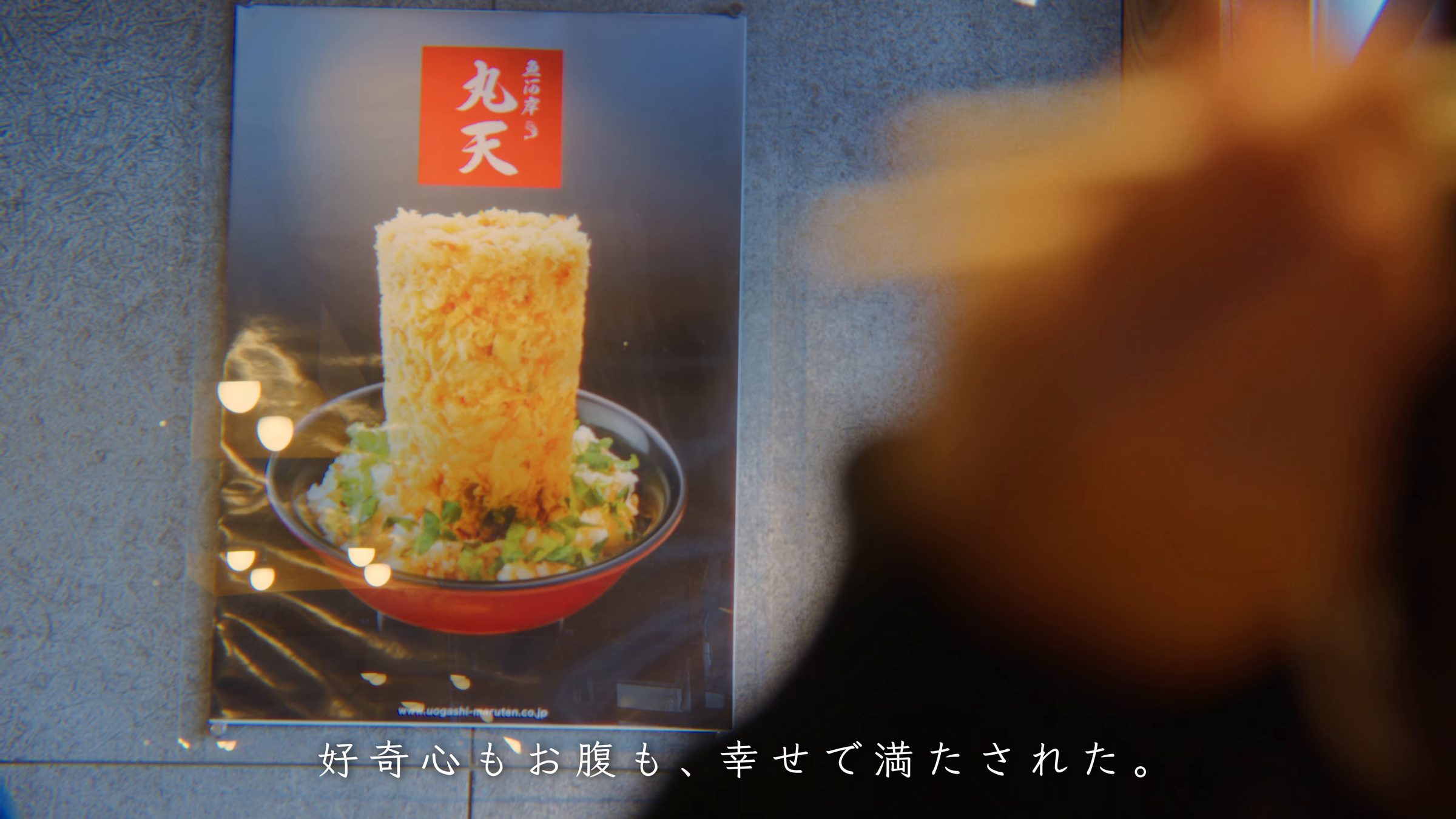
The seafood kakiage bowl had caught my attention the last time I was here. At a restaurant under a sign reading Uogashi Maruten, what arrived was a kakiage fritter standing up out of the bowl like a tower. Now, how do I eat this? I broke the top with my chopsticks, tipped it over, and poured on the tempura sauce. The flavor of shrimp and scallops and the sweetness of onion, all in one bite.
I had wondered whether I could finish it, but I never tired of it. I poured a bottle of non-alcoholic beer into a glass. Both my curiosity and my stomach were filled with happiness.
Watch this scene on YouTube2:37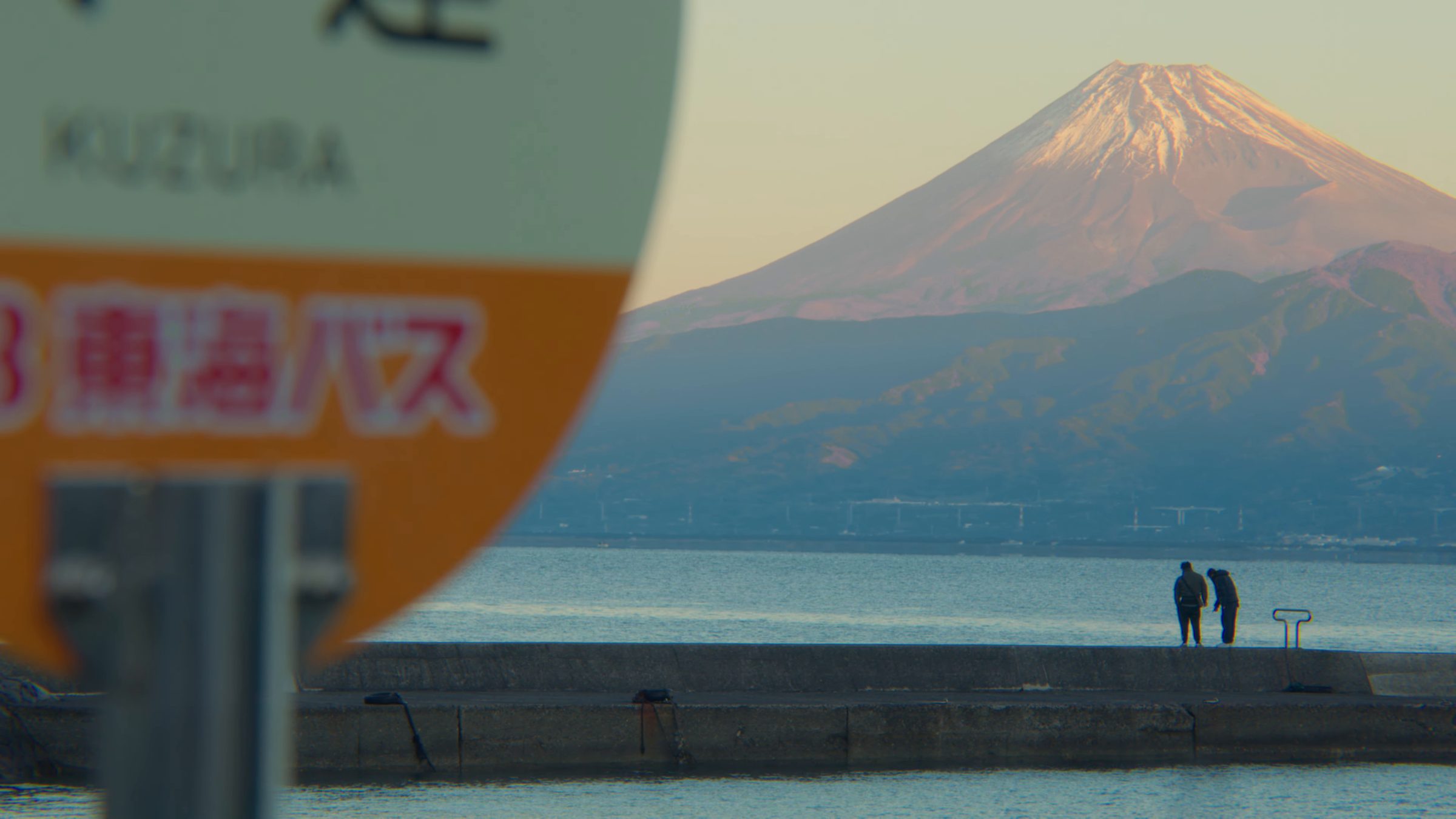
06TRAVEL JOURNAL
Shopping for dinner at Numazu Port
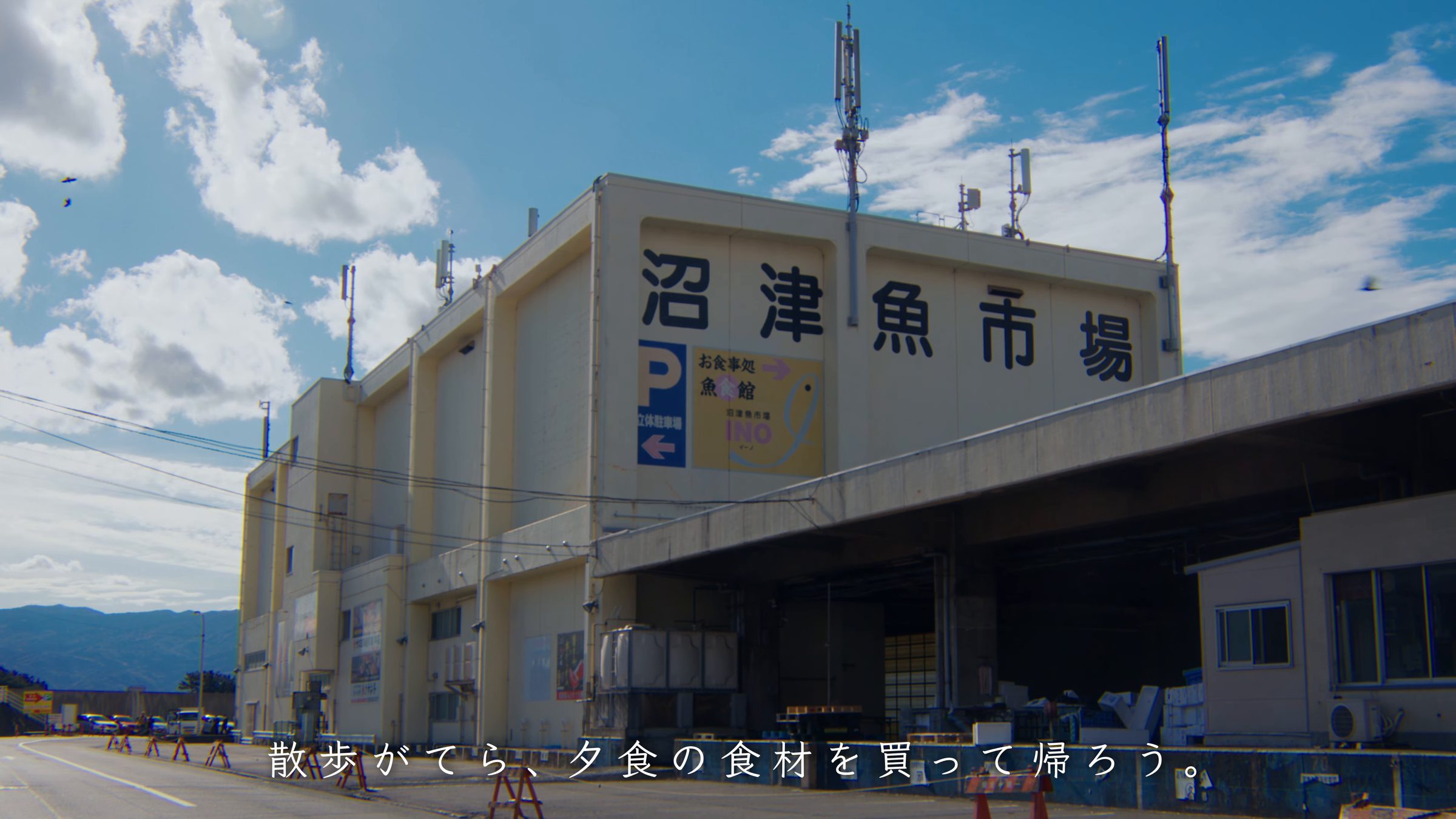
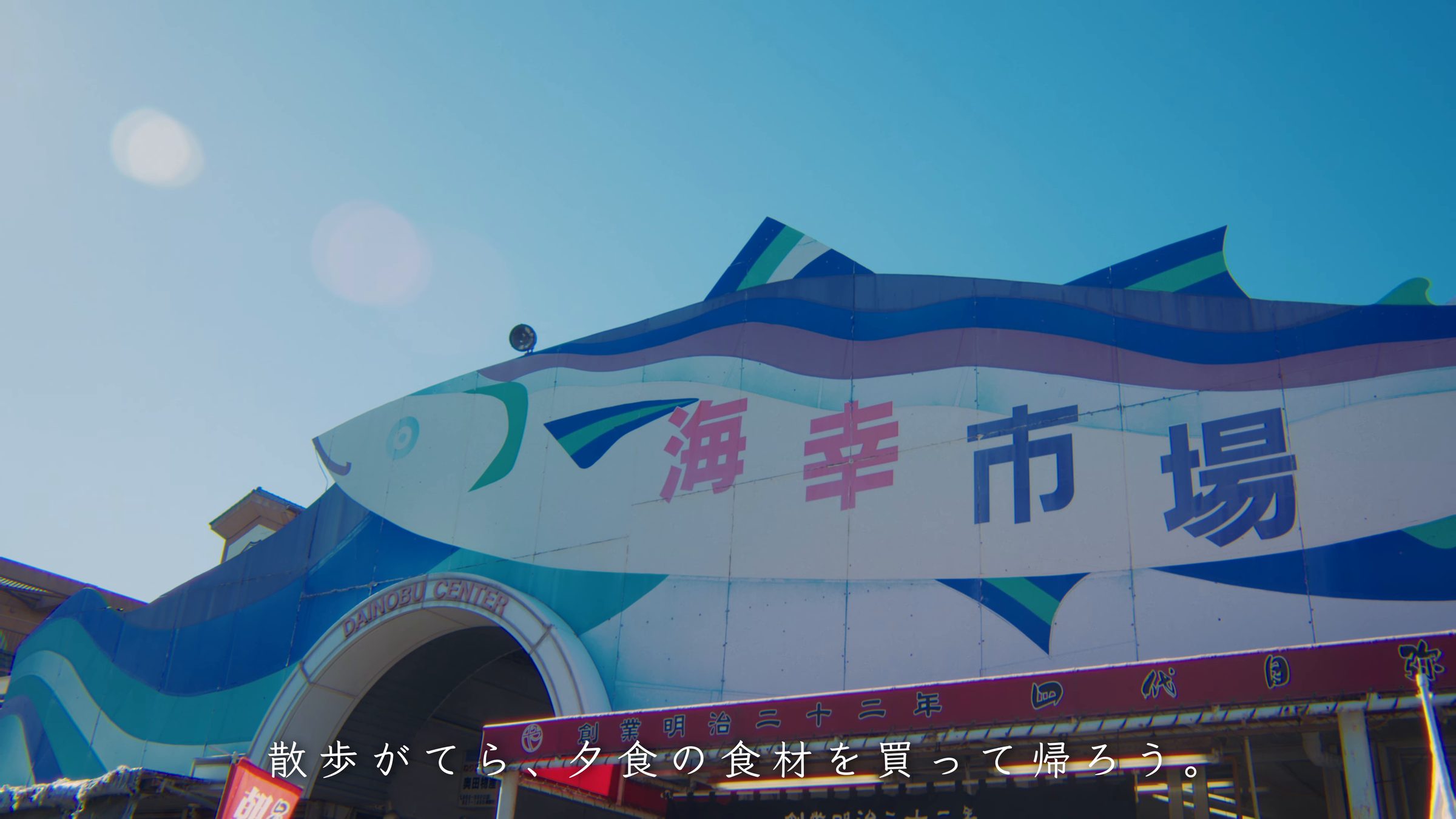
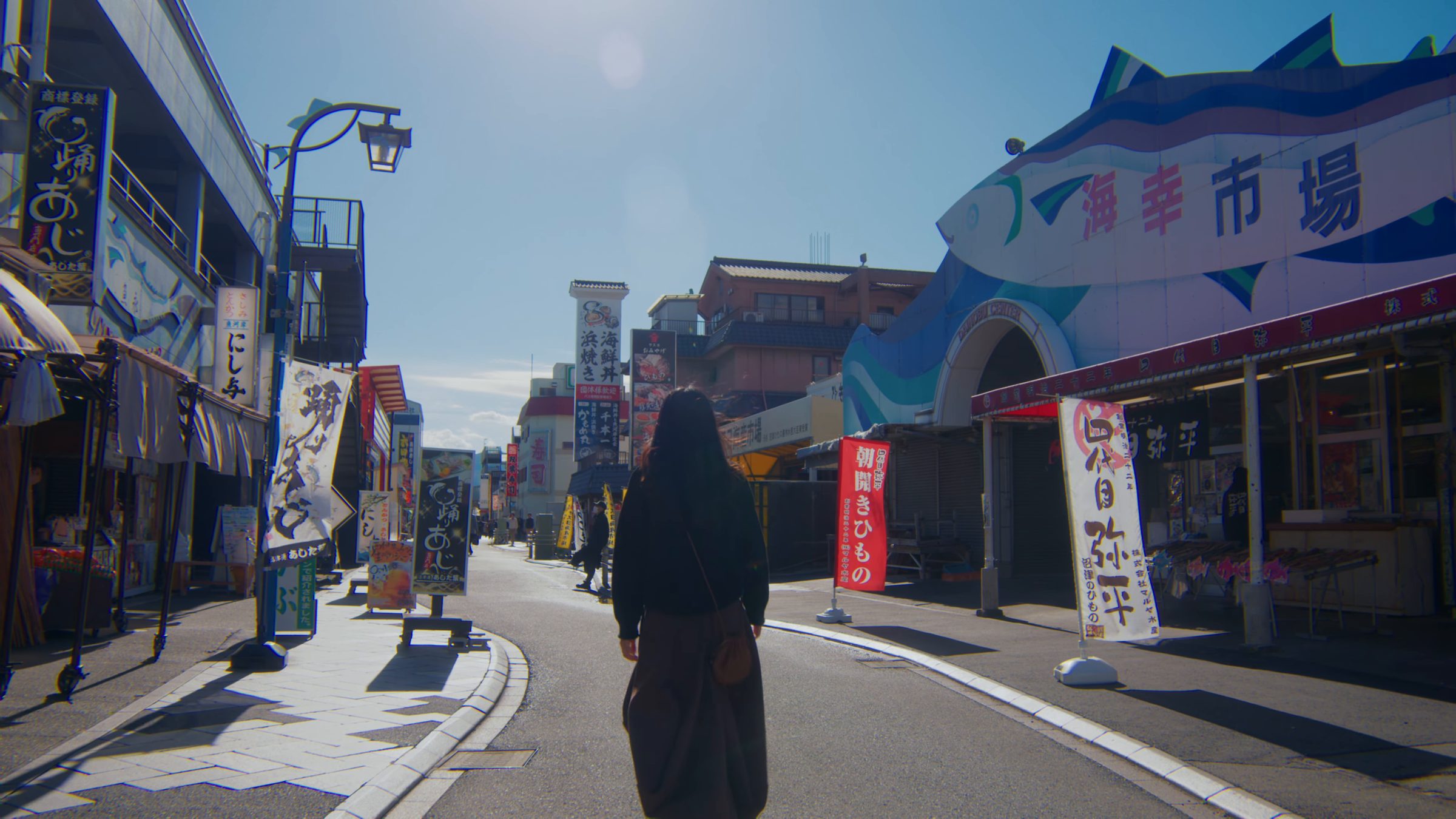
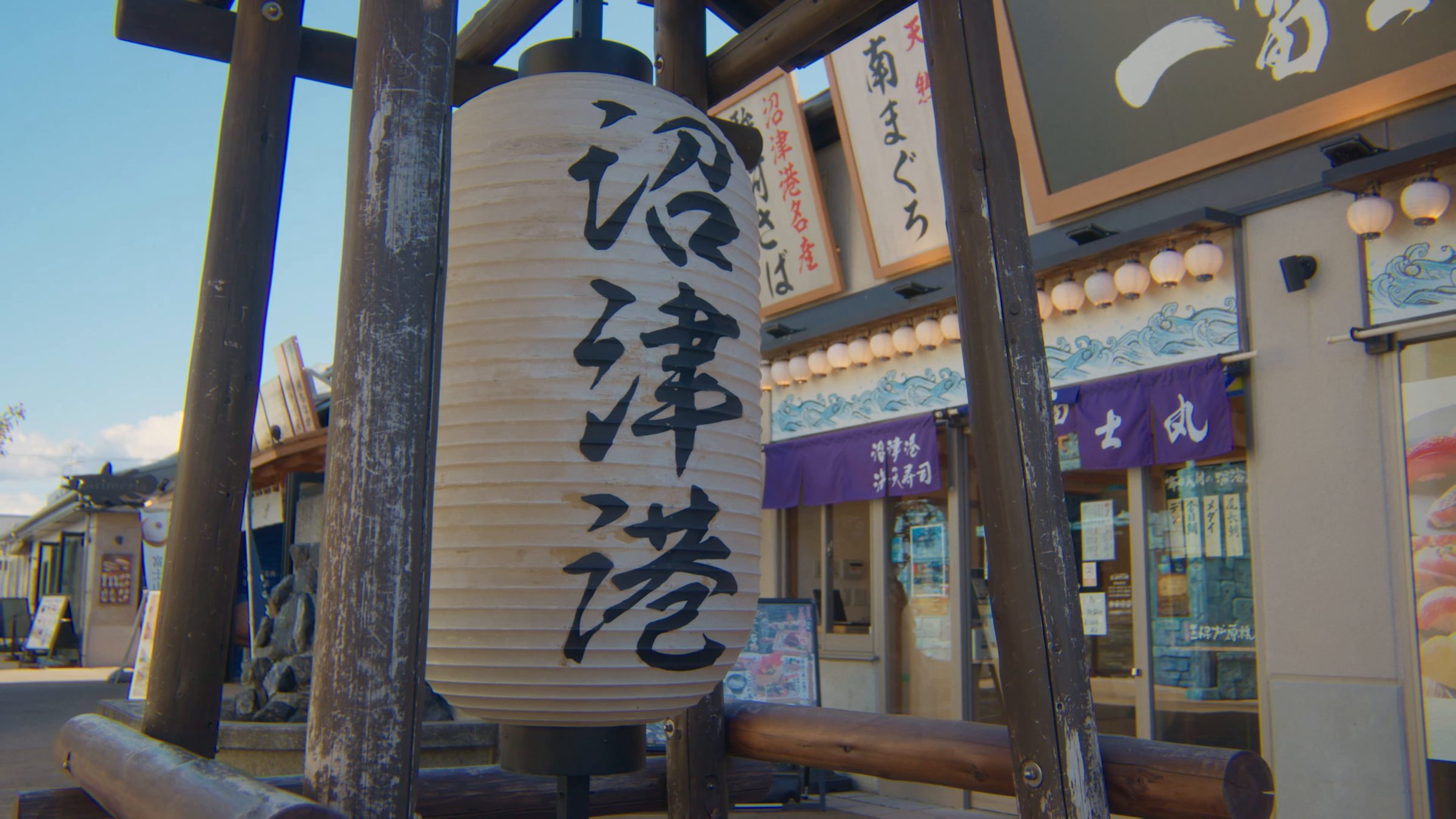
Let's take a walk and buy some food for dinner. The sign of Sasuyo Kaisan Ichiba, the building of the Numazu Fish Market, a fish-shaped sign reading Kaiko Ichiba: I walked along the street in front of the fish market, lined with banners and signboards.
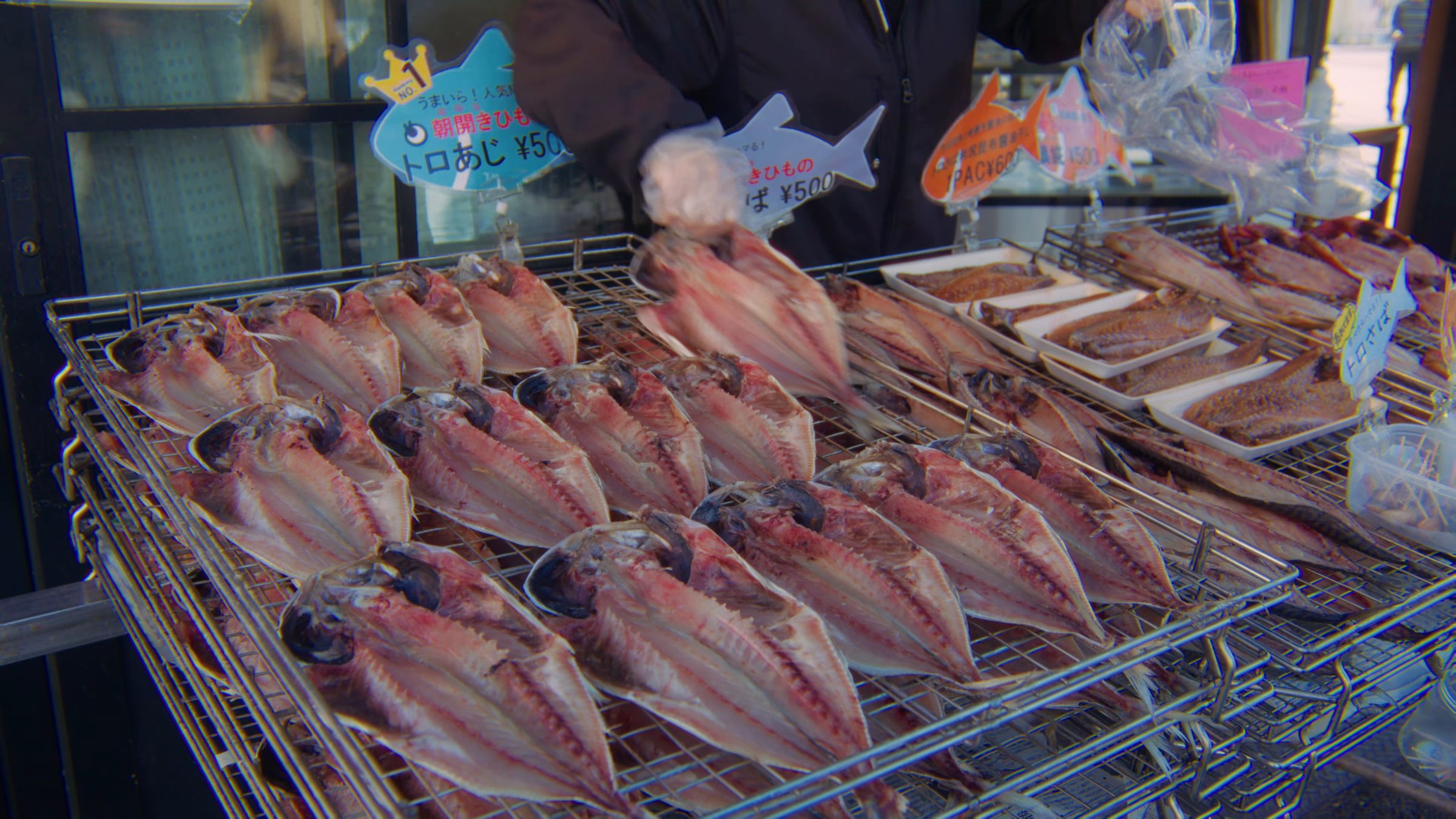
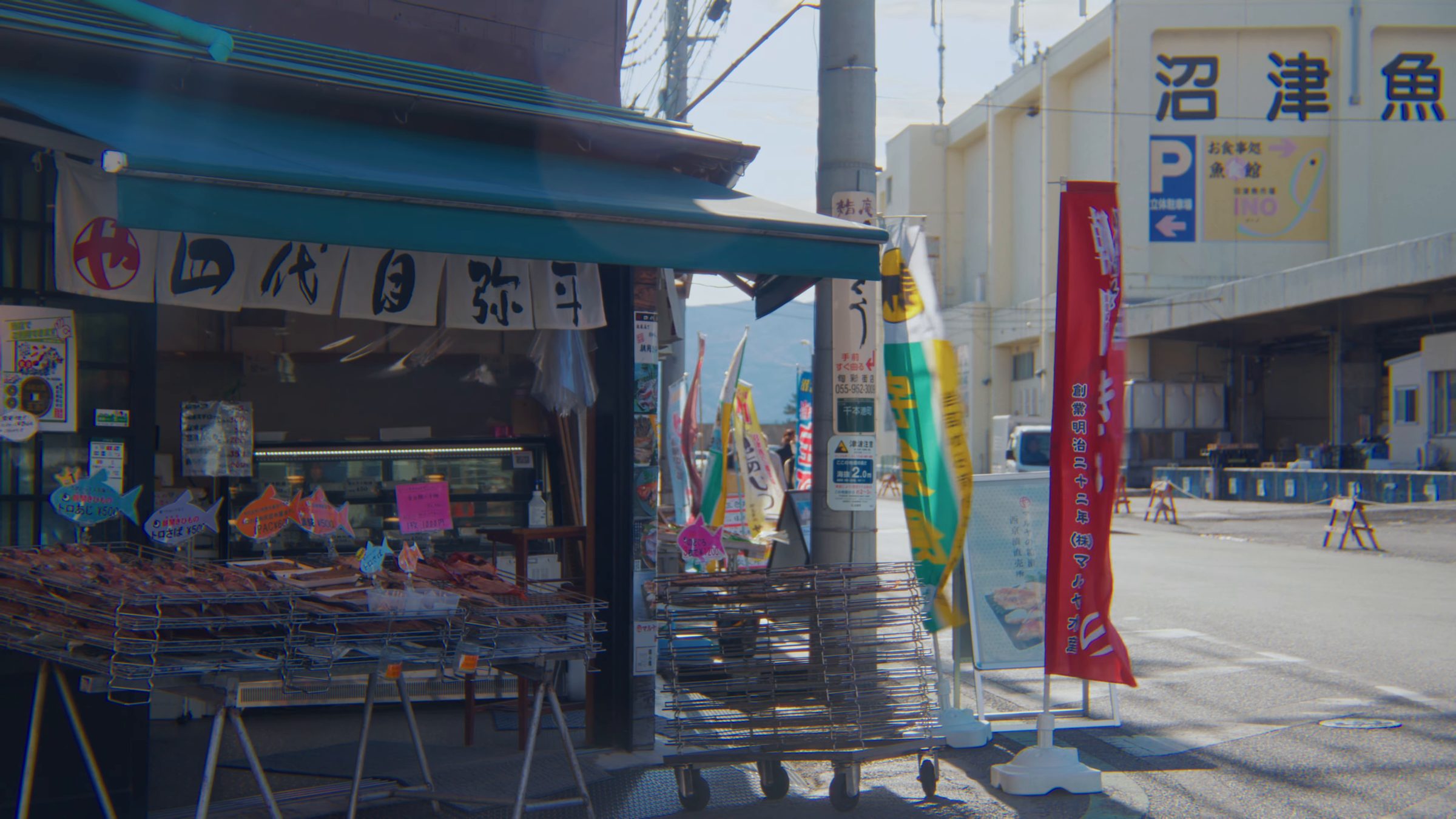
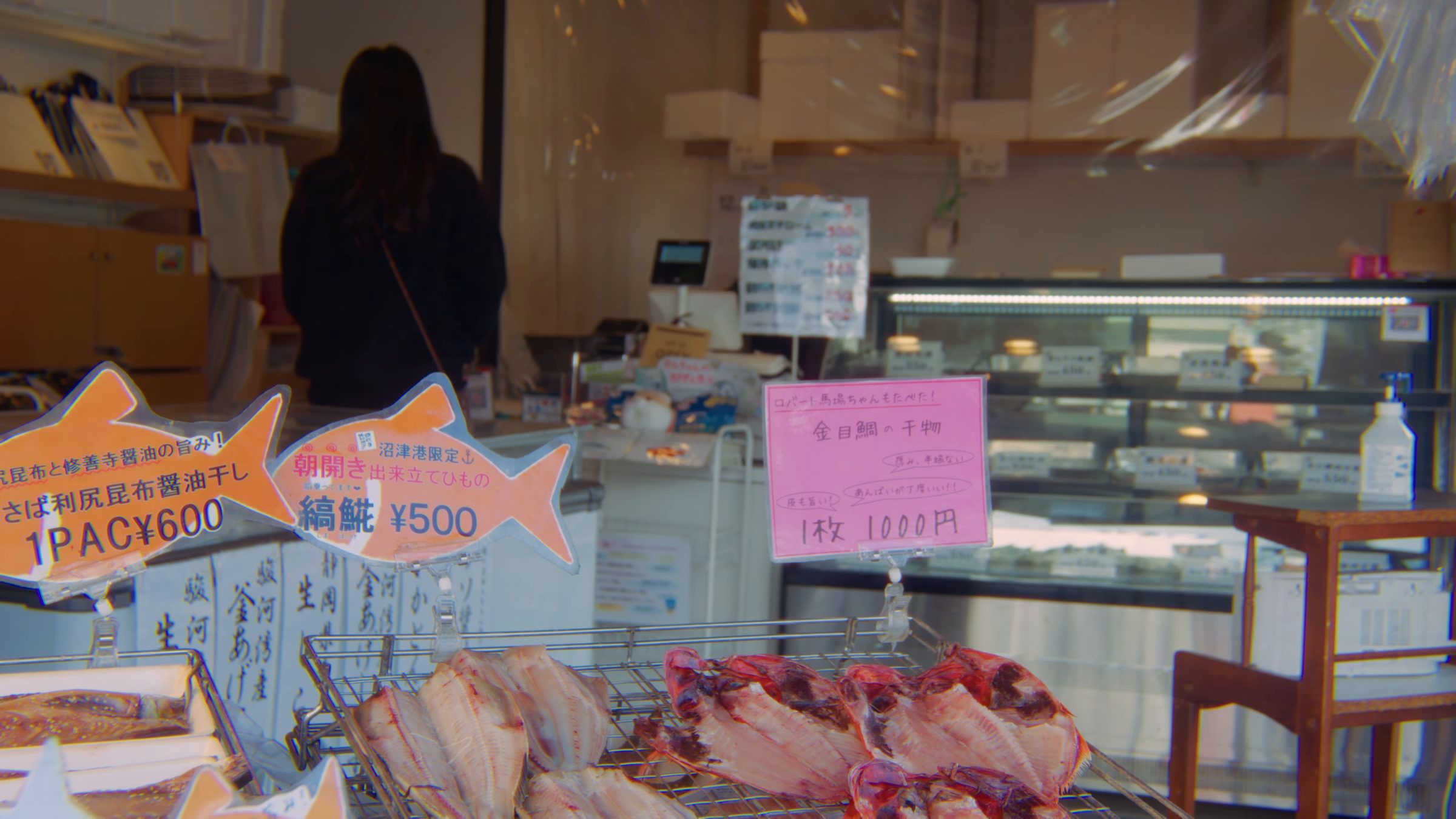
At a dried-fish shop under a sign reading Yondaime Yahei, a table of dried fish stood out front with fish-shaped price tags, and a pink tag inside announced dried splendid alfonsino by the piece. This is where I got Numazu's dried horse mackerel, packed with the flavor of Suruga Bay.
Watch this scene on YouTube3:37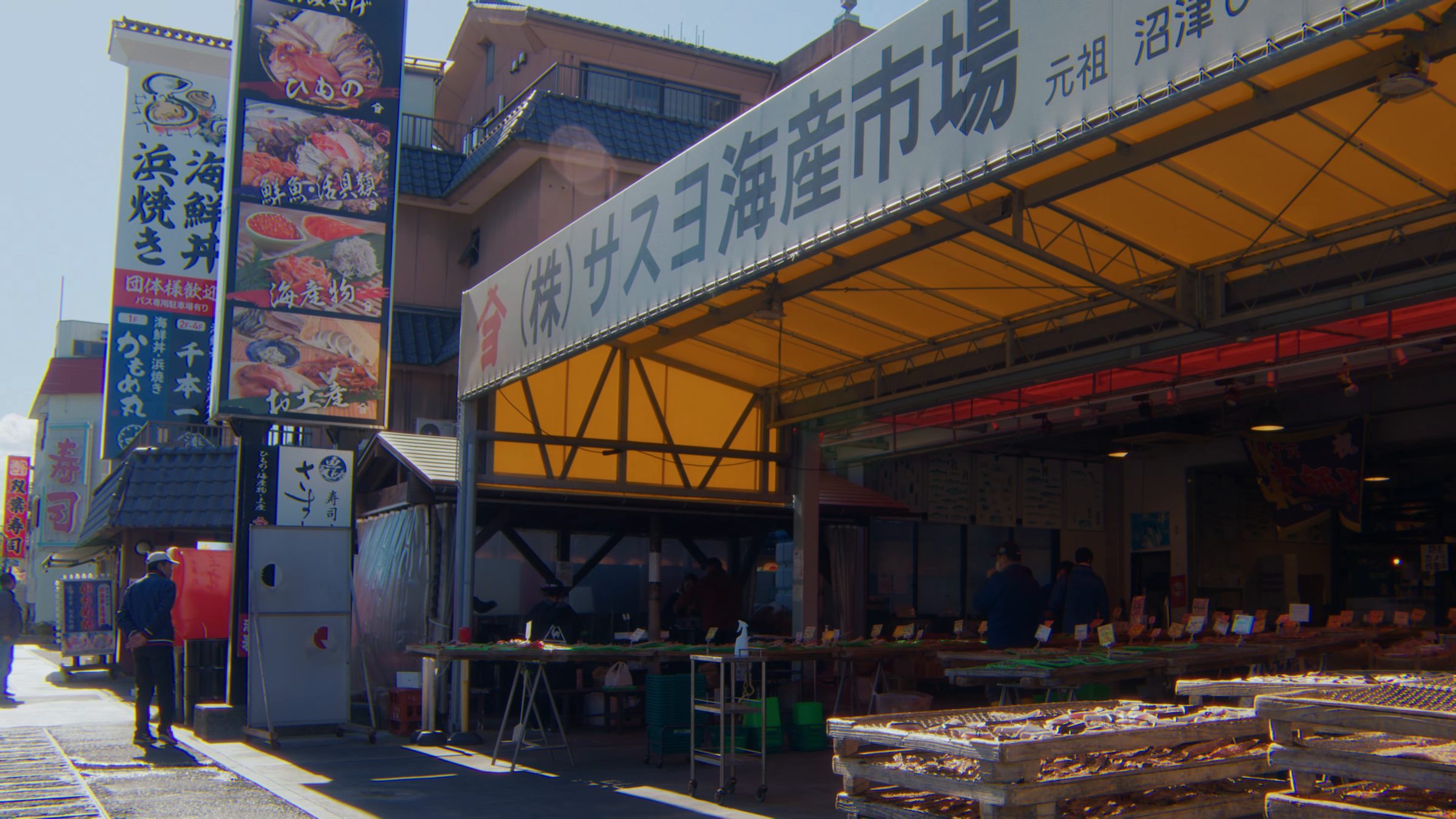
07TRAVEL JOURNAL
Cherry-colored treasures of Suruga Bay
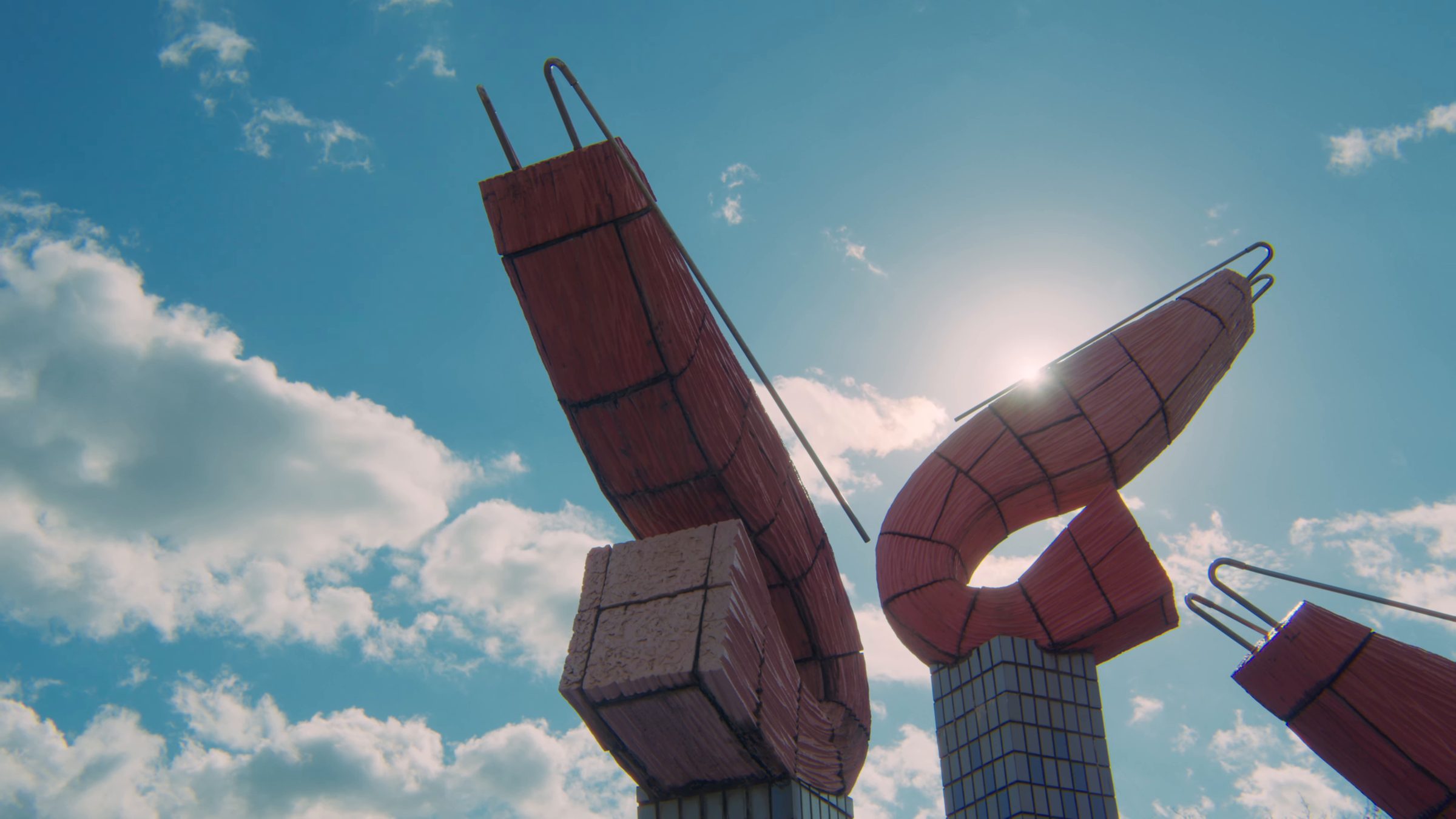
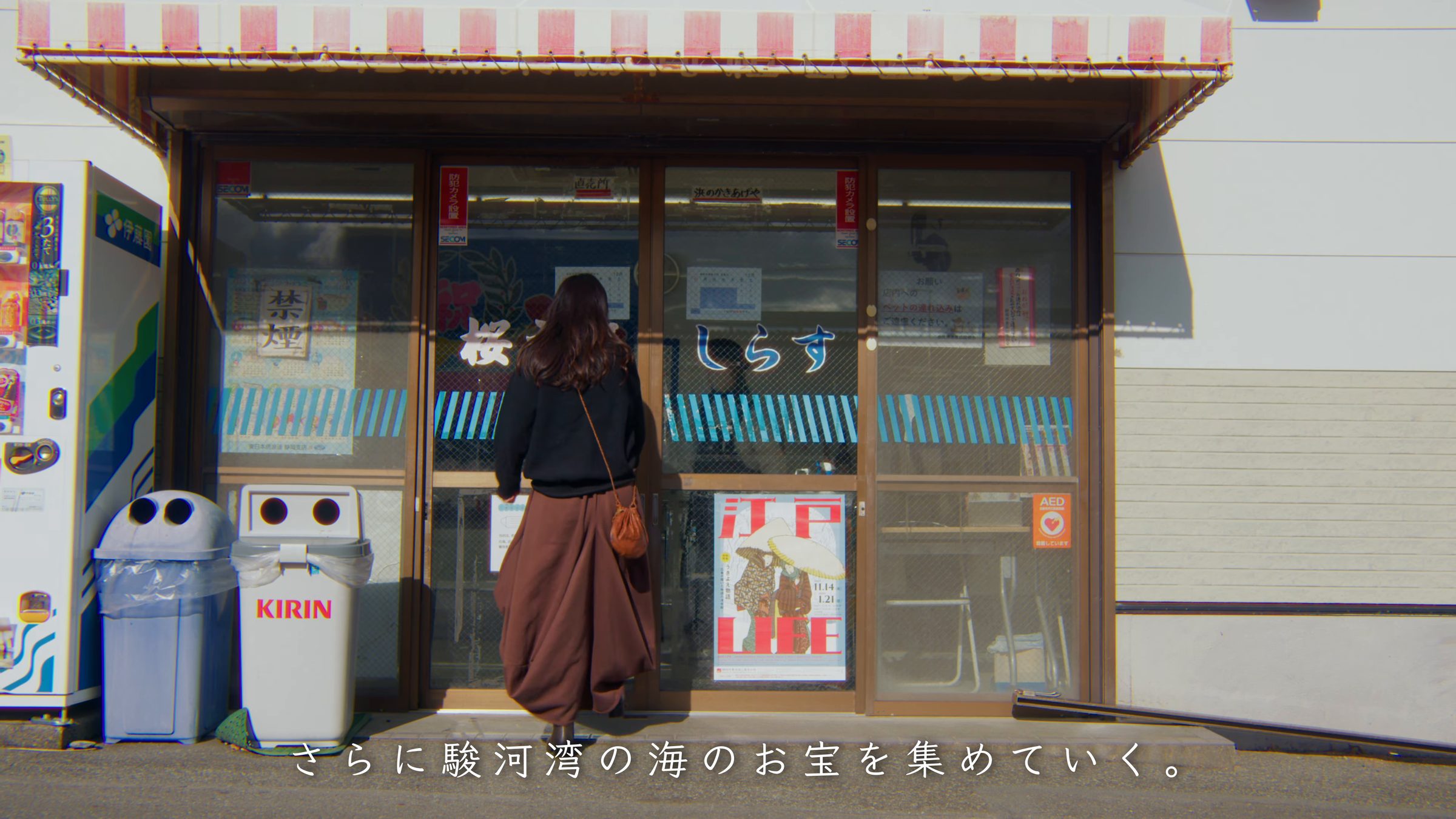
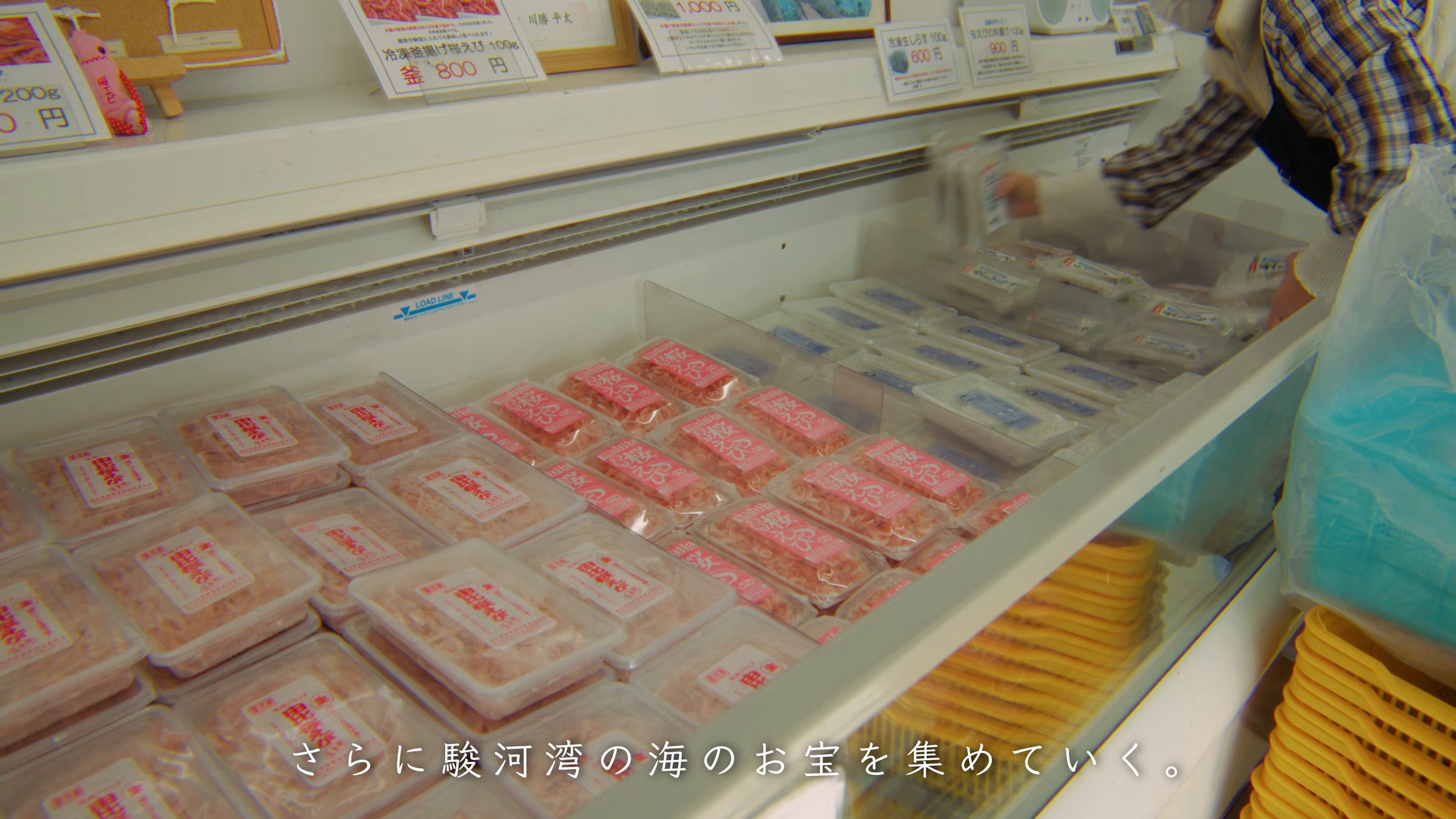
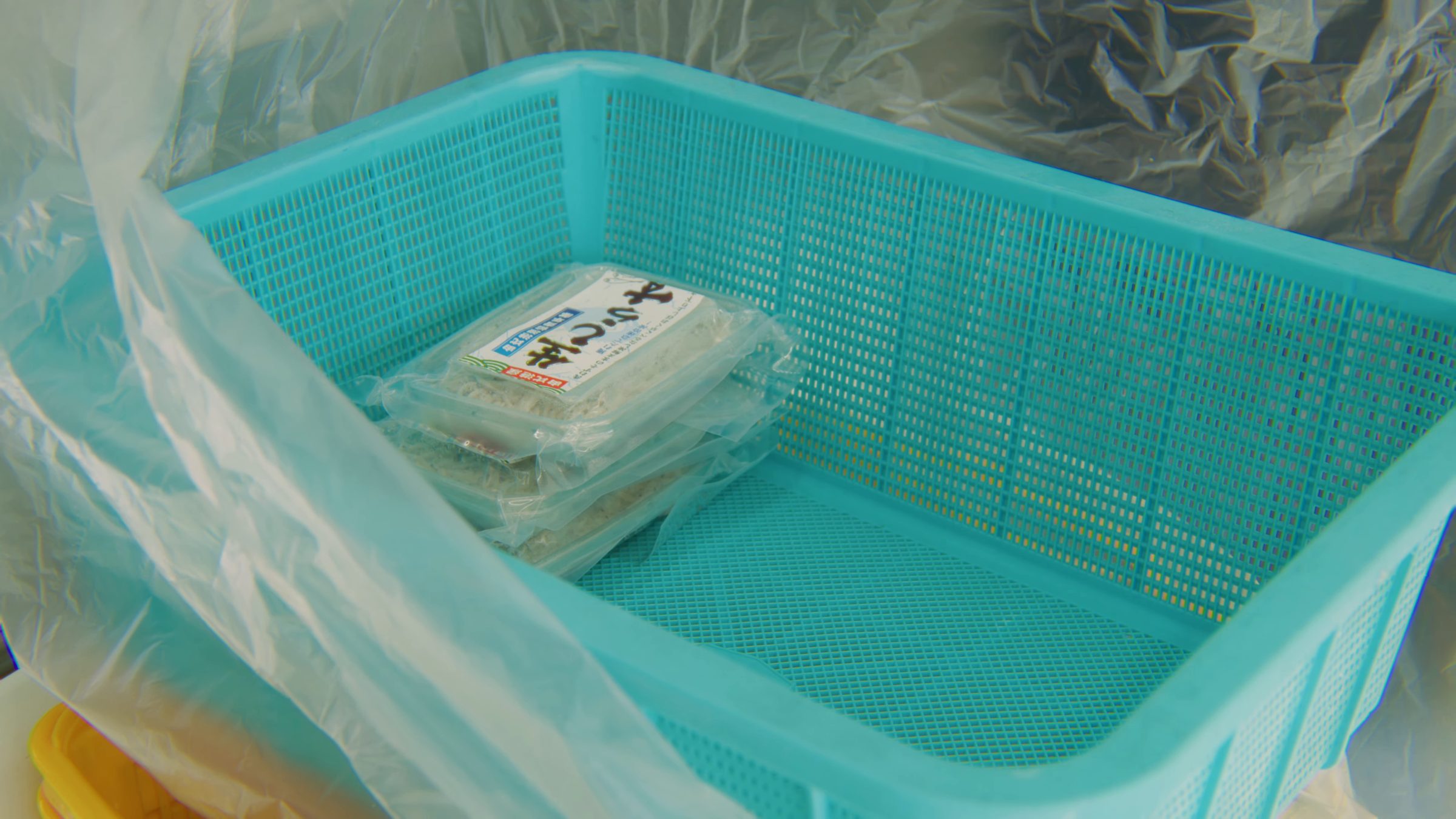
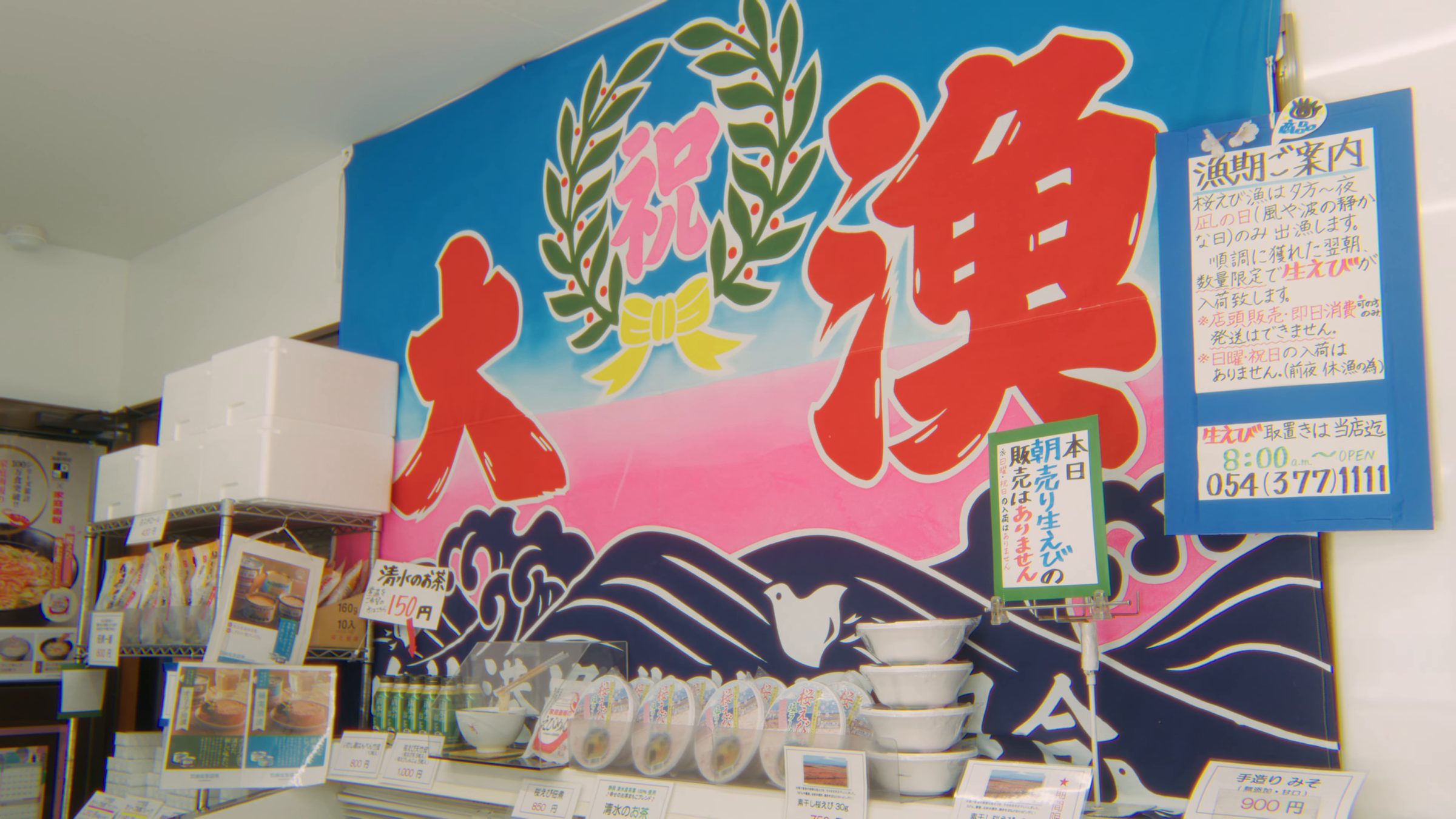
Then I went on collecting treasures from the sea of Suruga Bay. Past a red monument of sakura shrimp pointing at the sky stood the white building of the Yui Port fishery cooperative's shop, selling sakura shrimp and whitebait.
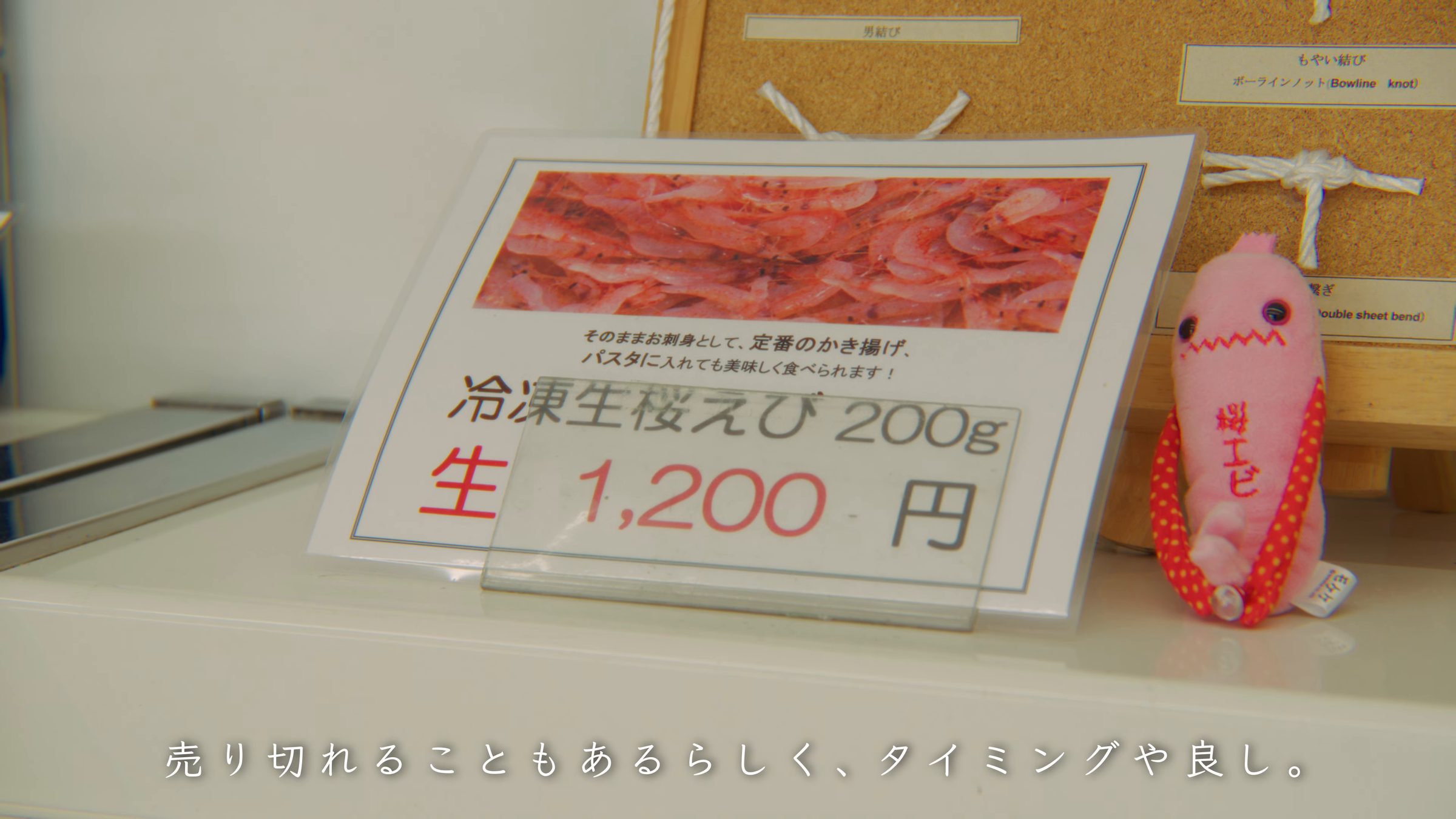
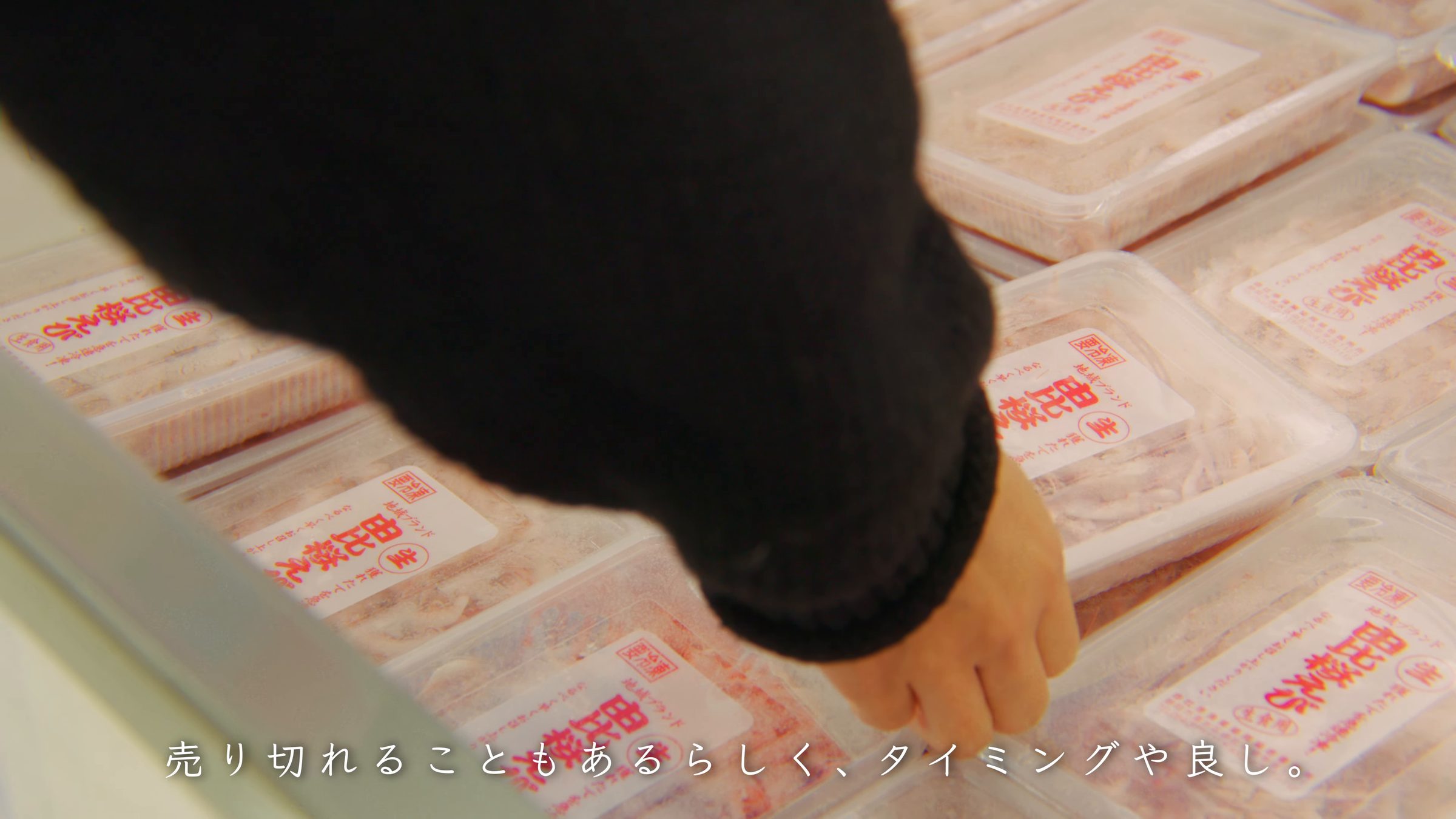
In the refrigerated case were packs of frozen raw sakura shrimp, 200 grams each. They sometimes sell out, so my timing was good. A notice beside a Big Catch banner explained that the boats go out only on calm evenings, and that raw shrimp arrive the morning after a good haul.
Watch this scene on YouTube3:59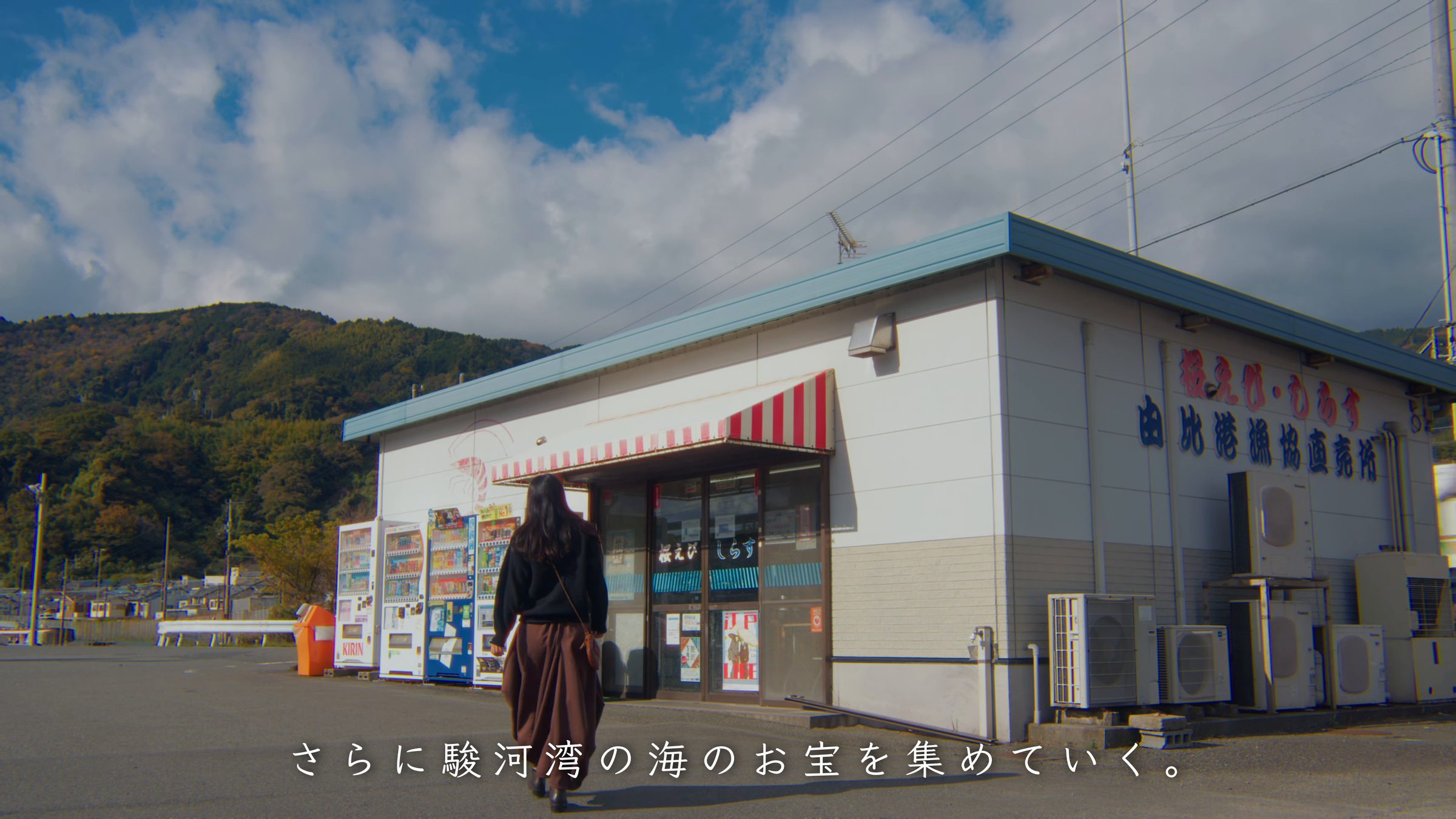
08TRAVEL JOURNAL
A seaside town and the color of mandarins
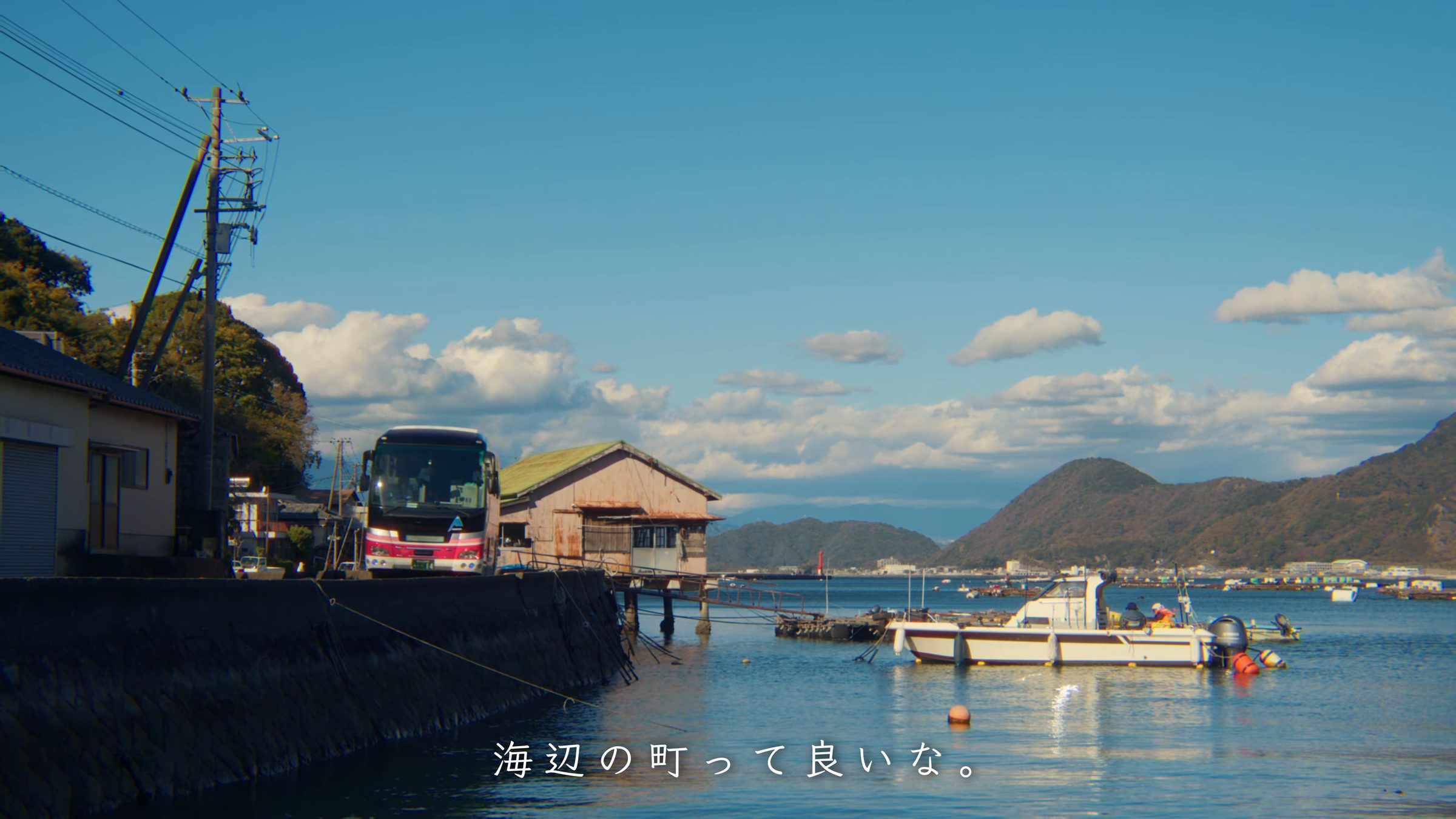
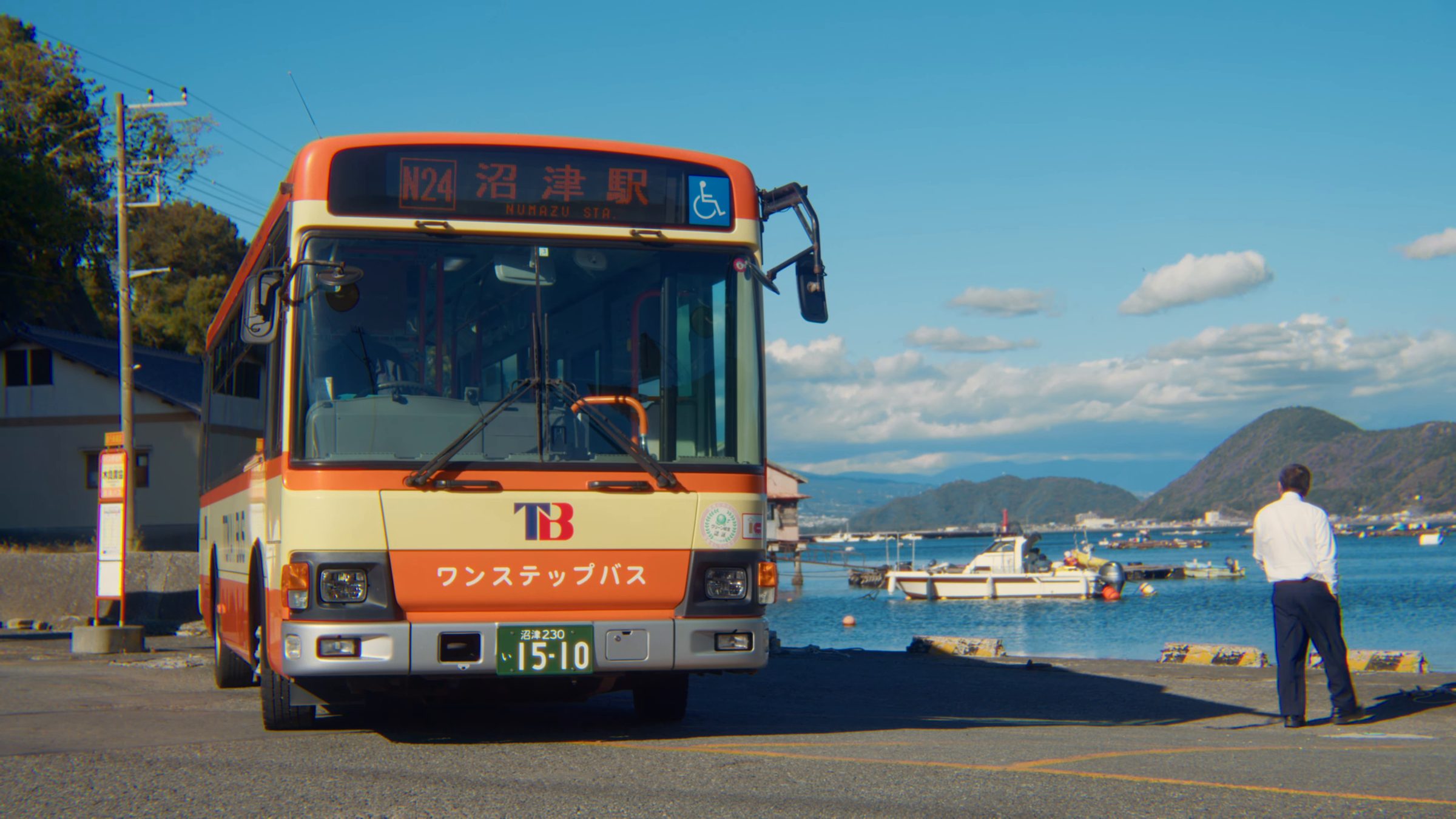
A small boat moved slowly across Uchiura Bay, where aquaculture rafts float on the water. Boats lined the shore, and a Tokai Bus bound for Numazu Station waited by the sea. I love coastal towns.
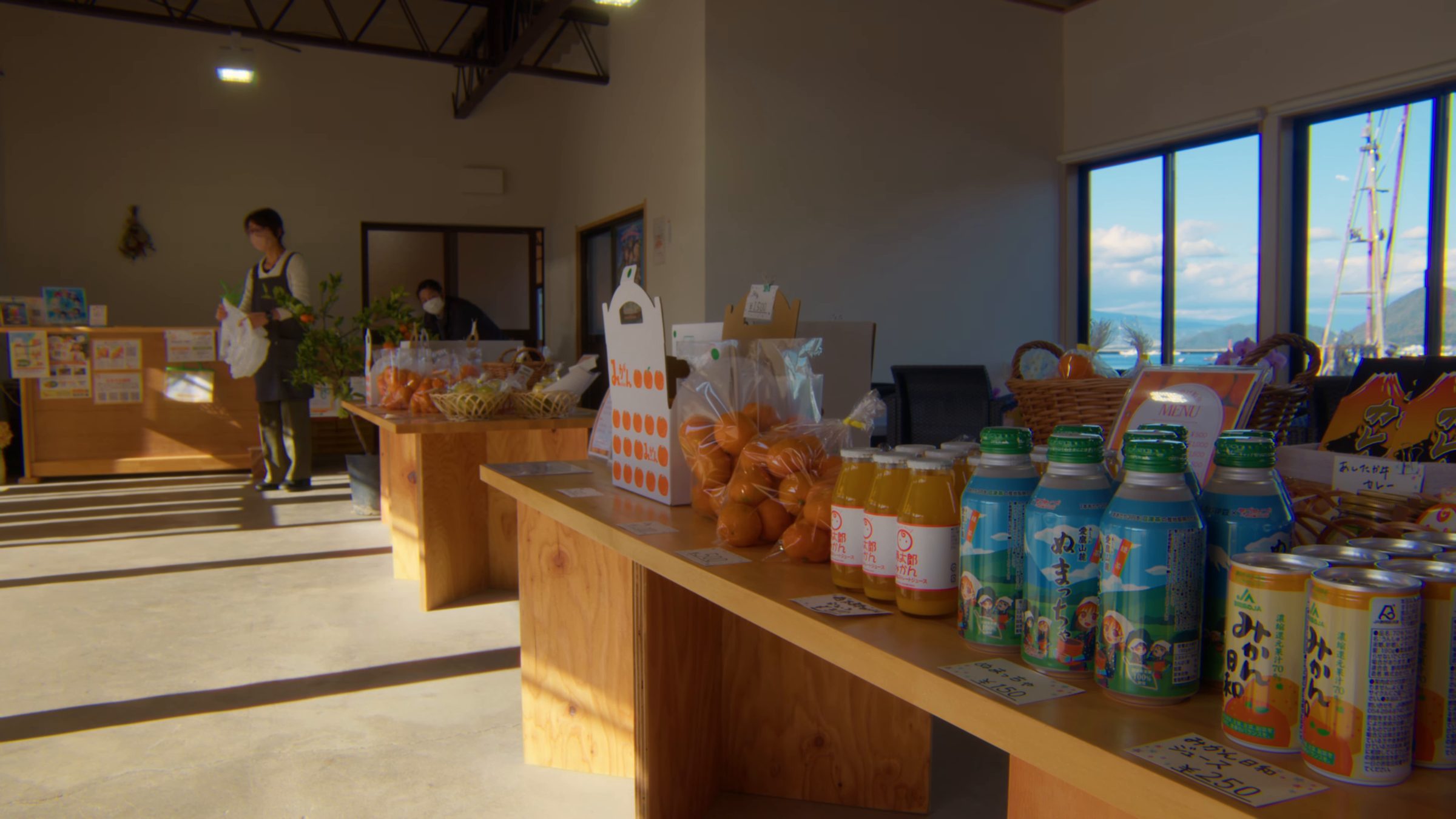
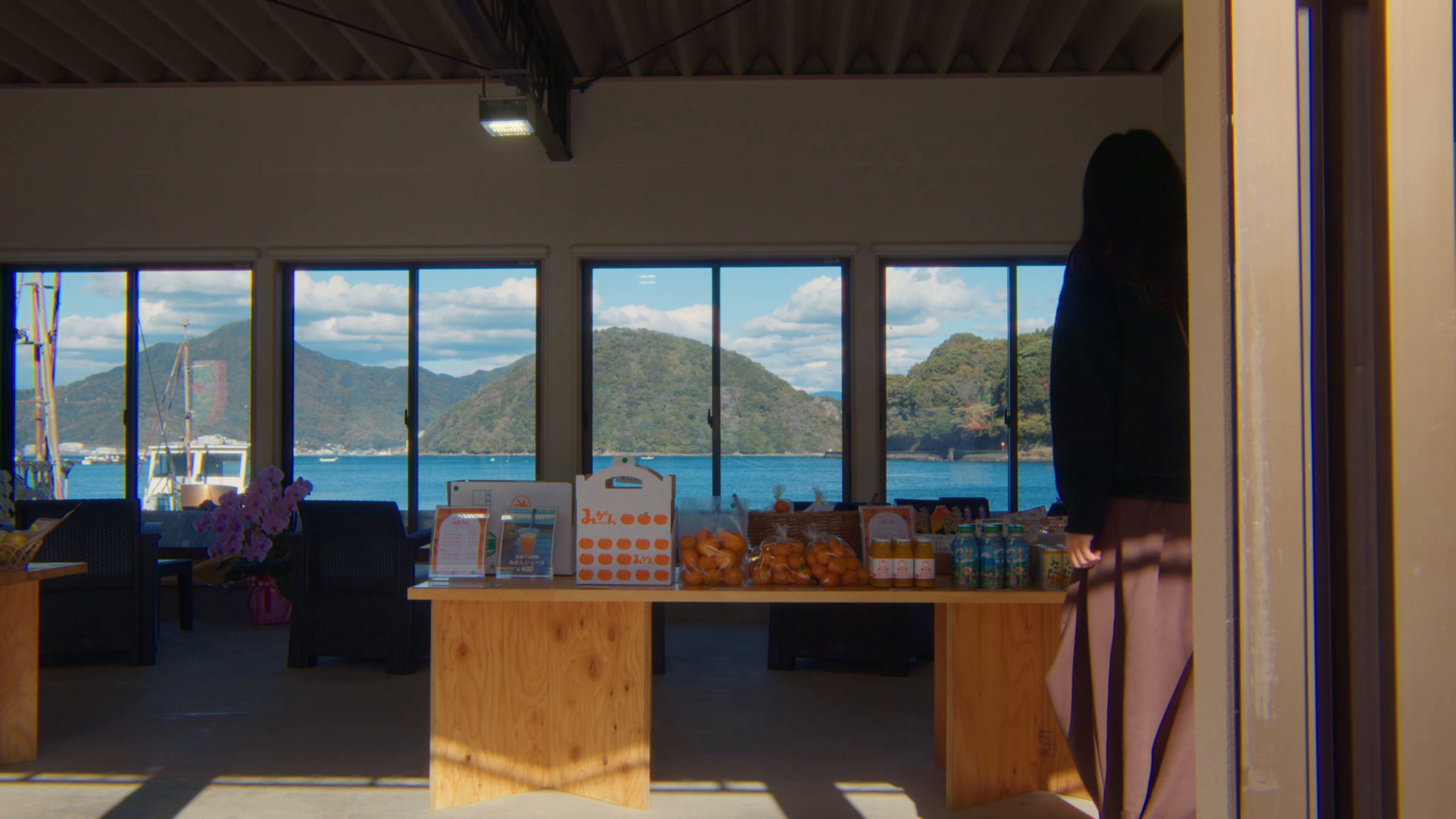
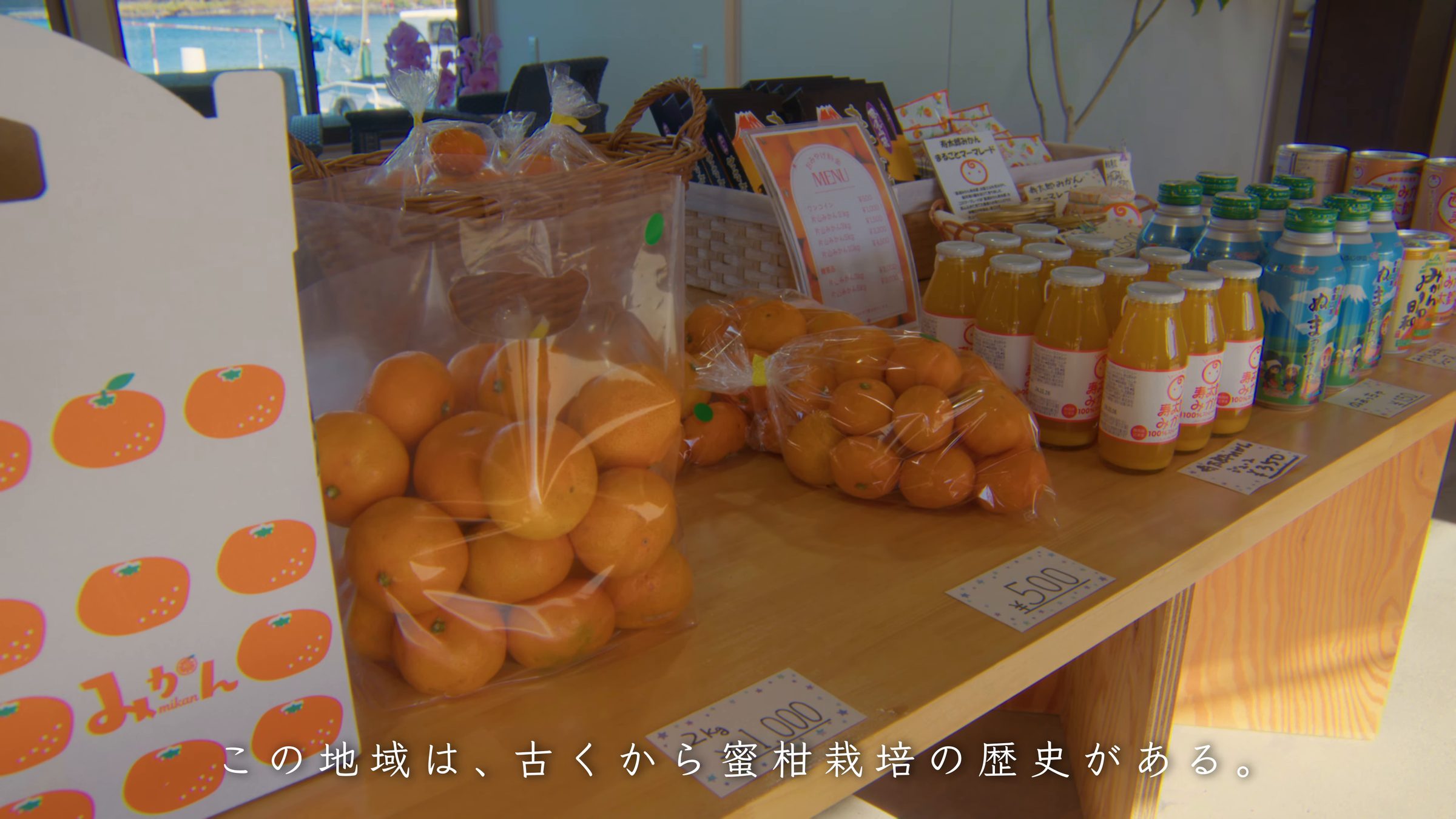
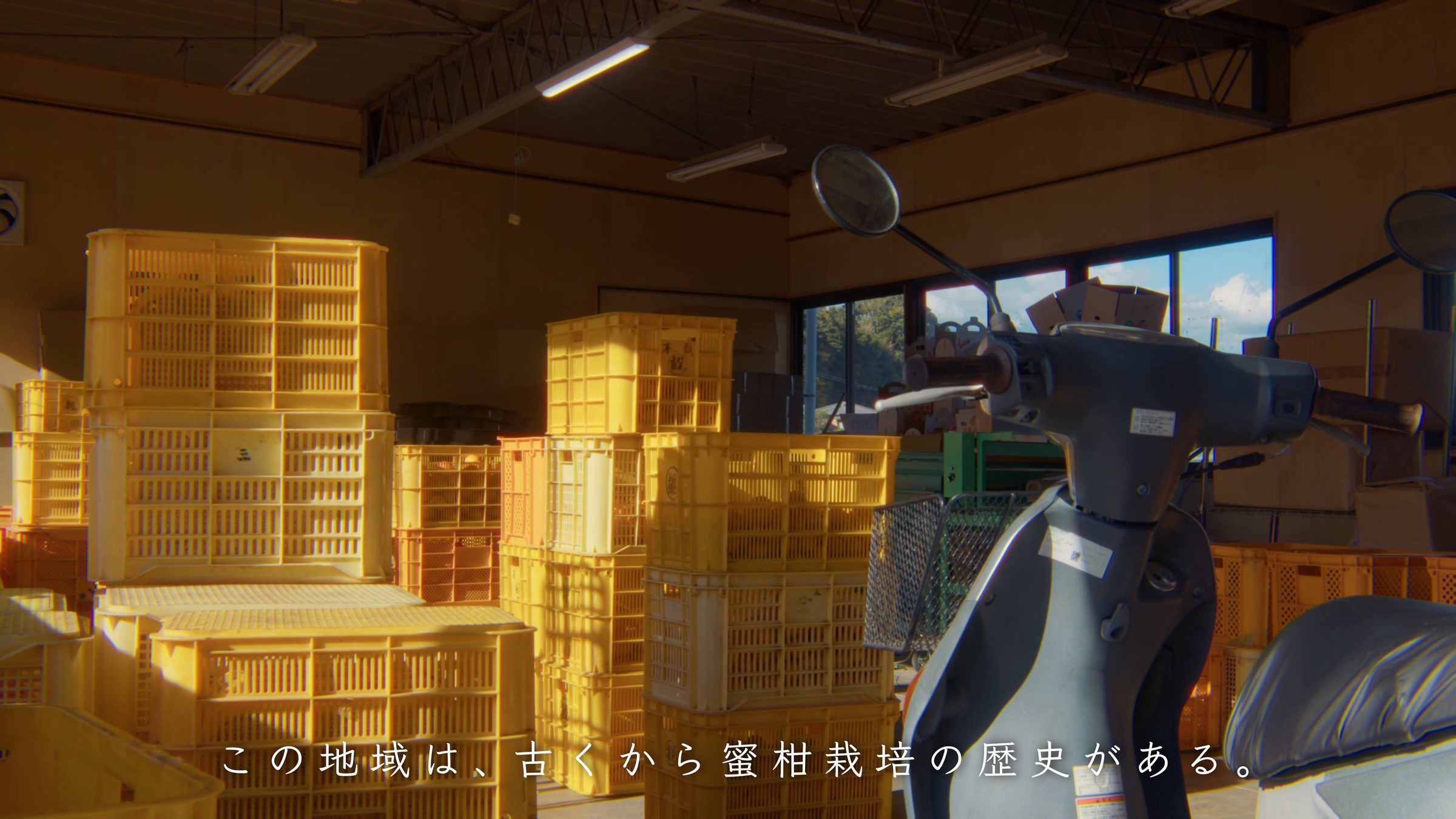
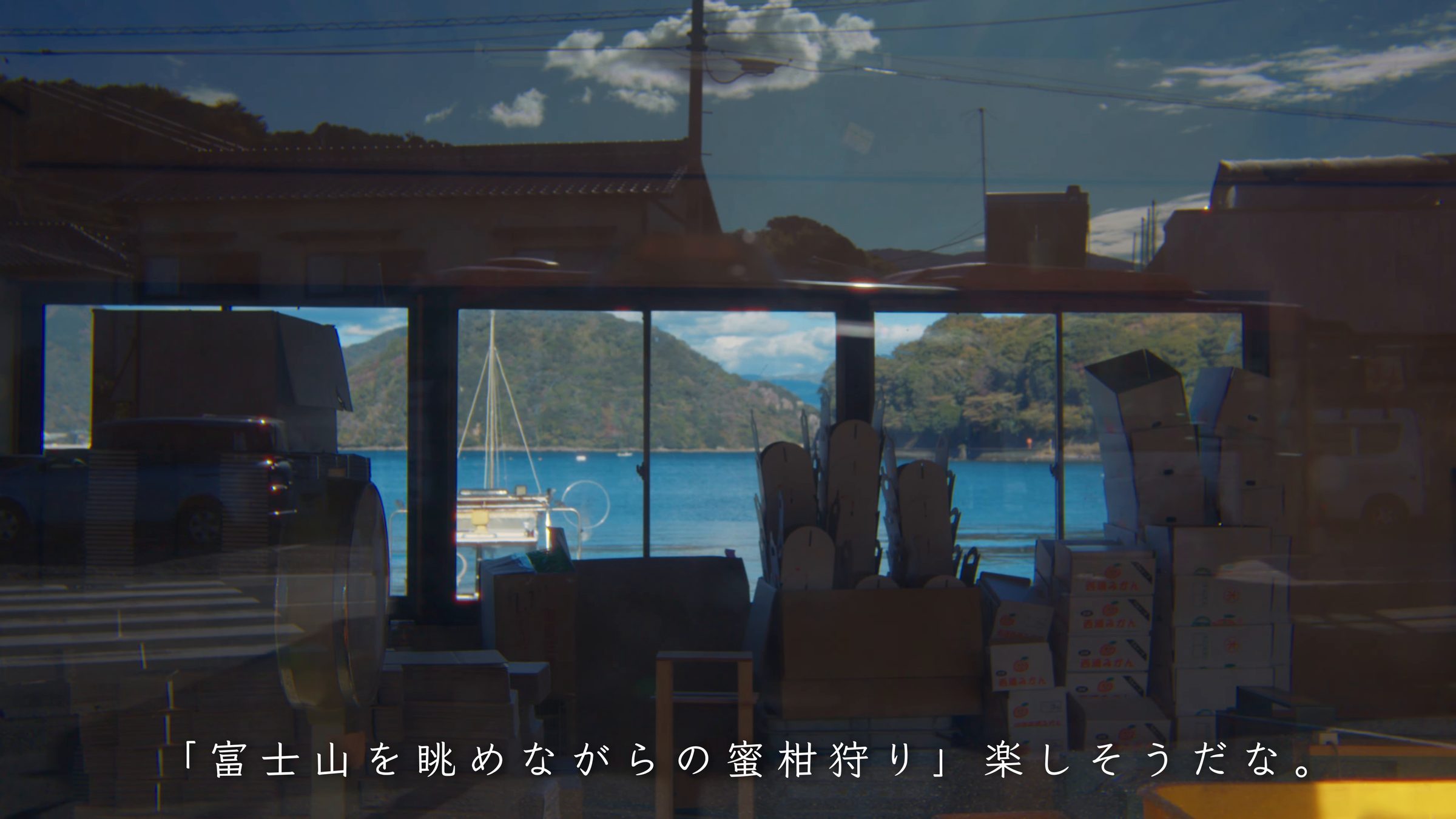
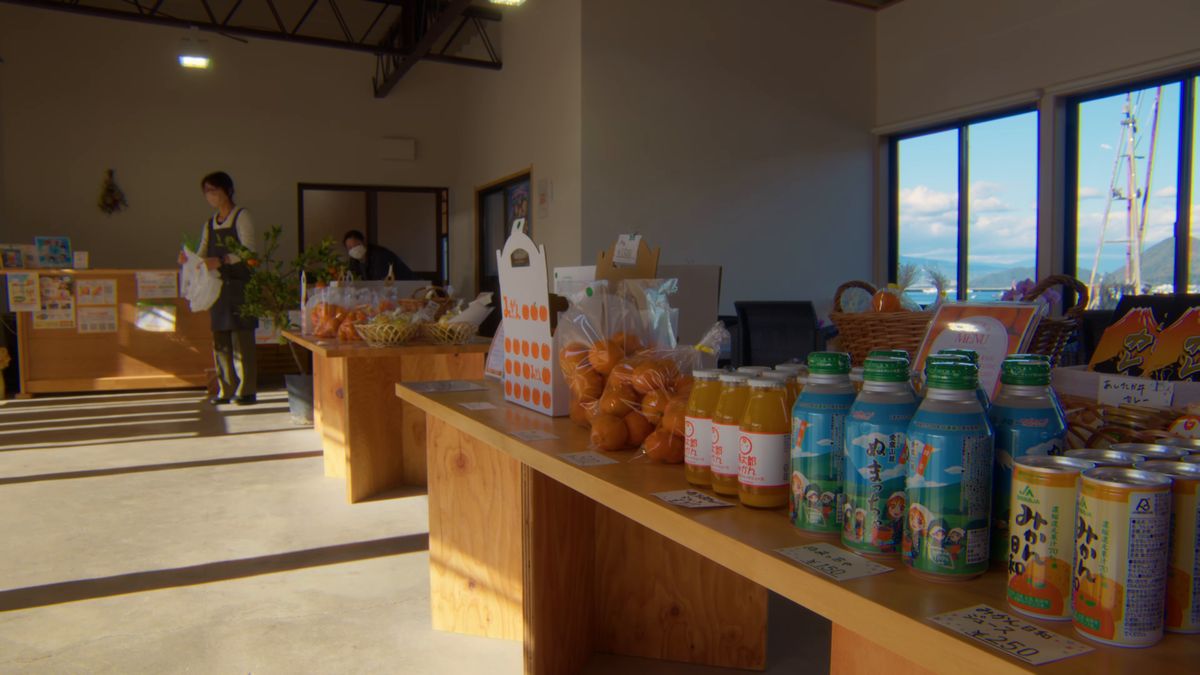
At a farm shop on the shore, mandarins and bottles of mandarin juice sat on wooden tables, with the sea and an island beyond the windows. The blue of Suruga Bay and the complementary orange of the fruit were beautiful together. This area has a long history of mandarin growing; boxes labeled Nishiura Mikan and yellow crates were stacked in the storeroom. Mandarin picking with a view of Mt. Fuji sounds like fun.
Watch this scene on YouTube4:20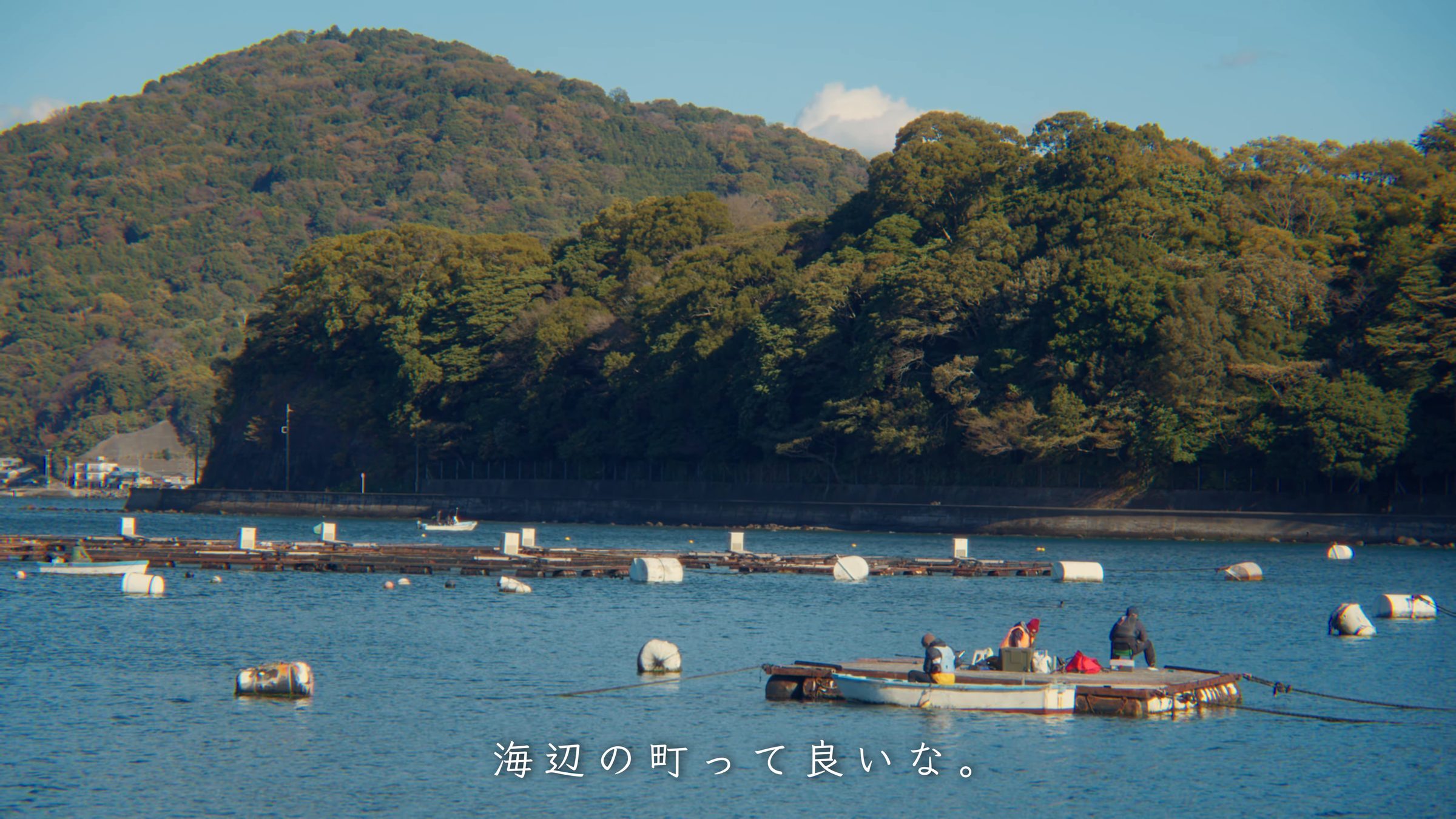
09TRAVEL JOURNAL
Mandarins under the kotatsu
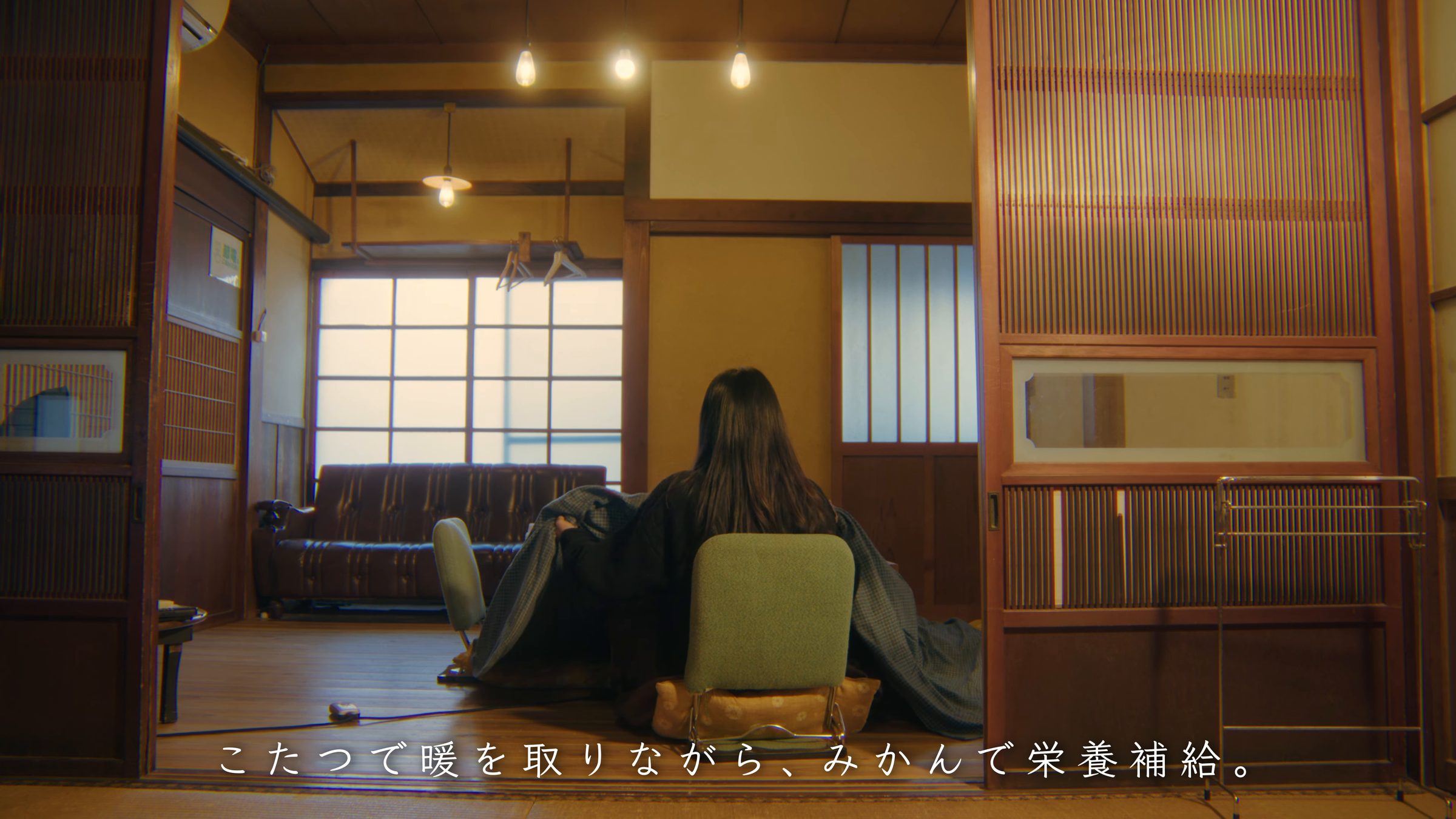
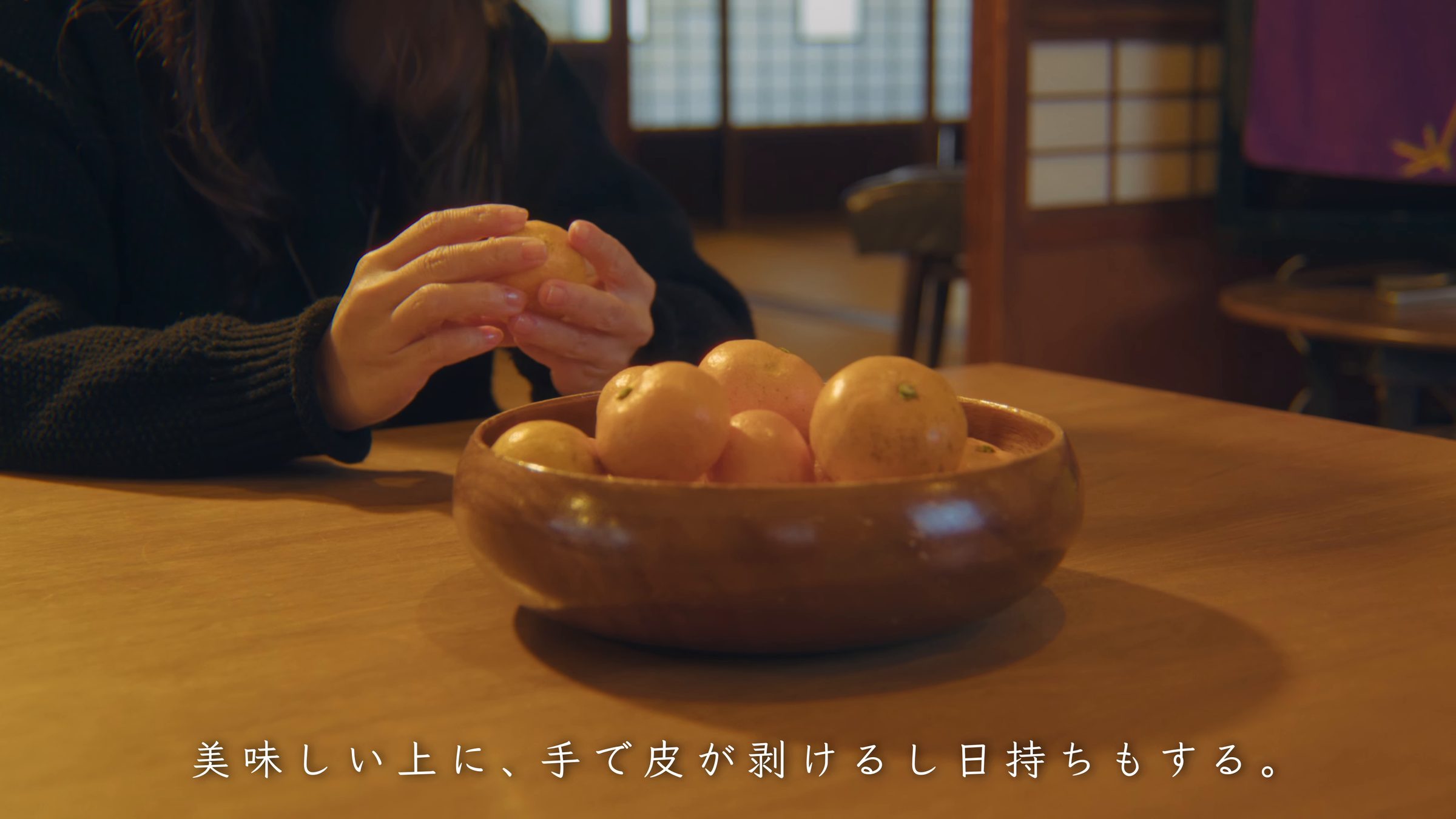
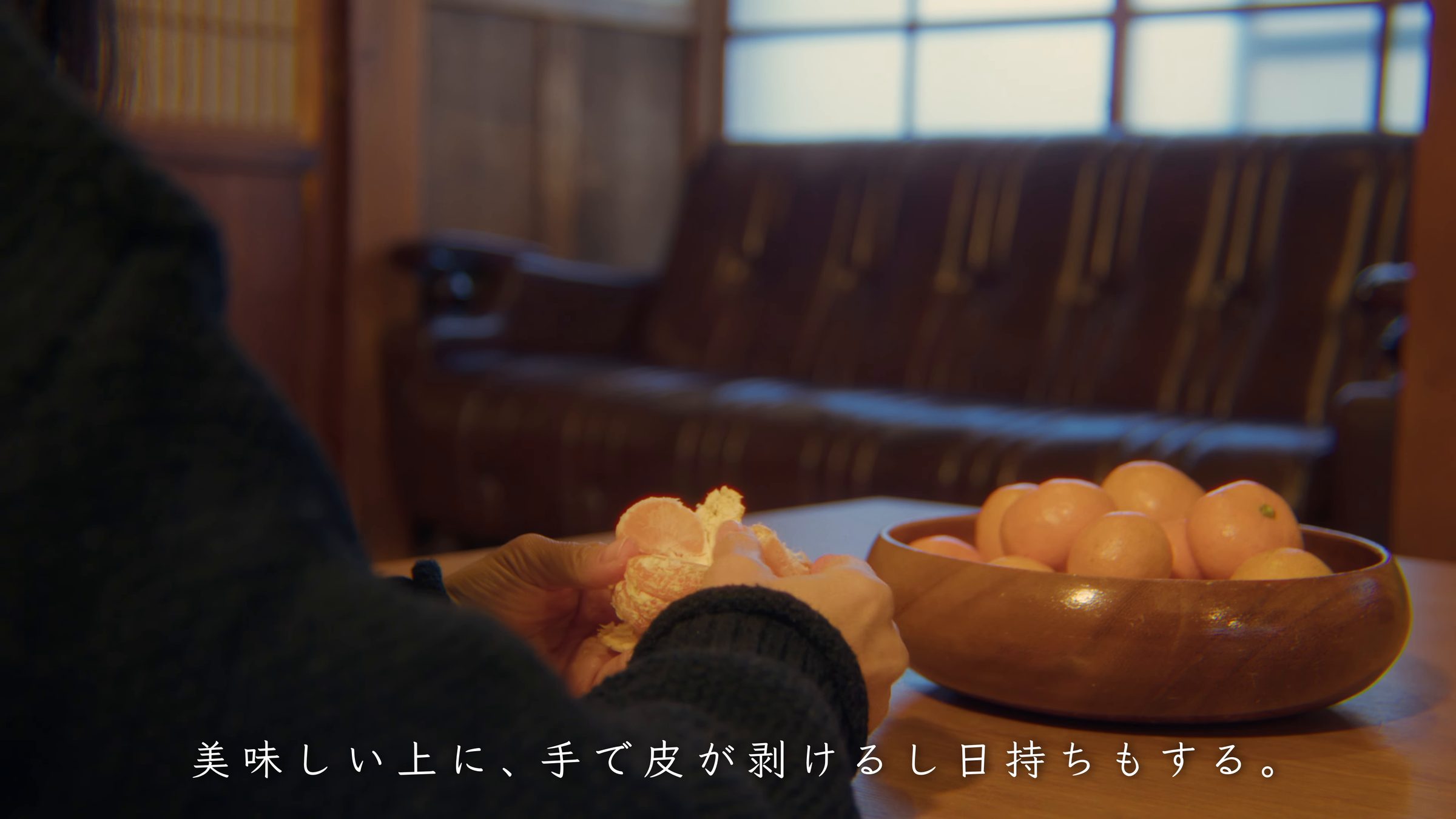
I switched on the kotatsu, and with it, the winter switch was turned on. Under the bare bulbs, with the sea outside the window, I slipped under the quilt. Warming my body while topping up on nutrition with mandarins.
Delicious, easy to peel by hand, and they keep well. Mandarins under the kotatsu may be the wisdom of our ancestors.
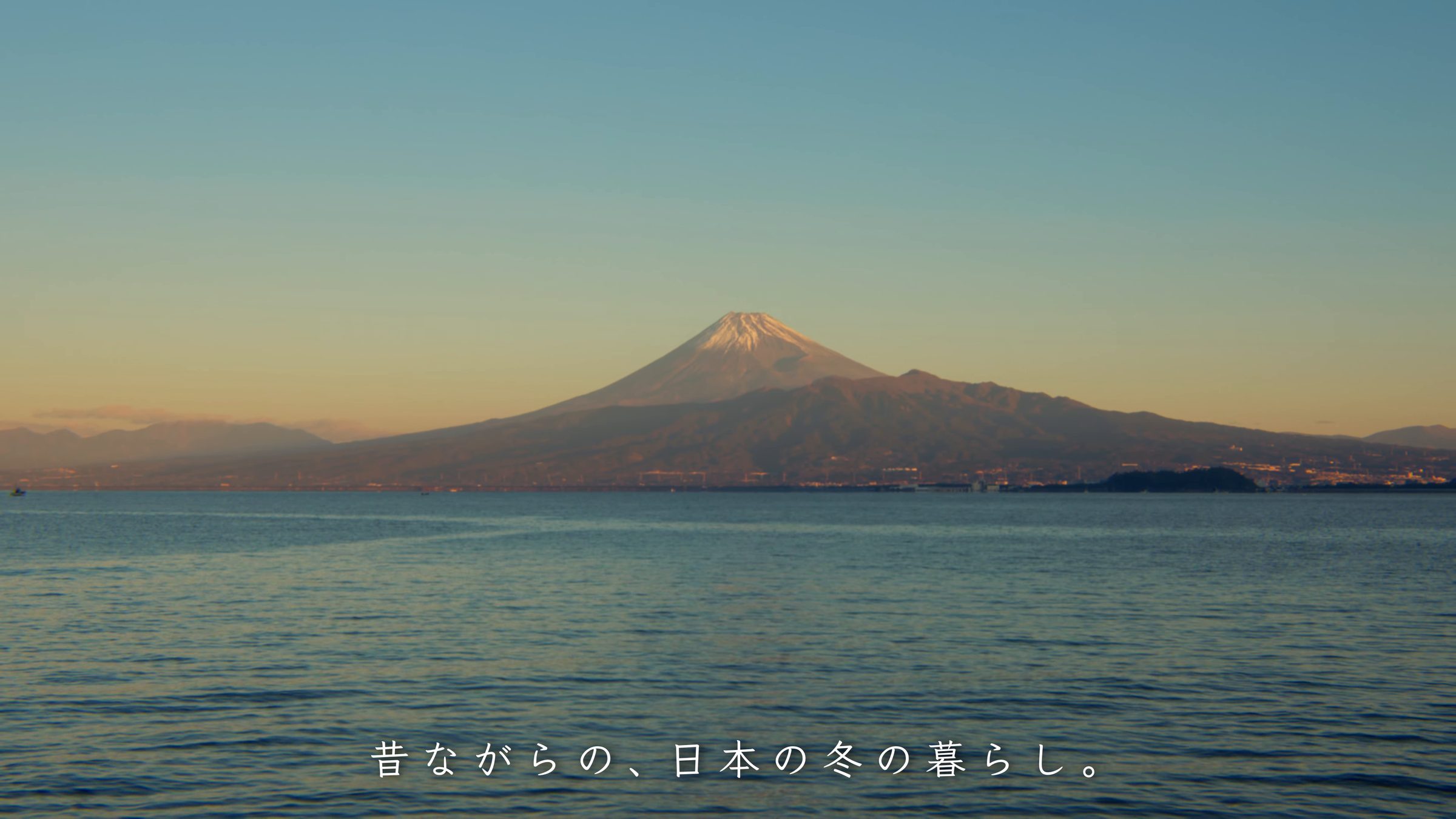
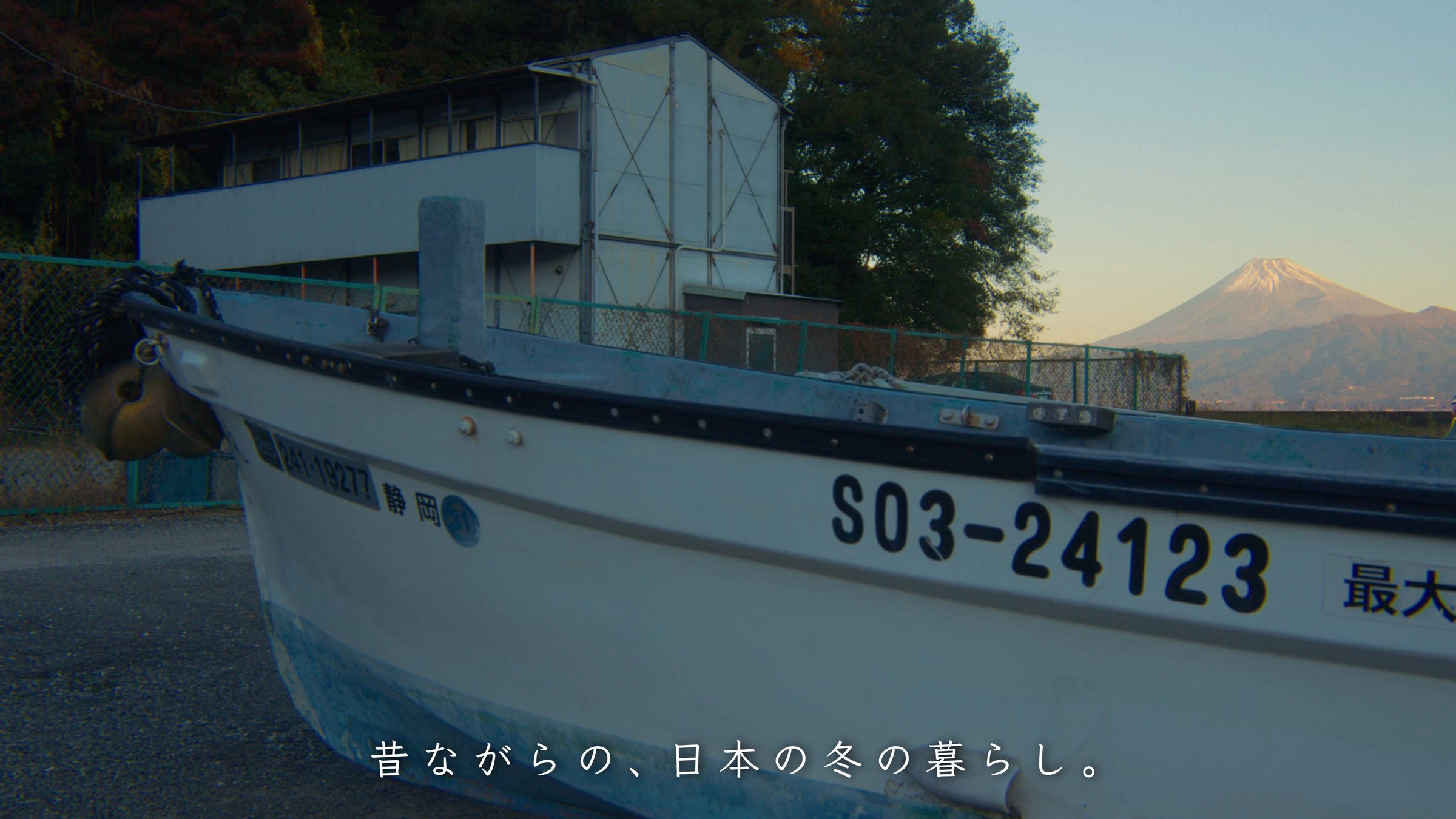
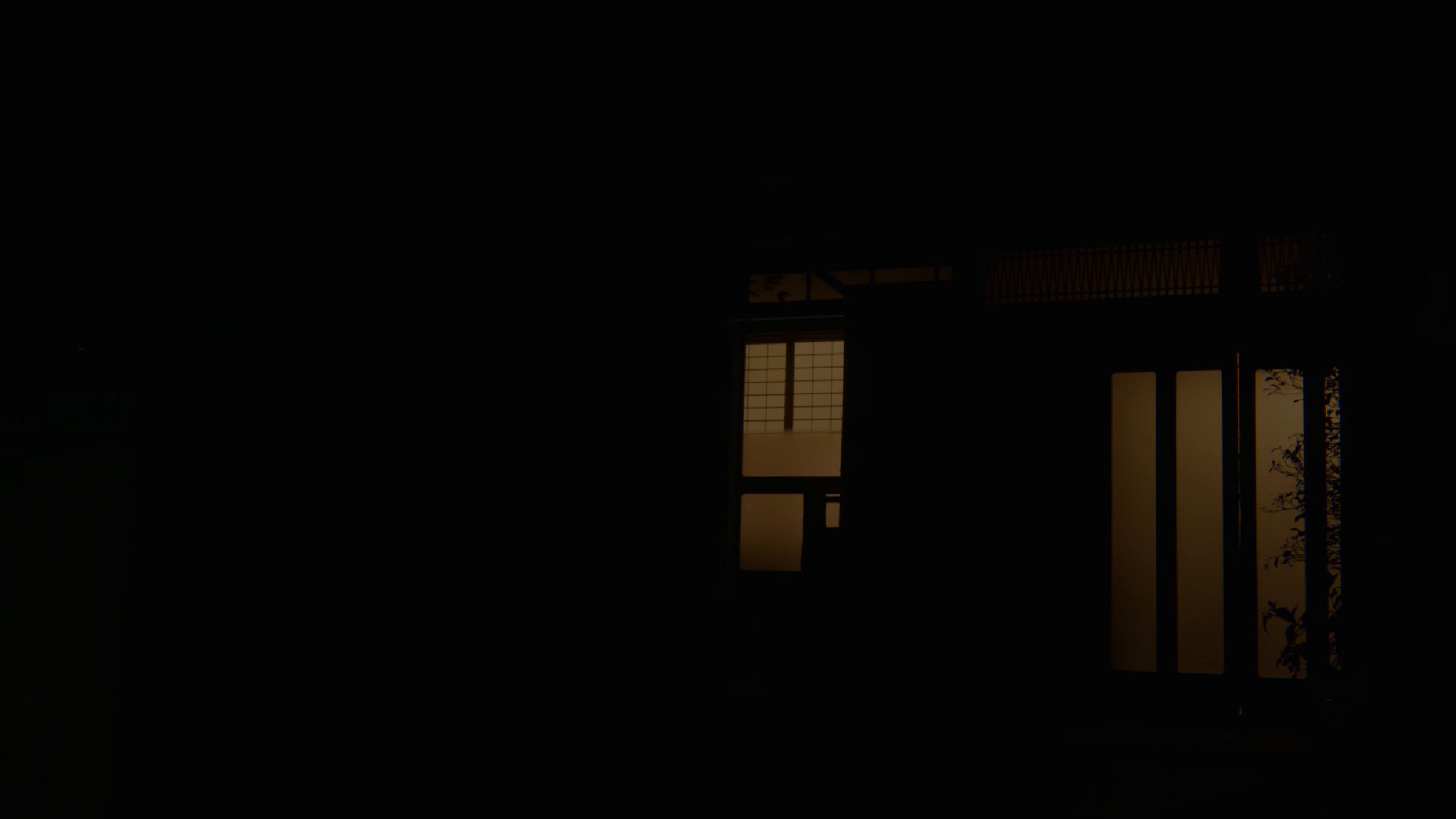
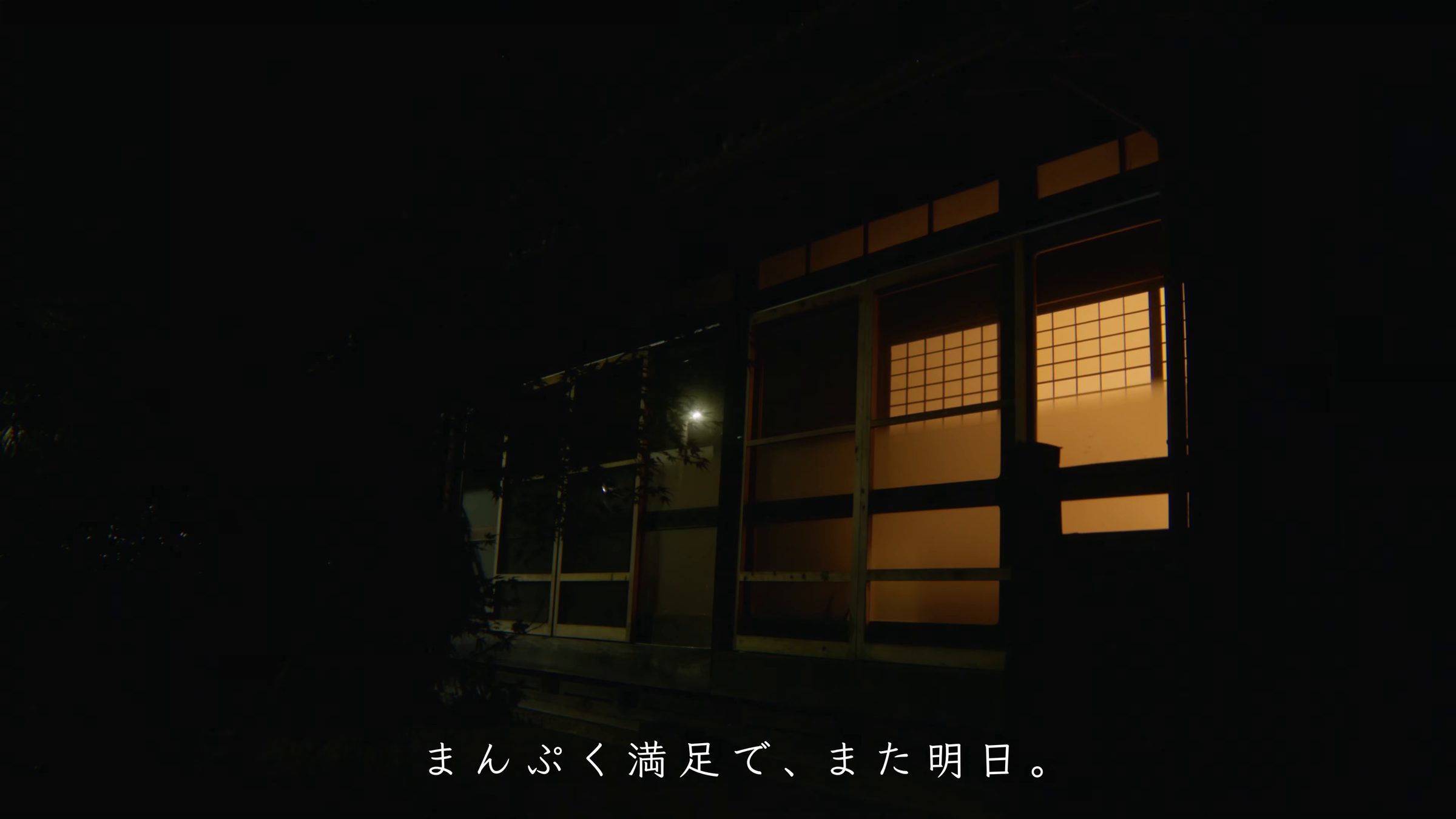
As the sun sank, Mt. Fuji across Suruga Bay turned the color of the sunset. Beyond a fishing boat pulled up on land, there was Mt. Fuji again. An old-fashioned Japanese winter. At night, the windows of the old house glowed.
Watch this scene on YouTube5:06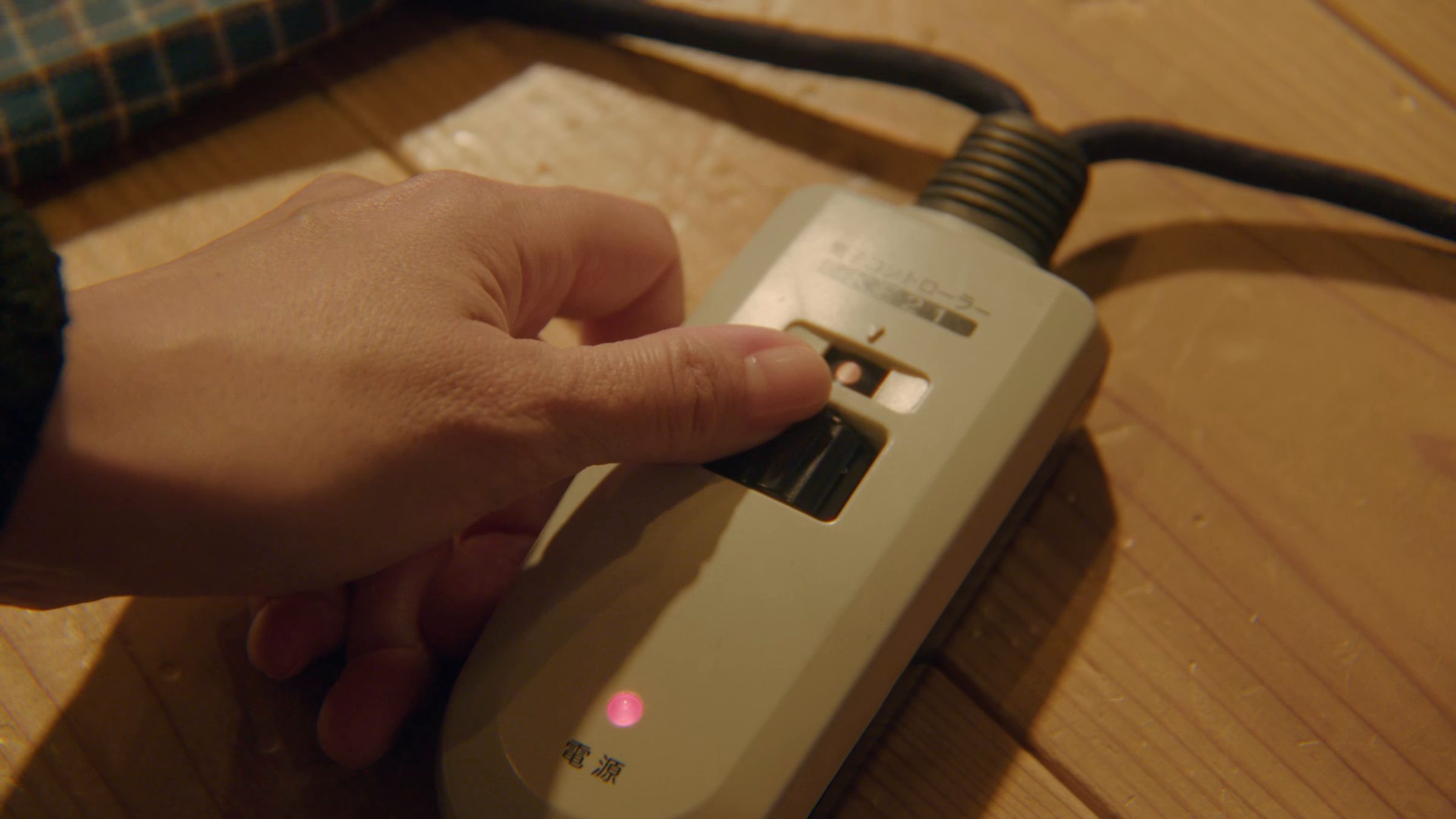
10TRAVEL JOURNAL
Making a Numazu bowl from the treasures of Suruga Bay
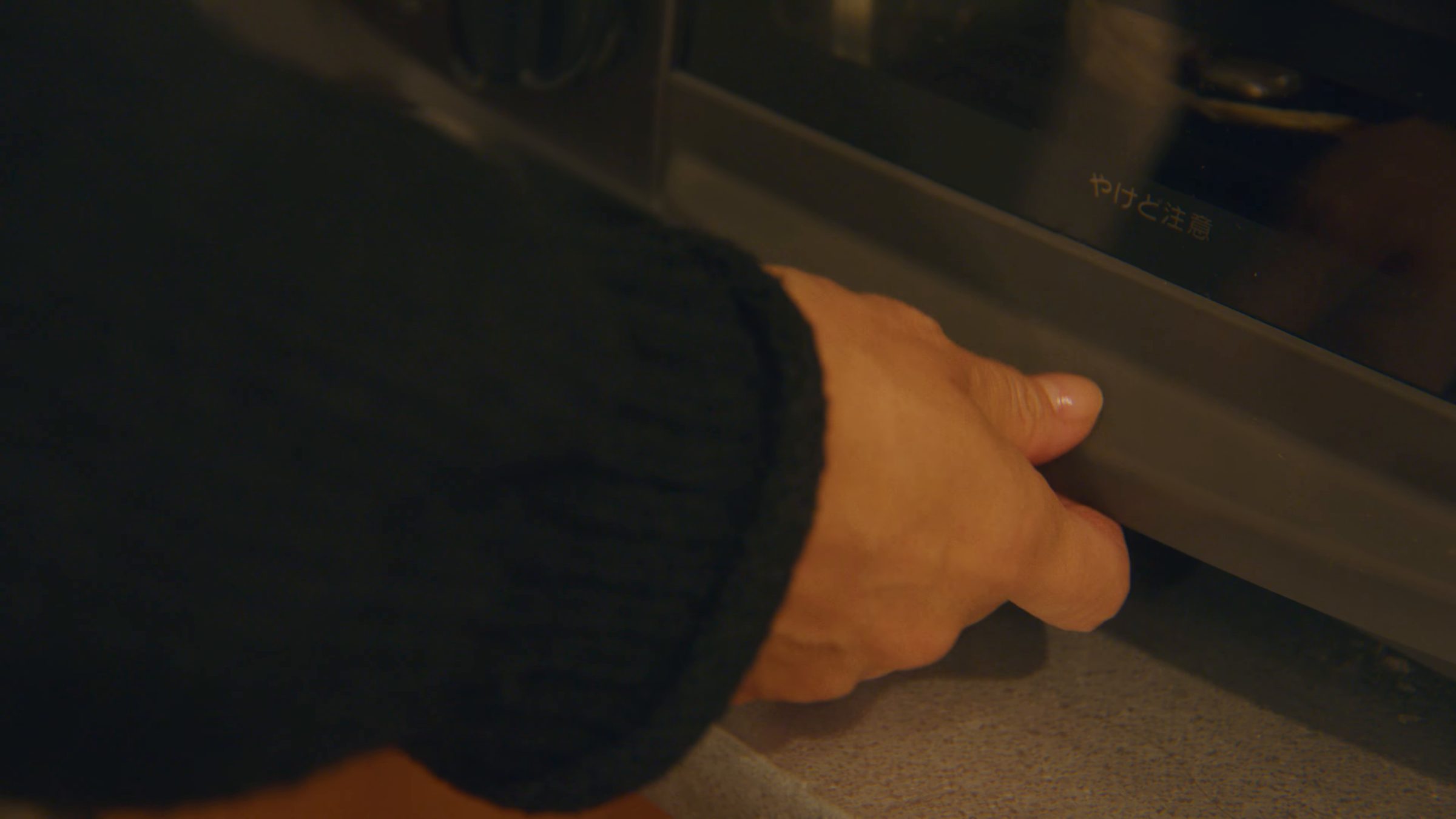
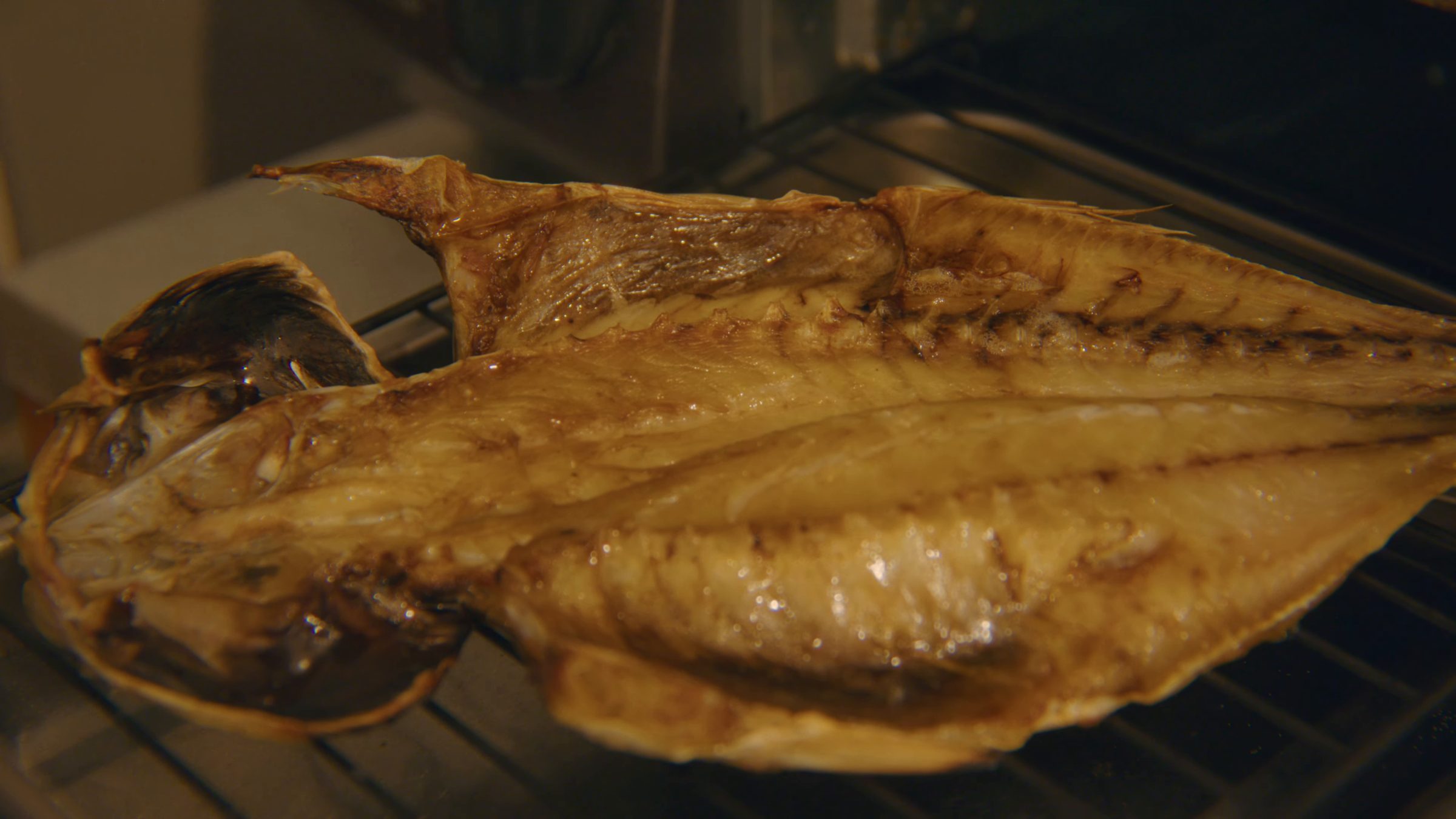
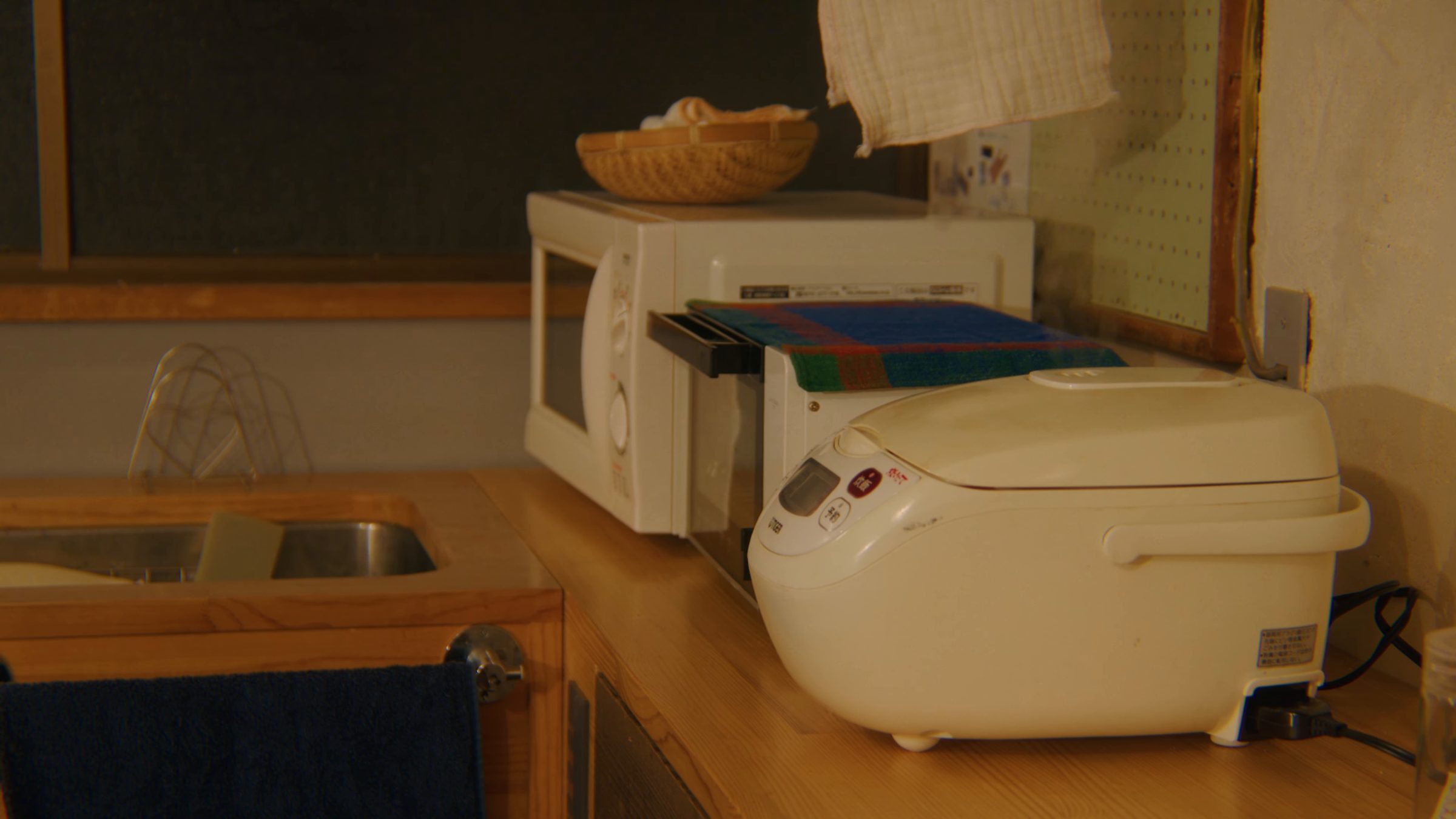
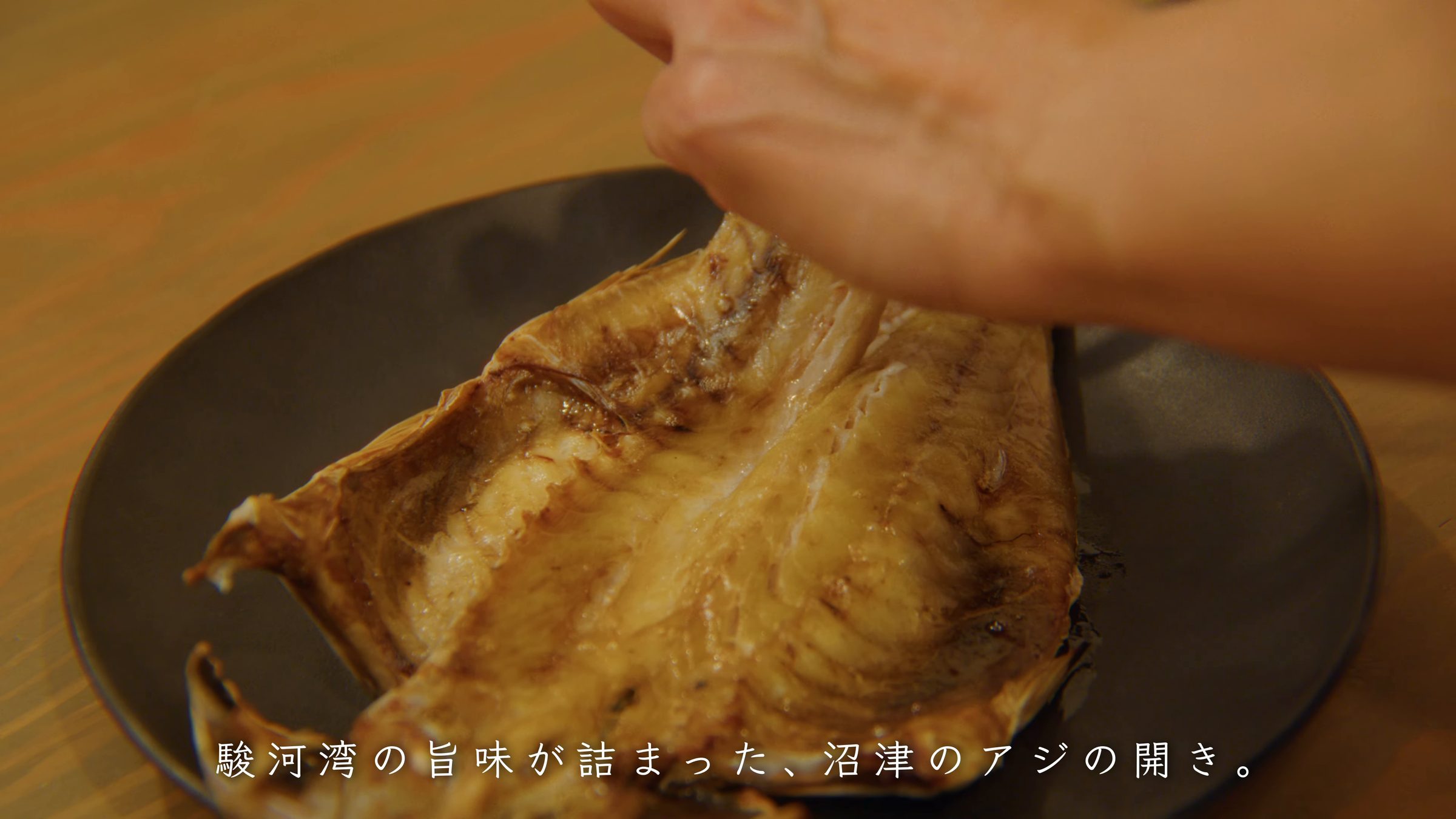
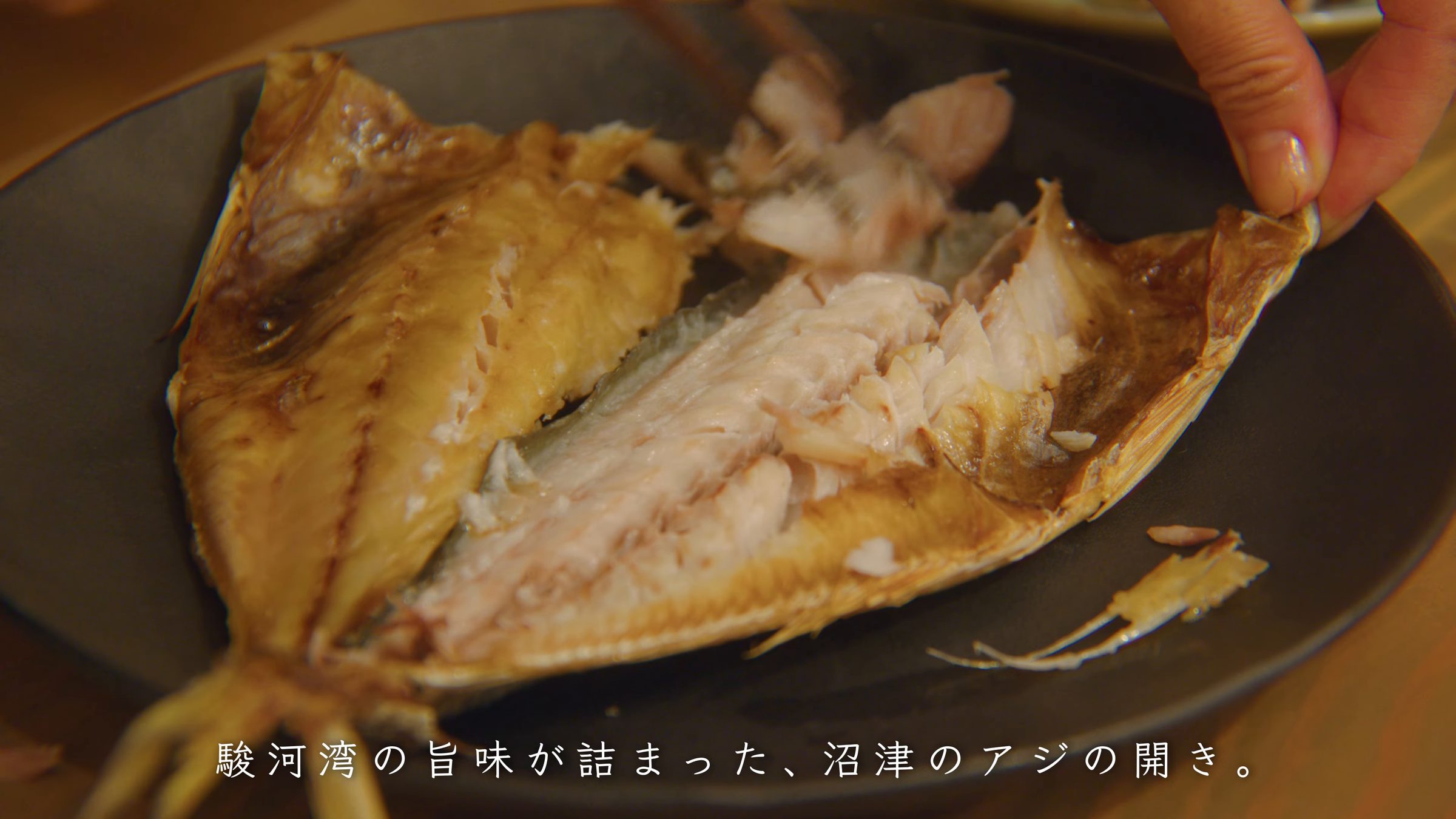
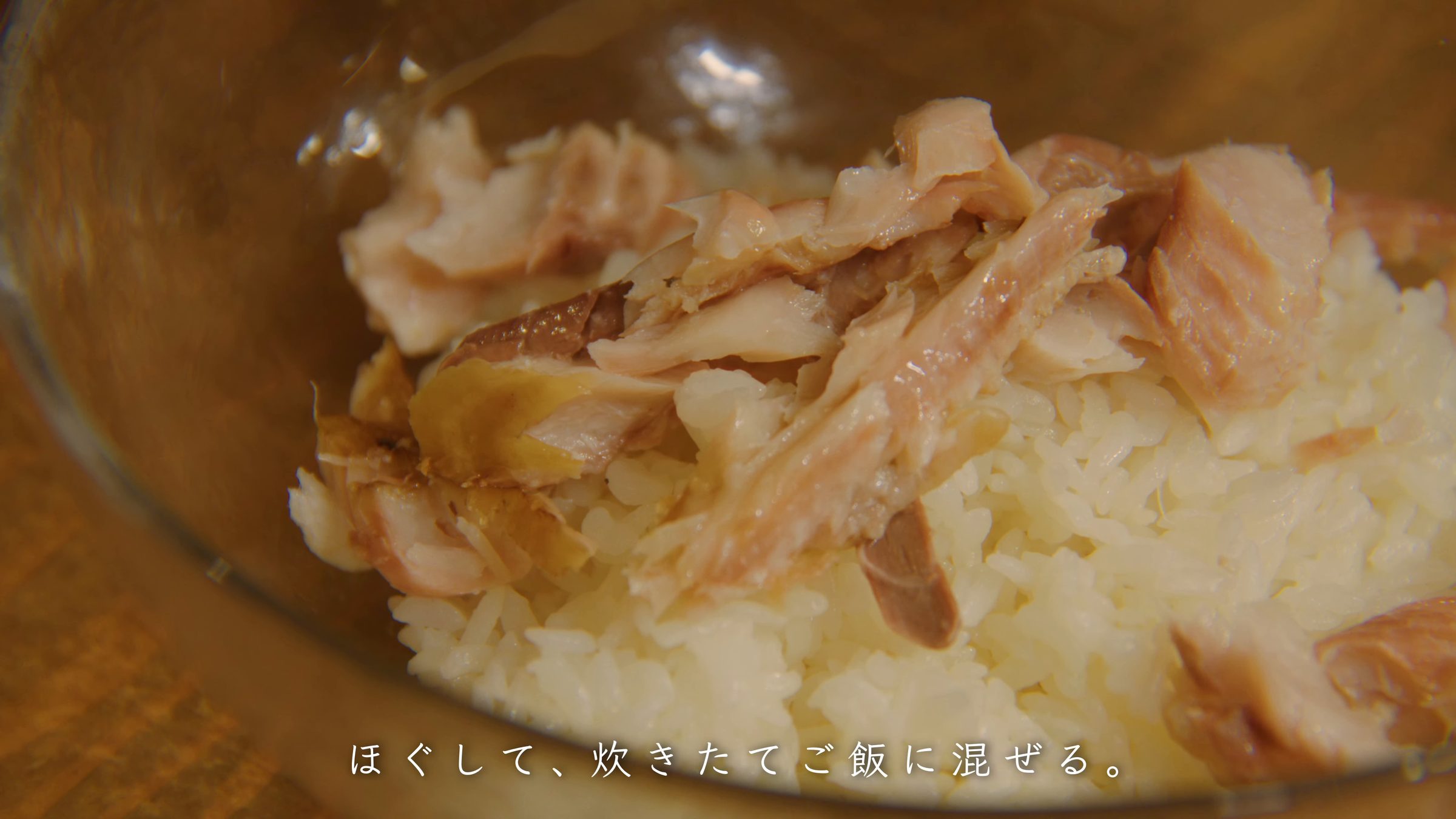
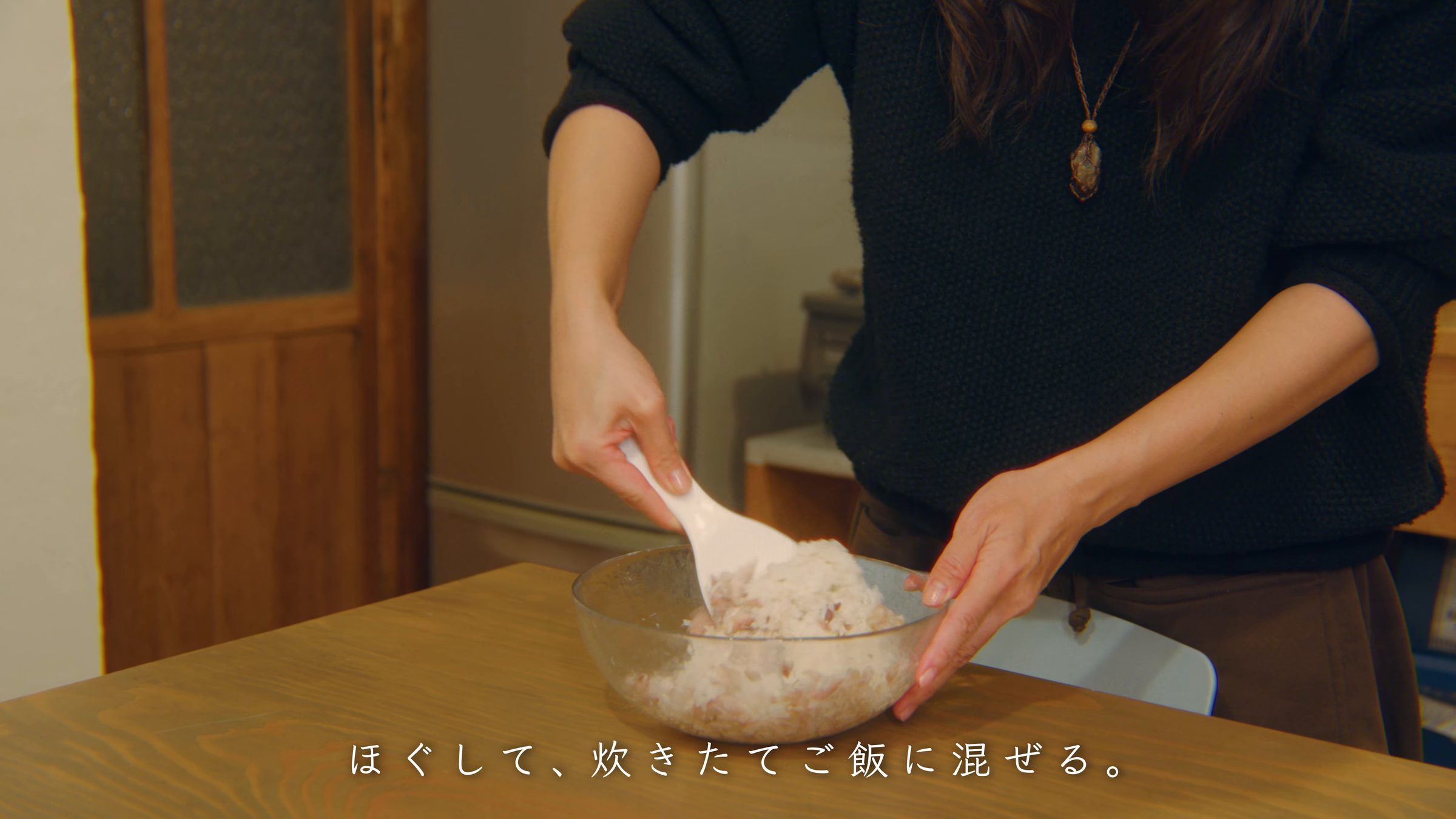
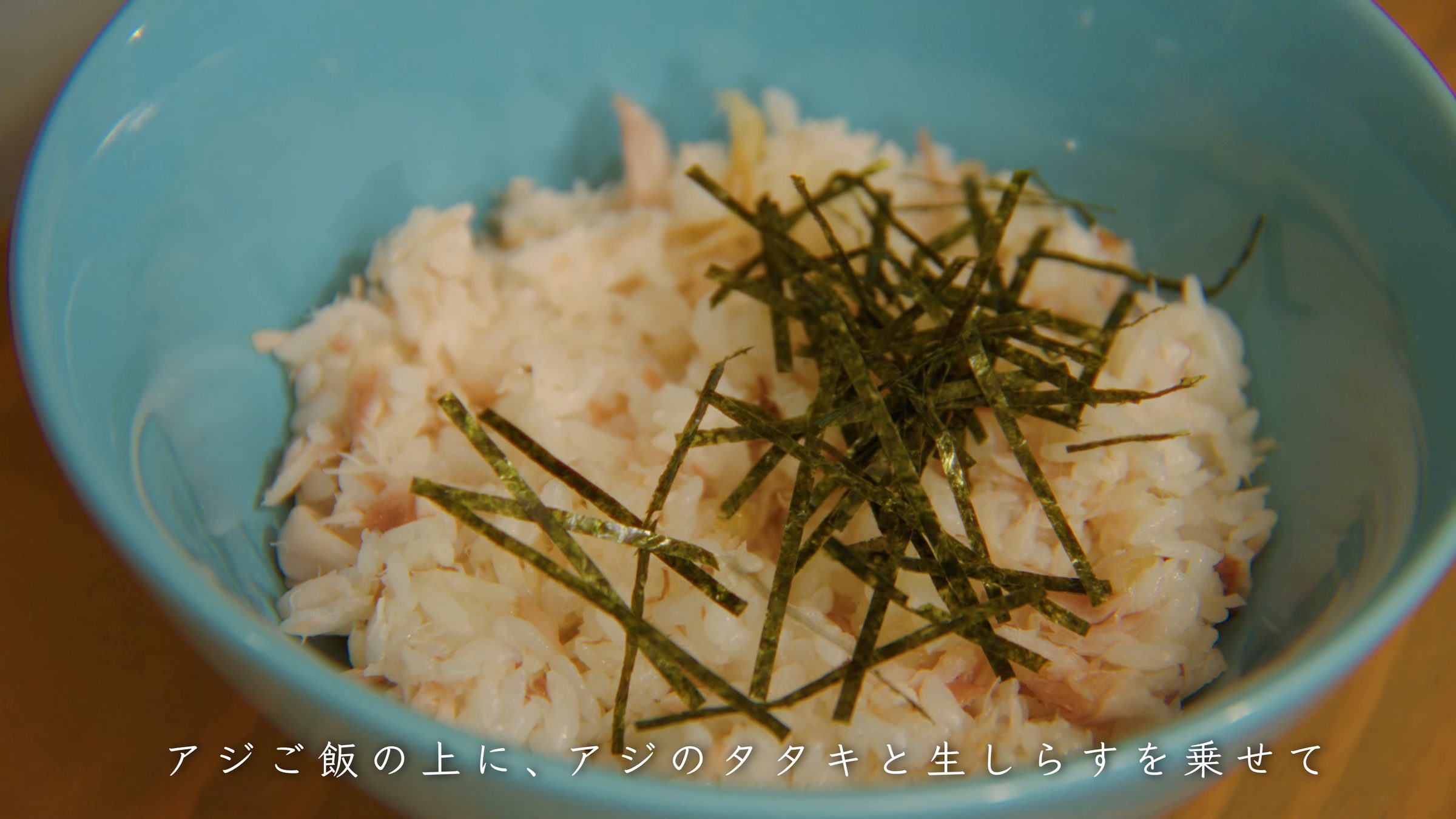
Time to make dinner. I opened the grill and cooked Numazu's dried horse mackerel, packed with the flavor of Suruga Bay. When the rice cooker was done, I took the grilled fish off the bones and mixed it into the hot rice.
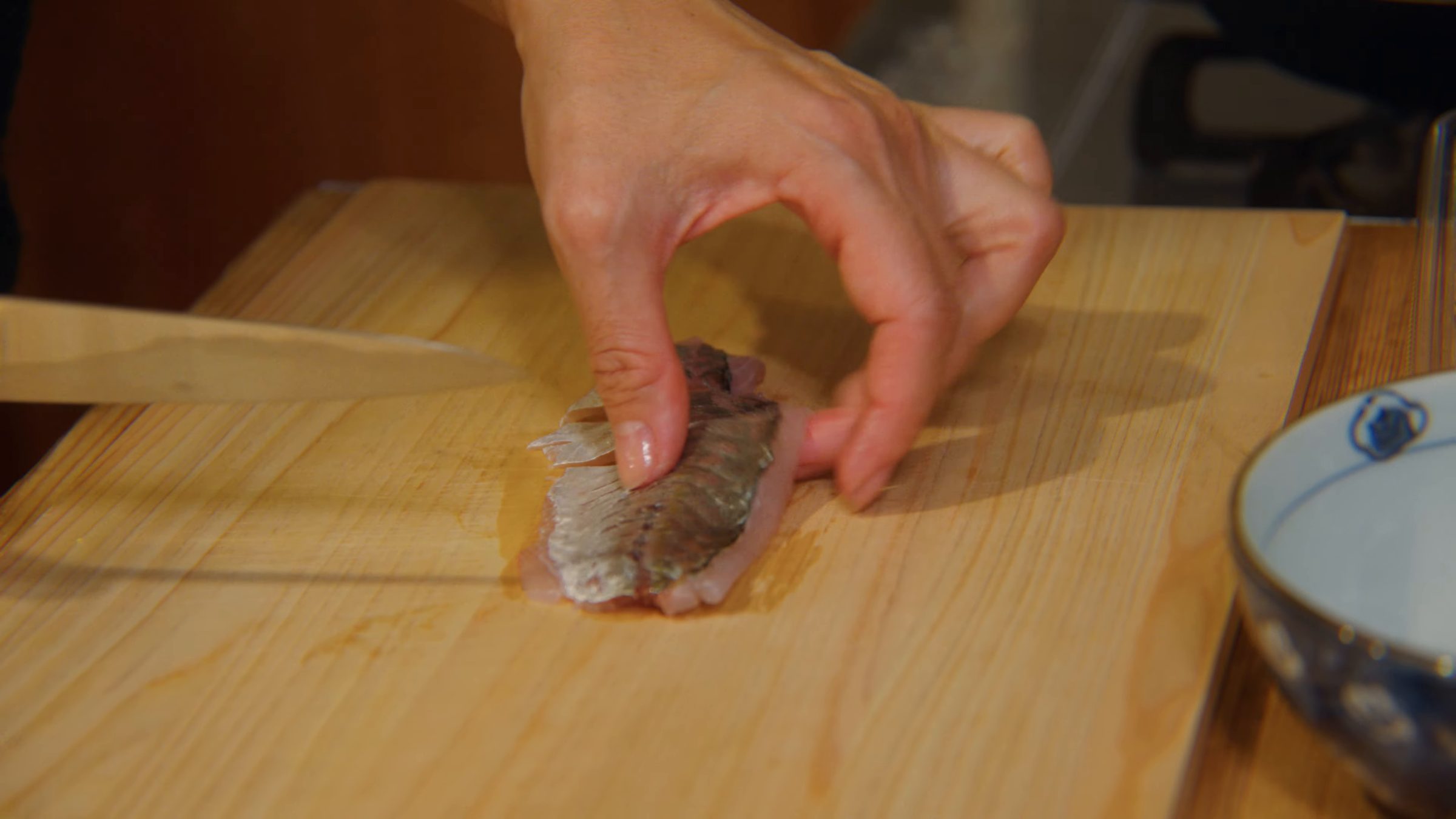
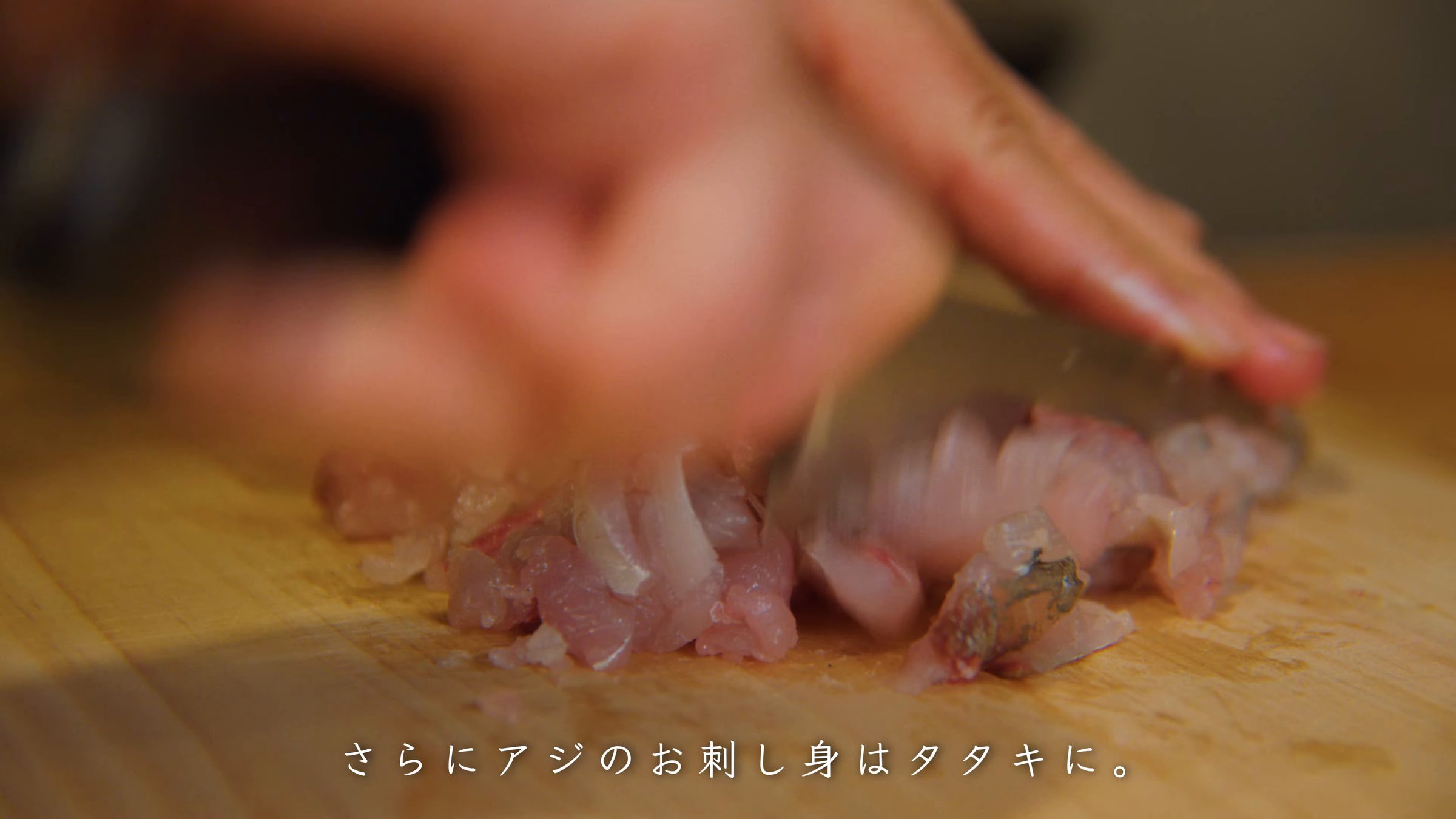
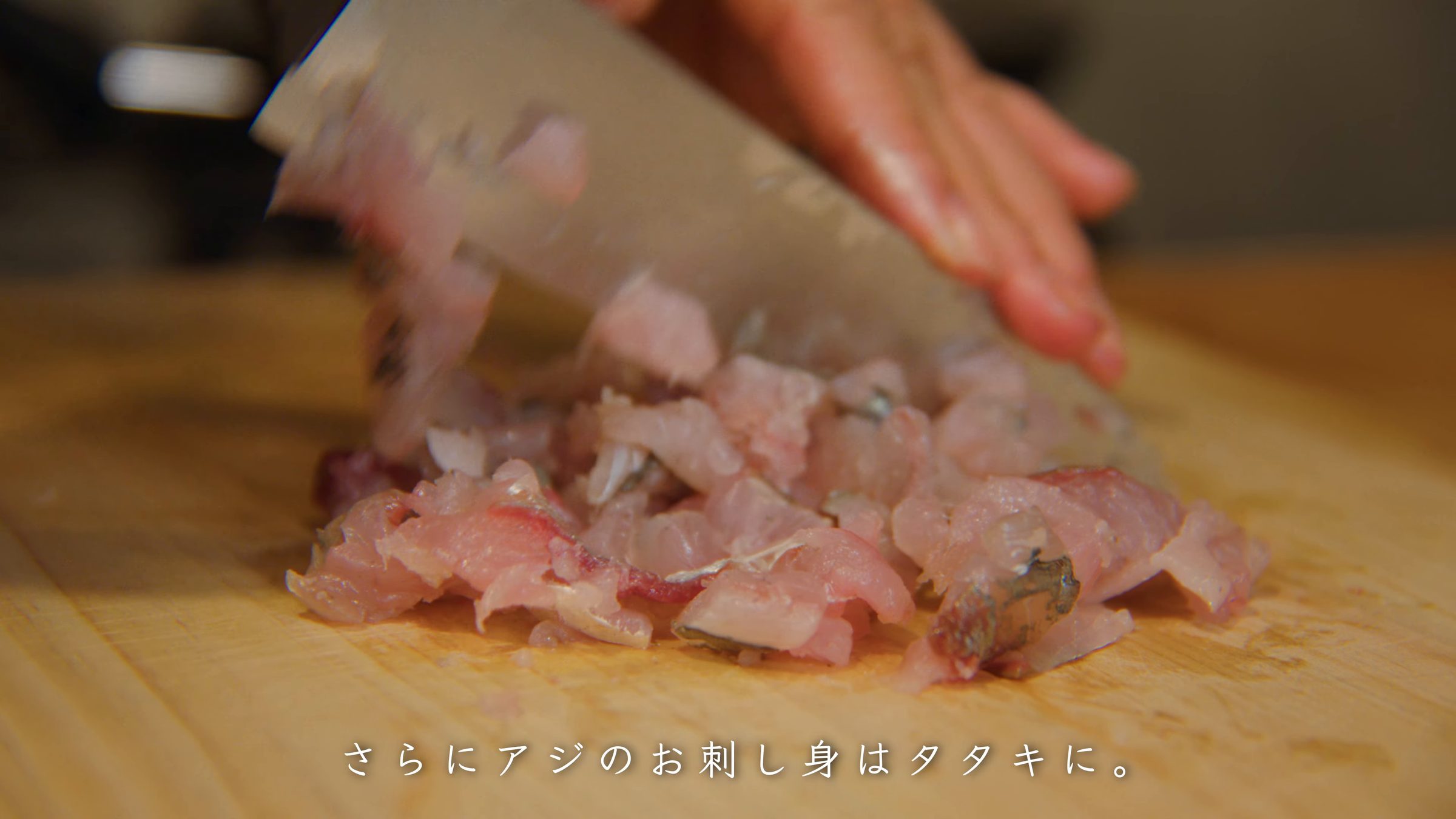
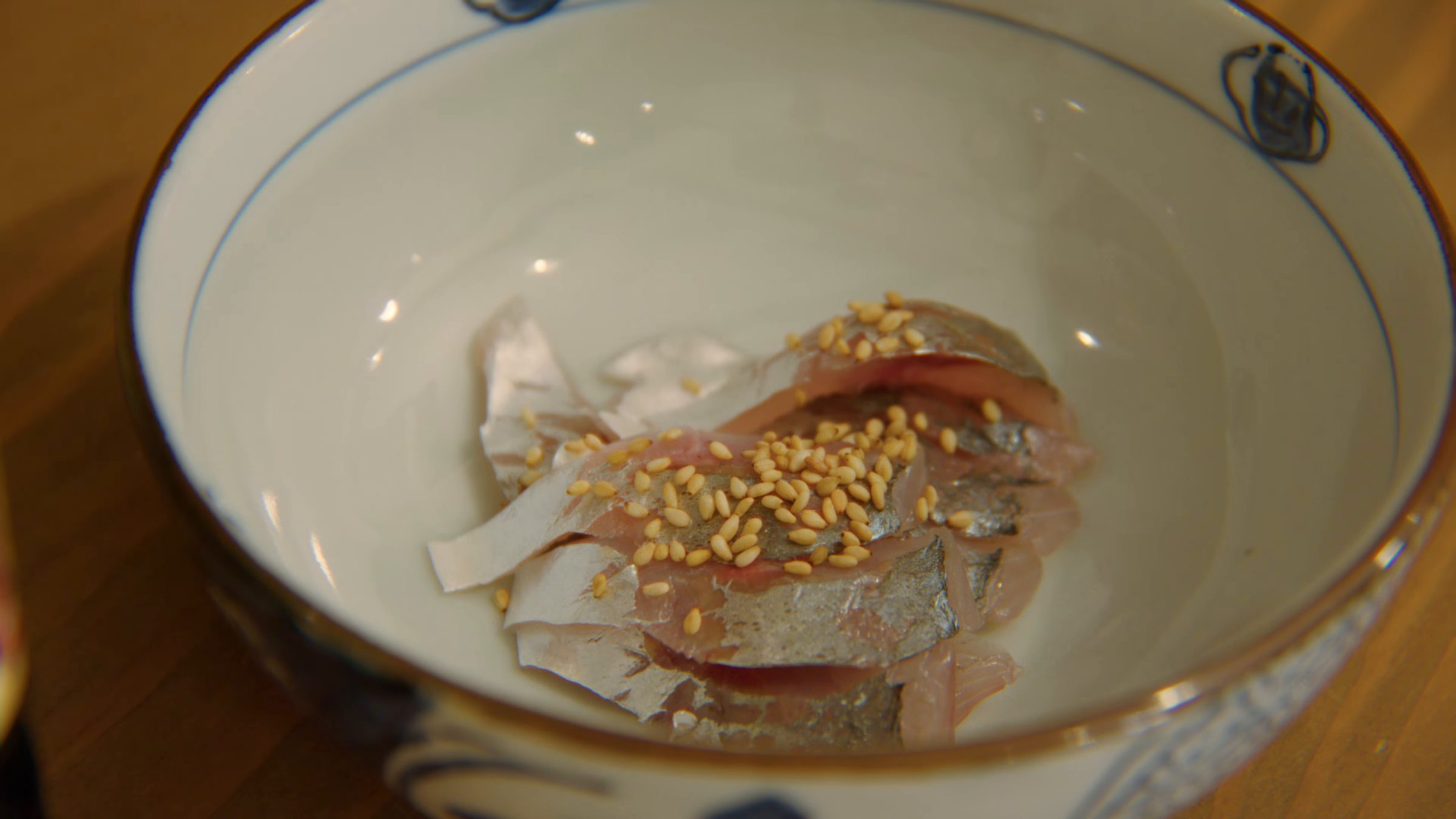
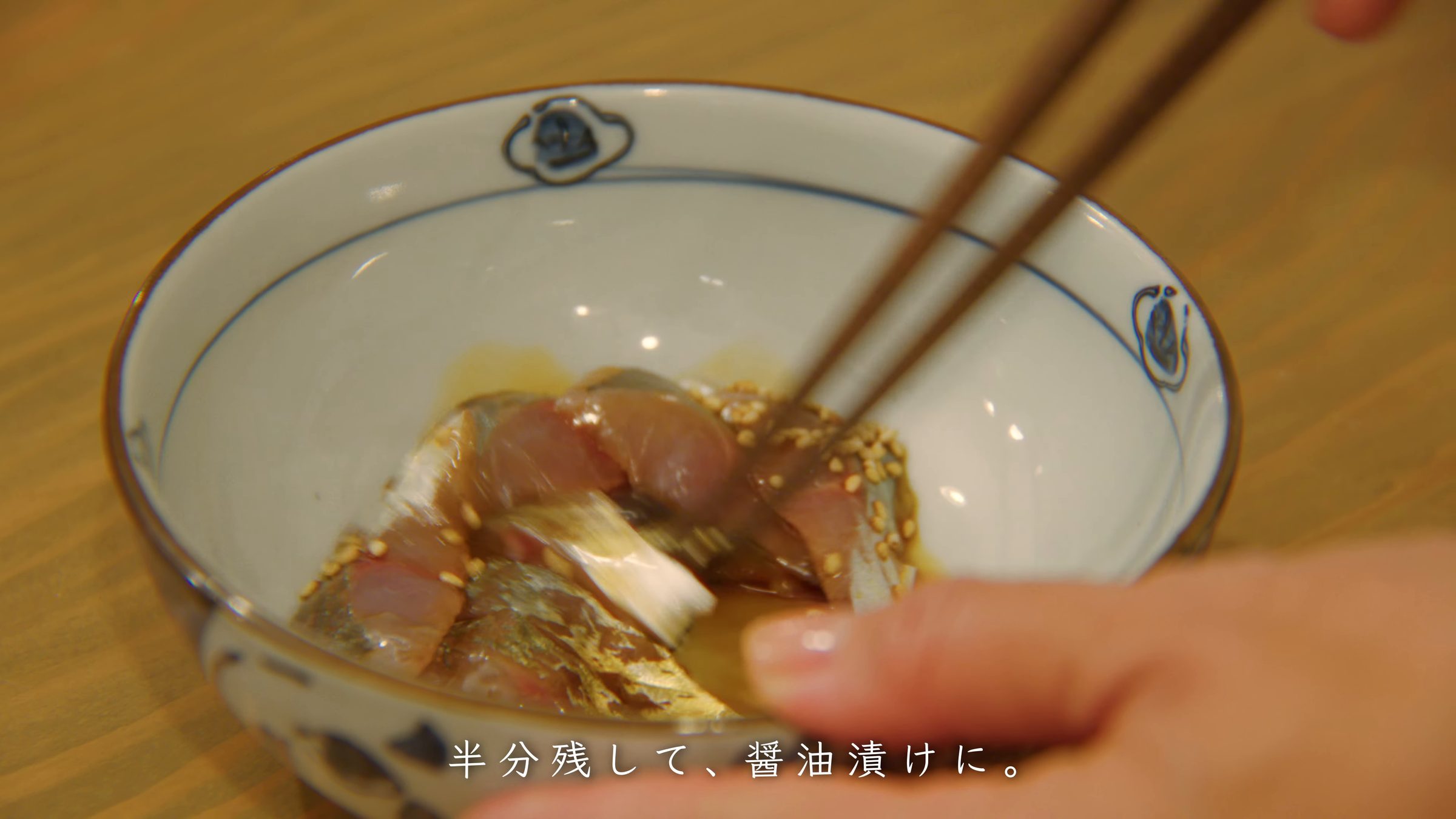
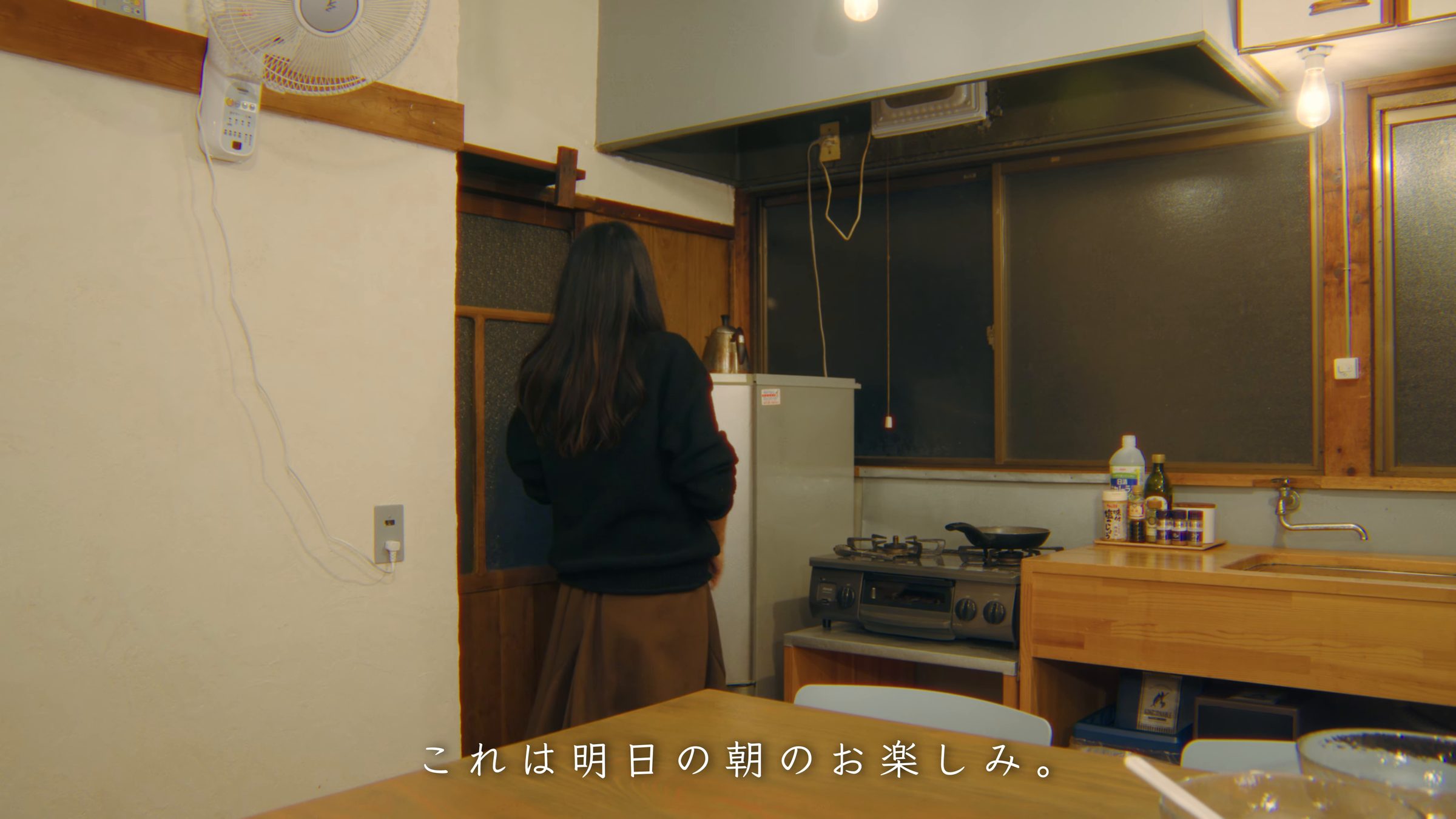
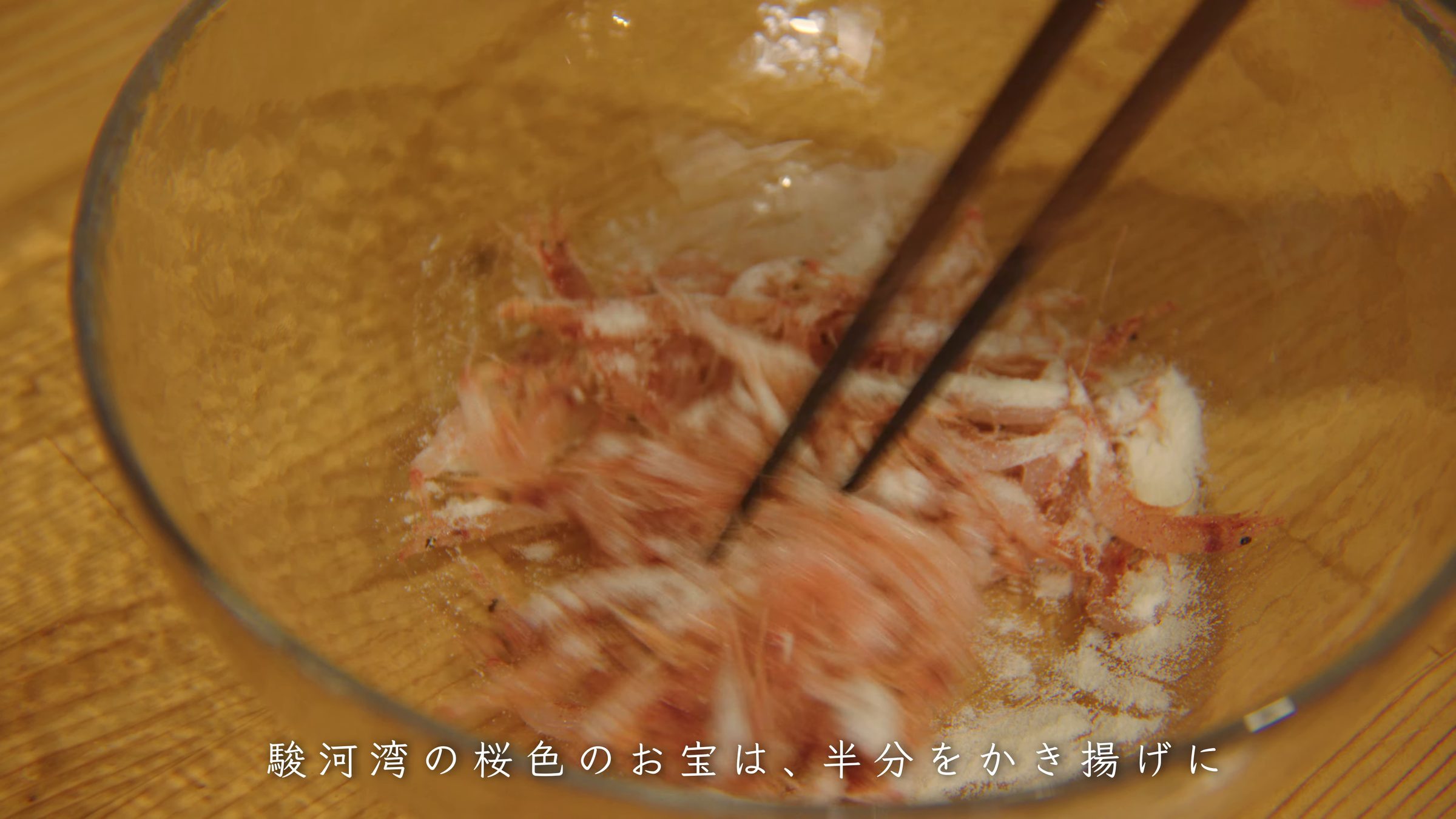
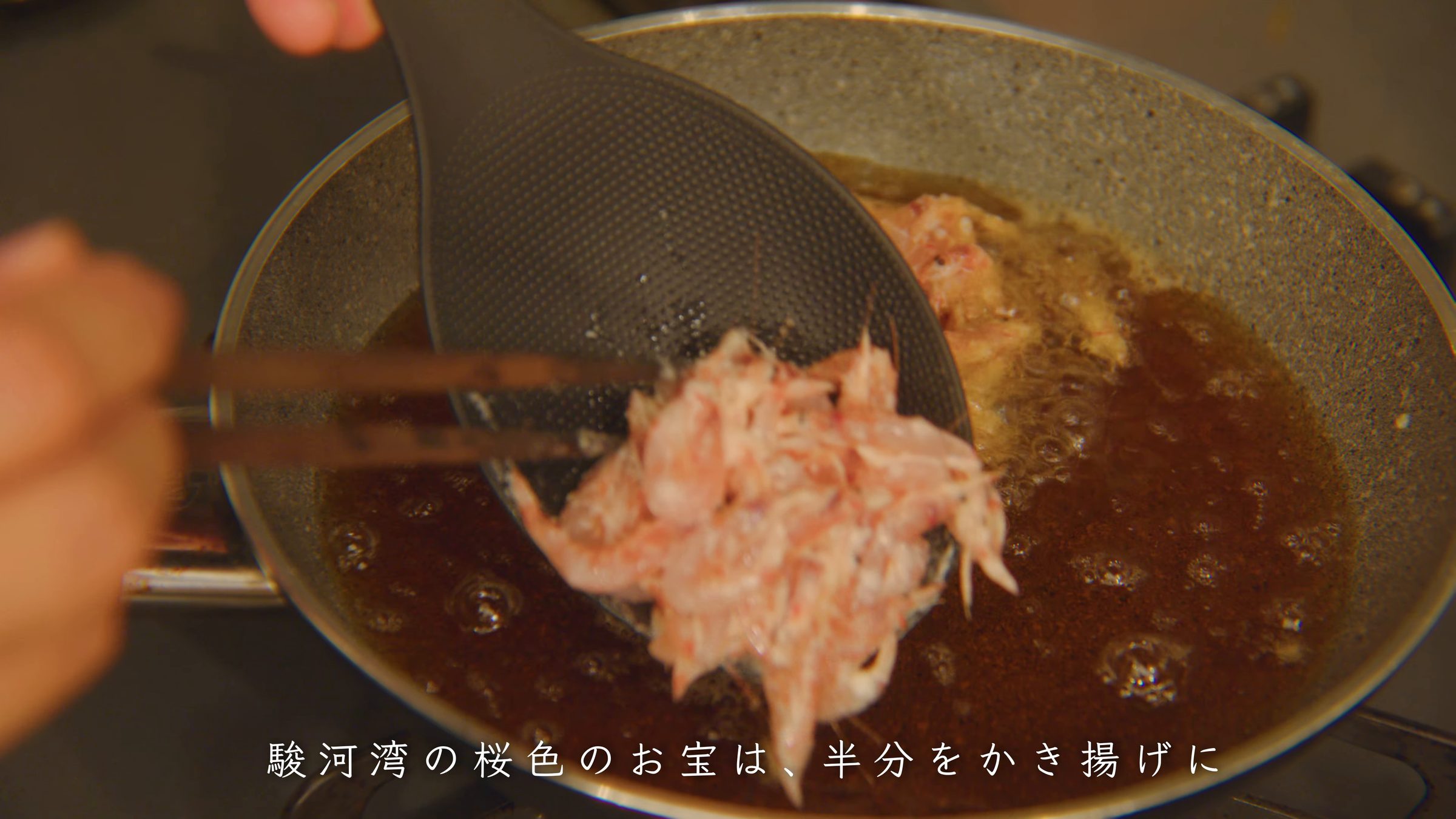
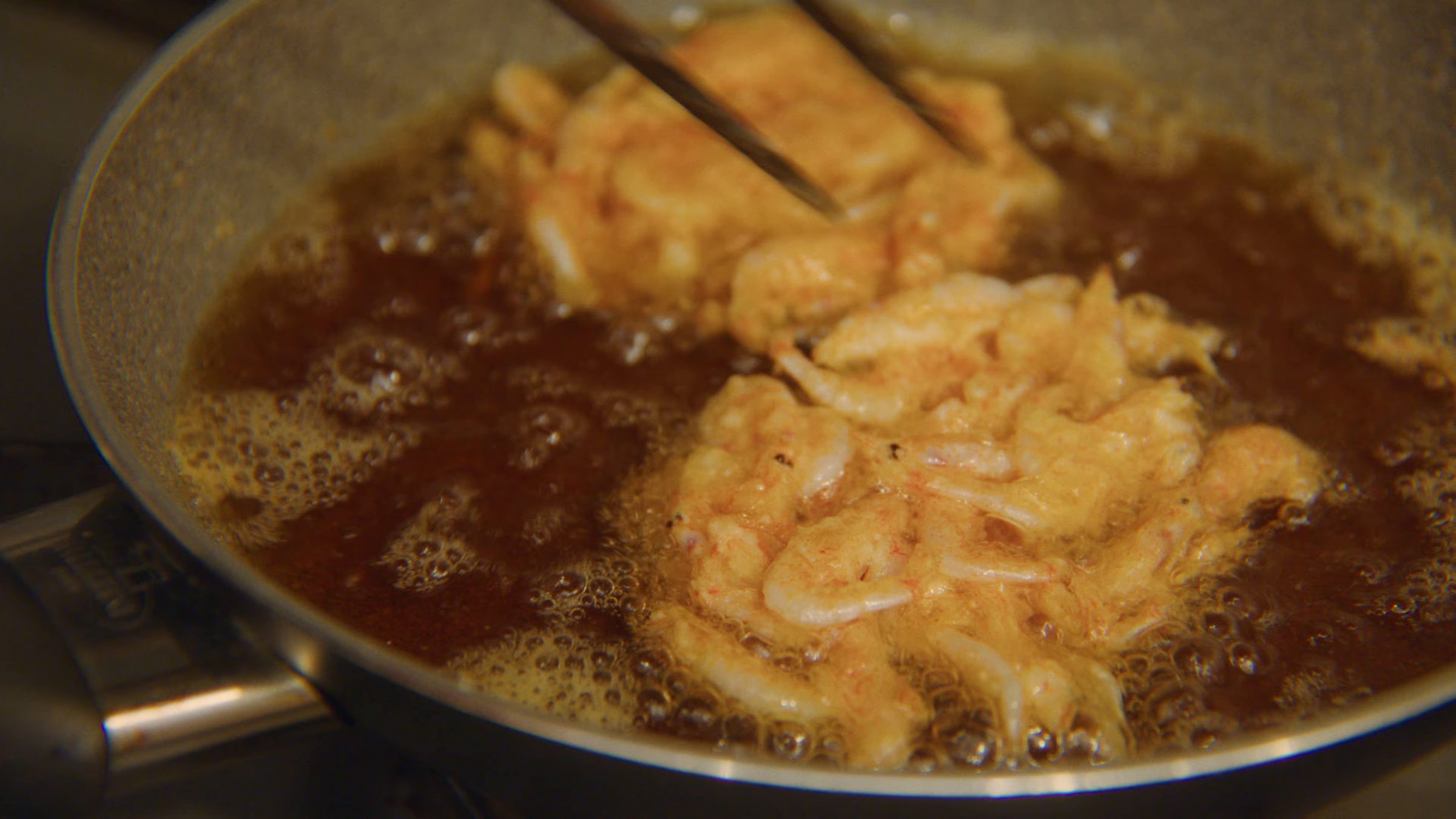
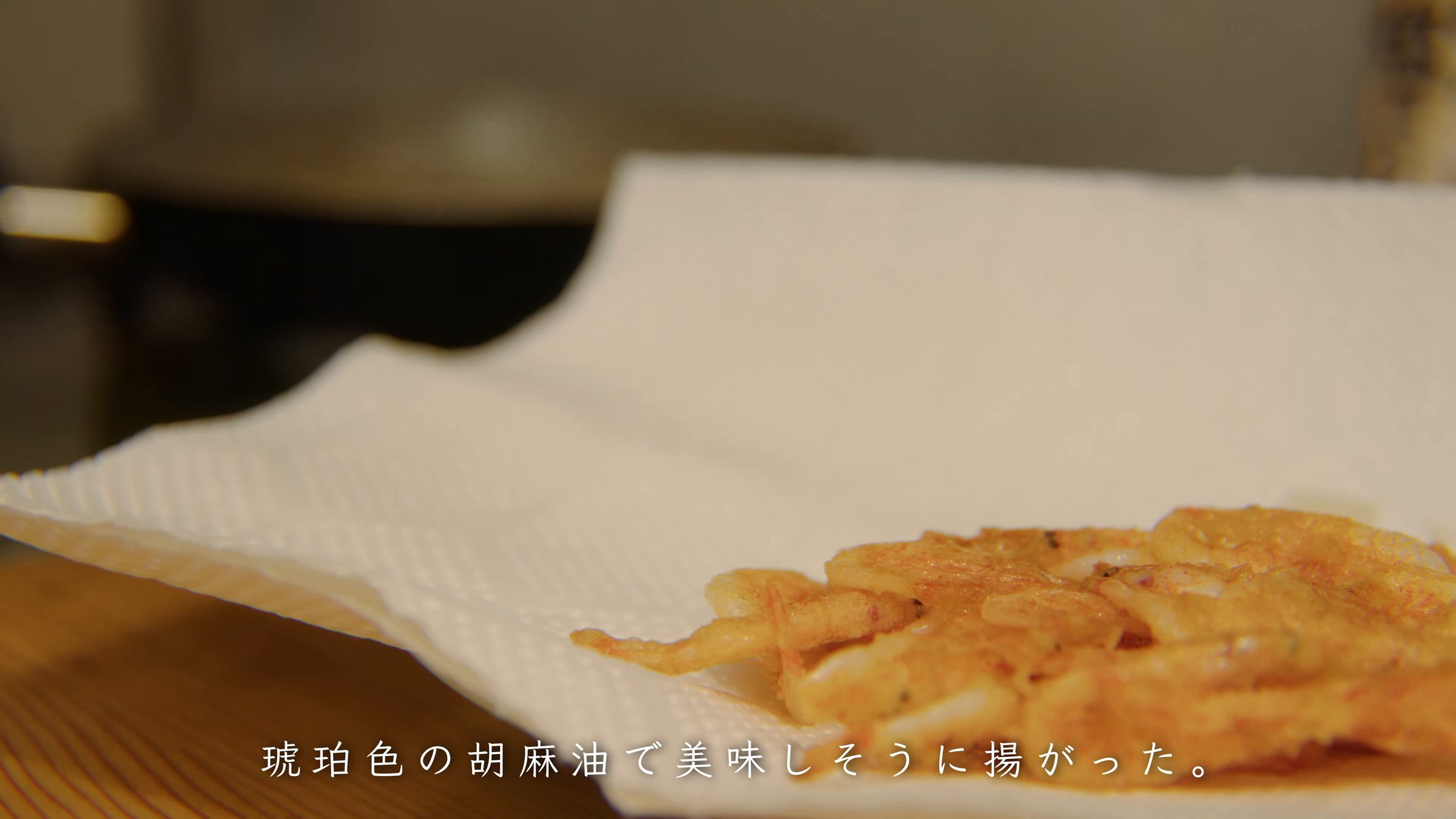
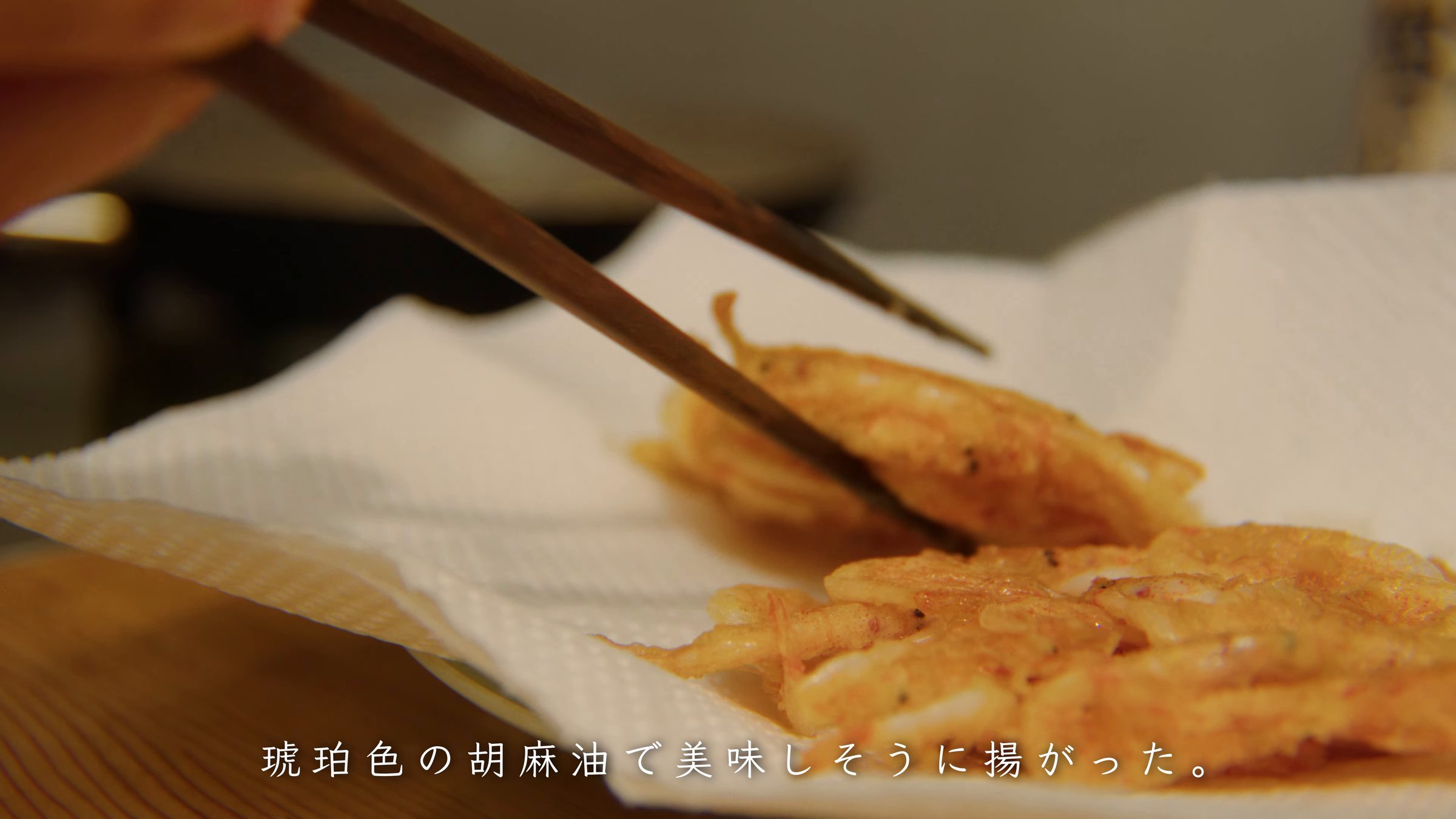
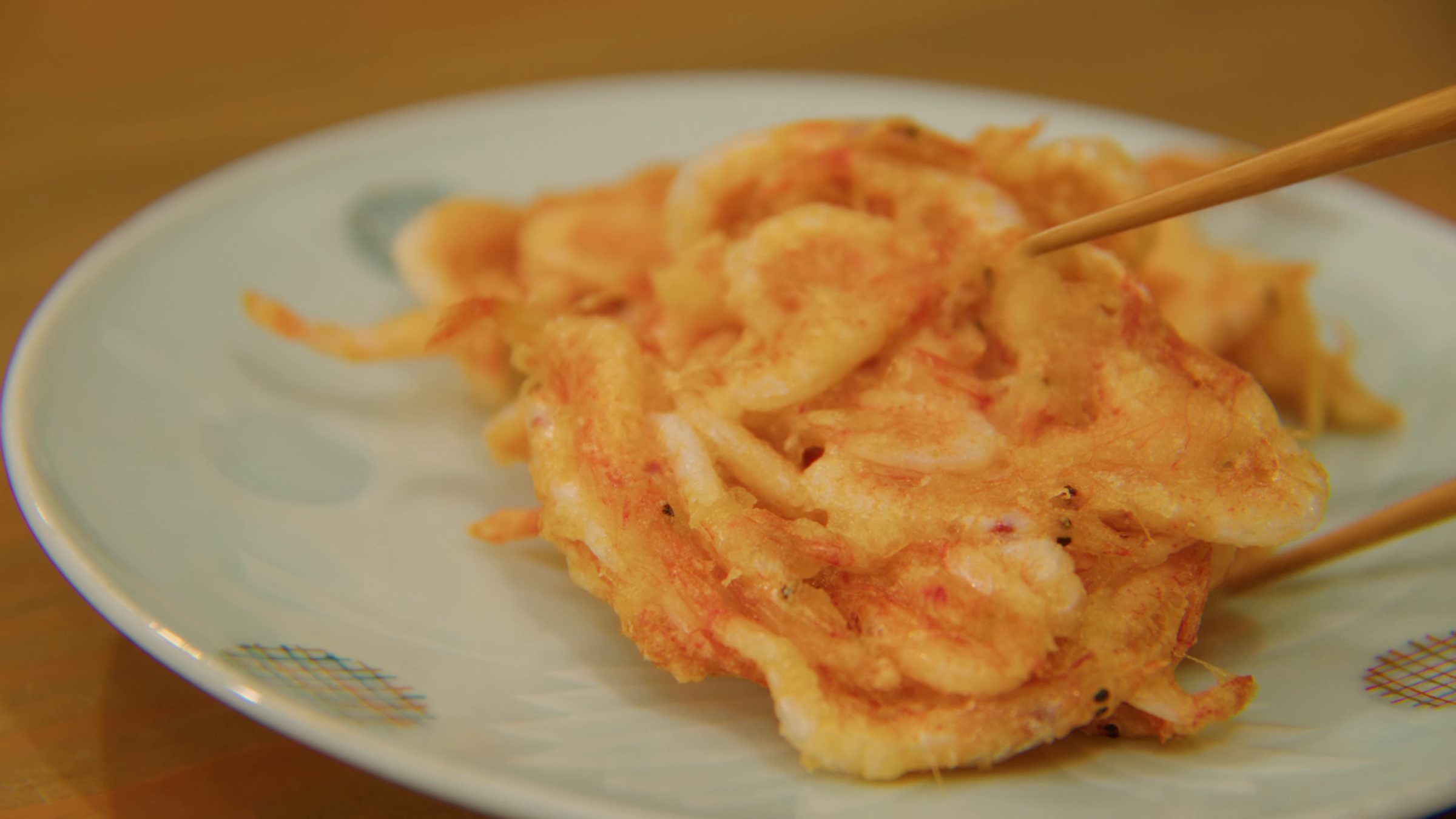
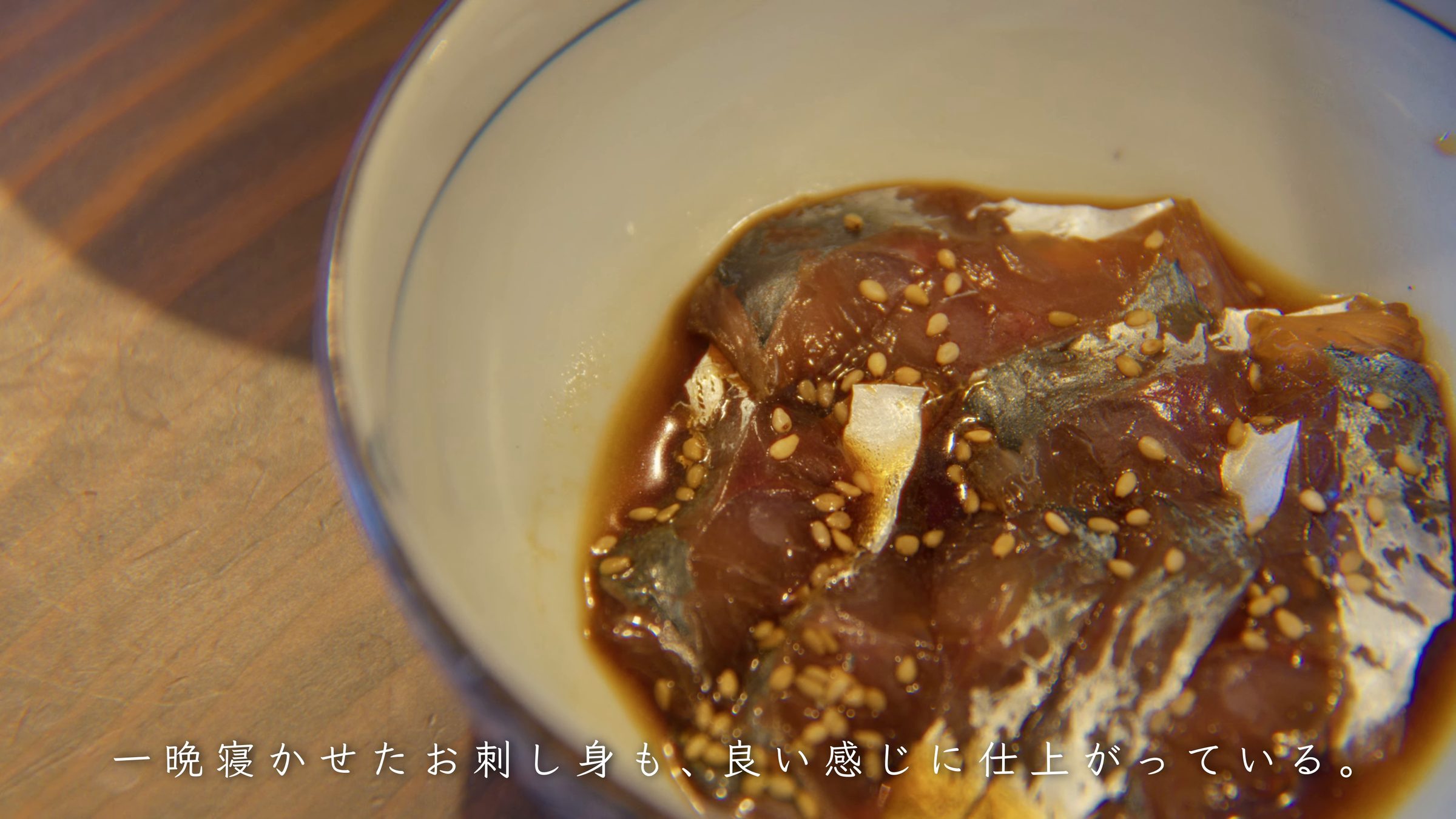
The horse mackerel sashimi became tataki: I chopped it fine with a knife, and set half of it aside in a bowl with white sesame and soy sauce to marinate. Something to look forward to tomorrow morning. Half of the cherry-colored treasures of Suruga Bay went into kakiage: mixed with batter and dropped into amber sesame oil, they fried up beautifully.
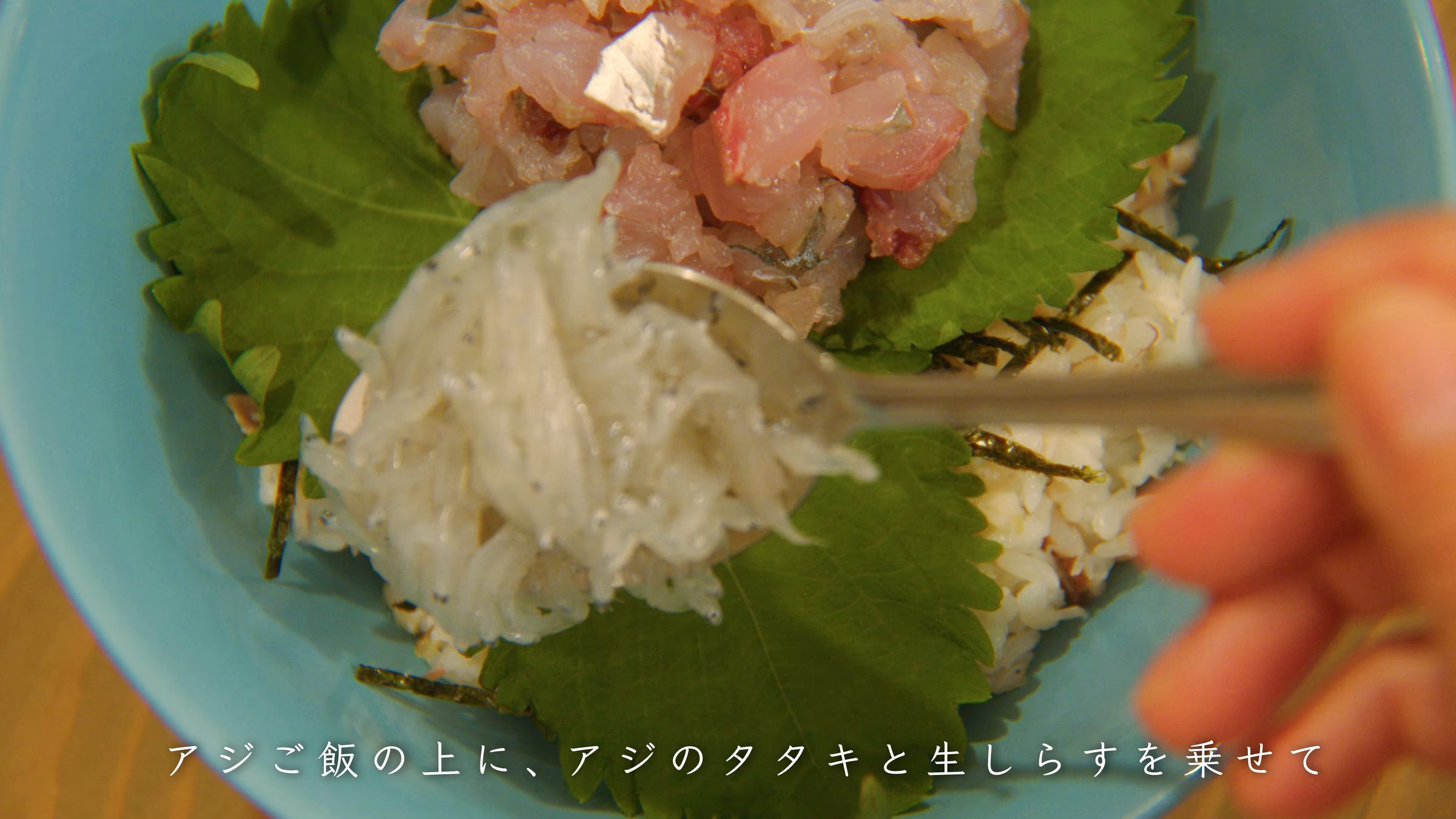
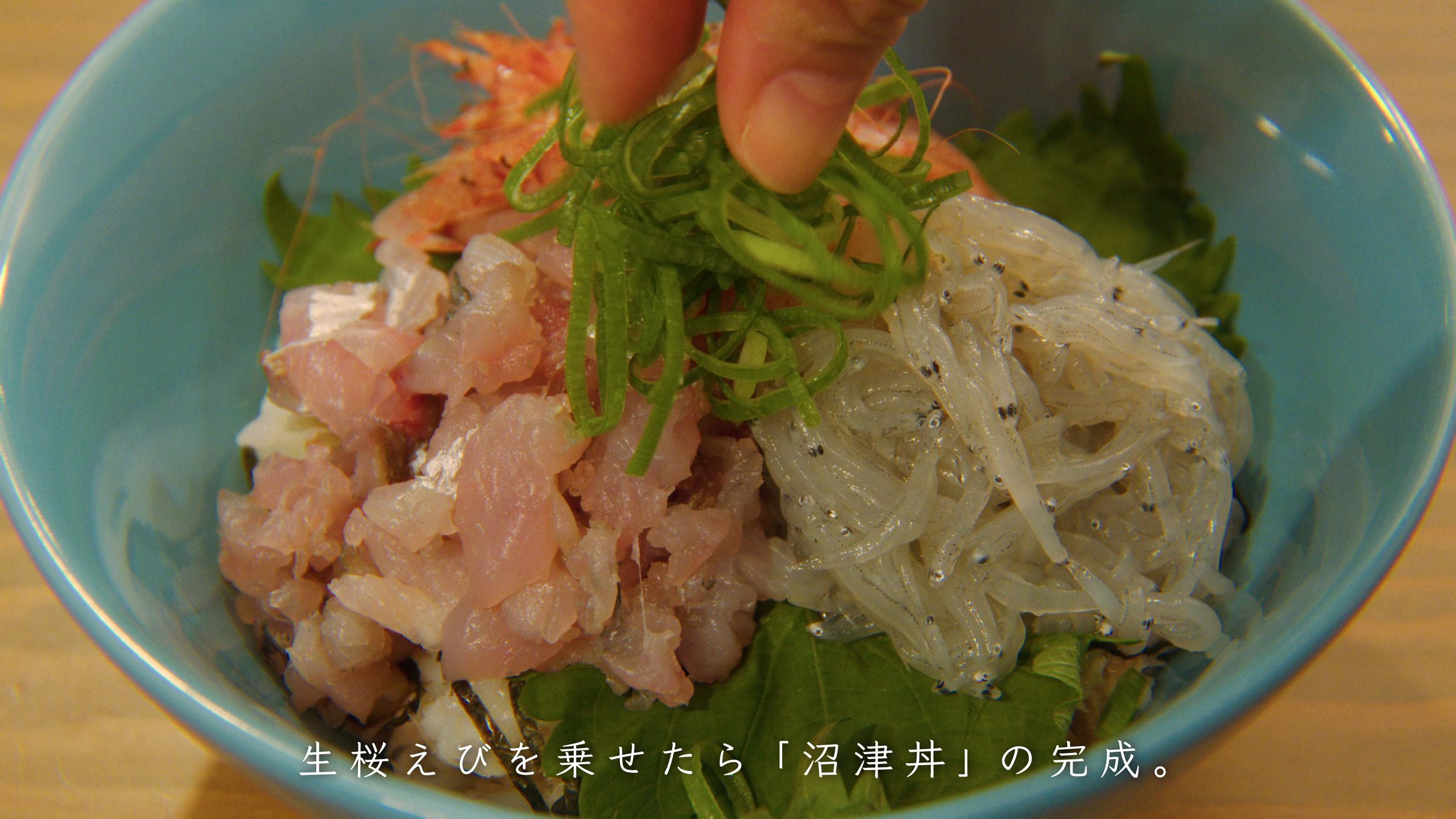
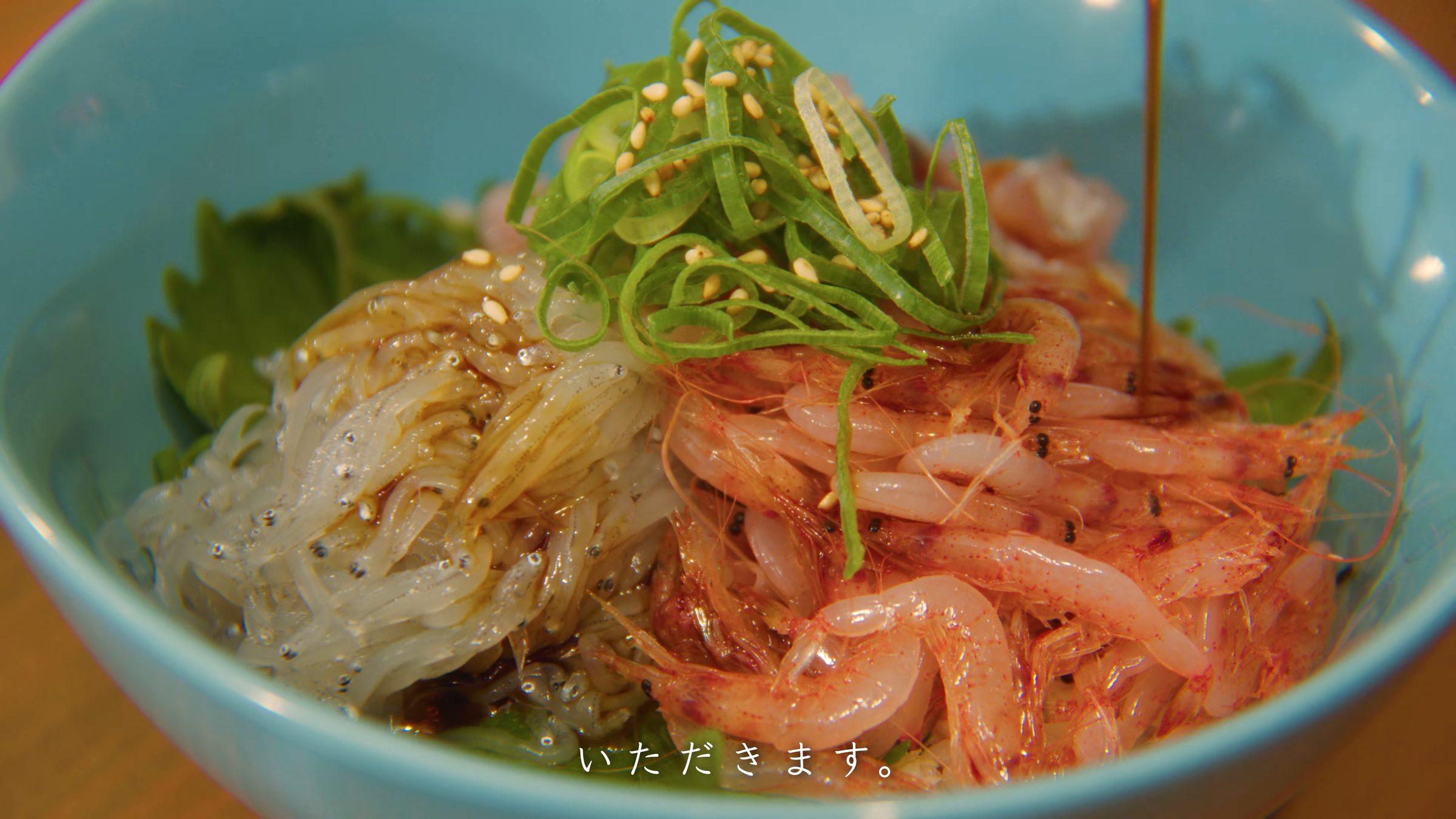
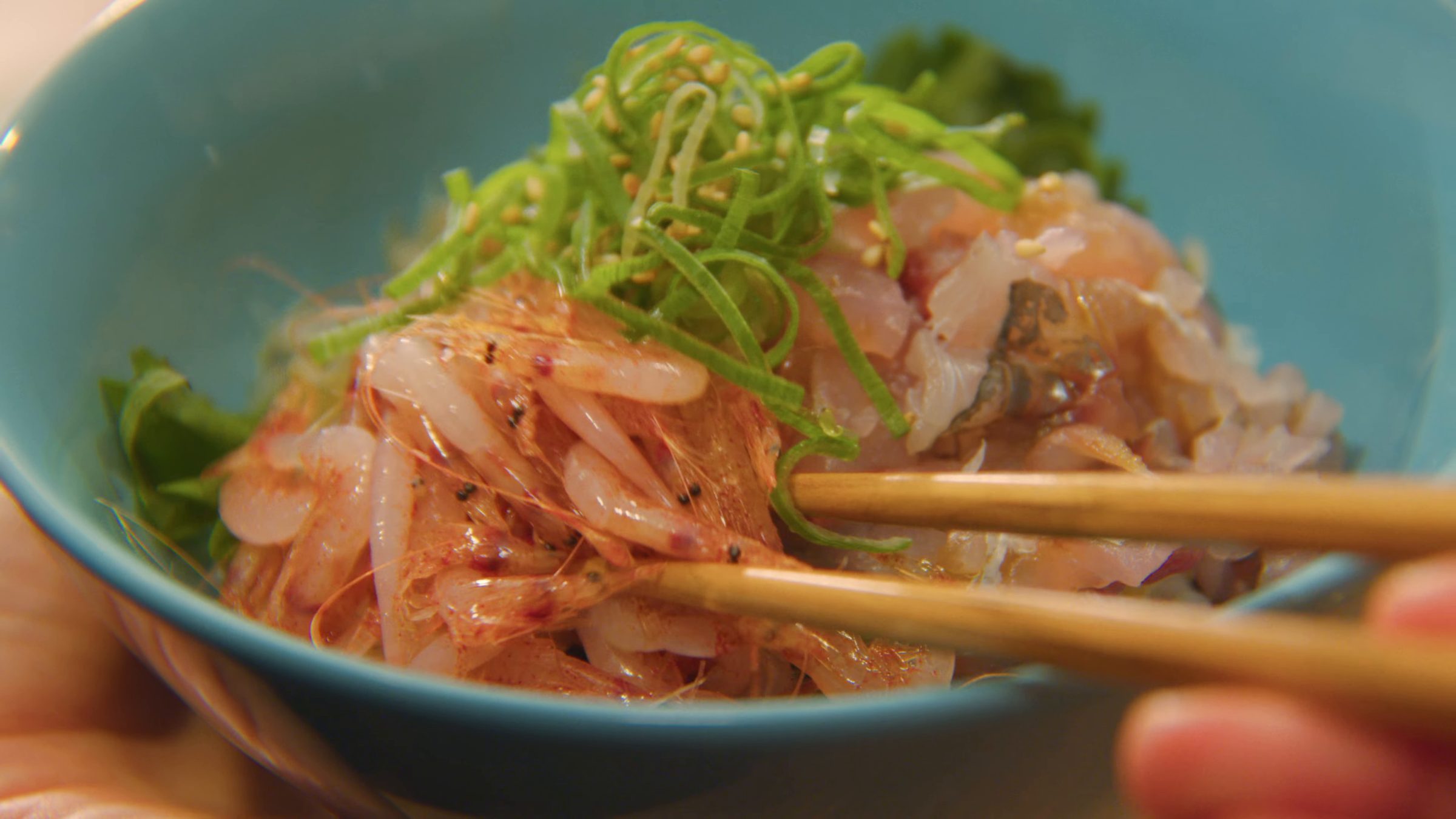
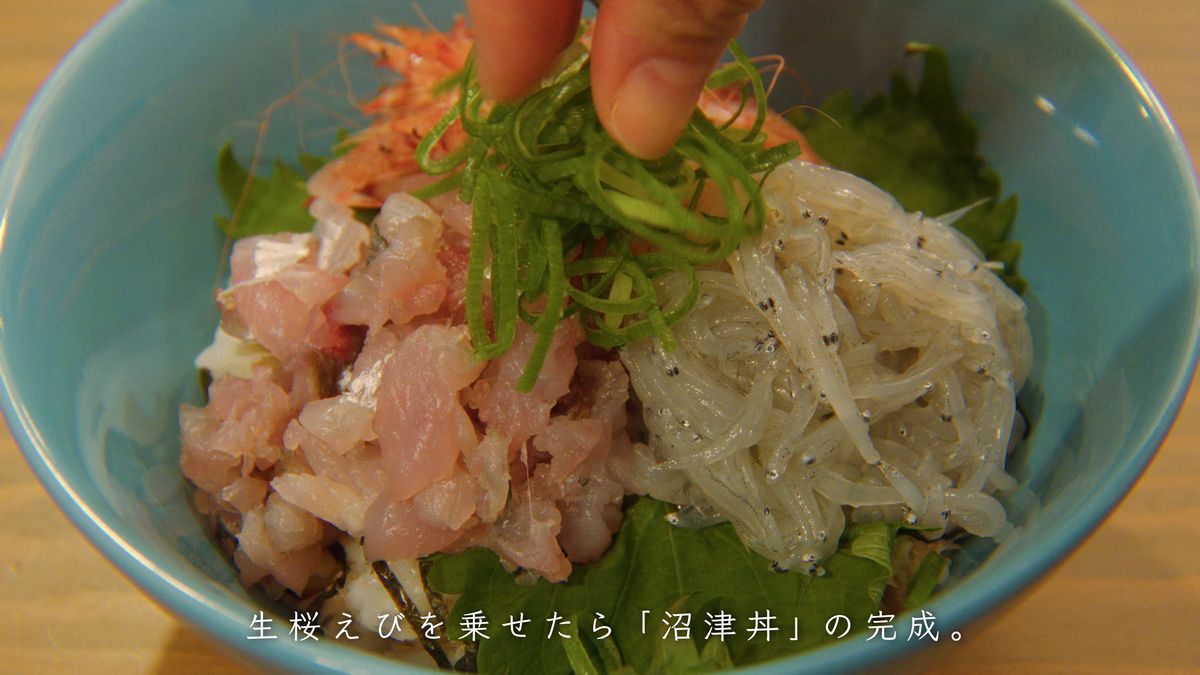
Over the horse mackerel rice in a blue bowl went shredded nori, then the tataki and raw whitebait on shiso leaves, and finally the raw sakura shrimp and green onion. The Numazu bowl was complete.
Watch this scene on YouTube5:56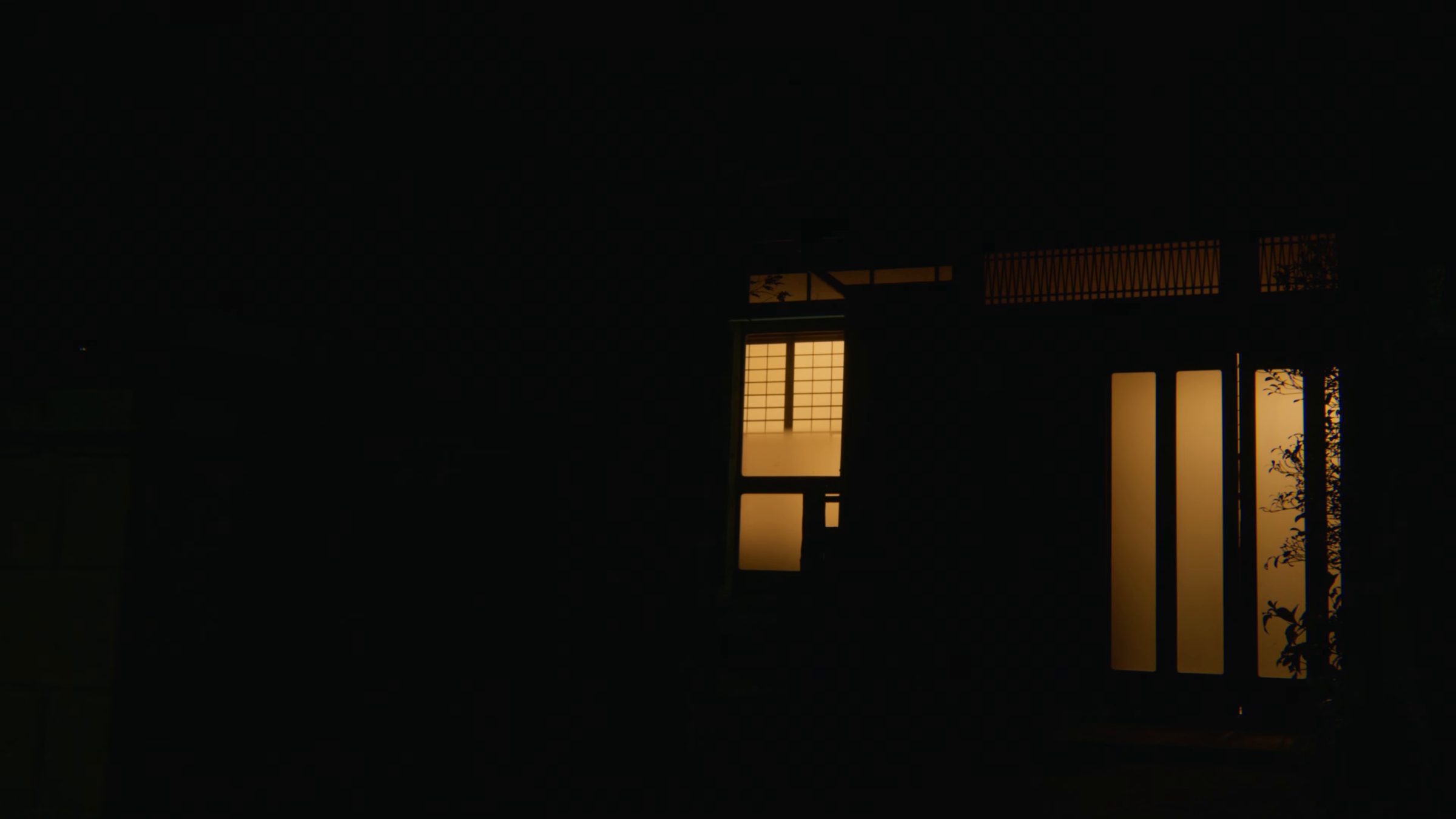
11TRAVEL JOURNAL
The Suruga Bay seafood set
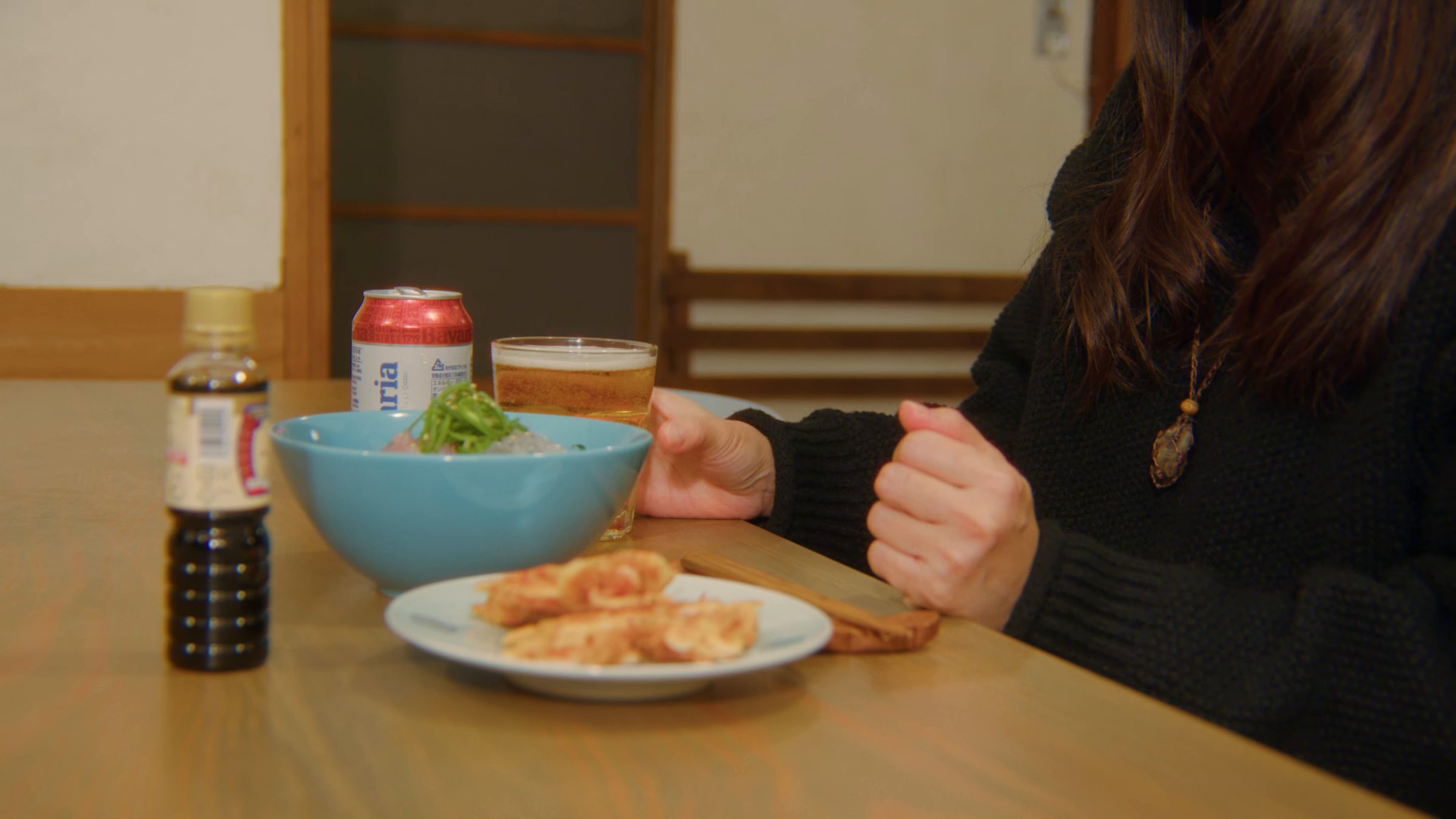
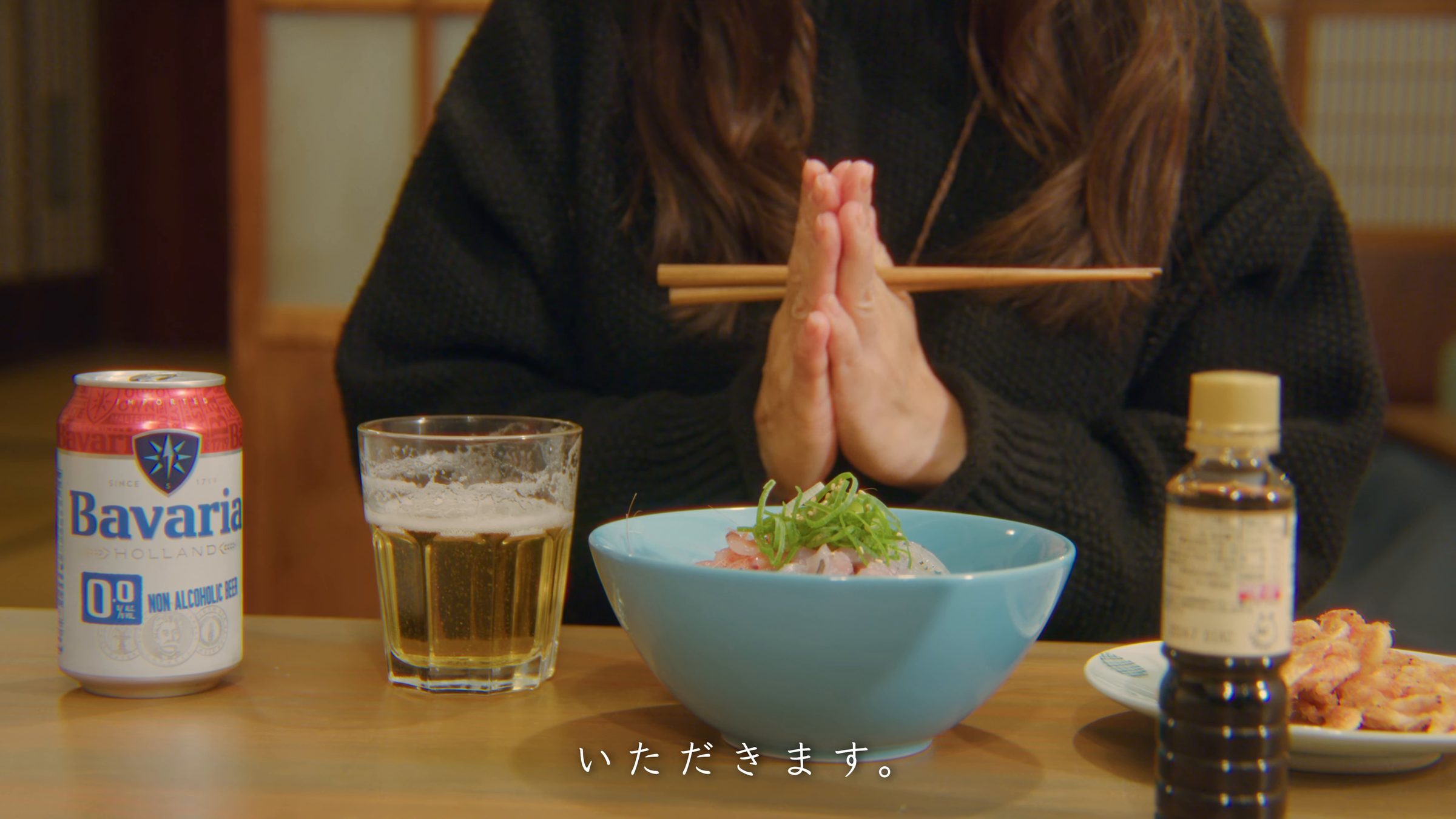
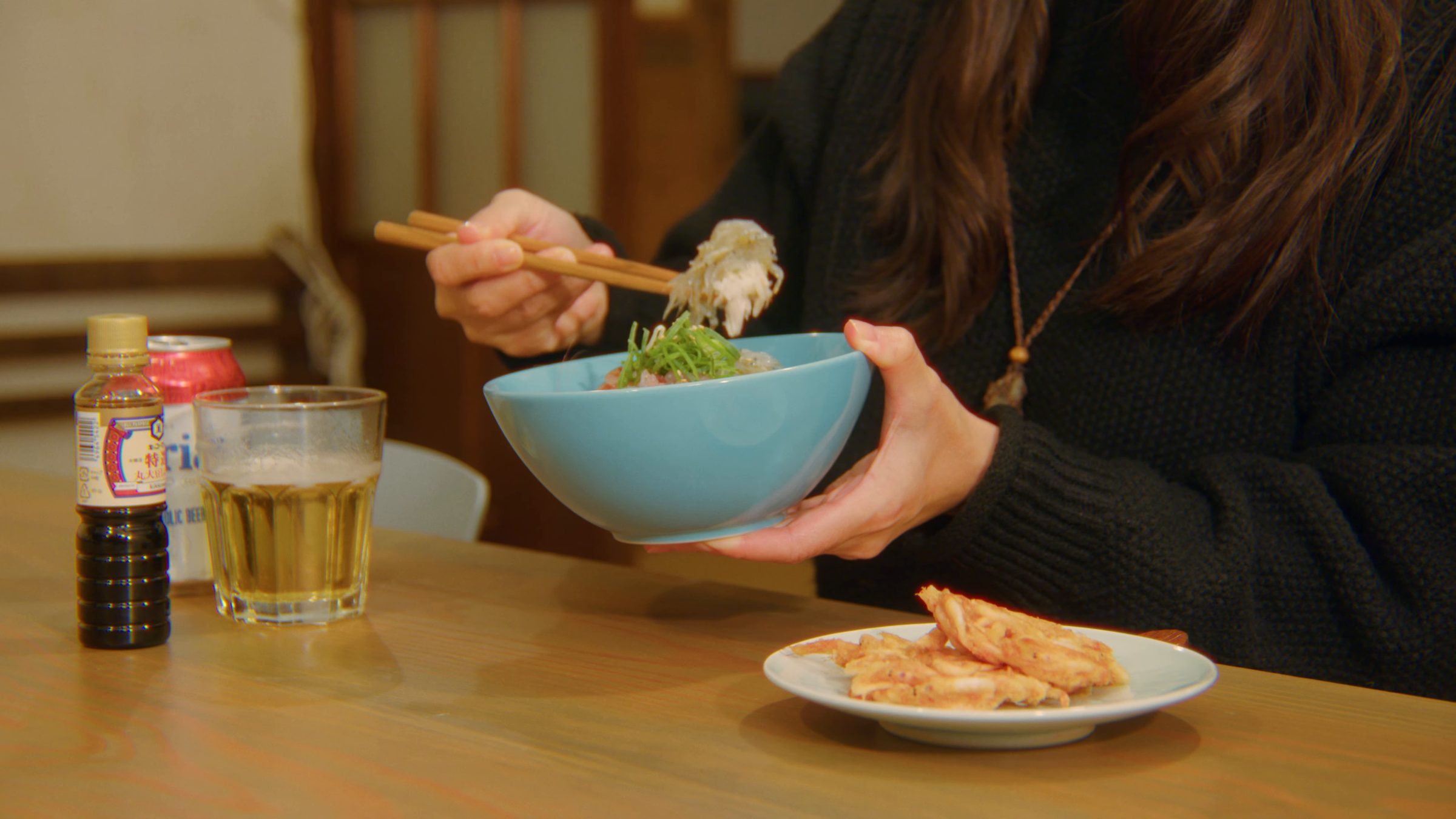
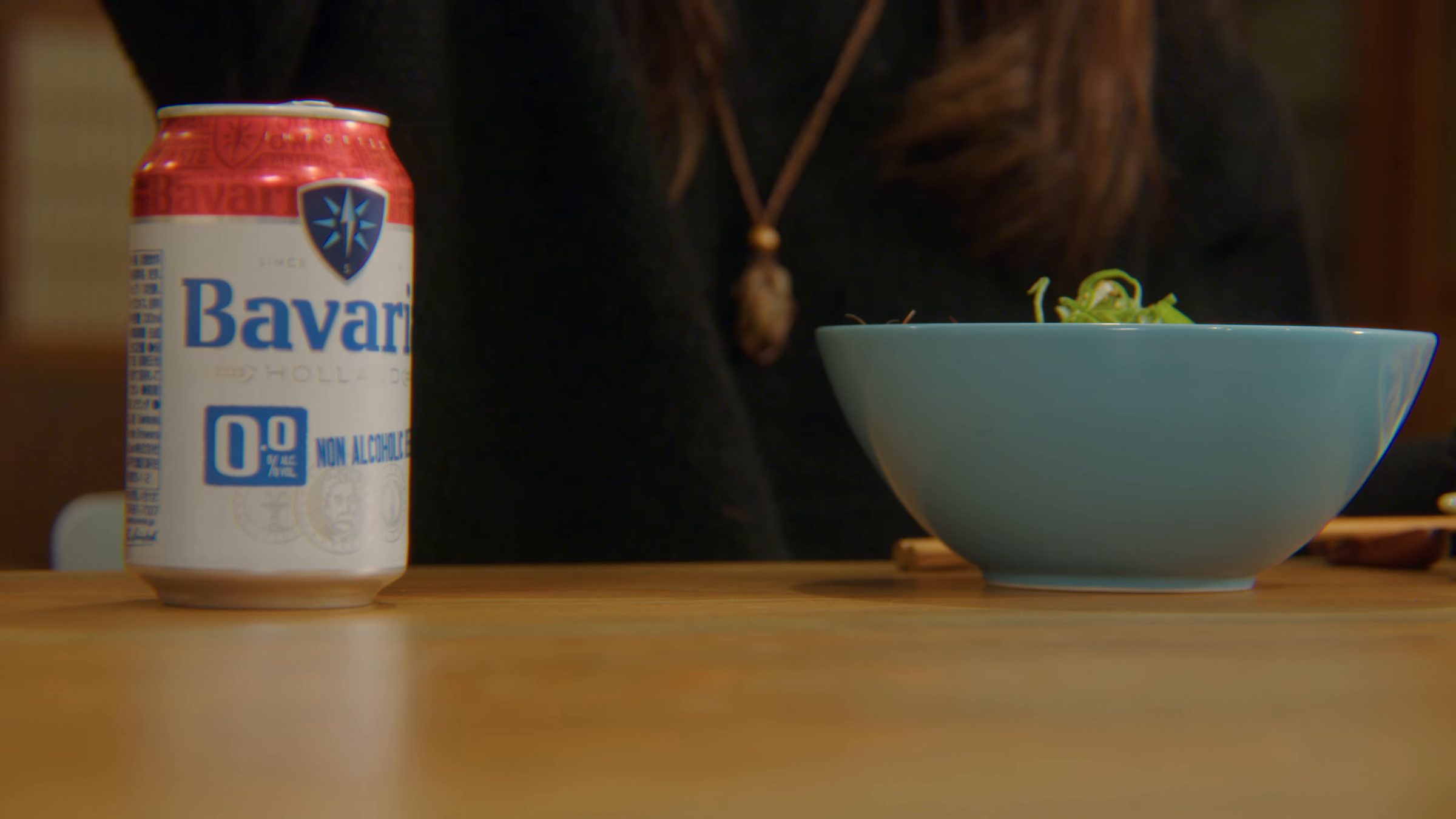
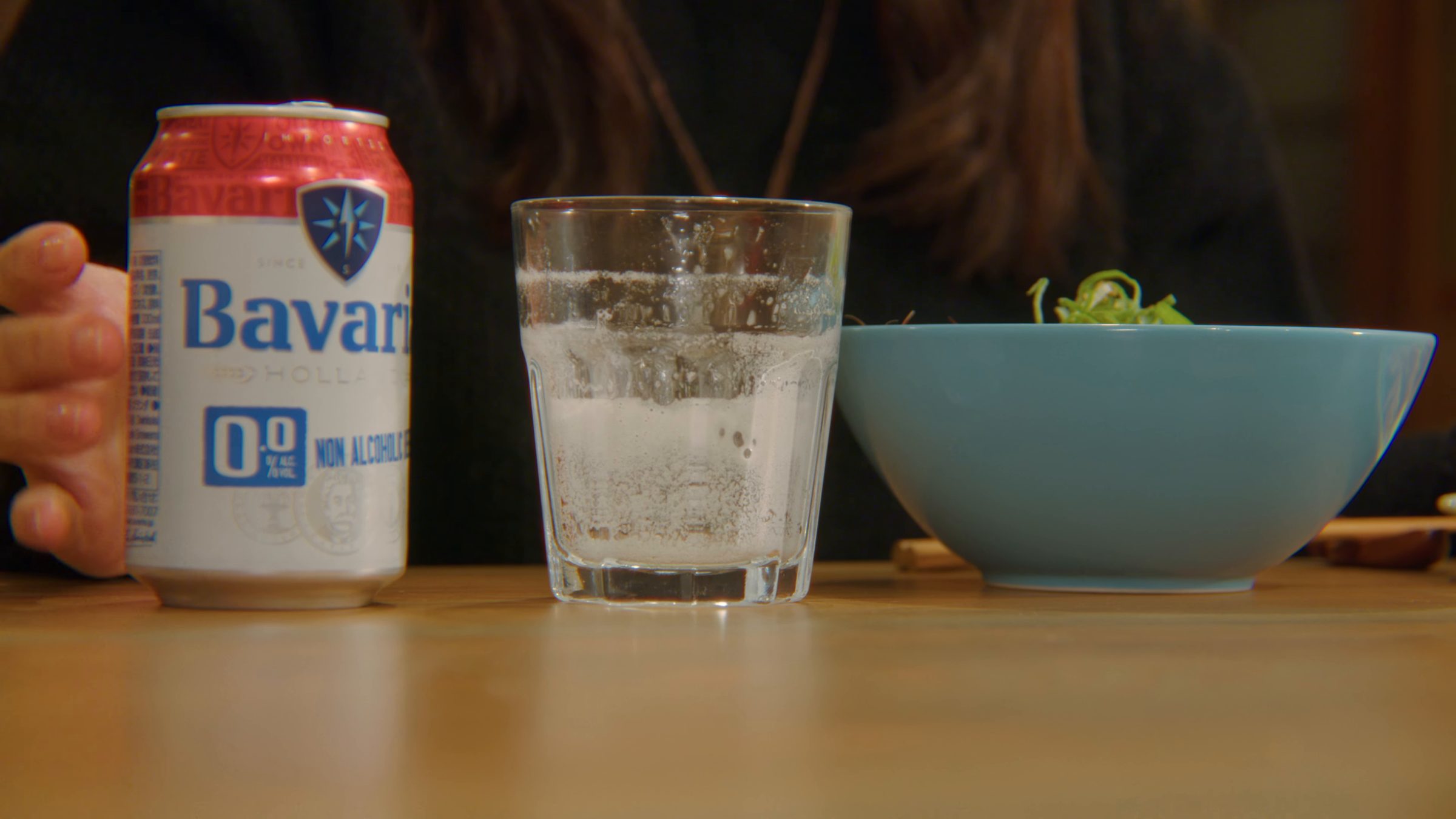
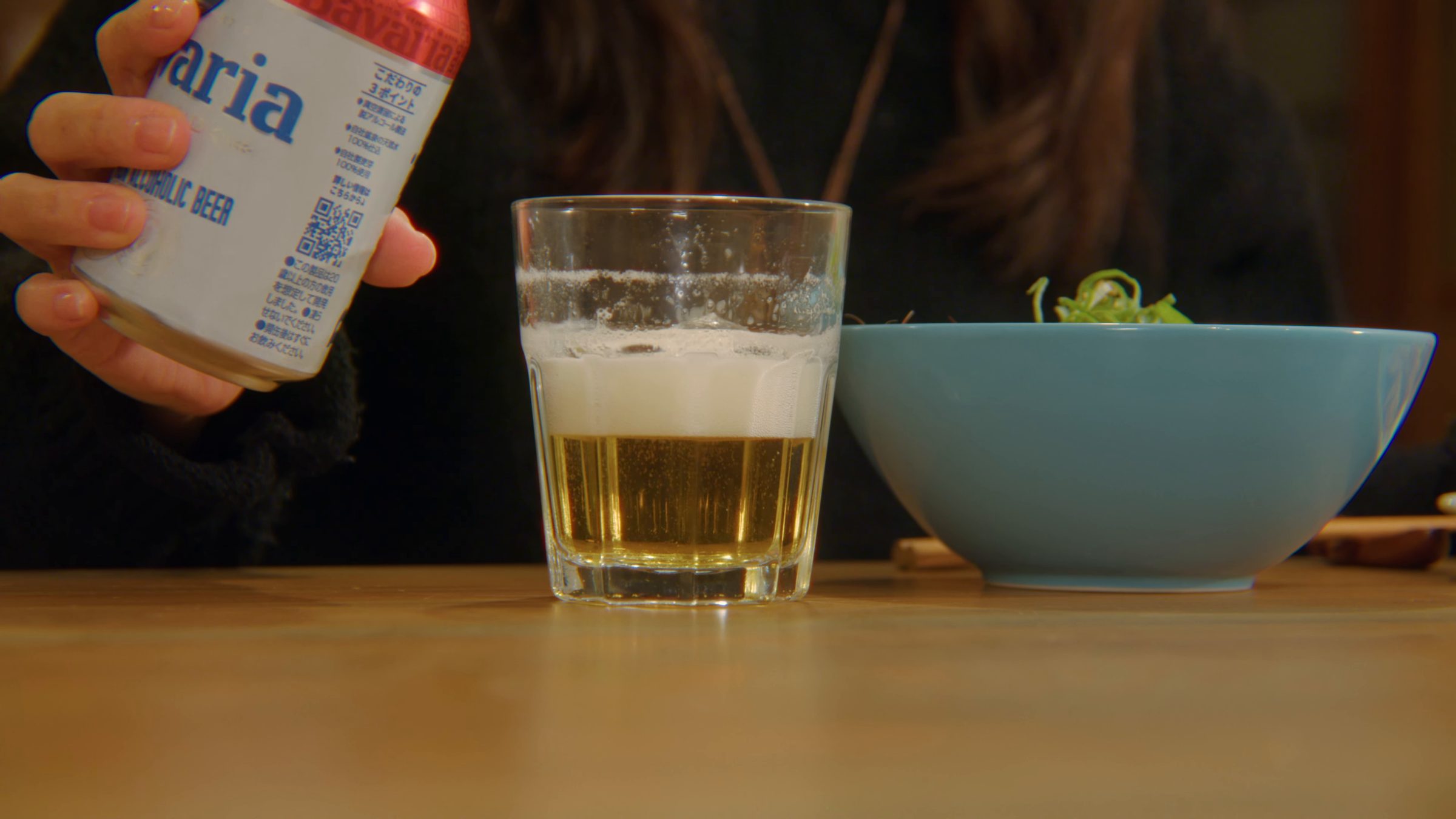
I poured a can of non-alcoholic beer into a glass, and the Suruga Bay seafood set was ready: the Numazu bowl and sakura shrimp kakiage. Hands together, itadakimasu.
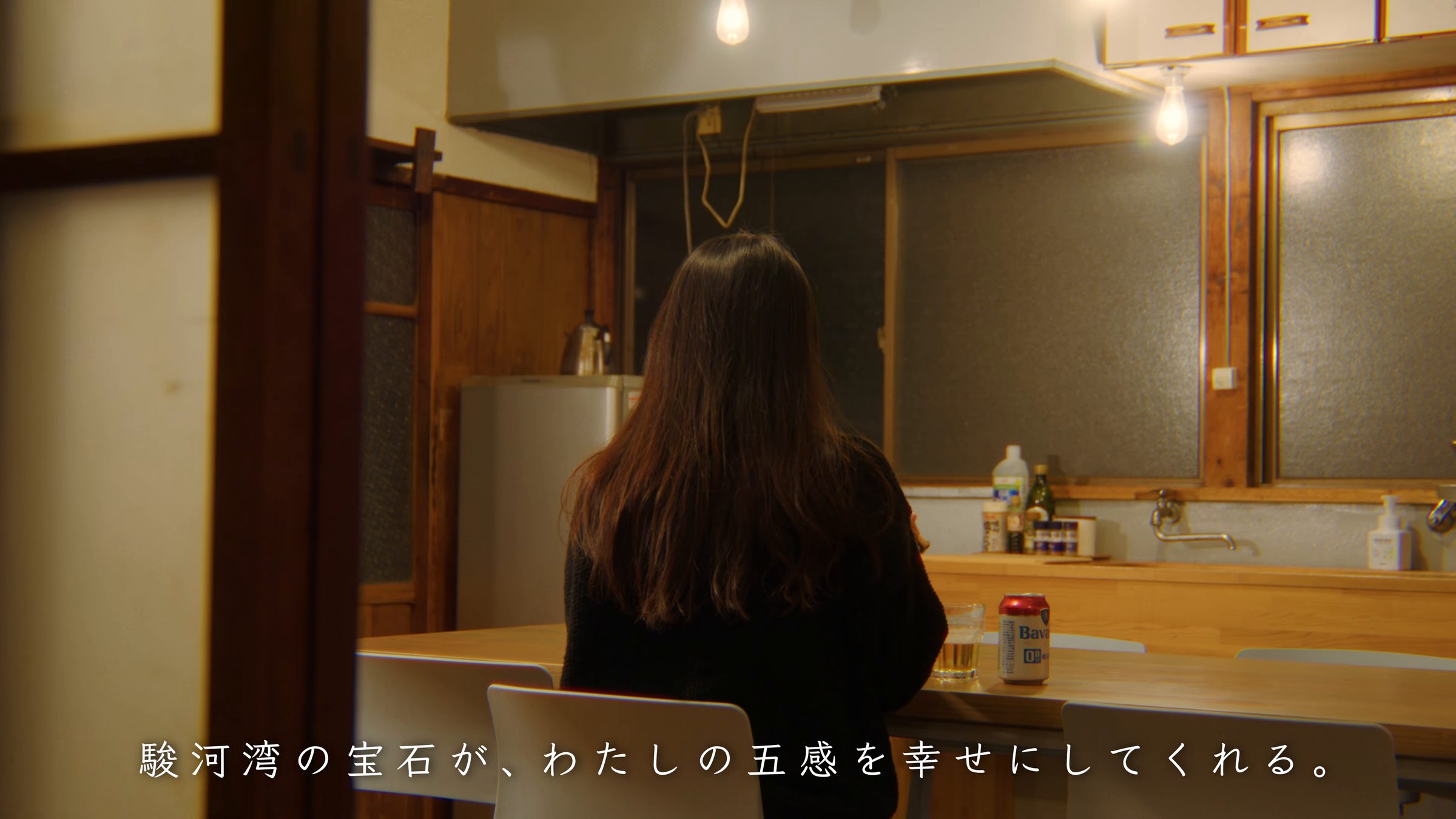
A drizzle of soy sauce, then a mouthful of raw whitebait, sakura shrimp and horse mackerel all at once: Numazu's three famous catches in a single bowl. Properly, the base should be rice cooked with dried horse mackerel, but on the road I kept it simple. The jewels of Suruga Bay made all five senses happy.
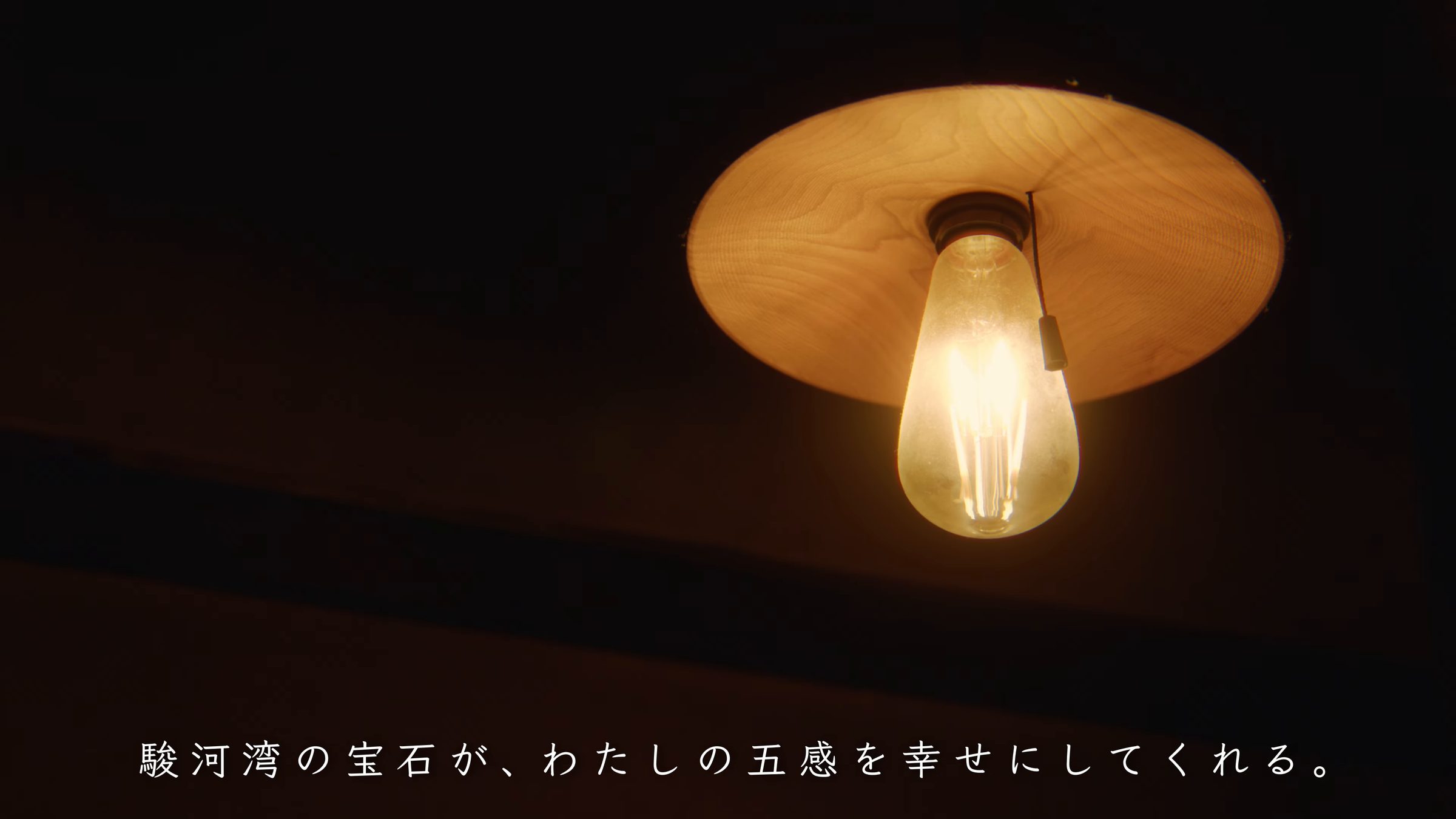
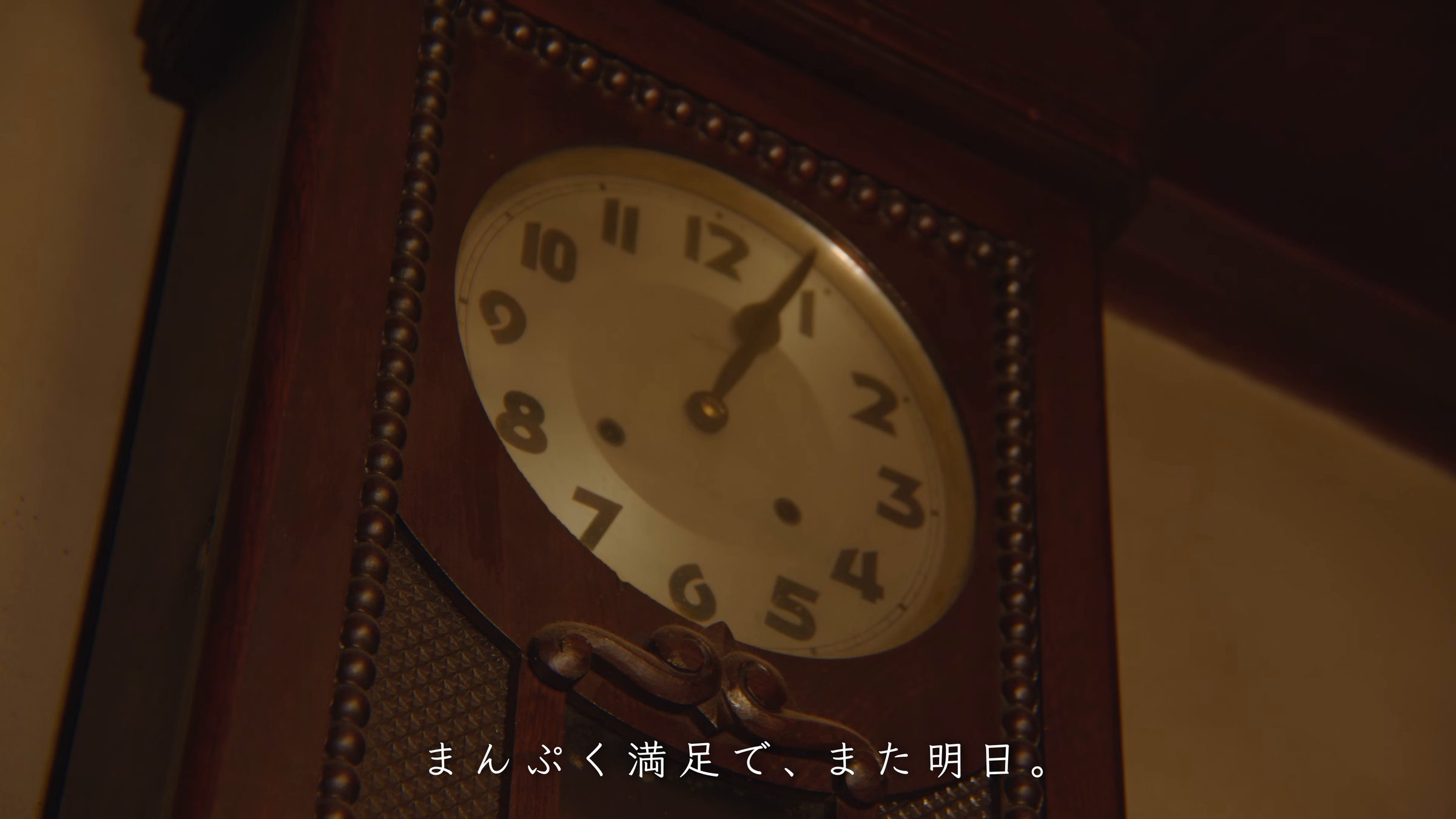
Under the wooden lampshade, the hands of the old wall clock had passed eight. Full and satisfied, until tomorrow.
Watch this scene on YouTube7:03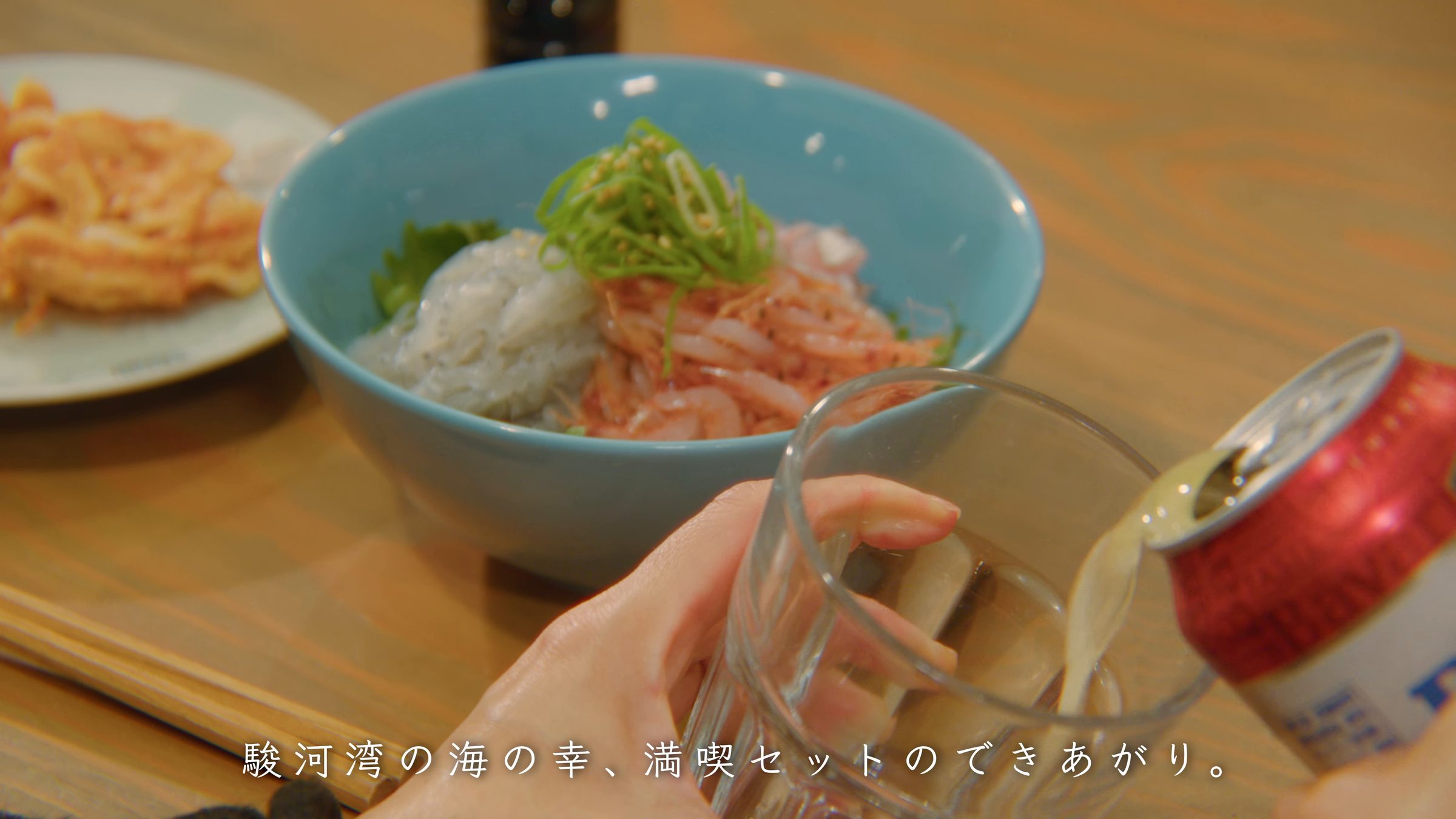
12TRAVEL JOURNAL
Horse mackerel chazuke the next morning
Morning: beyond the garden trees, the wooden walls and glass windows of the old house. Down at the shore, Mt. Fuji stood sharp across Suruga Bay, and morning light spilled into the tatami room.
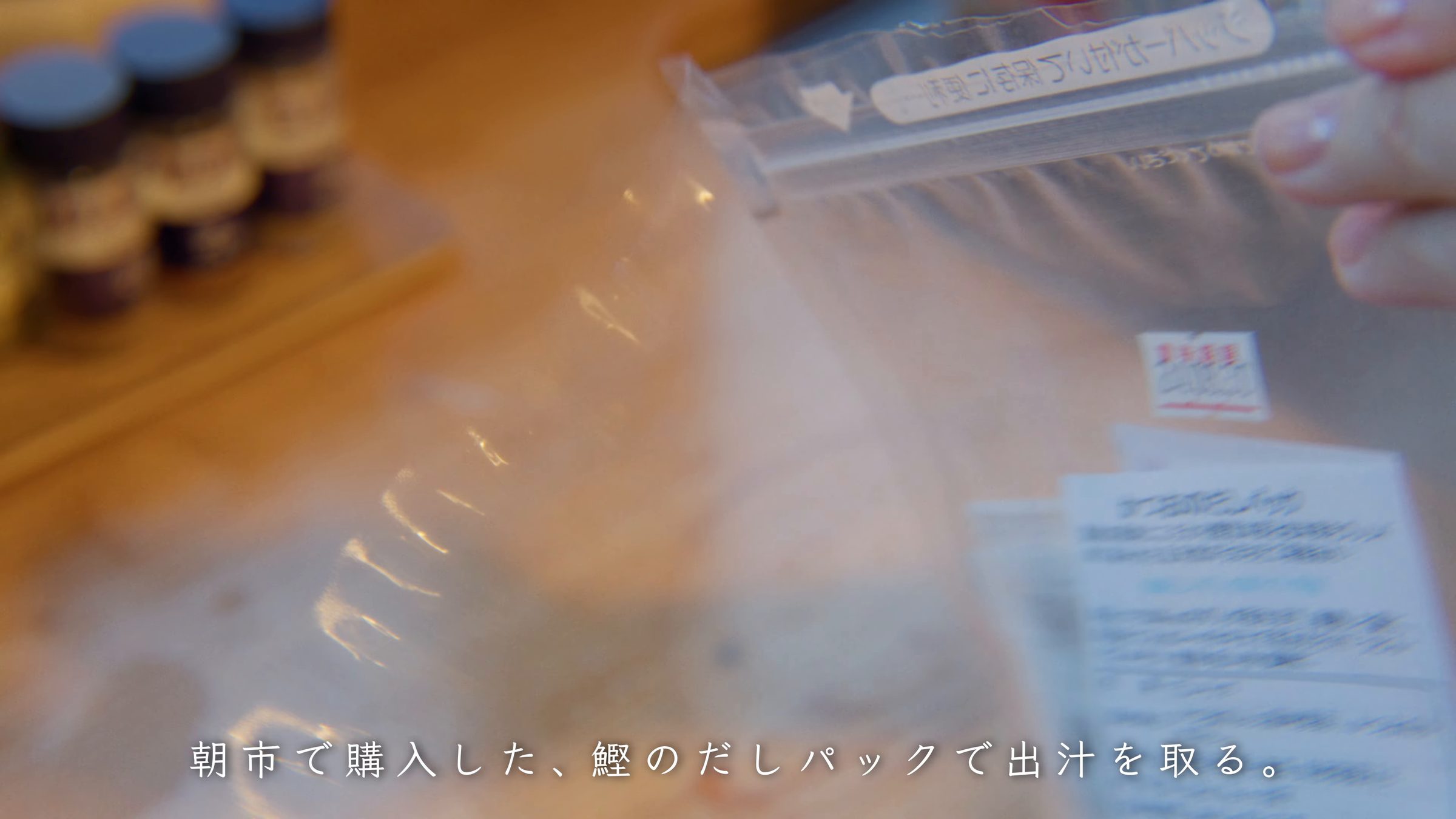
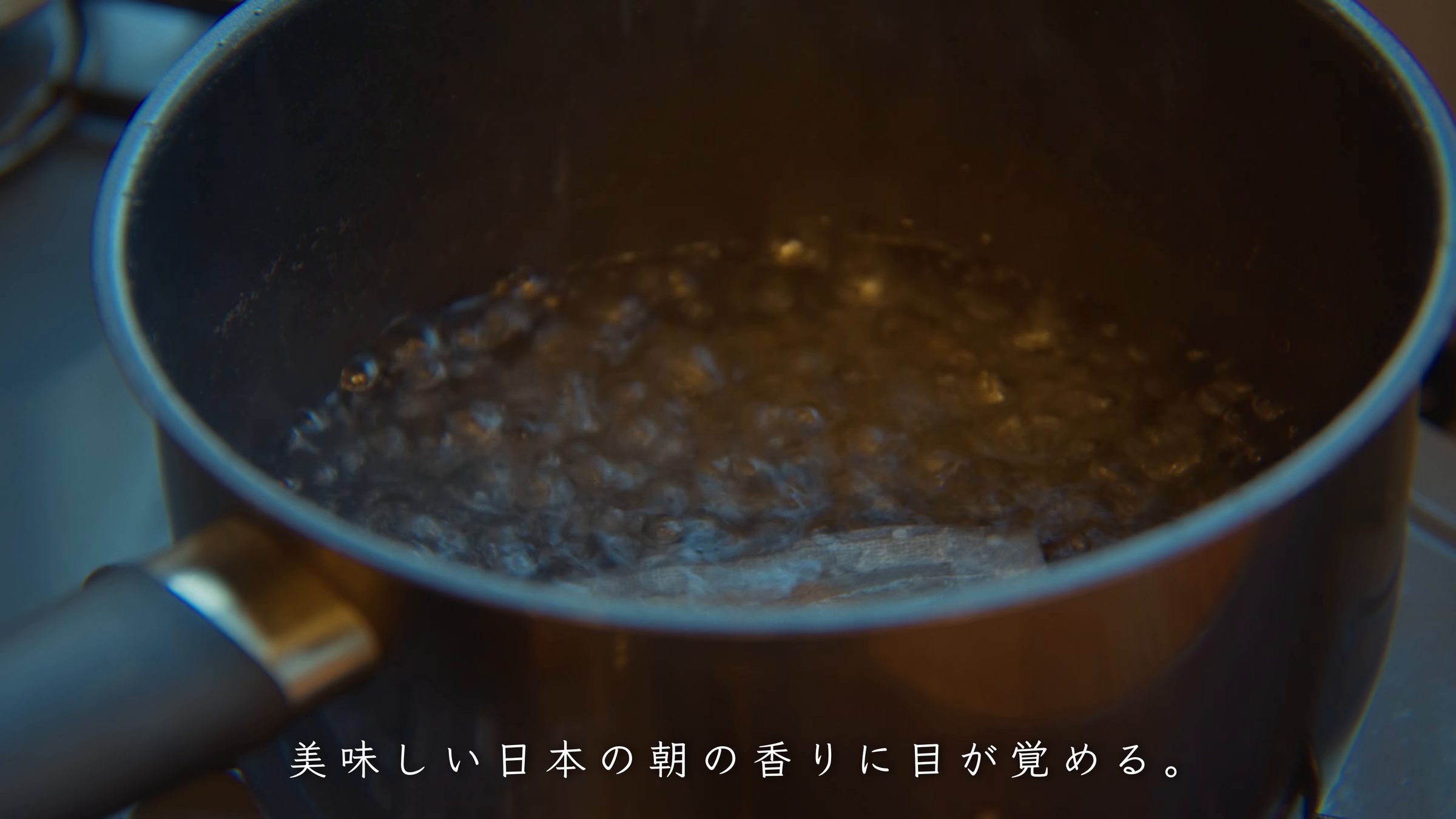
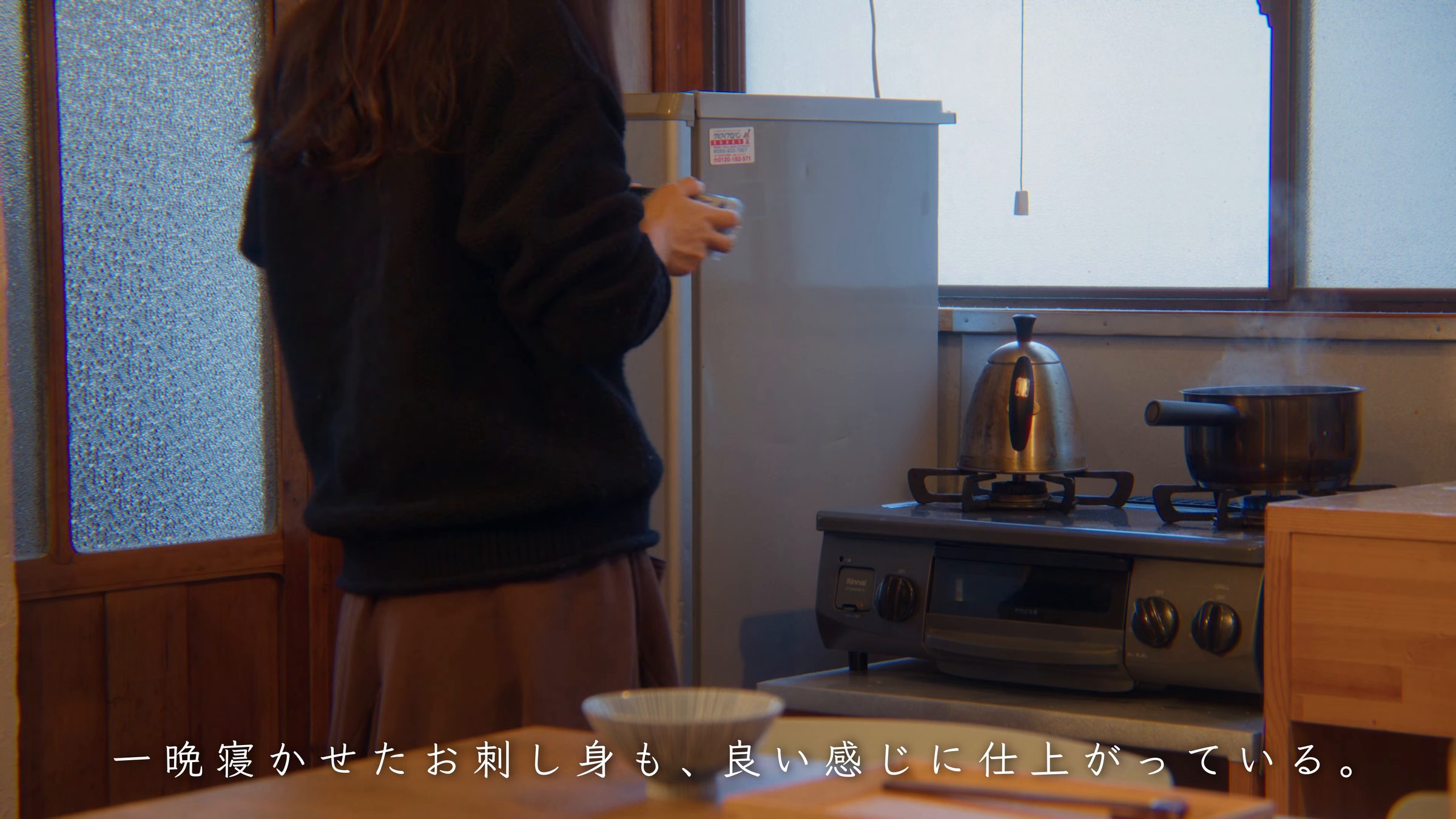
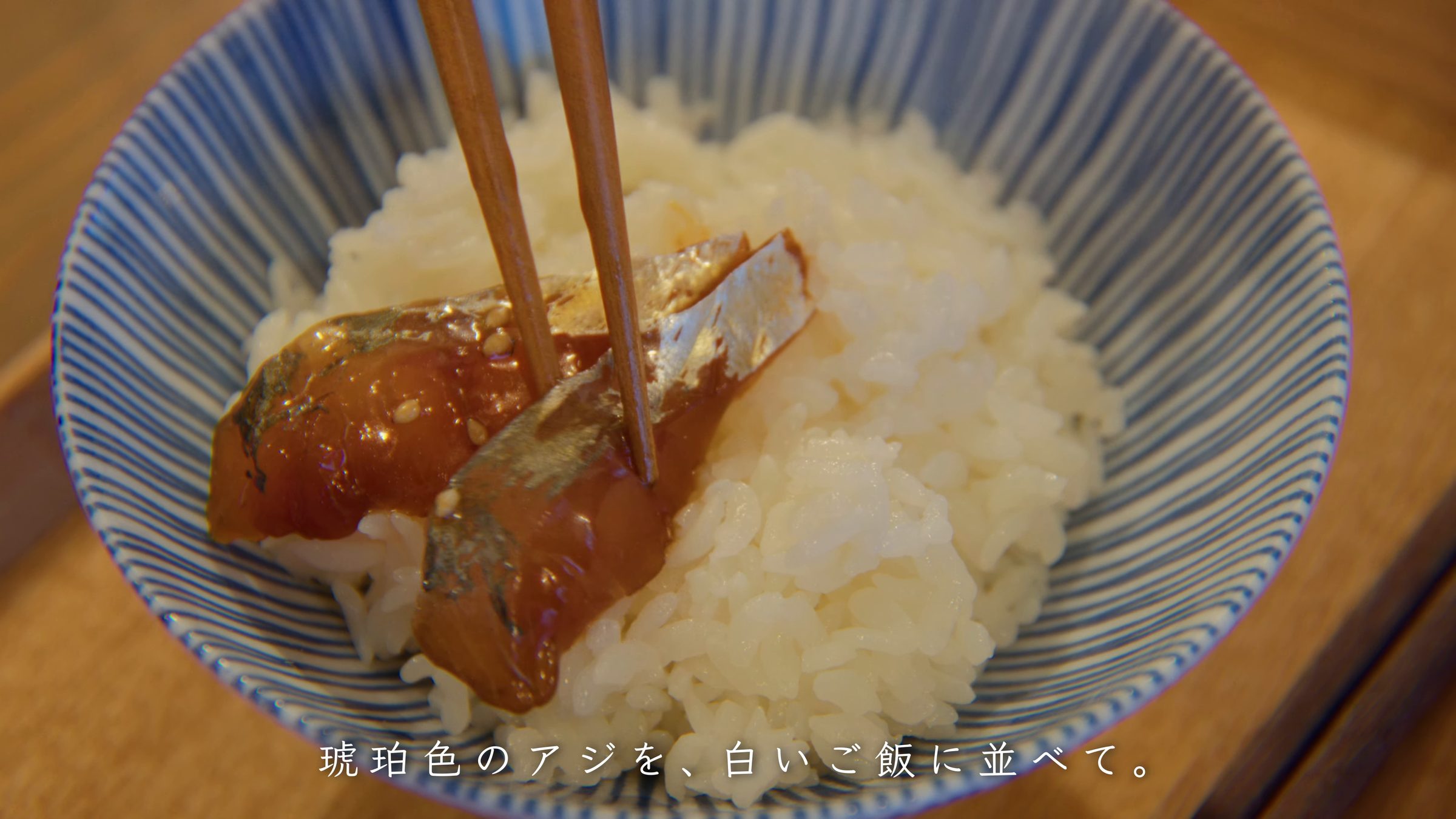
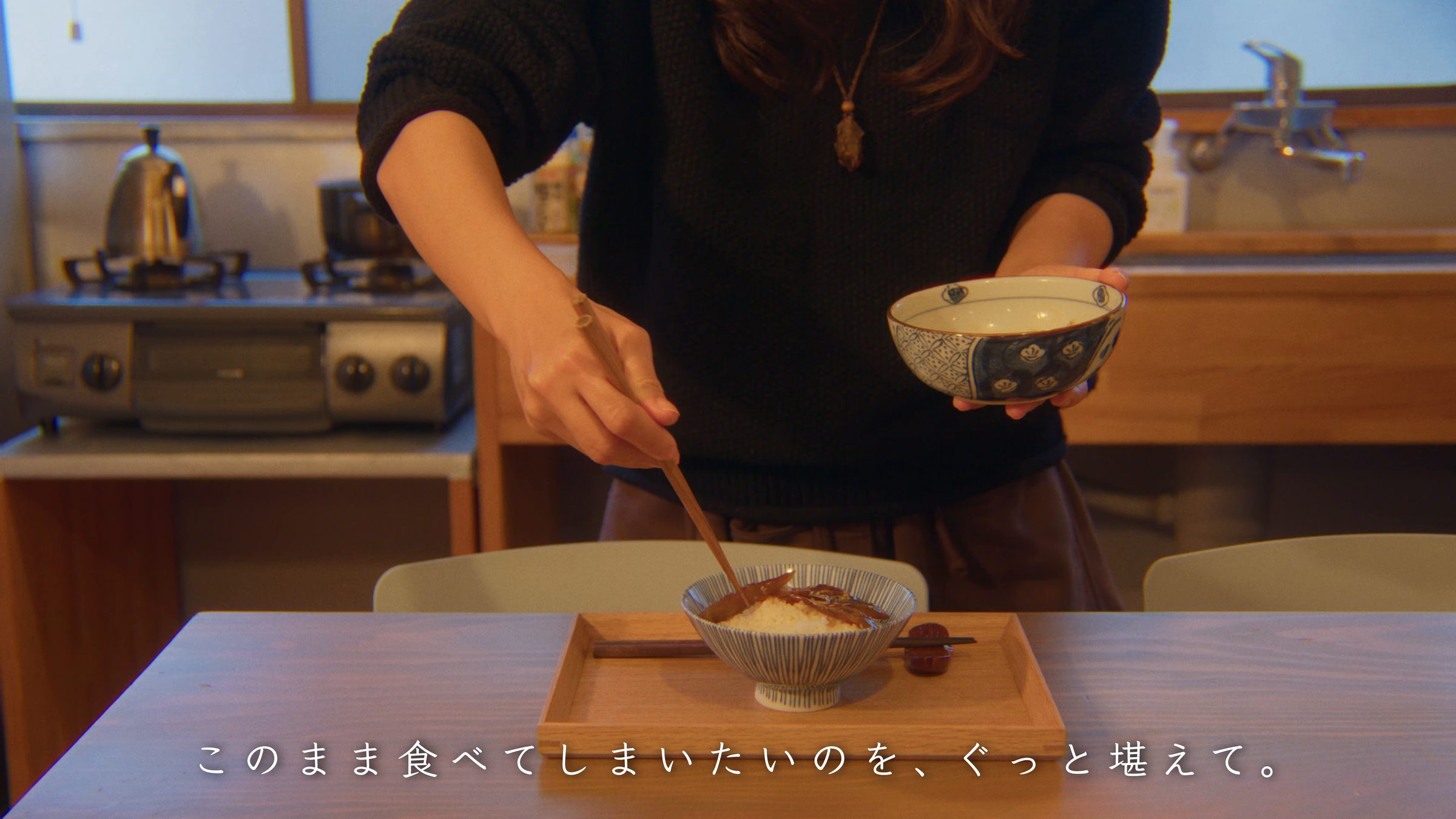
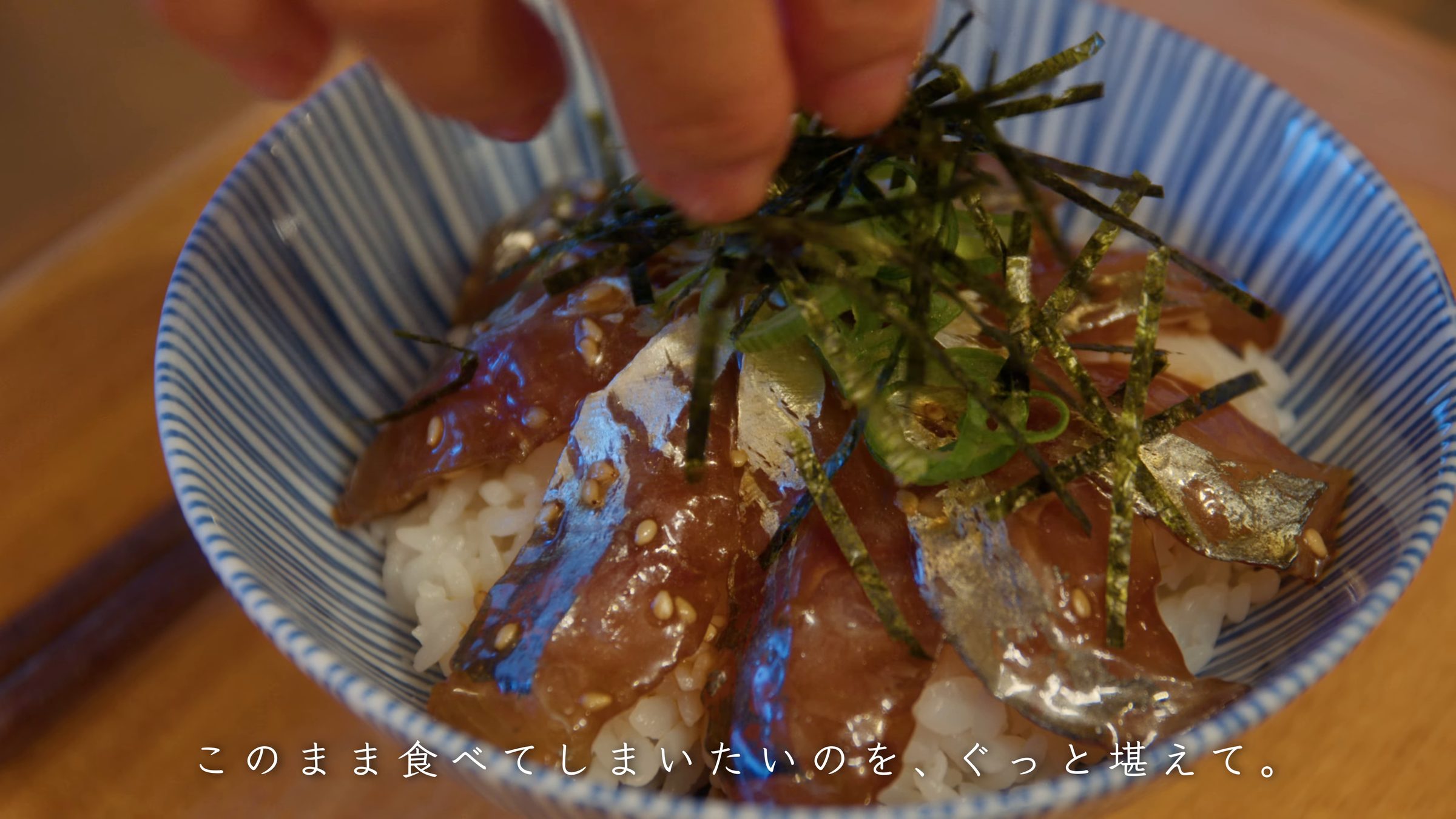
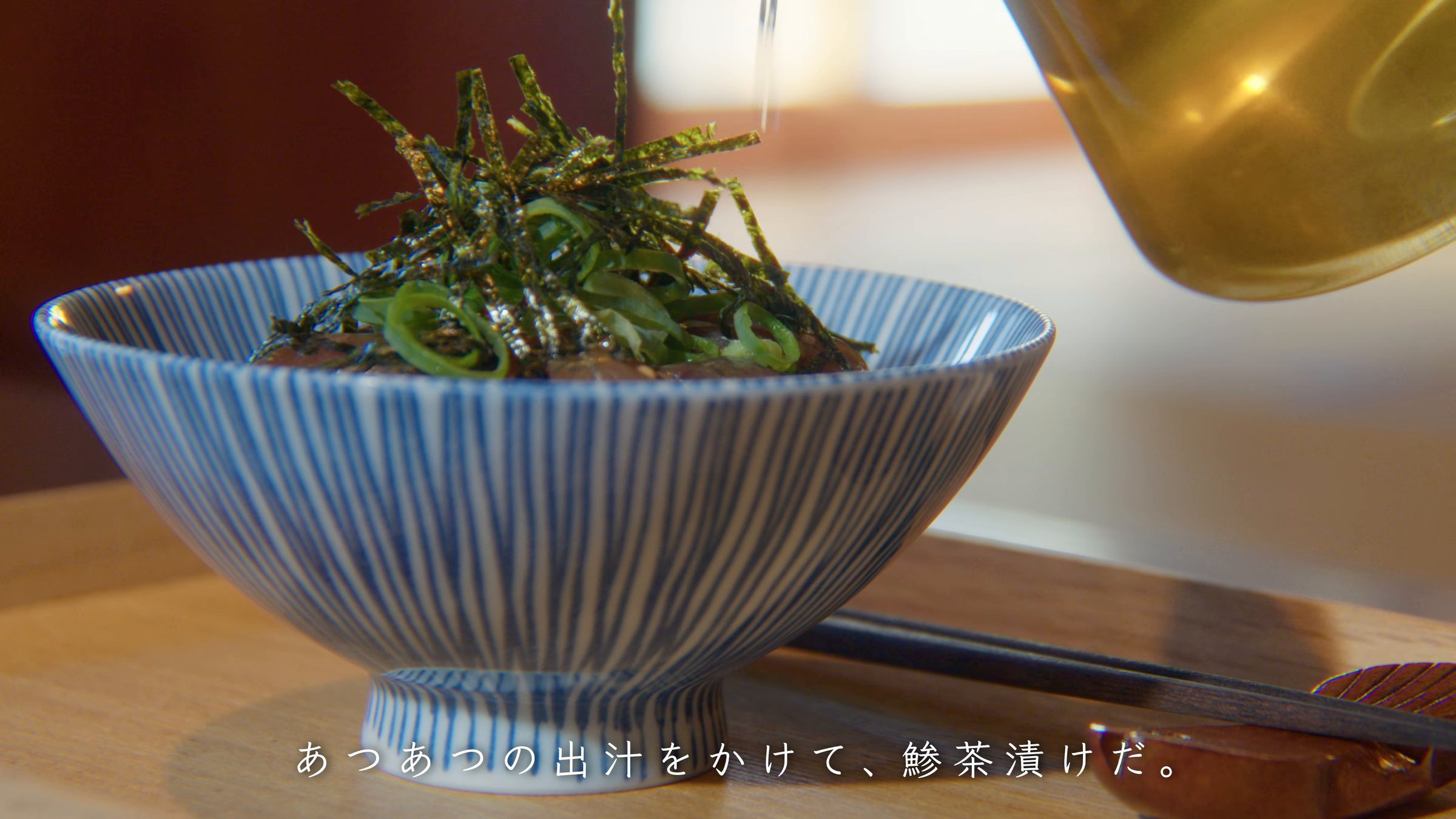
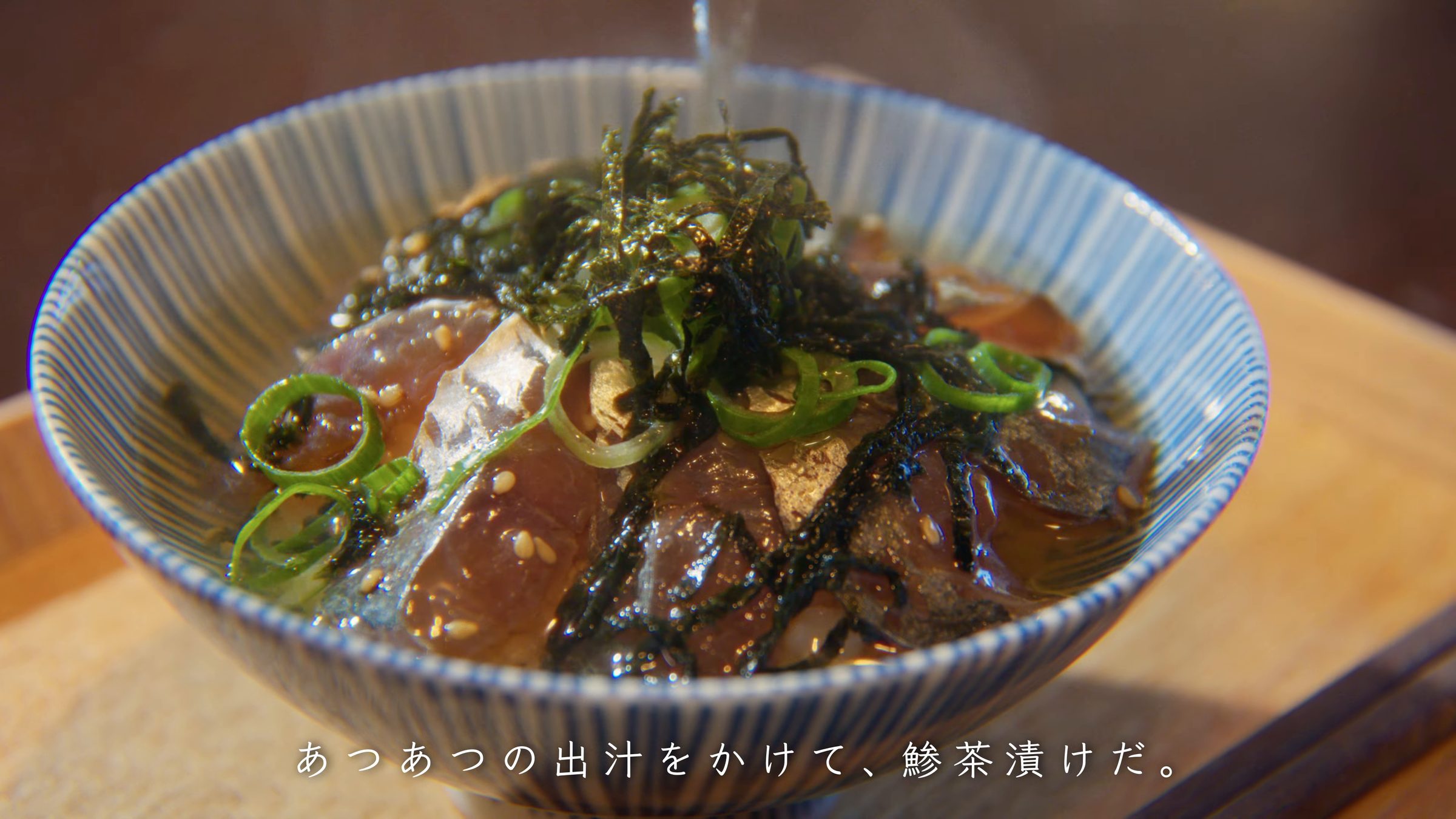
I made dashi with the bonito stock packs from the morning market. The saucepan came to a boil, and the scent of a Japanese morning woke me up properly. The sashimi that had rested overnight had turned out just right. I laid the amber-colored horse mackerel over white rice and scattered nori and green onion on top. I wanted to eat it right then, but held back.
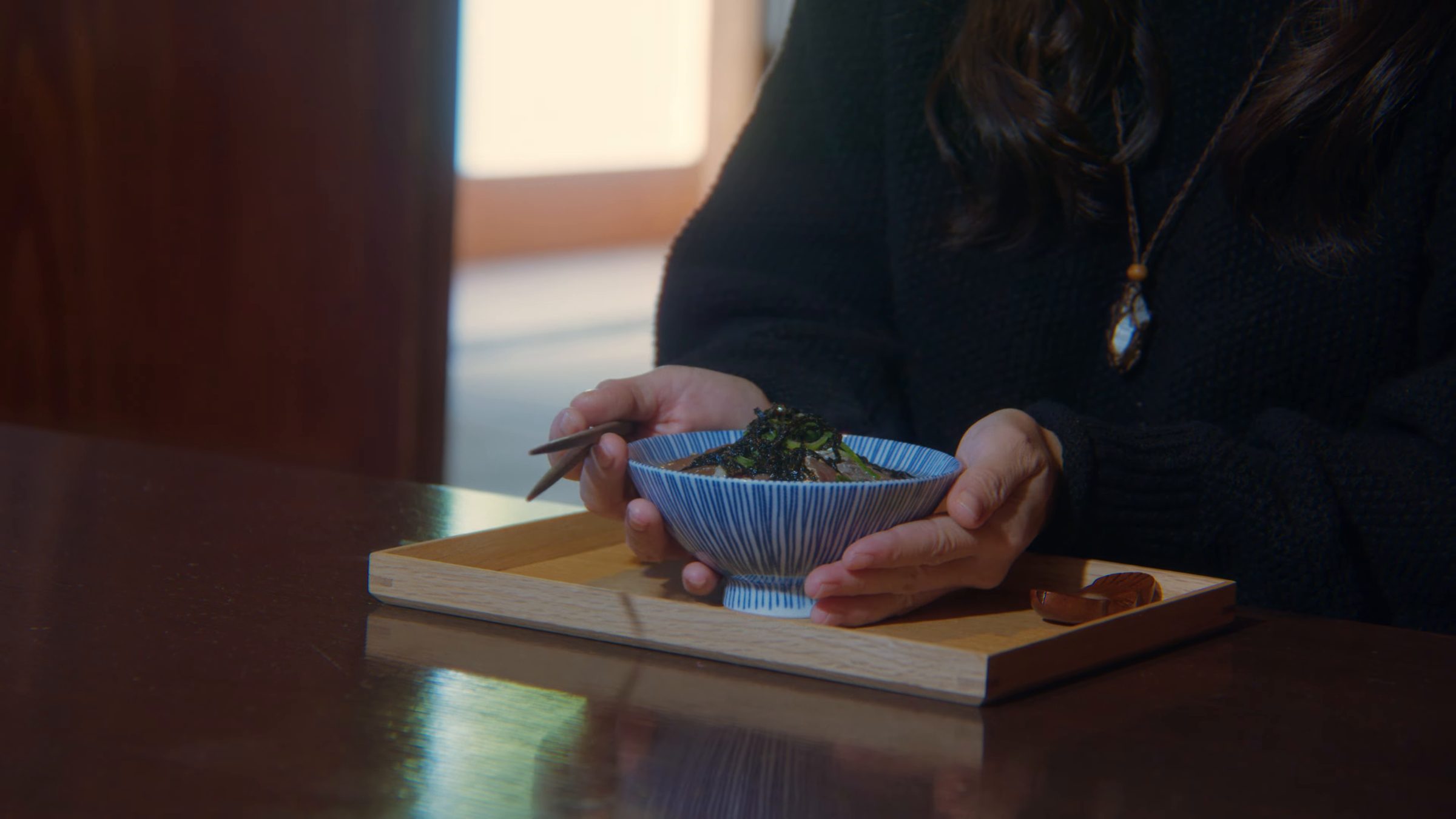
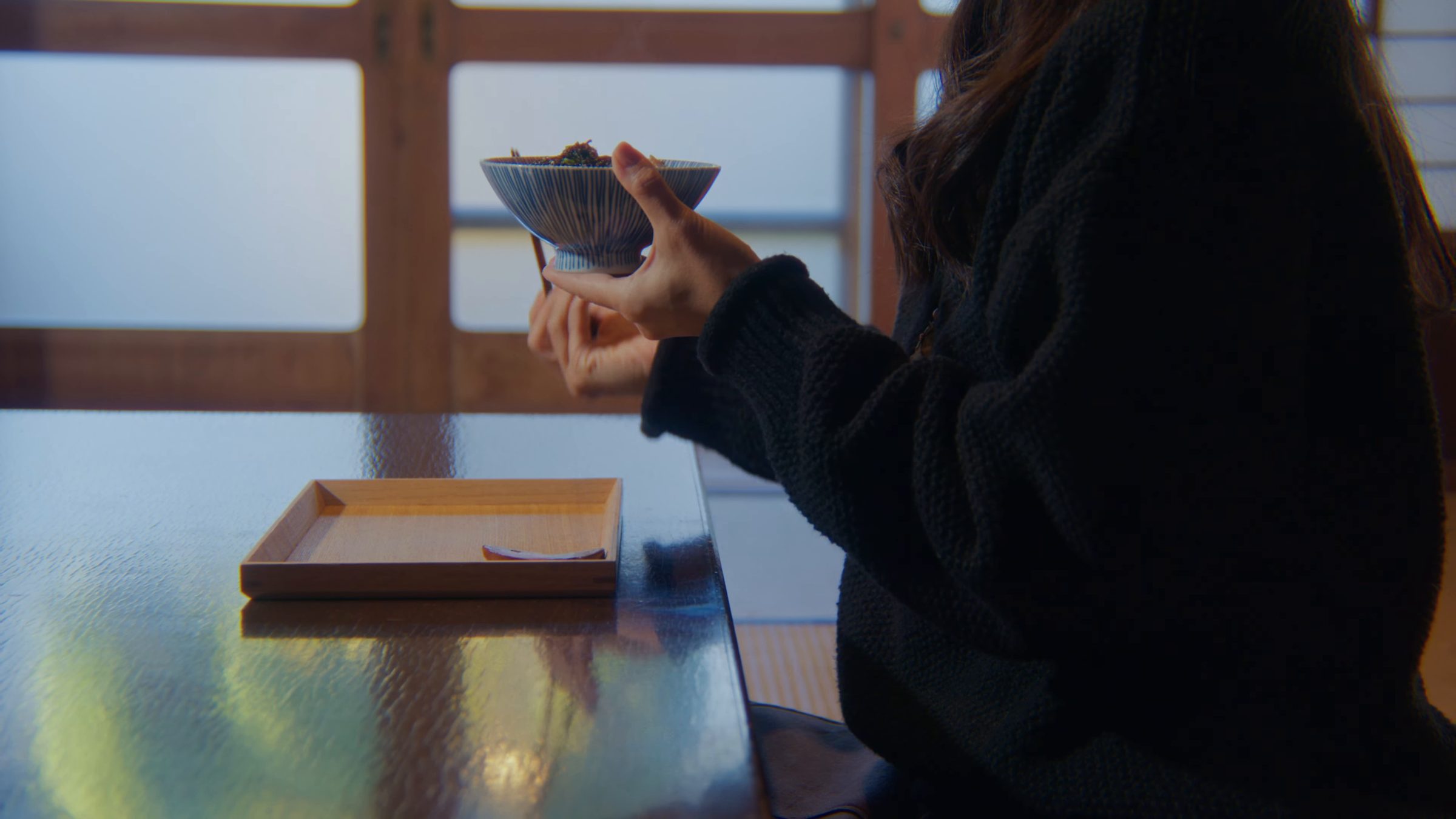
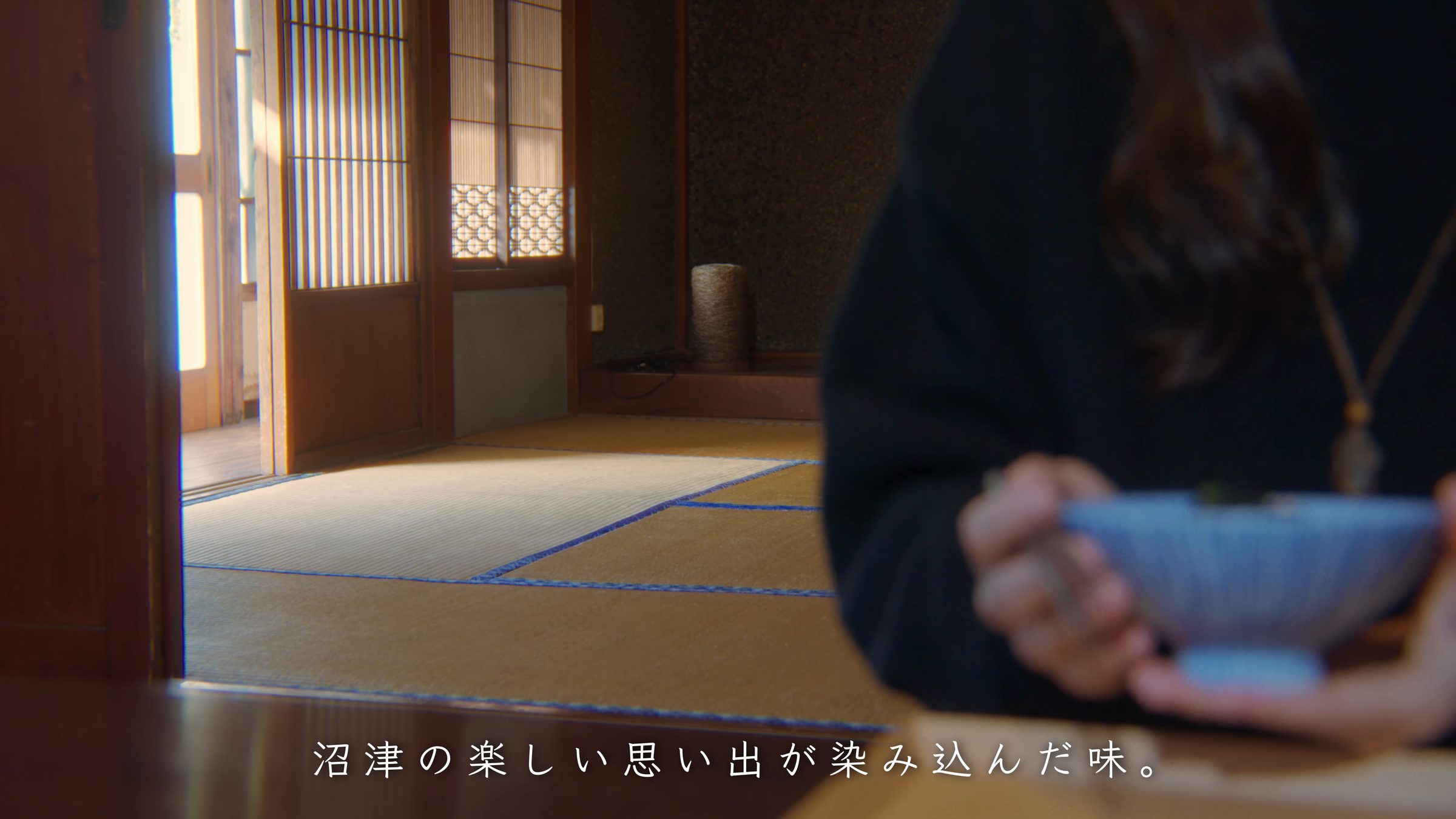
Hot dashi poured over the top, and the horse mackerel chazuke was ready. By the window, I cradled the bowl and ate. A taste steeped in happy memories of Numazu.
Watch this scene on YouTube8:19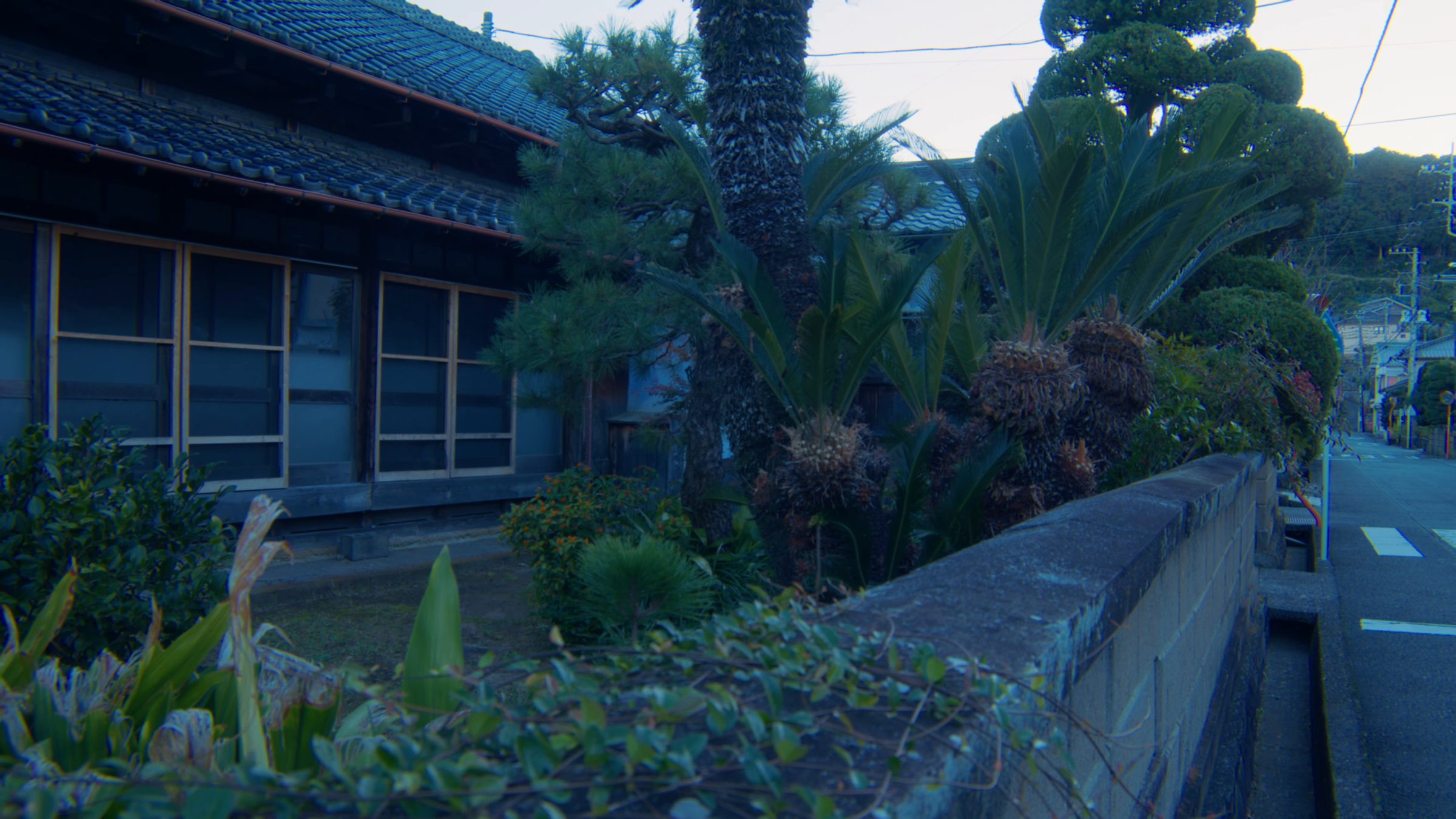
13TRAVEL JOURNAL
Until next year
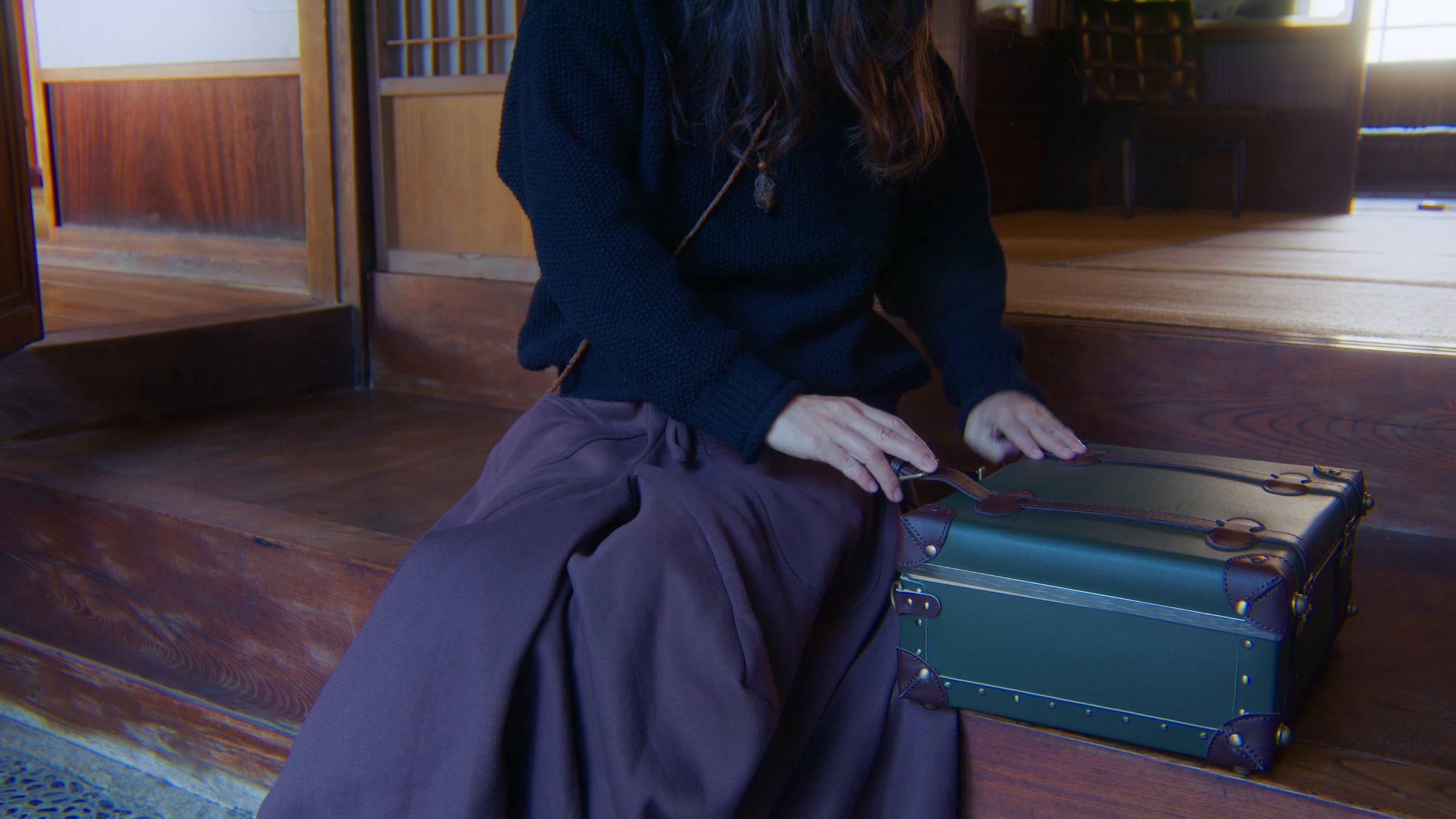
I looked around the tatami room in the morning light, then sat on the step at the entrance with my hand on my trunk. I'm glad I was able to come to this town again this year.
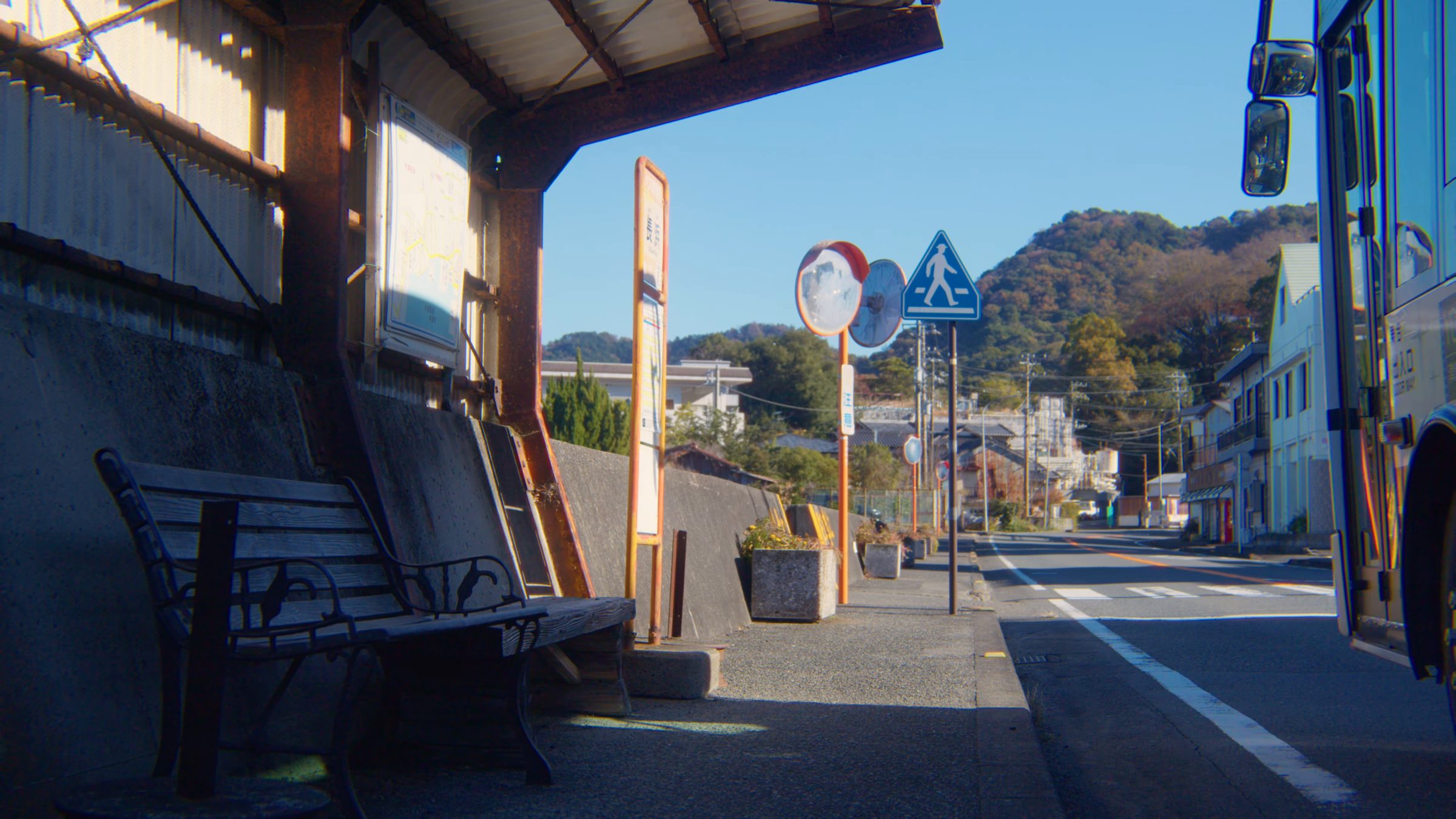
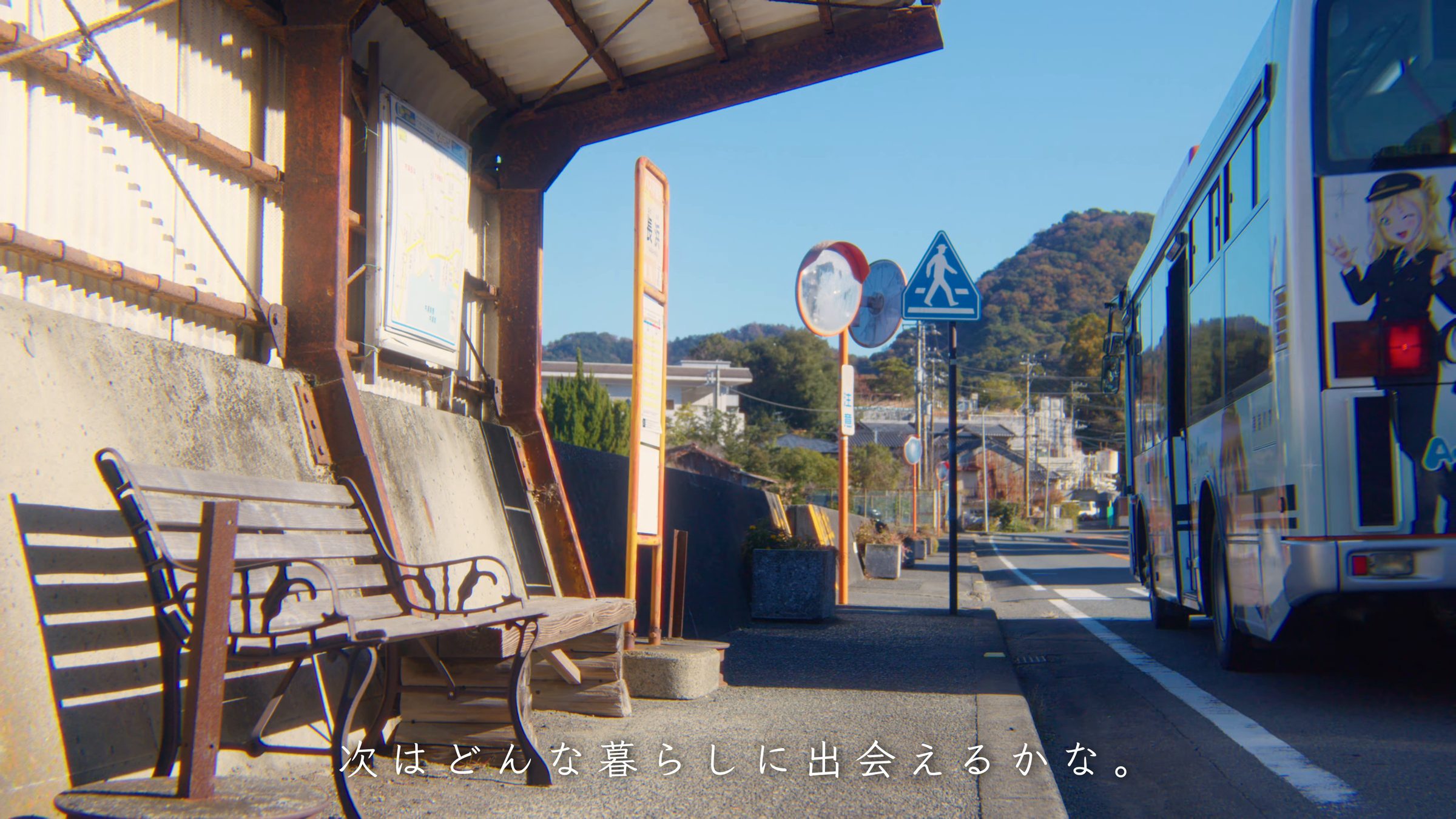
On the bench at the Nagahama bus stop, I looked out at Mt. Fuji and Awashima until the bus came around past the curved mirror. I wonder what kind of life I'll meet next.
Watch this scene on YouTube9:45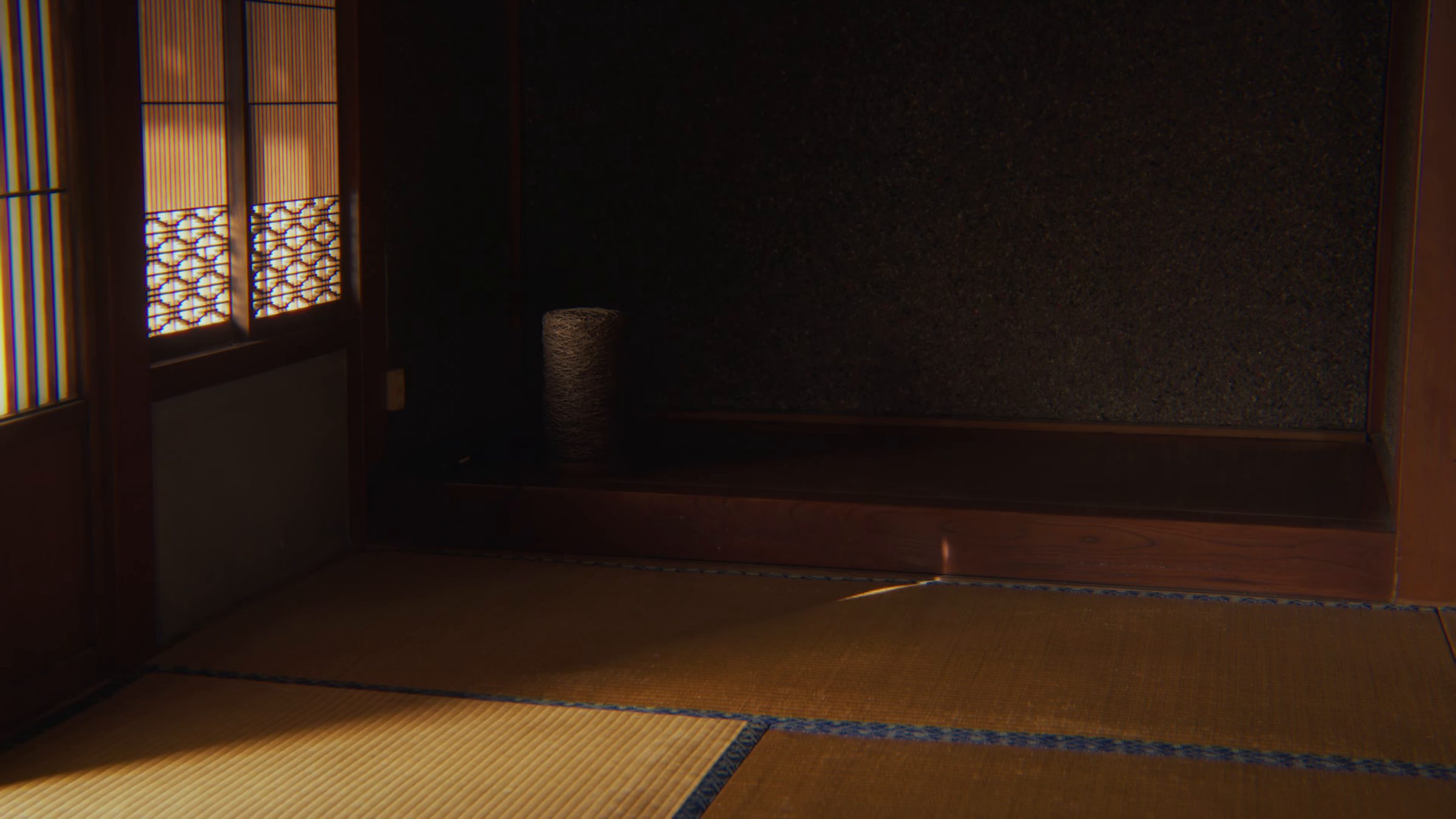
THE JOURNEY IN FILM
The wind. The sounds of a kitchen.
Spend a little more time inside the journey, on film.
Watch the video10 minTHE BORROWER’S NOTES
The Borrower's Notes: Numazu
Places we stopped, dishes we made, and stories of the land. A few things to keep from the journey.
01Where I ate and shopped
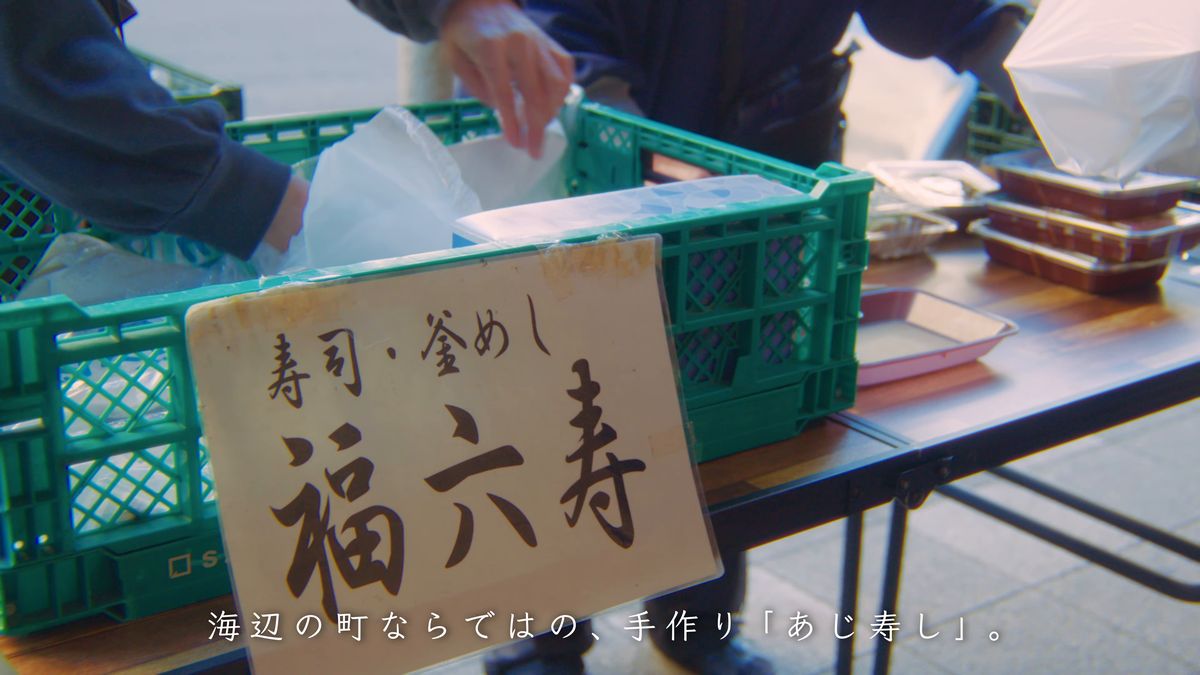
Fukurokuju (stall at the morning market)
1-43 Wakabacho, Numazu, Shizuoka
An old-style Edomae sushi restaurant in Wakabacho, Numazu. It had a stall at the morning market in the shopping arcade, held on the first of the month, and that is where I bought the handmade aji-zushi: thick horse mackerel with a shiso leaf tucked in, sushi of the kind you find in seaside towns. The next crate carried a sign for Japan's best conger eel bowl. Hours change, so check before you go.
Sources: numazukanko.jp tabelog.com retty.me
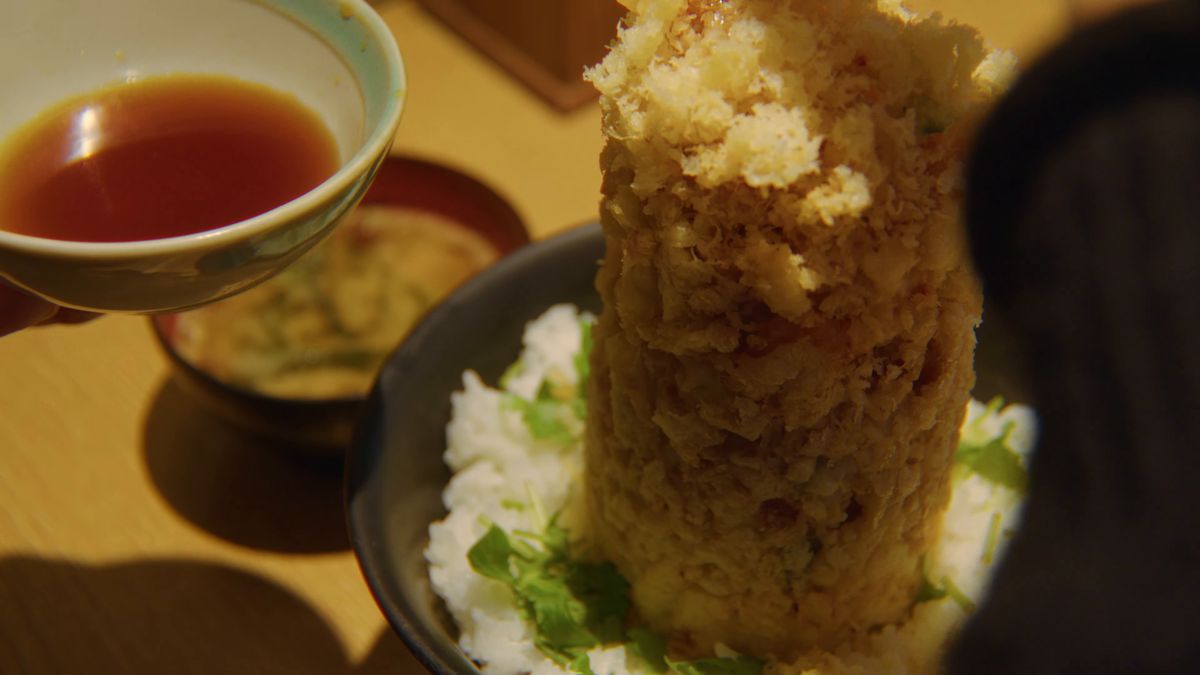
Uogashi Maruten (Numazu Port)
A seafood restaurant founded in 1966 and one of the best known at Numazu Port. Its signature dish is the seafood kakiage bowl: a huge fritter of shrimp, scallops and onion standing up out of the bowl like a tower. You break it with your chopsticks, tip it over and pour on the tempura sauce. Mine came with fish-bone soup and a small side dish. There are two Maruten restaurants at the port, so check the official site before you go.
Sources: uogashi-maruten.co.jp rurubu.jp rurubu.jp
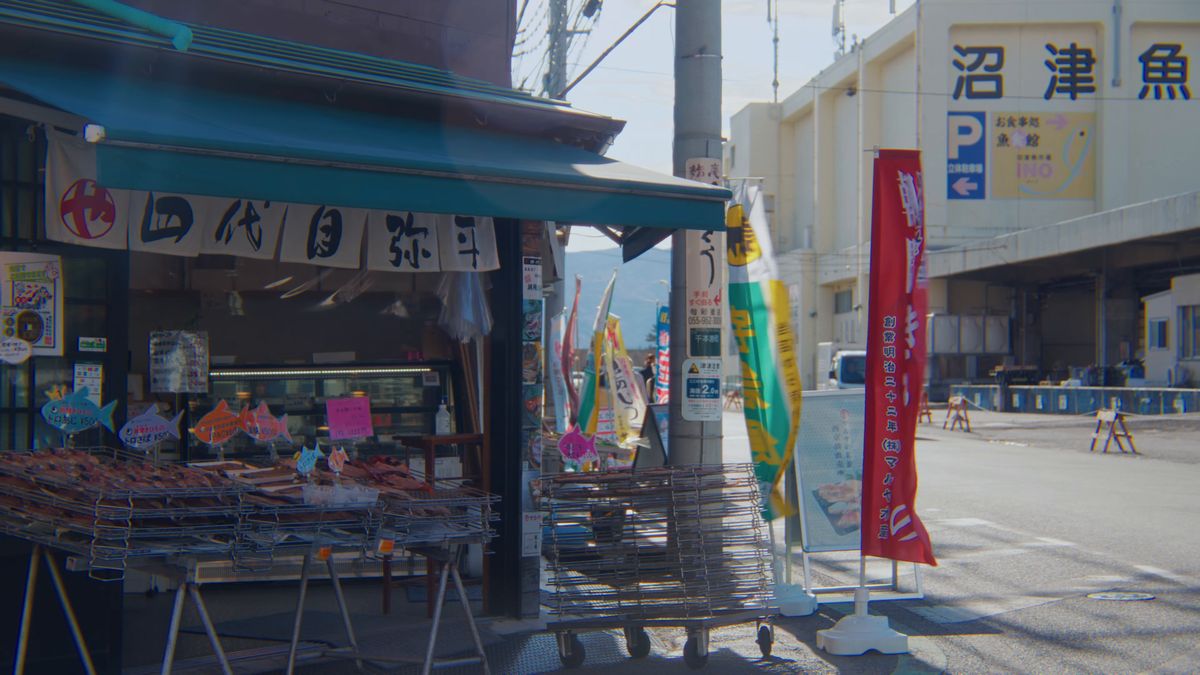
Yondaime Yahei (dried-fish shop at Numazu Port)
A dried-fish shop on the street facing the Numazu Fish Market. Dried horse mackerel with fish-shaped price tags sat on a table out front, and the case inside held dried splendid alfonsino and soy-marinated mackerel. Yondaime Yahei is the dried-fish brand of Maruya Suisan, a Numazu company founded in 1889 that runs its own shops at the port. The dried horse mackerel I bought here went into the Numazu bowl that night.
Sources: maruyasuisan.co.jp
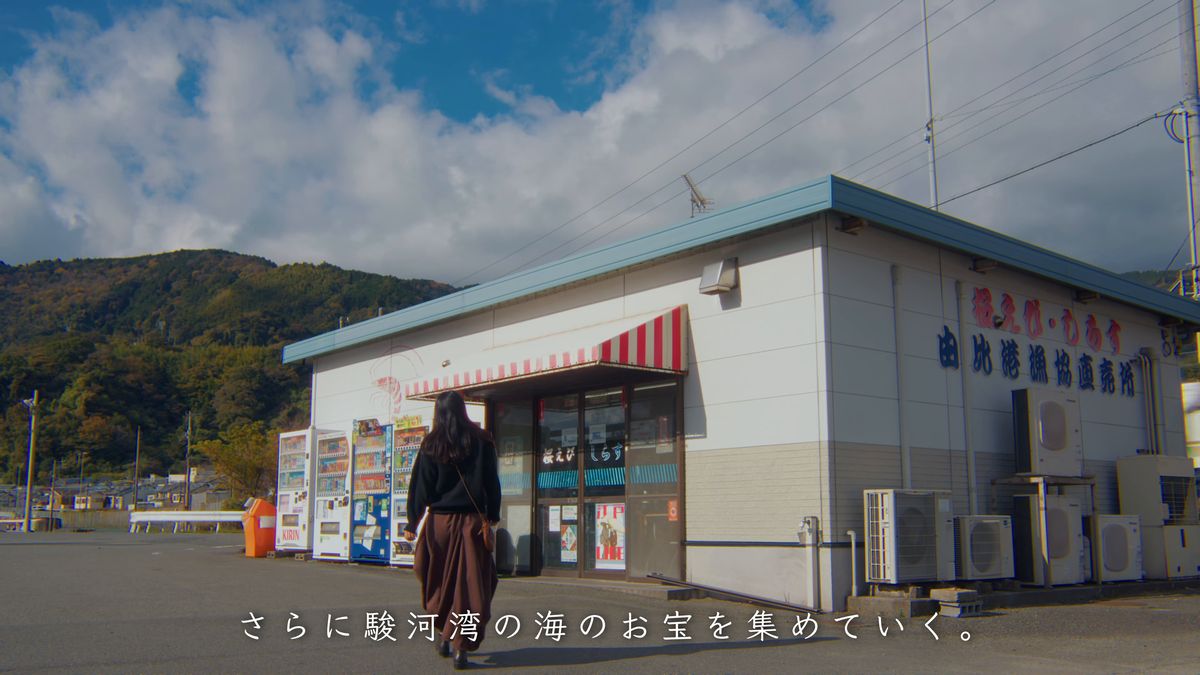
Yui Port Fishery Cooperative Shop
1127 Hama, Yui-Imajuku, Shimizu-ku, Shizuoka City, Shizuoka
The Yui Port fishery cooperative's own shop, at the fishing port in Yui. The cooperative opened it to promote domestic sakura shrimp, which are caught only in Suruga Bay, and it sells raw and frozen sakura shrimp, whitebait and shrimp preserved in soy sauce all year round. I bought a 200-gram pack of frozen raw sakura shrimp. According to the notice at the shop, the boats go out on calm evenings, and raw shrimp arrive the morning after a good haul. Prices follow the market, so check before you go.
Sources: pref.shizuoka.jp
A mandarin farm shop in Nishiura
A mandarin farm shop on the shore. Bagged mandarins, bottles of Jutaro mandarin juice and canned drinks sat on wooden tables, with the sea and an island visible through the windows. Boxes labeled Nishiura Mikan and yellow crates were stacked in the storeroom. The mandarins I bought here were eaten under the kotatsu.
02What I cooked
Numazu bowl (Numazu-don)
Numazu-don is a local specialty born at a Numazu bowl contest in 2000: rice cooked with dried horse mackerel, topped with raw whitebait, raw sakura shrimp and chopped horse mackerel. Restaurants around Numazu Port serve it. It brings together Numazu's three famous catches, horse mackerel, sakura shrimp and whitebait, in a single bowl. On the road I skipped the cooked-in version and mixed flaked grilled horse mackerel into hot rice instead, then topped it with what I had gathered at the market, the port and Yui.
IngredientsDried horse mackerel from Numazu, Freshly cooked rice, Horse mackerel sashimi, Raw whitebait, Raw sakura shrimp, Shiso leaves, Shredded nori, Green onion, White sesame and soy sauce
- Grill the dried horse mackerel, take the flesh off the bones and mix it into hot rice
- Chop the horse mackerel sashimi finely to make tataki
- Fill a bowl with the horse mackerel rice, scatter shredded nori and lay shiso leaves on top
- Add the tataki, raw whitebait, raw sakura shrimp and green onion, and eat with a drizzle of soy sauce
Sources: nap-camp.com
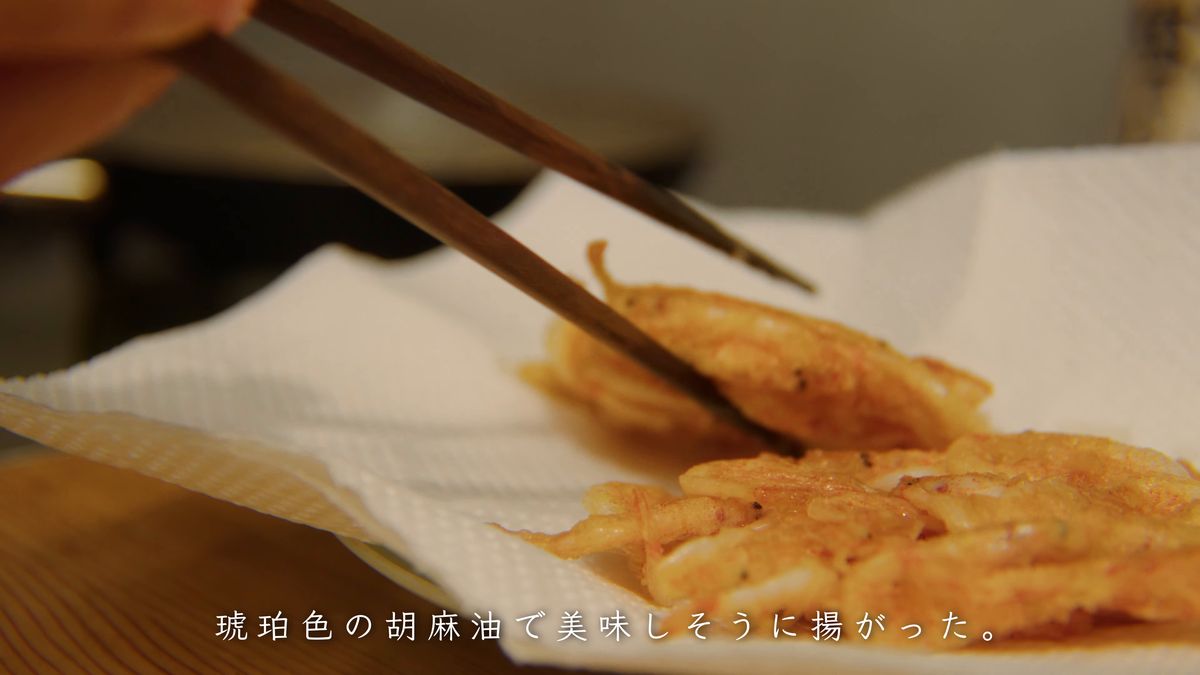
Sakura shrimp kakiage
Every sakura shrimp landed in Japan comes from Suruga Bay. The fishing season runs twice a year, in spring (mid-March to early June) and autumn (late October to late December); the rest of the year is closed to protect the shrimp. I turned half of the shrimp I bought in Yui into kakiage to go with the Numazu bowl.
IngredientsRaw sakura shrimp (frozen, from the Yui Port cooperative shop), Tempura batter, Sesame oil
- Mix the sakura shrimp with batter in a bowl
- Slide the mixture off a spatula into hot sesame oil
- When golden, drain on paper towel
Sources: yuikou.jp
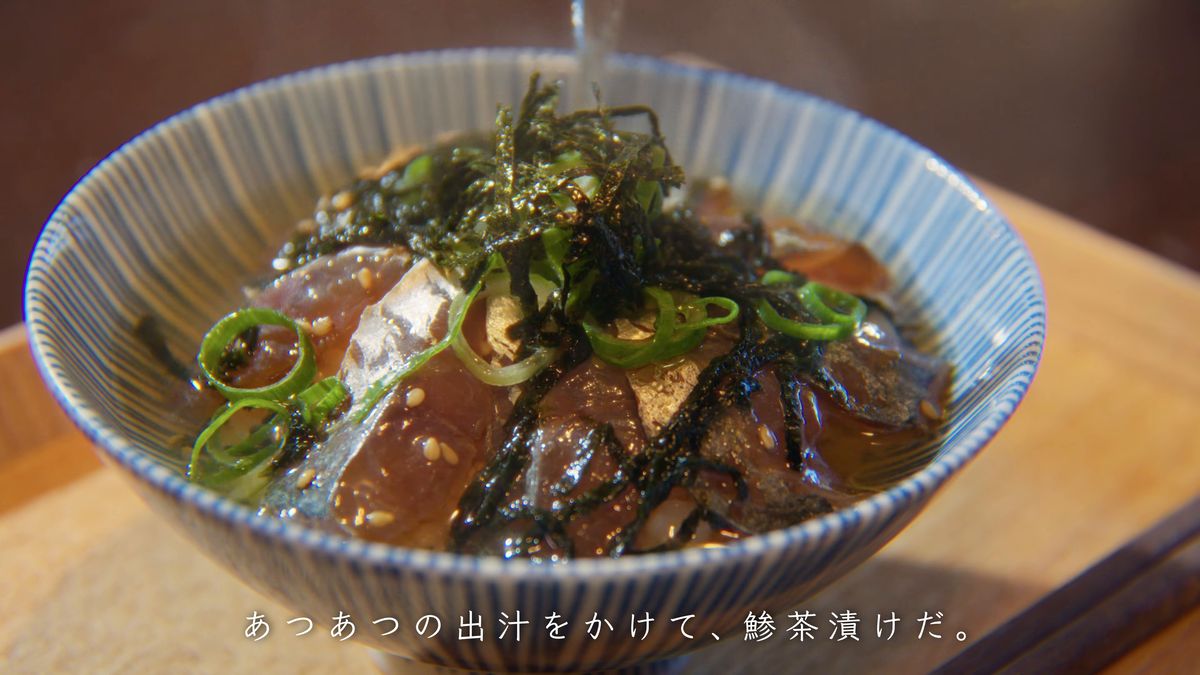
Horse mackerel chazuke
The half of the chopped horse mackerel I had set aside while making the Numazu bowl spent the night in soy sauce and became the next morning's chazuke. I made dashi with the bonito stock packs from the dry-goods stall at the morning market, laid the amber-colored fish over white rice, and poured the hot dashi on top. A taste steeped in happy memories of Numazu.
IngredientsHorse mackerel sashimi marinated in soy sauce with white sesame, White rice, Shredded nori, Green onion, Dashi made with bonito stock packs
- The night before, marinate half of the chopped horse mackerel in soy sauce with white sesame
- In the morning, make dashi with the stock packs
- Lay the marinated fish over white rice and top with nori and green onion
- Pour hot dashi over everything
03About the area
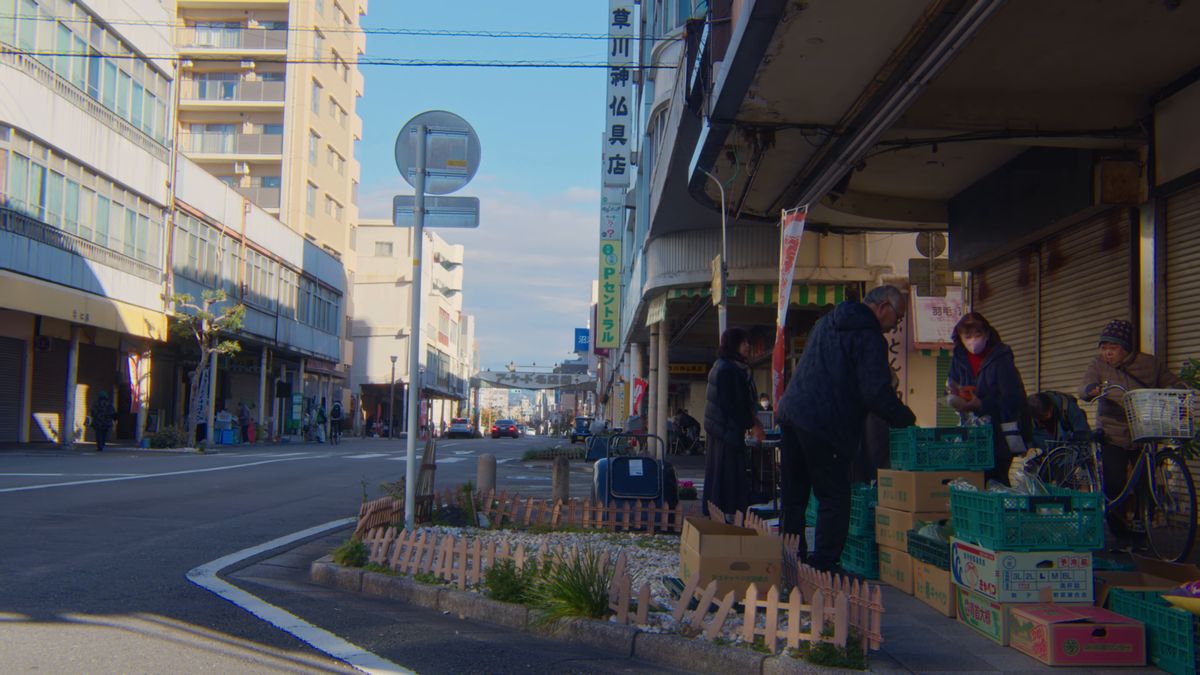
Asa-Ichi, the morning market in the Arcade Meitengai
Arcade Meitengai, Numazu, Shizuoka
A morning market held in the shopping arcade near Numazu Station on the first day of every month except January, from 8 a.m. until around noon. It began in 2005, and some fifty stalls sell vegetables, fruit, dried fish and other local products, along with dry goods, bread and sweets. This time I bought aji-zushi, bonito stock packs and dried bonito flakes. I got there on the Izuhakone Bus, getting off at the Arcade Meitengai stop.
Sources: numazukanko.jp b-izu.com premiumoutlets.co.jp
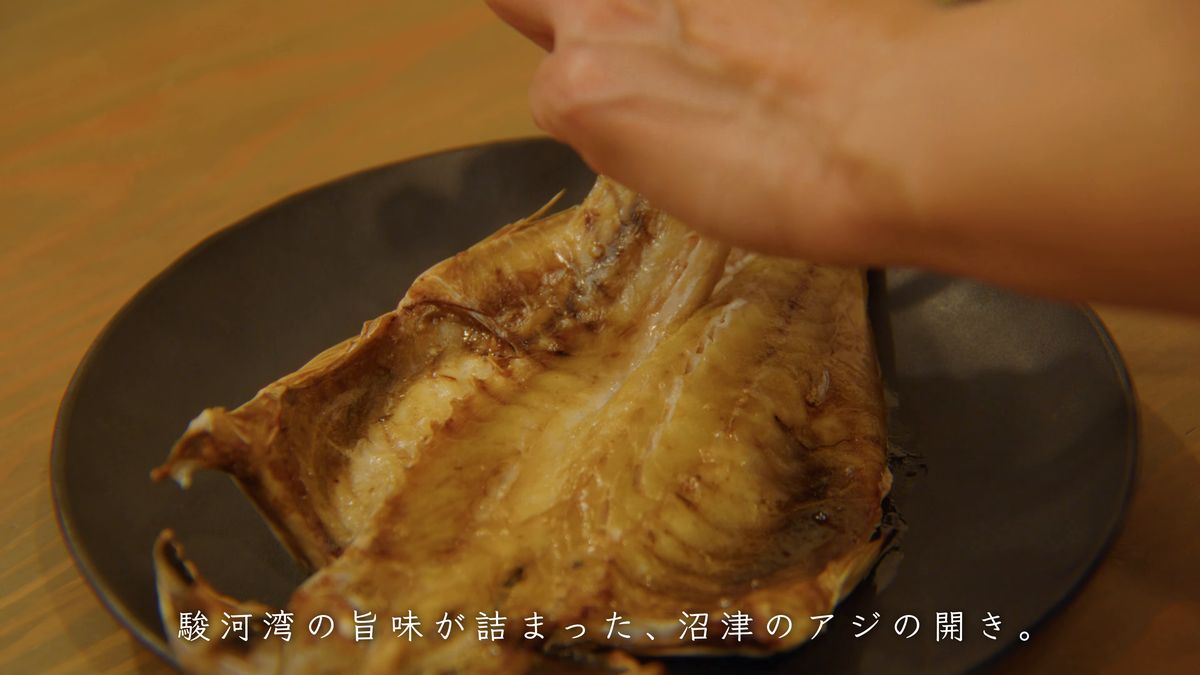
Numazu himono, dried horse mackerel
Numazu is one of Japan's leading producers of dried fish; fish drying at the Numazu post town even appears in Hiroshige's Fifty-three Stations of the Tokaido. From the late Meiji to the Taisho era, dried-fish wholesalers clustered around the mouth of the Kano River, and by the early Showa era the present method was established: the fish is split open, gutted, soaked in brine and dried in the sun. A mild climate and sea breezes, abundant spring water from Mt. Fuji, fresh fish from Suruga Bay and the growth of transport such as the Tokaido Line are said to have supported the industry. This time I grilled dried horse mackerel from the port and mixed it into rice.
Sources: shizuoka-gastronomy.jp
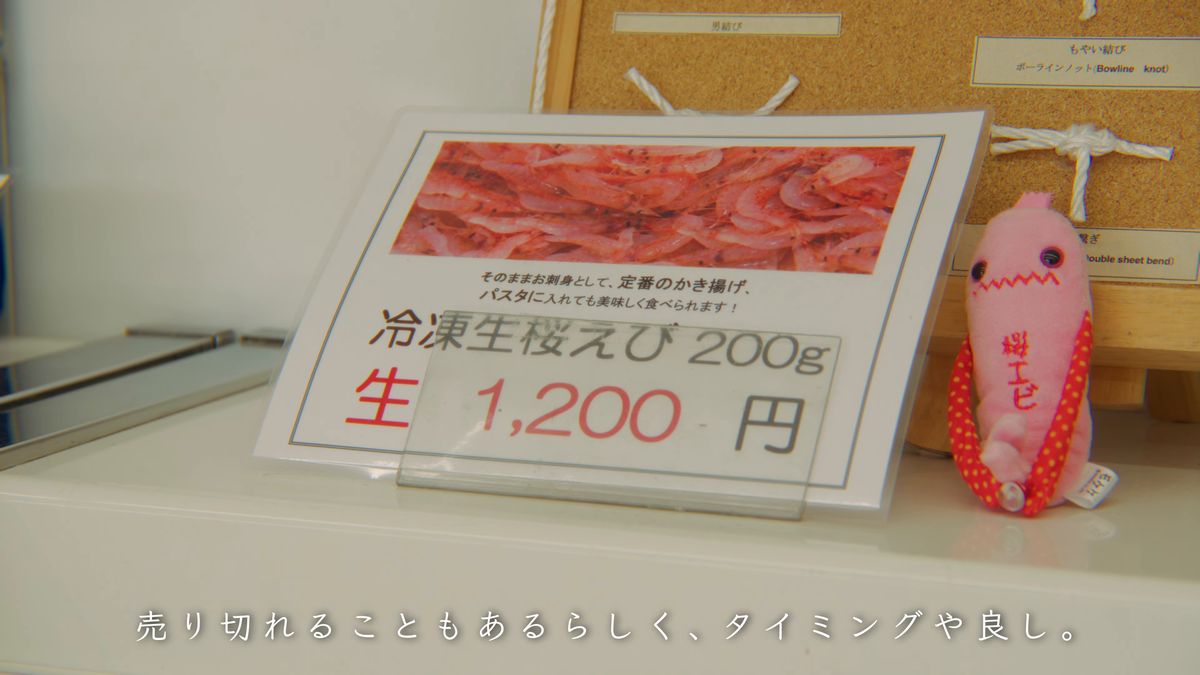
Sakura shrimp of Suruga Bay
Sakura shrimp also live in Tokyo Bay and Sagami Bay, but only Shizuoka Prefecture licenses the fishery, so every shrimp landed in Japan comes from Suruga Bay. There are two seasons a year, spring (mid-March to early June) and autumn (late October to late December), with the rest of the year closed to protect the stock. A total of 120 licensed boats operate from the Yui, Kambara and Oigawa districts. The autumn 2023 season opened at Yui Fishing Port on the evening of November 1 and was scheduled to run until December 25.
Sources: yuikou.jp kyodonewsprwire.jp
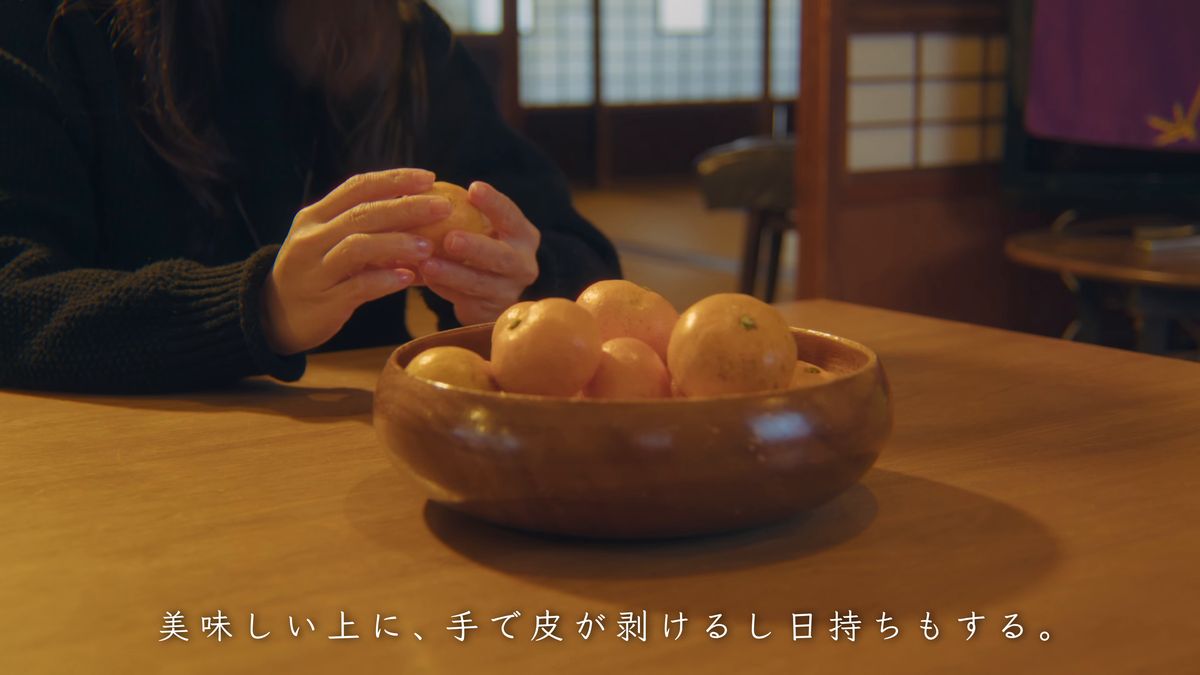
Nishiura mandarins and the Jutaro variety
In the Sanura district of Numazu, made up of Nishiura, Uchiura and Shizuura, mandarin growing can be traced back about 450 years, and full-scale cultivation began in the early Meiji era. In 1975, Jutaro Yamada, a mandarin farmer in Nishiura, found a bud mutation of the Aoshima unshu mandarin and named it Jutaro unshu. It is a little smaller than the Aoshima, with higher sugar and acidity and a richer taste; it is picked in December, stored, and shipped from around February. It now accounts for half of Numazu's mandarin acreage, and on November 18, 2020, Nishiura Mikan Jutaro was registered under the national Geographical Indication system.
Sources: pref.shizuoka.jp pref.shizuoka.jp maff.go.jp
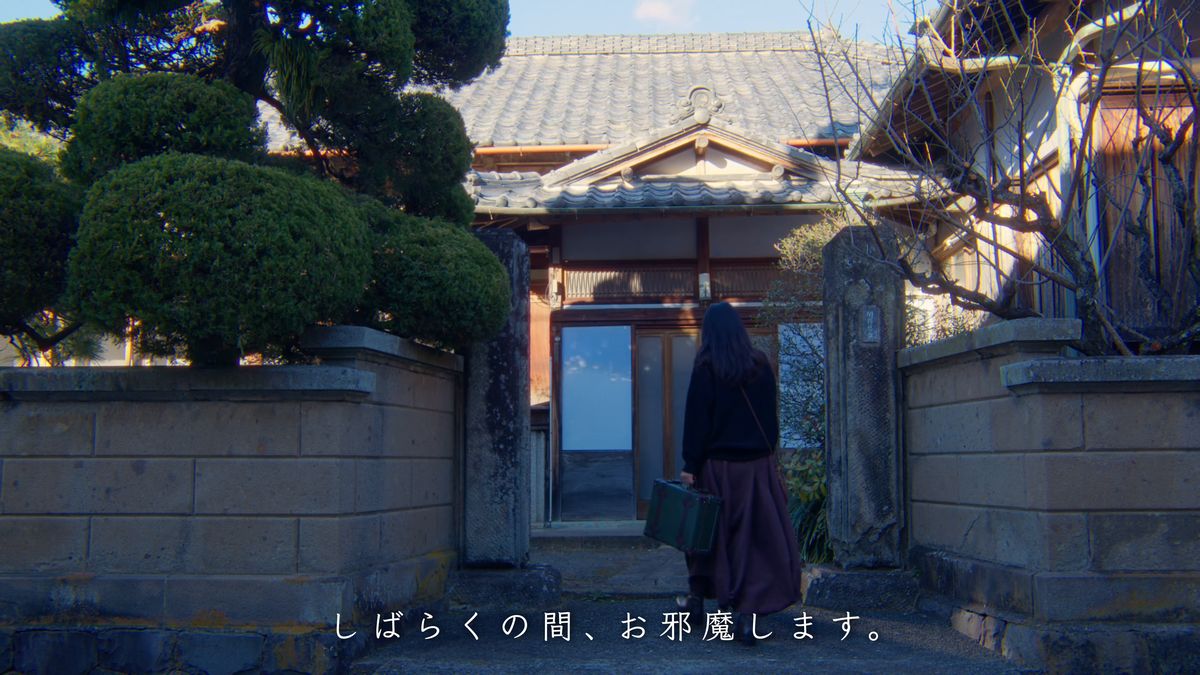
A ninety-year-old house by the sea
This time I borrowed a ninety-year-old house, now an inn, in a town by the sea. The water is less than a minute's walk away, and Mt. Fuji and Awashima are visible from the Nagahama bus stop. It has a wood-floored room with glass windows and a sofa, a tatami room beyond the shoji, and a long corridor of wooden walls; from under the kotatsu I could see the sea outside the window. I ate the Numazu bowl at the kitchen counter at night and horse mackerel chazuke by the window in the morning.
PHOTO ALBUMPhoto album139Open all photographsClose the photo album
Select a photograph to explore the journey one frame at a time.