A TRAVEL ESSAY
Motobu, Okinawa
Slow Living in Okinawa
Island cookingin a traditional Okinawan house
A winter day in Okinawa, with shaved ice and roasted sweet potatoes on the same afternoon.
Read the journey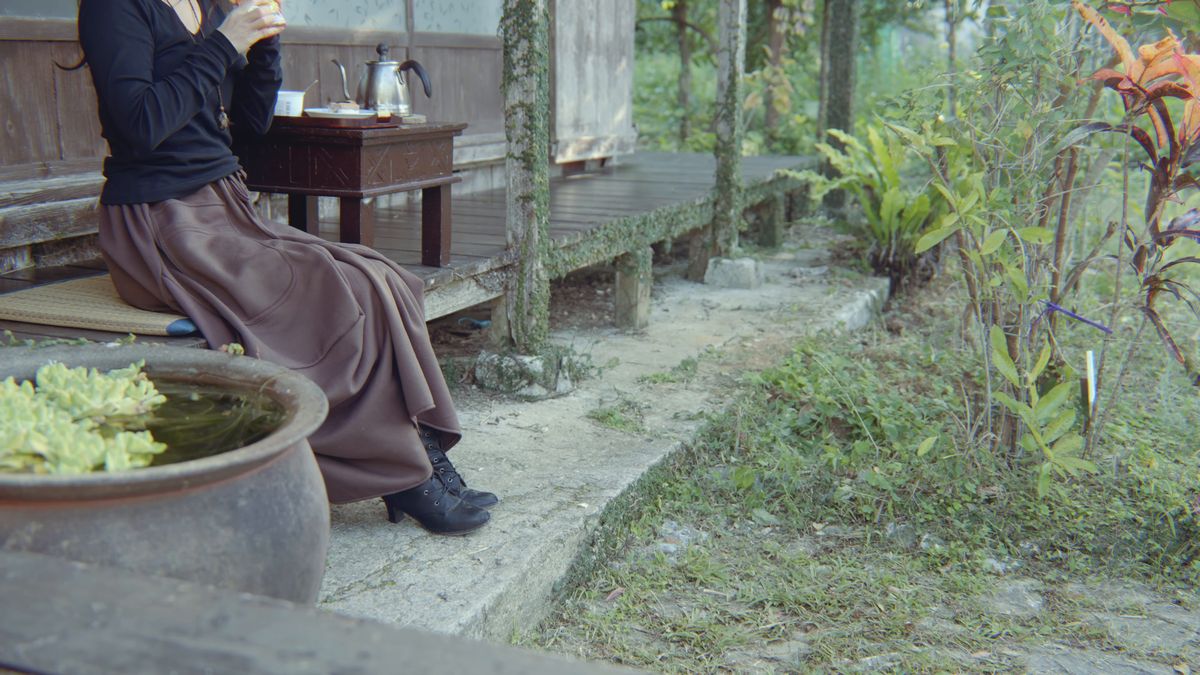
ABOUT THIS JOURNEY
Still in Motobu, in the north of Okinawa's main island, I spent a day at a different old house this time. The morning began in an outdoor bath in the garden, followed by Spam rice balls for breakfast. I crossed the Kouri Bridge for zenzai (which in Okinawa means shaved ice), wandered through Nago's municipal market, and ate fried gurukun at a local diner. In the evening I roasted sweet potatoes on a rocket stove, then cooked goya chanpuru and jushi for dinner. A winter day of island time, shared with the cats who live at the house.
A little more about the food and the land01TRAVEL JOURNAL
Morning in the garden bath
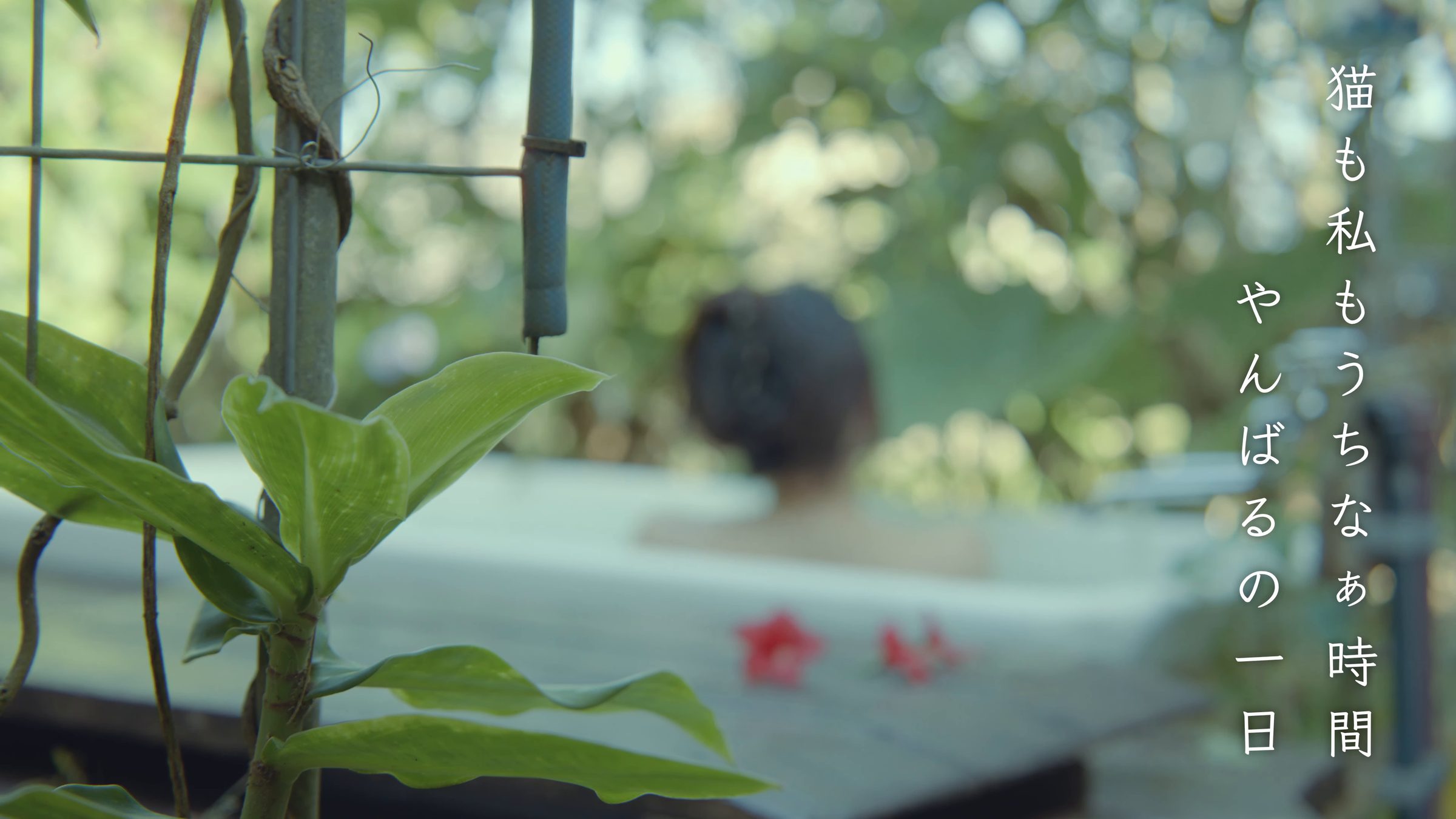
Red petals floated on the water of the bath in the garden. Soaking in an outdoor tub surrounded by trees, I welcomed a morning in northern Okinawa. Like last time, I'm staying in Motobu.
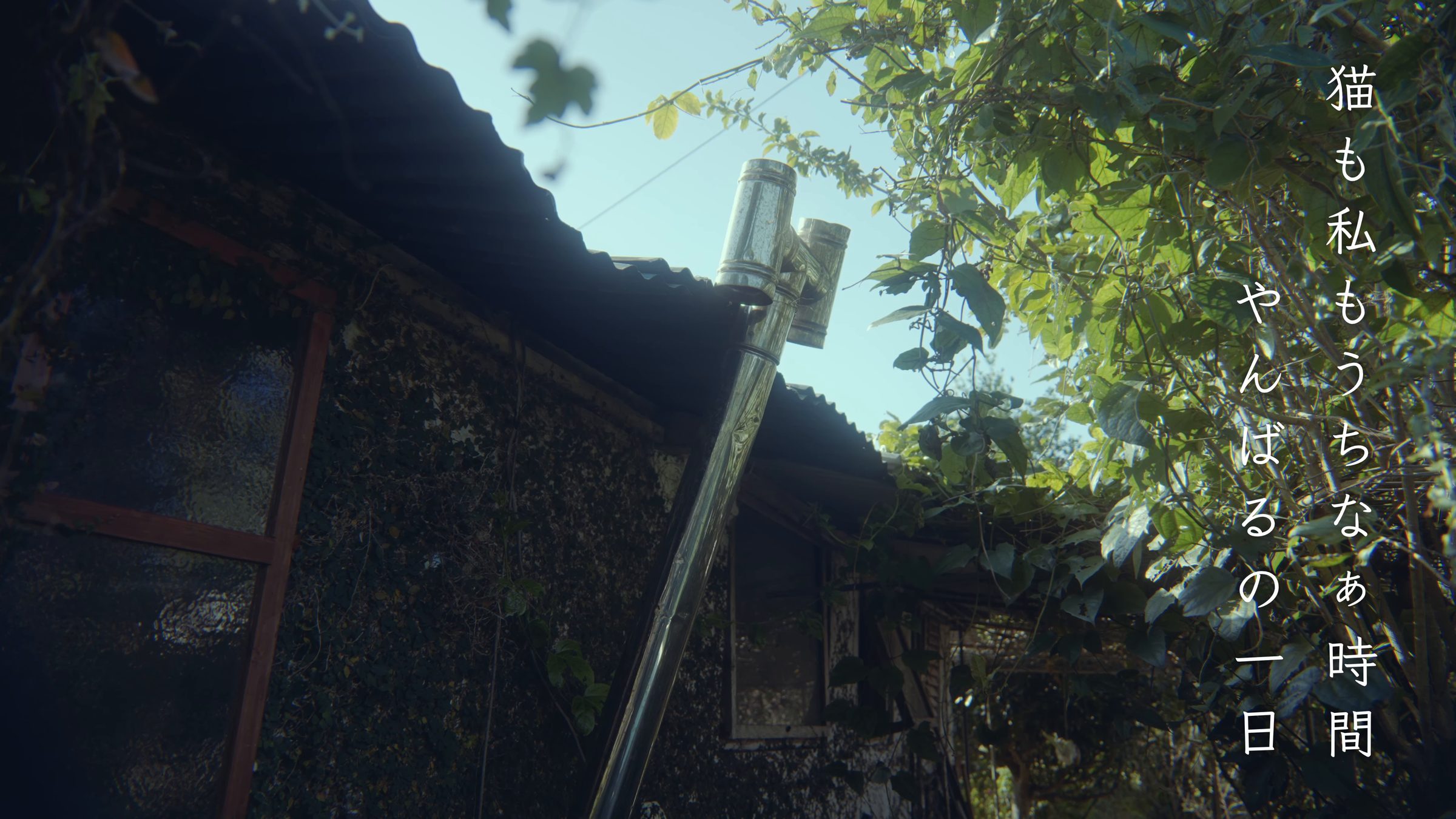
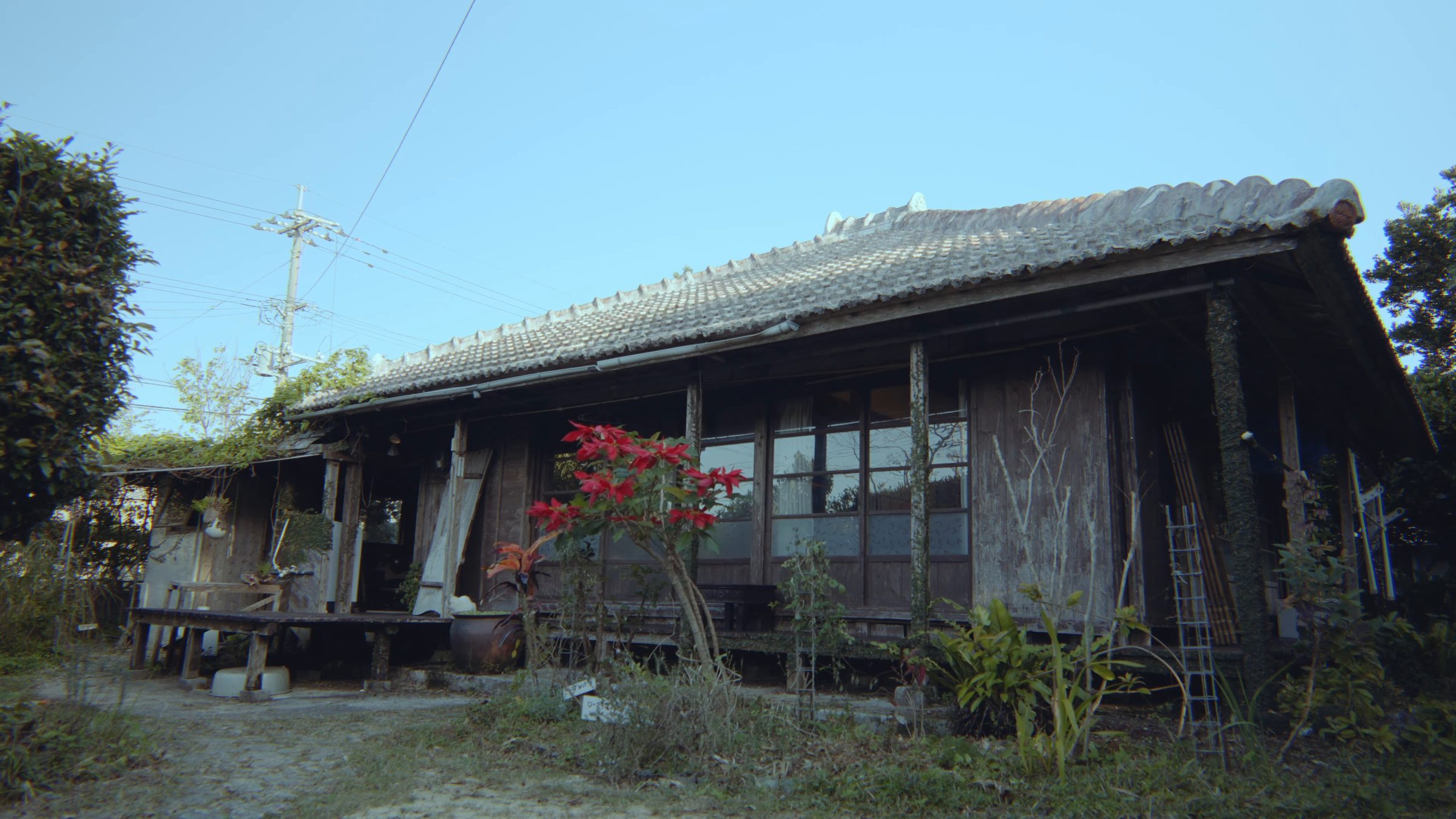
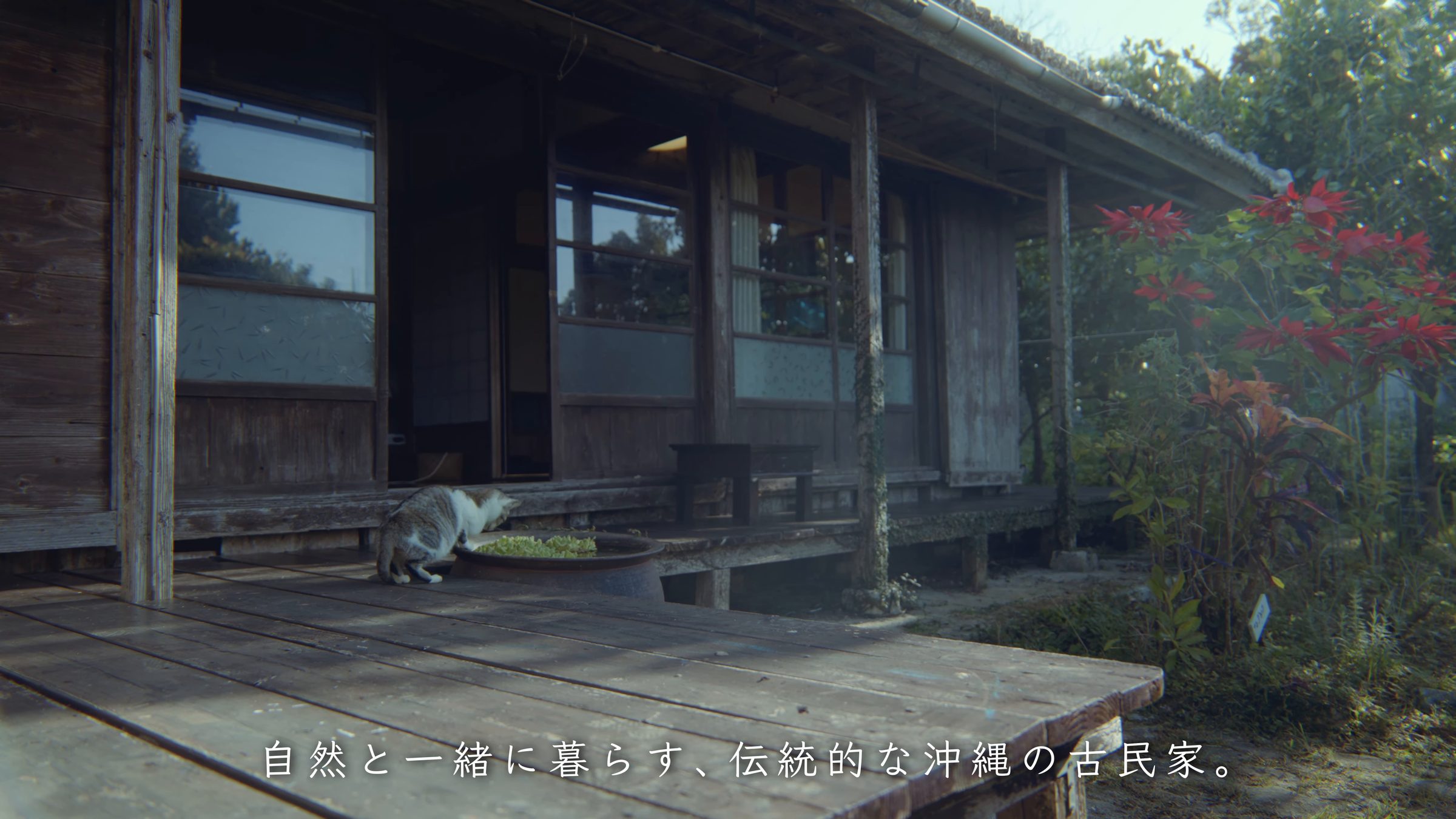
This time I'm at a different old house. Beyond a garden of red blossoms stands a single-story house with a tiled roof. A day of island time, for the cats and for me, was about to begin.
Watch this scene on YouTube0:22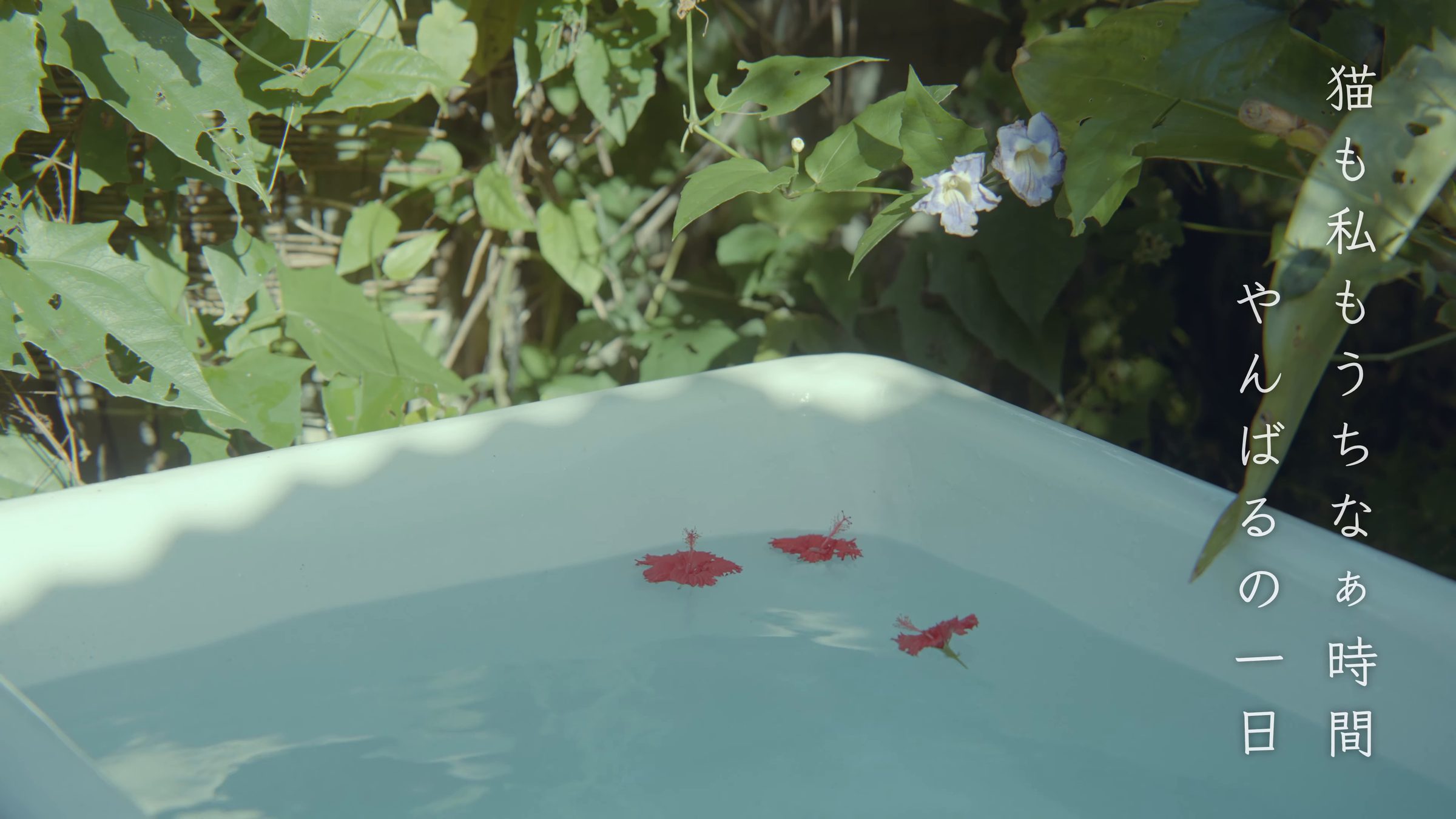
02TRAVEL JOURNAL
Breakfast in Yanbaru
The northern part of Okinawa's main island has long been known by the nickname Yanbaru. Written with the characters for mountain and field, the name fits: ridges run one after another, forests spread between them, and much of the original landscape remains.
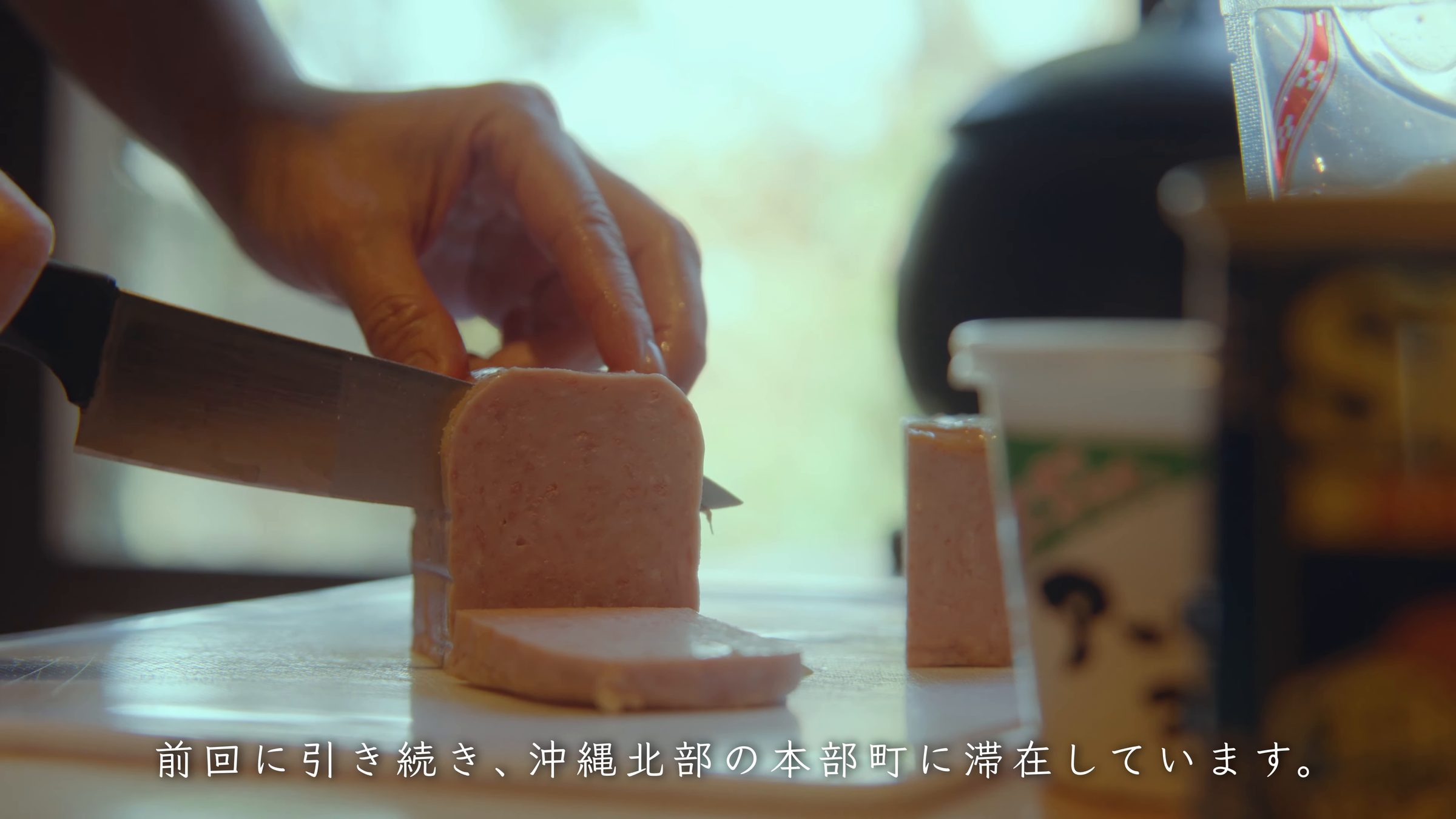
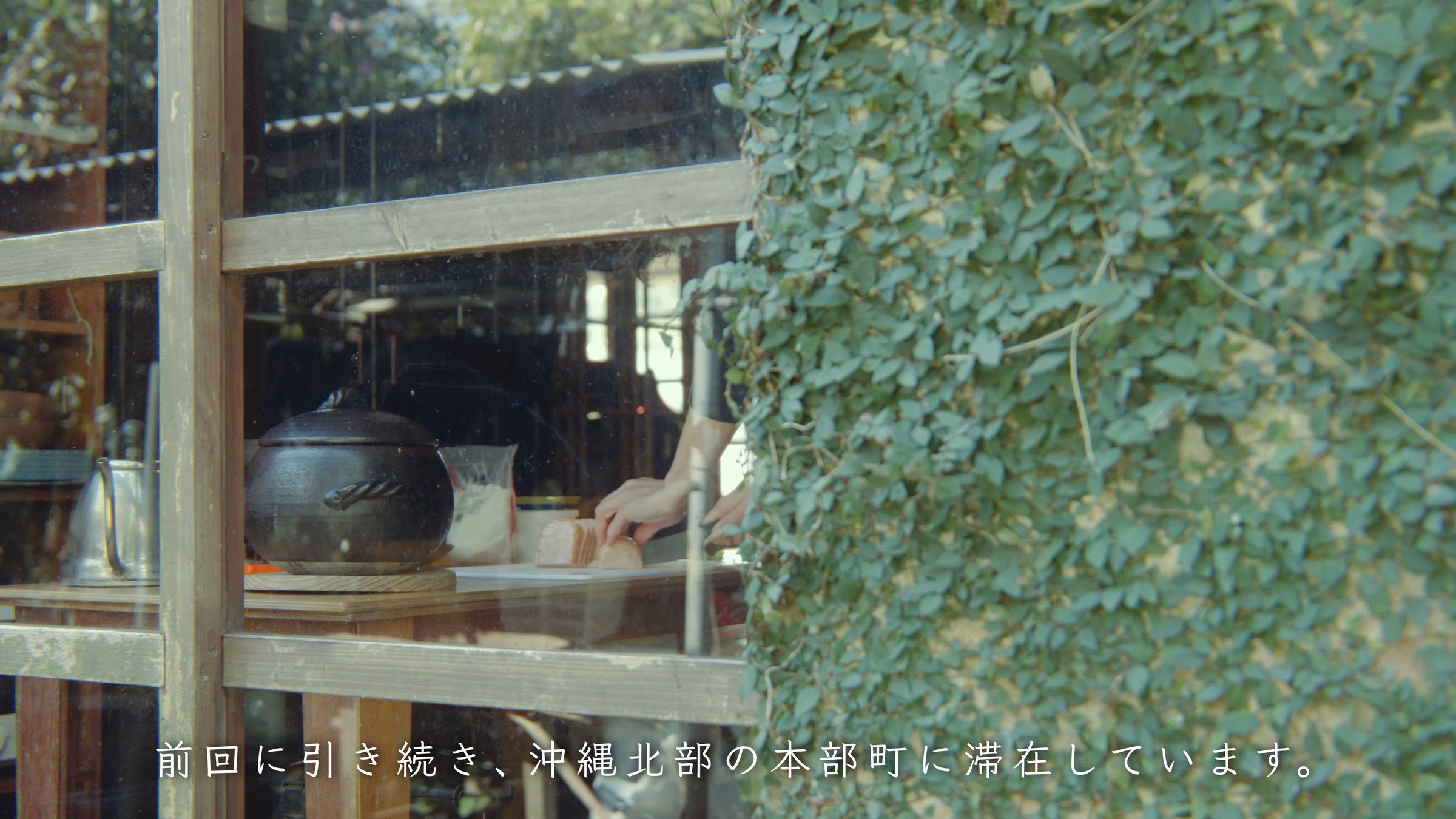
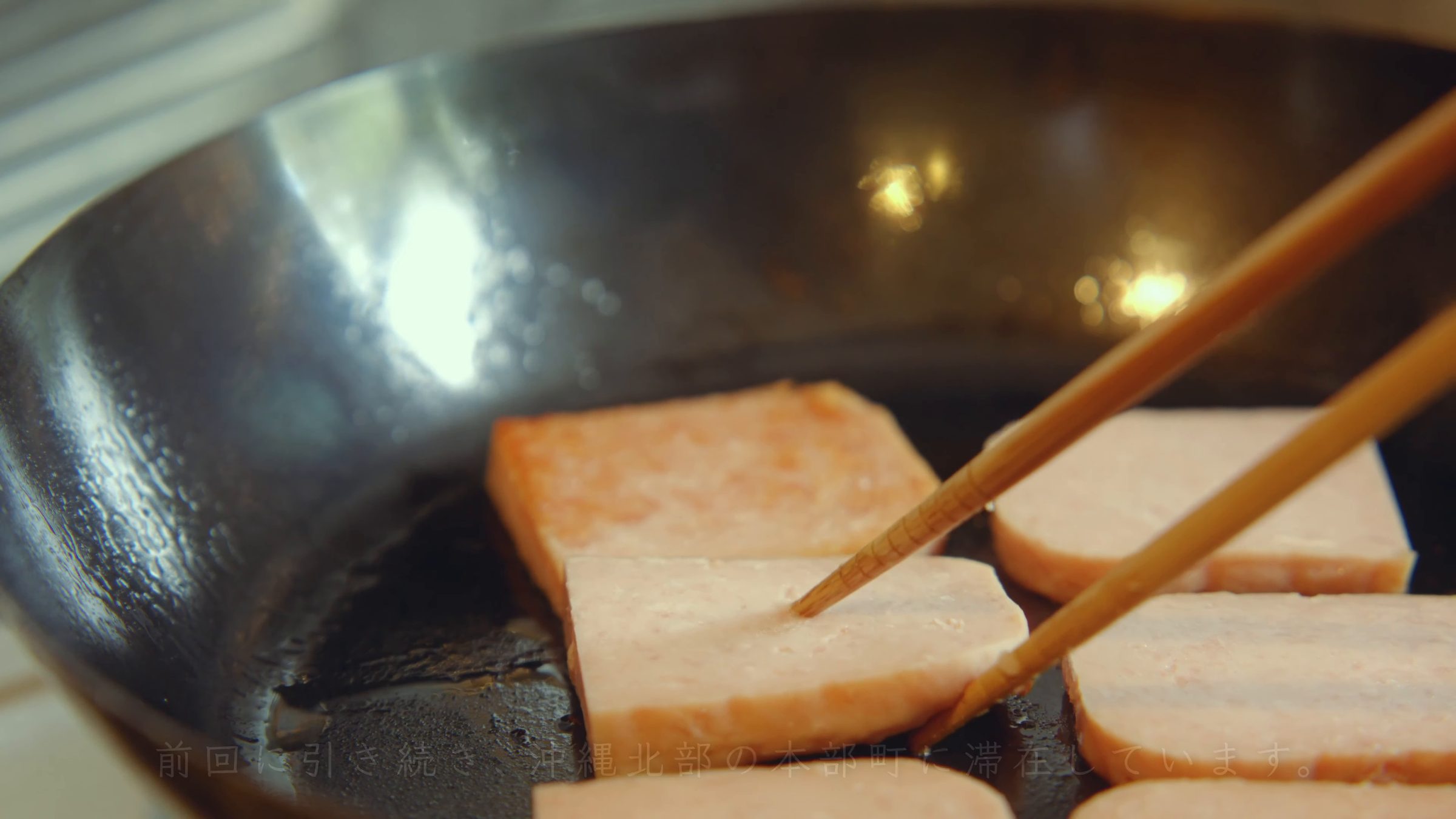
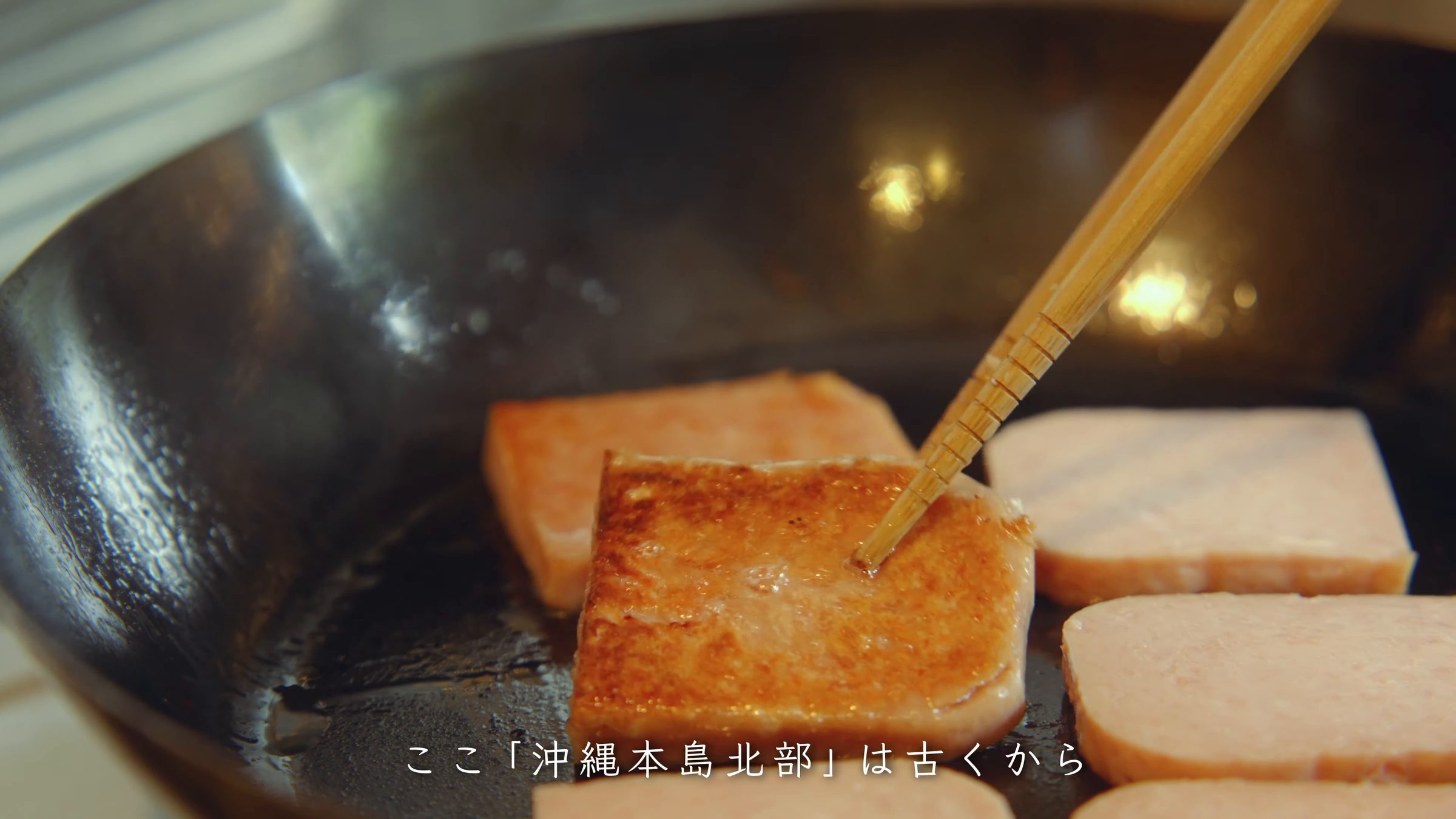
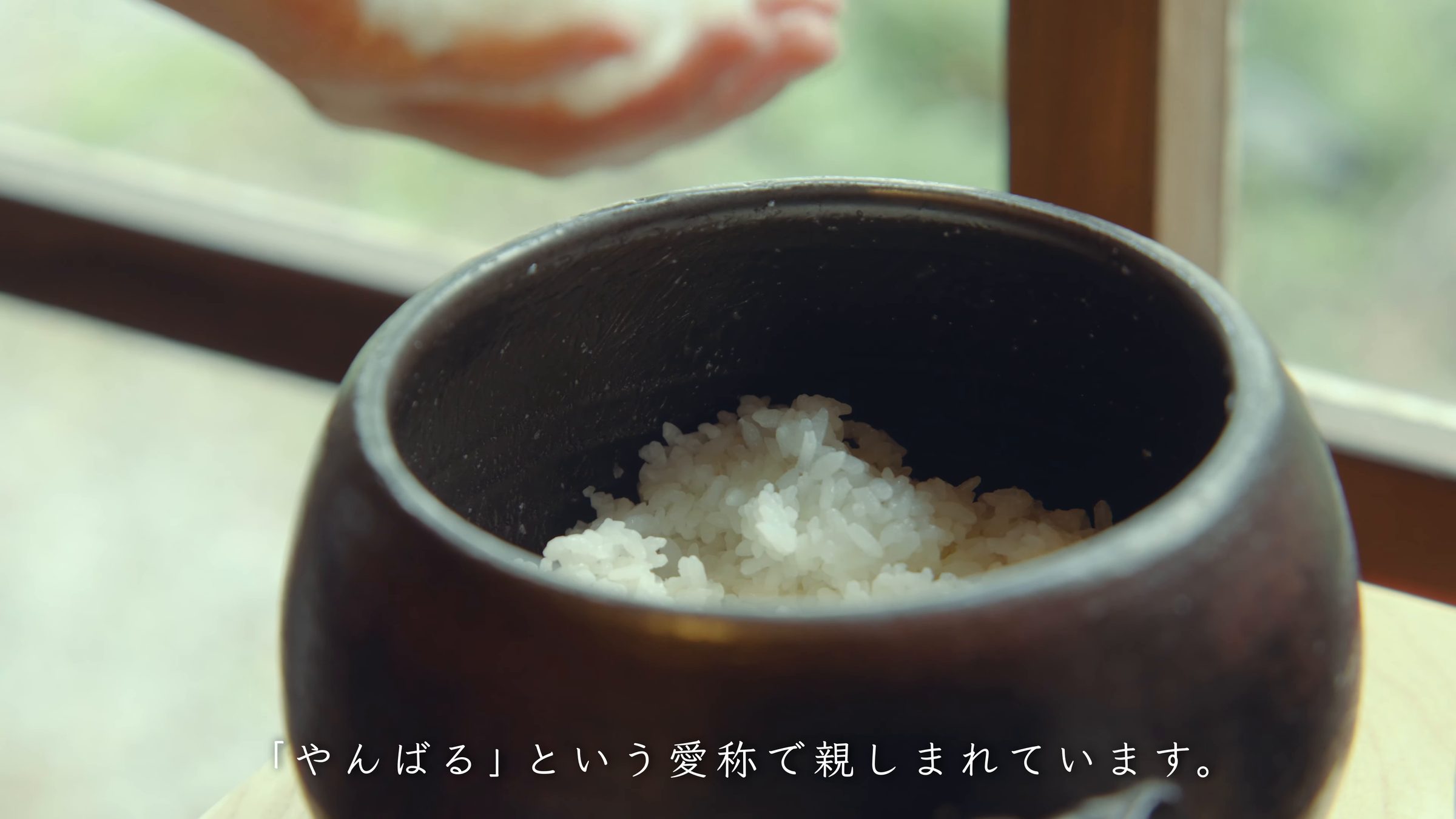
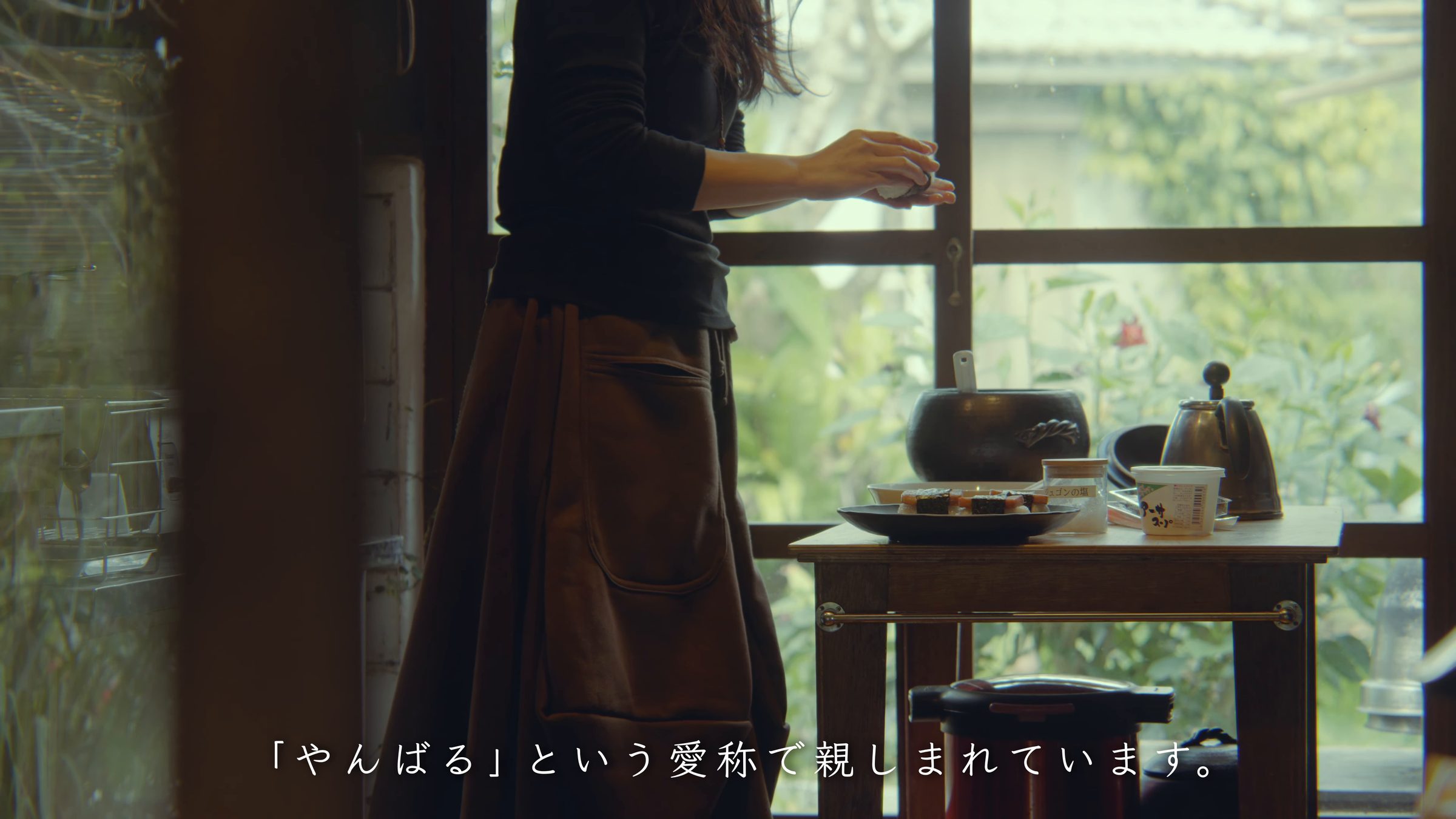
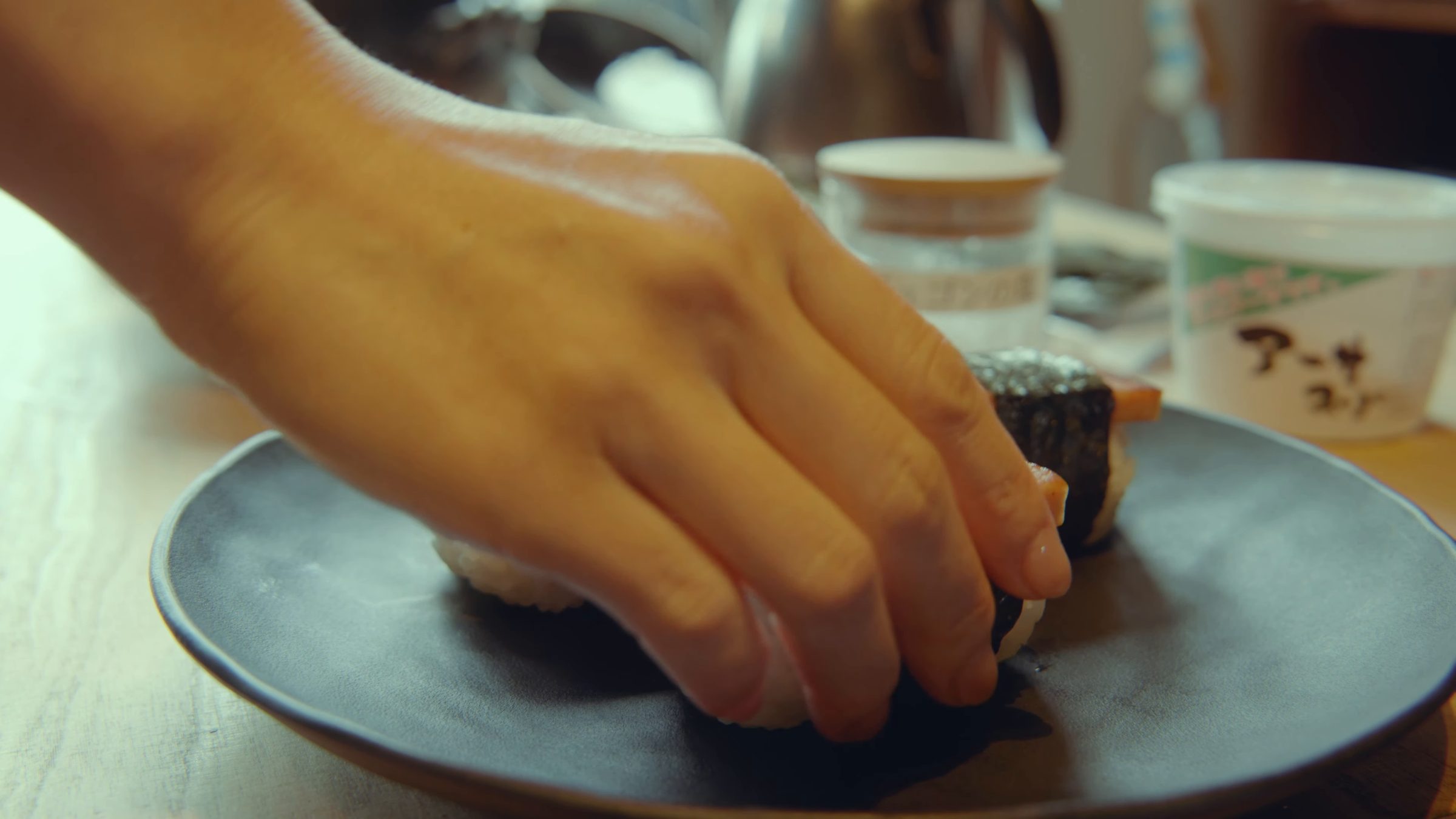
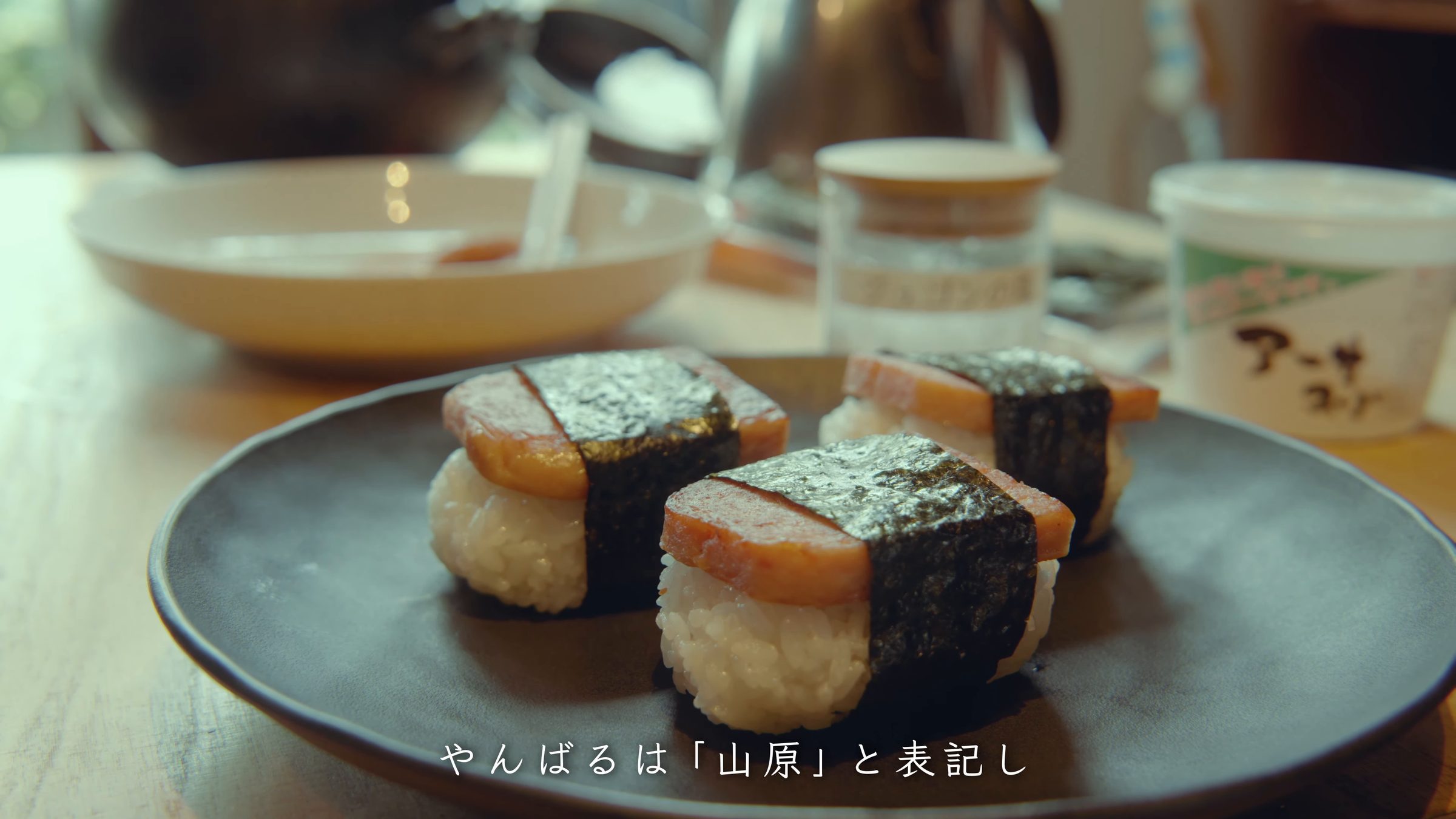
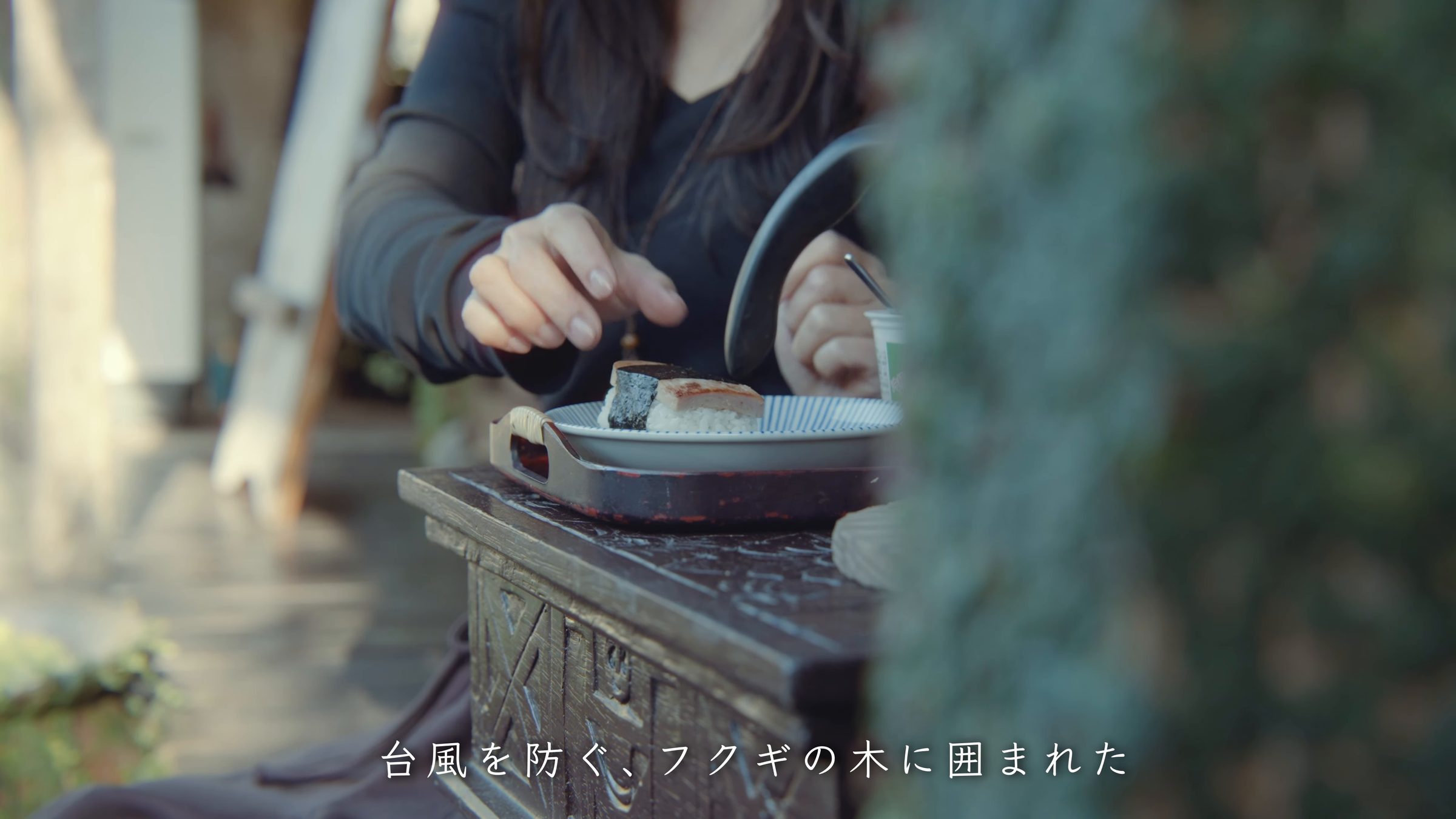
Breakfast would be built around canned pork, a staple in Okinawan kitchens. I cut it into thick slices and browned both sides in a frying pan. Then I shaped rice from the black pot into balls, set a slice of pork on each, and wrapped them in nori: Spam musubi, Okinawa style.
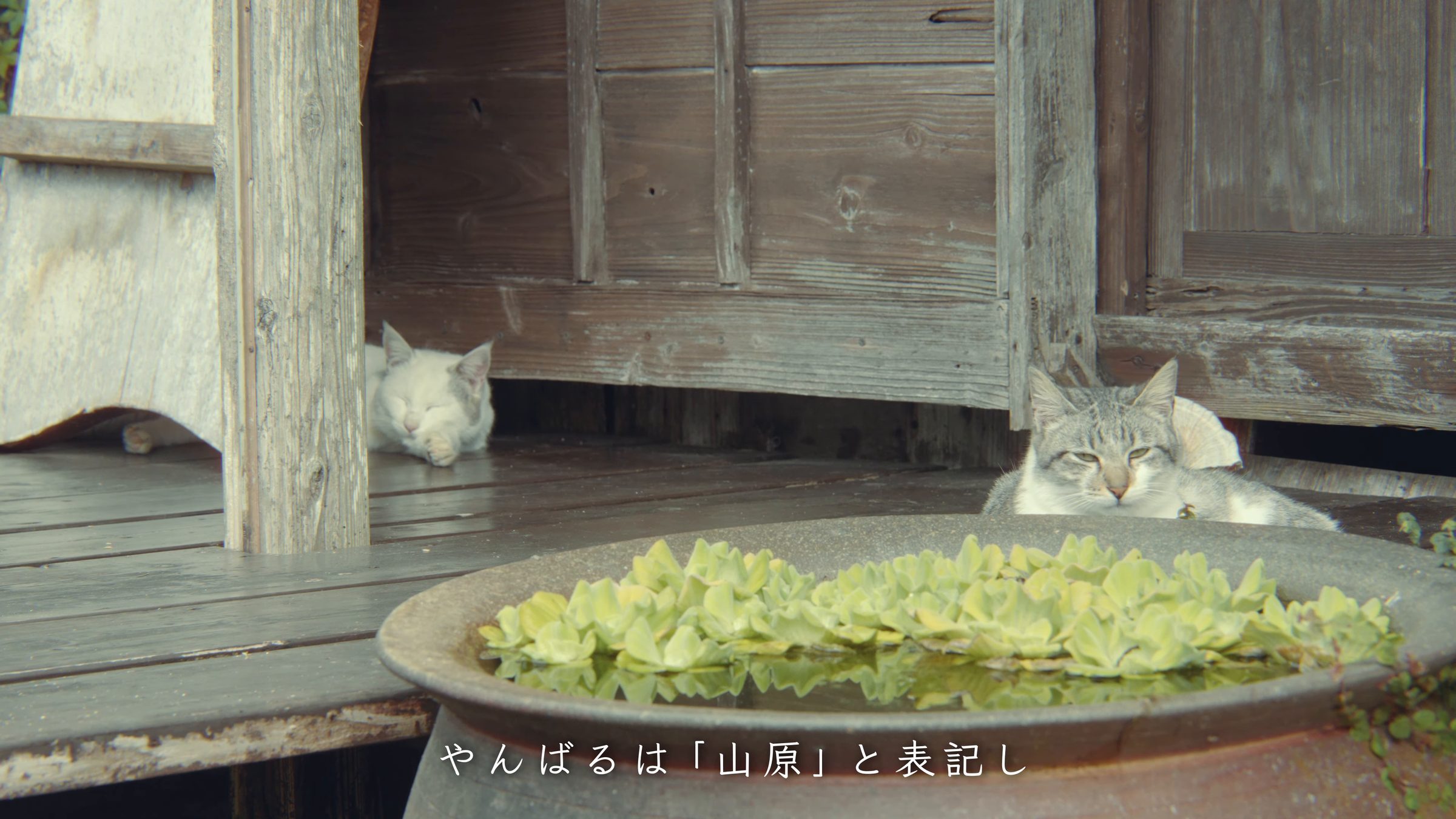
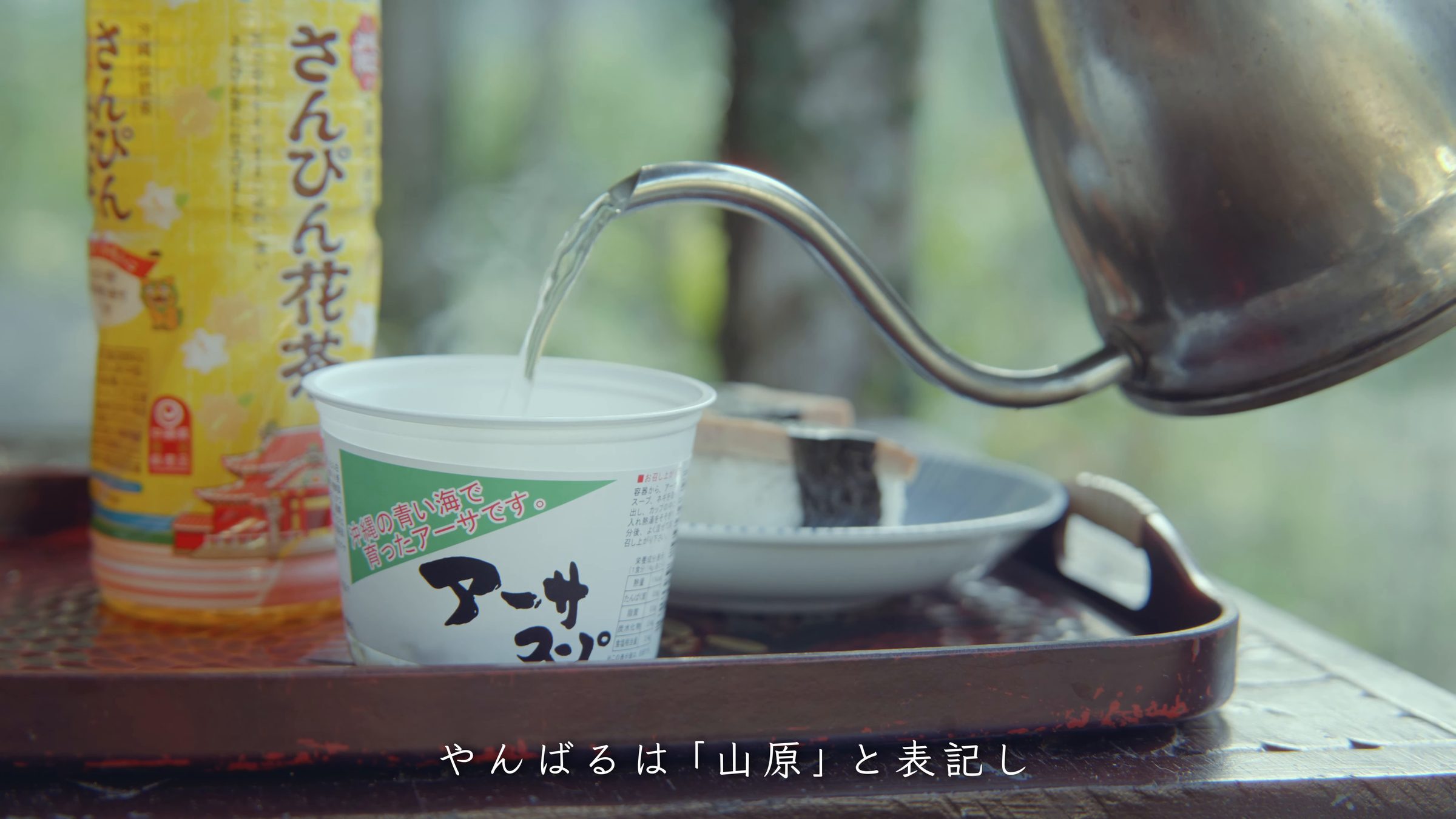
On the veranda, the cats who live at this house were making their morning rounds. I poured hot water over a cup of aasa seaweed soup, set out a bottle of sanpin jasmine tea, and breakfast was ready.
Watch this scene on YouTube0:31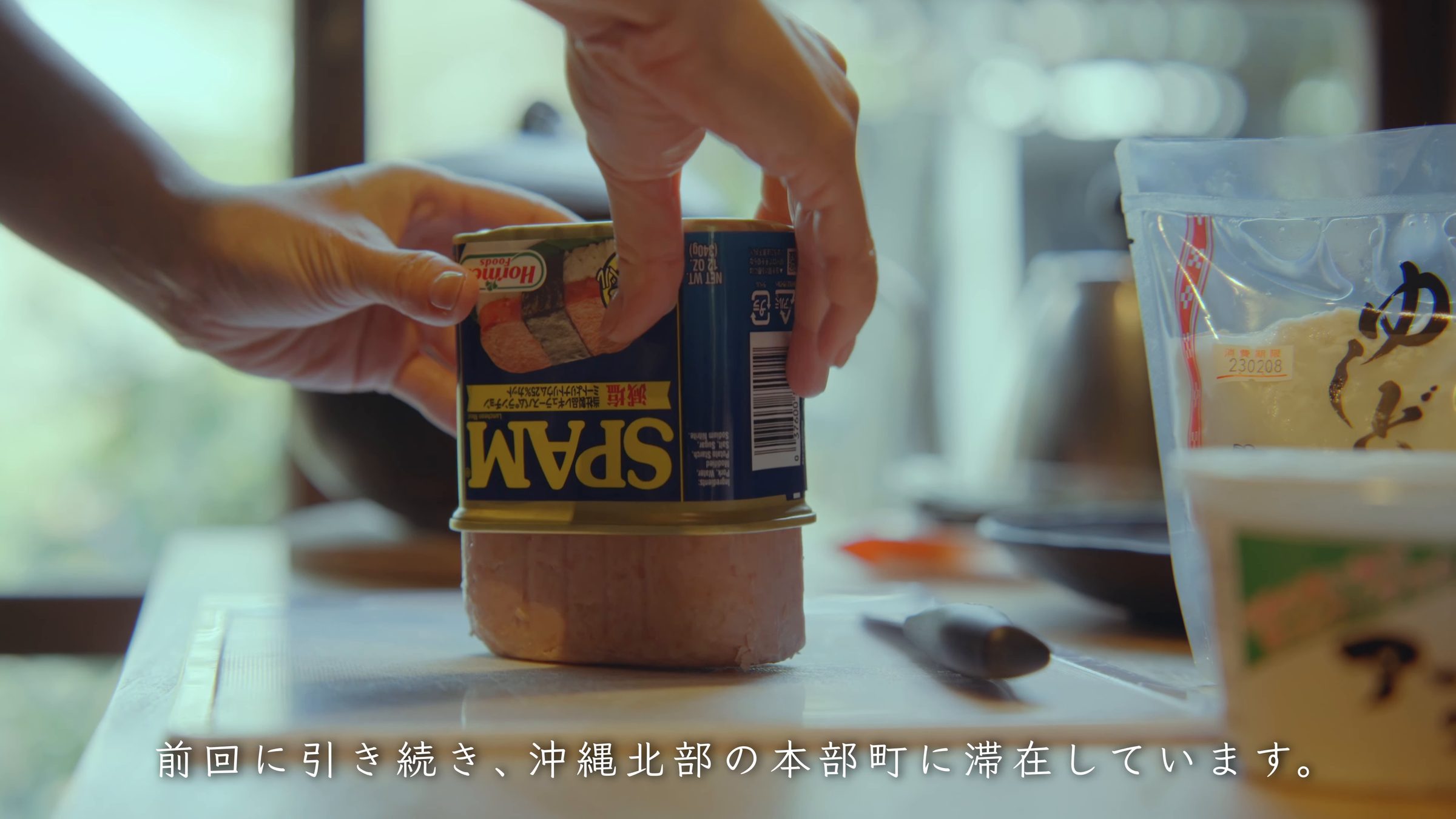
03TRAVEL JOURNAL
A house ringed by fukugi trees
I sat down on the veranda and ate breakfast looking out at the garden. This is a traditional Okinawan house, surrounded by fukugi trees that shield it from typhoons.
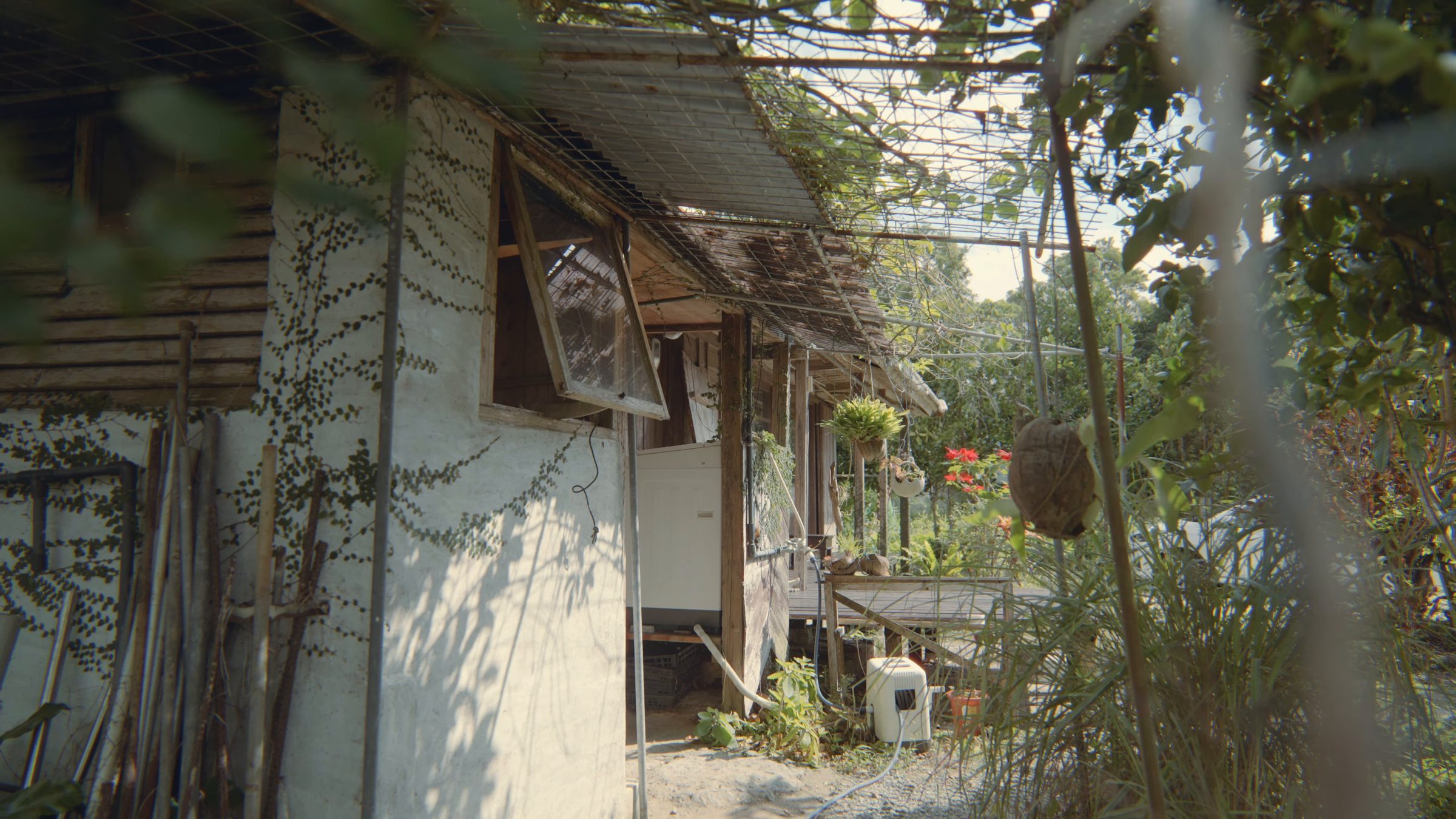
In Okinawa, people have long planted fukugi around their homes to protect them from strong winds. A cat ambled across the garden, thick with fruit trees and herbs. Here, you really do live together with nature.
Watch this scene on YouTube0:58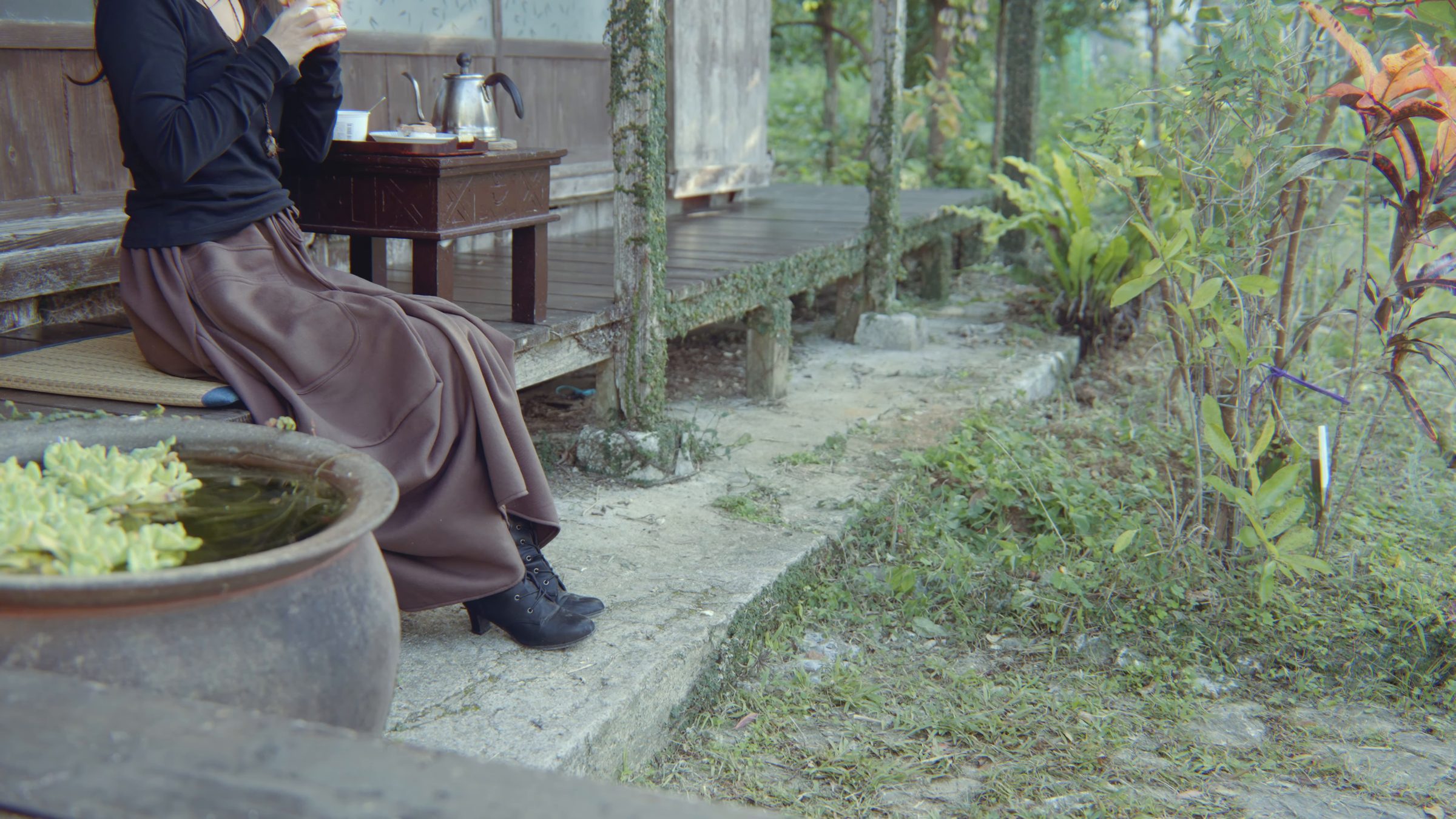
04TRAVEL JOURNAL
Over the bridge for zenzai
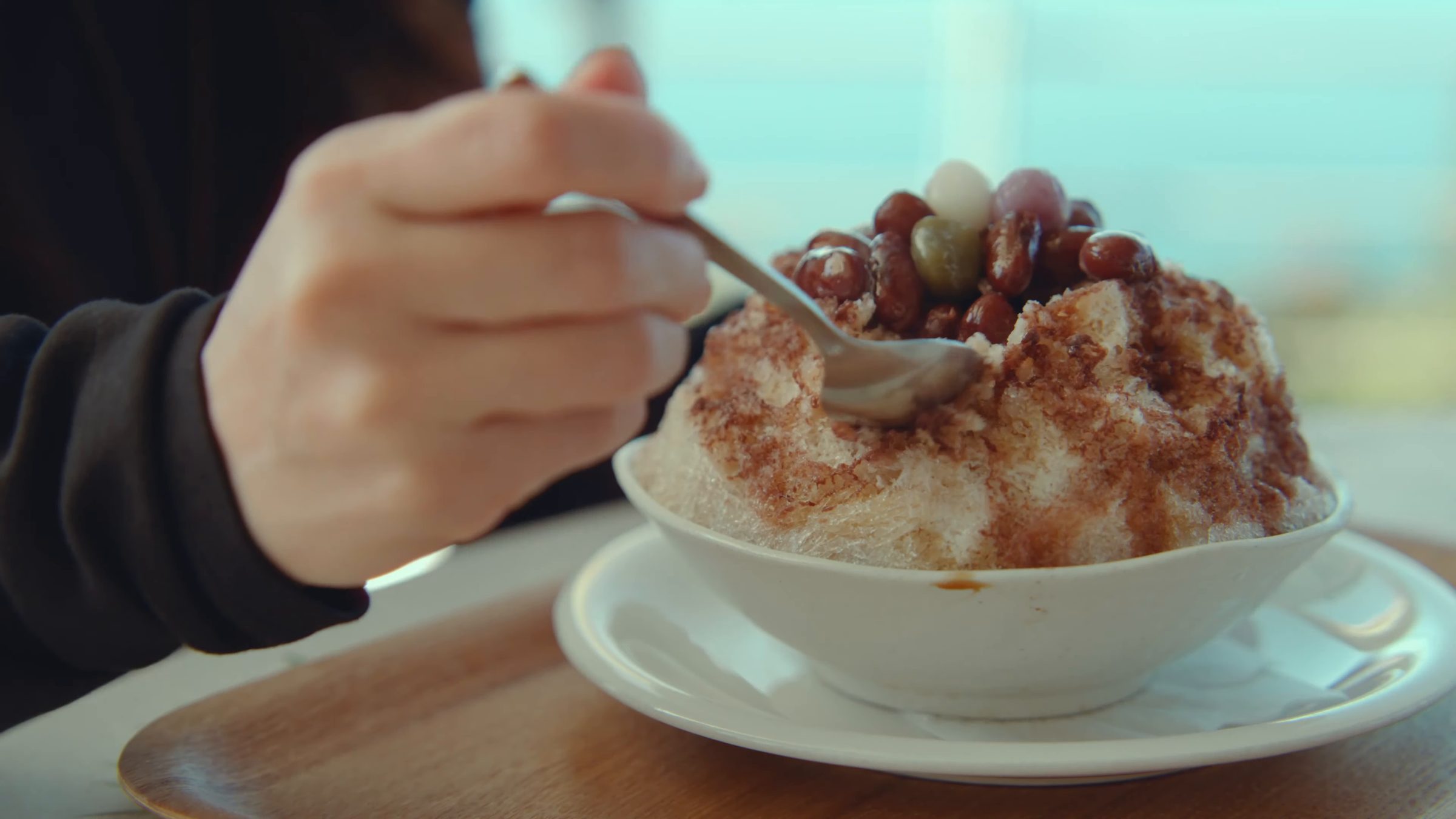
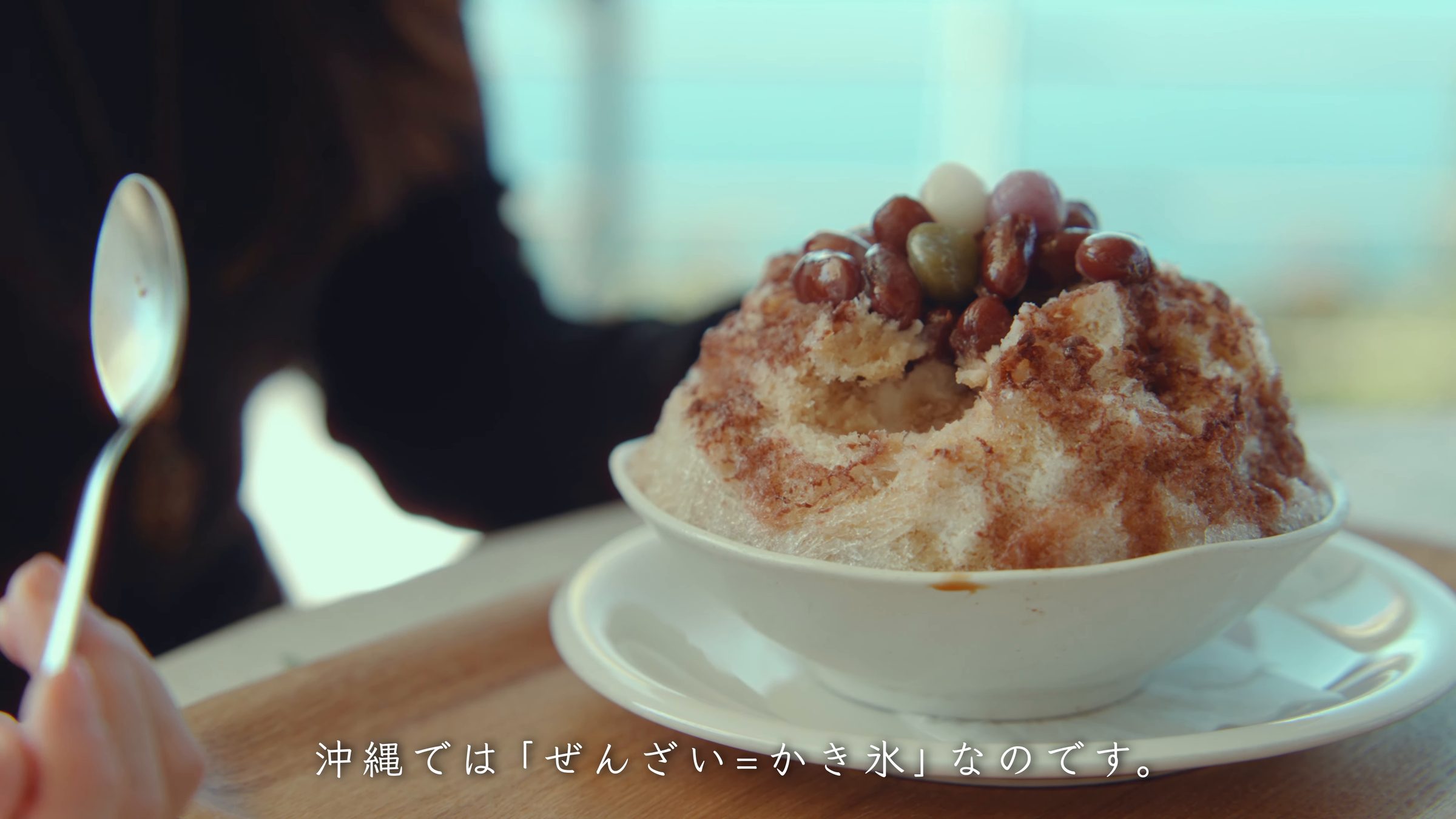
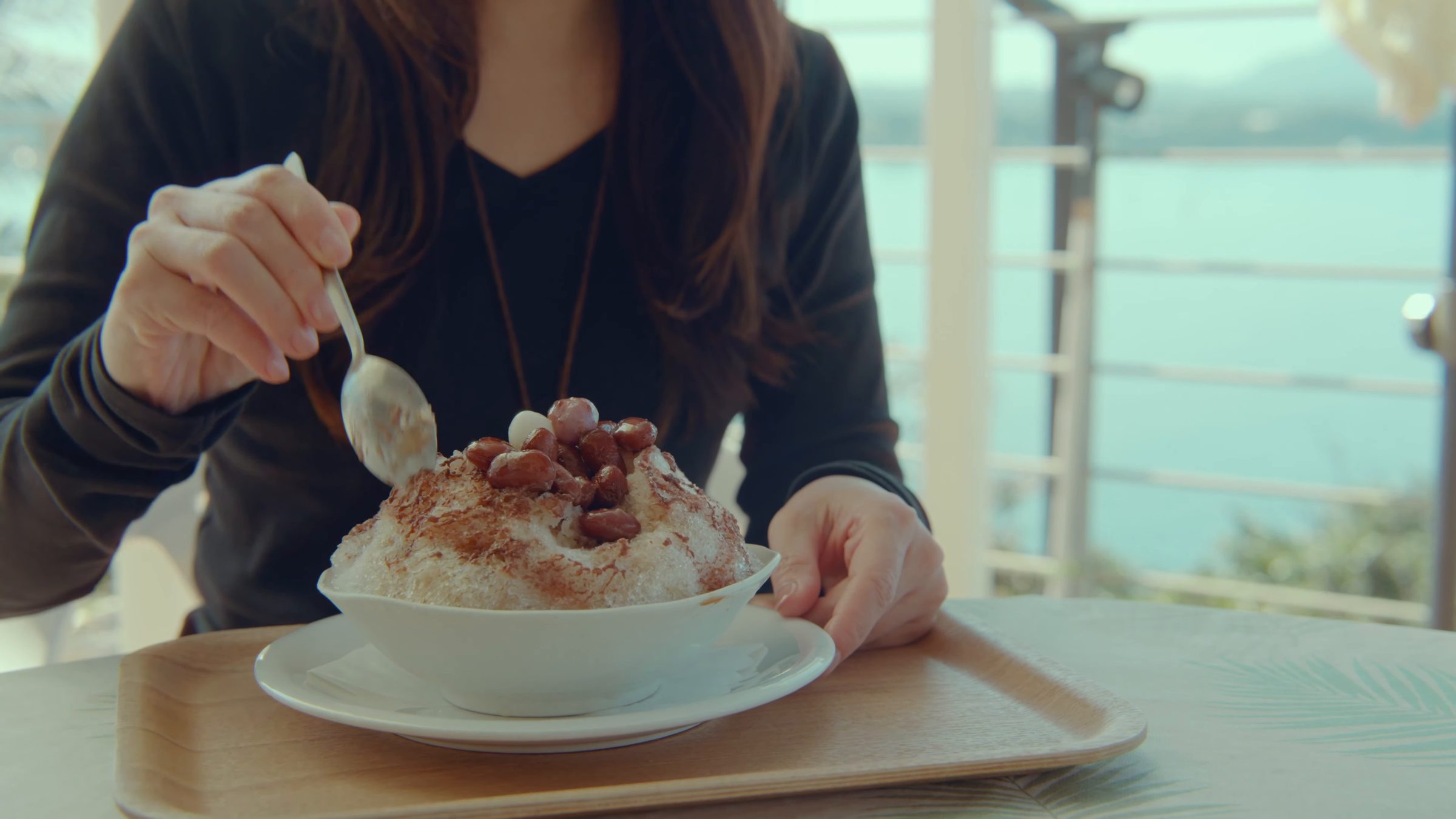
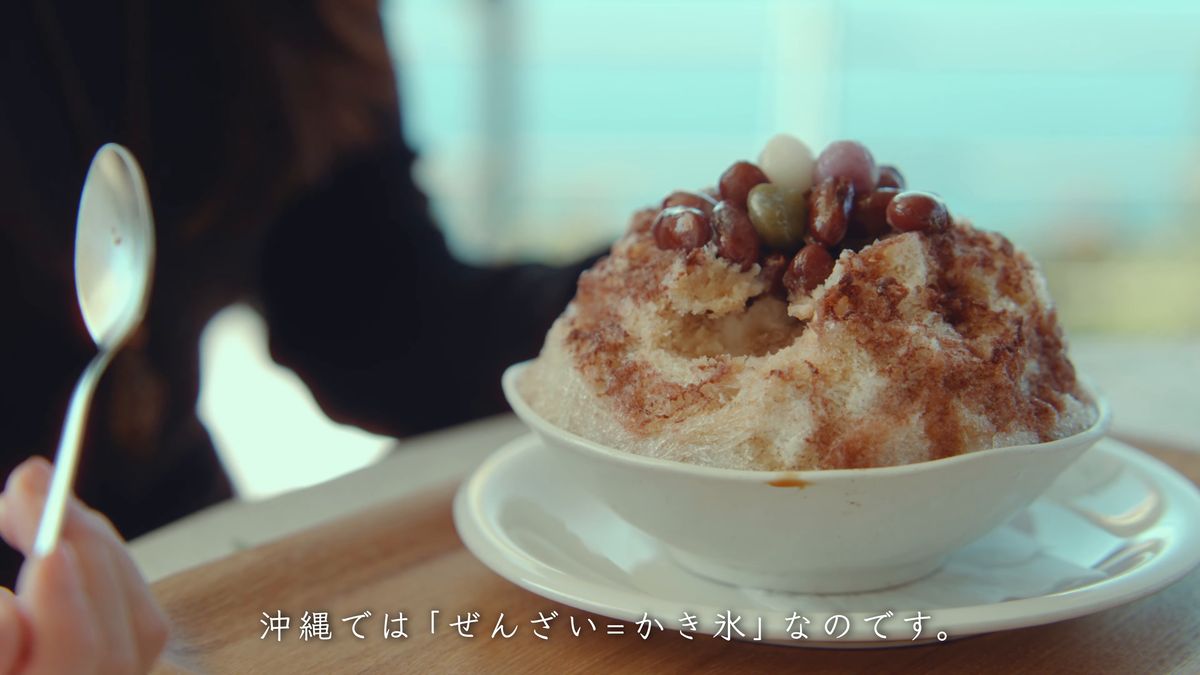
The weather was fine, warm enough to call it hot, so I crossed the Kouri Bridge to go and eat zenzai. In Okinawa, zenzai means shaved ice.
At the end of a lane leading down to the sea stood a little shop with banners out front, and a heaping bowl of shaved ice arrived. On top sat sweetly simmered kintoki beans and rice-flour dumplings, with the deep scent of brown sugar. I ate it spoonful by spoonful, looking past the palm fronds at the blue sea and the bridge.
Watch this scene on YouTube1:25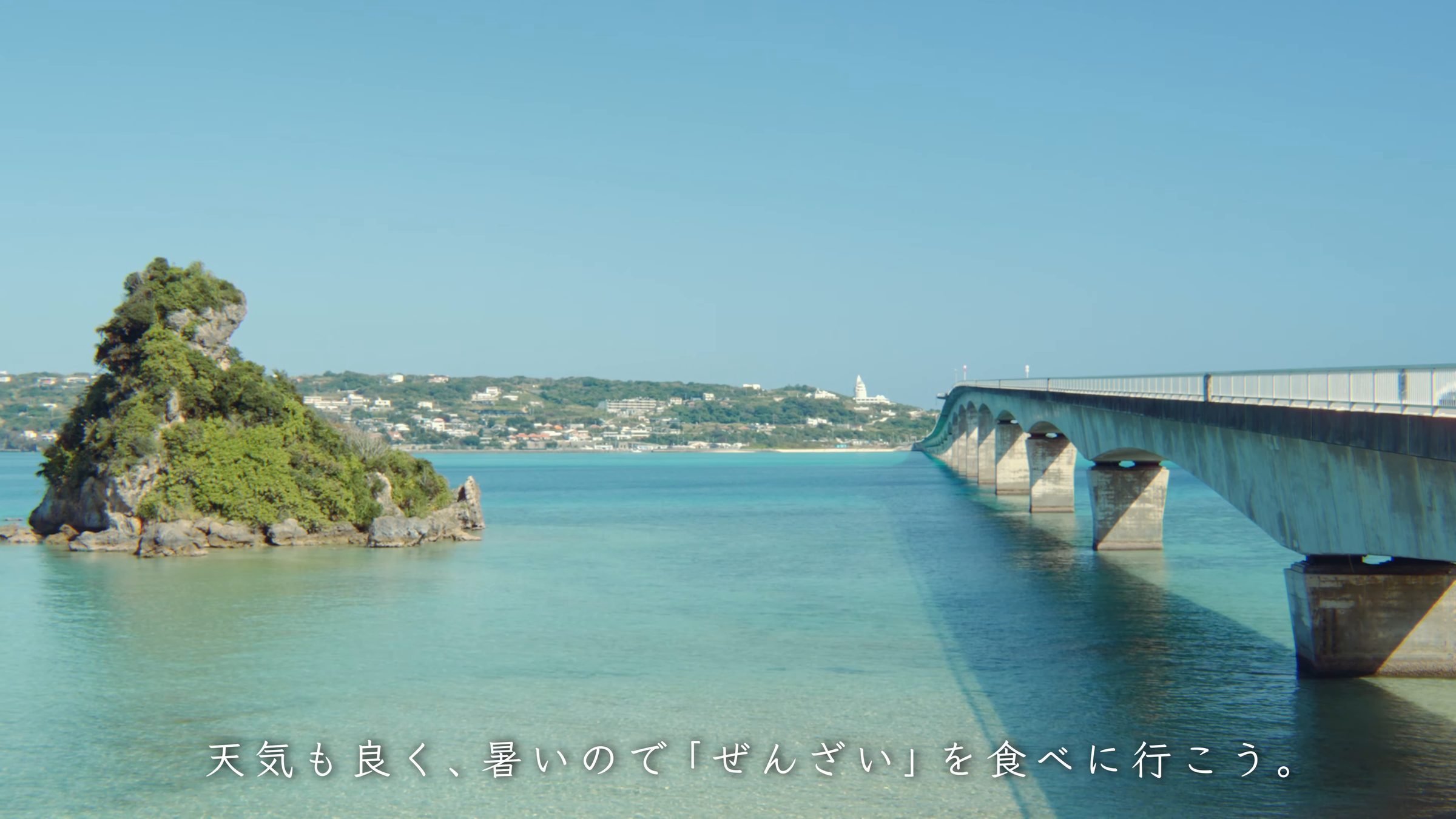


05TRAVEL JOURNAL
Nago's municipal market, and a cat
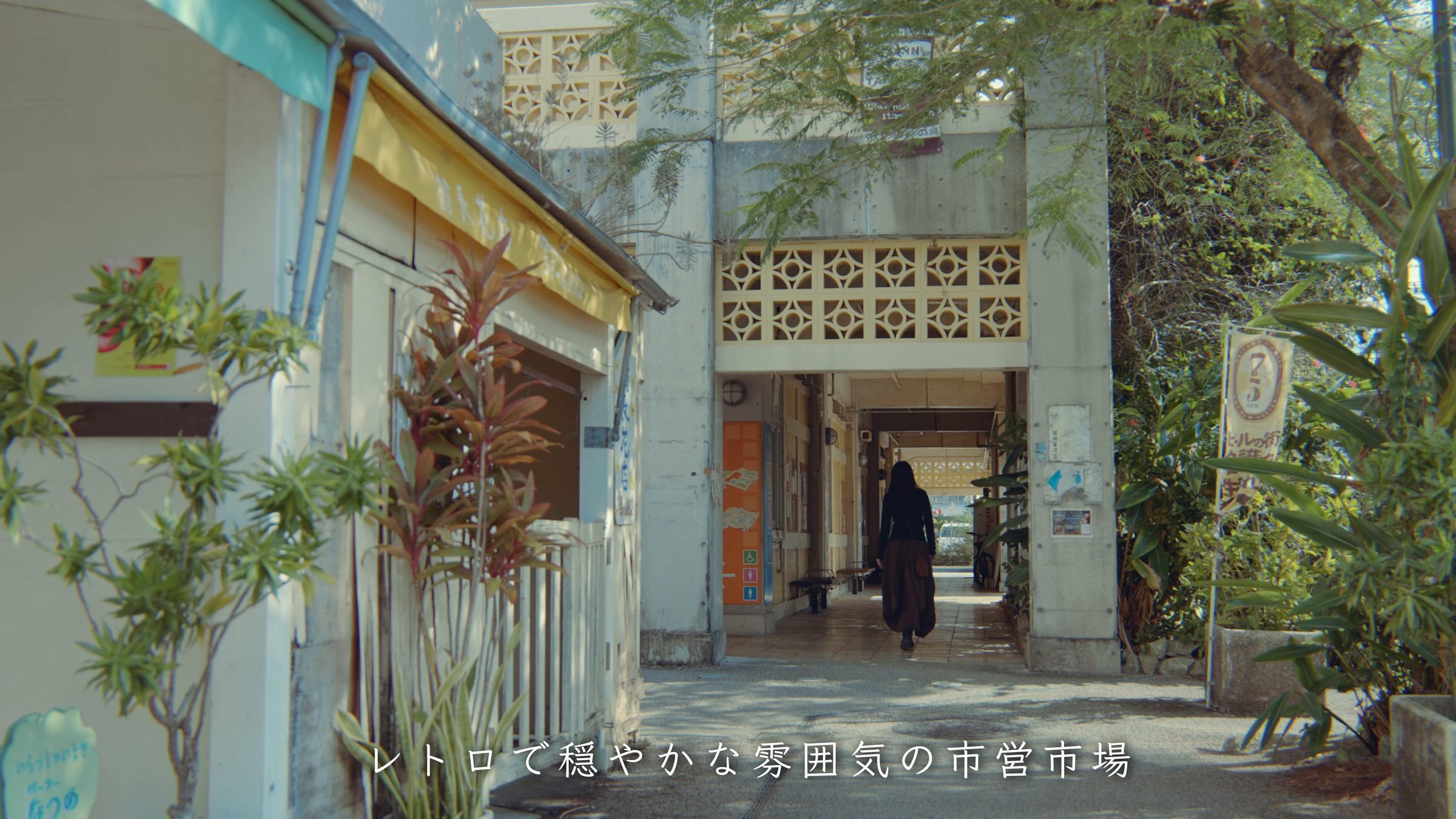
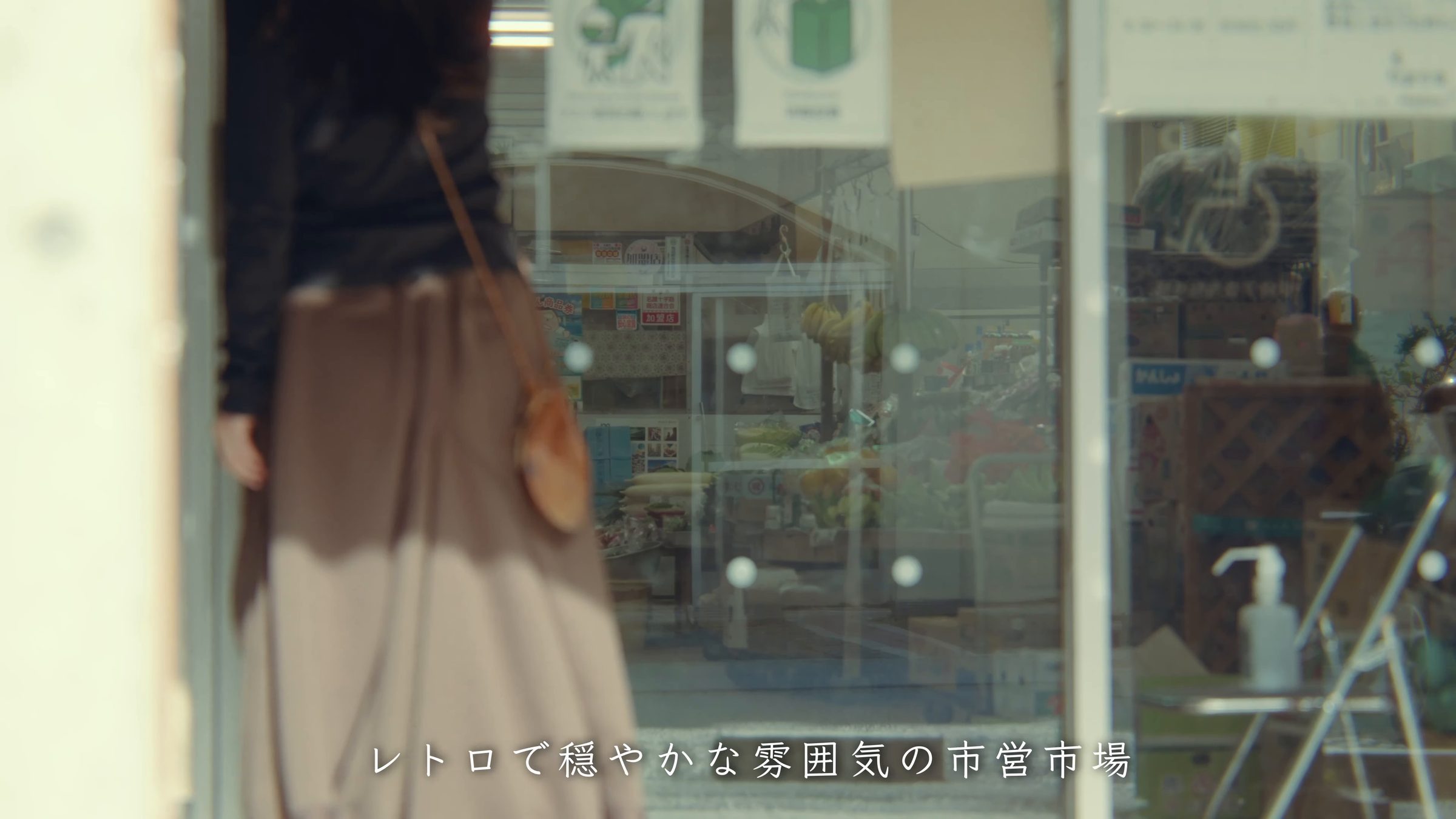
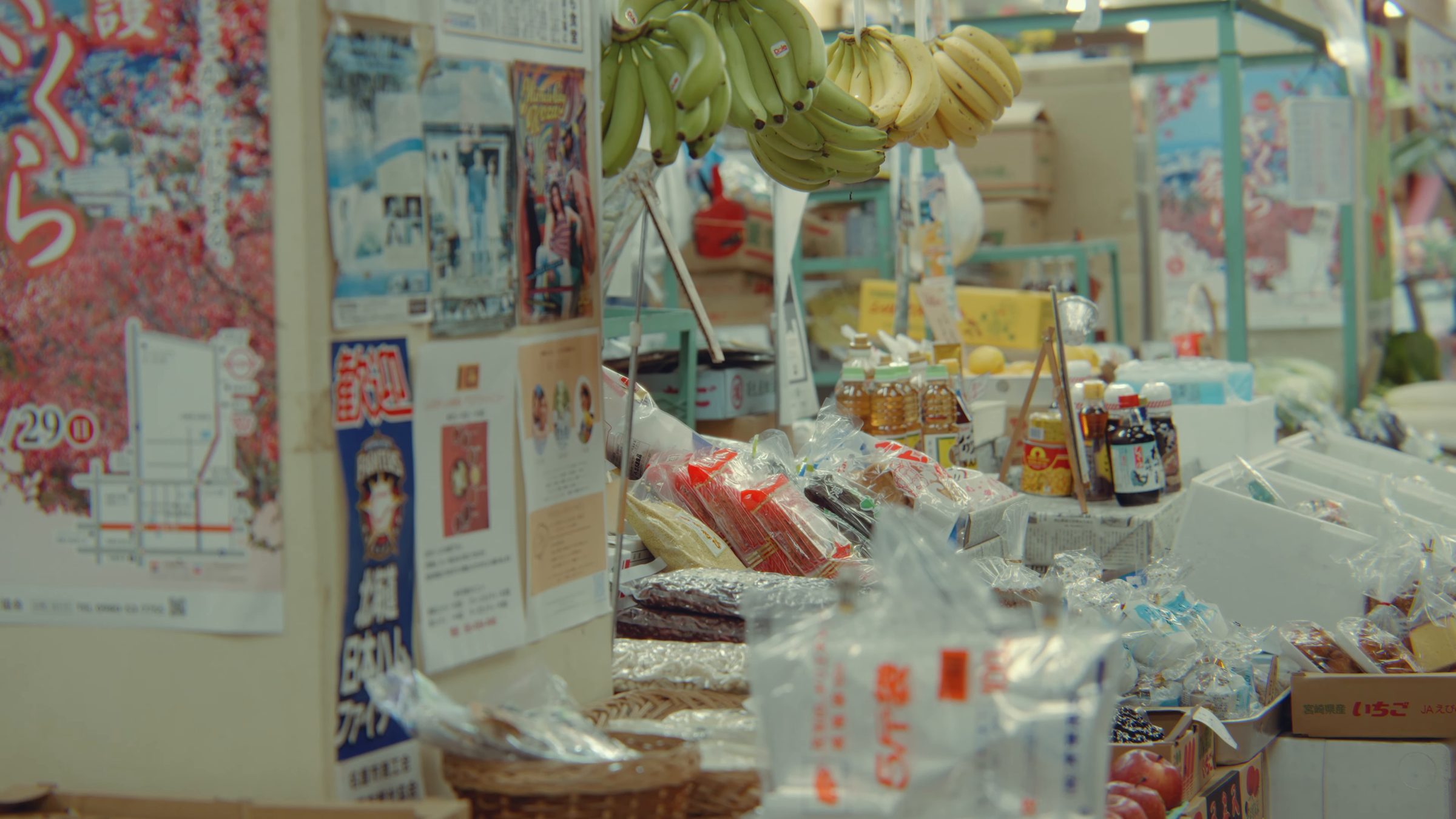
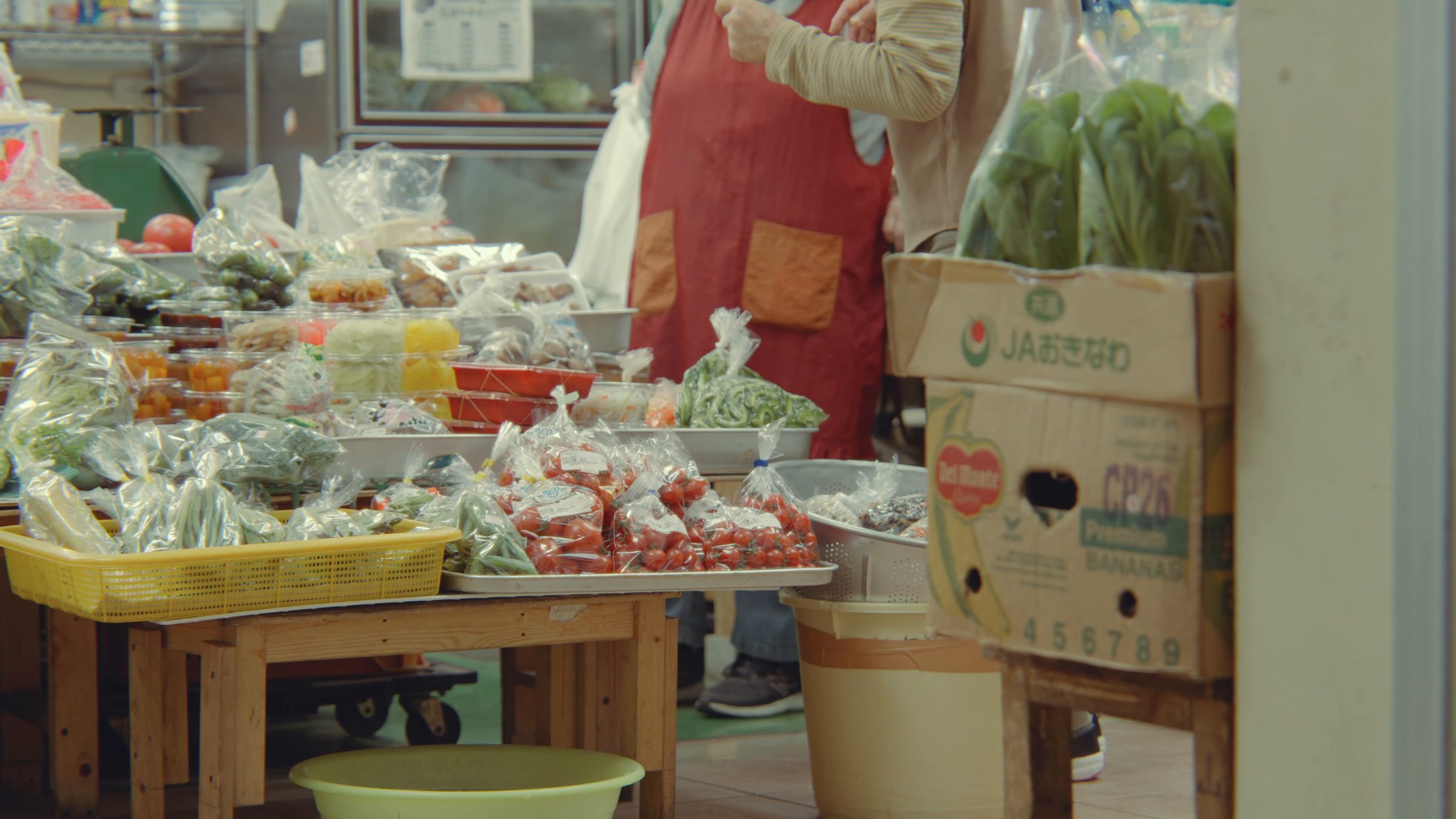
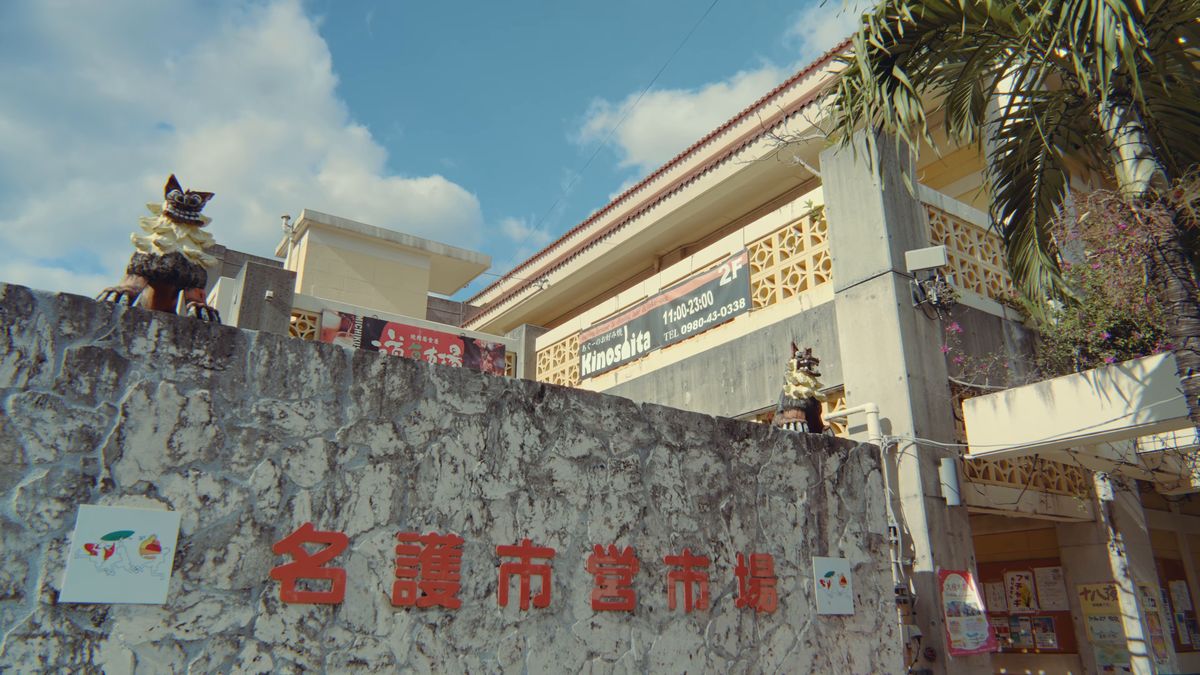
I stopped by the Nago Municipal Market in the center of town. Past the stone wall topped with shisa lion-dogs and the red sign, the market had a retro, easygoing air: bunches of bananas, vegetables and fruit, posters on the walls.
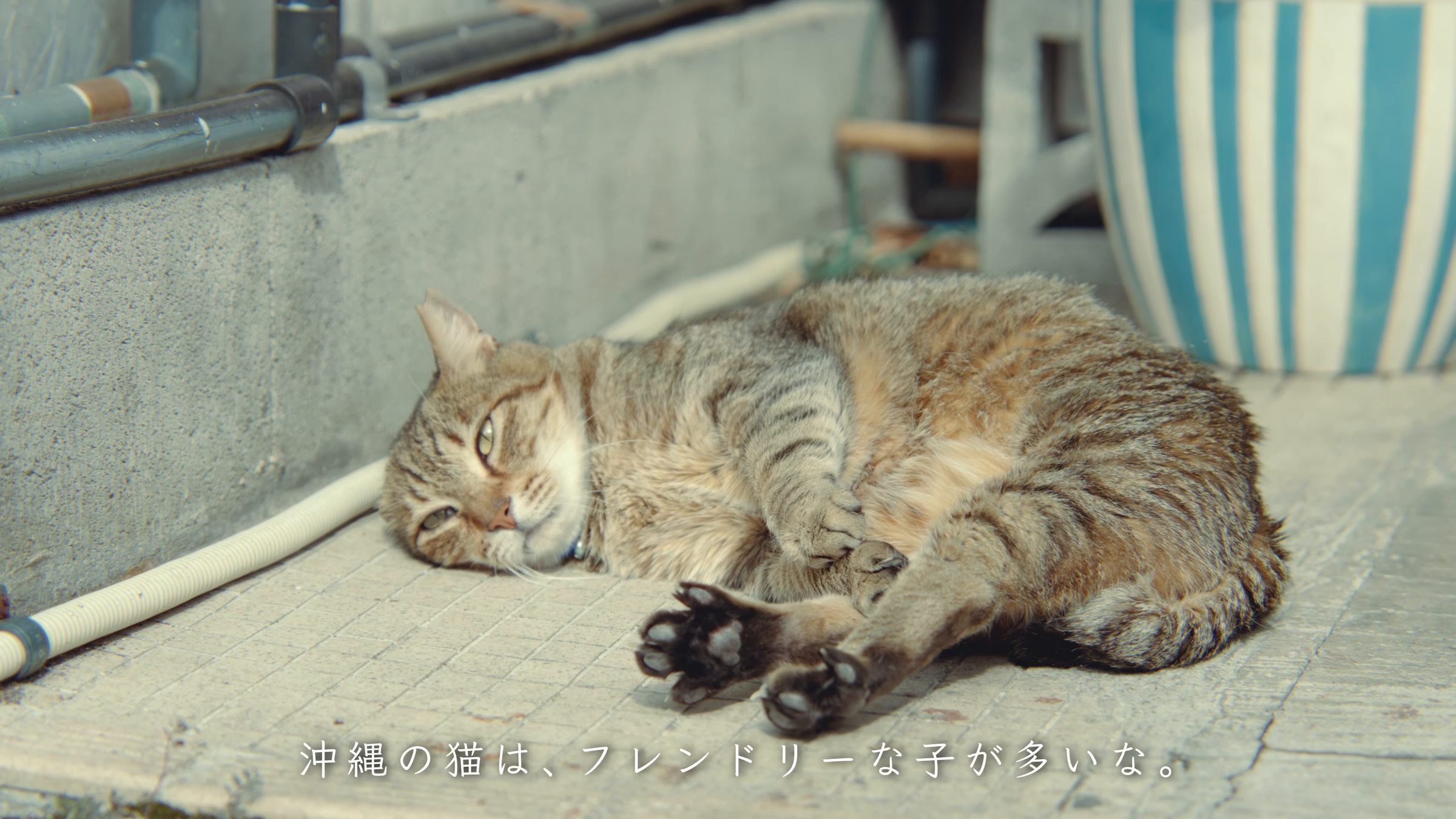
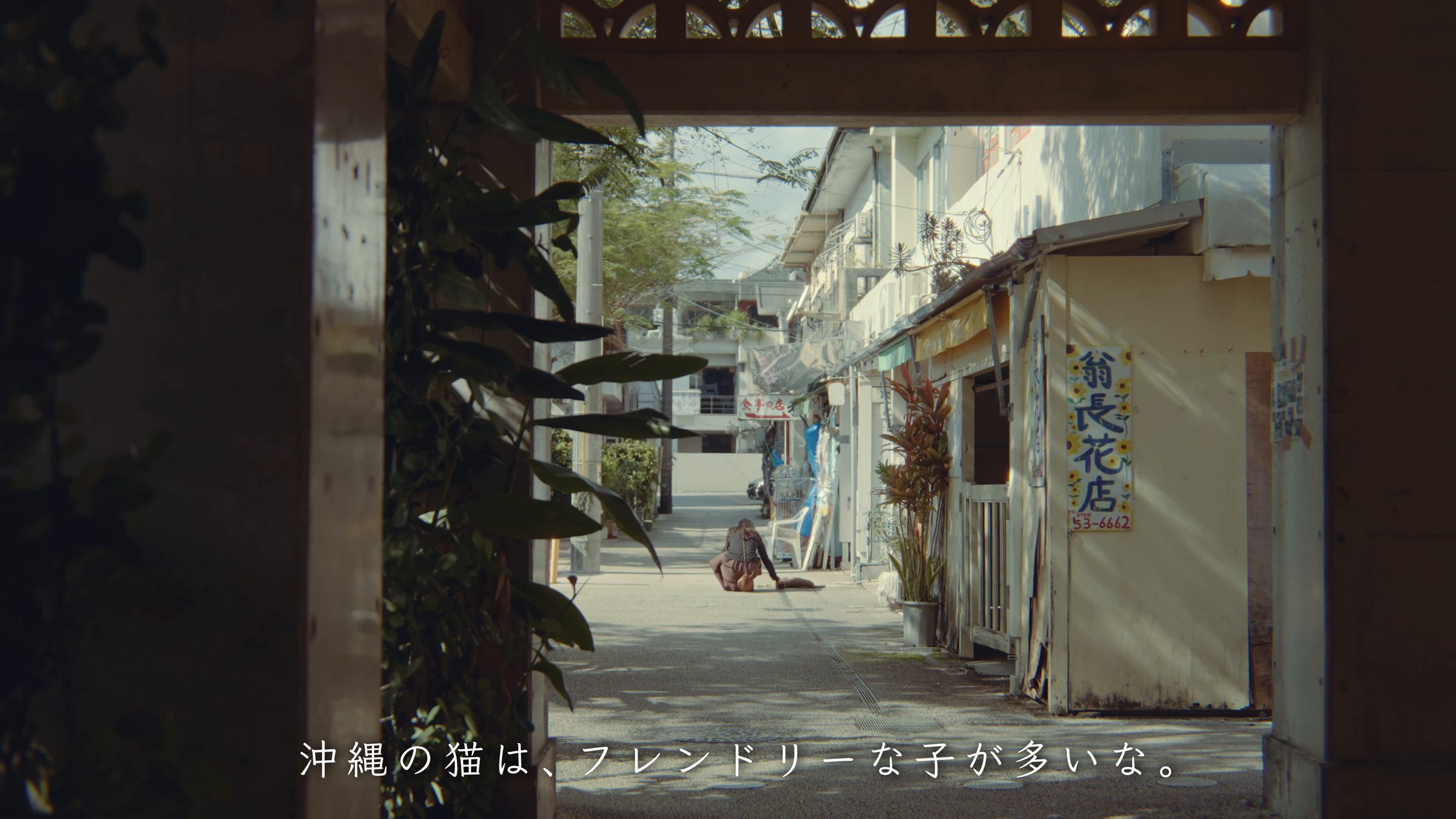
I met a cat stretched out in the sun. Many cats in Okinawa are friendly, probably because the islanders and the climate are warm. I left the market through an arcade with stained-glass windows.
Watch this scene on YouTube1:44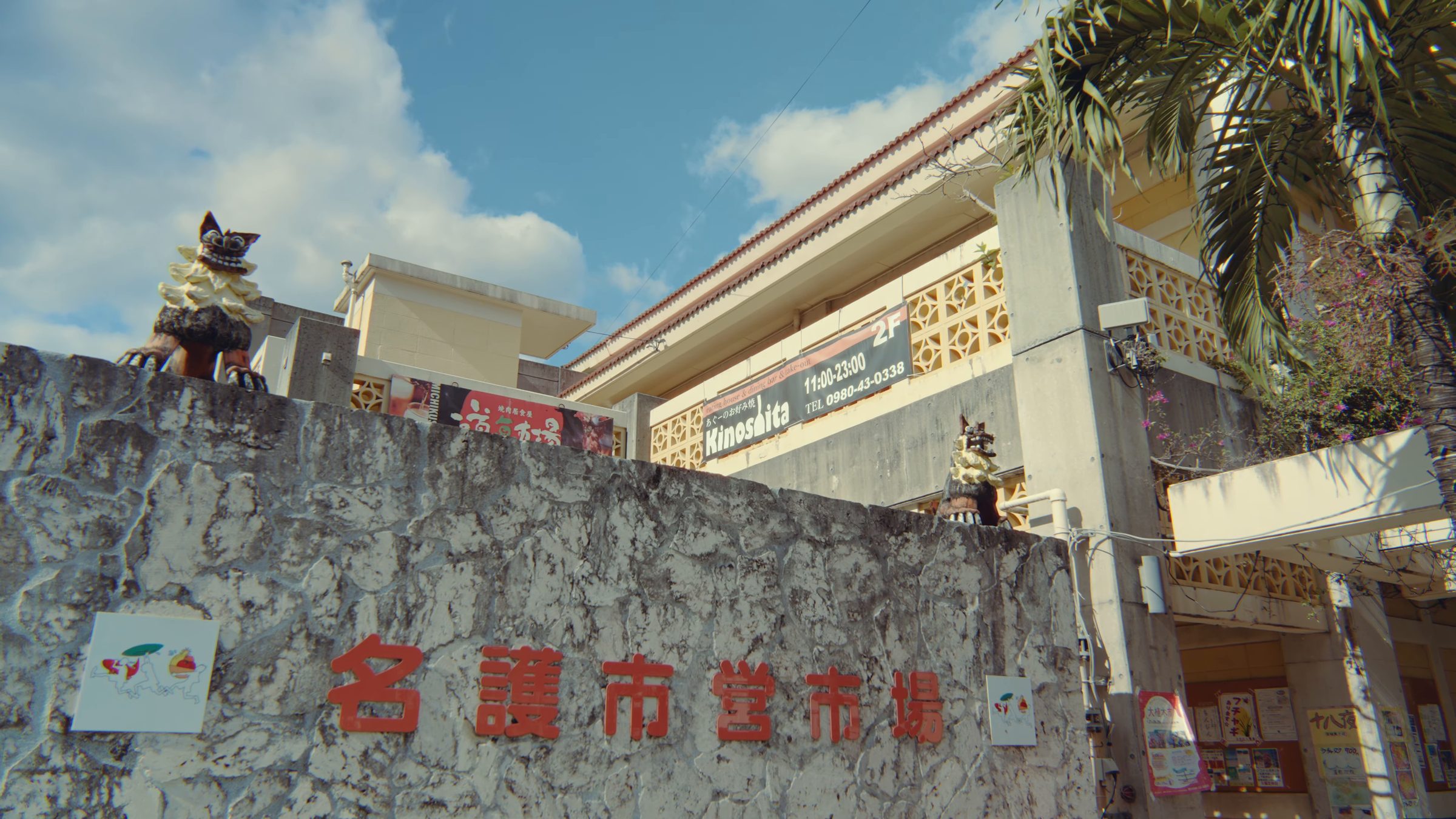

06TRAVEL JOURNAL
Fried gurukun at a local diner
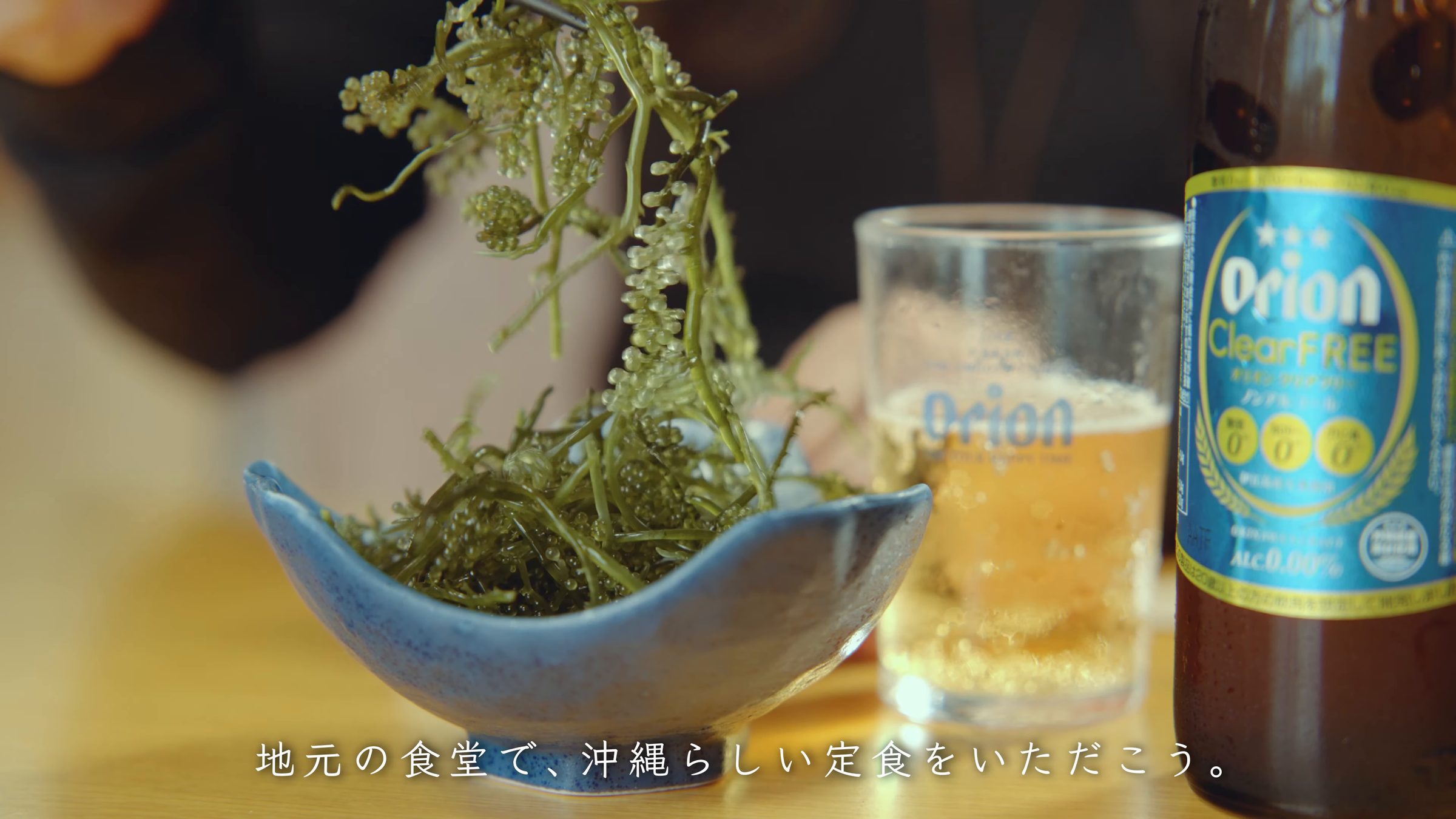
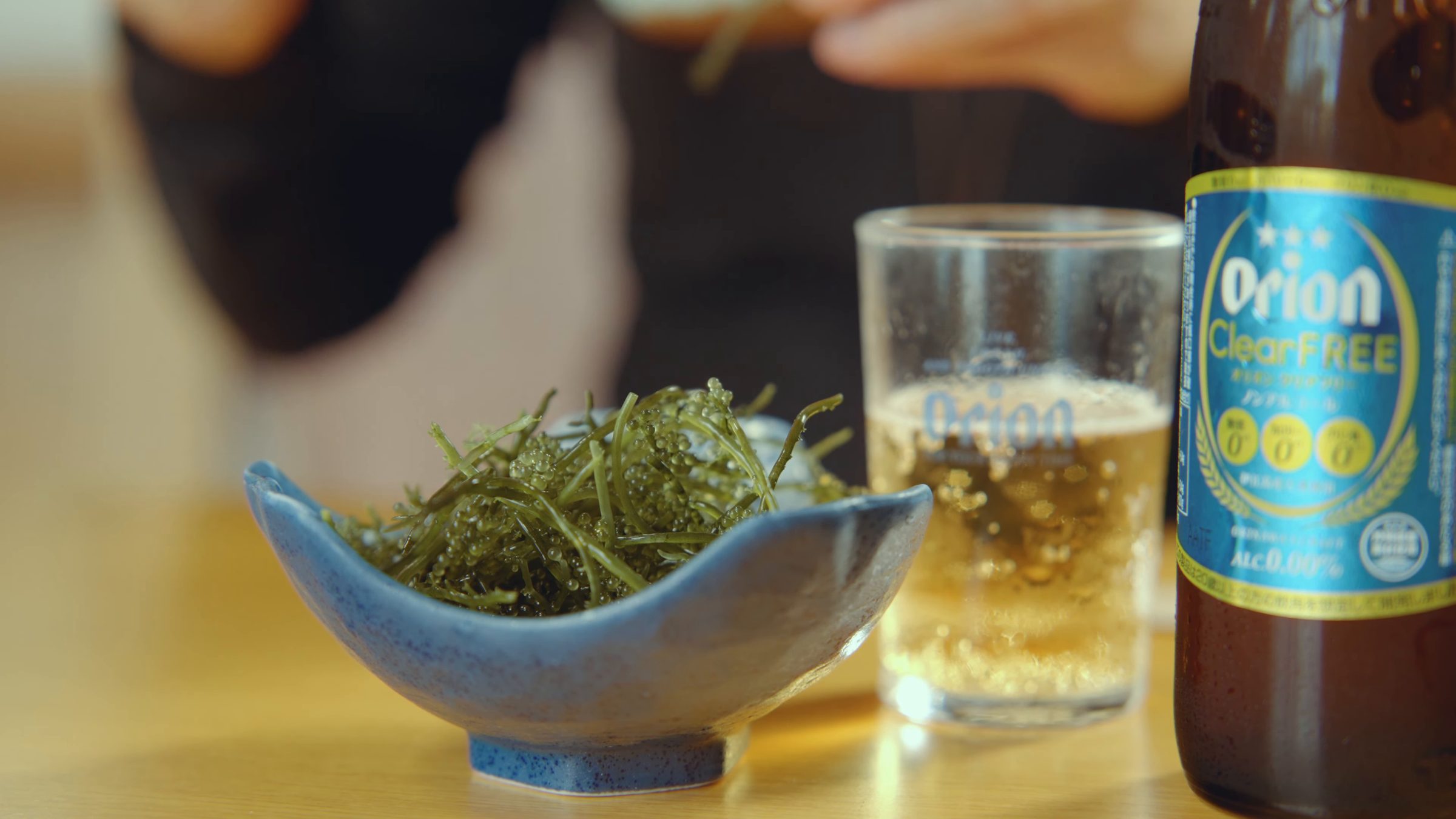
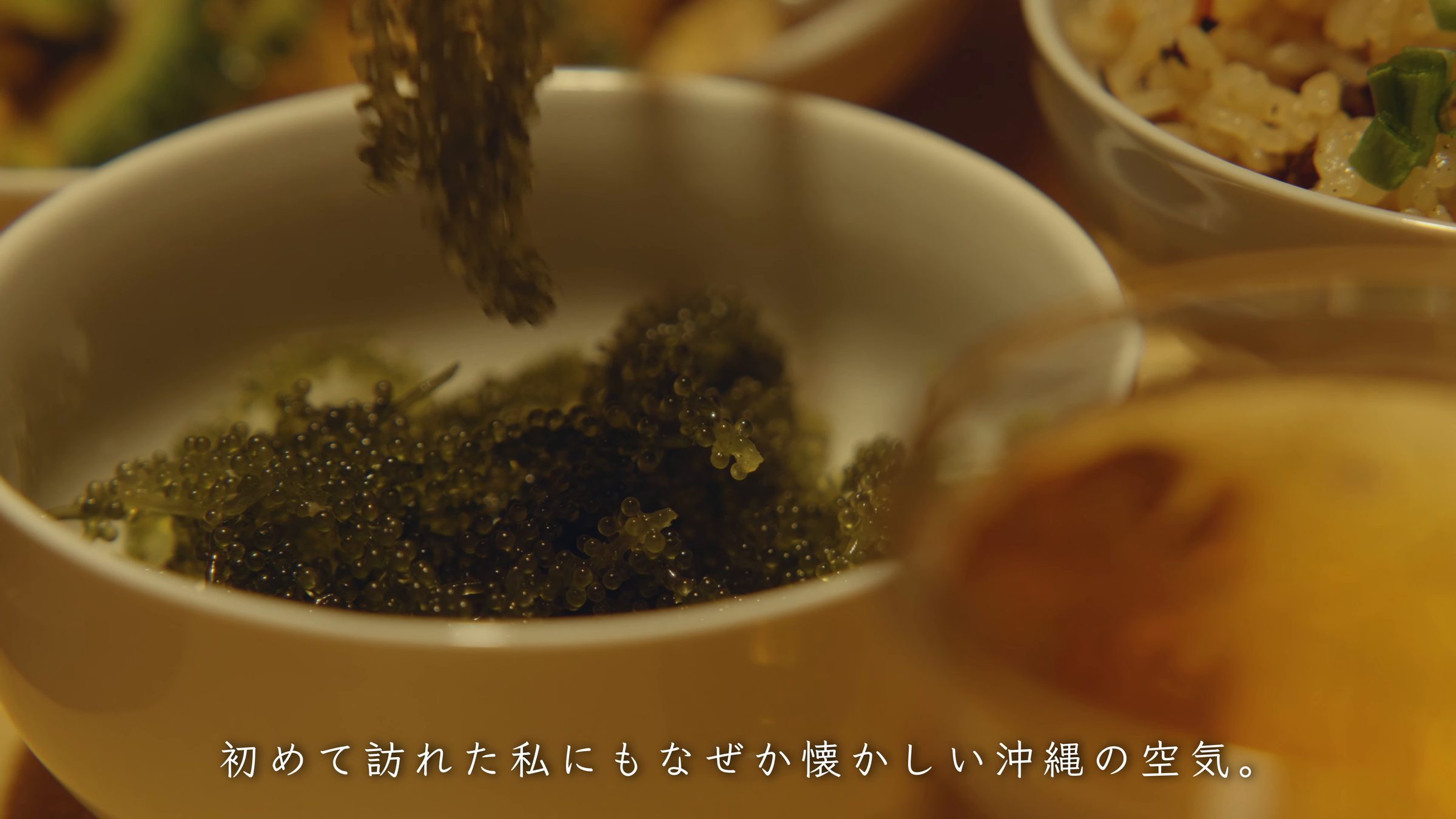
For lunch I went to a local diner for a typically Okinawan set meal. First, umibudo sea grapes, with a bottle of Orion to pour alongside. I picked the crunchy little beads out of the bowl with my chopsticks.
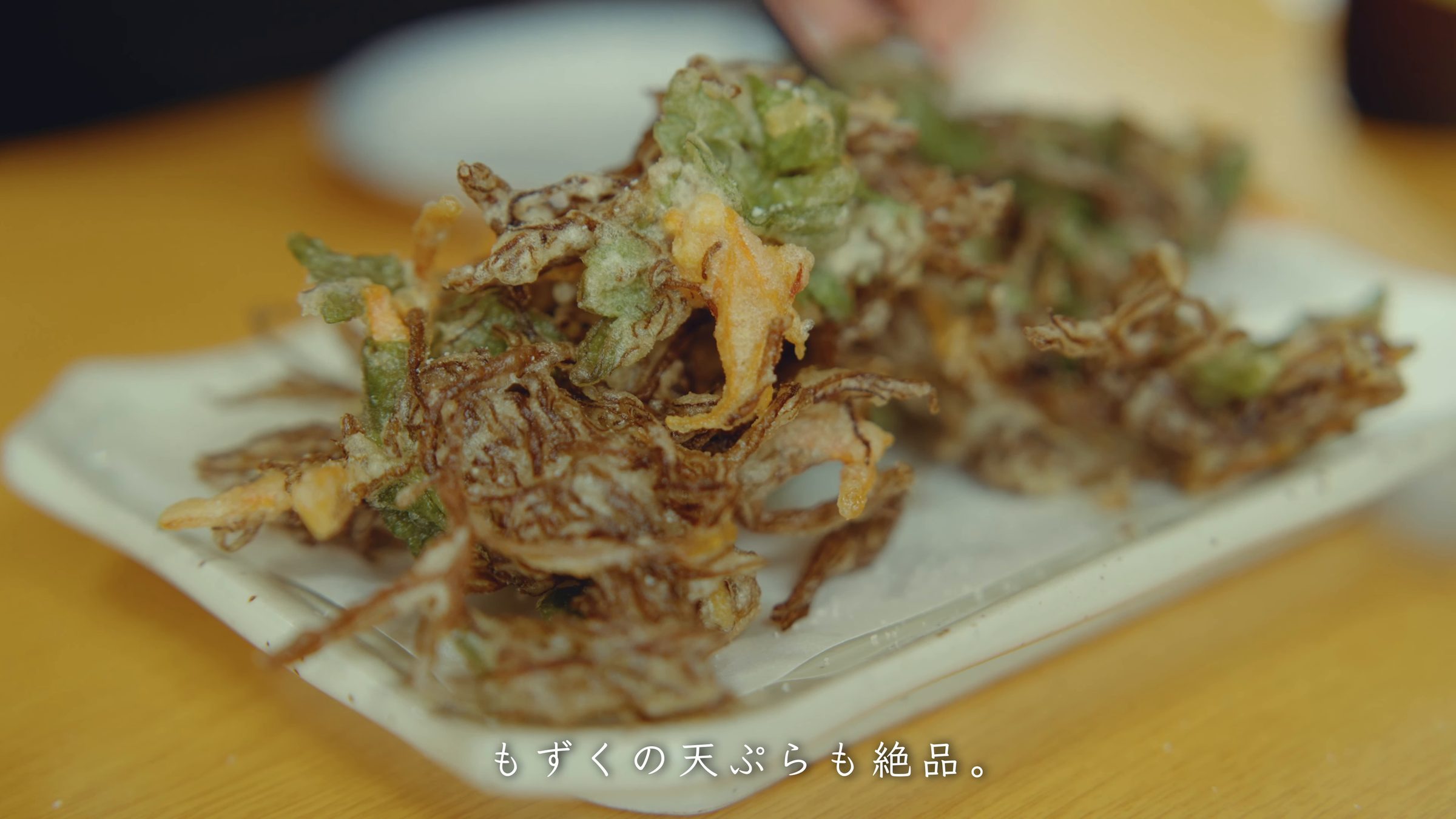
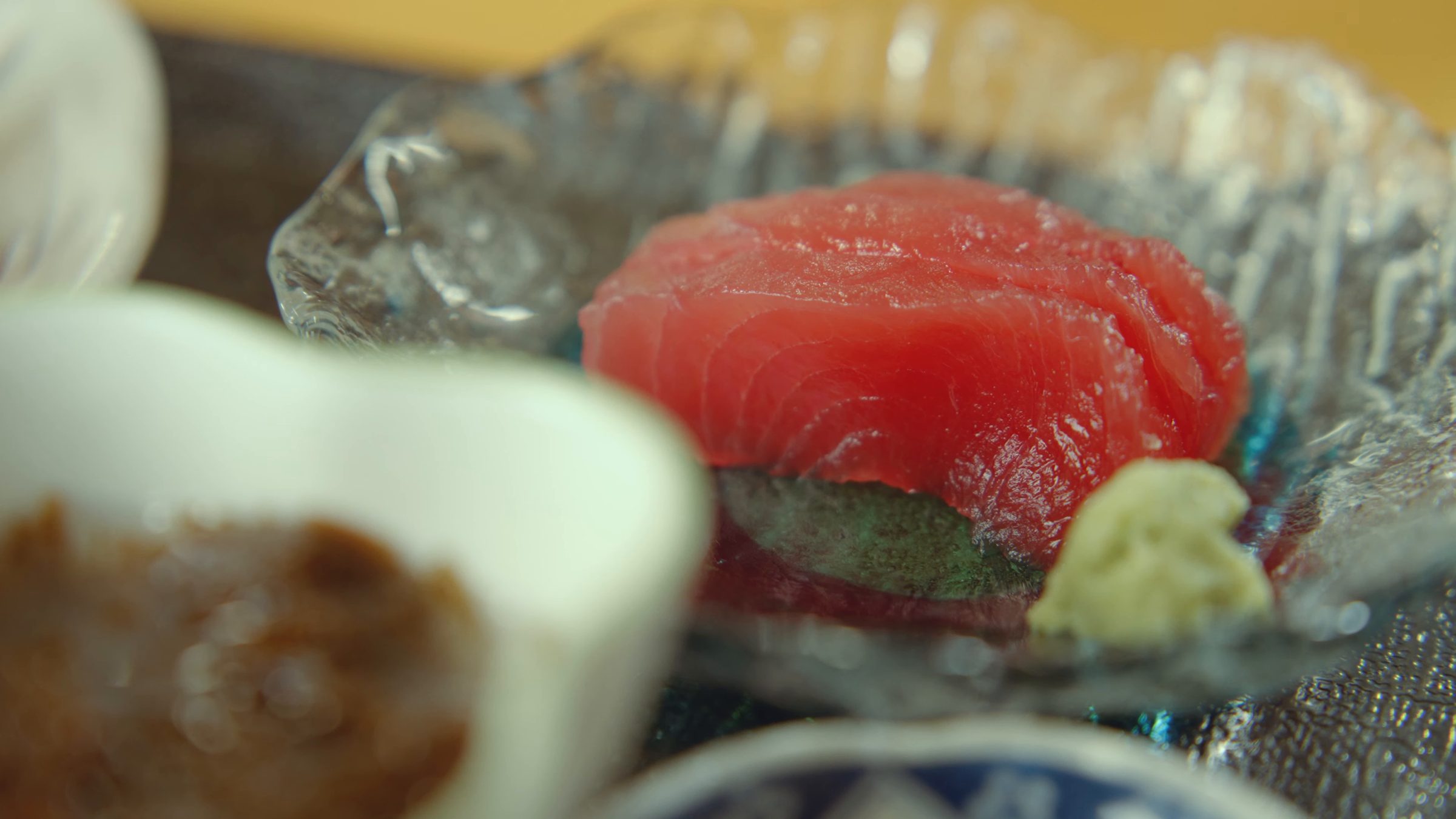
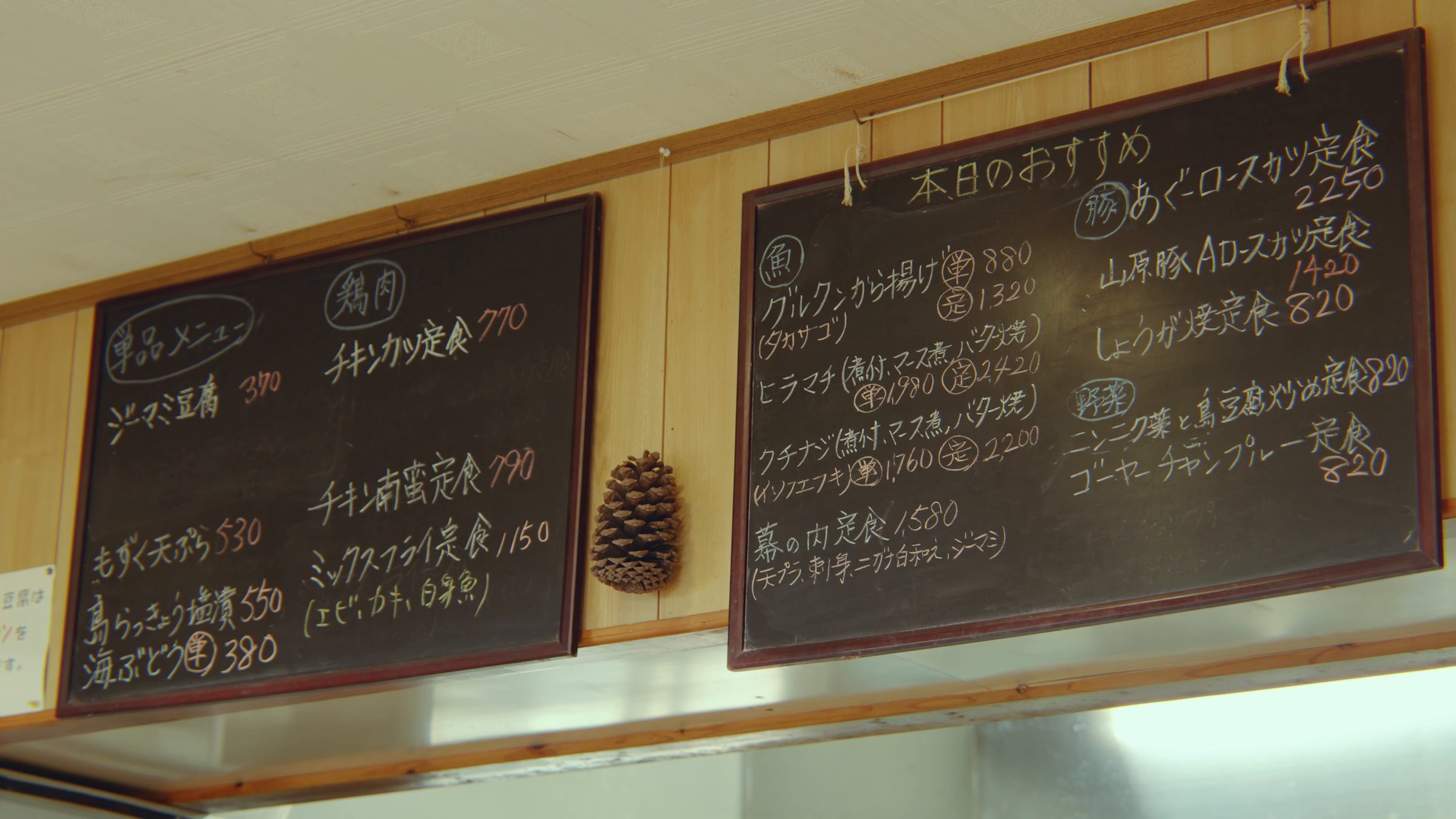
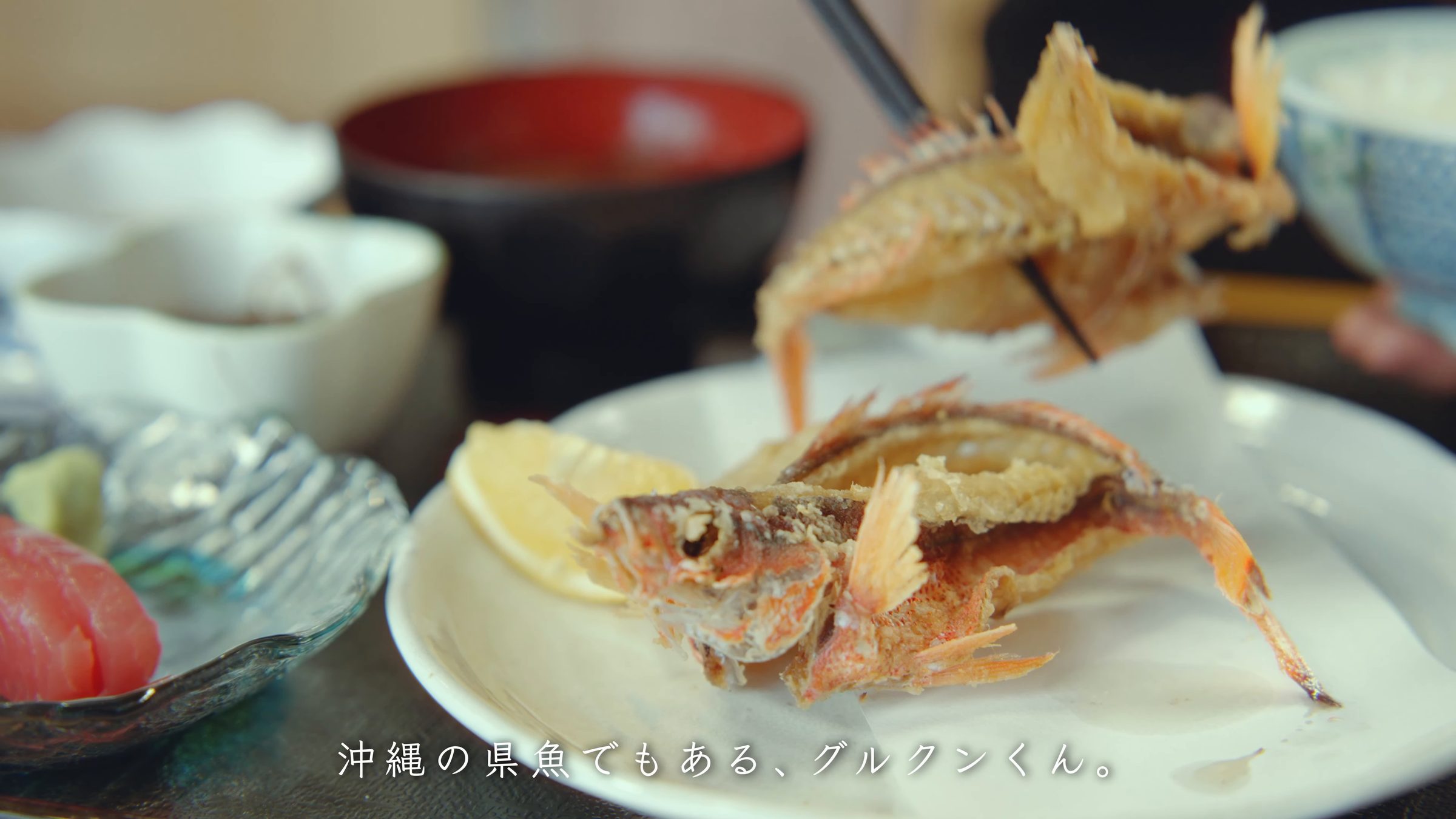
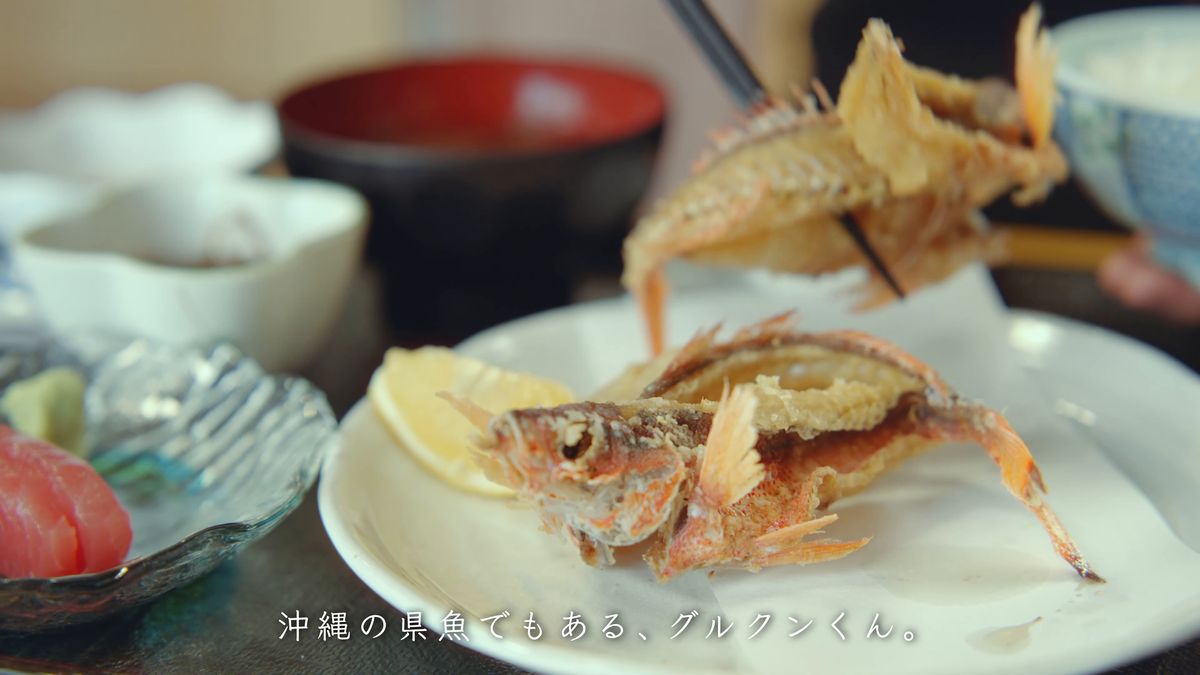
From the chalkboard menu I chose fried gurukun, Okinawa's prefectural fish. Sashimi on a bed of ice and mozuku seaweed tempura came with it. The gurukun was fried crisp and delicious from head to tail, and the mozuku tempura was superb too.
Watch this scene on YouTube2:15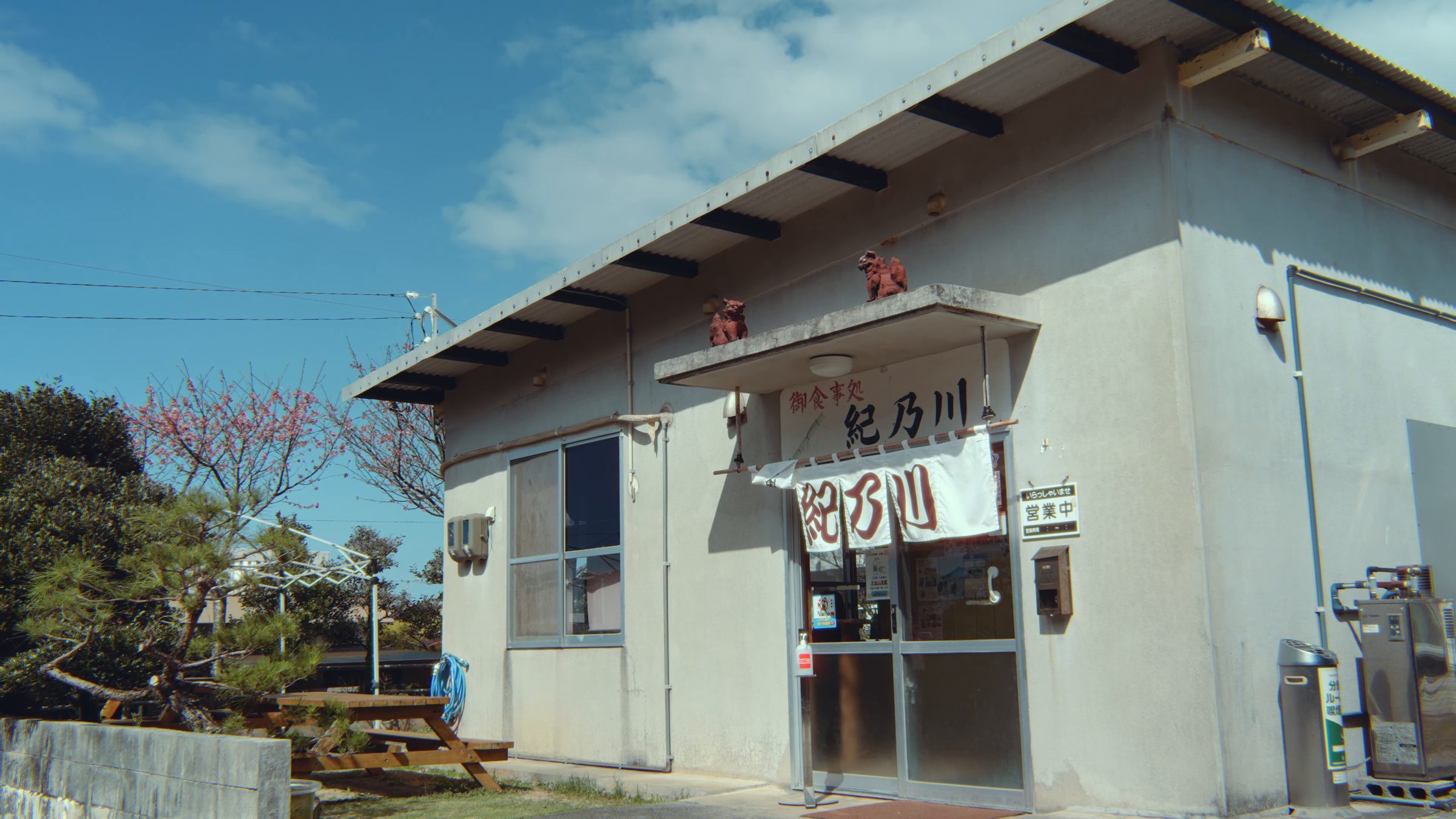
07TRAVEL JOURNAL
Roasted sweet potatoes, winter in Okinawa
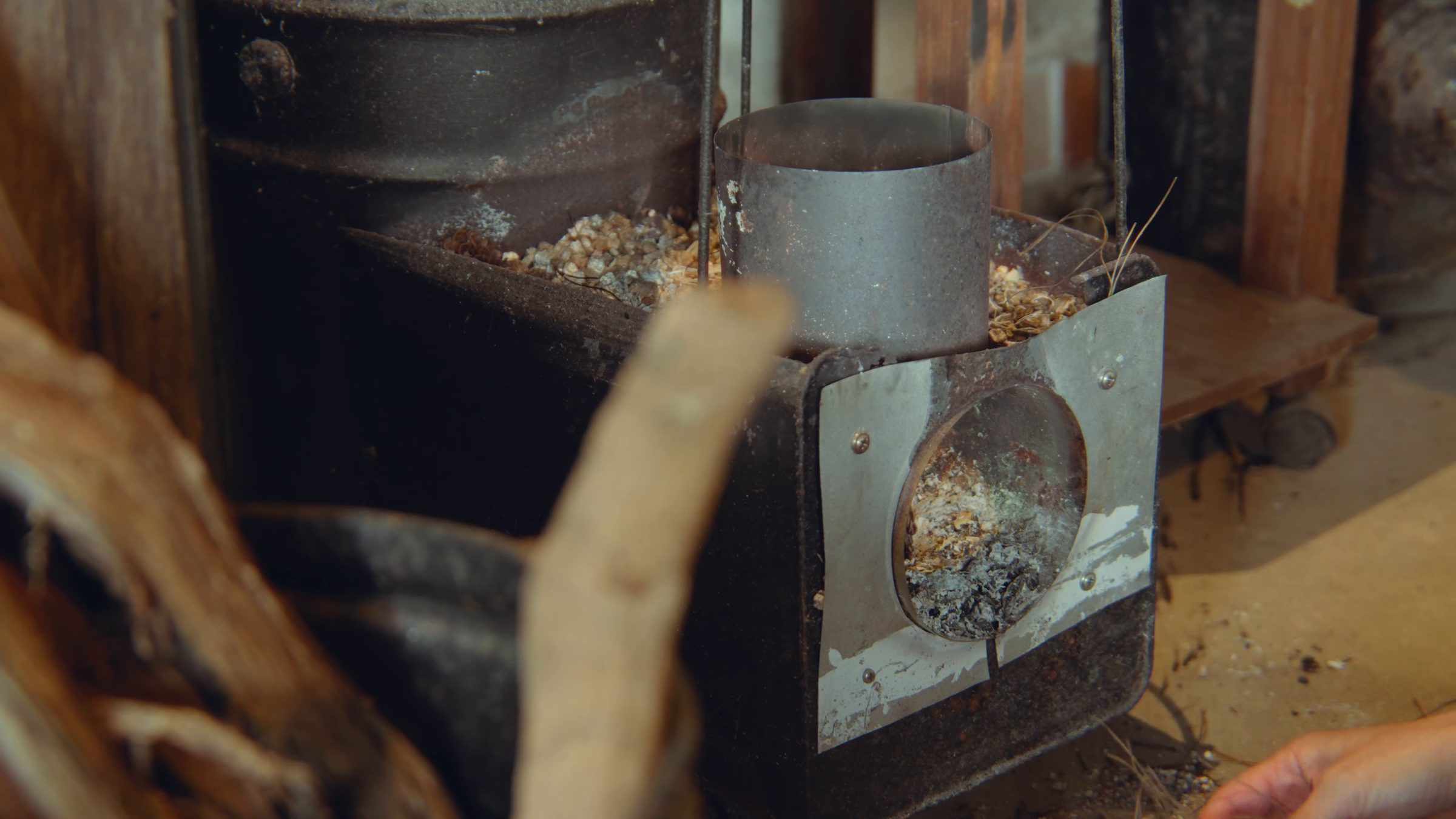
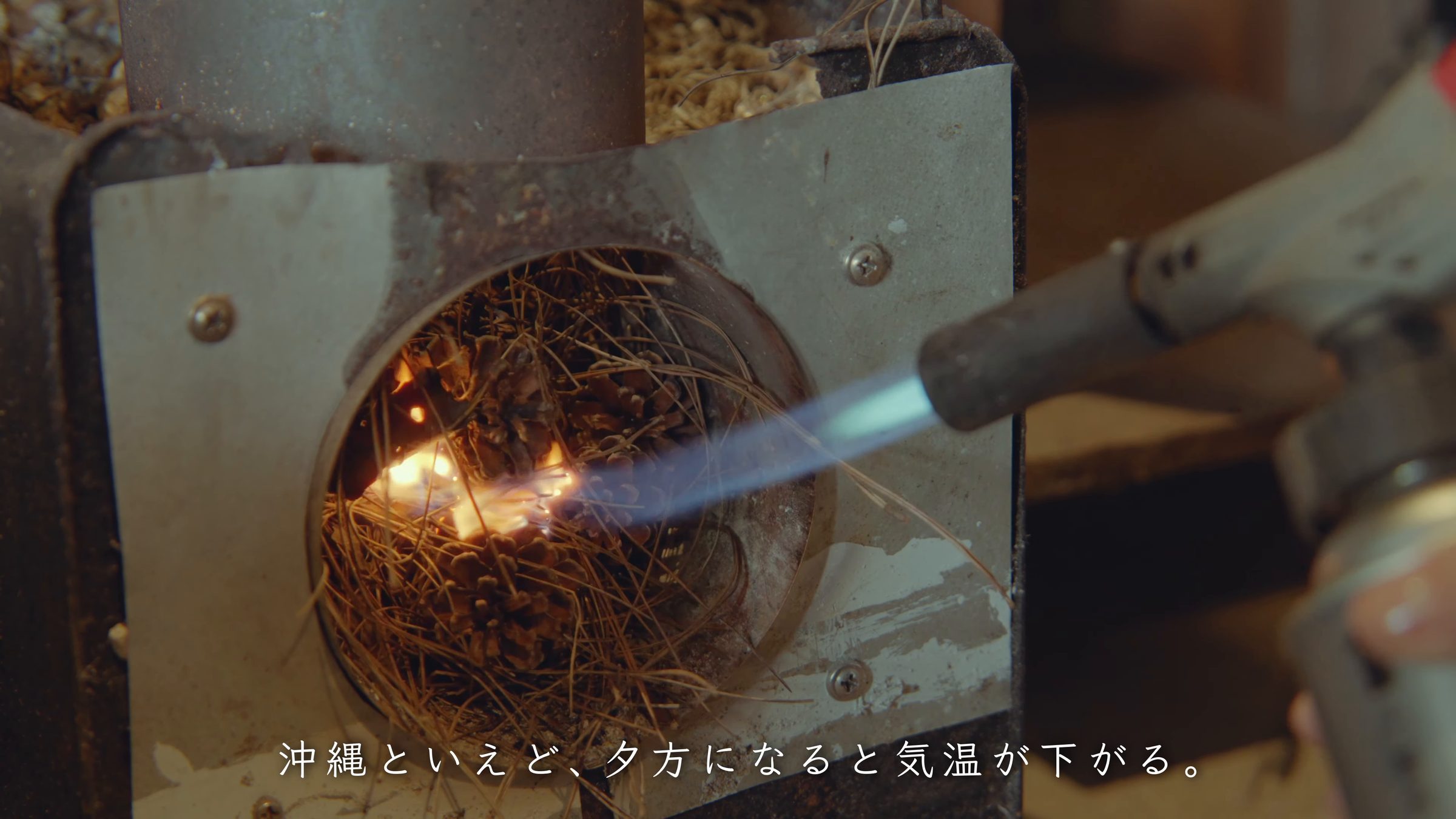
Even in Okinawa, the temperature drops in the evening. I went out to the garden and lit the rocket stove, stacked with driftwood.
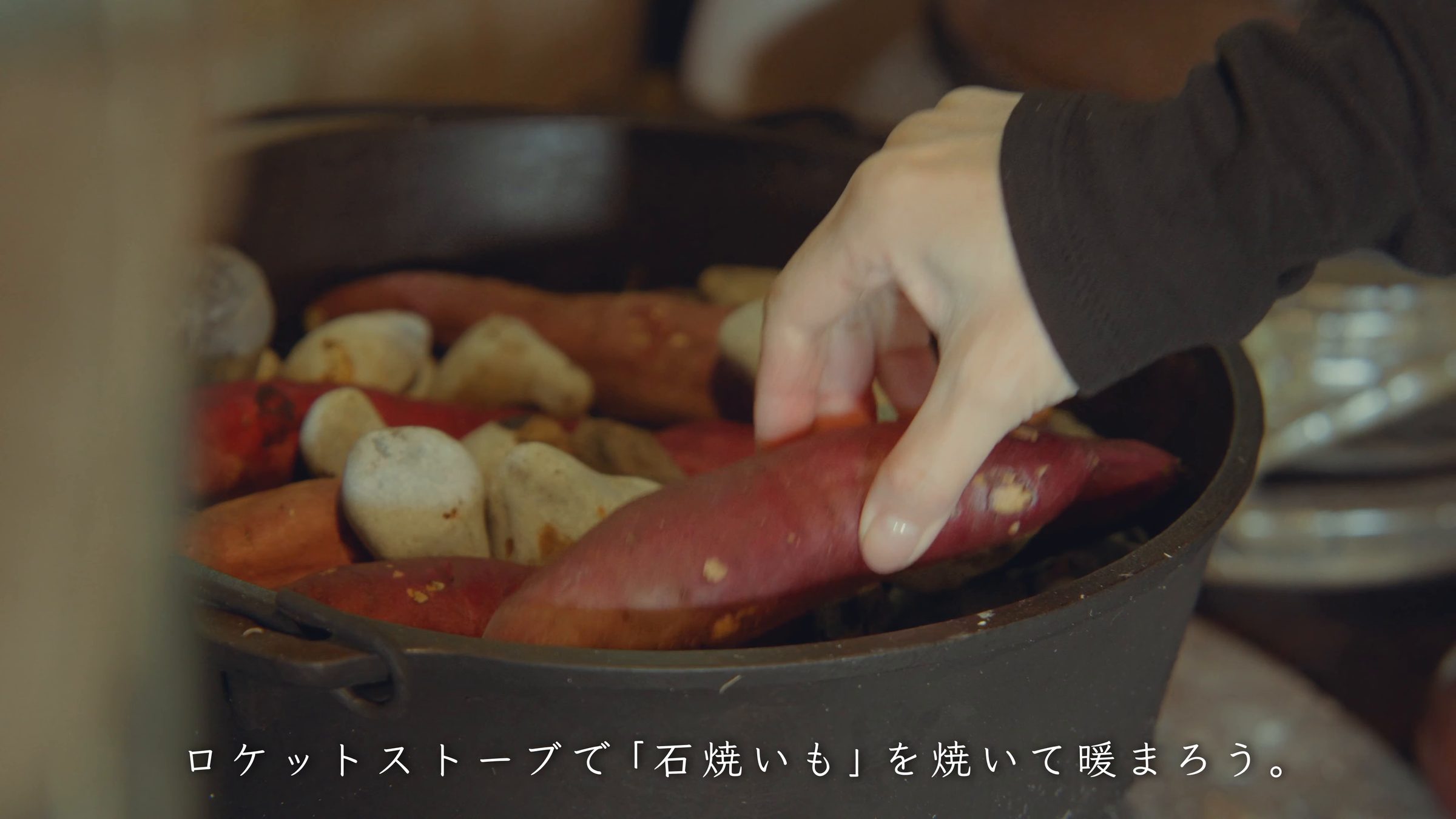
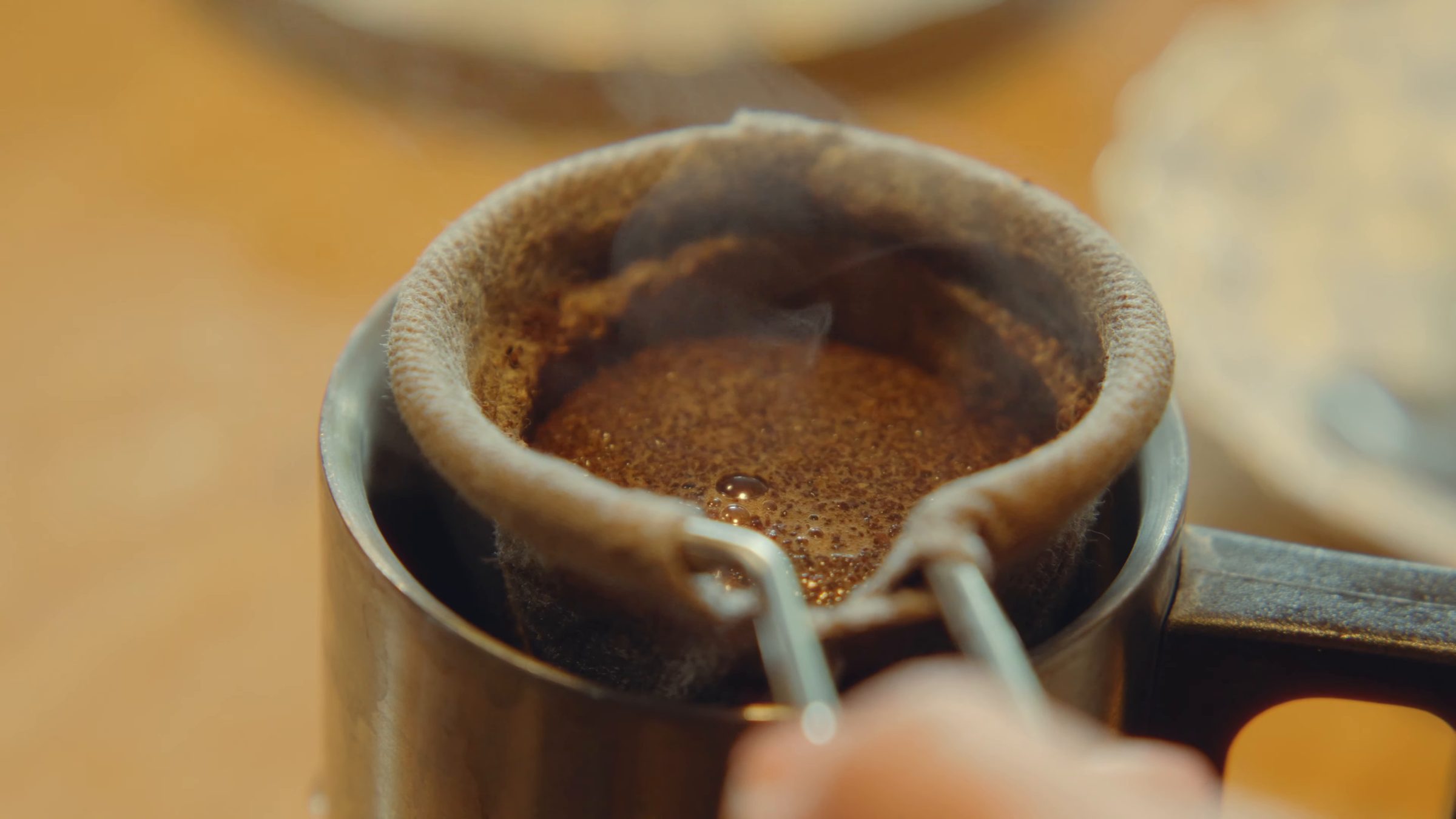
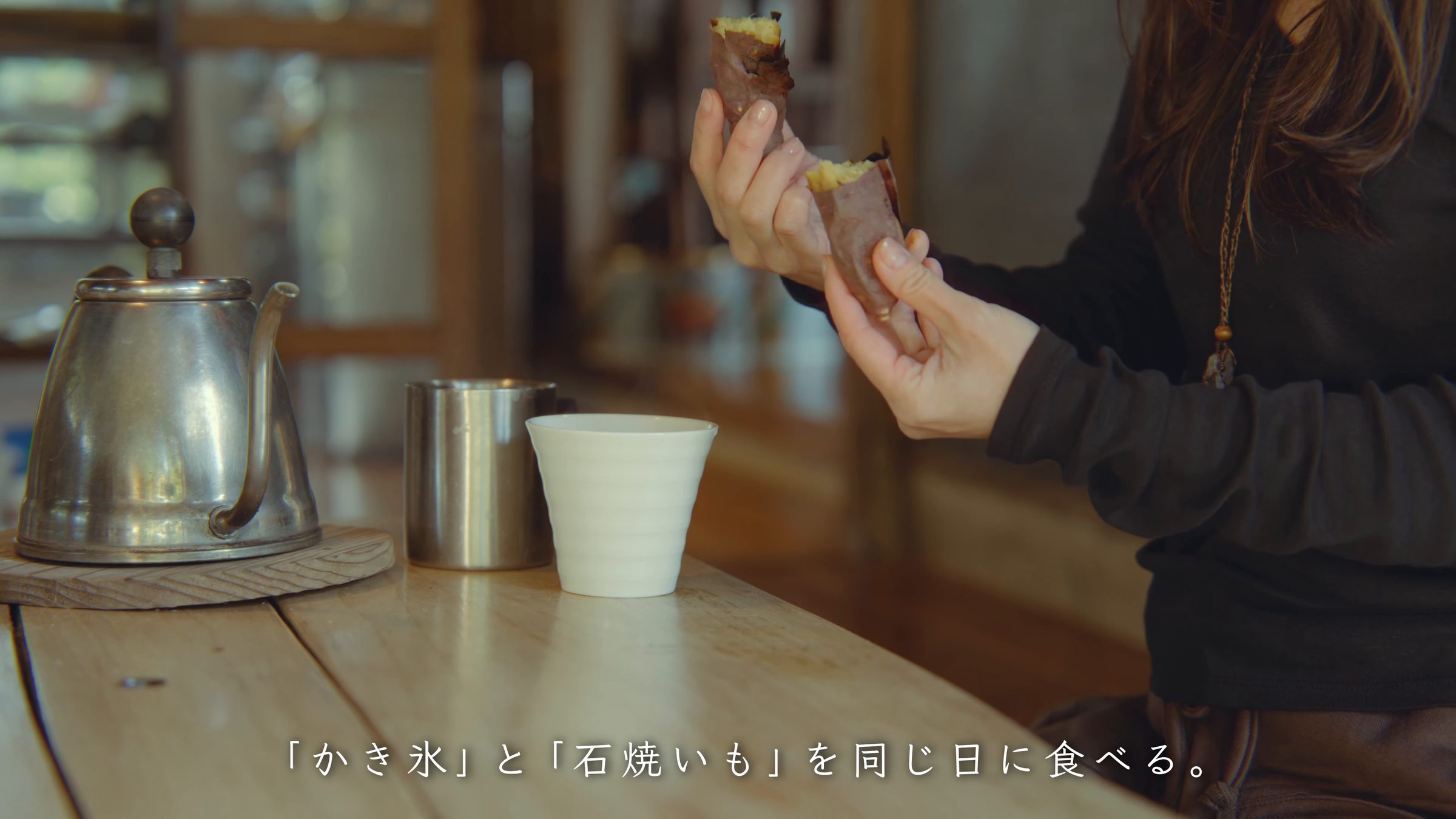
I lined an iron pot with stones, laid sweet potatoes on top, and set them to roast. While I waited, I brewed coffee through a cloth filter. Then, with a steaming sweet potato in my hands, I realized I had eaten shaved ice and stone-roasted sweet potato on the same day. Winter in Okinawa grants you wishes you didn't know you had.
Watch this scene on YouTube2:52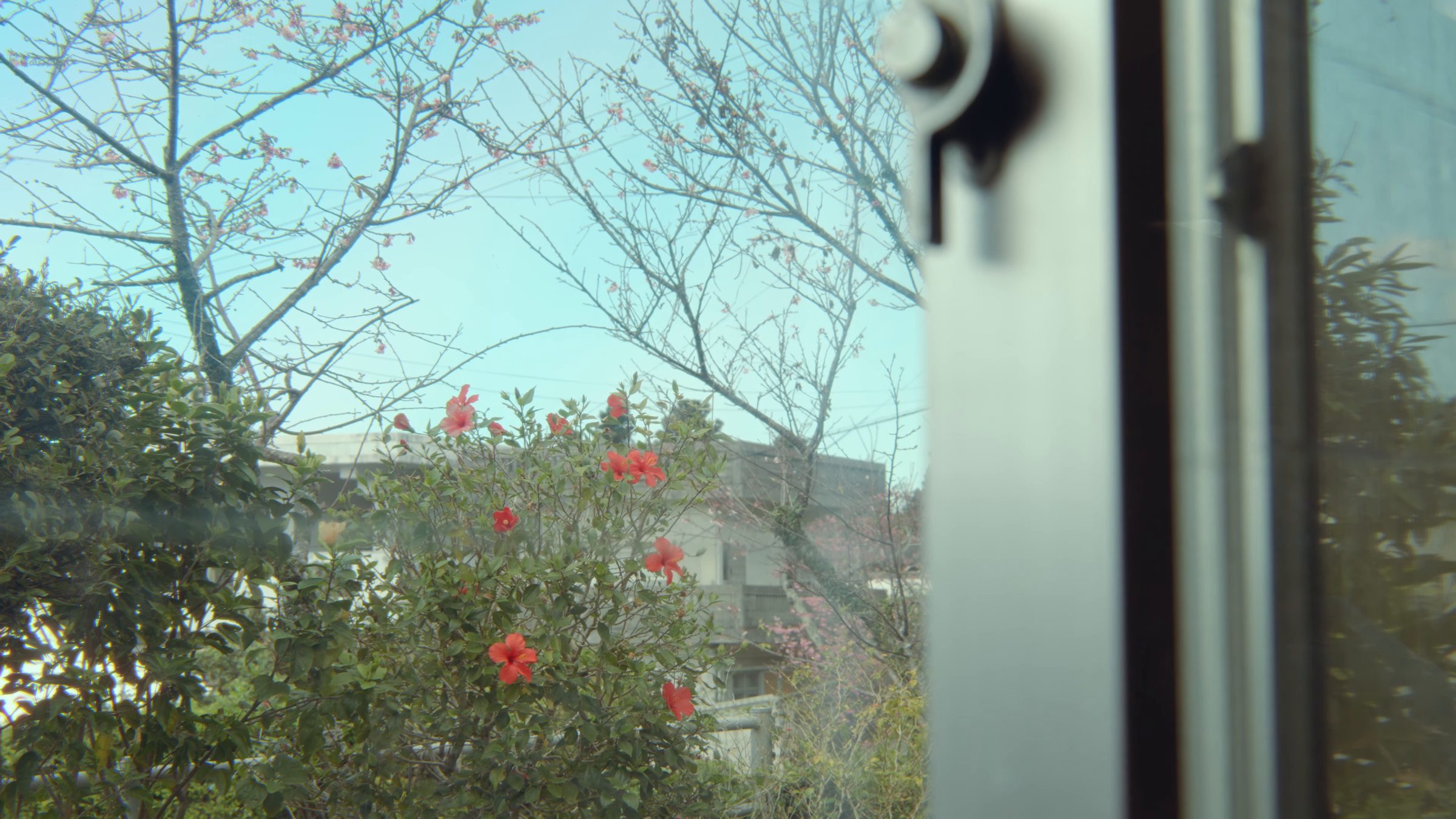
08TRAVEL JOURNAL
Island time, for the cats and me
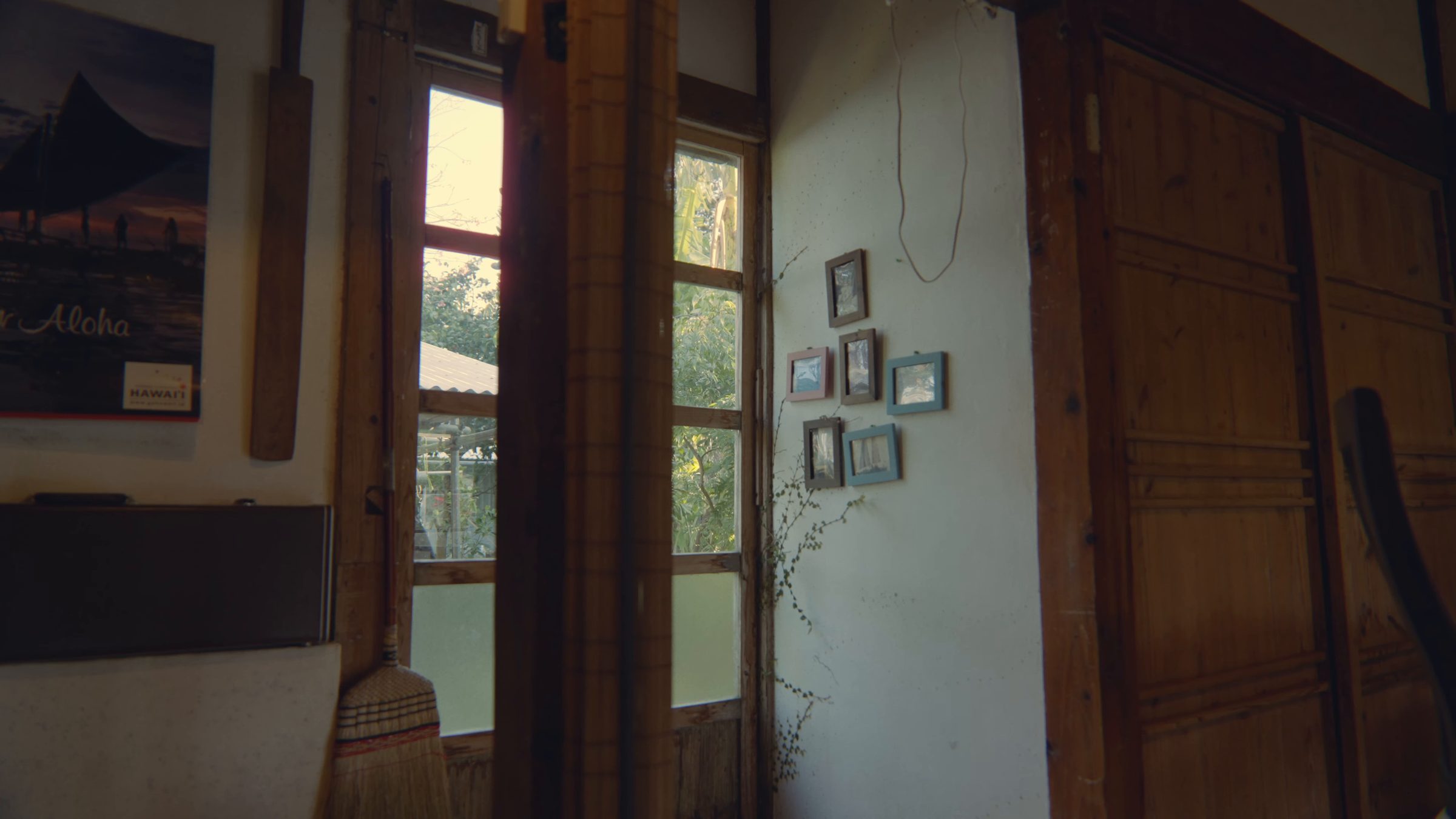
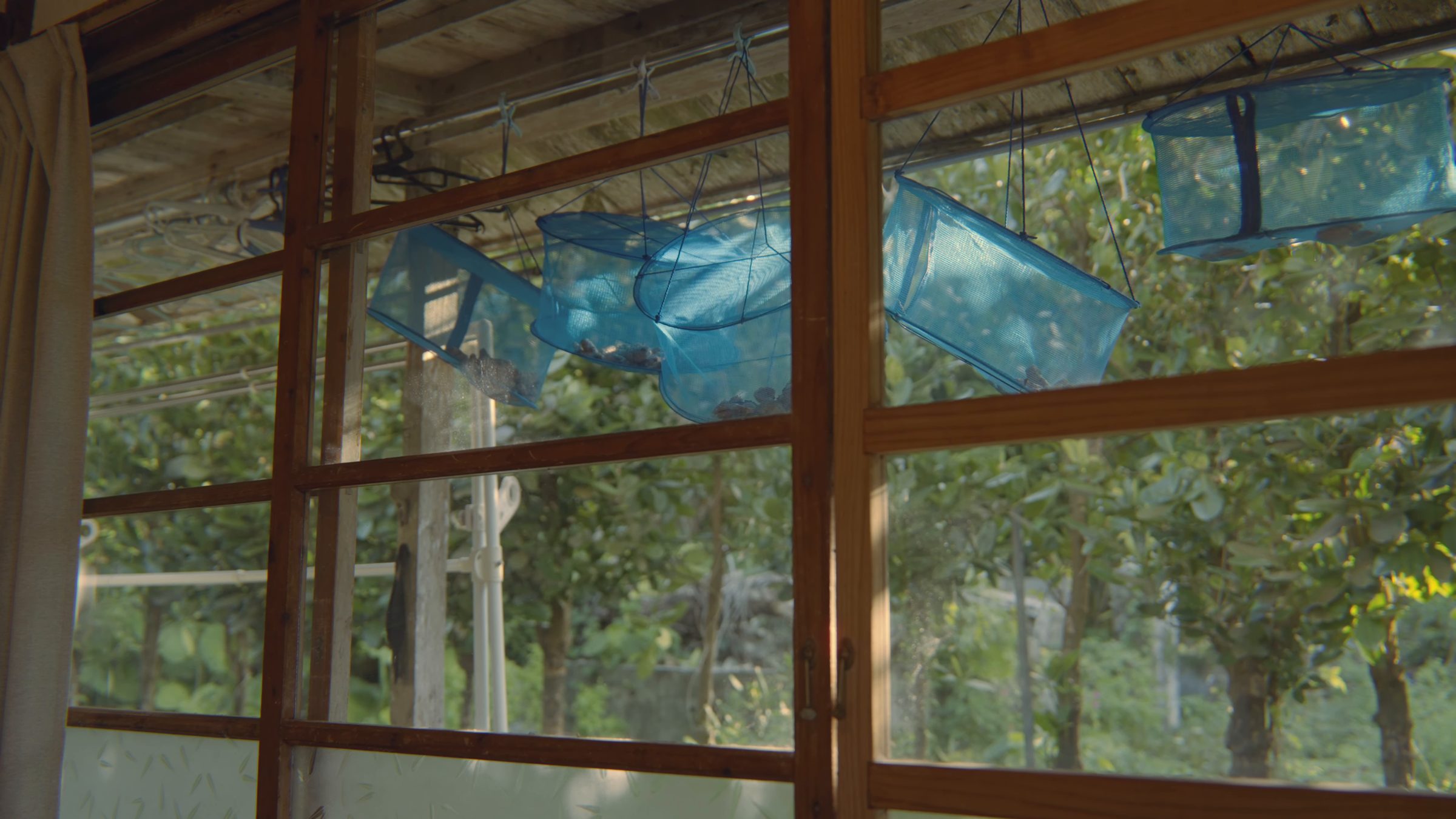
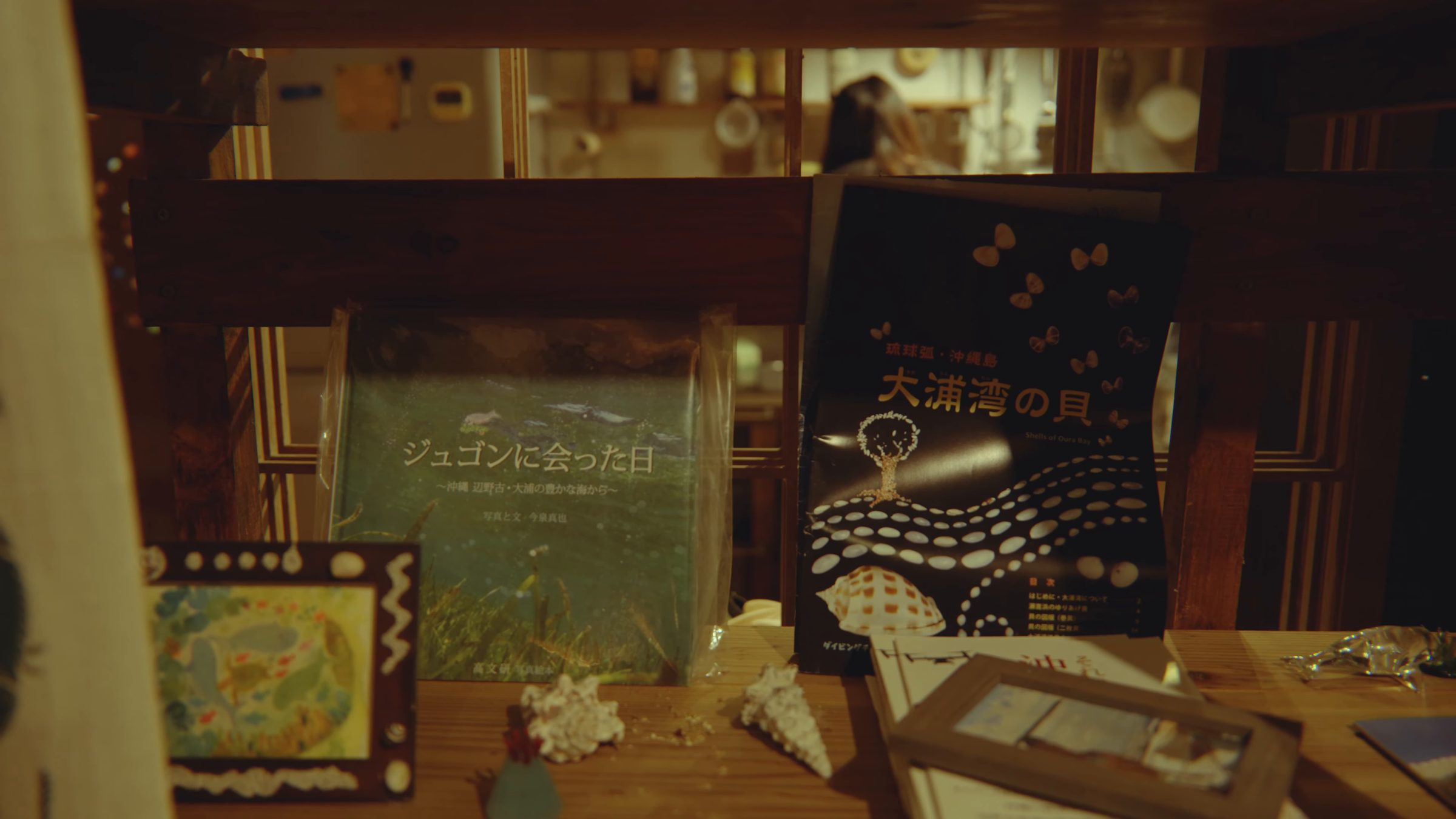
As the sun sank, the house grew quiet. Beyond the latticed windows the garden swayed, and photographs and pictures hung on the walls. On a shelf stood books about the creatures of these seas.
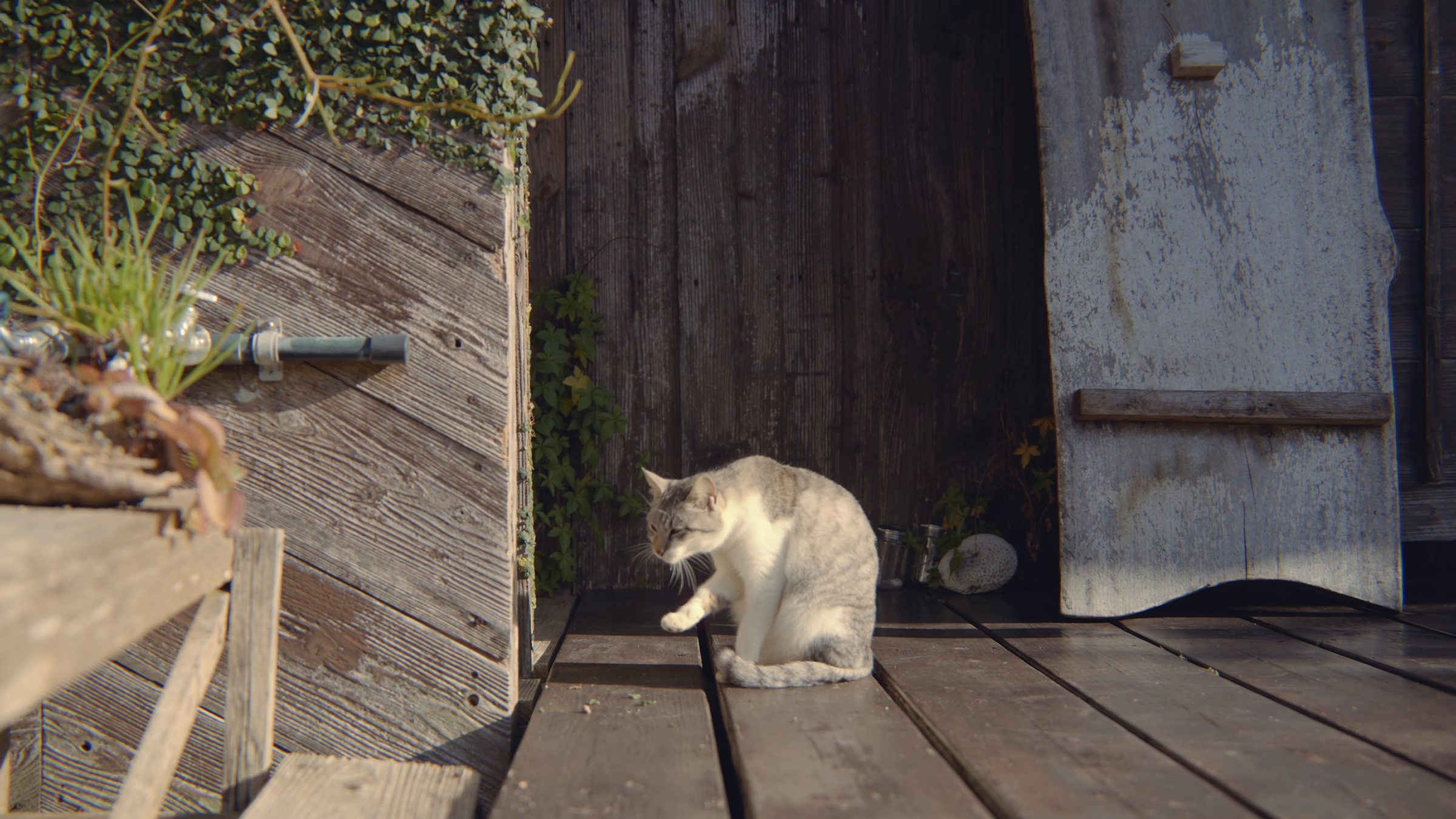
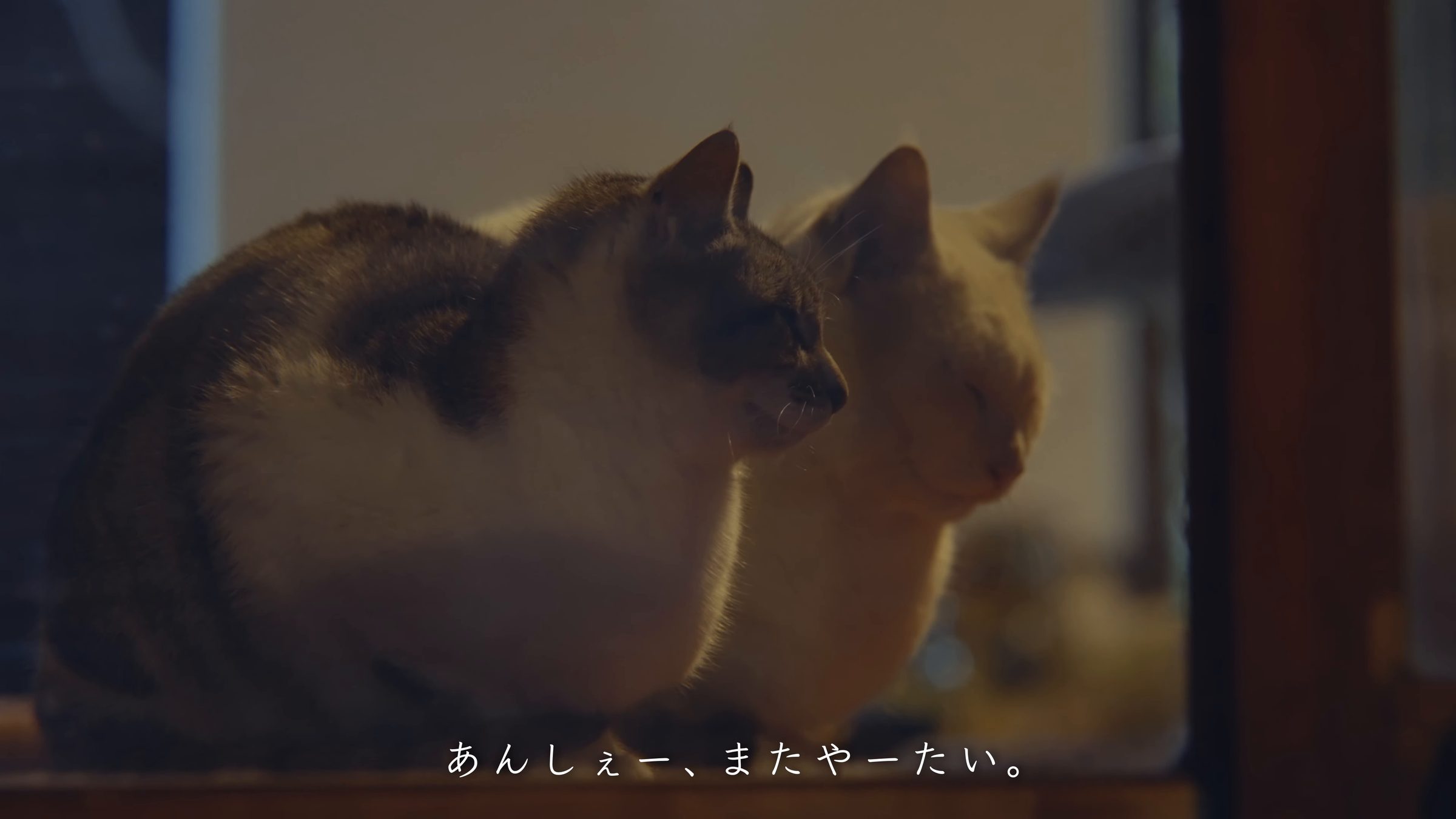
Out on the veranda, a white cat was absorbed in grooming itself. Island time, for the cats and for me.
Watch this scene on YouTube3:33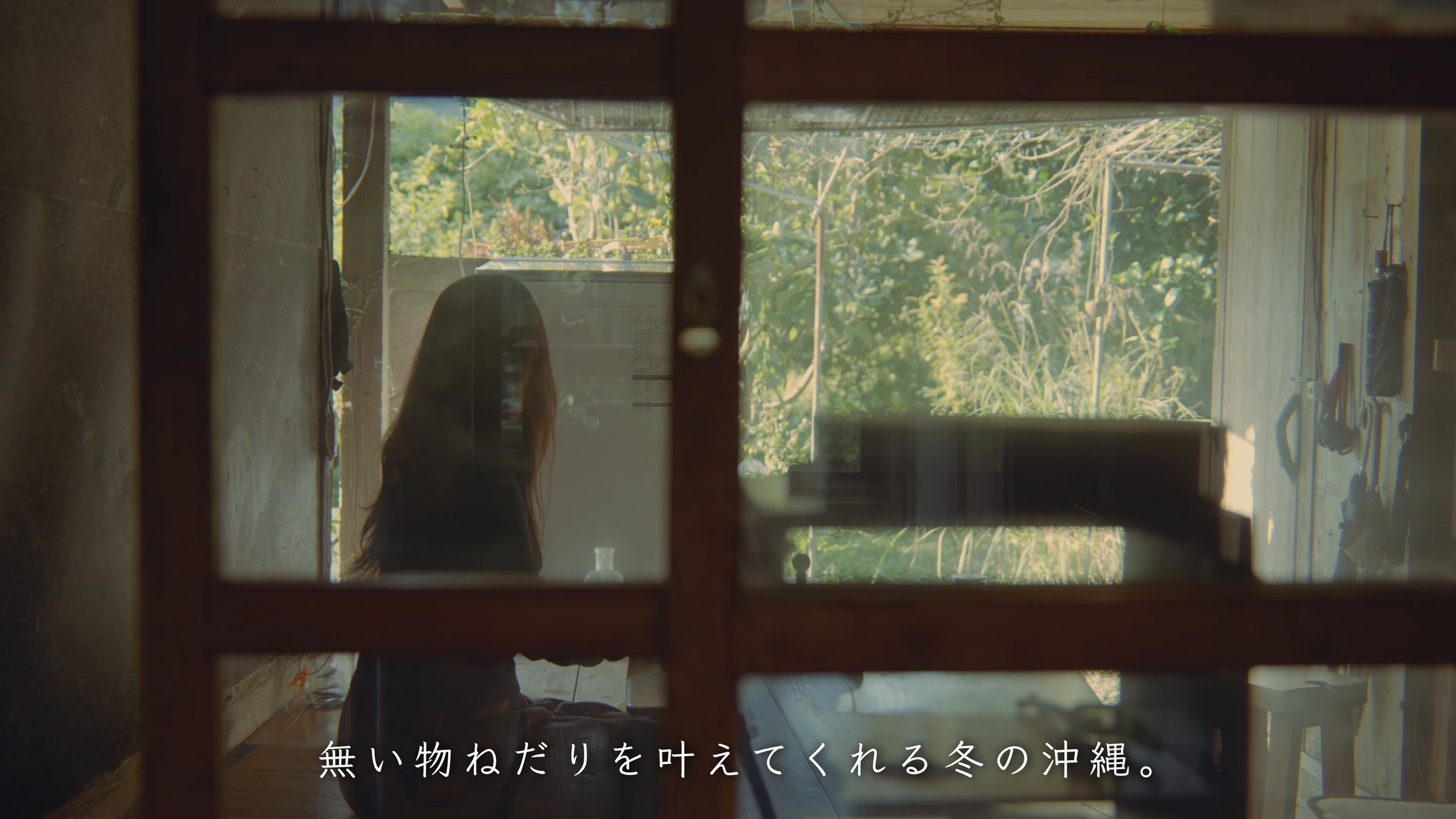
09TRAVEL JOURNAL
Goya chanpuru
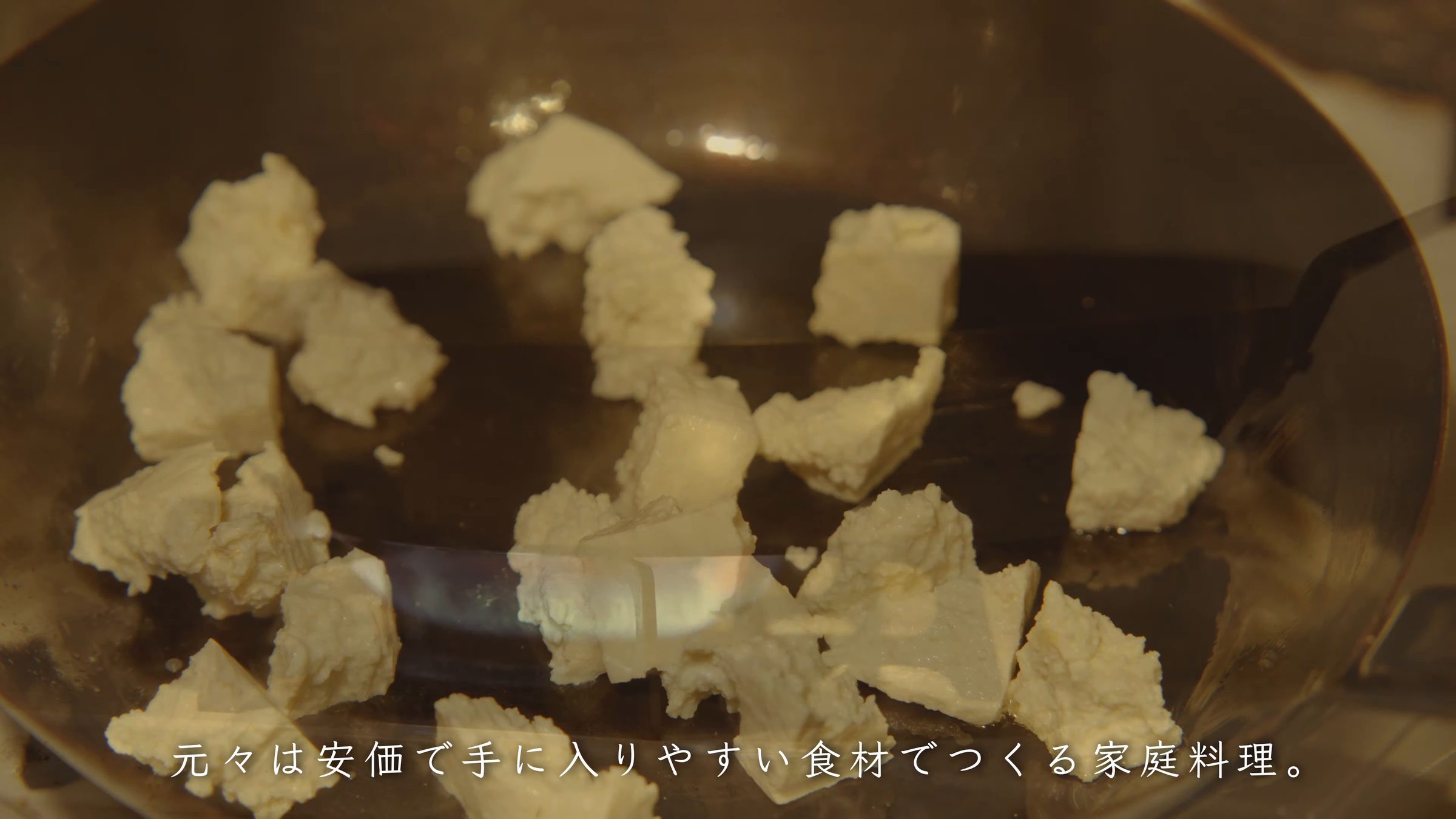
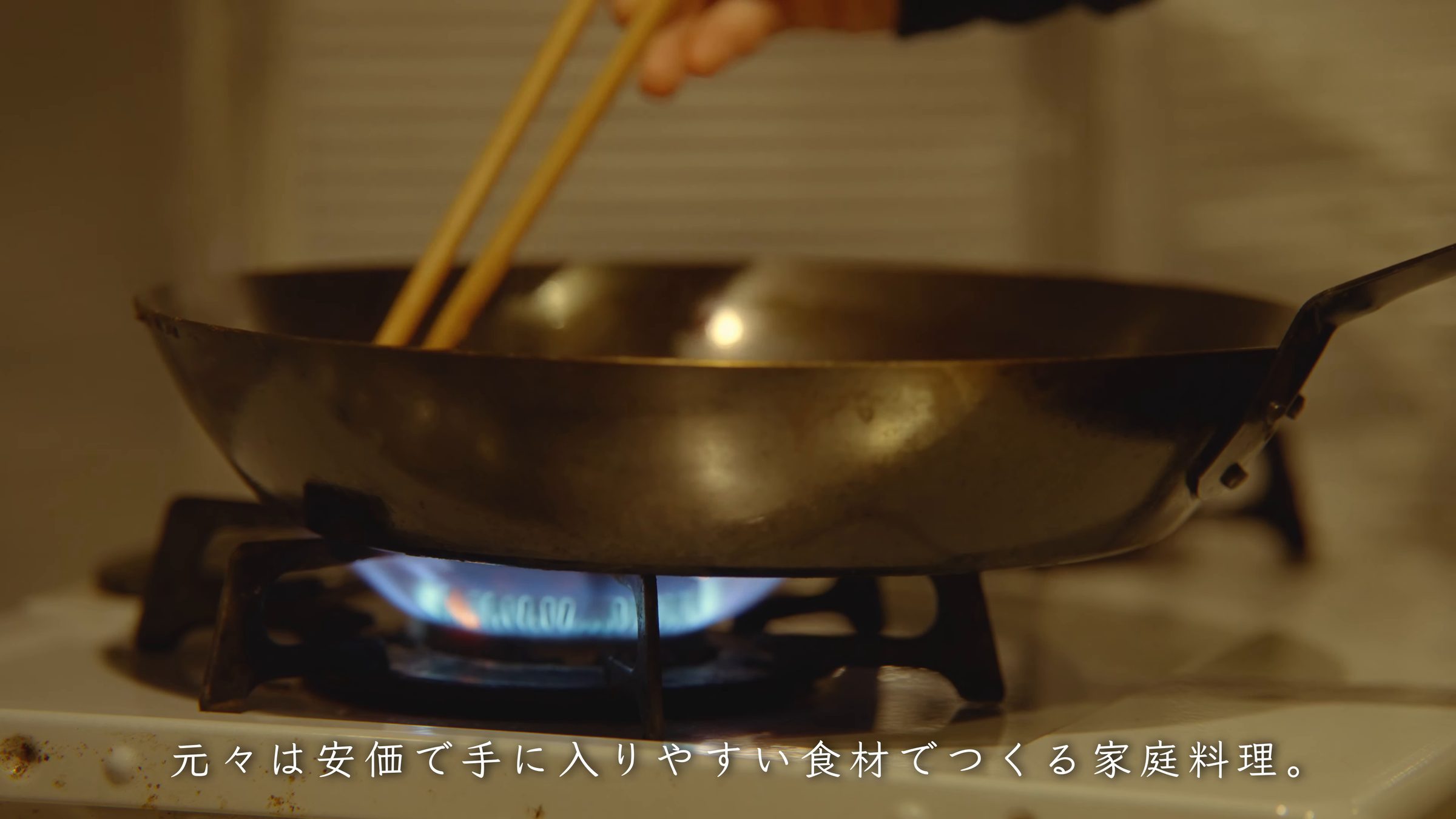
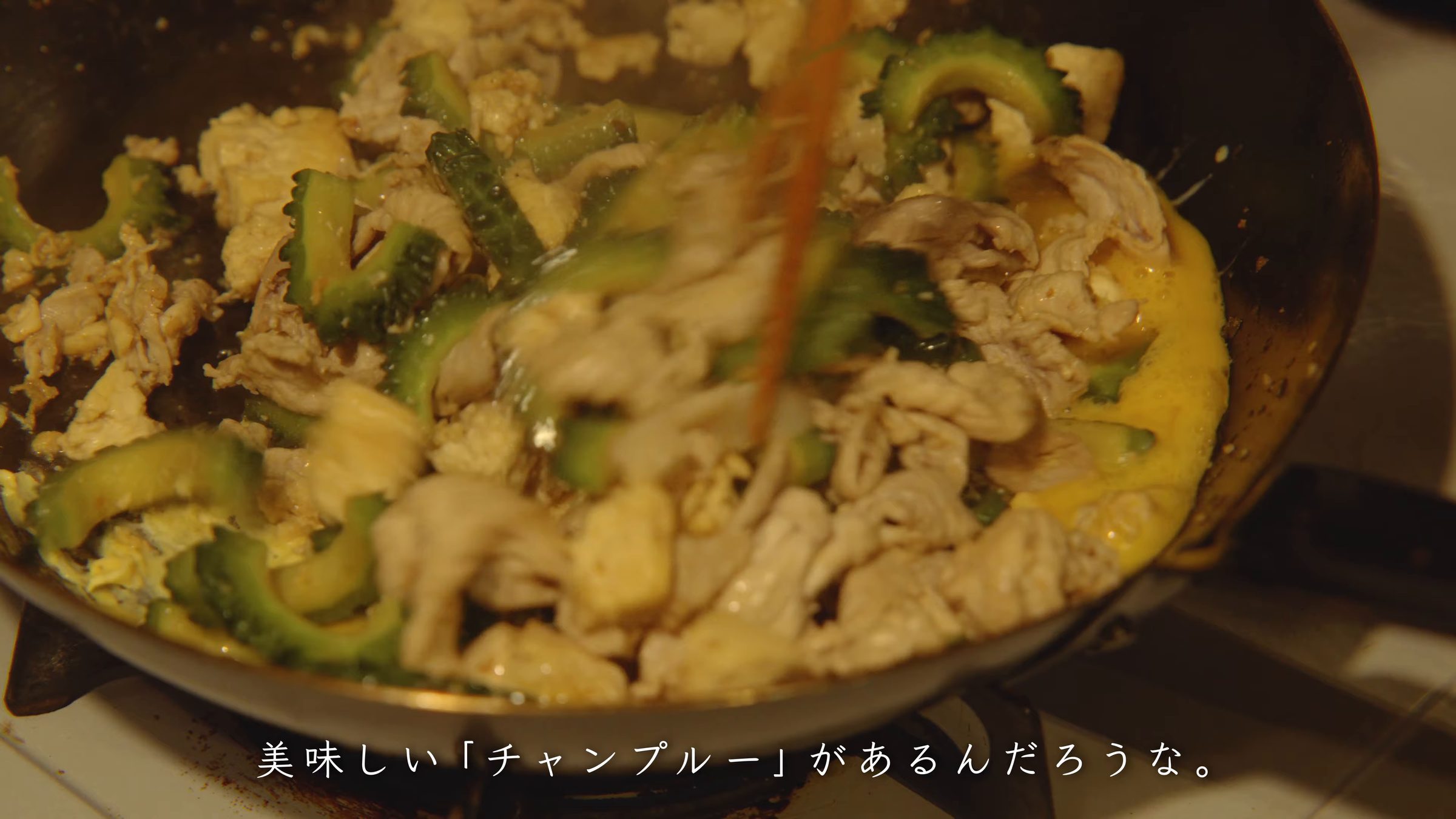
Dinner would be Okinawan home cooking, and that has to mean goya chanpuru. I sliced the bitter melon thin, tore the firm island tofu into chunks by hand, and browned it in an iron pan.
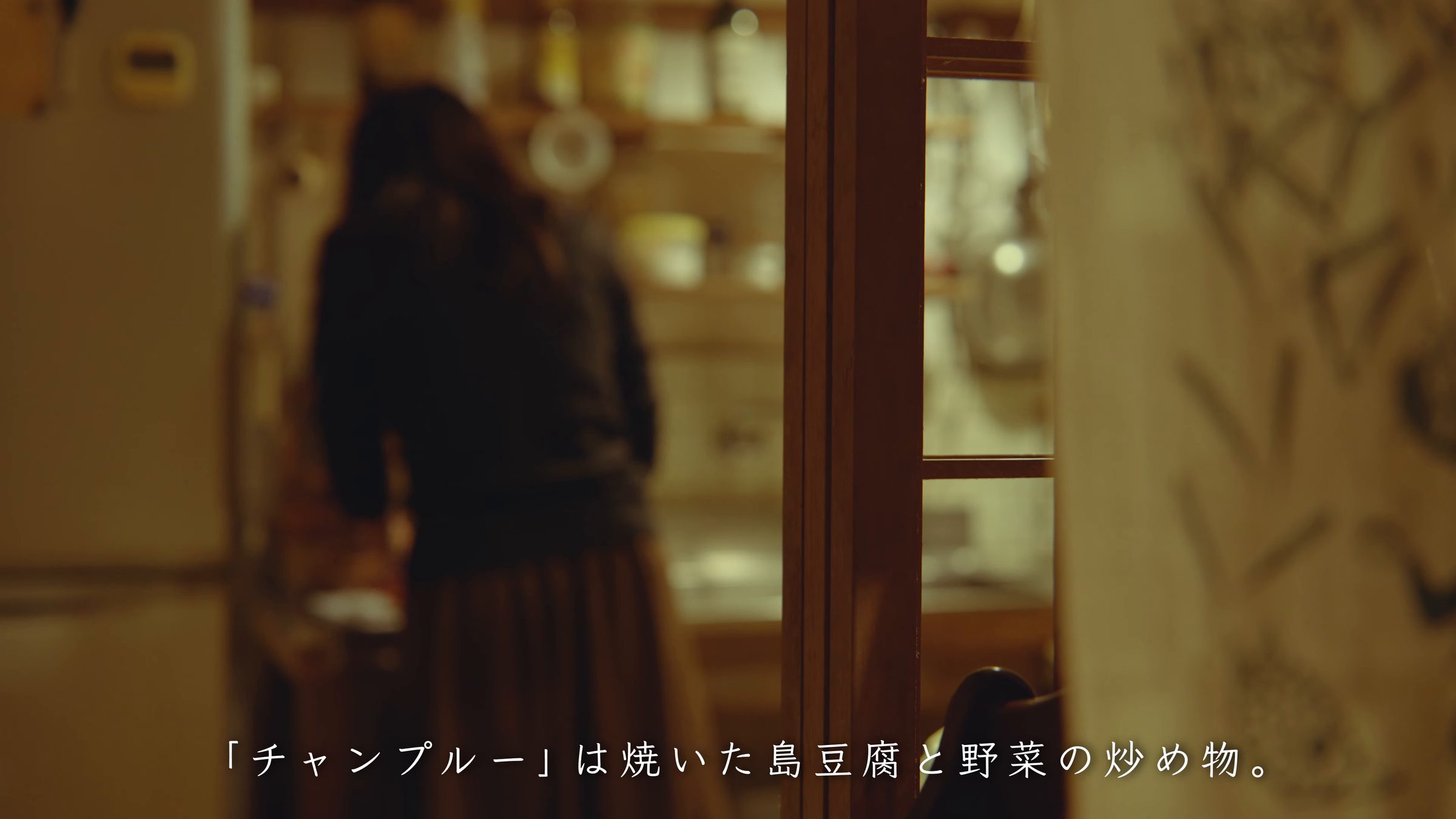
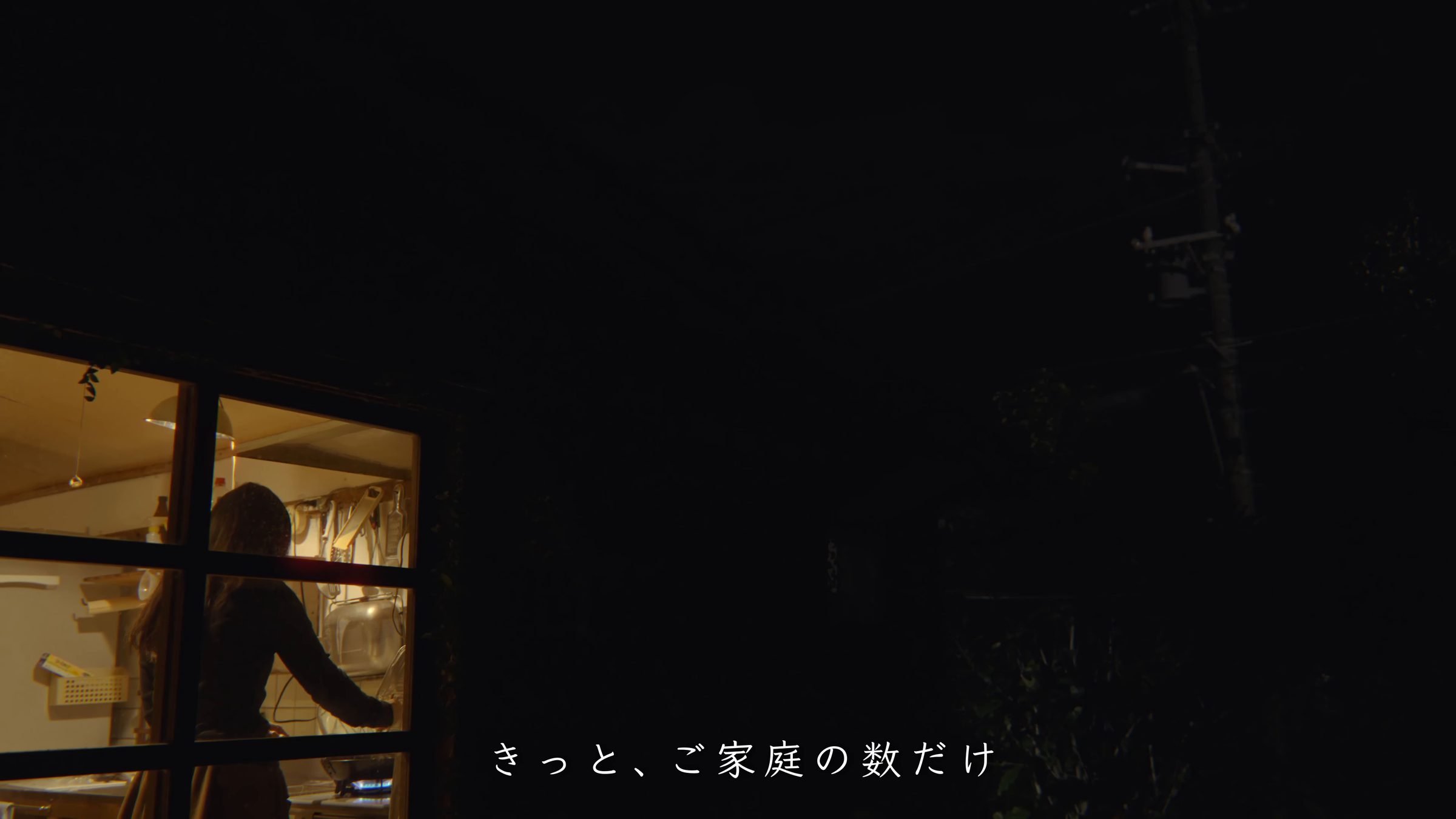
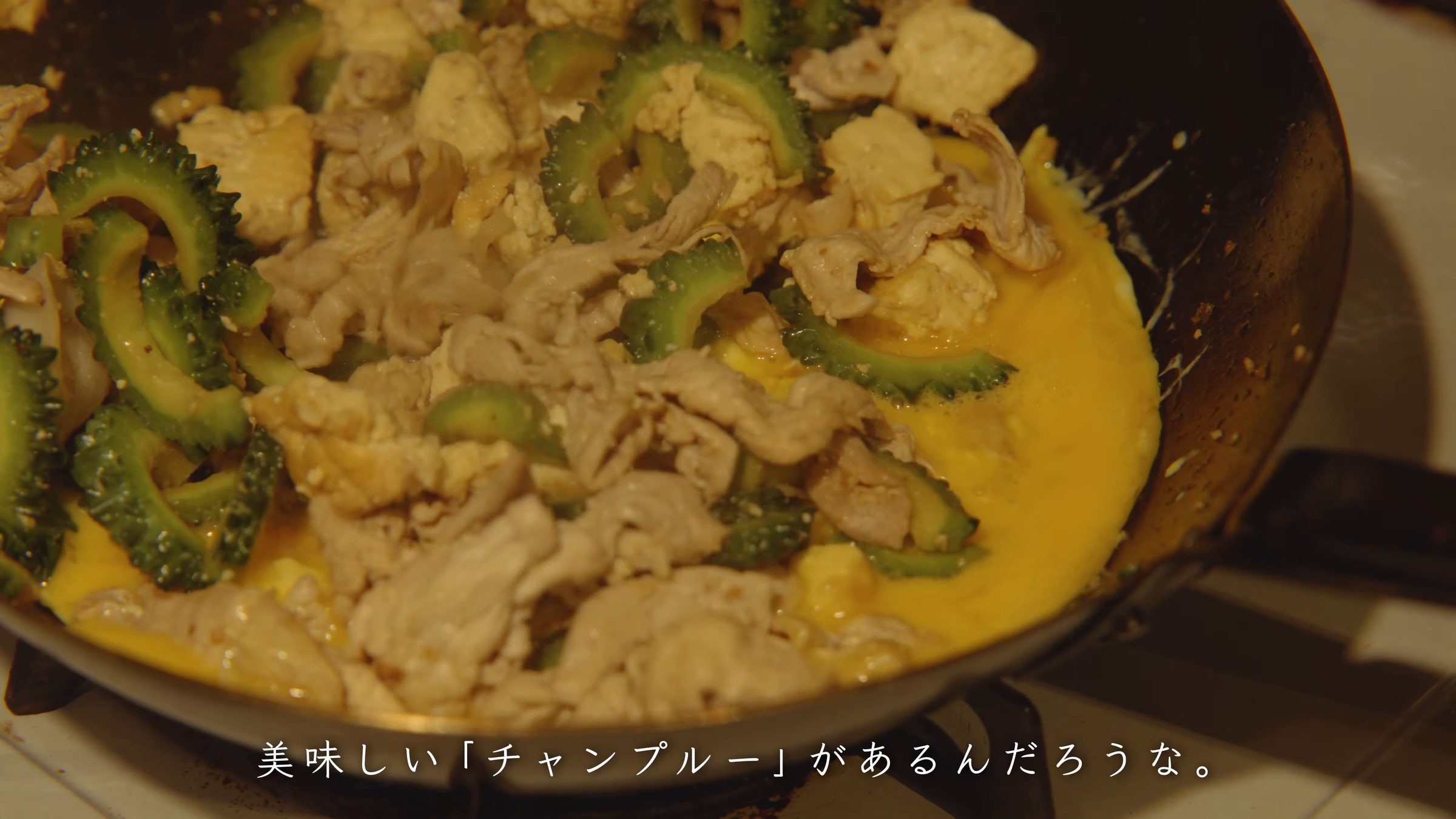
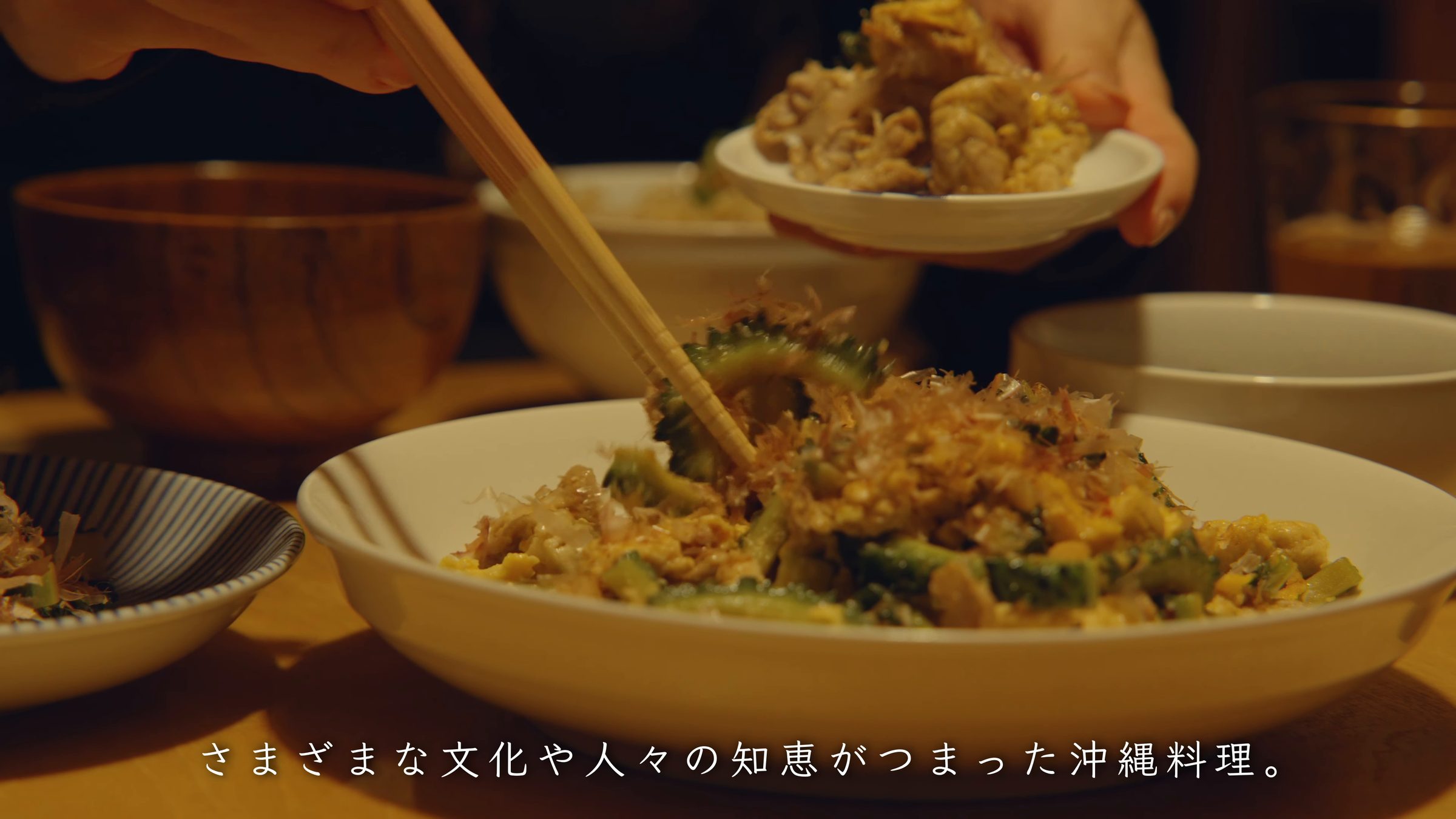
Chanpuru is a stir-fry of seared island tofu and vegetables, originally a home dish made from cheap, easy-to-find ingredients. I added pork, then folded in beaten egg. I'm sure every family has its own delicious version.
Watch this scene on YouTube3:52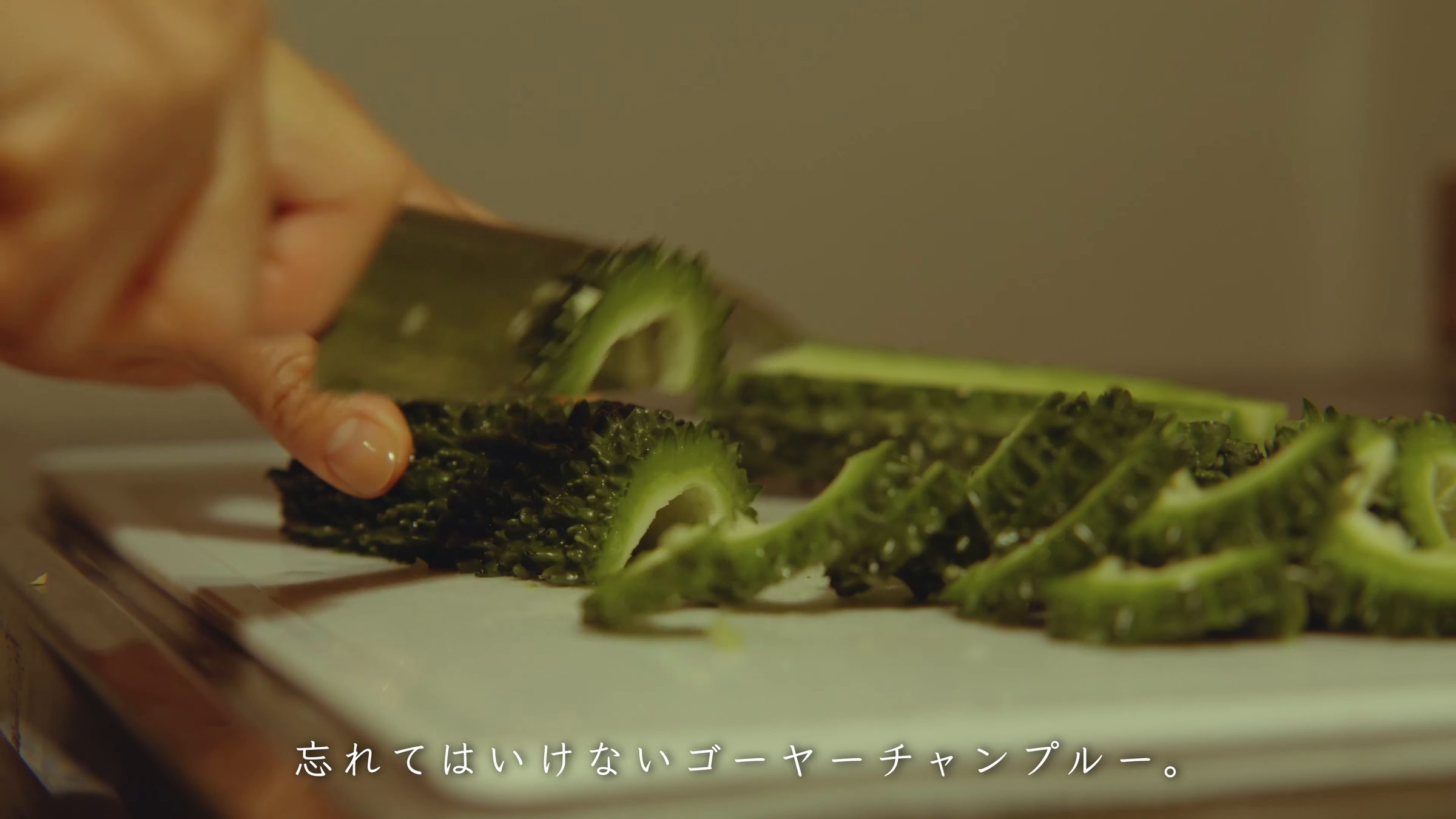
10TRAVEL JOURNAL
Jushi in a clay pot
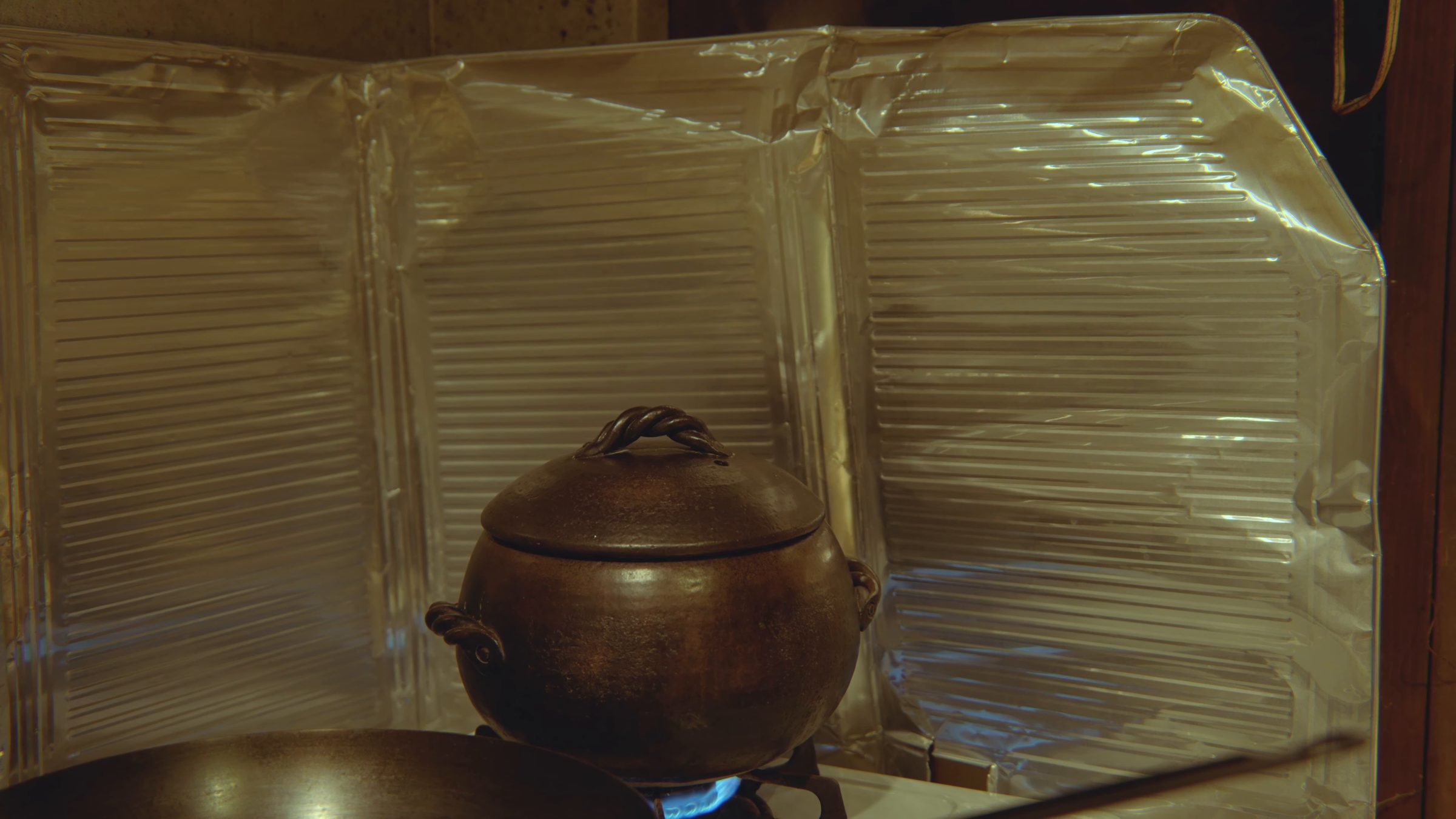
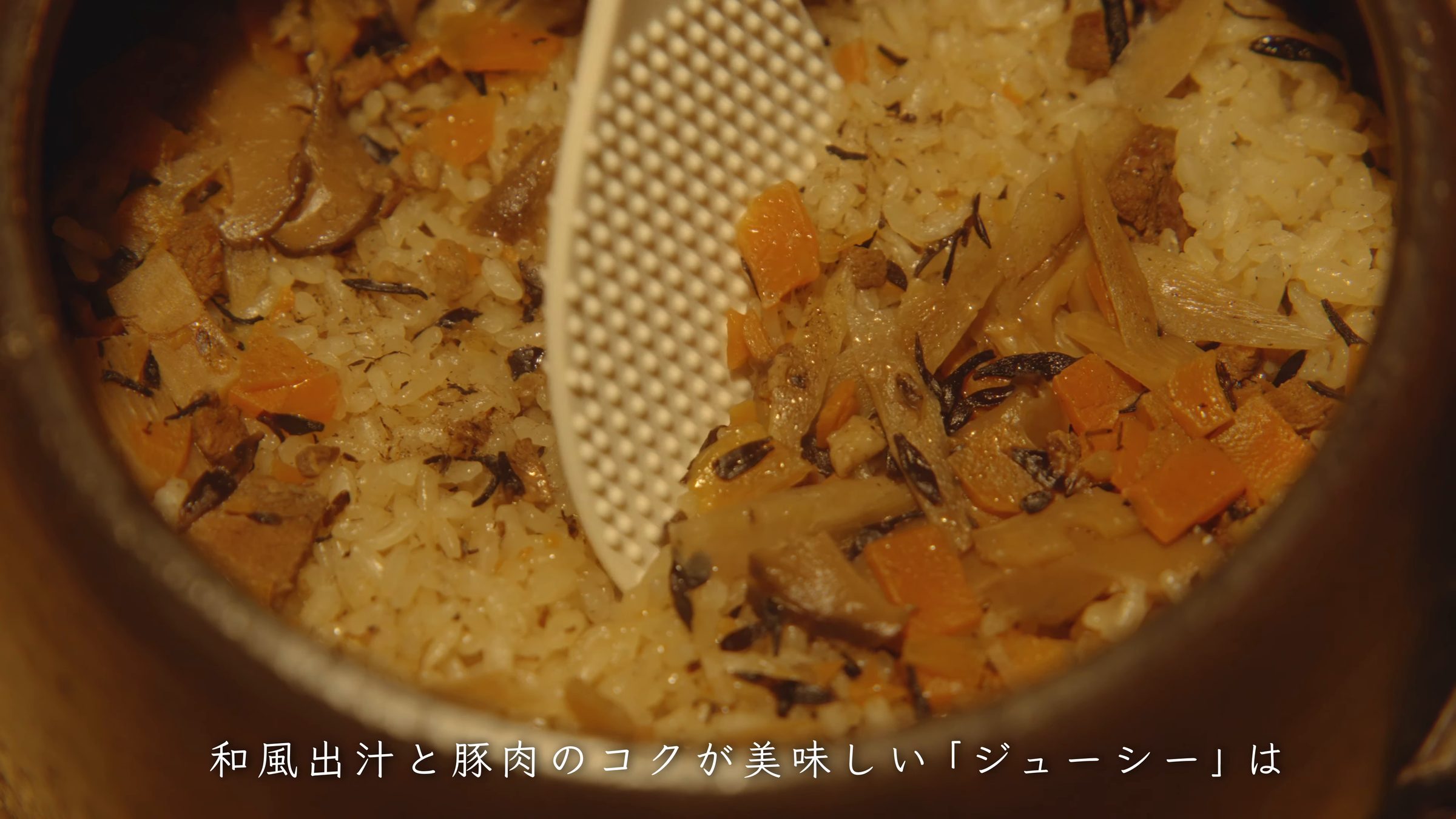
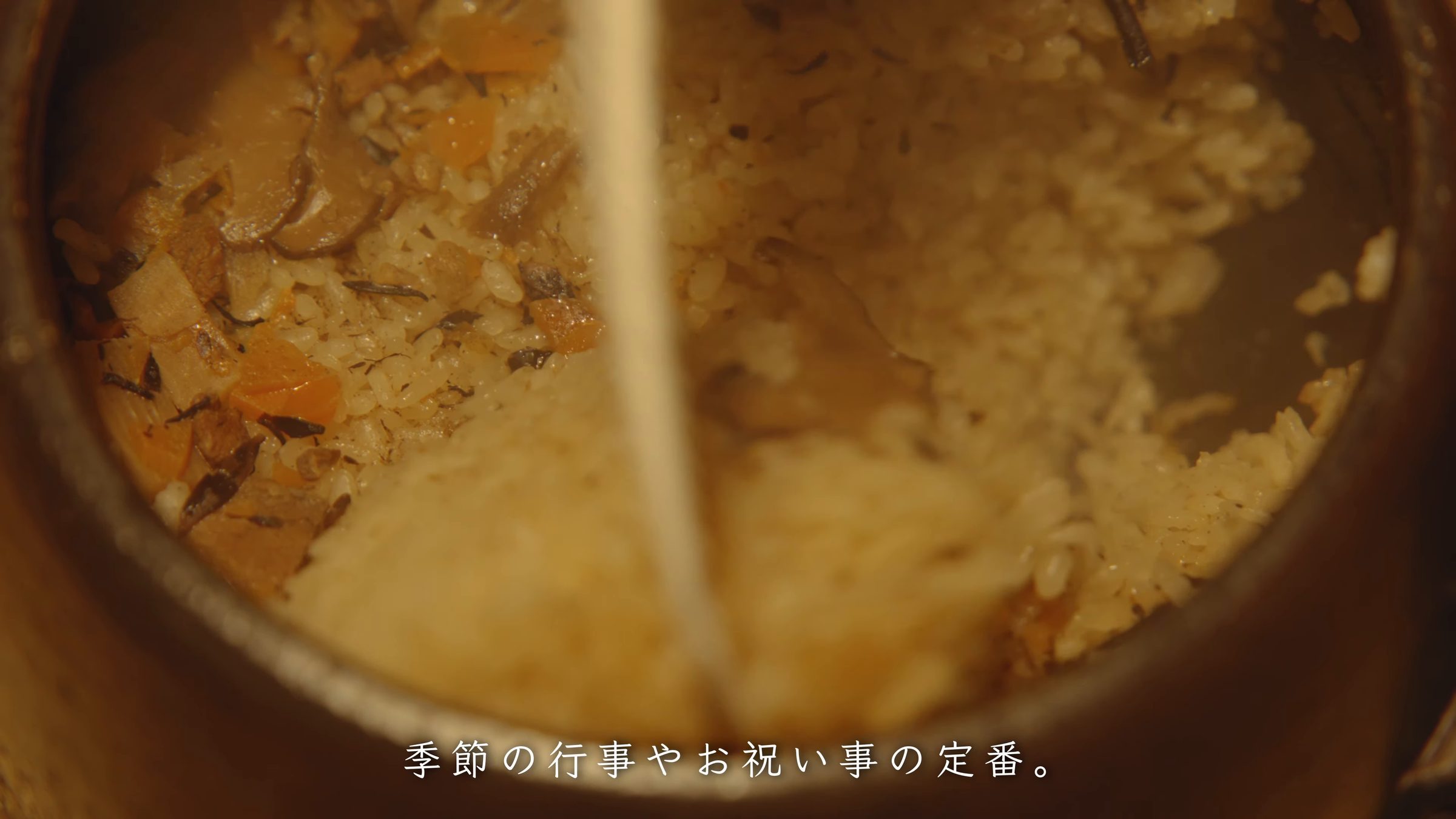
In the clay pot, another Okinawan flavor had finished cooking: jushi, rice simmered with Japanese dashi and the richness of pork. The word means seasoned rice in Okinawan; this time I cooked it with carrot and shiitake. It's a classic for seasonal festivals and celebrations.
Watch this scene on YouTube4:20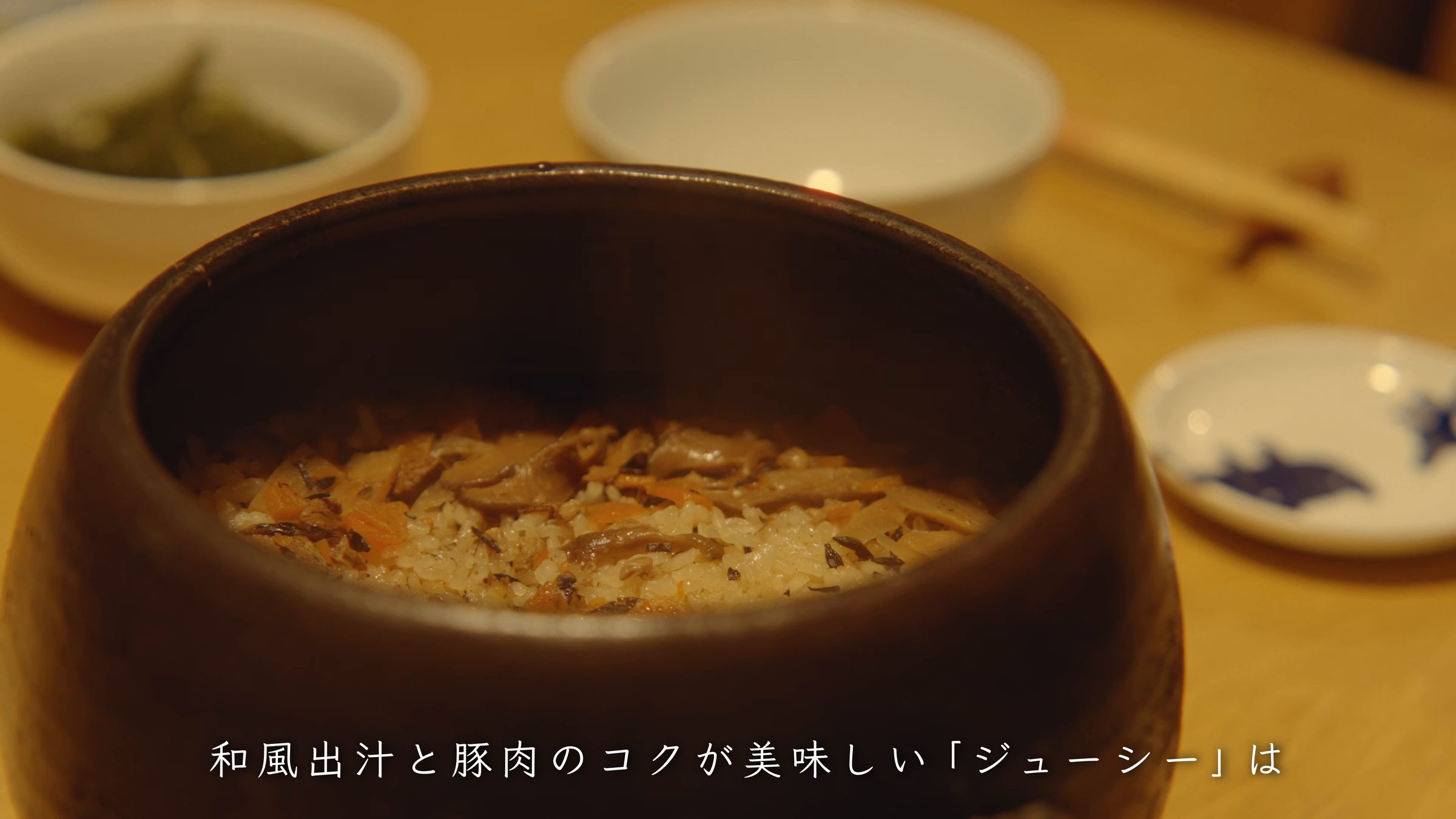
11TRAVEL JOURNAL
Until we meet again
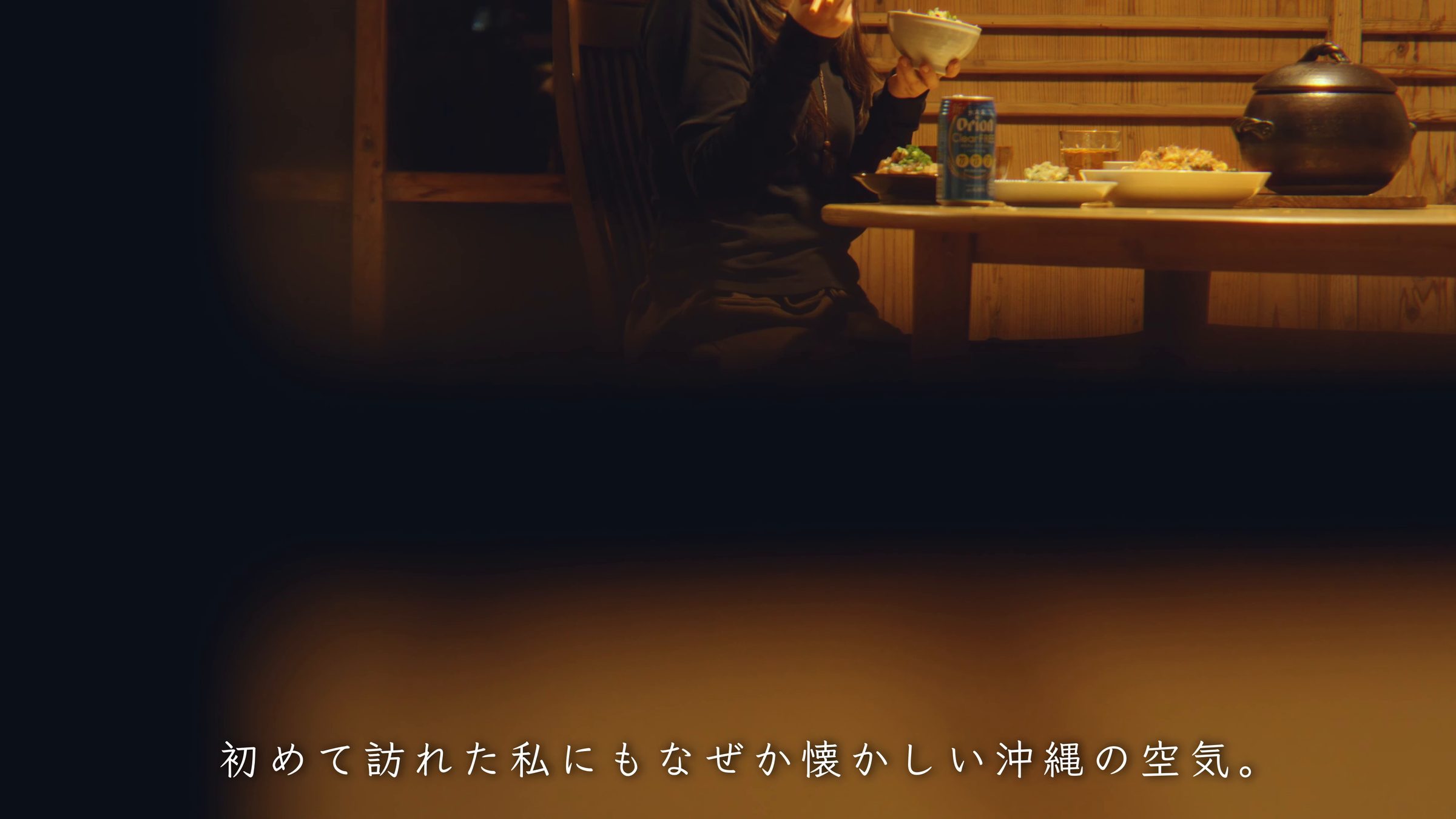
On the lamplit table I set out the chanpuru topped with bonito flakes, the jushi, and a bowl of sea grapes. Okinawan cooking is full of the wisdom of many cultures and many people. Even on my first visit, the air of Okinawa felt somehow nostalgic.
Next time I'd like to come in summer. To the two cats huddled by the window: anshee, mata yaatai. Until we meet again.
Watch this scene on YouTube4:33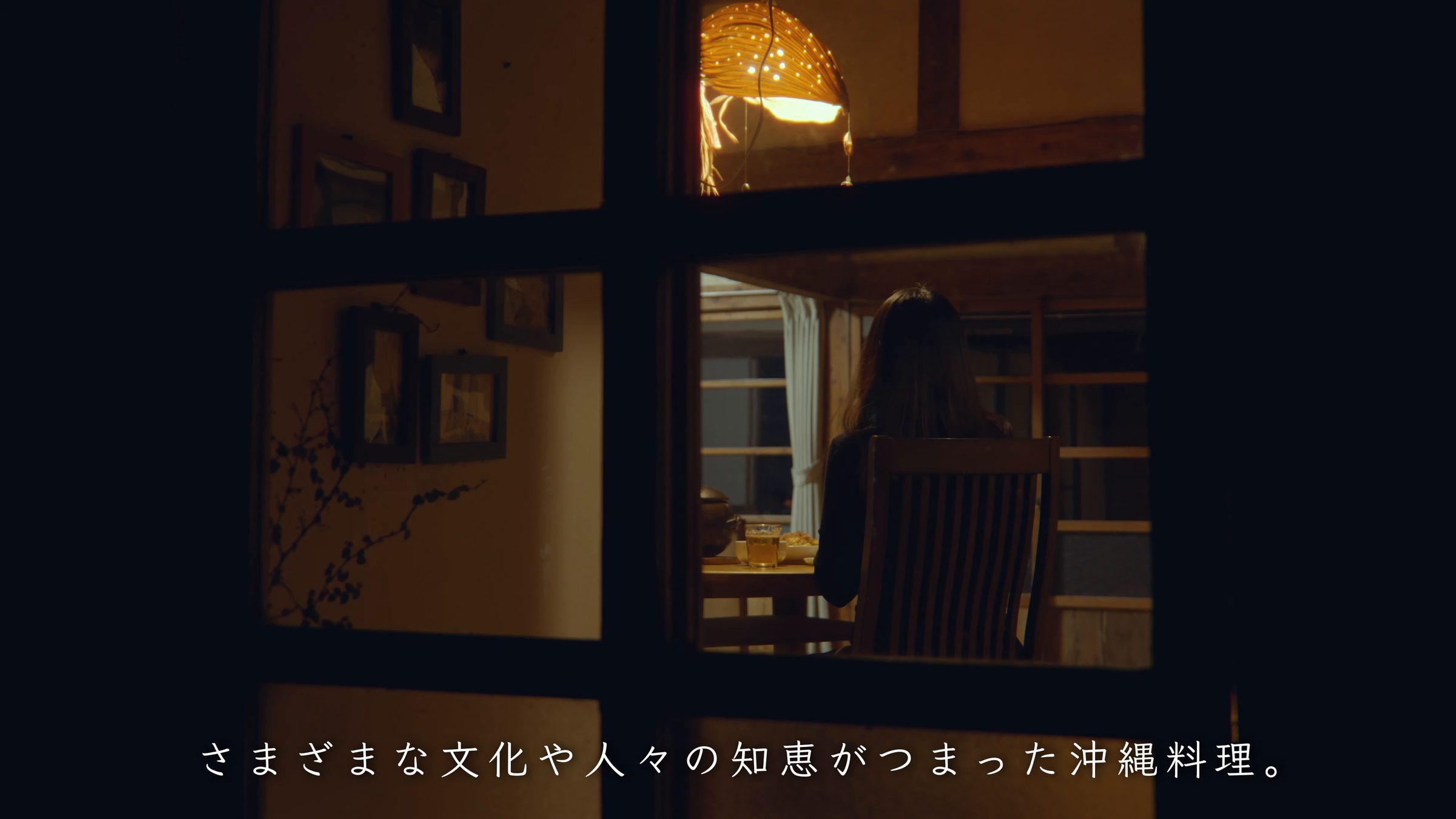
THE JOURNEY IN FILM
The wind. The sounds of a kitchen.
Spend a little more time inside the journey, on film.
Watch the video5 minTHE BORROWER’S NOTES
The Borrower's Notes: Motobu, Okinawa
Places we stopped, dishes we made, and stories of the land. A few things to keep from the journey.
01Where I ate and shopped
Kinokawa Shokudo
603 Kenken, Motobu, Kunigami District, Okinawa
A diner in a quiet residential area a short way in from the coast road. The chalkboard lists fried gurukun, mozuku tempura, sea grapes, goya chanpuru set meals and more. This time I had fried gurukun with sashimi, mozuku tempura and sea grapes.
Sources: retty.me
A seaside zenzai stand
A small stand with banners out front, beside a lane leading down to the sea on the far side of the Kouri Bridge. It serves heaping shaved ice topped with sweetly simmered kintoki beans and rice dumplings: Okinawan zenzai.
Nago Municipal Market
1-4-11 Gusuku, Nago, Okinawa
A market in the center of Nago, dating back to the Taisho era; the current building was completed in 2010. Fresh meat, fish and vegetable shops fill the first floor, with sundries, souvenir shops and eateries on the second.
Sources: ryukyushimpo.jp tabelog.com
02What I cooked
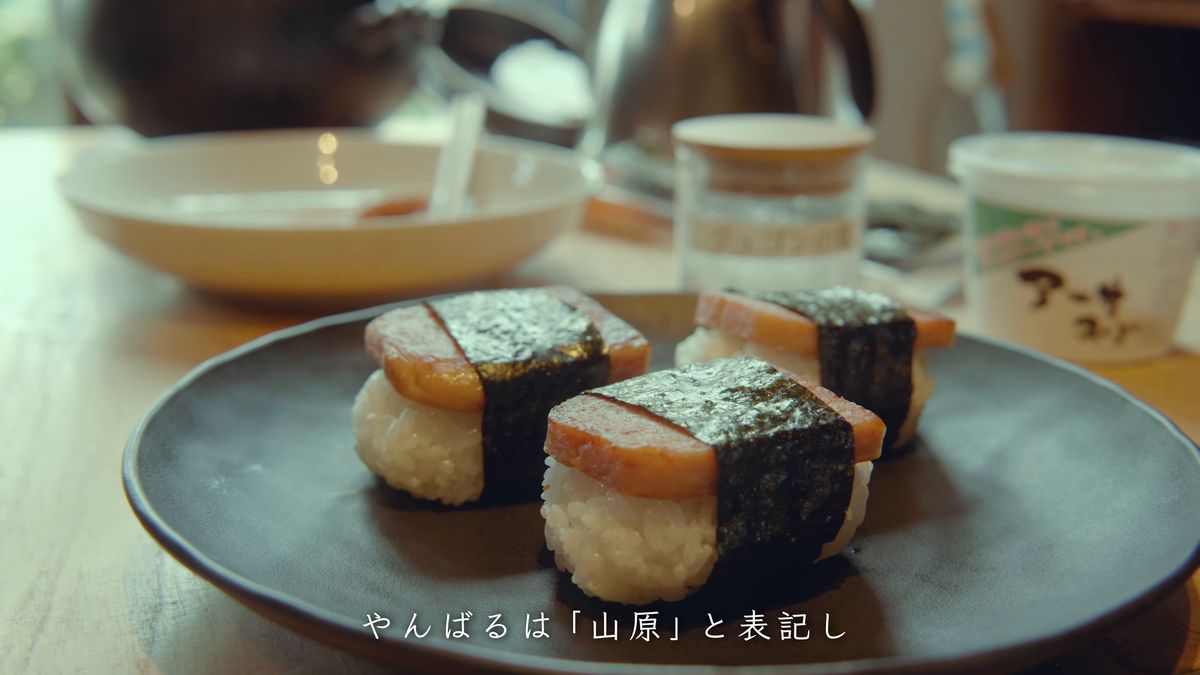
Spam musubi
In postwar Okinawa, when meat was hard to come by, canned pork became a widely used source of protein that kept well and was easy to prepare, and serving it with fried or rolled egg took root in homes. Pork and egg, born of that postwar ingenuity, is now a familiar home taste, and the rice ball made from it is a classic too. This time I set grilled pork on rice and wrapped it in nori.
IngredientsCooked rice, Canned pork (Spam), Nori seaweed
- Cut the pork into thick slices and brown both sides in a frying pan
- Shape the rice into balls and set a slice of pork on each
- Wrap with nori
Sources: ryukyushimpo.jp
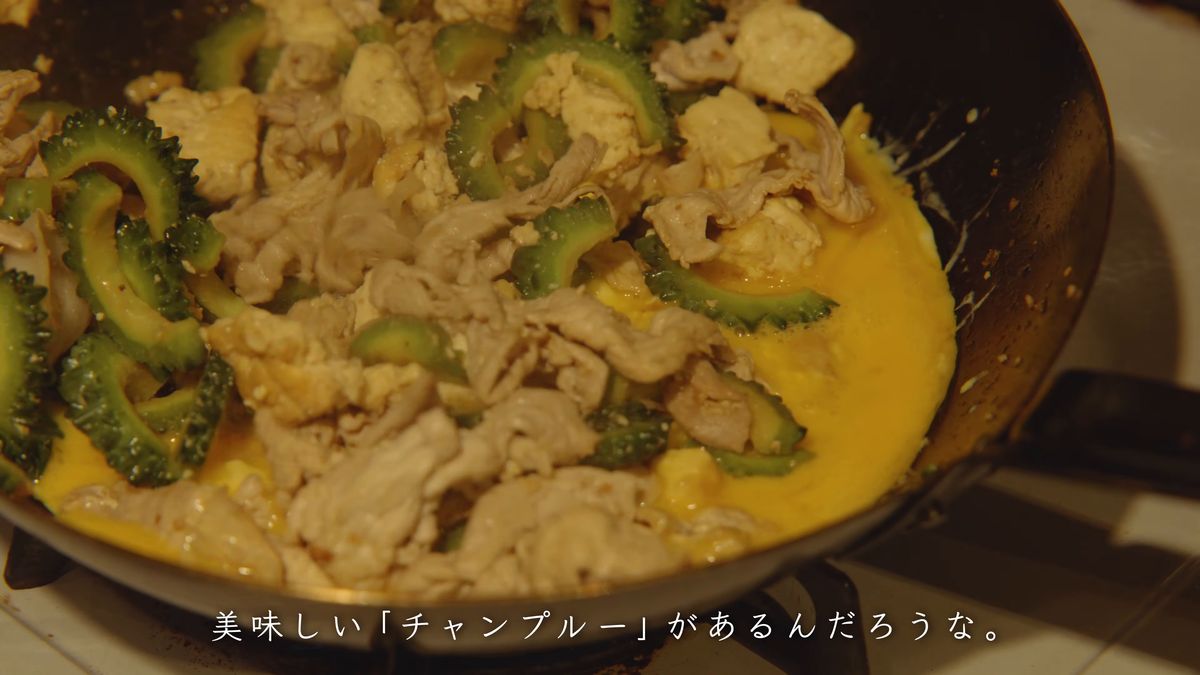
Goya chanpuru
Chanpuru, Okinawa's everyday stir-fry, combines seared island tofu with seasonal vegetables, and goya chanpuru is its best-known form. Frying the bitter melon with tofu and egg softens its bitterness, and Okinawa's firm tofu holds up well in the pan. Long valued as a dish to ward off summer fatigue, it is now served year-round in homes and diners, since improved varieties of goya are available in every season. Canned pork is sometimes used in place of fresh pork.
IngredientsBitter melon (goya), Island tofu, Pork, Egg, Bonito flakes
- Slice the bitter melon thin
- Tear the island tofu by hand and brown it in an iron pan
- Stir-fry the bitter melon and pork, then fold in beaten egg
- Plate it and top with bonito flakes
Sources: maff.go.jp
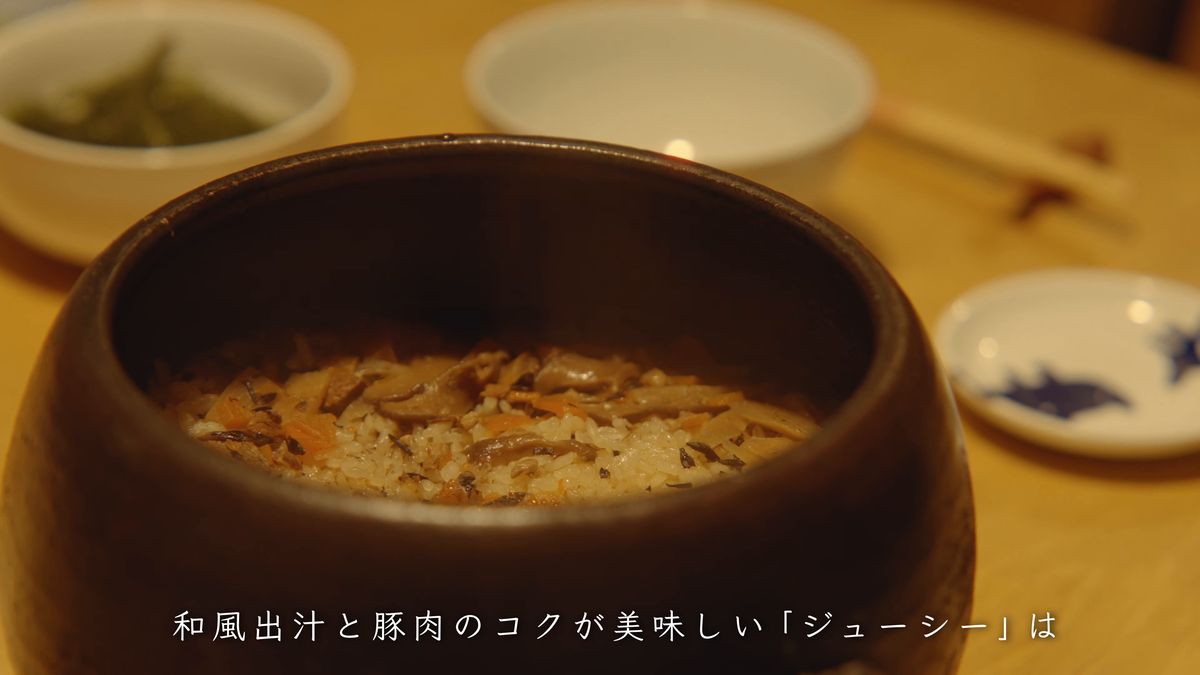
Jushi
Jushi is the Okinawan word for seasoned rice. The firmer kind, kufa jushi, is rice cooked in pork stock with pork belly, carrot, rehydrated dried shiitake and kamaboko; the pork gives it a glossy finish. Once an essential dish for festivals and celebrations, it has variations such as unkee jushi with leaf ginger for the Obon welcoming of ancestors and tunjii jushi with taro for the winter solstice. Today it is everyday home cooking as well.
IngredientsRice, Pork, Carrot, Shiitake mushrooms, Japanese dashi
- Put the rice, pork and vegetables in a clay pot with dashi and cook
- When done, loosen the rice from the bottom of the pot
Sources: maff.go.jp
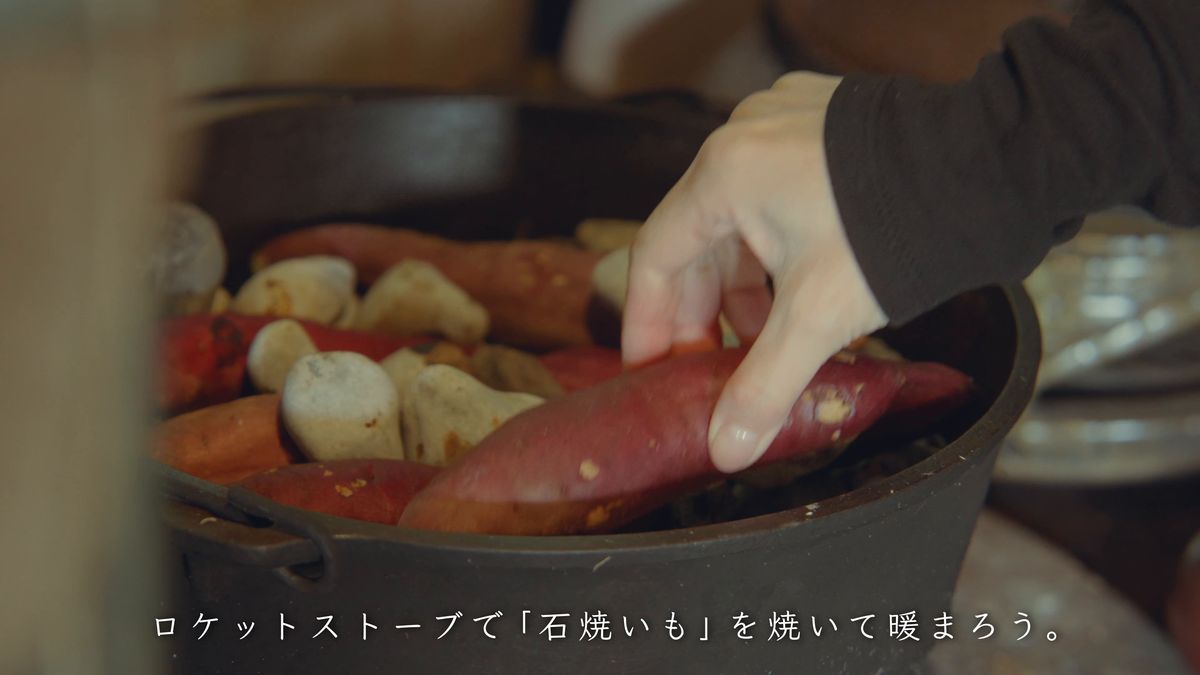
Stone-roasted sweet potatoes
The sweet potato is said to have reached the Ryukyu Kingdom in 1605, when Noguni Sokan brought seedlings back from Fujian in China. Gima Shinjo spread its cultivation across the islands, and from there it traveled through Satsuma to the rest of Japan. On a winter evening, I ate sweet potatoes roasted over the rocket stove.
IngredientsSweet potatoes, Stones
- Stack driftwood in the rocket stove and light it
- Line an iron pot with stones, lay the sweet potatoes on top and roast
Sources: ryukyushimpo.jp
03About the area

Yanbaru
Yanbaru, written with the characters for mountain and field, means a region of connected mountains and spreading forest, and refers to the north of Okinawa Island, covered in subtropical evergreen forest. More than 80 percent of the land is forested, and it is home to endemic species such as the Okinawa rail, Okinawa woodpecker and Ryukyu long-furred rat.
Sources: env.go.jp
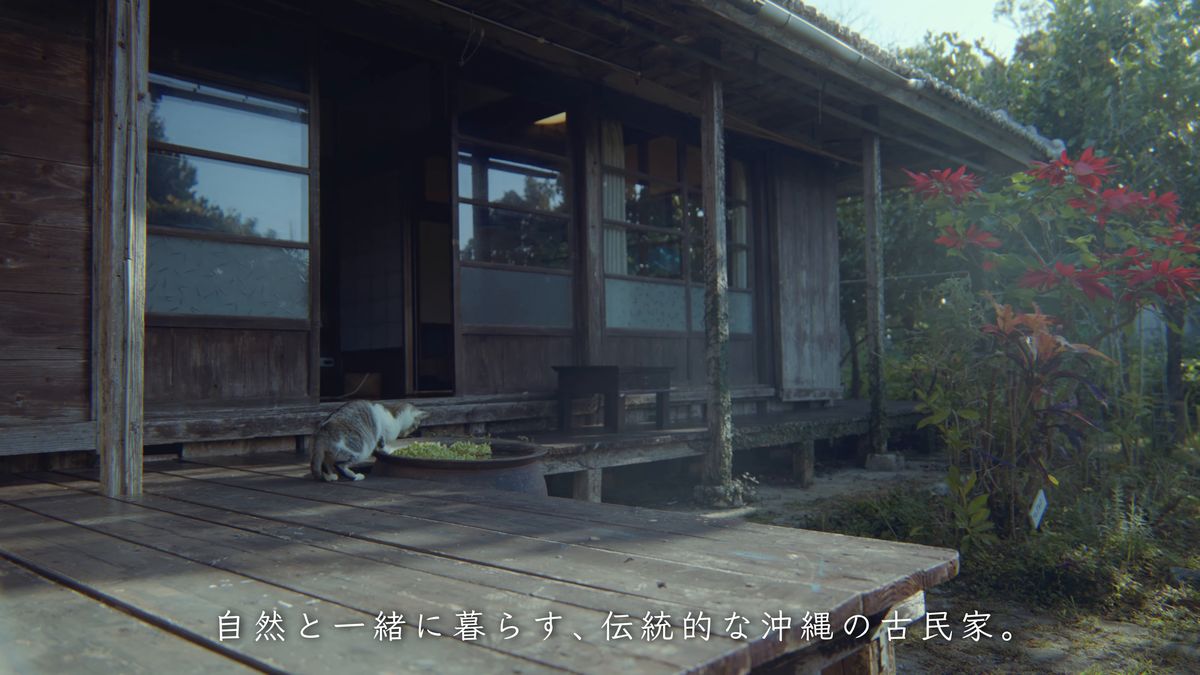
Fukugi windbreaks
In Okinawa, fukugi trees have long been planted around homes to shield them from typhoon winds. The fukugi-lined lanes of Bise, in Motobu, are said to date back more than 250 years, to the Ryukyu Kingdom era, when they were planted as windbreaks for the houses.
Sources: mlit.go.jp
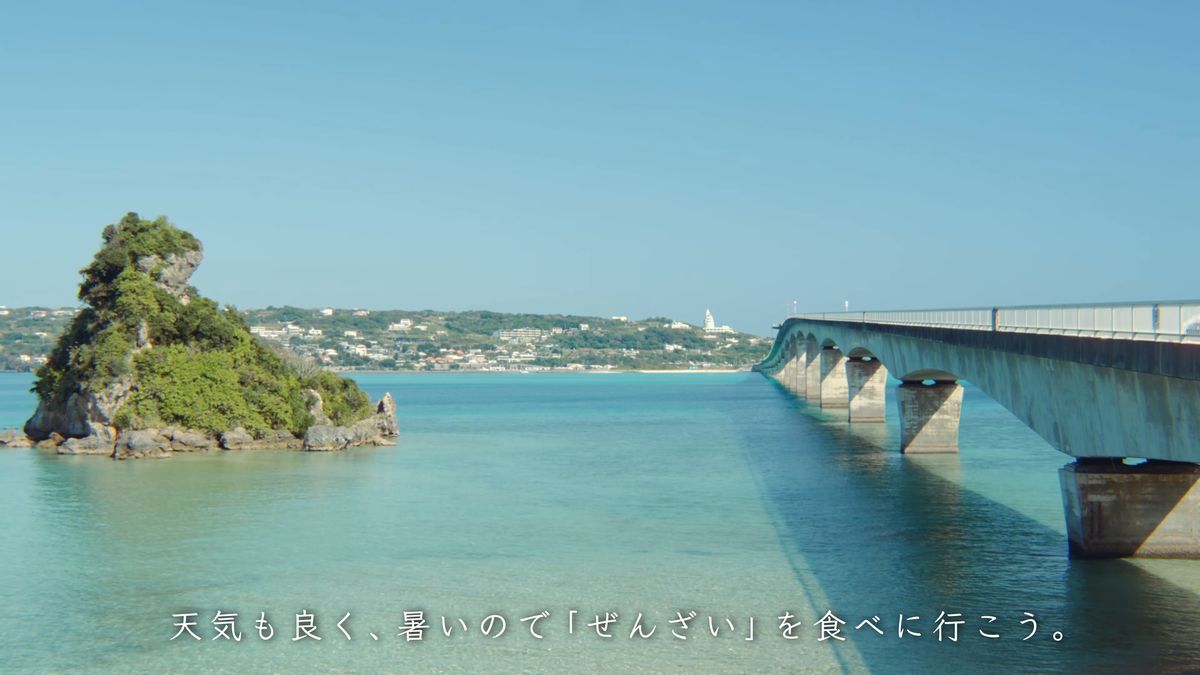
Kouri Bridge
Kouri, Nakijin, Kunigami District, Okinawa
A 1,960-meter bridge linking Yagaji Island in Nago with Kouri Island in Nakijin. It opened in 2005 and is free to cross. Before the bridge, the only way to Kouri was by ferry from Motobu.
Sources: gltjp.com
Okinawan zenzai
In Okinawa, zenzai is a cold dessert: shaved ice piled over sweetly simmered kintoki beans. Its roots are traced to amagashi, an Okinawan sweet of mung beans and barley simmered and served cool. After the war, mung beans gave way to kintoki beans because of supply conditions, but the method of simmering the beans soft in brown sugar was kept, and topping them with rice dumplings or shaved ice became the norm.
Sources: macaro-ni.jp
Gurukun, the prefectural fish
Gurukun is the Okinawan name for the double-lined fusilier, called takasago in standard Japanese. It was named Okinawa's prefectural fish on May 15, 1972. The fish is caught with large drive-in nets known as agiyaa, and was once used as bait for pole-and-line skipjack fishing. On the table it turns a vivid red, and deep-fried it can be eaten from head to tail.
Sources: pref.okinawa.jp
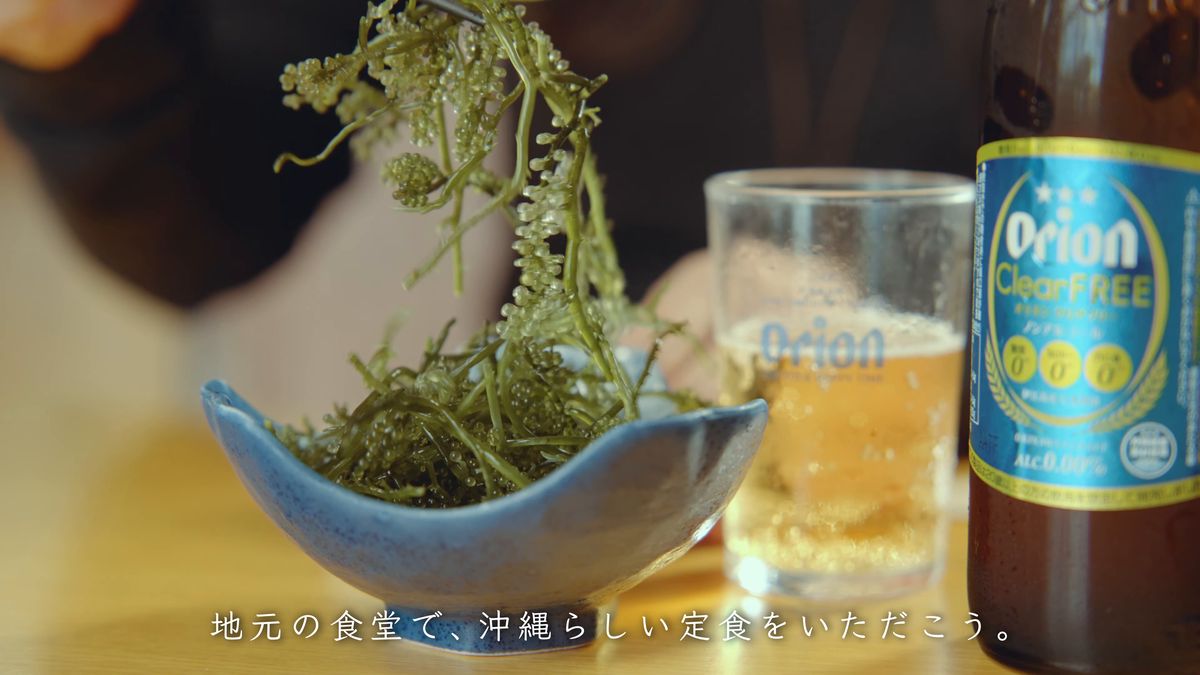
Sea grapes and mozuku
Sea grapes (umibudo) rank third among Okinawa's aquaculture products in both volume and value. Mozuku seaweed has been farmed in the prefecture at 13,000 to 21,000 tons a year since fiscal 1999, and more than 95 percent of Japan's mozuku comes from Okinawa. Both are grown in the coral-reef waters around the islands.
Sources: pref.okinawa.jp pref.okinawa.jp
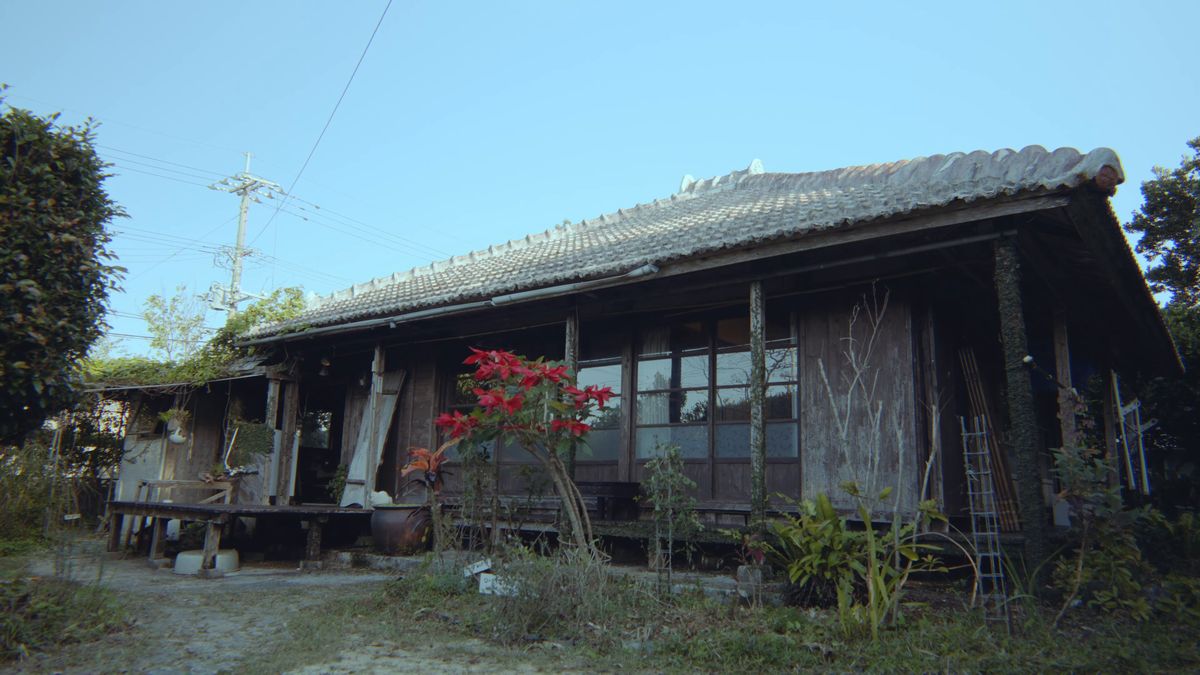
An old house inn with resident cats
This time I borrowed a traditionally built old house with an outdoor bath in the garden. Cats have made their home among the fruit trees and herbs, and a rocket stove and iron pot made it possible to roast sweet potatoes outdoors.
PHOTO ALBUMPhoto album67Open all photographsClose the photo album
Select a photograph to explore the journey one frame at a time.