A TRAVEL ESSAY
Matsuyama, Ehime
Living in an Old House by the Seto Inland Sea
Shimanami Kaido:sea-bream riceand a salty breeze
A day on the Setouchi shore, eating my way through Ehime's specialties.
Read the journey
ABOUT THIS JOURNEY
I spent a day in an old house in Asanamihara, a fishing village in Ehime facing the Seto Inland Sea. I wrapped a mackerel sandwich made with Setouchi lemon in a bamboo sheath and ate breakfast on a beach a minute's walk from the inn. At a lookout over the Shimanami Kaido, I confirmed with my own eyes that mandarin juice really does come out of a tap. Chuka soba at a town eatery, Botchan dango in the tatami room, then jako-ten and wagyu on a charcoal grill by the sea. At night I compared two kinds of tai-meshi, sea-bream rice made two different ways in the same prefecture.
A little more about the food and the land01TRAVEL JOURNAL
Morning in an old house by the sea
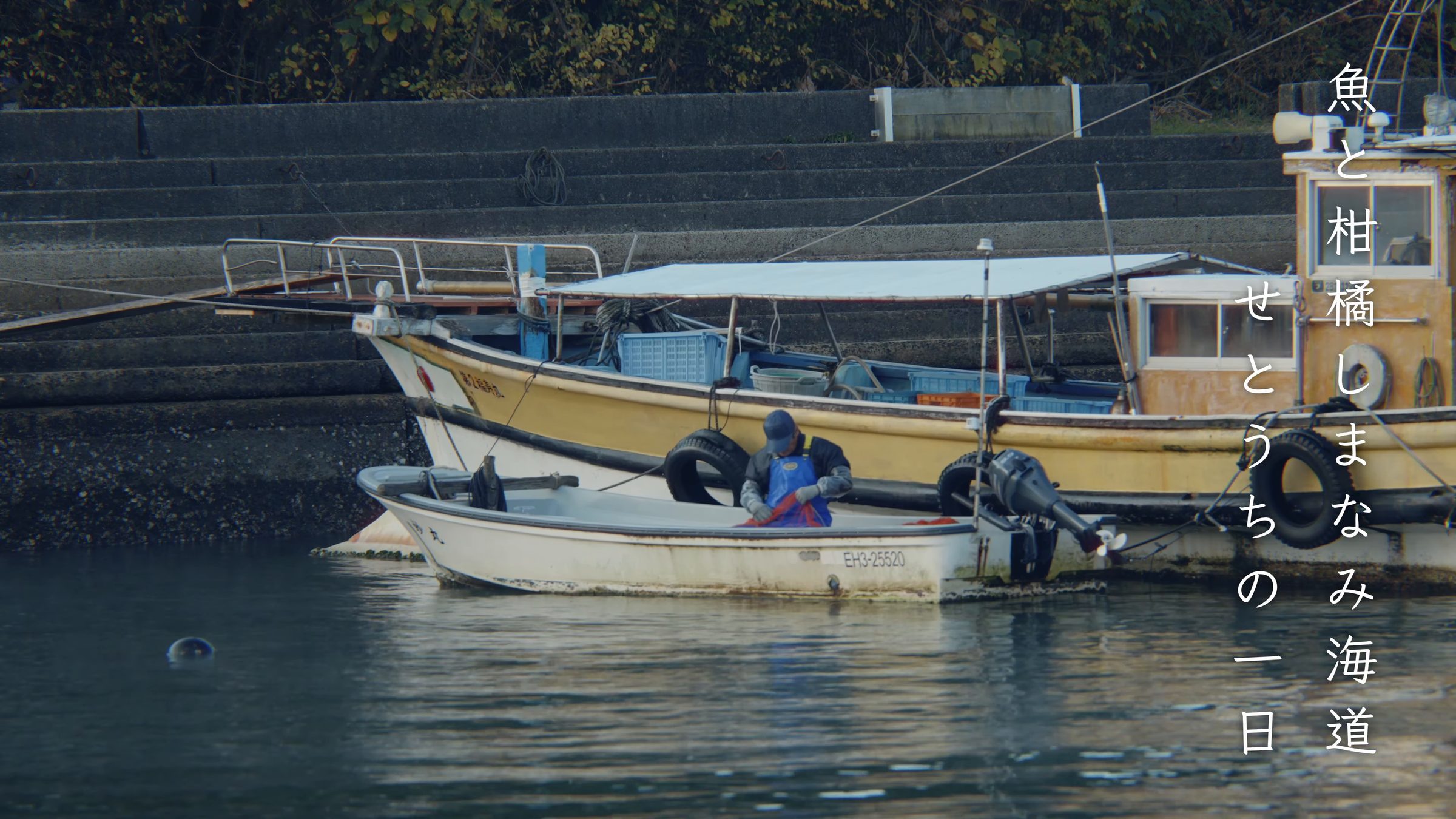
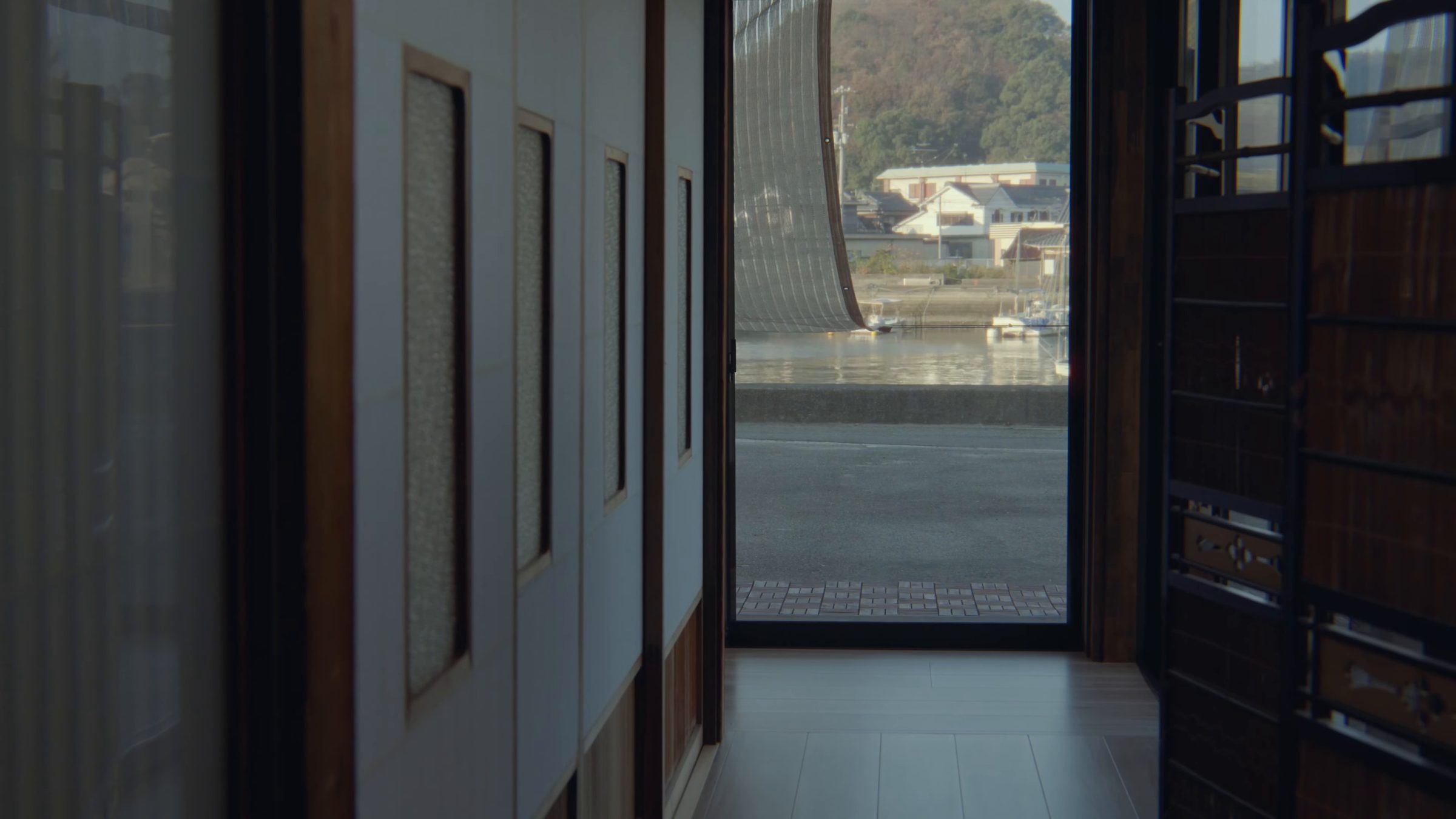
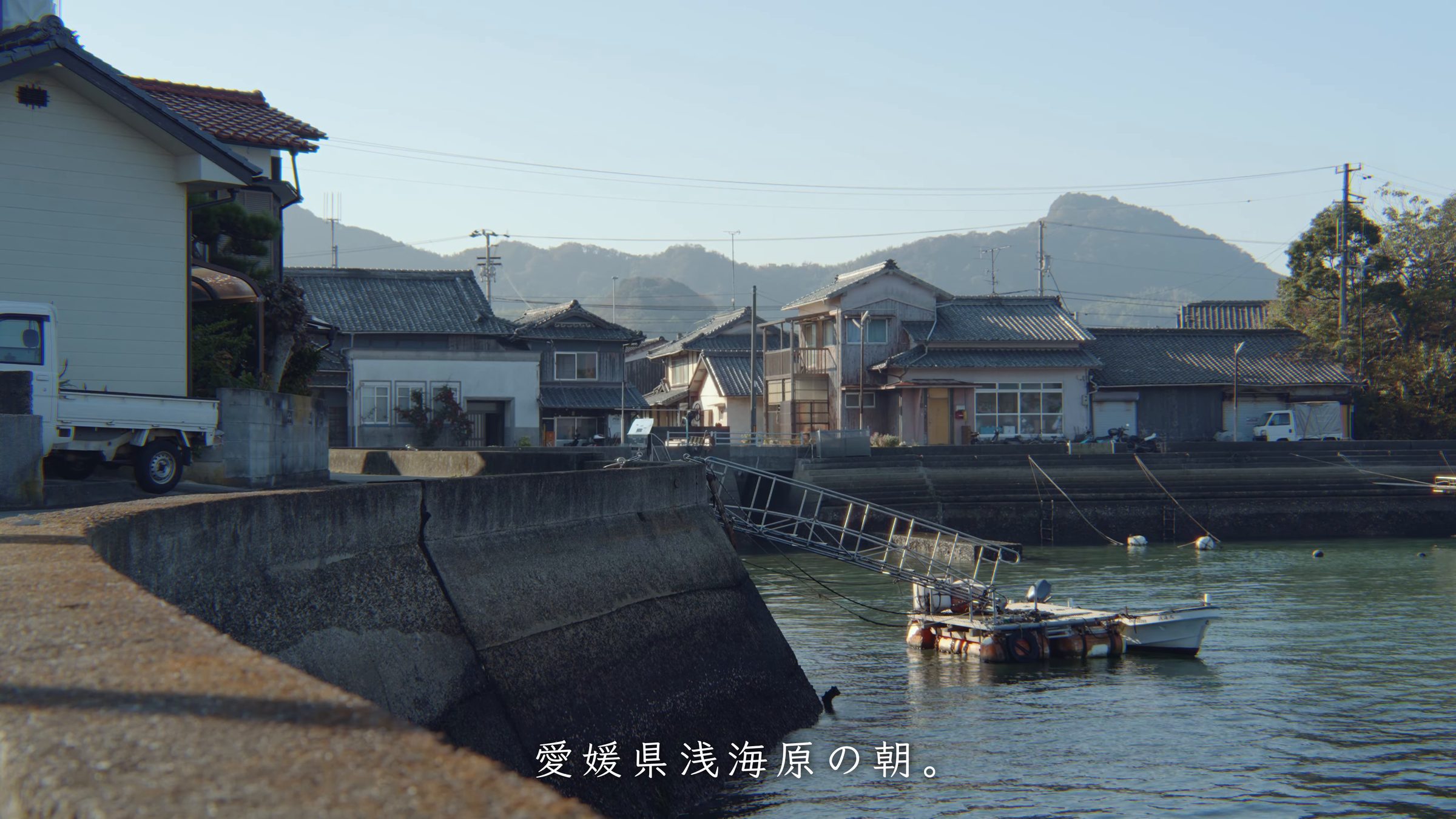
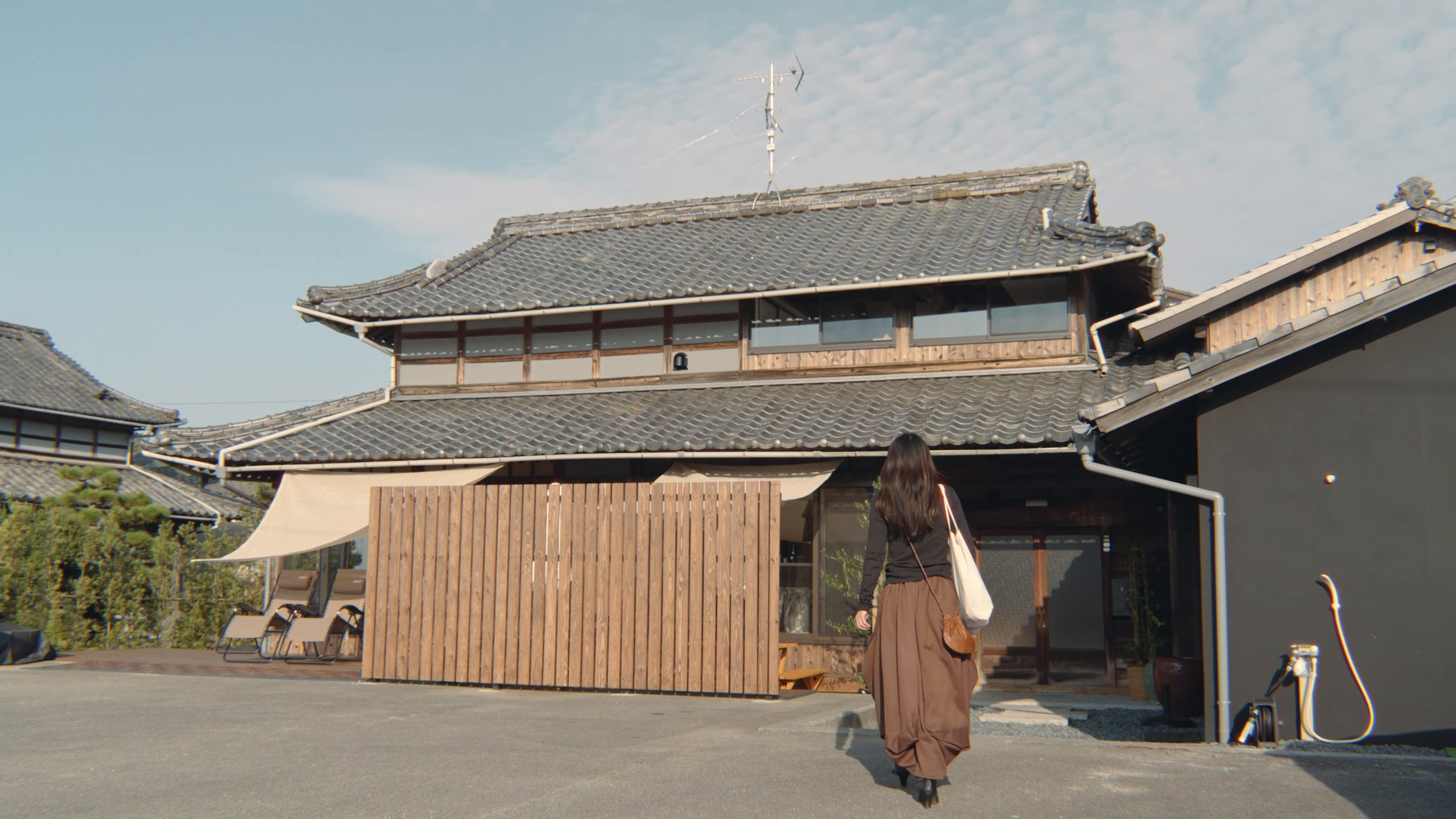
I woke up in a fishing village in Ehime, on the Seto Inland Sea. The house I had borrowed was an old one, stylishly renovated, with a white awning stretched under the eaves and fishing boats moored in the little harbor right in front.
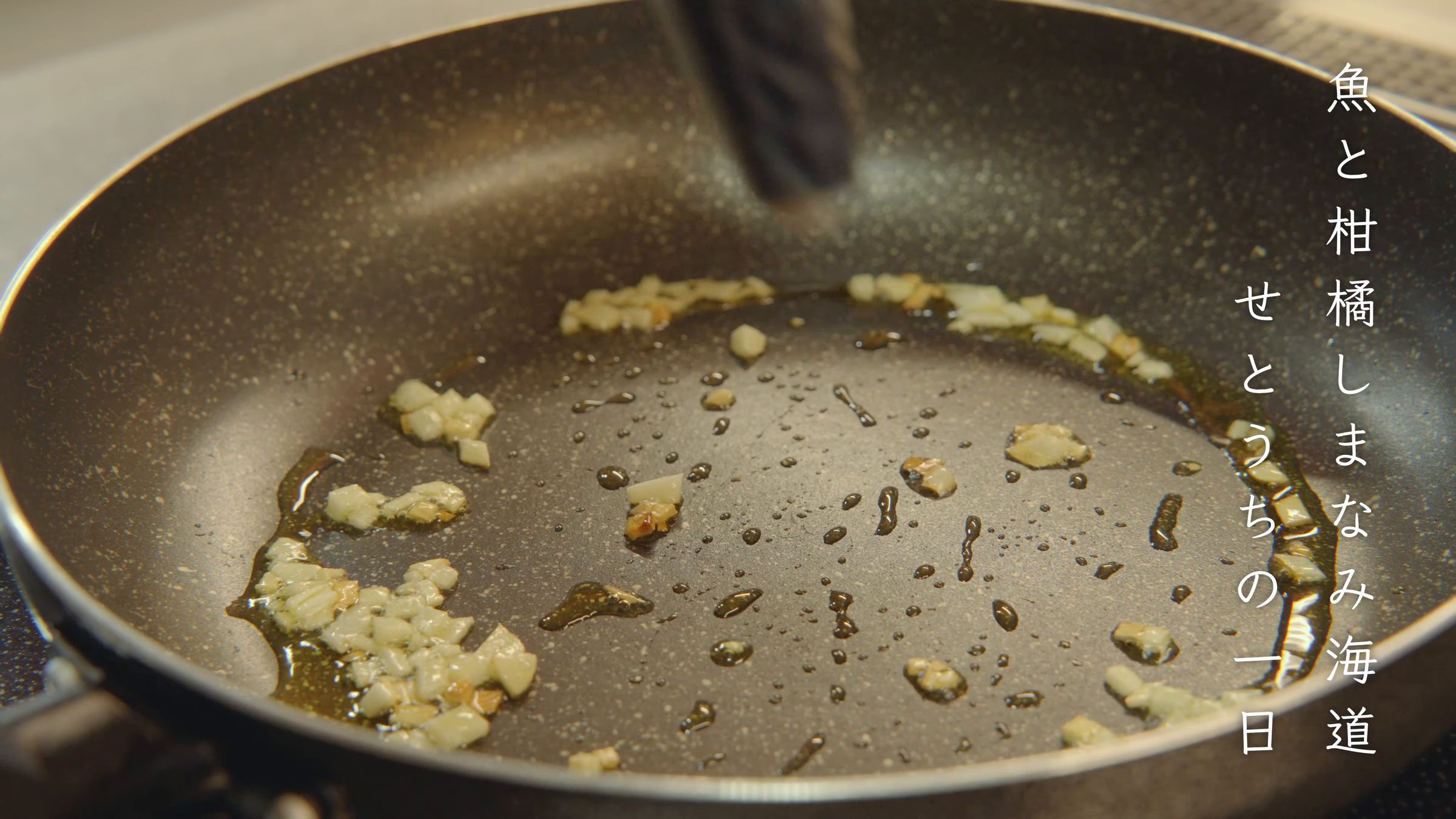
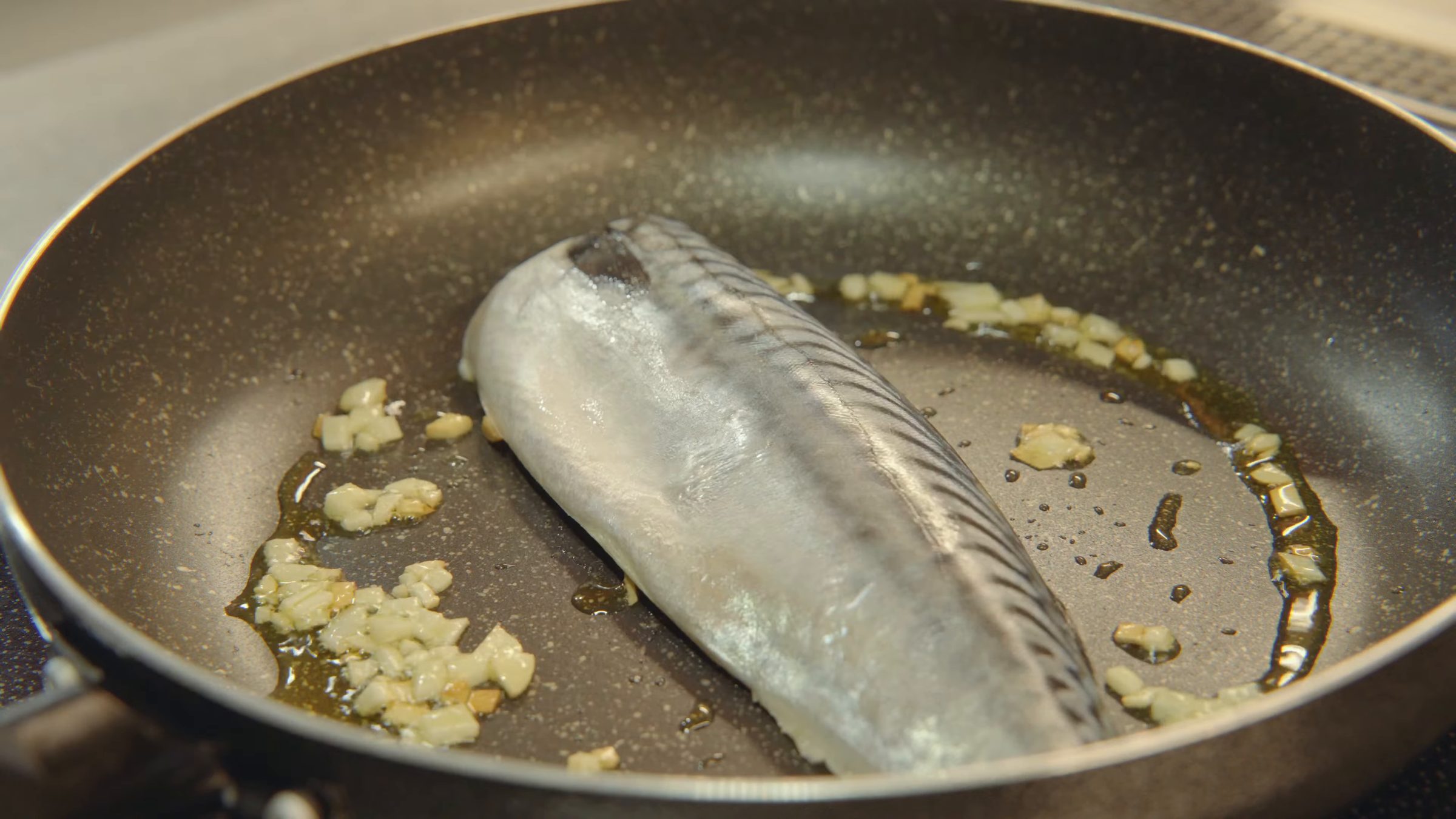
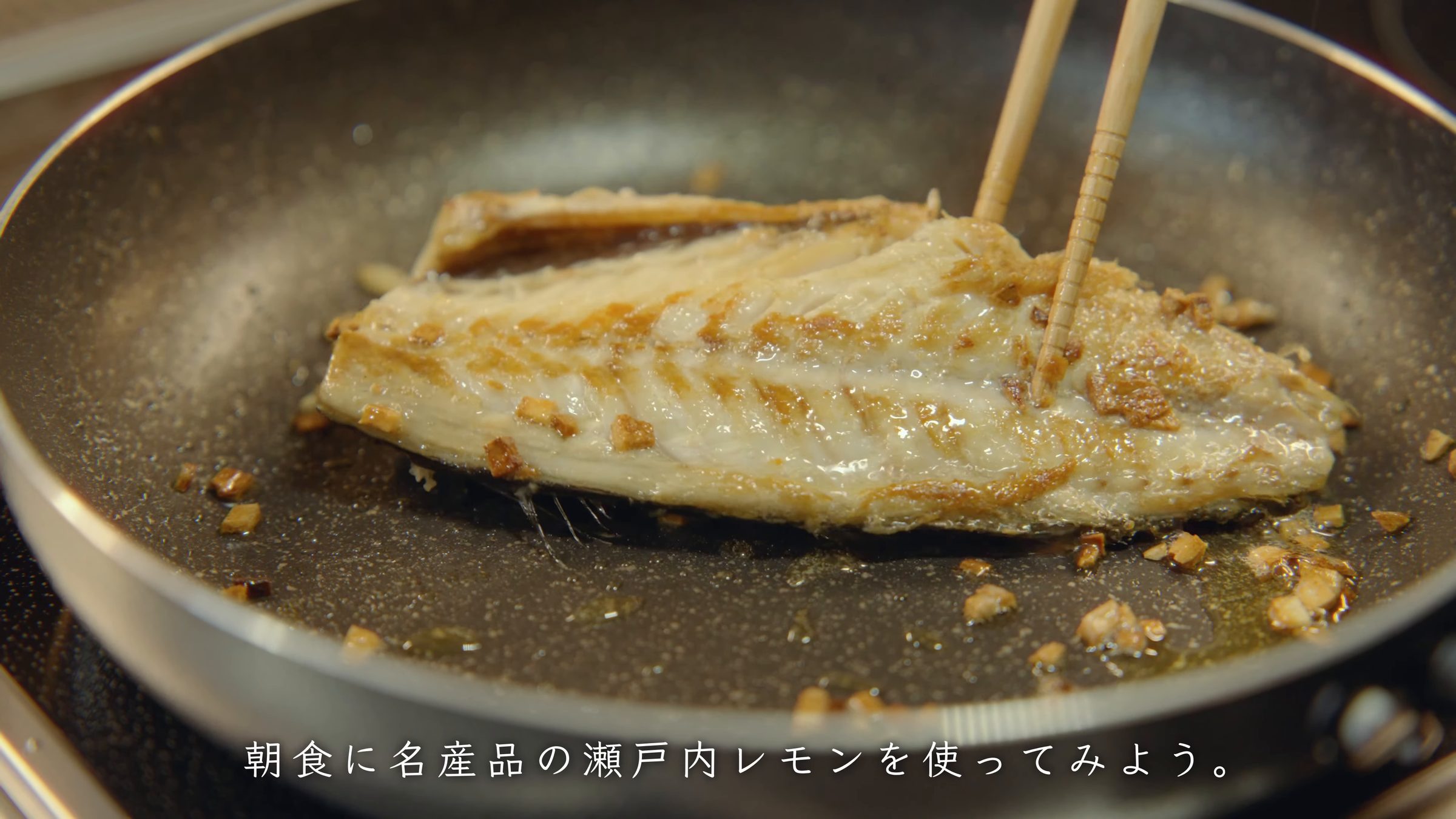
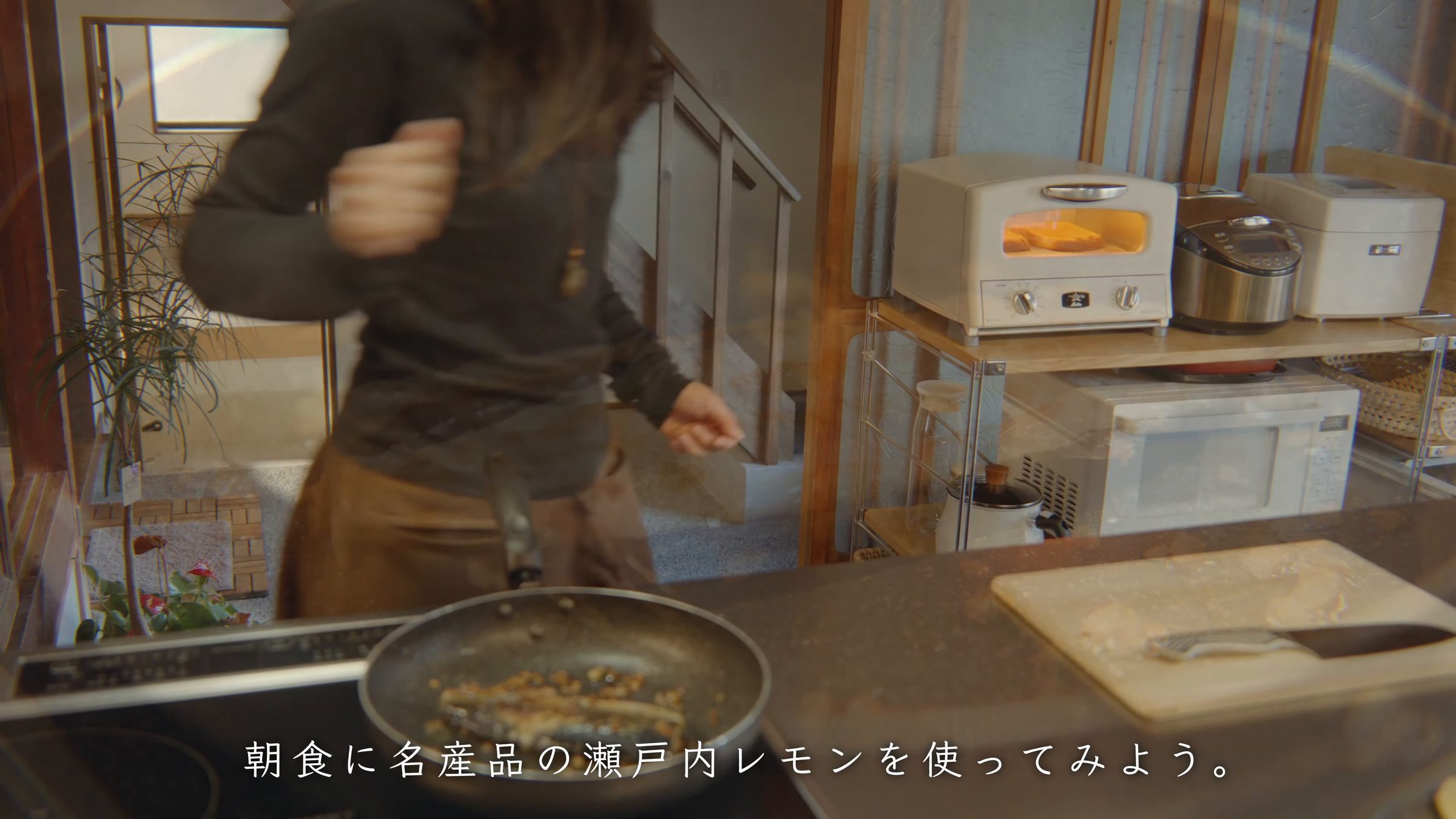
For breakfast, I decided to use Setouchi lemon, a specialty of the region. First some oil in the pan and chopped garlic, fried until fragrant. Then a fillet of mackerel went in, skin side down, until it was nicely browned. Through the doorway at the end of the hall, the morning harbor was in view.
Watch this scene on YouTube0:22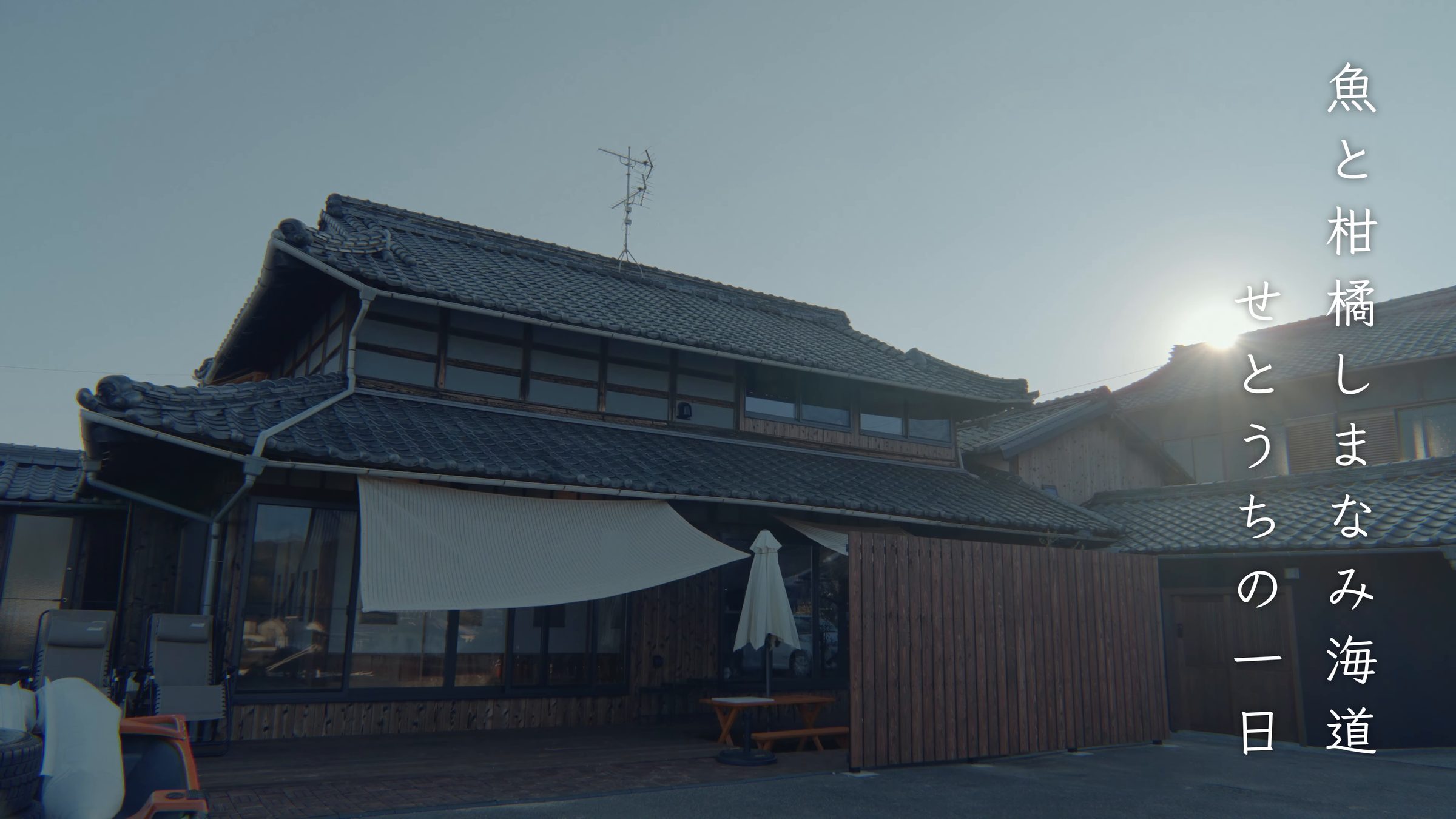
02TRAVEL JOURNAL
A mackerel sandwich with Setouchi lemon
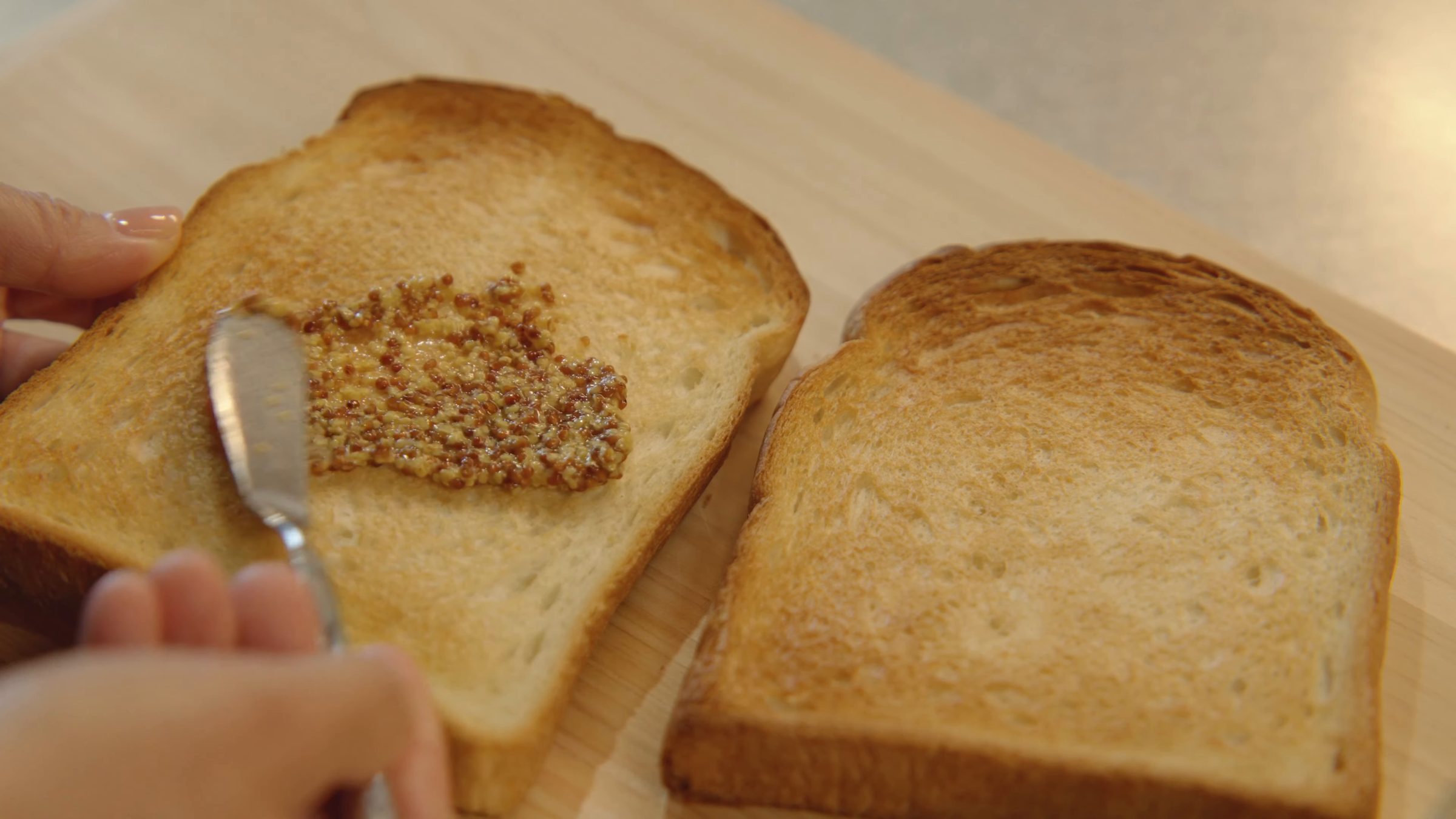
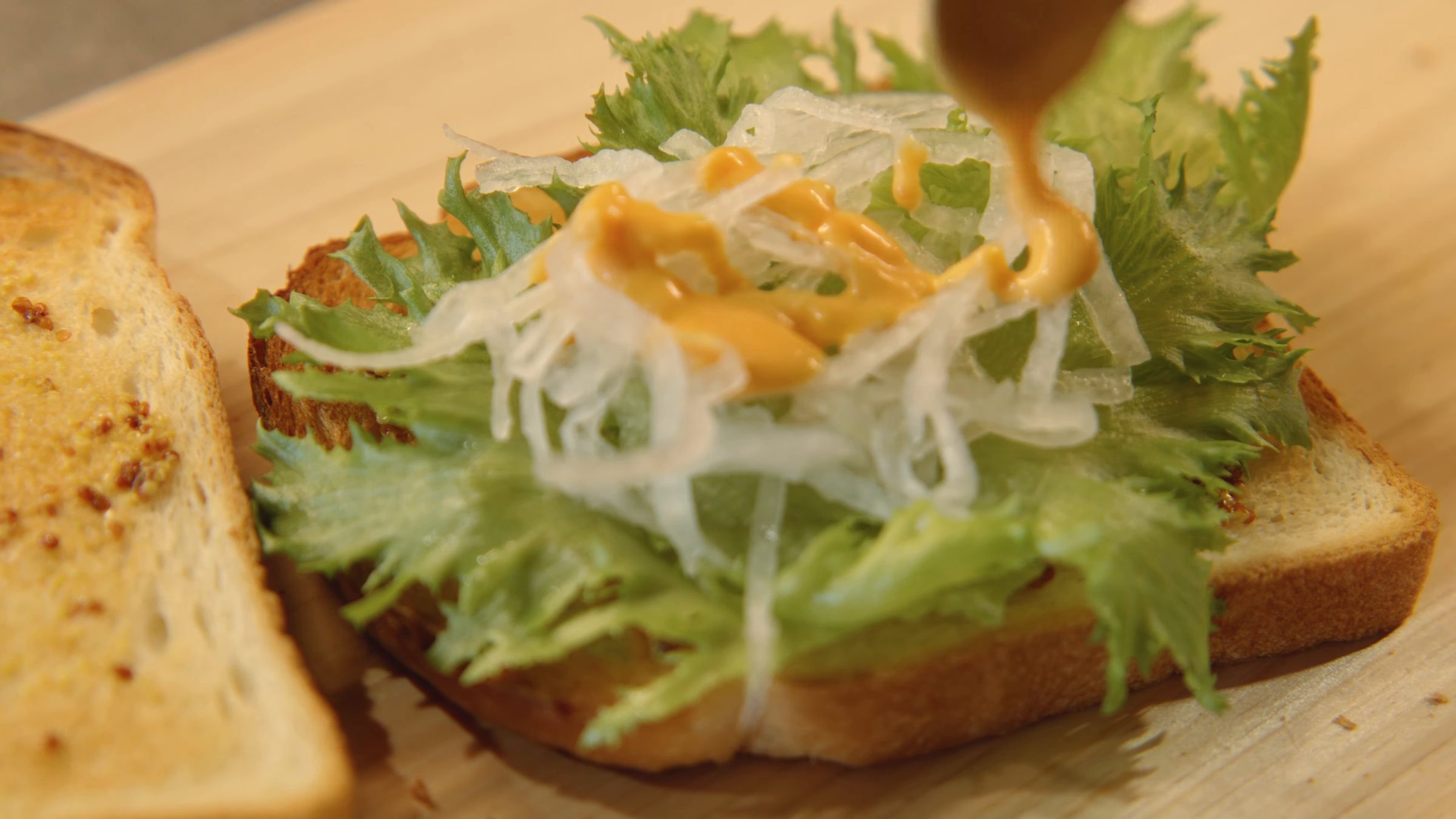
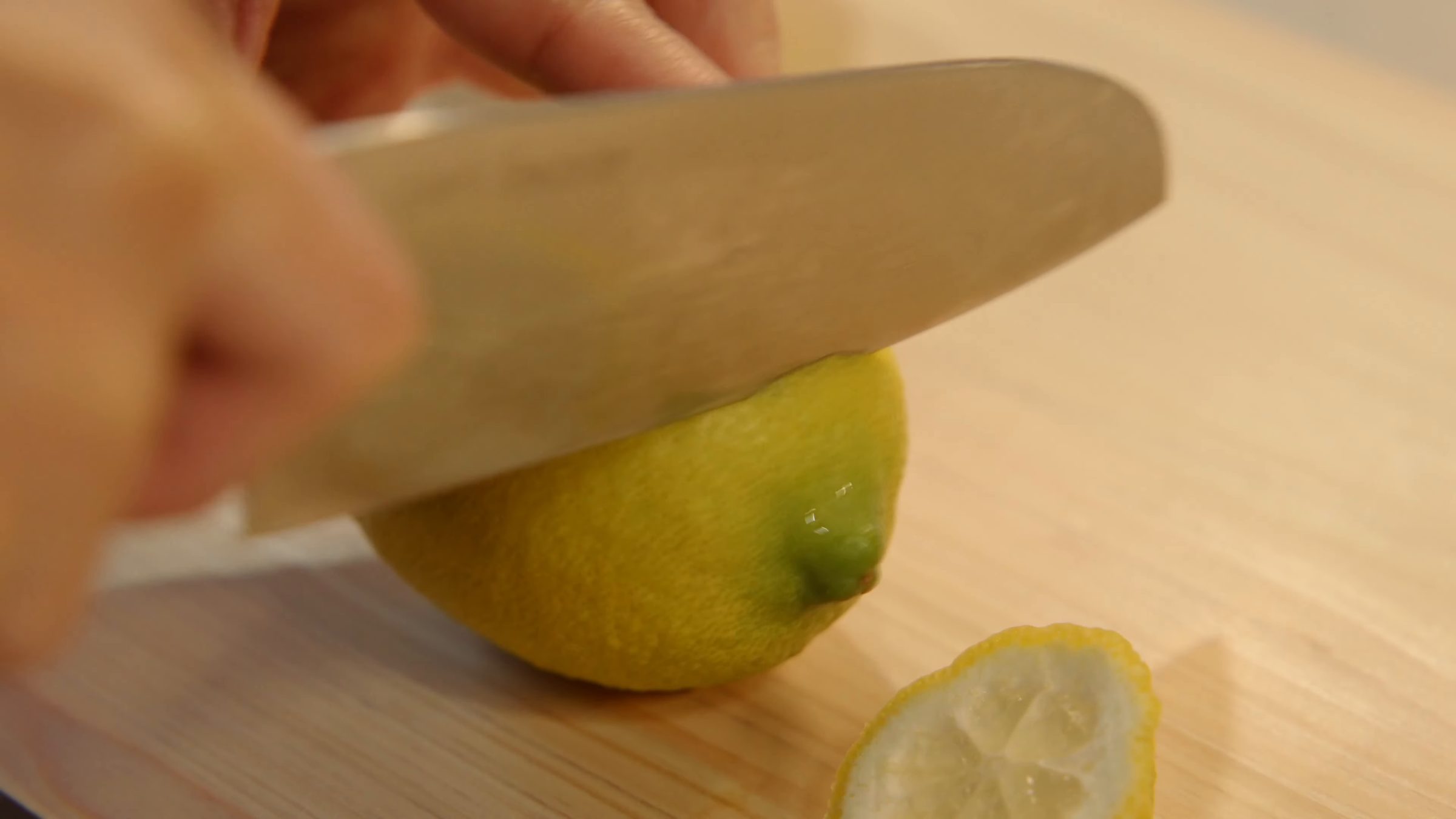
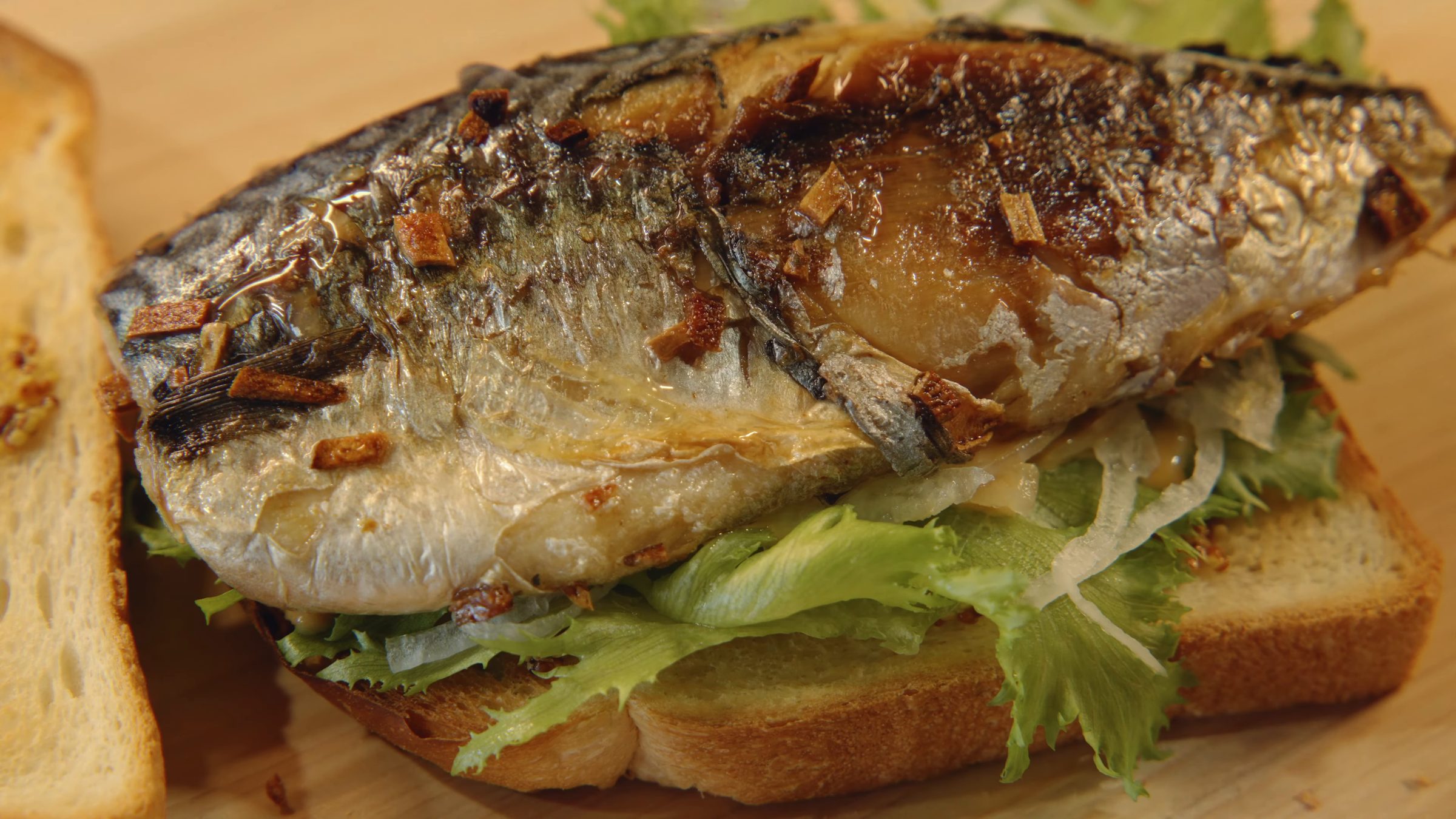
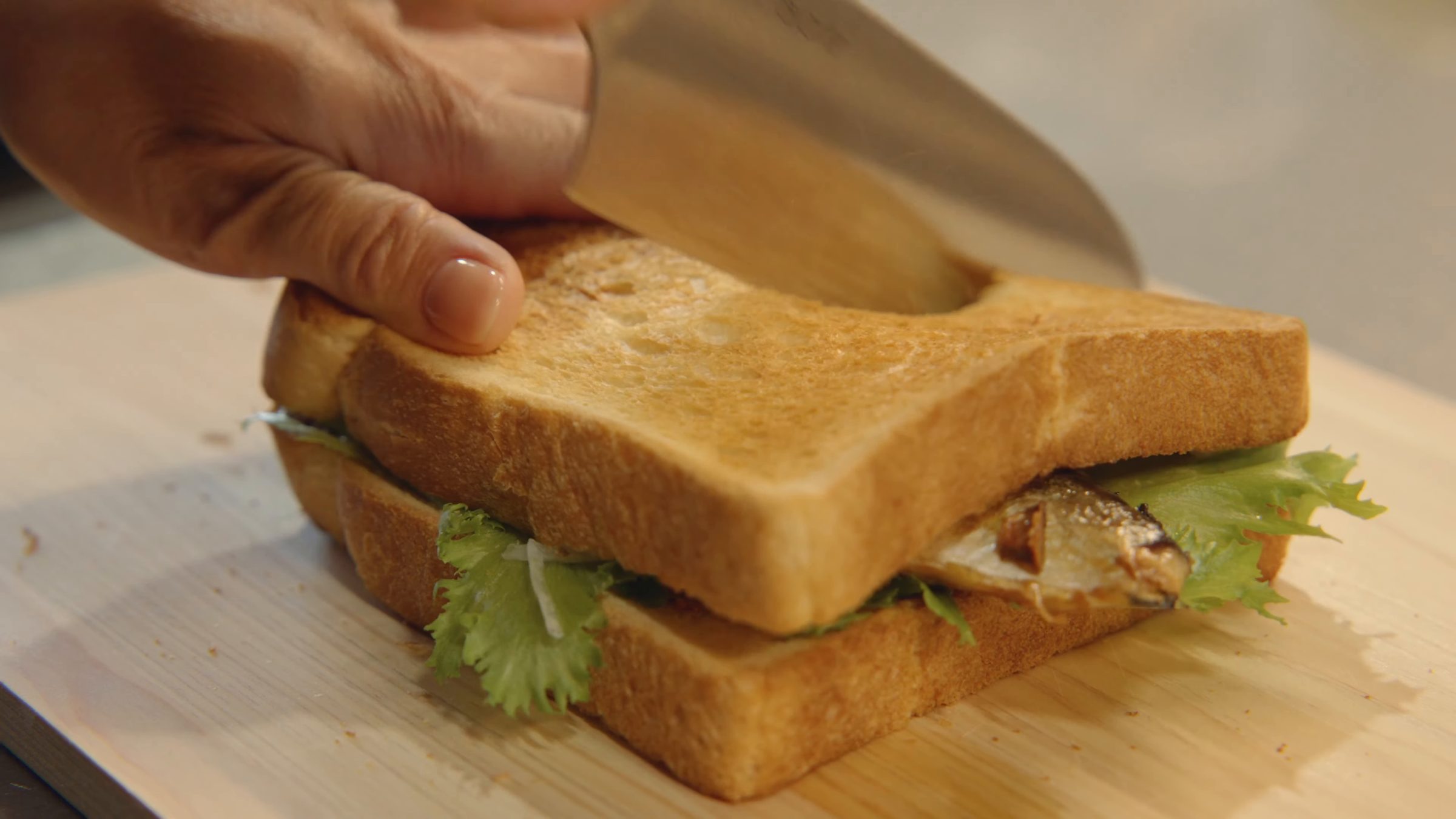
Two slices of bread went into the toaster. I spread grainy mustard on one, piled on leafy greens and shredded onion, and drizzled on some sauce. I cut a Setouchi lemon in half, laid the hot mackerel on top, and closed the sandwich with the other slice.
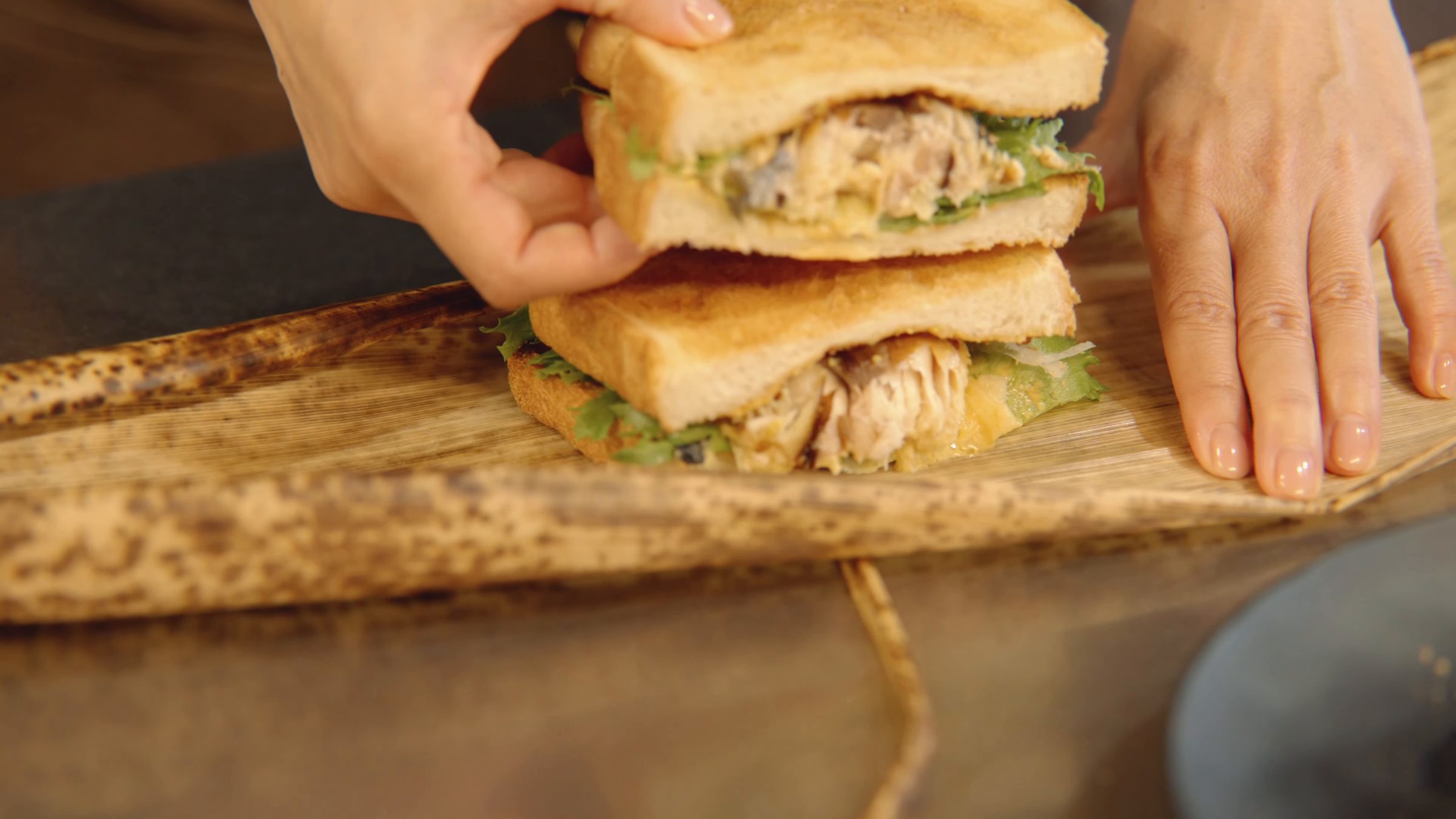
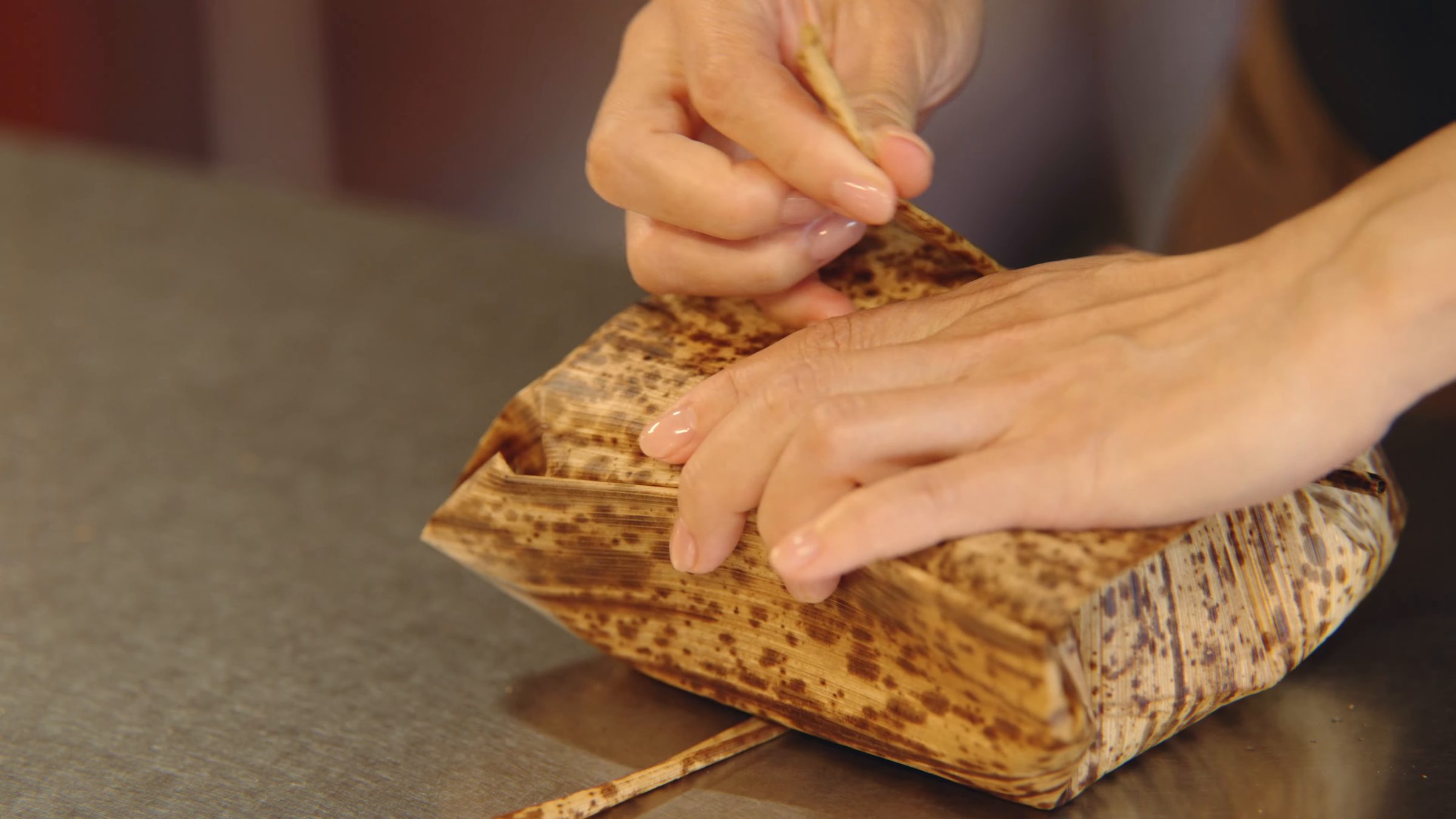
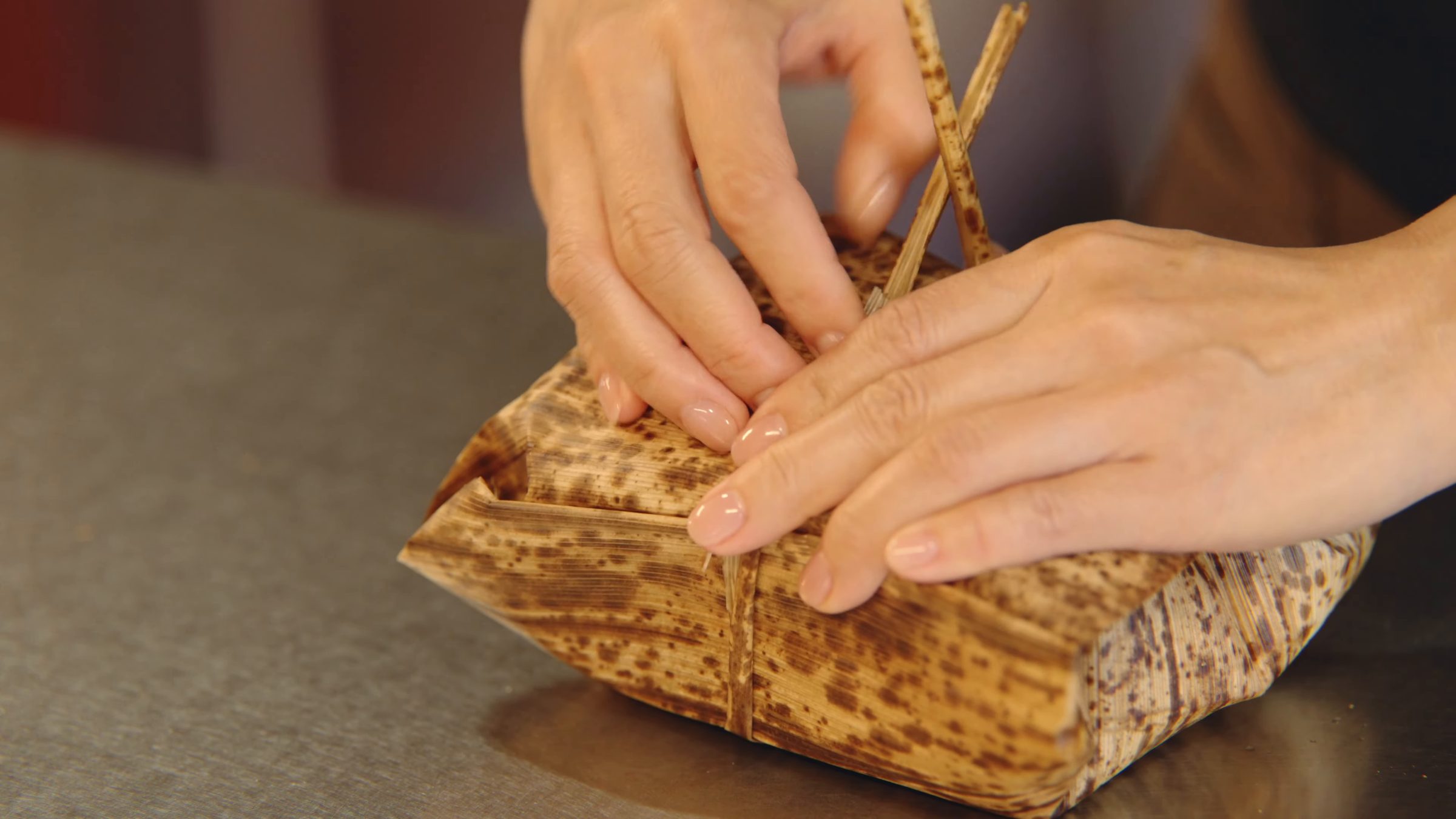
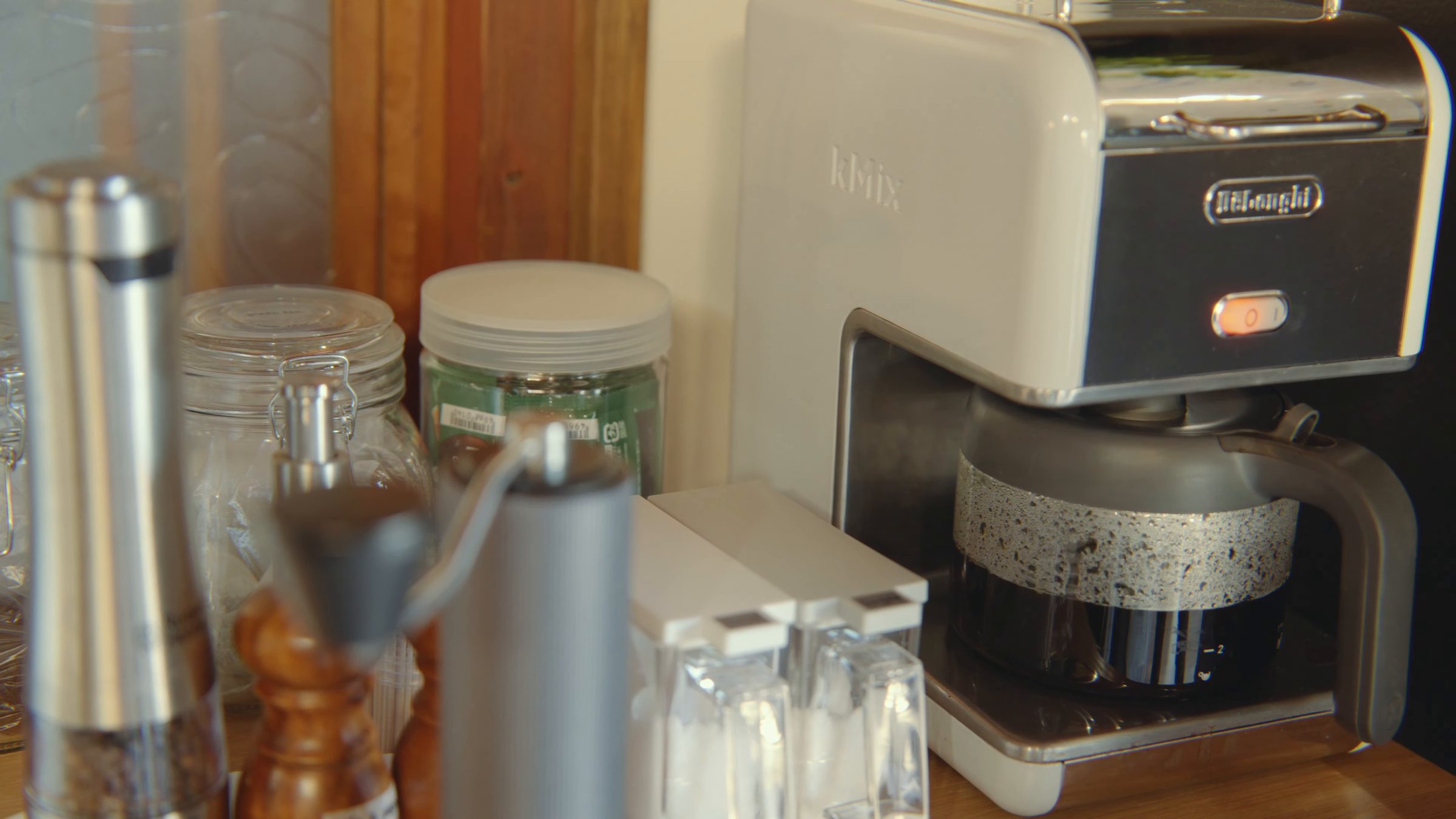
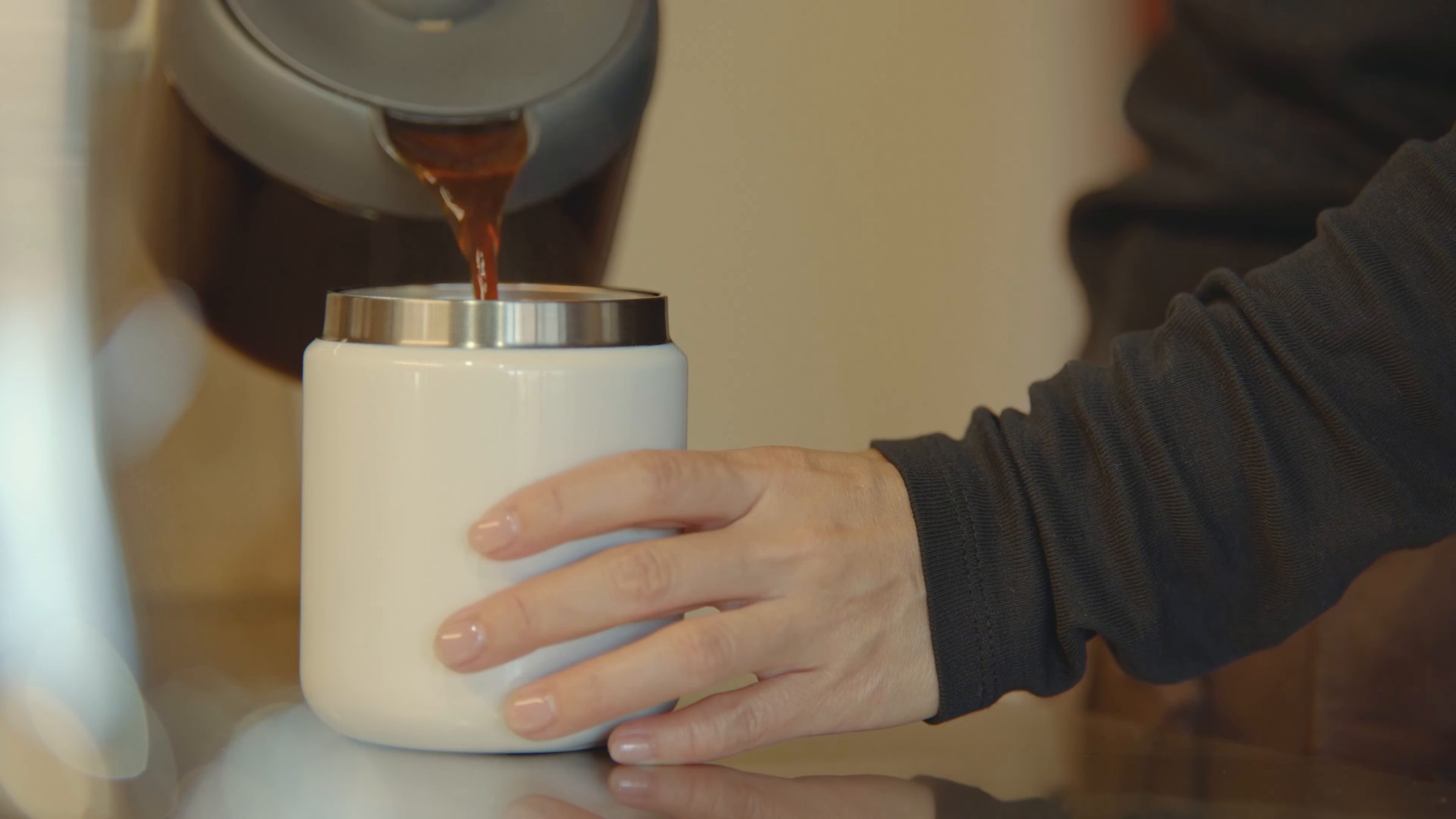
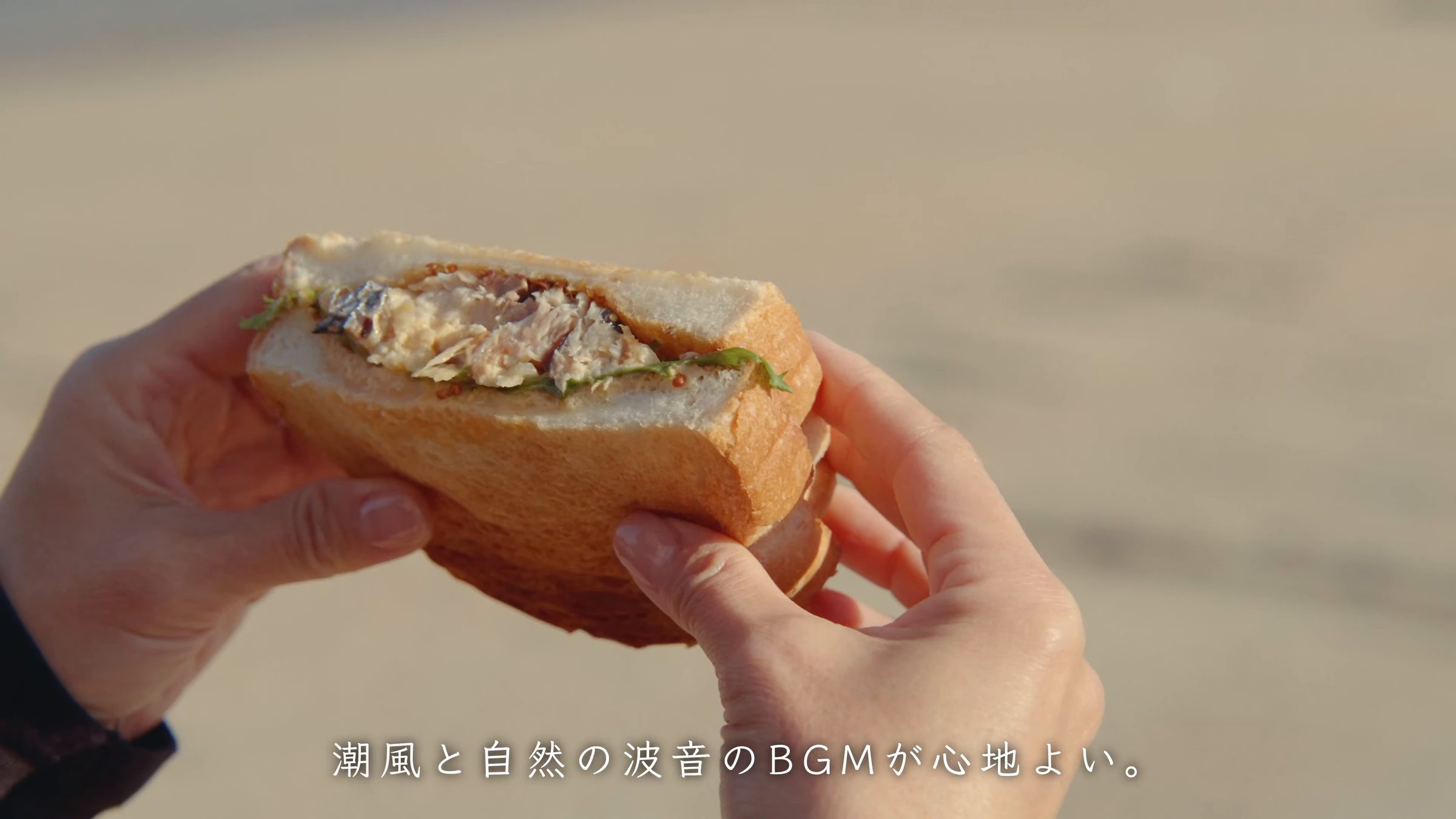
Cut in two, it showed the mackerel in its cross-section. I set it on a bamboo sheath, folded it up, and tied it with string. Coffee from the coffee maker went into a white flask, and my Setouchi picnic set was ready.
Watch this scene on YouTube0:37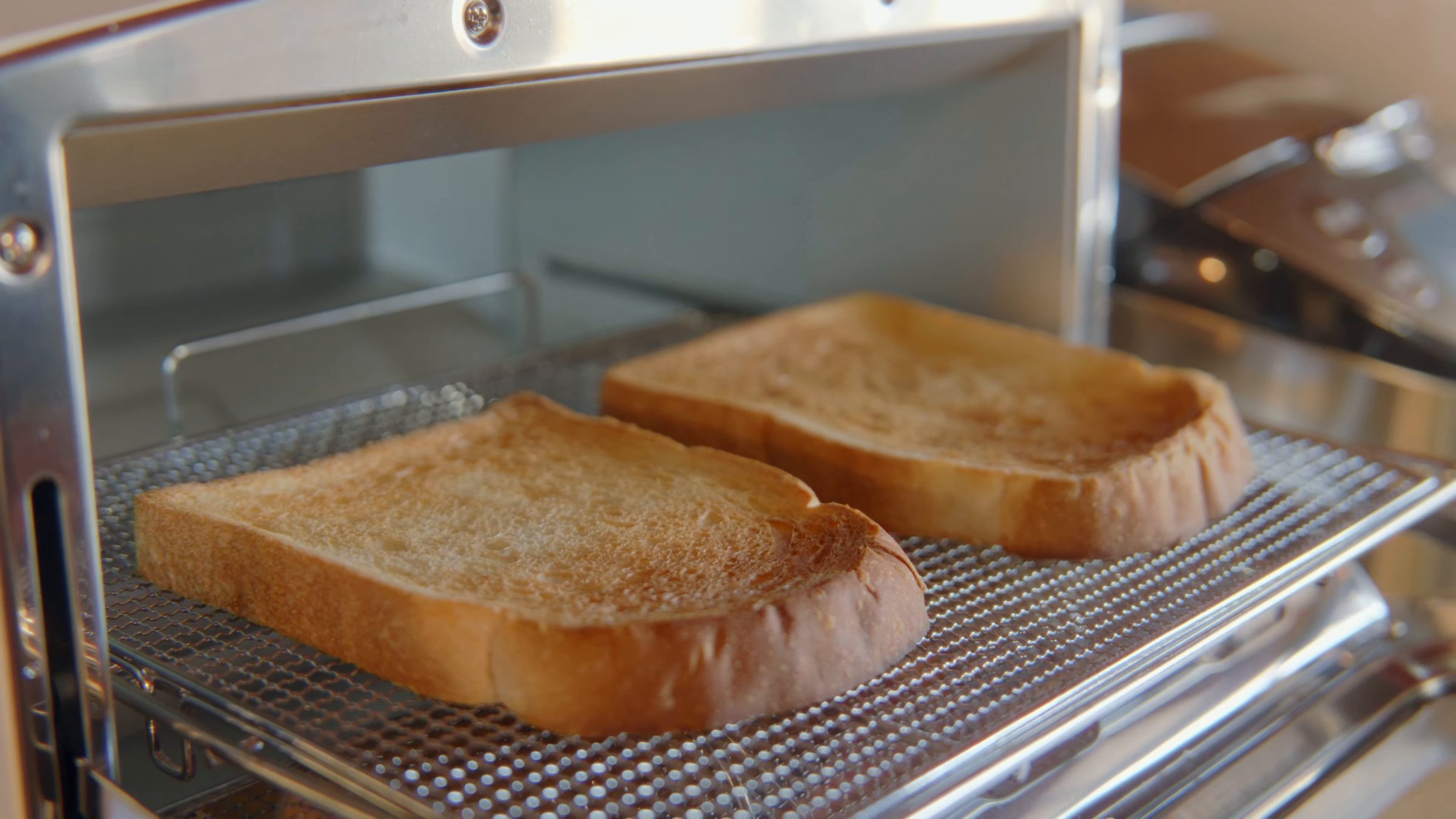
03TRAVEL JOURNAL
A beach a minute from the inn
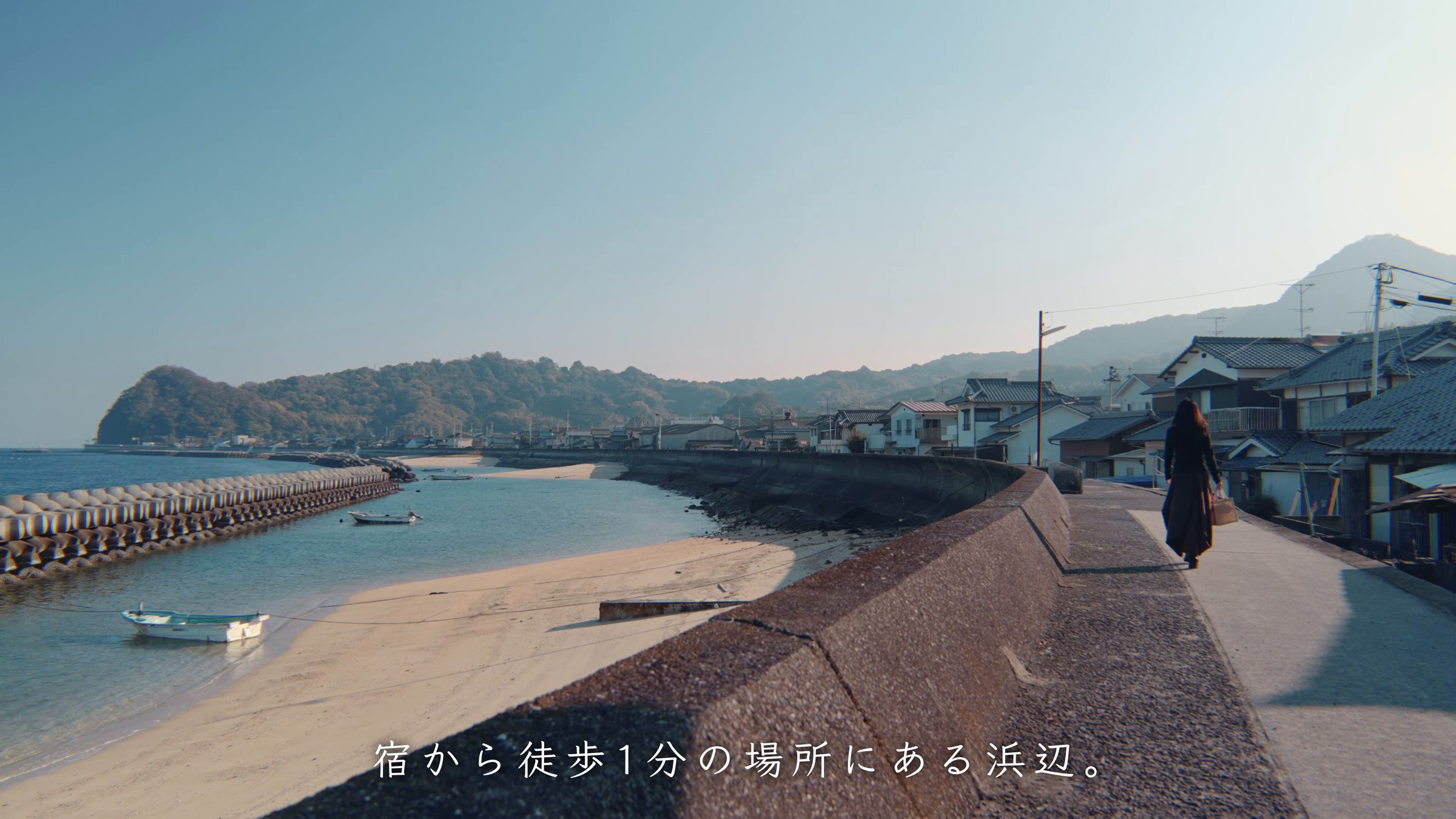
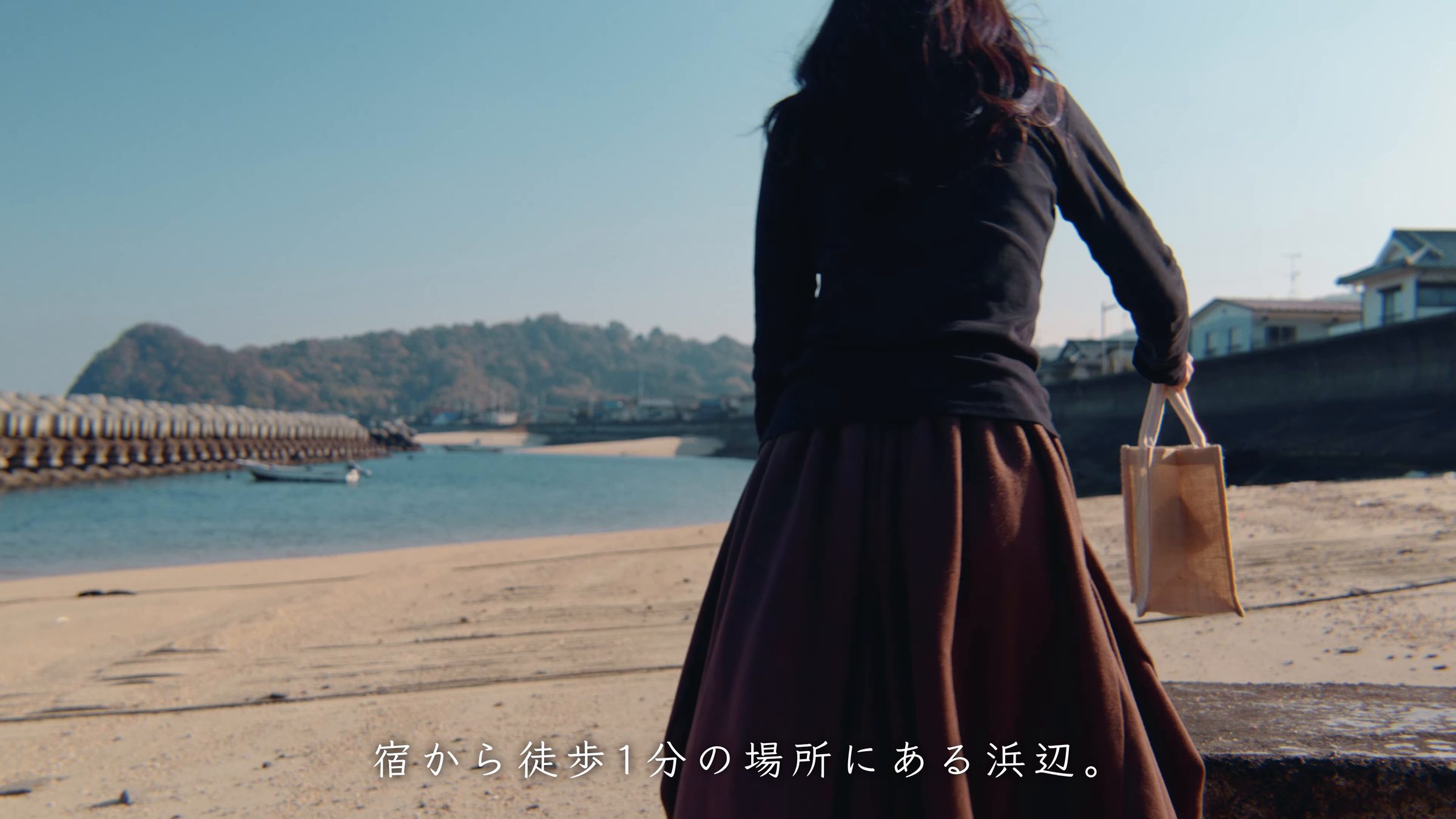
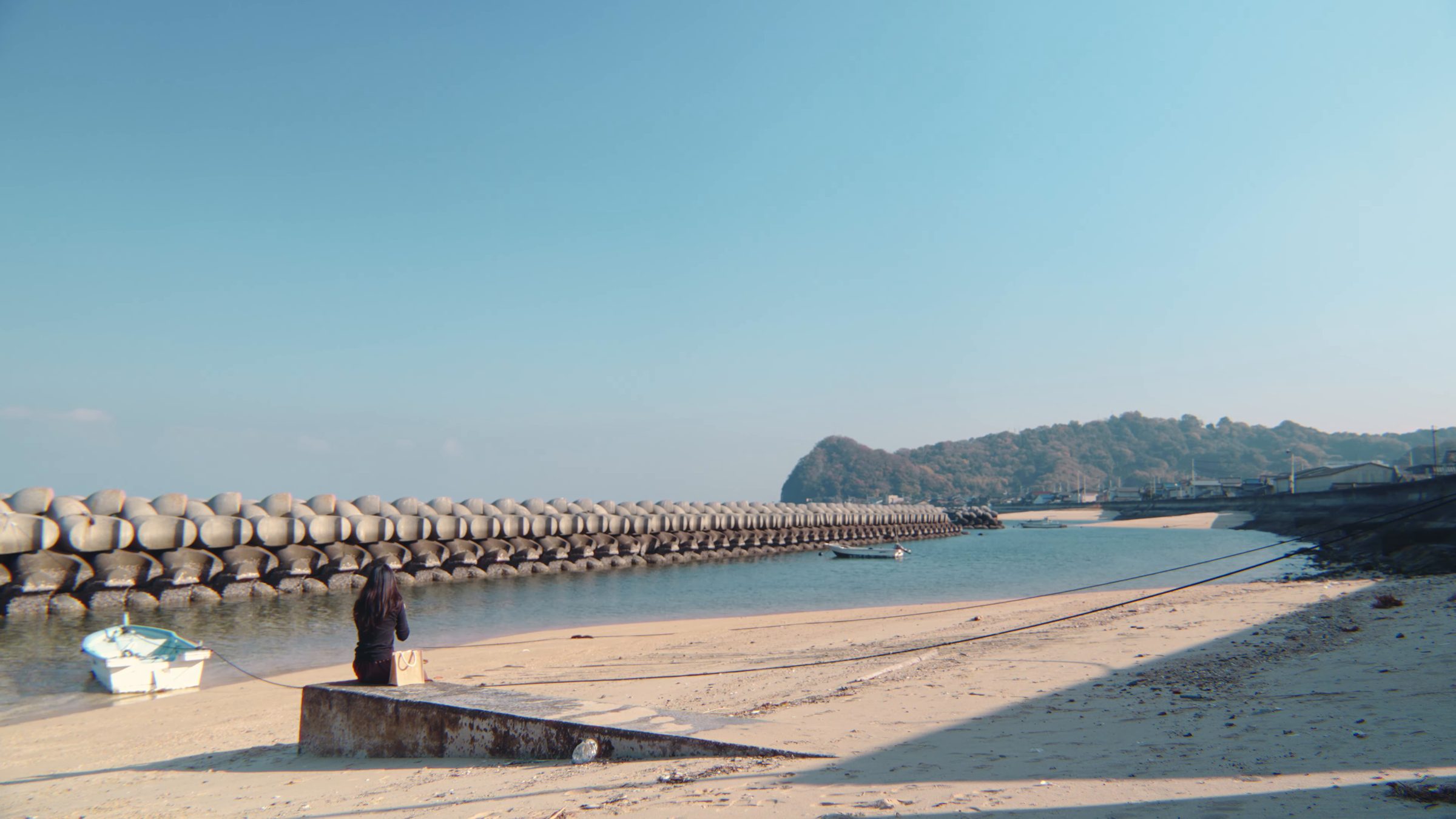
I slid open the frosted-glass door and stepped out. Morning in Asanamihara, Ehime. Fishing boats floated in the harbor in front of the houses, and following the path along the seawall, I reached the beach a minute's walk from the inn.
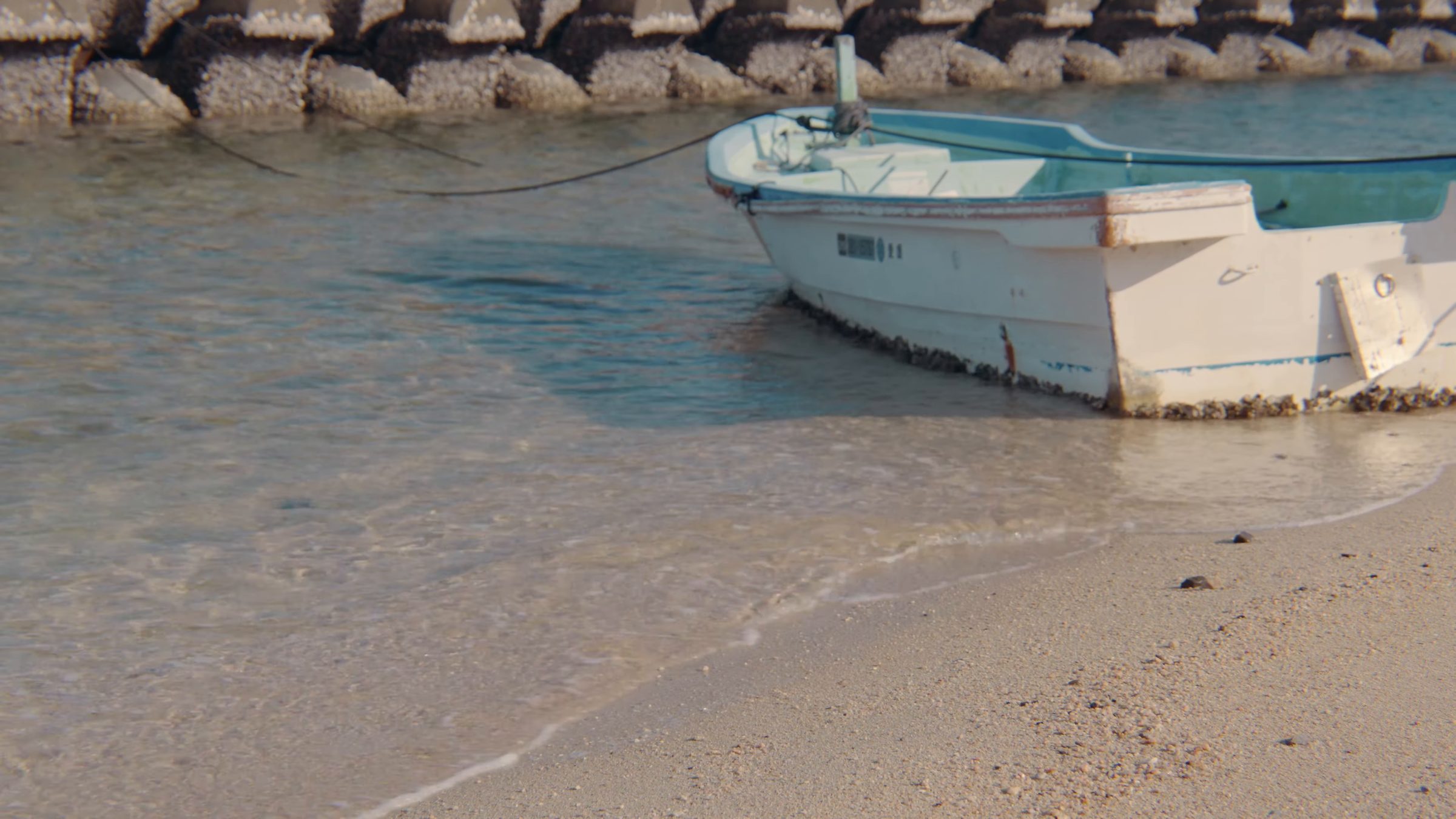
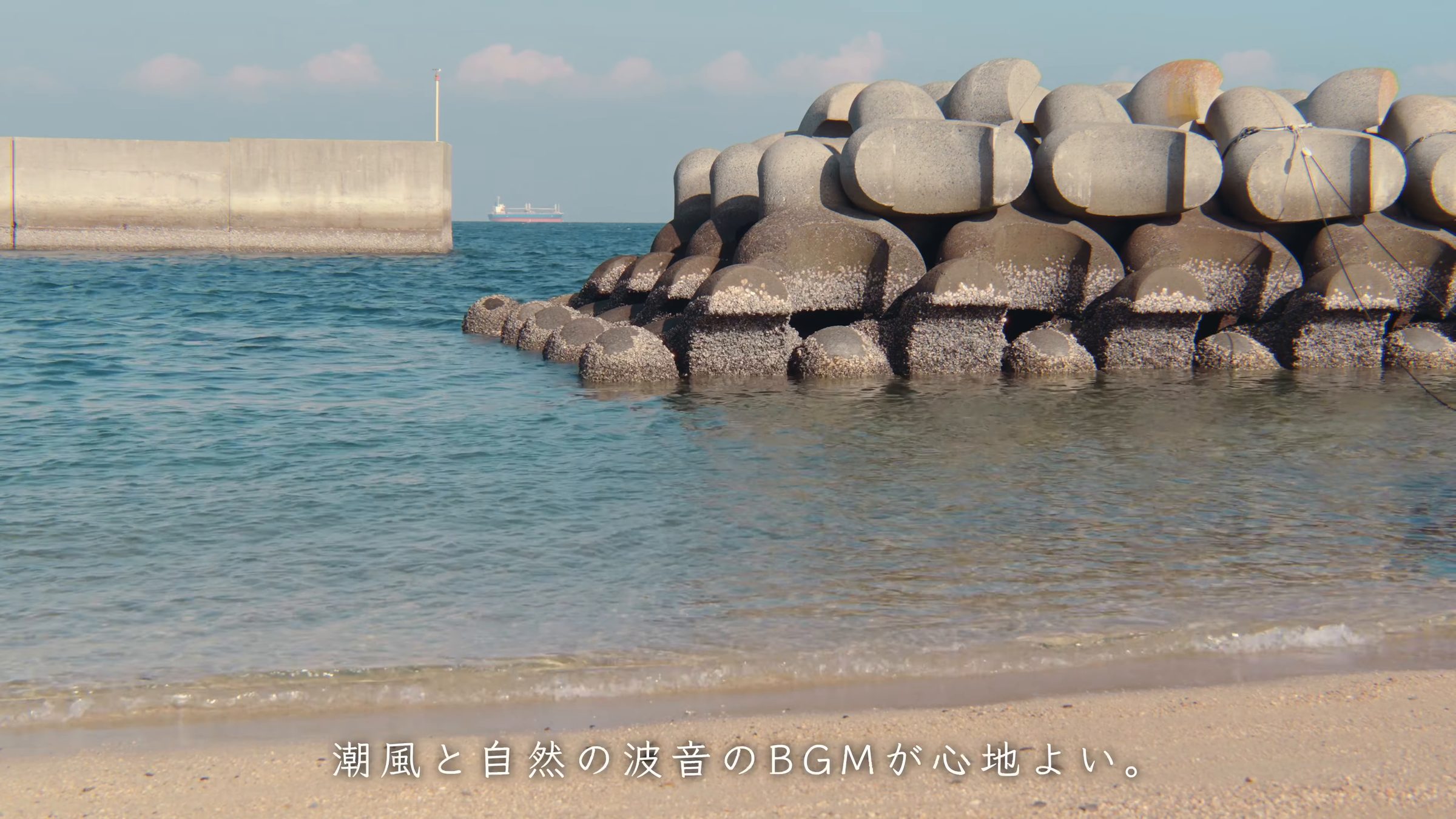
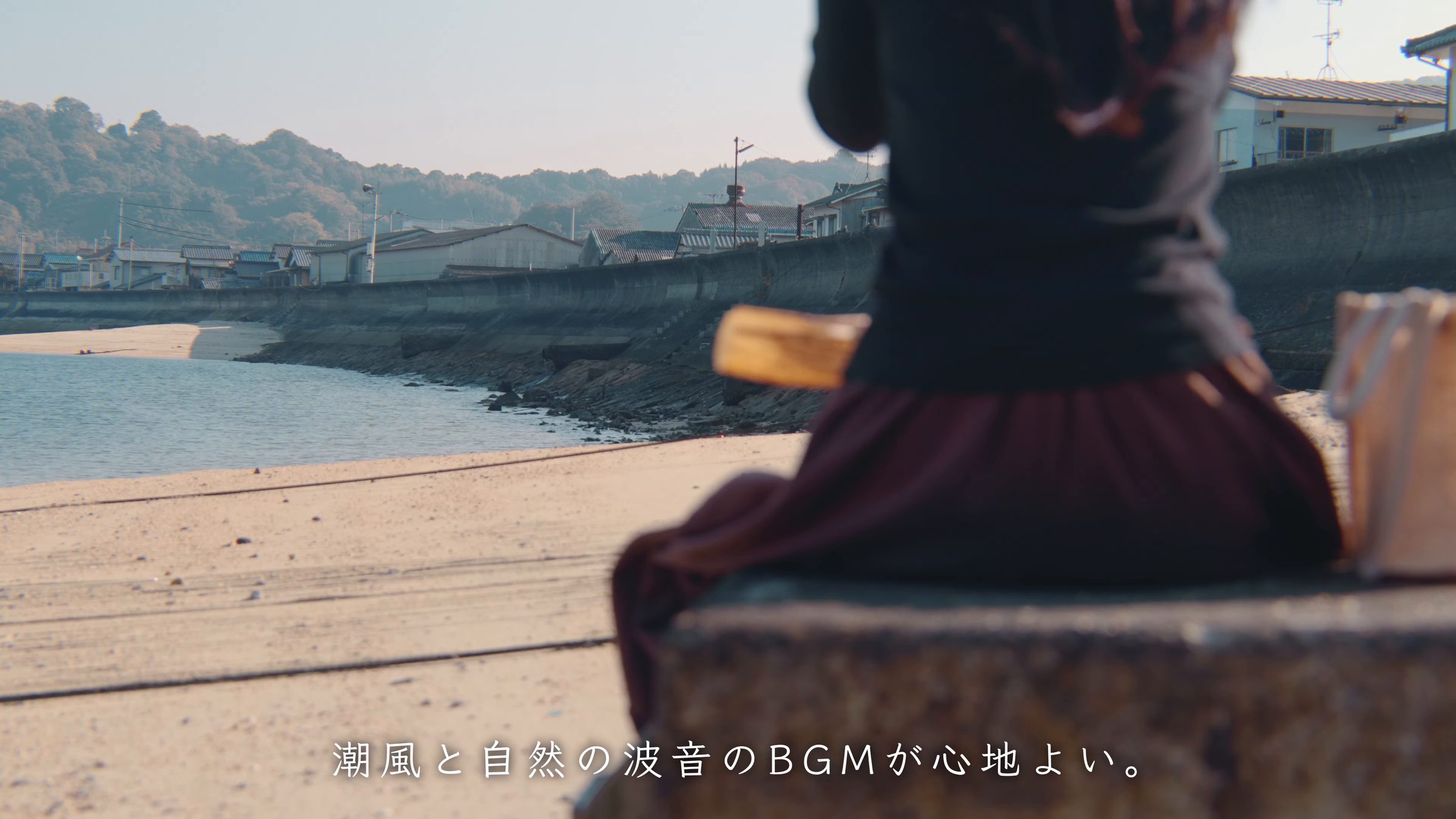
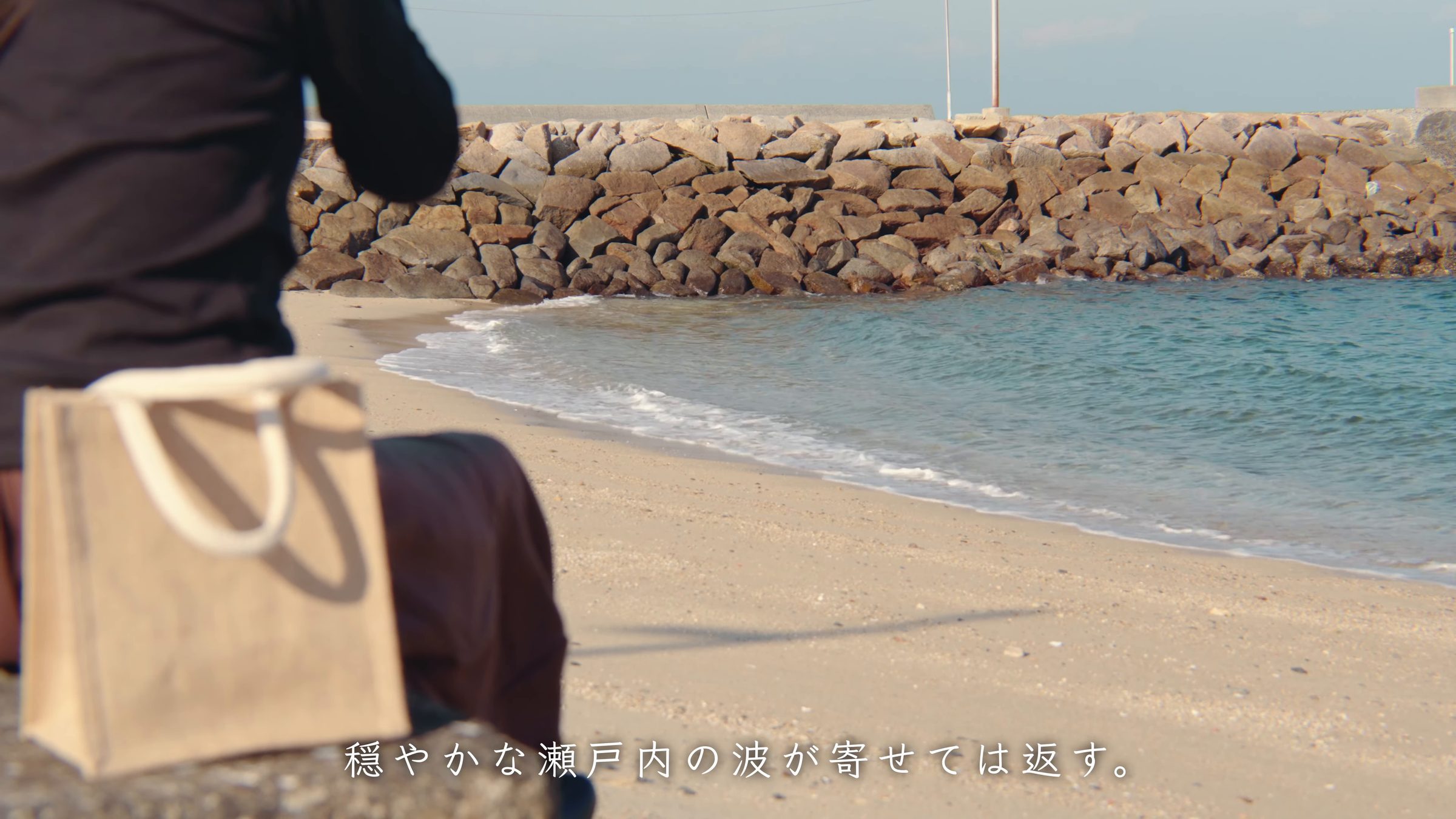
A white skiff had been pulled up on the sand, and the calm waves of the Seto Inland Sea came and went around the tetrapods. I sat on the stone steps, opened the bamboo sheath, and bit into the sandwich. The sea breeze and the sound of the waves made the most comfortable background music. It felt almost like a private beach.
Watch this scene on YouTube1:05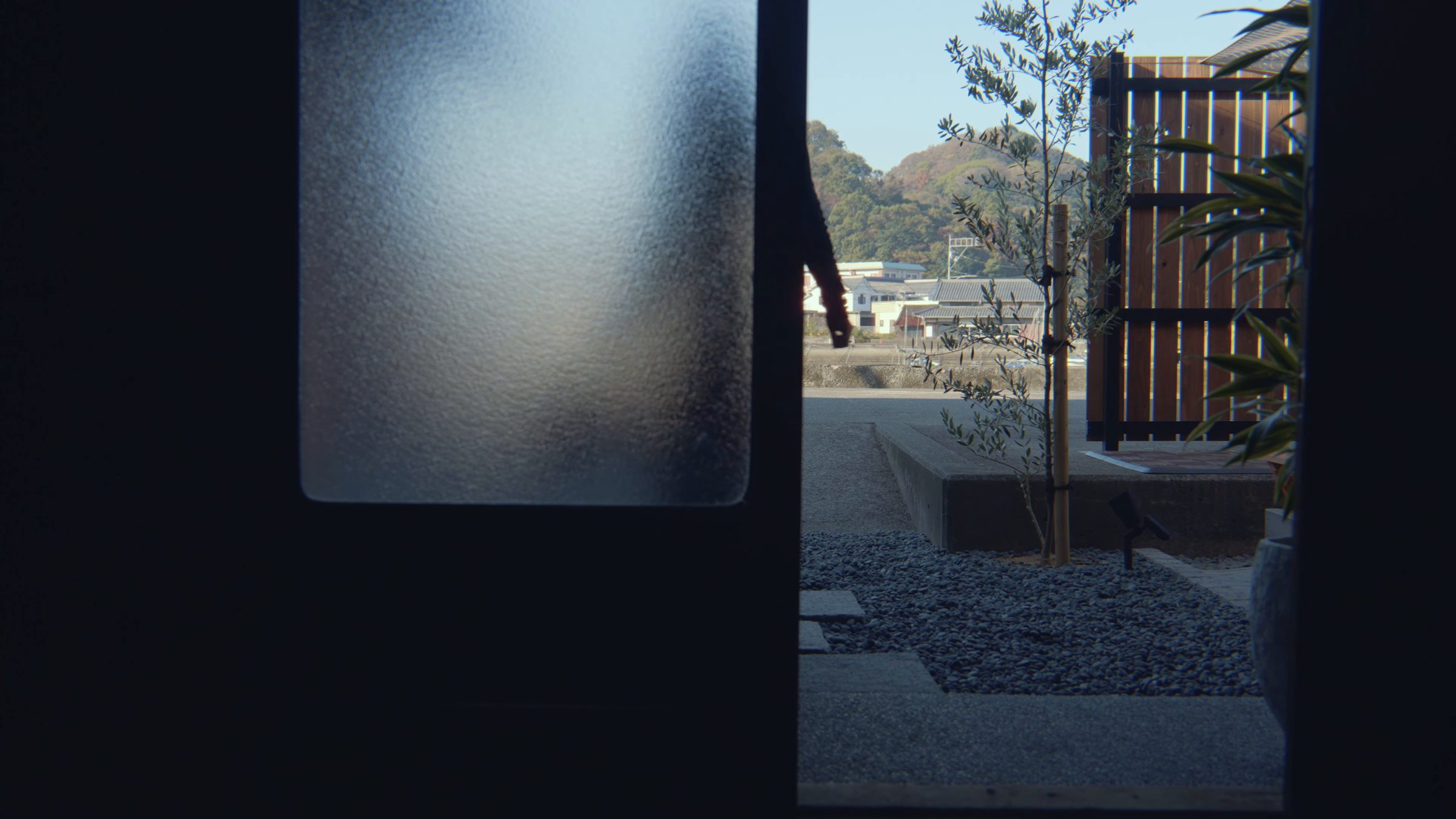
04TRAVEL JOURNAL
The Shimanami Kaido, and juice from a tap
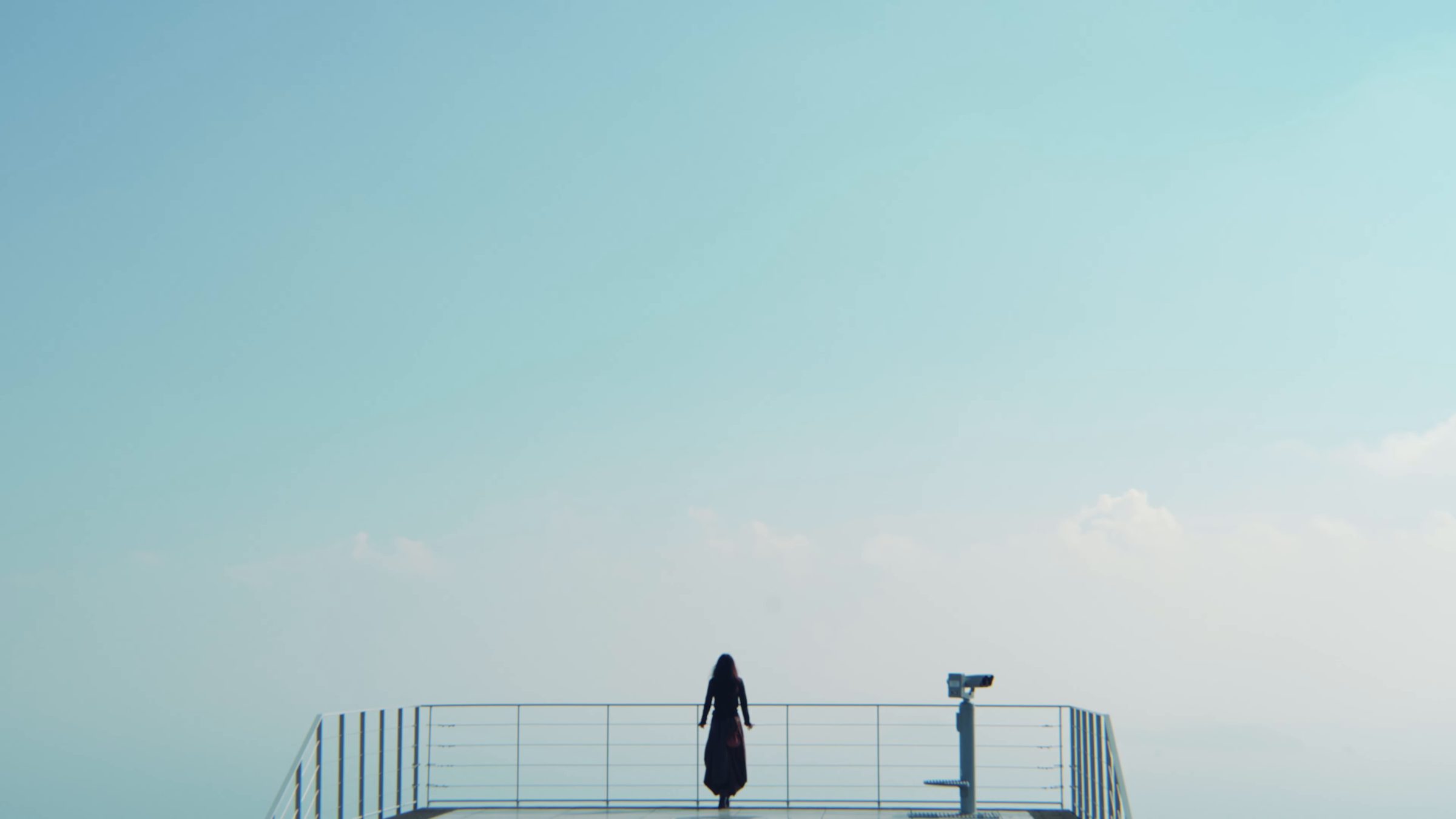
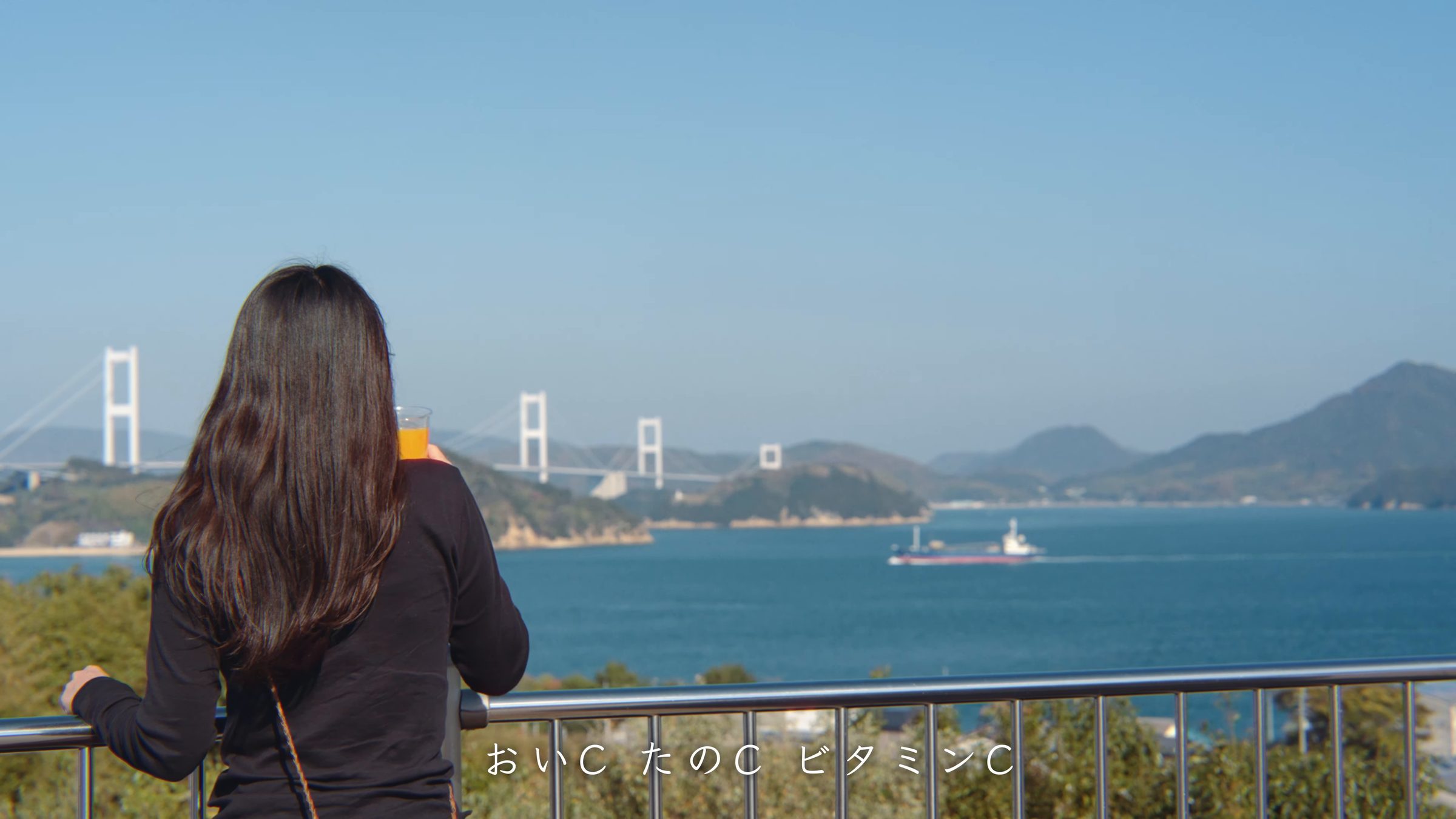
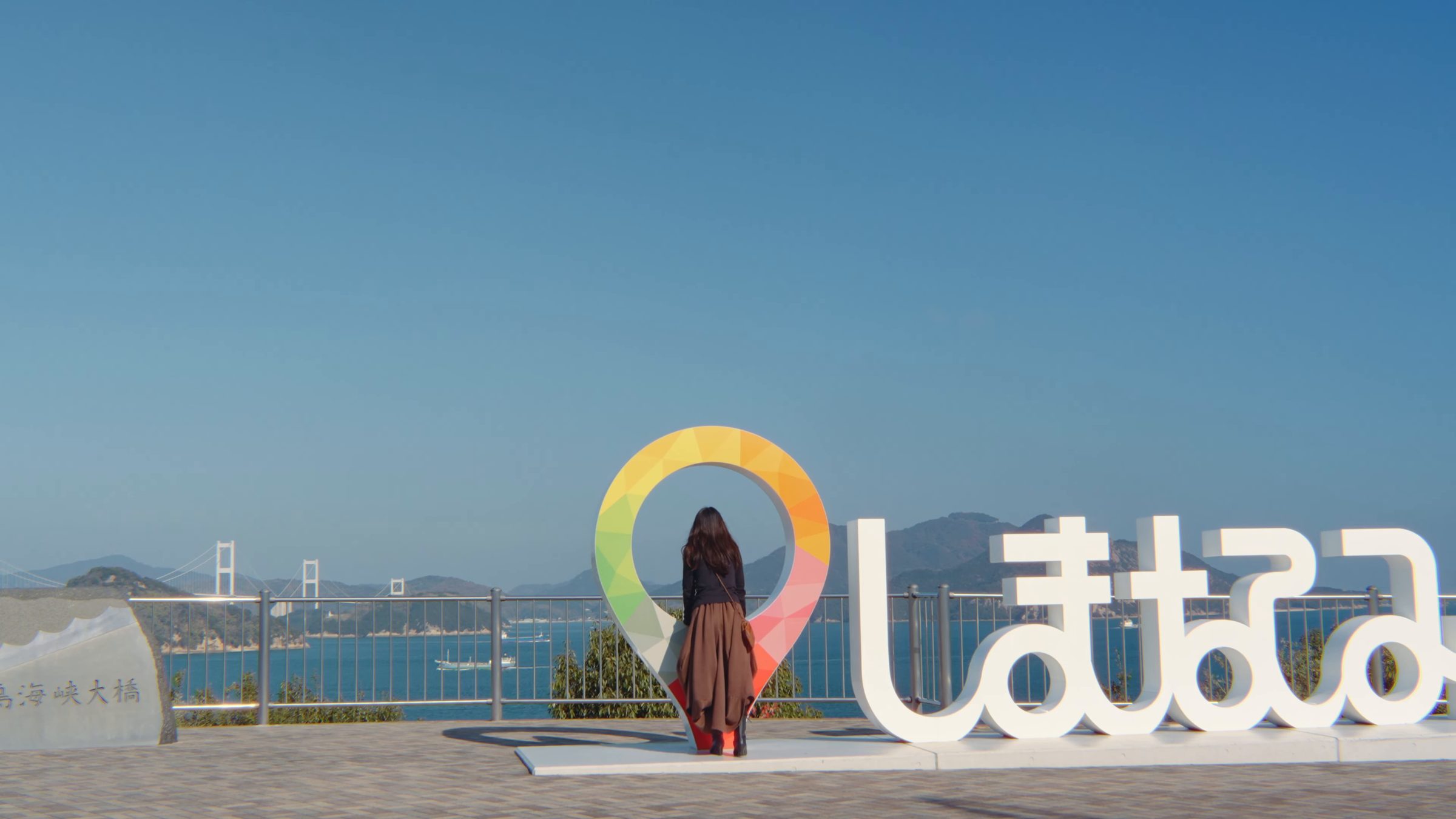
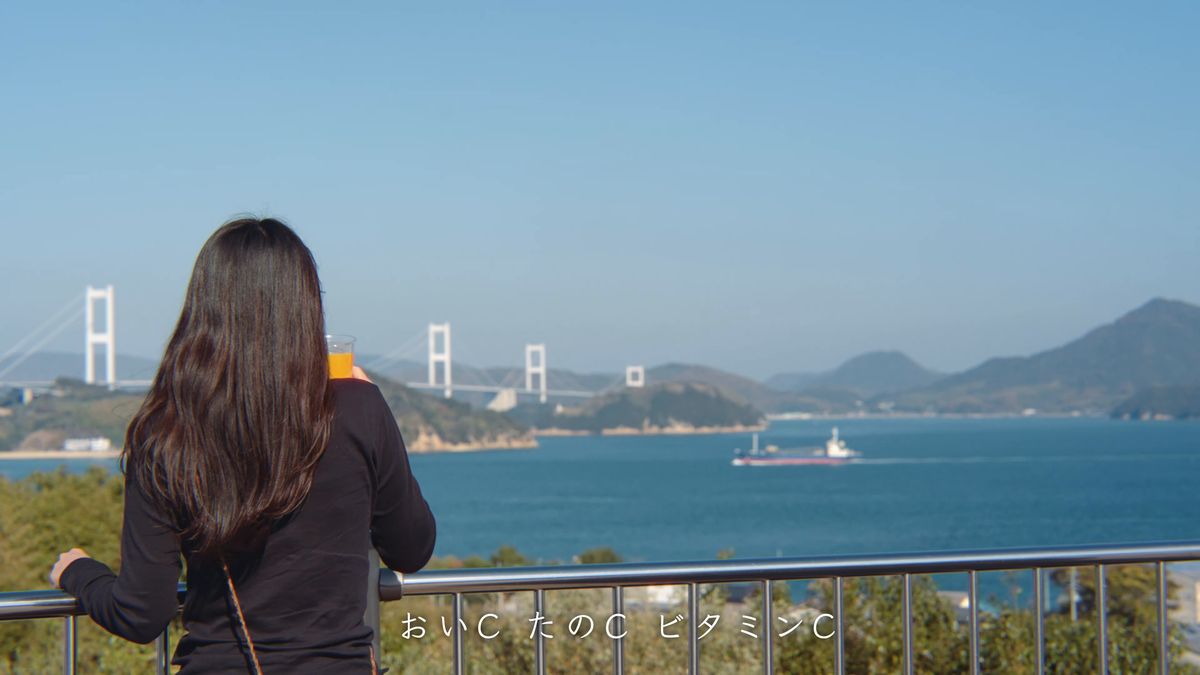
All right, let's go see the spectacular view of the Seto Inland Sea. I headed for Imabari, to the lookout at a service area above the Kurushima Strait. Up the stairs, the Kurushima Kaikyo Bridge of the Shimanami Kaido, the road that links the beautiful islands, stretched white across the blue water.
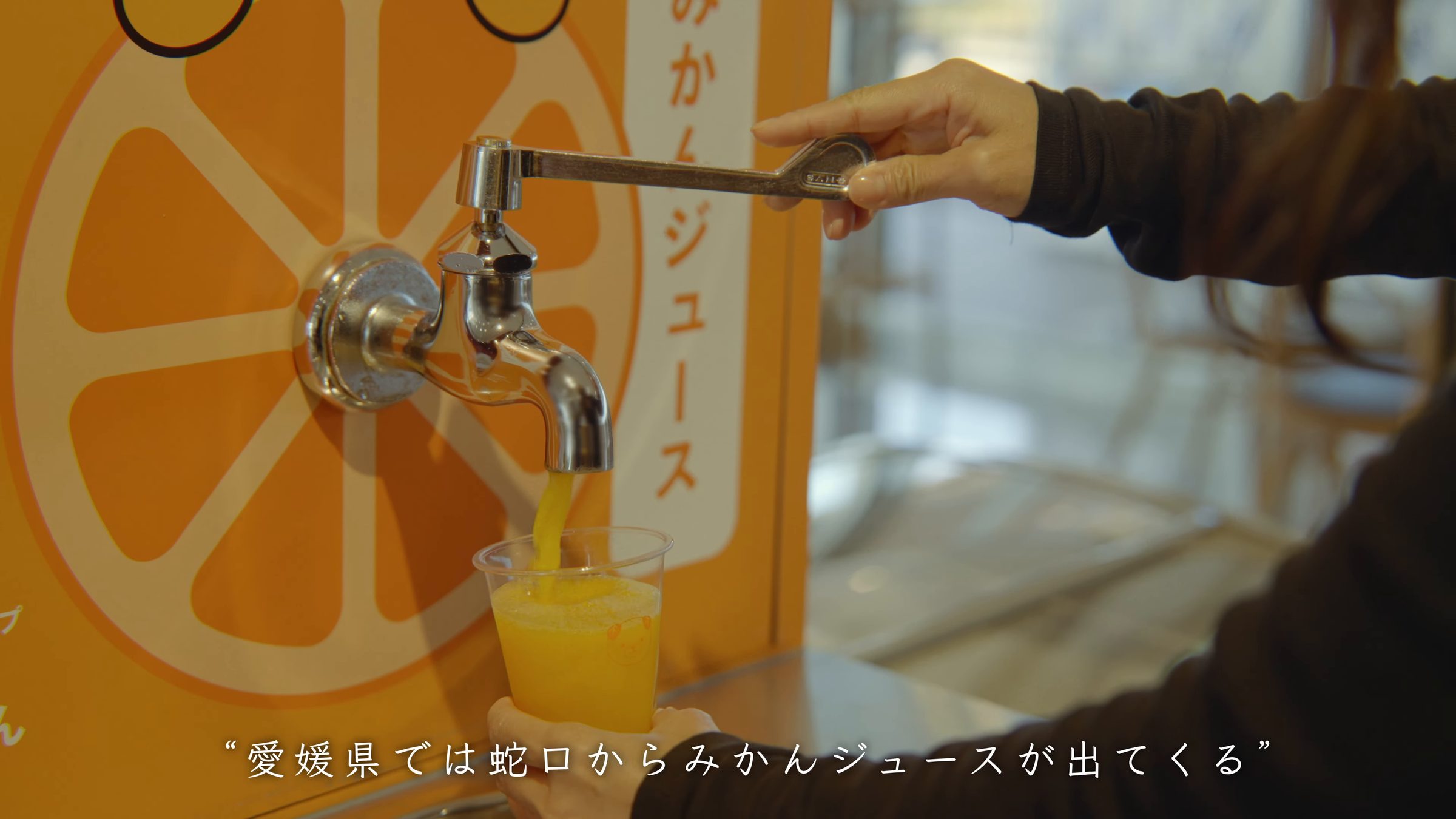
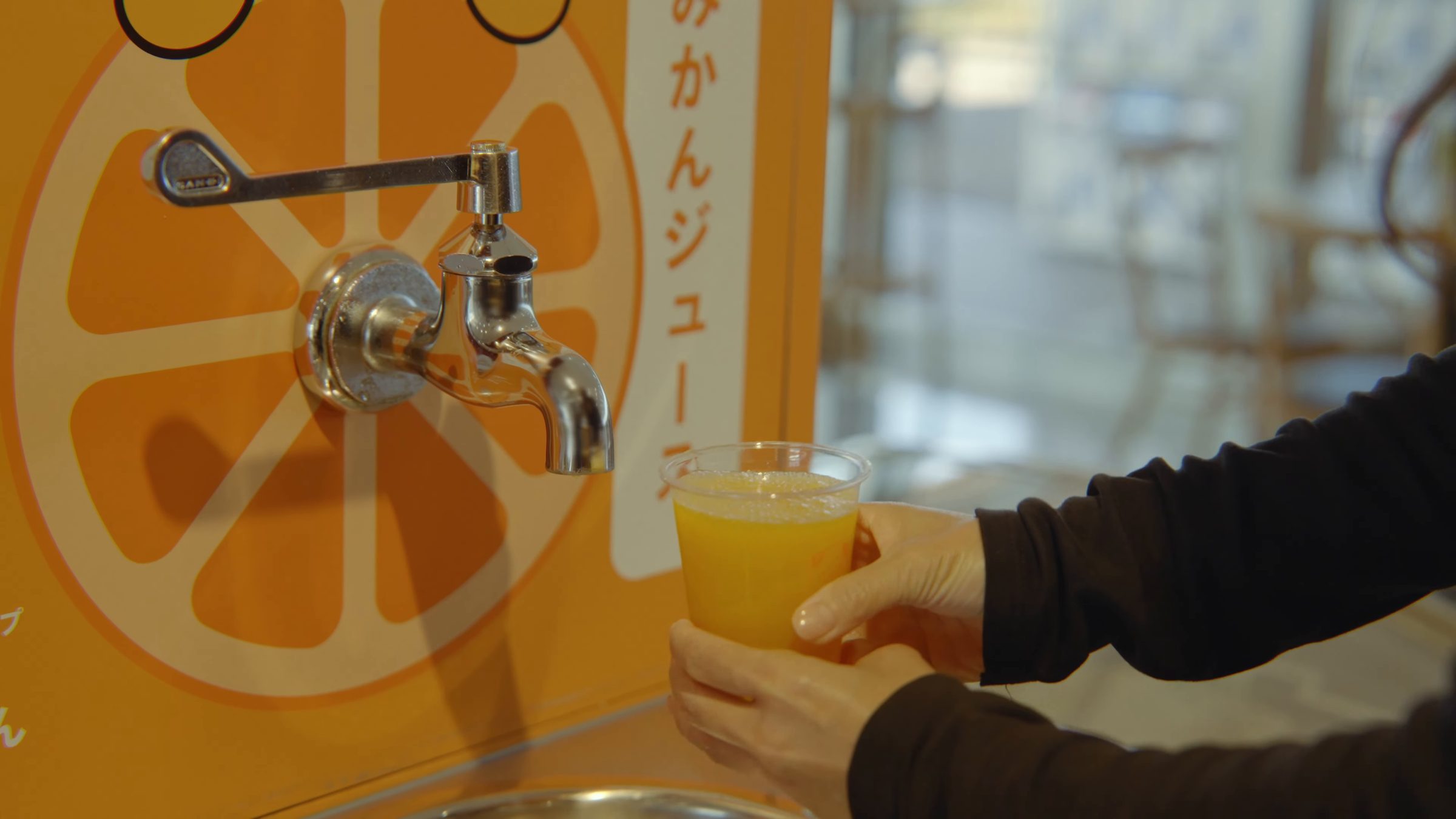
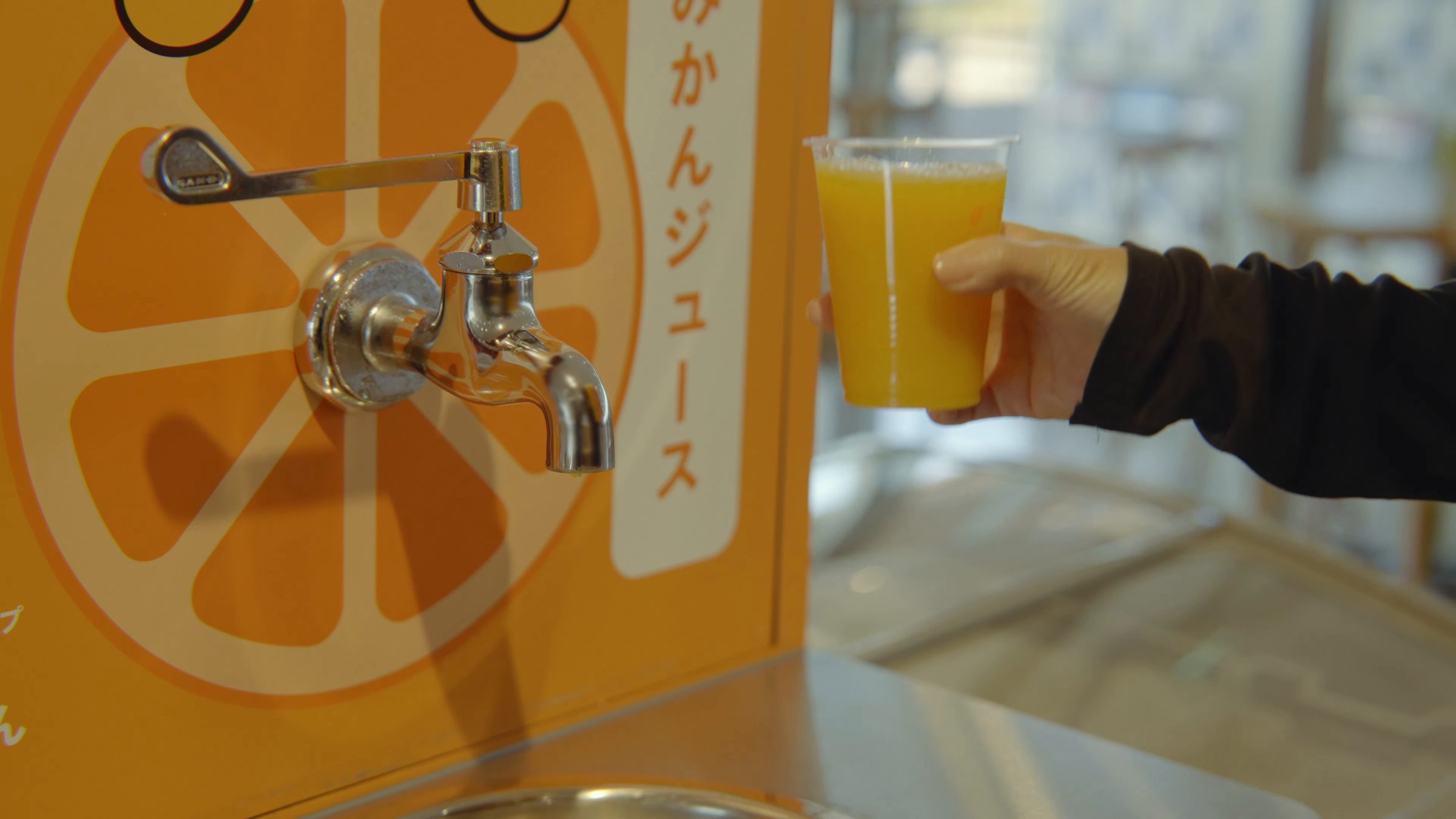
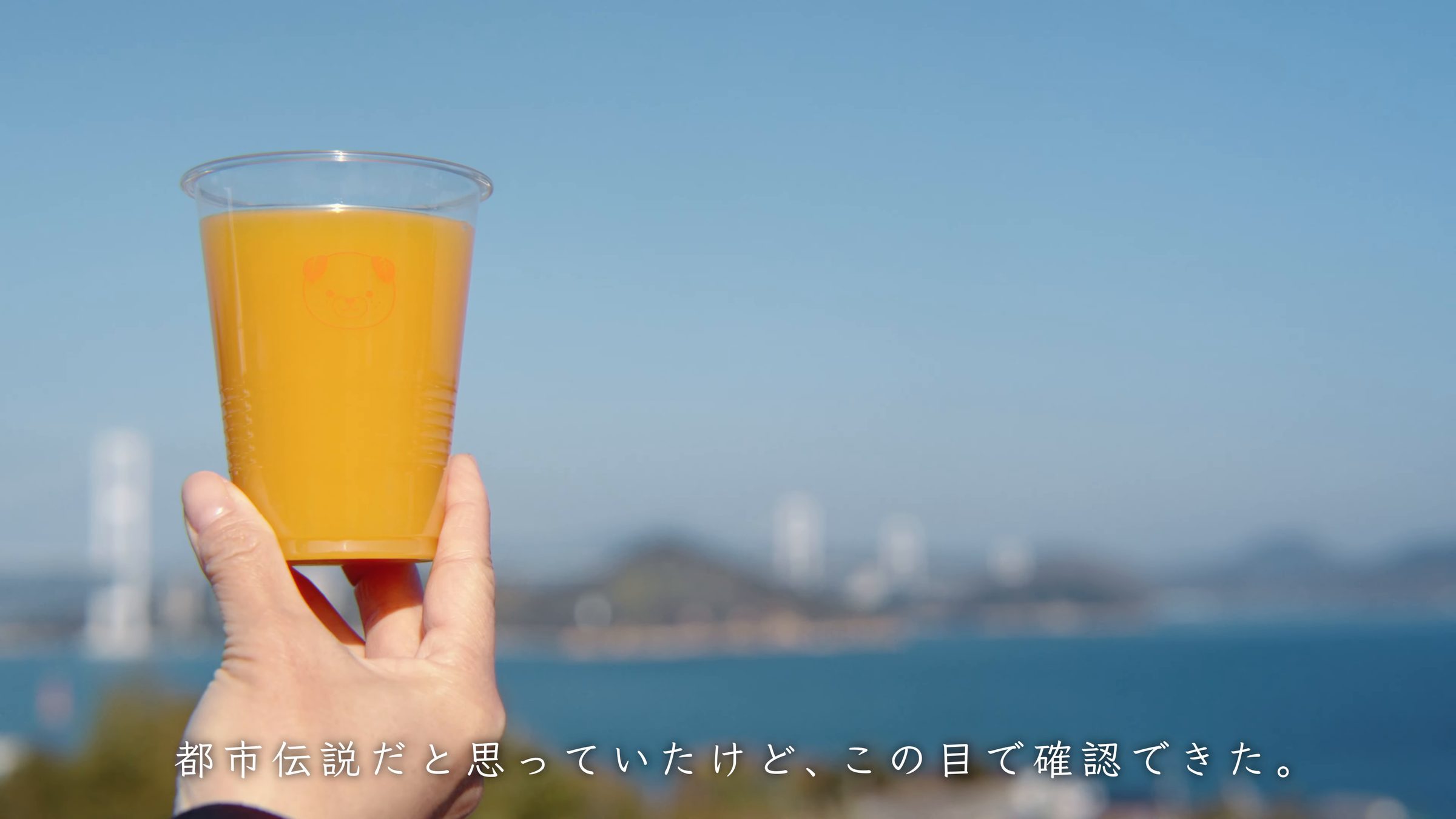
"In Ehime, mandarin orange juice comes out of the faucet." I thought it was an urban legend, but I could confirm it with my own eyes. Turn the tap sticking out of a wall painted with an orange, and real orange-colored juice pours into the cup. I raised it to the sky and the sea and took a sip. Oishii vitamin C, tasty and fun.
I stood at the railing looking out at the bridge, and then in front of the big letters spelling out SHIMANAMI.
Watch this scene on YouTube1:58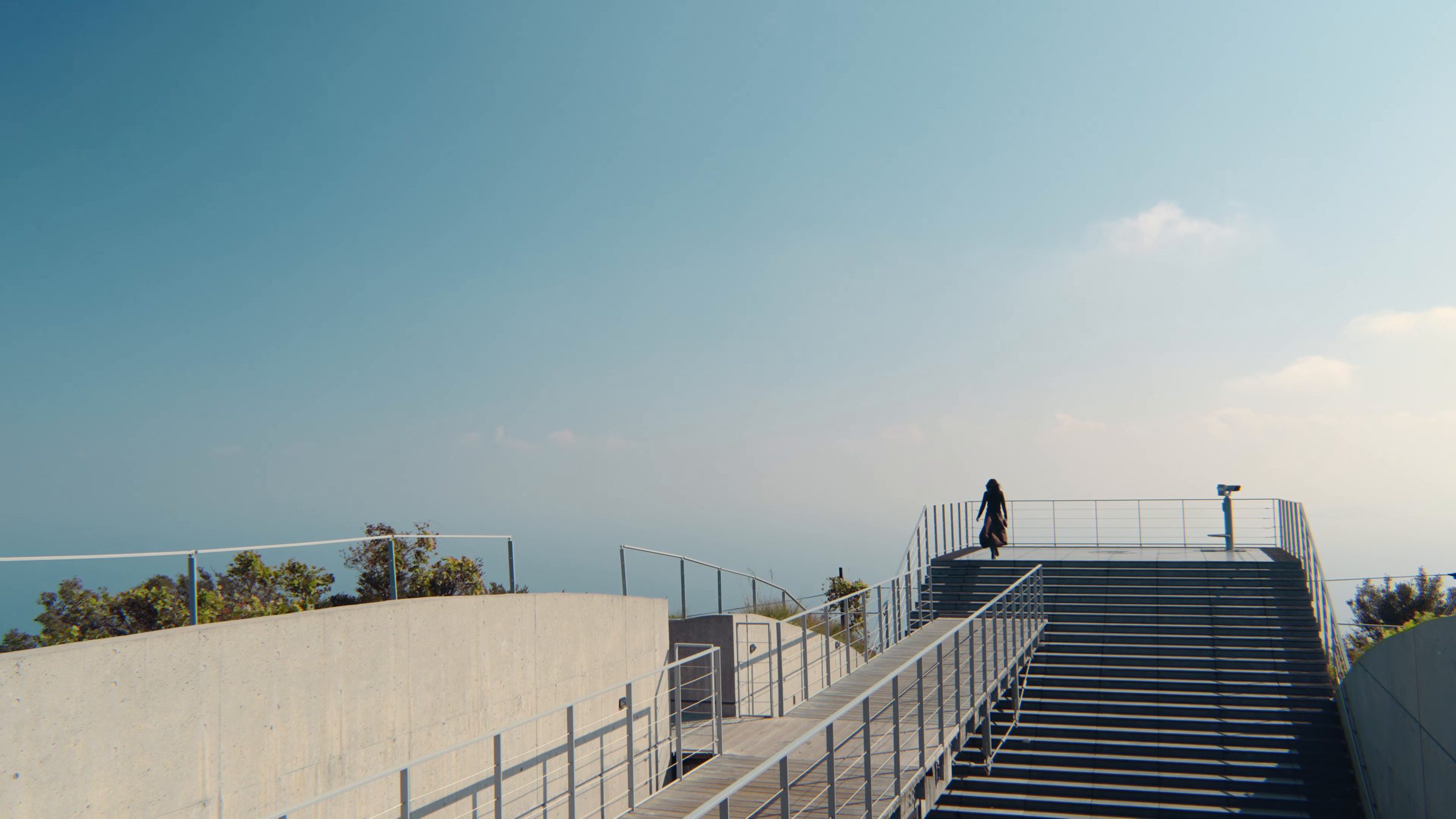
05TRAVEL JOURNAL
Lunch at a homey eatery
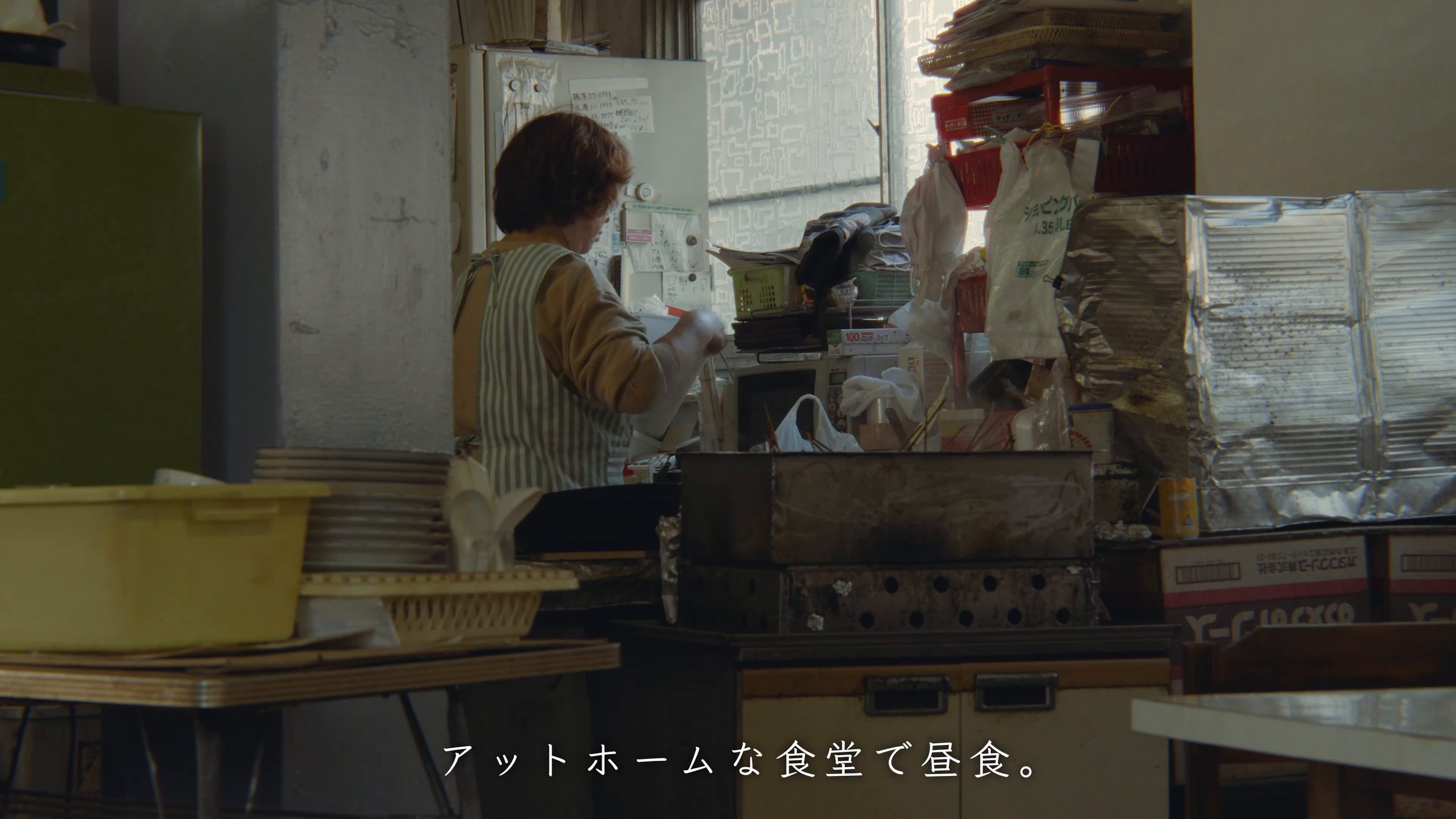
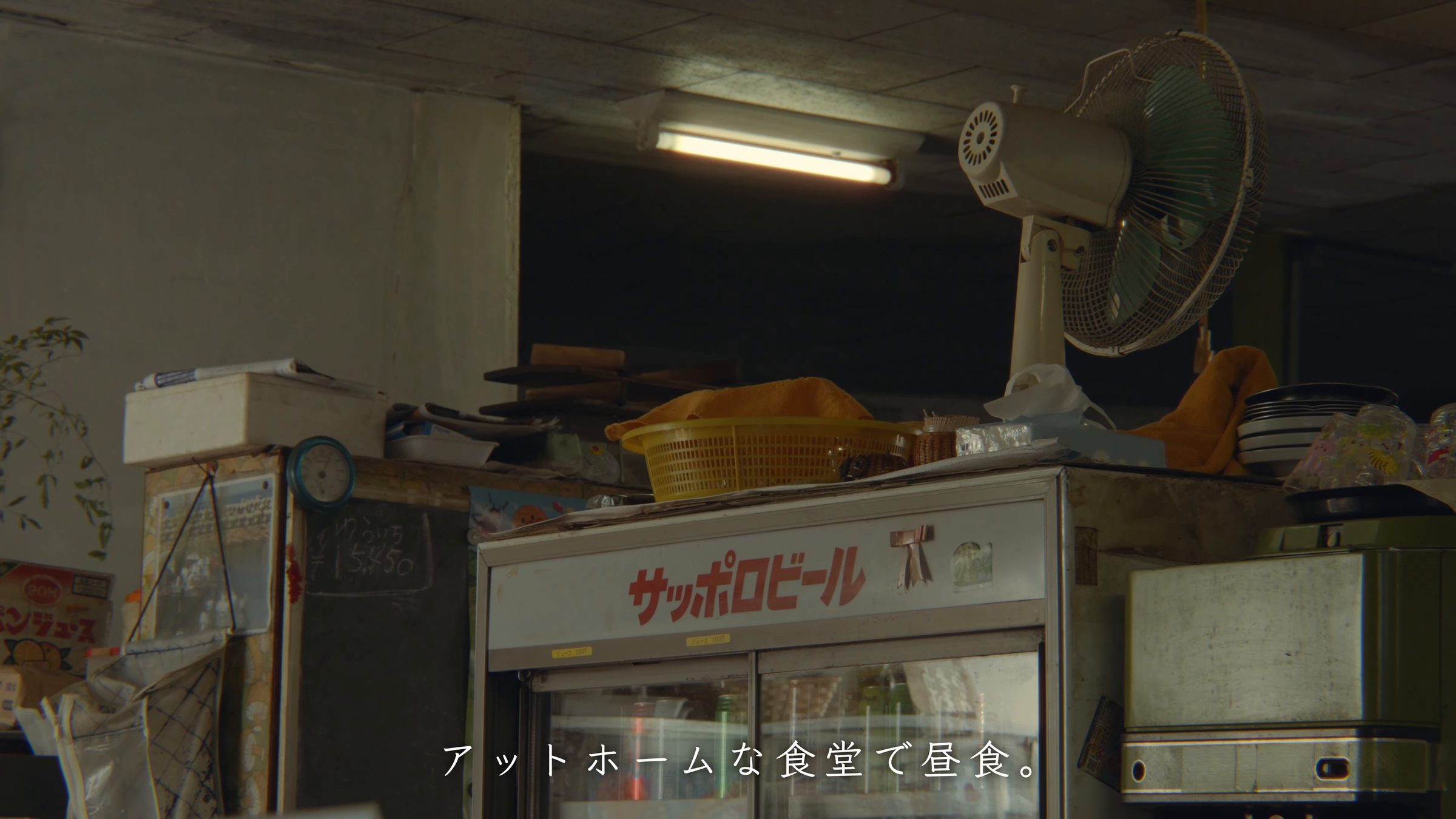
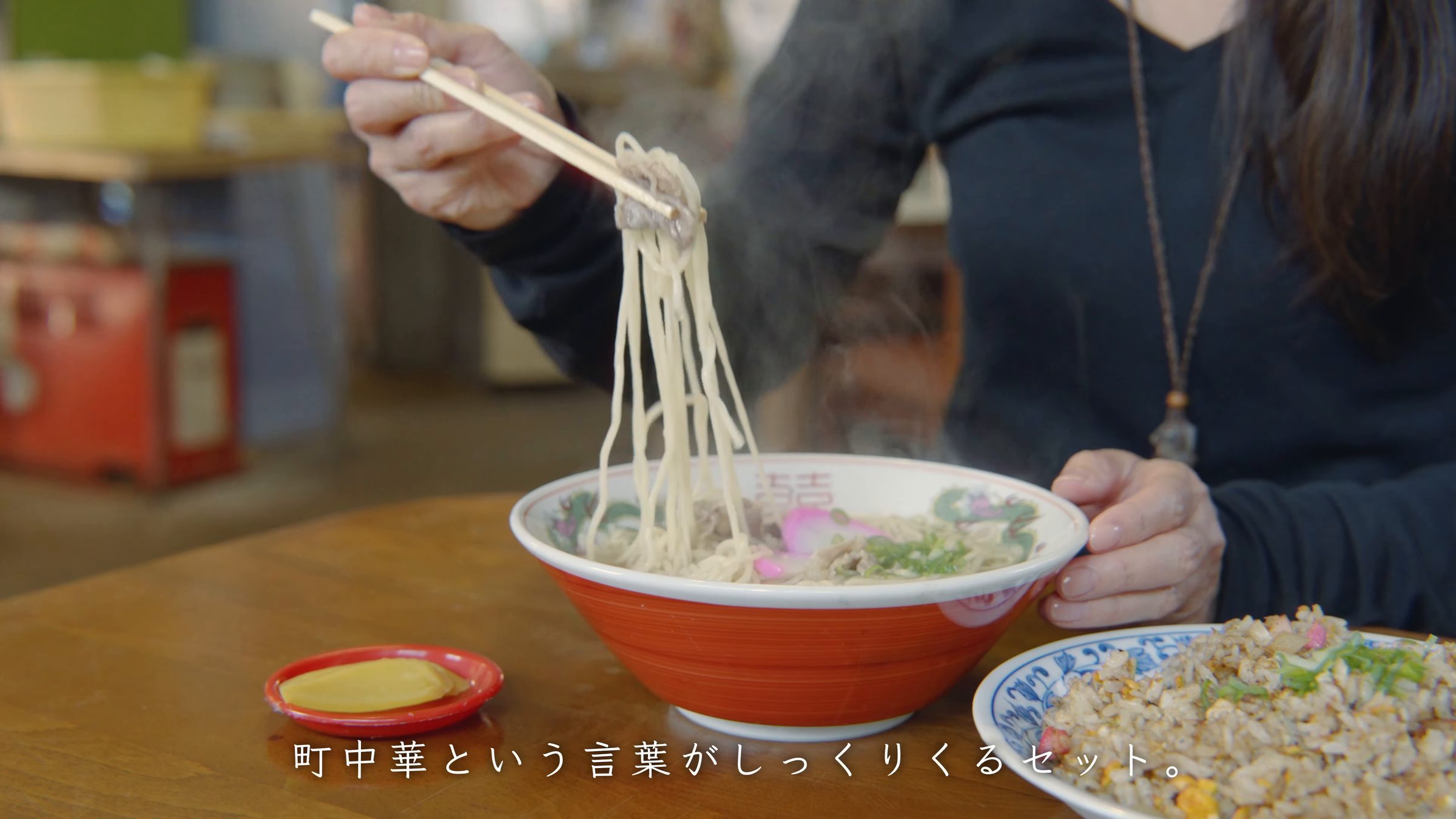
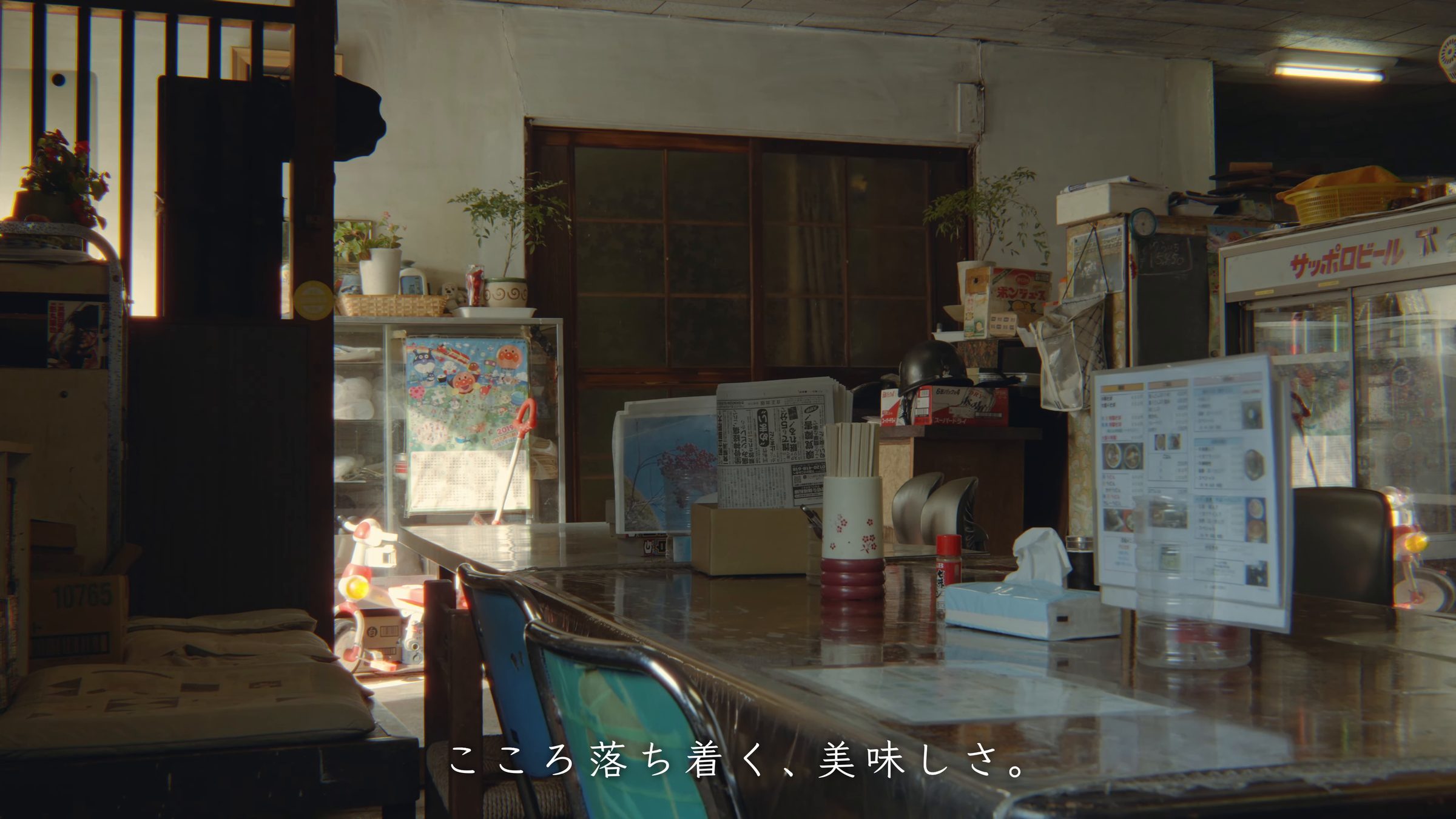
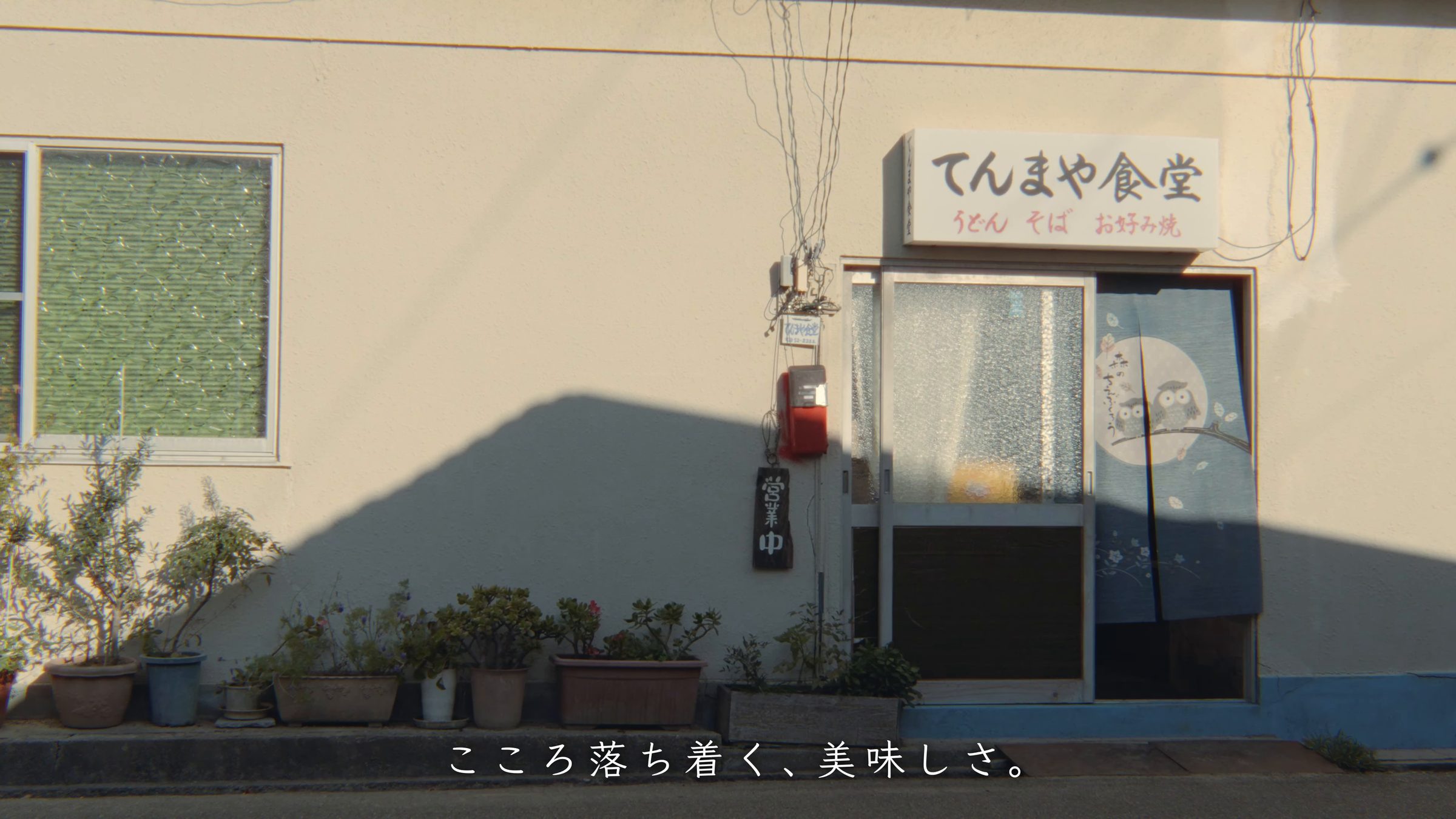
For lunch I stopped at an eatery in Namikata on the way back, an old-style place whose sign also promises udon, soba and okonomiyaki. Plates were stacked in the kitchen, an old Sapporo Beer fridge and an electric fan stood inside, and menu boards lined the wall.
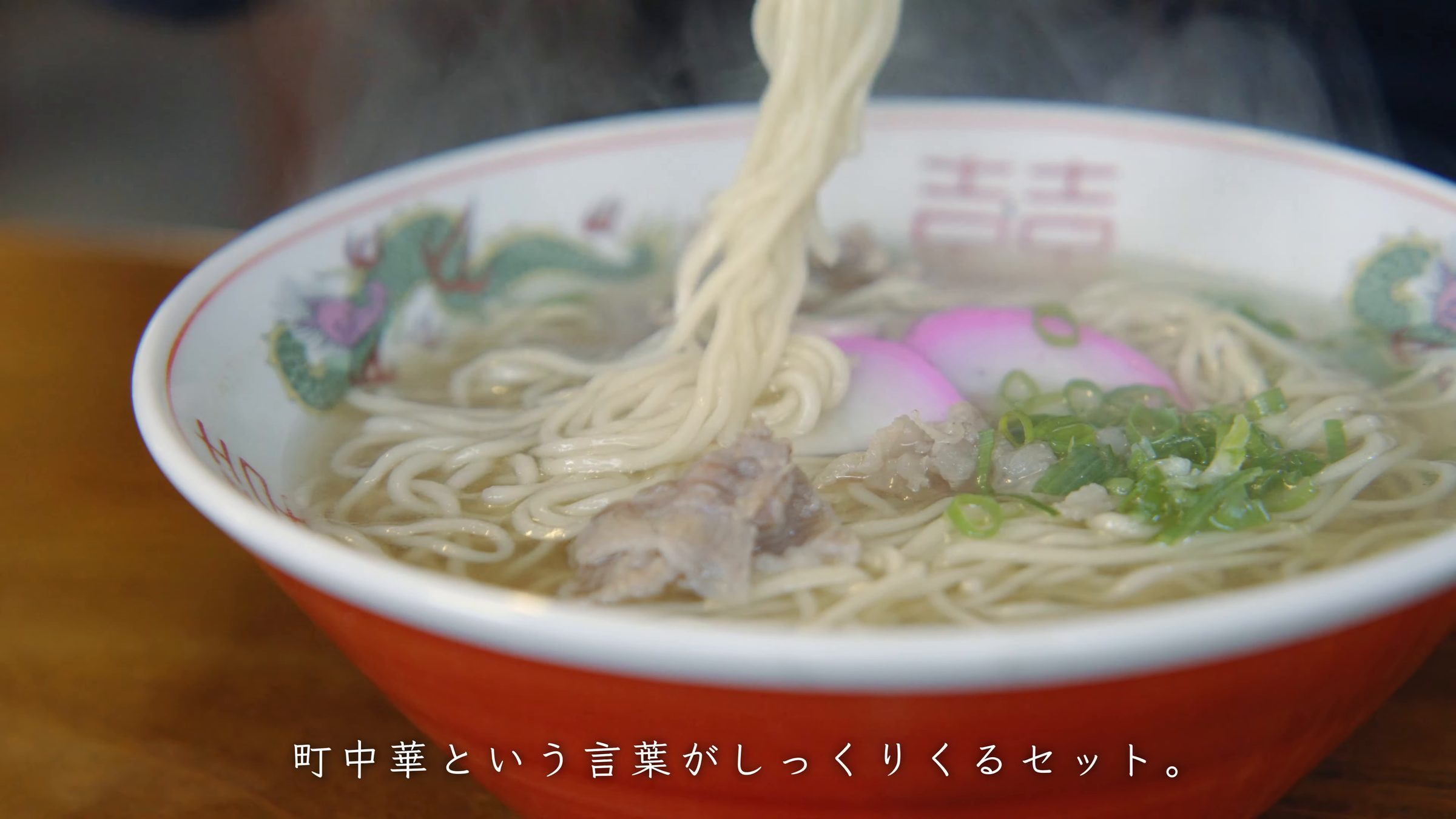
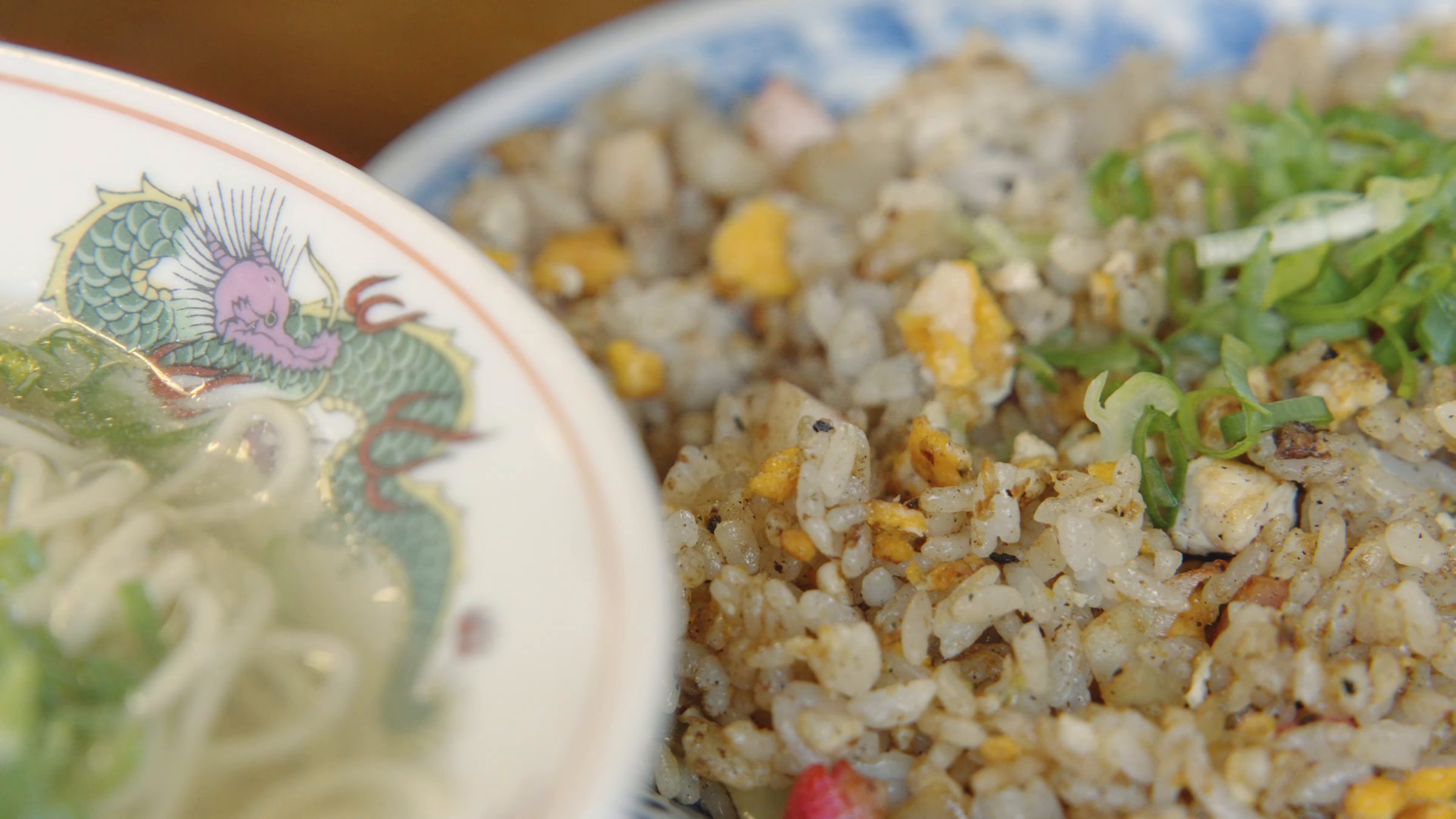
I ordered the set of chuka soba and fried rice: a clear broth with kamaboko and green onions, and straight, thin noodles. Having lunch like the locals, in a place that perfectly fits the phrase "neighborhood Chinese diner." It was tasty and relaxing.
Watch this scene on YouTube2:44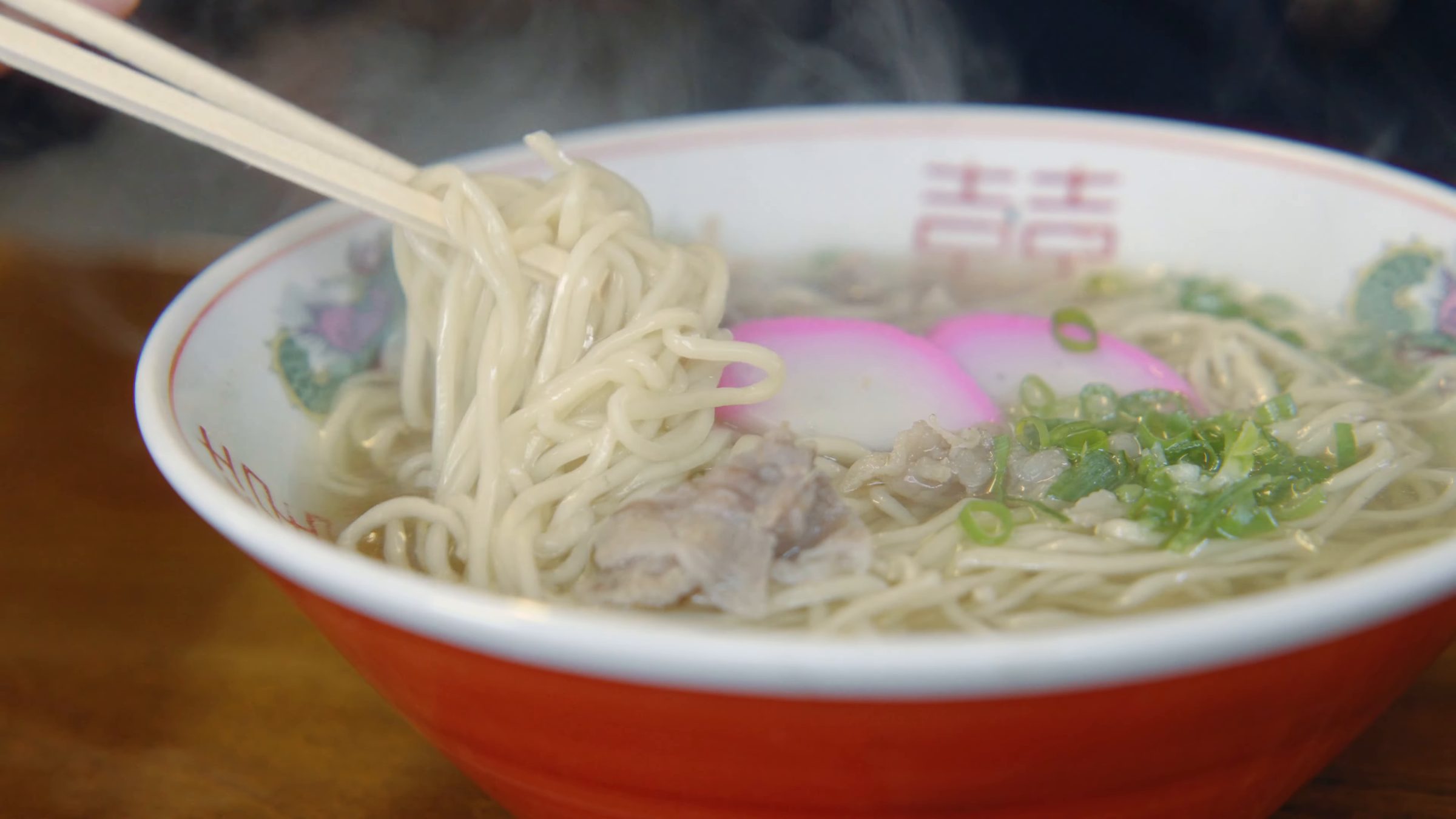
06TRAVEL JOURNAL
Home again
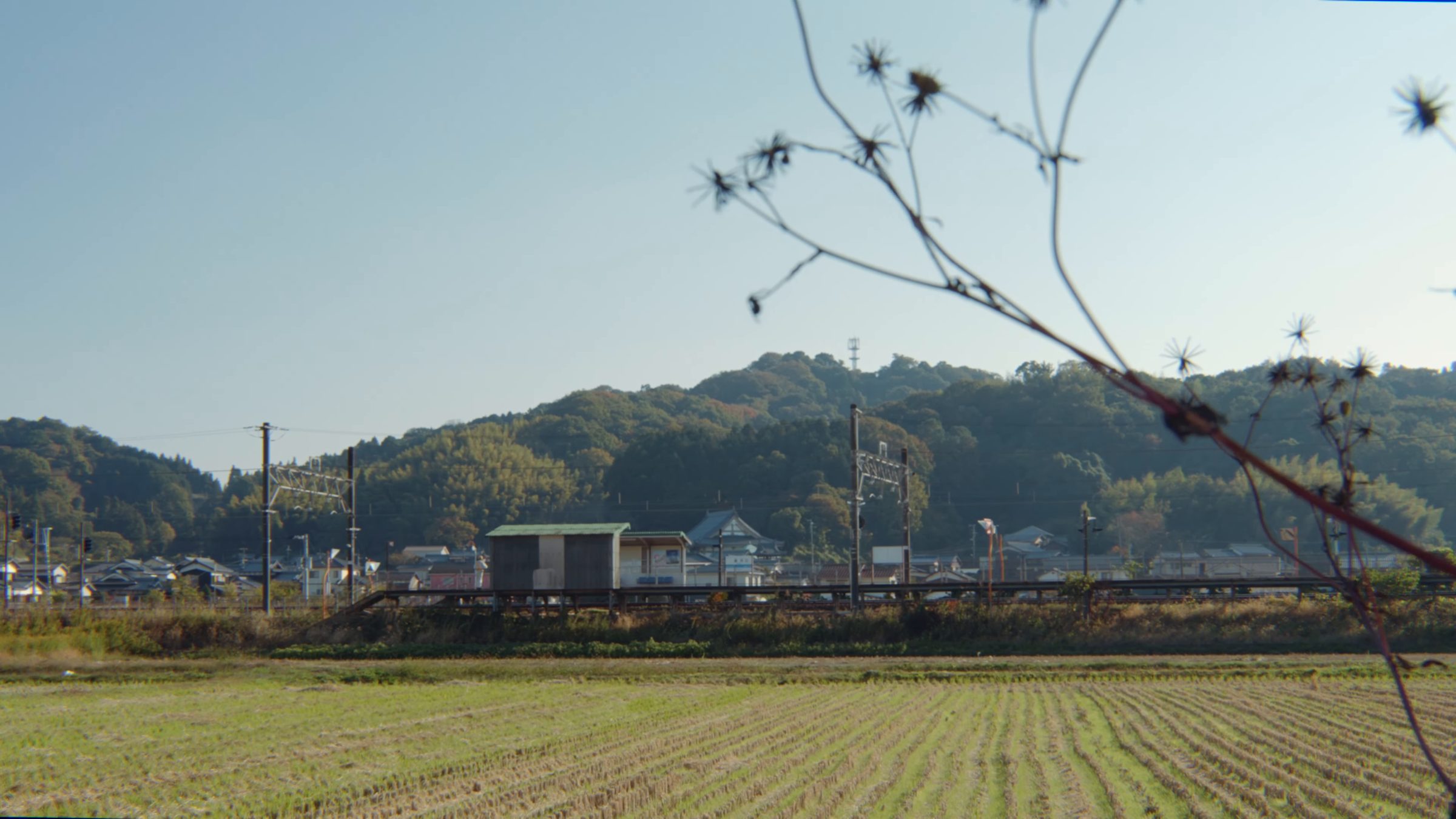
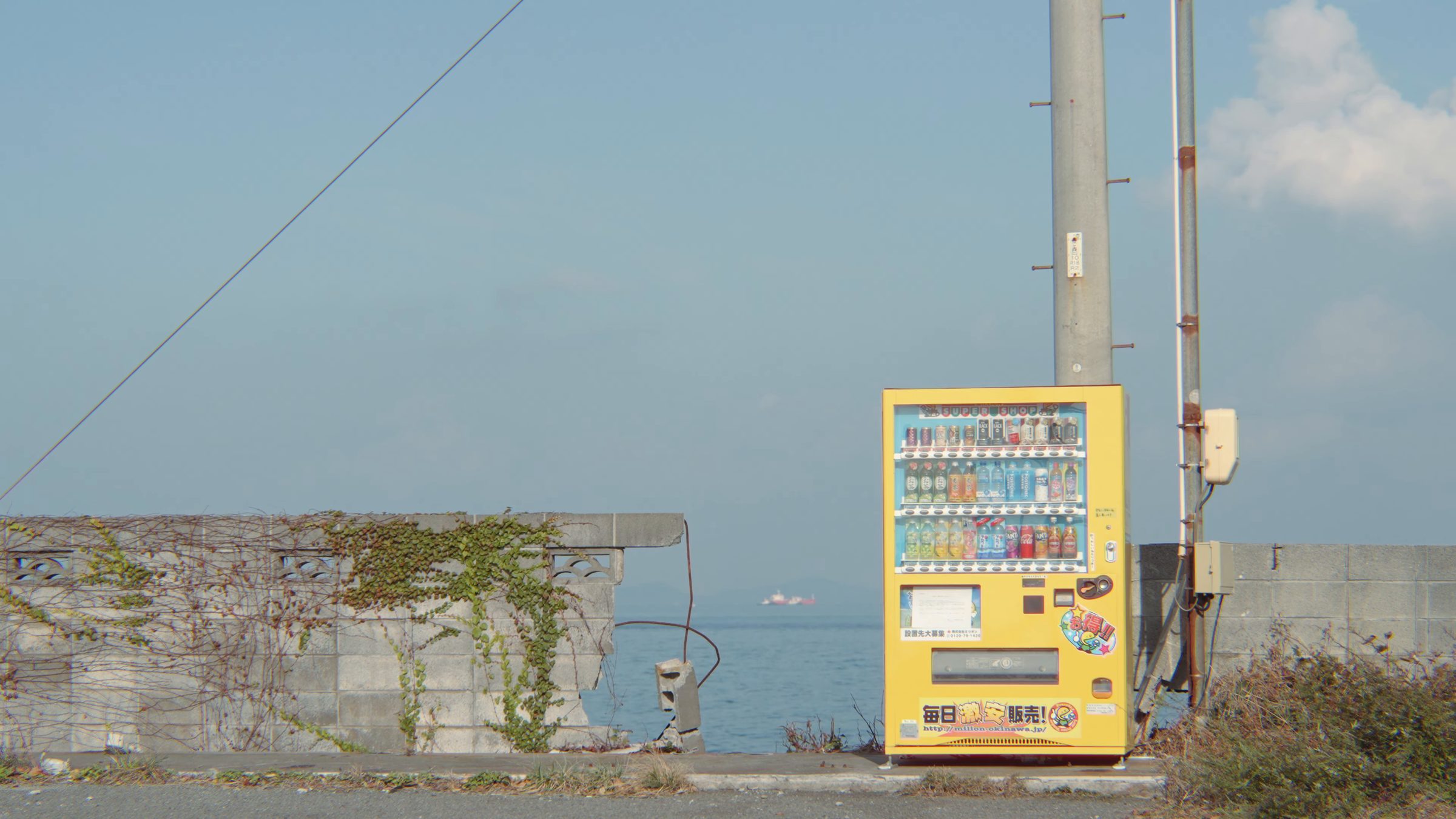
On the way home, a local bus turned at an intersection, and beyond the dry grass the fields ran out to the hills. A single yellow vending machine stood in front of a block wall by the sea.
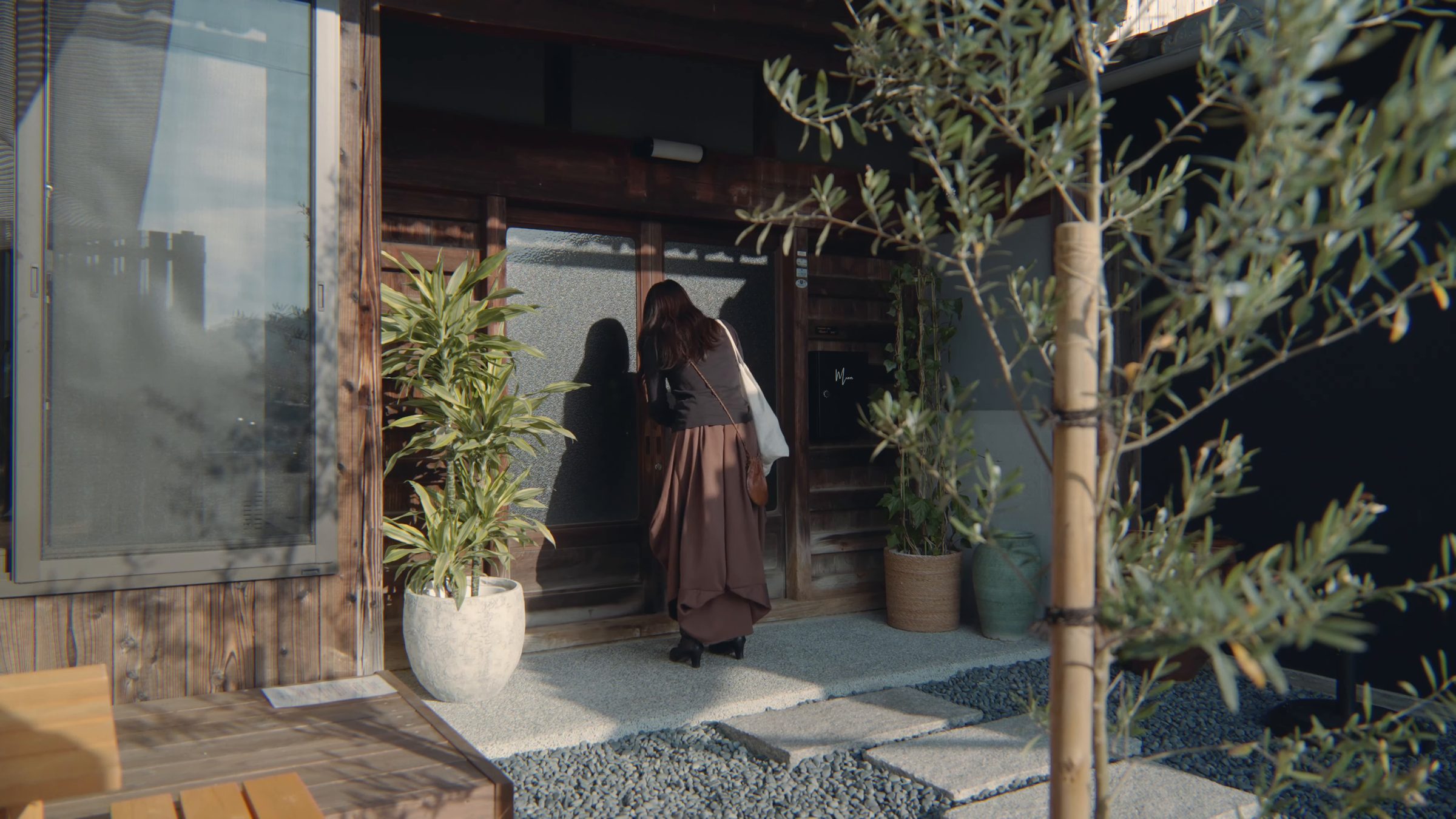
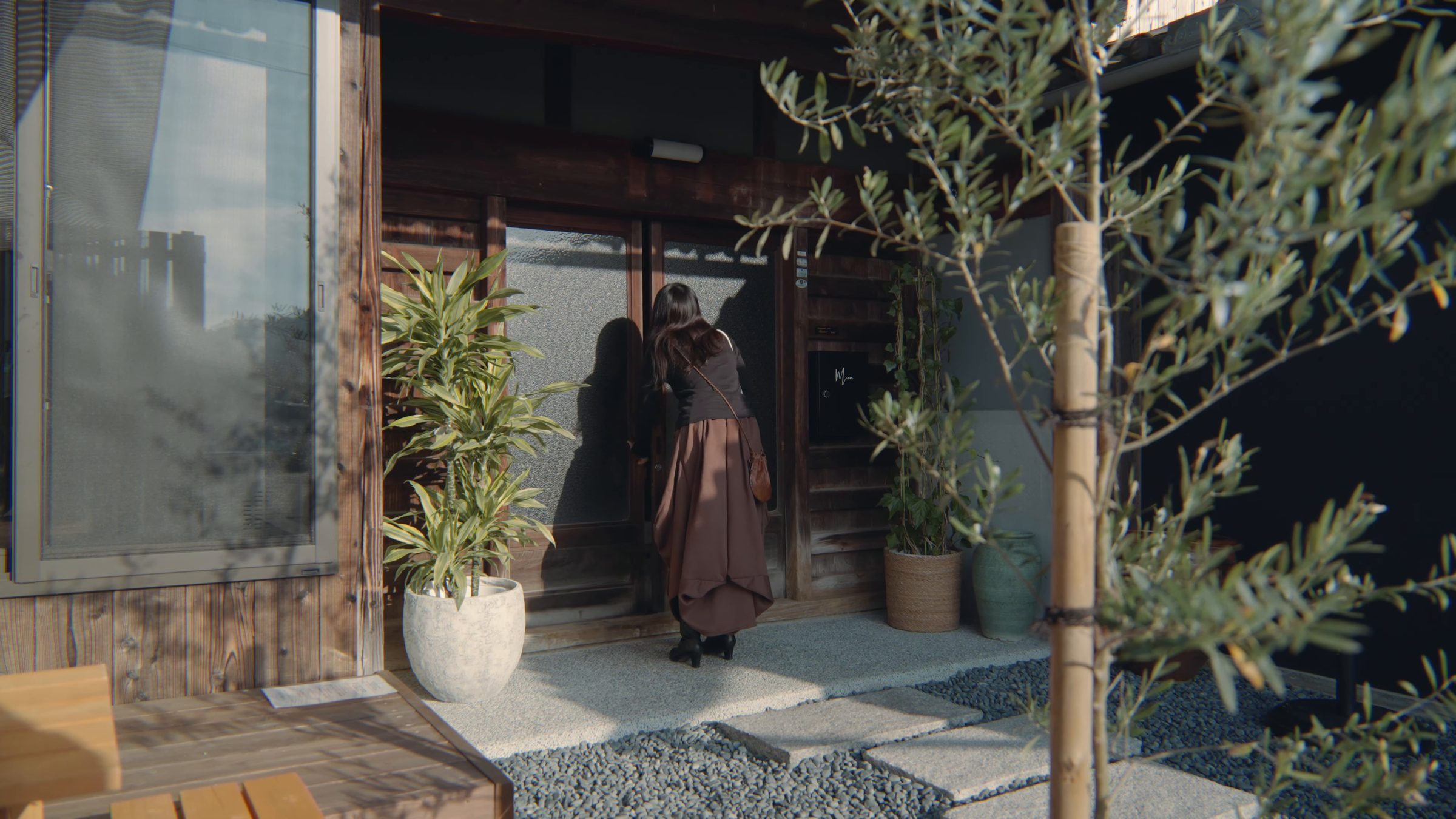
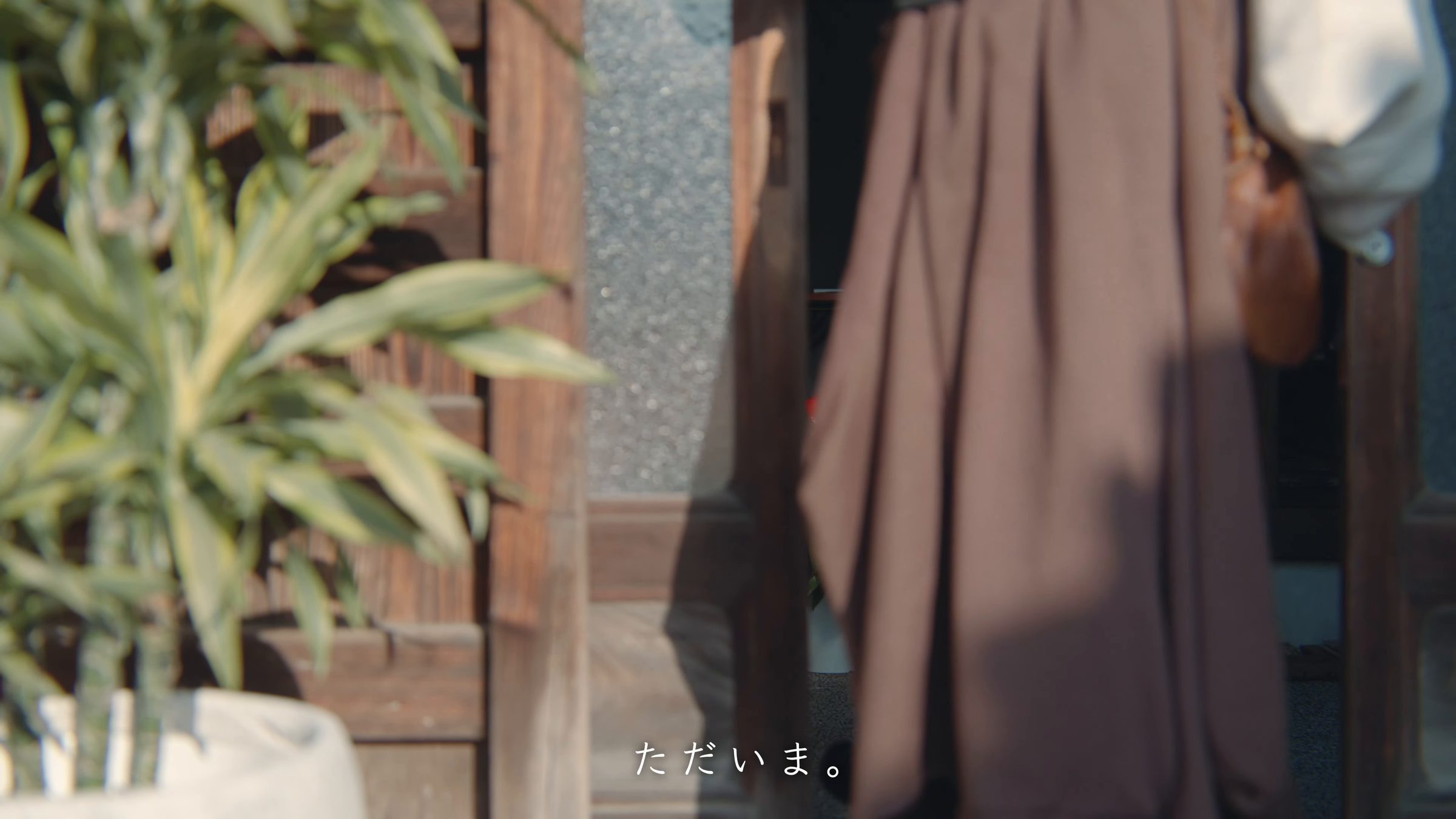
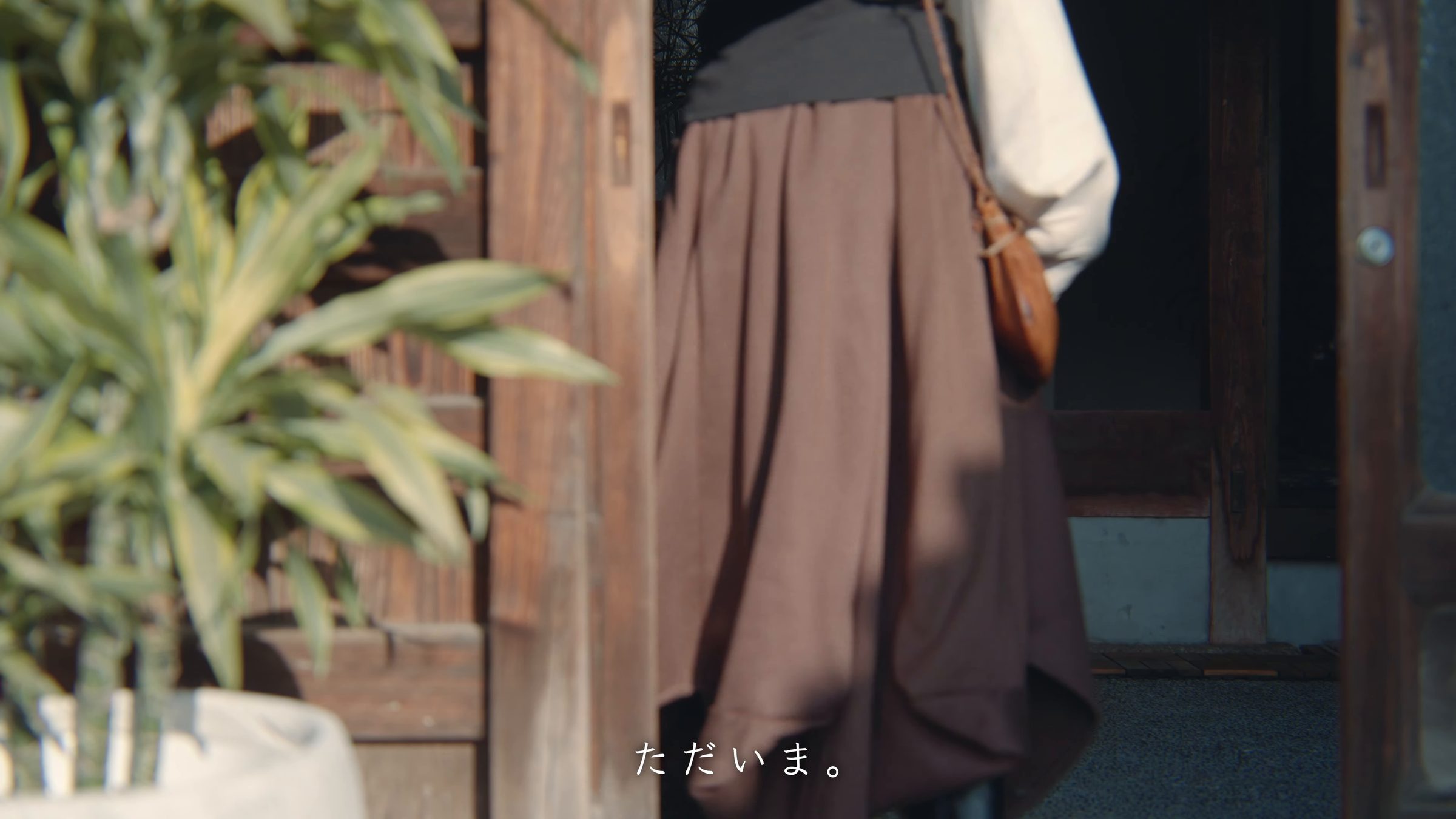
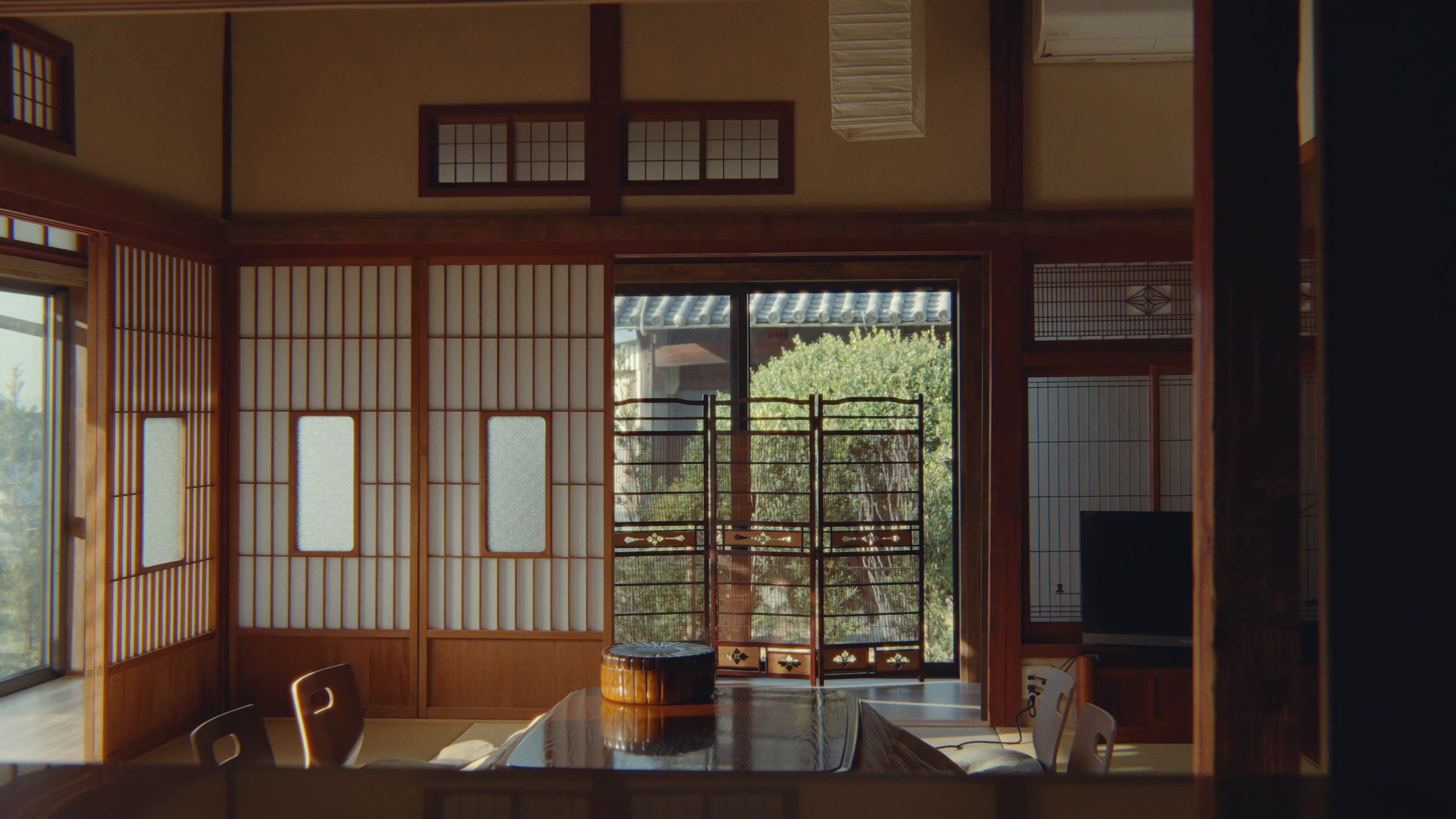
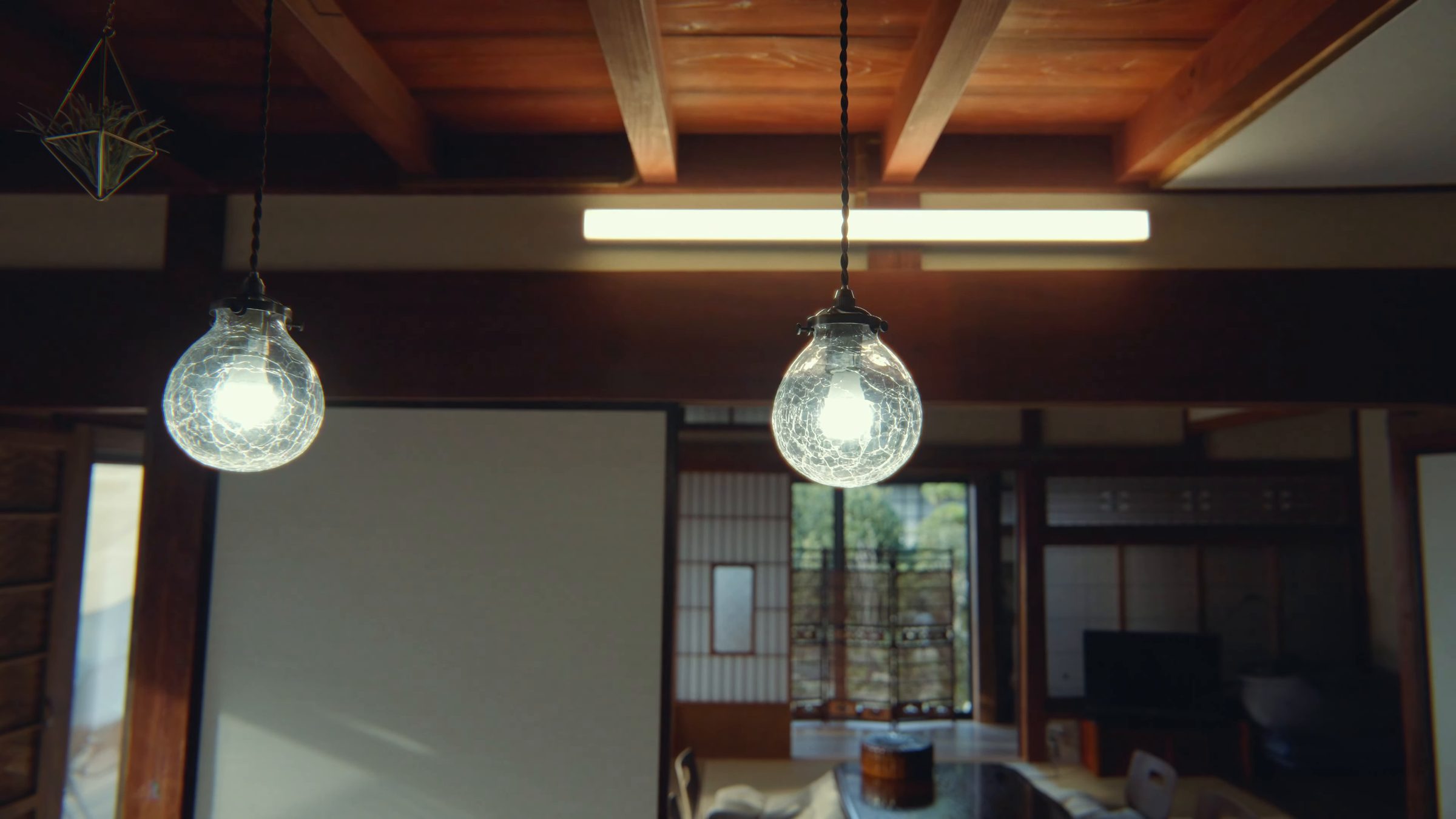
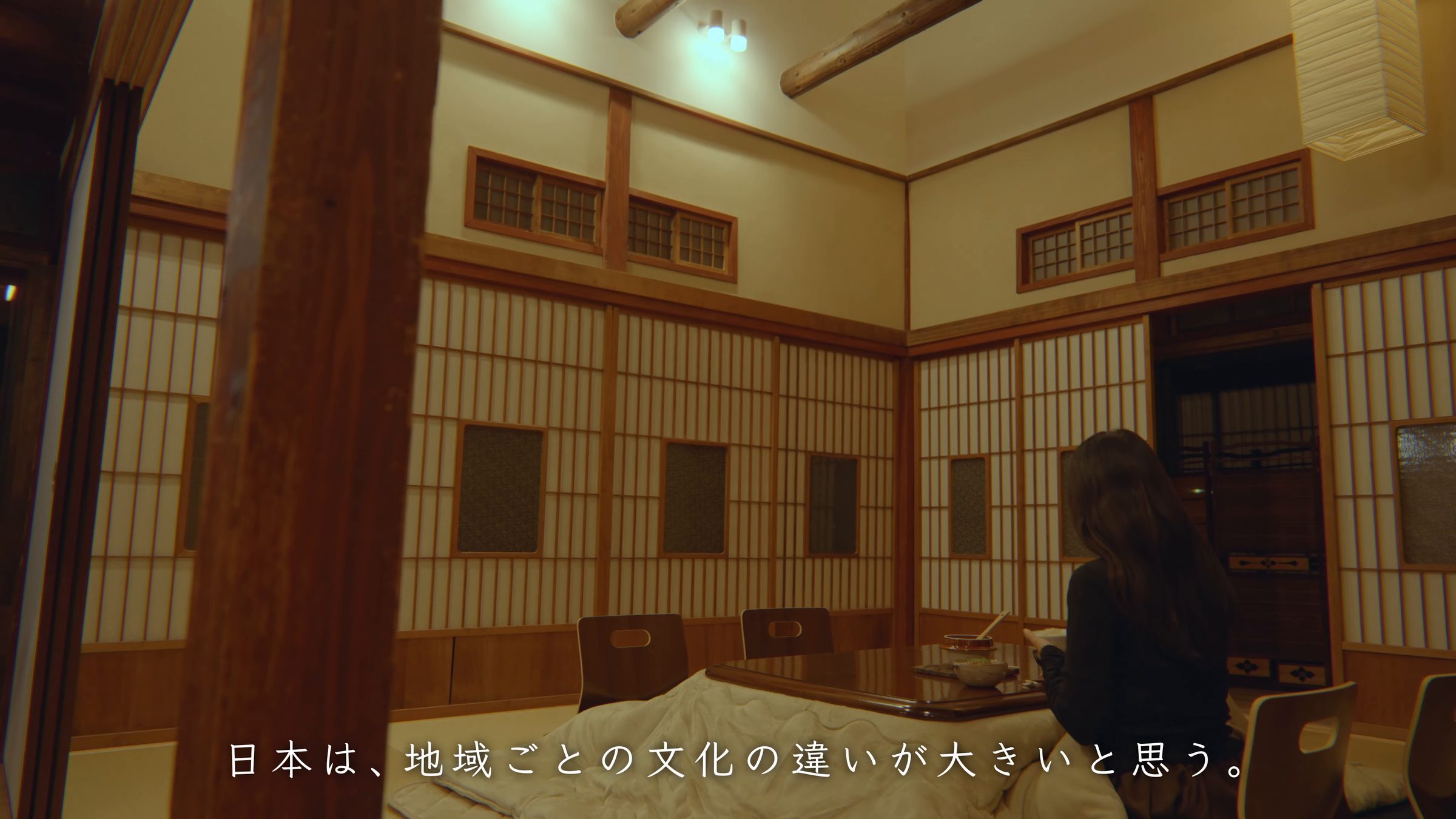
Back at the old house: I'm home. Past the olive tree by the entrance and through the sliding door, the tatami room enclosed by shoji and glass doors and the glass lamps hanging from the beams were waiting.
Watch this scene on YouTube3:07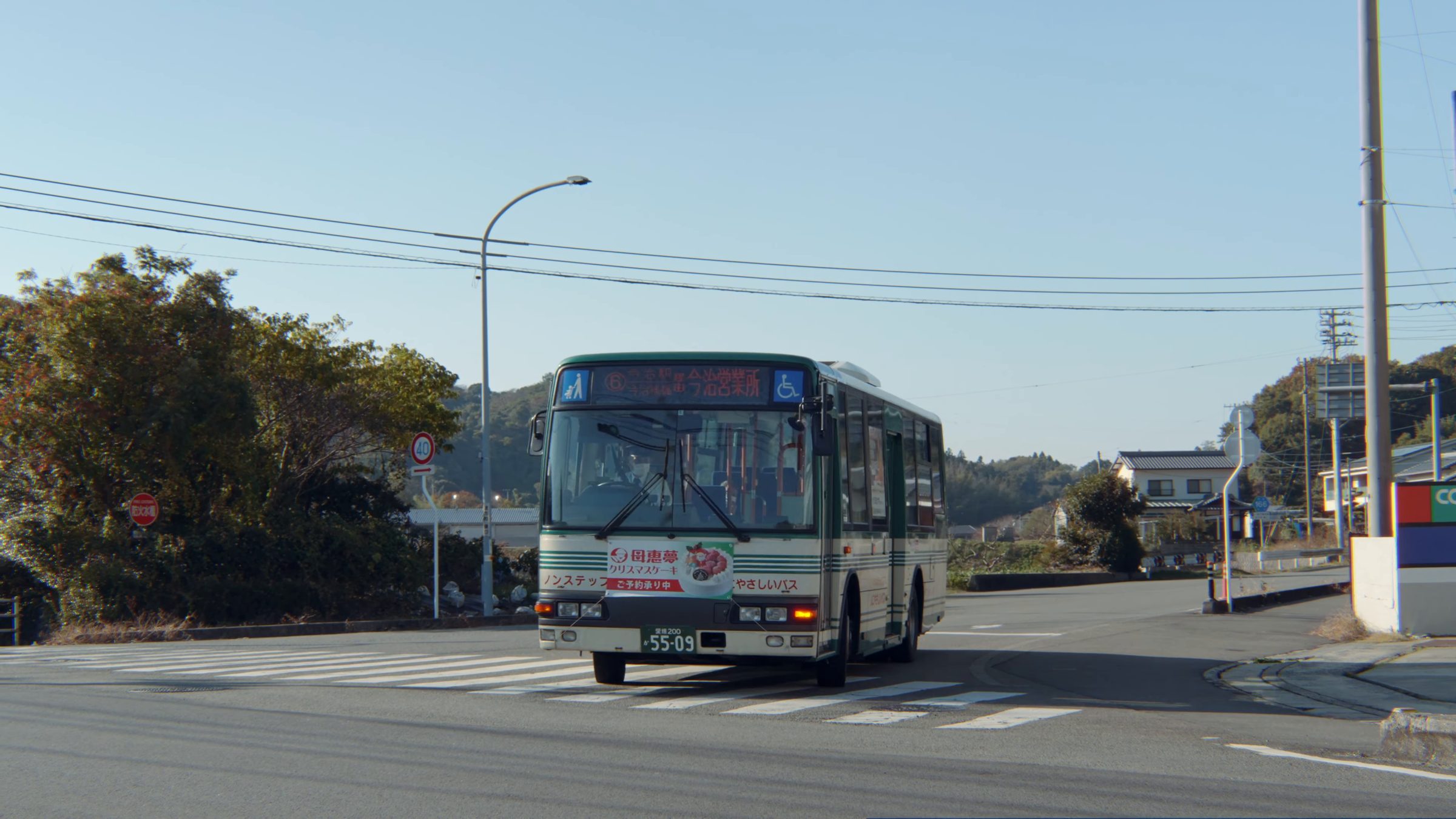
07TRAVEL JOURNAL
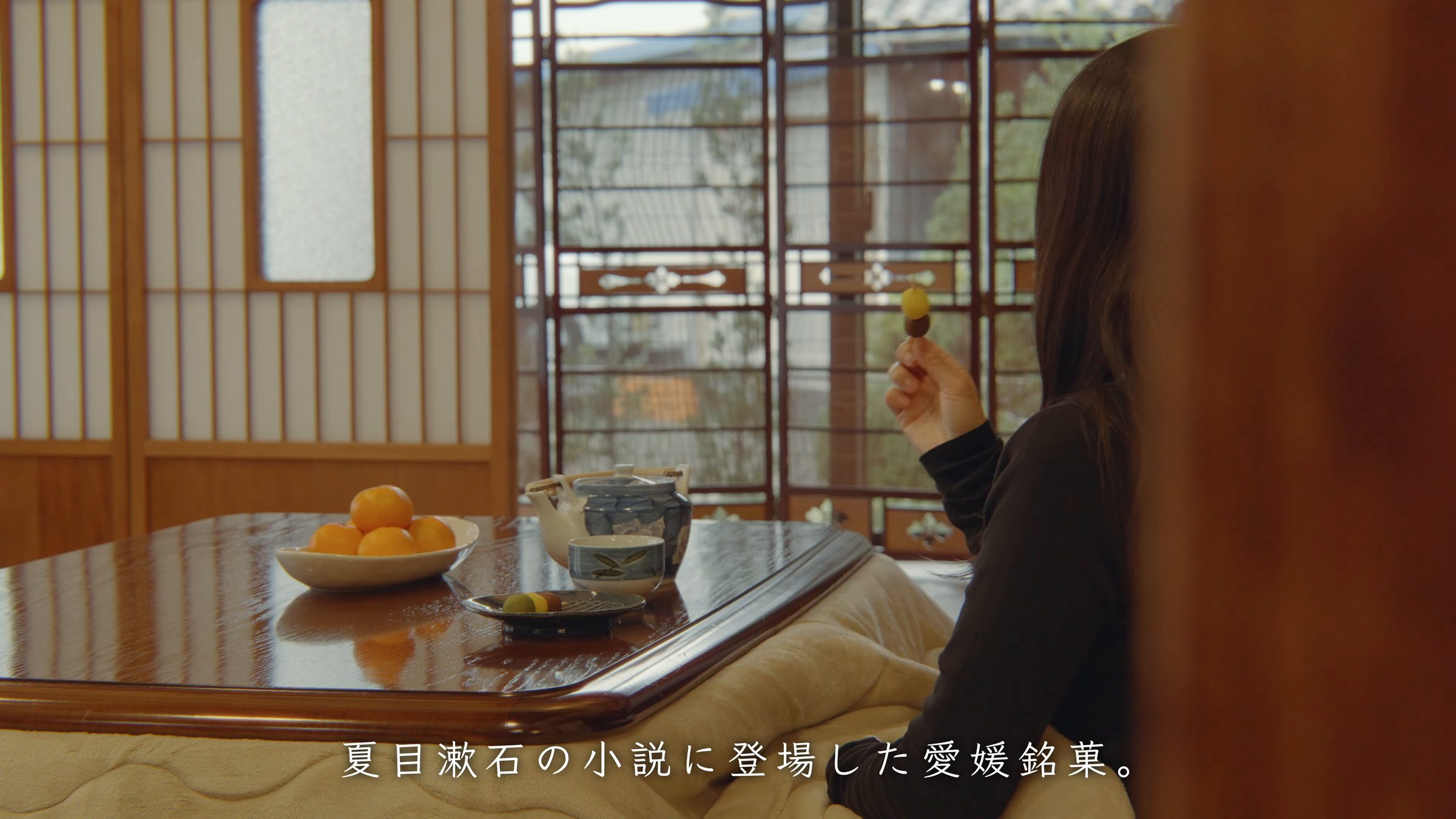
Tea time with Botchan dango
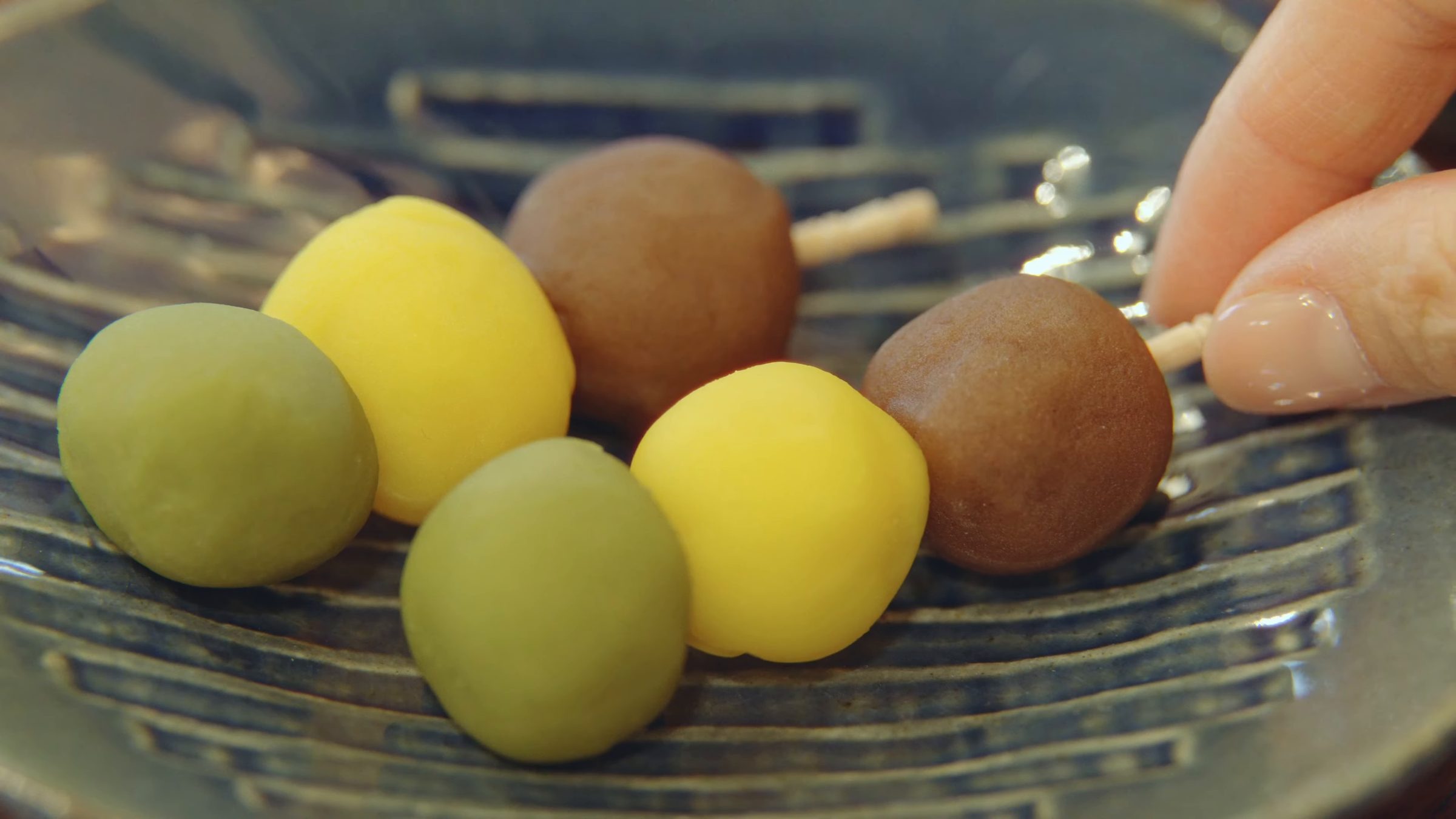
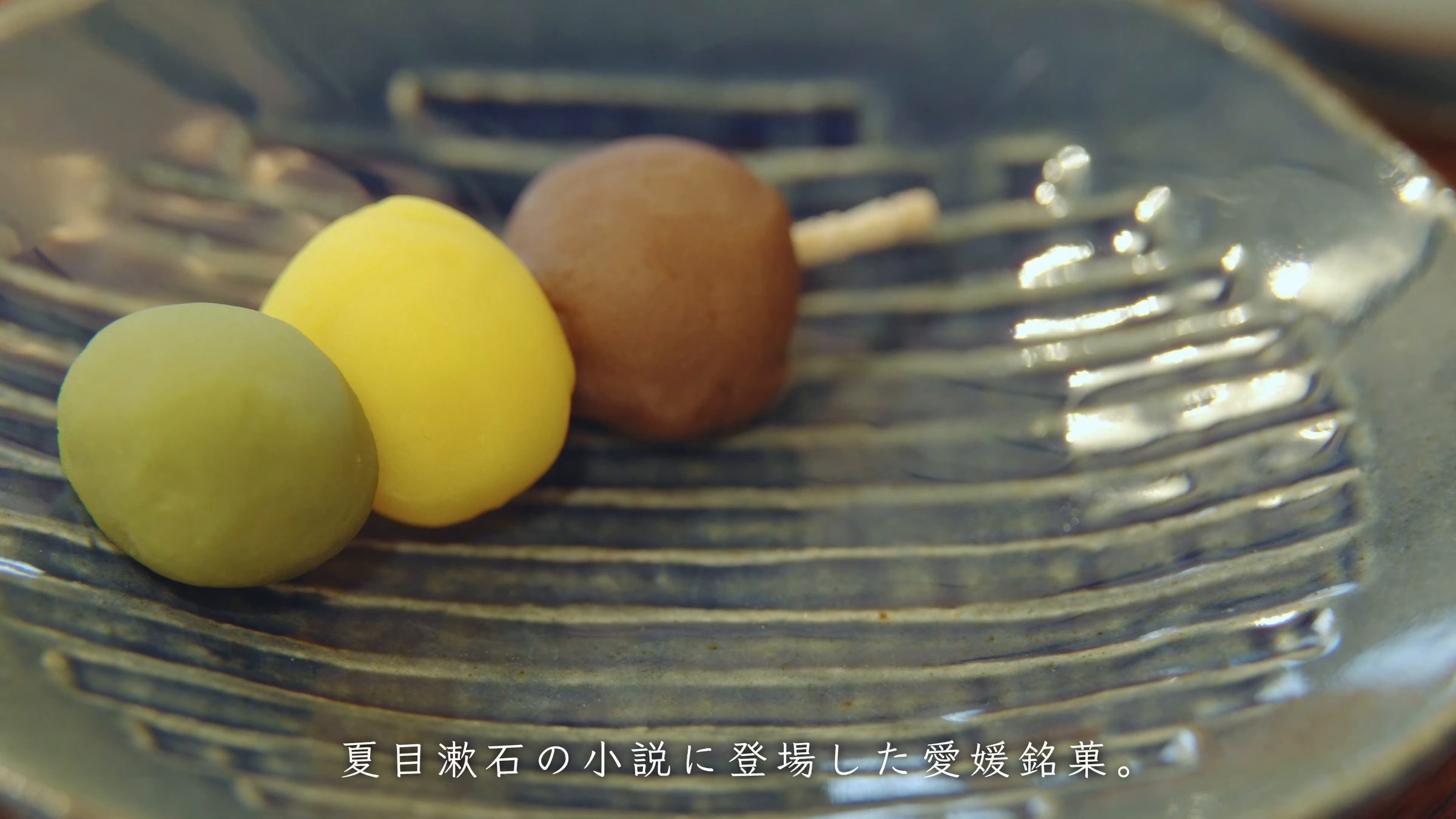
I brewed tea in a small pot and had tea time with Botchan dango, with a dish of mandarins on the side. Three colors on a skewer, green, yellow and brown: Ehime's famous confection, the one that appears in Natsume Soseki's novel.
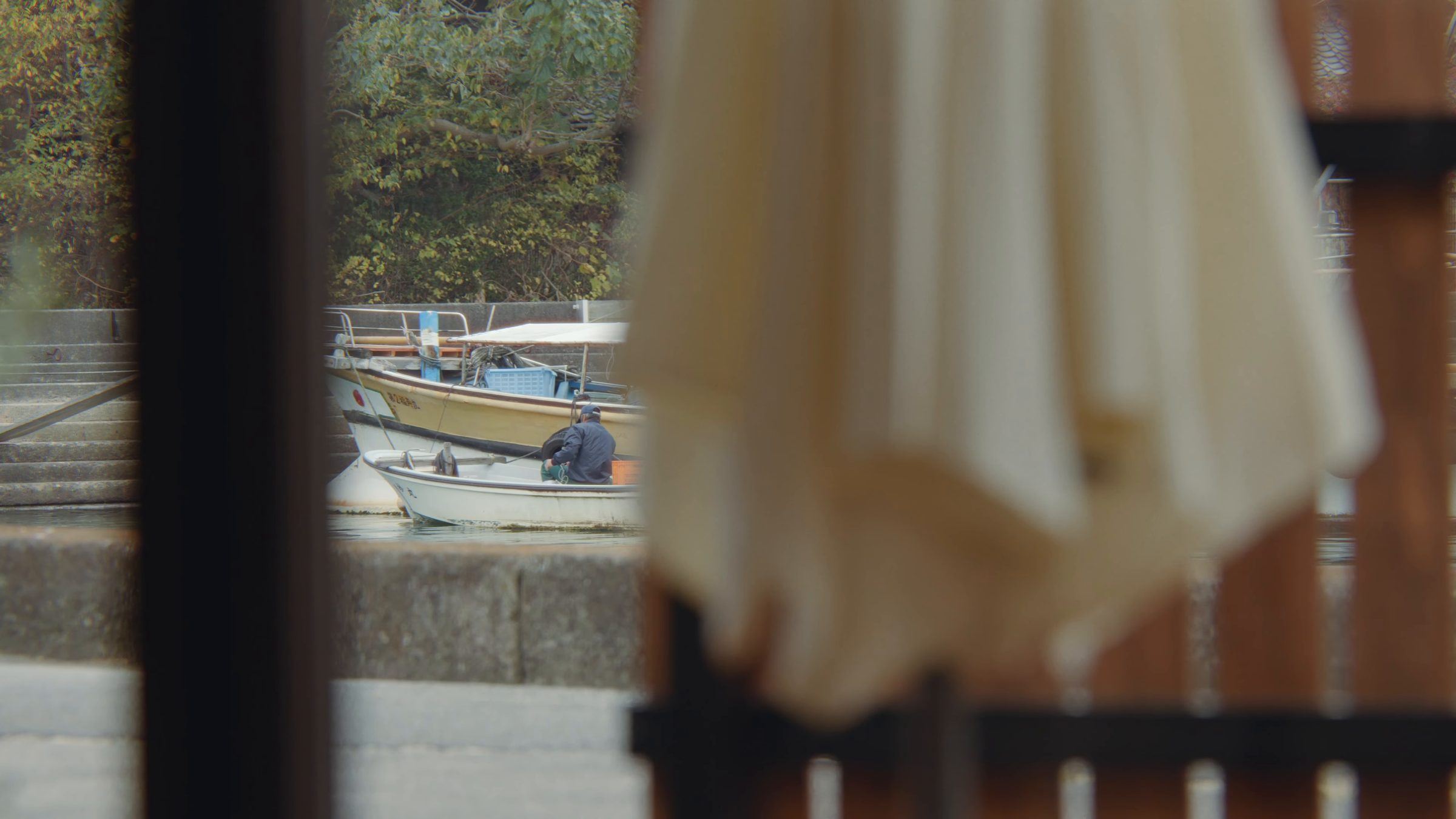
One skewer at the low table in the tatami room, while outside the window the fishing boats rocked slowly in the harbor.
Watch this scene on YouTube3:32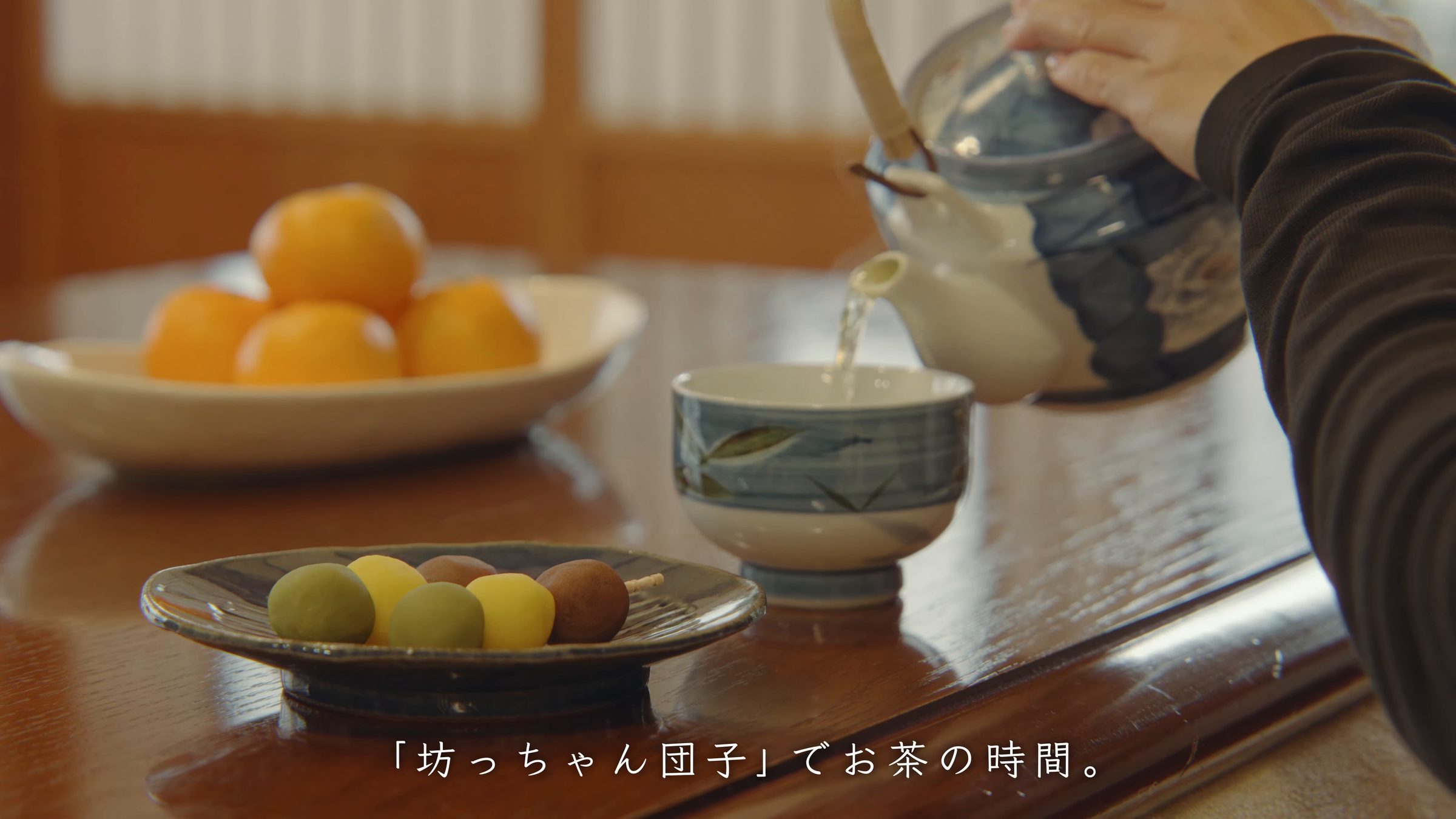
08TRAVEL JOURNAL
An old-house beer garden by the sea
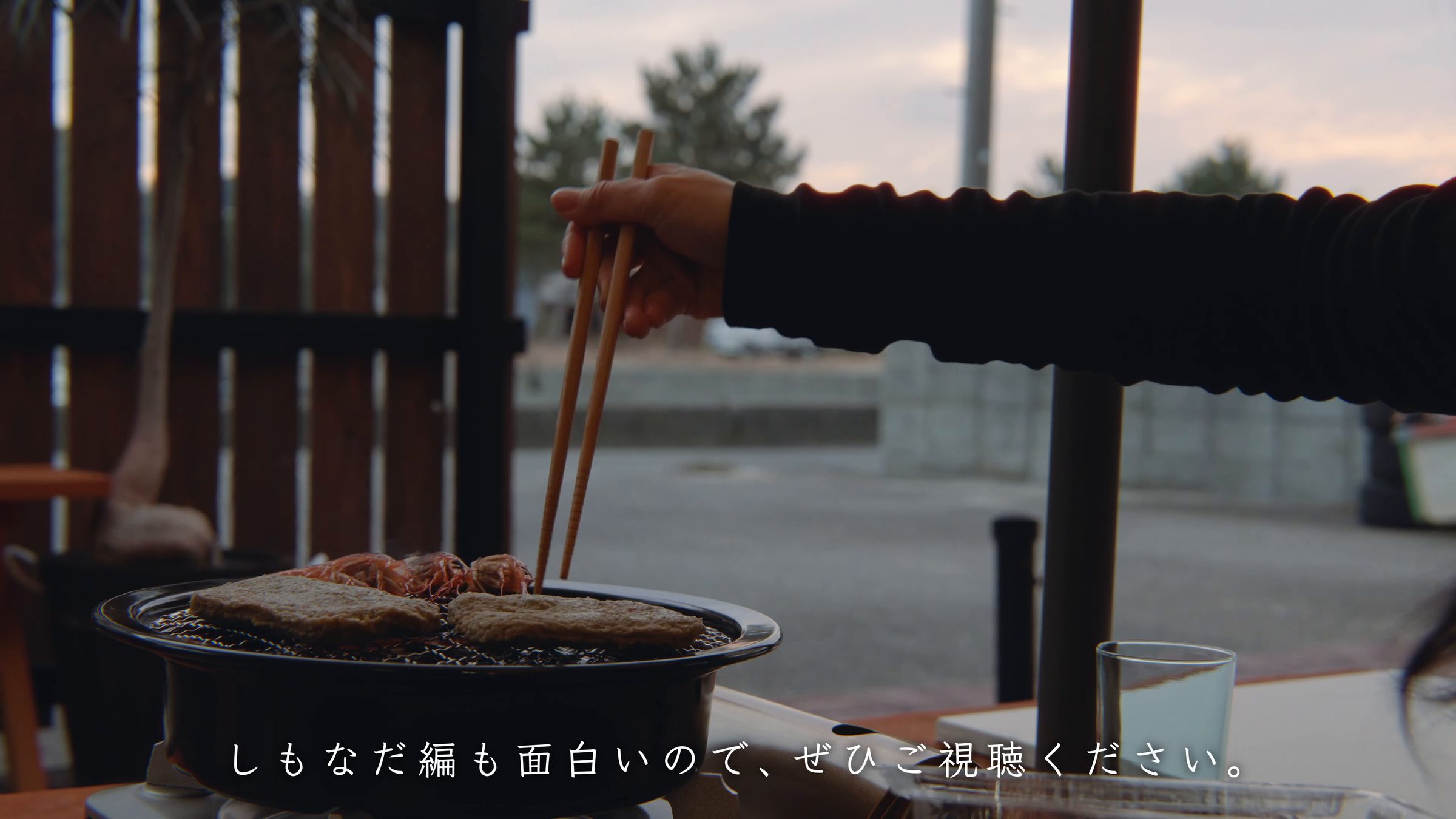
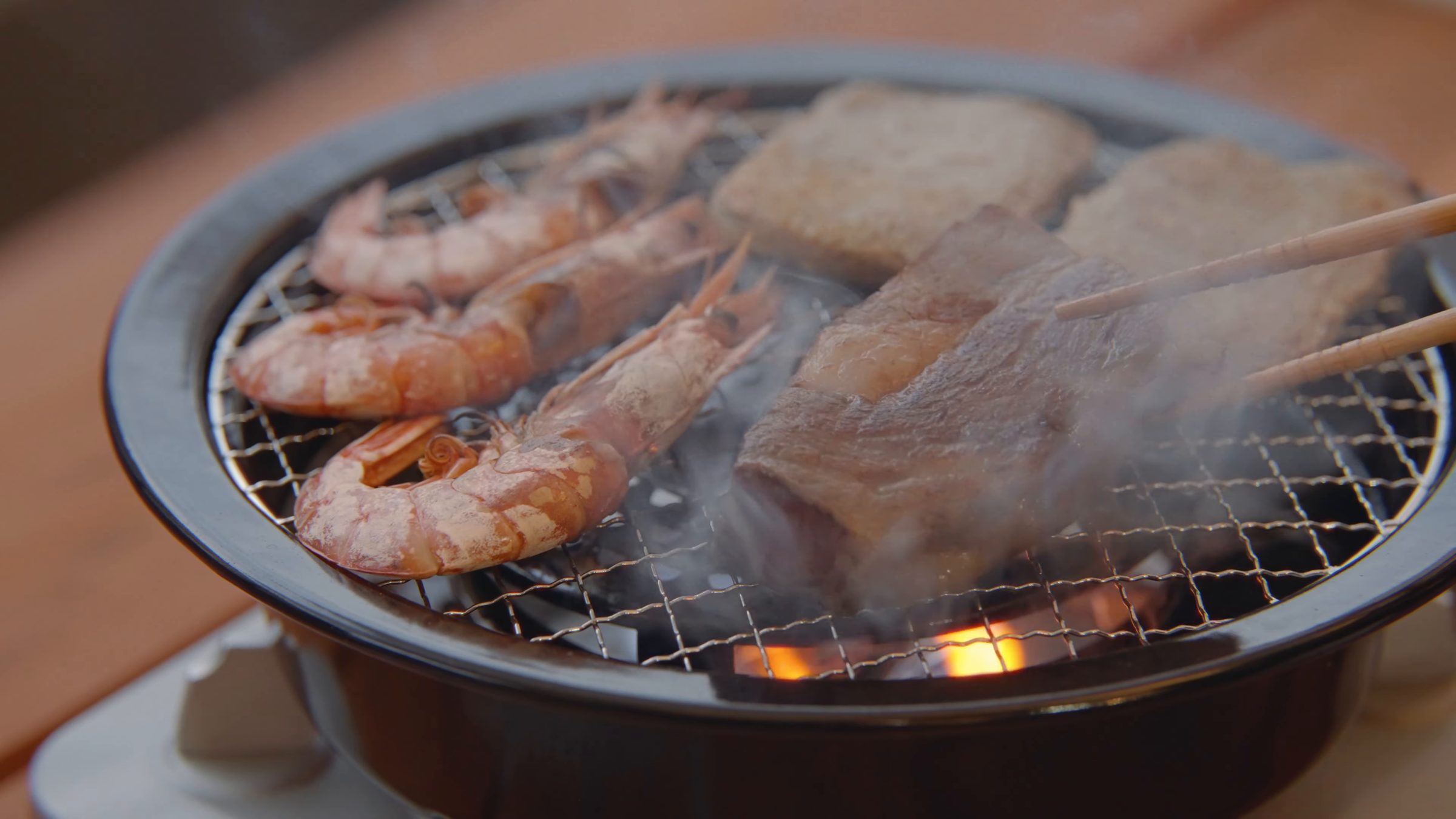
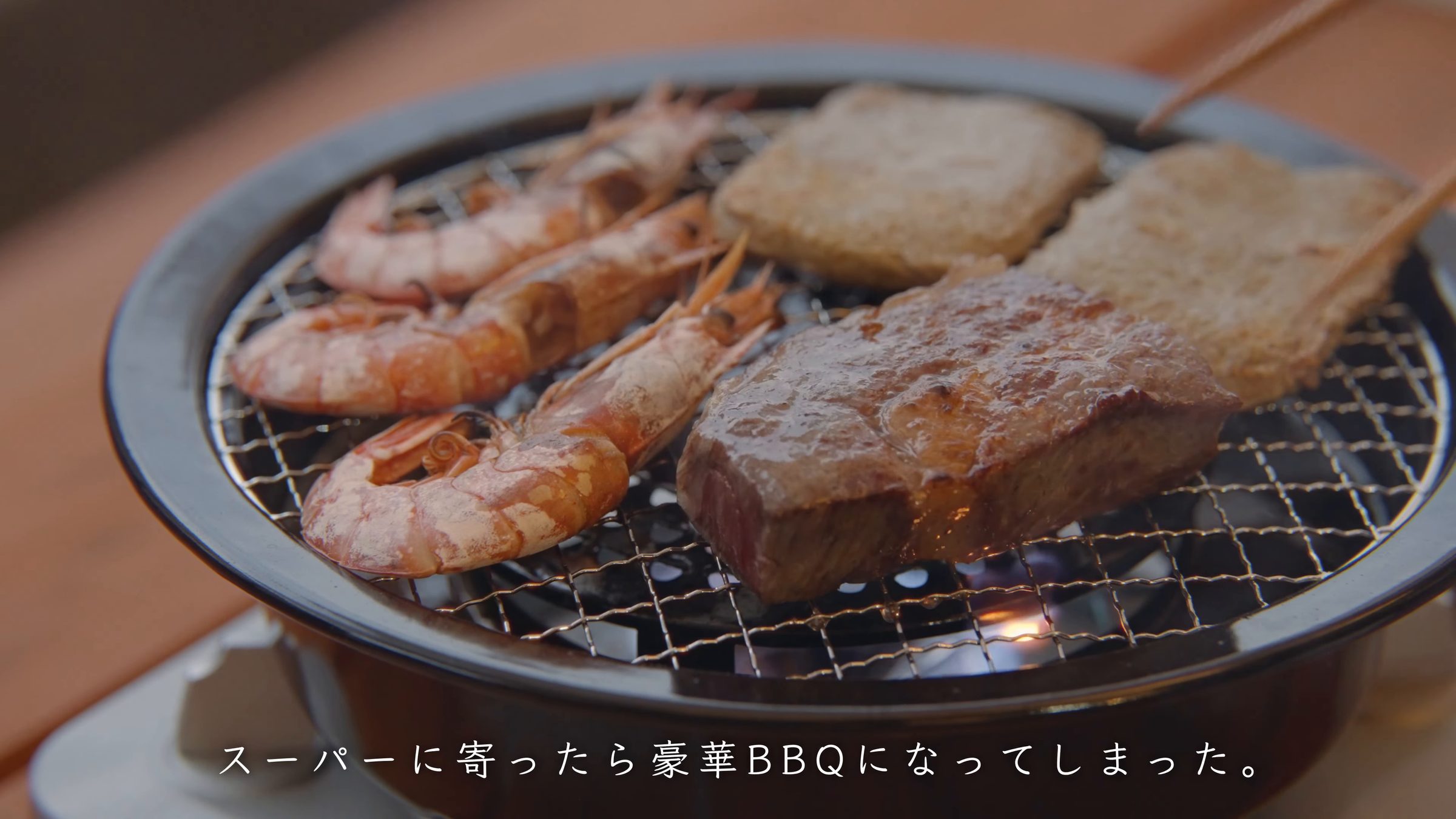
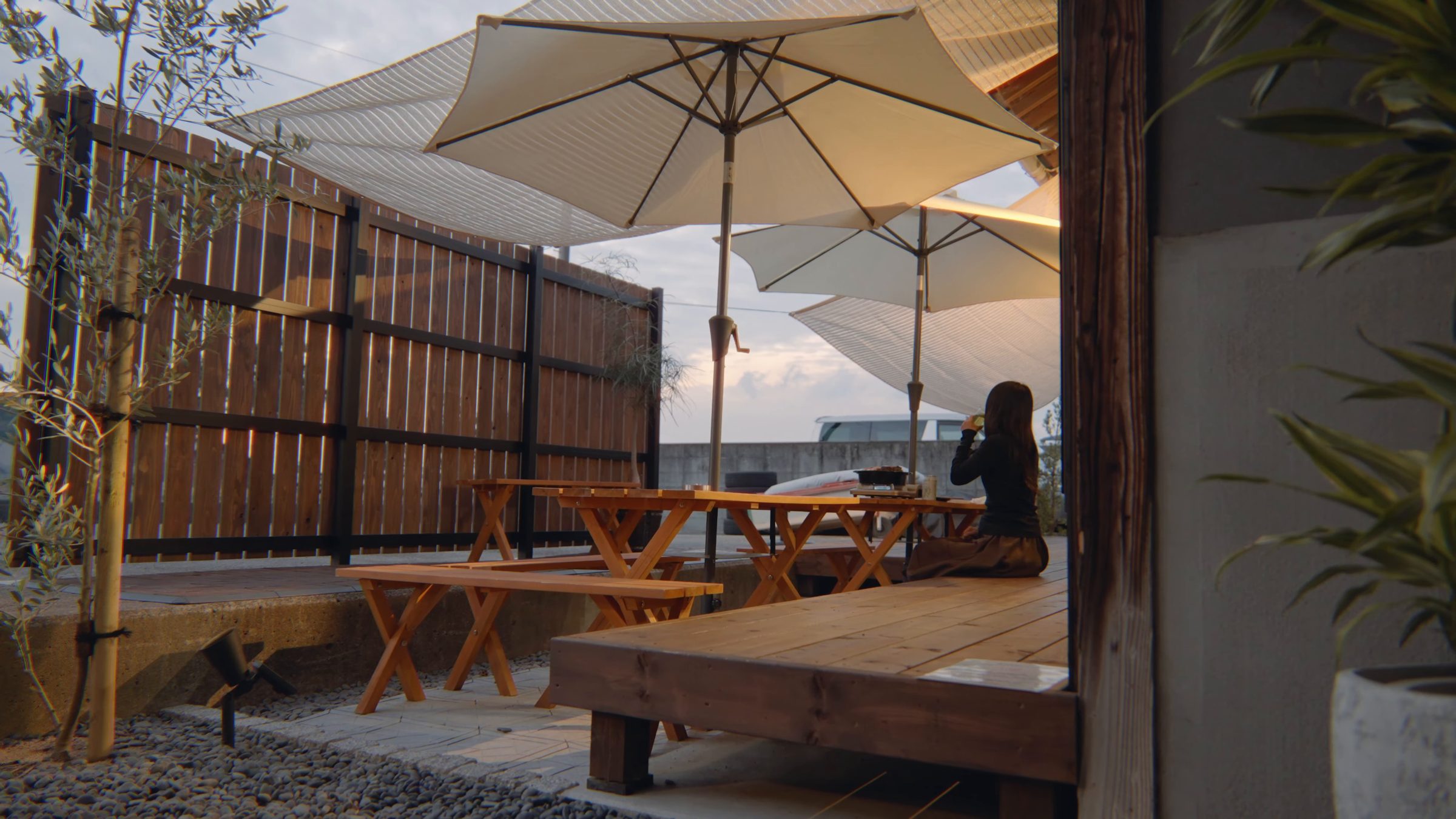
In the evening I lit the charcoal in a small clay grill on the deck, to grill the jako-ten I had bought at Shimonada. I only meant to grill a little fish cake, but a stop at the supermarket turned it into a lavish barbecue. Whole prawns turned red on the grill while the jako-ten smoked. I also came across Ehime wagyu beef; let's call that a happy miscalculation.
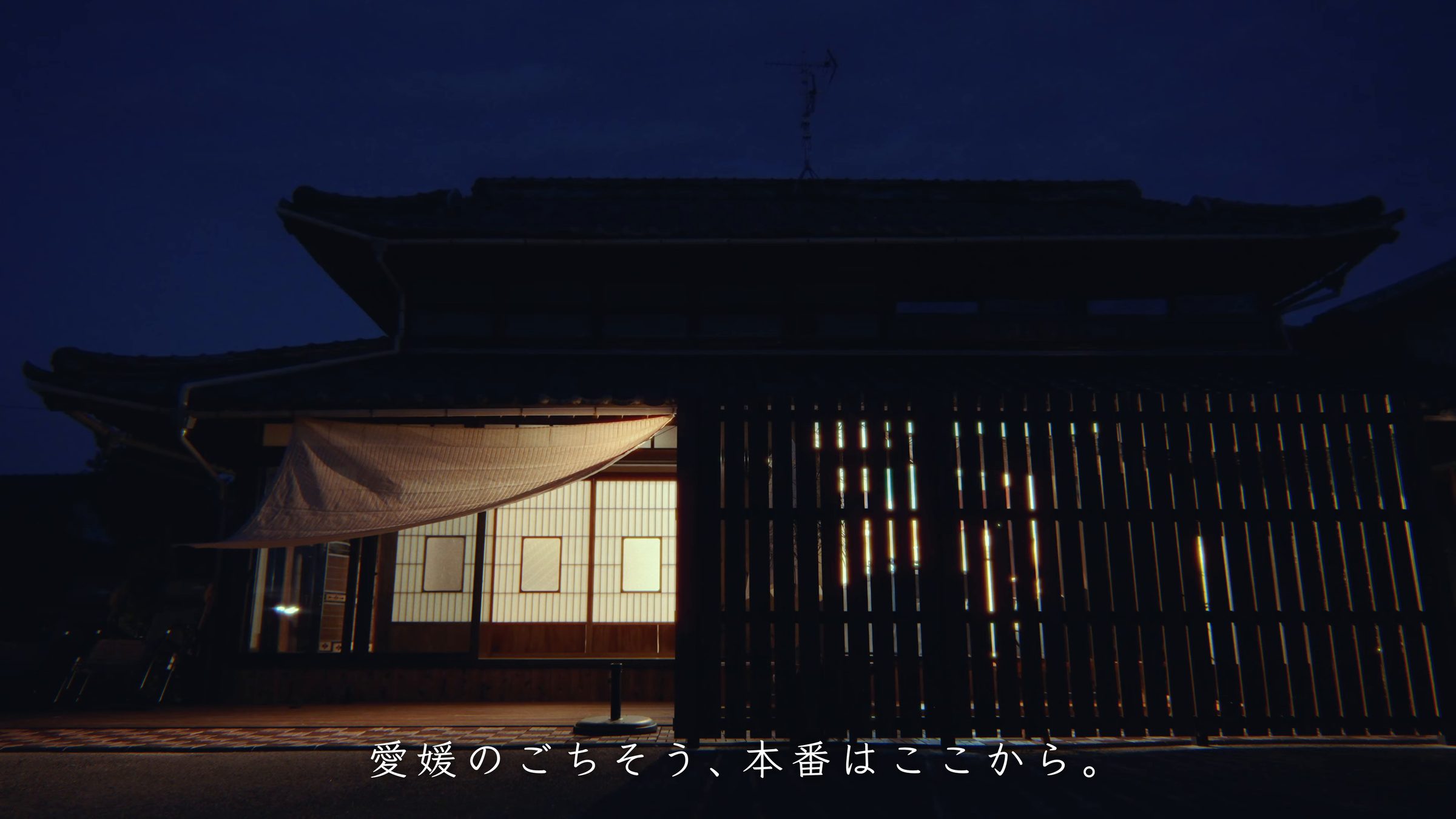
Under the parasols on the deck, I had a drink with delicious Ehime specialties: an old-house beer garden by the sea. When the sun went down, lights came on in the windows of the old house. Ehime's specialties were not over yet.
Watch this scene on YouTube4:01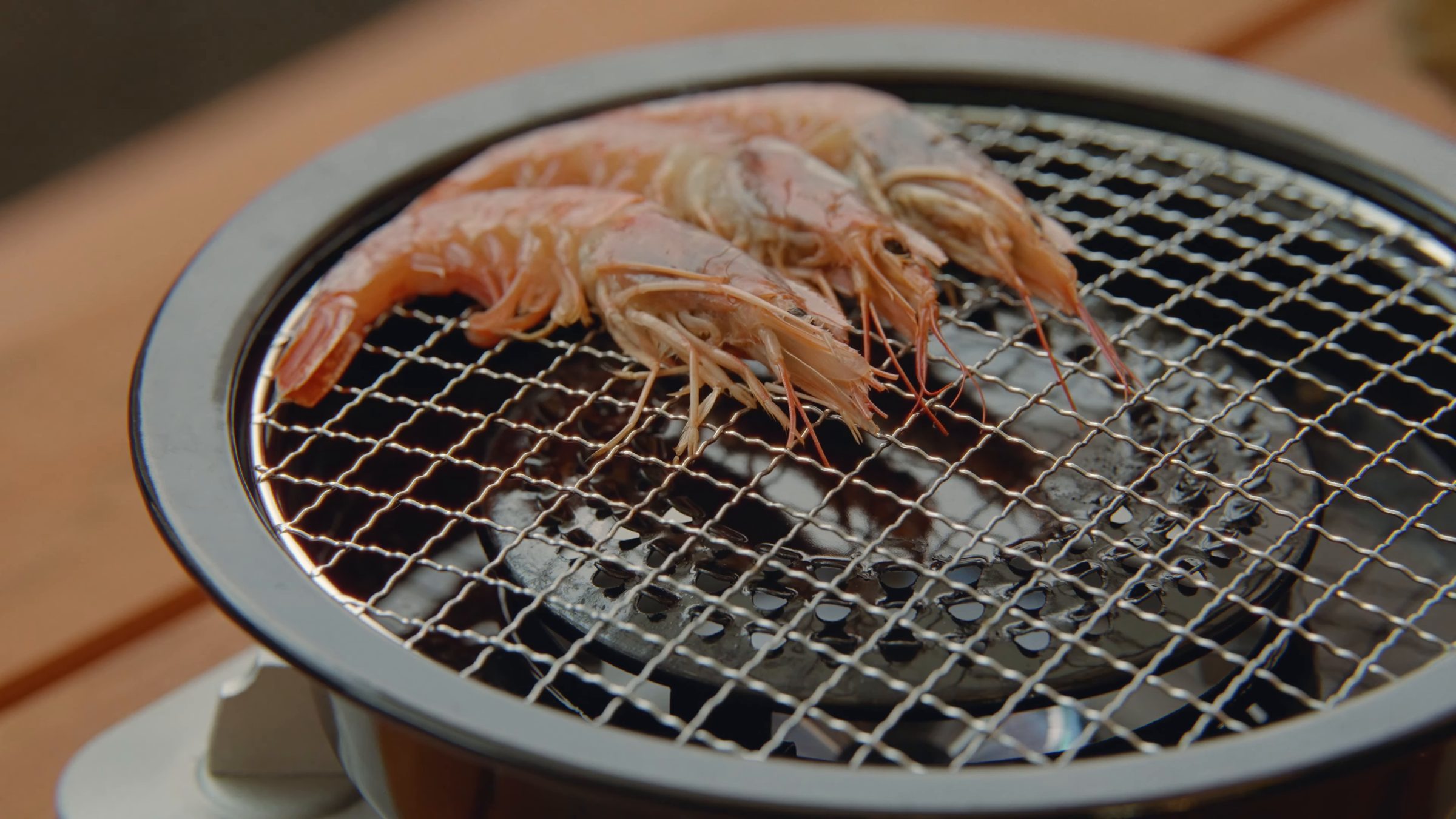
09TRAVEL JOURNAL
Instant tai-meshi, with its own little pot
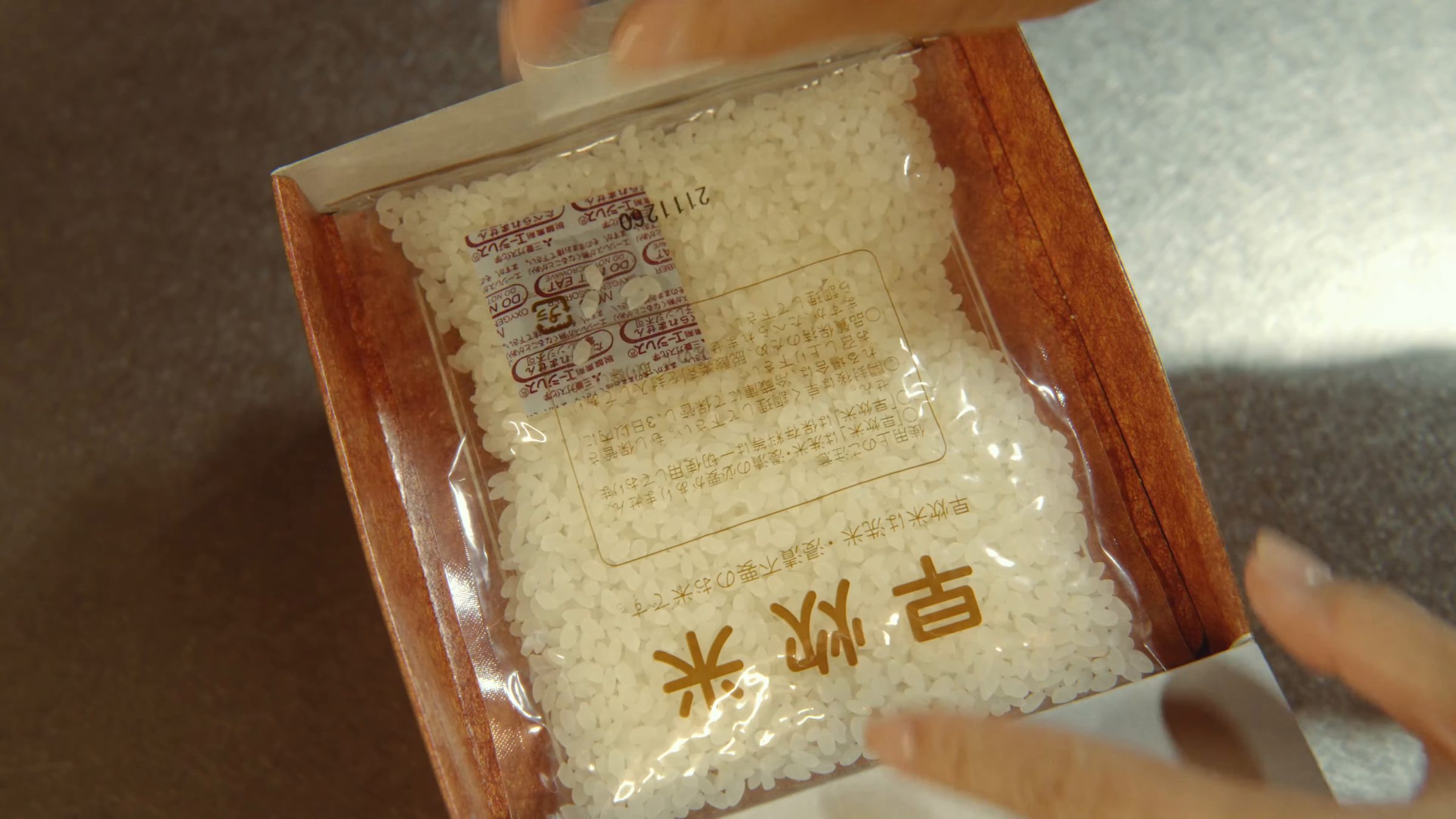
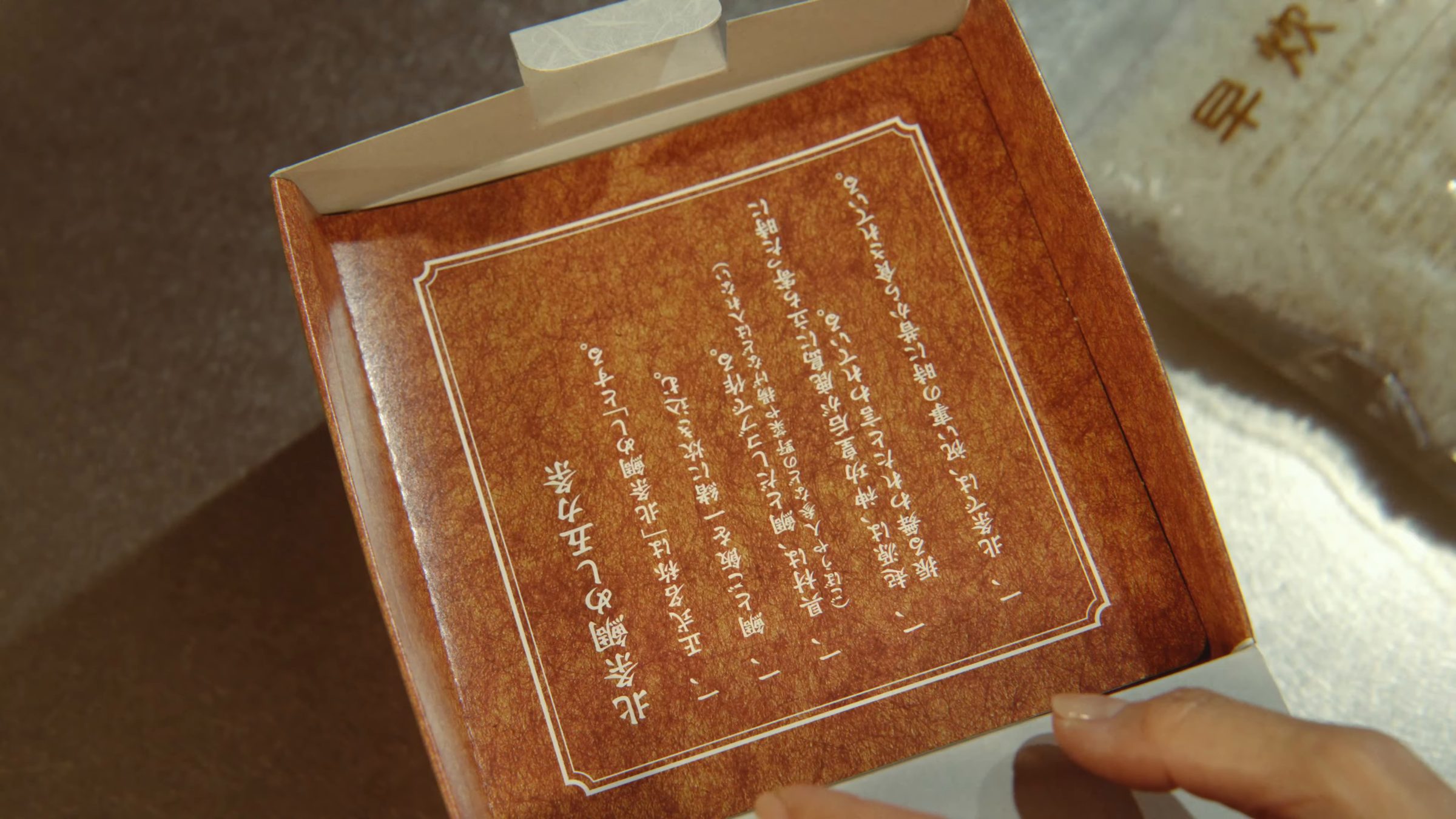
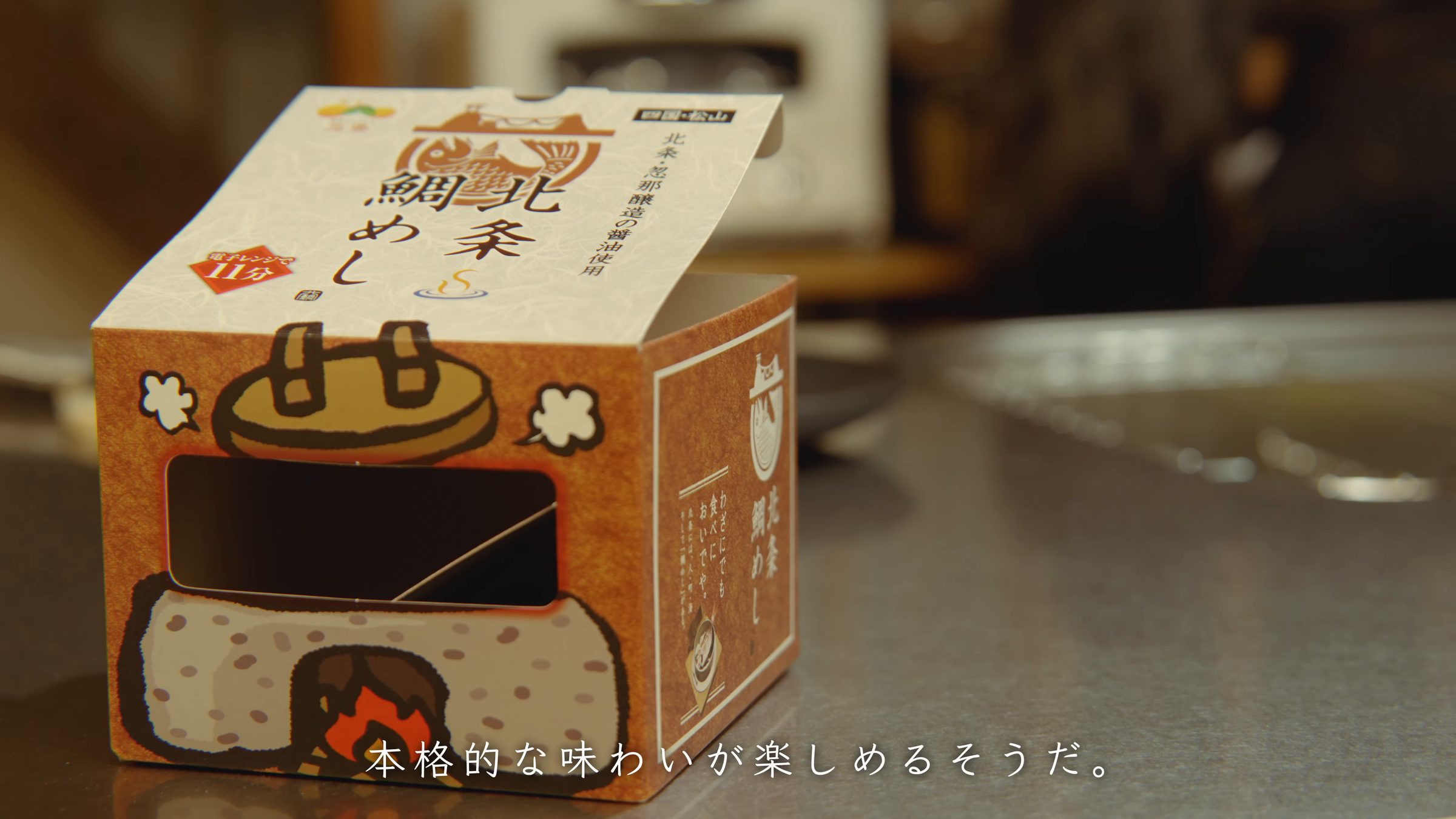
What I had was a box of Hojo tai-meshi, a ready-to-eat version of the sea-bream rice of Hojo, in Matsuyama, where a whole bream is cooked with the rice. The box says it is made with soy sauce from a brewery in Hojo.
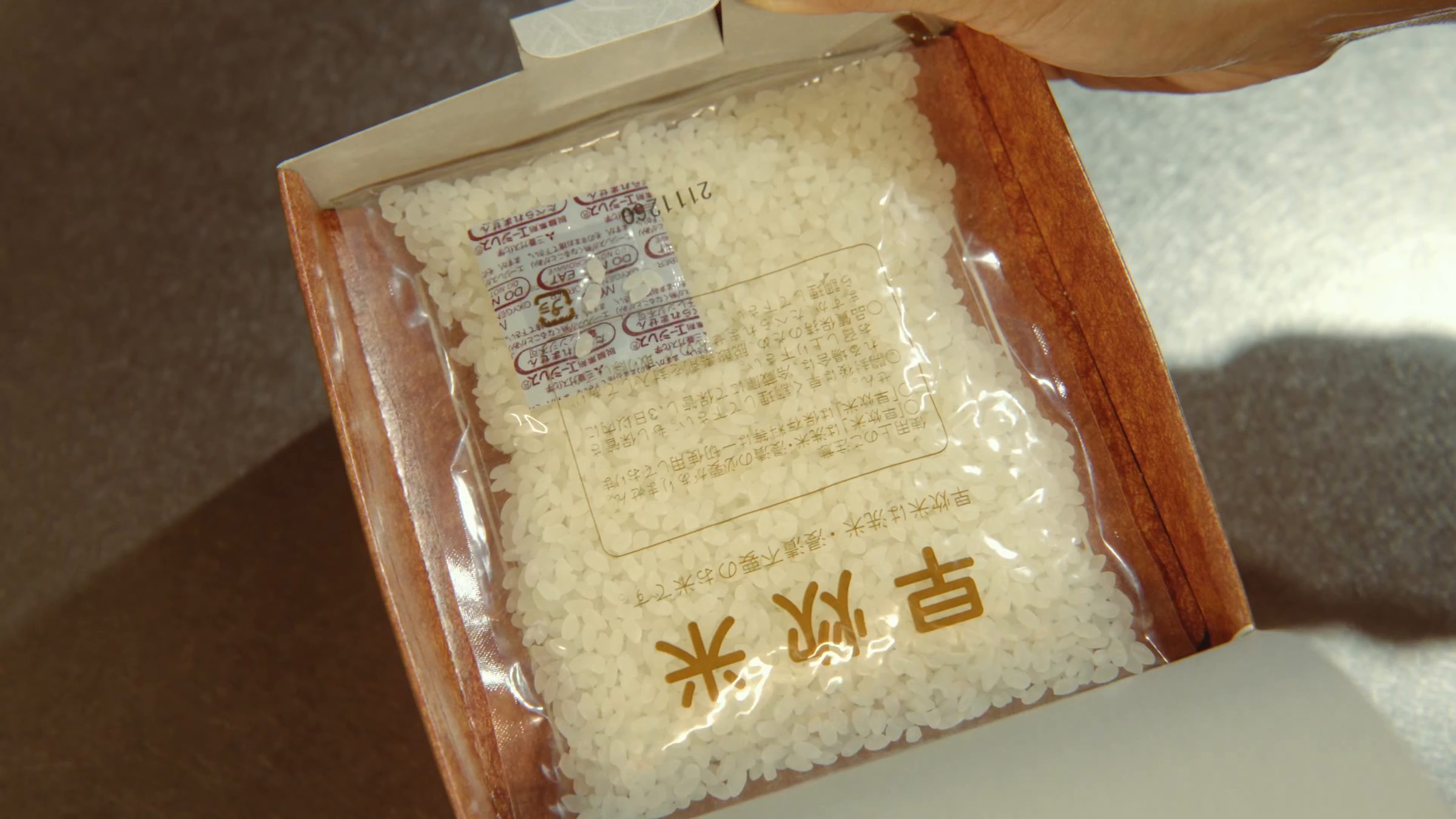
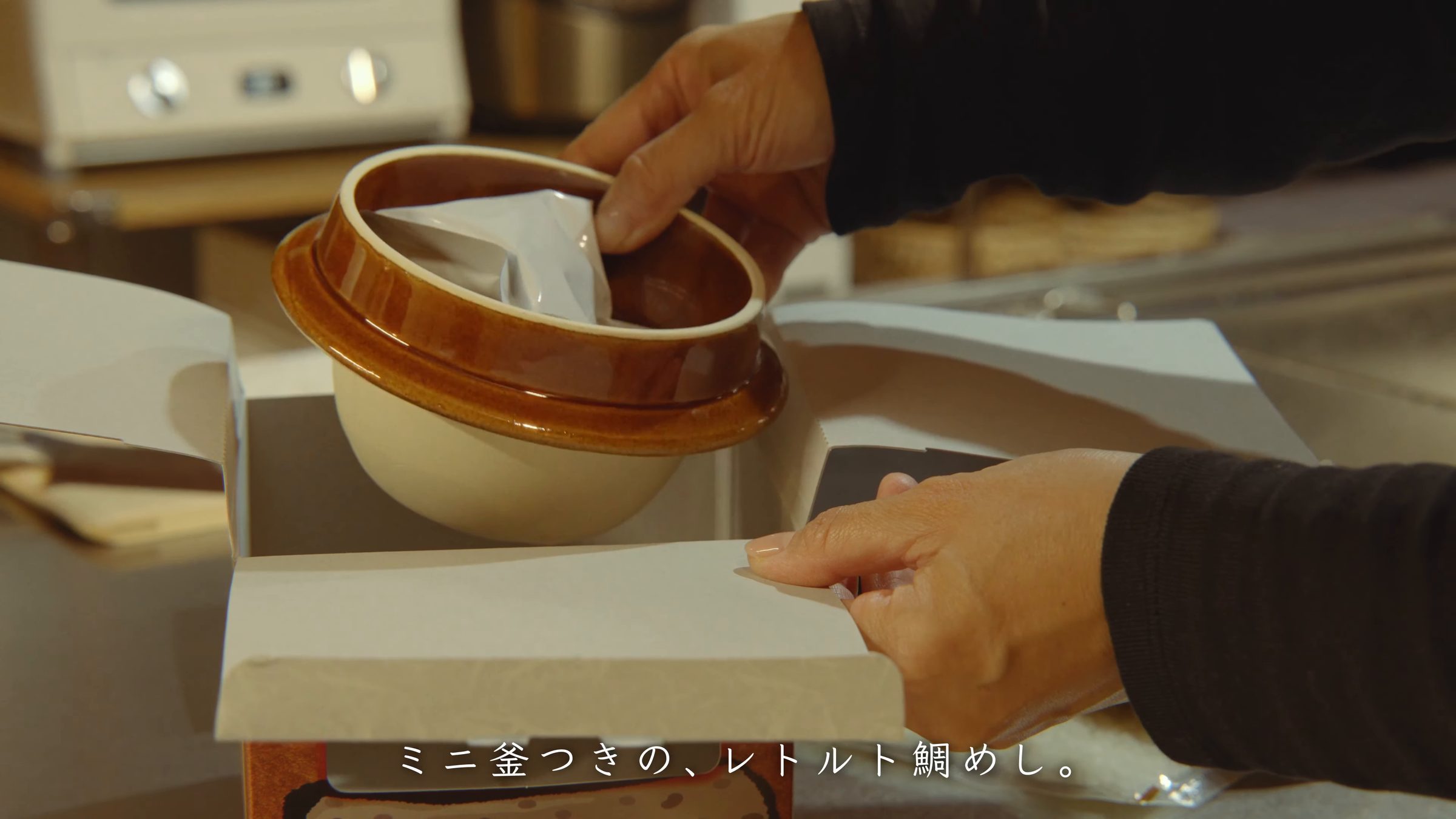
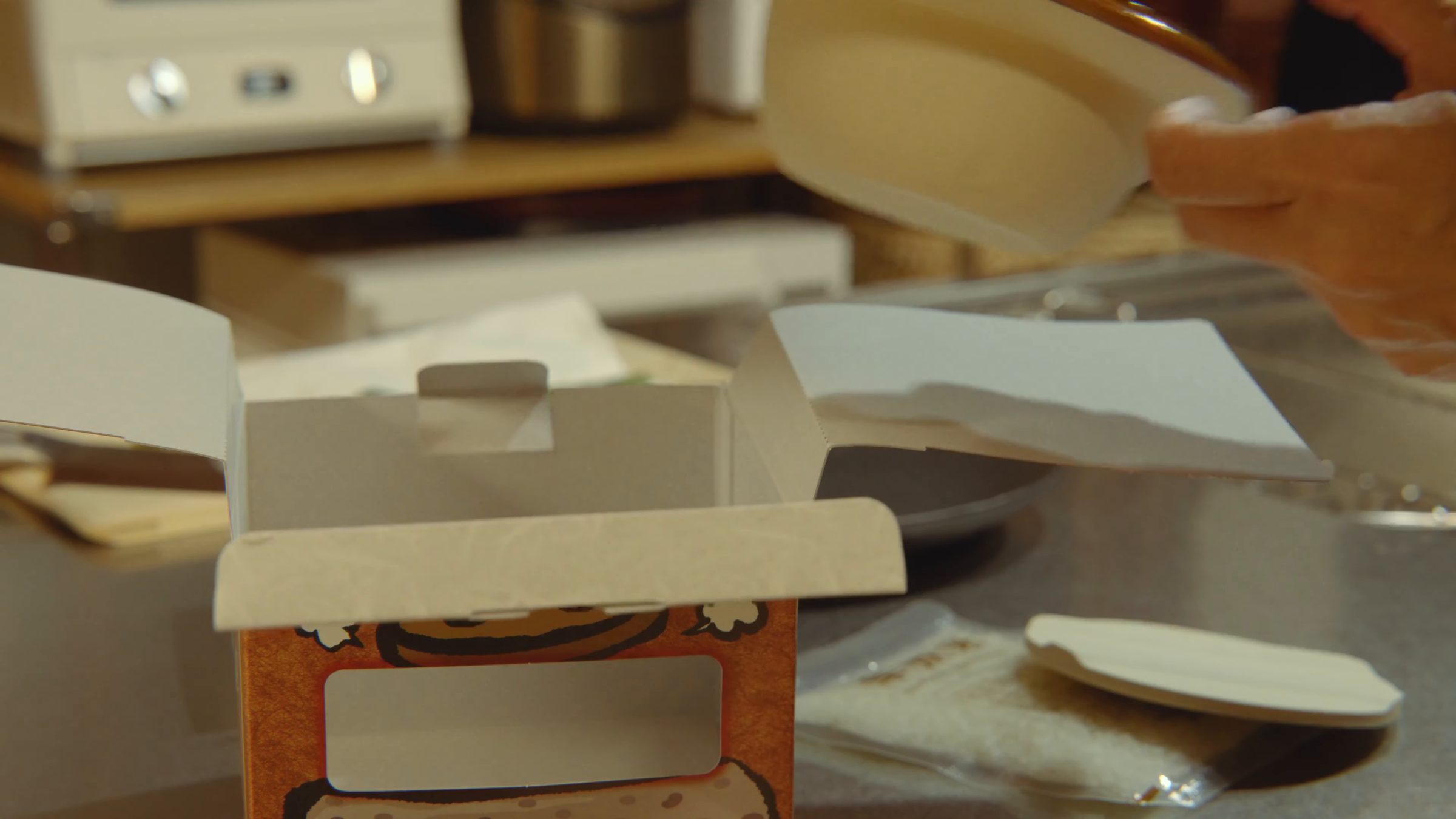
Inside were a pack of rice and a small ceramic pot: instant tai-meshi with its own little pot. They say you can enjoy the authentic taste just by heating it in the microwave. The box, printed with a picture of a kamado stove, was charming.
Watch this scene on YouTube5:07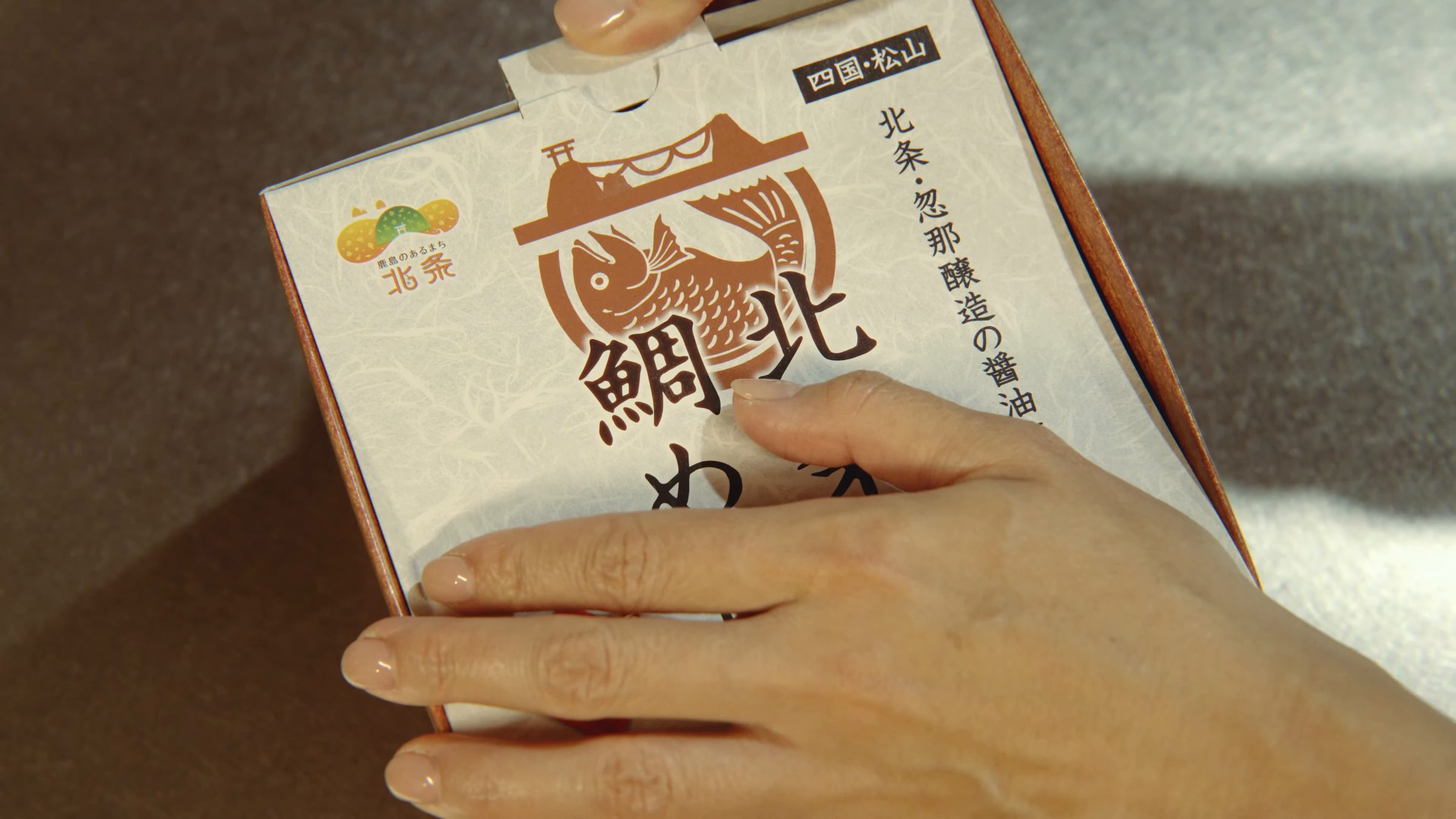
10TRAVEL JOURNAL
Tai-meshi, sashimi-bowl style
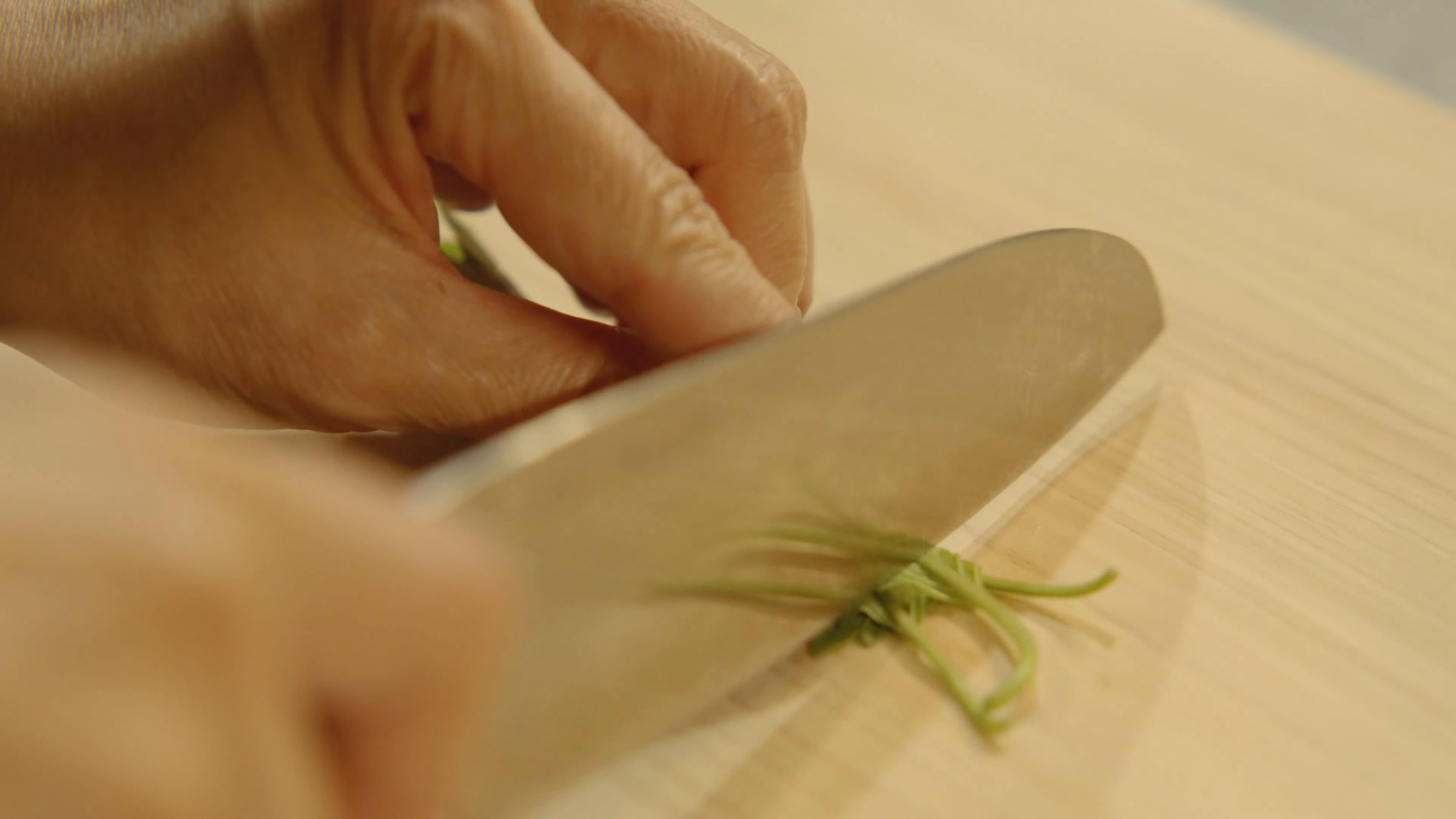
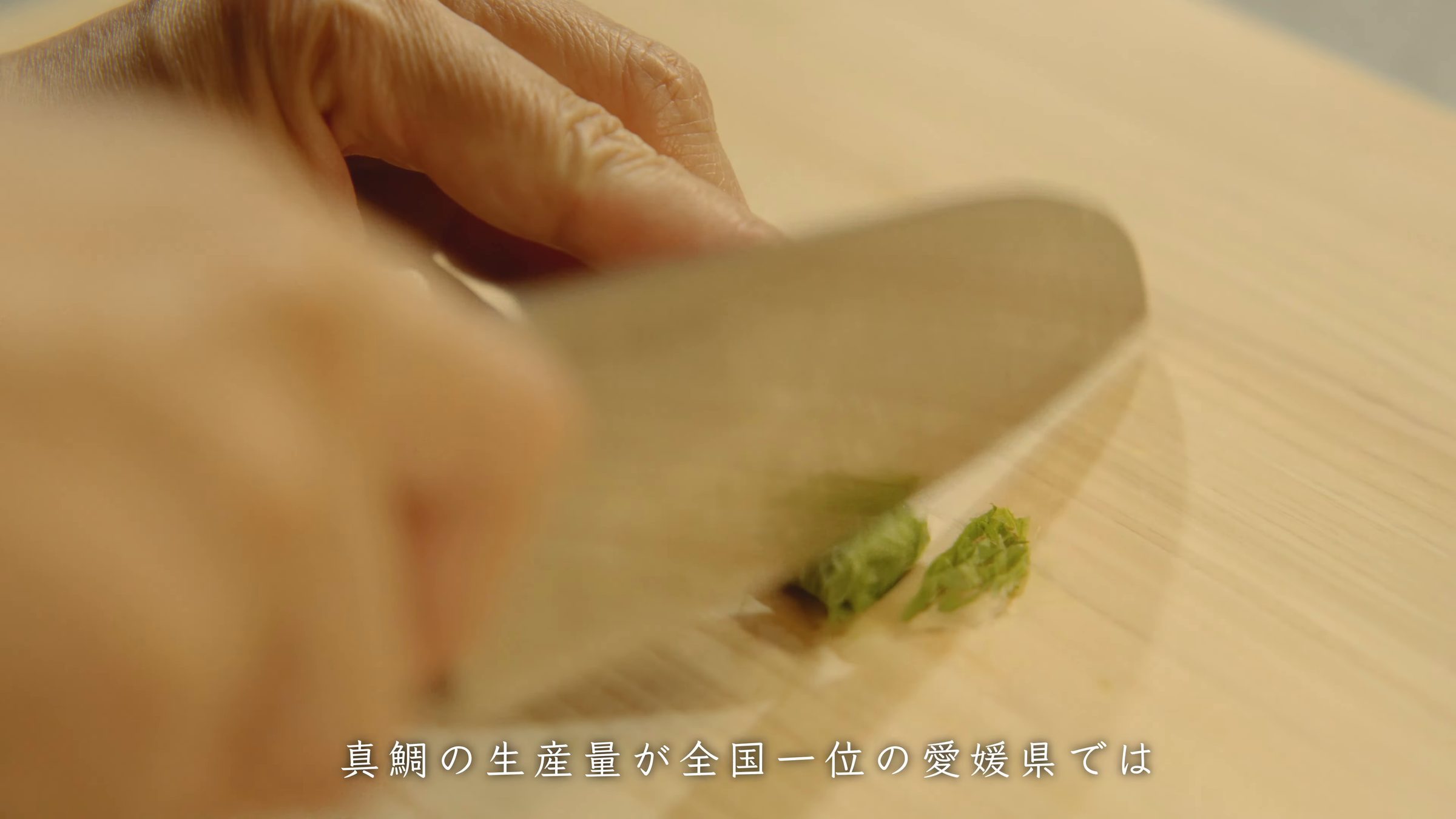
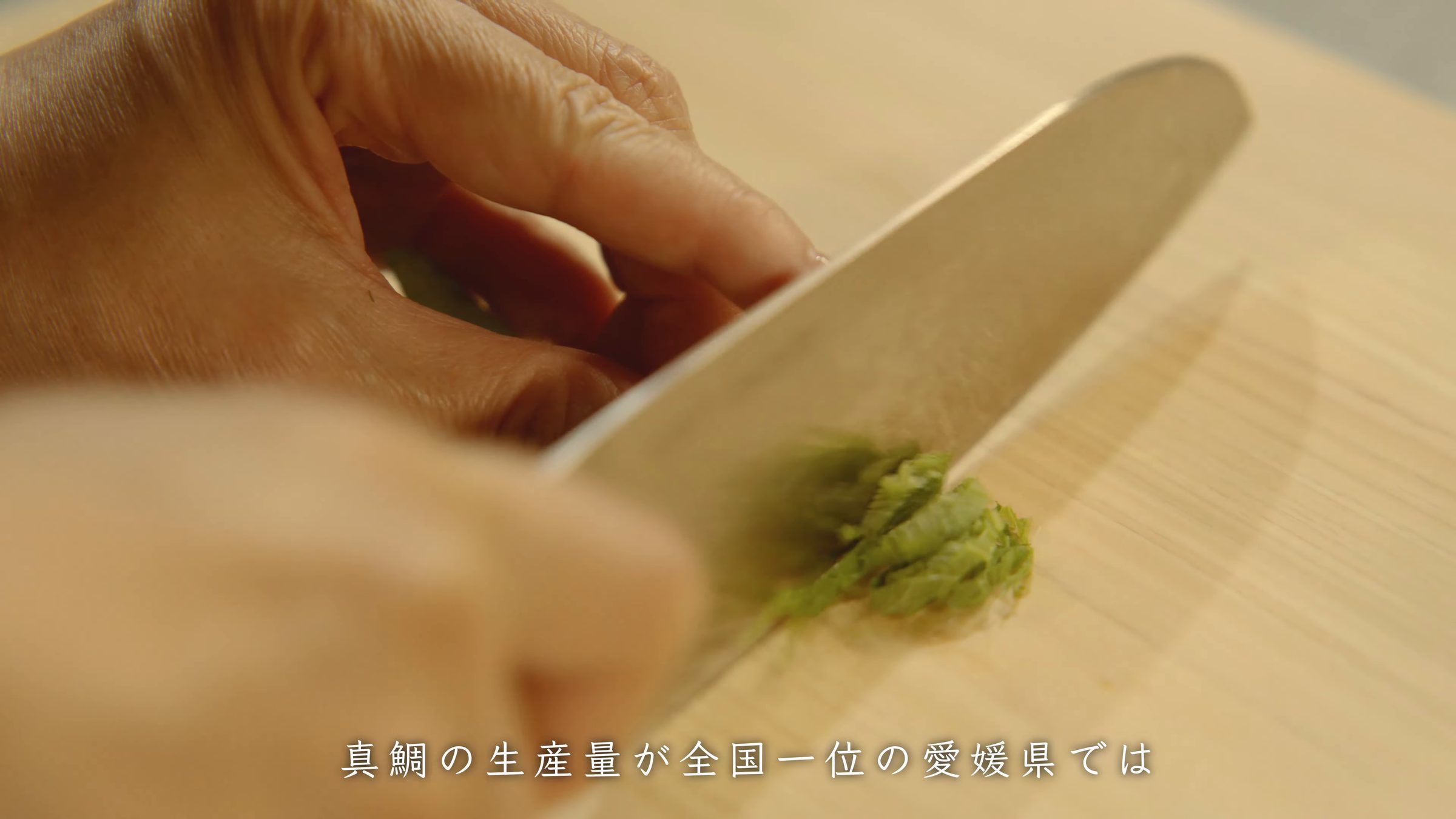
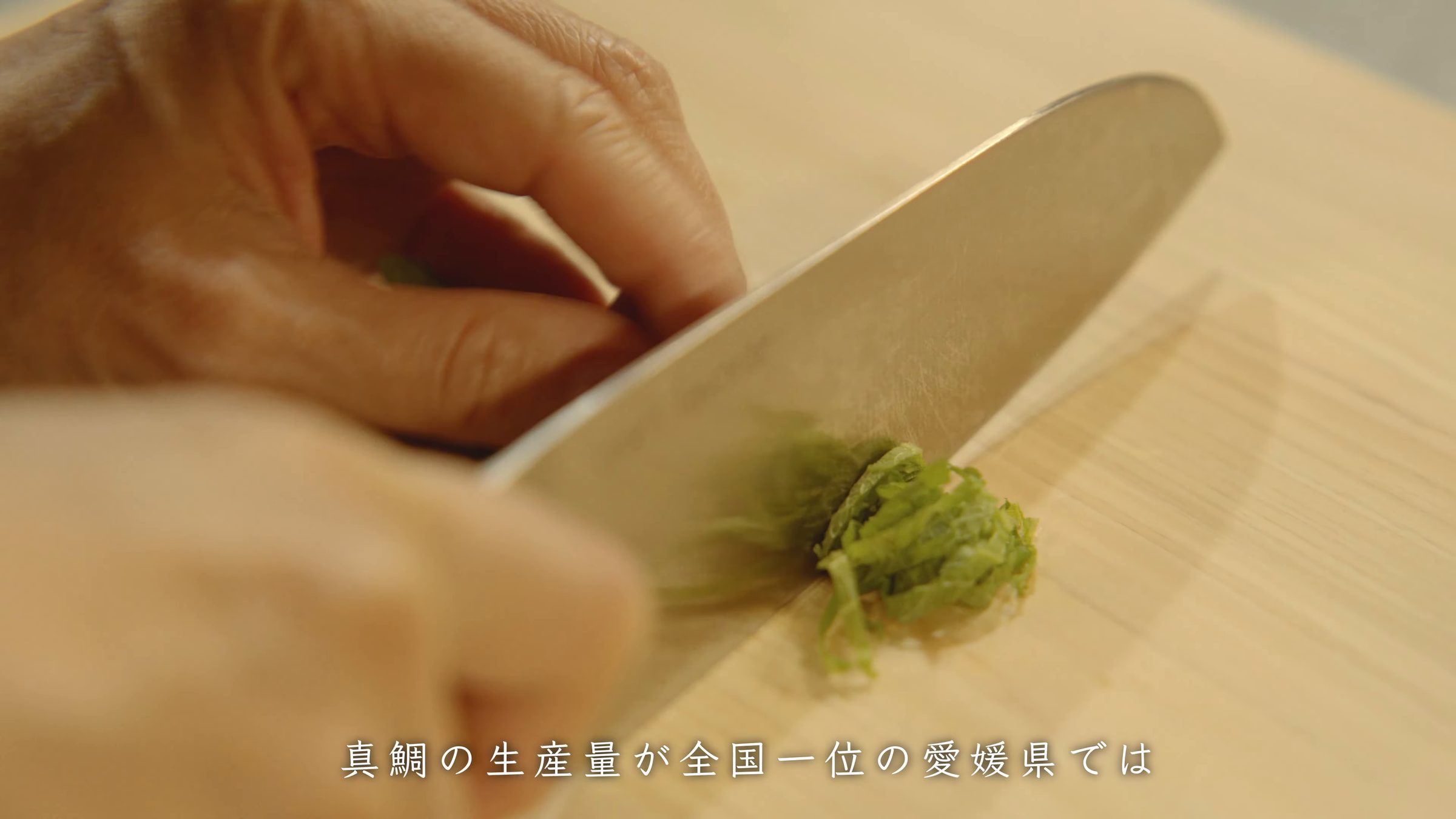
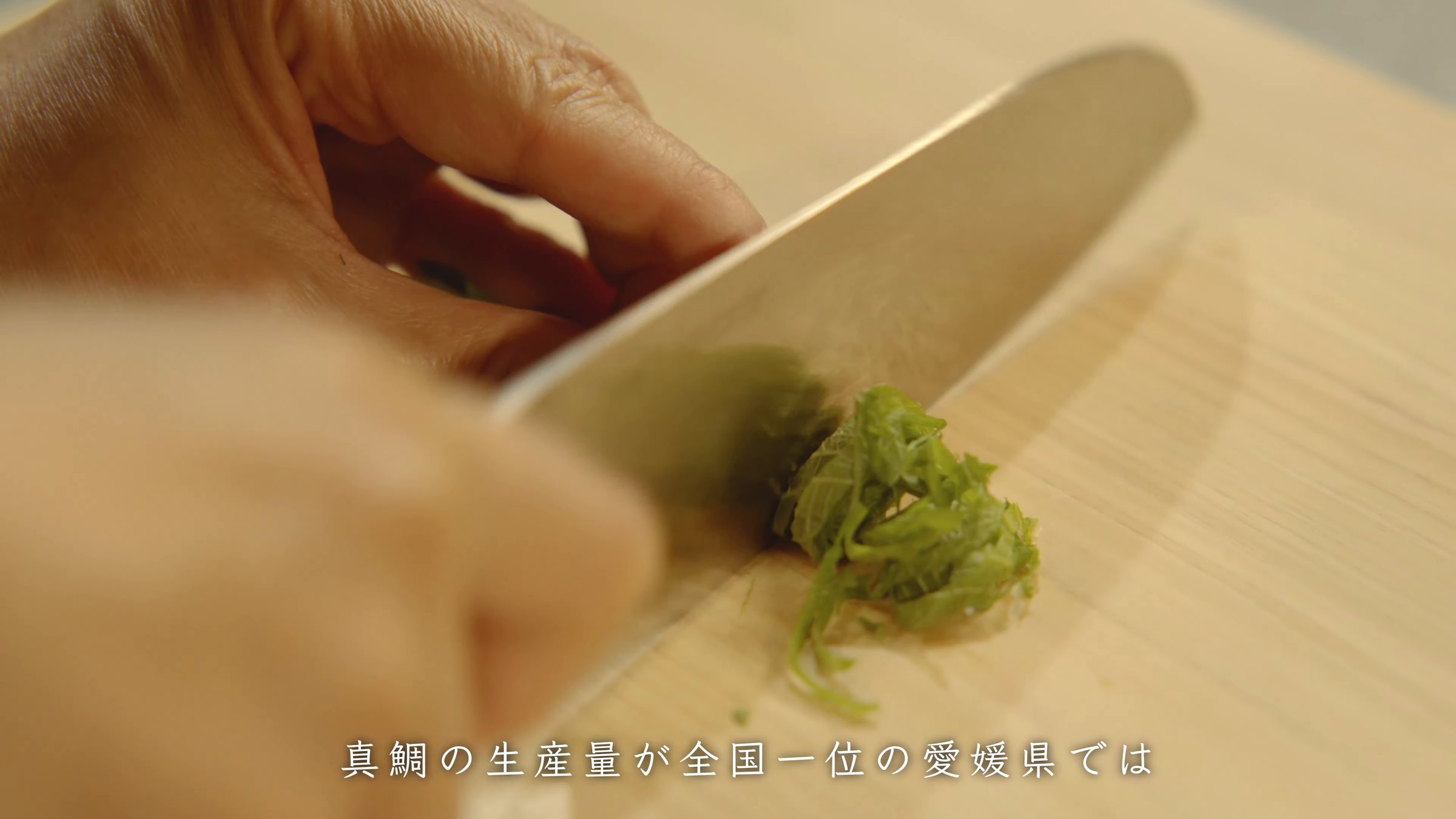
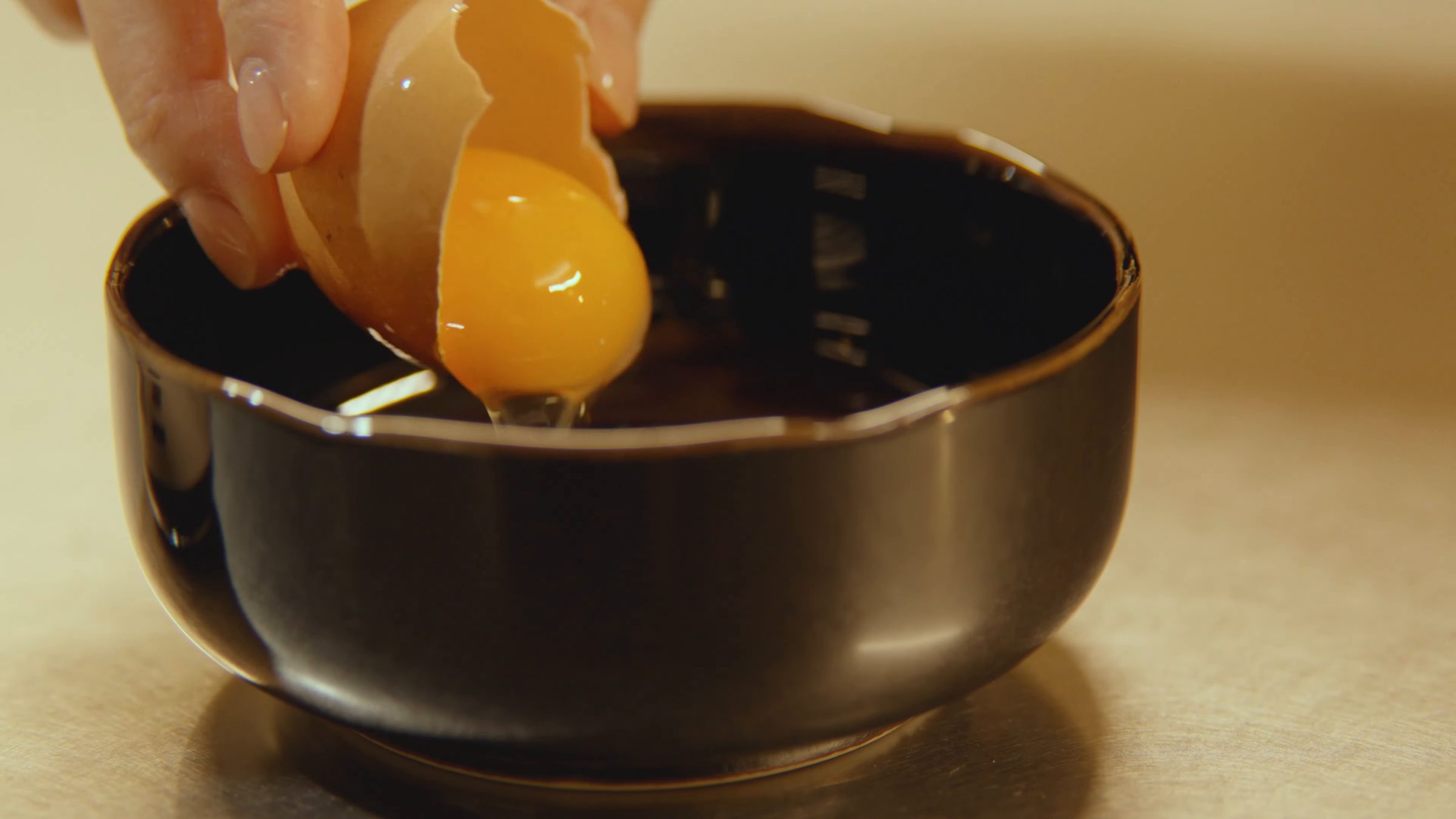
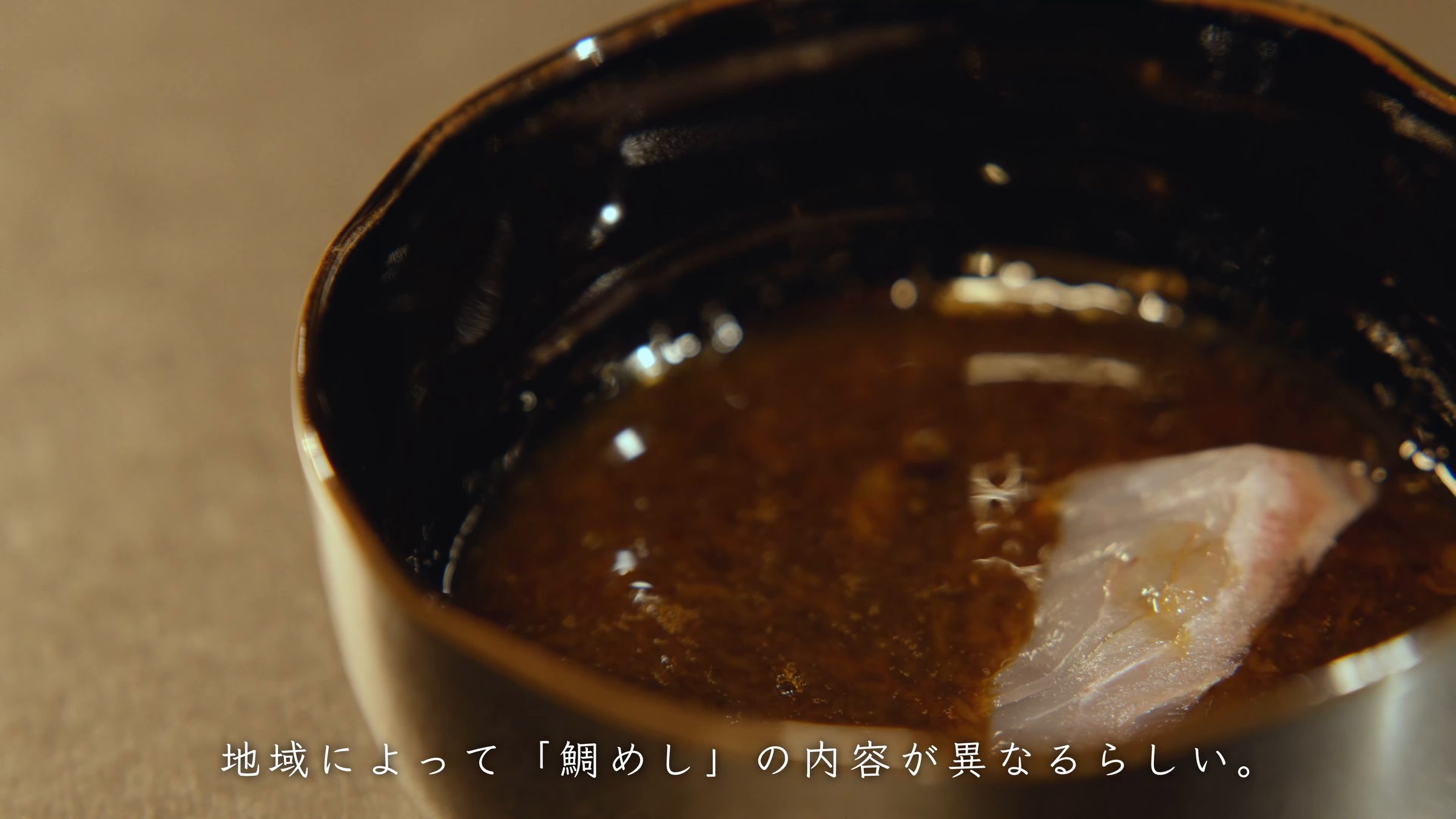
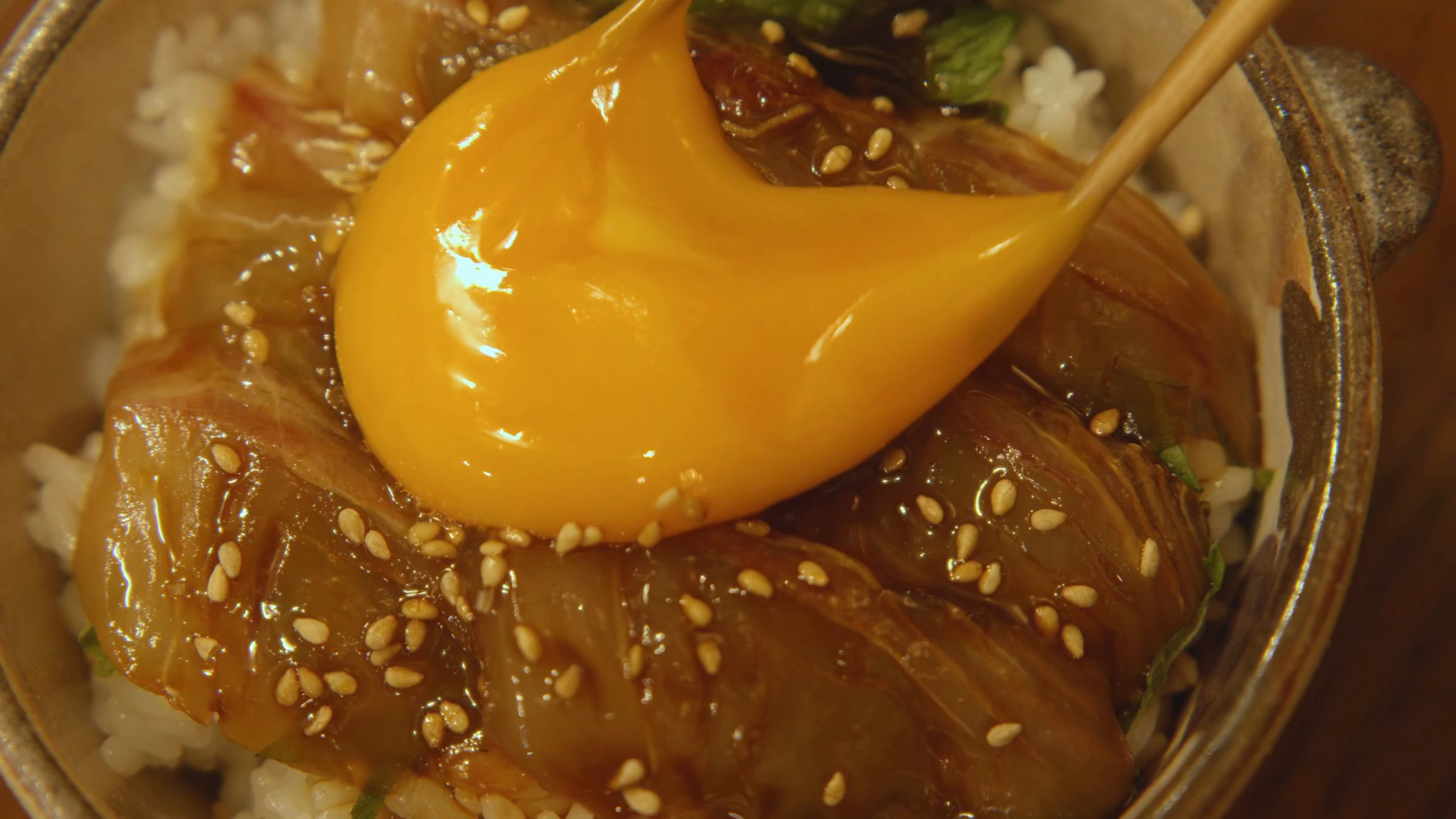
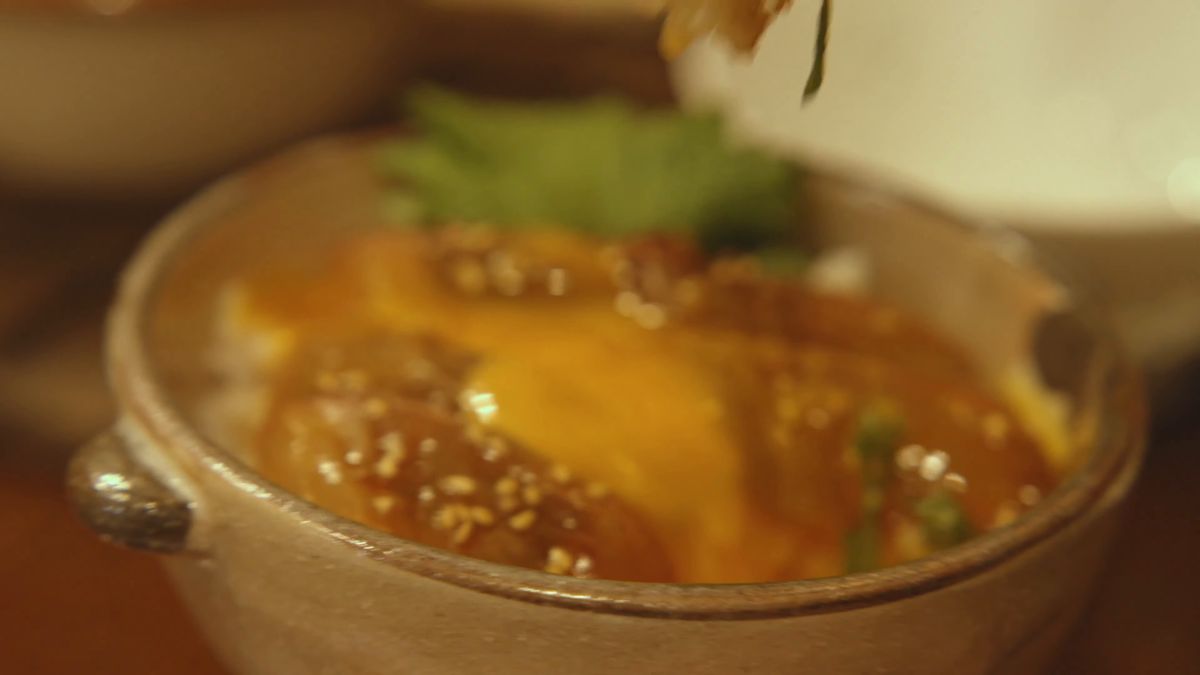
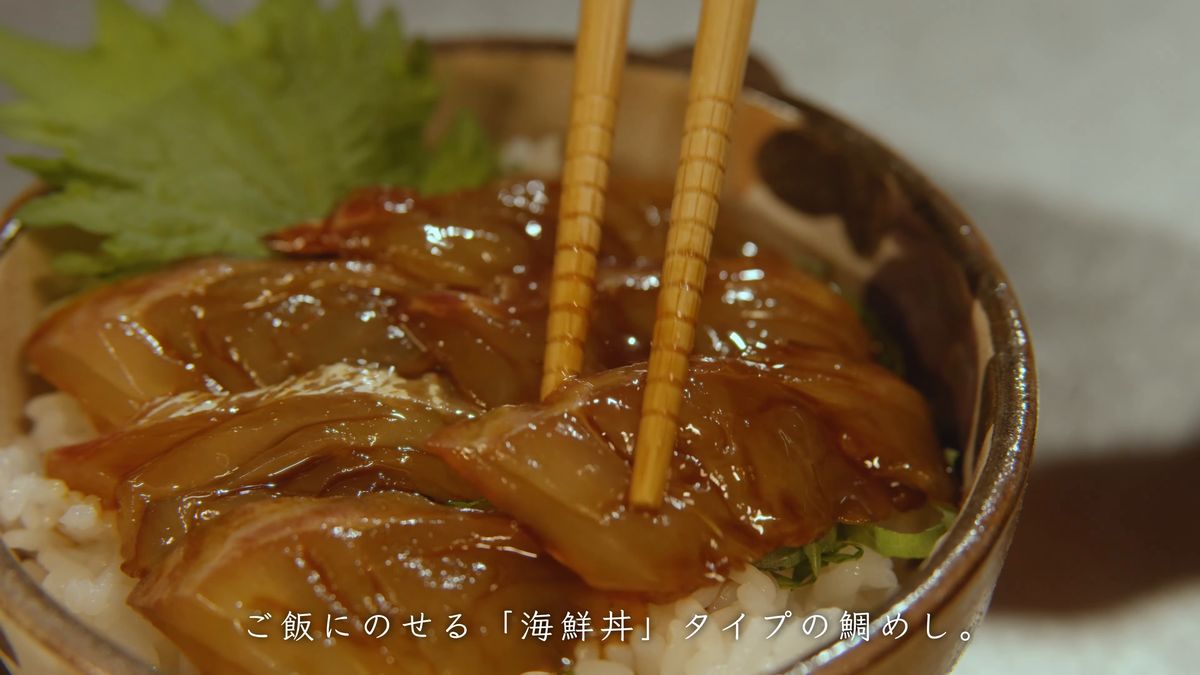
Ehime is the largest producer of sea bream in Japan, and they say tai-meshi differs depending on the region. First I rolled up some shiso leaves and sliced them thin. Into a black bowl of sauce went an egg yolk, mixed in, and then the sea bream sashimi to coat.
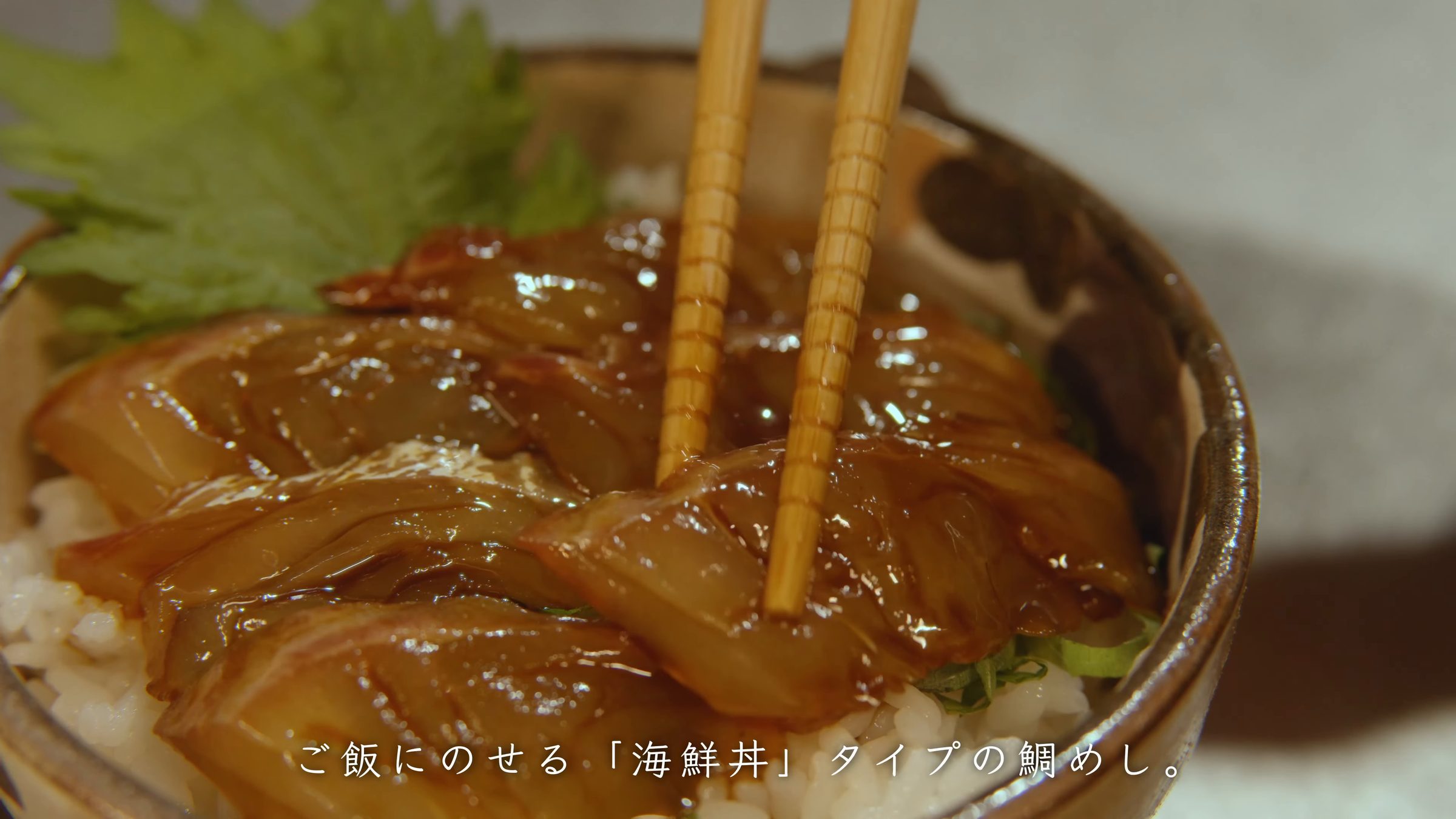
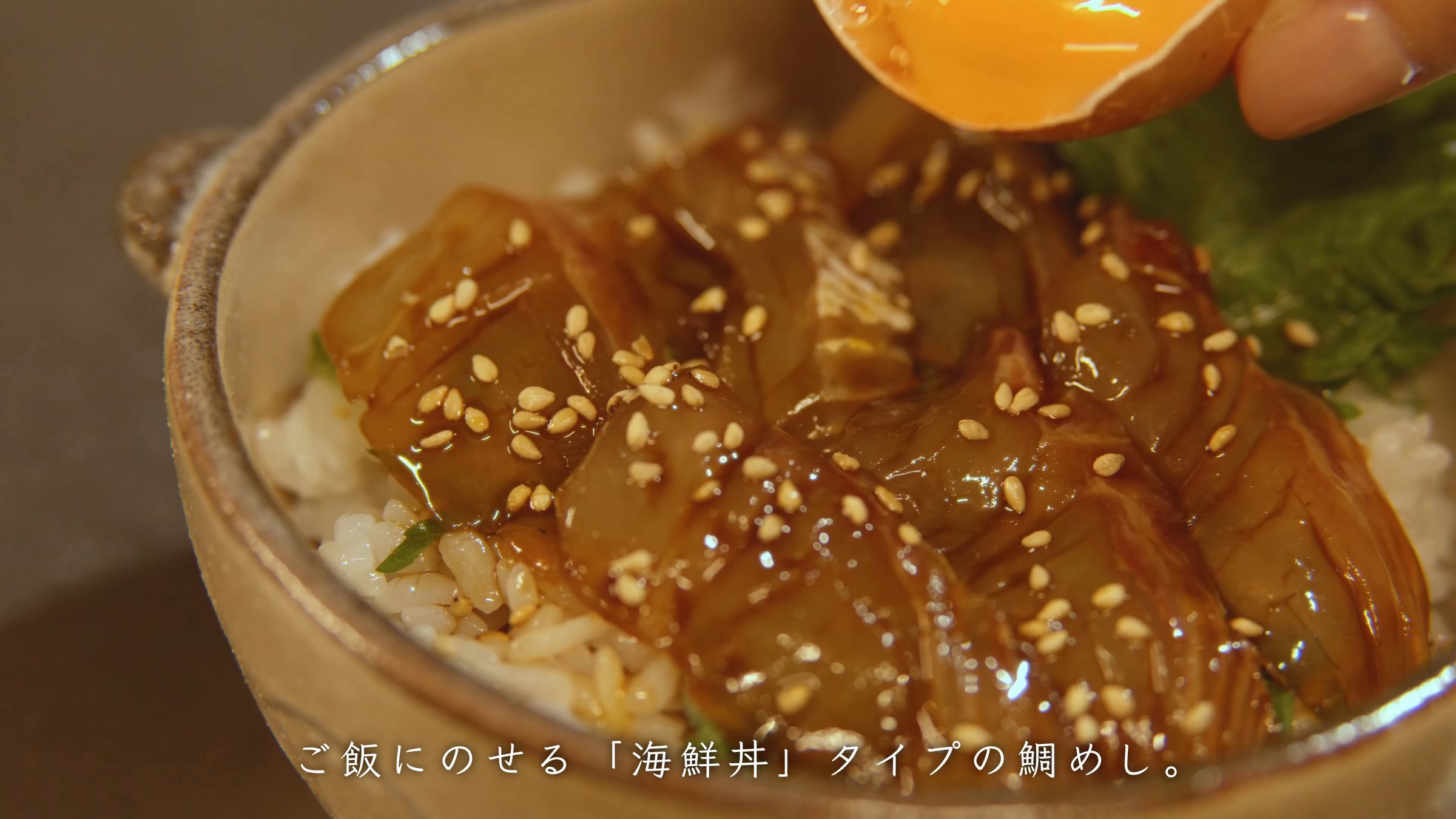
That went on top of rice, with the shiso and sesame scattered over. This is the sashimi-bowl type of tai-meshi, the style of Uwajima and the south of the prefecture. And I put another egg yolk on top.
Watch this scene on YouTube5:33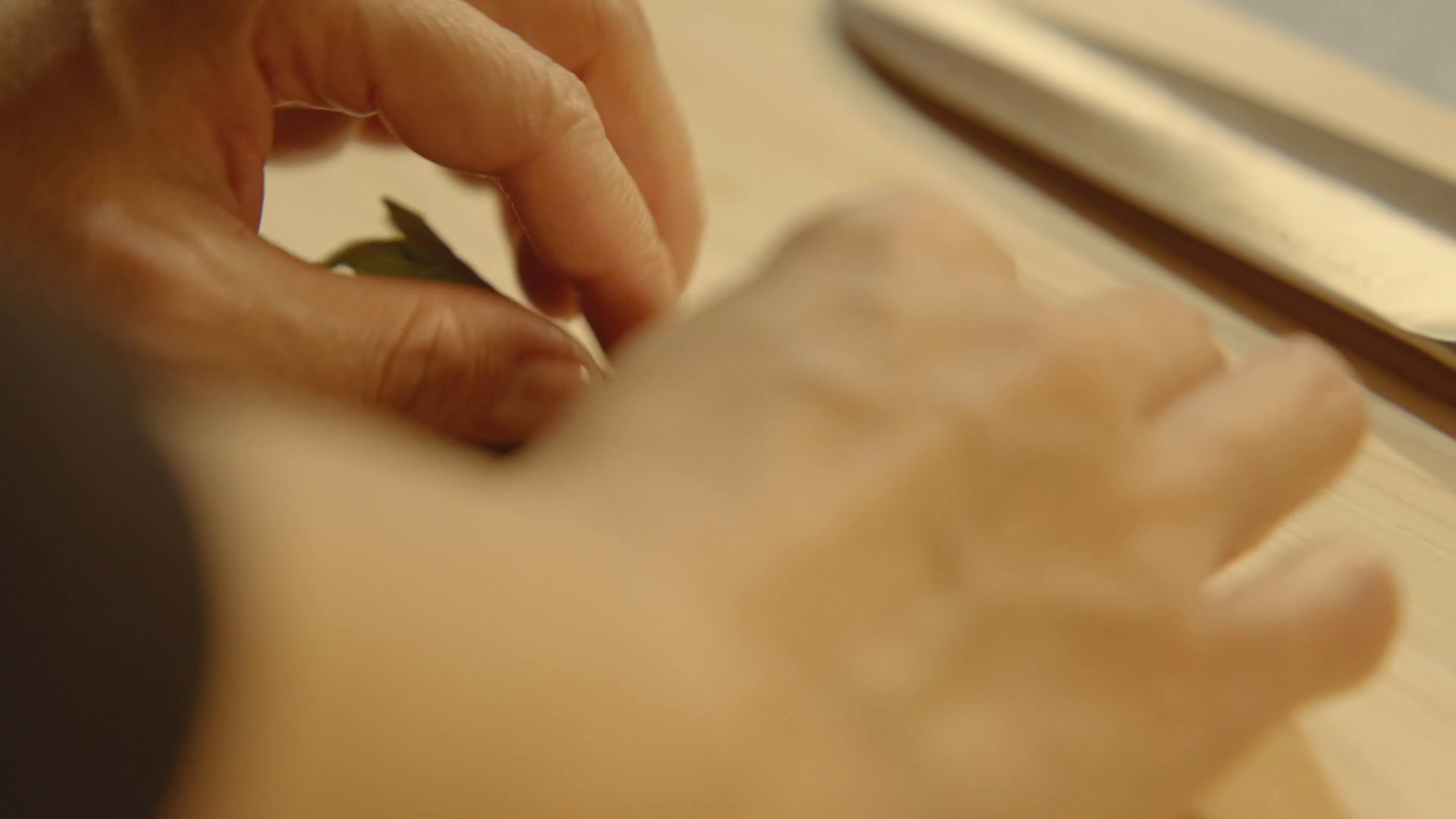
11TRAVEL JOURNAL
The pot-rice type, and a face-off
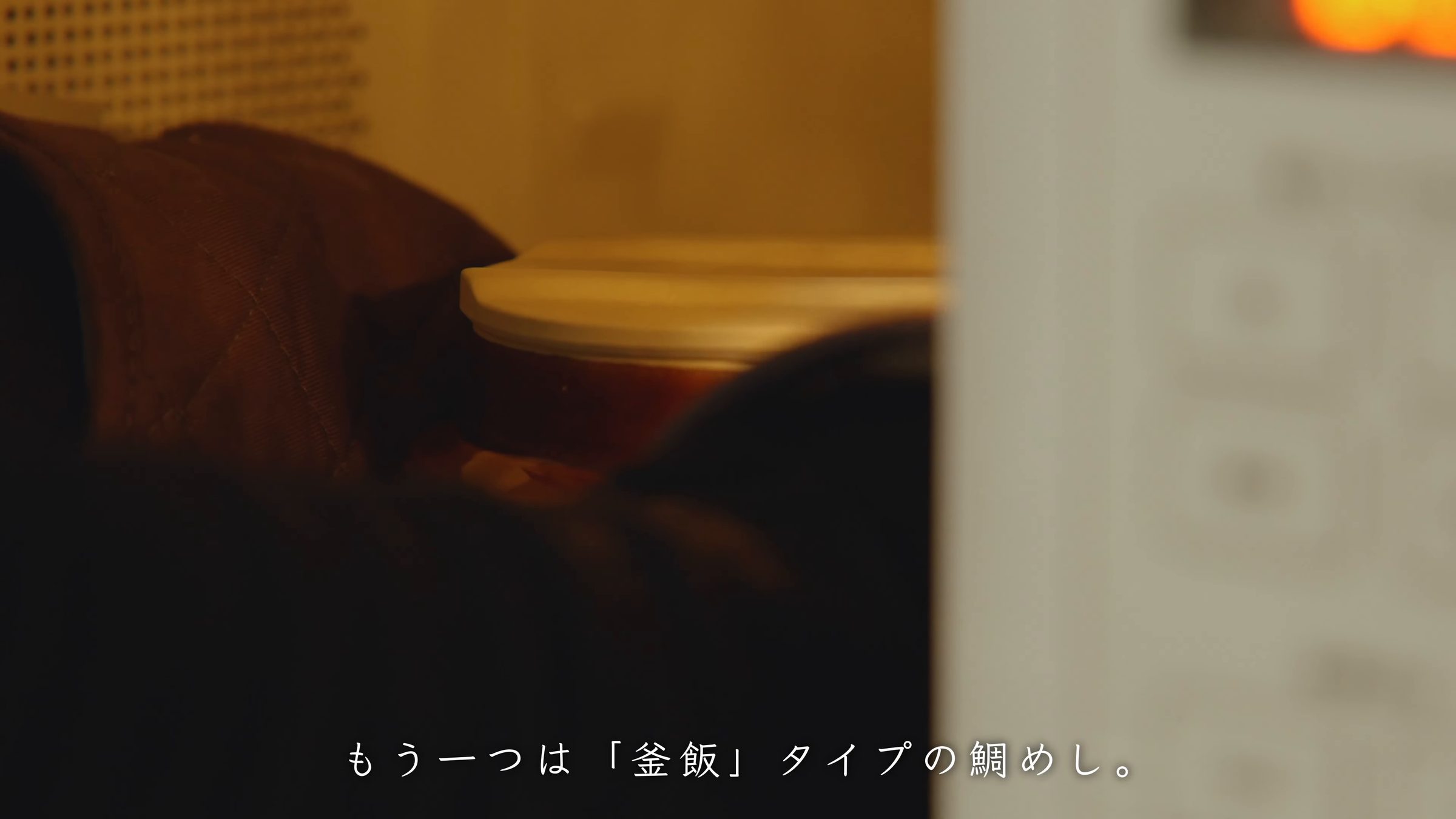
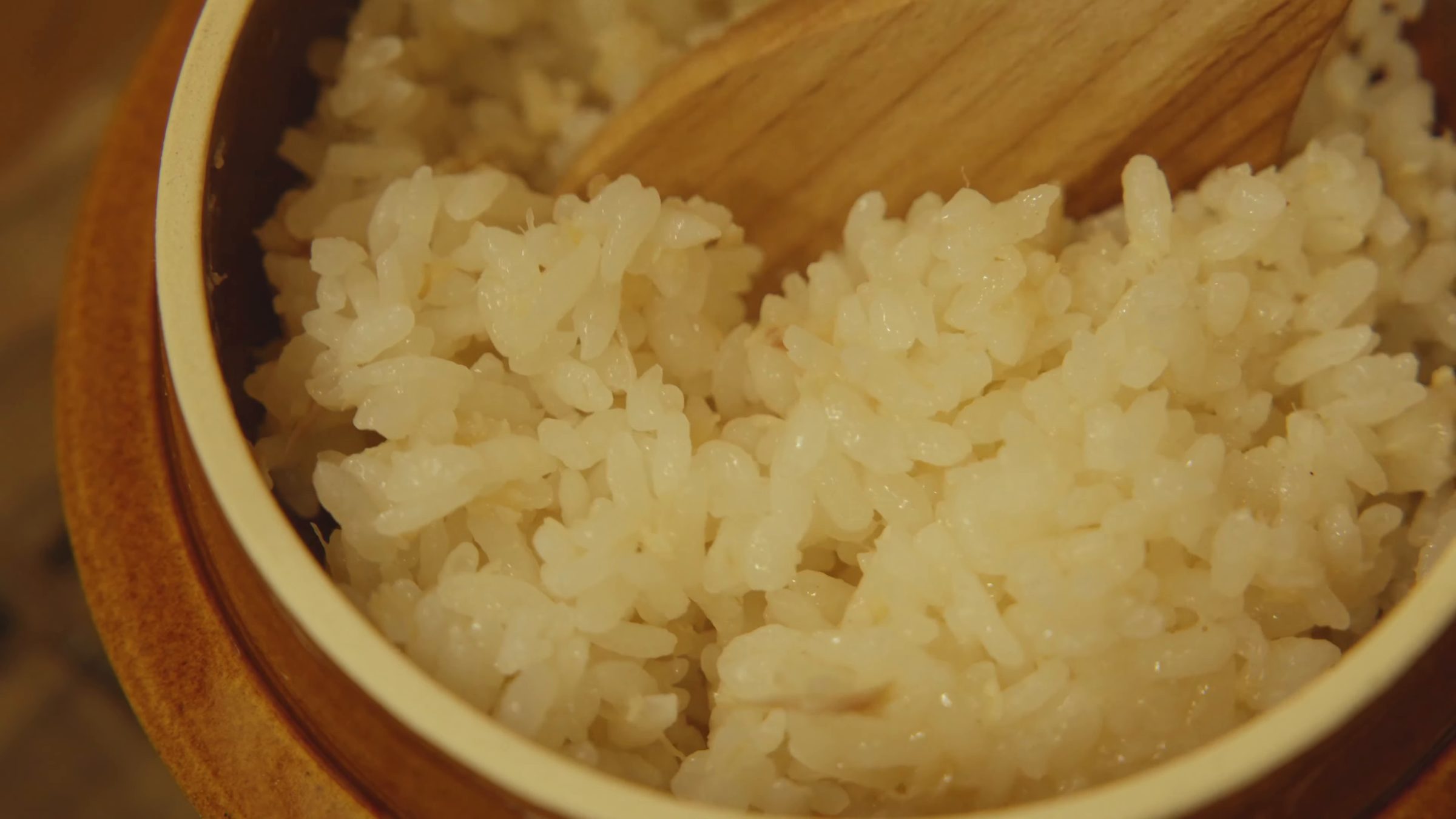
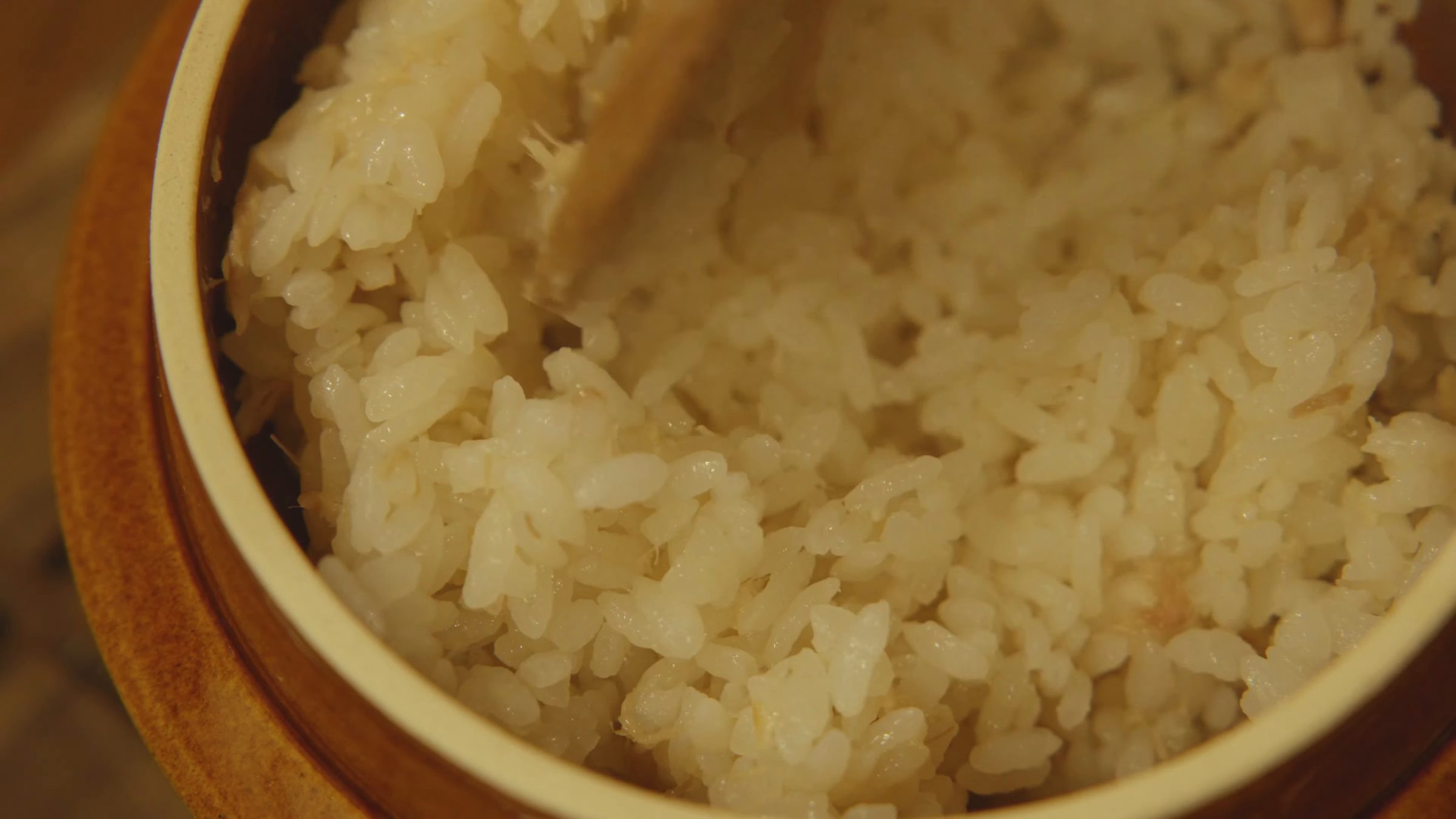
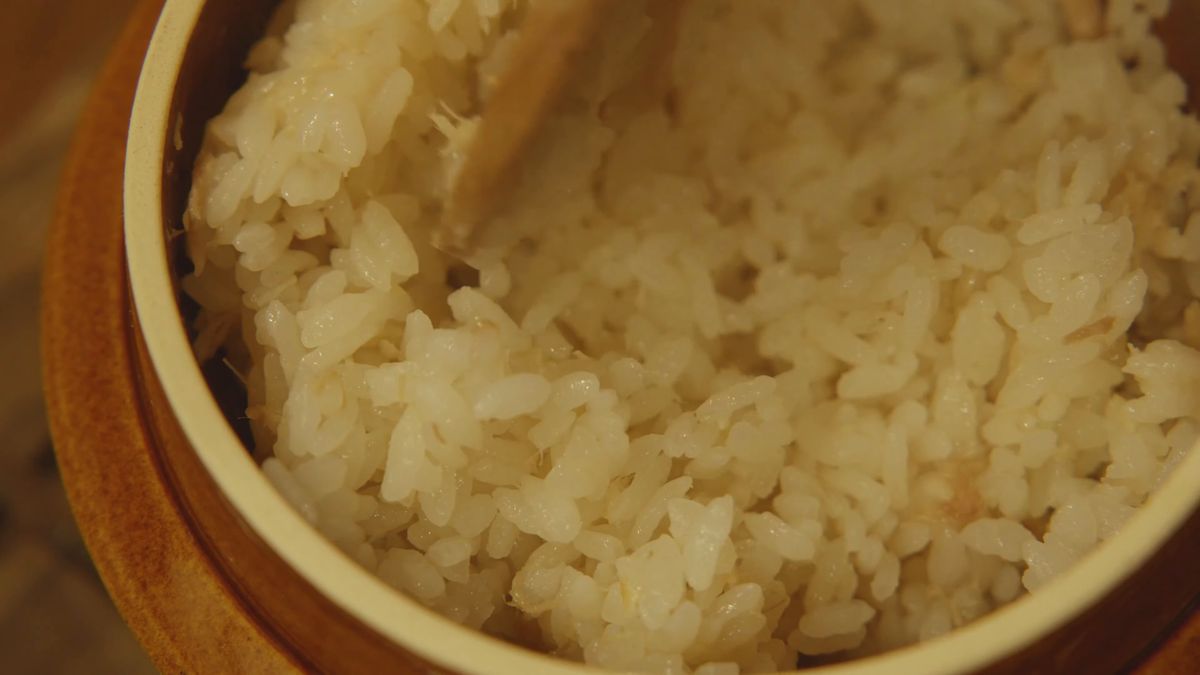
The other tai-meshi is cooked rice, like pilaf. The Hojo tai-meshi went into the microwave, little pot and all. When I lifted the lid, rice mixed with sea bream was steaming. I loosened and mixed it with a wooden paddle.
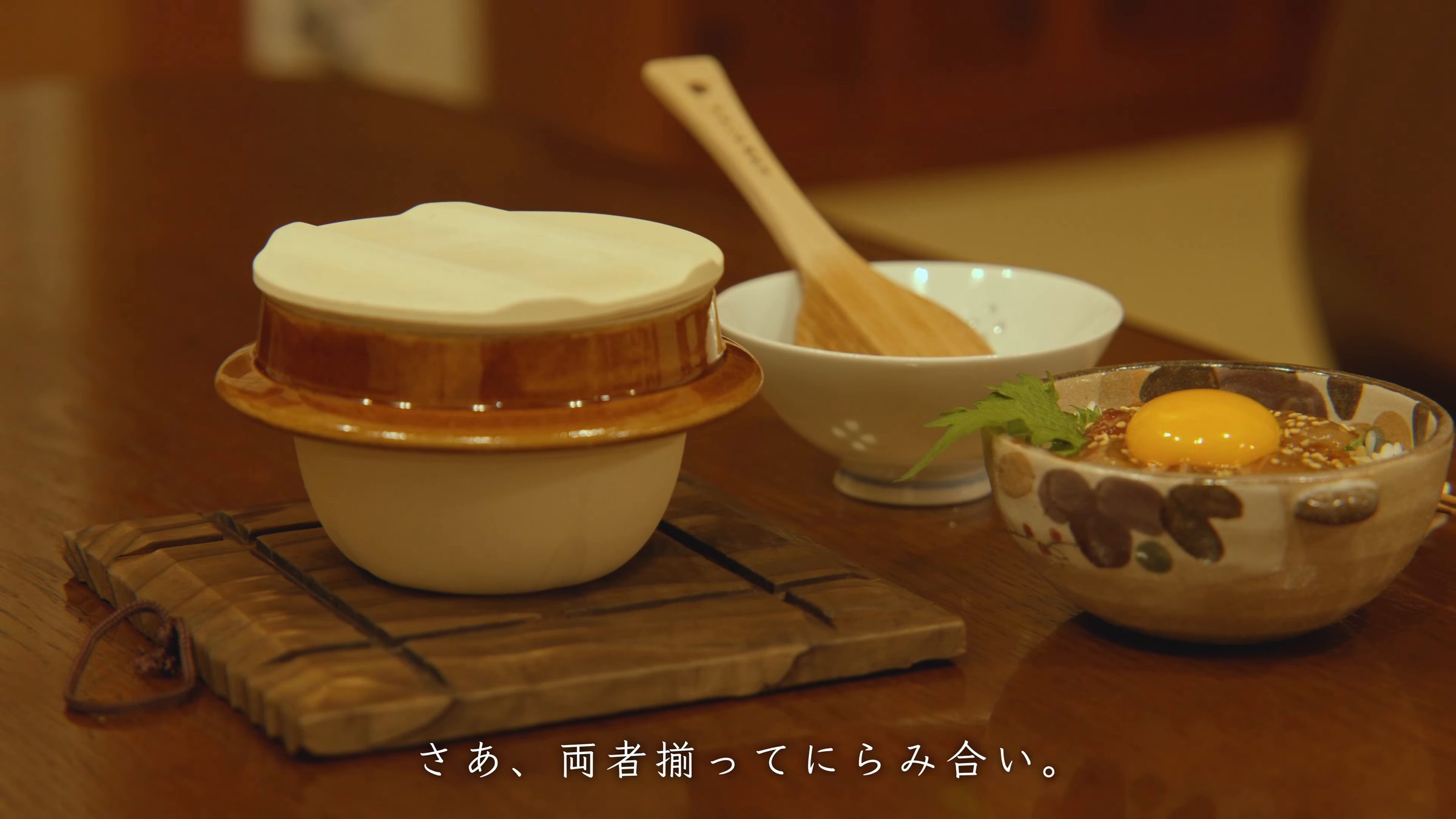
Now, both of them are staring at each other. The egg yolk ran glossy over the sashimi bowl, the sesame glistening. In Japan, there are many cultural differences between regions. Even tai-meshi from the same prefecture can be very different. We are all different, and all wonderful. In the tatami room at night, I closed out my day in Ehime.
Watch this scene on YouTube6:01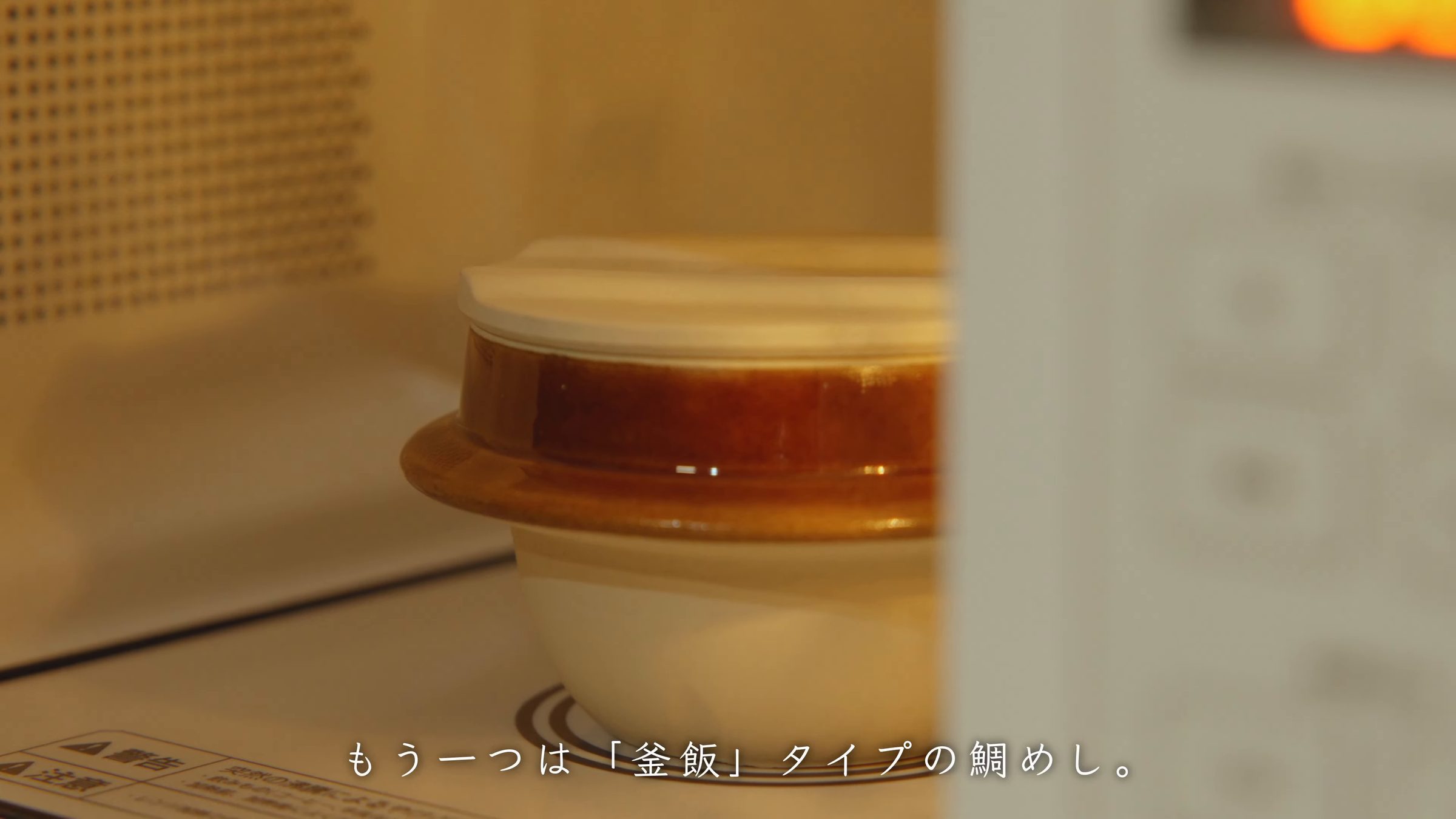
THE JOURNEY IN FILM
The wind. The sounds of a kitchen.
Spend a little more time inside the journey, on film.
Watch the video7 minTHE BORROWER’S NOTES
The Borrower's Notes: Shimanami, Ehime
Places we stopped, dishes we made, and stories of the land. A few things to keep from the journey.
01Where I ate and shopped
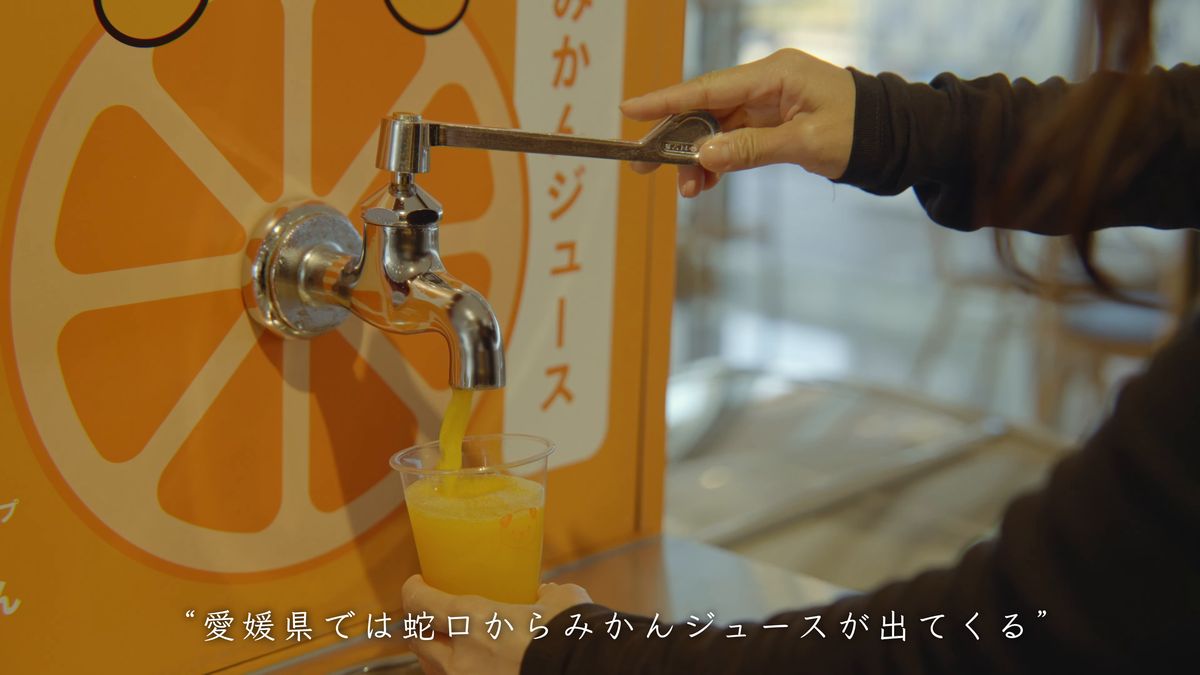
Kurushima Kaikyo Service Area (mandarin juice from a tap)
Ohama-cho, Imabari, Ehime
A service area at the Shikoku end of the Shimanami Kaido, overlooking the Kurushima Strait and its bridge. The shop has the famous mandarin juice tap: you buy a cup and pour your own. The big SHIMANAMI letters are a popular photo spot. The building was renovated in March 2024, so the interior may differ from what the video shows.
Sources: jb-highway.co.jp shimanami-cycle.or.jp jb-honshi.co.jp driveplaza.com
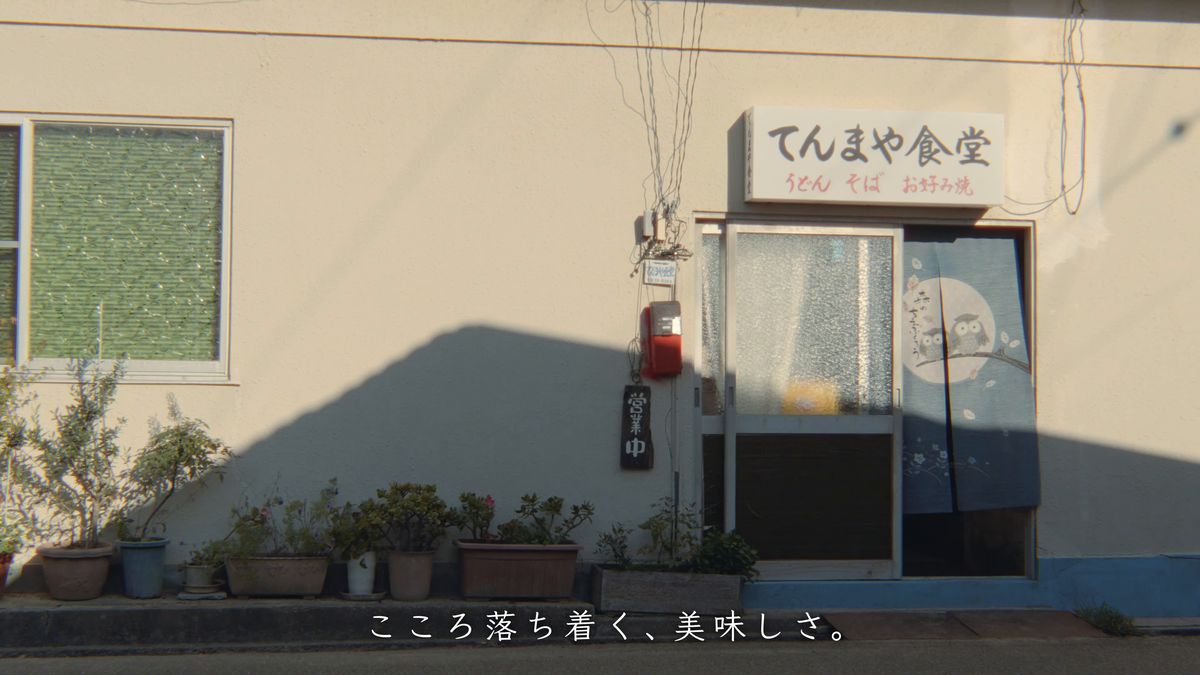
Tenmaya Shokudo
760-1 Kobe-ko, Namikata-cho, Imabari, Ehime
An old-fashioned neighborhood eatery in Namikata, Imabari, serving chuka soba, okonomiyaki, udon and soba. The chuka soba comes in a clear broth with kamaboko and green onions; I had it as a set with fried rice. Check the listings for current opening days and hours.
Sources: tabelog.com hitosara.com
02What I cooked
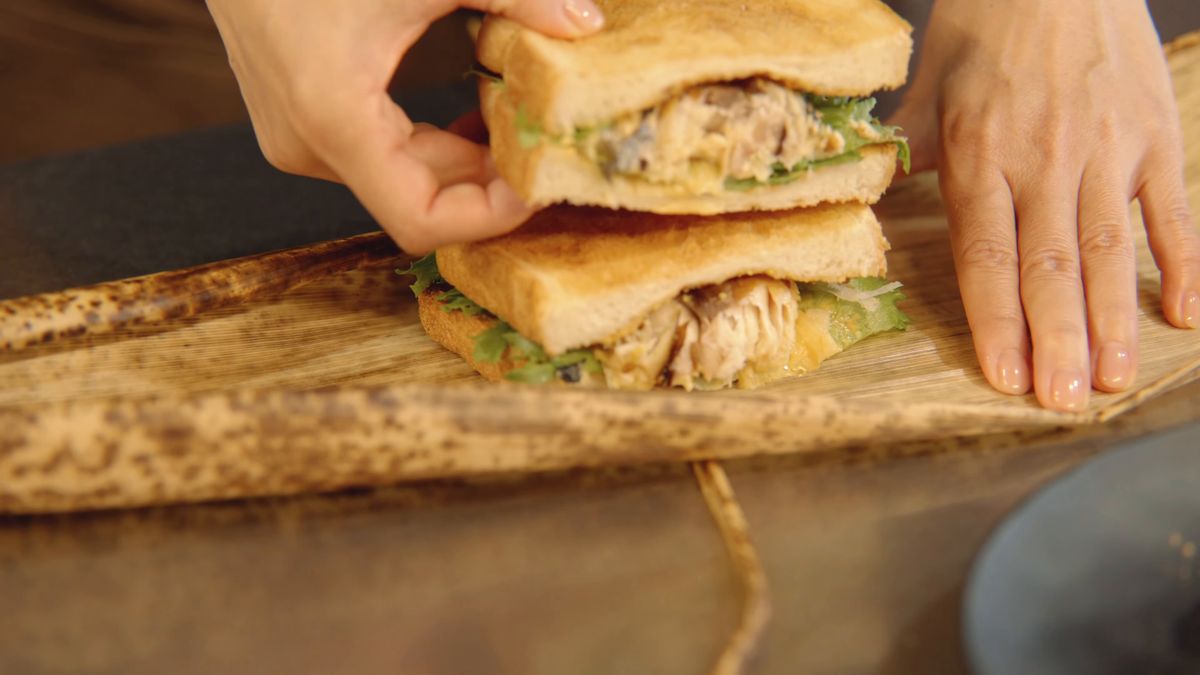
Mackerel sandwich with Setouchi lemon
Breakfast in a fishing village on the Seto Inland Sea, made with the region's Setouchi lemon and eaten on the beach in front of the inn. Wrapped in a bamboo sheath to go: a Setouchi picnic set.
Ingredients2 slices of bread, A mackerel fillet, Garlic, chopped, Oil, Grainy mustard, Leafy greens and shredded onion, Sauce, Setouchi lemon
- Fry chopped garlic in oil, then grill the mackerel skin side down until browned
- Toast the bread and spread one slice with grainy mustard
- Pile on the greens and onion, add sauce, and cut the lemon
- Lay the mackerel on top, close the sandwich and cut it in half
- Wrap in a bamboo sheath and tie with string
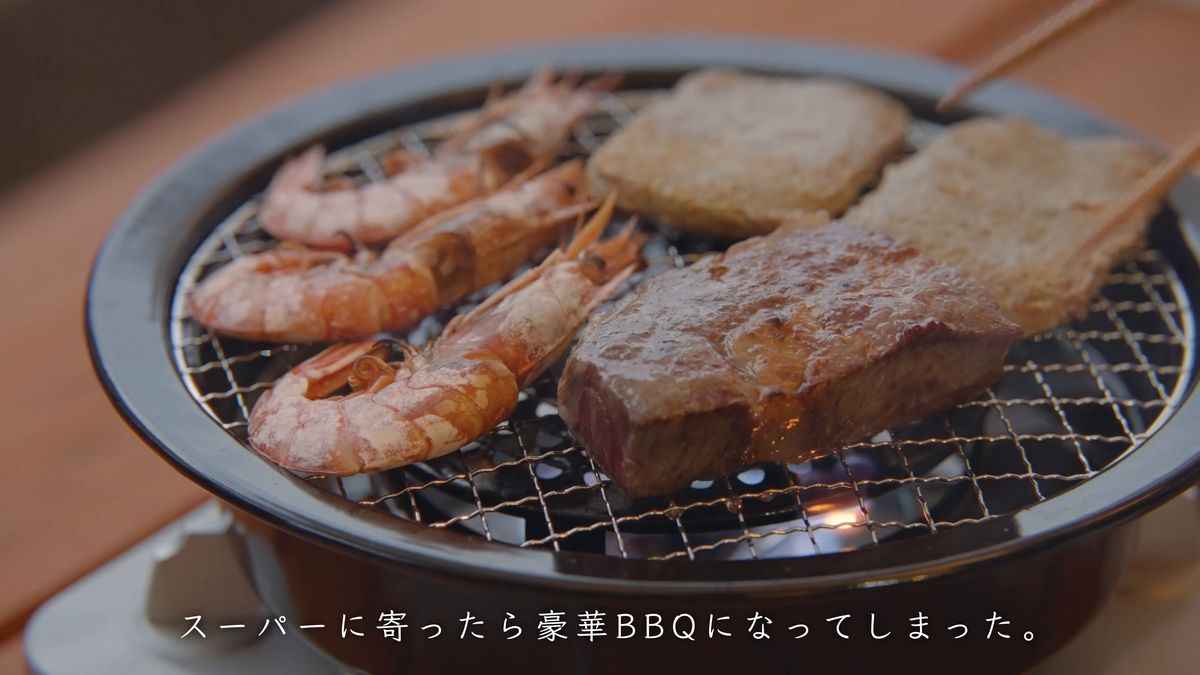
Jako-ten, prawns and Ehime wagyu on a charcoal grill
Jako-ten is a deep-fried fish-paste cake from the Nanyo region of southern Ehime. It is said to date back to 1615, when Date Hidemune, the first lord of the Uwajima domain, invited kamaboko makers from Sendai. The name comes either from the small bottom-trawl fish (zako) it was made from, or from the hotaru-jako fish used as its base. It is eaten fresh from the fryer, plain or with grated daikon and ginger.
IngredientsJako-ten fish cakes (bought at Shimonada), Whole prawns, Ehime wagyu beef
- Light charcoal in a small clay grill on the deck and set the grate on top
- Lay out the prawns and jako-ten and grill until browned
- Add the wagyu to the grate and grill
Sources: maff.go.jp
Tai-meshi, sashimi-bowl style
Ehime has two kinds of tai-meshi. In Toyo, around Imabari, a whole sea bream is cooked with the rice. In Nanyo, around Uwajima and Seiyo, raw slices are steeped in a sauce of soy sauce, mirin, egg, sesame and dashi and poured over hot rice. The Nanyo style is said to have begun as a meal fishermen ate on boats where they could not light a fire. This is the one I made, with two egg yolks.
IngredientsSea bream sashimi, Soy-based sauce, 2 egg yolks, Shiso leaves, Sesame seeds, Cooked rice
- Roll up the shiso leaves and slice them thin
- Drop an egg yolk into the sauce, mix, and coat the sashimi in it
- Lay the sashimi over the rice and scatter the shiso and sesame
- Top with the second egg yolk
Sources: maff.go.jp
Tai-meshi, pot-rice style (Hojo tai-meshi)
Hojo tai-meshi is the regional dish of Hojo, in Matsuyama: a whole sea bream cooked with the rice, with nothing but bream and kelp dashi, no burdock, carrot or fried tofu. Legend says that when Empress Jingu's ship stopped at Kashima, the fishermen of Kazahaya offered her sea bream, which she had cooked on top of rice and praised for its taste.
IngredientsReady-to-eat Hojo tai-meshi (a pack of rice with a small ceramic pot)
- Take the pack of rice and the little pot out of the box
- Put the rice in the pot, cover, and heat in the microwave
- Remove the lid, loosen the rice with a paddle and mix
Sources: hojo-kazahaya.jp maff.go.jp
03About the area
The Kurushima Kaikyo Bridge and the Shimanami Kaido
The Shimanami Kaido (Nishiseto Expressway) is a roughly 60-kilometer motorway that threads through the islands of the Geiyo archipelago, linking Onomichi in Hiroshima with Imabari in Ehime. At its Shikoku end, the Kurushima Kaikyo Bridge, three suspension bridges in a row with a total length of 4,105 meters, opened on May 1, 1999 as the world's first triple suspension bridge. The Kurushima Strait below is counted among Japan's three fastest tidal currents.
Sources: mlit.go.jp city.imabari.ehime.jp
Ehime sea bream
Ehime has led Japan in farmed sea bream production for 33 consecutive years, according to the prefecture's 2024 fisheries statistics. In 2022 it produced 38,604 tons, 57 percent of the national total. The Nanyo region on the Uwa Sea is the main producer, while wild bream from the fast currents of the Kurushima Strait are known for their firm flesh.
Sources: jetro.go.jp maff.go.jp
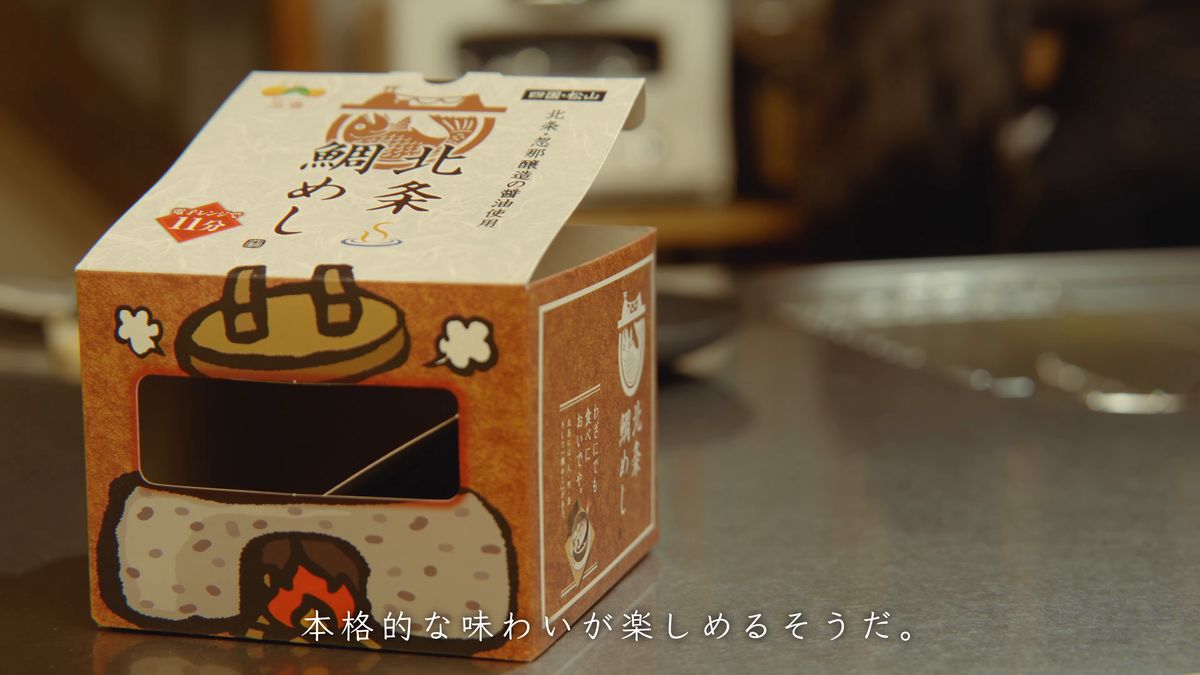
Hojo tai-meshi (ready-to-eat, with a little pot)
A boxed, ready-to-eat version of Hojo tai-meshi, the regional dish of Hojo in Matsuyama. It comes with a pack of rice and a small ceramic pot, and is ready after a spell in the microwave. The box notes that it uses soy sauce from a brewery in Hojo, and is printed with a kamado stove and the mark of Hojo, "the town of Kashima island."
Sources: hojo-kazahaya.jp
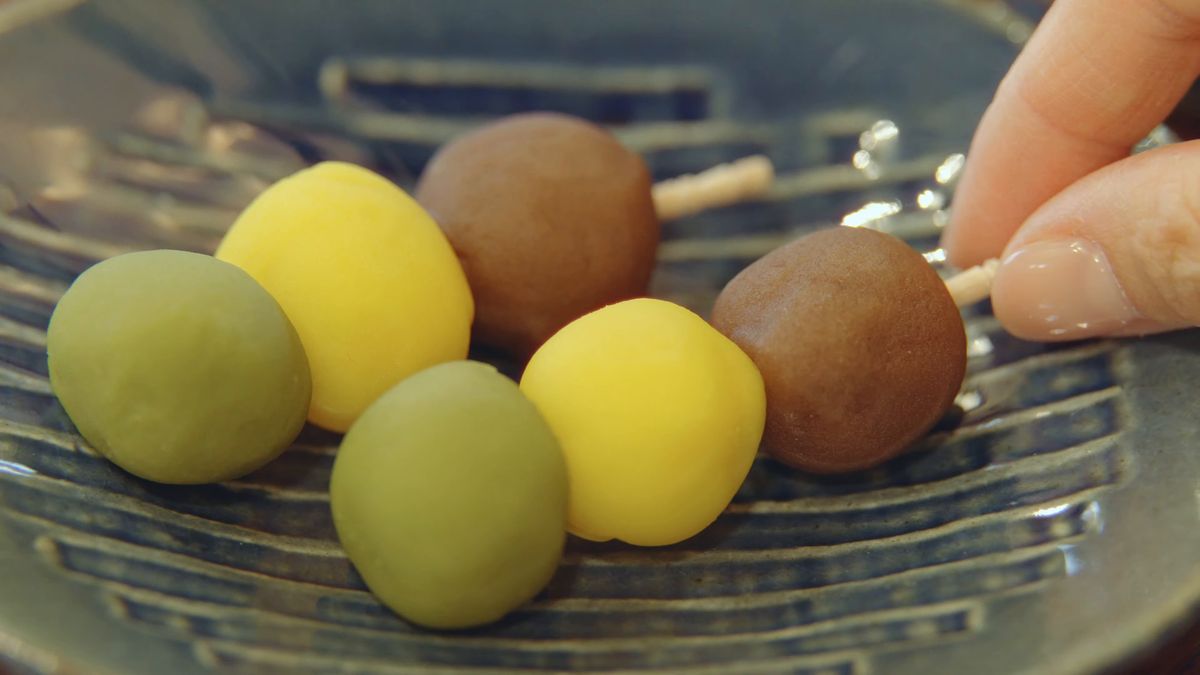
Botchan dango
A Matsuyama confection: balls of soft gyuhi mochi coated in three colors of bean paste (matcha, egg and adzuki), three to a skewer. In Natsume Soseki's novel Botchan, the hero eats dango on his way back from Dogo Onsen; the yuzarashi dango of a Dogo shop said to be the model is the origin of the sweet. After the novel made it famous, the shop's second-generation owner is said to have created the present three-color form.
Sources: macaro-ni.jp
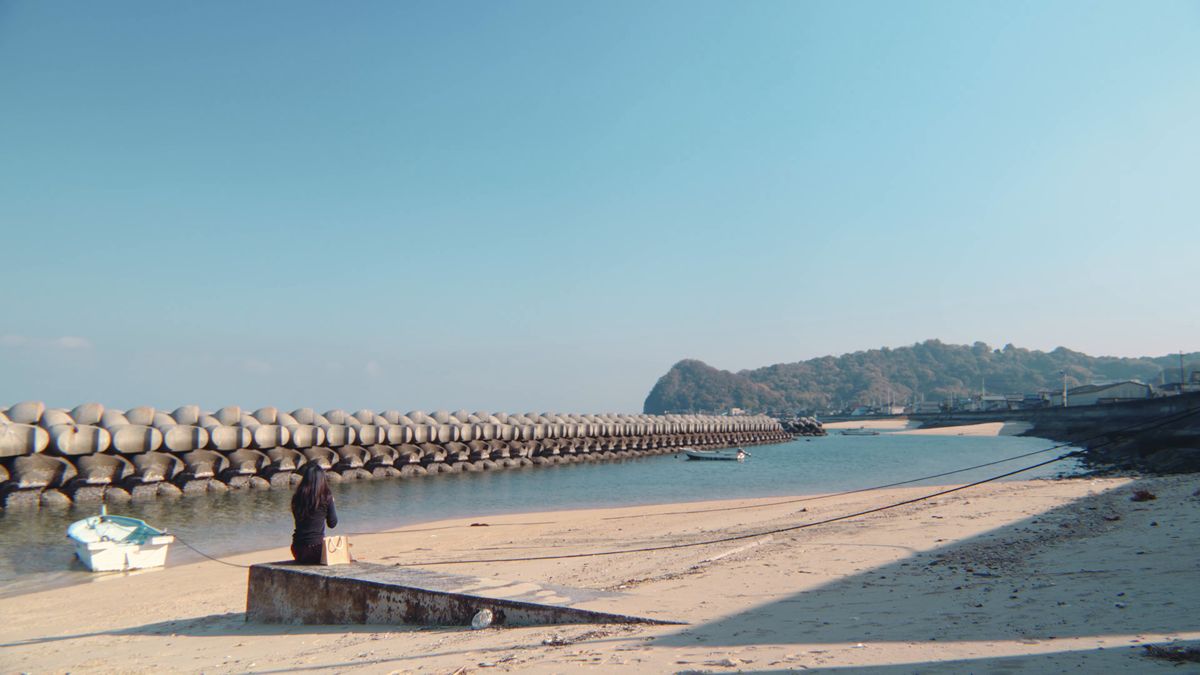
The beach and harbor at Asanamihara
A seaside village in the Asanami area of former Hojo City, at the northern tip of Matsuyama. Asanami village merged into Hojo town in 1955, and Hojo City became part of Matsuyama in 2005. Fishing boats moor in front of the houses, and a path along the seawall leads to a small sandy beach sheltered by tetrapods.
Sources: kotobank.jp
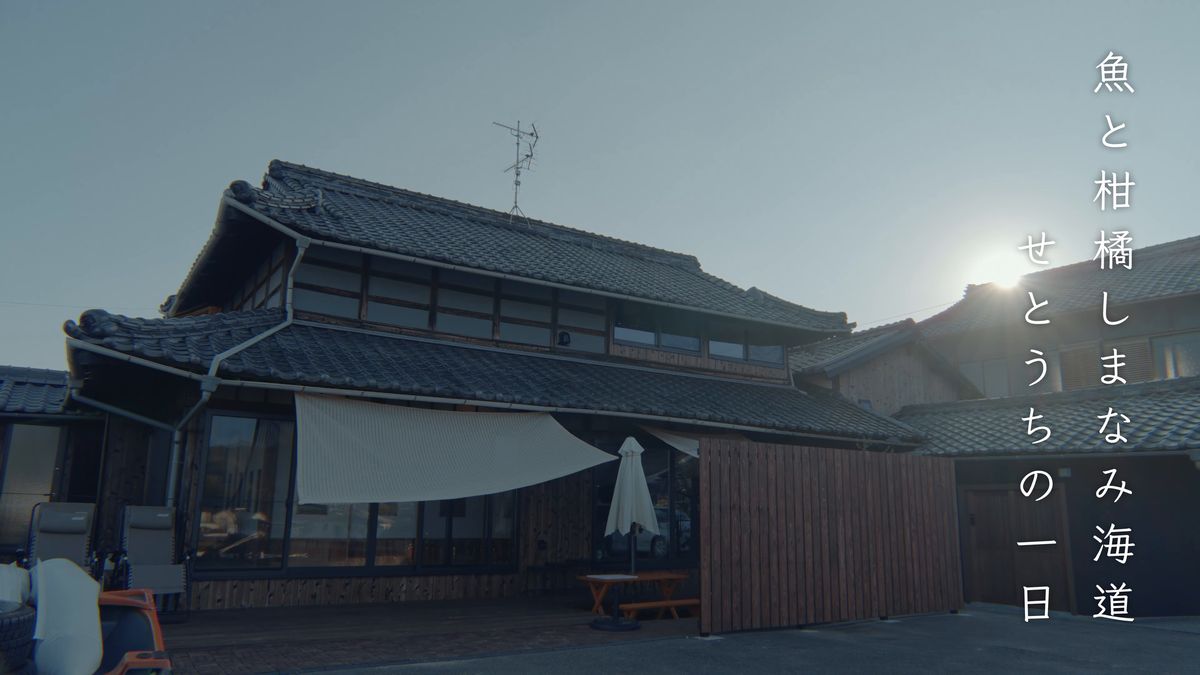
An old house by the sea
This time I borrowed a stylishly renovated old house right by the harbor, with a tatami room enclosed by shoji and glass doors, glass lamps hanging from the beams, and a wooden deck with parasols and tables. The beach is a minute's walk away.
PHOTO ALBUMPhoto album92Open all photographsClose the photo album
Select a photograph to explore the journey one frame at a time.