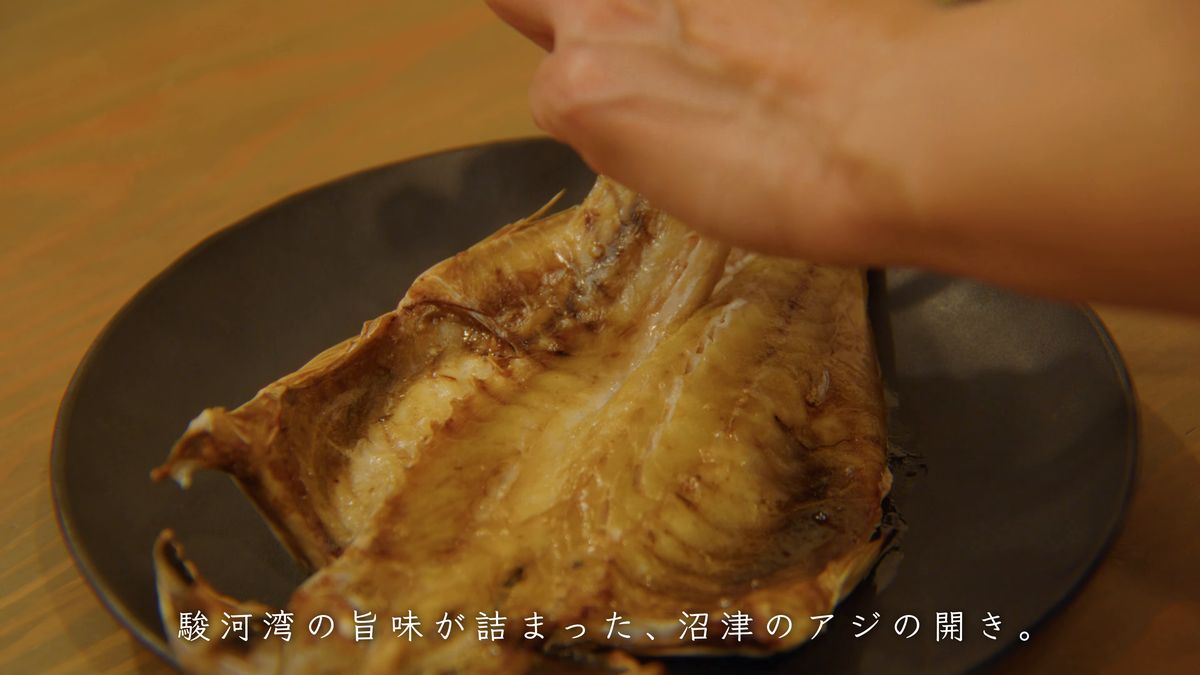
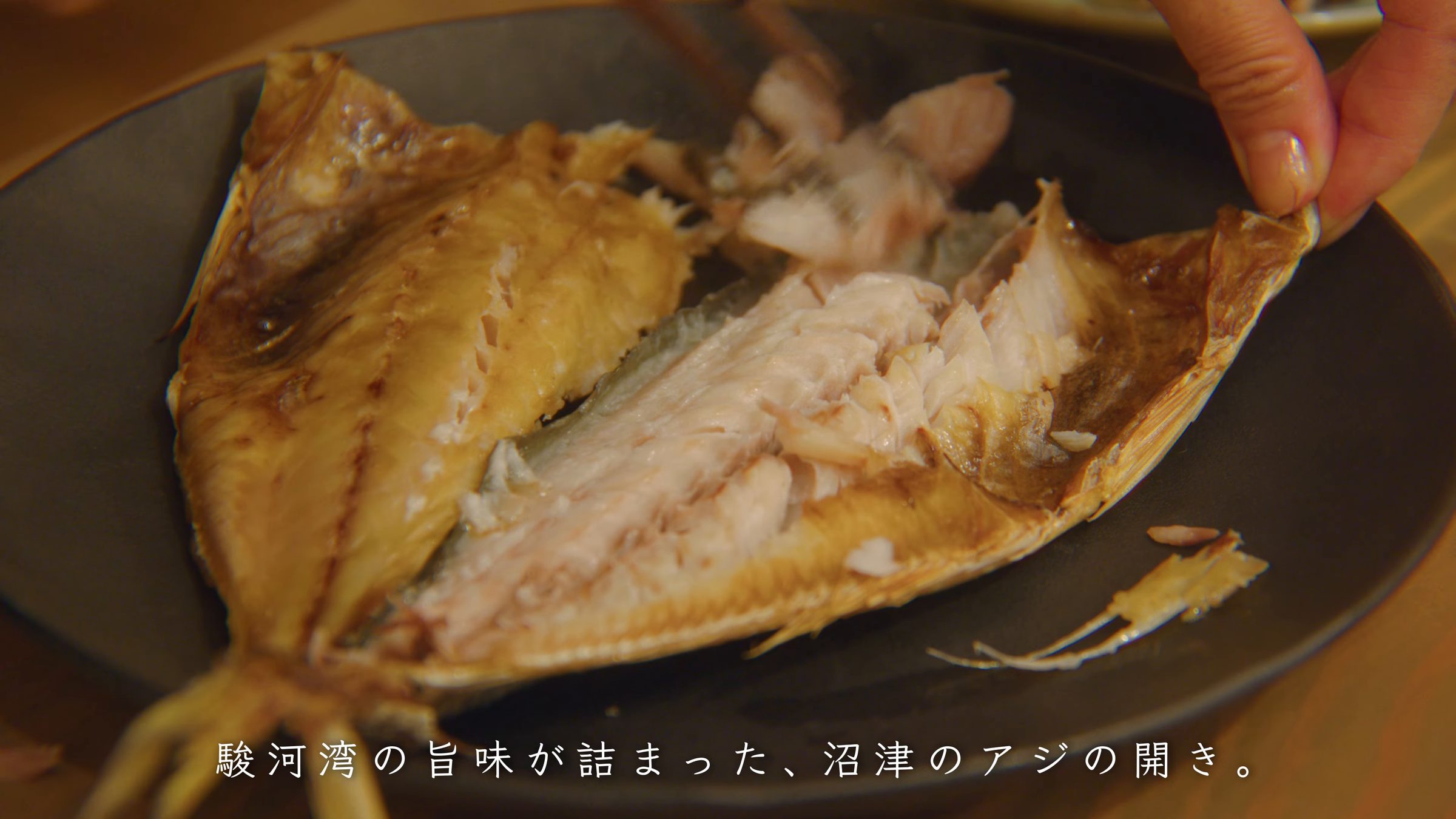
Numazu is one of Japan's leading producers of dried fish; fish drying at the Numazu post town even appears in Hiroshige's Fifty-three Stations of the Tokaido. From the late Meiji to the Taisho era, dried-fish wholesalers clustered around the mouth of the Kano River, and by the early Showa era the present method was established: the fish is split open, gutted, soaked in brine and dried in the sun. A mild climate and sea breezes, abundant spring water from Mt. Fuji, fresh fish from Suruga Bay and the growth of transport such as the Tokaido Line are said to have supported the industry. This time I grilled dried horse mackerel from the port and mixed it into rice.
Sources: shizuoka-gastronomy.jp
This moment in the journey
Making a Numazu bowl from the treasures of Suruga Bay
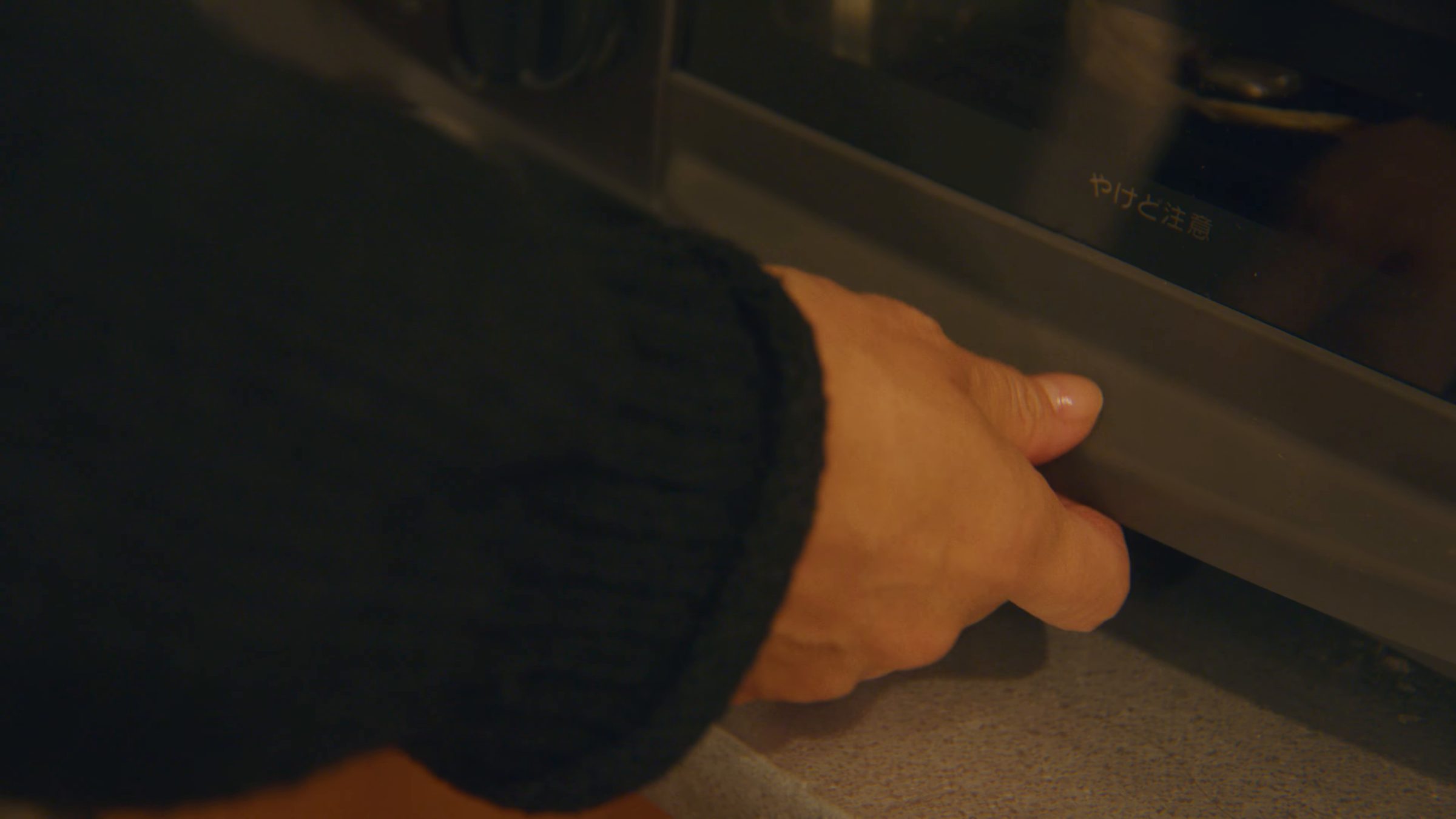
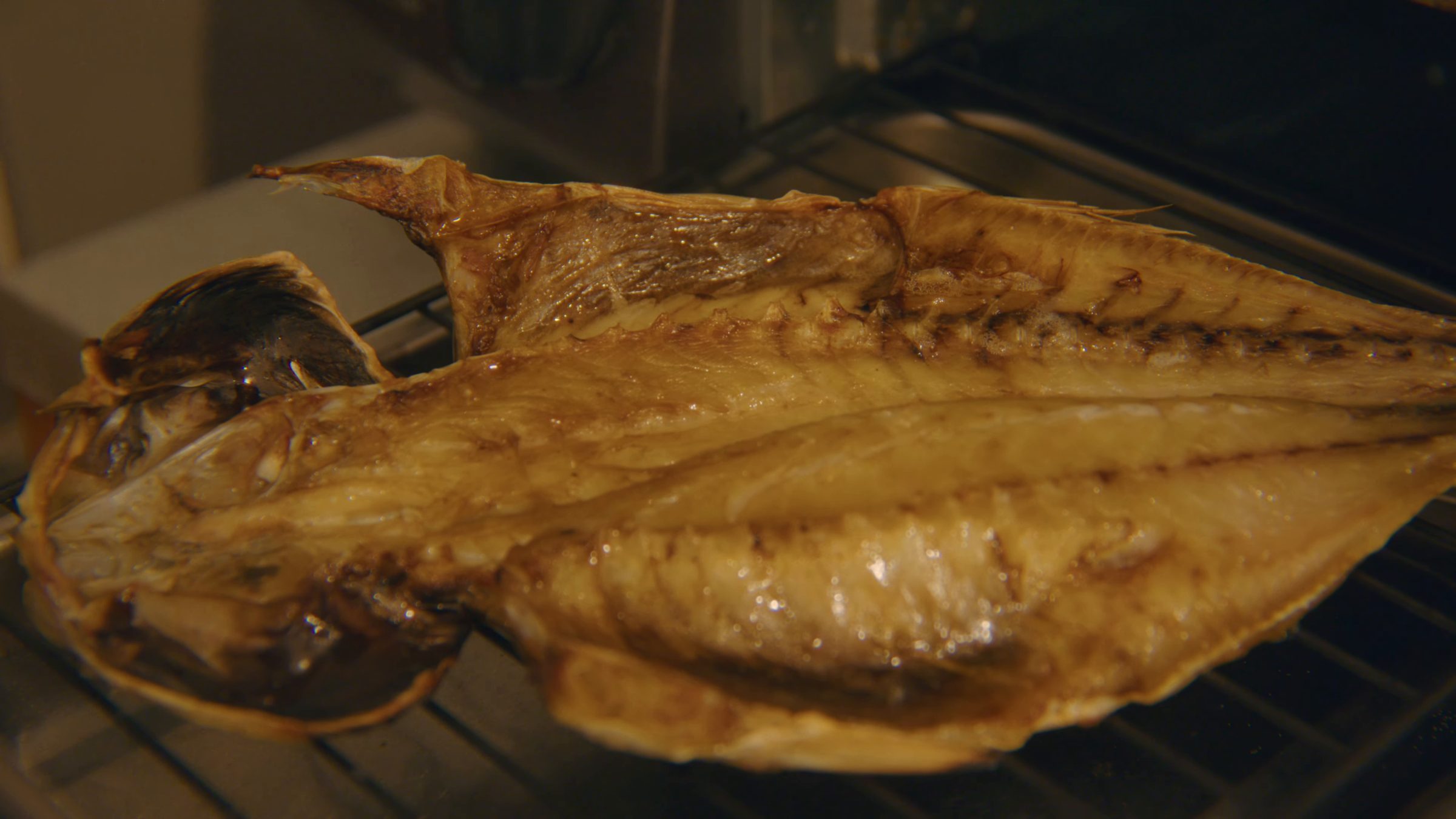
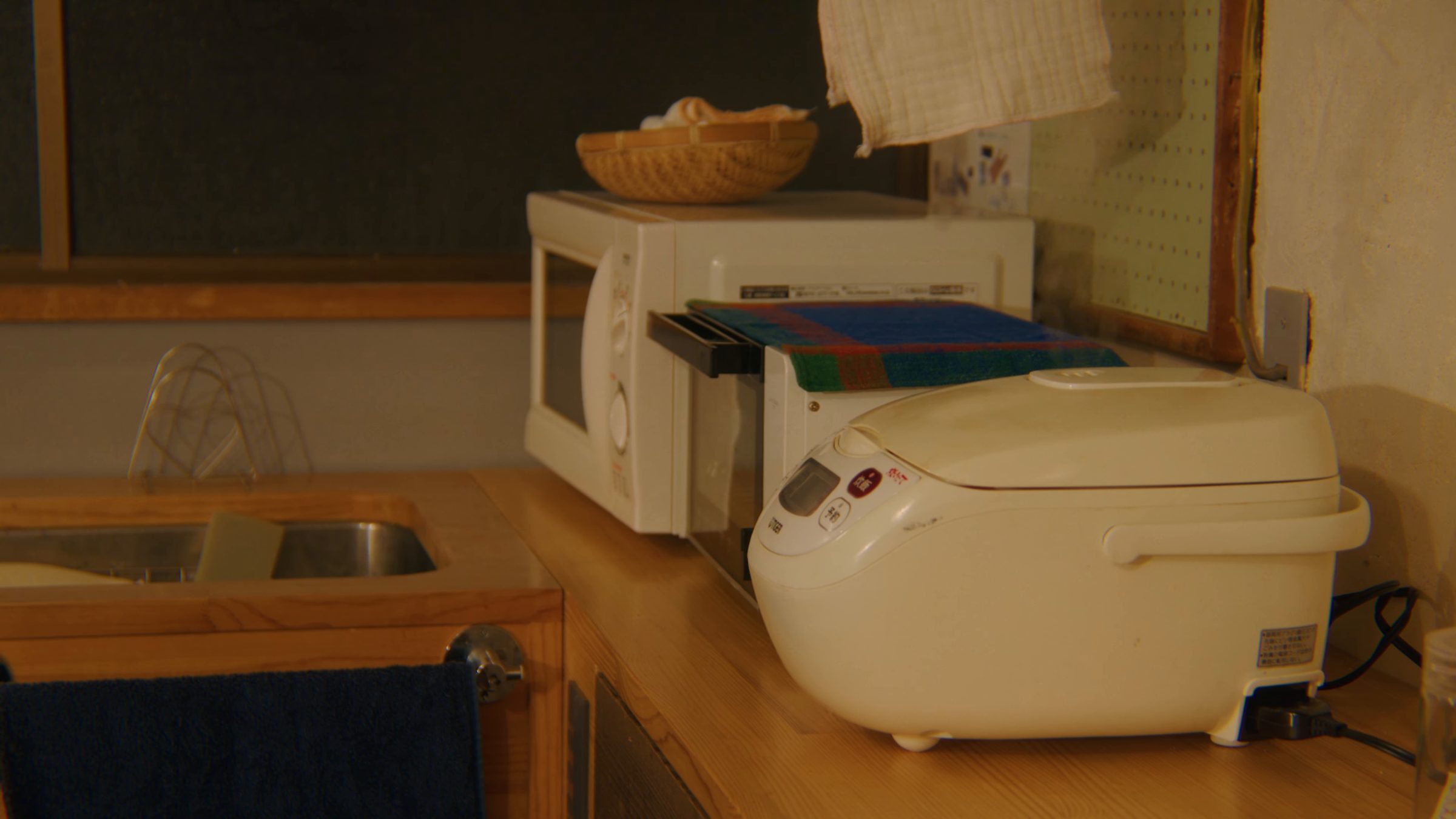
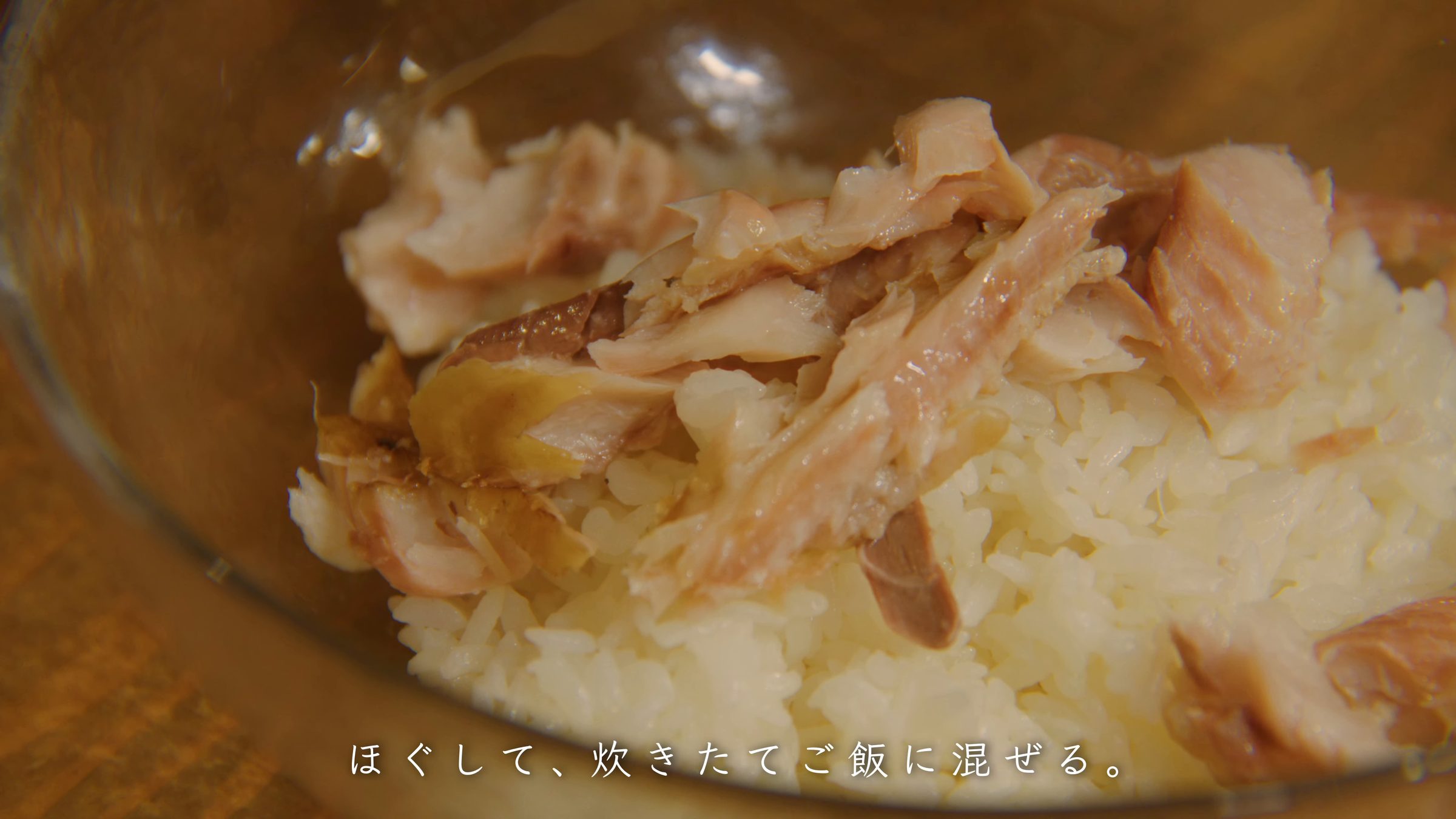
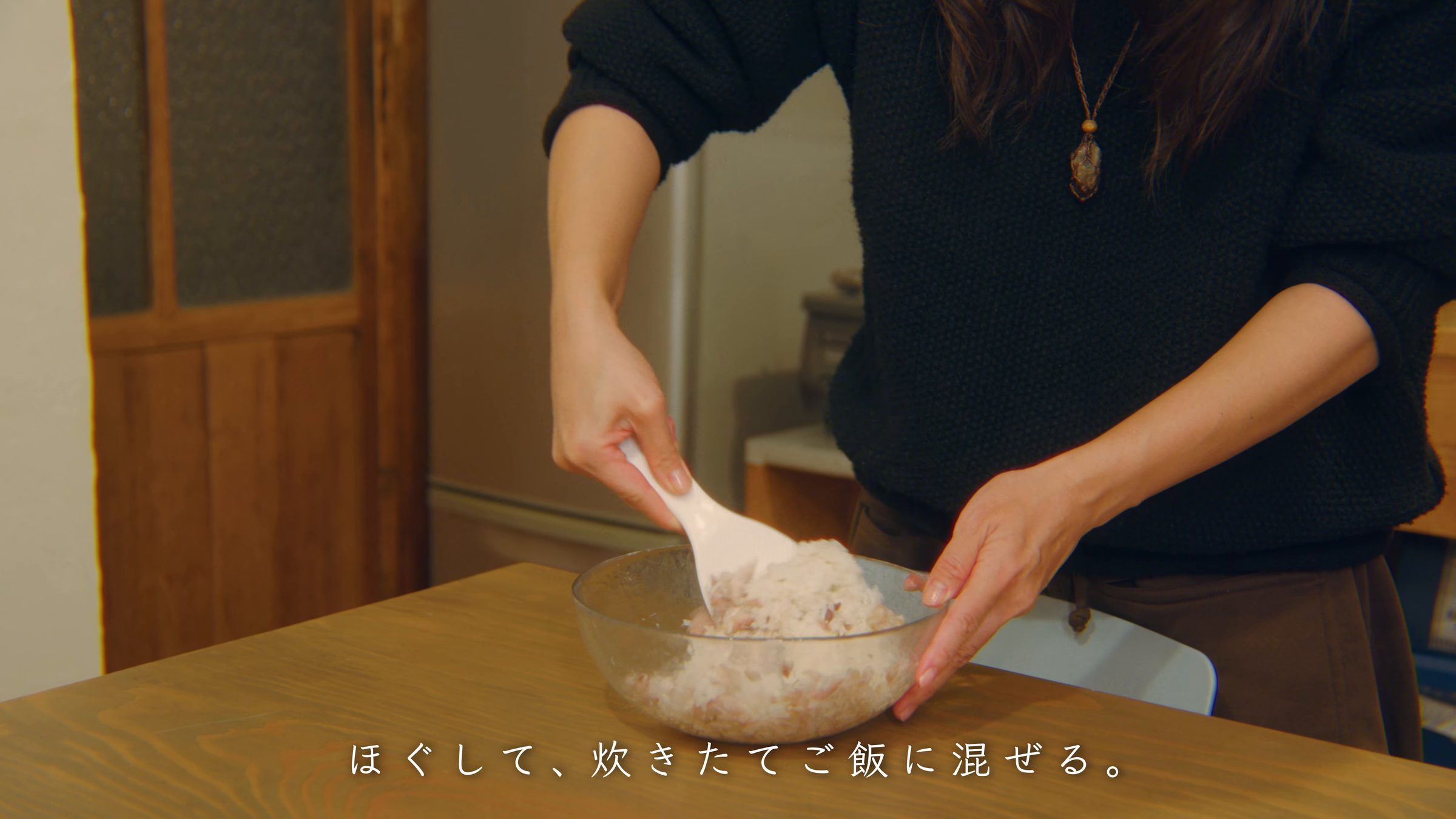
Time to make dinner. I opened the grill and cooked Numazu's dried horse mackerel, packed with the flavor of Suruga Bay. When the rice cooker was done, I took the grilled fish off the bones and mixed it into the hot rice.
The horse mackerel sashimi became tataki: I chopped it fine with a knife, and set half of it aside in a bowl with white sesame and soy sauce to marinate. Something to look forward to tomorrow morning. Half of the cherry-colored treasures of Suruga Bay went into kakiage: mixed with batter and dropped into amber sesame oil, they fried up beautifully.
Over the horse mackerel rice in a blue bowl went shredded nori, then the tataki and raw whitebait on shiso leaves, and finally the raw sakura shrimp and green onion. The Numazu bowl was complete.
Watch this scene on YouTube5:56
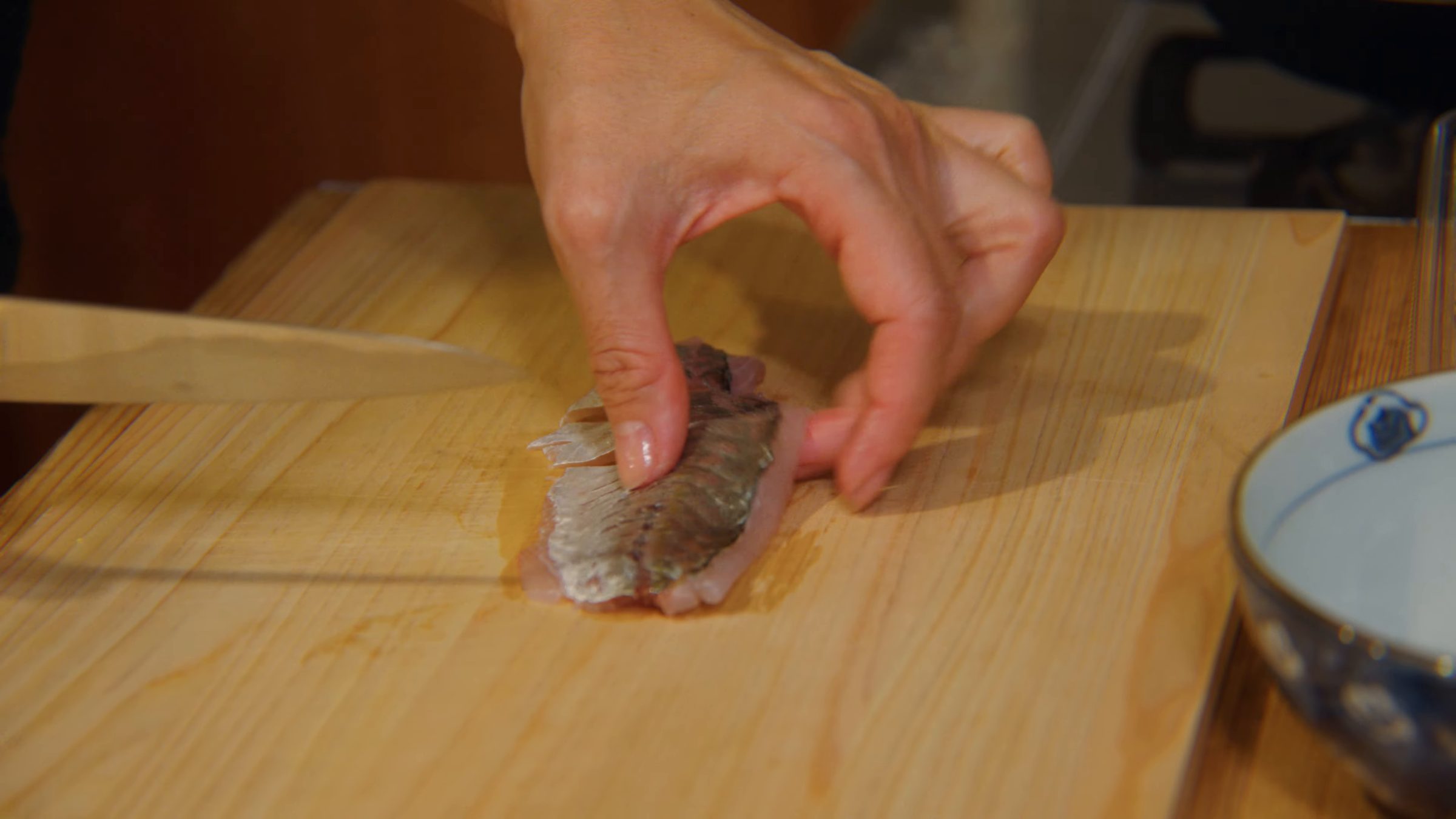
More notes from this journey
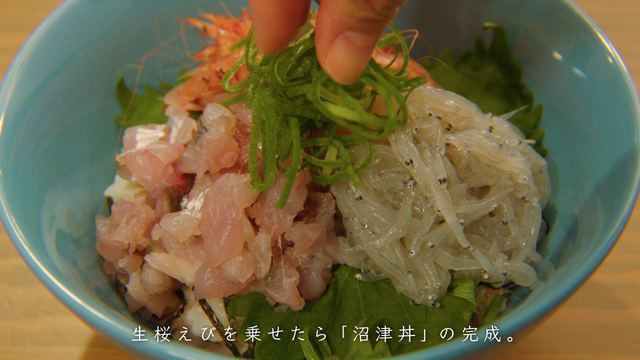
Numazu, Shizuoka
Numazu bowl (Numazu-don)
Numazu-don is a local specialty born at a Numazu bowl contest in 2000: rice cooked with dried horse mackerel, topped with raw whitebait, raw sakura shrimp and c…
From: Gifts of the sea in a town that looks out on Mt. Fuji
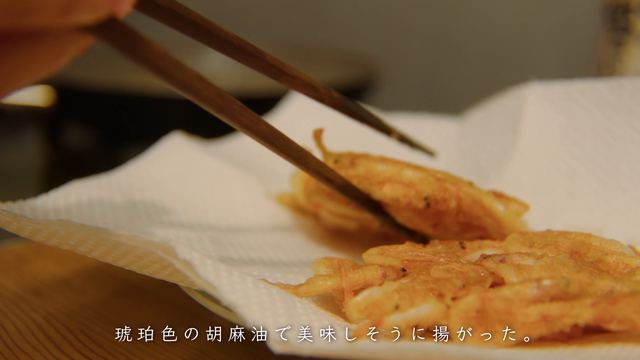
Numazu, Shizuoka
Sakura shrimp kakiage
Every sakura shrimp landed in Japan comes from Suruga Bay.
From: Gifts of the sea in a town that looks out on Mt. Fuji
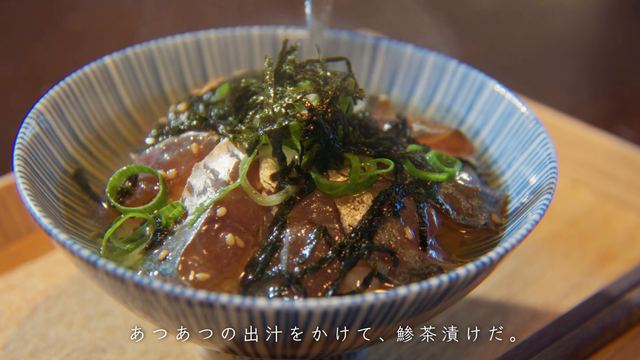
Numazu, Shizuoka
Horse mackerel chazuke
The half of the chopped horse mackerel I had set aside while making the Numazu bowl spent the night in soy sauce and became the next morning's chazuke.
From: Gifts of the sea in a town that looks out on Mt. Fuji
Numazu, Shizuoka
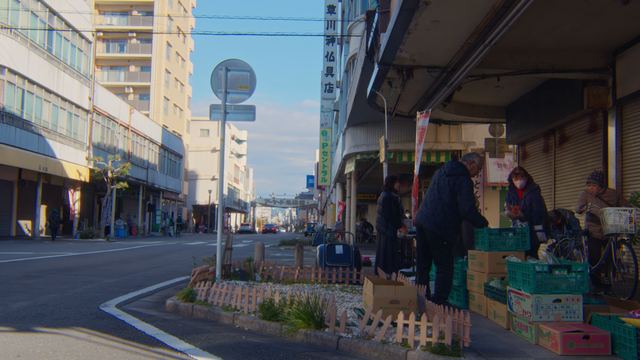
Asa-Ichi, the morning market in the Arcade Meitengai
A morning market held in the shopping arcade near Numazu Station on the first day of every month except January, from 8 a.m.
From: Gifts of the sea in a town that looks out on Mt. Fuji
Numazu, Shizuoka
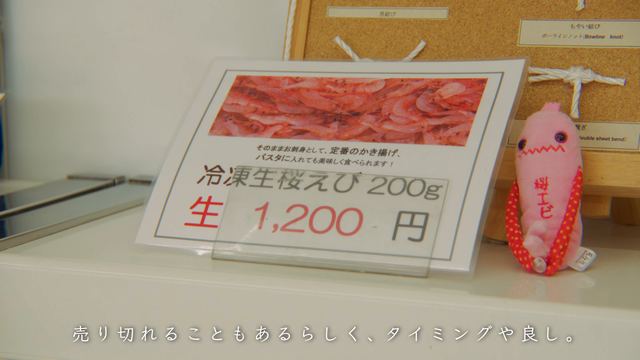
Sakura shrimp of Suruga Bay
Sakura shrimp also live in Tokyo Bay and Sagami Bay, but only Shizuoka Prefecture licenses the fishery, so every shrimp landed in Japan comes from Suruga Bay.
From: Gifts of the sea in a town that looks out on Mt. Fuji
Numazu, Shizuoka
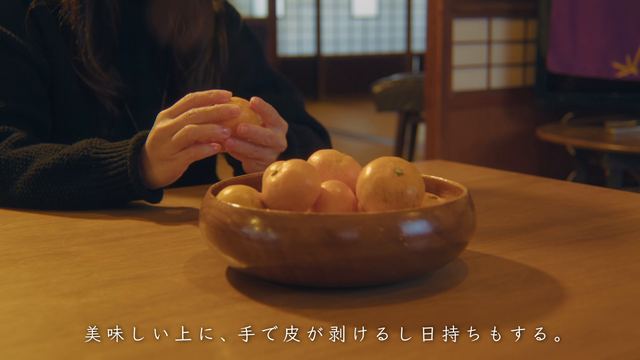
Nishiura mandarins and the Jutaro variety
In the Sanura district of Numazu, made up of Nishiura, Uchiura and Shizuura, mandarin growing can be traced back about 450 years, and full-scale cultivation beg…
From: Gifts of the sea in a town that looks out on Mt. Fuji
More notes from Tokai
Hamamatsu, Shizuoka
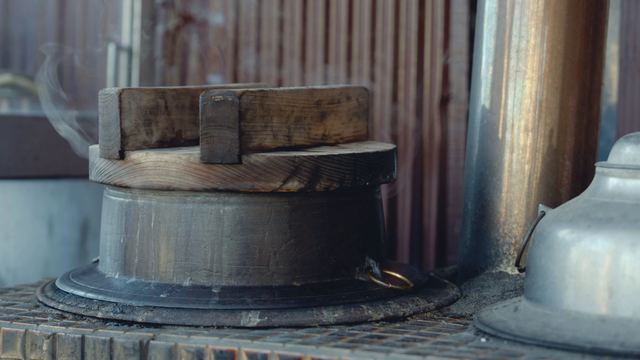
Rice cooked over a kamado
In this house the tiled kamado is still in daily use.
From: Lighting the kamado in a house in the sky
Hamamatsu, Shizuoka
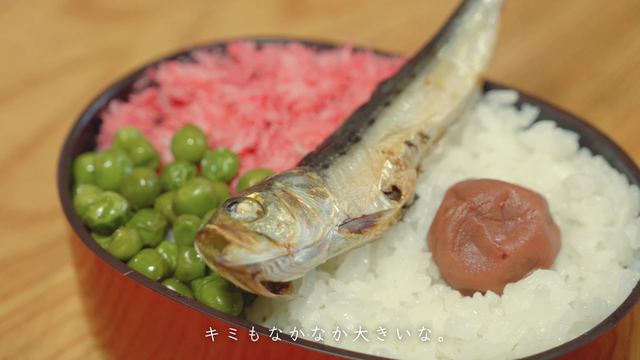
Satsuki's lunch box
A recreation of the lunch Satsuki gets up early to make in My Neighbor Totoro: rice cooked over a kamado, grilled dried sardines, green peas, pink sakura denbu…
From: Lighting the kamado in a house in the sky
Hamamatsu, Shizuoka
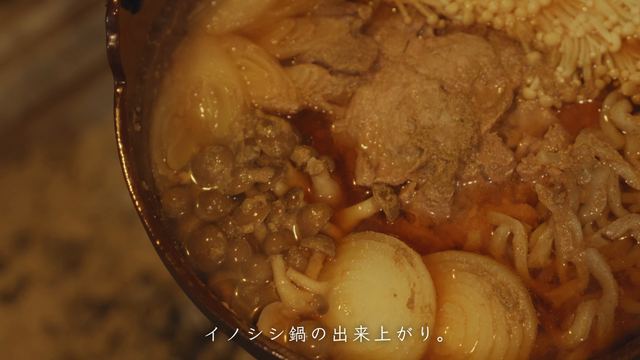
Wild boar hot pot over the hearth
Most of Hamamatsu's Tenryu Ward is forest, and the Tenryu Gibier Fes, a festival of wild game, is held in Futamata (its fifth edition was in May 2025).
From: Lighting the kamado in a house in the sky
Hamamatsu, Shizuoka
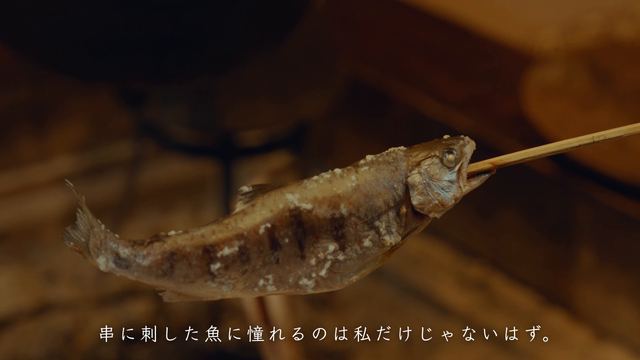
Skewered yamame trout
Every summer a yamame-catching festival is held on the Misakubo River (the 28th was in July 2025).
From: Lighting the kamado in a house in the sky
Numazu, Shizuoka
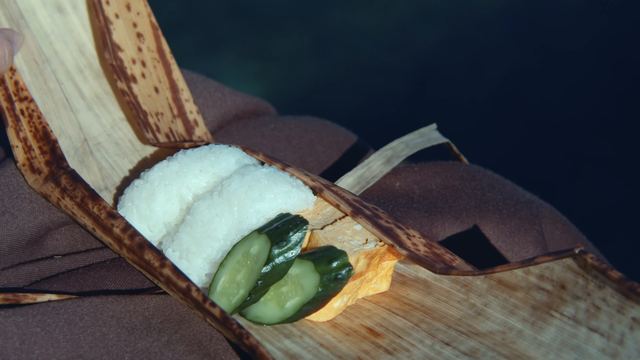
Rice-ball bento in bamboo sheath
I wrapped freshly made rice balls in bamboo sheath with rolled omelet and pickled cucumber and carried them down to the water.
From: Making sushi with a view of Mt. Fuji
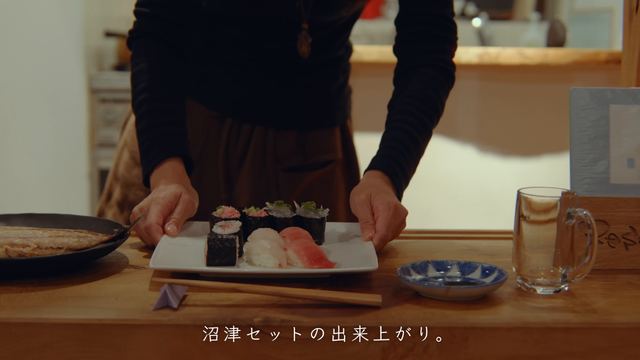
Numazu, Shizuoka
The Numazu special: nigiri and gunkan sushi
Numazu Port is where the fish of Suruga Bay come ashore, with a street of restaurants serving seafood fresh off the boats.
From: Making sushi with a view of Mt. Fuji