Buckwheat grows even in cool highlands where rice and wheat struggle, so it has long been cultivated in Nagano, helped by the wide day-night temperature swings and clear water. Soba kiri, buckwheat cut into thin noodles, is said to have appeared in the early Edo period; a 1645 text, the Kefukigusa, calls soba kiri a specialty of Shinano Province. Motoyama-juku in Shiojiri is counted among the birthplaces of soba noodles. In 1983, handmade soba was registered as one of Nagano Prefecture's selected intangible folk cultural assets.
Sources: go-nagano.net maff.go.jp
This moment in the journey
Hot soba with wild vegetables
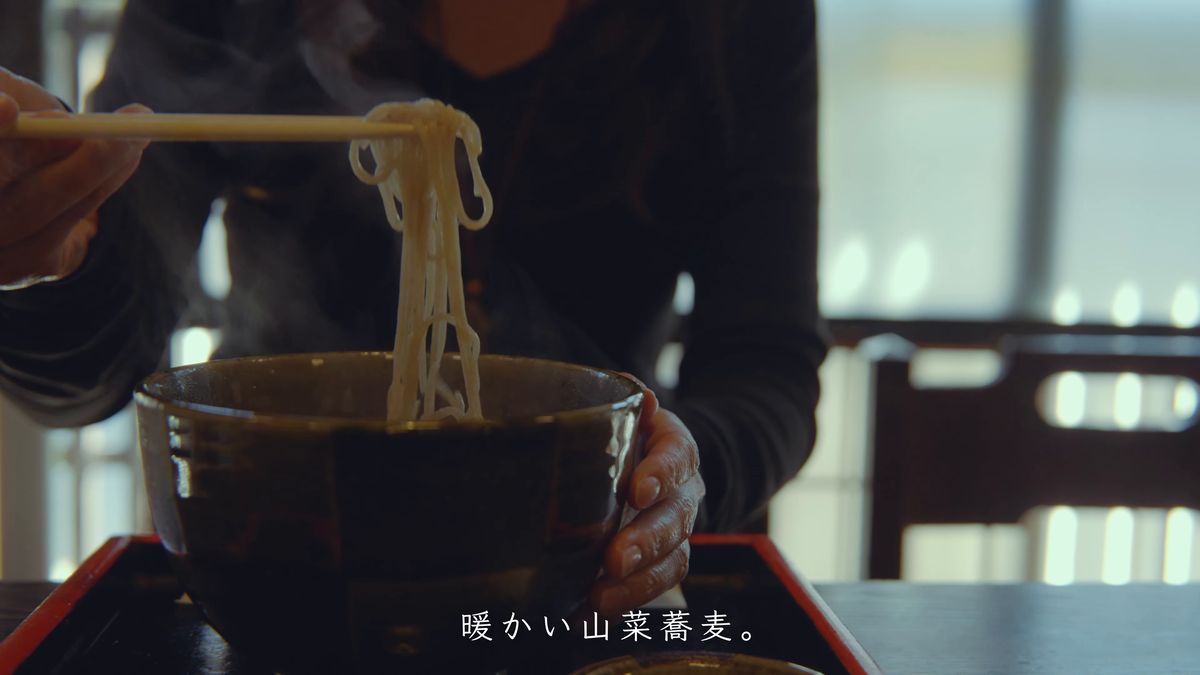
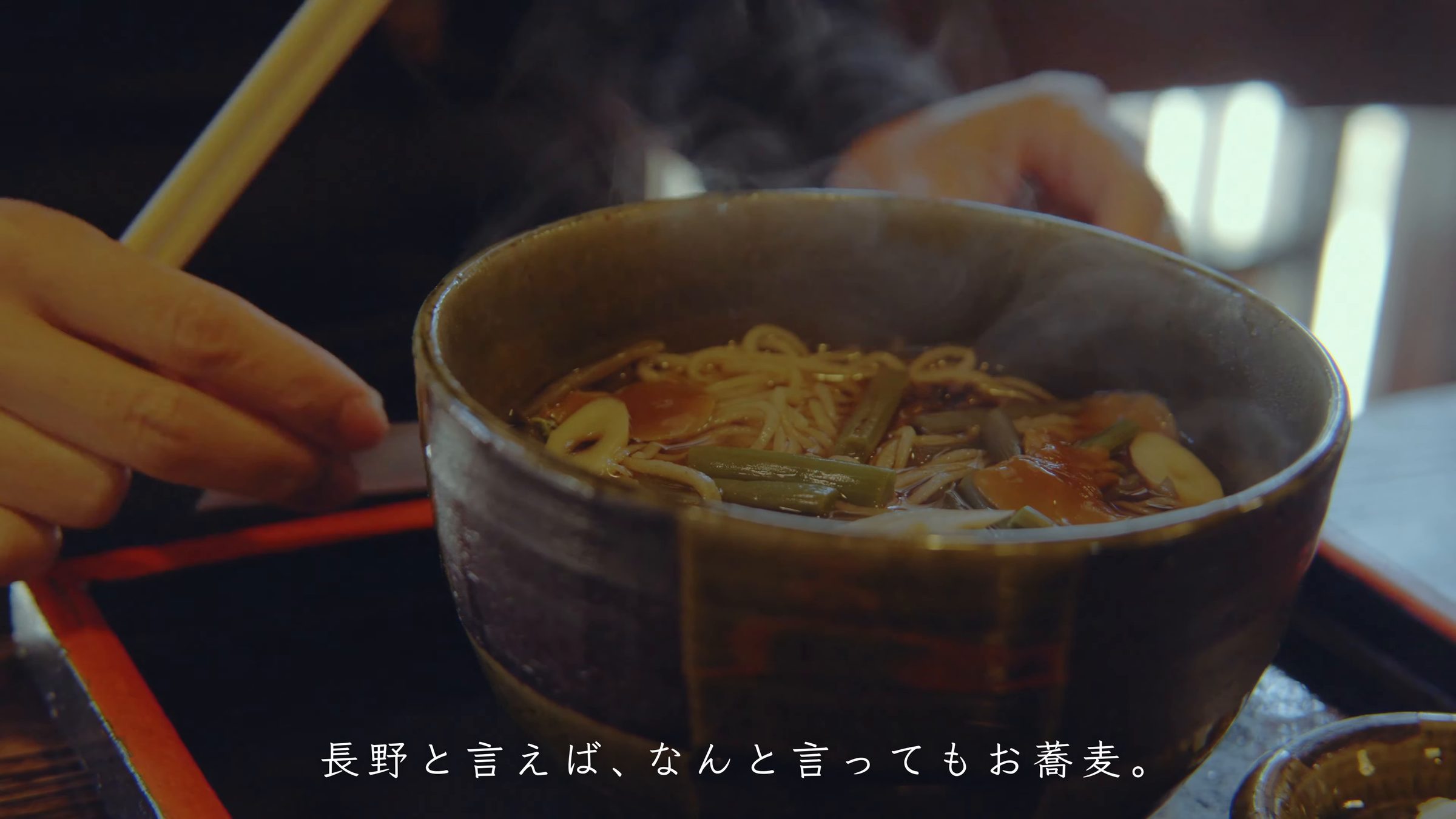
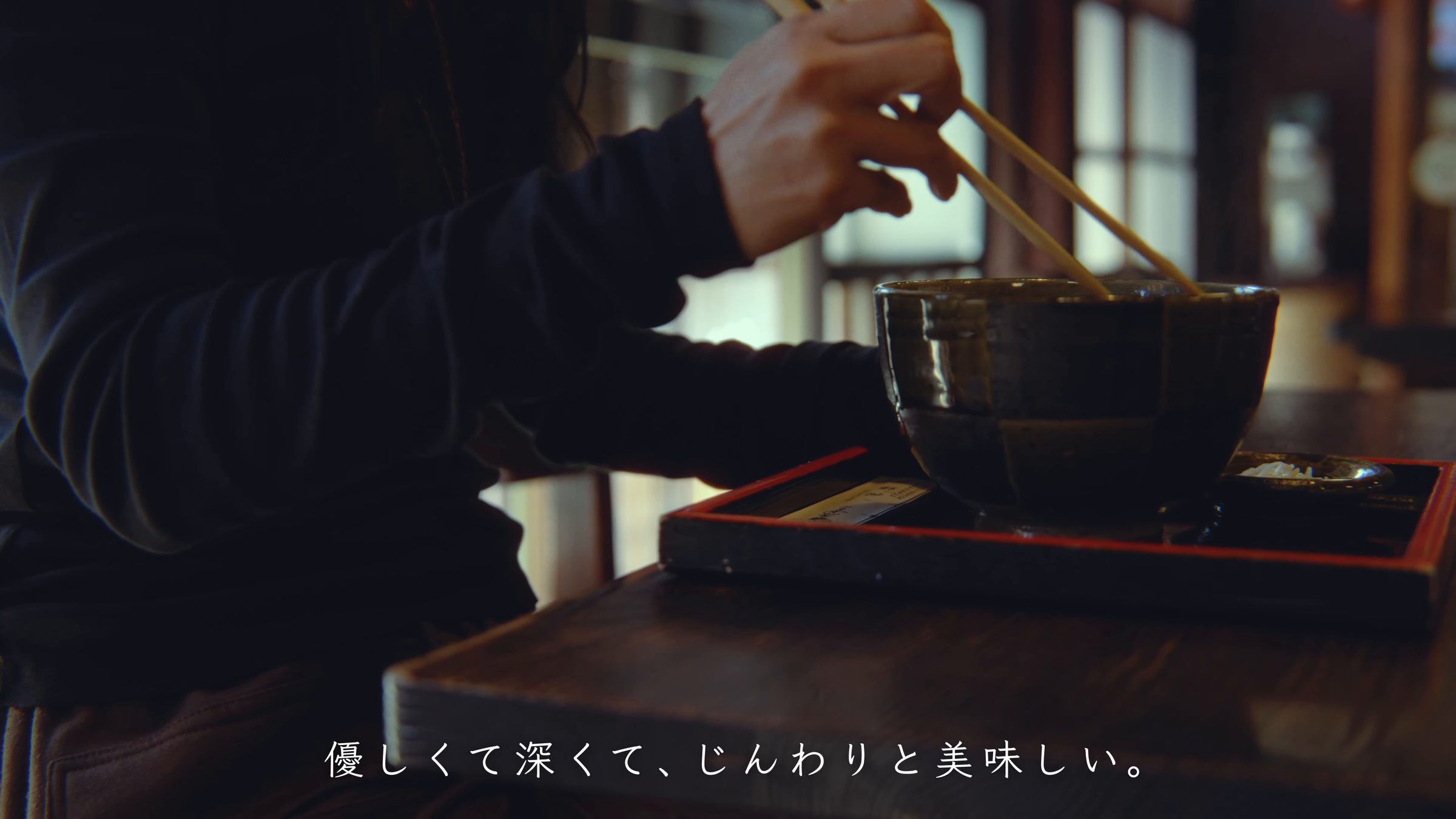
Nagano means soba, above all. I stepped into a handmade soba shop halfway along the post town. What arrived on the tray was hot soba with wild vegetables: a steaming bowl piled with bracken, mushrooms and green onions.
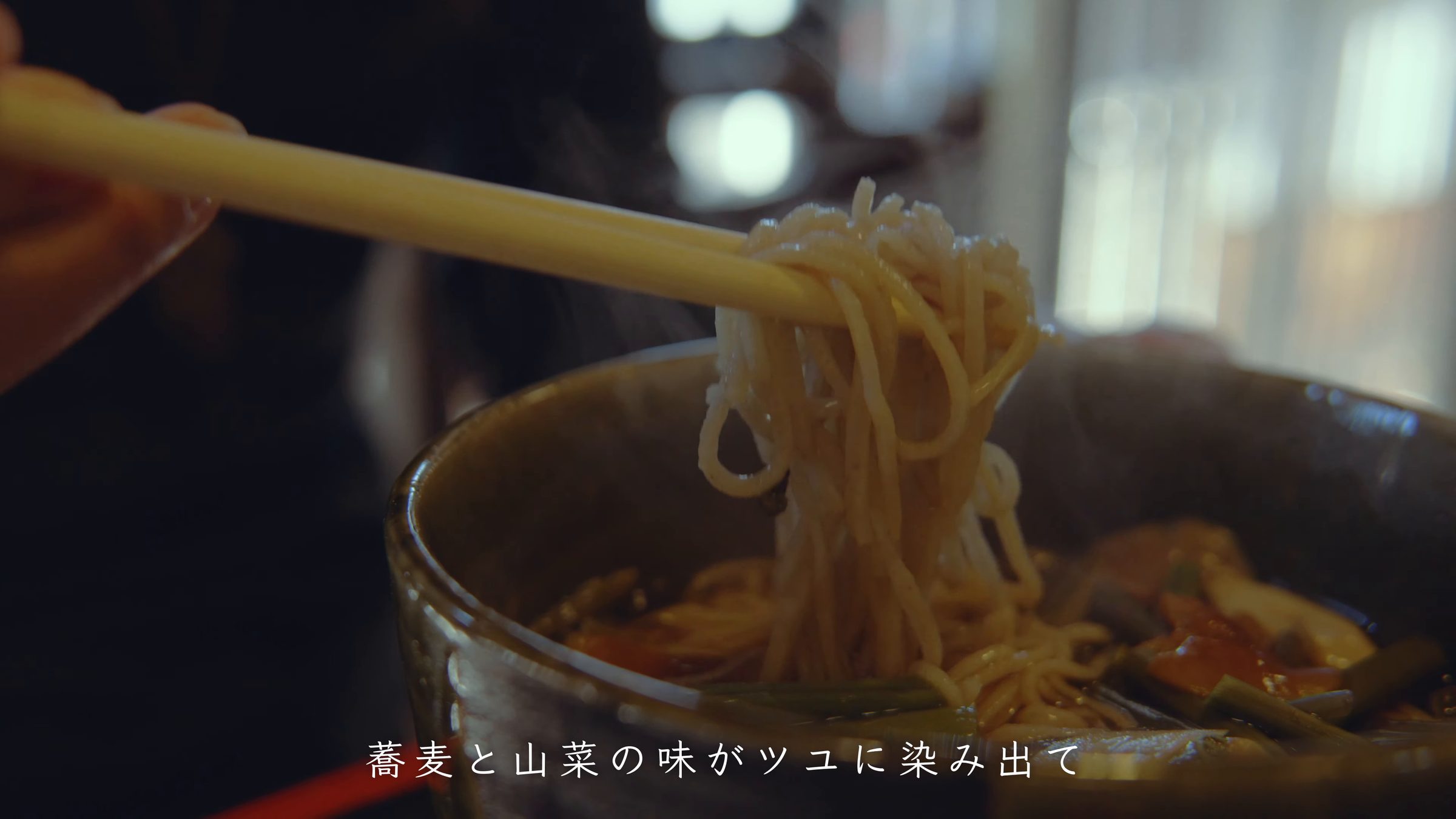
The thin noodles glistened with broth as I lifted them with my chopsticks. The flavor of the soba and the mountain greens seeped into the soup, gentle, deep, and quietly delicious. Sitting in the tatami room, I cradled the bowl and savored it to the end.
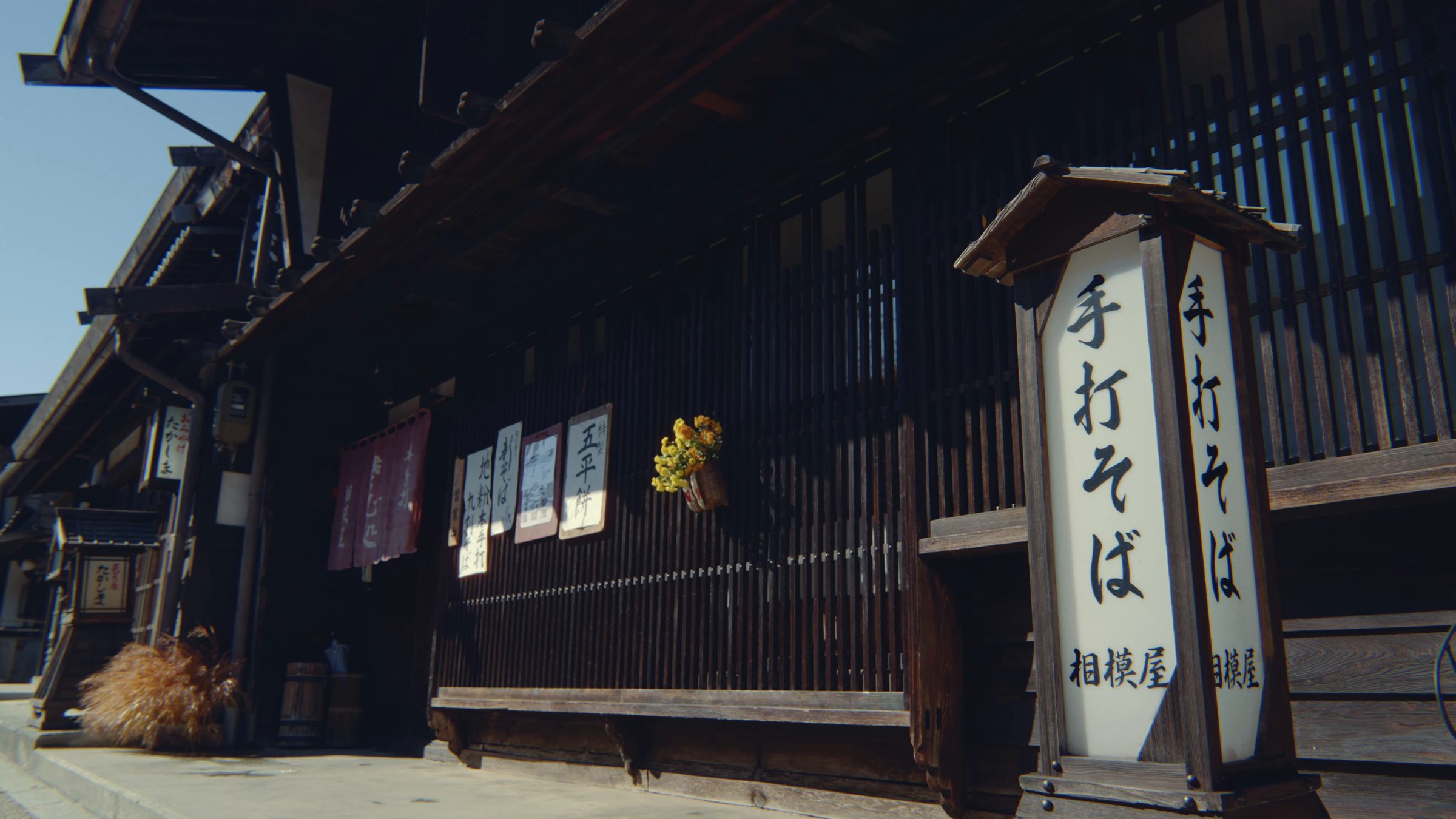
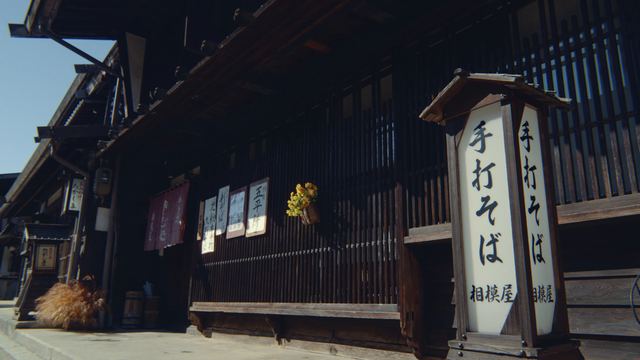
Outside, a paper lantern sign reading "handmade soba" hung by the latticed wall, where a pot of yellow flowers had been set.
Watch this scene on YouTube3:13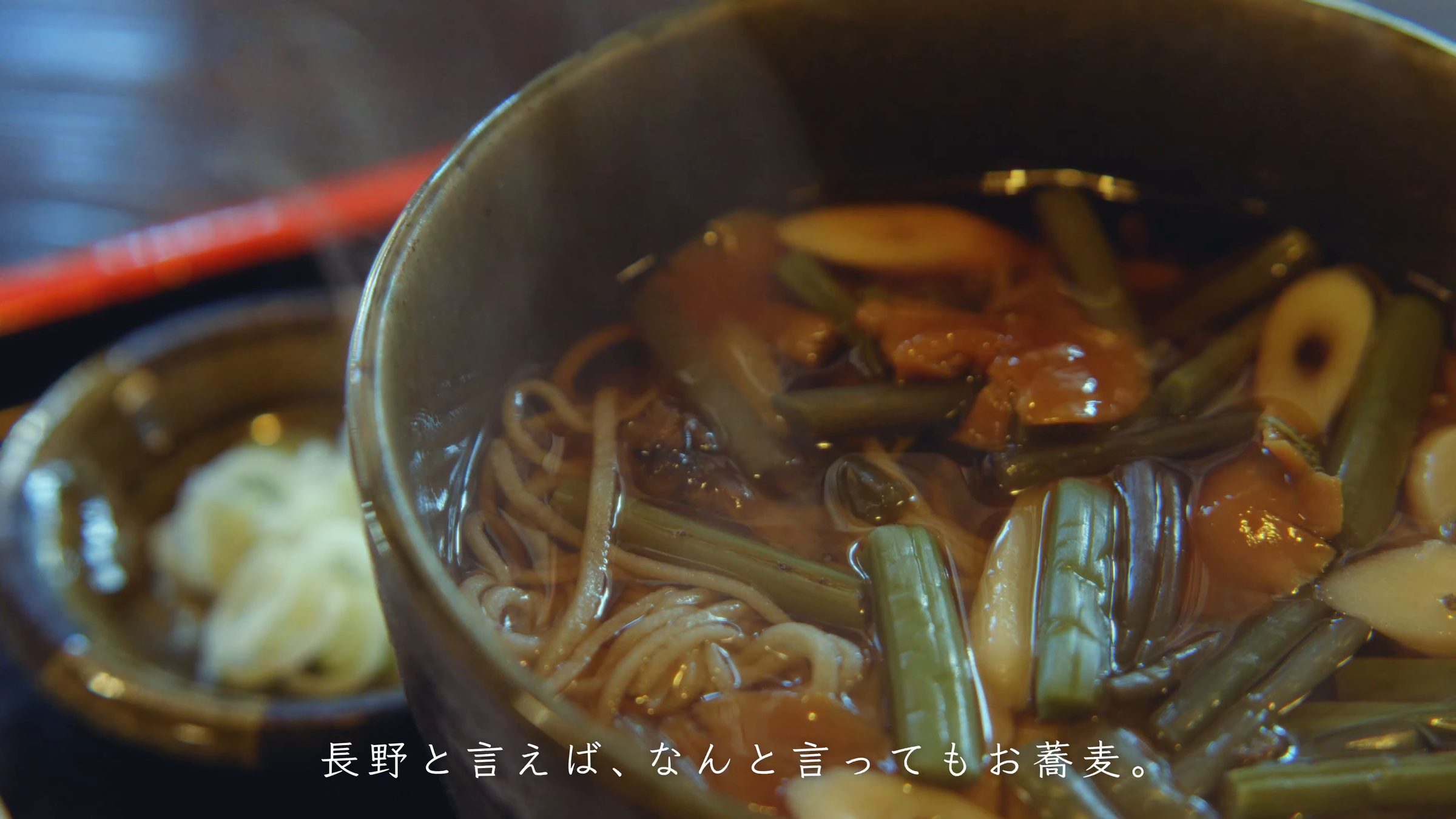
More notes from this journey
Shiojiri, Nagano
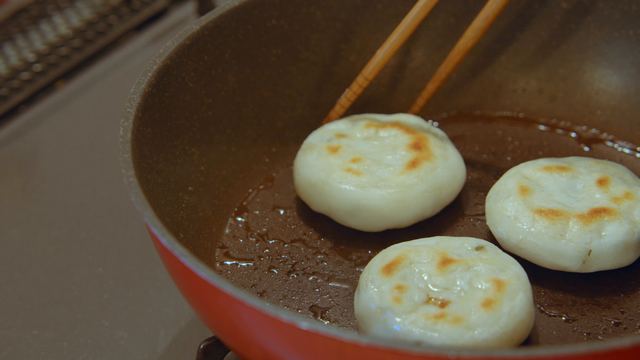
Rice-flour oyaki with nozawana
Oyaki are the signature home dish of Shinshu: a dough of wheat or buckwheat flour rolled thin, wrapped around a filling and baked.
From: Autumn leaves in Narai-juku and an autumn table in Shinshu
Shiojiri, Nagano
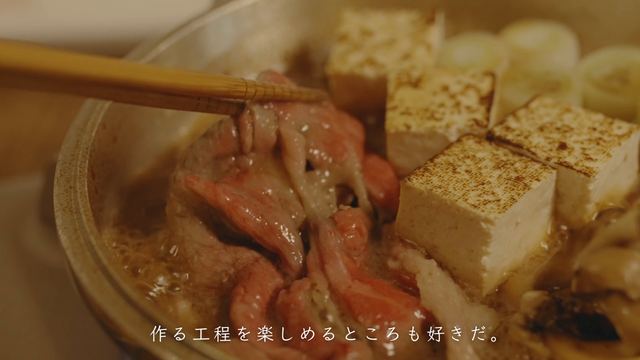
Shinshu beef sukiyaki
Nagano's "apple-fed Shinshu beef" is black wagyu that meets standards set by a producers' association; the cattle are fed by-products of the prefecture's food i…
From: Autumn leaves in Narai-juku and an autumn table in Shinshu
Shiojiri, Nagano
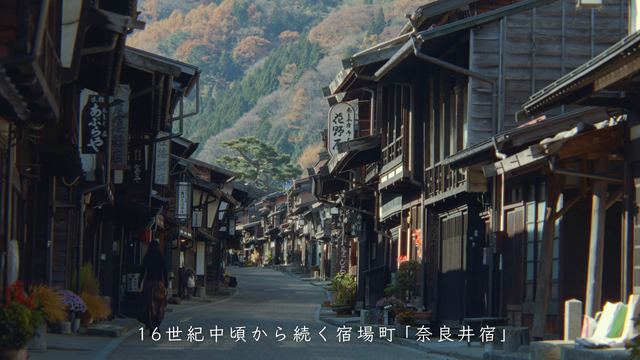
Narai-juku
The 34th of the 69 post towns on the Nakasendo, equidistant from Edo and Kyoto.
From: Autumn leaves in Narai-juku and an autumn table in Shinshu
Shiojiri, Nagano
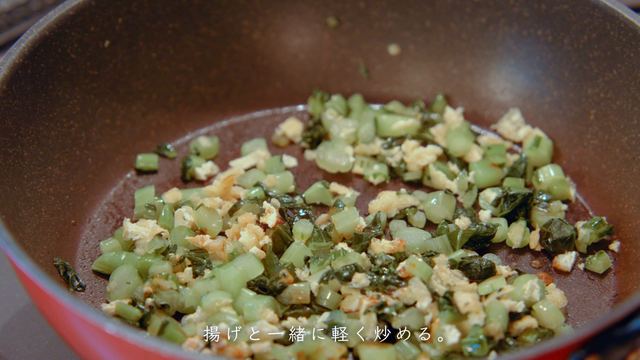
Pickled nozawana
Nozawana is said to descend from Tennoji turnips that a temple priest in Nozawa Onsen brought back from Kyoto in 1756.
From: Autumn leaves in Narai-juku and an autumn table in Shinshu
Shiojiri, Nagano
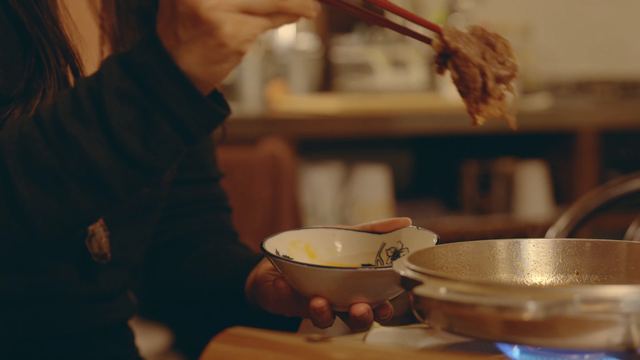
Apple-fed Shinshu beef
A brand of black wagyu from Nagano.
From: Autumn leaves in Narai-juku and an autumn table in Shinshu
Shiojiri, Nagano
Sagamiya Soba
A handmade soba shop in the middle of Narai-juku.
From: Autumn leaves in Narai-juku and an autumn table in Shinshu
More notes from Hokuriku & Koshinetsu
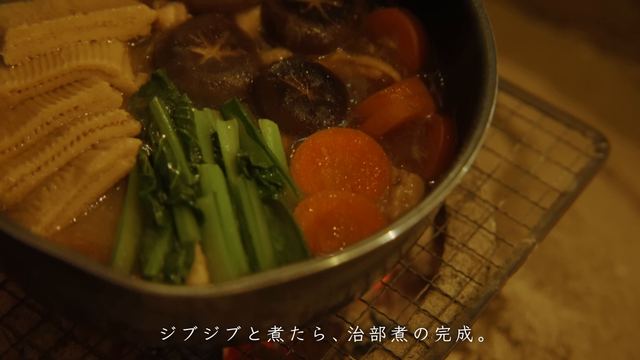
Kanazawa, Ishikawa
Jibuni
A simmered dish of Ishikawa made with duck, sudare-fu and seasonal vegetables, said to have been eaten by samurai households since at least the Edo period.
From: Winter in Kanazawa, from a townhouse kitchen
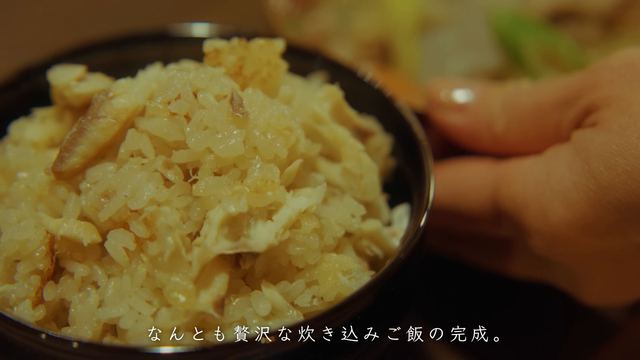
Kanazawa, Ishikawa
Nodoguro takikomi gohan
Nodoguro is a prized fish, so rich in fat it is called "the toro of white fish." The overnight-dried fish I bought at the market was lightly salted using deep-s…
From: Winter in Kanazawa, from a townhouse kitchen
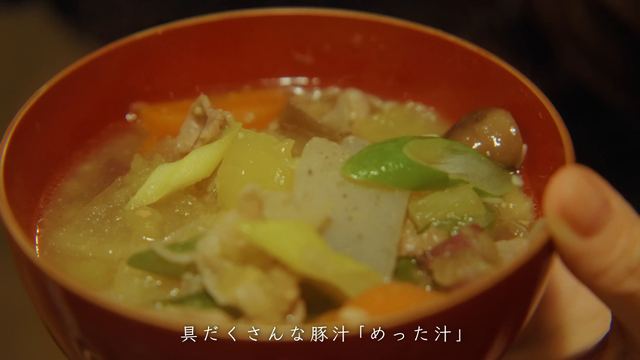
Kanazawa, Ishikawa
Mettajiru
A hearty pork miso soup full of root vegetables, distinguished by using sweet potato in place of the usual potato.
From: Winter in Kanazawa, from a townhouse kitchen
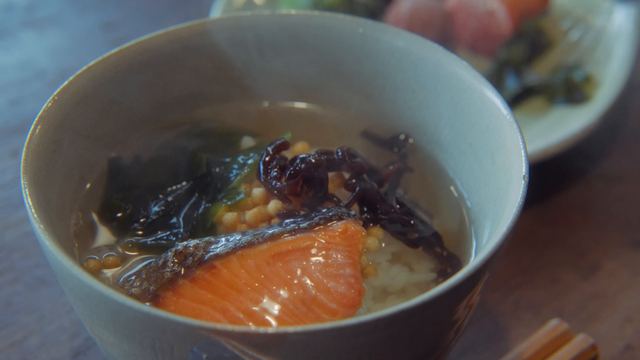
Kanazawa, Ishikawa
My take on Yahoo chazuke
The shop known as "Yahoo chazuke" was Shinano, an ochazuke shop in Katamachi 1-chome, Kanazawa.
From: Winter in Kanazawa, from a townhouse kitchen
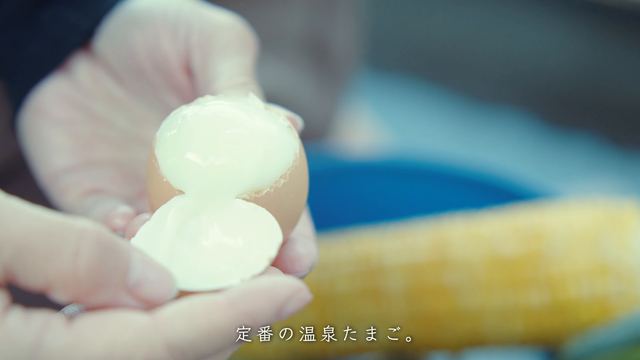
Nozawaonsen, Nagano
Onsen tamago boiled in the hot spring
At the Ogama, the main source of Nozawa Onsen, water close to 90 degrees wells up, and locals have long boiled mountain vegetables and eggs in it.
From: Boiling breakfast in a hot spring: life in Nozawa
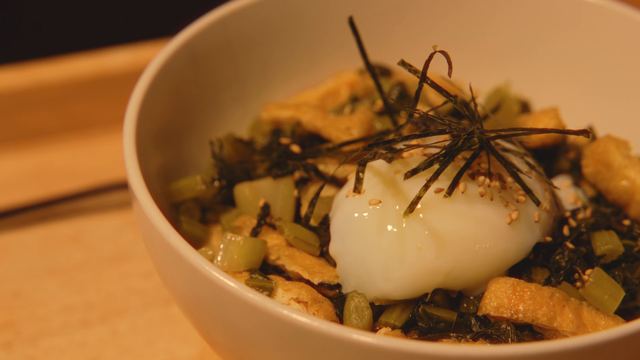
Nozawaonsen, Nagano
Rice bowl with stir-fried nozawana, fried tofu and onsen tamago
Nozawana is said to descend from Tennoji turnip seeds that the priest of Kenmei-ji temple in Nozawa Onsen brought back from Kyoto in 1756.
From: Boiling breakfast in a hot spring: life in Nozawa