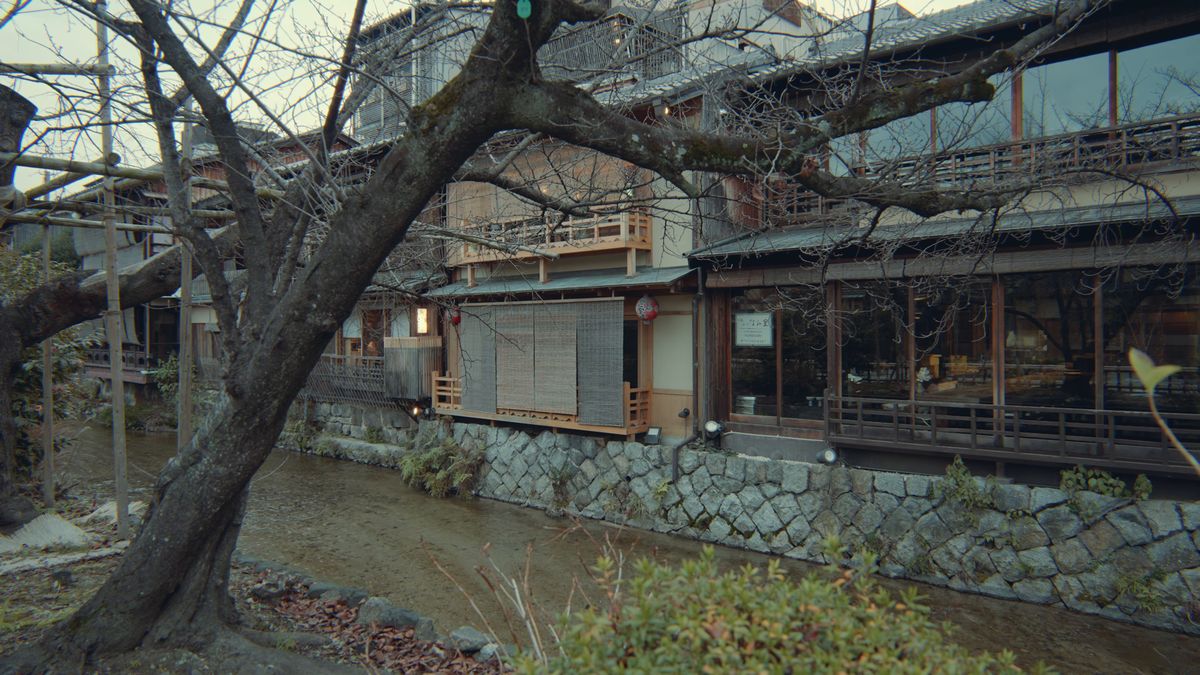
The Gion Motoyoshi-cho area along Shinbashi-dori, north of Gion, was designated a national Important Preservation District for Groups of Traditional Buildings on September 4, 1976, as a teahouse town (1.4 hectares). Most of the surviving buildings date from just after the great fire of 1865: two-storied, gable-roofed and tiled, with red-ochre lattices on the ground floor and a tatami room above, its veranda hung with bamboo blinds. The stone paving and embankment along the Shirakawa, Tatsumi Bridge and the Tatsumi Daimyojin shrine, where geiko and maiko pray, are the sights of the area.
Sources: bunka.go.jp tabi-mag.jp
This moment in the journey
A stroll after the rain
Now that the rain was over, it was time for a walk through the streets of Kyoto. Seen through the bamboo blind, the wet garden was deep in color.
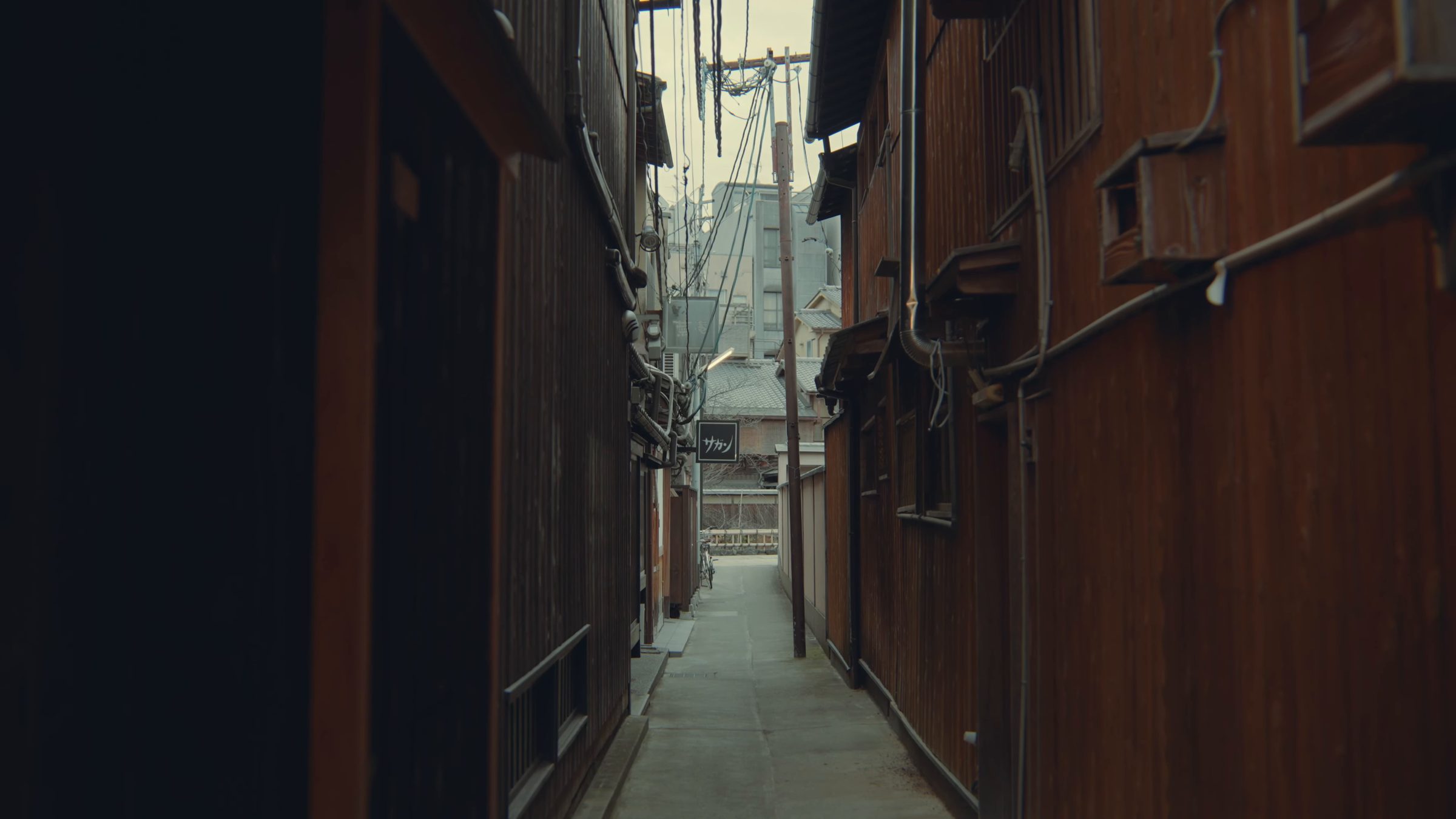
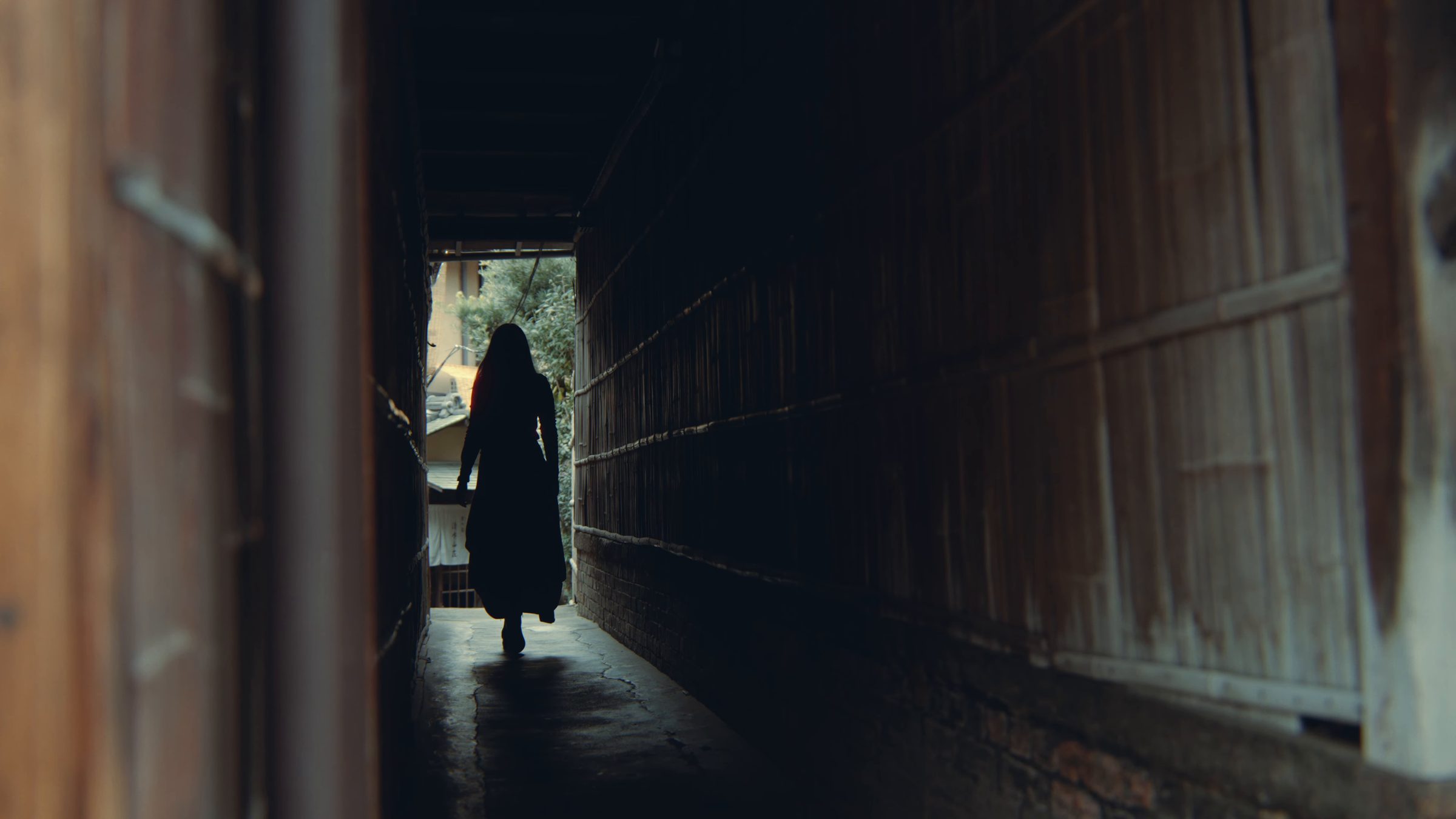
I followed the stone paving along the Shirakawa stream. Townhouses with red-ochre lattices stood in a row above the stone embankment, and a leafless cherry tree reached its branches over the water. Then through a narrow lane between wooden houses, and down a dim passage toward the light at its end.
Watch this scene on YouTube1:20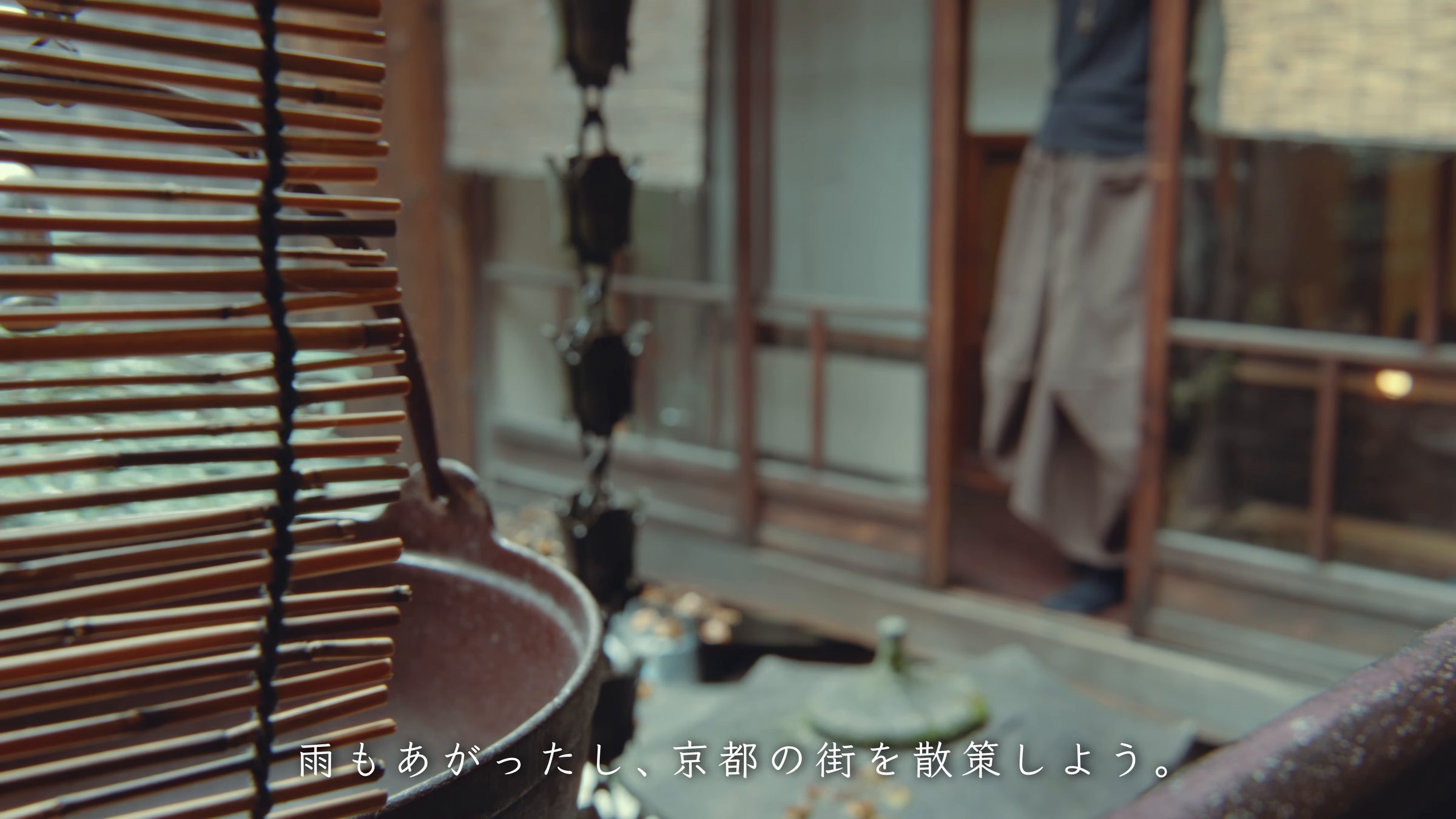
More notes from this journey
Kyoto City, Kyoto
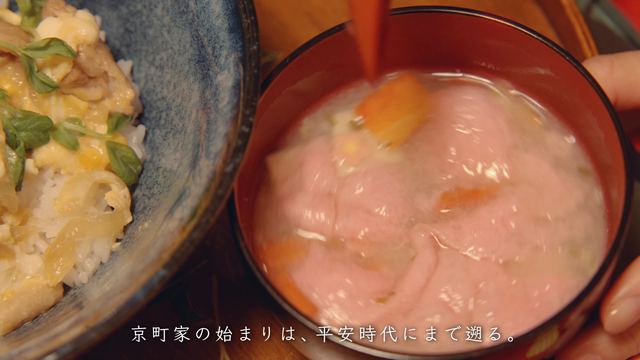
Oyakodon (chicken and egg over rice)
Chicken and onion simmered in broth, bound with egg and served over rice.
From: An ordinary morning in a hundred-year-old Kyoto townhouse
Kyoto City, Kyoto
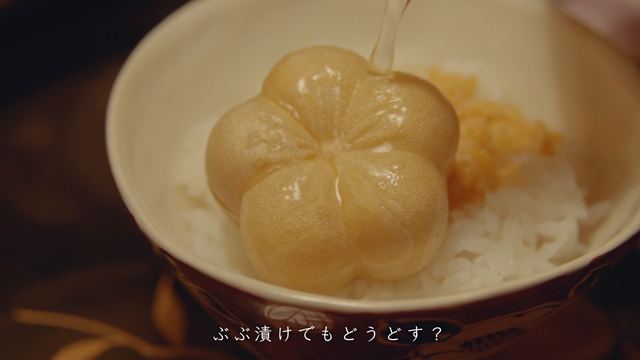
Bubu-zuke (ochazuke from a monaka wafer)
In Kyoto, ochazuke is called bubu-zuke.
From: An ordinary morning in a hundred-year-old Kyoto townhouse
Kyoto City, Kyoto
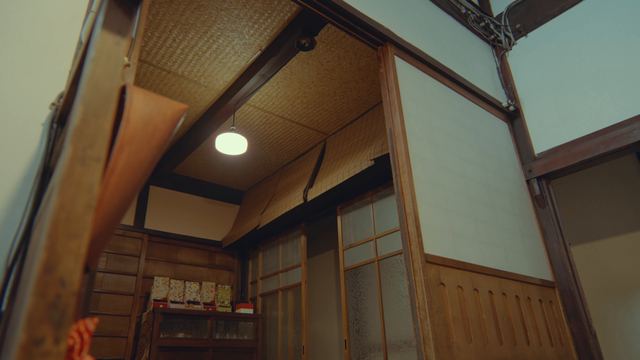
Kyomachiya, the Kyoto townhouse
Under Kyoto City's ordinance, a kyomachiya is a wooden building of traditional structure and form built before 1950, when the Building Standards Act came into f…
From: An ordinary morning in a hundred-year-old Kyoto townhouse
Kyoto City, Kyoto
A plum-blossom-shaped ochazuke monaka
A plum-blossom-shaped monaka wafer that turns into ochazuke when you set it on rice and pour hot water over it.
From: An ordinary morning in a hundred-year-old Kyoto townhouse
Kyoto City, Kyoto
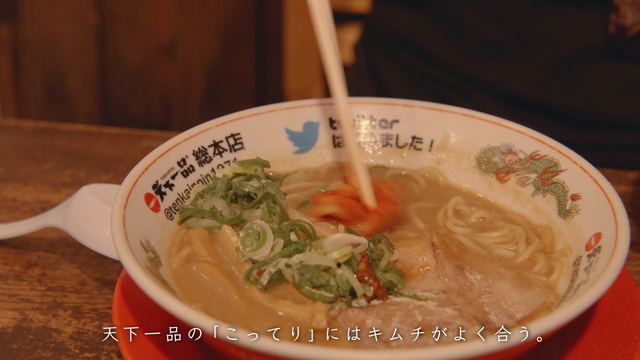
Tenkaippin Sohonten (Main Shop)
The first shop of Tenkaippin, the ramen chain born in Kyoto.
From: An ordinary morning in a hundred-year-old Kyoto townhouse
Kyoto City, Kyoto
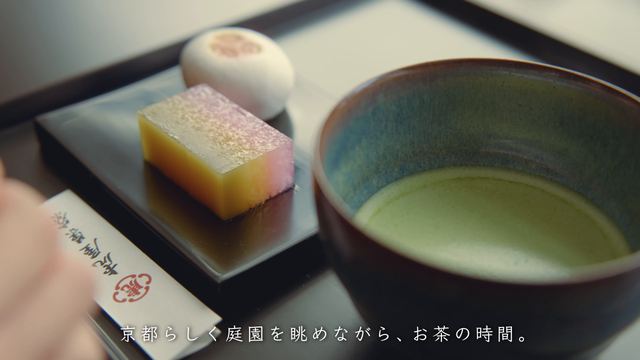
Toraya Karyo Kyoto Ichijo
Toraya's tearoom in Kyoto, the city where the confectioner was founded.
From: An ordinary morning in a hundred-year-old Kyoto townhouse
More notes from Kinki
Kyoto City, Kyoto
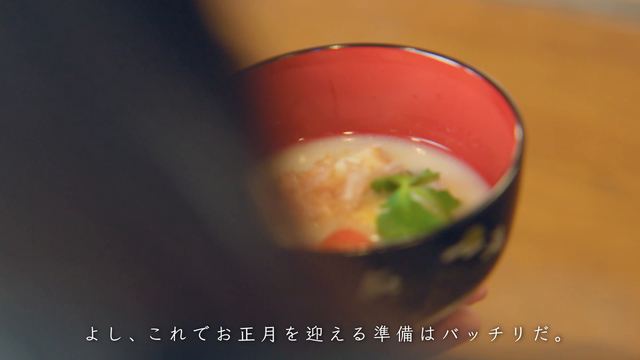
Kyoto-style ozoni (white miso New Year soup)
Ozoni in and around Kyoto is built on kombu dashi and white miso, with round mochi, taro, carrot and daikon.
From: Making New Year's Eve soba in a Kyoto townhouse
Kyoto City, Kyoto
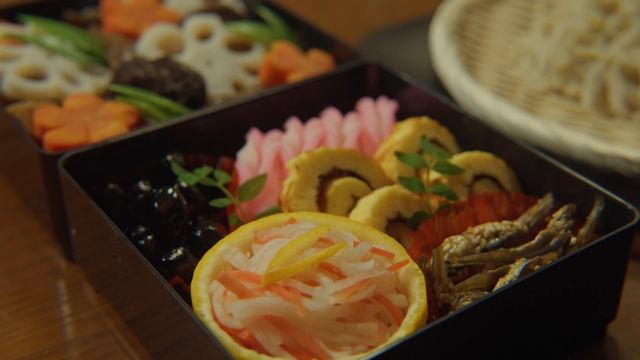
Osechi (datemaki, red-and-white namasu, decorated kamaboko)
Each osechi dish carries a wish.
From: Making New Year's Eve soba in a Kyoto townhouse
Kyoto City, Kyoto
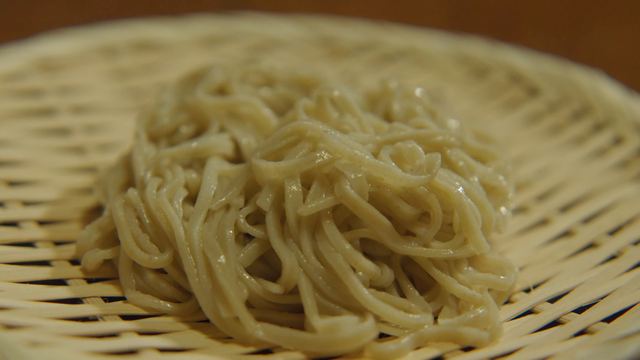
Toshikoshi soba (nihachi soba)
The custom of eating soba on New Year's Eve is said to have spread among ordinary people in the Edo period.
From: Making New Year's Eve soba in a Kyoto townhouse
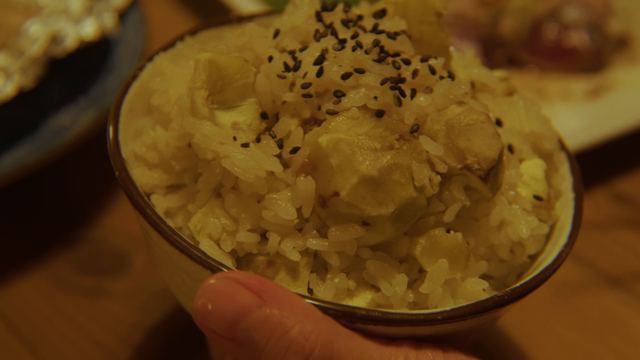
Aridagawa, Wakayama
Chestnut rice (kuri gohan)
My first chestnut rice, made with chestnuts I had picked myself.
From: Chestnuts, saury and an autumn feast
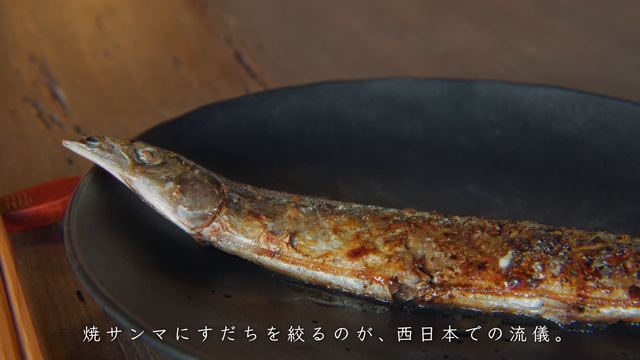
Aridagawa, Wakayama
Charcoal-grilled saury with sudachi
Sanma is written 秋刀魚, "autumn sword fish," but that spelling only spread from the Taisho era on; older texts wrote it 青串魚.
From: Chestnuts, saury and an autumn feast
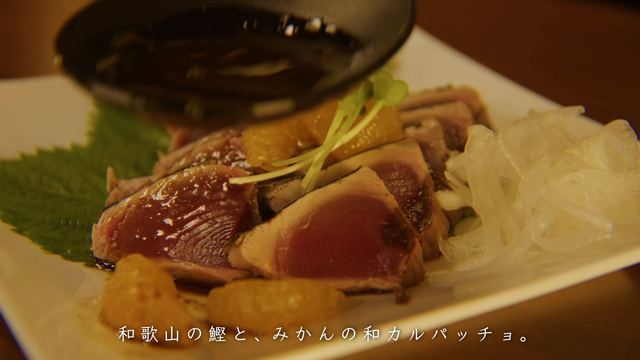
Aridagawa, Wakayama
Wakayama bonito and mandarin carpaccio
In contrast to the lean first bonito of spring, the fish that head south from around September are called modori-gatsuo, returning bonito.
From: Chestnuts, saury and an autumn feast